



TEACHING ENGLISH TO
YOUNG LEARNERS IN
INDONESIA
PRESENTED BY:
UZLIFATFATMAWATI
Requirements for effective
teaching of English
to young learners using
Learning theories
stemming from socio-
cultural perspectives is
organized into five pillars
(Vygotsky, Briner,
Corsaro, and Dyson)
Pillar#1 Accomplish teachers of
English should know who children
are
Pillar#1 Accomplish teachers of English
should know who children are
Pillar#2 Accomplish teachers of English
should know how children learn
Bruner (1996) proposes a
hierarchy of children’s
learning modes: enactive,
iconic, and symbolic.
Piaget (1975) there are
three kinds of knowledge:
physical knowledge, logico-
matematical knowledge,
and social knowledge.
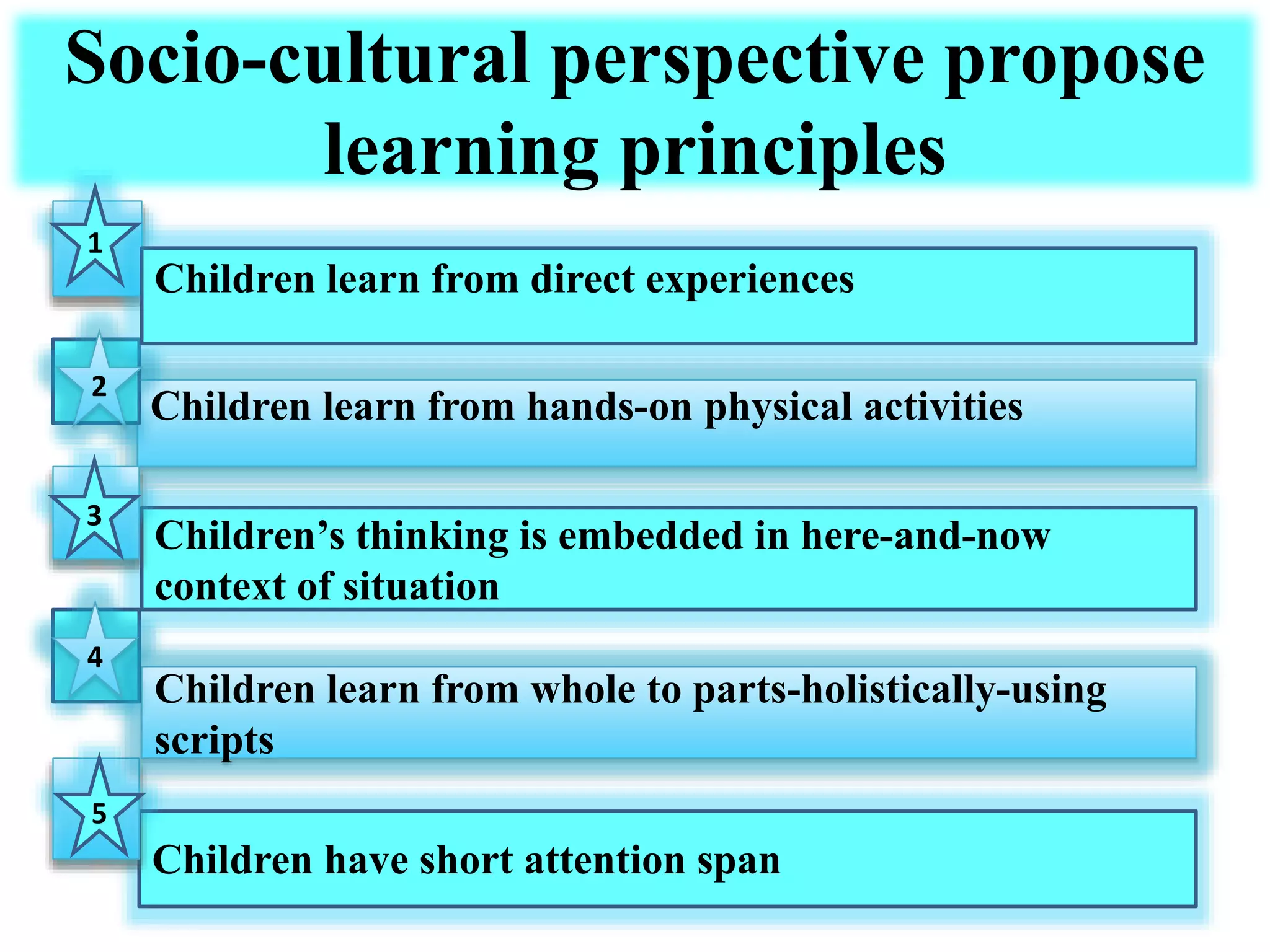
Socio-cultural perspective propose
learning principles
Children’s thinking is embedded in here-and-now
context of situation
Children have short attention span
Children learn from hands-on physical activities
Children learn from whole to parts-holistically-using
scripts
Children learn from direct experiences
1
4
3
2
5
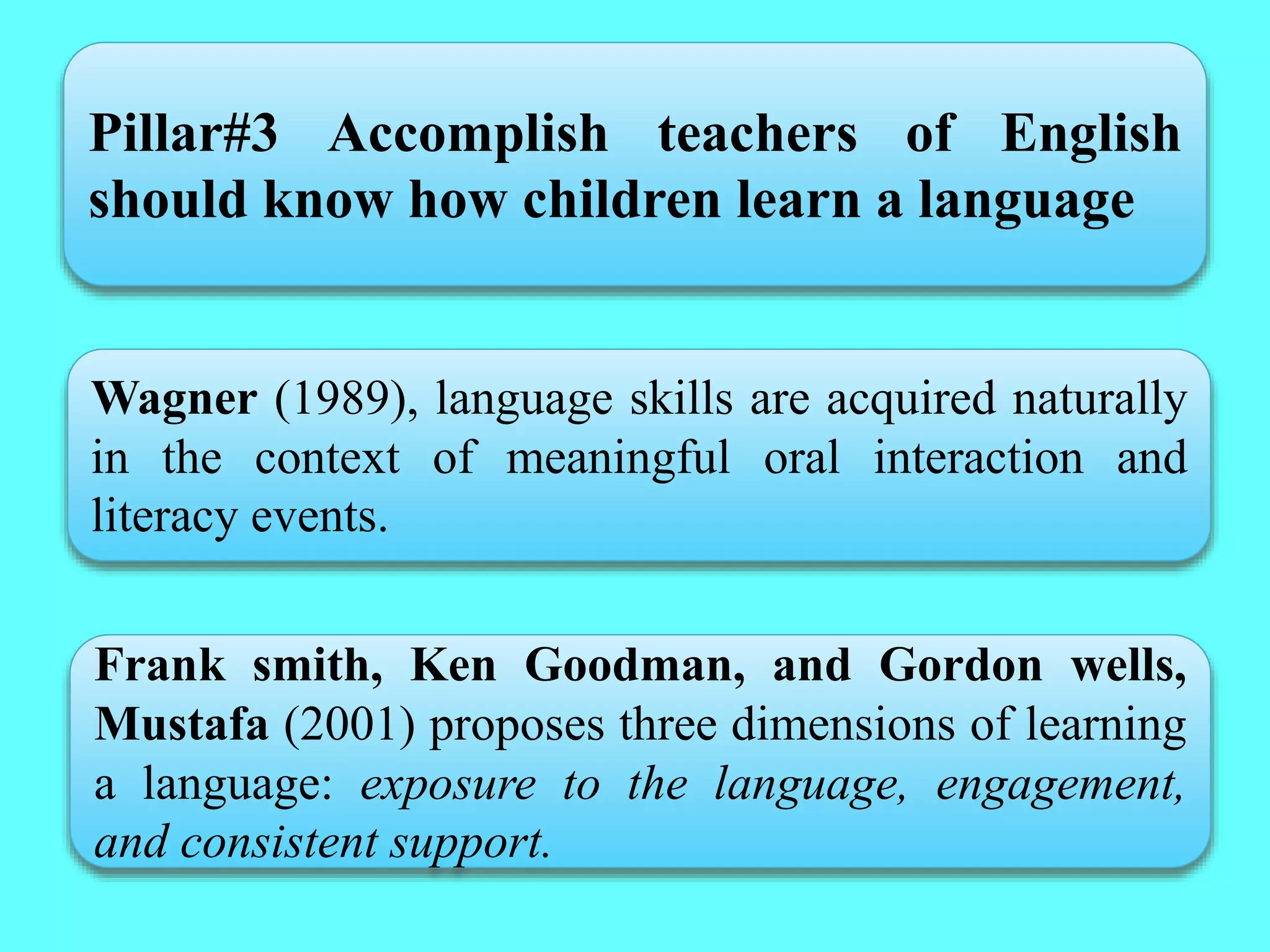
Pillar#3 Accomplish teachers of English
should know how children learn a language
Wagner (1989), language skills are acquired naturally
in the context of meaningful oral interaction and
literacy events.
Frank smith, Ken Goodman, and Gordon wells,
Mustafa (2001) proposes three dimensions of learning
a language: exposure to the language, engagement,
and consistent support.
English as a foreign language means that the language
has no/or very limited function in social intercourse in
Indonesia.
English as local content means very limited
contact hours.
The teaching of English to elementary school children
means a “perfunctory” activity and this can put
teachers’ reputation on the line.
Pillar#4 Accomplished teachers of English
should know how children learn English as a
foreign language
Pillar#5 Accomplish teachers of English should know the principles
and should be able to do things to facilitate children learning English
as a foreign language in Indonesia
Proposed good classroom practices
English is to be used all the time to ensure that children
have relatively much exposure to English.
Print-rich environment in English should be created in and
around the classroom.
Teachers of English for young learners should use activity-
based teaching-learning techniques such as total physical
response (TPR),games, and projects
Teachers of English for young learners should various
techniques for short periods of time to maintain the interest
level of the children engaging the English lessons.
Continue…
Teachers of English for young learners should focus on
functional English for vocabulary development and for
immediate fulfillment of communicative needs of the
learners.
Teachers of English for young learners should reiterate
often to ensure the acquisition of English expressions or
vocabulary items.
Teachers of English for young learners should provide
useful, acquisition-promoting routines.
teaching English to young learners in Indonesia

teaching English to young learners in Indonesia

  • 1.
    TEACHING ENGLISH TO YOUNGLEARNERS IN INDONESIA PRESENTED BY: UZLIFATFATMAWATI
  • 2.
    Requirements for effective teachingof English to young learners using Learning theories stemming from socio- cultural perspectives is organized into five pillars (Vygotsky, Briner, Corsaro, and Dyson)
  • 3.
    Pillar#1 Accomplish teachersof English should know who children are Pillar#1 Accomplish teachers of English should know who children are
  • 4.
    Pillar#2 Accomplish teachersof English should know how children learn Bruner (1996) proposes a hierarchy of children’s learning modes: enactive, iconic, and symbolic. Piaget (1975) there are three kinds of knowledge: physical knowledge, logico- matematical knowledge, and social knowledge.
  • 5.
    Socio-cultural perspective propose learningprinciples Children’s thinking is embedded in here-and-now context of situation Children have short attention span Children learn from hands-on physical activities Children learn from whole to parts-holistically-using scripts Children learn from direct experiences 1 4 3 2 5
  • 6.
    Pillar#3 Accomplish teachersof English should know how children learn a language Wagner (1989), language skills are acquired naturally in the context of meaningful oral interaction and literacy events. Frank smith, Ken Goodman, and Gordon wells, Mustafa (2001) proposes three dimensions of learning a language: exposure to the language, engagement, and consistent support.
  • 7.
    English as aforeign language means that the language has no/or very limited function in social intercourse in Indonesia. English as local content means very limited contact hours. The teaching of English to elementary school children means a “perfunctory” activity and this can put teachers’ reputation on the line. Pillar#4 Accomplished teachers of English should know how children learn English as a foreign language
  • 8.
    Pillar#5 Accomplish teachersof English should know the principles and should be able to do things to facilitate children learning English as a foreign language in Indonesia
  • 9.
    Proposed good classroompractices English is to be used all the time to ensure that children have relatively much exposure to English. Print-rich environment in English should be created in and around the classroom. Teachers of English for young learners should use activity- based teaching-learning techniques such as total physical response (TPR),games, and projects Teachers of English for young learners should various techniques for short periods of time to maintain the interest level of the children engaging the English lessons.
  • 10.
    Continue… Teachers of Englishfor young learners should focus on functional English for vocabulary development and for immediate fulfillment of communicative needs of the learners. Teachers of English for young learners should reiterate often to ensure the acquisition of English expressions or vocabulary items. Teachers of English for young learners should provide useful, acquisition-promoting routines.