Smart glucose responsive biodegradable
     polymers for insulin delivery


               Benjamin Tang
              JDRF - New England
                April 10, 2012
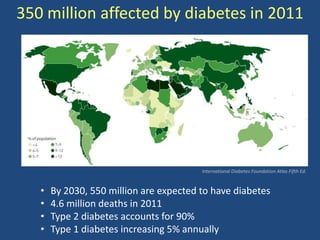
350 million affected by diabetes in 2011


                                         International Diabetes Foundation Atlas Fifth Ed.


   •   By 2030, 550 million are expected to have diabetes
   •   4.6 million deaths in 2011
   •   Type 2 diabetes accounts for 90%
   •   Type 1 diabetes increasing 5% annually
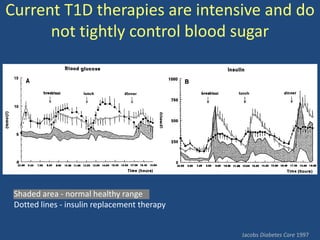
Current T1D therapies are intensive and do
      not tightly control blood sugar


 Shaded area - normal healthy range
 Dotted lines - insulin replacement therapy


                                              Jacobs Diabetes Care 1997
Closed loop insulin delivery for T1D

                Measure blood glucose


                                 Insulin delivery
                                     system


            Deliver appropriate insulin dose

Continuously monitor to tightly control blood glucose
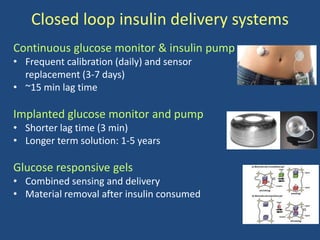
Closed loop insulin delivery systems
Continuous glucose monitor & insulin pump
• Frequent calibration (daily) and sensor
  replacement (3-7 days)
• ~15 min lag time

Implanted glucose monitor and pump
• Shorter lag time (3 min)
• Longer term solution: 1-5 years

Glucose responsive gels
• Combined sensing and delivery
• Material removal after insulin consumed
Smart insulin delivery systems
Rapidly deliver required dose of insulin when needed
• Tightly maintain blood glucose within healthy range
• Do not cause hypoglycemic events

Deliver insulin over a long period
• Reduce frequency of injection
• Increase patient compliance

Repeated and easy administration
• No buildup of material in the body
• Composed of biocompatible and safe materials
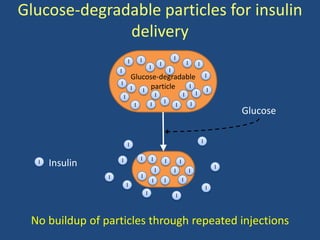
Glucose-degradable particles for insulin
              delivery
                                         I                               I
                                I                            I                           I               I
                                                 I
                    I                                                I
                                    Glucose-degradable                                                           I
                    I
                                    I  I
                                         particle   I
                                                                                                                 I
                                                         I                           I               I
                            I
                                                 I               I                               I
                                     I                                       I
                                                                                                                         Glucose

                                                                                                             I
                                I

                        I                I           I
  I   Insulin                                                    I               I
                                                                                                                     I
                                                         I               I                   I
                I                        I
                                                     I           I                   I
                                I                                                                                I
                                             I                               I


 No buildup of particles through repeated injections
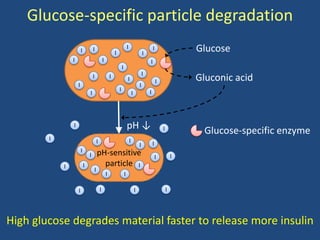
Glucose-specific particle degradation
                        I           I
                                                            I
                                                                            I
                                                                                                I
                                                                                                        I                   Glucose
                I                               I                                                   I
                                                                    I
                                                                                                I
                                    I                   I                   I                               I               Gluconic acid
                    I                                                                       I
                                                                I                                   I
                                I                                                   I


                I                                                           pH ↓                                I
                                                                                                                              Glucose-specific enzyme
        I                               I                                       I
                                                                                            I           I
                        I               pH-sensitive
                                I                                                                           I           I
            I               I             particle I
                                    I
                                                    I                   I

                    I                       I                                           I                           I


High glucose degrades material faster to release more insulin
Glucose-dependent drug release
      from injectable particles
                                70
                                             200 mg/dL glucose
                                60
      Total drug released (%)

                                50
                                40
                                30
                                20
                                10                           Control
                                 0
                                     0   2      4        6         8
                                              Hours

   Drug released in a glucose dependent manner
Provides long-lasting and fast-acting insulin dosages
Glucose-degradable system
             for insulin delivery
Deliver insulin in glucose-dependent manner
•   Insulin is delivered on demand
•   Reduces risk of insulin overdose (hypoglycemia)

Release insulin through polymer degradation
•   No buildup of material for repeated injection
•   Degrades into non-toxic byproducts

Deliver insulin for over 7 hours
•   Reduces frequency of injection
Thank you

Prof. Robert Langer
Prof. Daniel Anderson


JDRF Postdoctoral Fellowship
Leona M. and Harry B. Helmsley Charitable Trust

Tang

  • 1.
    Smart glucose responsivebiodegradable polymers for insulin delivery Benjamin Tang JDRF - New England April 10, 2012
  • 2.
    350 million affectedby diabetes in 2011 International Diabetes Foundation Atlas Fifth Ed. • By 2030, 550 million are expected to have diabetes • 4.6 million deaths in 2011 • Type 2 diabetes accounts for 90% • Type 1 diabetes increasing 5% annually
  • 3.
    Current T1D therapiesare intensive and do not tightly control blood sugar Shaded area - normal healthy range Dotted lines - insulin replacement therapy Jacobs Diabetes Care 1997
  • 4.
    Closed loop insulindelivery for T1D Measure blood glucose Insulin delivery system Deliver appropriate insulin dose Continuously monitor to tightly control blood glucose
  • 5.
    Closed loop insulindelivery systems Continuous glucose monitor & insulin pump • Frequent calibration (daily) and sensor replacement (3-7 days) • ~15 min lag time Implanted glucose monitor and pump • Shorter lag time (3 min) • Longer term solution: 1-5 years Glucose responsive gels • Combined sensing and delivery • Material removal after insulin consumed
  • 6.
    Smart insulin deliverysystems Rapidly deliver required dose of insulin when needed • Tightly maintain blood glucose within healthy range • Do not cause hypoglycemic events Deliver insulin over a long period • Reduce frequency of injection • Increase patient compliance Repeated and easy administration • No buildup of material in the body • Composed of biocompatible and safe materials
  • 7.
    Glucose-degradable particles forinsulin delivery I I I I I I I I I Glucose-degradable I I I I particle I I I I I I I I I I I Glucose I I I I I I Insulin I I I I I I I I I I I I I I I No buildup of particles through repeated injections
  • 8.
    Glucose-specific particle degradation I I I I I I Glucose I I I I I I I I I Gluconic acid I I I I I I I pH ↓ I Glucose-specific enzyme I I I I I I pH-sensitive I I I I I particle I I I I I I I I High glucose degrades material faster to release more insulin
  • 9.
    Glucose-dependent drug release from injectable particles 70 200 mg/dL glucose 60 Total drug released (%) 50 40 30 20 10 Control 0 0 2 4 6 8 Hours Drug released in a glucose dependent manner Provides long-lasting and fast-acting insulin dosages
  • 10.
    Glucose-degradable system for insulin delivery Deliver insulin in glucose-dependent manner • Insulin is delivered on demand • Reduces risk of insulin overdose (hypoglycemia) Release insulin through polymer degradation • No buildup of material for repeated injection • Degrades into non-toxic byproducts Deliver insulin for over 7 hours • Reduces frequency of injection
  • 11.
    Thank you Prof. RobertLanger Prof. Daniel Anderson JDRF Postdoctoral Fellowship Leona M. and Harry B. Helmsley Charitable Trust

Editor's Notes

  • #12 Support for this work was provided by …