ENVIRONMENT
MANAGEMENT
By
TAMILMANI
Table of content
Introduction
What is waste?
Ecosystem
Food chain
Food web
Human activities
Rescue management
Effect of adding waste to the environment :-
Human activities produce a lot of waste materials which
are thrown away into the environment. These wastes cause
pollution of air, water and soil.
The waste materials produced are of two main types. They
are biodegradable wastes and non biodegradable wastes.
i) Biodegradable wastes :- are wastes which are
decomposed into harmless substances by microorganisms.
Eg :- vegetables, fruits, pulses, cereals, cotton, jute, wool,
wood, leather, paper, animal dung, animal bones etc.
ii) Non biodegradable wastes :- are wastes which are not
decomposed by microorganisms.
Eg :- polythene bags, plastics, synthetic fibres, glass,
metals, synthetic rubber, insecticides, pesticides etc.
Ecosystem and its components :-
a) Ecosystem :- An ecosystem consists of all the living organisms in an
area along with the non living components and their interaction.
There are different types of ecosystems. They are :-
i) Natural ecosystems :- like forests, deserts, grass lands, mountains,
ponds, lakes, rivers, oceans etc.
ii) Artificial ecosystems :- like gardens, parks, crop fields, aquarium, zoo etc.
b) Components of an ecosystem :-
An ecosystem consists of two main components. They are biotic and abiotic
components.
i) Biotic components :- are the living components like plants, animals and
microorganisms. They consist of producers, consumers and decomposers.
Producers :- are green plants which produce food by photosynthesis.
Consumers :- are herbivores which get their food directly from plants,
carnivores which get their food indirectly from plants and omnivores which
get their food directly or indirectly from plants.
Decomposers :- are microorganisms which decompose dead plants and
animals. They decompose complex organic substances into simple inorganic
substances in the soil which are again used by plants.
ii) Abiotic components :- are the non living components like air, water, soil,
minerals, sunlight , temperature, wind etc.
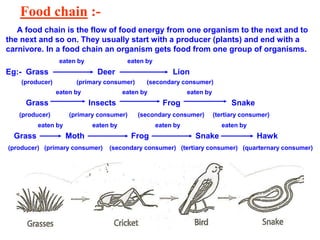
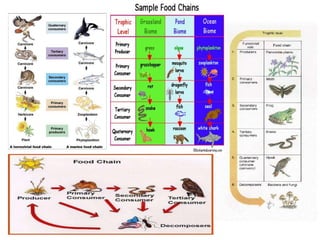
Food chain :-
A food chain is the flow of food energy from one organism to the next and to
the next and so on. They usually start with a producer (plants) and end with a
carnivore. In a food chain an organism gets food from one group of organisms.
eaten by eaten by
Eg:- Grass Deer Lion
(producer) (primary consumer) (secondary consumer)
eaten by eaten by eaten by
Grass Insects Frog Snake
(producer) (primary consumer) (secondary consumer) (tertiary consumer)
eaten by eaten by eaten by eaten by
Grass Moth Frog Snake Hawk
(producer) (primary consumer) (secondary consumer) (tertiary consumer) (quarternary consumer)
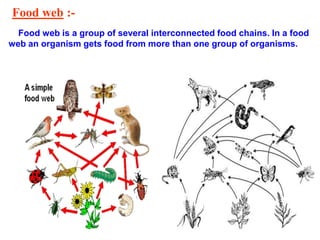
Food web :-
Food web is a group of several interconnected food chains. In a food
web an organism gets food from more than one group of organisms.
Human activities affect the environment :-
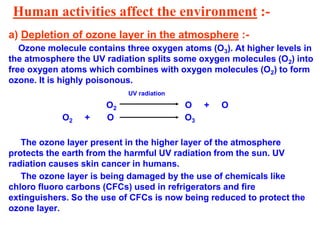
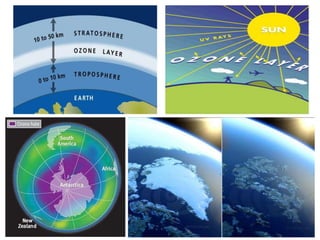
a) Depletion of ozone layer in the atmosphere :-
Ozone molecule contains three oxygen atoms (O3). At higher levels in
the atmosphere the UV radiation splits some oxygen molecules (O2) into
free oxygen atoms which combines with oxygen molecules (O2) to form
ozone. It is highly poisonous.
UV radiation
O2 O + O
O2 + O O3
The ozone layer present in the higher layer of the atmosphere
protects the earth from the harmful UV radiation from the sun. UV
radiation causes skin cancer in humans.
The ozone layer is being damaged by the use of chemicals like
chloro fluoro carbons (CFCs) used in refrigerators and fire
extinguishers. So the use of CFCs is now being reduced to protect the
ozone layer.
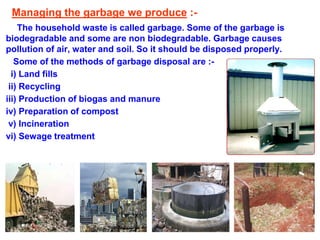
Managing the garbage we produce :-
The household waste is called garbage. Some of the garbage is
biodegradable and some are non biodegradable. Garbage causes
pollution of air, water and soil. So it should be disposed properly.
Some of the methods of garbage disposal are :-
i) Land fills
ii) Recycling
iii) Production of biogas and manure
iv) Preparation of compost
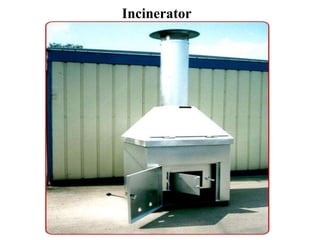
v) Incineration
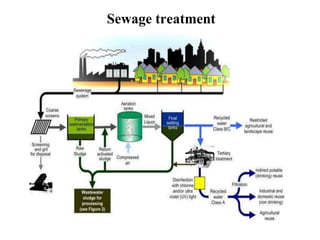
vi) Sewage treatment
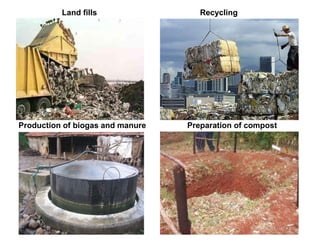
Land fills Recycling
Production of biogas and manure Preparation of compost
Incinerator
Sewage treatment
“THANKYOU”

TAMILMANI..pptx

  • 1.
  • 2.
    Table of content Introduction Whatis waste? Ecosystem Food chain Food web Human activities Rescue management
  • 3.
    Effect of addingwaste to the environment :- Human activities produce a lot of waste materials which are thrown away into the environment. These wastes cause pollution of air, water and soil. The waste materials produced are of two main types. They are biodegradable wastes and non biodegradable wastes. i) Biodegradable wastes :- are wastes which are decomposed into harmless substances by microorganisms. Eg :- vegetables, fruits, pulses, cereals, cotton, jute, wool, wood, leather, paper, animal dung, animal bones etc. ii) Non biodegradable wastes :- are wastes which are not decomposed by microorganisms. Eg :- polythene bags, plastics, synthetic fibres, glass, metals, synthetic rubber, insecticides, pesticides etc.
  • 4.
    Ecosystem and itscomponents :- a) Ecosystem :- An ecosystem consists of all the living organisms in an area along with the non living components and their interaction. There are different types of ecosystems. They are :- i) Natural ecosystems :- like forests, deserts, grass lands, mountains, ponds, lakes, rivers, oceans etc. ii) Artificial ecosystems :- like gardens, parks, crop fields, aquarium, zoo etc. b) Components of an ecosystem :- An ecosystem consists of two main components. They are biotic and abiotic components. i) Biotic components :- are the living components like plants, animals and microorganisms. They consist of producers, consumers and decomposers. Producers :- are green plants which produce food by photosynthesis. Consumers :- are herbivores which get their food directly from plants, carnivores which get their food indirectly from plants and omnivores which get their food directly or indirectly from plants. Decomposers :- are microorganisms which decompose dead plants and animals. They decompose complex organic substances into simple inorganic substances in the soil which are again used by plants. ii) Abiotic components :- are the non living components like air, water, soil, minerals, sunlight , temperature, wind etc.
  • 5.
    Food chain :- Afood chain is the flow of food energy from one organism to the next and to the next and so on. They usually start with a producer (plants) and end with a carnivore. In a food chain an organism gets food from one group of organisms. eaten by eaten by Eg:- Grass Deer Lion (producer) (primary consumer) (secondary consumer) eaten by eaten by eaten by Grass Insects Frog Snake (producer) (primary consumer) (secondary consumer) (tertiary consumer) eaten by eaten by eaten by eaten by Grass Moth Frog Snake Hawk (producer) (primary consumer) (secondary consumer) (tertiary consumer) (quarternary consumer)
  • 7.
    Food web :- Foodweb is a group of several interconnected food chains. In a food web an organism gets food from more than one group of organisms.
  • 8.
    Human activities affectthe environment :- a) Depletion of ozone layer in the atmosphere :- Ozone molecule contains three oxygen atoms (O3). At higher levels in the atmosphere the UV radiation splits some oxygen molecules (O2) into free oxygen atoms which combines with oxygen molecules (O2) to form ozone. It is highly poisonous. UV radiation O2 O + O O2 + O O3 The ozone layer present in the higher layer of the atmosphere protects the earth from the harmful UV radiation from the sun. UV radiation causes skin cancer in humans. The ozone layer is being damaged by the use of chemicals like chloro fluoro carbons (CFCs) used in refrigerators and fire extinguishers. So the use of CFCs is now being reduced to protect the ozone layer.
  • 10.
    Managing the garbagewe produce :- The household waste is called garbage. Some of the garbage is biodegradable and some are non biodegradable. Garbage causes pollution of air, water and soil. So it should be disposed properly. Some of the methods of garbage disposal are :- i) Land fills ii) Recycling iii) Production of biogas and manure iv) Preparation of compost v) Incineration vi) Sewage treatment
  • 11.
    Land fills Recycling Productionof biogas and manure Preparation of compost
  • 12.
  • 13.
  • 14.