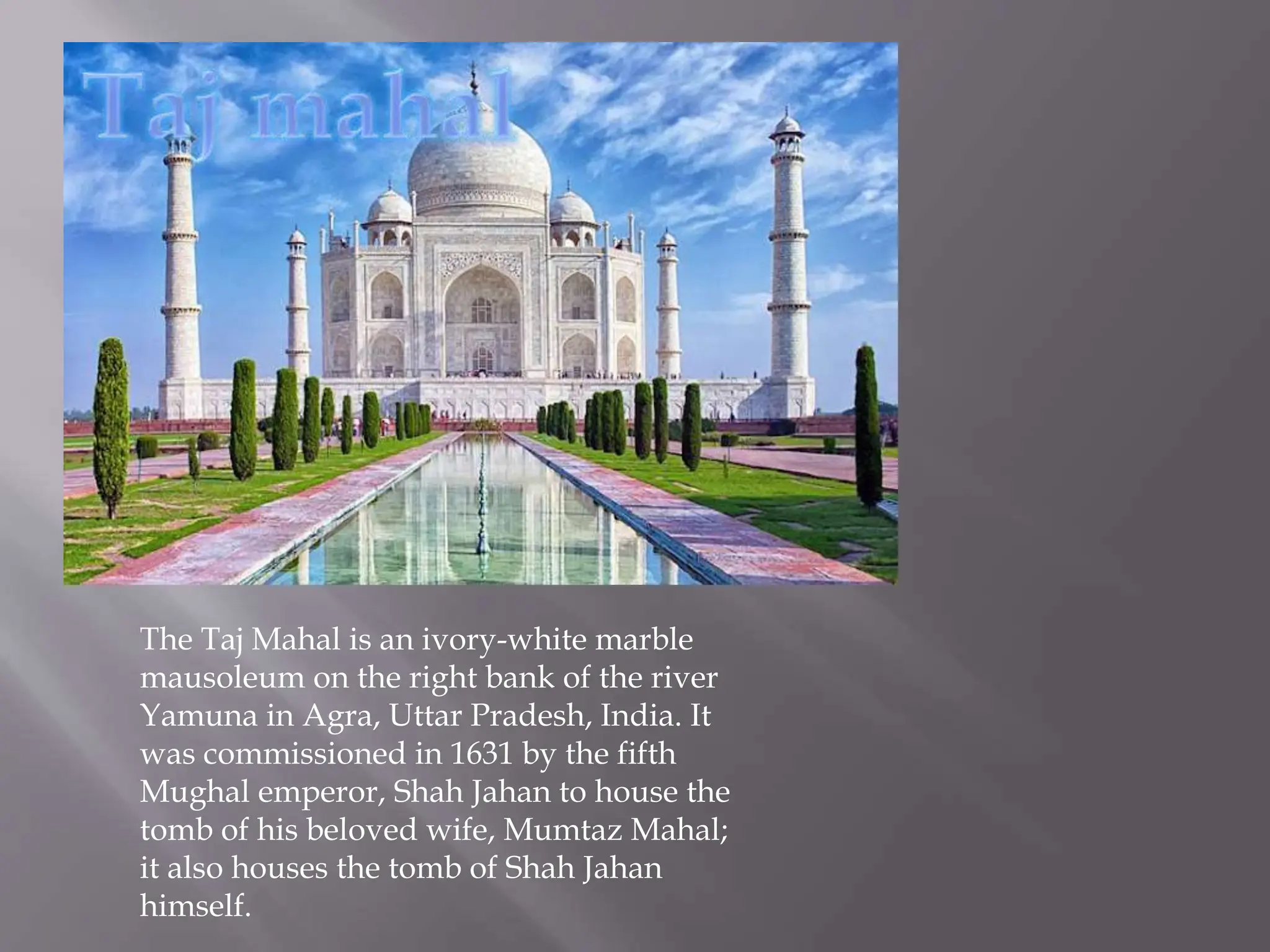
The Taj Mahal is an ivory-white marble
mausoleum on the right bank of the river
Yamuna in Agra, Uttar Pradesh, India. It
was commissioned in 1631 by the fifth
Mughal emperor, Shah Jahan to house the
tomb of his beloved wife, Mumtaz Mahal;
it also houses the tomb of Shah Jahan
himself.
In its harmonious proportions and its fluid
incorporation of decorative elements, the Taj Mahal
is distinguished as the finest example of Mughal
architecture,
a blend of Indian, Persian, and Islamic styles.
Other attractions include twin mosque buildings
(placed symmetrically on
either side of the mausoleum), lovely gardens,
and a museum. One of the most beautiful
structural compositions in the world, the Taj Mahal
is also one of the world’s most
iconic monuments, visited by millions of tourists
each year. The complex was designated
a UNESCO World Heritage site in 1983.
The plans for the complex have been
attributed to various architects of the
period, though the chief architect was
probably Ustad Aḥmad Lahawrī, an Indian
of Persian descent. The five principal
elements of the complex—main gateway,
garden, mosque,
jawāb (literally “answer”; a building
mirroring the mosque), and mausoleum
(including its four minarets)—were
conceived and designed as a unified entity
according to the tenets of Mughal building
practice, which
allowed no subsequent addition or
alteration. Building commenced about
1632. More than 20,000 workers were
employed from India, Persia, the
The garden is set out
along classical Mughal lines—a square
quartered by
long watercourses
(pools)—with
walking paths,
fountains, and
ornamental
trees. Enclosed
by the walls
and structures of
the complex, it provides
a striking
Two notable decorative features are
repeated throughout the complex: pietra
dura and Arabic
calligraphy. As embodied
in the Mughal craft, pietra
dura(Italian: “hard stone”)
incorporates
the inlay of semiprecious stones of various
colours, including lapis
lazuli, jade, crystal,
turquoise, and amethyst, in
highly formalized and
intertwining geometric
and floral designs. The
colours serve to
moderate
the dazzling expanse of the white Makrana
marble.
Under the direction of Amānat Khan al-
Shīrāzī, verses from the Qurʾān were
inscribed
acrossnumerous sections of the
Taj Mahal in calligraphy, central to Islamic
artistic tradition. One of
the inscriptions in the sandstone
gateway is known as Daybreak
(89:28–30) and invites the
faithful t
o enter paradise. Calligraphy also encircles
the soaring
arched entrances to the mausoleum
proper. To
ensure a uniform appearance
from the vantage point
of the terrace, the lettering increases
in
size according to its relative
height and distance
from the viewer.
Current issues
ver the centuries the
Taj Mahal has been subject to
neglect
and decay. A major restoration was
carried out at
the beginning of the 20th
century under the direction of
Lord Curzon, then the
British
pollutioncaused by emissions
from foundries and other
nearby factories and exhaust from
motor
vehicles hasdamaged the
mausoleum, notably its marble
façade
Anumber of measures
have been taken toreduc
e the threat to
the
monument, among them
the closing of some
foundries and the installation of
pollution-control equipment at others, the
creation of a parkland
buffer zone around the
complex, and the banning of
nearby
vehicular traffic. A
restoration and
researchprogram for the
Taj Mahal was initiated in
1998.Progress in improving
environmental conditions around
themonument has been
slow, however.
From time to time the
Taj Mahalhas been subject to
India’s political dynamics.
Nightviewing was banned there
between 1984and 0024because
it was feared that the
monument would be a
target of Sikh militants. In
addition, it
Increasingly
has come to be seen as an
Indiancultural symbol. Som
e Hindu nationalist groups
have attempted to diminish the
importance of
the Musliminfluence in
accounting for the origins and design of
the
Taj Mahal.
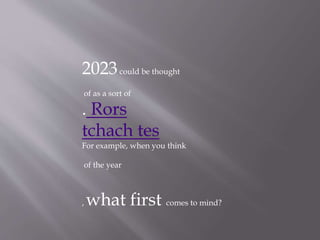
2023could be thought
of as a sort of
. Rors
tchach tes
For example, when you think
of the year
, what first comes to mind?
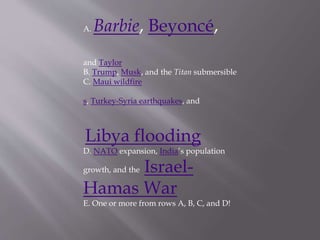
A. Barbie, Beyoncé,
and Taylor
B. Trump, Musk, and the Titan submersible
C. Maui wildfire
s, Turkey-Syria earthquakes, and
Libya flooding
D. NATO expansion, India’s population
growth, and the Israel-
Hamas War
E. One or more from rows A, B, C, and D!

taj mahal love store

  • 1.
    The Taj Mahalis an ivory-white marble mausoleum on the right bank of the river Yamuna in Agra, Uttar Pradesh, India. It was commissioned in 1631 by the fifth Mughal emperor, Shah Jahan to house the tomb of his beloved wife, Mumtaz Mahal; it also houses the tomb of Shah Jahan himself.
  • 4.
    In its harmoniousproportions and its fluid incorporation of decorative elements, the Taj Mahal is distinguished as the finest example of Mughal architecture, a blend of Indian, Persian, and Islamic styles. Other attractions include twin mosque buildings (placed symmetrically on either side of the mausoleum), lovely gardens, and a museum. One of the most beautiful structural compositions in the world, the Taj Mahal is also one of the world’s most iconic monuments, visited by millions of tourists each year. The complex was designated a UNESCO World Heritage site in 1983.
  • 5.
    The plans forthe complex have been attributed to various architects of the period, though the chief architect was probably Ustad Aḥmad Lahawrī, an Indian of Persian descent. The five principal elements of the complex—main gateway, garden, mosque, jawāb (literally “answer”; a building mirroring the mosque), and mausoleum (including its four minarets)—were conceived and designed as a unified entity according to the tenets of Mughal building practice, which allowed no subsequent addition or alteration. Building commenced about 1632. More than 20,000 workers were employed from India, Persia, the
  • 12.
    The garden isset out along classical Mughal lines—a square quartered by long watercourses (pools)—with walking paths, fountains, and ornamental trees. Enclosed by the walls and structures of the complex, it provides a striking
  • 15.
    Two notable decorativefeatures are repeated throughout the complex: pietra dura and Arabic calligraphy. As embodied in the Mughal craft, pietra dura(Italian: “hard stone”) incorporates the inlay of semiprecious stones of various
  • 16.
    colours, including lapis lazuli,jade, crystal, turquoise, and amethyst, in highly formalized and intertwining geometric and floral designs. The colours serve to moderate the dazzling expanse of the white Makrana marble. Under the direction of Amānat Khan al- Shīrāzī, verses from the Qurʾān were inscribed
  • 17.
    acrossnumerous sections ofthe Taj Mahal in calligraphy, central to Islamic artistic tradition. One of the inscriptions in the sandstone gateway is known as Daybreak (89:28–30) and invites the faithful t o enter paradise. Calligraphy also encircles the soaring arched entrances to the mausoleum proper. To
  • 18.
    ensure a uniformappearance from the vantage point of the terrace, the lettering increases in size according to its relative height and distance from the viewer.
  • 19.
    Current issues ver thecenturies the Taj Mahal has been subject to neglect and decay. A major restoration was carried out at the beginning of the 20th century under the direction of Lord Curzon, then the British
  • 20.
    pollutioncaused by emissions fromfoundries and other nearby factories and exhaust from motor vehicles hasdamaged the mausoleum, notably its marble façade Anumber of measures have been taken toreduc e the threat to the
  • 21.
    monument, among them theclosing of some foundries and the installation of pollution-control equipment at others, the creation of a parkland buffer zone around the complex, and the banning of nearby vehicular traffic. A restoration and
  • 22.
    researchprogram for the TajMahal was initiated in 1998.Progress in improving environmental conditions around themonument has been slow, however.
  • 23.
    From time totime the Taj Mahalhas been subject to India’s political dynamics. Nightviewing was banned there between 1984and 0024because it was feared that the monument would be a target of Sikh militants. In addition, it
  • 24.
    Increasingly has come tobe seen as an Indiancultural symbol. Som e Hindu nationalist groups have attempted to diminish the importance of the Musliminfluence in accounting for the origins and design of the Taj Mahal.
  • 25.
    2023could be thought ofas a sort of . Rors tchach tes For example, when you think of the year , what first comes to mind?
  • 26.
    A. Barbie, Beyoncé, andTaylor B. Trump, Musk, and the Titan submersible C. Maui wildfire s, Turkey-Syria earthquakes, and Libya flooding D. NATO expansion, India’s population growth, and the Israel- Hamas War E. One or more from rows A, B, C, and D!