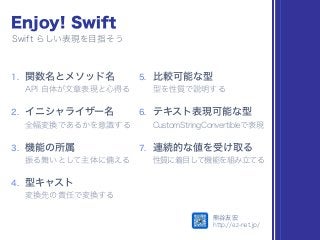
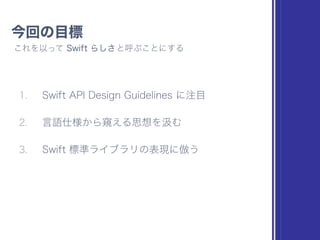
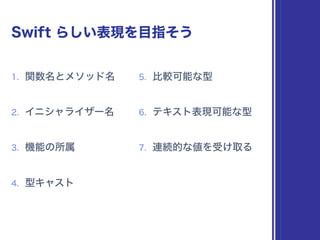
iOS オールスターズ2でお話しした資料です! Swift らしさってなんだろう、そんなところを API デザインガイドラインと Swift 標準ライブラリの表現に着目して 7 つほど紹介してみました。あくまでも "指針" なので『そういう風に考えていくのね』みたいに捉えて、そこからは "自分らしい" 言葉を紡いでいってくれたらいいのかなって思います。
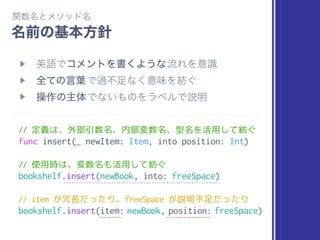
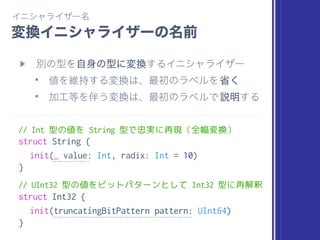
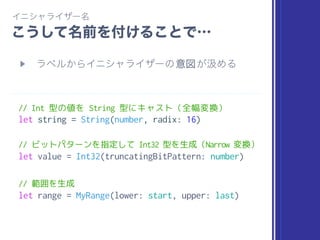
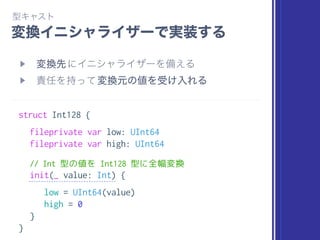
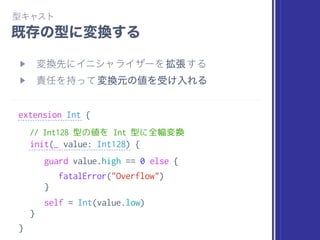
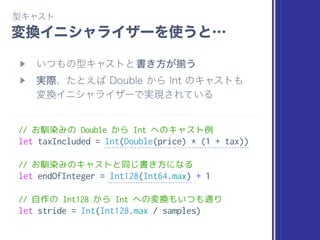
// Int 型の値をString 型にキャスト(全幅変換)
let string = String(number, radix: 16)
// ビットパターンを指定して Int32 型を生成(Narrow 変換)
let value = Int32(truncatingBitPattern: number)
// 範囲を生成
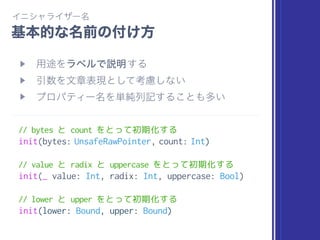
let range = MyRange(lower: start, upper: last)
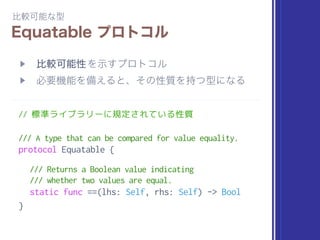
// 標準ライブラリーに規定されている性質
/// Atype that can be compared for value equality.
protocol Equatable {
/// Returns a Boolean value indicating
/// whether two values are equal.
static func ==(lhs: Self, rhs: Self) -> Bool
}
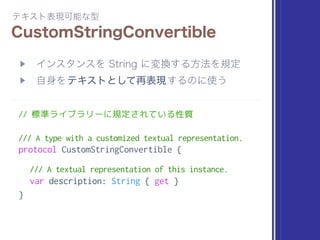
// 標準ライブラリーに規定されている性質
/// Atype with a customized textual representation.
protocol CustomStringConvertible {
/// A textual representation of this instance.
var description: String { get }
}
42.
enum Device :CustomStringConvertible {
case iPhone, iPad, appleWatch
var description: String {
switch self {
case .iPhone: return "iPhone"
case .iPad: return "iPad"
case .appleWatch: return " Watch"
}
}
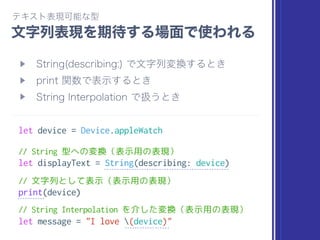
43.
let device =Device.appleWatch
// テキスト表現への Narrow 変換
let displayText = String(describing: device)
// テキスト表現に変換して、テキストコンソールに出力
print(device)
// String 型の文字列補完構文は、テキスト表現を使用
let message = "I love (device)"
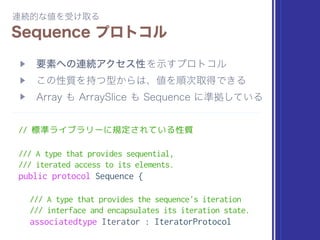
// 標準ライブラリーに規定されている性質
/// Atype that provides sequential,
/// iterated access to its elements.
public protocol Sequence {
/// A type that provides the sequence's iteration
/// interface and encapsulates its iteration state.
associatedtype Iterator : IteratorProtocol
50.
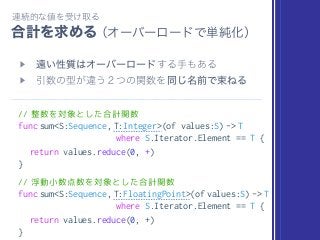
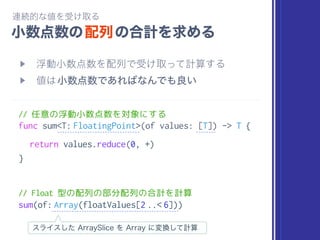
// 連続する任意の浮動小数点数を対象にする
func sum<S:Sequence, T: FloatingPoint>
(of values: S) -> T where S.Iterator.Element == T {
return values.reduce(0, +)
}
// 連続する浮動小数点数の部分配列の合計を計算
sum(of: floatValues[2 ..< 6])





![// 自作の型なら、直接でも拡張でも自由に備えられる
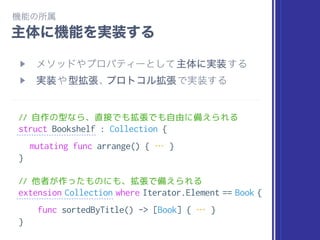
struct Bookshelf : Collection {
mutating func arrange() { … }
}
// 他者が作ったものにも、拡張で備えられる
extension Collection where Iterator.Element == Book {
func sortedByTitle() -> [Book] { … }
}](https://image.slidesharecdn.com/eventdotsswift-161120075854/85/Swift-eventdots-26-320.jpg)

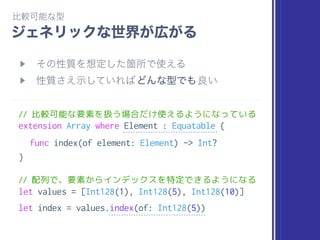

![// 比較可能な要素を扱う場合だけ使えるようになっている
extension Array where Element : Equatable {
func index(of element: Element) -> Int?
}
// 配列で、要素からインデックスを特定できるようになる
let values = [Int128(1), Int128(5), Int128(10)]
let index = values.index(of: Int128(5))](https://image.slidesharecdn.com/eventdotsswift-161120075854/85/Swift-eventdots-38-320.jpg)
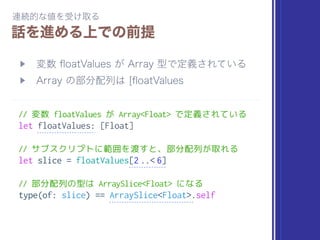
![// 変数 floatValues が Array<Float> で定義されている
let floatValues: [Float]
// サブスクリプトに範囲を渡すと、部分配列が取れる
let slice = floatValues[2 ..< 6]
// 部分配列の型は ArraySlice<Float> になる
type(of: slice) == ArraySlice<Float>.self](https://image.slidesharecdn.com/eventdotsswift-161120075854/85/Swift-eventdots-46-320.jpg)
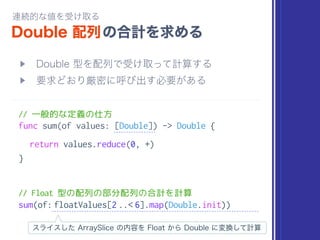
![// 一般的な定義の仕方
func sum(of values: [Double]) -> Double {
return values.reduce(0, +)
}
// Float 型の配列の部分配列の合計を計算
sum(of: floatValues[2 ..< 6].map(Double.init))](https://image.slidesharecdn.com/eventdotsswift-161120075854/85/Swift-eventdots-47-320.jpg)
![// 任意の浮動小数点数を対象にする
func sum<T: FloatingPoint>(of values: [T]) -> T {
return values.reduce(0, +)
}
// Float 型の配列の部分配列の合計を計算
sum(of: Array(floatValues[2 ..< 6]))](https://image.slidesharecdn.com/eventdotsswift-161120075854/85/Swift-eventdots-48-320.jpg)
![// 連続する任意の浮動小数点数を対象にする
func sum<S: Sequence, T: FloatingPoint>
(of values: S) -> T where S.Iterator.Element == T {
return values.reduce(0, +)
}
// 連続する浮動小数点数の部分配列の合計を計算
sum(of: floatValues[2 ..< 6])](https://image.slidesharecdn.com/eventdotsswift-161120075854/85/Swift-eventdots-50-320.jpg)
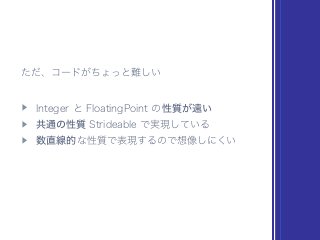
![// 自身の値でストライドできる値を対象にする
func sum<S: Sequence, T:Strideable>(of values: S) -> T
where S.Iterator.Element == T, T.Stride == T {
return values.reduce(0) { $0.advanced(by: $1) }
}
// 連続する値の部分配列の合計を計算
sum(of: floatValues[2 ..< 6])
sum(of: integerValues[2 ..< 6])](https://image.slidesharecdn.com/eventdotsswift-161120075854/85/Swift-eventdots-51-320.jpg)