Suðuroy, Føroyar
  (Faroe Islands)

  September 2011
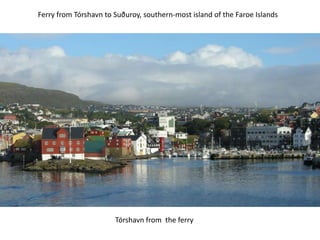
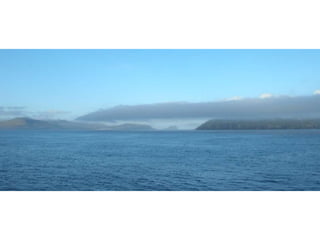
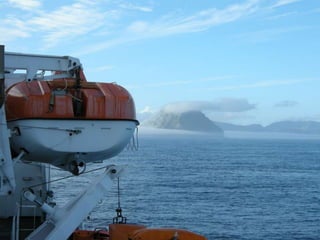
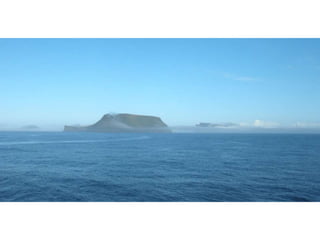
Ferry from Tórshavn to Suðuroy, southern-most island of the Faroe Islands


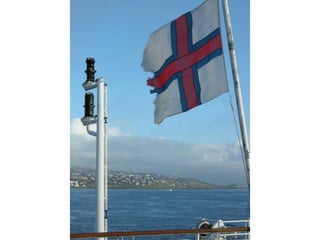
                       Tórshavn from the ferry
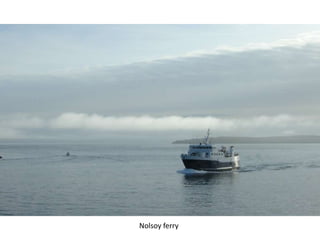
Nolsoy ferry
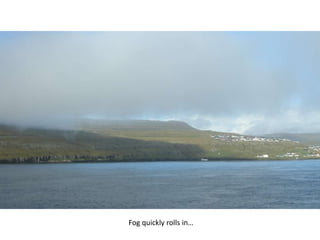
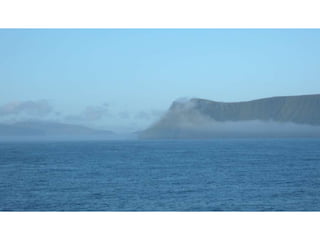
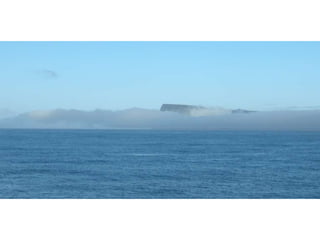
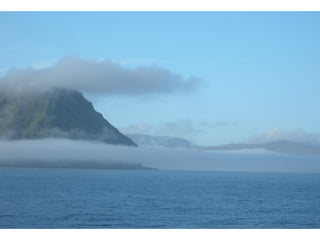
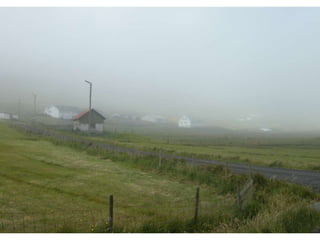
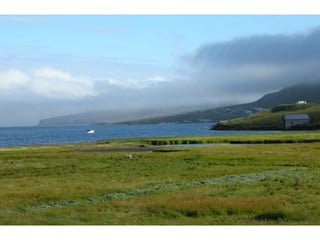
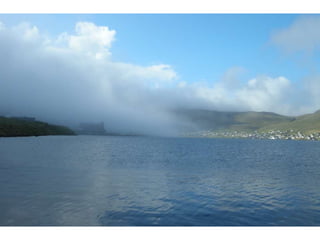
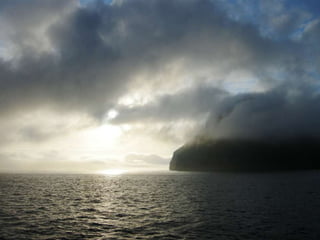
Fog quickly rolls in…
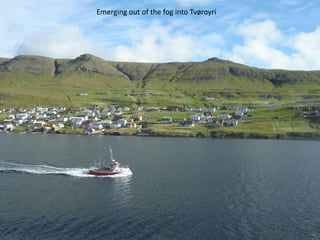
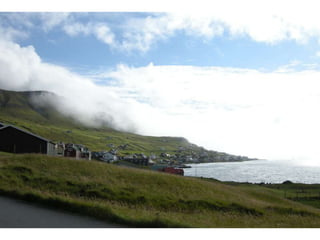
Emerging out of the fog into Tvøroyri
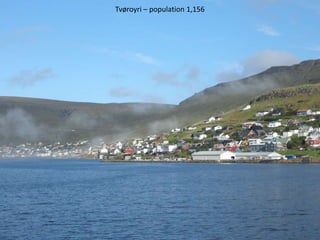
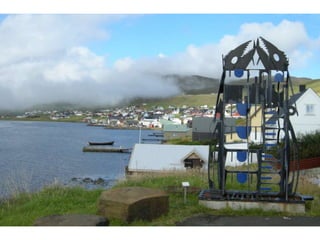
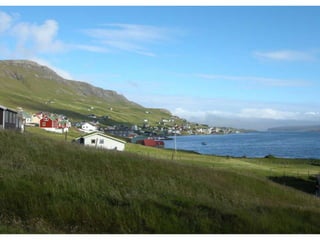
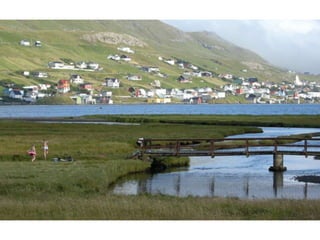
Tvøroyri – population 1,156
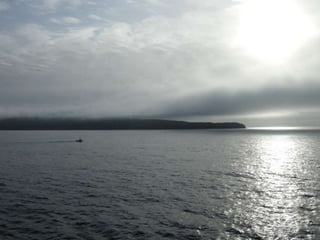
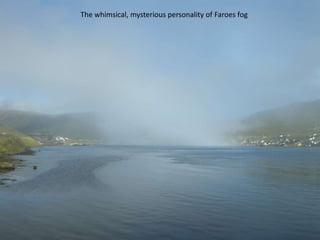
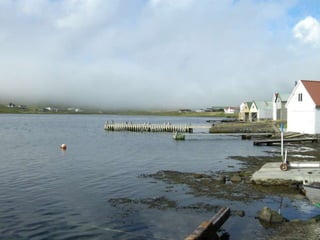
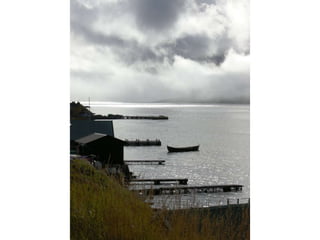
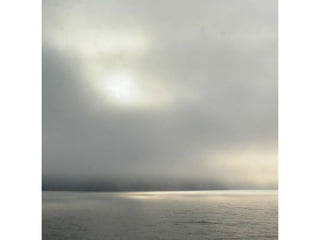
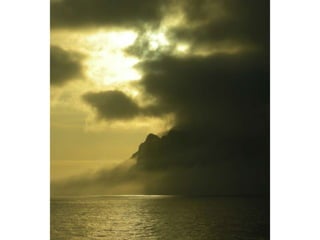
The whimsical, mysterious personality of Faroes fog
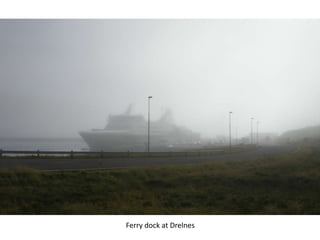
Ferry dock at Drelnes
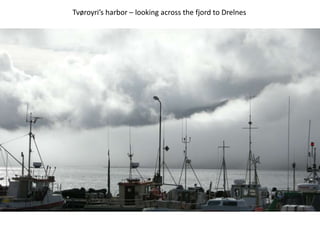
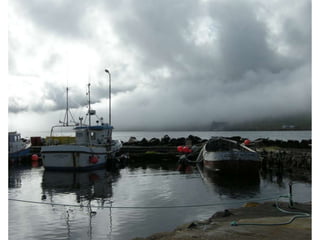
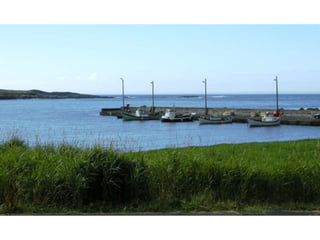
Tvøroyri’s harbor – looking across the fjord to Drelnes
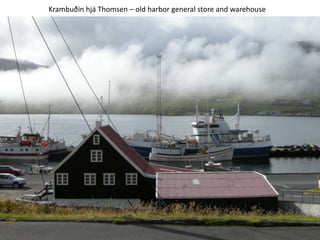
Krambuðin hjá Thomsen – old harbor general store and warehouse
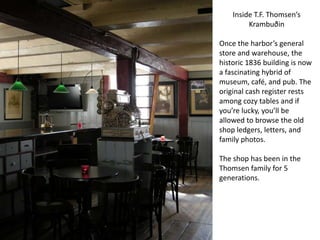
Inside T.F. Thomsen’s
         Krambuðin

Once the harbor’s general
store and warehouse, the
historic 1836 building is now
a fascinating hybrid of
museum, café, and pub. The
original cash register rests
among cozy tables and if
you’re lucky, you’ll be
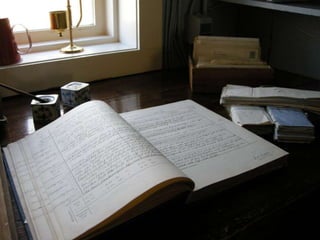
allowed to browse the old
shop ledgers, letters, and
family photos.

The shop has been in the
Thomsen family for 5
generations.
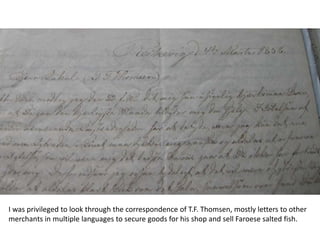
I was privileged to look through the correspondence of T.F. Thomsen, mostly letters to other
merchants in multiple languages to secure goods for his shop and sell Faroese salted fish.
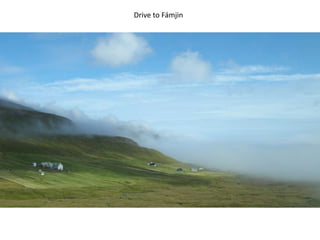
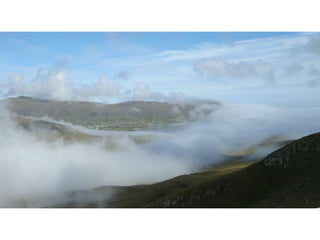
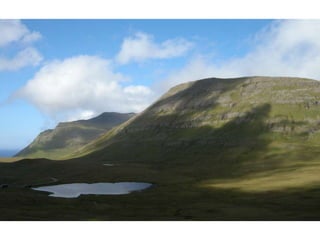
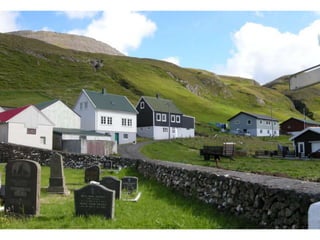
Drive to Fámjin
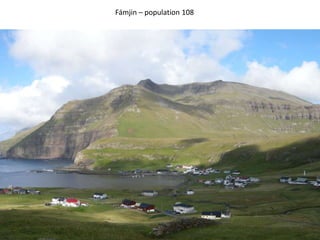
Fámjin – population 108
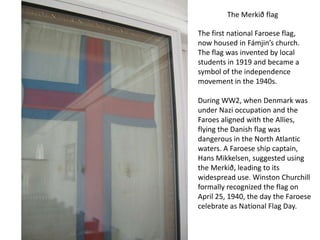
The Merkið flag

The first national Faroese flag,
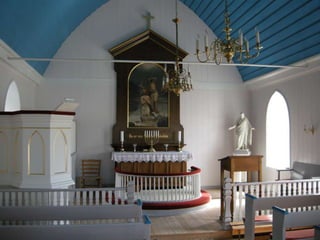
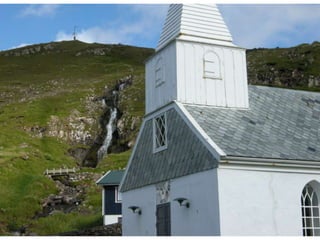
now housed in Fámjin’s church.
The flag was invented by local
students in 1919 and became a
symbol of the independence
movement in the 1940s.

During WW2, when Denmark was
under Nazi occupation and the
Faroes aligned with the Allies,
flying the Danish flag was
dangerous in the North Atlantic
waters. A Faroese ship captain,
Hans Mikkelsen, suggested using
the Merkið, leading to its
widespread use. Winston Churchill
formally recognized the flag on
April 25, 1940, the day the Faroese
celebrate as National Flag Day.
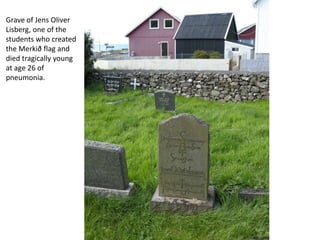
Grave of Jens Oliver
Lisberg, one of the
students who created
the Merkið flag and
died tragically young
at age 26 of
pneumonia.
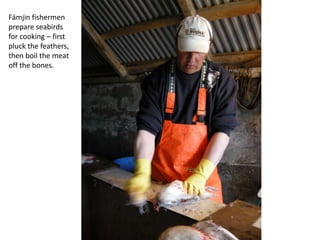
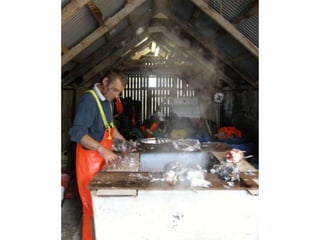
Fámjin fishermen
prepare seabirds
for cooking – first
pluck the feathers,
then boil the meat
off the bones.
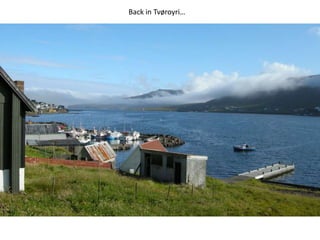
Back in Tvøroyri…
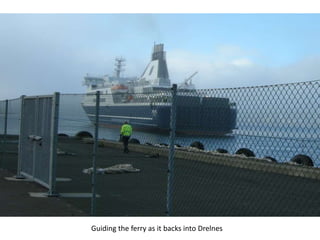
Guiding the ferry as it backs into Drelnes
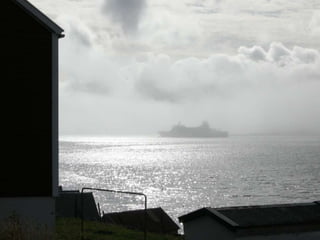
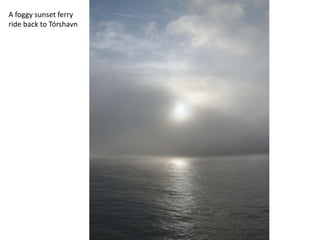
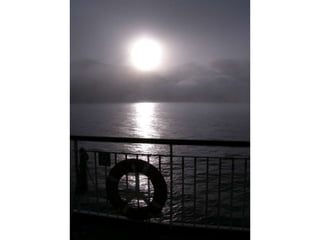
A foggy sunset ferry
ride back to Tórshavn
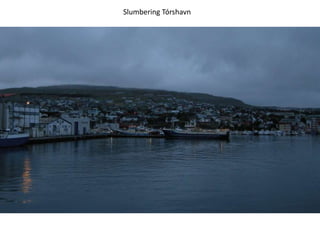
Slumbering Tórshavn

Suðuroy, Faroe Islands