Sustainable
Development
1
Introduction to Sustainable Development
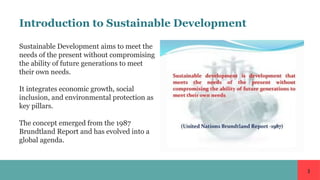
Sustainable Development aims to meet the
needs of the present without compromising
the ability of future generations to meet
their own needs.
It integrates economic growth, social
inclusion, and environmental protection as
key pillars.
The concept emerged from the 1987
Brundtland Report and has evolved into a
global agenda.
2
The Three Pillars of Sustainable Development
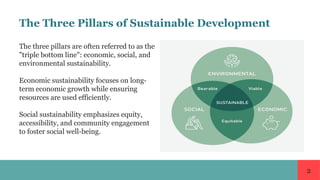
The three pillars are often referred to as the
"triple bottom line": economic, social, and
environmental sustainability.
Economic sustainability focuses on long-
term economic growth while ensuring
resources are used efficiently.
Social sustainability emphasizes equity,
accessibility, and community engagement
to foster social well-being.
3
Key Sustainable Development Goals (SDGs)
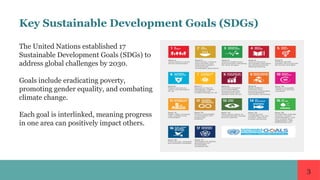
The United Nations established 17
Sustainable Development Goals (SDGs) to
address global challenges by 2030.
Goals include eradicating poverty,
promoting gender equality, and combating
climate change.
Each goal is interlinked, meaning progress
in one area can positively impact others.
4
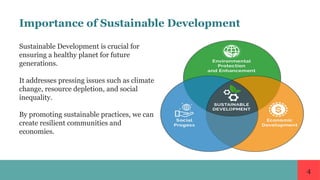
Importance of Sustainable Development
Sustainable Development is crucial for
ensuring a healthy planet for future
generations.
It addresses pressing issues such as climate
change, resource depletion, and social
inequality.
By promoting sustainable practices, we can
create resilient communities and
economies.
5
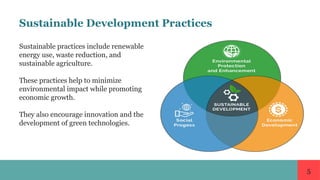
Sustainable Development Practices
Sustainable practices include renewable
energy use, waste reduction, and
sustainable agriculture.
These practices help to minimize
environmental impact while promoting
economic growth.
They also encourage innovation and the
development of green technologies.
6
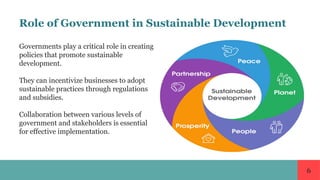
Role of Government in Sustainable Development
Governments play a critical role in creating
policies that promote sustainable
development.
They can incentivize businesses to adopt
sustainable practices through regulations
and subsidies.
Collaboration between various levels of
government and stakeholders is essential
for effective implementation.
7
Private Sector's Contribution
The private sector is key in driving
innovation and investment in sustainable
solutions.
Corporate social responsibility (CSR)
initiatives encourage companies to
prioritize sustainability in their operations.
Partnerships between businesses and
communities can lead to impactful
sustainable development projects.
8
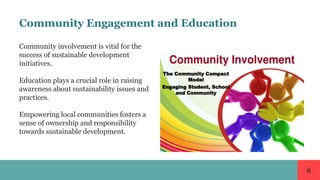
Community Engagement and Education
Community involvement is vital for the
success of sustainable development
initiatives.
Education plays a crucial role in raising
awareness about sustainability issues and
practices.
Empowering local communities fosters a
sense of ownership and responsibility
towards sustainable development.
9
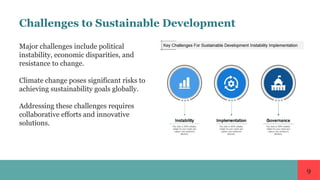
Challenges to Sustainable Development
Major challenges include political
instability, economic disparities, and
resistance to change.
Climate change poses significant risks to
achieving sustainability goals globally.
Addressing these challenges requires
collaborative efforts and innovative
solutions.
10
The Future of Sustainable Development
The future of sustainable development
relies on global cooperation and
commitment to the SDGs.
Advancements in technology and renewable
energy will play a crucial role in this
transition.
A collective approach from individuals,
communities, governments, and businesses
is essential for success.
This outline provides a structured overview
of Sustainable Development suitable for a

Sustainable Development.pptx Download for free

  • 1.
  • 2.
    1 Introduction to SustainableDevelopment Sustainable Development aims to meet the needs of the present without compromising the ability of future generations to meet their own needs. It integrates economic growth, social inclusion, and environmental protection as key pillars. The concept emerged from the 1987 Brundtland Report and has evolved into a global agenda.
  • 3.
    2 The Three Pillarsof Sustainable Development The three pillars are often referred to as the "triple bottom line": economic, social, and environmental sustainability. Economic sustainability focuses on long- term economic growth while ensuring resources are used efficiently. Social sustainability emphasizes equity, accessibility, and community engagement to foster social well-being.
  • 4.
    3 Key Sustainable DevelopmentGoals (SDGs) The United Nations established 17 Sustainable Development Goals (SDGs) to address global challenges by 2030. Goals include eradicating poverty, promoting gender equality, and combating climate change. Each goal is interlinked, meaning progress in one area can positively impact others.
  • 5.
    4 Importance of SustainableDevelopment Sustainable Development is crucial for ensuring a healthy planet for future generations. It addresses pressing issues such as climate change, resource depletion, and social inequality. By promoting sustainable practices, we can create resilient communities and economies.
  • 6.
    5 Sustainable Development Practices Sustainablepractices include renewable energy use, waste reduction, and sustainable agriculture. These practices help to minimize environmental impact while promoting economic growth. They also encourage innovation and the development of green technologies.
  • 7.
    6 Role of Governmentin Sustainable Development Governments play a critical role in creating policies that promote sustainable development. They can incentivize businesses to adopt sustainable practices through regulations and subsidies. Collaboration between various levels of government and stakeholders is essential for effective implementation.
  • 8.
    7 Private Sector's Contribution Theprivate sector is key in driving innovation and investment in sustainable solutions. Corporate social responsibility (CSR) initiatives encourage companies to prioritize sustainability in their operations. Partnerships between businesses and communities can lead to impactful sustainable development projects.
  • 9.
    8 Community Engagement andEducation Community involvement is vital for the success of sustainable development initiatives. Education plays a crucial role in raising awareness about sustainability issues and practices. Empowering local communities fosters a sense of ownership and responsibility towards sustainable development.
  • 10.
    9 Challenges to SustainableDevelopment Major challenges include political instability, economic disparities, and resistance to change. Climate change poses significant risks to achieving sustainability goals globally. Addressing these challenges requires collaborative efforts and innovative solutions.
  • 11.
    10 The Future ofSustainable Development The future of sustainable development relies on global cooperation and commitment to the SDGs. Advancements in technology and renewable energy will play a crucial role in this transition. A collective approach from individuals, communities, governments, and businesses is essential for success. This outline provides a structured overview of Sustainable Development suitable for a

Editor's Notes

  • #2 Image source: https://www.slideshare.net/slideshow/ppt-on-sustainable-development/69545215
  • #3 Image source: https://www.gevme.com/en/blog/the-three-pillars-of-sustainability/
  • #4 Image source: https://allempirepictures.blogspot.com/2021/07/sdgs-un-sustainable-development-goals.html
  • #5 Image source: https://mayandjune2025calendar.pages.dev/new-vdwmq-e-2025-initiative-transforming-governance-for-sustainable-development-wlymh-pics/
  • #6 Image source: https://www.arenasolutions.com/resources/glossary/sustainable-development/
  • #7 Image source: https://trailhead.salesforce.com/content/learn/modules/the-global-goals/learn-about-the-global-goals
  • #8 Image source: https://diferr.com/public-sector-and-private-sector/
  • #9 Image source: https://www.slideserve.com/mignon/community-involvement
  • #10 Image source: https://www.slideteam.net/key-challenges-for-sustainable-development-instability-implementation.html
  • #11 Image source: https://www.slidemake.com