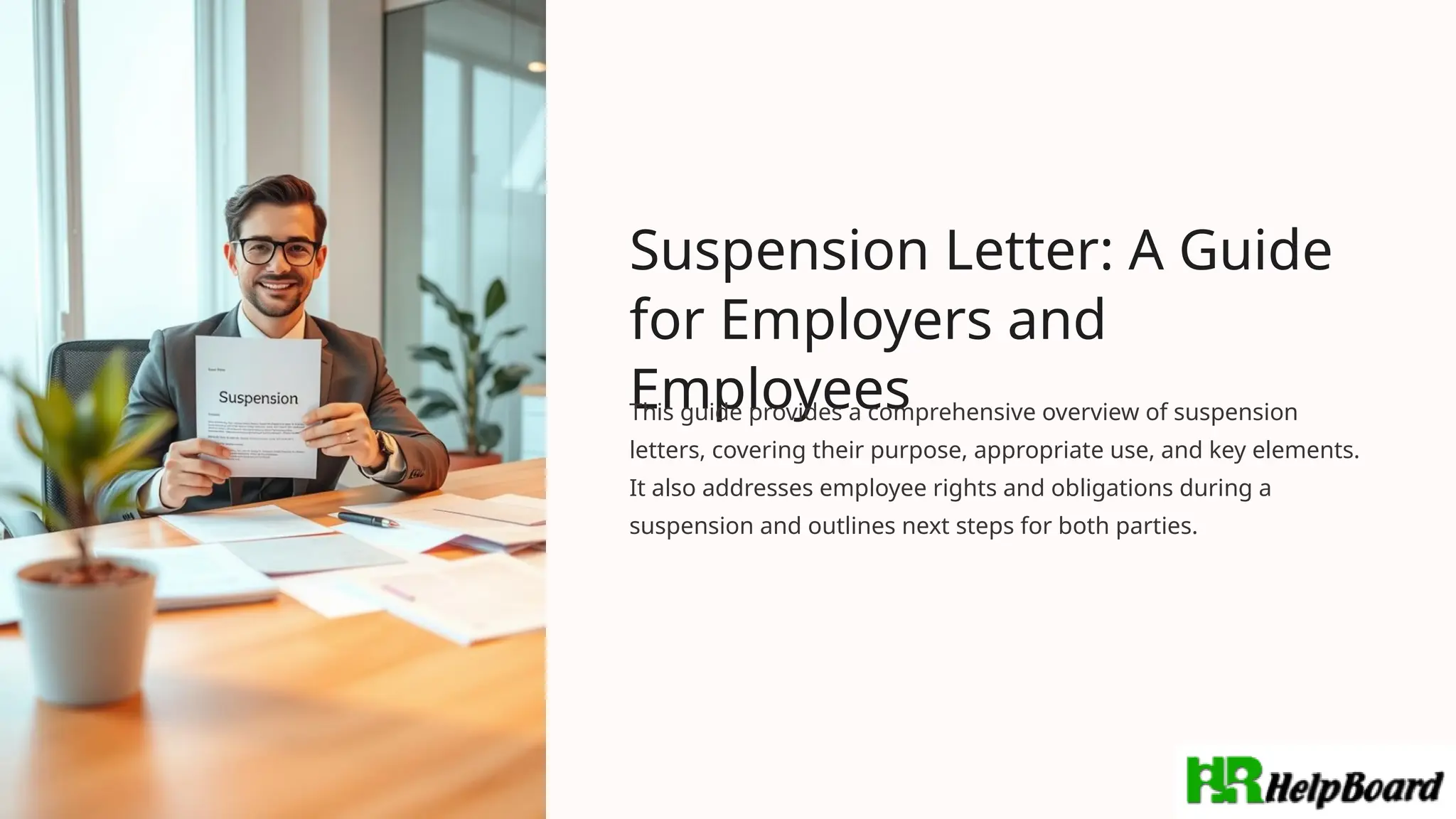
Suspension Letter: A Guide
for Employers and
Employees
This guide provides a comprehensive overview of suspension
letters, covering their purpose, appropriate use, and key elements.
It also addresses employee rights and obligations during a
suspension and outlines next steps for both parties.
What is a Suspension Letter?
Definition
A suspension letter is a formal document issued by an
employer to an employee, temporarily removing them
from their job duties.
Purpose
It allows time for investigation, disciplinary action, or a
cooling-off period, while preserving the employee's job.
When is a Suspension Letter
Appropriate?
Serious misconduct
Such as theft, harassment,
or violence.
Policy violations
Like attendance issues,
substance abuse, or
inappropriate conduct.
Pending investigation
When an employer needs time to gather evidence or assess
the situation.
Key Elements of a
Suspension Letter
Employee details
Name, job title, department.
Suspension period
Start and end dates, duration.
Reason for suspension
Specific, clear, and concise.
Employee
responsibilities
Guidelines for conduct
during suspension.
Writing an Effective
Suspension Letter
Clarity
Use plain language and avoid
jargon.
Accuracy
Ensure factual information is
correct and supported by
evidence.
Professionalism
Maintain a neutral tone and
avoid accusatory language.
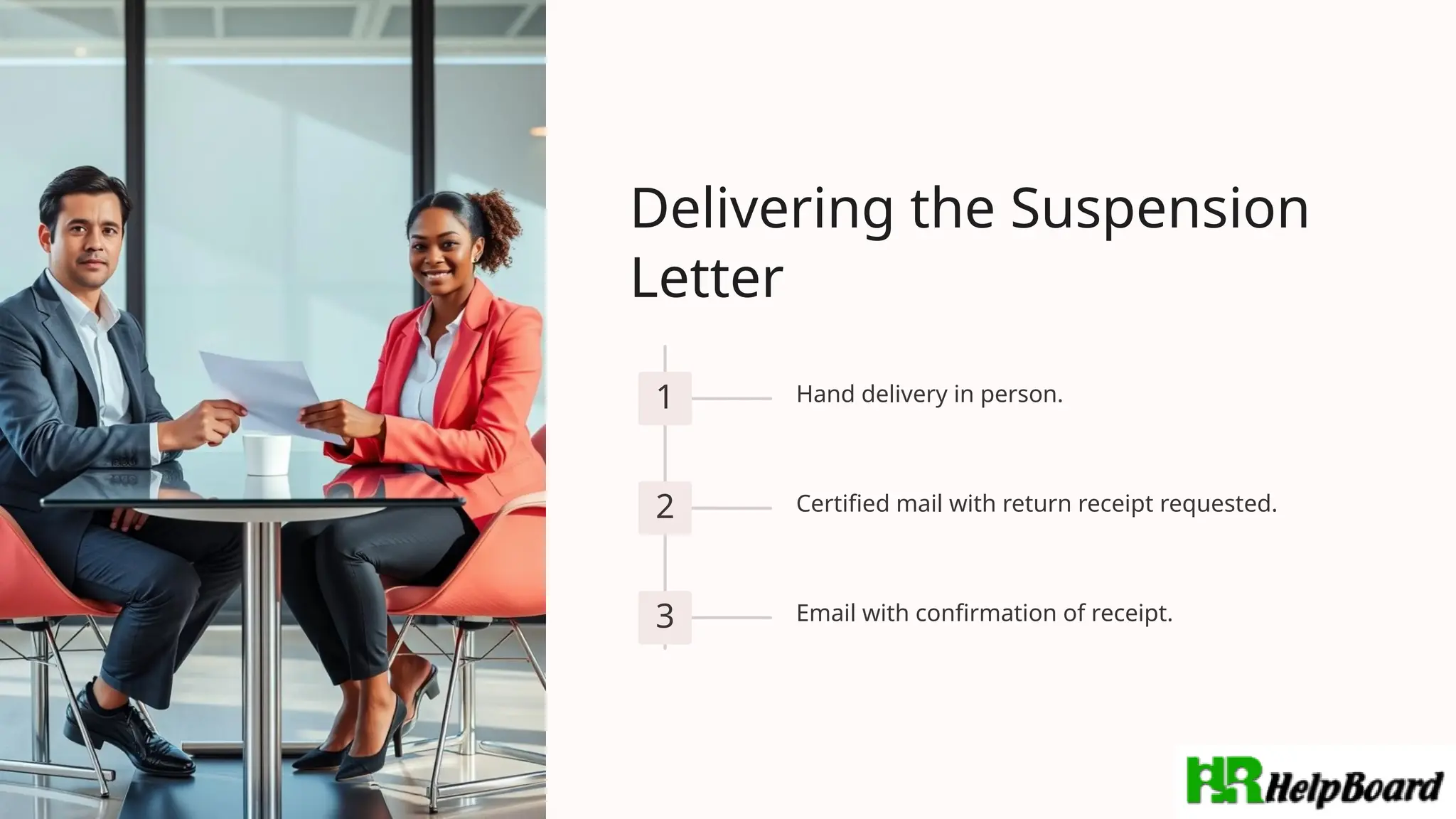
Delivering the Suspension
Letter
1 Hand delivery in person.
2 Certified mail with return receipt requested.
3 Email with confirmation of receipt.
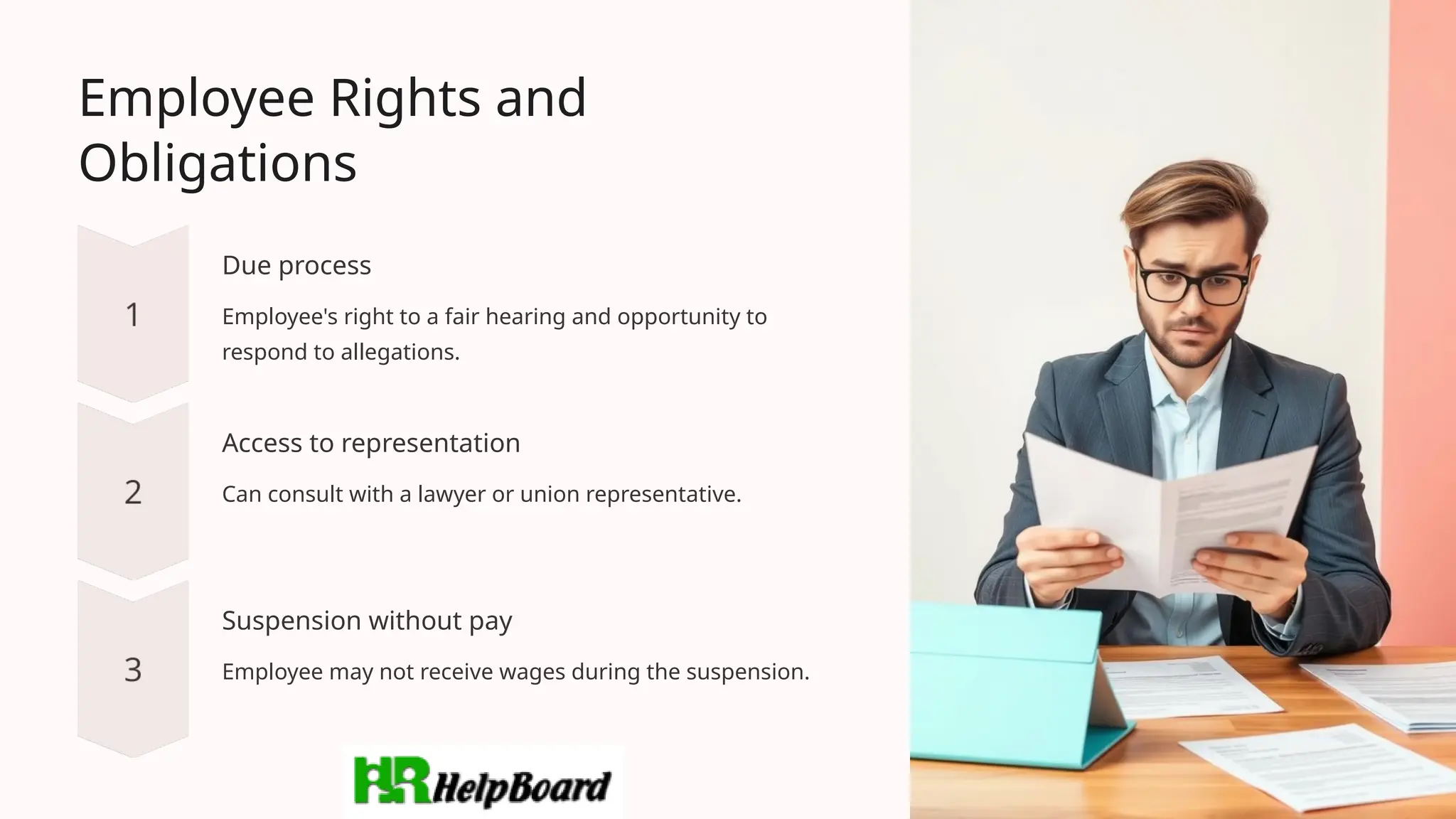
Employee Rights and
Obligations
Due process
Employee's right to a fair hearing and opportunity to
respond to allegations.
Access to representation
Can consult with a lawyer or union representative.
Suspension without pay
Employee may not receive wages during the suspension.
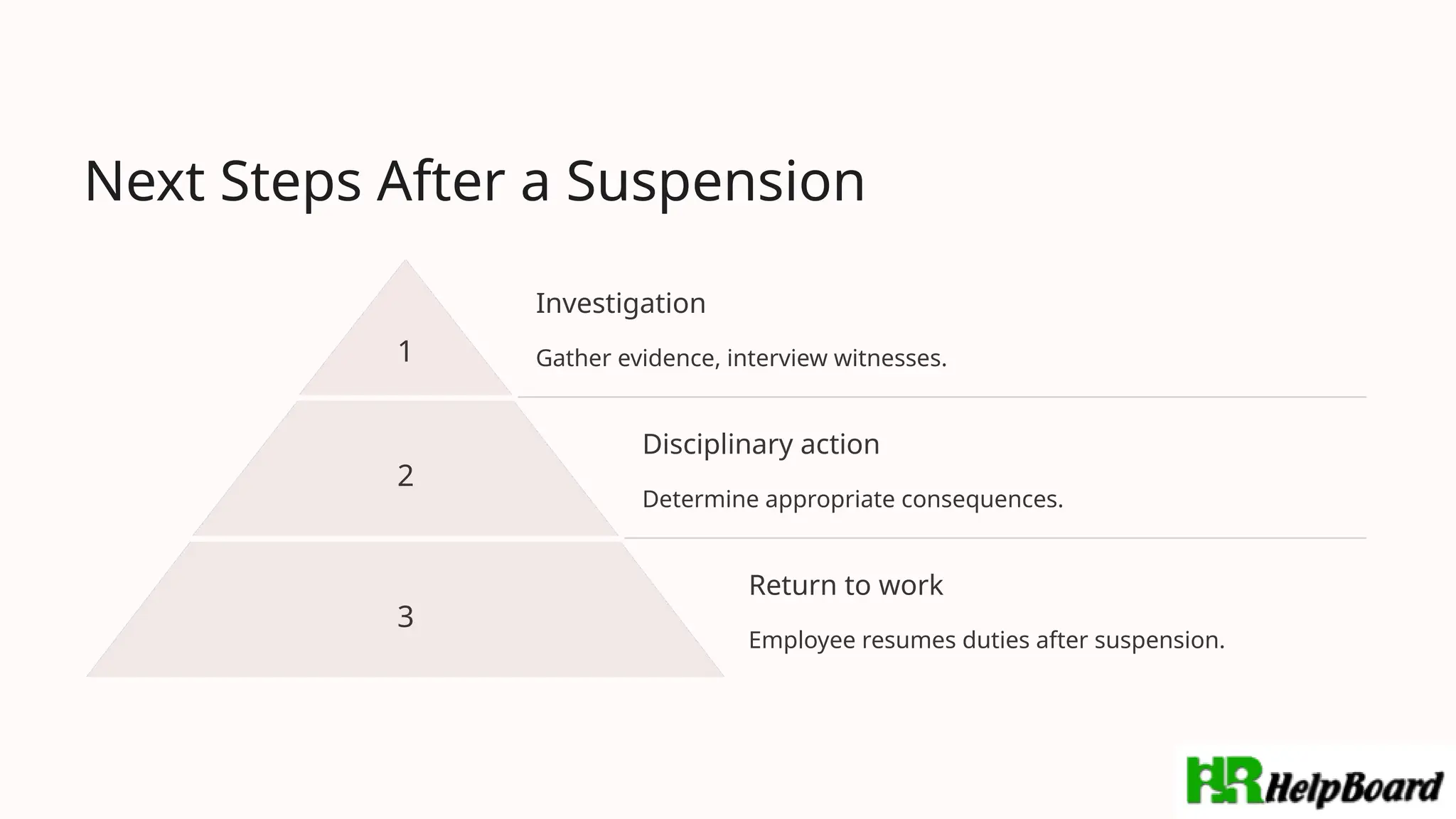
Next Steps After a Suspension
1
Investigation
Gather evidence, interview witnesses.
2
Disciplinary action
Determine appropriate consequences.
3
Return to work
Employee resumes duties after suspension.

Suspension Letter, Suspension Letter Sample

  • 1.
    Suspension Letter: AGuide for Employers and Employees This guide provides a comprehensive overview of suspension letters, covering their purpose, appropriate use, and key elements. It also addresses employee rights and obligations during a suspension and outlines next steps for both parties.
  • 2.
    What is aSuspension Letter? Definition A suspension letter is a formal document issued by an employer to an employee, temporarily removing them from their job duties. Purpose It allows time for investigation, disciplinary action, or a cooling-off period, while preserving the employee's job.
  • 3.
    When is aSuspension Letter Appropriate? Serious misconduct Such as theft, harassment, or violence. Policy violations Like attendance issues, substance abuse, or inappropriate conduct. Pending investigation When an employer needs time to gather evidence or assess the situation.
  • 4.
    Key Elements ofa Suspension Letter Employee details Name, job title, department. Suspension period Start and end dates, duration. Reason for suspension Specific, clear, and concise. Employee responsibilities Guidelines for conduct during suspension.
  • 5.
    Writing an Effective SuspensionLetter Clarity Use plain language and avoid jargon. Accuracy Ensure factual information is correct and supported by evidence. Professionalism Maintain a neutral tone and avoid accusatory language.
  • 6.
    Delivering the Suspension Letter 1Hand delivery in person. 2 Certified mail with return receipt requested. 3 Email with confirmation of receipt.
  • 7.
    Employee Rights and Obligations Dueprocess Employee's right to a fair hearing and opportunity to respond to allegations. Access to representation Can consult with a lawyer or union representative. Suspension without pay Employee may not receive wages during the suspension.
  • 8.
    Next Steps Aftera Suspension 1 Investigation Gather evidence, interview witnesses. 2 Disciplinary action Determine appropriate consequences. 3 Return to work Employee resumes duties after suspension.