Deemple Morar
Supersize Me was produced by Morgan Spurlock. He does a 30 day
period where he consumes McDonald’s for breakfast, lunch and
dinner. The purpose of this documentary was to show the effects
eating fast food in a supersize form effects the human body
physically and psychologically as Morgan becomes unhappy when he
doesn’t consume McDonald’s.
Supersize me is a mixed documentary as it includes interviews and the
narrator (Morgan Spurlock) talks to the camera. However, it also linear
follows a chorological order, as it follows a day to day pattern. It is also
self reflexive as the narrator directly speaks to the camera.
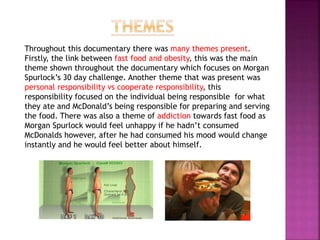
Throughout this documentary there was many themes present.
Firstly, the link between fast food and obesity, this was the main
theme shown throughout the documentary which focuses on Morgan
Spurlock’s 30 day challenge. Another theme that was present was
personal responsibility vs cooperate responsibility, this
responsibility focused on the individual being responsible for what
they ate and McDonald’s being responsible for preparing and serving
the food. There was also a theme of addiction towards fast food as
Morgan Spurlock would feel unhappy if he hadn’t consumed
McDonalds however, after he had consumed his mood would change
instantly and he would feel better about himself.
Morgan Spurlock takes control of narrating the documentary
and ensures that it is followed in a chronological order so
that the documentary flows. He does this off screen and in a
quick pace so the documentary is faster which allows the
information to get across to the audience. Moreover, the
documentary focuses on one topic and not multiple ones
which ensures the audience doesn’t get confused with what
the documentary is trying to get across. Furthermore, it is
single stranded as it is based on one topic, and linear as it
follows a chronological order.
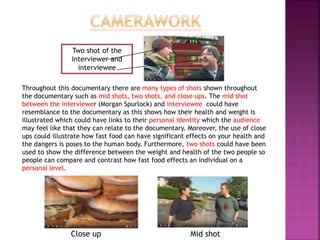
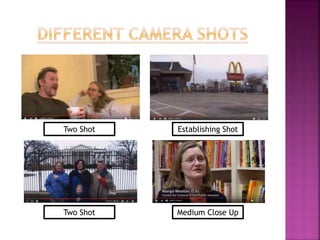
Throughout this documentary there are many types of shots shown throughout
the documentary such as mid shots, two shots, and close ups. The mid shot
between the interviewer (Morgan Spurlock) and interviewee could have
resemblance to the documentary as this shows how their health and weight is
illustrated which could have links to their personal identity which the audience
may feel like that they can relate to the documentary. Moreover, the use of close
ups could illustrate how fast food can have significant effects on your health and
the dangers is poses to the human body. Furthermore, two shots could have been
used to show the difference between the weight and health of the two people so
people can compare and contrast how fast food effects an individual on a
personal level.
Close up Mid shot
Two shot of the
interviewer and
interviewee
Two Shot Establishing Shot
Two Shot Medium Close Up
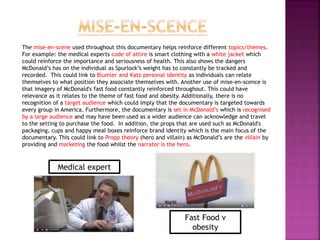
The mise-en-scene used throughout this documentary helps reinforce different topics/themes.
For example: the medical experts code of attire is smart clothing with a white jacket which
could reinforce the importance and seriousness of health. This also shows the dangers
McDonald’s has on the individual as Spurlock’s weight has to constantly be tracked and
recorded. This could link to Blumler and Katz personal identity as individuals can relate
themselves to what position they associate themselves with. Another use of mise-en-scence is
that imagery of McDonald's fast food constantly reinforced throughout. This could have
relevance as it relates to the theme of fast food and obesity. Additionally, there is no
recognition of a target audience which could imply that the documentary is targeted towards
every group in America. Furthermore, the documentary is set in McDonald’s which is recognised
by a large audience and may have been used as a wider audience can acknowledge and travel
to the setting to purchase the food. In addition, the props that are used such as McDonald's
packaging, cups and happy meal boxes reinforce brand identity which is the main focus of the
documentary. This could link to Propp theory (hero and villain) as McDonald’s are the villain by
providing and marketing the food whilst the narrator is the hero.
Medical expert
Fast Food v
obesity
The narration of the documentary is narrated by Morgan Spurlock
from behind and in front of the camera. The non-diegetic
background music is heavily based on fast food such as the
‘McDonald’ theme song’ that is sang by children. This is used in
the opening of the documentary. Moreover, the use of non-
diegetic classical music juxtaposes with the seriousness of the
operation as this is something that needs to be taken of seriously
and effectively however, this could symbolise the mood of the
operation and how the medical experts are feeling as the medical
experts have to operate on the issue more as health and weight
has became a major issue within America. Additionally, the use of
fast pace music could reinforce that Fast Food needs to be served
fast which could symbolise the quick process that fast food is
destroying the human body and has significance effects on health
and weight. Furthermore, the use of vox pops shows how
influential the public opinions are within the documentary which
is used throughout the documentary.
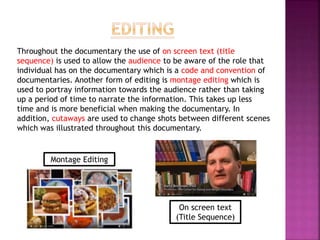
Throughout the documentary the use of on screen text (title
sequence) is used to allow the audience to be aware of the role that
individual has on the documentary which is a code and convention of
documentaries. Another form of editing is montage editing which is
used to portray information towards the audience rather than taking
up a period of time to narrate the information. This takes up less
time and is more beneficial when making the documentary. In
addition, cutaways are used to change shots between different scenes
which was illustrated throughout this documentary.
Montage Editing
On screen text
(Title Sequence)
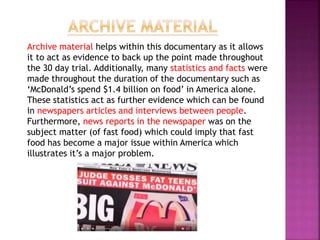
Archive material helps within this documentary as it allows
it to act as evidence to back up the point made throughout
the 30 day trial. Additionally, many statistics and facts were
made throughout the duration of the documentary such as
‘McDonald’s spend $1.4 billion on food’ in America alone.
These statistics act as further evidence which can be found
in newspapers articles and interviews between people.
Furthermore, news reports in the newspaper was on the
subject matter (of fast food) which could imply that fast
food has become a major issue within America which
illustrates it’s a major problem.
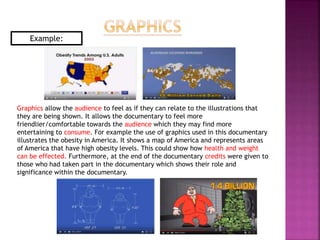
Graphics allow the audience to feel as if they can relate to the illustrations that
they are being shown. It allows the documentary to feel more
friendlier/comfortable towards the audience which they may find more
entertaining to consume. For example the use of graphics used in this documentary
illustrates the obesity in America. It shows a map of America and represents areas
of America that have high obesity levels. This could show how health and weight
can be effected. Furthermore, at the end of the documentary credits were given to
those who had taken part in the documentary which shows their role and
significance within the documentary.
Example:

Supersize me

  • 1.
  • 2.
    Supersize Me wasproduced by Morgan Spurlock. He does a 30 day period where he consumes McDonald’s for breakfast, lunch and dinner. The purpose of this documentary was to show the effects eating fast food in a supersize form effects the human body physically and psychologically as Morgan becomes unhappy when he doesn’t consume McDonald’s. Supersize me is a mixed documentary as it includes interviews and the narrator (Morgan Spurlock) talks to the camera. However, it also linear follows a chorological order, as it follows a day to day pattern. It is also self reflexive as the narrator directly speaks to the camera.
  • 3.
    Throughout this documentarythere was many themes present. Firstly, the link between fast food and obesity, this was the main theme shown throughout the documentary which focuses on Morgan Spurlock’s 30 day challenge. Another theme that was present was personal responsibility vs cooperate responsibility, this responsibility focused on the individual being responsible for what they ate and McDonald’s being responsible for preparing and serving the food. There was also a theme of addiction towards fast food as Morgan Spurlock would feel unhappy if he hadn’t consumed McDonalds however, after he had consumed his mood would change instantly and he would feel better about himself.
  • 4.
    Morgan Spurlock takescontrol of narrating the documentary and ensures that it is followed in a chronological order so that the documentary flows. He does this off screen and in a quick pace so the documentary is faster which allows the information to get across to the audience. Moreover, the documentary focuses on one topic and not multiple ones which ensures the audience doesn’t get confused with what the documentary is trying to get across. Furthermore, it is single stranded as it is based on one topic, and linear as it follows a chronological order.
  • 5.
    Throughout this documentarythere are many types of shots shown throughout the documentary such as mid shots, two shots, and close ups. The mid shot between the interviewer (Morgan Spurlock) and interviewee could have resemblance to the documentary as this shows how their health and weight is illustrated which could have links to their personal identity which the audience may feel like that they can relate to the documentary. Moreover, the use of close ups could illustrate how fast food can have significant effects on your health and the dangers is poses to the human body. Furthermore, two shots could have been used to show the difference between the weight and health of the two people so people can compare and contrast how fast food effects an individual on a personal level. Close up Mid shot Two shot of the interviewer and interviewee
  • 6.
    Two Shot EstablishingShot Two Shot Medium Close Up
  • 7.
    The mise-en-scene usedthroughout this documentary helps reinforce different topics/themes. For example: the medical experts code of attire is smart clothing with a white jacket which could reinforce the importance and seriousness of health. This also shows the dangers McDonald’s has on the individual as Spurlock’s weight has to constantly be tracked and recorded. This could link to Blumler and Katz personal identity as individuals can relate themselves to what position they associate themselves with. Another use of mise-en-scence is that imagery of McDonald's fast food constantly reinforced throughout. This could have relevance as it relates to the theme of fast food and obesity. Additionally, there is no recognition of a target audience which could imply that the documentary is targeted towards every group in America. Furthermore, the documentary is set in McDonald’s which is recognised by a large audience and may have been used as a wider audience can acknowledge and travel to the setting to purchase the food. In addition, the props that are used such as McDonald's packaging, cups and happy meal boxes reinforce brand identity which is the main focus of the documentary. This could link to Propp theory (hero and villain) as McDonald’s are the villain by providing and marketing the food whilst the narrator is the hero. Medical expert Fast Food v obesity
  • 8.
    The narration ofthe documentary is narrated by Morgan Spurlock from behind and in front of the camera. The non-diegetic background music is heavily based on fast food such as the ‘McDonald’ theme song’ that is sang by children. This is used in the opening of the documentary. Moreover, the use of non- diegetic classical music juxtaposes with the seriousness of the operation as this is something that needs to be taken of seriously and effectively however, this could symbolise the mood of the operation and how the medical experts are feeling as the medical experts have to operate on the issue more as health and weight has became a major issue within America. Additionally, the use of fast pace music could reinforce that Fast Food needs to be served fast which could symbolise the quick process that fast food is destroying the human body and has significance effects on health and weight. Furthermore, the use of vox pops shows how influential the public opinions are within the documentary which is used throughout the documentary.
  • 9.
    Throughout the documentarythe use of on screen text (title sequence) is used to allow the audience to be aware of the role that individual has on the documentary which is a code and convention of documentaries. Another form of editing is montage editing which is used to portray information towards the audience rather than taking up a period of time to narrate the information. This takes up less time and is more beneficial when making the documentary. In addition, cutaways are used to change shots between different scenes which was illustrated throughout this documentary. Montage Editing On screen text (Title Sequence)
  • 10.
    Archive material helpswithin this documentary as it allows it to act as evidence to back up the point made throughout the 30 day trial. Additionally, many statistics and facts were made throughout the duration of the documentary such as ‘McDonald’s spend $1.4 billion on food’ in America alone. These statistics act as further evidence which can be found in newspapers articles and interviews between people. Furthermore, news reports in the newspaper was on the subject matter (of fast food) which could imply that fast food has become a major issue within America which illustrates it’s a major problem.
  • 11.
    Graphics allow theaudience to feel as if they can relate to the illustrations that they are being shown. It allows the documentary to feel more friendlier/comfortable towards the audience which they may find more entertaining to consume. For example the use of graphics used in this documentary illustrates the obesity in America. It shows a map of America and represents areas of America that have high obesity levels. This could show how health and weight can be effected. Furthermore, at the end of the documentary credits were given to those who had taken part in the documentary which shows their role and significance within the documentary. Example: