Sujay Rao Mandavilli Knowledge production lifecycle FINAL FINAL FINAL FINAL FINAL.pdf
1.
1
From contextualization touniversalization:
Accelerating the knowledge production lifecycle
for theoretical sciences in the twenty-first
century
Sujay Rao Mandavilli
Published in Google books, November 2025
3
A great dealof literature has indeed been published about the research lifecycle in modern and
contemporary times particularly over the past couple of decades beginning from the 1980’s or so; it also
goes without saying that the quantum of such output has been greatly amplified since the dawn of the
twenty-first; likewise, a great deal has also been written about product development lifecycles, and
technology lifecycles, and all these concepts have been approaches from multiple points of view, and
from multiple perspectives. However, we consider all these to be highly inadequate and grossly deficient
on two grounds, because they do not cover the end to end process from contextualization of knowledge
to communication and universalization or ubiquitization of knowledge, but they are also innately and
inherently biased towards commercializable products and practical technology, not the knowledge
creation process itself which is so essential to the escalation of scientific and cultural activity. They must
also be naturally be branded as Eurocentric given the fact that much of the knowledge production
processes, particularly in the social sciences have been centered around the western hemisphere, with
minimal to no tangible outputs from other parts of the world. This is because the west has thus far ruled
the roost in theoretical and conceptual knowledge in all facets of human knowledge, but particularly in
various fields of what people consider to be the social sciences. It is there highly naturally and highly
obvious that multiple data sets were not adequately considered or considered at all in the process of
theorization or theory formulation and generation.
We therefore proposed the term “from contextualization to universalization” in a previous paper chiefly
and fundamentally because science is produced differently and to varying degrees in different cultural
and non-cultural contexts, which must indeed also be geared to producing reliable, high-quality
knowledge at all times. Some cultures are more efficient in producing knowledge, while others are not.
Moreover, in the social sciences, knowledge can vary from context to context, and from situation to
situation, though many generalized principles indeed apply. This can happen through better educational
reforms and the inculcation of a culture of innovation. We have written a great deal on all these aspects
over the previous couple of years or so. The term universalization occurs at the opposite end of the
spectrum, and in general refers to the ubiquitization and mainstreaming of newly produced and
generated knowledge over vast echelons of different societies around the globe with generalizations
and context-specific knowledge culled as necessary. Therefore, the term contextualization is intended as
a pun, and can have two distinct meanings; firstly, it means context as a geographical or cultural entity,
and secondly, it means context as a fulcrum for knowledge production. We believe that this would
become a very interesting and a useful pun, pun intended. Therefore, the pun itself is very powerful,
and delivers a very powerful message. In essence, the term has two distinct and overlapping, though
largely independent meanings; we can even now say the term “from contextualization to
universalization” is pregnant with double meanings; it comes out alive and dancing with more than one
meaning. Perspectives in sciences also need to be diversified and sufficiently and adequately globalized
as indicated by the core ideals of our globalization of science mission which is now already in the domain
and in the realm of common public knowledge. We also cover processes such as the pre-ideation
process, ideation processes itself including idea gestation and idea conceptualization processes, various
processes pertaining to knowledge production or generation of knowledge, essentials for high-quality
knowledge production, knowledge review by various parties across the intellectual and cultural
spectrum, testing of knowledge, verification and ratification of knowledge through multiple levels and
4.
4
layers of review,after which knowledge is mainstreamed, communicated to the appropriate parties, and
finally universalized.
As such, knowledge mainstreaming takes an inordinately long span of time in today’s world, and this
must no longer be deemed acceptable in the context of the post-globalized twenty-first century. John
Forbes Nash’s work took an inordinately long span of time to get recognized- this was also compounded
by his schizophrenia- while Albert Einstein was luckier. There are of course, wide variations in time
spans, and we must get to the bottom of the issue. Of course, Anaxagoras was also not immediately
recognized, but we must make a distinction between the pre-modern period and the modern period, as
we want to usher in “scientific progress at the speed of light”. We must now fight to induce and initiate
a change. This is the very rationale and raison d’etre for this publication. Of course, knowledge must also
be subjected to continuous validation ad infinitum through post-publication peer-review. We cannot
ascribe a terminal date to this process. Pre-publication reviews must also happen thoroughly,
judiciously, rigourously and assiduously wherever possible, though there may be some impediments and
obstacles to this process. We then do hope, expect and anticipate that that this book will play its part in
accelerating the process of knowledge creation to its next logical level by also generating awareness at
different levels. All our previous papers and publication have of course been linked with each other in a
continuous and a logical chain or sequence of events and practical easy to understand action points and
bullet points.
We hope that this book will constitute a useful and a handy addition given the fact that it suitably
expands and adds to the concepts published in our previous publications, and adds several new layers of
additional and granular details. We do then hope, anticipate and expect that readers will enjoy this
book, and soak in and assimilate all the finer details, so that the essentials our approach can then be
implemented as necessary. Readers may also read our paper, “Ideating the “Contextualization to
universalization” function in the knowledge production process in theoretical sciences: An appurtenance
for knowledge acceleration in contemporary society.” The aforementioned and afore-specified paper is
linked with this book closely, and is integrated in every possible way. This book offers more granular
details, and as such is targeted to a slightly different audience. Another paper our readers may wish to
read is “Accelerating scientific progress: Why we need a mechanism to continuously review, mainstream
and diversify scientific knowledge”. Also read “and “Reducing the ‘latency period’ for the acceptance of
new scientific ideas: Positioning the ‘latency period’ for the acceptance of scientific ideas as an indicator
of scientific maturity”. Other useful papers could include “Minimizing the time taken between
hypothesis generation, hypothesis testing and refinement: A necessary adjunct in the epoch of fast-
paced science”, and “Rethinking Journal classification: Rethinking Journal classification in the twenty-
first century in the interests of a higher quantum of scientific output and a more globalized scientific
output”.
6
What is ideation?
Ideationis the term used to refer to the creative process of generating, developing, extending and
communicating new ideas that may be used to solve a problem or meet a pressing or an urgent
challenge. Ideation in many ways encompasses a set of systematic and structured methods, tools and
techniques and are widely used in fields as wide apart as design thinking and product design. Ideation
can be performed systematically by individuals, groups of individuals and organizations, and involves
exploring a plethora of theoretical possibilities before narrowing them down to the most promising,
practicable or workable solutions. The process of ideation therefore encompasses a series of steps such
as concurrently or sequentially generating a large number of ideas, further refining and developing upon
ideas, communicating ideas to the general public, etc. Frameworks such as TRIZ, brainstorming, mind
mapping and brain writing are also widely used in the process of ideation. Ideation is important because
it encourages creativity and critical thinking, divergent thinking, quantum thinking, drives innovation,
and resultantly leads to better scientific research. In another realm, it also results in better or more
customer-friendly or customer-focused products and in newer and vital technologies. Steps in the
ideation process are problem identification, feedback generation and feedback iteration, collaboration
and collection of diverse perspectives, generation of new and novel ideas, shortlisting ideas from a long
list, selection of a final idea or a final set of ideas, and implementation. 1 2 3 4
Steps in the ideation process
There are many distinct steps in the ideation process, though their implementation may vary from
context to context, and from situation to situation. We first generally begin by defining the problem
clearly and in unequivocal terms, and in a way that begets or begs a solution, generating a wide range of
ideas through methods and techniques such as brainstorming, brain writing brain mapping, and the 5
why’s technique, (of course, other creative thinking tools and exercises can also be used to good and
productive effect, and we will review some of them momentarily) evaluating different ideas, shortlisting
ideas from a long list, selecting the best ideas or the most ideal ideas that will work best in a given
context or situation, testing ideas to the extent available time and available data will allow, and then
proceeding towards implementations of solutions. Implemented solutions are then tested from time to
time, iteratively and recursively. While bona fide variations do indeed exist, the most common and
typical frameworks are based on the design thinking process, which includes empathizing, defining,
ideating, prototyping, and testing.
Popular ideation techniques include brainstorming, mind mapping, the SCAMPER techniques, reverse
innovation or reverse ideation, reverse brainstorming, brainwriting, story boarding, idea sketching,
sketch storming, round robin techniques, six hats techniques, 6-3-5 method, the 5 why’s technique,
crazy 8s technique, crowd sourcing, design thinking, prototyping, and the like. This is only a shortlist, and
many more other techniques could indeed exist. There are many different benefits of innovation for
1 Michalko, Michael (2006) "Thinkertoys: A Handbook of Creative-Thinking Techniques Paperback"
2 Jonson, B (2005) "Design Ideation: the conceptual sketch in the digital age". Design Studies Vol 26 No 6 pp 613–624
3 Graham, D and Bachmann, T., (2004) Ideation: The Birth and Death of Ideas. John Wiley and Sons Inc
4 Fowles, R A (1979) "Design Methods in UK Schools of Architecture". Design Studies, Vol 1 No 1 pp 15–16
7.
7
both organizations andindividuals. The many and immense benefits of ideation are that it drives
innovation and competitive advantage, improves problem solving skills, fosters critical thinking skills,
increases third party engagement and team building, enhances productivity and efficiency, and creates
new opportunities on the go. It can also boost personal growth and increase personal satisfaction in the
case of different types of individuals. Ideation skills must be inculcated and fostered through the
education system, though unfortunately, most education systems around the world are fossilized in a
time warp, and do not deliver on the skills that are required in the context of the twenty-first century. 5 6
7 8
5 Nijstad, B. A., Stroebe, W., & Lodewijkx, H. F. (2006). The illusion of group productivity: A reduction of failures explanation. European Journal
of Social Psychology, 36(1), 31-48
6 Paulus, P. B., & Dzindolet, M. T. (1993). Social influence processes in group brainstorming. Journal of Personality and Social Psychology, 64(4),
575.
7 Stroebe, W., Diehl, M., & Abakoumkin, G. (1992). The illusion of group effectivity. Personality and Social Psychology Bulletin, 18(5), 643-650
8 Osborn, Alex F. (1953). Applied Imagination: Principles and Procedures of Creative Problem Solving. New York: Charles Scribner's Sons, 1953
9
What is knowledge?
Knowledgein general terms, may be defined as the awareness, understanding, or information about a
subject matter or a particular event (or a course of events that take place over time) that a person gains
either through practical experience or practical education. Knowledge therefore encompasses both
theoretical and practical understanding of an issue or a matter at hand. In the realm of philosophy, the
study of knowledge is referred to epistemology. Therefore, as per the principles of epistemology,
knowledge is defined as "justified true belief". This definition is sometimes attributed to the ancient
Greek thinker Plato In the dialogue Theaetetus, though it has been expanded upon, and derived ever
since. However, in modern and in contemporary times, Edmund Gettier critiqued this concept, and
proposed the Gettier case in this regard. By belief, we mean that the individual or person must believe
the proposition to be true. By truth we mean that the belief must be true, and not false. By justification
we mean that the individual must have a good reason or valid evidence for the belief, such as
experience, memory, or logical reasoning
Knowledge can be categorized into several distinct types and classes. For example, propositional
knowledge (or knowledge-that) refers to theoretical knowledge about facts and truths that can be
expressed in declarative sentences. On the other hand, procedural knowledge (which is also known as
knowledge-how refers to practical skills or abilities. Thirdly, knowledge by acquaintance refers to
familiarity with a person, place, or thing gained through direct acquaintance or a rendezvous.
Knowledge may also be classified into explicit knowledge and tacit knowledge. Explicit knowledge refers
to knowledge that is easily articulated, documented, and shared while tacit knowledge (less commonly
referred to as implicit knowledge) refers to knowledge that is difficult to formalize, articulate, or share,
often gained through extensive personal experience and long and tedious hours of practice. Knowledge
is typically acquired through many different means and mechanisms, such as sensory perception, deep-
rooted cogitation, reflection, and introspection, long-term and short-term memory, inference, direct
and indirect testimony, wisdom, witness, direct experience as in the case of experiential knowledge, and
formal education. Knowledge is the very basis and foundation for modern society, and scientific
progress. We would all be nothing without it.
The history of epistemology connotes the formalized philosophical study of knowledge production
mechanisms across different eras and cultures, beginning from ancient Greek investigations into the
nature of truth to more modern comprehensive debates that formally include science, logic, and social
and cultural dynamics. The ancient Greek thinker Aristotle, building on Plato’s early ruminations and
introspections on the topic of knowledge, emphasized empirical observation and abstraction that was
derived from experience. During the Middle Ages, epistemology probed and investigated the complex
and multifaceted relationship between faith and reason with thinkers such as Augustine of Hippo and
Thomas Aquinas making important contributions. We also then had empirical and rational schools of
thought. Rationalism, of logic and reasoning independent of past experience, or experiential knowledge
was heavily promoted by thinkers of the likes of Rene Descartes, Gottfried Leibniz, and Baruch Spinoza
in the immediate pre-modern era. On the other hand, John Locke, George Berkeley, and David Hume,
advocated for empiricism or experiential knowledge. In all probability, the two cannot be mutually
exclusive and build upon and complement each other in the manner proposed by Immanuel Kant in his
10.
10
work, critique ofpure reason. We would likely do similarly otherwise, and we have also developed
concepts such as that of fuzzy logic for the social sciences, and variable logic. Of late, new subfields such
as analytic epistemology, naturalized epistemology, and social and formal epistemology, and the field as
such remains highly vibrant and ever-evolving to meet the complex needs and requirements of the
information age and the digital age, artificial intelligence, interdisciplinary and cross-cultural insights. 9
10 11
Knowledge production process or the knowledge creation process or the knowledge generation process
is a highly complex and evolving process that seeks to abstractize, intensify, diversify, validate,
communicate, disseminate, mainstream, ubiquitize and universalize new knowledge. However, the
process for the most part remains unstructured and ad hoc. It is also painfully slow, and does not take
into account or consideration, knowledge from different perspectives or from different parts of the
world. As a matter of fact, this needs to be as structured and formal process as far as possible,
encompassing all aspects from “the cradle to the grave”. We would like to refer to it as “from
contextualization to universalization”, because contextualization means enriching and amplifying the
context that is so essential to the formal process of production of knowledge. Therefore, as a part of this
process, diversified uses of knowledge, and contextual differences must also be borne in mind.
9 Seyedsayamdost, Hamid (2014). "On Normativity and Epistemic Intuitions: Failure of Replication". Episteme. 12 (1): 95–116
10 Weinberg, Jonathan M.; Nichols, Shaun; Stich, Stephen (Spring–Fall 2001). "Normativity and Epistemic Intuitions". Philosophical
Topics. 29 (1–2): 429–460
11 Briceño, Nolbert (2024). "Refutación del problema de Gettier". Con-ciencia Forense Nº 5, Revista Internacional de Ciencias Forenses e
Investigación Criminal. 3–2024: 25
12
What is research?
Thecommonly and widely used English word “research” is thought to have been derived from the
Middle French term “rechercher”, which means to research (it’s antecedents can be traced all the way
back to the year 1577) and is said to be composed of two syllables, namely “re” and “search”. The term
“re” is a common English prefix meaning again, anew or all over again while the term “search” is a
English verb meaning to examine very closely, carefully and meticulously, or to probe and investigate
thoroughly. (Thyer, 2001) These two, taken together form a word which refers to a careful, systematic,
and often detailed study and investigation, or a structured inquiry in a specialized field of knowledge or
a branch of scientific endeavour or activity, usually and typically undertaken with a view to establish
facts or principles, or to derive or formulate new theories. This approach typically uses formalized
scientific methodology including processes, frameworks, methodologies (either qualitative or
quantitative), tools, instruments, techniques and philosophies, and is commonly and gainfully employed
to solve often complex or intractable real-world problems, understand a phenomena thoroughly, and
create new streams of knowledge or extend current knowledge in new and innovative directions. Often,
it is also the basis of decision making and policy formulation.
Research almost always involves a critical study of large masses of data or information with a view to
arriving at conclusions. Research can also challenge authority wherever required in order to replace
outdated or outmoded ideas with new ones, thus adding to, enhancing and furthering knowledge. Good
research must have universal applicability, (unless its assumptions or limitations are otherwise explicitly
and clearly stated) and must attempt generalizations, but only to the extent possible or necessary, and
be verifiable, reliable and valid in the given context. From our perspective, the term “context” also
refers to, and encompasses social and cultural contexts, and scientific studies involve a systematic and
structured laboratory and field study, which may often be prolonged, protracted, exhaustive, rigorous,
intensive, empirical, rational, critical, credible, orderly, systematic, objective, impartial, and carried out
under controlled conditions. It must also not be mechanistic, and must not merely compile facts without
any investigative analysis; it almost certainly cannot merely comprise a laundry list of facts, statements,
or issues without any new conclusions reached.
Researchers must also follow Occam’s razor, and assumptions must be kept to the barest minimum.
Hunches and guesswork without any substantive or an empirical basis or foundation must not be
encouraged or pursued. Any research activity must also be accompanied by the requisite levels of
knowledge and professional expertise in all relevant fields. Whenever research is inter-disciplinary, it
must involve collaboration with researchers with the requisite expertise in other identified related fields
of research and study as well. Curiosity and open-mindedness are also essential pre-requisites of good
research. Research must also be devoid and bereft of different types of conscious or unconscious biases
or prejudices, such as confirmation bias, and cultural bias (often arising from knowledge constructed
from social or cultural experience) and must involve a singlehanded pursuit and quest of the truth, thus
ultimately leading to new enhanced or superior principles, theories, or hypotheses. Thus, the outcomes
of scientific activity must also be credible, dependable, repeatable, verifiable, reproducible, transferable
to other contexts, and self-correcting.
13.
13
Research must alsofollow some method or process, and must not be random or ad-hoc. (Dawson,
Catherine) It must also be devoid of any other “isms” such as Eurocentrism, Indocentrism, Afrocentrism
or Sinocentrism arising from a need to boost nationalistic, cultural or racial pride, or a desire to establish
any other form of sectarian hegemony, or even pursue careerism. It must therefore, help in, and aid in
the progress of all or most sections or society. As far as possible, it must be accompanied with in-built
testing, ratification, and verification mechanism for the attainment of error-free output. Indeed, the
truth and research conclusions must be willingly and ungrudgingly accepted regardless of cultural
predilections. Many researchers also believe in the quality or principle of refutability. Research must be
subsequently refutable in the interests of scientific progress and tempo, and bad ideas can be
subsequently jettisoned, if found outdated, insufficient, or inadequate. These ideas are sometimes
referred to as Ethical Neutrality.
According to Clifford Woody, “Research is a careful and critical examination of facts, involving a diligent
investigation, study, comparison and observation, and comprises constant definition and redefinition of
problems, formulation of hypothesis; it also involves the collection, organization and evaluation of data;
and the reaching of conclusions. It must be emphasized that research must necessarily be systematic
and logical in order to arrive at certain outcomes.” The researchers D. Slesinger and M. Stephenson in
the Encyclopedia of Social Sciences Research define research as "The manipulation of things, concepts or
symbols with a view to generalize or extend, correct or verify knowledge, whether that knowledge aids
in construction of theory or in the practice of an art." Rajasekar et. al. (2006), define research as “A
systematic and logical search for new and useful information on a given topic. It may be defined as an
investigation of finding solutions to scientific and social problems through an objective and systematic
analysis. It may be defined as a search for knowledge, or a discovery of hidden truths. It also involves
derivation or laws and principles. The information may be collected from various sources such as human
experience, other individual, books, journals, natural observation, etc.” Others have emphasized the role
of theory-building in research. According to Boulding, “Theories without facts may be barren, but facts
without theories are meaningless.”
Other researchers and encyclopedias have also provided definitions of research, but more outstanding
definitions have been provided by researchers such as Rocco (Rocco, 2011), V. Redman and A.V.H Mory
(Redman and Mory, 2010), C C Crawford, C. R. Kothari, Creswell (Creswell, 2008), H Kara (Kara, 2012),
Rusk, George J Mouly, J.H. McGrath, D.E. Watson, Cohen, N. & Arieli, T. (Cohen, N. & Arieli, T , 2011),
Ranjit Kumar (Kumar Ranjit, 2005), C. Francies Rummel , Francis G Cornell, John W. Best, James Harvey
Robinson, W. S Monroe, and Martyn Shuttleworth. Other scholars and researchers have also provided
definitions of research, but most of the salient features of their definitions have been captured and
recapitulated above in our synopsis of the characteristics of research.
Some scholars have also attempted to define social science research. For example, Redman & Mori
state: “Social research may be defined as a scientific undertaking which by means of logical and
systematized techniques aims to discover new facts or verify and test old facts, analyze their sequences,
interrelationships and casual explanation which were derived within an appropriate theoretical frame of
reference, develop new scientific tools, concepts and generalizations and methods which would
facilitate reliable and valid study of human behavior.” Bulmer also states, regarding Social Science
14.
14
research: “Nevertheless, sociologicalresearch is primarily committed to establishing systematic, reliable
and valid knowledge about the social world.” John. W Best even goes as far as to say that social sciences
research is the cornerstone of progress in the social and cultural worlds, and helps push back the “veils
of ignorance”, and “discover new and better ways of doing things”. According to Eric Hylla, Stephen M.
Corey, Lundberg and others, social science research must be based on experiential or lived knowledge,
and may rarely lend itself to predominantly statistical and mathematical processes and methods.
MacIver also points out that Social science research has suffered greatly from the attempt to make it
conform to methods used in other forms of Research.
Mitchell also emphasizes the importance of qualitative research in the social sciences, and states that
even in the work of the most statistically minded, qualitative analysis must have a prominent pride of
place, and must be used commonly in all theorizations and generalizations. Symonds strongly assets that
research can never be reduced to a mechanistic process, and this approach can be highly self-defeating.
We believe that all these statements and assertions are very true indeed: we must therefore add a
cautionary note here, and social science researchers (including economists) must not succumb to the
temptation of expressing all social science paradigms in mathematical and statistical terms or equations,
however fashionable this may be; we believe that this approach can even be highly limiting and
restrictive at most times. Many social science researchers have however used mathematical models
extensively: examples being John Forbes Nash in Economics. This would depend largely on their
educational and cultural backgrounds. A sea change is therefore warranted in the social sciences,
including Economics, and the results and rewards would be there for all to see.
Social sciences research also requires a great deal of creative genius, and a spark of originality to
understand problems, in their social and cultural context and milieu, and proceed to solve them
accordingly. Good social science requires stepping out of familiar cultural territory, and may even
require the development of new perceptions, tools, and techniques. To summarize, we believe these
definitions and observations are more or less in line with our beliefs on the attributes and characteristics
of research, and social science research in particular, and these should serve at a common yardstick to
novices and experienced researchers alike.
While the primary objective of research is the discovery of new facts, research also has other objectives
such as the theoretical objective, and application objective. In case of theoretical objective, the primary
objectives are the formulation of new theories, principles or laws, which can be used in a field of
science, or across diverse fields in science. In case of application objective, the researcher suggests new
or novel applications to an existing paradigm or body of knowledge. Often, researchers may also wish to
study existing phenomena at a greater level of depth or in a new light. Research may also have other
objectives such as the determination of cause and effect relationship between variables, or causal
analysis. The often-cited primary objective of research is to improve the quality and standard of living in
the society. Research must as far as possible not lead to negative or unfavourable outcomes. For
example, controversial topics such as eugenics or euthanasia must be justified adequately, or
appropriately before widespread adoption, and must be validated, vetted and ratified from all scientific,
social and cultural angles thoroughly and completely. However, it is widely acknowledged that most
technological progress has undesirable consequences such as non-sustainable progress, global warming
15.
15
or physical andmental stress, but newer research in various fields of science is addressing such negative
consequences. Such negative effects must be minimized to say the least, even if they cannot be
eliminated completely. 12 13 14 15
The research lifecycle in common man’s language or in colloquial parlance refers the continuous process
of conducting research, beginning with an idea or question and moving through all stages to the final
dissemination of results. Key stages include planning and funding, design, data collection and analysis,
reporting, and sharing findings, with the results often leading to new questions and the start of a new
cycle. The key stages of the research lifecycle therefore include ideation and thought conceptualization,
research planning, research design, data collection, data gathering and scrutiny, analysis and
interpretation of results, etc. it is often a continuous process, and research design forms the most crucial
and critical part- As previously noted, research design is the overall strategy, template and blueprint for
a study, outlining and setting forth how to collect and analyze data to answer a research question. It
provides the basic structure for a research project, guiding decisions on methodology, data sources, and
analysis to ensure the research is systematic, relevant, and efficient. Key aspects include defining the
research question, identifying variables, selecting data collection and analysis methods, and ensuring
the design allows for reliable and valid results. We have discussed research design multiple times in our
previous papers and publications.
Types of research
Research is often categorized into two broad categories: Pure research and applied research. Pure
research, which is known as basic research or fundamental research (or theoretical or foundational
research), often involves formulating and testing new theories and hypotheses that are intellectually
challenging, rewarding, stimulating or fulfilling to the researcher but whose practical application may or
may not be known at the present time. The knowledge produced through pure research is often useful
because it adds to the existing body of research methods and methodologies. Examples of such research
are investigation of a natural phenomenon. Applied research on the other hand, is often carried out in
order to solve specific, practical questions that have widespread applicability, or concern society as a
whole. Applied research has pure research as its basis, either in original or unmodified form, and applied
research is usually descriptive or exploratory. In case of applied research, the objective of such research
is initially known, or even forms its basis. Examples of applied research include solution of real-world
problems such as low-economic growth, or the poor performance or an automobile. Pure research is
often carried out by individuals or institutions, while applied research is typically carried out by research
or academic institutions.
12
Research Methodology: Tools and techniques, CR Kothari, New Age Publishers, Second revised edition
13
Research design: Qualitative, Quantitative, and mixed method approaches, John W. Cresswell, Fourth edition,
Sage publishers
14
Research Methodology: A step by step guide for beginners, Ranjit Kumar, Sage publications
15
Research Methods, Second edition, William M K Trochim, Cornell University
16.
16
Descriptive research seeksdescribe a population, event or phenomenon, on a systematic or accurate
basis. It can answer questions such as what, where, when and how questions, but usually not why
questions. A descriptive research design may use different research methods to investigate one or more
variables, without modifying or manipulating them. It also involves collection of data on a systematic
basis. In case of co-relational Research, which is a type of non-experimental research method, the
researcher measures two variables, and examines the statistical relationship between the two, to
identify patterns or understand the cause and effect mechanism. It can therefore, also predict changes
in the dependant variable, based on changes in the independent variable, and co-relation can be
positive, negative, non-existent or curvilinear. This type of research is also known as causal research.
Explanatory research, on the other hand, is the research whose objective is to explain why events occur,
and to build, elaborate, extend or to test a theory or a hypothesis. It seeks to identify explanations for
issues. Exploratory Research involves a hunt for new things, objects, places, or cultures. It involves
better understand a problem which is not clearly defined. In case of exploratory research, a researcher
starts with a general idea and uses this research as a platform to identify issues that can be used for
future research. Exploratory research can also help determine the ideals research design, data-collection
methods and strategies and selection of research subjects, and can lead to feasibility study or pilot
study. 16
Research is also widely categorized as quantitative or qualitative. Quantitative research is based on
extensive measurements and uses statistical and mathematical processes widely, and includes
quantification of abstract phenomena. There is a certain allure, glamour and glitz involved with
quantitative research techniques, and this makes them more popular. Qualitative research, on the other
hand, is chiefly and primarily concerned with qualitative phenomenon involving abstract, intangible
qualities. It is chiefly non-numerical, descriptive, but at the same time, may apply logic and reasoning to
strengthen its case, and investigate phenomena such as causality. It is also often highly descriptive,
providing detailed descriptions of social phenomena. It is however more subjective than quantitative
techniques, and may use sociological concepts such as interpretivism and constructivism as its basis.
Qualitative techniques are also somewhat younger in origin than age-old quantitative techniques.
Sociologists accept the fact that reality is socially constructed, and not entirely independent of the
human mind, and to counter this, intellectual multi-vocality and intellectual multi-polarity must be
followed at all costs. Good qualitative research comprising interviews both structured and unstructured,
questionnaires, focused group discussion, fieldwork, ethnography and the participant observation
technique (including econoethnography), can be highly effective too, if their principles are followed in
letter and spirit.
Quantitative research is often used is the physical sciences, and qualitative or non-quantitative
techniques are more commonly used in social sciences, though this is by no means a hard and fast rule:
different researchers pursue different methods, ideas and philosophies. Some social sciences still make
extensive use of quantitative techniques because it is fashionable to do so, while other researchers
prefer qualitative techniques. We take a strong position in favour of the latter, though the former may
16
Dawson, Catherine, 2002, Practical Research Methods, New Delhi, UBS Publishers’Distributors
18
Scientific method
The scientificmethod is a method for acquiring knowledge that is characterized by empiricism. It has
greatly moulded and guided progress in science directly for some four hundred years, and indirectly, for
much longer. (Though the Ancient Greeks, particularly Aristotle, and to a lesser extent, Socrates and
Plato, contributed greatly to scientific method and reasoning, further development is often attributed to
later philosophers such as Rene Descartes, Francis Bacon, Sir Isaac Newton, and others who developed
concepts such as rationalism, inductivism and empiricism. Middle East thinkers also contributed to the
Scientific method during the Islamic golden age). Scientific method is also related to, and guided by
Epistemology, which is the science and the philosophy of knowledge and knowledge-building, and to a
much smaller extent to Ontology which is the science of being. It is also related to the philosophy of
science which decides what constitutes genuine science, and what does not; it also contains a discourse
on the aims and objectives of science. Scientific method involves careful observation, gathering of
evidence, data modeling and sampling, exhaustive and extensive literature review including publications
in peer-reviewed journals in order to understand the current body of knowledge, the application of
rigorous skepticism and the elimination of personal biases and prejudices of various kinds through the
openness to consider all kinds of evidence, either for or against, and the usage of techniques such as
dialectical approaches or reflective equilibrium.
Scientific method also involves the formulation of hypotheses, via inductive approaches, based on
observations and minimal evidence or proof rather than mere hunches or conjectures, (initial
hypotheses are also known as working hypotheses) and the further refinement and testing of such
hypotheses, through statistical or any other techniques, towards the formulation of theories, principles
and laws; it may also involve in certain cases, the discarding of hypotheses which are shown to be false
or erroneous. Scientific method consists of a series of steps, which can be somewhat similar to each
other, though processes may vary more widely either within or across disciplines.
More modern approaches such as hypothetico-deductivism first became popular some two hundred
years ago, and have been widely used ever since. Much work as also been done to distinguish between
science and pseudo-science. In more recent years, many philosophers of science such as Thomas Kuhn
and Paul Feyerabend have argued against a rigid, pre-defined scientific method in favour of a free-form
or a context-specific approach, and more recent academics and philosophers of science such as Karl
Popper have also called for empirical falsification as the basis for most scientific activity. This is opposed
to Karl Pearson’s observations of scientific method being pre-defined and similar to all fields of research.
Other philosophers of science such as W V Quine also argue for coherentism, while some others argue
for logical positivism or verifiability.
However, most scientific activity is centered around a series of steps such as the definition of a research
problem, development of a research question, development of a hypothesis or a set of hypotheses
including definition of independent and dependant variables, further observation and refinement of a
hypothesis, gathering as much evidence as possible, both for and against the hypothesis, further testing
and analysis, and the eventual acceptance or rejection of the hypothesis. These would lead to new
perspectives on a particular topic, or even add to the body of scientific knowledge in general. However,
19.
19
elegant this maysound, real-world practitioners of science seldom adhere to these steps in toto, and
small or major variations are common, and scientists also rely greatly on intuition, inspiration,
innovation and creativity besides other tools and techniques such as Bayesian inference and modeling.
In most cases, however, some research methodology, whether researcher defined, or otherwise, is
consciously followed.
Good science can also be distinguished from bad science, which in an extreme case can be characterized
by pseudo-science or non-science, and the characteristics or good science and good research as
propounded in this book will tell the difference. Many believe that the Greeks laid the foundation for
science, and that the Copernican revolution took scientific endeavour and activity one step further. We
strongly believe that “exceptionism” and intellectual multi-polarity as a philosophy can yield its own rich
dividends by taking scientific endeavour to its next logical level, and metamorphosizing “immature” and
culture-centric social sciences into more mature, polished, pragmatic and sophisticated sciences.
Our approaches would serve to negate and downplay the perils and pitfalls of culture-specific social
sciences research, and are based on the principles of constructivism which states that humans actively
create knowledge but based on their social experience, interpretivism which states that knowledge in
normally socially constructed, post-positivism which states that prior experience and social contexts
influence people’s perceptions and shape their consciousness, ethnomethodology which examines how
individuals construct their views of the world, phenomenology which refers to consciousness
experienced from a person’s point of view, for e.g. knowledge is situated (Bhavani Kumkum), and
additionally seek to counter reductionism, over-simplification and stereotyping as well. These concepts
are somewhat similar to Immanuel Kant’s philosophy who argued that people could only have
knowledge of things they experienced, but knowledge could be enhanced and enriched through
reasoning. Chomsky summarizes the role played by perception in generating knowledge very well
indeed, when he states “Our ability to identify people, recognize faces, interpret a landscape, and so on
is not just a matter of having sense organs, which are in good order, but it also involves active processes
of conceptual ordering and interpretation of which we are mostly unaware. All experience is to some
extent shaped by our previously acquired map of the world”
These principles are sought to be overcome in our approaches which should inevitably and invariably
lead to more culture-neutral and universal social science research paradigms and outcomes; our
approaches should also serve to enrich, enhance and complement rationalism, empiricism and
experiential knowledge considerably, besides serving the approach of new theories such as grounded
theory better. Thus, weak hypotheses can be gradually eliminated, and replaced by strong hypothesis.
Simple hypotheses can also be replaced by more complex but workable hypotheses. This approach
should also serve to differentiate good science from bad science by providing new definitions and
characteristics of good science, and serve to reinforce the observations of researchers such as Emile
Durkheim who sought to reinforce the idea that social sciences should be studied with the same
precision and rigour as the natural sciences.
More importantly, they should serve to address the common criticisms of most fields of social sciences
which are labeled as Eurocentric. Eurocentrism exists because ethnic pride does still exist in many parts
20.
20
of the world(This is a natural process and an outcome, and is common to Asian and African cultures as
well, but these cultures have thus far, produced very little scientific output). Also, unfortunately,
scientific endeavour has been largely Euro-centric particularly in the social sciences, and scientists from
other parts of the world have slavishly followed Eurocentric paradigms. Scientists have also followed a
didactic and a pedantic approach, and have talked down to their audiences, from a self-created
pedestal. They have attempted to enchain their audiences in their web of ideas, rather than to educate
them of liberate them. This approach would be apparent from a cursory reading of most Wikipedia sites
as well. This approach was common to many computer courses in the 1970’s (it has thankfully receded),
must still manifests itself very strongly in other sciences. On the other hand, most oriental researchers,
Indian researchers included, have demonstrated very little credibility and scholarly objectivity, and have
often based their work on a desire to boost sectarian, ethnic, or nationalistic pride. We have a long way
to go before the fruits of the globalization of science are reaped.
This is anathema to the globalization and the popularization of science across cultures and societies, and
we must launch an offensive against this tendency. Many science writers and scholars of science such as
Stephen Hawking, and Carl Sagan have based their work on limited Eurocentric ideals, too. This would at
least hold good in so far as their targeted audiences were concerned. This same observation would hold
good for science fiction writers such as Arthur C Clarke who primarily wrote for European and American
audiences. This is as much of a cardinal error as Hindutva or Islamic writers whose works are often
targeted towards narrow audiences, and lack universal validity or applicability.20 21 22
What is innovation?
Innovation refers to the process of application of new or novel ideas, products, services, or processes to
create value to customers or the general public, solve complex and intractable problems, or improve
existing systems. The entire process of innovation seeks to transform creative concepts into practical,
workable or tangible solutions, resulting in significant advancements to technology or creative and
beneficial disruptions. Innovation is often adopted to products or services, different types of process,
organizations, or markets. It is however mostly science that we are preoccupied and concerned with
here. There are many types of innovation such as incremental, radical, architectural and disruptive. In
case of incremental innovation, small innovations are made one after the other. In case of radical
innovations, a completely new or radical idea or proposition that fundamentally changes science is
brought about. In case of architectural innovations, existing technologies are meaningfully recombined
in a completely new way. In case of disruptive innovation, a radically new offering that displaces
established ideas is brought about, potentially inducing creative disruption in the process.
20
The rules of the sociological method, Emile Durkheim, 1895 (originally published in French)
21
Articulating comprehensive frameworks on socio-cultural change: Perceptions of social and cultural change in
contemporary Twenty-first century Anthropology from a ‘Neo-centrist’ perspective Published in ELK Asia Pacific
Journal of Social Sciences Volume 3, Number 4 (July 2017 – September 2017) Sujay Rao Mandavilli
22
Generic Identity Theory for the Twenty-first Century: Towards grand unified approaches in identity formation,
identity transformation and identity dilution or neutralization Sujay Rao Mandavilli Elk Asia Pacific Journal of Social
Sciences Volume 5, Issue 3, 2019
21.
21
Innovation cycle
An innovationcycle is a structured process that transforms ideas into tangible solutions through a series
of phases, such as ideation, evaluation, development, and implementation. It is a continuous, non-linear
loop or cycle where the outcome of one cycle logically and continuously feeds into the next cycle,
thereby driving ongoing improvement and growth. This cycle is crucial for businesses to stay competitive
by systematically managing the journey from an initial idea to market adoption and further
refinement. Key stages of the innovation cycle include opportunity identification, ideation, evaluation
and assessment of new ideas, idea redevelopment, creating and refining concepts, often through
prototyping and testing to create early versions of the solution, launching of the solution, or offering it
in a useful way, scaling of the solution, making continuous improvements in an incremental or radical
fashion, etc. We also often have product development cycles which follow similar processes, but with
variations. However, these are somewhat different from the knowledge production process, and that is
why we wish to lay bare the essentials of our approach.
23
Knowledge production lifecycle
Letus begin this section by discussing what exactly the knowledge production process is. The knowledge
production process may be defined as a continuous cycle or a continuous loop by means of which
knowledge is created, shared, and formalized. The core stages as per this approach are information
gathering and data collection from real world observations, research and analysis through data analysis
and data investigation, deep rooted cognition and introspection, examination of data and evidence from
multiple perspectives, use of multidisciplinary, interdisciplinary and transdisciplinary research models,
use of cross-cultural research design, analysis and evaluation of contexts before theorization, actual
theorization, etc. The core and the most important stages of the knowledge production process include
the identification of the gap or question as a suitable trigger for the knowledge production and the
research process, development of a suitable hypothesis, constant redevelopment and re-evaluation of a
hypothesis to improve its explanatory power, development of theories, further investigation and critical
analysis as necessary, continuous revalidation and reassessments of assumptions, identification of
exceptions as per the sociological ninety ten rule, research collaboration, internal and external
validation through internal and external peer-reviews, dissemination and communication of knowledge,
ubiquitization and universalization of knowledge, application of knowledge in real-world contexts,
integration of knowledge etc. We must eventually train researchers and scientists in the knowledge
production lifecycle itself, rather than in mere knowledge. Knowledge must also be context specific and
situation centric wherever required, with a higher level of universalization and aggregation. Theories
must also be data-driven and real-world focused. All scientific endeavour must be focused on solving
real-world problems as far as practicable, and providing real-world solutions to them. 23 24 25
What are the stages in the knowledge production process?
The following are therefore the primary or the key stages in the knowledge production process, and we
would like to embrace the term and the catch-phrase “from contextualization to universalization” for
obvious reasons. These steps or series of sequential events, we believe should satisfactorily and
adequately cover the entire research process from end to end.
Pre-ideation
Pre-ideation refers to a very important preparation phase that takes place before the commencement of
the research process itself, and this typically involves and encompasses pre-research or preliminary
research activities such a studying the research landscape, preparing a list of active and passive
researchers, studying actual research output that has already been accomplished, review of primary and
secondary literature problem definition, and cognitive warm-ups to ensure the ideation process is
highly focused and productive from the very outset. The core objective of the entire pre-ideation
23 Davis, Philip J.; Hersh, Reuben (1986). Descartes' Dream: The World According to Mathematics. Cambridge, MA
24 Graßhoff, Gerd (1990). The History of Ptolemy's Star Catalogue. Studies in the History of Mathematics and Physical Sciences. Vol. 14. New York: Springer
25 Biggs, R. D. (2005). "Medicine, Surgery, and Public Health in Ancient Mesopotamia". Journal of Assyrian Academic Studies. 19 (1): 7–18
24.
24
process is toset clear goals and provide a foundational understanding of the problem, providing a
stakeholder driven focus, and context setting in order to prevent time-wasting and lead to more
valuable, innovative ideas. Pre-ideation is important because it increases focus, sets a clear direction,
enhances and fosters innovative and creative thinking, saves time, and reduces rework and wastage.
Ideation
Ideation is another name for the creative process that is used to generate, develop, and communicate
new ideas, concepts, or solutions. Ideation is often seen as a critical component of innovation and
problem-solving, used across various fields and subfields of science, even technology. The concept has
however, not yet found its pride of place in the theoretical sciences we believe, and we now argue that
the time has come to change all that. Ideation may include the preparation and the pre-ideation phase,
ideas generation phase, idea evaluation phase, idea selection phase, idea refinement phase, and the
idea implementation phase. We also have concepts such as idea gestation, Idea conceptualization and
the idea bank. Researchers may also suggest new areas for researchers to pursue as an intrinsic part and
parcel of the ideation process. 26 27 28
Contextualization
Contextualization refers to the general process of understanding or placing a concept, an idea, or a piece
of information by taking into account or consideration the broader or wider surrounding circumstances,
situations, or facts that influence it. Therefore, all relevant factors are brought together or woven
together in a seamless fashion in order to foster and enhance a situational or a context-based
understanding, and connect ideas in a seamless and a flawless network. For example, historical context
helps understand a play, while linguistic context helps understand word choice. Contextualization is the
process of placing information, an idea, an event, or an action within its specific context—the
surrounding circumstances, time, place, cultural background, and situational factors. This helps in
understanding it fully and accurately, preventing misinterpretation that might arise from viewing it in
isolation. The concept is applied in various aspects such science, technology, and sometimes even in art
and literature in either a generalized or a downstream, derived form. We beg to introduce a slight
variation of the existing term by altering its semantic meaning and its connotation slightly. Our approach
therefore, requires as examination of how circumstances and situations impact and effect scientific
output; for example, some cultures have different cultural orientations than others; some cultures
produce more scientists and intellectuals than others, and produce individuals with differing or more
productive mind-orientations. Some education systems are also likewise, more geared for action than
26 Lightman, Bernard (2011). "13. Science and the Public". In Shank, Michael; Numbers, Ronald; Harrison, Peter (eds.). Wrestling with Nature: From Omens to
Science. University of Chicago Press. p. 367
27 Cahan, David, ed. (2003). From Natural Philosophy to the Sciences: Writing the History of Nineteenth-Century Science. University of Chicago Press
28 Principe, Lawrence M. (2011). "Introduction". Scientific Revolution: A Very Short Introduction. New York: Oxford University Press. pp. 1–3
25.
25
others, and wehave always argued that it is now time to upgrade core and vital concepts in pedagogy
and educational research. 29
Let us now review what is meant by from contextualization to universalization in the existing sense of
the term? In a traditional sense of the term, the process implies a paradigm shift from contextualization
to universalization as a process where specific, local or context-driven ideas or practices are adapted to
fit a particular setting (contextualization), and then, potentially, become widely accepted as general or
universal principles applicable across diverse cultures and situations (universalization). However, this is
not what we mean by the term ‘from contextualization to universalization”. Therefore, contextualization
has two different, distinct, but overlapping meanings from our perspective. Therefore, context must
always be seen as a platform for maximizing scientific output, and laggard cultures may be identified for
treatment through an elaborate and an extensive cultural remediation process. Therefore, we may talk
about context dependency here, and a conducive atmosphere for producing a higher volume and
quantum of scientific output. We may also harp on a culture of objectivity and objectivity in mindset ad
naseum here, along of course with the concept of a culture of innovation. An important concept that we
can introduce here is meta thinking which represents cogitation about the thinking and the idea
abstraction process itself. Then, we also have the concept of meta theoriziation, which is less commonly
used, or not as often as it ideally should be. Therefore, the term contextualization is intended as a pun,
and can have two distinct meanings; firstly, it means context as a geographical or cultural entity, and
secondly, it means context as a fulcrum for knowledge production. We believe that this would become a
very interesting and a useful pun, pun intended. Therefore, the pun itself is very powerful, and delivers a
very powerful message. In essence, the term has two distinct and overlapping, though largely
independent meanings; we can even now say the term “from contextualization to universalization” is
pregnant with double meanings; it comes out alive and dancing with more than one meaning.
Pedagogy refers to the art, science, or profession of teaching; and it encompasses the theory and
practice of education and how these practices influence the learning process, and learning outcomes. It
is not just about the content being taught (the curriculum), but the how and why of the teaching
process, considering the students' needs, backgrounds, and interests. Pedagogy is by and large
outdated, and also western-centric. We have written extensively on pedagogy in the recent past, and
our notable and more pre-eminent papers and publications include “Intercalating a multi-barreled
approach to educational and pedagogical reform: A brief summation of our publications on pedagogy”,
“Rebooting Pedagogy and Education systems for the Twenty-first Century: Why we need course-
corrections immediately” , “Unleashing the potential of the ‘Sociology of Science’: Capitalizing on the
power of science to usher in social, cultural and intellectual revolutions across the world, and lay the
foundations of twenty-first century pedagogy”, “Introducing Anthropological Pedagogy as a Core
Component of Twenty-first Century Anthropology: The Role of Anthropological Pedagogy in the
fulfillment of Anthropological and Sociological objectives”. We have also written about functionalism in
29 Lindberg, David C. (2007). The beginnings of Western science: the European Scientific tradition in philosophical, religious, and institutional context (2nd ed.).
University of Chicago Press
26.
26
pedagogy, and theneed to explore automation of education in the medium to long term. Readers are
requested to read all these papers in the interests of greater clarity and direction.303132 33
We also spoke about mind-orientations, and cultural orientations, and the concepts of mindspace,
thought worlds and worldviews. We have also spoken about the ten enablers of sociocultural change in
the past, along with the symbiotic approach for sociocultural change. Also please make sure to read our
paper, “Advocating output criteria based scientific and research methodologies: Why the reliability of
scientific and research methods must be measured based on output criteria and attributes”. This
previously-published paper talks about the qualities, attributes, characteristics of high-quality research
such as precision, objectivity, rigour, accuracy, etc. We have also written extensively on cross-cultural
research design as an essential pre-requisite for contemporary twenty-first century science. In this
aforesaid paper, we had also explored the different types of emic and etic approaches, also etmic
approaches. We have also been writing all along of and on, about the need for dialectic approaches,
including auto dialectics and reflective equilibrium. We have also written about the need for greater
collaboration in scientific research including horizontal collaboration in research. We have also written
about epistemic coherentism, foundationalism, integrationism and the need to consolidate and
integrate knowledge before mainstreaming and universalization. We have also written about twenty-
first century intellectualism. In the twenty-first century, interdisciplinary research, multidisciplinary
research and transdisciplinary research are also of paramount importance. We had reviewed all these
three concepts in the past on multiple occasions. Therefore, all our papers are linked together in a
continuous chain. All these papers are extremely important for a more comprehensive and a complete
understanding of issues, as such we implore and beseech researchers to go through them and
understand them fully. 34 3536 37 38 39
30 Sujay Rao Mandavilli (2025) Intercalating a multi-barreled approach to educational and pedagogical reform: A brief summation of our publications on
pedagogy IJISRT 2025: July
31 Sujay Rao Mandavilli (2024) [Book] Rebooting Pedagogy and Education systems for the Twenty-first Century: Why we need course-corrections
immediately Google Books
32 Unleashing the potential of the ‘Sociology of Science’: Capitalizing on the power of science to usher in social, cultural and intellectual revolutions across the
world, and lay the foundations of twenty-first century pedagogy
33 Introducing Anthropological Pedagogy as a Core Component of Twenty-first Century Anthropology: The Role of Anthropological Pedagogy in the fulfilment of
Anthropological and Sociological objectives ELK Asia Pacific Journal of Social Sciences 2018
34 Advocating output criteria based scientific and research methodologies: Why the reliability of scientific and research methods must be
measured based on output criteria and attributes Sujay Rao Mandavilli IJISRT, August 2023
35 Taking the benefits of science to underrepresented regions the world: Promoting Horizontal collaboration in social science research as a
meaningful extension of cross-cultural research design Sujay Rao Mandavilli IJISRT, August 2023
36 Emphasizing “integrationism” in twenty-first century science: Another useful tool to generate better scientific paradigms better quality
science Sujay Rao Mandavilli IJISRT October 2024
37 Building upon “Foundationalism” to achieve the objectives of contemporary science: How this can lead to faster scientific progress and
inclusive science Sujay Rao Mandavilli IJISRT, October 2024
38 Advancing the use of “Continuous zero-based reassessment of assumptions, hypotheses and methods”: A vital tool and technique in the
interests of better science Sujay Rao Mandavilli IJISRT, February 2024
39 Popularizing auto-dialectics in scientific endeavour: A potentially productive tool in the interests of better and higher-quality science Sujay
Rao Mandavilli IJISRT, June 2024
27.
27
We also needto keep identifying accelerants and decelerants of scientific progress on a continuous
progress. What accelerates scientific progress? As we had previously observed, we need consistent
research; we need data driven research. We need case study driven research. We need more data-
driven approach to theorization. We need real-world applicability driven theorization. We need real-
world applicability driven theorization. We need more consistent approaches to theorization; we need
context-based theorization. Scientists must service science, society, and the education system. There
must be no esoteric approaches; there must be no rampant careerism; there must be practice focused-
theory. As previously noted, we must eventually train researchers and scientists in the knowledge
production lifecycle itself, rather than in mere knowledge. Knowledge must also be context specific and
situation centric wherever required, with a higher level of universalization and aggregation. Theories
must also be data-driven and real-world focused. All scientific endeavour must be focused on solving
real-world problems as far as practicable, and providing real-world solutions to them.
29
Theory of ‘AcademicLag’: Academics output lags behind technology
Commercial enterprises may not depend greatly on academic research. There is enough evidence to
attest to this. For example, companies like Google and Microsoft (which are stalwarts in their respective
fields) have contributed greatly to technological progress, as have companies in the field of Artificial
Intelligence or AI, among other fields. But to what extent have they depended on pre-conducted or pre
available research? The results may indeed be surprising. There is a large vacuum in research, and often
academic research only mirrors best practices, concepts and paradigms already practiced by industry.
Most research is conceptualized and led by R&D houses and R&D centres, and scantly by university
departments. This trend, we believe, may only get accentuated with the passage of time. Of course,
there may be exceptions. But what is the observed norm, and what are the exceptions? We look
forward to empirical studies here on the lines of those carried out for sleeping beauty studies, and also
recall the theory of constraints proposed by the Israeli genius Eliyahu S. Goldratt. What is the lead area
and what is the lag area here? Of course, research by Indian companies is virtually non-existent, or
severely and seriously lacking. Indian universities fare much worse. In the case of the latter, both
theoretical research and practice still appear to be lacking, at least in the present. Can we also put the
‘Sociological Ninety-ten rules’ to good practical use here? There may also be an observed variation in
latency by geography; science in developing countries may evolve relatively more slowly due to a lack of
popular scientific awareness; needless to say, this may be addressed, and such observation nipped in
the bud.
Theory of ‘Inter-disciplinary Academic Lag’: some disciplines change faster than others
Some are subjected to forced change. We also offer the theory of ‘Inter-disciplinary Academic Lag’ for
consideration, evaluation, ratification and acceptance by other scholars and researchers. Of course, this
must be based on sound, careful, and methodological observation. Our basic hypothesis is that some
disciplines (or branches and fields of science) change and evolve faster than others. Thus, from our
perspective, progress in various fields in the social sciences lags behind progress in other fields, and
there can be wide variations among various fields of the social sciences too; thus, progress in fields such
as sociology, philosophy and psychology can be even slower than other fields in the social sciences.
There are several reasons for this, and among them could be the fact that there is no industry
collaboration in such fields of study, the fact that ideology driven approaches often reign supreme in
such fields of study, there is little representation from developing countries and therefore paradigms,
monetary rewards in such fields are slower, theories and hypotheses in such fields of study are
invariably and inevitably Eurocentric in orientation, the fact that social sciences mostly study and
analyze culture, and are therefore culture-driven and culture-based, the presence or a smaller (and
more orthodox) student base, the wider and greater prevalence of vested interests, (professional,
institutional, cultural, religious, and nationalistic, and also careerism) and the absence of competition
between scholars and universities. Not only is the number of scholars lower, the scholars and
researchers in such fields of study tend to be older too; this can be observed more often than not in
such fields of study. There is also potential racism in this field, and often attendant extreme peer-review
bias. There is also less experimentation and lab-driven research involved in such fields of study, (even
though fieldwork is indeed carried out in some cases) and less real-world application too. Thus, we may
30.
30
also be ableto extend William F Ogburn’s (He was an early twentieth century American sociologist)
theory of cultural lag here, and put it to more heterodox uses. This would indeed be an exercise worth
undertaking, at least from our perspective; We must also note that these are only observations, and
there could be exceptions to every rule. All this also means that the ‘Globalization of science’ as we see
it, is paramount for the healthy and uninhibited development of various fields in the social sciences. We
must also at the same time, position the ‘latency period’ for the acceptance of scientific ideas as an
indicator of scientific maturity, across or within scientific disciplines, cultures or societies. We must
identify the reasons for good performance and bad performance as well, and cascade it to other
contexts and situations. Reducing this latency period will of course always lead to faster scientific
progress.
32
Characteristics of ourphilosophy
The following are therefore, the essential characteristics of our philosophy
1. Wherever possible, a highly structured, rigid, a predefined and a standard research
methodology must be followed, with steps in the research methodology clearly delineated and
rigorously and assiduously so. There are standard steps in the scientific method that are
available from most scientific literature, and these are followed for most part of the time.
2. Wherever the above is not possible, the scholar or research may develop his own structured and
pre-defined approach to research and research methodology with a similar level of rigour,
exactitude and precision. This would often and typically comprise of the steps in the standard
scientific method but would include some variations. Some steps could be skipped or some
amplified, i.e. pursued at a greater level of detail. Thus, a researcher may synthesize or reconcile
contradictory primary or secondary data as a part of this research method or strategy. Thus, we
had advocated the adoption of generic principles over static methods in our paper on the core
principles of twenty-first century historiography, and had recommended even that scholar
defined methods be used. This philosophy can be extended to all fields of scientific activity but
of course comes with a caveat; wherever possible, a standard scientific methodology can be
used. There would also of course be variations based on the field of scientific inquiry; for the
field of historiography, the standard sequence of steps in the scientific method could be used
less often.
3. Wherever either of the two is not possible, the researcher may follow his own flexible method,
based on his own considerations or exigencies, and this may evolve or change as the research
progresses. It must also be mentioned at the very outset, that the methodology employed must
be robust enough notwithstanding the output characteristics it may yield. The research
methodology employed. It must also not be blatantly wrong or weak from the start. Can the
substratum method employed to identify the languages of the Indus valley civilization be
considered foolproof? Almost certainly not. However, methods and techniques employed by
researchers must be critiqued by other researchers thoroughly; this must be done purely and
solely in the interests of science; there must be no personal vendetta or any other hidden
agenda.
4. The key philosophy here is that the quantum or quality of research output must not be
compromised, and the presence or absence of a pre-defined research methodology must be
geared towards this singular objective i.e. the singular objective of promoting more and better
research.
5. The approach to be followed for the research or the investigation being carried out must
preferably be documented thoroughly. This may not however always be possible, and the
quality of the research in that case, must be evaluated against the research output criteria.
6. An approach note must also be prepared if possible detailing all aspects of the research
methodology, the possible key points and limitations.
7. If the approach changes, the changed approach must also be documented, and the details of
changes must also be highlighted.
33.
33
8. It mustbe stated upfront why a standard research methodology cannot be followed. A detailed
justification must be provided, along with the potential problems that may ensue if a standard
model is followed.
9. List of output criteria must be defined. The standard list of criteria encompassing good research
criteria must be used, and any omissions must be justified. Examples of these criteria as
reliability, accuracy, precision, rigour, comprehensiveness etc. These have been discussed in
detail as a part of our earlier papers.
10. It must be explained how output criteria are proposed to be met or satisfied through the
research methodology being used.
11. Attributes and values may also be defined and provided if possible, for the research criteria, and
these could also be extended to cover pass or fail criteria.
12. The complete traceability matrix to output criteria must be provided. It must be shown how
output criteria are proposed to be accomplished.
13. If certain output criteria cannot be accomplished, a proper, and a thorough justification must be
provided.
14. The approach must also state how exceptions will be documented and handled (Refer our paper
on the “Sociological Ninety-ten rule” which was published by us earlier in 2023)
15. The approach must also state if possible how uncertainties and grey areas will be handled (Refer
our paper on the “Certainty Uncertainty principle” which was also published by us earlier in
2023)
16. Any cross cultural issues must also be tackled and handled, and must form a part of the research
design.
17. We also recommend inductive approaches over deductive approaches, grounded theory and
nomothetic approaches to rule building. We had discussed these in a paper on inductive
approaches earlier in 2023.
18. Relevant aspects of the above may be carried forward to the peer-reviewed journal submission,
and relevant aspects documented in the main paper itself. If this cannot be suitably
accomplished, (too much information may clutter up the main paper) the researcher should
retain his own traceability. An informal or formal traceability matrix should therefore be an
essential part of an sound research exercise.
19. This kind of approach and documentation will ensure that other researchers can use the
techniques and output of the research in question in their own downstream research if need be,
much more reliably and consistently , and it will also be much more easily understandable to the
general public.
20. This approach is only recommendatory. All the steps above need not be formally documented as
a part of the research paper or research output, but we suggest that it be followed in letter and
in spirit, and built into the research method and methodology nonetheless.
21. The core tenets of this approach must be reflected in the research output. This would be the
acid test of this approach.
Overview of Research methods
34.
34
The concept andthe idea of research refers to, and encompasses the systematic gathering of data and
information and its analysis for advancement of knowledge in any subject. Research attempts to find
answers to intellectual and practical questions regarding unknown and uninvestigated phenomena
through application of systematic methods. It also leads to the uncovering of hidden truths regarding
various natural and manmade phenomena. It is thus an exciting voyage of discovery which leads to the
advancement of human knowledge by understanding different phenomena more thoroughly. Research
must also be carried out in the service of society, though there is still a gap between the two; we have
always believed that this gap can be bridged through a more globalized and a hands on approach to
science. The English word research originates from the French word researcher, and is comprised of two
parts, namely “re” and “search”. The term has been traced all the way back to the year 1577. (Thyer,
2001) According to a definition provided by the Webster’s Collegiate Dictionary, research is "a
methodological and a studious inquiry or examination; (especially an investigation or experimentation
aimed at the discovery and interpretation of facts, revision of accepted theories or laws in the light of
new facts, or practical application of such new or revised theories or laws". Many other definitions of
research have been provided by different thinkers and intellectuals, and it is pointless and unnecessary
to repeat them ad nauseum; readers may simply refer to our earlier published research papers on the
scientific method and philosophy of science, of which there are indeed many, to get those definitions.
We had discussed the essential characteristics of social science research as well, but the concepts and
postulates of our papers would apply to any form of research. 40
Scientific method may be defined as a process of establishing facts systematically and objectively
through a continuous process of testing and experimentation. There are many different steps involved
in the scientific process, but the most basic steps and the steps common to all processes involve defining
the research question or problem, making a series of systematic observations, reviewing both primary
and secondary literature, formulating hypotheses (which may be derived from older hunches and
conjectures), making predictions about dependant and independent variables and establishing
relationships between the two, conducting experiments as a part of the research process and finally
validating the results. Good research also applies rigorous skepticism, and minimizes the number of
assumptions used. Good research also has universal applicability, and lays bare the exceptions wherever
necessary. It also does not follow any ideology. Good research is also often interdisciplinary and
multicultural. Thus, the outcomes of scientific activity must also be credible, dependable, reliable,
repeatable, verifiable, coherent, comprehensive, reproducible, transferable to other contexts, and self-
correcting, and these attributes would set good research apart from bad ones. The hypothesis which is
initially formulated may be modified, or additional tests conducted wherever necessary.
Scientific method has existed since ancient times, and was employed by the Ancient Greeks as well in
the ideas of philosopher Leucippus and his pupil Democritus who developed the idea of atomism. We
also had Thales and the pre-Socratic school. Aristotle also made contributions to scientific method
through the publication of Organon and Metaphysics. The British historian De Lacy O'Leary even goes as
far as to call him the father of modern science. The Greek philosopher Epicurus is also said to have
40
Research Methodology: Methods and techniques, Second Revised Edition, CR Kothari, New Age India Publishers, 1990
36
terminologies, verbosity andjargon. This should also be one of the pillars and characteristics of twenty-
first century science. This was pre-empted in the twenty-first century due to careerism and western-
centric approaches.
These approaches must all now be jettisoned in the twenty-first century, and more democratic and
people-centric scientific approaches followed across the world. Researchers and scientists particularly
physicists and some others, have looked down at people from a pedestal and a high horse, and have
never attempted to spread scientific knowledge among the masses, exceptions like Sir Arthur Eddingdon
notwithstanding. There are some institutions aiming to popularize science among the common man, but
this field has failed to reach its full potential. Thus, the democratization of science and the wider
dissemination of ideas and techniques is also an essential pillar of the globalization of science. The two
go hand in hand. The democratization of science can also lead to a social sciences revolution of sorts
(This is the crying need of the hour and day because social sciences research has hitherto unfortunately
lagged behind other fields of research, and we have all along endeavoured to set right this anomaly) and
intellectual and scientific revolutions as well where such revolutions are due, and where pre-scientific
constructs still reign supreme. 43 44
Key characteristics of good research
Thus, the key characteristics of good research would be as follows, and any scientific method that is
followed, should always keep these principles at heart. Any research that does not satisfy these
principles must be deemed to be inadequate. Any scientific method that achieves, attains or
accomplishes these characteristics and objectives would contrarily be said to be in order. Thus, this
approach would lend itself to critical scrutiny and crystal-clear transparency. It is also simple and easy to
understand and can be followed by most scientists regardless of discipline or cultural affiliation. Even in
case of fields such as historiography where there may be no mainstream research methodologies or
techniques employed, research processes can be vetted or ratified against pre-specified output
characteristics. Some characteristics could be highlighted in a given type of research, and everything
would depend on the objectives of the research, and the core values and the philosophies of the
researcher which we expect would be global-oriented, and humanity-focused. The adoption of high
quality research methods by researchers, and the communication thereof to other researchers could
reduce the latency time for the acceptance of new research which at present remains unnaturally and
unacceptably high. This is also often coupled by researchers’ penchant for ideologies, and it is often
decades before new research is widely accepted. Thus, a controlled process to science is always
necessary. We do not mean this to be a wet blanket, but an uncontrolled process is far too dangerous
and irresponsible. It does not also do justice to other researchers in the field. Thus, if one wishes to state
that the Rig Veda contains a certain form of knowledge, it must be established reliably and
incontrovertibly. Whatever is correct must indeed be accepted, but follow a reliable method. must also
43 The open society and its enemies by Karl Popper, Princeton and Oxford, Princeton University Press, 1945
44 The logic of scientific discovery, Karl Popper, 1959
37.
37
be grounds upwherever required, and where there is too much clutter or ideological baggage. This
would also be one of the requirements of good research, but only in some case. 45 46 47
1. Objectivity
Objectivity in scientific research occurs or is said to take place when there are no personal biases or
personal opinions involved in the process of research. Scientists must always strive to reduce bias and
subjectivity in their output, which may arise when personal judgments and beliefs override objective
considerations. This is however, by no means always easy. The underlying assumption of objectivity is
the idea that truth exists independently of an observation or investigation, and that the researcher
should not contaminate the truth. Also note that objectivity is indeed always necessary to formulate an
accurate explanation of how things work in the world, and further downstream researcher would greatly
benefit from it. However, poor quality research would have an aggregate net negative downstream
effect, and we had introduced a concept called QEPIS (Quantification of the effects of poor or
Ideologically-driven scholarship) in our paper on Twenty-first century historiography.
Objectivity must be aggressively pursued not only in quantitative research, but in qualitative research
also. Some groups of individuals particularly post-modernists have harped ad nauseum on the
subjectivity of interpretation. We cannot concur with this except in extreme circumstances, such as
where new and meaningful hypotheses are being formulated. There is also a world of difference
between objectivity and objective-driven approaches. The latter refers to a fulfillment of the research
objectives of the study at hand, and must be accomplished nonetheless. This alone would not however
indicate that the research is objective. The idea of objectivity is also linked to the idea of positivism
which states that only information gathered from real-world observations and real-world data is
reliable. Objectivity is must also eliminate all forms of cognitive biases such as confirmation biases.
Conformation bias, as proposed by the English psychologist Peter Wilson, refers to selective processing
of data; people mentally process and accept data which confirms to their belief systems, and reject
almost everything else.
2. Reliability
The idea of reliability means that the research output is capable of being used by downstream
researchers without any further investigation or modification. Thus, the research must not have a
myopic outlook and must be able to envisage the downstream implications of his research. This good
research has an ampiliative quality to it, and begets further good downstream research. Research
reliability refers to the idea whether research methods can reproduce the same results when
experiments are carried out repeatedly or multiple times. If research methods can produce consistent
results whenever the experiment is repeated, then the methods are likely to be reliable and not
45 Enunciating the Core principles of Twenty-first Century Historiography: Some additional extrapolations and inferences from our studies and
observations on Historiography Sujay Rao Mandavilli ELK Asia Pacific Journal of Social Science (ISSN: 2394-9392) in Volume 2, Issue 4 July to
September 201
46 Introduction to research methods: A hands on approach, Bora Pajo, Sage Publications, 2017
47 The practice of qualitative research, SNH Biber, 2013, Sage Publications
38.
38
influenced by anyextraneous factors. Reliabilism on the other hand, is the idea that scientific output is
reliable only if it is produced by a reliable process.
3. Validity
The idea of validly refers to how well a scientific test or research activity actually measures what it seeks
to measure, or how well it reflects reality and real-world considerations. Validity may also be
categorized into internal validity and external validity. Internal validity refers to the extent to which
evidence is valid within the context of a particular study. External validity on the other hand, refers to
the extent to which a claim is valid against external data or observations. It also refers to whether the
results of a study can be vetted or ratified against external ideas or concepts.
4. Precision
The concept of precision refers to how close measurements of the same item are to one other. The idea
of precision is independent of the ideal of accuracy. This is because accuracy refers to how close
observations are to the widely accepted value. Therefore, it is possible to be extremely precise without
being very accurate, and vice versa. Both precision and accuracy are required for science to be accepted
as high-quality science.
5. Accuracy
Accuracy refers to how well an observed value tallies with a more widely accepted value. It may also
sometimes refer to the match between the sample population and target population. Accuracy must
thus be differentiated and distinguished from precision, and both these are absolutely required for
research to qualify as high-quality research. Both accuracy and precision must be constantly measured
and verified by a researcher as a part of his study, and red flags raised whenever these are
compromised. In addition to precision and accuracy, data validity and reliability are also necessary for
research to be categorized as high-quality research.
6. Rigour
Rigour refers to the quality of being extremely thorough and careful. It also at times refers to the
principle and characteristics of following rules, regulations, processes and procedures in an extremely
thorough way, and communicating them effectively as well. Rigorous research is also often
accompanied by a thorough analysis and handling of data or exceptions. Rigour does not always
necessarily mean precision and accuracy, and rigour does not necessarily guarantee us objectivity.
However, rigour is an important cog in the wheel and takes us closer to the truth. For example, the
Indian Marxist historian DN Jha was rigorous, but arguably not objective as he was driven and motivated
by ideology. These people can be given away by their cherry-picking of data or one-sided and limited
interpretation of data. The same holds good of Hindutva proponents who often subscribe to victimhood
narrative, and cry out foul over alleged unfair play and discrimination.
7. Systematicity
39.
39
Systematicity from thestandpoint of research output refers to the idea that the output has been arrived
at systematically and methodologically, and that all non-correct alternatives and hypothesis have been
systematically eliminated from the result. This approach will guarantee us that the research output is
fair, objective, credible and reliable. A classic and an ideal example of a systematic scientific study is a
experimental study where there is a blind assignment of subjects to control and experimental groups.
This approach will however, not necessarily guarantee us success by itself, and other attributes and
characteristics of a good research need to be followed.
8. Verifiability
Verifiability means that the result must be capable of being verified. A phenomenon is said to be
scientifically verifiable if it can be tested and proven to be true, or alternatively falsified. Verifiability also
implies measurability, and it means that the phenomena is capable of being observed and measured. At
the same time, the research must be transparent, and other researchers must be aware as to how a
conclusion has been reached; thus, the entire traceability of research methods and methodologies must
be established. This is necessary because the researchers study will be used by several other researchers
in the field and in other fields for the downstream research. Thus, DN Jha’s research must not be
supported or idealized because it is highly one sided and biased and misleads other researchers as well.
We would look forward to a thorough and a meticulous critique of DN Jha’s works (which do not
certainly constitute good and healthy science) by other scholars in the days and years to come.
9. Measurability
Measurability means the research output must be capable of being measured by means of suitably
designed metrics and measurements. This may not however be always be possible or necessarily, and
may not be possible in case of qualitative research. A range of mathematical models and statistical tools
and techniques may be used to measure research output, and other quantification techniques such as
time and spatial measurements are also sometimes used. Sometimes, other techniques such as the
computation of threshold values and Likert’s scale can also be used.
10. Falsifiability
Falsifiability is the capacity or the ability of some proposition, theory, statement, or hypothesis to be
falsified or proven incorrect or wrong. According to Karl Popper, falsifiability is an important
characteristic of a good research, and in this connection, the famous white swan and black swan analogy
was used. Falsifiability also makes a theory predictable, testable and eminently usable. The notion and
idea of falsifiability is also related to the problem of demarcation which discussed the demarcation
between science and pseudo-science. The Certainty uncertainty principle on the other hand, would
imply looking for uncertainties in a hypothesis and seeking to eliminate them. It would also imply
ranking evidence for and against a hypothesis on the basis of their certainty and uncertainty.
11. Repeatability
40.
40
Repeatability refers tothe measure of the ability of a given research or scientific method to generate
either the same or closely similar whenever a test is designed to be repeated and re-executed a multiple
number of times. This is however subject to certain factors and considerations; for example, the
experiment must be controlled, and all the other factors involved must be exactly identical. This
characteristic is of particular importance to quantitative research; however, repeatability and
reproducibility is less likely in case of qualitative research, and most fields of social science research.
12. Reproducibility
Reproducibility from our perspective, is somewhat different from repeatability. Though similar,
reproducibility refers to how the results of an experiment can be reproduced in other contexts and
situations. Reproducibility allows for more accurate and widely usable research, whereas repeatability
measures the accuracy of research and confirms the accuracy of the results. Reproducability is also
similar to the idea of replicability, Replicability is replicating the study under different circumstances,
and is usually done by a different researcher or by the same researcher. Research must also usually have
universal applicability unless explicitly stated.
13. Credibility
Credibility is an English term which means the quality and attribute of being trusted and believed in. It is
also synonymous with trustworthiness. Credibility in research may refer to many different things; it may
refer to the credibility of the researcher himself, or it may refer to the credibility of the research method
employed. It may also at times refer to the credibility of the research output as well. The idea of
credibility may be either subjective or objective, and may be used for both qualitative and quantitative
research. The term credibility may also often refer to sources of data used in the research. Different
researchers are associated with different levels of credibility, and researchers must attempt to build up
credibility slowly, and over a period in time.
14. Coherence
The term coherent with respect to an argument, theory, premise, or philosophy means that it is logical,
lucid, reasonable, well-argued, well-reasoned, well-rounded and internally and externally consistent,
cogent and sound. In other words, it is also sound in a holistic sense, and formed a consistent and a
unified whole. A coherent paper is comprehensive, and possesses the traits, attributes and
characteristics of logical consistency. It traces all aspects of the research consistently from the cradle to
the grave, and embraces all important internal and external touch points for a complete and a
comprehensive research.
15. Comprehensiveness
The term comprehensive as an English word means to include or deal with all or nearly all elements or
aspects of a particular issue or problem. For research to be comprehensive, it must cover the issue or
the topic at hand completely or almost completely, by accounting for or encompassing all or nearly all
important and relevant considerations. No stone must be left unturned to make the study as
41.
41
comprehensive or asall-encompassing as possible, and no significant aspects must be left out from the
study. Thus, the research output must be multi-dimensional, and must take into account all relevant
facts from all relevant fields of science. It must also satisfy the principle of exceptionism, and take into
consideration all kinds of exceptions, even cultural ones. Refer to our paper on the Sociological ninety
ten rule.
16. Holism
Holism refers to the theory and idea that parts of a whole are interconnected with each other, such that
they cannot exist independently of the whole, or cannot be completely understood without reference to
the entire whole, which is always greater than the sum of its parts. Methodological holism in science
and research is an approach to research that emphasizes the interdependencies of parts in the study of
complex systems, and that approaches to science must be methodologically holistic. This approach
would naturally lead us to a holistic research output. Another related concept is that of confirmation
holism. In the philosophy of science, confirmation holism, also known sometimes as epistemological
holism, refers to the idea that no individual statement can be confirmed or refuted by an empirical test,
but only by a set of congruent statements constituting an entire theory. Thus, a healthy scientific temper
is lacking sorely in India, and probably other developing countries as well, as people there often make
appeals to authority, and resort to other pseudo-scientific practices as well.
17. Coherentism
The doctrine of coherentism states that for a belief to be justified it must belong to a coherent system of
beliefs, and the beliefs that make up that system must cohere with one another. We also have the
coherence theories of truth which characterize truth as a property of whole systems of propositions
where individual propositions must confirm to the whole. Thus, if any Indian scholar or researcher
makes a statement about a real or imagined Indian epic age, it must also satisfy the principle of
coherentism, and draw data or information from all relevant fields or study. Thus, the principle of
coherentism must also be satisfied with respect to research output, and this would distinguish good
quality science from poor quality science.
18. Transparency
In normal English parlance, the quality of transparency is the quality of being easily seen through.
Research must also necessarily be made transparent, and all assumptions of the research, the data
employed, and the tools and techniques used must also be made transparent such that other
researchers can trace the research easily. However, this is seldom adhered to in practice due to
careerism (i.e. the desire to protect their careers and dissuade rivals from entering the field) and other
factors.
19. Abstraction
The process of abstraction involves the induction of ideas and the synthesis of particular facts into a
general complete or comprehensive theory about a particular issue, along with the formulation of rules
42.
42
and laws. Smaller,less important concepts are then interconnected into a much larger and an
interconnected whole. Abstraction is the exact and diametric opposite of the concept of specification,
which refers to the analysis or breaking-down of a general idea or abstraction into concrete facts.
20. Predictability
In science, predictability refers to the degree to which a prediction regarding an event or an occurrence
can be reliably made, either in qualitative or in quantitative terms. Good science must also encompass
reliable and predictable processes, and makes it clearly known what is to be expected. Scientists must
also make reliable predictions about future events on the basis of the research conducted. In some
cases, scenarios can be formulated; for example, researcher may come up with various climate change
scenarios, and population growth scenarios since the outcomes in these two cases are less than certain.
21. Consistency
Research must also be internally and externally consistent. In case of internal consistency, all aspects of
the research including data, are internally consistent with one another, while in the case of external
validity, the research is consistent with external data or phenomena. Consistency is sometimes
qualitatively and statistically expressed in terms of co-relation metrics. Theories must also be internally
and externally consistent, and must not only cover all observable data, but must also be logically
consistent.
22. Empiricism
We then also have the concept of empiricism which states that true knowledge and justification comes
primarily from sensory experience. As such, this represents an epistemological view or position. The idea
of empiricism competes with the doctrines and philosophies of skepticism and rationalism from an
epistemological standpoint. Thus, research output must also justify the principle of empiricism. We then
also have the doctrine of methodological naturalism which states that all explanations to phenomena
must lie within the realm of natural causes.
23. Ethics-based research output
A good research is carried out by following research ethics, and all times and this commitment to
research must translate to research output as well. An ethical research work safeguards the virtues of
truth, honesty, impartiality, accountability and integrity at all times. Good research also protects the
rights and dignity of the study subjects, and does not violate or transgress their data rights. A good
research also ensures that researchers uphold principles like impartiality, honesty, integrity, and
accountability in their work.
24. Non-dogma and openness to research results
There must be non-dogma and openness to research results (and various outcomes) at all times, and the
researcher must not influence the research results in any way. This is a golden principle to be followed
at all times, and in practically any kinds of research.
43.
43
25. Provisionality
Research outputmust be deemed to be provisional at all times, and no researcher can stake claim to the
absolute truth, Thus, the research results must be capable of being revised as and when more data is
collected and analyzed, or as an when assumptions become untenable. This would be an essential
characteristic of a high-quality research. We had also proposed the idea of qualified historiography in a
paper published in 2022. As per the tenets of this aforesaid paper, historical narratives could be
qualified as being provisional, and then worked upon later as more evidence is collected or found.
26. Output derived from controlled process
A controlled process and a sound research methodology must be adopted and followed at all times.
Thus, the overall quality and success of a research study is by and large determined by the research
methodology that it uses (Thattamparambil 2020). It is the prerogative of the researcher to choose the
research methodology that he wants. However, it must make sense in the context of the research
problem and nature of study, and must be reliable and economical to operate. From our perspective, it
must also lead to all the research characteristics presented in our papers, and lead to valid and reliable
results. (Jansen & Warren, 2020)
27. Non-excludability
We must also follow what we may call the principle of non-excludability. Thus, according to this
principle, one characteristic of a good research output cannot exclude others from being followed. Thus,
in other words, all the characteristics of a good research output must be adhered to at all times, and in
tandem. Any scenario where only a few characteristics of a high quality research are realized, and some
others ignored, won’t pass muster.
28. Universal applicability
Let us save the best for last. Last but not the least, research output must have universal applicability,
and this principle lies at the heart of our philosophy of the globalization of science. Exceptions may of
course arise, and these must be properly documented in the context of the situations in which they have
arisen. Readers may refer to our paper on the Sociological Ninety ten rule to understand the principle of
exceptionism.
45
Who is anintellectual?
An intellectual is an individual who engages in activities relating to the intellect or the understanding of
complex issues that a layperson cannot even understand or is not commonly interested in engaging in,
or analyzing in the normal course of events. An intellectual therefore, exercises and employs his mental
faculties and his critical thinking power much more than other individuals do. An intellectual is also an
individual who possesses an intellect or intellectual abilities to a very high degree: and is engaged in or
given to learning and thinking. He is also an individual who thinks differently from other individuals, and
is engaged in different and non-trivial or non-mundane pursuits. The term “intellectual” is usually traced
to a Latin origin, though in a modern sense has been reinterpreted and recast by Bertrand Russell,
Arthur C. Clarke and other modern critical thinkers.
The term “intellectual” was first used in the English language in the year 1813. The term also began to
be used in other European languages at around the same time. According to the Greek
philosopher Socrates, who provided a very interesting definition of the term, intellectualism allowed
"one will do what is right or what is best, just as soon as one truly understands what is right or best".
According to Thomas Sowell, an intellectual was an individual whose primary occupation was to deal
with ideas. This is their primary pursuit and occupation as opposed to other individuals like teachers,
doctors and lawyers who also employ some creative thought. According to him, an intellectual had to be
highly educated and erudite. He had to be productive in order to create cultural capital for society. He
had to be artistic to a certain degree too, and possess creative abilities. According to the Merriam
Webster dictionary, intellectualism is,“ The power of knowing as distinguished from the power to feel
and to will; the capacity for knowledge; it is the capacity for rational, intelligent, complex and erudite
thought. The power of intellectualism to a great degree manifests itself in a person with great
intellectual powers.” Thus, intellectuals must be “public intellectuals” to a certain degree. They must not
live in self-imposed exile on the margins and fringes of society, but actively participate in it. The term
“man of letters” was sometimes used (as also the term “literati”) to describe intellectuals, though these
terms have now more or less fallen into disuse. The term intelligentsia in another term that is widely in
use even today to describe intellectuals. Intellectual history, and the history of ideas have also been
widely studied for some one hundred and fifty years; Voltaire and Sir Francis Bacon were pioneers in this
regard.
Intellectualism must also be measured in relation to output, and must not be hidden, unexercised,
unmanifested or latent. It must also ideally be of some use to science and to society, and must reflect
the active powers of the mind and intellect. In sum, intellectualism is a blanket, omnibus and an
umbrella term for all kinds of intellectual activity and creative thought. The eminent thinker Vitaly
Tepikin emphasized the importance of creativity, output, and service and utility to society as important
criteria of productive and useful intellectualism. Intellectualism is also often guided by epistemology,
which is the branch, theory, and a science of knowledge, which promotes what is known as “justified
true belief”, (as opposed to personal unfounded opinions or blind, unjustified and irrational beliefs)
rationality and the employment and use of a clear, and an undiluted stream of reason.
46.
46
Intellectuals usually compriseof a small elitist group within a society, and the percentage of intellectuals
in relation to the total society is typically very small. More evolved and scientifically aware and literate
societies may also have a larger percentage of individuals, who may also be heterogeneous in nature; in
contrast, the number of intellectuals in less developed societies may be small. Intellectuals are also
freethinkers, and may shun the imposition of values, norms and diktats by force of authority. As such,
they may be anti-establishment and anti-authority, (and in extreme cases rebellious and revolutionary)
though this may not always be the case. They often possess superior observation power, and the ability
to process thoughts and ideas effectively, efficiently, and often in unique ways including different types
of knowledge such as knowledge-how, knowledge-where, knowledge-when, knowledge-which and
knowledge-that. Intellectualism may often have a negative connotation, and may be associated with
nerdism, aloofness, impracticality, or lack of an emotional quotient, empathy and social skills.
Intellectualism is often tied to Intelligence quotient tests, though this is not necessarily a reliable
yardstick, parameter or indicator. Intellectuals are said to possess a higher IQ or an intelligence quotient
and a lower EQ, or an emotional quotient, and lower social skills or lower social adaptability. This is a
general observation, and has been observed in the case of many intellectuals like John Forbes Nash, Karl
Popper and Albert Einstein, though it is not a rigid rule.48 49
From our perspective, intellectualism would also be related to mind-orientation, and this is one type of
mind-orientation we had proposed in our papers. Intellectualism may be fairly simple in most cases, or
may be complex, sophisticated, and variegated in a few cases, and may pertain to the processing of
highly complex thoughts and ideas. Intellectualism always requires critical thinking skills, vision, clarity,
logical analysis, depth of thinking, breadth of though, and ability to mentally process large tomes of
complex information. Intellectualism is also therefore the science of the gestation of ideas.
Intellectualism may be natural or innate to the individual (Gilbert Ryle and some others have argued
against the idea of intellectualism itself) (Ryle 1949)), or acquired through parenting, association with
other individuals, or superior education; as such, there is no hard and fast rule in this regard. The latter
point of view is supported and endorsed by Jason Stanley, Timothy Williamson, John Bengson, Marc
Moffett, Paul Snowdon and others. (Stanley 2001) (Williamson 2001) (Snowdon 2004) We also support
the latter view, in that there is not strong and substantive evidence for intellectualism being latent; on
the other hand, it can be acquired thorough parenting, education, observation, and training.
Other theories to explain intellectualism have been proposed, and these include the ability hypothesis
proposed by David Lewis and Lawrence Nemirow. Physicalists argue that physical factors play a major
role in the development of some aspects of knowledge, though this does not constitute intellectualism
in our view. Other thinkers have proposed novel concepts. For example, Noam Chomsky spoke of
“mental organs”, (Chomsky 1983) and Jerry Fodor spoke of the “modules of the mind”. (Fodor 1983)
Jacques Barzun differentiates between intelligence and intellect; while the former is an individual trait,
the latter is collectively acquired in relation to society, and can even be handed down from generation.
(Barzun 2002) Intellectualism must also become practical, real-world orientated and solutions-driven
48 Critical Thinking: Intellectual Standards Essential to Reasoning Well Within Every Domain of Human Thought, Part Two By Richard Paul and
Linda Elder
49 A Practical Guide to Intellectualism Yuri Cath, 2008
47.
47
rather than theoreticaland abstract. We would like to see this kind of a change assert itself as well in
the years and decades to come, in all parts of the world, including the west which should ideally be a
role-model in this regard.
On the other hand, cultural factors can play a major role in determining the extent and degree of
intellectualism prevalent in a society, and cultural factors would include linguistic factors (and
proficiency) and religious factors too (and other factors such as the prevalence of (and tolerance and
appetite for) freethought)) These factors may undoubtedly change over a period in time; but for
example there is hardly any intellectualism to speak of in countries in South Asia, Africa and the Middle
East, and dissent and non-conformity there is often cruelly, brutally, and wickedly suppressed,
oppressed and crushed. However, new thinkers like Wafa Sultan, Harris Sultan and Ayaan Hirsi Ali have
emerged as strong anti-establishment and anti-religious forces; we would like to see what changes
manifest themselves in a generation or two there. Intellectualism is also a mirror of qualitative and
quantitative research output, (and also other metrics such as the generation of intellectual property
rights) which for all practical purposes remains low in those societies. In some societies, anti-
intellectualism is often prominent, and intellectuals often find themselves in the line of fire. In many
societies, McCarthyism and witch-hunting is also practiced against intellectuals, and in many different
forms.
We also have other concepts such as that of a cancel culture where dissidents are routinely targeted,
and non-conformism is frowned upon. Thus, we must also understand the concepts of intellectual
tradition and intellectual history, and these have varied widely from culture to culture and from society
to society. Thus, there is clearly a cultural lag in an overwhelmingly large number of cases; while
technology has progressed enormously in the past several decades, driven largely by western enterprise,
(Technology is now widely used all over the world even among remote and peripheral groups such as
the Bedouins, and in varied and interesting ways) social sciences in general, and intellectualism in
particular, have failed to play the catch-up game, particularly in lag or less developed societies.
In India, the left is frozen and fossilized in a time-warp, and the right also has nothing new to offer either
for India or for the world. All they can think up of are topics such as the ancient Indian practices of Yoga
and Ayurveda or India’s real or imagined past glory; (though some glory cannot of course be denied) The
idea or prospect of making India (or the rest of the developing world) intellectual, scientific, technical, or
technological tour-de-forces (and then using it to promote global well-being) in not even on their radar.
The right both in India and elsewhere is reactionary and arose as a result of the often illogical and
irrational tendencies of the left (remember the “one kind of bias energizes every other kind of bias”
analogy). But the left is either already dead or doomed to oblivion. Hence, the rationale and basis for
the more modern and contemporary concepts of centrism or neo-centrism. Let us bear in mind the fact
that the rest of the world will only admire and appreciate India for its present-day scientific prowess,
achievements and accomplishments. Intellectualism in countries like India must reach a critical mass,
but unfortunately, we see no signs of that happening. When will the revolution begin? Why will Indians
stop seeing themselves as Brahmin, Dalit, Hindu, Muslim, North Indians and South Indians, and see
themselves as crusaders for science? Why is nobody talking about this?
48.
48
Research particularly inthe social sciences and historiography unfortunately (even to this very day) is
driven by obsolete (but still dearly cherished and not abandoned) notions of sectarian pride, even when
it compromises scholarly objectivity. Obsolete ideas of “Aryan” “Dravidian”, “North Indian”, “South
Indian”, ”Brahmin”,” Dalit” etc still overwhelm people, and lead them to a non-objective approach,
Authors, writers, researchers and scholars are judged (at least in the popular domain and sphere) not by
the quality of their academic output, but based on their ethnic background, ideological dispensation etc.
This probably explains why India’s research output languishes at the bottom of the heap. Unless
attitudes to science and scholarship change in all sections of Indian society, there can be no hope for
Indian intellectualism. This malaise must be remediated and rectified by intellectuals themselves; a true
intellectual creates a generation gap. However, there is a faint glimmer of hope, and the Author expects
a sea change within a generation or two. The left had set a very bad example as far as objectivity was
concerned by vitiating and polluting the intellectual atmosphere, but other ideological groups have since
carried the baton forward. We also propose a “Horizontal model” where developing countries across
Asia, South America and Africa collaborate with each other in various scientific pursuits, and for mutual
benefit, but for this, these countries must achieve the requisite level of scientific and intellectual
maturity first.50 51 52 53
History of intellectualism
We now provide a brief historical overview of the terms intellectual and intellectualism. Even though
these terms were not widely used in ancient times in the modern sense of the term, intellectual
traditions did exist in some form or the other, and to varying degrees in different parts of the ancient
world, and in early and ancient civilizations. Humans have let their creative juices flow since early times;
the invention of fire, proto-writing, pottery, arts and crafts, agriculture and metal-making would bear
ample testimony to this. Among early contributions to science and technology, the contributions made
by early Mesopotamians are highly impressive. They made stellar contributions to metal-working, glass
and lamp making, architecture, the production of textiles and weaving, flood control, water storage and
irrigation. They also invented the earliest form of true writing, namely Cuneiform in the middle of the
fourth millennium before Christ. Writing was usually mastered by scribes who were small in number in
relation to the total population, and was composed on clay tablets. The Epic of Gilgamesh is among the
world’s earliest literature, and is attributed to ancient Mesopotamia. Libraries are also believed to have
existed in Ancient Mesopotamia. Mesopotamians made stellar contributions to mathematics, map
making, medicine and astronomy too, though true intellectualism in the modern sense of the term
probably did not exist then.
50 Gros, Frederic (ed.)(2005) Michel Foucault: The Hermeneutics of the Subject, Lectures at the College de France 1981–1982. Picador: New
York
51 Jeremiah Hackett, A Companion to Meister Eckhart, BRILL, 2012,
52 Skinner, Quentin. (1969) "Meaning and Understanding in the History of Ideas", History and Theory
53 Grafton, Anthony. "The History of Ideas: Precept and Practice, 1950–2000 and Beyond", Journal of the History of Ideas 67#1 (2006):
49.
49
Egyptians made importantcontributions to new technologies and concepts such as mummification,
medicine, irrigation, agriculture, glass-making, engineering, astronomy and grand architecture. They also
invented paper, their own form of hieroglyphic writing, and built libraries, too. Indian science too took
off in a big way in early ancient times, and Indian innovation can be traced back to Mehrgarh, a pre-
Indus valley civilization site, now in Pakistan. Harappans developed metallurgy, irrigation, agriculture,
architecture, their own form of writing besides other inventions and innovations such as weights and
measures. Alphabetic scripts and iron-making took off in Post-Harappan cultures in the Gangetic plains,
where there was some continuity with Harappan cultures, and Ancient Indians made contributions to
mathematics, astronomy and medicine too. In the fifth century BC, the grammarian Panini made
important contributions to the study of Sanskrit grammar. An account of Ancient India is provided by
Megasthenes in his book Indica which is now considered to be lost. Indians also contributed greatly to
philosophy and intellectual thought as evidenced by the Upanishads and Buddhism, and the term
“intellectualism” in sometimes attributed to the Mahabharata period. In sum, Indian philosophical
traditions include both orthodox (or Astika) systems which include the Nyaya, Samkhya, Vaisheshika,
Purva-Mimamsa (or Mimamsa), Yoga and Vedanta schools of philosophy, and unorthodox (or Nastika)
systems, examples being Buddhist and Jaina traditions. Ancient Indian scholars and intellectuals
included Bhaskara, Varahamihira, Sushruta, Bramhagupta, Aryabhatta and Bihana.
The ancient Chinese too made significant technological advancements. Their innovations included
numerous advancements in the fields of mathematics, natural sciences, engineering, medicine, military
technology, geology and astronomy. Their important inventions include paper making, the abacus, the
sundial, and the Kongming lantern. Their four great inventions are compass, gunpowder, paper making
and printing. The Chinese also developed their own writing system, and contributed to literature in a big
way. In imperial China, intellectuals were termed as scholar officials or scholar gentlemen who made
important contributions to society. They had to pass examinations conducted by the king, and were
then granted academic degrees.
Ancient Greece was a major centre of analytical thought and intellectualism, and intellectualism
particularly flourished there between the fifth century before Christ to around the second century after
Christ. Greek intellectual traditions were even superior to, and easily eclipsed later Roman traditions.
Inventions that are often attributed to the ancient Greeks include the gear, screw, the watermill, metal
casting techniques, the water clock etc. Greeks also made contributions to historiography, geography,
and cartography. Greek thinkers have included Plato, Aristotle, Herodotus, Archimedes, Epicurus, Thales
of Miletus, and many, many others. Roman intellectualism was not as sophisticated as that of the
Greeks, though they made some important contributions to military technology and the art and the
science of warfare. Some time before the rise of contemporary Western civilization, the Islamic golden
age was a golden age of science and culture when polymath such as Ibn Khaldun and Ibn Sina were born.
Baghdad was then the centre of Islamic scientific traditions. Many ancient works particularly from
Greek, were translated into Arabic and Persian during this period. Algebra, geometry, and calculus were
developed during this period. This age is also characterized by moderate Islam, government sponsorship
of intellectualism, the adoption of new technology, and an openness to diverse influences.
50.
50
The modern gloriousWestern age of science, technology and intellectualism began with the renaissance
and the enlightenment. “Renaissance” is a French word which means “rebirth.” This term refers to a
period in European civilization typically covering the fifteenth and sixteenth centuries, and following the
dark middle ages that was characterized by a revival of classical learning and wisdom, and the desire to
revive and surpass a golden past. The renaissance is believed to have begun in Florence, Italy, and then
spread across Europe. The intellectual basis of the Renaissance movement was an early version
of humanism, derived from the Roman concept “humanitas” and the rediscovery of Ancient Greek
philosophy and values. This period is marked by a flourishing of art, architecture, literature, science and
politics. The extended renaissance period saw great scientists and thinkers such as Galileo Galilei, Isaac
Newton, Nicolaus Copernicus, Johannes Kepler, and Tycho Brahe emerge. Leornado Da Vinci and
Michelangelo were also important polymaths of this era.
The Age of Enlightenment also commonly known as “the Age of reason”, was an important intellectual
and philosophical movement that began in Europe, in the seventeenth and eighteenth centuries, and
had far-reaching implications worldwide. This period saw the emergence of contemporary values such
as liberty, equality, fraternity, religious tolerance, individual rights, progress, scientific temper and a
separation of the church from the state. This period was preceded by the scientific revolution, and the
works of important philosophers such ad Francis Bacon, Montesquieu, Baruch Spinoza, Immanuel Kant,
Rene Descartes, Adam Smith and John Locke. These were the important intellectuals of the period who
also made several important contributions to human advancement. Important published works during
this era were the “Esquisse d'un tableau historique des progres de l'esprit humain”, “L’encyclopedie”,
“Letters on the English”, “The wealth of nations”, “A treatise of human nature”, and the “spirit of the
laws”. 54 55
Since then most important intellectuals have tended to be Western-based (intellectualism has also been
western-centric, and most important technological advancements have occurred there) even though the
East has already partly risen. Western intellectuals like Karl Marx and Noam Chomsky have exhibited
decidedly Eurocentric approaches and tendencies, and this may partly stem from a lack of
understanding or appreciation of other cultures. Countries like Japan, South Korea, and Taiwan have
taken off in a big way beginning from the end of the twentieth century particularly in varied fields of
technology. They have however lagged behind in true science and true intellectualism. Non-western
scholars and thinkers have blindly copied western concepts and paradigms in their own contexts
without modification or alteration, and this holds true even for relatively much less intellectual pursuits
such as the development of new local-specific economic models.
Thus, for example, even Chandrababu Naidu (The ex-Chief Minister of the Indian state of Andhra
Pradesh) slavishly and mindlessly copied imported economic development models regardless of local
conditions, or without understanding the fundamental character of the local economy; this may explain
54 Assis, Arthur Alfaix (2021). "History of Ideas and Its Surroundings". In: Bloomsbury History: Theory and Method. London: Bloomsbury
Publishing
55 Horowitz, Maryanne Cline, ed. (2004). New Dictionary of the History of Ideas. New York: Scribner. ISBN 978-0684313771.
51.
51
his defeat atthe hustings. We need a new intellectualism in developing countries and the non-Western
world, (and a rebooting and reimagination of several fields of sciences, particularly social sciences) and
one that can shape, influence, and take into consideration global influences as well, and productively
and fruitfully serve the needs of the present time. This is the crying need of the hour and day well over
three quarters of a century after colonialism formally and officially ended in most parts of the world. 56
The only interesting exception appears to be demographics and population studies where countries such
as India, China and South Korea have charted their own trajectories, but here too, there have been calls
for pro-natalism. Some people in India and elsewhere have often probably in frustration or despair,
complained of western elitism in intellectualism, but have done very little to generate or produce their
own unique paradigms. We can’t wait to see new schools of intellectual thought emerge in different
parts of the unrepresented world. The creation of a new generation of thought leaders in Asia, Africa
and South America is of paramount importance, and will change the contours and dynamics of science
completely; we have always been working towards that singular objective for close to two decades now.
Thus, the Indian right wing and the Indian public in general, must abandon their religion-inspired and
religion-derived constructs, and must embrace (and endorse) a scientific temper wholeheartedly. The
most recent major schools of intellectual thought have been postmodernism and poststructuralism, and
these have been Eurocentric too, (These schools of thought and practice first emerged in the 1970’s
which we may call the heyday of western-centric intellectualism) and have valued subjectivity and
interpretation over objectivity. They have interestingly never spoken about service to society. Is this a
form of pseudo-science as well? There is however a faint glimmer of hope as evidenced by the anti-
religious and anti-dogma movements now rising from the Middle East. This is however probably just the
beginning as a lot more work needs to be done. 57 58
Modern intellectuals of the public kind have included Richard Dawkins, Sam Harris, Steven Pinker, Noam
Chomsky, Abhijit Banerjee, Jared Diamond, Al Gore, Christopher Hitchens, Daniel Kahneman, and others,
though they have subscribed to some form of an ideology such as an unconscious or subconscious
Eurocentrism, and are as such not ideal role models to emulate in other parts of the world.
Anti-intellectualism and the persecution of intellectuals
Anti-intellectualism may be defined as and taken to mean hostility and hatred towards, and a mistrust
of intellectuals, the intelligentsia and intellectualism, whether they be public or private ones. Anti-
intellectualism is often accompanied by active persecution and witch-hunting of intellectuals. This kind
of hostility is commonly expressed as condescension towards indispensible fields such as
education, research and other similar endeavours. Anti-intellectuals may also dismiss fields such
as art, literature, and philosophy as undesirable and even impractical, and not serving the needs of
56 E.J. Hobsbawm, On Empire: America, War, and Global Supremacy, Pantheon Books, 2008,
57 Societies, Networks, and Transitions, Volume B: From 600 to 1750 by Craig Lockard
58 Lander, Brian (2021). The King's Harvest: A Political Ecology of China from the First Farmers to the First Empire. Yale University Press
52.
52
society. However, intellectualismis sometimes viewed as the preference for art, literature and fiction
over serious academic pursuits and avocations. Intellectuals may, and in some contexts, sometimes
position themselves as champions of the common man and as enemies of the elite. Some may even
glorify (or surreptitiously desire the continuation of endemic poverty and indigence). These trends and
tendencies have been witnessed in India as well as well-meaning scholars are either targeted or
sidelined. Anti-intellectualism has been used in the past by totalitarian governments (Many communist
or right-wing fascist ones) to suppress political dissent.
In extreme cases, anti-intellectualism has been equated with fascism, and has been accompanied by
purges and pogroms. In Ancient China in the third century BC, the Chinese emperor Qin Shi Huang tried
to quash freedom of speech and dissent, and burnt many books. During the Armenian genocide of 1915,
many intellectuals were forcibly deported. In the 1920’s the Bolsheviks in the newly formed USSR
despised the Tsarist intelligentsia, and accused them of putting down the proletariat. Some of them
were even deported to far off places. In the USSR, some pseudo-scientific concepts such as Lysenkoism
were sometimes promoted to the detriment of science and society.. In the aftermath of the Spanish Civil
war of the 1930’s, many intellectuals were killed, and intellectualism was brutally suppressed.
Intellectuals were also targeted later on in the USSR, were sometimes deposed, deported, brainwashed,
or subjected to mental hygiene and sanitization exercises. Intellectuals were infamously hounded and
killed during the Khymer Rouge government of Cambodia headed by Pol Pot. Intellectuals were
persecuted during the erstwhile communist USSR (examples being Polish intelligentsia) and communist
China too (especially during the now infamous cultural revolution and the much-touted great leap
forward when some schools, colleges and universities were even shut down) with zero tolerance for
dissent and non-conformity. Hopefully, these kinds of extreme anti-intellectualism will be a thing of the
past, as communism and most forms of fascism and totalitarianism (and political dictatorship) have now
mostly receded, and democratic ideals have thankfully taken root on most parts of the world.
Academic anti-intellectualism has been practiced too both by the far-left and the far-right, examples
being anti-intellectualism prevalent in Argentina during the rule of Juan Carlos Ongania. However,
intellectuals seldom face persecution the way professionals like doctors and lawyers do, which may be
in the form of lawsuits. Anti-intellectualism has unfortunately thrived and flourished in India too. For
example, Ram Manohar Lohia called for the abolition of the English language in India without
understanding language dynamics in India and beyond. Likewise, Mulayam Singh Yadav called for the
abolition of computers and agricultural machinery not too long ago.
The Indian Minister of State Satyapal Singh had stated that Darwin’s theory was wrong because no one
had seen an ape turn into man. According to the Rajasthan education and Panchayati Raj minister
Vasudev Devnani, the cow was the only animal that ‘could both inhale and exhale oxygen’ and that this
had a ‘scientific significance’ as well. According to the ISRO (Indian space research organization)
chairman S Somanath, all science originated in the Vedas which are only unfortunately 3500 years old.
According to the Chief Minister of Tripura state Biplab Kumar Deb, internet existed in Ancient India
during the Mahabharatha some 2500 years ago. In the 1990’s, an individual by name Raman claimed to
have turned water into petrol, and many believed him. At around the same time, there was a talk of
Ganesha statues drinking milk. Public heroes (often role models) are typically religious figures
53.
53
(sometimes sportsmen andcinema stars) but almost never intellectuals and scientists, not even among
a sizable minority. Yellapragada Subbarow is barely even known in his own state of Andhra Pradesh, and
his contributions to medicine barely understood. All this shows that we have a long, long way to go.
Other developing countries are not probably much better; many people believe in Quranic literalism to
this day, and voodoo, black magic and witch craft are common in parts of Africa to this day. 59 60 61
Thus, in our view robust intellectualism and tolerance for dissent is required for any society to grow. We
have been speaking about this all along, particularly, in our paper on Anthropological economics, where
we described the creative class, the intellectual class, and the entrepreneurial class. These must also be
related with the concepts of socio-cultural groups, socio-economic groups and occupational groups. For
further clarity, readers may read the afore-mentioned paper. It is also imperative that intellectuals are
not nerds; they must interact with society proactively and dynamically. They must also be creative and
eschew dyed-in-the-wool approaches. They must also interact and engage proactively with the
government and public institutions, and must play a critical part in the formulation of public policy, and
the betterment of society. Intellectuals have often been held responsible for the formulation of
disastrous public policies, and hence, they must possess not only diverse expertise in various relevant
fields, but also sensitivity to different points of view. They must also be ideology-neutral and ideology-
free, and their efficacy must be judged in relation to the quantum of their output. They must also
naturally increase the quantum of scholarly and economic outputs of various societies too.
Only this will put an end to the often pejorative connotations of the terms intellectual and
intellectualism. Intellectuals must also interact with the masses at large, and this would also put an end
to accusations of elitism. It is also the responsibility of education planners and pedagogy experts to
devise strategies to boost innovation and creativity in this post-globalized world, and fight obsolete
concepts such as rote learning and memorization which are unnecessary in this day and age of internet
and smart phones. Indian education systems for example, are still accused of promoting rote learning
and undermining the importance of critical thought, and the development of critical or lateral thinking,
(or even the teaching of scientific method) though there are some promising signs of change. We
therefore, anticipate a completely new post-globalized intellectual class shape twenty-first century
discourse and dialogue and reflect the needs of the present day and time. Of course, local flavours must
also be retained, and local concerns and considerations must be pursued aggressively.62 63 64
59 Bergman, Jay. "Was the Soviet Union Totalitarian? The View of Soviet Dissidents and the Reformers of the Gorbachev Era." Studies in East
European Thought, vol. 50, no. 4, 1998
60 Bultmann, Daniel. "Irrigating a Socialist Utopia: Disciplinary Space and Population Control under the Khmer Rouge, 1975–1979," Transcience,
vol. 3, no. 1 (2012)
61 Godley, Michael R. (1987). "Socialism with Chinese Characteristics: Sun Yatsen and the International Development of China". The Australian
Journal of Chinese Affairs
62 Introducing Anthropological Economics: The quest for an Anthropological basis for Economic theory, growth models and policy development
for wealth and human welfare maximization Sujay Rao Mandavilli ELK Asia Pacific Journal of Social Sciences Volume 6, Issue 3 (April –June 2020)
54.
54
Schools of intellectualismand schools of thought
A school of thought, also known as an intellectual tradition, refers to the combined perspective shared
by a group of people who share common patterns of opinion, beliefs or outlook regarding a particular
political or non-political philosophy, ideology of set of beliefs, economic ideology or philosophy, etc. In
sum, it refers to a group of people who think and act alike, or share a common ideology, or philosophical
set of beliefs. Schools of thought may also be categorized into orthodox and heterodox schools, and may
be seen as good or bad by their proponents and opposing parties. In Ethnography for example, we have
the British and Chicago schools of ethnography, and in the field of linguistics, the Prague school is a very
important school. Therefore, schools of thought may be founded either on the basis of individuals who
founded them, or the city, state or country in which they were founded. 65 66
Left-wing politics, ideology and activism
Left-wing politics is the position taken by the left on various issues affecting society in the wide and
divergent left–right political continuum and spectrum. Left wing ideologues are primarily focused on
social equality and egalitarianism. Like rightwing ideologues, left-wing ideologues are associated with
their own social, cultural and political groups. Left wing groups usually show a great deal of concern for
the disadvantaged sections of society, and those who are at the bottom of the social and economic
hierarchy. Social and societal change is often sought to be achieved through near-violent means, and
through revolutions. Marxists also talk about the bourgeoisie, the proletariat and the petit bourgeoisie.
Equality in their view, could be achieved when the proletariat overthrew the bourgeoisie, and
established a classless society. This process is sometimes known as revolutionary socialism, and the end
state is the dictatorship of the proletariat or the workers’ classless society; dissenting workers and fringe
elements of society (known in Marxist speak as the lumpenproleteriat) would also eventually drawn into
the revolutionary over throw of the bourgeoisie. The emeritus professor of economics Barry Clark states
that left-wing politicians claim that human welfare is maximized when differences in class, power,
position and status are abolished, and when absolute equality is achieved. Thus, mutual co-operation
and collaboration between social classes becomes necessary for a healthy society, accompanied by
healthy mutual respect. In the modern context, the term Left typically applies to ideologies and
movements to the left end of the political spectrum.
The left often supports some degree of democracy in the political sphere. Many oppose totalitarianism
and dictatorship as well, but advocate a major role by the government in economic affairs. They are thus
opposed to capitalism and laissez-faire economics, and are critical of liberalization of formerly socialist
63 Introducing Anthropological Pedagogy as a Core Component of Twenty-first Century Anthropology: The Role of Anthropological Pedagogy in
the fulfilment of Anthropological and Sociological objectives Sujay Rao Mandavilli International Journal of Innovative Science and Research
Technology (IJISRT) Volume 3, Issue 7, 2018 (Summary published in Indian Education and Research Journal Volume 4 No 7, 2018)
64 Unleashing the potential of the ‘Sociology of Science’: Capitalizing on the power of science to usher in social, cultural and intellectual
revolutions across the world, anSocial ed lay the foundations of twenty-first century pedagogy Sujay Rao Mandavilli Elk Asia Pacific Journal of
Social Science, October – December 2020
65 Articulating comprehensive frameworks on socio-cultural change: Perceptions of social and cultural change in contemporary Twenty-first
century Anthropology from a ‘Neo-centrist’ perspective Published in ELK Asia Pacific Journal of Social Sciences Volume 3, Number 4 (July 2017 –
September 2017) Sujay Rao Mandavilli
66 The relevance of Culture and Personality Studies, National Character Studies, Cultural Determinism and Cultural Diffusion in Twenty-first
Century Anthropology: An assessment of their compatibility with Symbiotic models of Socio-cultural change ELK Asia Pacific Journal of Social
Science Volume 4, Issue 2, 201
55.
55
economics, calling thisapproach ”neo-liberalism”. Even though Marxists today are sometimes seen as
uninnovative, some Marxists have indeed supported innovation to some degree, and have seen it as the
basis of a progressive society. In general, most Marxists support income tax increases as a tool to
redistribution; they also oppose income tax cuts as a mechanism to growth. They also oppose the idea
that trickle-down economics will ever work.
Marxists also support the labour rights and worker movement, trade and labour unions, various forms of
socialism, a greater role to be played by the state, communism and Marxism as well. They also support a
wide range of other social movements, including the civil rights movement, various feminist
movements, LGBT rights movements, various other emancipator movements, multiculturalism, plurality
and religious tolerance, anti-war movements and environmental movement as wells. They are
essentially anti-religious in nature, and see religion and religious fundamentalism as a major threat to
humanity. There are a wide range of beliefs advocated by Marxists, and Marxist beliefs in the economic
sphere could range from a belief in the welfare state, greater and enhanced social welfare and social
security to top-down centralized planning and statism. Some even advocate abolition of private
property and inheritance, and advocate collectivism.
Via medium positions typically include some degree of centralized planning, strong government
intervention in economic affairs, and nationalization of key industries. Left-wing ideologies come in
various flavours and shades, and can vary from context to context and nation to nation too. Left-
libertarians, or left-wing libertarians, and libertarian socialists for example, are a group of people within
the left who believe in a decentralized economy run by trade unions, workers' councils, workers’
cooperatives, worker-self management structures, other worker driven and worker centric programs
and communes; these groups oppose both state control and private control of the economy, and
recommend social ownership and decentralized local ownership of the economy. These groups seek to
counterbalance social equality with individual liberty. Many Marxists have also opposed racism and have
supported the civil rights movement as well. They also opposed slavery and some have fought for
women’s rights, women’s emancipation, women’s suffrage and LGBT rights. Some leftists also supported
prohibition in the USA in the 1920’s. Others have also opposed genocide, the use of weapons of mass
destruction, and terrorism in the recent past.
In the recent past, most left-leaning scholars and researchers have become bitter and trenchant critics
of globalization notwithstanding the fact that it has helped developing economies to a great degree.
Other schools of thought have included Fabian socialism which seeks to achieve socialist goals in a
gradualist manner; this school of thought was particularly popular in Great Britain early in the Twentieth
century. Social democracy is another political, social, and economic philosophy lying entirely within the
realm of socialism; this school of thought supports political and economic democracy to some degree,
along with market intervention, but advocates socialist goals nonetheless, and the presence or
intervention of the left in core and critical sectors of the economy only. This is sometimes referred to as
the third way, but is different from our third way; we have proposed Anthropological Economics as a
solution to myriad woes and malaises, and this would also include in its domain and sphere, trickle up
economic and bottom-up economics. Some left-leaning scholars believe in Marxian economics which is a
school of economic thought based on the principles of economics propounded by Karl Marx. Marxist
56.
56
economists focus onthe role played by of labor in the development of an economy and as such is critical
of many theories and concepts proposed by Adam Smith. 67 68 69
Some intellectuals among the left-wing have advocated environmentalism too, stating it was the
collective responsibility of individuals to take care of the planet. It is said that early left-wing thinkers
such as Karl Marx and William Morris had some concern for the environment; Marx had even gone on
record stating that individuals were merely occupants and inheritors of the earth, not its landlords or
owners. Thus, environmentalists were present in many communist societies including the USSR which
had Alexander Bogdanov, a prominent revolutionary. This was in spite of the fact that Josef Stalin was
seen as a notable anti-environmentalist and opposed some environmental concerns expressed by his
fellow comrades. Many leading left-wing intellectuals, ever since the 1970’s, saw environmentalism as
being increasingly important, and more and more left leading scholars and thinkers were drawn into
environmentalism in the ensuing decades. However, many in the left-wing parties see socialism (and
sometimes a non-dominance of the west and north) as a solution to global warming and environmental
catastrophe. Few have acknowledged the role technology can play in addressing these issues.
The left has also often engaged in issues such as nationalism, anti-imperialism and nationality. During
the French revolution, the left advocated civic nationalism which it sometimes saw in opposition to
imperialism. Some leftists saw nationalism as an important mechanism for the state to consolidate its
power. However, most Marxists do not consider religion or ethnicity to be valid bases for nationalism.
Marxist have also often espoused the idea of an international class struggle and the unity of workers
from across the world. This is sometimes seen as internationalism or proletarian internationalism, and a
deterrent against war, international conflict and “bourgeois nationalism”. Some leftist thinkers also
thought socialist revolutions in one country would have a cascading effect and spread throughout the
entire world in a ripple-like fashion. This would lead to a “world revolution” or an “international
permanent solution”. Alas, this never came to pass, and communism itself eventually collapsed. Some
leftist who advocated “Third-worldism” saw an artificial cleavage between the developed and the
developing world, and felt this could be resolved by eliminating capitalism and oppression by developed
countries. Many leftists therefore opposed colonialism and supported the dismantling of colonialism
and the independence of formerly colonized countries. Many leftists however opposed bourgeoisie
nationalism. We particularly call for the emergence of a new generation of intellectuals in developing
and formerly colonized countries; this is what many disparagingly refer to as the “Third world”. 70 71
67 Masquelier, Charles (2014). Critical Theory and Libertarian Socialism: Realizing the Political Potential of Critical Social Theory. Bloomsbury
Academic
68 Ojeili, Chamsy (November 2001). "The "Advance Without Authority": Post-modernism, Libertarian Socialism, and Intellectuals". Democracy
& Nature. Taylor & Francis.
69 Ball, Terence (2005). The Cambridge History of Twentieth-Century Political Thought (Reprint. ed.). Cambridge: Cambridge University Press.
70 Evans, Geoffrey; Whitefield, Stephen (1998). "The Evolution of Left and Right in Post‐Soviet Russia". Europe-Asia Studies
71 Gauchet, Marcel (1997). "Right and Left". In Nora, Pierre; Kritzman, Lawrence D. (eds.). Realms of memory: conflicts and divisions. New
York: Columbia University Press.
57.
57
The left hasalso traditionally been anti-religion, opposing the power and hegemony of the Catholic
Church. The left has followed the footsteps of Karl Marx, and has supported the notion and concept of
atheism. It may be noted here that Marx himself was an atheist, and called religion “the opium of the
masses”, “the heart of a heartless world”, and “the sigh of the oppressed creature”. Marxists have also
traditionally called for a separation between the Church and the state. In the USSR, Soviet authorities
sought to downplay the role played by religion in society, and eventually eradicate it as well. Most
moderate leftists today, however, argue for secularism and not the complete abolition of religion. Some
leftist thinkers also tried to reconcile the principles of Marxism with orthodox Christian religious
tradition or dogma. Examples of such movements include the social gospel movement, though such
movements have been often on the fringes of mainstream discourse. 72
Thus, the left (in the west and elsewhere) has moved away from a narrow pre-occupation with class
struggle and has energized and redirected itself greatly. The international left in the recent past has
been broadly engaged with a wide variety of concerns and issues, and their approach is collectively
referred to as “social activism”. Some more recent leftist movements are known collectively as the “New
left” (as opposed to the “Old left”) though their ideas and ideals are still somewhat at variance with our
own ideas and ideals, and their ideas essentially remain Eurocentric or geared towards solving western
problems. The “New left” has also branched off into several new variants such as the American New
Left, the British New Left and the Chinese New Left. (The Chinese new left had a different purpose and
commutation and sought to restore socialism) The “New Left” has sought to make course-corrections to
suit present-day circumstances and rectify mistakes made by the Old Left, the new left has sometimes
not gone down too well with the old left. Many ideological proponents of different ideologies have also
sought to take a populist stance, and the terms left-wing populism and right-wing populism have taken
root. 73
These changes in international leftist movements have however apparently not been cascaded to the
Indian left which still possesses antiquated shibboleths to an extreme degree. The Indian left also blindly
opposes economic reforms made in 1991. In the intervening years since then, the Indian left has
virtually perished, and let itself die, but without any sign of an imminent reform. Many Indian leftists still
oppose multinationals, alliances with the USA and Israel, and have made no attempts to address twenty-
first century concerns. They also oppose communalism. And their opposition to communalism is indeed
welcome. Some leftist intellectuals like Buddhadeb Bhattacharya sought to bring about reform in praxis
alone, and not in theory. They were eventually bundled and booted out of power. The Indian left has
unfortunately yet to learn from their brethren and comrades elsewhere. Will they survive the realities of
the twenty-first century and the voting preferences of today’s youth? Will they emerge as a strong
counter-balancing force to the right? The answers to these questions are unknown yet. As of today, the
Indian left leans heavily on other countries for its ideology or support, with virtually no original thinking.
They are now however more or less rudderless as communism has collapsed elsewhere. In India,
72 "Challenging the Dogmas of Right and Left". The Atlantic.
73 Left wing populism: The politics of the people, Oscar Garcia, Agustin
58.
58
Jawaharlal Nehru whowas left leaning but not communist, both admired and loathed the USSR but
sought to implement a mixed economy based on the principles of Fabian socialism. More left than
Nehru were Netaji Subhash Chandra Bose, and the Marxist historian DD Kosambi who lambasted Nehru
for being too right. Mahatma Gandhi cannot fall into either category; he believed in the concept of
trusteeship where in the rich set up trusts for the poor or less privileged and disadvantaged sections of
society..As such, this concept is not even on our radar as it has never been put into practice.74
There have been extreme manifestations of leftism too, as evidenced by the formation of the
Communist Party of India (Marxist Leninist) which was founded by Charu Mazumdar in the 1960’s. This
party opposed democratic process, and saw violent revolution as the only way to achieve equality.
Naxalism and Maoism are also seen to be manifestations of left-wing politics and policies in India. Right
wingers in India included C Rajagopalachari and Sardar Vallabhai Patel. Extreme and dogmatic hatred for
communism has also manifested itself from time to time, and many movements to thwart and
annihilate have been in operation particularly in the United States. Note the movements led by Senator
Joseph McCarthy and the anti-red movement; they falsely accused many people of being pro-
communist, and sought to target them. Left and right wing advocates also differ widely and
fundamentally in many different ways with respect to the principles and concepts of different fields such
as historiography and political science, and to a small extent and degree, in other fields of the social
science; we have sought to address this in several other papers we published in the past. It is now time
to scrutinize and if necessary challenge and negate cherish notions of intellectualism. The term and the
aphorism “the end of ideology” has been used since at least the 1960’s to refer to a post-ideological
society, though the predictions of this school have not come to pass. We had proposed the term “neo-
centrism” to supersede the already in use term centrism, and we still swear by this concept, and will
back it up to the hilt. It is an extremely useful concept that can be used to strike a judicious balance
between various and varied dogmas of the left and the right, and put forward a school of thought driven
by reason, and reason alone. 75 76 77 78
Right wing politics, the real right and the reactionary right
Right-wing politics refers to the range of political ideologies that hold fixed or consistent views or
positions on a wide range of issues. They are often seen to be in opposition to the left which is at the
extreme other end of the political or ideological spectrum. They are either legitimate in their own right
with well-rounded and consistent ideologies, or they may be reactionary, having arisen in steadfast
74 Ash, Timothy Garton. The Magic Lantern: The Revolution of 1989 Witnessed in Warsaw, Budapest, Berlin, and Prague (Random House,
1990).
75 Chakrabarty, Bidyut. Communism in India: Events, Processes and Ideologies (Oxford University Press, 2014).
76 Haithcox, John Patrick. Communism and Nationalism in India (Princeton UP, 2015).
77 Masani, M.R. The Communist Party of India: A Short History. (Macmillan, 1954).
78 De Nevers, Renée (2003). Comrades No More: The Seeds of Change in Eastern Europe. MIT Press
59.
59
opposition to theleft. They may at times serve a meaningful cause, though they are mostly seen as
being highly regressive, both by the left and by the non-left. They may champion certain social
orders and hierarchies, and may also lay great emphasis on tradition, particularly religious tradition and
also the dint of authority. Right-wing politics has been found in all-parts of the world, but took off in
India in a major way only in the 1990’s . Right-wing groups are often seen as conservative, untra-
nationalist, chauvinistic, xenophobic, and authoritarian, though this may be seen as an over-
generalization. Right-wing groups may oppose other religious groups innately as a part of their ideology.
For example, the Indian far right is seen as being anti-Muslim, and the European right-wing group
PEGIDA opposes immigration of Muslims to European nations and Islamism. Nazism and the German
Third-Reich is widely considered to be right-wing. It is associated with fascism just like Mussolini’s
government was. The Old Klu Klux Klan movement is sometimes viewed as belong to this category,
though this position is contested. Thus, the right may be reactionary, low, moderate or severe. British
academics Noel O'Sullivan and Roger Eatwell have also proposed very similar but somewhat different
categorizations. We have modified them for our purpose and need.
Right wing groups include the social conservatives, who are based on the promotion and propagation of
traditional values (some of their beliefs include the idea of “intelligent design” as opposed to the
liberals, the liberal conservatives who support some ideas of liberalism and some ideas of conservatism,
the fiscal conservatives who support reduced and restricted government spending, and right-wing
libertarians who support laissez-faire economics. In India the Right wing is represented by the Bharatiya
Janata Party or the BJP, and its associate, the RSS or the Rashtriya Swayamsevak Sangh. Extreme right-
wing proponents in India have succumbed to the idea of irredentism, revanchism, and the idea of an
Akhand Bharat. Proponents of the Indian right-wing refer to individuals from the Indian non-right, and in
particular, those promoting liberalism, as “liberandus” The rise of the right is also of course largely
reactionary, and one must always bear in mind the maxim and the adage “One kind of bias legitimizes
every other kind of bias. The reaction may be worse than the malaise, and we have proposed a concept
known as fuzzy logic as well. Hence, the far-left must die too, as also all kinds of dogma. Hence, there is
indeed a justification for the ideology and philosophy of neo-centrism.
Positions of both right-wing and left-wing ideologues may change with the passage of time, as societies
mature and evolve. Right-wing groups also opposed communism and the idea of an over-large state
rabidly, and emphasize and champion individual rights and liberties instead. It must be noted here that
some liberals have traditionally been opposed to Communism too. Right wing groups no longer support
traditional forms of government such as monarchy, and most support social security in some form. In
some cases, right-wing groups blindly opposed communism, and those who were perceived to be
communist, or those who were suspected of having affiliations with the Communist party were witch-
hunted and persecuted. After monarchy declined in Europe in the early twentieth century, opposition to
communism was taken up by “neo-fascist” groups many of which were based on the pursuit of
nationalism to an extreme degree.79 80
79 Virchow, Fabian (2016), "PEGIDA: Understanding the Emergence and Essence of Nativist Protest in Dresden", Journal of Intercultural Studies
60.
60
Some members ofthe far-right also have had some kind of a quarrel with, and have borne grudges
towards some forms of extreme of laissez-faire capitalism; they also typically exhibited some sensitivity
towards the excesses and evils of the industrial revolution; however, most have supported capitalism in
some form, as also individual liberty and individual rights. During the nineteenth century, the right with
some exceptions tended to favour capitalists more, and saw them as a productive force in society. Thus,
the right supported, and was inherently a part of, the economic and industrial rise and might of the
west. Leftist movements were generally seen as fringe, and were eventually discarded and castigated,
falling out of the collective public consciousness as well in due course. Today, the far right is usually seen
as an epithet for laissez-faire economics and the advocacy for free markets along with individualism and
property rights. In India, there was a right turn after 1991 (the earlier decade exhibited ideological zig-
zag patterns alternating between half-hearted liberalization and restraint, and was generally
ideologically confusing and confused). However, the emphasis among a wide gamut and spectrum of
political parties is now growth with equity as trickle-down economics may be unsuited in the Indian
context. Strategies to implement this kind of a philosophy are not yet fully in place, though. Even
economic theory has not kept pace.
Even though nationalism was a trait of French left-wing, the right wing subsequently hijacked the idea,
and nationalism is associated with the right-wing all over the world. Some right-wing proponents were
also racist, and many believed in white supremacy. Many also believed in social and economic
Darwinism. Right-wing accorded primacy for the language, race, religion, culture and customs of their
respective western nations, and attached a great emphasis on cultural preservation. These traits and
characteristics naturally put them in perpetual opposition to left-wing advocates. Many right-wing
proponents also hold conservative views with respect to religion. Many even oppose sex outside
marriage, same-se marriage and abortion.
Some even oppose birth control. Extreme right wing positions also advocate Biblical literalism and
negate science, although this is relatively rare. A few even reject equality (most only an artificial
imposition of equality arguing that it compromises merit and efficiency), and argue that human
inequality is a part of nature. Immigration is often virulently and vehemently opposed and seen as
highly undesirable, as is also any form of state control. Thus, the right-wing often has a xenophobic
streak. Interestingly, a few support economic and social classes even. Some right-wing philosophies are
even Bible-derived, demonstrating their wild unsuitability for India and other parts of the world. A few
Islamic cultures have concepts of left and right, though this is relatively less common.
Many right wing Hindu nationalists in India even manipulate and distort history to suit their own petty
and selfish ends and interests. This is usually driven by mischievous elements and a crank scholarship.
Among their many obsessions is whether the Aryans are indigenous to India or not, and whether the
proto Indo European homeland is located in India. They have absolutely no qualms and inhibitions
whatsoever about shaming India or making it a laughing stock in front of the rest of the world. They are
only skittish about the possible weakening of their ideology, and whinge about alleged persecution ad
80 Dyson, Kenneth (2021). Conservative Liberalism, Ordo-liberalism, and the State: Discipling Democracy and the Market. Oxford University
Press
61.
61
nauseum. So muchso for their patriotism. The American pseudoscience expert Alan Sokal baldly called
most Hindutva endeavours “cheap, communal propaganda”. The Indian right also stands guilty and
accused to copying concepts from other nationalist movements of the twentieth century, in some cases
without any modification. This has been noted even by Koenraad Elst, who is usually seen as a pro-
Hindutva demagogue. In sum, most will even agree that the far right is not a solution to the
inadequacies of the left. All things considered, it is not even, when seen from a narrow nationalistic
perspective, (or from the prism of Indian national interests alone) in India’s best interests. 81 82 83 84
Dalit intellectualism
Dalit movements have been emancipatory social movements launched with a view to demolish the
millennia old Indian caste hierarchy with a more equitable and an egalitarian society, and to bring about
a socio-political awareness and transformation of the Dalits, or low-caste Hindus. Such movements were
first launched in a big way in the nineteenth century to fight oppression of the lower castes by the upper
castes, and continue to this day. Such movements have been largely successful in achieving their goals
and objectives as evidenced by the fact that the caste system has greatly weakened in the last couple of
decades, and there is now a greater emphasis and thrust on liberty, equality and social justice. Their
emancipation has largely stemmed from better education systems, democratic processes, and better
technology and communication networks too. The term Dalit was first used by Jyothiba Phule who
founded the Satya Shodak Samaj, and fought for the cause of the oppressed classes, and for the cause of
women’s education as well. (Sutradhar 2014) The term Dalit means suppressed, oppressed and broken
to pieces. Other old Dalit movements included the Neo-Vedantic movement and Sanskritization
movements. (MN Srinivas 1968) Oppressed castes are often referred to as Chandala, Chammar and
Adidravida in different parts of India, and less frequently as Holaya, Panchama, and Adikarnataka also.
Dalits were often seen as impure, and fit only for performing menial and filthy tasks.
The most prominent Dalit activist was however Babasaheb Ambedkar who later converted to Buddhism.
Mahatma Gandhi famously fought the cause of the Harijans and untouchables, though he is often
accused of supporting the caste system till the early 1920’s and racism in his early years in South Africa.
Over the decades, other organizations like the “Dalit Panthers” which was led by writers and poets like
Rajaram Piraji Dhale and Jayaram Vitthal Pawar have been formed to fight the cause of the Dalits. The
Bahujan Samaj Party is another prominent party launched to fight the cause of the Dalits. It was founded
by the social reformer Kanshi Ram. Over the years, Many Dalit activists sought temple entry, and burnt
copies of the ancient Indian text Manusmriti. Dalit movements have also come to be studied from a
sociological and anthropological lens with several prominent social scientists contributing. S C Dube
81 Elucidating the Certainty uncertainty principle for the Social Sciences: Guidelines for hypothesis formulation in the Social Sciences for
enhanced objectivity and intellectual multi-polarity Sujay Rao Mandavilli IJISRT, March 2023
82 Bacchetta, Paola, and Margaret Power, eds. 2002. Right-Wing Women: From Conservatives to Extremists around the World. New York: Routledge
83 Andersen, Walter K.; Damle, Shridhar D. (1987) [Originally published by Westview Press]. The Brotherhood in Saffron: The Rashtriya Swayamsevak Sangh and
Hindu Revivalism. Delhi: Vistaar Publications.
84 Augustine, Sali (2009). "Religion and Cultural Nationalism: Socio-Political Dynamism of Communal Violence in India". In Erich Kolig; Vivienne S. M. Angeles; Sam
Wong (eds.). Identity in Crossroad Civilisations. Amsterdam University Press.
62.
62
states that lowercaste consciousness in India is essential to build a more egalitarian society founded on
the principles of social justice, and that emancipatory movements must play a great role in this regard.
(Dube 1958) In the recent past, Dalit movements have become more socio-political and political rather
than social (as their work to bring about awareness has been more or less accomplished) as observed by
Andre Betielle (Betielle 1969) More recently, writers like Baburao Bagul, Bandhu Madhav, Narayan
Surve, Shankarao Kharat, and Anna Bhau Sathe were expressing Dalit concerns and issues in their
literature. Kancha Ilaiah is a prominent Dalit activist of contemporary times; he has been supporting
English-medium education for the upliftment and emancipation of the Dalits.85 86
There are many other such emancipatory and non-emancipatory movements driven by some form of
intellectualism of the non-complex kind. Examples of such movements have included the women’s
suffrage movement led by women suffragists like Lucretia Mott and Susan B. Anthony, feminist
movements led by Elizabeth Stanton, Simone de Beauvoir and others, anti-apartheid movements led by
Nelson Mandela and others, birth control movements led by Margaret Sanger and others, the civil rights
movement led by Martin Luther King, Rosa Parks and others, and various movements opposing slave
trade and slavery. Such movements have been common in many parts of the world, and usually arise in
response to a specific problem or state of affairs.
Other schools of intellectual thought
Rationalism is a movement which gathered steam during the Age of Reason in the seventeenth Century.
It is usually associated with the introduction of mathematical methods into philosophy and the
formulation of intellectual thought. This school of thought discounted faith, tradition and religious
dogma. Several thinkers like Spinoza advocated rationalism, and institutions were founded to promote
rational thought. In India, the Indian Rationalist Association was founded to promote rational thought
and scientific skepticism. Its founding president was RP Paranjpya, and other important members have
included RS Yadav, Joseph Edamaruku, Sanal Edamaruku and others. Their intentions are of course
excellent; but we believe they must take into account and consideration people’s thought worlds,
worldviews, cultural orientation and proceed accordingly. This is naturally an essential pre-condition for
success. The twin ideas of ‘Cultural frame of reference’ and ‘’Cross cultural frame of reference’ must also
be borne in mind. We wish them all success in their endeavours, but we strongly believe that their
movement requires some kind of an ideological reboot, and must take into consideration people’s
sensitivities.
There have been other schools of thought and other schools of intellectual tradition in various fields of
study over the ages. However, we would like to see the adage “Intellectual schools of thought”, “Schools
of intellectual thought”, ”Schools of intellectual tradition” coined, and various schools, sub-schools and
sub-traditions founded. The main purpose and raison d’etre of such schools of thought would of course
be to boost intellectualism in diverse cultural and social contexts, and lead to greater and faster social,
cultural and economic progress as well. At present, the term “intellectual tradition” is chiefly used in a
85 Srinivas, M.N. (1997). Caste: Its Twentieth Century Avatar , (New York: Penguin Putnam Inc.1997)
86 Omvedt Gail (1976) Cultural Revolt in a colonial society: The Non-Bramhan movement in Western India,(1873- 1930) Bombay
63.
63
historical sense, examplesbeing “Western Intellectual tradition”, “Indian intellectual tradition”, and
“Catholic intellectual tradition”, and sometimes in a collective geographical sense; categorization based
on the principles and tenets of these schools of thought is less common. Western intellectual tradition
refers to intellectual traditions which began from the time of the Greeks, continued through the
renaissance and enlightenment, and all the way up to the Industrial revolution and the modern scientific
age.
Great Western thinkers have been Sir Francis Bacon, Bertrand Russell, Aldous Huxley, GWF Hegel, EB
Tylor and others. Intellectualism in the west also took off with the establishment of great universities
such as Oxford University, Cambridge University, Columbia University, Harvard University and Princeton
University. While much of the work done in the west indeed furthered humanitarian concerns,
occidental interests alone were also sometimes furthered, and this is understandable. Indian universities
have produced no intellectual traditions worth mentioning, and their intellectual or scientific output is
minimal. 87 88
Similar great thinkers have not arisen in the east or elsewhere in modern times, even though there is no
dearth of thinkers in these regions in ancient times. Examples of such great ancient oriental thinkers
were Buddha and Confucius. In modern times, we have had minor exceptions such as the Bhadralok of
West Bengal during the Bengali renaissance. This fact is indeed lamentable, and must be acted upon
quickly and speedily. We have also made some efforts, and taken some baby steps in this regard. In
addition to the “Institute for the study of the globalization of science” (ISGOS) (Registered as
“Globalization of science trust”), we had informally founded the association “Scholars and Intellectuals
for mankind” (SCIMA) with a view to furthering this very objective. 89
In recent years, intellectualism has been hijacked by the left in many parts of the world, or in some
cases, by the reactionary or the non-reactionary right. Leftist intellectuals have often slavishly parroted
Karl Marx’s ideas on economics, and leftist ideas have had a great impact on other fields such as
historiography too. Other thinkers such as Noam Chomsky (thought left-leaning), and George Orwell,
have held independent beliefs. Marxist thought has also permeated sociology and anthropology, albeit
to a much lesser degree. Fields such as Marxist Anthropology came into being, and Maurice Godelier
and others contributed to fields such as economic anthropology. Other left-leaning intellectuals in the
fields of sociology or anthropology have included Marx Weber, Claude Levi Strauss, and Jean Paul Sartre.
Some other thinkers based their ideas and ideals on utopianism, and as such there are no robust schools
of intellectual thought in many parts of the world even to this day. This observation holds true for both
economic and non-economic fields. Some Africans and African Americans too contributed to intellectual
87 Andersen, Heine; Kaspersen, Lars Bo (2000). Classical and modern social theory. Wiley-Blackwell.
88 Anderson, Kevin B. (2016). Marx at the Margins: On Nationalism, Ethnicity, and Non-Western Societies. University of Chicago Press.
89 The Western Intellectual Tradition By Jacob Bronowski, Bruce Mazlish · 1960
64.
64
thought examples beingNelson Mandela, Martin Luther King, Malcolm X and Neil Degrasse Tyson, even
though intellectualism is commonly seen as a white man’s affair. .
Intellectualism by objectives
We now propose the approach “Intellectualism by objectives” as follows in order to prevent fossilization
and ossification of thought. We believe that this should be one of the primary approaches to drive
intellectualism in the twenty-first century and beyond. It is sufficiently generalized to accommodate a
wide variety of approaches and also to take into account and consideration, new issues and concern as
and when they arise. Therefore, the chief tenets and postulates of “Intellectualism by objectives” the
way we see it are as follows. However, no approach should be free from criticism, and we look forward
to other approaches and schools of thought to emerge, both now and eventually. Before this section is
read and understood, it would be useful to read our two papers on socio-cultural change. These are
“Articulating comprehensive frameworks on socio-cultural change: Perceptions of social and cultural
change in contemporary Twenty-first century Anthropology from a ‘Neo-centrist’ perspective” and “The
relevance of Culture and Personality Studies, National Character Studies, Cultural Determinism and
Cultural Diffusion in Twenty-first Century Anthropology: As assessment of their compatibility with
Symbiotic models of Socio-cultural change” 90 91
1. As such intellectualism must be driven by objectives which must be defined and redefined
constantly and continuously in various contexts and situations in relation to real-world problems.
2. A list of objectives must be proactively built up for different contexts and conditions. This will need
to be done by identifying issues that need to be remediated in different contexts and situations, and
building up a database of issues. The database of issues must be updated from time to time as and
when new concerns are identified. Thus, objectives will need to be linked to problems and issues
that plague the world, or a section of society. Thus intellectuals from different parts of the world
may have focused on the following issues at different points in time: racism, apartheid, class
struggle, slavery, slave trade, gender equality, religious fundamentalism, human rights, individual
liberty, child rights, child abuse, drug trafficking, substance abuse, alcoholism, use of tobacco,
environmentalism, global warming, sustainable development, inculcation of a scientific temper,
trickle up economics, univeralization of education, better pedagogical techniques, the development
of scientific historiography, international peace and harmony, development of critical thinking and
reasoning skills among individuals, fighting eurocentrism in science, etc. This would only be in
addition to a standard omnibus list that may be prepared for all contexts and circumstances,
examples being the resolution of economic problems or economic inequalities. Activists also must
seek the help of specialists and experts as necessary to solve different kinds of problems, and in
different contexts and situations. Issues that are no longer relevant may be dropped off the list.
90 The relevance of Culture and Personality Studies, National Character Studies, Cultural Determinism and Cultural Diffusion in Twenty-first
Century Anthropology: As assessment of their compatibility with Symbiotic models of Socio-cultural change ELK Asia Pacific Journal of Social
Science Volume 4, Issue 2, 2018
91 Articulating comprehensive frameworks on socio-cultural change: Perceptions of social and cultural change in contemporary Twenty-first
century Anthropology from a ‘Neo-centrist’ perspective Published in ELK Asia Pacific Journal of Social Sciences Volume 3, Number 4 (July 2017 –
September 2017) Sujay Rao Mandavilli
65.
65
3. Intellectuals mustactively identify problems that plague the world, and seek solutions for them. If
possible, a stakeholder-based, a stakeholder-driven or a stakeholder-focused approach may also be
employed. Before this can be accomplished, a list of stakeholders must be defined, and
dynamically updated and refreshed.
4. Action plans to solve the issues plaguing the world must be developed. Thus, we swear by activism,
and have discussed it in detail in our papers on socio-cultural change. India does have a tradition of
activism; for example there was a protest against the Silent valley project, and the Narmada
Bachao Andolan and the Chipko movement have been cases in point. Protests against
multinationals have been observed in Odisha too. The basic concepts of the doctrine of
pragmatism were first proposed by C S Peirce and William James, and in our view, activism stems
from pragmatic thought and ideals, and would also make Intellectualism more pragmatic. This
approach may also be tied to the concept of Social Darwinism which states that societies evolve
both in an organic and inorganic manner through pragmatism. Thus, change may be both internally
induced or externally induced, and externally induced change may be desirable under some
circumstances. Paradigm shifts may also often be initiated and brought about, particularly in
societal and cultural orientation.
5. No Euro-centrism of any kind; one must adopt a truly globalized approach, and understand
problems plaguing all societies and cultures around the world. However, proposed solutions to
those problems may be local-based, and these may then be extended to other contexts if possible
and necessary.
6. No form of ideology should be followed. We have provided various definitions of ideology in several
earlier papers. The “no-ideology approach” must be followed as far as possible, and lessons must be
learnt on the field. Ideas and concepts must as far as possible be developed on the ground and in
the field itself, and we had discussed the concept of grounded theory as well in an earlier paper.
However, this does not mean that debate and dialogue should not be permitted; these should as a
matter of fact be promoted and encouraged particularly in situations where there is no clarity or
some level of ambiguity is present either with respect to the problem in hand, or proposed
solutions.
7. No nerdism or ivory-tower intellectualism would be encouraged in the normal course of events,
unless nerdism or ivory-tower intellectualism itself provides practical solutions, and all intellectuals
must be public intellectuals. They must engage with the public proactively, and must provide
solutions to real-world problems as well.
8. All sections of society including different socio-economic groups and socio-cultural groups must be
surveyed. Intellectualism cannot be an elitist exercise alone. Nothing can be more damaging to the
cause of science and society than this approach.
9. Emic perspectives must be followed wherever possible, and people’s points of view must be taken
into consideration, and analyzed threadbare. Their values and belief systems must always be
respected. Emic perspectives may not necessarily be one; they can be several. Emic perspectives
66.
66
must also alwaysbe counter-balanced with etic perspectives; we had discussed the whole issue in a
paper on cross cultural research design which we published in 2023.
10. Whenever there are disputes, a dispute resolution mechanism must be employed, if necessary
through arbitrators and intermediaries, and points of view of different individuals must be taken
into account and consideration in such a way that various short-term, medium-term and long-term
solutions emerge.
11. Action anthropology and critical ethnography must be followed wherever possible. These
approaches and techniques help overcome the various issues they face in the day to day world.
These are relatively new concepts, but extremely useful nonetheless; they would supersede
approaches driven by the intellectual curiosity of the west towards other non-western cultures. This
has been the defining feature of ethnography and indeed, much of social sciences research, and this
must gradually come to an end. At times we may need to grab the bull by the horns and sidestep the
“inconvenient truth syndrome”, though this must be handled with a great deal of sensitivity and
sensibility.
12. Valid social sciences techniques such as ethnography, surveys, questionnaires must be employed,
and a proper research methodology must be followed. Other approaches to critical thinking such
as TRIZ, Lateral Thinking, the Six Hats technique, among others can also be used. They can also
complement process improvement techniques such as the Delphi technique, Six Sigma and the
Theory of Constraints. More mundane techniques such as the root cause analysis, and causal
analysis or cause and effect analysis can of course also be employed.
13. Field work driven techniques and participant observation must be employed if possible, and ethics
in this regard must always be followed.
14. The principles of neo-centrism must be followed as applicable. We had discussed this in great
detail in our papers on socio-cultural change. We had even proposed some newer approaches such
as CRCDE or Continuous reconciliation of Contradictory data or evidence in our earlier papers, and
these may be read too.
15. Dialectical approaches which were not only developed by Ancient Greek thinkers, but also by GWF
Hegel and Karl Marx, must also be followed as far as possible, and meaningful debate and dialogue
must be employed. This would be necessary to overcome the “Frog in the well” syndrome. We have
discussed the idea of reflective equilibrium too as proposed by John Rawls and others, and this
would be useful as well. Several related approaches such as “Reflective equilibrium through role
swapping” (or RERS) were proposed and discussed in our paper “Historiography by objectives”
published by us in 2015. A readership of this aforesaid paper can be accomplished as well, along
with our other papers on Historiography. Public debate is also very important and necessary, and
would provide a crucial and critical input to intellectualism. Dialectical approaches would also
eventually and as far as practically possible would lead to an elimination of paradoxes. Paradoxes
may be internal or external, and the elimination of a paradox would lead us automatically to a
higher level. This is akin to a man climbing a mountain with successive peaks and troughs or
67.
67
depressions, or aman peeling an onion. Thus, as one problem or a set of problem is solved, the next
problem or set of problems becomes readily visible. As far as possible, long-term and universal
approaches should be adopted through aeternitism and omnimodism. Wherever there is a conflict.
Long-term interests must always overshadow short-term interests, and global interests must take
precedence of local interests and considerations. This is an important principle and concept worth
remembering.
16. Intellectualism must always be solutions-driven for real-world problems, and practical problems that
plague the world. Solutions must be context and situation based, and must not be based on any
pre-conceived notions.
17. The exercise of identifying problems including new ones must be carried out from time to time
repeatedly.
18. Intellectuals must strive to break down barriers that divide us humans, and whittle down identities
such as nationalistic identity and religious identity whenever and wherever they are too strong.
Religious identity from our perspective can only gradually become less strong as people become
more intellectually aware, and better educational systems are developed.
19. The cultural rights of all groups must be respected, and one culture must not be allowed to override
another in the normal course of events.
Ethics and ethical principles must also be developed (at least informally) and followed; we look forward
to at least informal codes of conduct in this regard.
68.
68
Chapter 8
Cross-cultural researchdesign
The Renaissance is a period in European history which marks the transition from the Middle Ages
(sometimes referred to as the dark ages) to the modern age and spans the fifteenth and sixteenth
centuries; this period is marked by a resurgence in science and scientific activity which spread unevenly
69.
69
across Europe. Itfollowed the invention of the printing press by Gutenberg. This period is marked by a
renewed interest in art, architecture, science, politics, and literature. Scientific method and inductive
reasoning also developed during this period. Nicholas Copernicus, Isaac Newton, Galileo Galilei,
Leonardo Da Vinci and Michelangelo are also products of this age. The Enlightenment, sometimes
known the Age of Reason, was an intellectual movement that occurred in Europe in the seventeenth
and eighteenth centuries after the scientific revolution which is associated with the work of Sir Francis
Bacon, Rene Descartes, and John Locke. The Enlightenment led to an exponential increase in knowledge
in various scientific fields and the birth of new values such as liberty, fraternity, peace, progress,
tolerance and happiness. Another important idea of this age was the separation of church and state, and
the gradual rejection of the church’s dogma. This period is also more or less concurrent with the
Industrial revolution which began in Great Britain, greatly increased mechanization, and paved the way
for the modern age. 92 93
During the Nineteenth century, science made great progress. John Dalton for example, published his
atomic theory in 1808. A Russian Dmitri Mendeleev formulated the Periodic Table. Scientists also
continued to study and experiment with electricity, and the study of Physics continued to make great
strides during this period. Sir Humphrey Davy and Michael Faraday also made many contributions to
science, and Louis Pasteur and Marie Curie made many contributions to medicine. Railways
revolutionized travel, and shrunk distances just as did the steamship. Charles Darwin’s theory of
evolution revolutionized science, and is among the greatest contributions made to science ever.
Scientific racism existed, but slowly whittled down. In Anthropology, arm chair methods were replaced
by fieldwork. Researchers unearthed Dinosaur fossils, thus proving the Biblical theory of evolution false.
Gregor Mendel discovered the laws of heredity. Science and technology progressed greatly in the
twentieth century, and this period is often known as the age of scientific miracles. Henry Ford mass
produced automobiles. Electricity became common, and many electrical appliances were invented.
Einstein developed his famous special and general theories of relativity. The telephone, the phonograph,
the motion pictures, the radio and the aeroplane also changed people’s lives greatly. Great strides were
made in the field of genetics as well, and the double helix nature of DNA was discovered by James
Watson and Francis Crick. New theories on the origin of the universe such as the Big Bang theory were
developed, and superconductivity was explained. More evidence was discovered in support of the
theory of evolution. The internet which was first unveiled in 1993 revolutionized communication (it has
also triggered horizontal cross-cultural flows of ideas and information, and fuelled cognitive dissonance
in some parts of the world, by dislodging well-entrenched ideas. Additionally, it may have succeeded in
weakening cultural identity to some degree), and in the field of astronomy, many planets known as
exoplanets, were discovered orbiting neighbouring stars.
92 Burckhardt, Jacob, The Civilization of the Renaissance in Italy (1860), a famous classic; excerpt and
text search 2007 edition; also complete text online.
93 "Industrial History of European Countries". European Route of Industrial Heritage. Council of Europe
70.
70
Colonialism had byand large ended by the 1950’s, but many formerly colonized countries followed
socialism, perhaps inhibiting their growth. Many Asian economies had taken off by the 1980’s, and more
followed suit by the 2000’s. In spite of this, scientific output in Asian countries remains abysmally low (In
African nations, it is almost non-existent), and even today, the USA remains the epicentre of scientific
activity. Even though countries like Japan and South Korea have shone in different fields of technology
(becoming producers of technology rather than mere users of technology), their contributions to
theoretical science is relatively low. Eurocentrism reigns supreme; According to Brohman (Brohman
1995) Eurocentrism "perpetuated intellectual dependence on a restricted group of prestigious Western
academic institutions that determine the subject matter and methods of research". Eurocentric science
also caters primarily to intellectual, social, and cultural causes, influences, attitudes and ideals arising
within Europe, and also believes implicitly in European exceptionalism (as observed by Ward Churchill
and others), see it as a driving force behind scientific activity. Euro-centric scientists also developed
most frameworks and paradigms in major fields of science representing ethnosciences, and set the
educational curriculum accordingly. Thus, Eurocentrism which may be conscious or sub-conscious, may
have arisen due to the desire to pander or cater to western audiences: this is especially true of
Ethnography. In some cases, Eurocentrism may have been born due to ignorance of non-European
cultures or their points of view. Some Euro-centric thinkers may claim rightly or otherwise, that Oriental
cultures are pre-scientific, and are scientifically-illiterate, because they are ignorant of Western scientific
method, and apparatus, and are thereby incapable of logical or critical thought. Some of this
stereotyping and generalization may even have been deliberate, or born out of deliberate bias and
prejudice, even though it may be partially true. Oriental cultures have lagged behind the west for
centuries. This notwithstanding, who should begin to break the cabals, then? 94
China is now publishing a large number of research papers, and India remains in the fourth position,
above many European nations, notwithstanding a large quality gap between the west and the east.
Contributions of Asians to various fields of inquiry forming a part of the social sciences is also low,
though there is a flourishing and thriving post-colonial movement driven by Asians. Also, another
welcome change is that Asian researchers are gravitating towards the USA to pursue scientific pursuits,
and such researchers are unlikely to embrace Eurocentric paradigms unquestioningly. Rebellious anti-
colonial stances like the Hindutva movement raised their heads during this period, and other
researchers like Michael Witzel fought them with heroism. (Such movements are also born of
parochialism, and erroneously seek to reconstruct India’s real or imagined past glory in science or
otherwise, rather than striving to make it a scientific superpower that it needs to be at present). We
would fervently hope science becomes more and more of a global and a culture-neutral activity, and
only this can serve to tame anti-science movements and counter-science movements which have raised
their ugly head in different parts of the world. Should there be Chinese, Indian and Islamic renaissances,
and enlightenments then? Should Asians only challenge Western scholarship constructively, and remain
a strong counter-balancing force, or should scholars and researches across cultures collaborate with
94 Franzki, Hannah. "Eurocentrism." 2012, Concepts and Critical Perspectives.
71.
71
each other isa spirit of bonhomie through a formal and structured process of ‘cross-cultural research
design”? These are questions on everybody’s lips.95 96
The following then could be the remedy to the current predicament, situation and malaise, though only
a part of the overall solution. 97 98 99 100 101 102
(a) Cross-cultural research and sharing of perspectives must become more widely practiced and
commonplace through debate, discussion, mutual consensus and the setting up of cross-cultural
research teams. This kind of a research design can be used in virtually all kinds of sociological
research, and can be extended to other fields of research too. Cross-cultural research design
involves the participation of researchers, or subjects of study from various cultural backgrounds
(The process of selection must involve a careful consideration of various factors such as time
and effort, and selection process must be meticulous too) This can greatly override the dangers
associated with ideologies (such as nationalism, parochialism, or racism), ivory tower
approaches (thereby mitigating esoteric pursuits and intellectual nerdism). For this all
participants in scientific activity should be trained in ‘universals’ such as critical, logical, and
rational thought, and ideologies of all hues and colours should be systematically got rid of. The
selection of participants must be structured, and must form a logical process. Even though the
world is becoming increasingly globalized, and even managements of organizations are
practicing culture-neutrality, ideology-free science has proven elusive. Scientific research must
also be targeted at cross-cultural audiences; this must become a mindset, and techniques such
as ‘Reflective equilibrium through role swapping’ must be consciously (and conscientiously)
practiced. Biases and prejudices must be systematically recorded and analyzed, and differing
95 Krebs, Robert E. (2004). Groundbreaking Scientific Experiments, Inventions, and Discoveries of the Middle Ages and the Renaissance
96 Smith, Pamela H. (2009). "Science on the Move: Recent Trends in the History of Early Modern Science". Renaissance Quarterly. 62 (2)
97 Introducing Anthropological Economics: The quest for an Anthropological basis for Economic theory, growth
models and policy development for
wealth and human welfare maximization Sujay Rao Mandavilli ELK Asia Pacific Journal of Social Sciences Volume 6,
Issue 3 (April –June 2020
98
Introducing Anthropological Historiography as an integral component of Twenty-first Century Historiography:
The role played by Anthropological Historiography in the attainment of long-term Anthropological goals and
objectives International Journal of Innovative Science and Research Technology, February 2018, Volume 3, Issue 2
99
Introducing Anthropological Pedagogy as a Core Component of Twenty-first Century Anthropology: The Role of
Anthropological Pedagogy in the fulfilment of Anthropological and Sociological objectives Sujay Rao Mandavilli
International Journal of Innovative Science and Research Technology (IJISRT) Volume 3, Issue 7, 2018 (Summary
published in Indian Education and Research Journal Volume 4 No 7, 2008
100
Unleashing the potential of the ‘Sociology of Science’: Capitalizing on the power of science to usher in social,
cultural and intellectual revolutions across the world, and lay the foundations of twenty-first century pedagogy,
Sujay Rao Mandavilli, Elk Asia Pacific Journal of Social Science, October – December 2020
101
Historiography by Objectives: A new approach for the study of history within the framework of the proposed
Twenty-First Century School of Historiography Sujay Rao Mandavilli ELK Asia Pacific Journal of Social Sciences Vol 1,
Issue 2 (2015)
102
Enunciating the Core principles of Twenty-first Century Historiography: Some additional extrapolations and
inferences from our studies and observations on Historiography Sujay Rao Mandavilli ELK Asia Pacific Journal of
Social Science (ISSN: 2394-9392) in Volume 2, Issue 4 July to September 2016
72.
72
perspectives taken intoaccount and consideration (or at least the perspectives that are
pertinent to the research question). One of the guiding principles of this approach is the psychic
unity of mankind, a concept that we have reiterated several times in our papers, and the
universality of scientific and research goals too; consequently, there must be bonhomie,
camaraderie, and mutual respect for scientists across the world, and criticism must be
constructive or issue-based, and not ideology or vendetta-driven. The term cross-cultural
research design already exists, but our work attempts to take the concept to a much higher level
by introducing several new terms and concepts. Cross-cultural research may be defined as a
systematic study that investigates cultural differences in behaviour and phenomenon. It can also
be accompanied by an annotated approach, where opinions elicited are systematically recorded.
(b) Creating Sociological and Anthropological revolutions across the world. Our papers on
Anthropological pedagogy and the sociology of science, along with Twenty-first century
historiography should do the trick here, though this should essentially be a continuous process
driven by better education and pedagogical methods designed for different contexts and
settings. Thus, revolutions in various social sciences such as economics, sociology, and social and
cultural anthropology must happen, and these subjects must be geared to produce
emancipation of peoples in various parts of the world, rather than providing a limited White
man’s perspective on various states of affairs. This is all the more important given the fact that
only these sciences lend themselves to any type of ‘centrism’. This would in turn facilitate better
cross-cultural research design in the long term.
(c) Better pedagogical techniques (refer our papers on Anthropological pedagogy and the sociology
of science) Thus, a ‘cultural frame of reference’ in various cultures, and a cross-cultural frame of
reference’ across cultures. We have defined these in the past to mean carefully thought through
paradigms that systematically override all traditional or pre-scientific beliefs and belief systems
to gravitate cultures towards modern scientific and logical thought. Thus, these would be
scientific frames of reference, people of a specific culture or groups of cultures could relate to
(against the backdrop of their own culture), and not get overwhelmed by. The former would
work appreciably and admirably in the context of a particular culture, while the latter would be
more universal, making it a universal paradigm or set of paradigms. Thus, modern scientifically-
designed historiography bereft and devoid of ideologies, and the development of a suitably
designed culture-specific syllabus, should do the trick in most case and instances, and override
pre-scientific beliefs. This may also be the crying need of the hour and day. Abraham Kovvur
debunked the invincibility of Indian God men, and so did H Narasimhaiah, and bemoaned their
widespread popularity. Most Indian rationalists such as Joseph and Sanal Edamaruku have
lamented the fact that even Indian scientists cling on tenaciously to pre-scientific beliefs. This
belief has been reiterated by Dr. Innaiah Narisetti, Chairman of the centre of inquiry. Luckily, all
this could change in a generation or two. This would again facilitate better cross-cultural
research design in the long term as people of different nationalities become more scientifically
inclined and oriented. It would also require the emergence of apposite social science research
tools, techniques and methods, and a better collaboration between social scientists and other
scientists. Only this can lay the foundations for a more rational society, and relegate religious
dogma to the background. But perhaps religion and belief in God will not die down entirely until
73.
73
theological issues remainunresolved, and religion will remain important social and cultural
symbols in most societies. Many of the concepts we proposed in our two papers on social and
cultural change can perhaps help model future changes in different societies, and can also
perhaps lead to a situation where religion plays a less vital role in society.
Research design
A research design can be defined as a blueprint that is a pre-requisite of a scientific study. It includes in
its purview, different types of research methodologies, tools, and techniques which are used to conduct
and perform the research. It can also help to identify problems that may arise during the process of
research and propose solutions to address and overcome them, and can help identify fallacies in logic
and reasoning. It is also used to establish internal and external consistency, and is used both in
qualitative and quantitative research, and in structured or semi-structured research too. Experimental
or quasi-experimental research design may also be used, with the operationalization of control and
experimental groups.
According to Fred N. Kerlinger, research design refers to “the plan, structure and strategy of
investigation conceived in order to obtain answers to different research questions and control variance
and distortions as well. The plan can include everything the investigator may do from writing the
hypothesis and their operational implications to the final analysis of data. The structure of research
design usually encompasses the outline, the scheme, and the paradigms of the operation of the
variables. The strategy may also include the methods that are to be used to collect and analyze the data.
At the beginning of the study, this plan (or design) is typically tentative and vague. It may then undergo
many modifications and changes as the study or research progresses, and insights into it enlarge and
deepen. The working out of the plan also consists of making a series of decisions with respect to how,
what, why, where, and when of various important aspects of the research.” As per the definition
provided by Pauline V. Young, “a research design is the logical and systematic planning and directing of a
piece of research.” In the words of Reger E. Kirk, “research designs are plans that specify how data
should be collected and analyzed.” 103 104
Thus, the functions of a research design are:
1. It provides researchers with a blueprint for studying, investigating and analyzing different
research questions that form a part of a study.
2. It helps identify boundaries of research activity and enables investigators to channel and focus
their energies and resources in a particular direction as well.
3. It helps investigators to anticipate any potential problems that may arise during the course of
the study or research.
103 Claybaugh, Zach. "Research Guides: Organizing Academic Research Papers: Types of Research Designs". library.sacredheart.edu.
104 Wright, Sarah; O'Brien, Bridget C.; Nimmon, Laura; Law, Marcus; Mylopoulos, Maria (2016). "Research Design Considerations". Journal of
Graduate Medical Education
74.
74
4. It alsohelps investigators to look for answers to various kinds of research questions that may
prove to be elusive.
Thus, the components of a research design are:
1. A definition and brief description of the study being carried out.
2. A justification of the need for the study.
3. A definition of the core and allied objectives of the study.
4. Scope of the study, including a statement of what is included and what is excluded in the study.
The scope will usually include subject content, geographical coverage, and time period as well.
5. The anticipated benefits of the study, which may be direct or indirect benefits.
6. Details of the literature review that needs to be carried out, along with possible sources of data.
Sources of data may include primary sources or field sources, and secondary sources or
literature survey. Methods of data collection, along with tools and techniques for data collection
are also often specified as a part of the research design.
7. Sampling strategy, if any, shall also be specified as a part of the research design.
8. Details of previous research the present research is based on are also specified as a part of the
research design.
9. Weaknesses of previous research the present study seeks to remediate are also typically
highlighted as a part of the research design.
10. Operational definitions, if any to be used during the course of the research, are also made as a
part of the research design.
11. Details of human and non-human resources used in the research, are also specified as a part of
the research design.
12. Time and cost budget shall also be mentioned as a part of the research design.
13. Whether modelling is done appropriately: The most common type of model is a scientific-
experimental model including an experimental or quasi-experimental research model including
random assignment of subject to a control group and an experimental group (quasi-experiments
do not use randomization). Qualitative and anthropological models are also common, and these
include a phenomenological component. These also comprise naturalistic or fourth generation
evaluation, various qualitative schools, critical theory or art criticism approaches, and the
grounded theory approach of Glaser and Strauss (This approach explained how theories could
be developed from data inductively, contrasting it with deductive approaches) among others.
14. A survey of administrative and managerial aspects of the study must also be included as a part
of the research design.
15. A description of further extensions of research, and further downstream applications, if any.
16. Whether cultural biases are neutralized (cross-cultural research design) are subjects are selected
ethically: for example, voluntary participation, confidentiality, informed consent and anonymity
are a must.
17. A statement of whether all exceptions have been considered must also be made (Refer to our
paper on the Sociological ninety-ten rule).
75.
75
18. Whether theresearch design is as robust as possible, and whether a plan exists to make
downstream research and analysis as robust as possible (refer to our paper on the certainty
uncertainty principle).
Research design can be used for various types of research including (a) Descriptive research which is
usually used to describe what is going on (a current state of affairs), or what exists. (b) Relational studies
or co-relational research which looks at the relationships between two or more defined variables (c)
Causal studies which are usually designed to determine whether one or more independent variables
causes or effects one or more dependant or outcome variables. (d) Explanatory research, which is
research designed to explain why events occur, and to build, or test theories or hypotheses. (e)
Exploratory Research which involves a search for new objects, places, or cultures. (f) Analytical research,
where a great deal of analysis is required. (g) Conceptual research which is used to develop new
concepts. (g) Diagnostic research which is used to diagnose problems. (h) Comparative research design
which is used to make comparisons and draw conclusions. Other types of research are cross-sectional
research, longitudinal study, experimental research, survey research, panel study and cohort study
which were described by us in our previous papers. Cross-cultural research design can be used for all
these types of research with varying degrees of efficacy, and can be used in different phases of the
research design too (including review and ratification). It can also be used in action research design, case
study research design, evaluation research, and ethnographic research. Other research methods like
interviews, questionnaires and focus group discussions can also employ cross-cultural research design
effectively. Cross-cultural research design can be specific too, with regard to a particular circumstance or
topic of study, and subjects or evaluators may be chosen accordingly. This principle is also related to
that of triangulation, with investigators, or subjects changed during the course of research.105
Dialectical approaches
The term Dialectic is derived from the word dialogue, and refers to a structured discourse, debate or
discussion between people holding different points of view (employing reasoning and logic) with a view
to establishing the truth. It is well-meaning, avoiding polemics and arguments for arguments sake, and
is therefore non-didactic and non-eristic. A formal, structured method employing dialectics is known as
the dialectical method, and this may at times employ subjective elements such as emotional appeal and
rhetoric as well. Dialectics was developed by Georg Wilhelm Friedrich Hegel, based on the ideals of Zeno
of Elea, Plato, and Socrates, (Thomas Aquinas and William of Ockham also used dialectics) but Karl Marx
and Friedrich Engels gave it a material slant. The latter is known as Dialectical Materialism. The classical
version of dialectics does not include cross-cultural dialogue (thus, endowing it with a highly Eurocentric
bias which is characteristic of much of scientific endeavour: Few, in any European or American thinkers
worth their salt mention cross-cultural dialectics, though individual-cultural dialectics in sometimes
mentioned, and subaltern and feminist studies have taken off to some degree), hence we emphasize
cross-cultural dialectics or cross-cultural dialectical method; in this case, subjects must be carefully
chosen from diverse cultures, representing diverse viewpoints, and their selection must become an art
105 OECD (2015). Frascati Manual. The Measurement of Scientific, Technological and Innovation Activities
76.
76
and science initself. Cross-cultural research design may also be classified into geographical cross-
cultural research design and non-geographical research design; sub-altern studies and feminist studies
are examples of the latter; cross-cultural research design can also be designed to take into consideration
various stances or points of view, examples being dialectics between supporters or non-supporters of
various schools of thought such as post-colonial studies, or proponents or opponents of various sub-
schools of thought, to reconcile differences in points of view brought about on account of cultural
differences. It can also be a discourse between people with different mental makeups and
characteristics. This can do a great service to science too, and override many flawed and implicit
assumptions researchers take for granted today, and make many ideologies redundant in the
process.106 107
The philosophical and epistemological basis of cross-cultural research design
The basis of cross-cultural research design is two-fold. Firstly, people in marginalized cultures can throw
fresh light on issues that concern them, and can understand their own struggles and perspectives much
better. One the other hand, oppressors, subjugators or other third parties would gloss over such issues,
(or resort to cherry-picking or distortion of evidence, selective obfuscation and selective amnesia) and
see them as less important and trivial. (This perspective could then be vetted or ratified by other third
parties who could be chosen for non-bias, after an identification of their vested interests, if any) Thus,
men are not likely to start a feminist movement, Brahmins and not likely to lead a struggle against caste,
Dalits are unlikely to support Brahminical hegemony or support the Hindutva movement, whites did not
fight against apartheid (or fight for civil rights), and so on. Likewise, the Indian independence movement
had few supporters, if any, in the west, and Hindus and Muslims had different concerns during the First
war of Indian independence in 1857. The fight against colonial biases in Indology was not launched by
Witzel, Gregory Possehl, or Asko Parpola, but by Indians, particularly Hindutva proponents who were the
worst offended by Colonial-Marxist enterprise. Likewise, the Hindi belt was the action area of the
‘Angrezi hatao’ or ‘Banish English movement’, and not the West or South of India. Tamils were the most
vociferous opponents of Hindi imposition, and have been fighting is since 1937. There are likewise,
differing views between caste Hindus, Muslims and Christians even today, and between North Indians
and South Indians, too. Western scientists don’t understand accusations of western biases in science,
(Gregory Possehl even vehemently denied it), and Indians (except hidebound Marxists) are likely to
support globalization if it benefitted them, and so on. All these instances go on to show the dichotomy
of the emic and etic perspectives, (although there can be guardian angels and well-wishers) and there
are many more such instances that can be noted. As such this principle would form the philosophical
and epistemological basis of cross-cultural research design.
Also note that the subaltern studies group and post-colonial studies were led mostly by South Asian
scholars who wanted to establish post-colonial and post-imperialist societies. Leading theorists are
Ranajit Guha, Sumit Sarkar, Gayatri Spivak, Dipesh Chakrabarty, Vivek Chibber, Partha Chatterjee, Arjun
Appadurai, Gyanendra Pandey, and others. Feminism began as a Western movement for equal gender
106 Hegel, Georg Wilhelm Friedrich (1975b). H. B. Nisbet (ed.). Lectures on the Philosophy of World History: Introduction. Translated by Nisbet, H. B. Cambridge University Press.
107 "Subaltern Studies: The Encyclopedia of Postcolonial Studies : Blackwell Reference Online".
77.
77
rights, and womenin traditional societies such as Islamic societies did not participate equally. Feminist
ethnography was pioneered by anthropologists such as Sally Slocum, Peggy Golde, Michelle Zimbalist
Rosaldo, Lousie Lamphere, and others, and some rich American women supported the feminist cause.
Emic and Etic approaches
In anthropology and different fields of the social sciences, emic and etic approaches refer to two entirely
different kinds of research carried out. The emic approach refers to an insider's perspective, which
analyzes the belief systems, value sets, and different kinds of practices of a particular culture from the
perspective and point of view of the people who belong to and live within that culture, and therefore
lacks a cross-cultural focus. It analyzes how subjects of a research think, and look at the world, and
produces emic knowledge or situated knowledge which is embedded in the social, cultural, historical,
and linguistic context of the knowing person. The etic approach, however, is a chiefly outsider's
perspective, which looks at a culture from the perspective of an outsider or the researcher; the latter is
based on the premise that a researcher is usually more knowledgeable, better trained on research tools,
techniques and frameworks, and is therefore better qualified to carry out the research. It also assumes
that the researcher is detached from the daily humdrum and monotony of a subject’s life, and can
therefore carry out research much better. Most researchers also think that etic approaches can produce
universal and culture-neutral knowledge. These two approaches, which were first defined in the field of
linguistics, have their own strengths and limitations, and can productively also be used in conjunction
with one another, in order to achieve and accomplish a well-rounded and holistic study (Berry, 1989;
Van de Vijver, 2010).
According to most researchers today, the terms emic and etic cannot be rigidly defined, and certainly
cannot be mutually exclusive; rather, research usually lies on a continuum between the two extreme
endpoints. (Cheung, Van de Vijver, & Leong, 2011; Helfrich, 1999) Choice of subjects based on their emic
or etic perspectives forms an integral part of cross-cultural research design, and etic views may be
biased, too. It is therefore necessary to choose etic researchers from as many cultures as possible so as
to achieve intellectual multi-polarity and multi-vocality, and neutralize cross-cultural bias. Emic
perspectives must also be carefully culled from as many sources as possible from within the culture in
order to neutralize bias and prejudice.
Another form of emic studies is autoethnography (this is similar to insider ethnography) which is a form
of ethnographic research in which a researcher connects personal experiences to wider cultural,
political, and social meanings and understanding and seeks to bridge worlds. (Bochner & Ellis) (Adams et
al) From our perspective, as many diverse emic and etic perspective as are practically and economically
possible (if not all substantial or significant ones) should be collected since the construction of
knowledge depends on the perspectives of the researchers and the subjects. Thus, cross-cultural
research in its extreme form can be labelled extreme cross-cultural ethnography. We will now discuss
some more terms pertaining to emic and etic studies, and these can be used with regard to the
participant observation technique (ethnography) or otherwise. As a matter of fact, it can be used with
respect to any research technique in the social sciences, and the researcher must understand the
following concepts fully and completely. As always, the requisite sample size and the appropriate
78.
78
sampling technique mustbe used. Though the number of subjects is almost always more than the
number of investigators in any research design, more than one researcher from different cultural
backgrounds may be preferred in many cases.108 109 110 111 112
1. Diverse emic refers to the collection and analysis of as many diverse emic view points as
possible, if not all significant and substantial ones. This approach should also significantly and
positively impact the outcome of an analysis. For this, a stratified sampling technique may be
used.
2. Diverse etic refers to the collection and analysis of as many diverse etic view points as possible,
if not all significant and substantial ones. This approach should also significantly and positively
impact the outcome of an analysis. For this, a stratified sampling technique may be used.
3. A representative emic sample is representative of all major and significant emic viewpoints.
4. A representative etic sample is representative of all major and significant etic viewpoints.
5. A non-representative emic sample is not representative of all major and significant emic
viewpoints.
6. A non-representative emic sample is not representative of all major and significant emic
viewpoints.
7. A typical emic viewpoint refers to the typical or the most common or widespread emic
viewpoint.
8. A typical etic viewpoint refers to the typical or the most common or widespread etic viewpoint.
9. A one-sided etic view point is usually one-sided and does not take emic perspectives into
consideration; E.g. German researchers studying India from only their perspective.
10. Non-typical emic or atypical emic refers to a non-typical emic viewpoint.
11. Non-typical etic or atypical etic refers to a non-typical etic viewpoint.
12. Individual versus cultural emic: Refers to a dichotomy between individual viewpoints of subjects
and one emic viewpoint obtained for the culture as a whole.
13. The term Near emic can have two connotations; one is that of a ‘marginal native’ or
‘professional stranger’ where a researcher absorbs himself in the culture of the subjects being
studied, becomes one with the people, and mingles freely with them. Another meaning is the
study of a people or peoples by researchers who possess similar cultural attributes. Examples of
the latter include the study of specific ethnic groups by mainstream Indian Anthropologists or
Ethnographers; SC Dube had carried out a study of the economic aspects of a North Indian
108 Seeing Things for Themselves: Winch, Ethnography, Ethnomethodology and Social Studies
By Phil Hutchinson, Rupert Read, Wes Sharrock, Routledge, 2008
109 On the Emic Gesture: Difference and Ethnography in Roy Wagner, Iracema H. Dulley, 2019
110
Observations on language spread in multi-lingual societies: Lessons learnt from a study of Ancient and Modern
India Sujay Rao Mandavilli, ELK Asia Pacific journal of social studies, 2015
111
Towards a comprehensive compendium of factors impacting language dynamics in post-globalized scenarios:
Presenting principles, paradigms and frameworks for use in the emerging science of language dynamics Sujay Rao
Mandavilli ELK Asia Pacific Journal of Social Sciences Volume 6, Issue 3 (April –June 2020)
112
On the origin and spread of languages: Propositioning Twenty-first century axioms on the evolution and spread
of languages with concomitant views on language dynamics Sujay Rao Mandavilli ELK Asia Pacific Journal of Social
Science Volume 3, Number 1 (2016)
79.
79
village soon afterIndia’s independence; TN Madan had carried out a study of Kashmiri Pandits;
MN Srinivas had studied the people and the customs of Coorg; and DN.Majumdar carried out
another study in Uttarakhand. Other examples include a study of American kinship by David
Schneider, a fellow American who studied the American family system in detail.
14. Biased emic sample refers to a situation where the subject being studied or interviewed is highly
biased or prejudiced and is not representative of the views of the participants of a study, and
misleads the study completely.
15. Biased etic refers to a scenario where the research is highly biased, and is driven by a hidden
agenda or ulterior motives. For example, a young French philosopher, Joseph-Marie Degerando
wrote the field guide for ethnographers as a guide for members of the Societe des observateurs
de l’ Homme and referred to his subjects as savage. This undermines the principles of cultural
relativism discussed by us in previous papers. Etic studies may possess good intentions but may
be ill-informed; one can draw parallels to early Indological studies where western researchers
lacked an understanding of Indian culture, and most Indian scholars lacked academic rigour and
scholarly objectivity. Thus, there may be no such thing as perfect objectivity, though properly-
conceived cross-cultural research design can overcome that somewhat. According to Peter
Winch, it is not possible to cross the barriers of “fundamental assumptions and interests”.
According to Marilyn Strathern (1999:1), “The ideas and narratives which make sense of
everyday field experiences have to be rearranged in order to make sense in the context of
arguments and analyses addressed to other audiences.” As an integral part of this process,
vested interests should be identified first; these would precede the identification of biases
because they would determine them.
16. Non-biased etic (or neutral etic) must be differentiated from emic as there will still be a
fundamental difference between the two; the former may be characterized by an absence of
bias or prejudice, nonetheless. For example, when Gregory Bateson visited the Iatmul in New
Guinea, Frank Cushing lived among the Zuni, and when Evans-Pritchard went to live among the
Azande, they had genuine considerations, and wanted to achieve a balanced perspective of the
cultures they studied. Similarly, Edmund Leach’s monograph on the Kachin and Shan population
of north-east Burma during the Second world war, was born out of a prolonged interaction with
them spanning several years.
17. Non-scientific emic refers to a situation where the subject does not possess a logical or
analytical view point and misleads the study or where the viewpoints are not processed by the
researcher using some scientific method or technique. For example, subjects may be steeped in
folklore or mythology, and may have differently constructed view of the world that may prevent
a logical or a scientific study. One may refer to Levy-Bruhl’s theory of primitive mentality.
(However, his work was highly criticised by other western fellow researchers, and he was
accused of not having understood the processes that produced primitive thought).
18. Indeterminate emic refers to a situation where emic viewpoints cannot be elicited or processed
properly. For example, the thought worlds or world views of the Sentinelese tribes’ of the
Andaman islands of the are not known apart from the fact that they want to be left alone; as
such, it may not be possible to determine them; in such a case, an ethnographic study is virtually
impossible. It may also be impossible likewise, to ascertain the thought worlds of the Americans
80.
80
of the JazzAge, except thought secondary literature review, and as such, these are constraints
on the research.
19. Marginalized emic refers to a non-dominant emic point of view that may need to be obtained in
certain and specific cases; in order to identify and obtain marginalized emic view points, the
researcher or ethnographer must understand the structure of the society as a whole, and the
background and constraints under which it operates. Marginalized emic may either be within a
single culture, or across cultures.
20. A dominant etic point of view represents the more standard and usually western-centric point
of view with prevails on any given issue; this may encompass standard research tools and
techniques too. This would lead to a margin of error, and this may often be unwitting.
21. Mutual emic etic loop refers to a situation where the subject cross-verifies the work of the
researcher, and the methods, tools and techniques employed. These techniques can also be
made to work in specific situations. For example, we have authored papers on language
dynamics of language spread, but understanding the rise of Nouichi and the causes thereof, and
the dynamic status of Wolof, English and French in Senegal (or whether the French language will
continue for the foreseeable future in the Maghreb, or will be replaced by Creole, definitely
requires emic (or near-emic input)) as no researcher with no prior experience in the region can
understand the issue fully in just a month or two, or a year or two.
22. Self-emic or auto-emic studies are self-initiated studies, and encompass auto-ethnography, and
autobiographical methods, which are also a part of social science research techniques.
23. Complex emic and etic relationships can also be formed between two or more groups of people,
and participants (researcher and subject included) can be selected on the basis of ethnicity,
religion, language, nationality, prevailing ideology, thought worlds, worldviews, mind-
orientation or cultural orientation. They could also be chosen on the basis of the socio-cultural
groups, socio-economic groups, occupational groups they belong to. Thus, subjects can be
chosen based on their cultural identity, or the attributes of the culture they belong to, and
cultural bucketing can be done based on suitably selected parameters.
24. In extreme cases, marginalized cultures or individuals can present their points of view on a wide
range of issues, both within and outside their culture, and this would be akin to subaltern
studies. These could then be reconciled with wider scientific views, an element that is absent in
traditional scientific studies.
Selection of cultures and participants in a cross-cultural study
Selection of cultures and participants in a cross-cultural study can be carried out based on any
component of identity which could include national, class, caste, ethnic, religious, or linguistic identity.
This would be akin to a sampling technique; this is extremely important, because as much as one would
like to, it is not possible to include all cultures and individuals in a cross-cultural research design, (if the
research is a highly theoretical one, or would require a comparison of many different cultures)
constraints usually being time and cost. (In some cases, only cultures relevant to the study are selected)
The formation of individual and cultural identity has been discussed by us in a paper on generic identity
theory. Different concepts in identity building such as project identity (used by social actors to build a
81.
81
new identity), legitimizingidentity (used by dominant institutions to legitimize their foothold) and
resistance identity (action and attitudes promoted by subjugated peoples), as proposed by Manuel
Castells can also be used here. Individual participants (participants and researchers both included) can
be chosen based (on their thought worlds, belief systems and points of view, and we can refer to the
section on emic and etic perspectives here. The comparative method can also be used here, but must be
strictly cross-cultural and must encompass emic and etic perspectives. As such, emic perspectives are
extremely important in various fields in social science studies; if radical Islam is to be fought successfully
for example, we need to get the various Muslim points of view first, and not impose western thought
patterns on them. (Or the thought patterns of revolutionaries like Ali Sina and Wafa Sultan who
renounced their faith. Their perspective may therefore be labelled by us as counter-emic emic).113
Another approach can be to identify cultures based on the postulates of the culture and personality
school which was developed by Ruth Benedict and Margaret Mead in the USA in the 1930’s under the
tutelage of Franz Boas. This school of thought states that socialization practices in a given society shape
cultural attributes. This school of thought, among other things developed the concept of an Apollonian
and Dionysian culture, and categorized cultures such as the Zuni and the Kwakiutl into these two groups.
This as such is an unreliable method, and is not to be recommended; it is too incoherent and divided to
be considered a school of thought. (LeVine 2001)
Cultures can also be bucketed based on the schools of unilinear evolution (as proposed by EB Tylor and
Lewis H Morgan), multilinear evolution (proposed by Leslie A White and Julian Steward), historical
particularism (proposed by Franz Boas), and cultural diffusionism, which comprises the British, American
and German schools of thought. National character studies refer to a field of anthropological studies
which evolved during the Second World War, and involves the identification and grouping of people
based on assumed cultural characteristics. This is based on the work of Geoffrey Gorer (known for his
Russian studies), Ludwig Rudel, Margaret Mead (a study of American national character), and Ruth
Benedict (study of Japanese national character), among others. This approach is by and large may be
outdated in the age of globalization, and can even represent an over-generalization of sorts. An
important work noting is “Patterns of culture” by Ruth Benedict who seeks to explain how cultures
cohere and distinguish themselves from other cultures. 114 115
Taxonomy refers to the science of naming, classifying and describing organisms which include all plants,
animals and microorganisms in different parts of the world. The concept of a taxonomy is often
extended to include non-living things as well, and from our perspective, a cultural taxonomy is very
important, as it helps classify cultures into different types. A taxonomy is usually hierarchical, and
resembles a tree structure. The term taxonomy was coined by the Swiss botanist AP de Candolle in the
year 1813, though the first elaborate classification of living beings was made by Carl Linnaeus earlier.
113
Generic Identity Theory for the Twenty-first Century: Towards grand unified approaches in identity formation,
identity transformation and identity dilution or neutralization Sujay Rao Mandavilli Elk Asia Pacific Journal of Social
Sciences Volume 5, Issue 3, 2019
114 Patterns of Culture, Ruth Benedict, Houghton Mifflin Harcourt, 2005
115 Lewin, Ellen (2006). Feminist anthropology: a reader. Malden: Blackwell
82.
82
A cultural groupmay be defined as a group of individuals who share a core set of beliefs, patterns of
behavior and thought, and cultural values. Such groups may be large or small (major or minor and
marginalized), but they can all be identified by their specific ways of behaving and thinking. However,
there can be no stereotyping. There can be a wide intra group variation within a culture. Cultural groups
include groups based on attributes such as ethno-biological identity, nationality, caste, gender, class, or
religion. 116
We had proposed an approach for classifying cultures in two earlier papers. Per this approach, each
culture could have a subculture, each culture or sub-culture could have subcategories or subclasses
(Examples being language, religion, symbols, literature, music, art, drama and theatre, cinema, folklore,
cuisine, and various other aspects of tradition). Additionally, all other dimensions of a culture such as
philosophies, values, norms, principles, ideas, beliefs, ideals, attitudes, traditions, associated ideologies
and dogmas, and cultural artifacts should be included. Each subcategory could further have
subcomponents, which would be similar to various classes under each subcategory. For example, we can
have a many different subcomponents under language, examples being language policy, teaching
methods, teacher training methods, student evaluation mechanisms etc. These would help identify
topics of research, and avenues for cross-cultural comparison. The value of these could then be
measured using statistical techniques such as quantification techniques, and mean, median or modal
values computed. Personality attributes and traits (both positive and negative) such as honesty,
sincerity, hard work, truthfulness, pessimism, cynicism and ego could also be quantified and mapped to
a culture, and these could also be quantified or measured likewise. These could in turn be used to
categorize cultures. 117 118
Other researchers have also made attempts to break up cultures into different traits and assign these
different developmental sequences, or develop other generalized heuristic techniques which could then
be used to benchmark them against, and study other cultures. Anthropologists and sociologists such as
Emile Durkheim, Donald Brown, George Peter Murdock, Claude Levi Strauss, and others also made
efforts to analyze and infer the cultural universals that were common across cultures. Murdock also
developed the concept of the Human Relations Area Files (known in short as the HRAF) in which
common categories of cultures were filed together, in order to study and analyze them together with
the objective of gathering ethnographic data from different cultures across the world, developing
databases, and studying variations and commonalities across cultures. An organization by the same
name was also founded to promote cross-cultural research and better cultural understanding between
different cultures in the world. George Peter Murdock and Douglas R. White in 1969 also introduced the
concept of “Standard cross-cultural sample” (or SCCS in short) by analyzing 186 sample cultures from
different parts of the world such as Africa, Europe, Asia, North America, South America in order to use
116 Tylor, Edward. (1871). Primitive Culture. Vol 1. New York: J.P. Putnam's Son
117 The relevance of Culture and Personality Studies, National Character Studies, Cultural Determinism and Cultural Diffusion in
Twenty-first Century Anthropology: As assessment of their compatibility with Symbiotic models of Socio-cultural change ELK
Asia Pacific Journal of Social Science Volume 4, Issue 2, 2018 Sujay Rao Mandavilli
118 Articulating comprehensive frameworks on socio-cultural change: Perceptions of social and cultural change in contemporary
Twenty-first century Anthropology from a ‘Neo-centrist’ perspective Published in ELK Asia Pacific Journal of Social Sciences
Volume 3, Number 4 (July 2017 – September 2017) Sujay Rao Mandavilli
83.
83
them as abenchmark to study other cultures comparatively, and in Anthropological terms. These efforts
eventually led to the compilation of the ‘World Ethnographic Sample’, in which cultures were
categorized into ethnographic categories.
Another very interesting idea is that of Memetics (this refers to a study of information and culture)
which is used to represent the different units of a culture which aid in cultural transmission e.g.
attitudes towards various issues, ways of dressing, cooking etc, and replicate themselves in the context
of the culture. This idea was first developed and popularized by the British Biologist Richard Dawkins in
the 1970’s. Memetics also involves breaking down of a culture or a sub-culture into many discrete and
manageable units. 119 120 121
A judgmental approach may also be adopted for cultural grouping, and cultures may be grouped into
major and minor cultures. Alternatively, cultural grouping based on mean, median or modal values
relating to different attributes we discussed, and the concept of a critical case, rare or unique case and
revelatory case may also be used to select cultures. Another useful theory is the Hofstede's cultural
dimensions theory which was developed by the Dutch Social psychologist Geert Hofstede, is a
framework for cross-cultural communication, developed by Geert Hofstede, and is based on national
cultural preferences. The original version of the theory proposed four dimensions along which cultural
values were to be analyzed, and these were individualism-collectivism; power distance (strength of
social hierarchy) uncertainty avoidance; and masculinity-femininity (person-orientation versus task-
orientation). Professor Hofstede also provided six aspects of national culture country comparison scales,
which were the power distance index (or PDI), uncertainty avoidance index (or UAI), individualism vs.
collectivism (or IDV), masculinity versus femininity (or MAS), long term orientation versus short term
normative orientation (or LTO), and indulgence versus restraint (or IVR).
We had also developed the concept of mind-orientation, and the types of mind-orientation were
individual mind-orientation, family orientation, employment or business orientation, societal
orientation, intellectual or creative orientation, militant orientation, or the anarchist or the queer man.
The cultural orientations we had discussed were past-orientation versus future orientation, Inward-
looking cultures versus outward cultures, Rigid versus flexible cultures, Individualistic versus collective
cultures, Material and non-material orientation, Contentment versus innovation, and Rational-
orientation versus Non Rational-orientation. 122
The Clash of Civilizations is a thesis proposed by the American political scientist Samuel P Huntington
which states that people's cultural and religious identities will be the primary source of conflict in the
119Dawkins, R. (1976), The selfish gene. Oxford University Press
120 Modernization of the structure of societies, Princeton University Press, 1966
121 Benedict, R. (1946). The chrysanthemum and the sword: Patterns of Japanese culture. London, England: Routledge & Kegan
Paul Limited
122 Sent, Esther-Mirjam; Kroese, Annelie L. J. (2021). "Commemorating Geert Hofstede, a pioneer in the study of culture and institutions". Journal of Institutional Economics. 18:
15–27
84.
84
post–Cold War world,and that wars would be fought on the basis of cultures (and ideologies) rather
than nationalities per se. Huntington divided the world into major civilizations which included the
Western civilization (encompassing primarily Europe and North America), Latin American civilization
(encompassing Mexico and South America), Orthodox civilizations (South-east Europe), the Muslim
word, Sub-Saharan Africa, and the Eastern world centred around India, China and Japan. Minhaz
Merchant, on the other hand, in his thesis ‘New clash of civilizations’, proposed that conflicts would
occur between the United States, China, India and Islam. 123 124
Benefits of cross-cultural research design
The following are the various benefits of cross-cultural research design, cross-cultural research design, if
applied properly, can led to a quantum and exponential increase in human knowledge. In order for this
to happen the underlying principles of this approach must be truly followed in letter and in spirit.
1. This approach leads to a culture –neutral science; and helps elimination of cultural biases and
prejudices, manifest or hidden of different types. We recommend that this approach become de
rigeur and indispensible to social and cultural studies
2. Ideology-free science: Can dissipate ideologies by allowing people of different cultural
backgrounds to talk to each other; this could neutralize various points of view.
3. It has a wide variety of uses and can greatly contribute to good quality research. It can be used
in a comparative study of two or more cultures. It can also be used in study of specific attributes
or characteristics of cultures, and comparisons of such attributes. It can be used in qualitative
and quantitative studies, too. It can thus promote the ideals of cultural relativism in a globalized
context. There can also be many variations of our basic theme. For example, another kind of
ratification was carried out after the study of the Alorese in the Dutch East Indes by Cora du
Bois, and her work was independently ratified by Abram Kardiner, Emil Oberholzer and Trude
Schmidt-Waehner for absence of bias. It can even be used in intellectual debate; one is
reminded of a series of lively exchanges between students of various countries around the
world (in the early to the late 1950’s) on various topics such as apartheid, and communism.
Students of Asia and Africa too participated in these debates. Unfortunately, cross-cultural
research design or dialogue does not appear to have moved forward much since then.
4. This approach could foster a dialectical approach, and lead to healthy dialogue. As such, it could
take dialectical approaches to a higher level..
5. It could promote subaltern studies and give a voice to the oppressed; as such it could take
subaltern studies to a higher level.
6. It challenges ivory tower approaches, all forms of ‘centrisms’, dyed in the wool approaches, and
intellectual nerdism.
7. It could also help provides a ‘cultural frame of reference’, and a ‘cross-cultural frame of
reference’, by understanding pre-scientific views in specific cultures, and enumerating methods
to overcome them. Thus, it helps expand the role of science in the age of globalization manifold:
123 Huntington, Samuel P. (1993). "The Clash of Civilizations?". Foreign Affairs. 72 (3)
124 The New Clash of Civilizations: How the Contest Between America, China, India and Islam will Shape Our Century, Minhaz Merchant, 2014
85.
85
It helps bringthe benefits of science to peoples across different cultures in a language and a
style they can understand easily. We argued that the ‘Sociology of science’ and ‘anthropological
pedagogy’ could bring about an anthropological revolution of sorts.
8. Science will no longer be a caroussel or a merry go-round; it leads to faster progress in science,
and reduces the latency time for the acceptance of new ideas.
9. It moves us from ethnocentrism to cultural relativism; the latter argues that cultures must be
studied based on their perspectives, and also analyzed based on their strengths.
10. It leads to better quality grounds-up hypothesis: It is tied to the certainty uncertainty principle
which we have proposed in a previous paper.
11. It helps us identify exceptions more easily: It is tied to the sociological ninety-ten rule that we
proposed in a previous paper, and the principle of exceptionism.
12. It can help in inductive approaches which are grounds up approaches; thus, better theorization
will result due to inductive reasoning, and the elimination of pre-determined generalizations, if
any.
13. It can help in nomothetic approaches which are contrasted with idiographic approaches; thus,
better science and theorization will result. General laws can be derived, but based on grounds
up approaches.
14. Can help in Grounded theory: This approach involves an active participation of the researcher in
the activities of the culture, group, or the community under study or observation. Data is usually
collected through observation. This approach can be used for developing grounded theories or
testing them.
15. This approach suits the ideals of participatory approach such as action research and
participatory action research very well. (where problems are sought to be solved) In such a case
rapport and credibility must also be built up, and findings can also be used in downstream policy
making. The dilemmas of Anthropologists, and their supposed and claimed neutrality can be
observed from the experiences of Scheper-Hughes, whose approach and points of view while
dealing with the inhabitants of the favelas in Brazil changed over time.
16. This approach Is compatible with the ideals of phenomenology (deriving meaning through lived
experience, social interpretation, and social cognition)
17. It helps further the goals of positivism which is used in the scientific study of different social
phenomena. It helps formulate abstract and universal laws to describe social phenomena. In
positivism, laws must be tested against collected data systematically.
18. Can help develop culture-specific and region-specific frameworks and approaches e.g. in
pedagogy through wider dialogue.
19. Can help in deconstructionist studies, which arose in a hermeneutical context, and a study of the
part in relation to the whole. This concept of deconstruction was introduced by the French
philosopher Jacques Derrida.
20. It can be used to achieve very detailed cultural studies; an example is that of thick description
which was developed by Gilbert Ryle, and Clifford Geertz, and helps study the context of an
observation. It promotes a more analytical and interpretive approach in social sciences.
21. Can help promote better science by helping us evaluate hypotheses better. For example,
theories such as the Sapir Whorf hypothesis, Noam Chomsky’s theories of Universal Grammar,
86.
86
Steven Pinker’s theorieson language, theories on classification of languages, theories of
phylogenetic change, theories of phonogenetic change, etc, can more easily be called into
question by people belonging to other cultures. We had even briefly described this approach in
our paper on the ‘Indo-Europeanization of the world’. It can therefore help put questionable
and over-simplified theories such as the Out of Africa theories on the block. We have been
criticizing this theory all along, given that it does not reconcile diverse and complex evidence
received from around the world this far properly (Even the test of Mitochondrial DNA many be
inconclusive); and that many species are universal; cross-cultural research design can help bring
additional criticism of Eurocentric theories to the table.
22. Cross-cultural research design is particularly useful in different fields of social and cultural
anthropology (and an overlap between social and cultural anthropology and other fields of
study), and can help elicit a wide variety of perspectives on different topics, examples being the
race and intelligence debate (which we have discussed at length in a previous paper), and the
nature versus nurture debate, and can therefore add great value to scientific activity. it can be
used in studies on attitudes pertaining to colonialism, racism, and apartheid, for example, and
for more trivial topics such as a comparison of the metric versus the imperial system of
measurement. Another possible area of study is a comparison between Western and Ancient
Indian educational systems. Mahatma Gandhi, for example, erroneously believed Western
education was completely wrong, and ruined his son’s (Harilal Gandhi) life; this approach can
negate Indocentric perspectives, too. Likewise, Western Indological scholars from Thomas
Burrow to Asko Parpola have been largely ignorant of the mechanics of Indian culture and made
erroneous conclusions. Moreover, most theories in the origin of language are puerile, cross-
cultural perspectives can help here. Thus, cross-cultural research design can be used in a wide
variety of situations and can induce a beneficial change in attitude from all sides.
23. This should also serve the aims of the post-colonial movement which aims to challenge colonial
constructs, and many scholars from around the world have launched the post-colonial
movement in recent decades.
24. Can help avoid different types of fallacy such as ecological fallacy (characteristics of a group are
attributed to an individual) and exception fallacy (group conclusion reached based on
exceptional case).
25. It can help further the goals of inter-subjectivity which is a term coined by social scientists to
refer to different types of human interaction. According to social psychologists Alex
Gillespie and Flora Cornish, and other researchers such as Thomas Scheff, inter-subjectivity
could include research on items of consensus, understanding and misunderstanding among
different groups.
26. It promotes a cultural brokerage approach: A cultural brokerage approach refers to a practice
where practicing anthropologists mediate between people of different cultures; these
approaches can be used in a wide variety or social and cultural studies. (Downum and Price
1999).
27. It can also lead to a wider choice of topics, and one that would represent a greater diversity of
research interests; research would resultantly encompass concerns and considerations of
different groups of people around the world given that cross-cultural research design would
87.
87
cover all phasesof research; we had discussed research methodology in great detail in a
previous paper.
Problems associated with, and limitations of, cross-cultural research design
The following are some of the problems associated with cross-cultural research, and are the limitations
of cross-cultural research design; many of these can certainly be overcome through the strategies we
have proposed in our paper on cross-cultural research design.
1. Complexity and cost: This type of research design can greatly increase complexity and cost, but
we have proposed methods to overcome such problems including methods for the sampling of
cultures and individuals belonging to different cultures.
2. Cultural bucketing may be erroneous, and the wrong kinds of cultures may be chosen which
could lead to erroneous conclusions. We have proposed methods to categorize cultures, and
select cultures based on such categorizations in our papers, and these could resolve the
problem to a certain degree.
3. An incorrect choice of participants may be adopted within a culture, and this could skew the
results of a study; we have proposed criteria for the selection of individuals in our papers which
could remediate the issue somewhat.
4. Continuing ideology or ideologies of different types such as racism (for example, the Indian
Nobel prize-winning Astrophysicist Subramanyam Chandrashekar who discovered the concept
of Black Holes, believed Sir Arthur Eddington’s criticism of his work was partly racially
motivated. The concept of careerism is also a kind of ideology which may throw well-meaning
endeavours out of gear. Another interesting case is that of Project Camelot. This project began
in the year 1964 under the management of the Special Operations Research Office (SORO) of
the U.S. Army, to help end the proliferation of communism, and included a motley group of
sociologists and anthropologists. Even though it used social science research methods, it had an
underlying political objective. As such, it proved to be unscientific. (van Willigen, 2002)
5. Anthropologists, even if they are without any hidden or underlying agenda, may not understand
their subjects’ cultural make up completely. An example of this was the “Thailand project’
carried out by anthropologists to study Thailand’s hill tribes; this project did not take into
consideration the cultural makeup of its subjects and their relationship with lowlanders and the
Thai government, and the study failed. (Belshaw 1976) (Jones 1971)
6. Absence of a scientific temper in other cultures. There may be little scientific, intellectual or
anthropological curiosity and intransigent dogmas may reign supreme. For example, Hindutva
groups have preferred autochthonous Aryan theories, out of India theories, or what Witzel has
called the “Sanskrit as the mother of all world languages hypothesis”. This is an extreme position
and betrays the absence of scientific knowledge of most people in such cultures. Per this view
and position, Sanskrit is placed at the top of the cladistic tree, and all world languages are
derived from it. Mind-orientations, cultural orientations, worldviews and thought worlds of
subjects may vary across cultures, and some individuals and cultures may not be geared for
scientific inquiry.
88.
88
7. People fromother cultures may also adopt mainstream positions so as not to offend
researchers, and this kind of approach has been witnessed in many studies including managerial
studies carried out throughout the world and a study of employer-employee relationships as
well. From example, Anthropologist Jill Kleinberg has observed wide variations between
Japanese and American workers on issues pertaining to power and loyality, and another
anthropologist Jasmin Mahadevan has captured differences in attitude and openness between
managers and employees in an organization she studied.
8. People from other cultures may adopt a rebellious stance against western science and this has
happened in the past, examples being N S Rajaram; as a matter of fact, much of the Hindutva
ideology is based on this fundamental premise.
9. Viewpoints may not be reconciled easily in some cases to arrive at meaningful conclusions, and
at times, a counterbalancing force may be required. There may also be a need for a strong
umpire or ombudsman, and this may be easier said than done.
10. A particular ideology may still dominate: for example, Gregory Possehl and Witzel have
collaborated with Asians and Indians, but have not abandoned the Eurocentric mould. This
collaboration is therefore mostly name sake, as in some case, Asians and others were mostly
used as servile lackeys. Asko Parpola and Iravatham Mahadevan have also collaborated, but
both have pushed an ideology or a point of view which may have been detrimental to science:
The latter has even claimed he is a proud Dravidian nationalist. Thus, cross-cultural research
design may not work as long as ideologies reign supreme. The Colonial Social Science Research
(CSSRC) on the other hand, was established by Raymond Firth and Audrey Richards from the
London School of Economics with noble objectives, but they did not follow a cross-cultural
research design, and its efficacy may have been limited. Many cultures may also not want to
abandon their traditional way of life, and in such cases any attempt to reconcile views may be
utterly futile and irrelevant; for example, many Andamanese tribes were dragged into modern
civilization unwillingly, often with disastrous consequences for them. Max Weber, Neil Smelser,
Everett Hagen, Daniel Learner. Gunnar Myrdal have proposed developmental models, and WW
Rostow proposed a ‘stages of economic growth’ approach, but there is no one size fits all
approach. People of many non-western cultures have been suspicious and skeptical of such
models. Many developmental anthropologists such as Escobar have proposed that social and
economic considerations be included in developmental models, but there are wide variations in
thought among anthropologists as well.
11. May not be of any use in some types of research where cultural bias is not significant, or even
wholly insignificant, irrelevant or absent, and common examples are research areas pertaining
to non-cultural studies, and physical or non-cultural anthropology besides other sciences. An
example is different theories on the origin of life such as biogenesis and abiogenesis, and
transition from the prebiotic era to the biotic era. In such a case, cross-cultural research design
may not only be not required, but may also add to cost and time overheads.
90
The ‘Globalisation ofscience’ as we see it, refers to the examination of phenomena and the formulation
of strategies from the prism of multiple socio-cultural backgrounds, which is highly desirable in virtually
every field of scientific endeavour, but is particularly meaningful and productive in various fields of
social science such as Anthropology, Sociology, Linguistics, Historiography and Economics and will lead
to what we call ‘true multivocality’, and eventually, a global renaissance and enlightenment in much the
same manner as took place in the west a few centuries ago. In our papers, we not only examined why
the ’Globalization of science’ could have many positive benefits for science and scientific method as a
whole, but also stressed and emphasized the need for ‘horizontal collaboration between nations’,
particularly developing ones. This work attempts to cover both theoretical sciences and the practical,
commercial applications of science, and the development of socially and culturally apposite economic
development paradigms and frameworks as well, even though our scope may prima facie appear to be
biased in favour of theoretical and foundational science. Even as we issue a clarion call for the
propagation of science around the world, all endeavours must be accompanied by the inculcation of a
scientific temper, otherwise dubious constructs will result as exemplified by the Hindutva catastrophe in
India. 125
“Western” science
To western science, the world owes a great deal. In the traditional and the canonical sense, western
tradition is contrasted starkly with traditional knowledge systems which are largely based on traditional
knowledge, values or belief system. Even though this may sound highly simplistic, this may be because
western standards of rigorous objectivity and healthy skepticism have not been replicated elsewhere.
The term western science as used interchangeably and loosely with modern scientific activity and
endeavour as a whole, does not augur and bode well for science in other parts of the world. Alas, this
has come to be because modern science, particularly in the social sciences, has yet to come of age or
attain maturity in the modern and contemporary non-western world. As such, we loathe the term
“western science”, but still use it nonetheless to drive home a point. Truth be told, western science
is still highly objective and quantitative as opposed to traditional systems of knowledge, which are
relatively highly subjective and qualitative in nature, and do not have rigorous scrutiny as their basis.
Western science has as its basis, a formal academic transmission through the mechanism of peer-
reviewed journals and dialectical debate and discourse, while traditional knowledge is chiefly passed on
orally from one generation to the next. Non-Western scholars can also use the principles and attributes
of western science, (such as objectivity and rigour) often falsely touted to be unique to western
civilization, for their own objectives, and even as we believe, to provide a strong counter-balancing force
to western approaches. Scholars from all over the world can be imbued with the same level of precision
if a little bit of training is imparted to them. 126
In case of the latter, namely traditional knowledge systems, the elderly are considered to be wise, and
are often the chief repositories of traditional knowledge and wisdom. In such a case, there is no
125 Research collaboration and team science: A state-of-the-art review and agenda, Barry Bozeman and Craig Boardman, Springer, 2014
126 Structures of Scientific Collaboration (Inside Technology), MIT press, 2007 by Ivan Chompalov (Author), Joel Genuth (Author), Wesley Shrum (Author)
91.
91
constant empirical validationand revalidation, (or even any degree of precision or rigour) and such
knowledge systems can include statements about unverifiable facts and supernatural phenomena. On
the contrary, western science is based on the systematic and rigorous examination of the structure and
functioning of the natural world, often in physical, biological or natural realms. Science in the western
sense is also defined as a body of knowledge to which new knowledge is constantly and continuously
added, and knowledge that is no longer held to be valid is discarded. Science is also based on the
discovery of principles and laws that govern nature. Modern science does not typically investigate
supernatural, paranormal or metaphysical phenomena or experiences and other phenomena that
cannot be verified through standard techniques of science, though there can be exceptions to this rule.
Some others think western science includes inquiry chiefly made in western languages though this
assertion may be fallacious and inconclusive. First published in the year 1992, the book “The Beginnings
of Western Science” by the American historian David C. Lindberg was the first comprehensive treatise
on western scientific endeavour beginning from the ancient Greeks, and continuing up to the more
recent pre-modern times.
The Scientific revolution began in a small circle of European nations particularly in the north and west of
Europe, and modern science really began and took off with the systematic investigations of many
famous fifteenth, sixteenth and seventeenth century (chiefly European) scientists during the extended
renaissance and enlightenment periods, such as the famous Polish astronomer Nicolaus Copernicus, the
astronomer Tycho Brahe, Johannes Kepler who gave us the laws of planetary motion, William Gilbert an
man who worked on magnetism, Galileo Galilei, an Italian who conducted research on the physics of
objects in motion, as well as astronomy, William Harvey, an Englishman who studied the circulation of
the blood in the body, Isaac Newton, an Englishman who famously discovered gravity and developed
calculus too. Roger Bacon, Thomas Hobbes, John Locke and other philosophers also contributed to the
philosophy of science and placed considerable emphasis on logic and reasoning. Western philosophers
of science also developed various fields of basic and applied sciences, and some of the thinkers
mentioned above, also contributed to social contract theory and other fields which sought to diminish
the power of a divine being and also that of the king.
Francis Bacon the famous English philosopher of science, wrote the book Great Instauration, which was
a grand plan and his worldview for the instauration of science. The modern English writer CP Snow,
while being western-centric, spoke about the dichotomy between science and the literary tradition,
referring it to the two worlds. The Belgian American chemist and historian George Sarton also
attempted to provide a bridge between the sciences and the humanities, calling this “New Humanism”.
Much more recently, EO Wilson in his book Consilience: The Unity of Knowledge spoke about the
synthesis between the natural sciences and the social sciences also. Polymaths like William Whewell
wrote authoritatively on various fields of the sciences including social sciences as well, attempting
valiantly to bridge worlds. These authors often referred to various chasms that need to be bridged, just
like in our view, western-inspired scientific models, and their applicability for the rest of the world, also
need to be understood and bridged. Thus Baruch Spinoza’s philosophy of the ‘unity of all that exists’,
greatly appeals to us, despite all his other ideas we may not possibly agree with.
92.
92
Western scientists alsodeveloped and laid down the steps and the sequences of the scientific method
including techniques for the development of theories, hypotheses and laws which are in use even today.
They also developed the science of inductive and deductive logic and reasoning. The Industrial
Revolution also began in Great Britain, and then spread to the rest of the western world. The modern
scientific age also began in the west, though other counties in the east have sought to play the catch-up
game. Many Asian countries have since made enormous strides in applied science and technology,
though very little in pure and foundational science. Great western thinkers however stood on the
shoulders of great Greek thinkers and philosophers such as Aristotle (who also provided Aristotlean
logic), Plato, Socrates, Archimedes, Eratosthenes, Philolaus, Heracleidus, Anaxagoras, and Ptolemy. Later
western scientists included Charles Darwin and Albert Einstein. Western thinkers also contributed to
other fields of science such as Economics. Adam Smith and Alfred Marshall were famous economists.
This is not to say that non-western countries and non-western cultures did not contribute to science in
any meaningful way ever in their history. No, the hegemony of the west in this regard has been
cemented only in the past couple of centuries. Ancient China, Ancient Egypt, Ancient India, the ancient
Babylonians, and the Medieval Islamic world have also contributed greatly to science. We have
discussed their achievements in our previous papers on multiple occasions. However, these nations and
regions (many of which were formerly colonized, suppressed or subjugated ones) must develop their
own scientific ideals based on their local realities, but based on the same standards set by western
science, given the fact that they have great potential for scientific growth. We have been working
towards this singular objective for close to two decades now, and with steadfast determination.
Thus, scientific renaissances and enlightenments must happen wherever necessary in non-western
contexts too. It is not to say that the west has no dog in the fight in the rise of science in other parts of
the globe; renewed scientific activity in these regions should benefit the west too as were have largely
transgressed narrow national or regional boundaries and other parochial considerations in the recent
past.. George Basalla and others have proposed models to explain how science might spread from the
west to the non-west (Three stage model), but the terms west and non-west must soon become archaic
in science as it has become in other fields of technology and economic progress. At the same time,
science in newly developing countries must distance itself from the traditional pre-scientific knowledge
systems (or revalidate them constantly through modern scientific paradigms) of those societies in much
the same way that western science frowned upon pre-scientific enterprise off their respective regions.
Blind and dogmatic traditionalism is not antidote to any excesses that may have been attributed to
western hegemony in the sciences.
This unfortunate trend however manifests itself from time to time; Some Hindutva proponents propose
the Ayurveda and other ancient systems of medicine be considered science without attempting to
revalidate or vet them. Even Mahatma Gandhi unfortunately walked into this trap; he erroneously
believed all Western education was undesirable and ruined his son Harilal Gandhi’s life; he even
opposed the industrialization of India after independence, and had he lived, would have become an
obstacle to India’s development and progress. Rumours abound that the even refused to administer
Penicillin to his dying wife Kasturba Gandhi. He was no linguist either and may not have envisioned the
factors working in favour of the English language in India when in 1906, he envisioned Hindi (later
93.
93
Hindustani) to bethe national language. People all over the world must avoid all such detour,
digressions and misinterpretations even if they appeal to a sense of ethnic pride. However, and in spite
of all these factors and myopic demonstrations of ill-conceived notions, making developing nations
scientific superpowers is no pie in the sky. This can and must be accomplished at any cost, and
preferably (and ideally) within our own lifetimes. (Basalla 1967)127 128 129
Horizontal collaboration and benefits of this approach
The following are the benefits of horizontal collaboration
1. Science and scientific paradigms that are applicable to different parts of the developing world
can be developed using this approach and technique, since local contexts and conditions may
vary widely.
2. There is a true spirit of camaraderie as this is healthy collaboration between equals carried out
for mutual benefit.
3. The inquisitiveness and scientific curiosity of people from around the world is kindled and a
spirit of scientific enquiry is fostered. Thus, their creative juices flow and this results in new
solutions being provided for them.
4. Mutual learning: There is mutual learning and upliftment of different parties because all parties
are on the same level or boat. Thus, different parties are both willing and able to learn from
each other.
5. Inductive approaches: Inductive approaches are truly followed as different case studies
emanating from local situations from all over the world are taken into consideration, and
solutions for local problems sought and accomplished.
6. Sociological ninety ten rule: The principle of exceptionism is followed, and exceptions are
actively sought for each principle or concept as a wide variety of contexts and situations are
assessed and analyzed. Grounds up theorization and research will also emanate from this
approach.
7. Better theorization will result as more data is collected and analyzed from different parts of the
world, or different social and cultural contexts, and these are aggregated for theorization.
8. No ideological imposition by one party on another party will result as this is in essence a
collaboration among equals or near equals.
9. Subaltern studies are promoted and a voice is given to the unrepresented, oppressed and
underprivileged during the research process, as their points of view and considerations are
taken into account.
10. Challenging established norms: Established norms are challenged, and new norms and power
structures are often developed though the approach which can have a ripple and a cascading
effect in the long-term.
127 The Beginnings of Western Science, 600 B.C. to A.D. 1450 (1992) ISBN 978-0-226-48231-6
128 Bartlett, Robert (2008) [b2006], The Natural and the Supernatural in the Middle Ages: The Wiles Lecture Given at the Queen's University of Belfast, 2006, Cambridge: Cambridge University Press
129 Wilson, E.O. (1999). "The natural sciences". Consilience: The Unity of Knowledge (Reprint ed.). New York: Vintage
94.
94
11. Developed countriesmay not be willing to transfer technologies to other countries. This
problem does not arise in case of the horizontal approach if relationships are meaningfully
fostered.
Thus, Horizontal collaboration in science, if implemented in true letter and in spirit, can help ricochet
and catapult science to an altogether new trajectory. An example of this is the French presence in
Francophonie Africa. Rwanda, and more recently Burkina Faso, Mali, Niger and other countries have
resisted French dominance in the region, and have sought more balanced and equitable political
partnerships with countries like Russia, China and India. However, there may be different types of
Vested interests involved in different countries, and these include professional, institutional, cultural,
religious and nationalistic interests. There are also some benefits of vertical collaboration, which usually
involves transfer of technology from developed nations to developing nations, and these include the
following benefits. Thus, a combination of horizontal and vertical approaches must be employed and
followed in so far as all parties are willing to collaborate and share information with each other:
1. Better technology and better expertise: Developed countries often possess superior
technologies than developing ones, and these may often be developed as a result of superior
technical skills.
2. Time-trusted solutions: Time-trusted and proven technologies are imparted to developing
countries.
3. Ready-made expertise: Developed countries often have ready-made expertise and technology at
their disposal which they at times may be willing to share with less developed nations.
4. More financial muscle: Developed countries often have more financial muscle than developing
countries, and finance may not be an impediment or an obstacle to research. This may
sometimes lead to better solutions being developed.
Vertical collaboration was witnessed in the early years of India’s independence when it collaborated
multi-dimensionally with the former USSR when the latter was a industrial and scientific superpower.
This was the Cold War era, and Nehru and Nikita Khrushchev were at the helm of affairs. The USA and
the USSR were antagonistic to each other, and the left-leaning Nehru, though more or less opposed to
Communism, leaned heavily on the USSR for technical support. India’s five years plans were based on
similar Soviet plans, and the focus and emphasis was accorded to heavy industry. The USSR helped India
set up several steel plants, (Steel was accorded great primacy in the Socialist worldview) and some
multi-purpose dams were built with International expertise too. As such, the two nations were unequal
partners, and India leaned on Soviet technology and expertise heavily. However, most of these ventures
were not profitable, and this is altogether a different topic of discussion. India failed to advance
economically or technologically in the early years of independence. One is reminded of the infamous
PL480 days of the 1960’s. It was eventually the USA that bailed India out in spite of ideological
differences, and helped it breathe easy. Nehru also ensured that India collaborated with other countries
in science and technology; many eminent institutions of excellence were set up such as the prestigious
Indian Institutes of Technology, which churn out quality graduates even to this day. Other supporting
institutes for the development of science were set up both before and after science examples being the
95.
95
Indian Academy ofSciences, Indian National Science academy and the Indian Association for the
Cultivation of Science. In spite of his innumerable flaws, Nehru was a great institution builder.
In 2020, the government of India unveiled the “New educational policy for India” titled National
Education Policy 2020. The rollout took place on July 29, 2020. The draft committee was chaired by Dr K.
Kasturirangan who is an eminent scientist of India, and the former chairman of the Indian Space
Research Organization. The draft policy covers aspects such as Higher education, primary and secondary
education, adult education, achievement of universal foundational literacy and numeracy, and the
promotion and development of Indian languages among other things. The policy also seeks to
restructure the school system based on the 5+3+3+4 pattern corresponding to the foundational stage,
preparatory stage, middle stage and high stage respectively. It also seeks to establish as far as possible,
universal criteria for the assessment and evaluation of student’s performance. It also seeks to achieve a
Gross Enrollment ratio of hundred percent from preschool to secondary education, including for girls,
disadvantaged groups and differently abled students.
The NEP also seeks to promote education in the mother tongue or the regional language as far as
possible. At the same time, the three language policy is sought to be continued. Even though the policy
does not seek to restrict or demote English in any way, the common criticism is that the importance of
English in the Indian and the global context is not adequately emphasized, and resultantly, students may
unknowingly ignore the subject until it is too late. English remains well-entrenched in India in the fields
of science, technology and higher education and is likely to remain so for a long time to come. This is the
reality, and no amount of jingoism or noisy sloganeering can override this. Education in both and Indian
languages must be encouraged, and the “transferable skills approach” is another approach worth noting
where the student initially learns in the mother tongue, and gradually switches over to English. This
approach can indeed by successful as evidenced by the fact that many children enrolled in vernacular
schools later went on to become proficient in the English language. Madhya Pradesh and Uttar Pradesh
have recently sought to provide medical education in Hindi. This is indeed welcome, but the role played
by English in the current context cannot be undermined. Thus, both English and vernacular education
must be promoted, and in the early years of a child’s education, the parents must be the sole deciding
authority,
There is also no policy in place for the lexical development of Indian languages which have greatly
lagged behind English. For this, the work done by Malaysia may be adopted as a role-model. There is no
need to invent words in Indian languages from scratch as these are not likely to ever be used; terms
such as those for Table Tennis and Cricket were coined in the Hindi language in the early years of India’s
independence by the then Rajbhasha department, but were never used. Instead, English words which
may be either technical or non-technical may be borrowed directly with some phonetic adaptation. The
concept of lexical development must become an important subject by itself. This has hitherto lagged
behind because of Eurocentric concerns and considerations. Experts and representatives of speakers of
all major Indian languages must be drawn into this process. A proper policy for this will help students
learn their mother tongue, other Indian languages and English easily. Likewise, theories of second
language acquisition are all primarily Eurocentric in orientation. Indian scholars and thinkers have barely
contributed to this field. This is true of much of scientific activity as well; our papers on the Sociological
96.
96
Ninety ten rule,the certainty uncertainty principle and the inductive approach towards theorization are
attempts to set right this fallacy.
The NEP also encourages foreign universities to set up campuses, and Indian universities to set up
campuses abroad as well. Indeed many foreign universities have lined up to set up campuses in India,
while the Indian Institute of Technology is planning to set up a campus in Tanzania. It seeks to establish
a National Research Foundation to facilitate merit-based but equitable peer-reviewed research funding.
While all this is indeed welcome, there must be a greater emphasis on scientific output. Rote learning
must be discouraged, while scientific method must the taught and encouraged along with the
promotion of critical reasoning and thinking skills. Foundational knowledge in all important subjects
must be imparted at a young age regardless of the stream the children opt for. We have authored
papers on Anthropological Pedagogy and the Sociology of science as well. These were published by us in
2018 and 2021 respectively. The principles, concepts and tenets of these papers can be incorporated
wholesale into pedagogical theory and praxis. As such however, the establishment of a new twenty-first
century school of pedagogy is imperative; this must not be Eurocentric, but must be drawn based on the
experiences of students, teachers, and the public from all over the world.
This must include virtually all aspects of pedagogy including pedagogical content. This should indeed
vary from context to context and from culture to culture, as suggested in our sociology of science paper.
Indeed, this would only be possible through horizontal collaboration. We have also published three
papers on language dynamics, and these would form a crucial and critical input into the design of
education systems. For this, local-specific research is a must, and this could be boosted by relevant
expertise from similar nations. Having the right kind of education system in place is also important
because it is likely to be closely observed and studied by other developing countries; developing
countries can indeed provide each other learnings and expertise on this issue. Thus, developing
countries must also act with restraint, responsibility and dignity as their actions will be closely watched
by other developing countries.130 131 132 133
Countries like India also rank low on metrics such as the Human development index or HDI, and their
creative and entrepreneurial class is small. We have discussed these concepts threadbare and in a great
level of detail in our papers on Anthropological Economics and elsewhere. According to the last Human
Development Report, which also includes assessment of educational systems, India ranked at 132nd
position out of 191 nations, with a score of 0.633. This is pretty low, and the same holds true for most
human development indicators. Some African countries are lower still, and we look forward toward a
“Horizontal collaboration” among nations primarily in science, but also in economics, and our attempts
to formulate a new field of study known as “Anthropological Economics” will bear ample and eloquent
testimony to this. India also ranks low on innovation indices, and the Indian body NITI Aayog has also
130 Aithal, P. S.; Aithal, Shubhrajyotsna (2019). "Analysis of Higher Education in Indian National Education Policy Proposal 2019 and Its Implementation Challenges". International Journal of Applied Engineering and Management
Letters.
131 Malhotra, Smriti (November 2019), "The Draft National Education Policy: ADistressingAttempt to Redefine India", Journal of the Gujarat Research Society,
132 Vedhathiri, Thanikachalam (January 2020), "Critical Assessment of Draft Indian National Education Policy 2019 with Respect to National Institutes of Technical Teachers Training and Research", Journal of Engineering Education,
133 Introducing Anthropological Pedagogy as a Core Component of Twenty-first Century Anthropology: The Role of Anthropological Pedagogy in
the Fulfilment of Anthropological and Sociological Objectives Sujay Rao Mandavilli, IJISRT, July 2018
97.
97
put in placethe practice of ranking Indian states on the basis of various parameters. Other development
and innovation indices are also used, and most of these are not comprehensive or multi-dimensional.
Another interesting concept is that of Jugaad, which seeks to identify solutions in adversity based on
improvisation and ingenuity provided at a low cost. This term is Hindi in origin. Examples of innovations
attributed to Jugaad include the Mitticool clay refrigerator, invented by Mansukhbhai Prajapati in 2009,
and Tata Motor’s Nano car, invented in 2008. The latter unfortunately failed. This is one platform on
which horizontal collaboration can take place among countries, but we envisage horizontal collaboration
as a much bigger scheme of things, spanning from foundational and fundamental science to technology
and applied science. India must also institute a much bigger and better rewards and recognition system
for its scientists. The Shanti Swarup Bhatnagar prize is an eminent prize, but comes with strings
attached. Some prizes have been discontinued, and the Infosys prize for science and the GD Birla prize
for science are currently the most sought after prizes.
This will indeed also be a major new string to the bow of most developing nations as they emerge from
colonialism, illiteracy, malnutrition and deprivation. Indian Research and development has traditionally
been abysmally low due to factors such as the license Raj; Indian car companies did not upgrade their
products for decades. Research and development in Indian companies is still low and a fraction of that
of competitors such as South Korea, Taiwan, China and Japan. In 2021, India's gross expenditure on
research and development (R&D) stood at over 64 billion U.S. dollars, and had actually declined since
the previous year. However, there is a glimmer of hope. For example, the Indian Space Research
Organization has become a tour de force in the recent past, and has been launching satellites for other
countries as well, albeit at a very low cost. Tata Motors and the Mahindra group have since begun to
design their own vehicles from scratch, and some are even being sold abroad. In some sectors such as
pharma, R&D spend is higher than in other sectors. For example, Dr Reddy’s Labs and Lupin have a
higher R&D spend than in most Indian companies. Telecom penetration in rural areas has also increased
impressively in recent years, and most rural habitations are now electrified. India has accomplished a
successful rollout of 5G Networks recently, and is gearing up to launch 6G networks by 2030.
India’s contribution to scientific publications is also still low, even though it has greatly increased in the
recent past. As of 2022, over five million academic articles are published per year, including full-length
articles, short surveys, reviews, and conference proceedings. Around ninety percent of the total output
according to one survey is from high income and upper middle income countries such as the USA,
Germany and the UK. However, output from counties like China, Russia, and Brazil is also rising rapidly,
and India’s scientific publications output is increasing surely but steadily too. According to another
survey in 2023, China stood in the first position with respect to academic publications with 744,000
publications, and the USA stood second with 624,000 publications. The UK trailed far behind with
198,000 publications, while India stood not too far behind the UK with 191,000 publications. Most
African nations came far behind India, and the scientific and scholarly output of some African nations is
abysmally low. China also publishes in Chinese, and this is an example on non-English based scholarship
picking up. Journal articles are also published in languages such as French, German and Spanish, though
in smaller numbers.
98.
98
Something needs tobe done about India’s poor scientific temperament and attitude. In India too, there
is scarcely any scientific mindset or a scientific temperament among the youth. Many cannot distinguish
science from pseudoscience, or distinguish good science from bad one. This is true even of the educated
youth. India’s elite does not promote a scientific temper or seek to increase India’s output ether, and
this order of intellectualism is severely and seriously lacking, if not non-existent. Most activity is still
largely driven by the need to boost sectarian pride, without any consideration for international
concerns. Therefore there is no science-oriented or science-friendly intellectualism yet. There is nether
any intellectualism nor internationalism here. We need to build it up brick by brick. However, there is a
faint glimmer of hope, and many things can change in a generation or two; the winds of change can
blow here too, just as they are blowing in the Islamic world. We need science-based and post-religious
intellectualism not the shrill Hindutva “Arise, awake, O Bharata” clarion calls. (Or fixing Mahabharata
dates using pseudoscientific methods, or an obsession with promoting India’s real or imagined past
scientific glory, much of which can be affirmed through internet sources) “Intellectuals” like to Owaisi
also seem to support Quranic literalism, and have supported practices like the Triple Talaq openly and
publicly. All these approaches are anathema to intellectualism. We do not know if this because of our
“learn by rote” education system or whether there is a wider malaise. Audiences must also bear in mind
that our agenda is not an India specific agenda: It is just that we are more familiar with India. We must
also pass the baton to other developing countries and encourage them to follow suit by promoting and
encouraging science in their own respective countries as well.
Research has also steadily become more global over the past decade; this trend can be measured by
studying trends in cross-national co-authorships and citations which have increased steadily over the
years. (Luukkonen et al. 1993) Researchers gather scientific expertise beyond their country’s borders
through meaningful and mutually beneficial cross-cultural collaborations, which may be either direct
(pertaining to co-authorship) or indirect (referencing articles from other countries). Relationships may
be forged either at a national level or at the level of individual scholars. Therefore, international
collaborations and citations are heavily influenced by the size of the country as well as the educational
policies of the country and the level of economic advancement of the country. Interestingly, the USA has
begun to collaborate more and more with other countries like India, and American co-authorship with
Asian scientists and researchers has increased manifold over the past decade. Horizontal collaboration is
severely and seriously lacking between developing nations, or even it exists, is at a fringe level, and does
not produce output of the desired and requisite quality. China and India are suspicious of each other’s
intentions in many domains and spheres and national-level collaboration between these two nations is
likely to materialize in the near future; this will severely handicap scholar collaboration at an individual
level too.
Another interesting case in point is the Humboldt Foundation. The Alexander von Humboldt
Foundation has done excellent work on cross-cultural research. It promotes international academic
cooperation between excellent scientists and scholars from Germany and from abroad. It greatly serves
the cause of developing countries as well. Every year, the Foundation grants more than seven hundred
research fellowships and awards, primarily going to academics from natural sciences and
the humanities. It allows scientists and scholars from all over the world to come to Germany to work on
99.
99
research projects aswell, and encourages German scholars to go abroad via the Feodor Lynen
Fellowships.
The Indian government however tabled n 2023 “The Anusandhan National Research Foundation Bill,
2023” in the Lok Sabha” In a bid to ensure a healthy and a vibrant research ecosystem, and also open up
such research activities for the private sector in a more self-sustaining way. It also seeks to address all
concerns arising from a low scientific output in India. It seeks to create a National Research Foundation
(or NRF), which is positioned as an apex entity to provide high-level strategic direction of scientific
research in the nation in accordance with the new National Education Policy (NEP) guidelines of 2020.
The NRF Bill will also revoke the Science and Engineering Research Board (SERB) which was established
in 2008. The NRF also seeks to promote inter-disciplinary research in India, and increase India’s
investment in R&D from 0.7% of the GDP to 2% of the GDP by 2030, particularly in the private sector.
This is imperative given that the spending on R%D by countries such as the USA, China, South Africa and
Israel is much, much higher. The percentage share of scientific publications from India is sought to be
enhanced from the present 5% to 7% by 2030, along with the resultant and accompanying quality of
output. The number of patent applications from India is also sought to be significantly increased, as it is
at present, only a small fraction of that of China. In 2019, the Department of Science and Technology,
the Government of India, launched a new channel called “India Science”.for promoting science among
the Indian public. This channel is complementary to DD Science. However, social sciences have not
matured to a point where they can play a role in cultural transformation.134
Many conclusions emerge from this data; we see horizontal collaboration manifesting and unfolding
itself in five key areas in the immediate future, these being (a) Pure and basic science particularly social
science research as it may vary widely based on context to context It can also prove to be an antidote to
western ills such as over-theorization and ivory-tower intellectualism, careerism, feuds within a cultural
context (as evidenced by the Battle of the Currents and the rivalry between Sigmund Freud and Carl
Jung) or western elitism in science. Western intellectuals, scientists and scholars may, in the normal and
ordinary course of affairs, may loathe to collaborate with scholars who seek to challenge western
hegemony, and hence truly cross-cultural scientific endeavour and enterprise is a must with context-
specific strategies conceptualized and implemented. A truly global approach to science can also help
ideas gestate faster and gain widespread acceptance faster by reducing the latency time for the
acceptance of new ideas (b) Various fields of applied science, particularly those impacting and
benefitting society; changes to core scientific activity will have a ripple and cascading effect to applied
science as well
(c) Technology particularly which has a ripple and a multiplier effect on society, and positively and
meaningfully impacts society as a whole (And is also suitably modified to suit the various needs of
society such as language translation software and services) (d) Industry and industrial enterprise
including cross-industry collaboration (e) The development of economic theory, praxis and economic
developmental models, particularly attuned to the needs of emerging economies, all driven by local as
134 Popper, K., The Logic of Scientific Discovery, Basic Books, New York, 1959
100.
100
well as globalinterests and considerations as a replacement for, or an addition to classical or neo-
classical economic developmental models. These can easily be picked up by other developing
economies, and suitably modified, extended, enhanced or localized. India can play a crucial role here,
and must not act selfishly by providing its technologies to other developing nations. Social
entrepreneurship is another new and interesting trend, and provides a win-win approach, but must
spread its tentacles farther and wider, ideally to cover all the areas we had just mentioned.135 136
This approach can be used in a wide variety of contexts and situations too. For example, we proposed
and promoted the science of Anthropological Economics in a paper published by us in 2020. We had
proposed that this approach should become core and central to the science of economics replacing the
neo-classical tradition partly or fully. The study of mind-orientations, cultural orientation, mindspace,
thoughtworlds and worldviews besides cultural remediation would be central to this work besides other
aspects such as the elimination of gender inequality and racism. We had also spoken about trickle up
economics here as well as novel concepts such as econoethnography. As such we do now even know
how the first world will warm up to these concepts. Besides language dynamics, we had also reviewed
theories on the origin of languages, and we had called our new theory “The theory of epochal
polygenesis”. This theory must also naturally and understandably be refined further based on data
collected from different parts of the world as this is only a hypothesis, and exceptions actively sought
either for incorporation into the main body of the hypothesis, or into supplementary hypotheses. The
same approach would hold good for understanding the Indo-Europeanization of the world from a
Central Asian homeland into outlying regions. Local knowledge in different regions culled through a
horizontal collaborative approach would be most useful here, and not any western-inspired or western-
derived monolithic models.
We had also proposed the symbiotic approach to socio-cultural change in two of our earlier papers, and
these would eminently tackle socio-cultural change in globalized scenarios. However, exception handling
is a must, and local expertise is indeed required in any field of social science to speak of; this can only be
fruitfully acquired through a horizontal collaborative approach. Emic and etic perspectives of different
kinds are also a must. Will men launch a feminist movement? Read our paper on cross-cultural research
design (the paper on which the current paper is based) for more details. 137 138
We had also revisited the twin issues of racism and scientific racism in our paper on the Certainty
Uncertainty principle. While adherence to the truth is of paramount importance and must override or
supersede any other consideration, there are many factors that could explain the so called Race IQ
135 Introducing Anthropological Economics: The quest for an Anthropological basis for Economic theory, growth models and policy development
for wealth and human welfare maximization Sujay Rao Mandavilli ELK Asia Pacific Journal of Social Sciences Volume 6, Issue 3 (April –June 2020)
136 Unleashing the potential of the ‘Sociology of Science’: Capitalizing on the power of science to usher in social, cultural and intellectual
revolutions across the world, and lay the foundations of twenty-first century pedagogy, Sujay Rao Mandavilli, ELK Asia Pacific Journal of Social
Science, 2021
137 Articulating comprehensive frameworks on socio-cultural change: Perceptions of social and cultural change in contemporary Twenty-first
century Anthropology from a ‘Neo-centrist’ perspective Published in ELK Asia Pacific Journal of Social Sciences Volume 3, Number 4 (July 2017 –
September 2017) Sujay Rao Mandavilli
138 The relevance of Culture and Personality Studies, National Character Studies, Cultural Determinism and Cultural Diffusion in Twenty-first
Century Anthropology: As assessment of their compatibility with Symbiotic models of Socio-cultural change ELK Asia Pacific Journal of Social
Science Volume 4, Issue 2, 2018 Sujay Rao Mandavilli
101.
101
divide, apart fromthe fact that IQ tests may themselves be somewhat misleading and may not isolate all
factors. These factors could include factors such as mind-orientation, parenting, enculturation or
acculturation, and cultural orientation besides, empirically-acquired knowledge, linguistic ability, and a
reflex action acquired due to socio-cultural discrimination. People may not simply strive if they believe
they have no chance of succeeding. We could even call the latter the “Comprehensive socio-cultural
persecution complex”. This could also lead to an extended downward spiral and impact factors such as
nutrition. We give this a name because this issue deserves to be studied a lot more deeply than it
currently has been. Amy Wax and others have harped on the race IQ divide either directly or indirectly
while there have indeed been amazing black success stories. Examples include Barack Obama, Malcolm
X, Trevor Noah, Oprah Winfrey, Neil DeGrasse Tyson, Martin Luther King and others. We also request
readers to read our paper on the Certainty uncertainty principle in its entirety because it explain our
entire philosophy very succinctly. Therefore, the impact of physical features on identity formation and
economic performance must be studied in a greater level of detail. This must become a whole new area
of study in the twenty-first century as it impacts the economic performance of nations. Can we also
draw Bell curves for “IQ” for “Blacks” and “Whites” (These terms work only in an American context), and
see if they can be made to converge?
Latency time is often an inordinate time span from the time a new idea is gestated till it is more or less
widely accepted. This elapsed time may be referred to as the ‘latency period’ for the acceptance (or
even a structured and a justified rejection of ideas. This is found in most societies around the world,
unfortunately sometimes even in more advanced ones. Reducing this latency period will lead to faster
scientific progress, or “Scientific progress at the speed of light” as we call it. There are many ways to do
this. The first would be to improve the education system on the principles we had specified in our paper
on “Anthropological Pedagogy” and the “Sociology of science”. The second would be to build a robust
twenty-first century intellectualism which should greatly serve to set the house in order. We had
dedicated an entire paper to the idea of twenty-first century intellectualism. The latency time can be
academic purely (i.e. Academics can take a long time to accept a new idea as it has often been
observed). At other times, It can be non-academic; the public may take time to warm up to a new idea,
and there may be wide variations across cultures. For example, people in developing countries may
accept new scientific ideas a lot more slowly. Again, there may be a time gap between early acceptance
of ideas, and more widespread acceptance of ideas. 139
Academic activity in general could often lag behind practical applications of technology, and progress in
social sciences can lag behind progress in the physical sciences due to a smaller number of scholars (and
culture-specific scholars being involved) as well as the absence of an industry-academia collaboration.
We had also discussed the idea of ‘inside out approach’ and ‘outside in approach’ whereby new ideas
gain traction. In case of the former, specialists and academicians accept an idea first, and then spread it
to the general public, while in the case of the latter, the establishment effectively implodes because it is
left behind. Examples of the latter include the fate of the Nineteenth century school of Indology in the
139 Redefining Intellectualism for a post-globalized world: Why present-day intellectualism is obsolete and why a comprehensive reassessment
of intellectualism is required Sujay Rao Mandavilli IJISRT, August 2023
102.
102
Twenty-first century. Thesewould be akin to other types of lag like Robert Odgen’s theory of cultural
lag. This latency period we believe, can be greatly reduced if science becomes a more global activity, and
the ideas and ideals of the “Globalization of science” movement that we have been championing all
along with multi-cultural perspectives, are accomplished. Horizontal collaboration among nations would
be of great value here. Thus, we would be effectively be killing two birds with one stone. Thus,
‘Globalisation of science’ is necessary to achieve the objectives of ‘Isopedology’. This name means to
equalize, or to put on an equal footing in Greek, and this term refers to the science of making things
equal.
Rethinking Journal classification is also in the interests of a higher quantum of scientific output and more
globalized scientific activity of a higher quality. Several years ago, a librarian at the University of
Colorado by the name of Jeffrey Beall has published a list of “predatory journals”. This endeavour began
in a small way in 2008, but had snowballed into a much bigger movement by the mid-2010’s, and was
widely followed in many parts of the world. Not everyone was pleased with this idea, and this list led to
several defamation lawsuits as well. There are several valid criticisms of Beall’s approach. For example,
two librarians from the City University of New York by name Monica Berger and Jill Cirasella wrote that
Beall’s views were biased against open-access journals from less economically-developed countries.
Others such as Rick Anderson of the University of Utah also question the use of the term predatory. Also
lamentable is that the quality of English used is often a criteria for classification, and this puts people
from non-English speaking countries at a disadvantage. If the objective behind such endeavours is to
promote high-quality science, they must be supported. If their objective is to stymie scientific progress
in developing countries, or to promote and maintain the stranglehold and hegemony of science in
developed countries, it must be criticized and vehemently and vociferously opposed, by all parties that
are adversely affected or offended by it.
The problems with an over-simplified evaluation system are that they are highly misleading to the
public, that they deter researchers from various walks of life from publishing and contributing to
science, and that they may reduce the quantum of scientific and scholarly output; Thus, good research
may go unpublished and papers in languages other than English may go unpublished too. No approach
or classification system must be proposed and followed that is detrimental to the healthy growth of
science anywhere in the world. What must also be understood is that many well-meaning and well-
intentioned scholars have problems in publishing in top-end journals. This is due to factors such as the
high volume of papers received, low acceptance rate, bias towards scholars with academic affiliation,
Bias towards scholars with higher academic qualifications, racism and ideology; western researchers
may be preferred, anti-establishment scholars and scholars promoting new points of view (or novel
ideas) may not be preferred as there is careerism. In addition, many high-end journals charge hefty
publication fees too. Thus, we propose that a comprehensive assessment mechanism be enforced and
put in place. Factors to be assessed would include factors such as the financial backing of journal,
academic backing including the editorial board and advisors, the quality of the review process,
indexation, target audience, citation index, plagiarism check, generation of DOI’s etc. Journals can be
ranked from 1 to 10. There should be concept of predatory journals. Journals must be encouraged to
increase and improve their raking based on a carrot and stick approach. Thus, any journal can become a
103.
103
high-end journal ina matter of a couple of years, if it follows the proper editorial policies, and adheres
to quality control.
A truly cross-cultural design can benefit many other fields of scientific inquiry too. For example, the Out
of Africa theory may have been based on an anti-racist tenor and rhetoric, but other researchers may be
quick to point out that this approach is over-simplistic. India owes a lost to the west in Indology and
Indus archaeology. These countries promoted a scientific study of the history of India’s past when local
expertise in this regard was lacking. However, many western researchers often naively superimposed
over-simplified models of understanding of Indian history, triggering a mini-rebellion of sorts there.
Gregory Possehl, though a competent and well-meaning Indus archaeologist, does not appear to have
collaborated with the locals and exhibited a patronizing streak. He does not appear to have understood
the working of India culture in its entirety either.
Another interesting observation is that most primates and apes such as Orangutans, Chimpanzees,
Gorillas, Rhesus Monkeys, Gibbons, and many Lemurs are predominantly herbivores, frugivores, or
foliovores. The only notable exceptions are Lorises, Tarsiers, some other species of Lemurs and some
other primates. While most pre-primates may have been carnivores, it is likely that Neanderthal Man,
Homo Erectus and Homo Sapiens began to eat a predominantly carnivorous diet in order to gain more
strength to hunt. They used their power of discretion to eat meat, but more interestingly many people
in the last couple of decades even in the west are becoming vegetarians. Would people from different
cultures have different perspectives on this? Can each and every paradigm in science be revisited from a
multi-cultural perspectives to see if different perspectives exist?
Horizontal collaboration can have other benefits to in areas such as automotive safety and product
design, as accident data specific to a region is built to automotive design thus enhancing automotive
safety. The fundamental premise behind this is that accident patterns vary from region to region.
Human anatomical measurements may vary from region to region too, and region specific data must be
built into product design. This would impact other fields such as ergonomics too. Eurocentrism presents
an epistemological problem too. For examples, many theories such as Cournot’s Oligopoly theory and
Chamberlain’s Oligopoly theory may have been based only on limited observations, and some laws as
proposed in Economics may not be universal laws at all, as may also be other postulated laws such as
the Zipf’s law. Thus, every law and theory on earth (many of them extremely old ones) needs to be
revisited based on the concept of exceptionism. Every theory or law proposed this far also needs to be
constantly evaluated and reevaluated to verify if there is any bias, prejudice or vested interest involved,
or whether they make senses from a universal and a global perspective. Cross-cultural perspectives on a
wide variety of issues both scientific and non-scientific must also be obtained for the record, and a
comprehensive database of sorts built up. These could provide meaningful inputs into policy making and
exercise including pedagogical development. To achieve and accomplish all this, horizontal collaboration
can be a vital tool.140 141 142
140 Elucidating the Certainty uncertainty principle for the Social Sciences: Guidelines for hypothesis formulation in the Social Sciences for
enhanced objectivity and intellectual multi-polarity Sujay Rao Mandavilli IJISRT, March 2023
104.
104
Chapter 10
Revamping pedagogyfor the twenty-
first century and beyond
141 Making the use of Inductive approaches, Nomothetic theorybuilding and the application of Grounded theory widespread in the social
sciences: A guide to better research and theorization in the social sciences Sujay Rao Mandavilli IJISRT May 2023
142 Addendum to “The Indo-Europeanization of the world from a Central Asian homeland: New approaches, paradigms and insights from our
research publications on Ancient India” which was published in Journal of Social Science Studies, Macrothink Institute, Volume 3, Number 1 in
2015
105.
105
Pedagogy refers tothe art, science, or profession of teaching; and it encompasses the theory and
practice of education and how these practices influence the learning process, and learning outcomes. It
is not just about the content being taught (the curriculum), but the how and why of the teaching
process, considering the students' needs, backgrounds, and interests. Pedagogy is by and large
outdated, and also western-centric. We have written extensively on pedagogy in the recent past, and
our notable and more pre-eminent papers and publications include “Intercalating a multi-barreled
approach to educational and pedagogical reform: A brief summation of our publications on pedagogy”,
“Rebooting Pedagogy and Education systems for the Twenty-first Century: Why we need course-
corrections immediately” , “Unleashing the potential of the ‘Sociology of Science’: Capitalizing on the
power of science to usher in social, cultural and intellectual revolutions across the world, and lay the
foundations of twenty-first century pedagogy”, “Introducing Anthropological Pedagogy as a Core
Component of Twenty-first Century Anthropology: The Role of Anthropological Pedagogy in the
fulfillment of Anthropological and Sociological objectives”. We have also written about functionalism in
pedagogy, (i.e the need to remove obsolete, superfluous and redundant elements from the education
system in the long run) and the need to explore automation of education in the medium to long term
wherever it is possible to do so. Readers are requested to read all these papers in the interests of
greater clarity and direction. 143144145 146
However, education systems are by and large stuck in an obsolete format and are not suited amply for
the needs of the twenty-first century. The trick here would be to boost and improve the quality of the
education system, while taking measures to counter the effect of lower birth rates as we have suggested
and proposed in innumerable publications. Economists and planners would therefore be well-advised to
take educational and pedagogical reform seriously. This is a make or break situation. This is a do or die
situation. The following are therefore, the essentials of our approach from the point of view, and the
perspective of this work. They are deliberately and intentionally kept brief, as the tone of our work
would clearly suggest:
1. Strong emphasis on stem - science, technology, mathematics
“Science, technology, engineering, and mathematics”, abbreviated for STEM in short, is one of the most
talked about terms today. Loosely defined, it is an omnibus and an umbrella term that is used to
collectively refer to the distinct yet tightly inter-related disciplines of science, technology, engineering,
and mathematics. This term is more commonly and gainfully employed in the context of education
policy or educational planning in governmental bodies and educational institutions. It is sometimes, and
not without valid reason seen as a passport and a ticket not only to individual success, but also to
national success, but national proficiency, and national competence in a wide variety of economic and
143 Sujay Rao Mandavilli (2025) Intercalating a multi-barreled approach to educational and pedagogical reform: A brief summation of our
publications on pedagogy IJISRT 2025: July
144 Sujay Rao Mandavilli (2024) [Book] Rebooting Pedagogy and Education systems for the Twenty-first Century: Why we need course-
corrections immediately Google Books
145 Unleashing the potential of the ‘Sociology of Science’: Capitalizing on the power of science to usher in social, cultural and intellectual
revolutions across the world, and lay the foundations of twenty-first century pedagogy
146 Introducing Anthropological Pedagogy as a Core Component of Twenty-first Century Anthropology: The Role of Anthropological Pedagogy
in the fulfilment of Anthropological and Sociological objectives ELK Asia Pacific Journal of Social Sciences 2018
106.
106
non-economic areas. WhileSTEM has canonically and traditionally included science, technology,
engineering, and mathematics, some loop in soft and inexact sciences such as economics,
psychology, sociology, anthropology, and political science too. In countries such as India, the latter
classification is much less commonly. While the origin of the term STEM is generally thought to have
originated in the United States through the efforts of Beverly Schwartz, Charles Vela, Peter Faletra, and
others, the term is widely used in some context or the other in India too, and several other developing
countries. In countries such as India proficiency in STEM subjects is seen as highly valued, though
proficiency and competence may be slipping. A correction mechanism must be put in place, as other
Asian tigers are taking off in science. All nations on the planet must see STEM proficiency as the bedrock
of national success, and must take steps to up their ante in this regard, to outshine and outpace other
rivals. 147 148 149
2. Strong linguistic skills
In the broad field of linguistics, linguistic competence refers not only to proficiency in a language as
such, but to the system of unconscious knowledge that one has access to when they learn or know a
particular language. The term must be naturally distinguished from “linguistic performance”, which
includes the ability and competence to use one's own language or acquired language in the real-world.
The critical period hypothesis is well-established hypothesis in the field of applied linguistics and second
language acquisition which argues that a person can achieve native-like fluency in a second language
only before a certain age, and the ability to learn a new language tapers off sharply after this age.
Aspects such as linguistic ideology must be of course factored in, and the social sciences have a lot way
to go before they can be considered mature. Learners’ ability by social and cultural class, ethnic
background and a wide variety of other factors must also of course be roped in, and an analysis be
performed on the basis of a wide variety of factors. Linguistic ability is also tied inexorably to verbal
intelligence. Verbal intelligence refers to the ability to understand and reason through the medium and
mechanism of language. It also includes the repertoire of vocabulary, reading comprehension, and the
ability to express oneself flawlessly and effectively through the artful use of words. It also encompasses
a person's capacity to think abstractly and concretely and use language to communicate with others,
solve problems, conceptualize things, think critically, learn dynamically and proactively and grow. We
have also the concept of linguistic expectation, and non-linguistic expectation, which we have written
about extensively. We have also written extensively about language dynamics, and English is a neutral
and a non-controversial language in India, though biased towards the elite. Lexical development of non-
147 Shirley M. Malcom; Daryl E. Chubin; Jolene K. Jesse (2004). Standing Our Ground: A Guidebook for STEM Educators in the Post-Michigan Era. American
Association for the Advancement of Science.
148 Mary Kirk (2009). Gender and Information Technology: Moving Beyond Access to Co-Create Global Partnership. IGI Global Snippet
149 Carla C. Johnson, et al., eds. (2020) Handbook of research on STEM education (Routledge, 2020).
107.
107
dominant languages mustalso be thought of, and countries such as Japan and South Korea have
progressed remarkably, without proficiency in a dominant language. 150 151
3. No dogma regarding language, no one size fits all bill
In 1906, Mahatma Gandhi wrote in his book Hind Swaraj or Home Rule that a universal language for
India and its primary lingua franca would be Hindi, with the option of writing it in Persian or Nagari
characters. This would be essential he believed for fostering, nurturing and inculcating inter-faith
harmony, and for providing administration in a language that could be easily understood by the people.
However, Gandhi sometimes supported Hindusthani as well, though explicit support for the latter
dwindled after independence. Gandhi’s ideas eventually reigned supreme, though the seeds for
linguistic provinces were sown way back in 1917, with the constitution of the Andhra Congress
Provincial committee. Linguistic states took off in a big way after 1956, with Andhra Pradesh taking the
lead. There was some opposition to the imposition of Hindi in the South and in the West, and as of 2025,
English remains as well-entrenched as before. However, the proficiency of teachers in English leaves a
lot to be desired, and in some cases, students learn neither English nor their mother tongue.
Consequently and resultantly, their real-world understanding and grasp on a variety of subjects
stumbles and falters. The quality of education suffers too. However, there is no denying the fact that
there is a substantial English speaking elite in India, and their contribution to the economy remains
spectacular and stellar. Therefore, no one size fits all bill is ever possible. The trick is to make education
in the mother tongue as attractive as possible, and work out lexical development of Indian languages in
parallel. We had written about this at length previously. The government of India has already initiated
some baby steps in this regard, though a formalization and generalization of techniques becomes
necessary. Recently, engineering graduates from a Marathi-medium college graduated with honors, and
landed plum jobs in multinational corporations. This should throw vital clues at planners; however, the
abolition of English is almost impossible. This would create a large furore and an uproar in many sections
of society. Besides, it cannot ever come to pass. Even if students learn in the vernacular, a sufficient
level of knowledge of the English language is required. Also, refer to our sections on functionalism and
the automation of education. 152 153
4. 360 degree knowledge - minimal knowledge regarding all useful subjects
Beside proficiency in core subjects and critically useful subjects such as science and mathematics, it
would be greatly useful if the students’ knowledge base is critically enhanced in various other subjects
too- these must be thrown in in bits and pieces, and only to the extent necessary. We leave this to
educational planners and thinkers at the second rung, and the second layer. However, many subjects in
150 Akmajian, Adrian; Demers, Richard; Farmer, Ann; Harnish, Robert (2010). Linguistics: An Introduction to Language and Communication. Cambridge, MA: The MIT
Press
151 Aronoff, Mark; Rees-Miller, Janie, eds. (2000). The handbook of linguistics. Oxford: Blackwell.
152 King, Christopher R. (1994). One Language, Two Scripts: The Hindi Movement in Nineteenth Century North India. New Delhi: Oxford University Press.
153 Shapiro, Michael C. (2001). "Hindi". In Garry, Jane; Rubino, Carl (eds.). An encyclopedia of the world's major languages, past and present. New England Publishing
Associates. pp. 305–309
108.
108
the social sciencesare essentially Eurocentric in orientation, and all this must change with the passage
of time. Knowledge of such subjects must ideally be imparted before students opt for specialization – In
India, this would be before grade or class ten. 154 155 156 157
5. Strong focus and emphasis on concepts
A concept may be defined as an abstract idea or a general notion, in almost any subject under the sky. A
concept often serves as a building block for much more complex ideas and paradigms. Concepts are
fundamental to cognitive abilities, and are vital to many disciplines such linguistics, psychology, and
philosophy. In the Indian education system, knowledge of concepts is seldom imparted consciously and
meticulously. Also a review of previously acquired knowledge in the form of nuggets is seldom imparted.
All this must change, and if implemented, will improve educational outcomes greatly, as the students
understand the subject matter much, much better.
6. Strong focus and emphasis on application of knowledge
Application of knowledge refers to the process of applying theoretical knowledge into practice in order
to solve real or realistic problems, make decisions, or achieve specific goals in actual real-world
conditions and situations. Students must be taught real-world applications of theory, and this must be
done with a practical tinge or practical flavor to it. Even if practical knowledge cannot be dynamically or
realistically imparted, it must at least be mentioned in passing in all subjects, including more abstract
ones such as mathematics. For example, real-world application of calculus may be taught to students.
Application-based learning, which is also sometimes known as project-based learning, is a teaching
method where students learn by applying previously acquired knowledge to real-world problems and
constructive projects though hands-on and collaborative learning.
7. Lexical development of Indian and other non-Indian languages including technical vocabulary
Lexical development of Indian languages, or other non-dominant languages is of paramount importance
for the smooth functioning of the education system, though this has hitherto been neglected by Indian
planners. We had written about lexical development of non-dominant, or relatively non-developed
languages extensively in a previous paper. Several thumb rules such as ease of learning, maximizing
economic output, maximizing cultural output, maximizing social empowerment and social mobility,
maximizing first language proficiency, maximizing second language proficiency, non-redundancy,
alignment to the needs of the job market, etc. Words such as Sulphuric acid, and keyboard may be left
154 Bruner, J. S. (1966). Toward a Theory of Instruction. Cambridge, Massachusetts: Belkapp Press.
155 Bruner, J. S. (1971). The Relevance of Education. New York, NY: Norton
156 Rogers, C. R. (1983). Freedom to Learn for the '80s. New York: Charles E. Merrill Publishing Company, A Bell & Howell Company.
157 Jones, Leo. (2007). The Student-Centered Classroom. Cambridge University Press.
109.
109
as they areas duplication would not only be foolish and futile, but would greatly add to student
overload, who must end up learning two words in each case. 158
8. Functionalism in education
We had dealt with the concept of functionalism in our paper, “Embracing “Functionalism” in pedagogical
theory: Why we may eventually need to justify every component of pedagogical and course content”
which was published in the early part of 2025. Functionalism as it originated in the social sciences in the
early part of the twentieth century related to the role played by different functions of society in
maintaining social cohesion and social order. We had written extensively about functionalism in our
previous papers. Readers may read them for further clarity, or may refer to a standard textbook for
further clarity. This would require teaching foundational concepts and competencies, teaching life skills,
teaching practically useful knowledge. Everything in the syllabus must be justified, and syllabus framers
must strive to provide an adequate justification for everything in the syllabus; contrarily, nothing useful
must be left out from the syllabus. Also, aspects such as Shakespeare’s plays and Milton may be left out
entirely. This is nothing but a non-brainer. Readers are requested to read all our multiple publications on
pedagogy – books and papers included. We had also developed theories of pedagogical content in a
previous paper. 159
These included the maximum relevant learning principle, the maximum individual psychological impact
principle, the alignment with learning capacity principle, the maximum individual benefit for life or
career principle, the rational individual principle, the maximum societal benefit principle (Practical needs
approach. Local needs approach or societal metrics approach), the maximum long-term societal benefit
principle, the maximum international long-term societal benefit principle, the antidote to popular
ideologies principle, the science and pseudo science principle, the change in individual mind-orientation
principle, the altered social behaviour principle, the change in cultural or societal orientation principle,
alteration in mindspace principle, the neutralization of perspective principle, the principle of non-
dogma, the sociology of science principle, the overarching knowledge principle, the internal consistency
principle, the cultural needs principle, the individual needs principle, the justification for inclusion
principle, the intelligent learning principle, the student friendly course content principle, the meaningful
Identity formation principle, the thought worlds and worldviews principle, the ideal Choice of language
principle, etc. These have been explained in detail in our previous papers and publications.
9. Teaching foundational competencies.
158
Developing cogent strategies for the lexical development of non-dominant languages: Empowering linguistic have-nots and maximizing
linguistic performance, Sujay Rao Mandavilli, IJISRT, July 2024
159
Embracing “Functionalism” in pedagogical theory: Why we may eventually need to justify every component of pedagogical and course
content, SSRN, January 2025
110.
110
Foundational competencies referto those fundamental skills and abilities which serve as a basis for
enhanced learning and development, or a wide variety of fronts, and are applicable across various roles
and contexts. While there is no satisfactorily universal list of foundational competencies, these largely
align with life skills, and partly overlap with them. The key aspects of foundational competencies are
universality, foundation for future learning, and relative non-changeability. They must also be relatively
versatile, and adaptable to a wide variety of complex and derived situations. As such, they may or may
not be included in the primary syllabus, and may be included and incorporated in the secondary and the
additional syllabus as necessary. Concepts such as numeracy, financial literacy, learning skills,
communication, team work, leadership, managerial skills, and team playing skills may form a part of this
list; however, some of these may overlap with other components of our list.
10. Teaching practically useful knowledge
Practically useful knowledge must also be taught as far as possible, and nothing that is extremely useful
in the real-world, must as far as possible be left off the list. One approach is to make as list of such skills
based on the utility or value they have in the real-world, and then work backwards to the syllabus. As a
part of this rubric, we may wish to teach health, hygiene, nutrition, and other practically useful skills, for
example.
11. Focus on innovative and creative thinking methods
Innovation refers to the process of creating, producing or inventing something new, regardless of
whether it is an abstract concept or idea, an application of something that already exists, product,
service, process, that either creates value or adds a new use or application. Innovation almost always
create something new of practical value, and also greatly improves society in the process. Creativity
refers either to the innate or acquired ability to form new, novel or highly valuable ideas or works using
one's own imagination. Creative output may either be intangible and abstract, or tangible and non-
abstract. Creativity may also be used to find new solutions to problems, or to apply pre-existing
knowledge in new and in creative ways. We may use several techniques for innovation and creativity;
for example, we may use lateral thinking skills to examine problems from an unconventional angle, or
we may use out of the box thinking techniques. We may also adopt grounds up thinking techniques or
360 degree thinking techniques as necessary. Students possess an enormous degree of innovative and
creative thinking which must be tapped and harnessed. However, our rigid and regimented thinking
systems does not allow such instincts to flourish, prosper and thrive. Instead, it nips them in the bud.
We must nurture student curiosity, whet intellectual curiosity, and whet their appetite for learning. This
is what our education system should focus on. 160
12. Focus on logic and reasoning
Logic and reasoning are two tightly interrelated processes of thinking, and the term is thought to have
originated from an ancient Greek term logos meaning language. They are so tightly interrelated, that
160 Platzer, Norbert A. J. (1963-04-18). "Incentiveness, Motivation, Training Needs of a Scientist". The Springfield Union. p. 52
111.
111
one cannot beunderstood without another. Logic may be described as a formal system that is used to
quantify the veracity of arguments and conclusions, while reasoning is a much wider process of drawing
inferences and arriving and concrete and reliable conclusions. Logic therefore provides the framework
for evaluating reasoning, while reasoning makes use of logic in order to solve problems and make
informed and calculated decisions. Logic and reasoning skills are said to be sorely lacking among today’s
students, and this may be said to be on account of rote learning and memorization, a relic of the pre-
internet age. We had discussed and debated logic and reasoning extensively in our previous papers.
13. Focus on critical thinking skills
Critical thinking is extremely important in today’s world, and is a critical part of the orange economy.
Critical thinking is nothing but the ability to analyze information objectively and form reasoned
judgments, without error, bias, or prejudice. Critical thinking requires actively questioning all previously-
held assumptions, identifying potential and manifest biases, and using logical reasoning in order to
evaluate evidence and make informed decisions. Core aspects of critical thinking include several aspects
such as analysis, evaluation, judgment, inference, estimation, prediction, etc. The importance of critical
thinking extends to informed decision making and problem solving, though this is only an extremely
short list. One must develop critical thinking skills by questioning all forms of assumptions, and by asking
why all the time. One must also inculcate a plurality of perspectives, and be open-minded to new
perspectives, opinions and ideas. 161 162
14. Focus on scientific method and distinguishing between science and pseudoscience
The scientific method is a formal method for acquiring knowledge that is characterized by systematic
investigation and has molded and guided progress in science for aeons. Early thinkers such as Aristotle,
and Plato contributed to scientific thought, and so did Rene Descartes, Francis Bacon, Sir Isaac Newton,
and others at a later point in time. Scientific method is also based on Epistemology, which is the science
of the construction of knowledge. It also heavily derives from the philosophy of science which decides
what constitutes genuine science, and what does not; Scientific method also involves the formulation of
hypotheses based on evidence or proof, rather than mere hunches or conjectures, the further
development of such hypotheses, and the development of better theories and laws. These are all
formulated as a series of sequential and interdependent steps. Students must be strong in scientific
method; they must also learn to distinguish between science and pseudoscience.
15. Focus on life skills
Life skills are abilities for adaptive and positive behavior that enable humans to deal effectively with the
demands and challenges faced in everyday life. This concept is also termed as psychosocial competency,
and such skills include social skills, thinking skills, and emotional skills as well. The degree of importance
161 Zegarelli, Mark (2010). Logic For Dummies. John Wiley & Sons. p. 30
162 Wile, Bruce; Goss, John; Roesner, Wolfgang (2005). Comprehensive Functional Verification: The Complete Industry Cycle. Elsevier. p. 447
112.
112
accorded to eachof the skill tends to vary greatly depending on social norms and community
expectations intrinsic to the society in question, but skills that lead to physical and emotional well-being
are much more important and universal. They must be inculcated, taught, and practiced regardless of
the society in question. According to Madhu Singh, UNESCO Institute for Education, Hamburg, life skills
can be defined as follows: “Ensuring that the learning needs of all young people and adults are met
through equitable access to appropriate learning and life skills programmes”. Life skills are typically
imparted informally through parenting, but we believe the time has come to develop them formally in
students in classrooms. Students must at least be aware of them, and their existence. This is because
most students are not exposed to them during parenting, and are raised in less than ideal conditions.
We had proposed a total of three hundred and ninety two skills in a book entitled, “A practical
compendium of top life skills and universal human values from a social sciences perspective”. This was
published under various names in Google books, Amazon and Eliva press.
16. Focus on universal human values
Universal human values refer to shared beliefs, guiding values and strong principles that are considered
to be extremely important, pivotal and basic regardless of cultures and societies, often serving as the
ethical and moral foundation for value based judgments and judgments. These values, such as truth,
love, peace, universal brotherhood, and nonviolence, are often fundamental and a foundational to a
harmonious and stable society, not to speak of an inclusive one. Such values also bring out the inherent
dignity and worth of every individual, irrespective and regardless of their social, cultural or socio-
economic background. Some common examples of Universal values include respect for human rights,
environmental responsibility, social justice, civic sense and engagement, etc. To sum it all up, universal
human values are essential and necessary to build a just, equitable, and peaceful world, fostering both
individual and collective wellbeing, justice, peace and harmony.
17. Developing numerical skills and numeracy
Numerical skills, or numeracy skills, are the ability to understand, manipulate, and apply mathematical
concepts and information in a wide variety of everyday practical situations. Such skills encompass basic
arithmetic (addition, subtraction, multiplication, and division) as well as the ability to interpret and
utilize data for various downstream uses and applications, understand and interpret different types of
graphs and charts, perform statistical analysis, understand ratios and trends, and apply mathematical
principles to solve real-world problems. Strong numerical skills are extremely important and in various
aspects of life, such as research, teaching and academics, managing personal finances to succeeding in a
wide plethora of professional fields. Students nowadays often use calculators and computers, and forget
to practice their numeracy skills. This leads to declining numeracy skills in general.
18. Developing problem solving skills
Problem-solving skills refer to a wide array of general abilities that are needed to identify, analyze, and
resolve complex real-world problems effectively and efficaciously. Such skills involve, but are not
limited to, critical thinking, innovation, creativity, and decision-making to find solutions to seemingly
complex and intractable issues. These skills may be important in both academic and non-academic
113.
113
settings, impacting learningabilities greatly. Key components of problem-solving skills include problem
identification, data gathering, data analysis, data interpretation, brainstorming, creative analysis,
proposing of solutions, evaluation of solutions, and decision making. Problem solving skills may be
inbuilt into a plethora of problems; else, they may be taught as a supplementary topic.
19. Focus on time and space encapsulation
We have written extensively on time and space encapsulation, and we consider it to be one of the
central tenets of contemporary twenty-first century pedagogy. This is essential because pre-scientific
constructs still eerily dominate, even among more educated fold. Many educated people consider the
earth and the universe to be just a few thousand years old, while in reality, the universe is over eleven
billion years old, and the earth 4.6 billion years old. People also believe in religious creationism of
different kinds, and in mythology too. The time has come to set this right, and allow a more scientific
point of view to dominate. Readers are requested to refer to our earlier ruminations on time and space
encapsulation. Time and space encapsulation will provide a broader and a more overarching framework
against which other subsidiary phenomena can be studied and truthfully investigated without bias or
dogma. 163
20. More ethnography and groundwork- driven research
Ethnography is a systematic and an often prolonged study of different cultures from a usually emic
perspective, though other approaches may often be applied. Traditionally speaking, ethnography
explores culture and its several interrelated attributes from the point of view of the subject of the
study. Ethnography is therefore a type of qualitative social research that a systematic and deep-rooted
study. At the core of ethnography is the participant observation method, which was popularized by
Bronislaw Malinowski and others in the early 1920’s. We believe that ethnography must be
progressively applied to pedagogical cultures, and this will give non-western cultures and non-western
societies a leg up and eliminate western bias. 164 165 166
21. Better educational psychology
Educational psychology is an extremely important branch of psychology that is extremely close to our
heart so much so that we have discussed this extensively in the past. This field of study is closely and
extremely focused on understanding how people learn and acquire new skills in the context of different
social and cultural settings, and how this suitably acquired knowledge can be used to improve
educational practices across a broader spectrum of learners. Key aspects of educational psychology
include understanding the learning process, applying psychological principles, addressing individual
163 Hunt, Martin (2006). "Why Learn History?". In Hunt, Martin (ed.). A Practical Guide to Teaching History in the Secondary School. Routledge.
pp. 3–14
164 Hymes, Dell. (1974). Foundations in sociolinguistics: An ethnographic approach. Philadelphia: University of Pennsylvania Press.
165 Kottak, Conrad Phillip (2005) Window on Humanity : A Concise Introduction to General Anthropology, (pages 2–3, 16–17, 34–44). McGraw
Hill, New York.
166 Heath, Shirley Brice & Brian Street, with Molly Mills. On Ethnography.
114.
114
differences, promoting effectiveteaching and learning, etc. Educational psychology must be used in all
aspects of education and pedagogy for better decision making, but unfortunately this is not done.
22. Better cultural understanding and cross-cultural understanding among students
Cultural understanding is the ability to interact harmoniously and effectively with people not only from
one’s own culture but individuals hailing from diverse cultural backgrounds. It requires understanding
the beliefs, values, customs, and behaviors of individuals from diverse backgrounds from their own
perspective, without letting go of one's own cultural perspective. Bases, prejudices and stereotypes
must also be got rid of. Developing cultural understanding and cross-cultural understanding is becoming
exceedingly crucial and important for effective and hassle-free communication, building sustaining and
long-lasting relationships, and achieving success in personal and professional life. Cross-cultural
understanding also requires the ability to understand cultural differences, and bridge cultural worlds.
Such skills must be taught to students from a young age preferably as an integral part of the curriculum,
though history, geography and the social sciences.
23. Better interpersonal skills among students
Interpersonal skills refer to a wide range of general abilities that people use to effectively interact and
communicate with other people across a cultural and social spectrum. These skills are extremely
essential for building strong and long-lasting relationships, collaborating beneficially with teams, and
managing a wide range of interpersonal situations successfully. Such skills may include a wide range of
abilities, including verbal and nonverbal communication abilities and strategies, adaptability, flexibility,
active listening, empathy and understanding, teamwork, collective goal setting, emotional intelligence,
besides conflict resolution mechanisms. These intersperse and overlap with life skills, and
communication skills, and as such, all the three go hand in hand.
24. Preparing students to face the world
Preparing students to face the real-world and preparing students for the future requires suitably
empowering them with a wide range of skills that extend far beyond traditional academics and
conventional areas of study. This naturally includes aspects such as creative and critical thinking skills,
problem-solving skills, communication skills, and collaboration skills, as well as promoting adaptability,
flexibility, dynamism, vigour, vitality, and a growth mindset. Students must be taught to adapt and
adjust in an ever-changing world.
25. Teaching students social and civic responsibility
Social responsibility is an important ethical concept that requires a person or an individual to work and
cooperate with other people and organizations across a spectrum for the wider benefit of the
community. Environmental awareness which is becoming extremely important nowadays,
is understanding how human actions affect the biotic and abiotic world and recognizing the importance
of human protection of the environment, while furthering sustainable development. Civic sense refers
to the practice of responsible citizenship and meaningful participation in the civic affairs of a
115.
115
community. It encompassesa wide range of behaviors such as respecting laws, rules, and regulations,
maintaining public and common spaces, and showing consideration for fellow citizens by not interfering
in their rights and liberties.
26. Emotional well being of students
Emotional well-being in students requires not only the ability to understand and manage one's own
emotions, but also cope with life's broader and wider challenges, build healthy, sustaining and
meaningful, relationships, and merge various skills into a broader overarching framework to achieve,
sustain, and maintain success on a wide set of operating parameters. Emotional well-being leads to
improved mental health and enhanced quality of life, besides of course, resilience, positivity, and higher
productivity. This requires building up positivity, empathy, and replacement of negative thoughts with
positive ones. It also requires stress, trauma and agony management to a great degree, most of which
can be acquired only in real life. Students must at least be made aware of them. We also then have the
concept of socio-emotional learning which helps students become more aware of these aspects.
Students must develop emotional intelligence, and one that is measured by the emotional quotient.
27. Making students technology savvy
Students must also be made technologically savvy right from a very young age, and must be caught
generally young. Being technologically savvy means having a strong understanding and a workable and
an efficient practical knowledge of modern technology, more so computers and digital devices which are
widely used in all walks of everyday life. Being tech-savvy is becoming increasingly important in today's
world for both personal and professional success. This requires proficiency with devises, trouble
shooting, understanding concepts, and problem solving skills. The concepts of technology must be
taught through theory right from a young age, and practical lessons must also be applied and generally
made available.
28. Enhancing inquisitiveness, thirst for knowledge, and passion for learning
Inquisitiveness is a strong desire to acquire new forms of knowledge, by asking questions and exploring
new concepts and ideas. Inquisitiveness is also characterized by innate and passionate curiosity and a
tendency to investigate or inquire a broad spectrum of issues. Inquisitiveness is generally seen a positive
trait associated with a thirst for knowledge and understanding, except when applied
excessively. Inquisitiveness leads to a thirst, hunger or passion for knowledge which is a strong and
persistent desire to learn and acquire new forms of knowledge. This naturally impacts learning
outcomes positively, and boosts economic productivity as well. 167
29. Moving towards artificial intelligence based education and automation of education in due
course
167 Hunger for Knowledge: How the Irresistible Lure of Curiosity is Generated in the Brain, Johhny King L. Lau, November 2018
116.
116
This is absolutely,and by far, the most important work as previously published and the most important
section of this work. This is because it bears and carries with it, the absolute potential to transform
education completely, and change it for the better. This can be done by imparting education that is by
far of much higher quality than it is at present. This will significantly iron out all the present issues
associated with low teacher quality, low level of knowledge of the teacher, poor teaching skills, absence
of English knowledge or proficiency, absence of knowledge or proficiency of any other knowledge,
inability to resolve doubts, etc. It will also iron out problems with lack of uniformity or consistency of
education. It will also bridge gaps between different socioeconomic groups and sociocultural groups. It
will also bridge gaps between elite schools and non-elite schools. It will also help India and other
developing countries catch up with the west. We believe this concept is so important, it will be a game
changer and an epoch maker for the world. It is indeed very important, but there are many pitfalls
involved. Firstly, we need to improve infrastructure. Electricity supply is still erratic, though solar panels
can be made available to all schools in the near future. This is already being done in several Indian
states, Computers and robots need to be purchased (we had already discussed progress on this front
previously) and back up and contingency plans need to be made available. As a matter of fact,
automation of education is already catching steam in higher education. As a matter of fact, many
institutes in Kota in Rajasthan are closing down as education is being increasingly automated. Therefore,
automation and AI in education can be the next big thing in the twenty-first century. However, young
children still need teachers, and this must also be borne in mind at all times; teachers must be present
preferably as standbys and backups at all stages of the learning cycle.
Artificial intelligence is being increasingly used in learning in many countries in education, though trends
in adaption vary. Artificial Intelligence is transforming education by personalizing learning content and
techniques, automating repetitive administrative tasks, and providing new ways for educators to engage
meaningfully with students. Tutoring, student monitoring and grading can both be automated to a large
degree, providing consistency and quality. The entire process of teaching can also be automated, with
teachers serving only as standbys. We believe automated teaching and automated learning is the ways
forward, but there must be adequate checks and balances. There is a sad dichotomy here; developed
nations are not particularly interested in the needs and aspirations of developing countries, while there
is a genuine dearth of high quality intellectuals in developing nations. We still have copy paste
scholarship in a vast majority of cases. Someone must set the tempo, pace and direction and provide the
necessary template and format for developing countries.
Therefore, we must have digital learning sooner than later. Digital learning makes use of technology-
based platforms to support and enhance many parts of the learning process, or the entire learning
process. Digital learning uses digital platforms, resources, and tools to impart education, both in
traditional settings and in entirely online settings. This may include diverse aspects such as online
courses, educational videos, digital textbooks, and interactive learning platforms. We may also have
flipped learning or student-centric learning built on the multiple concepts of a flexible environment, rich
learning culture, intentional content, and professional educator. We may also have blended learning
117.
117
where traditional learningmethods are interspersed with online activities. Gamification, virtual reality
and augmented reality are also becoming increasingly common in education. 168 169 170 171
30. Microlearning and nanolearning
Microlearning is a novel approach and technique to learning that typically delivers pedagogical content
in short, and in focused bursts, to enhance students’ learning abilities. Therefore, larger units of learning
are broken down into smaller, and much more manageable units, making it easier for learners to absorb
information and retain it. Nanolearning is another learning method that delivers content in extremely
short, bursts, to allow for quick acquisition of knowledge and its reinforcement. Both approaches go
hand in hand, and can be extremely useful in the context of the twenty-first century.
31. Scaffolding and handholding
Scaffolding in education is a novel teaching strategy in which educators provide temporary support to
help students learn entirely new concepts or skills which they may otherwise have great difficulty in
grasping and assimilating. This support may be gradually reduced as students become more proficient in
the subject, and gain confidence and mastery of it. Handholding of students must also be accomplished,
particularly weak ones.
32. Collaborative learning
Collaborative learning is an approach and technique where students work together in usually small
groups to solve complex problems, complete tasks, or learn entirely new concepts. The emphasis here is
interaction, shared responsibility, and social aspects of learning, where students learn from each other
often in a casual and a comfortable setting. This method is opposed to individual learning, as it makes
use of the skills and problem solving abilities of many learners to achieve a common goal. Collaborative
learning involves group work, active participation, social interaction and shared responsibilities, and
offers diverse perspectives as well. Examples of collaborative learning are study groups, discussion
grounds, problem solving groups, project groups, common interest blogs, and online threads.
33. Progress tracking and comprehensive and 360 degree student evaluation
Student progress tracking is commonly accomplished by means of report cards. Grading is commonly
resorted to, though in some cases, marks are awarded as a percentage of one hundred. There are wide
variations between country to country and school system to school system, though the fundamental
essentially remain the same. Extracurricular activities are not usually graded in the main layout but
168 Hartman, J.; Moskal, P. & Dziuban, C (2005). Preparing the academy of today for the learner of tomorrow.
169 Wicks, David A; et al. (2015). "An investigation into the community of inquiry of blended classrooms by a faculty learning community". The Internet and Higher
Education. 25: 53–62
170 Alexander, S. & McKenzie, J. (1998). An Evaluation of Information Technology Projects for University Learning. Canberra, Australia: Committee for University Teaching and
Staff Development and the Department of Employment, Education, Training and Youth Affairs
171
Automation of education in the long-term: Flawridden half-solution or epoch-making game changer? Sujay Rao Mandavilli IJISRT, January
2025
118.
118
presented as supplementaryinformation. There must be greater end to end evaluation of students, and
aspects such as attitude and behavior must be factored in. Talent areas and weak areas must also we
still have a long way to go here, and complete 360 degree evaluation is a long way off.
34. Sports and games
Different types of sports and games must be encouraged in school. This is sometimes not possible given
the fact that many schools do not have sufficient or adequate play grounds or playing fields. Physically
vigorous activities such as football and volleyball must be encouraged or promoted as opposed to
sedentary ones such as cricket and tennis. Swimming may also be encouraged, though very few schools
possess swimming pools. The advantage of sports and games are that they allow for greater physical
fitness, allowing students to concentrate on their tasks better.
35. Better physical fitness among students
Physical fitness refers to the ability of an individual’s body to perform different kinds of daily activities
effectively and efficiently without undue stress and fatigue. Physical fitness allows people to participate
in heavy work schedules, sports and leisure activities with a great deal of energy, enthusiasm, and
alertness. Physical fitness requires proper nutrition, regular exercise, adequate rest, and a combination
of all these. Students must be graded on the basis of their physical fitness, endurance and stamina given
the fact that these will stand them in good stead throughout their entire lives.
36. Other extracurricular activities as required
Other types of extracurricular activities such as dance, drama, elocution, quizzes, astronomy, martial
arts, trekking and signing may also be promoted, and one or more of these may be made mandatory.
These will undoubtedly aid in the confidence building of students in general, and help them to discover
their true passions, talents and strengths. This process may even have a bearing on their eventual
success in life.
37. Student discipline
Good old-fashioned student discipline must still be adhered to, and this will still yield and bear rich
dividends throughout life. Students must be taught to be punctual and respectful to teachers, school
staff and other students. They must inculcate good manners and good habits. Bullying, ragging and
other forms of indiscipline must not be tolerated at any costs, and under any circumstances. Students
may even be graded on the basis of their discipline, and unscrupulous behavior stigmatized if necessary
through operant conditioning.
38. Better teacher training
Teacher training, which is also sometimes known as teacher education, is a formal and a structured
process that is designed to equip future teachers with the knowledge, skills, and capabilities that are
necessary for them to become effective educators. This training generally encompasses a wide variety of
subjects, including but not limited to, pedagogical skills, student psychology, subject-matter knowledge,
119.
119
and knowledge ofallied subjects. Teacher training is a weak area in India, and many teachers lack the
attitude and the temperament to become good teachers – they lack the requisite primary skills too. In
many cases, teachers are so badly and poorly paid, that this acts as a disincentive for them to enter the
profession.
39. Better school infrastructure
School infrastructure in India is generally in shambles – it is in a pathetic state with the exception of
many private schools, and high-end corporate schools. There have however been some improvements
in areas such as electricity, computer access, and drinking water, and solar power installation. Some
significant gaps still persist in other areas like internet access, libraries, science laboratories, sanitation,
facilities for extracurricular activities, and facilities for children with special needs. A holistic school
infrastructure is of paramount importance for creating a conducive learning environment and enhancing
learning abilities. Wide variations in infrastructure in schools promote the learning and the digital divide
and ensure that the full potential of the overall Indian population is not reached. Of late, the central
government has launched missions such as the Samagra Shiksha Abhiyan, though we still have a long
way to go here.
40. Personalized learning as far as possible and student centric-approaches
Personalized learning is an approach to learning and education that seeks out to tailor fit the learning
process to meet each student's unique and special needs, interests, learning styles, and personal
habits. It does away wherever possible, with a one-size-fits-all model to one where instruction, pace,
and content are all tailor made to suit each student’s unique learning style and learning abilities. This
approach also additionally aims to increase student engagement, proficiency in a wide variety of fields,
overall accomplishment, and self-directed learning by providing customized support and teacher
interventions if necessary. This must be combined with student-centric processes wherever possible and
necessary. This is not a pipe dream; this is indeed possible if good processes are in place, and good
teachers exist. We must bear in mind the fact that great stalwarts such as Mokshagundam
Vishweshwarayya and APJ Abdul Kalam came from government schools, albeit pre-independence. The
quality of government schools barely appears to have improved ever since.
41. Talent identification and talent nourishment
Talent identification refers to a complex and a highly structured process of recognizing individuals who
have the potential to excel or perform remarkably well in a given specific area, such as science or a given
sport or profession. This step by step involves identifying those with the aptitude and capability to
develop into high-performing individuals in their chosen field of endeavour or study. This process can be
applied to various fields in schools, including sports, academics, and extracurricular activities. This field is
nascent in India, and barely existent.
42. Non-discrimination on the basis of caste, ethnicity, social background or religion
120.
120
Additionally, there shouldbe no discrimination in schools, colleges and other educational institutions on
the basis of caste, ethnicity, social background or religion. This rule should be uniformly applied
regardless of whether the institution is a government one, government backed of affiliated one, or a
private one. This rule should be applied in true letter and spirit, and there should be a mechanism for
escalating exceptions and violations. This will ensure that the full potential of each student is realized,
besides ensuring that a spirit of camaraderie prevails.
43. More user-friendly textbooks
More user-friendly textbooks should be developed eventually, and textbooks should be replete with rich
and variegated illustrations, drawings and examples, preferably easy to understand ones. Colour
drawings and must be gainfully employed and used wherever necessary. These must bring out all the
concepts in an easy to understand and an easy to comprehend fashion. Guidance notes may be provided
for teachers and even parents wherever possible. Bilingual textbooks too can help in certain cases, and
we look forward to teacher and student feedback here. Parents too can contribute with their feedback.
The meanings should at least be provided in an additional language at the end of each chapter.
44. Parent participation
Parent participation is indeed necessary throughout the process of education, and parents should be
made important stakeholders in the entire process of education. Parents must be told that they will be
important beneficiaries if their children do well at school. They must also be told that they will do well
later on in life, if and only if they do well in school. Parent teacher meetings must be held regularly, and
parents must be signatories to student report cards.
45. Taking student and parent feedback
In addition, parents and students feedback may be obtained at regular intervals. This will ensure that
their feedback is included in future improvement processes. In some cases, however, schools and
educational systems may not be ready for such feedback, as taking feedback, and not implementing
suggestions will prove to be an utter disappointment for both students and parents.
46. Remedial coaching for weak students if required
In addition, remedial coaching, remedial classes and remedial tuitions may be arranged for weak
students, and students who are not upto the mark. Some schools provide remedial classes in the school
premises itself, typically after school hours, while some other schools have a policy of not allowing such
tuitions on their premises. However, coaching may be recommended to parents and students by the
school, and parents and students may arrange it on their own accord.
47. Reducing gaps in performance among students, and socioeconomic groups
We had written about socioeconomic groups and sociocultural groups in several of previous books,
papers and publications. These concepts are extremely important, and must be borne in mind at all
times, and in all situations. This becomes extremely necessary because different the outcomes of
121.
121
different groups ofstudents are determined by their respective enculturation processes which may be
either unique or may vary widely. Different children are subjected to different pulls and pressures at
home, and their educational attainments and their educational outcomes would be greatly dependant
on them. Therefore, the root causes of poor performance must be identified on a case to case basis,
patterns identified, and remedial action must be taken as necessary.
48. Keeping abreast of latest trends in pedagogical research
Institutions must also keep abreast of the latest trends in educational research and in pedagogy.
Pedagogy is the term used to imply the science of education or the study of education. Pedagogy is a
vital and a rapidly evolving field of study though it has barely reached its full potential. Indians and
people from other developing countries must also contribute to the science of pedagogy and keep it
alive, well, and kicking. As readers would be probably aware most of the concepts in this paper are new,
and that is why keeping abreast of latest trends assumes added significance and is of paramount
importance.
49. Keeping abreast of latest trends on technology
Researchers and pedagogy experts must also keep abreast of trends as they arise in technology
particularly in relation to pedagogy, and must incorporate changes in the syllabus and teaching methods
as and when they become necessary. This is because technology is playing an increasingly larger and
larger role in education and in pedagogical methods and techniques, and is likely to play a much larger
role in the years and decades to come.
50. Keeping abreast of latest trends in various academic disciplines
In addition, teachers of various subjects and disciplines, and experts specializing in various subjects and
disciplines must ensure that they keep in touch with the latest research in their own respective subjects.
This is indeed necessary and of paramount importance because administrative and managerial staff of
schools, colleges and educational establishments will not be familiar with the mechanics and dynamics
of different fields of study. Neither will educational planners be – that is why they need to employ
subject matter experts as required.
51. Better translational collaboration in pedagogical research and research outcomes
Better translational collaboration in pedagogical research and research outcomes must also be initiated
and maintained at all times. We had spoken about two types of collaboration previously, namely vertical
collaboration and horizontal collaboration. Vertical collaboration refers to collaboration between
unequals – in such a case, transfer of knowledge, expertise and knowhow is involved, while horizontal
collaboration refers to collaboration between two or more developing nations. The latter is extremely
useful and productive given the fact that developing countries have their own unique needs and
challenges which are different from developed ones.
52. Continuous improvement based on all the above parameters
122.
122
Continuous improvement mustalso be initiated and maintained based on all the above parameters. This
must be an iterative and a feedback-driven process, and one with adequate checks and balances. This
concept initially originated as the Deming cycle and the plan, do, check, act cycle in the 1950’s, though it
is now widely used across disciplines. This approach and techniques can be beneficially used and
gainfully employed to reduce waste and enhance efficiency. It can also be used to ensure that all
processes are constantly kept uptodate.
53. Open education as required
The Open School System in the Indian context and in Indian quasi-legal jargon, refers to a highly flexible
form of education that is designed primarily for students who are not in a position to attend regular
daytime classes due to various personal, social, or economic reasons. This may include several reasons
such as enrolment in other courses, or full-time education. This terminology is widely used in India only;
it has a slightly different or an altogether different meaning and connotation in other countries in
Europe and North America wherever it is used. Open education however makes sense only beyond a
certain level or a certain age bracket. It may not make sense for young children who need full-time
education to succeed.
54. Goal of maximizing human productivity
Productivity, refers to how efficiently resources including human and non-human ones, are used to
produce different kinds of goods and services. It is almost always measured as a ratio of output to input,
or similar standards. Increased productivity almost always leads to higher and more rapid economic
growth and improved living standards. Education is a key and an important driver of productivity and
economic growth, and education plays a major role. Not often education itself, but the quality and
essential character of education. This must be realized by planners and academicians alike.
55. Mimicking upper class enculturation patterns among other classes as far as possible
Enculturation in the fields of social and cultural anthropology, and in other fields of the social sciences,
refers to the process by which individuals or groups of individuals learn and absorb, the essentials and
vital dynamics of their surrounding culture and acquire values and norms that are appropriate or
necessary to adopt to that culture, or thrive in the context of that culture and its worldviews or
operational characteristics. Upper class parents do tend to have overall lower fertility rates than other
classes, though this is by no means a rigid and a hard and fast rule. Upper class parents do tend to lavish
more attention on their children that other parents do, and this may often work in both ways. Upper
class parents may spoil their children, or not teach them the importance of hard work the way other
parents do. Therefore, educational systems may attempt of a convergence between the two. One in
reminded of the PURA scheme or the provision of urban amenities in rural India scheme floated a few
years ago; the two bear some similarities to each other.
56. Modulating the role of identity
123.
123
Identity is avery important and an essential part of human existence, so much so, that much of human
life and mundane quotidian activity revolves around it. Identity may include personal identify, national
identity, territorial identity, social identity, cultural identity, economic identity, political identity, or a
combination of all these. Of late, some Indian religious leaders in India have called for the accentuation
of religious and national identity. However, we believe that education must be kept secular at all times.
And identify modulated and kept in check (or within bounds). Secularism must be implemented in true
letter and spirit of the term without malice, bias and prejudice of any sort and kind. This would work
multi-dimensionally and multi-dimensionally, and ensure harmony among various groups.
57. Adopting metrics and measurements
A metric refers to a system of measurements. This is what metric refers to in the general sense of the
term, while not referring to the metric system of measurement, or the SI system of units. Metrics
are also measures of quantitative assessment that may be used for the multiple purposes of assessing,
comparing, and tracking performance of an activity or a set of activities. Measurement refers to the act
or process of measuring something. As an extension, we may state that this also involves benchmarking
it with something, usually a previously arrived at standard. Measurements must not only be used to
evaluate student performance, but also to assess other activities such as teacher performance, school
performance, or process optimization. 172 173
172 Embracing “Functionalism” in pedagogical theory: Why we may eventually need to justify every component of pedagogical and course
content Sujay Rao Mandavilli SSRN, January 2025
173 Introducing Anthropological Pedagogy as a Core Component of Twenty-first Century Anthropology: The Role of Anthropological Pedagogy in the fulfilment of Anthropological
and Sociological objectives, Sujay Rao Mandavilli, International Journal of Innovative Science and Research Technology(IJISRT) Volume 3, Issue 7, 2018 (Summary published in
Indian Education and Research Journal Volume 4 No 7, 2018)
125
Culture makes anindelible impact on productivity, and from our point of view, the following are the
primary cultural orientations. These will also naturally have an impact on social and cultural change. A
change may be defined as any alteration, difference or modification that takes place in a situation, or in
an object, or organism, or environment through time. Social change, cultural change and sociocultural
change are interrelated and sometimes used synonymously. According to Kingsley Davies: “By social
change is meant only such alterations as occur in social organizations, that is, structure and functions of
society.” According to MacIver and page, “Social change refers to a process responsive to many types of
changes; to changes in the manmade conditions of life; to changes in the attitudes and beliefs of men,
and to the changes that go beyond the human control to the biological and physical nature of things.”
Thus, cultural and social change is universal and takes place in societies throughout the world. It is also
typically continuous and temporal, and reflect human nature. According to Gillin & Gillin, "Social
changes are variations from the accepted modes of life; whether due to alteration in geographical
conditions, in cultural equipment, composition of the population, or ideologies and whether brought
about by diffusion or inventions within the group." We had also dwelt on the different types of cultural
change in our previous papers on social and cultural change. As such, we request readers to go through
these papers. In these papers, the different types of mind-orientation have also been discussed in
depth. In those papers, we have discussed the different enablers of cultural change as well. We had also
investigated other concepts such as cultural bottlenecks, cultural remediation, and cultural lag. All these
concepts will have a bearing on knowledge production and scientific output. 174 175
Please particularly do read our papers “Articulating comprehensive frameworks on socio-cultural
change: Perceptions of social and cultural change in contemporary Twenty-first century Anthropology
from a ‘Neo-centrist’ perspective”, “Attempting Diachronic extensions of symbiotic approaches to socio-
cultural change: Developing techniques to assess socio-cultural changes over a period in time”,
“Towards scientific apperception tests for twenty-first century social sciences research: Formulating
‘Structured apperception techniques for socio-cultural change’ in twenty-first century social sciences
research, and “The relevance of Culture and Personality Studies, National Character Studies, Cultural
Determinism and Cultural Diffusion in Twenty-first Century Anthropology: As assessment of their
compatibility with Symbiotic models of Socio-cultural change”. The outputs of the papers lead to several
of our downstream papers and publications as well.
Past-orientation versus future-orientation
Past-orientation and Future-orientation is the relative emphasis placed by a society or culture on its past
and future. Future-orientation is associated with characteristics such as planning, foresight, personality
development directly and with other characteristics such as individualism indirectly. An over-emphasis
on the past may lead to a vindication or exoneration of the cultural baggage of the past and may impede
174
Articulating comprehensive frameworks on socio-cultural change: Perceptions of social and cultural change in
contemporary Twenty-first century Anthropology from a ‘Neo-centrist’ perspective Published in ELK Asia Pacific
Journal of Social Sciences Volume 3, Number 4 (July 2017 – September 2017) Sujay Rao Mandavilli
175
Attempting Diachronic extensions of symbiotic approaches to socio-cultural change: Developing techniques to
assess socio-cultural changes over a period in time Sujay Rao Mandavilli IJISRT, September 2023
126.
126
cultural progress, bothmaterial and non-material. Per the Vertical-horizontal model described in our
papers, with lateral factors also thrown in, globalization leads to the multiplication of horizontal factors,
thereby weakening vertical factors. We must also bear in mind the fact that Western societies have also
been typically future-oriented since the age of Enlightenment. Thus, globalization and modernization
gradually make more conservative societies future-oriented as well. 176177
Inward-looking cultures versus outward cultures
Some cultures are undoubtedly more outward-looking than others, and many have traditionally or
quintessentially been so. This may also be referred to as the internal or external orientation of society.
The presence or absence of Cultural Elitism, key political and cultural institutions as well as the level of
physical, educational and social infrastructure and the general intellectualism play a role in determining
the Internal or external orientation of society. Remediation may be brought about by means of suitable
changes in the education system through suitably-designed pedagogical techniques or an improvement
in social or physical infrastructure. A change in a society’s orientation will increase its cultural receptivity
and bring in attendant benefits.
A Xenophobic culture is one that harbors a deep-rooted suspicion or aversion towards other cultures as
well-demonstrated pan-cultural trait. In some situations, Xenophobia may manifest itself in other forms
such as condescension or a desire to maintain cultural or racial purity. Xenophobia may arise due to
several reasons, one of them being ethnocentrism, though there may be other causes such as autarchy
(autarky), cultural isolation or ignorance. This is strongly co-related with inward orientation, and often
with past-centrism. At the other end of the spectrum, xenocentrism may be observed, though this may
not necessarily be accompanied with positive consequences, and a culture may swing like a pendulum
from one extreme to another. This may also be triggered by a popular disenfranchisement or
disenchantment with a situation generating a yoyo effect as a precursor to normalization or stabilization
(Yoyo theory of Socio-cultural change). Examples of Xenophobia have included the Islamophobia of the
recent decades and Anti-Semitism of Nazi Germany. Xenophobia has also been attributed to mid-
twentieth century Japanese culture by some analysts and the more recent Hindutva movement of India.
Rigid versus flexible cultures
Cultures may also be classified into rigid and flexible. Flexible cultures are often those will less cultural
and intellectual baggage, and are amenable to change. Cultures which are flexible in some respects, may
be rigid in some others and it may be necessary to perform an analysis at the level of a cultural
elements. An example to illustrate this point may be the Republican Party’s penchant for laissez-faire
economics and neo-liberalism and right-of-centre policies in the USA.
176
Towards scientific apperception tests for twenty-first century social sciences research: Formulating ‘Structured
apperception techniques for socio-cultural change’ in twenty-first century social sciences research Sujay Rao
Mandavilli IJISRT June 2023
177
The relevance of Culture and Personality Studies, National Character Studies, Cultural Determinism and Cultural
Diffusion in Twenty-first Century Anthropology: As assessment of their compatibility with Symbiotic models of
Socio-cultural change ELK Asia Pacific Journal of Social Science Volume 4, Issue 2, 2018
127.
127
Individualistic versus collectivecultures
Some cultures like the USA may be more individualist, while some others like the erstwhile and the now-
defunct USSR emphasized collectivism of thought and statism. Most others can be placed in a
continuum between these two extremes, and the merits and demerits of both points of view are still
debatable.
Material and non-material orientation
Some cultures like the USA may be more materialistic, while some other developed countries like Japan
much less so. Most others can be placed in a continuum between a material orientation and various
non-material orientations such as religious or spiritual orientation, and the merits and demerits of
different types of orientation are still debatable.
Contentment versus innovation
Some cultures do not wish to effect changes to the status quo, while some others pursue a relentless
quest for perfection and changes in the status quo. This metric would indicate a culture’s appetite for
innovation, and would be commensurate with its innovation indices. This metric may, however be
affected by a cultures past or future orientation as well, and in some respects, all the six are inter-
related.
Rational-orientation versus Non Rational-orientation
In a rational society, less reliance is placed on myths, legends, superstitions etc. It is expected that all
non-rational societies will evolve into rational societies in due course, and the Cultural Anthropologist
has a core and a crucial role to play here.
These are the only Seven basic Cultural orientations that we propose from a Cultural Anthropological
perspective. Other orientations such as “Achievement orientation” are not strictly Cultural orientations
given that they would be determined by the above six orientations, and do not strictly operate at the
level of a culture. In addition, they are naturally too ambiguous to be categorized as an individual
orientation. Therefore, these may be categorized at traits or attributes, and suitably monitored. Thus,
our approach is fully honed for a multi-variate analysis. A change in one orientation can bring about
changes in other orientations, and thus, a multi-pronged approach may be required. However, other
approaches such as Hofstede’s cultural dimensions may also be used. This approach involves a study of
dimensions such as Power Distance Index (the extent to which the less powerful members of
organizations and institutions (like the family) accept and expect that power is distributed unequally),
Individualism vs. collectivism (degree to which people in a society are integrated into groups),
Uncertainty avoidance index (a society's tolerance for ambiguity in which people embrace or avert the
unexpected, unknown, or deviation from the status quo), Masculinity vs. femininity (masculinity is a
preference for achievement, heroism, assertiveness and material rewards for success. Femininity is a
preference for cooperation, modesty, caring for the weak and quality of life), Long-term orientation vs.
short-term orientation and Indulgence vs. restraint (This dimension is essentially a measure of happiness
128.
128
and whether ornot simple joys are fulfilled). Shalom Schwartz, an Israeli researcher, proposes six
cultural values in three pairs, which are Embeddedness (High value to tradition) versus Autonomy
(Individuals have high control over their choices), Mastery (success through individual action) versus
Harmony (People ready to accept their place in the world) and Hierarchy (Emphasis on roles) versus
Egalitarianism (Emphasis on equality). Moreover, our approach is dependant on a subjective analysis,
with little scope for numerical quantification. 178
We also propose the ‘General Theory of Hierarchy of Mind-orientations’ wherein Mind-orientations (and
the diversity of mind-orientations or the tolerance for mind-orientations) can be equated to societal
complexity. It may be instructive to theorize on the increasing diversification of mind-orientations (and
the attendant increase in inter-dependencies) with the increasing complexity of society. This must also
be accompanied by society-specific studies and a necessary co-relation with Cultural Ecology and career
and economic opportunities as any diversification of mind-orientations will not only call for innovative
thinking but also an expansion of economic opportunities. We are tempted to relate this to a vortex or
an outward spiral driven by consciously-induced change that will further induce irrevocable and
irreversible cultural complexity, and increased diversity and complexity of thought.
In addition, the following scenarios may also call for remediation:
Cultural Bottlenecks: Cultural bottlenecks such as the over-sized presence of religious institutions in
certain societies may be detrimental to the process of cultural advancement or prove antithetical to the
process of cultural integration.
Undesirable traits: The widespread presence of specific undesirable traits and characteristics in societies
may warrant a root cause analysis and remediation. For example, Cora du bois observed that the
Alorese of the Dutch East Indes were uncouth and slovenly, lacking any direction in life. This was not
wholly without justified reason: the culprit being the less than ideal child rearing practices as a result of
their mothers pre-occupation with work.
Low mean or median values for traits or attributes: Low mean or median values for assessed traits or
attributes may warrant course-corrections as well, particularly if these are well below the means
observed for similar cultures.
Uniform versus differentiated Cultures: Some cultures may be egalitarian, some others not. Some
cultures may be differentiated on the basis of age, religion, gender etc. The GINI index is often used to
represent the wealth distribution among the citizens of a country. According to some studies, the
inequality between rich countries and poor countries increased steadily till the 1990’s, but since then
the position has been somewhat reversed. Many developing countries also likewise improved their
score due to the rapid rise of middle classes and declines in the number of poor. This appears to lend
credence to the theory that Cultural integration at a global level has had an impact on Socio-cultural
178 Hofstede, G. (2001). Culture’s Consequences: Comparing values, behaviors, institutions, and organizations across nations (2nd ed.).
Thousand Oaks, CA : Sage
129.
129
integration within cultures(This is because factors promoting inter-cultural integration have tended to
promote intra-cultural integration too), but a more detailed analysis must be based on dimension-level
metrics. Intra-cultural integration may produce other tangible benefits such as the annihilation of social
barriers, and may induce welcome attitudinal changes, changes in human behavior and end all other
kinds of social and cultural maladaptations. This is a process that needs to be thoroughly and
scientifically understood.
Multi-dimensional Analysis
A multi-dimensional analysis is also necessary, and the effects of culture (along with its ten enablers),
sub-cultures, components, sub-components, the different dimensions of culture, its individuals, their
mind-orientations, discrete and aggregates values of traits and attributes, thought-worlds, the effects of
other cultures as well as personality types and their effects of all these factors on each other must be
analysed through the horizons of time and space to derive laws and assist in the process of rule-building.
This may be a time-consuming process but ultimately well-worth the investment of resources, and will in
turn trigger a plethora of downstream uses and applications a few of which are described below. Studies
must however be necessarily simple enough to be understood and focussed enough to serve their
objective well and without clutter, and this assessment must be made in each context or situation to
formulate an ideal approach.
The term scientific temper connotes an individual's attitudes towards logical and rational thinking, and
his ability to execute or carry out logical and rational thinking processes. An individual is considered to
have scientific temper if he employs a scientific method of decision-making in every aspect of everyday
life or scientific endeavour. From our perspective, this must also translate into objectivity in mindset,
and the elimination of the pre-scientific mind which is primarily characterized by fear and speculation.
The term scientific temper may be defined as "a modest open-minded temper, temperament and
predisposition in order to develop new light, new knowledge, new experiments, even when their results
are unfavourable to preconceived opinions and long-cherished theories." It therefore also refers to the
ability to constantly change one’s opinions and perceptions as and when new evidence or data presents
itself. Scientific objectivity includes several complex and structured mental thought processes such as
observation, questioning, reasoning and introspection, testing, rework and revalidation, theorizing,
hypothesizing, analyzing, and communicating results through debates, discussions, arguments,
discourse, dialectical arguments and inductive and deductive reasoning; the latter also constitute vital
components of scientific temper.
Scientific temper must also inculcate and disseminate the values, tools and techniques of scientific
thinking, reasoning and logic, and do away with all forms of superstition, dogma, bigotry, and other
forms of pseudo-science, including all established norms and modes of thought, whether scientific or
non-scientific, and whether arising from the power of authority and diktat, or otherwise. The concept
and notion of scientific temper has existed for a fairly long time, and the origin of the term is as yet
unclear and uncertain, though it was definitely used by the middle of the nineteenth century. The Jesuit
scholar Thomas Aloysius Hughes stated in this connection in 1893, "A scientific temper... means a
scrupulous and rigid exactness... [which] is the outcome of exact science." Other definitions were also
130.
130
provided by thefamous philosopher of science Bertrand Russell and others. According to Jawaharlal
Nehru in his magnum opus, “The discovery of India”, “The scientific temper and approach are, and
should be a way of life, a process of thinking, and acting and associating for our countrymen”. A
scientific temper also naturally furthers the ideals of humanism and welfarism, besides human progress
and enlightenment. A scientific temper also includes in its fold skepticism, honesty, sincerity,
openmindedness, respect for evidence, critical analysis and thought, besides reliance on logical thought
processes.
Scientific temper in India
India is the first and only country to explicitly to have adopted the concept scientific temper in
its constitution. In the forty-second amendment in 1976, Article 51 A(h) was added under
the Fundamental Duties of every Indian citizen that states, It shall be the duty of every citizen of India]
To develop scientific temper, humanism and the spirit of inquiry and reform. The first major programme
proposed by the Government of India to popularise scientific temper among the masses was the Vigyan
Mandir also known as the temple of knowledge or science in English in 1953. It was created by S. S.
Bhatnagar, then the Head of the Council of Scientific and Industrial Research or CSIR, in New Delhi.
Dissemination of scientific ideals was proposed through the medium and mechanism of scientific tools,
films, and books. However, none of these can match the impact of a properly designed education
system.
The CSIR also started publishing a popular science periodical called “Vigyan Pragati” or “Progress in
Science” in Hindi in 1952. It also launched an English monthly journal under the name Science
Reporter in 1964, and then a Urdu quarterly science journal Science Ki Dunia. "A Statement on Scientific
Temper” prepared by a group of scholars and issued on behalf of the Nehru Centre, Bombay, in July
1981, called for a wider percolation of scientific ideas among the masses, and the use of science in all
walks of life. In 1982, the National Council for Science and Technology Communication or NCSTC as it
was known in short, was established under the Department of Science and Technology or DST to
“Communicate Science and Technology to masses, stimulate scientific and technological temper and
coordinate and orchestrate such efforts throughout the country." The National Institute of Science
Communication and Information Resources which was founded in New Delhi India in 2002, launched the
scholarly serial Journal of Scientific Temper in 2013. The National Science Day was commemorated on
28 February 2014 to the theme "Fostering Scientific Temper" to spread Nehru's ideals and vision. The
Knowledge and Awareness Mapping Platform or KAMP in short, is an initiative to map the scientific
temperament and aptitude of school going students based on comprehensive assessments including e-
assessments to nurture them as future scientists of the country.
Science and Pseudo science
Students can barely distinguish science from pseudoscience these days, and we have barely made any
progress since the days of Nehru; students are constantly bombarded with so much information that
they can barely sift the grain from the chaff and the truth from the untruth and the mistruth; most lack
any form of reasoning and analytical ability; most lack critical thinking skills to any degree, too.
Therefore, idealogues of different hues and colours prey upon them to promote their propaganda and
131.
131
radical ideas. Thisseems to be not just the case in India, but also elsewhere, and as we can see, people
from all over the world flock to godmen and fake charlatans in India. Ashrams in India are often filled
with people from elsewhere, hence the absence of a scientific temper is as much of a problem
worldwide, as it is in India. The scientific method is a continuous cycle of observation, questioning,
hypothesis, experimentation, analysis and conclusion. It is based on openness, absence of bias and
prejudice and more importantly absence of ideology. Therefore, in our view, Hindutva, Marxist and
Dravidian nationalist views of history do not meet the characteristics of a true science. A pseudoscience
is therefore, non-science. It constitutes a set of ideas, statements, practises and beliefs that presents
itself as science, while it does not meet all the criteria to be called science, or admitted into the gallery
of full-fledged science. The term pseudoscience was first used in 1796 by James Pettit Andrews, and
later by Francois Magandie, and others in diverse contexts. We must not encourage any ideologies or
counter ideologies. For example, the colonial powers in Rwanda exacerbated the festering hatred
between the Hutus, and Tutsi, with disastrous results as it led to a backlash. History is replete with such
examples. As we shall always state, one kind of bias legitimizes every other kind of bias.
Pseudoscience is often not fully compatible with scientific method; it may comply with it partly or not at
all. Pseudoscience may often make self-contradictory statements or claims, and exaggerated or
unfalsifiable claims. It may be accompanied by personal bias or prejudice, including what is known as
confirmation bias. The term confirmation bias is a term coined by the English psychologist Peter Wason,
and refers to a tendency of individuals only to favour information that confirms with their worldviews
and value systems and subconsciously ignore or sideline all other information. Pseudoscience is also
mostly not open to third party scrutiny. It may rely on the value systems or belief systems that are
common to a small group of individuals that have universal following or applicability. Pseudo-science
also analyses and interprets evidence selectively. Thus, Hinduvta approaches, Dravidian approaches and
Marxist approaches to historiography may fall under this category for more than one reason. Readers
may exercise their judgment on all matters as always. Pseudo sciences may include all forms of theistic
creationism, astrology, numerology, kirilan photography, alchmeny in many forms and manifestations,
etc. it is sometimes difficult to distinguish science from pseudo science, though techniques to this effect
have been proposed by Robert K. Merton and others. Naturally, these must be taught to students as
well.
Mythological views of Indian history, wherever not corroborated with evidence, are pseudo-history too.
Just as Veer Savarkar and the Hindu Mahasabha fought against the caste system in the early twentieth
century and called it outdated, they must now fight for scientific views of history, just as intellectuals
must drive the design of contemporary education systems. Students must also be taught to distinguish
good constructs from bad constructs. These would exist not only in the realm of science, but impinge
upon real life as well. For example, how do we assess Mahatma Gandhi, Jawaharlal Nehru, Netaji Subash
Chandra Bose, or Veer Savarkar? Assessments must be holistic, comprehensive and unbiased, and
devoid and bereft of any ideology. This is the kind of regimented thinking individuals must be imparted.
VS Naipaul also lamented the fact that India was a “wounded civilization”. This was however driven by
the zeitgeist of the era, and not by a grounds up assessment. No dyed in the wool conformism, please!
132.
132
Other examples ofpseudo-science include the following. More importantly, students must be aptly
trained on the criteria for distinguishing science from pseudoscience. Note for example, that
radiocarbon dating is reliable, while archeoastronomy mostly is not. Also, wherever facts cannot be
reliably established or clearly ascertained, they must not be stated with absolute certainty. Readers may
also refer to our paper on ‘Qualified historiography’ so that they can draw parallels from the field of
historiography. As a matter of fact, a scientific, reliable and an unbiased reading of history can put an
end to much of the confusion, and set the tempo for a scientific education. Suppression of history of
course cannot, as it will beget counter reactions. Marxist historians have got it all hopelessly wrong
here. Also remember that culture is central to the human experience. Marxists have again got it wrong
here. Students must also of course be taught that science is not a collection of firmly established truths,
but as Freeman Dyson put it, “a continuing exploration of mysteries”. They must be taught to challenged
all types of knowledge, and all forms of authority, albeit through the use of scientific method.
Hindutva versions of history also regularly include exaggerated claims and mythology. They promote
concepts such as Pushpak Vimanas and Ganesa statues drinking milk. Some even argue that television
and the internet existed in the epic age. Some promote cow milk as the panacea for all ailments and ills.
Organizations such as the Shiksha Sanskriti Utthan Nyas and the Bhartiya Shiksha Niti Aayog has also
been promoting pseudoscience for several years. Meera Nanda, Romila Thapar and others have often
stated that Hindutva groups claim an organic unity between the Vedic world view and modern science
and even wish to state that every form of modern science under the sun was known to rishis. Hundreds
of scientists across India even took out protest marches to protest the absence of a scientific temper in
India. While all forms of misrepresentation of science is wrong, this must be fought through better
education, and uptodate historical modes, and not suppression of history or obfuscation. Imposing any
form of counter ideology like Dravidian nationalism cannot be the solution. As Atifete Jahjaga, former
president of Kosovo states, “Democracy must be built through open societies that share information.
When there is information, there is enlightenment. When there is debate, there are solutions. When
there is no sharing of power, no rule of law, no accountability, there is abuse, corruption, subjugation
and indignation.” While many Hindutva claims are absurd and laughable, one must primarily blame the
education system if one is serious or constructive about his criticisms. This is because Hindutva groups
are as much victims of faulty education systems as anybody else. 179 180
The pre-scientific mind is often associated with attributes such as a belief that might is right, the use
sophistry and casuistry, the desire to boost sectarian pride, inability to distinguish science from
pseudoscience, inability to carry out simple or complex investigations, non global outlook or
perspective, etc. Unfortunately, most Indians even today, do not possess a scientific temper. One may
also refer to the famed Anthropologist Lucien Levy Bruhl's theory of primitive mentality which inquires
into the mindset of primitive peoples. Many Indians have yet to get out of this mindset. All this must
change within a generation or two. Better education systems may also lead to scientific research that
179
Diggle, John (1898). Nicoll, W. Robertson (ed.). The Faith of Science. The Expositor (Fifth Series). Vol. VII. London: The Expositor. pp. 451–452.
180 Raza, Gauhar; Singh, Surjit (2018). "Politics, Religion, Science and Scientific Temper". Cultures of Science. 1 (1): 39–51
133.
133
not only addsincremental value, or merely synthesizes existing research, but is of a fundamentally and a
foundationally higher order. This is where research in India is sorely lacking at present.
135
Inductive approaches
The ideaof inductive reasoning was first developed by Aristotle around 300 BC in “Posterior Analytics”.
The term he used was epagoge, which Cicero translated into Latin as induction. In 1620, Francis Bacon
developed another approach to inductivism that involved the observation of minute and varied
observations to uncover nature’s secrets. William Whewell found enumerative induction to be not very
convincing and, despite the dominance of inductivism, formulated the concept of superinduction where
facts could be bound together by superinducing upon them what he called a new conception. This could
be flawed or accurate, but exhibit consilience or the prediction of inductive generalizations in multiple
areas. In the 1870’s, C S Pierce recognized induction, but proposed abduction in addition to induction.
More than half a century later, the philosopher Bertrand Russell stated that the principle of induction
was neither rationally provable nor empirically verifiable, but should be accepted because of its natural
evidence and consequences. Around the year 1960, Ray Solomonoff proposed the theory of universal
inductive inference, a theory of prediction based on observations. It could, for example, predict the next
symbol based upon a given series of symbols.
The major difference between inductive and deductive reasoning is as follows: On one hand, inductive
reasoning aims at developing a new theory based on grounds up evidence, while on the other hand,
deductive reasoning aims at testing or ratifying an existing theory. (Trochim 2006) To put it differently,
inductive reasoning moves from specific observations taken from diverse contexts and situations and
eventually seeks to make broad generalizations from them. Inductive reasoning also makes use of
participants or subjects views and then seeks to weave wider and broader inter-connected themes. It
therefore accords great importance to observation, and uses observed or measured characteristics of
individuals and social phenomena to make generalizations. Deductive reasoning works the other way
around, and is based on the concordance of multiple premises that are generally held to be true. It
makes a logical conclusion or a tentative, preliminary and working hypothesis based on such premises,
and tests such premises further based on additional data collected. These two approaches are therefore
known as the bottom-up approach and the top-down approach respectively. (Creswell and Plano Clark
2007) These two approaches are commonly used in different types of research, and it is not uncommon
to combine them as well in different meaningful and productive ways. Inductive approaches are
however much more common when one has to start from scratch, or when there has previously been
no data or evidence accumulated or built up, or when there is no pre-existing theory to test. Deductive
reasoning makes much more sense when one has a rough or a crude hypothesis to test.
The first step involved in inductive reasoning is observation. Different types of observations may be
made in diverse contexts. This type of approach can also be logically and meaningfully followed in a
wide variety of areas of study; for example we may observe that a particular example of a model of car
produced by a certain manufacturer has a high number of manufacturing defects. We may also observe
that a particular flight operated by a particular carrier is delayed on a particular occasion. The second
stage is an inductive approach is to seek patterns; for example, we may observe that several other
examples of the same vehicle produced by the same manufacturer have a large number of
manufacturing defects, or that flights operated on the same route by the same airline get delayed on
many occasions. Explanations are also sought to explain patterns of observations, and these would
136.
136
represent hypotheses ortheories, which may be one or many, and simple or complex in nature. The
next stage is to arrive at preliminary conclusions based on a large number of observations. Thus,
abstract and universal laws on the operative dynamics of the social universe are arrived at. These
preliminary conclusions are further tested to arrive at a final conclusion. Often, principles and broad
generalizations are also drawn from these conclusions, and these may be applied to the entire universe
or population. These are known as inductive generalizations. The truth of a conclusion in an inductive
argument is probable. In a deductive approach, it may be more certain, if the premise is correct.
Inductive reasoning is widely used in qualitative research (where it is often indispensible), though it may
sometimes be used in quantitative research as well. This approach is also to a certain extent is
compatible with both positivism and post-positivism. Positivism or sociological positivism which was
formulated chiefly by August Comte holds that facts and laws can be derived from sensory experience,
and that societies operate and function on the basis of certain set laws much like the physical world. The
doctrine of postpositivism on the other hand, argues that the identity, of a researcher influences what
they observe and impacts their conclusions as well. Postpositivism therefore, seeks to pursue objective
answers by recognizing, and work within the operating framework of such biases. It is also compatible
with phenomenology which holds that knowledge is subjective and arises from the lived experience of
human beings. It is also compatible with intersubjectivity the main postulate of which is
subjectivity. Subjective data is not based on facts, but rather on a person’s beliefs and views, and is thus
open to further reinterpretation. These can also at times be systematically studied, and meaningful
conclusions drawn. On the other hand, anti-positivism or interpretivism as it is sometimes called, argues
that objectivity is impossible in the social sciences; this as such, represents an extreme position or a
point of view.
However, by our approach, samples must be drawn from a wide variety of sources, and samples must be
obtained scientifically taking all cultural contexts and considerations into account. We had discussed the
bucketing and categorization of cultures in an earlier work. Thus, the approach we recommend is a
much more scientific, systematic, comprehensive and culture-sensitive variant of the standard inductive
approach. Thus, the sampling strategy must be comprehensive, and must include a wide variety of
cultures, since our emphasis has always been on cultural variation. However, if a research activity is
applicable only to a culture or a set of cultures, it must explicitly state so. In any case, not all research
would study phenomena across the entire gamut of world cultures (studies are typically narrower in
scope, though broader generalizations may eventually be made), and this would also be time-consuming
and expensive. If this kindly of approach is followed, it would in our opinion and view, be vastly superior
to the deductive approach. Thus, the related errors of hasty generalization (in such a case, a conclusion
is attempted to be drawn about all or many instances of a phenomenon on the basis of just one or a few
instances of that phenomenon), faulty generalization (for example, if even a large sample shows only
grey cats, one may erroneously conclude that all cats are grey; likewise, if the tossing of a two sided coin
throws up tails one hundred times consecutively, there is no reason to believe that the next toss will not
throw up heads) and biased sample (or non-representative sample, or a sample that favours a certain
group of people; this can happen due to a poor sampling strategy, but we emphasize a lack or cultural
awareness) must be avoided at all costs. Another related concept is that of inductive learning; this is
137.
137
essentially the discoveryof new rules by observing a large number of examples. This is in marked
contrast where students or learners are given a set of rules, and asked to apply them in different
contexts and situations.
Patterns cannot always be drawn, and over-generalizations can be fallacious. Thus, exceptions must be
actively sought for every hypothesis or observation, and we had referred to this as the ‘Sociological
ninety-ten rule’, or exceptionism. A class of observations or phenomena may warrant to be studied
separately, and exceptions can be synchronic or diachronic. Theorization and generalization can also
prove to be problematic in some cases. However, inductive reasoning can remain a valid tool for
identifying patterns, and identifying various types of exceptions to those patterns as discussed by us in
that paper. Wherever this is not possible, idiographic study can be used. All this can reduce the risks and
dangers associated with confirmation bias which can sometimes arise from a deductive process, or a
hypothetico-deductive approach. As always, cost and time considerations must be taken into account
too, but some research questions may warrant very detailed answers, and in such cases, the time and
effort spent on research can be justified. 181 182
Inductive reasoning in contrast to deductive reasoning allows for a conclusion to be false, even if all of
the premises are true. Therefore, in inductive reasoning, an argument's premises can never guarantee
that the conclusion is true; therefore, inductive arguments are never conclusive, but can be modified as
new data emerges. On the other hand, an argument is considered to be strong when, assuming the
argument's premises are true, the conclusion is most likely to be true. An inductive argument is often
called plausible, probable, likely, justified, or reasonable, but never absolutely certain. This type of a
reasoning may also create other problems at times; for example, we may argue, based on an analysis of
existing life forms, that all life forms may depend on water in some way; this may be eventually be
falsified as we may discover some form of life that does not need water. Thus, the limitations of this
approach have been pointed out by David Hume, Karl Popper, and other philosophers of science, though
their observations have been criticized as well. It may have been indeed likely that they were looking at
the whole issue from the prism of mathematics or logic. We also add the dimension of culture here, and
state that an argument is more sound for any or most social science research studies, if all cultural
considerations and exceptions are taken into account. Since all variations cannot be known or
predicted, conclusions all always uncertain, or subject to change. This is the way to go in social sciences
research, even though conclusions are subject to the availability heuristic and the predictable-world bias
(order is presumed to exist among observations, while that may not be the case), the strength of
conclusions can improve greatly with the passage of time, or can even be modified wherever necessary;
inductive logic is therefore, not truth preserving.
181 Publishing, Walch (2004). Assessment Strategies for Science: Grades 6–8. Portland: Walch Publishing
182 Copi, I.M.; Cohen, C.; Flage, D.E. (2006). Essentials of Logic (Second ed.). Upper Saddle River, NJ: Pearson Education.
138.
138
Formal rules ofinference must also be developed as a part of the inductive approach, and some
confirmation bias can also exist. Of course, other social science research techniques can also be used,
and critical, unique and revelatory cases can also be studied. Cultivating and inculcating an inductive
mindset is also essential for the development of a scientific temperament. However, the reliability of
conclusions reached increases as the qualitative, and not just quantitative scope of data increases. This
is also related to the principle of statistical inference which is a method of making decisions regarding
the parameters of a population, based on a random sampling.183 184
The types of inductive reasoning include generalization, inductive prediction, analogical argument,
statistical syllogism, and causal inference, besides enumerative induction and eliminative induction. Let
us now examine these concepts one by one.
Inductive generalization
An inductive generalization takes as its starting point, a premise about a sample and reaches a
conclusion about the entire population taken as a whole. The observation or a set of observations that
are obtained from a sample or a set of samples which are scientifically arrived at, are therefore
projected onto the broader population as a whole. For the achievement of a high degree of accuracy of
reasoning, the sample size (or number of people in the sample size), as well as the diversity of the
sample are of paramount importance, and these need to be significantly and substantively large and
represent various characteristics of the population as well. Thus, the sample must be statistically
representative of the entire population. This approach is often known as statistical generalization, and
this approach often leads to statistical projections. This approach can also be combined with qualitative
research techniques (i.e. research that is based on non-numerical data, and research that captures
people’s attitudes, perceptions, beliefs and feelings), and often, anecdotal evidence (evidence based on
individual experience and observations) which leads to anecdotal generalization can be used as well,
though this is subject to cognitive bias, or other fallacies such as argument from anecdote.
We however recommend that a wide variety of qualitative techniques be applied in the social sciences
as these would suit most fields of the social sciences much better, However, quantitative techniques can
sometimes be used; quantification techniques as applied to the social sciences can be used as well for
some kinds of analysis; these ascribe numerical values to a set of observations. Operationalization
techniques, on the other hand, turn abstract phenomena into precise and measurable values. These are
sometimes used in social sciences research as well. 185
183
A general inductive approach for qualitative data analysis David R. Thomas School of Population Health
University of Auckland, New Zealand
184
Compare and Contrast Inductive and Deductive Research Approaches By L. Karen Soiferman University of
Manitoba April 2010
185 Newton, Issac (1999) [1726 (3rd ed.)]. Philosophiæ Naturalis Principia Mathematica [Mathematical Principles of Natural Philosophy]. The Principia: Mathematical Principles
of Natural Philosophy
139.
139
Inductive prediction
An inductiveprediction usually draws a conclusion about a future, current, or past instance based on a
pre-existing sample of instances. An inductive prediction also relies on a data set consisting of specific
instances of a phenomenon, and makes predictions about aspects that are not yet known. However, the
inductive prediction concludes with a statement regarding the probability that a single instance may or
may not have an attribute shared or not shared with other instances. This approach also expects that
the future will be analogous to the past in many ways, and makes predictions based on past instances.
Analogical arguments
Argument from analogy or analogical arguments is another very common type of inductive argument or
reasoning, in which perceived similarities are used to infer further similarities that are yet to be
observed. This approach was first explored by John Stuart Mill and others. Analogical reasoning or
induction is widely used for decision making in the real world, and this type of reasoning is used in the
sciences as well. For example, if a person is happy with a Toyota car, he may decide to buy one more,
and become a loyal customer. In science, experiments on laboratory rats are based on the premise that
physiological similarities between rats and humans exist, and that these lead to certain similar reactions
to a drug. We can also argue, based on experience that better educated peop0le are less superstitious,
or that people from poorer countries produce lower quality research. Analogical reasoning is not usually
guaranteed, meaning results are only highly probable. This also lends itself to a false analogy at times,
which often greatly weakens arguments from analogy. Sometimes, existing theories can be applied in
new contexts using arguments from analogy. This method has also spawned other derivatives such as
the Geometric method.
Statistical syllogism
A syllogism is a type of logical argument or reasoning that uses a certain form of reasoning to arrive at
a conclusion based on propositions that are assumed or held to be true. A statistical syllogism which is
also otherwise known as proportional syllogism (or direct inference) is a type of a non-
deductive syllogism, and this type of syllogism contrasts quite markedly with deductive syllogism.
Inductive syllogism argues, using inductive reasoning, from a generalization that is held to be true for a
particular case, and often uses qualifying words such as almost, never, frequently, often, rarely and so
on. For example, if from a large population of multi-coloured balls, a large sample of balls is drawn, and
are found to be only red or yellow. It is argued using this method that the population consists entirely of
red and yellow balls. Thus, it is also possible for the premises to be true, and the conclusion false;
however, this is unlikely in most cases. 186
Causal inference
186
Research Methodology C.R Kothari, New Age international publishers, Second revised edition, 2004
141
philosophy of sciencewhich accords primacy of position to deductive approaches is known as
deductivism. Several prominent theorists such as Rene Descartes contributed to the development of the
deductive method, with contributions also made by Gerhard Gentzen, Stanislaw Jaskowski and others.
Prominent rules of inference are Modus ponens (affirming the antecedent) and Mods tollens (the law of
contrapositive). It is usually contrasted with inductive reasoning, where the researcher starts with
specific observations and arrives at general conclusions. It is usually used to test an already pre-existing
or pre-developed theory rather that to develop a brand new one. Thus, a pre-existing theory is a starting
point for deductive research. The idea of deductive reasoning is often synonymous with the English verb
to deduce, while the idea of inductive reasoning is often synonymous with the English verb to induce. An
example of a testable or falsifiable hypothesis could therefore be one that low-cost airlines have a poor
safety record. Further data is then collected (and subsequently analyzed) to further test and ratify the
hypothesis; sometimes data is also collected that will refute the hypothesis, or cause it to be rejected.
The data collected forms a part of a research strategy that is used to confirm or refute the hypothesis, and
draw further conclusions as applicable. Data can also have expected patterns, and attempts are therefore
usually made to fit observed data into these expected patterns. Therefore, the conclusions are true if the
premises are true, and the method of reasoning is also correct; Inversely, if the conclusion is false, either
the premise is false, or the reasoning is invalid. Therefore, the argument "all frogs are reptiles; no cats
are reptiles; therefore, no dogs are frogs" is always true because both its premises are true. Invalid
forms of deductive reasoning are also referred to as fallacies. The relationship between a premise and a
conclusion is often referred to as a logical consequence. This idea was explored in detail by the logician
and mathematician Alfred Tarski.
The conclusions are sometimes valid in a wide variety of situations, and usually, some degree of
objectivity does result. The time and effort involved in this method is usually much less than that of
inductive reasoning, and as such, it is extremely useful when time is the constraint. However, this
approach, though widely used in mathematics and the computer sciences, may not be suitable for social
sciences studies, and we therefore strike a cautionary note here. These approaches may lead to over-
generalizations and confirmation bias as well, as a wide variety of possibilities and perspectives may be
overlooked. It may also be important to mention here that the field of cognitive psychology is used to
formally investigate the mental processes responsible for deductive reasoning. Overall, deductive
reasoning is different from ampiliative reasoning which comprises inductive reasoning and abductive
reasoning. 191 192 193
191 Wilson, J. (2010) “Essentials of Business Research: A Guide to Doing Your Research Project” SAGE
Publications
192 Babbie, E. R. (2010) “The Practice of Social Research” Cengage Learning
142.
142
Drawbacks of Deductivereasoning
Deductive reasoning may lead to faulty decisions or errors may be made at times in reaching
conclusions. Thus, for this method to be successful, a wide variety of comprehensive literature must be
the starting point, but this may not always be available. The process as a whole may therefore, often
lend itself to errors, and erroneous conclusions may be reached. If a major statement is false or invalid,
it must logically also follow that the conclusion may not also make sense. Also, this kind of method is
usually applicable to fields of study such as mathematics, logic, cognitive sciences and other precise
sciences, (it also has some applications in intelligence testing and artificial intelligence) though it may
have some application in historical studies. It may not make much sense in most fields of the social
sciences such as Economics, Sociology and Psychology. It therefore, may have limited application when
personal opinion and subjective interpretation is involved. It also may not be useful where new and
hidden information needs to be discovered, and as such not information-discovering, though existing
information may at times be presented in new ways. Also, for qualitative research, a purely deductive
approach would not be preferred, and an inductive approach would be required as the research
problem may itself be reformulated after the process of data collection has begun. However,
researchers have half-knowingly and erroneously succumbed to the temptation of using this approach in
many fields of social sciences as well leading to half-conclusions or outright misleading conclusions
based on a narrow Euro-centric context. It does not require much intelligence to deduce this, and
Eurocentrism in science which began around four centuries ago, was either blind or oblivious to the
realities of the other parts of the world.
This approach appeared to have been used fallaciously and unreasonably in other fields of research far
removed from Economics such as a study of the Aryan problem where data on replacement of
languages in outlying regions (outside the Central Asian urheimat from where migrations are postulated
to have taken place) must be collected systematically, and an inductive approach followed.
Alternatively, researchers could have qualified their work as being applicable for certain contexts only,
most but did not do so; attempting to impose conclusions drawn from a limited, European context is
indeed problematic, and must rapidly and abruptly come to an end. This approach may also be indirectly
tied to other undesirable consequences such as scientism, as western cultures tried to project their
intellectual superiority to the rest of the world, and confound their audiences with theories that had
little relevance or applicability for such cultures.
Our movement, termed the globalization of science seeks to remediate this, as we believe that science
as it is practiced today (particularly social sciences) if far from ideal, and rather unfortunately remains
essentially Eurocentric; hence, this work. However, scientific revolutions must occur in other parts of the
world in tandem, (scientific output in many cultures across the world is appallingly low) otherwise true
and meaningful change can never manifest itself, and the character of social sciences research may
193 Gulati, PM, 2009, Research Management: Fundamental and Applied Research, Global India
Publications
143.
143
remain flawed. Wehave stressed the need for emic approaches to research and cross-cultural
approaches as well; we have been drawing interesting analogies all along: for example men cannot
normally be coaxed into launching a feminist movement (or a women’s emancipation or a liberation
movement), and Dalits or low-caste Hindus would be highly unlikely to support the Hindutva movement
in all its incarnations or forms. This essentially boils down to conflict of interest, but more representative
science can put an end to conflict of interest. 194 195
Abductive reasoning
Abductive reasoning which is also sometimes called abductive inference, abduction, (or retroduction) is
a kind of logical inference that seeks out the simplest or most likely conclusion from a set of
observations made. Thus, if we see cigarette stubs lying on the floor, we can conclude that the person is
a chain smoker, and that another packet of cigarette will be purchased. Similarly, if the glass is wet in
the morning, it means that it rained the previous night. This form of reasoning is the third approach in
reasoning after deductive and inductive approaches. This approach was first proposed and developed
upon by American philosopher Charles Sanders Peirce towards the end of the Nineteenth century.
Even though this approach yields a plausible conclusion, it cannot definitively verify it. There was a
renewed interest in this method towards the end of the twentieth century as this approach began to be
employed in various sub-fields of the computer science. Abductive reasoning can be widely used in
social sciences research too, and can be used to complement inductive approaches. Thus, it may not
normally be used as a stand-alone method in complex social sciences research, but combined with
inductive and other techniques as necessary.196 197 198
Hypothetico deductive approach
The hypothetico-deductive method is a crucial component of the scientific method and is akin to a cyclic
pattern of reasoning and observation. This approach is first used to generate theories and hypotheses,
which are falsifiable, and subsequently test them based on additional data. These theories or
hypotheses are used to explain common phenomena. Thus, this approach essentially consists of two
parts, the first being the generation of new theories or hypotheses (this is also known as the
hypothetico portion), and the deductive part or portion, where conclusions are drawn from the stated
hypothesis through additional testing against data obtained. Thus, the hypothesis may be fully accepted,
partially accepted or modified or rejected (i.e. falsified). It is falsified if the test outcome runs contrary to
194 Snieder, R. & Larner, K. (2009) “The Art of Being a Scientist: A Guide for Graduate Students and their Mentors”, Cambridge University Press
195 Pelissier, R. (2008) “Business Research Made Easy” Juta & Co
196 Peirce, C. S., Carnegie Application (L75, 1902, New Elements of Mathematics v. 4
197 Brody, Thomas A. (1993), The Philosophy Behind Physics, Springer Verlag, ISBN 0-387-55914-0
198 Bynum, W.F.; Porter, Roy (2005), Oxford Dictionary of Scientific Quotations, Oxford, ISBN 0-19-858409-1.
144.
144
the predictions ofthe hypothesis. Sometimes rival theories or hypotheses are evaluated against data
collected to see which theory is best corroborated by evidence. This approach can be made to work if
theories are tested against data collected in diverse social and cultural contexts, however time-
consuming this may be. However, there must be a readiness to revise, abandon or qualify theories as
necessary (This has never been done, and even theories developed through this method have remained
Eurocentric in orientation); as such we cannot discount or discredit this approach completely. It should
be left to the researcher to decide which approach works best in a given context or situation. The chief
justification for this approach is that all data to formulate or test hypotheses may not be available from
the start, or it may be uneconomical to collect it in all at once. In such cases, a crude working hypothesis
works best.
Nomothetic approaches and Idiographic approaches
The nomothetic approach is another approach to theory building, and it can be used to generate and
derive new laws as well. It derives general principles or generalizations by examining a population of
individuals. This approach is contrasted with idiographic research which represents a stand-alone
approach. The term 'nomothetic' can be traced to the Greek word 'nomos' which means 'law',
‘proposition of the law’, or the ‘ability to law down the law’. However, the terms nomothetic and
idiographic were developed by Wilhelm Windelband and others as two distinct approaches to
knowledge. This approach often uses large quantities of statistical data for analysis. Thus, this approach
often employs quantitative techniques, though it can accompany qualitative data as well. This approach
is used in various fields of study such as philosophy, psychology and in law, but with different meanings.
In sociology and anthropology, nomothetic approaches represent a generalized understanding of a given
case or the use of generalizations in describing properties. In other fields such as historiography, it may
be synonymous with acquiring a broader perspective of issues, along with an appreciation of the
contexts of facts as well, and the establishment of covering laws as applicable. In social sciences
research, both nomothetic and idiographic approaches can be used. This is because while individuals or
groups possess certain unique properties, generalizations can also sometimes be drawn. Thus, deriving
generalizations and formulating laws is the reason for nomothetic approaches, though it can also be
used to test relationships between variables (conclusions reached through this method are highly
probabilistic); these can indeed be drawn in various fields of social sciences research, though idiographic
research is often carried out in the humanities. Idiographic approaches often warrant an in-depth study
of a certain case in a stand-alone mode.
Thus, there is a dilemma and a quandary a social science researcher often faces: he does not know
which of these two approaches to use. There are no set rules for this, and the researcher must use his
discretion always. However, in some cases, laws cannot be derived, and this approach will fail. A classic
example of this is the number of years between the date a researcher publishes a path-breaking paper,
and the date or year in which he wins the Nobel prize: there may be no clear patterns here, and
attempts to draw generalizations will always fail. In some fields of the social sciences, nomology is the
“science of laws”; thus, it proposes that observed phenomena can be generalized, and universal laws
145.
145
also known asscientific laws can be formulated. This term is often traced back to the Greek philosopher
Aristotle. This approach can be extended to other fields of science as well. 199 200
Grounded theory
Grounded theory is a methodology that is largely used by social scientists, and was developed by social
science researchers such as Barney Glaser and Anselm Strauss; it is usually accompanied by qualitative
techniques. Per this approach, theories and hypotheses are constructed using real-world data collected
from the field; this data is then systematically analyzed with data collected for other sources, also
employing grounded theory. This approach, which we highly recommend for social sciences research,
employs the inductive method of reasoning. This method therefore contrasts markedly and
fundamentally with the hypothetico-deductive method used in other fields of research. This approach
may begin with a research question, but as more and more data is collected, ideas and concepts become
apparent to the researchers. These concepts and ideas are not pre-conceived, but always emerge from
the data. Also, this approach is usually used along with qualitative methods, and statistical techniques
are not widely used. As per this approach, data is also often grouped into higher level categories, which
become the basis of new hypotheses or theories. Of course, such approaches can be fulfilled and
realized through the use of valid social science research technique; Ethnography, which we described in
detail in two of our papers, is one such technique; the two would essentially complement each other. A
proper sampling strategy must be used too so that diverse populations are studied, and this approach
can be used along with the case study method as well. As such, all facets and dimensions of a study must
be understood before conclusions are drawn.201 202
Patterns and non-patterns in inductive research
Patterns and non-patterns must also be naturally identified as a part of the inductive reasoning and
inductive thinking process. But what exactly are patterns? A pattern is defined as a repeated or recurring
arrangement of elements that is commonly found in nature, art, mathematics, statistics besides many
other common walks of life. Common examples of patterns are visual patterns like cones, stripes, circles
and spirals, sequences of numbers, or sequentially repeated events and behaviors. The key
characteristic of a pattern is the predictability that comes from its repetition. We must reiterate and
emphasize at this juncture that drawing patterns and generalizations from data must be performed only
when necessary, and only where the patterns so identified make sense from any perspective or point of
view, whether they be single or more. In sum wrong generalizations must be avoided, as they lead to
199 Butterworth-Heinemann, Elsevior (2005). Research Methods. British Library: Elsevior Ltd, ISBN 9780750689533
200 Roeckelein, Jon E. (1998). Dictionary of Theories, Laws, and Concepts in Psychology. Westport, CT: Greenwood Publishing Group.
pp. 249. ISBN 978-0-313-30460-6.
201 Patricia Yancey Martin & Barry A. Turner, "Grounded Theory and Organizational Research," The Journal of Applied Behavioral Science, vol.
22, no. 2 (1986), 141
202 Faggiolani, C. (2011). "Perceived Identity: Applying Grounded Theory in Libraries". JLIS.it. University of Florence.
146.
146
wrong conclusions beingarrived at. Likewise, exceptions must always bw identified as necessary, and
finding connections between multiple sets of data and multiple lines of data must be attempted or
performed only as necessary. We must avoid hasty generalization and must not succumb to the hasty
generalization fallacy. This may pertain to temporal data, spatial data, or any other form of data. We
have always argued that the Out of Africa theory in its present form or any other form represents a bad
or an insanely egregious attempt at theorization, and we will stick to our guns till the end of eternity. For
example, we may have linguistic boundaries or isoglosses, cultural boundaries and sudden or rapid
changes in biological features when examining spatial data in an anthropological or sociological context.
We may also have outliers present within data examples being the characteristics of the Sentinlese
tribe. Likewise, we may also observe anomalies, inconsistencies or sudden changes in temporal data.
These observations may belie consistencies in data formation.
148
We also needcoherence in all facets of scientific activity. Please read the following of our papers
“Implementing “Epistemic coherentism” in twenty first century science: “Epistemic coherentism” as an
essential pre-requisite of interdisciplinary and transdisciplinary research”. Also read our paper, “Building
upon “Foundationalism” to achieve the objectives of contemporary science: How this can lead to faster
scientific progress and inclusive science” and “Emphasizing “integrationism” in twenty-first century
science: Another useful tool to generate better scientific paradigms better quality science”. All these
papers are suitably annotated here, and each of these papers are extremely important in addition to
several of our other papers and publications on scientific method. 203204205
What is Coherentism?
The coherence theory of justification, (which is also sometimes known as coherentism), states that a
belief or set of beliefs is justified, only in instances where such a belief coheres or elides perfectly with a
complete set of beliefs, thereby forming a complete and a coherent system of beliefs. Therefore, there
is a mutual support or agreement among propositions and beliefs. Every belief in a system therefore
tallies with, or may be derived from a larger and a more complete set of beliefs. The coherence theory
of justification must be distinguished from the coherence theory of truth which is a somewhat different
concept. The coherence theory of justification represents a theory which states how a belief or a set of
beliefs can be justified. The coherence theory of truth on the other hand, is a theory which defines and
which describes what it means for a belief or proposition to be true. A third concept is the coherence
theory of knowledge. The coherence theory of knowledge is a model of human knowledge according to
which knowledge results from a higher-order evaluation of information. Coherence theory of knowledge
always requires justification, evidence, coherence and information. (Ewing 1934)(Blanshard 1939) The
correspondence theory of truth is another concept and a principle that must also be borne in mind at all
times. According to the correspondence theory of truth the truth or falsity of a statement is determined
solely by how it relates to the world and corresponds with it.. Belief congruence states that we value
beliefs on the basis of how coherent they are with other beliefs and our own belies. This concept is
extremely important in psychology, but it may be used in several other fields as well.
Other variations have been proposed, most notably CI Lewis’s idea of congruence which investigates the
congruence between different elements in a proposition, and also evaluates it probabilistically.
Laurence Bon Jour and others (Bon Jour 1985) have argued for internal consistency, probabilistic
consistency, logical consistency, and inferential connections as well. H H Joachim also argues for truth
requiring not only logical consistency, but also complete coherentism. His book, “the nature of truth”
was published in the year 1906, and puts forth his views. Some other researchers such as Bertrand
Russell have objected to the theory of coherence, pointing out its pitfalls. Other approaches have been
203
Building upon “Foundationalism” to achieve the objectives of contemporary science: How this can lead to faster
scientific progress and inclusive science Sujay Rao Mandavilli IJISRT, October 2024
204
Implementing “Epistemic coherentism” in twenty first century science: “Epistemic coherentism” as an essential
pre-requisite of interdisciplinary and transdisciplinary research Sujay Rao Mandavilli IJISRT, November 2024
205
Emphasizing “integrationism” in twenty-first century science: Another useful tool to generate better scientific
paradigms better quality science Sujay Rao Mandavilli IJISRT October 2024
149.
149
proposed by NicolasRescher, Keith Lehrer and Paul Thagard. Rescher is known for his book, “A
Coherence Theory of Truth” which was published in the year 1973. Rescher is known to have developed
the concepts of truth candidates, system-theoretic views and truth criterion which have also proven to
be somewhat influential. According to Lehrer, an individual may be justified in accepting a proposition if
that proposition coheres with his cognitive system. This may also be defined as the “acceptance system”
of an individual. We cannot of course, concur with this approach. Paul Thagard’s theory is more
traditional and talks about explanatory relations between beliefs. According to him, truths may either fit
together (coherence) or resist fitting together (incoherence). This may lead to positive constraints or
negative constraints respectively. Other concepts have also been proposed from time to time in this
context. Conditional independence refers to the notion that testimonies are independent of one
another and do not influence each other to any degree. Coherence justification means that internal and
external coherence is necessary to justify a proposition or a truth set. 206 207
Epistemology
Epistemology as a distinct discipline of science, or the philosophy of science, encompasses the
philosophical study of knowledge which is justified true belief, including what knowledge is, how
knowledge is created, and the limits of what can be reliably known along with what cannot be
known. The term originates from the ancient Greek term “epistemos” meaning knowledge. It also
investigates and studies propositional knowledge and factual knowledge. It also seeks to examine how
beliefs can be acquired. It also stands for the theory of knowledge, and how knowledge is created and
generated. There are many different and distinct schools in epistemology including fallibilism (this
school of thought says knowledge is never certain), empiricism (knowledge comes chiefly and primarily
from sense experience), skepticism (questions humans ability to acquire knowledge), foundationalism
(justification of basic beliefs does not depend on other related or unrelated beliefs), etc. We also then
have internalists and externalists – the former argue that knowledge is dependant on mental states
while the latter argue that it is primarily and chiefly dependant on external circumstances. Epistemology
has many moral, philosophical and religious uses, and is used in many different branches and fields of
study and knowledge. Epistemology is extremely important in all facets and all aspects of scientific
activity, yet many researchers are not even aware of its concepts in their entirety, leave alone follow
them assiduously.
Holism
Holism refers to the theory which states that parts of a entire whole are in deep and in tight
interconnection with each other, in such a way that they cannot exist independently of the whole, or
cannot be grasped or understood without a reference to the whole, which is therefore greater than the
sum of its individual parts. This idea dates back to the time of the ancient Greeks particularly Aristotle,
though it has been greatly developed ever since by Jan Smuts who is known for his work “holism and
206 Cowles, Henry M. (2020), The Scientific Method: An Evolution of Thinking from Darwin to Dewey, Cambridge, MA: Harvard University Press
207 Dales, Richard C. (1973), The Scientific Achievement of the Middle Ages (The Middle Ages Series), University of Pennsylvania Press
150.
150
evolution”, and manyothers. Smuts was accused for lacking epistemic coherentism, but most other
researchers may also be accused of the same. It is now one of the guiding principles of modern and
contemporary science and modern epistemology, and is extremely important in fields such as
cybernetics which involves the study of systems. Epistemic holism or Confirmation holism refers to the
general idea that a single statement cannot be confirmed or disproven in isolation, and only a complete
set of statements can be. This idea is usually attributed to the researchers Pierre Duhem and Willard Van
Orman Quine, though undoubtedly and unquestionably, many other researchers were involved though
not in equal measure.
Institutional coherentism
We had proposed the idea of institutional coherentism in a paper we had published several months ago.
As per the principles of this approach, all works and endeavours in a given field of study or science must
gel or tally with each other to the maximum extent possible, and careerism must be kept to the barest
possible minimum. Wherever and whenever careerism is indeed pursued, it must be a positive force,
and must at least not be detrimental to the cause of science. This is not a quixotic or an idealistic wish
list, but can indeed and must be practically implemented. Theories and concepts must not be developed
just for the sake of developing theories and concepts, and all research work must be executed or carried
out for the greater good of science and for humanity. Therefore, new work and new endeavours must
be vetted and ratified against old or already existing work, and an absolutely high quality reconciliation
performed. This must be carried out assiduously and rigorously, and on a continuous basis. Also read our
paper which dealt with social responsibility over academic freedom. We had published this way back in
the year 2022. While right wing groups are outside the realm of bonafide and legitimate science, Marxist
historians in India have no concept of service to science, society or the education system. They have no
concept of objectivity either. All this obviously needs to change within a generation or two. Similarly, the
whole gamut of Marxist historiography of which there are indeed many different strands, must be
ratified against the principles espoused in our other works. A lot would be found lacking. 208 209 210
Output criteria-based approaches
We had also authored a work called “Advocating output criteria based scientific and research
methodologies: Why the reliability of scientific and research methods must be measured based on
output criteria and attributes”, and this was published by us way back in August 2023. In this paper, we
had discussed various concepts such as reliabilism, coherentism, objectivity, reliability, validity,
precision, accuracy, rigour, systematicity, verifiability, measurability, falsifiability, repeatability,
208
Understanding the social and cultural dynamics of science and technology: A social sciences approach for
understanding science and technology in relation to society and culture Sujay Rao Mandavilli IJISRT, July 2024
209
Abstraction, conceptualization, disambiguation, ideation, innovation, objectivization, quantification, and
theorization in the social sciences: New pillars for contemporary social sciences research Sujay Rao Mandavilli
IJISRT, July 2024
210
Social Responsibility over Academic freedom: Emphasizing Ethics and Codes of Conduct geared for a Scholar’s
duties towards science, society and the education system in Twenty-First Century Science Sujay Rao Mandavilli
IJISRT September 2022
151.
151
reproducibility, credibility, comprehensiveness,holism ,transperancy, abstraction, predictability, and
empiricism here. As per this approach, a highly structured, rigid, a predefined and a standard research
methodology must be followed, wherever possible, with steps in the research methodology clearly and
systematically defined There are standard steps in the scientific method that apply for the most part,
and these are followed most part of the time with some exceptions. Of course, there is some degree of
flexibility involved, but the principles of this section, and all our previous publications on scientific
method must be amply satisfied. We believe this would be a reasonable demand to make. A readership
of this paper is also therefore highly recommended. This would amplify the quality and quantity of
scientific output, and this as an important yardstick must be borne in mind at all times, and under all
circumstances. This does not however preclude a common sense approach, and other concepts such as
materialism and the relative importance of practical issues must also always be always borne in mind.
Integrationism
Integrating concepts, frameworks, paradigms, methods, etc must be performed continuously or on a
continual basis. We also naturally need to Integrate concepts, paradigms, frameworks, methods, and
methodologies at all times, and systematically too. A concept is an abstract idea that is conceived or
conceptualized in the human mind, and is widely used in science and in the philosophy of science as well
with large downstream uses, applications and benefits; a paradigm represents a set of robustly
structured concepts or thought patterns, also including theories, research methods, standards,
postulates, and techniques in science. A framework is a conceptual structure that is a support or guide
for the construction of something bigger in science. A method on the other hand, is a process or a
technique that explains how an activity in science needs to be performed or carried out. All these must
naturally be integrated cogently and coherently as far as practically possible or necessary, with minimal
outliers or foundational violations.
Inductivism
Inductive and deductive methods represent two completely different and contradictory ways by which a
conclusion or proposition may be reached, and structured and well thought out research conducted or
carried out. An inductive approach is a bottom-up approach that first begins with specific observations,
and then arrives at a hypothesis or theory by identifying patterns or trends as the case may be. A
deductive method is a top-down approach that begins with a theory or a hypothesis, and then tests
them with additional data. We also have the concepts of hypothetico deductive approaches and
deductive nomological approaches, and we had explored both these previously. Both inductive and
deductive approaches must complement each other in research. However, inductive approaches,
however time consuming, laborious, or expensive they may be, must be the gold standard and the long-
term goal. This is a principle we have always stood by, and will stand by always. 211
Methodological inductivism
211 Making the use of Inductive approaches, Nomothetic theorybuilding and the application of Grounded theory widespread in the social
sciences: A guide to better research and theorization in the social sciences Sujay Rao Mandavilli IJISRT May 2023
152.
152
Methodological inductivism includescollating, comparing and aggregating methods in a similar fashion
as inductivism in order to arrive at or derive an improved set of methods, techniques and
methodologies. We had proposed a series of sequential and pre-arranged steps in this regard, a review
of literature, a comparative analysis of past literature, eliciting methods, tools and techniques,
aggregating them as possible, etc through mergers. Eventually, we believed and argued repositories
could also be formed through method aggregation and method tweaking or modification. This can also
naturally result in databases being created. For this, we had believed and argued, argued, core and
peripheral methods, methodologies, tools and techniques must also be identified. Dubious or untested
methods and methodologies may be left out, jettisoned or qualified through the use of disclaimers or
even discarded if necessary if they do not serve the purpose of future research adequately. This
approach can provide a heuristic tool to researchers, and can even expand scientific output greatly as
future researchers may employ these inventories and repositories for their own research. One is
reminded of software libraries here; as useful as they are or possibly can be, they are not widely used in
science; hence, this proposition. Also read the paper “Forging “Methodological inductivism” in the
interests of better science: Encouraging Methodological inductivism as a harbinger of meaningful
change in different kinds of scientific endeavour” for this purpose. At the same time integrationism must
also be promoted in science and in scientific activity. Read our paper “Emphasizing “integrationism” in
twenty-first century science: Another useful tool to generate better scientific paradigms better quality
science” for this purpose. The concepts proposed in this work are related to the concepts proposed
here, and all of them are tightly integrated in many respects.
Multidisciplinary research
Multidisciplinary research is a collaborative effort for research that involves a liaison between experts
belonging to different fields of study in order to solve complex problems and develop comprehensive
and wide ranging solutions. Multidisciplinary a growing and a welcome trend in many fields, and may
even involve researchers from fields as far apart as the natural sciences, social sciences, (including fields
such as sociology, anthropology and linguistics) economics, among other disciplines. Experts from
different disciplines may often work jointly or independently on a common research problem and share
common research goals as well. Different researchers may look at a problem or an issue from their own
perspective, and may therefore provide fresh insights into the matter. One example of multidisciplinary
research is climate change research, in which experts from different fields and areas of study such as
environmental sciences, ecology, economics, and policy making talk to each other, and cooperate and
collaborate with each others to develop new frameworks, paradigms, and workable solutions. Cross-
disciplinary research or inter disciplinary research is much broader and wider in scope, and experts form
often loosely interrelated areas of study talk to each other, and collaborate with each other.
Multidisciplinary research can lead to faster scientific progress, potential breakthroughs, it is also the
crying need of the hour and day.
Delineating the components of our proposed approach
The following are the key and the core tenets and postulates of our approach. Many of these seek out
course-corrections for possible flaws in contemporary research. Therefore, they must not be construed
153.
153
as biases orlimitations, rather as course-corrections. We also believe that all other aspects have been
taken into account and consideration. However, limitations if any, may be pointed out to us. Readers
may also read the section on neocentism in our paper on sociocultural change as reading all these
concepts together would make eminent and logical sense.
Merge local with global considerations
The term “local” is obvious to most people as it is widely used in daily or quotidian speech, and
obviously needs no introduction. The term “local” means existing, residing in or belonging to the area
where a given individual or an entity lives or resides. Local considerations refer to considerations or
focus on issues that pertain to a given region, geography or territory, and sometimes even a nation.
Local concerns or considerations may or may not pan out at a global level. Local considerations are often
being obliterated or consigned to the background in an increasingly globalized and an interconnected
world, as pan-global frameworks and paradigms rapidly emerge, and local thought processes
obliterated. Globalization refers to the ongoing and contemporary process of an increasing level of
cultural and economic interaction and integration between people, companies, and governments
around the world with increasing cultural and economic dependencies (and free trade and free flow of
capital) as well that pan out or manifest themselves at a global level. Globalization naturally leads to
some form of a convergence with local issues and local considerations being relegated to the
background. A region is much wider in scope than a given or a specific location. However, glocalization
as opposed to globalization retains local flavours and local characteristics at the same time. A region
may refer an area, especially part of a specific country or the larger world with some definite
or definable characteristics. Boundaries are often fixed, but this is not always the case. Global on the
other hand, means something which relates to the whole world, or a significant part of the whole world.
We had introduced a term call omnimodism, and that is apt, relevant, and pertinent here. This would
mean something that works always, in all contexts and situations. It doesn’t mean that local
requirements should be ignored though. 212 213 214
Merge short term with long term consideration
The term "Short term" means something that occurs or happens over a relatively short span of
time. There is no standard definition for what short term means, and this may mean or imply different
things in different contexts, and even to different people. In some cases, a short-term may imply
something that only last a few days or weeks, while in some other cases, it may last several months. A
typical definition of short term could mean six months to one year, though this may vary in several
cases. We had discussed this concept extensively in a previous paper. Medium term may refer to a
period of between one year to five years with variations in many cases, while long-term could mean a
212 Chaudhuri, K.N. (19651999). The English East India Company: The Study of an Early Joint-stock Company 1600–1640 (Vol. 4). London:
Routledge/Thoemmes Press
213 Hopkins, A.G., ed., 2003. Globalization in World History. New York City: Norton
214 Rai. "The History of International Development: Concepts and Contexts". Women, Gender and Development Reader: 15
154.
154
duration that ismuch longer than that. We had also introduced that concept of aeternitism or
omnimodism which could also imply thinking or planning for the long term. Maybe the concepts of time
and space may not matter so much for the non-social sciences, but they indeed do matter for most
fields of the social sciences – this is what we are eminently focused on – that is why we have put them
here. Short term, medium term and long term goals, objectives and considerations must always be
counterbalanced against each other, and if possible, elide in a smooth fashion. The ability to project
issues into the future will also provide researchers with a great deal of ammunition, and greatly improve
the quality and efficacy of research.
Along with all this, the ability to distinguish major issues with minor issues, and those issues with a long-
lasting impact is of paramount importance as well. Foundationalism is another concept of relevance
here; therefore all our papers are interlinked with each other in a continuous chain. The concept of
foundationalism must be carefully and meticulously researched, probed and investigated. For example,
Marxists may claim that class struggle is at the heart of everything. This may only be partly true. There
may be a large number of other issues that need to be taken into consideration, that are much more
central to most practical issues. If such an analysis is carefully and meticulously performed it may be
observed that there are a lot many issues that are more central to society than class struggle. Again, any
researcher needs to be exposed to the diversity of human experience. The truth must always prevail,
and the larger good of humanity must always prevail. We had also discussed universality of issues in our
paper on sociocultural change in the section on neocentism through the use of universality scales. A
readership of the aforesaid section is a must before the concepts in this paper can be thoroughly
grasped and understood. Anthropological economics is another useful topic of discussion that may be
invoked here; we believe this would be more central to the human experience, and more important to
human experience is than traditional or mainstream economics is. Again, dissent and criticism are
invited, provided the epistemology is provided.
Synthesis
We also need a new generation of synthesizers who will be able to synthesize research and data drawn
from various disciplines of study, both related and unrelated ones in order to develop new and
beneficial paradigms and frameworks. We had discussed and debated this at length in several of our
previous papers as well. These synthesizers may form a part of the core team or may constitute a
separate team that is set up for this purpose. We believe this will constitute a core and an integral
component of twenty-first century interdisciplinary science. We also need to develop handshakes and
points of transfer of knowledge among researchers specializing in separate and distinct fields of study.
This is necessary for high end and better quality interdisciplinary and transdisciplinary research, and for
the smooth operation of research frameworks. For this purpose, it may also be necessary that
researchers possess some knowledge of other allied and related fields, and the ability to collaborate and
synthesize concepts and large tomes and volumes of data as well. All these concepts form a core
component and a part and parcel of the doctrine of neo-centrism. For further details, read our
previously published paper, “Articulating comprehensive frameworks on socio-cultural change:
Perceptions of social and cultural change in contemporary Twenty-first century Anthropology from a
‘Neo-centrist’ perspective” which was published in ELK Asia Pacific Journal of Social Sciences in 2017. We
155.
155
also need metasciencewhich is the study of science itself, and the investigation and formulation of
methods, tools and techniques that can boost the efficacy of science itself. Simply put, metascience is
the science of science, but has not yet unfortunately the pride of place it undoubtedly deserves. In
parallel, the impact of science on society needs to be thoroughly probed and investigated, and this
includes not only one society or culture, but all societies and cultures from across the world, with
variations and local considerations suitably probed, investigated, and analyzed. Scientometrics can also
be put to proper use here. Scientometrics is a subfield within informetrics that studies both quantitative
and qualitative aspects of science and scholarly literature.
A traceability matrix is a document that ensures that all requirements are met and tally or gel smoothly
with one another, and helps the researcher or the scholar ensure that all loose ends are tied up. This
concept and technique is widely put to use not only in the software industry, but it may also have
several other important uses as well, in many other disciplines including core and abstract science. From
the point of view of this work, traceability matrices can be used for science, to compare and contrast
concepts and align them with one another, and that there are no outliers or exceptions, though there
may be no standard format for this. The actual patterns and mechanisms of use may be determined by
researchers, on a case to case basis. We would look forward to more formats and techniques being
developed in this crucial and critical aspect of research.
Resolution of contradictions
The term contradiction is widely used in daily life, but it applies to the study of systems as well, and in
cybernetics. It is also used in the study of logic. Simply put, a contradiction results from a situation
where propositions, concepts or ideas are in fundamental opposition to one another, or prove to be
irreconcilable. Sometimes, the term "contradiction in terms" is also used to describe a situation where
contradictions exist or persist. Contradictions also arise when a proposition contradicts either itself, or
an established fact. A formal study of contradictions has also been attempted on many occasions. For
example, TRIZ or the "Theory of Inventive Problem Solving," developed by Genrich S. Altshuller studies
contradictions formally and officially through a matrix that is used specifically for this purpose. Most
parameters are physical properties though, and may prove to be somewhat irrelevant for the purposes
of the social sciences. As a part of this, researchers must decide which should override what? – based on
their absolute or relative criticality, centrality, and importance. This aspect also naturally requires
reconciliation and conflict resolution. Reconciliation is a process by which two seemingly irreconcilable
views or propositions are made compatible with one another, and potential conflicts thereby
eliminated. We must of course always have institutional coherentism as well. We would strongly
request and urge readers to go through our paper on institutional coherentism; this would be as
essential prerequisite for epistemic coherentism, and would provide a great deal of meat and substance
to this work. All new research must be tied to, and validated against older and earlier research in the
same field, and other allied fields. 215 216
215 Royzen, Zinovy (2009), Designing and Manufacturing Better Products Faster Using TRIZ, TRIZ Consulting, Inc
156.
156
An attempt toresolve contradictions will always stand us in good stead as no ideology or doctrine is
perfect or error-free. As Pandit Jawaharlal Nehru, the first Prime Minister of India, once put it, “There is
much talk in communism of the contradictions of capitalist society and there is truth in that analysis. But
we see the growing contradictions within the rigid framework of communism itself. Its suppression of
individual freedom brings about powerful reactions. Its contempt for what might be called the moral
and spiritual side of life not only ignores something that is basic in man, but also deprives human
behaviour of standards and values. Its unfortunate association with violence encourages a certain evil
tendency in human beings.” This piece was written several decades ago when the world was a
somewhat different place- communism is now virtually dead with more or less no chance of revival in
the near term, at least in the eyes of most people. This kind of an observation and an analysis would spill
over to religions too, as not all of them are similar in most respects. Capitalism too is not free from
errors and suffers from its own set of inherent contradictions – not all of them are fundamental or
foundational though and can be countered or overridden through proper policy making. However,
workarounds are indeed possible, such as bottom up development models and Keynesian economics.
Always, tradeoffs and a reconciliation of ideas can be gainfully employed, and put to proper use.
Dialectical approaches
A dialectical approach is an approach to research that involves the reconciliation and cross-examination
of diverse, contradictory and opposing views which leads to the development of new insights on a given
issue or topic and area of interest or concern. This approach may be used in a wide variety of contexts
besides scientific method, including intercultural communication and philosophy. This approach
originated with the Ancient Greeks particularly in Socratic dialogue, and the method of elenchus, though
it further evolved and developed right through the Middle ages and into modern times. In the modern
era, GWF Hegel developed it comprehensively, and Karl Marx gave it a materialist twist and a materialist
orientation which rather unfortunately diminished its utility, practicality and importance. Dialectical
approaches must be employed, as per our perspective in all forms of scientific method, and it will also
help us fulfill the objectives of epistemic coherentism. Reconciling contradictory issues will also naturally
take us to the next highest level of understanding and epistemological fulfillment. We had also proposed
some templates in this regard and in this connection such as the table of contradictions in our section on
neo-centrism in our papers on socio-cultural change. Readers may refer to them for greater clarity, as
they could throw vital insights into the entire process. As always, all our papers must be read together in
a cogent and a harmonious fashion. We had also proposed autodialectics, and this approach and
technique can further stand us in good stead. 217 218
Cross-cultural research design
216 Karasik, Yevgeny B. (2021). Duality revolution : discovery of new types and mechanisms of duality that are revolutionizing science and
technology as well as our ability to solve problems
217 Hyman, A., & Walsh, J. J. (1983). Philosophy in the Middle Ages: the Christian, Islamic, and Jewish traditions. Indianapolis: Hackett Pub. Co.
Page 164
218 Popularizing auto-dialectics in scientific endeavour: A potentially productive tool in the interests of better and higher-quality science Sujay
Rao Mandavilli IJISRT, June 2024
157.
157
Cross-cultural studies areresearch designs that compare, contrast and attempt to reconcile in right
earnest the breadth and diversity of human experience across two or more distinct cultures. This
approach and technique involves the gathering and reconciliation of both emic and etic perspectives on
a given topic or issue. Emic and etic perspectives as we saw them, include a wide variety of perspectives
such as representative emic and etic, non-representative emic and etic, marginal emic and etic, etc.
Cross-cultural research design is also accomplished by taking the views of a wide variety of subjects,
both across and within cultures. Cross-cultural research design, we believe would play a major role in
satisfying the requirements of epistemic coherentism. Cross-cultural research and cross-sharing of
different and varied perspectives we believe, must become much more widely practiced through the
mechanisms of debate, discussion, and the setting up of cross-cultural research teams all across the
world. This kind of a research design may also be used in many different types of sociological research,
and can be productively and beneficially extended to other fields of research too.
Tradeoffs
A trade-off involves decision making that incorporates a reduction or compromise in quality, quantity, or
any other property in exchange for gains in other aspects or properties. To word it differently, a tradeoff
is a situation one aspect or property increases, and another resultantly decreases either proportionately
or non-proportionately. This approach may also require tweaking of concepts and configurations. This
concept has widespread use in the physical and natural sciences, though it can be used in other fields of
study as well, including the social sciences. This approach is also widely used in decision making. For
example, investors may be willing to lose returns for liquidity or safety of investment. They may also
reduce expected or anticipated returns for safety and security. Such an approach and technique can also
be used in the design of economic systems. For example, private sector employment may not guarantee
job security, but it can lead to rapid growth. Marxists may loathe and frown upon private sector
enterprise, but they are losing out on opportunity because of the limited employability of public sector
firms. This approach can be used not only in the social sciences which we emphasize on, and specialize
in, but in other fields of science as well. For example, automobile manufactures may increase weight of
an automobile to ensure safety; however, improved technology may make this trade off irrelevant and
redundant, as lighter automobiles can also be safe. Tradeoffs are also central to TRIZ methodology, and
we have discussed this elsewhere.
Prioritisation
Prioritization refers to a planned set of activities that arranges and rearranges items or activities in their
order of criticality, importance or urgency. It helps decide the relative importance and urgency of things,
and relegates less important issues to the background. Therefore, prioritization entails ordering and
ranking of issues, and less important issues must be made subservient or compliant to the more
important and crucial ones, or at least those that matter more. Prioritization is chiefly and primarily
influenced by concerns and considerations such as time, money, and availability of suitably skilled and
trained manpower. Prioritization may often be very simple – such as deciding who should stand in a
queue first, while in many other cases, it may be much more complex and variegated with complex
decision making required. This concept must be understood in tandem with all the other critical
158.
158
concepts espoused inthis paper and elsewhere. Many prioritization techniques have been proposed
over the years, such as a prioritization matrix, the Eisenhower matrix, Moscow prioritization method,
(must do, should do, could do, won’t do) the impact effort matrix, the cost value matrix and the ABCDE
method. These tools and techniques can be readily referenced from the internet. Other sequencing
techniques are also often used, and some are tied to the Agile and Scrum methodology, besides some
others. We must also reiterate at this juncture, that urgency and importance of issues are two different
things, though they may sometimes work in tandem, and can be reconciled across a time horizon. We
had also discussed the concept of entities and the nesting of entities in the section on neocentrism in
our paper on sociocultural change, and had also provided some templates there. Readers may read
them for their own benefit.
Resolution of paradoxes
The term paradox is thought to have originated from the two ancient Greek words “para” which means
"contrary to" (this is sometimes interpreted as “beyond”) and “doxa”, (this is sometimes represented as
“doxus”) which means "opinion" or “thought”. This word also later appeared in Latin as “paradoxum”
and in modern European languages. The term paradox is widely used in various subfields and
subdivisions of science and daily quotidian activity, and this includes many different fields of study or
inquiry such as commerce, arts, sociology, economics, anthropology and literature. Paradoxes do not
necessary stall science or a train of critical and coherent thought, even though they may include
incongruities and oddities or inherently incongruous elements coexisting uneasily, and lead to
potentially unviable or untenable situations; as a matter of fact, they can be a springboard to creative
and critical thinking. They may even help elevate paradigms to a higher level. We have had many
notable examples of paradoxes in history, such as the noted Russell’s paradox, the ship of Theseus
paradox, Hilbert’s paradox, Curry’s paradox, the Barber paradox, the liar paradox, the Grandfather
paradox or the time-traveller paradox, Newcomb’s paradox, etc. These need no elucidation or
elaboration here, as it would constitute a digression or a distraction. Readers of this work can readily
access information from the internet. Paradoxes may also chiefly and primarily categorized and
classified into internal paradoxes – or paradoxes that reside within an entity or framework and external
paradoxes – paradoxes that span across entities or frameworks. We had devoted an entire paper to the
study of paradoxes. The name of the paper was “Paradox identification and paradox resolution in
scientific endeavour: Reconciliation of contradictory rule sets in the interests of better theorization and
hypothesis-building “, and it was published by us earlier this year, i.e. 2024. 219 220
Reviews, course-corrections and decision making
A review may be defined as an evaluation or a critical examination of a product, service, publication, or
company. Reviewers may also often assign rating for a scholarly piece of work. They may also then, most
importantly provide suggestions for improvement. They may also follow up on these suggestions, and
219 Spade, Paul Vincent (Fall 2013). "Insolubles". In Zalta, Edward N. (ed.)
220 Crossley, J.N.; Ash, C.J.; Brickhill, C.J.; Stillwell, J.C.; Williams, N.H. (1972). What is mathematical logic?. London-Oxford-New York
159.
159
track them tillthey are completed or closed. Of course, reviews, very much like science itself, must be
based on local contexts, situations, or ground realities. Course corrections must also then be made as
required. Course correction refers to the act, process or procedures of changing course or direction after
a certain and specific failure, or after mistakes are committed. This must then be followed by
appropriate decision making. Decision making is nothing but the process of choosing the best option
from a basket of potential choices. The process of decision making involves a series of sequential steps
such as identifying possible courses of action, carefully considering and weighing the consequences of
each and every action, assessing the likelihood or the probability of occurrence of each consequence,
selecting the best possible option from a basket of choices, and finally implementing the
decision. Decision making is aided by making choices by identifying a set of possible decisions, gathering
information, and identifying the implications and outcomes of each decision. Social and psychological
aspects of decision making including norms, values and preferences must also be factored in, and this is
sometimes (and rather unfortunately so) ignored by researchers and planners. Reviews and course
corrections must also be performed over time, as and when ground realities change with the passage of
time. 221
Also, please read our paper, “Revolutionizing scientific method: How revamping scientific method can
catapult the quality and quantum of scientific output to an altogether new trajectory”. It contains titles
of several other of our research publications on scientific method; in addition to these, we have several
other papers on scientific method. As the list is fairly long, we are not attempting an exhaustive
representation here. 222
List of our publications on scientific method and the philosophy of science
These papers intend to set the direction of scientific method during the course of the twenty-first
century, or set out course corrections as required to core scientific method, with a particular emphasis
on the social sciences. Needless to say, these concepts are applicable for all fields of the social sciences
as well, with much modification. We request readers to read all the below papers in detail, as it would
be evidently clear to readers why scientific method needs a boost, and a leg up to boot.
S. No Paper title Published in
1 Elucidating the Certainty uncertainty principle forthe
Social Sciences: Guidelinesfor hypothesis formulation
in the Social Sciences for enhanced objectivity and
intellectual multi-polarity
IJISRT, March 2023
221 Verma, Dem (2009). DECISION MAKING STYLE: Social and Creative Dimensions. New Delhi: Global India Publications Pvt Ltd
222 Revolutionizing scientific method: How revamping scientific method can catapult the quality and quantum of scientific output to an
altogether new trajectory
Sujay Rao Mandavilli
SSRN, 2025
160.
160
2 Social Responsibilityover Academic freedom:
Emphasizing Ethics and Codes of Conduct geared for a
Scholar’s duties
towardsscience, society andthe education system in
Twenty-First Century Science
IJISRT, September 2022
3 Unveiling the Sociological Ninety-ten rules for Social
Sciences research: Towards better hypothesis
formulation in the Social Sciencesin theinterests of
higher quality research and
intellectual multi-polarity
IJISRT, February 2023
4 Operationalizing cross-cultural research design:
Practical, cost-effective, and a minimalistic
application of cross-cultural
research design to minimize cultural bias in
research and reconcile diverse viewpoints
IJISRT, April 2023
5 Making the use of Inductive approaches, Nomothetic
theory building and the application of Grounded theory
widespread in the social sciences:A guide to better
research and theorization in the social sciences
IJISRT, May 2023
6 Taking the benefits of science to underrepresented
regions of the world: Promoting Horizontal collaboration
in social science research as a meaningful extension of
cross-cultural research design
IJISRT, August 2023
7 Advocating output criteria based scientific and
research methodologies: Why the reliability of
scientific and research methods must be measured
based on output criteria and attributes
IJISRT, August 2023
8 Conceptualizing ‘Cultural Frames of Reference’ and
‘Crosscultural Frames of Reference’ for various cultures
and societies: Employing these concepts to bring about
social and cultural change in different societies
IJISRT, September 2023
9 Reducing the 'latency period' for the acceptance of new
scientific ideas: Positioning the 'latency period'for the
acceptance of scientific ideas as an indicatorof scientific
maturity
IJISRT 2024: 1. January.
10 Promoting science activism for the twenty-first century
and beyond: Positioning science activism topromote
course corrections in science and to lead tohigher
scientific output across societies and scientific disciplines
IJISRT 2024: 1. January.
11 Paradox identification and paradox resolution in scientific
endeavour: Reconciliation of contradictoryrulesets in the
interests of better theorization and hypothesis-building
IJISRT 2024: 1. January.
12 Baking innovative and creative thinking techniquesinto
scientific method: Towards innovative and creative
techniques as an intrinsic part of scientific method for
higher scientific and research output
IJISRT 2024: 1. January.
13 Instituting “Institutional coherentism” as a IJISRT 2024: 1. January.
161.
161
prerequisite for high-qualityscience: Another crucial
step for winning the battle for consistenthigh-
quality science
14 Forging “Methodological inductivism” in the
interests of better science: Encouraging
Methodological inductivism as a harbinger of
meaningful change in different kinds of scientific
endeavour
IJISRT 2024: 1. February
15 Advancing the use of “Continuous zero-based
reassessment of assumptions, hypotheses and
methods”: A vital tool and technique in the interestsof
better science
IJISRT 2024: 1. February.
16 Orchestrating “Irreducible simplicity” in science and
science communication: Positioning “irreducible
simplicity” as a vital guiding principle for effective and
bona fide science
IJISRT 2024: 1. February.
17 Charting the skeptopathy - skepticism continuum: A
constructive aid in the interests of consistent and reliable
scientific activity
IJISRT, May 2024
18 Initiating “discourse analysis” as a tool to differentiate
between science and pseudoscience: Another valuable
tool to advance objectivity and rigour in science
IJISRT, June 2024
19 Recommending probabilistic approaches for hypothesis
evaluation: A gainful extension of the certainty
uncertainty principle for the social sciences
IJISRT, June 2024
20 Popularizing auto-dialectics in scientific endeavour: A
potentially productive tool in the interests of better and
higher-quality science
IJISRT, June 2024
21 Why an alignment of hypothesis-formulation and
theorization with cultural and cross-cultural frames of
reference is required: A rough guide to better hypothesis-
formulation and theorization
IJISRT, June 2024
22 Embedding “practicalism” as an intrinsic constituent of
the philosophy of science: Positioning “practicalism” as an
essential pre-requisite for rapid scientific progress
IJISRT, June 2024
23 Widening the scope of social science research to cover
global considerations: How “practicalism” can help
identify new vistas in social science research
IJISRT, July 2024
24 Abstraction, conceptualization, disambiguation, ideation,
innovation, objectivization, quantification, and
theorization in the social sciences: New pillars for
contemporary social sciences research Sujay Rao
Mandavilli IJISRT, July 2024
IJISRT, July 2024
25 Propounding “Structured innovative thinking techniques
for Social Sciences Research”: Why this can be a game
changer in social sciences research
IJISRT, July 2024
162.
162
26 Hypothesis, paradigm,framework and concept evaluation
and testing across space and time: A revalidation of our
concepts of “aeternitism” and “omnimodism”
IJISRT, October 2024
27 Building upon “Foundationalism” to achieve the
objectives of contemporary science: How this can lead to
faster scientific progress and inclusive science
IJISRT, October 2024
28 Emphasizing “integrationism” in twenty-first century
science: Another useful tool to generate better scientific
paradigms better quality science
IJISRT, October 2024
29 Implementing “Epistemic coherentism” in twenty-first
century science: “Epistemic coherentism” as an essential
pre-requisite of interdisciplinary and transdisciplinary
research
IJISRT, November 2024
30 Enforcing absolute transparency in research: Absolute
transparency as an eventual and an essential prerequisite
of contemporary twentyfirst century research
IJISRT, November 2024
31 Establishing the importance of self-contained scholarship
in twenty-first century science: Selfcontained scholarship
as an essential prerequisite for scientific progress
SSRN, December 2024
32 Recognizing “Non self-cancelling contradictory evidence”
as and when it occurs or arises: Delineating its special
place in twenty-first scientific method
IJISRT, January 2025
33 Devising smoking gun tests for objectivity in scholarship:
Towards a comprehensive set of indicators to measure
objectivity in scholarship
IJISRT, March 2025
34 Revolutionizing scientific method: How revamping
scientific method can catapult the quality and quantum of
scientific output to an altogether new trajectory
SSRN
Since then, a couple of more research papers have been published, and these include the following
titles. All these have been published in the interests of a higher quantum of scientific activity, and as
such, a readership of these papers in highly recommended.
1. Incorporating the concept of "Fuzzy logic" in social sciences research: An important heuristic for more
diverse and meaningful social sciences research
2. Revolutionizing scientific method: How revamping scientific method can catapult the quality and
quantum of scientific output to an altogether new trajectory
3. Envisaging a new era in interdisciplinary and transdisciplinary research: Presenting the COMPASS
model for interdisciplinary and transdisciplinary research
4. Differentiating strong data and evidence from weak data and evidence: Another heuristic for use in
general and social sciences research
5. Towards 360 degree approaches to hypothesis formulation and evaluation: Another epochal
milestone in twenty-first century science
163.
163
6. Towards “Thickanalysis” of statements, propositions and assertions: Compendious evaluations with
immense benefits in research
7. Combining hierarchical analysis with hypothesis building: An approach with immense benefits for
diverse forms of research in the social sciences
8. Amplifying the importance of synchronic-diachronic approaches in social sciences research:
Unleashing the power of this technique for better sociocultural analysis
9. Quantifying, measuring, and correlating sociocultural variables: An indispensable technique for
diverse fields of the social sciences
10. Cementing “Optimization techniques” in social sciences research: Towards non-mathematical
optimization techniques for the social sciences
11. Swivelling from an enumeration of scientific fallacies to a root cause analysis of scientific fallacies: An
approach with immense implications for science
12. Laying the foundations for ethical, unbiased and substantive reviewing of research work: Providing
the theoretical foundation for superior science
13. Minimizing the time taken between hypothesis generation, hypothesis testing and refinement: A
necessary adjunct in the epoch of fast-paced science
14. Pursuing bullet-proof research design: Towards 360 degree and stakeholder-driven research design
for better and faster scientific progress
15. Disinterring 100 new scientific fallacies direct and indirect: Using discourse and narrative analyses to
unearth new scientific fallacies
16. Ideating the “Contextualization to universalization” function in the knowledge production process in
theoretical sciences: An appurtenance for knowledge acceleration in contemporary society
165
The word “Ideology”owes its existence to the French word “idéologie” which was coined at the time of
the French Revolution, when it was introduced by a philosopher, A.-L.-C. Destutt de Tracy, as a short
name for what he called his “science of ideas”. Crudely, explained, it may be referred to a collection of
beliefs that are usually not fully tested or lack universal applicability. David W. Minar describes six
different ways in which the word "ideology" has been used in different periods in time, these being:32 1.
As a collection of ideas with rigid content, usually normative, prescriptive and non-changing; 2. As the
form or internal logical structure that ideas have within a set and may not be compatible with external
principles; 3. By the role in which ideas play in human-social interaction; 4. By the role that ideas play in
the structure of an organization without currency outside the organization; 5. As meaning, whose
purpose is persuasion; and 6. As the locus of social interaction. According to Willard A. Mullins an
ideology is composed of four basic characteristics: 1. It must have power over cognition and must seek
to control or influence individuals 2. It must be capable of guiding and altering one's evaluations and
patterns of thinking 3. It must provide guidance towards action or goad people towards committing
actions; and 4. It must be comprised of logically coherent beliefs that hold within an entity.
Terry Eagleton provides some further definitions of ideology as follows: 1. A body of ideas characteristic
of a particular social group or class; 2. Ideas which help to legitimate a dominant political power; 3. False
ideas which help to legitimate a dominant political power; 4. Systematically distorted communication; 5.
That which offers a position for a subject; 6. Forms of thought motivated by social interests; 7. Identity
thinking; 8. Socially necessary illusion; 9. The conjuncture of discourse and power; 10. The medium in
which conscious social actors make sense of their world; 11. Action-oriented sets of beliefs; 12. The
confusion of linguistic and phenomenal reality; 13. Semiotic closure; 14. The indispensable medium in
which individuals live out their relations to a social structure; 15. The process whereby social life is
converted to a natural reality.
Towards an Ideology-free science
Therefore, the word “Ideology” is derived from the French word “ideologie” which is usually dated to
the time of the French Revolution, and is believed to have been introduced by a philosopher, by the
name of A.L.C. Destutt de Tracy whose name has been mentioned above. To put it in plain and simple
English, an ideology may be referred to a collection of beliefs that are usually not completely tested and
therefore lack universal applicability. Ideologies may either be consciously harmful or harmless, though
there is often an unnatural influence or manipulation of thought. An ideology is sometimes also
associated with rigidity of thought or dogma, and non-applicability of values or ideals outside usually a
narrow or closed group (or incompatibility with external criteria), whether bearing internal consistency
or not.
Different definitions of the term ideology have been proposed by researchers like David. W. Minar, Terry
Eagleton and others, but the core characteristics that define an ideology are usually the same in all
definitions. Science itself can form the basis for negative ideologies. For example, an exaggerated belief
that science is the panacea for all ills, or that all phenomena can be quantified, (psychological and
cultural factors are highly discounted or even peremptorily dismissed) is known as scientism. This term
was described in detail by F A Hayek and Karl Popper, among others. Thus, there may be a temptation
166.
166
and a tendencyto pass pompous statements and rhetoric as true, and also appeal to (or refer to)
“scientific authority”. This position may also at times encompass the naïve belief that science will
automatically replace religion. This may be a self-defeating belief, because it may obviate the need for
better grounds-up and human-centric methods, particularly in various fields of the social sciences, and
develop what we called a ‘cultural frame of reference’, and a ‘cross-cultural frame of reference’ to edge
out pre-scientific beliefs. 223
New atheists such as Sam Harris, Christopher Hitchens and Richard Dawkins have also been accused of
placing too much reliance on empirical science; Thomas Nagel and Anthony Kenny have been their
notable critics. Paul Feyerabend later moved away from scientism, and subsequently declared it highly
limited and flawed. It is also anathema from our perspective, and flies in the face of the ideals of
globalized science. It can also lead to what we called ‘self-reinforcing cognitive dissonance’, and
reinforce faith in religion and religious dogma more. Our perspective and stance is that a globalized
approach to science, and human-centric and culture-encompassing techniques, could raise the bar, and
expand the utility of science greatly, though it cannot render it invincible. Dialectics and cross-cultural
research design are among the ways this can be materialized and fructified. Dialectics must also be an
integral and an essential part of cross-cultural research design; the latter is meaningless without the
former. This will additionally allow all points of view to be evaluated against the backdrop of a grander
scheme of things, and move science away from an ideology-smeared past to an ideology-neutral one.
The ‘Structured and Annotated Participant driven Appraisal’ technique in ethnography was based on
dialectics; we hope this work will take things to the next level. Thus, the principle of equi-distance with
respect to ideologies is extremely important; all our work this far has been targeted at the achievement
of this singular objective.224 225
Towards a post-ideology world in science
Much of scientific endeavour particularly in the social sciences is still not entirely ideology-free, and the
bias is usually either conscious or unconscious. Consequently, much of scientific research in these fields
of science is still not of the desired or required quality. Much of scientific research in the social sciences
is still targeted at popular audiences or European or American scholars often, not at global scholars and
researchers, though ideally, only distilled and sanitized versions must be targeted at popular audiences;
thus polarization still persists to an extreme degree, with adherents of different ideology seldom talking
to each other in an atmosphere free of distrust or suspicion. We are still living in a dark era of inter-
disciplinary research and cross-cultural research particularly in the social sciences. As the adage goes,
“one kind of bias legitimizes every other kind of bias” “Every ideology feeds on other rival ideologies,
and either directly or indirectly promotes or instigates them in the long run”. This rings resoundingly and
represents the sad state of affairs today. This is still the age of crooks, knaves, ideology and dogma. This
is akin to the 1970’s which were the dark ages of office automation. The personal computer had not yet
223 Taylor, James E. "The New Atheists". Internet Encyclopedia of Philosophy.
224 Hacohen, Malachi Haim (2002). Karl Popper: the formative years, 1902–1945: politics and philosophy in interwar Vienna. Cambridge University Press
225 Presenting the ‘Structured and Annotated Participantdriven Appraisal’ technique in Ethnography: Towards the universal realization of
Multivocality in Ethnographic studies Sujay Rao Mandavilli ELK's International Journal of Social Science Vol 4, Number 4, 2018
167.
167
been invented; Microsoft’soffice suite was still a decade away, and so was email; the world wide web
would not appear until two decades later. As quixotic as it may sound today, ideologues many one day
be called enemies of science, society and the education system, or plainly “public enemies”, to recall a
Franklin D. Roosevelt era term.
Marxist historians scarcely followed inter-disciplinary approaches, and saw everything through the lens
of class conflict, class struggles and historical materialism, therefore possessing a rather limited
intellectualism. This has bred unfortunate counter-reactions, and we proposed a new approach called
the “Twenty-first century historiography” to bring order to the state of affairs. They followed outdated
historical models to boot (associated with colonialism and imperialism), and may have even practised an
ideologically-driven discrimination between religions. This has had an unfortunate spill over into
Indology and Indo-European studies as well, and has begotten dangerous counter-reactions such as the
unfortunate rise of the Hindutva. It is said that even the path to hell can be paved with the best of
intentions, and we may even call for a “God that failed” parts two and three, representing Marxist
historiography and Marxist intellectualism (or other current forms of intellectualism) respectively. (“The
God that Failed” refers to a collection of six essays by Louis Fischer, Arthur Koestler, Andre Gide,
Stephen Spender, Ignazio Silone, and Richard Wright denouncing Communism) Even eminent writers
like George Orwell have been critical of Communism in praxis since the 1940’s. He published a dystopian
novel “Nineteen Eighty-four” and a satirical novel “Animal farm” both of which are highly critical of
Communism. Marxism also has all the trappings of a cult. Just because Marx didn’t believe in a Christian
God, most Marxists do the same: In fact, this issue is much more complex than that, given that there are
many different definitions of God across cultures and societies.
Thus, despite the Asiatic modes of production, and other well-meaning extensions of Marxism, Marxism
essentially remains a Eurocentric ideology both in Economics and Historiography, reflecting a mid-
Nineteenth century viewpoint, and seeking to address mid-Nineteenth century European concerns. The
Marxist contention that other rival ideologies have been permitted is ill-conceived; this leads to even
greater polarization. What we need is a post-ideology world, brought about through better science, and
better scientific research. Marxist intellectuals have also collaborated with colonial Indologists, and have
furthered the cause of Western intellectual cabals. This is not to say that we need intellectual
McCarthyism, but the truth must be gleaned nonetheless. Marxist historians must be called out for what
they do: they create an unhealthy atmosphere characterized by polarization, and create an unhealthy
atmosphere for other scholars to emulate based on an “I am free to follow my own ideology, and so can
you” approach.
Many Marxist intellectuals have opposed globalization and the rise of a multi-polar world ignoring the
fact that it has propelled India ahead. BT Ranadive and others blindly opposed liberalization in India in
the 1980’s while others blindly advocated it. In the view of some, Marxists have become enemies of
anything good. Many left-leaning intellectuals have ignored the rise of India, or have even been critical
of it. Arundhati Roy likened India to a plane flying backwards; Aakar Patel has emerged a strident critic
of Narendra Modi. Ashoka Mody thinks India has been an economic failure. Amartya Sen has provided a
better-informed critique of the Gujarat model of development, however, and this comes like a breath of
fresh air. Thus, there are ideologies in intellectualism too, necessitating a new school of thought.
168.
168
Intellectuals are thelifeblood of a free society; but, alas a new twenty-first century school of
Intellectualism (relevant to today’s ideals) has failed to emerge. Do Marxist intellectuals care about
gender equality, human rights, child rights and abuse, drug trafficking, substance abuse, global warming,
sustainable development, prevalence or absence of a scientific temper, trickle up economics,
international peace, universalisation of education, pedagogical techniques, racism in science,
Eurocentrism in science, racism, apartheid (apart from a narrow focus based on the principles of class
struggle) and social duties of researchers? The answer is an unfortunate no.226
Hindutva has proven to be much more dangerous in the recent past, and Hindutva groups had
attempted to rewrite history textbooks completely to present their views of history and nationalism.
This involved some calumny and deceit, and institutions such as the ICHR were briefly, more or less
completely taken over. Film makers like Ashutosh Gowariker used other means to promote the Hindutva
point of view. Hindutva is usually taken to represent a Brahminical Hindu view point, ignoring all other
traditions within Hinduism; it is as such an affront on Indian science and composite intellectualism; there
is hardly a nugget of truth in Hindutva approaches, as scientific and academic rigour is often given the
go-by. Even well-meaning scholars and intellectuals such as BB Lal and SP Gupta moved dangerously
close to Hindutva constructs of history during the heyday of Hindutva revisionism, and it took an
intellectual bulldozer (many intellectuals participated) to avoid a complete Hindutva takeover of
institutions and the public consciousness.
This kind of parochialism represented a “pre-scientific view” of sorts. As Witzel (who fought Hindutva
valiantly either due to altruistic considerations, or to protect his nineteenth century Indology)
commented, N S Rajaram’s (A rabid Hindutva proponent) views stemmed from “The ugliest corners of
the pre-scientific mind”. Witzel went on to expose Hindutva in an article, “Horseplay in Harappa”
published in the Indian magazine Frontline in 2000; Some criticism was made by the left-leaning author
and scholar Meera Nanda in her book “Prophets facing backwards”, or by Michael Witzel in his German
essay “Ruckwarts gewandte Propheten”. The Historian Audrey Truschke went on to state that Hindutva
positioned Hinduism as a “constricted, flattened religion”; Alan Sokal baldly called it a pseudo-science;
even Koenraad Elst has called Hindutva a “fairly crude ideology based on older European ideologies
promoting homogeneity”. Even though Hindutva proponents may have fought Western elitism in
science valiantly, their struggle was largely an unstructured, rebellious, and a pre-scientific one. (More
recently, Hindtuva groups have been attempting to remove Charles Darwin’s theory of evolution from
textbooks, much to the horror of intellectuals) It is our opinion therefore, that all ideologies are more or
less pre-scientific. Better scientific and historical constructs (besides better pedagogical techniques) can
put an end to these. All that a scientific perspective of Hinduism requires, is that the diversity within
Hinduism be accepted; Is this that difficult given that the RSS is now reaching out to Muslims and
Christians as well? Interestingly, cross-cultural research design, with western researchers roped in, can
fight this kind of a malaise, too.
226 Routledge Handbook of Marxism and Post-Marxism". Routledge & CRC Press.
169.
169
Dalit leaders likeBR Ambedkar helped emancipate their ilk greatly; BR Ambedkar was a well-rounded
intellectual, and represents one of the greatest intellectuals of our times. His views on most issues were
well-founded and holistic, yet he had to depend on the outdated historical models of his time. He stated
that he would not die a Hindu, and embraced Buddhism. Jyothiba Phule, likewise was a nineteenth
century social activist who opposed Brahminical hegemony, and fought for the education of Dalits and
women. However, Dailt leader Kancha Ilaiah (author of “Why I am not a Hindu”) criticized Hinduism not
realizing that Dalit religious traditions were an intrinsic part of Hindu religious tradition, and Hinduism
was merely a geographical expression. Likewise, Gauri Lankesh may also have been unknowingly biased
because she subscribed to outdated historical models. She met her fate in the hands of a Hindu
extremist who assassinated her in 2017. Hindutva groups have been critical of the intentions of Dalit
intellectuals and thinkers, and Hindutva writers such as Rajiv Malhotra and Aravindan Neelakandan
accuse many of them of anti-national activities. Thus, there are ideological fault lines even today, with
the situation scarcely improving. 227
The Dravidian nationalist Periyar rabidly opposed Hinduism and Hindu practices not realizing that many
aspects of Hinduism originated in Tamilnadu. His ideas of atheism and rationality also followed the
prevailing cultural (i.e. Western) mould. Periyar did not appreciate North Indian and South Indian
cultural contacts (and even that Tamil Brahmi had a North Indian origin) because he followed obsolete
historical models too, and viewed all North Indians as interlopers. The Dravidian theory that Tamil as the
oldest language of mankind does not cut ice even though Tamil is 2500 years old as a written language,
and Tamil civilization is genuinely 2300 years old, perhaps marginally older. They operated alongside
many colonial Indologists such as Kamil Zvelebil, Thomas Burrow and Asko Parola, and Afrocentrists such
as Clyde Winters. Other intellectuals such as Clarence Maloney have also operated alongside the
Dravidian movement. Even today, some people of Tamil nadu believe in the old Aryan Dravidian divide
(or the old Aryan Invasion theory) conveniently ignoring the fact that the term “Aryan” was a cultural
term in the Rig Veda, and the term “Dravidian” was a geographical term in Sanskrit literature, later
connoting a geographical label .
Any successful scholar must therefore, bring about change in society; a successful scholar must produce
science that transcends ideologies. A successful scholar must also have created a generation gap
between the old and the new generations; this would be an important metric of the success of a scholar
in the modern world. Even atheists (and rationalists) naively believe religion can be done away with (this
remains a flawed or erroneous belief not validated by experience), thus we must move towards an era
of greater convergence of thoughts and ideas. Religion can never die; it can gradually wither away as
people become less and less religious, but can never entirely bite the dust. Powerful religions will
remain powerful cultural and social symbols probably for millennia to come. At the same time, we must
accept the fact that the Hindutva ideology, in many, if not most of its manifestations, is a form of neo-
Brahminism, cultural Brahminism or intellectual Brahminism. We have written about this extensively
previously. They do not wish to pursue any spiritual goals, and neither do they want to uplift themselves
227 Agarwal, Kritika. "The Rise of Dalit Studies and Its Impact on the Study of India: An Interview with Historian Ramnarayan Rawat". AHA Blog.
American Historical Association
170.
170
morally. Of course,nobody should be against Brahmins; people come in different ideological hues and
orientations, and many of the Author’s best and closest friends were Brahmins who never discriminated
in any way. Ideologies come in different shades and colours, and can even be subtle or gross. An NRI
doctor in Andhra Pradesh prescribed quinoa and mushrooms as a diet plan for a local villager who was
left non-plussed. On the other hand, his colleague American was culturally more sensitive. Likewise,
western-centric researchers and many western researchers try to maintain their control at any cost, and
train Indian and other non-western researchers to blindly and implicitly toe their line. This must be
termed as western elitism, intellectual colonialism, or intellectual racism. Why do western researchers
paint a negative picture of India. Why did Steve Farmer misrepresent Indian history? This is changing
now, albeit very slowly. A formal study of all these types of ideologies and their after effects must be
carried out. All this must change at any cost, and ideologies must be dissected, scrutinized and isolated
through high-quality research. We still have a long way to go here.
Types of ideologies
There are indeed many different types of ideologies; however, these may be categorized into a couple
of primary types. Ideologies must be identified and isolated given the fact that they give rise to other
cultural artifacts such as propaganda films, and sway and mold society as well in unsavoury or non-ideal
directions. Let us now examine and list out the different types of ideologies in brief below, so that this
categorization serves as a heuristic guide for other researchers:
Political ideologies
A political ideology, for the most part, refers to a set of ideas, thought patterns. values, beliefs, and
opinions that can be further used to explain, challenge, justify, contest, alter, or modify the social and
political characteristics of a given community. Political ideologies may deal with different aspects of
society, and these may commonly include aspects or facets pertaining to economy, government,
education, besides several others. Some common examples of political ideologies interfacing with
economic ones include communism, capitalism, liberalism, conservatism, progressivism, libertarianism,
socialism, and Marxism. Anarchism, totalitarianism, fascism, autocracy or dictatorship are also other
commonly cited political ideologies. Political ideologies may seek to maintain or perpetuate political
hegemony or power, often by brutally suppressing dissent. Feminism and other forms of identity politics
are also often construed as belonging to this category, as are ideologies with nationalistic or territorial
strands, and those that seek to maintain or enhance status quo. All these may not be necessary or
wholesome; for example the noted and noteworthy English writer Samuel Johnson in 1775, even went
on to the extent of stating, "Patriotism is the last refuge of the scoundrel", in reference to the use of the
term "patriotism" by William Pitt, 1st Earl of Chatham. As American philosopher Sally Haslanger states,
"The function of ideology is to stabilize and perpetuate dominance through masking or illusion." This,
more often than not, may refer to political dominance in this context. In many fields of the political
sciences, a political ideology may also be used to refer to a certain set of core ethical principles, ideals,
doctrines, myths or dogmas of a social awakening or movement, institution, social class or group that
prescribes how society should work and offers suggestions for amelioration and improvement as well.
Nationalism for example, may include a belief in distinct nations, territorial expansion, emphasis on
171.
171
national identity overother forms of identity, promotion of national culture, or a subset of national
cultures, cultural hegemony and cultural imposition, attempts to defend or promote compatriots
unduly, hero worship and commemoration of national heroes, revival of past national traditions, civic
nationalism, ultranationalism with fascism and xenophobia, authoritarianism, monarchism, despotism,
tyranny, irredentism or territorial reclamation, attempts or efforts towards the establishment of
monolithic non-diverse cultures, etc. 228
Social ideologies
Social ideologies commonly refer to ideologies or belief systems that help certain classes or groups of
people understand and interpret the world, in relation or reference to their social class. Social ideologies
may also impact administration and political governance, dictate or determine how societies are
organized, and how power is distributed. Some common examples of social ideologies include
conservatism, which is a social, cultural, and political philosophy that seeks to preserve traditional
values, mores, norms, beliefs, customs, and institutions, anarchism, a political ideology that promotes
the abolition or severe curtailment and restriction of the state, which is viewed as being superfluous,
unnecessary, redundant or even wholly harmful or undesirable. Hindutva and Dalit nationalism are also
ideologies in a sense of the term, and so is environmentalism, a political and non-political movement
that seeks to protect the environment from human encroachment and interference, and improve the
quality of the biotic and abiotic environment as well, in due course. 229
Cultural ideologies
Cultural ideologies refer to ideologies that cherish and promote the values, norms, and standards
associated with a culture or a group of people forming a part of, or associated with a culture. Cultural
ideologies may or may not have a positive connotation or implication. They may or may not seek to
encroach or trample upon other related or non-related cultures that occupy the same geographical
space. We can cite several examples of cultural ideologies, the more prominent among them being
multiculturalism which refers to the idea that different cultural groups should coexist in society, and
minority rights respected. Contrarily, we may also have cultural hegemony, which promotes or
advocates a particular culture, mostly at the expense of others. Other cultural ideologies may impinge
upon how multicultural teams must engage and collaborate with one another; this does not of course,
purport to be a complete or a comprehensive list; there could indeed be many, many more. 230 231 232
228 Munck, Gerardo L., and Richard Snyder (eds.). Passion, Craft, and Method in Comparative Politics. Johns Hopkins University Press, 2007
229 Almond, Gabriel A. 1996. "Political Science: The History of the Discipline", pp. 50–96, in Robert E. Goodin and Hans-Dieter Klingemann
(eds.), The New Handbook of Political Science. Oxford, UK: Oxford University Press
230 Adcock, Robert, Mark Bevir, and Shannon Stimson (eds.). 2007. Modern Political Science: Anglo-American Exchanges Since 1870. Princeton,
NJ: Princeton University Press
231 Barzilai, Gad (2007). Law and Religion; The International Library of Essays in Law and Society; Ashgate
232 Marx, Karl (1844). "Introduction to A Contribution to the Critique of Hegel's Philosophy of Right", Deutsch-Französische Jahrbücher
172.
172
Economic ideologies
An economicideology refers to a prescriptive approach, doctrine, or a set of views that describe how
various economic affairs should be conducted. The difference between an economic ideology and
an economic theory is that it is highly normative, prescriptive, and recommendatory in its
approach, while on the other hand, the overall objective of economic theory is to create stochastic
models to describe how economies function or operate. Economic ideologies often take a specific
standpoint that is arrived at in an adhoc fashion, much more so than even economic philosophies,
without deliberation or due consideration or without the application of method, or sufficient analysis of
data. They may or may not be based on moral positions and moral values. This differentiates them from
carefully thought out economic policies or methods. To put or to word it differently, economic ideology
influences economic policy, though not necessarily always positively. We have not yet reached an era or
a phase where economic policy has broken away from the shackles of ideology entirely, and has become
ideology-free. We may be able to neutralize the effect somewhat perhaps and probably, though not
entirely. Economic ideologies include socialism, communism, Marxism, capitalism, economic profligacy,
economic or fiscal conservatism, liberalism, neoliberalism, and fiscal prudence. We had discussed all
these previously.
Religious ideologies
Religious ideologies are ideologies that are partially or entirely based on, or influenced by religious
beliefs and practices of different types, hues and colours. In sum, and to put it in brief, religious
ideologies provide a comprehensive framework for understanding and making sense about the world,
and even speculating about different matters such as the very purpose of human existence. Different
religions have their own respective ideologies that seek to serve their followers and proponents, and
guide the religious beliefs, values, and norms of their respective followers. They often provide the
foundations for ethics, morals, and principles as well. Religious ideologies may also additionally provide
frameworks for understanding social systems, predict human behavior, and guide human actions to
boot. Religious ideologies are shaped by the social, historical, and political contexts that create them,
and no two religious ideologies may be exactly the same.
Linguistic ideologies
A language ideology is also known as linguistic ideology and is, a distinct subfield
within anthropology (linguistic anthropology, that its), sociolinguistics, social or cultural linguistics,
and cross-cultural studies. This kind of an ideology refers to any set of beliefs about languages as they
are used in their own social and cultural (i.e. linguistic) worlds. Language ideologies also canonically
refer to conceptualizations about languages, speakers, and discursive practices. They may also refer to
how speakers of a particular language – even a dialect, including an acrolect, basilect, or a mesolect –
see themselves in relation to their social and cultural worlds, and perceive speakers of other languages
along with their cultural and social worlds. Language or linguistic ideologies also therefore, naturally
determine or dictate perceptions of speakers of a language regarding other languages, and shape
relations with them. They may also throw further light on the speakers social and cultural world, and
173.
173
shed light onorigins of languages as well. We have also defined and spoken about different concepts
such as linguicultures and ethnolangue. Please refer our earlier papers for more information where they
are presented with clarity and precision.
Scientific ideologies
The term scientific ideology refers to an idea where a non-precise or a non-logical ideology shapes
scientific thought, and moulds and directs scientific activity, leading to an altered quantum or quality of
scientific output. the concept of scientific ideology was first developed by Georges Canguilhem, a French
philosopher historian, and then extended by several others . Scientific ideology may include making
loose and careless statements, typically what has not yet been proven, and what cannot be proven by
scientific research, resorting to conspiracy theories, arguing that the history of science contains large
and gross errors of commission and judgment, and non-scientific theories – as done by Hindutva
proponents. Scientific ideology can create epistemological obstacles or hurdles and can stymie further
progress, create new pseudoscientific disciplines, produce error ridden science, etc. Of course, there
could be many more unanticipated and unsavoury after effects of scientific ideologies such as
introducing non-scientific agendas and debates into the mix. Other types of ideologies also include
epistemological ideologies and ethical ideologies. Epistemological ideologies overlap with scientific
method while ethical ideologies deal with moral and ethical values. James J. Gibson and George Lakoff
have written briefly about such ideologies.
Other classificatory mechanisms
We also discuss below, some other classificatory mechanisms of ideologies as most people see them.
This approach would impart more meaning into the overall ideals of this work as well, and lead to a
scenario where ideologies are more easily detected:
Open ideologies
Open ideologies may make no bones about their agenda. They may use or take recourse to dubious,
devious, nefarious means. Their intention, mechanism and modus operandi can easily be found out or
determined by the common man or by the lay person. In a majority of cases, the ideology itself may be
disclosed or laid bare upfront. Examples of such ideologies include Marxism which was founded by its
prophetic leader Karl Marx, (author of works such as “Das Kapital” and the “Communist manifesto”, and
the closely related twin ideology of communism both of which state their intentions clearly and
expressly upfront.
Subtle ideologies
Subtle ideologies are usually so delicate or precise as to be difficult to analyze or describe in vivid detail.
They may even be delicately complex and understated, and may not be detected or detectable easily.
They may often be nuanced or characterized by subtle shades of meaning or expression in a manner
that makes them multilayered with one shade of meaning or expression superimposed upon another.
They may often be intricate, or very complicated or detailed. The opposite of subtle in common parlance
174.
174
is coarse orgross. Examples of subtle propaganda include Hindutva approaches to misrepresent history,
propaganda films such as the Kerala story, the Sabarmati report, the Kashmir files, Accident or
Conspiracy: Godhra, Gandhi versus Godse, etc. For example, we once had the Hindu Rate of growth
theory to describe growth in the pre-liberalization period of 1991. It was coined by Indian economist Raj
Krishna in 1978, and indirectly appeared to imply that Hinduism or even the caste system were
responsible for lower economic growth. However, since 1991, economic growth has catapulted to much
higher levels easily falsifying such claims. The term BIMARU states is another disparaging term used to
connote and denote Hindi speaking states which have lagged behind in economic growth. The term as
an acronym or a handy catch phase, was coined by the demographer Ashish Bose in the 1980s, and was
formed from the first letters of names of states falling under such a bracket, namely Bihar, Madhya
Pradesh, Rajasthan, and Uttar Pradesh. BIMARU in Hindi, denotes "sick" and this obviously refers to the
poor economic performance of such states. We would like the term “BIMARU” states be removed, and
replaced by the term “Catch up states”, instead. 233 234
Covert ideologies
Covert ideologies refer to clandestine and surreptitious ideologies, and those which operate or function
under a shroud or cloak of utter secrecy. The Ku Klux Klan sometimes abbreviated to the KKK or
the Klan, is the name of an American Christian fundamentalist, extremist, white supremacist, far-
right hate-mongering group that has typically mostly targeted blacks and some other minorities such as
Jews through violent acts such as murder. The movement emerged in the 1860’s in its first incarnation,
then again in the 1920’s. It has now more or less faded into obscurity. Subtle and covert ideologies are
naturally much more notoriously difficult to detect than open ones, and we need a comprehensive and
well-rounded set of tools and techniques to identify, detect, and eliminate ideologies as far as possible.
The concept is also related to cults. We have discussed cults previously. Examples of cults include the
Sokagakai cult of Japan and the Rajneesh cult of India and the USA. A more recent iteration emerged
under the general umbrella of the MAGA or the Make America great again movement when a section of
it opposed immigration entirely, and even criticized the H1B program drawing ire from both Elon Musk
and Vivek Ramaswamy who benefited from this programme immensely. The latter is however, by no
means a covert ideology, it is a semi-open one.
List of ideologies
We will attempt to provide a short and a non-comprehensive list of ideologies of a few distinct and
major types. There are many different ideologies of many different types, hues, colours, and origins,
which may even extend the boundaries of the term “ideology” somewhat, and it is utterly impossible
and impractical to provide or furnish a complete list here. Readers are strongly urged and encouraged to
refer the internet for more information as it suits their respective interests, whims or fantasies, as much
of it would constitute readily available information.
233 Heehs, P (2002). Indian Religions: A Historical Reader of Spiritual Expression and Experience. New York: New York University Press
234 Makkar, SPS (1993). Law, Social Change and Communal Harmony. ABS Publications
175.
175
Racism
Loosely defined andworded, racism refers to any form of discrimination and prejudice against people
based on their race or ethnicity, either direct or indirect. Racism may be present inherently, and form a
part and parcel of different kinds of social actions, social and cultural practices, or political systems (for
e.g. apartheid) that support the expression of prejudice or contempt towards a group of people. Racism
first arose with the age of discovery and colonialism, Racism first arose with voyages by Christopher
Columbus, Magellan, and Vasco da Gama some five hundred years ago, but has been amplified ever
since. Racism is similar to ethnic discrimination – ethnic discrimination arises from the belief that one
ethnic group is superior to another. Racism has led to apartheid, white supremacy, nativism,
xenophobia, the promulgation of Jim Crow Laws, segregated south in the USA, and even the caste
system in India indirectly. 235 236
Colonialism
Colonialism is said to occur when a foreign power controls and exploits another group of people, their
land, and resources and their fortunes, usually for an inordinately long period of time without sanction
or permission and approval from the other party in question. It can include political, social, economic,
and cultural domination and suppression. Historically speaking, major colonial powers were the UK,
France, Netherlands, and Portugal. Colonialism had effectively ended by the middle of the twentieth
century as most formerly colonized nations began to win their political independence. Many fields of the
sciences, of course, have not shed their colonial baggage entirely as yet, particularly those in the social
sciences. 237
Eurocentrism
Eurocentrism refers to the belief that Europe is the epicentre of the world, whether politically, culturally
or otherwise, and that European culture and values are the most important and prominent in the
world. It is also represented by the general idea that Europe is the driving force behind world history,
and that European values alone represent progress and development. It may also be used to justify
colonialism, and exploitation of other peoples around the world. Eurocentrism may also be linked to
scientific racism (or biological racism) which arise from the writings of Charles Darwin and others. This
approach categorizes humans into distinct taxa, and is used as a further basis for cultural hegemony and
exploitation. For example, we have had colonial Indology which we had previously securitized at a fairly
granular level of dept. we had studied the possible motives of British Indologists with major and notable
exceptions. Some of them may have even been handmaidens of colonialists in spite of the fact that most
235 Metraux, A. (1950). "United nations Economic and Security Council Statement by Experts on Problems of Race". American
Anthropologist. 53 (1): 142–145
236 Gossett, Thomas F. Race: The History of an Idea in America. New York: Oxford University Press, 1997.
237 Alessio, Dominic; Renfro, Wesley (2022-08-01). "Building empires litorally in the South China Sea: artificial islands and contesting definitions
of imperialism". International Politics. 59 (4): 687–706.
176.
176
of them maintainedsome degree of intellectual and scholarly independence. German Indologists may
have had different motives as pointed out by Douglas T. Mc Getchin, and others. Some German
Indologists may have also wanted to maintain an inherent and a structured, permanent differentiation
between “Aryans” and the “natives” in order to boost their own ideologies, and lend weight to their
perceptions. 238 239
Radical right wing capitalism
Radical capitalism is a political and an economic position which advocated that the government should
not be involved in running of the economy to any degree. This doctrine - which may sometimes even
border on dogma, is generally espoused by the far right which advocates privatisation, liberalization,
deregulation, lower taxes for business and the rich in order to boost growth and create more job
opportunities, more incentives and benefits for employers, business owners and capitalists, less power
for workers, hire and fire policies or employment at will, etc. Such policies also invariably and inevitably
call for smaller and restricted governments, and are based on the general belief of trickledown
economics. For example, in 2025, Donald Trump, the new president elect of the United States, plans to
introduce a DOGE or the department of government efficiency to slash government spending. A similar
program is being tried out in Argentina where President Javier Milei's government achieved Argentina's
first fiscal surplus in over one hundred years by cutting government spending severely. Conservative
American capitalists, fiscal conservatives and libertarians favor capitalism, individualism, limited
government, free markets, deregulation, low taxes, lower dept and laissez-faire economics. Some even
believe that state intervention in the economy is undesirable or even dangerous. Such policies were also
advocated by Herbert Hoover during the Great Depression. Anarchists also call for a total absence of
government control in all affairs of a state. This contrasts markedly with left-leaning advocates who
argue for greater government spending and higher taxes. 240 241
Marxism and communism
Marxism is a prominent and a dominant economic, political, and social philosophy that analyzes and
dissects various aspects of social life including, but not limited to social conflict, class relations, and
social transformation. It's named after Karl Marx, a nineteenth century German philosopher and
economist who played a major role in shaping events and the direction of economic thought during the
course of the twentieth century. Some of the principles of Marxism include historical materialism, class
struggle between the toiling masses, the elitist bourgeoisie and the proletariat, common or communal
ownership of goods and services, revolution by the proletariat, dialectical materialism, the theory of
surplus value, dictatorship of the proletariat, etc. 242 243
238 Pagden, Anthony (2003). Peoples and Empires. New York: Modern Library. p. 45
239 Alfred W. Crosby, Jr., The Columbian Exchange: Biological and Cultural Consequences of 1492 (1974)
240 Wolf, Harald (2004). "Capitalism". In Ritzer, George (ed.). Encyclopedia of Social Theory. Sage Publications. pp. 76–80
241 Ricardo, David. Principles of Political Economy and Taxation. 1821. John Murray Publisher, 3rd edition.
242 Malott, Curry; Ford, Derek (2015). Marx, capital, and education: towards a critical pedagogy of becoming. Peter Lang
243 Hartley, John (2003). "Culture from Arnold to Schwarzenegger: Imperial Literacy to Pop Culture (destination democracy?)". A Short History
of Cultural Studies. London, Sage publications
177.
177
Indocentrism
Indocentrism refers tothe general belief that India is the centre of the world, particularly the Gangetic
plains. India is seen as the cradle of civilization, and not Mesopotamia as popularly imagined, this far.
This approach is derived and fuelled largely by mythological and quasi-mythological narratives, some of
which may even border on pseudoscience. Books driving and seeking to popularize and further this
general idea and belief include “In Search of the Cradle of Civilization” by David Frawley, Georg
Feuerstein, and Subhash Kak. Accusations have poured in by Michael Witzel and others of Indocentrism
as he sought to expose NS Rajaram of an attempted pseudo decipherment of the Indus script, and as he
sought to modulate edits and revisions in the California textbooks controversy in 2006. Likewise,
Sinocentrism refers to a China-centric view of world affairs. 244
Afrocentrism
The term "Afrocentrism" dates way back to the year 1962. The term was probably first Coined by W. E.
B. Du Bois, though this is contested. We have Clyde Winters and others who popularized and promoted
this approach. This itself is a form of pseudo science because in our view, anti-racism is racism, just as
Marxist bias as and when it crosses a certain threshold becomes its own form of communalism. We
need balance and harmony always. 245
Hindutva
Hindutva is a political ideology that also provides a basis for Hindu nationalism and the desire to
establish Hindu hegemony within India. It is often associated with Hinduness, and the state or the
quality of being a Hindu with an interplay between cultural, religious, and national identities. This
ideology traces its roots to the ideals of Vinayak Damodar Savarkar in 1922 in reaction to the pan-Islamic
Khilafat movement, and due to fears that Hindu culture and Hindu values were being trampled upon by
colonialists. It was however used much earlier, in the 1890’s by Chandranath Basu, and others. It has
also been used extensively for political and non-political purposes by the Rashtriya Swayamsevak
Sangh (RSS), the Vishva Hindu Parishad (VHP), the Bharatiya Janata Party (BJP) and other similar or
affiliated organizations, which are collectively referred to as the Sangh Parivar. The RSS had been
founded by Keshav Baliram Hedgewar in 1925 who also operationalized most of its activities at a
grassroots level. For Savarkar, in his work “Hindutva: Who Is a Hindu?”, Hindutva is an inclusive term of
everything Indic. The three essentials of Hindutva in Savarkar's definition were the common nation
(rashtra), common race (jati), and common culture or civilization (sanskriti). Savarkar had also made a
clear distinction between Hinduism and Hindutva, that they are not same things as Hindutva does not
244 South Asian agricultural vocabulary. In: T. Osada (ed.). Proceedings of the Pre-Symposium of RHIN and 7th ESCA Harvard-Kyoto Round
Table. Published by the Research Institute for Humanity and Nature (RHIN), Kyoto, Japan 2006: 96-120
245 African Empires in Ancient America, Book by Clyde A. Winters
178.
178
concern religion orrituals but the basis of India's national character. Savarkar himself was not overly
religious, and his ideas bordered on atheism.
Hindutva proponents also seek to uphold Hindu values, and Hindu dharma. Some Hindutva proponents
even go to the extent of claiming that only adherents of Indian religions are true nationals, and
Christians and Muslims can be called Indians only if they accept Indian culture in toto. There are varying
levels of intensity within Hindutva, though it is indeed true that extreme versions border on fascism.
Many Hindutva proponents have however mellowed down, and many have even begun to adopt a much
softer stance towards Muslims and other minorities. Critics of the Hindutva ideology however allege
that the movement bears some resemblance to European fascist movements that were common in the
early part of the twentieth century. It is therefore a form of right-wing ethno nationalism, in tune with
similar movements in other parts of the world, they allege. Some critics also allege that the term Hindu
as it describes a religion is a relatively more recently constructed term in reference to a geography, and
is partially foreign in origin. It is also a nebulous and a hazy concept, and is difficult to define with any
degree of precision. 246
According to Arvind Sharma, a noted scholar of Hinduism, Hindutva has not been a "static and
monolithic concept", rather its meaning and context has gradually changed over time. Its early
formulation incorporated the racism and nationalism concepts prevalent in Europe during the first half
of the twentieth century, and culture was in part designed on the basis of the concept of "shared blood
and race". Savarkar and his Hindutva colleagues also eventually adopted the social Darwinism theories
that were common in the 1930s. After India’s independence, according to Arvind Sharma, the concept
has begun to suffer from a high degree of ambiguity and its understanding has been aligned on "two
different axes" – one of religion versus culture, another of nation versus state. In general, the Hindutva
thought among many Indians has "tried to align itself with the culture and nation" axes. Therefore, there
are extreme variations in the concept of the term today, right from the innocuous to the radical, and
even Hindutva proponents are sometimes not clear of the boundaries and the precise connotations and
implications of the term. Some Hindutva proponents are harmful and fascist. Some others are mere
mischief makers. Some are of course, utterly innocuous, and may only be swimming with the tide.
Dravidian nationalism
Dravidian nationalism, also known as Dravidianism, originated in Tamil speaking regions of South India.
Early versions emerged during the 1930s to 1950s as proponents of this ideology claimed that
“Dravidians” formed as distinct group of people as opposed to “Aryans” who were North Indians, and
that there were significant cultural, linguistic, genetic, and religious differences between the two groups.
Some Dravidian ideology proponents also believe in the old and now completely defunct Aryan Invasion
theory, though this may now no longer be the case. This ideology is sometimes associated with anti-
Brahminism and Tamil domination, and did not become widely popular with upper caste Hindus and
other subethnicities in South India, particularly the Kannadigas, Telugus, and Keralites. This distinction is
246 Noorani, A.G. (2006). "The Supreme Court on Hindutva1". The Supreme Court on Hindutva. Oxford University Press. pp. 76–83
179.
179
however obsolete now.Some Dravidian nationalists such as E. V. Ramasami Periyar also called for a
separate Dravidian political homeland, though demands for it have whittled down completely. Dravidian
ideology is also based somewhat on obsolete historical models. Some Dravidian nationalists also believe
in Lemuria and Kumarikandam, both of which are seen as pseudo-scientific. Dravidian nationalists may
also subscribe to the Dravidian Indus hypothesis, and believe that Tamil is the world's oldest language.
However, pseudo-scientific doctrines may create a false sense of superiority, and induce a series of
chain reactions, as we have seen previously. 247 248
Marxist historiography
Marxist historiography (now generally seen to be in gradual decline) is a method and a technique of
studying and interpreting history through the lens and prism of Marxist theory and Marxist
ideology. Karl Marx, an eminent nineteenth century German philosopher, economist, is considered to be
the father of Marxist historiography. Marxist historiography focuses extensively, if not almost
exclusively, on the interrelationship between historical events, historical developments, and political
structures on one hand, and social classes and class struggles on the other, primarily between the elitist
bourgeoisie and the proliteriat. It also seeks to derive generalized and universal laws in this respect, and
make predictions for the future in some instances. Marxist historiography also greatly emphasizes and
stresses upon economic and political factors in the determination of historical outcomes. Therefore,
according to Marx, the oppressed proletariat is eventually bound to revolt and build a new society and
economy. Some important Marxist historians include Zigmas Angarietis, Rodney Hilton, Omar Acha,
Yoshihiko Amino, and D.D. Kosambi, a foremost Marxist historian, particularly on early Indian history.
Later eminent Indian historians who followed the Marxist method included the likes of Romila Thapar,
DN Jha, RS Sharma, and KN Panikkar, besides a couple more. We had discussed the weaknesses of
Marxist historiography in five separate papers. We had also proposed the twenty-first century school of
historiography in five different papers, including core twenty-first century historiography, the core
principles of twenty-first century historiography, anthropological twenty-first century historiography,
qualified historiography, and Investigative historiography. 249 250
Dalit nationalism
Dalit nationalism is a movement that seeks to question and counter the religious, political, economic,
social and cultural dominance of the upper castes in India, and what they perceive to be the hegemony
and strangulation by the Brahmins. Dalit nationalism includes a variety of actions and ideas, such as
247247 Sharma, Arvind (2002). "On Hindu, Hindustan, Hinduism and Hindutva". Numen. 49 (1): 20–24, 26–29. Ronojoy Sen (2007). Legalizing
Religion: The Indian Supreme Court and Secularism. East-West Center, Washington. pp. 29–31.
248 Thapar, Romila (1996). "The Theory of Aryan Race and India: History and Politics". Social Scientist. 24 (1/3): 3–29
249 Palanithurai, G. (1989), Changing Contours of Ethnic Movement: A Case Study of the Dravidian Movement, Annamalai University Dept. of
Political Science Monograph series, No. 2, Annamalainagar: Annamalai University
250 Moorti, S. (2004), "Fashioning a Cosmopolitan Tamil Identity: Game Shows, Commodities and Cultural Identity", Media, Culture &
Society, 26 (4): 549–567
180.
180
resistence to upperclass icons, seeking out alternative religious and sociopolitical traditions, reforming
the social order, promoting conversions out of Hinduism to Buddhism, Islam and Christianity, and even
promoting the English language in some cases. Gandhi famously fought for the rights of the Harijans
later on in his career. Ambedkar famously joined Buddhism in 1956 in Nagpur, and this led others to do
so. In Bankra in North India, Angrezi Devi is a new Goddess of the English language, a new deity and
symbol of power, hope, and emancipation for Dalits, formerly known as Untouchables and forming or
constituting the lowest rank in India's Hindu caste system. There have been noteworthy Dalit groups
such as the Dalit panthers, a social organisation that seeks to combat caste discrimination. It was
founded and led by eminent Mahar writers and poets, including Namdeo Dhasal, Raja Dhale, and J. V.
Pawar. It was particularly active In the 1970’s and the 1980’s, after which it entered a general phase of
slow decline. Aravindan Neelakandan and Rajiv Malhotra accuse Dailt groups in fostering the breakup of
India in the book “Breaking India” published in 2011. 251
Tools, techniques and methodologies to identify and isolate ideologies need to be developed. However,
a robust scientific methodology can help, along with dialectical approaches, emic approaches, etic
approaches, etmic approaches, and fact checking. Please read all our previous papers on social sciences,
and scientific method in particular for further clarity. We will also provide in brief, the characteristics of
ideology below. These can be used to discern and identify ideologies as well, as and when they occur or
arise. This list is fairly comprehensive; however, it does not purport to be a complete list. Readers and
other scholars may add their own observations to the below list. 252 253
How to identify ideologies
We now explain below how ideologies will need to be identified. Of course ideology drien proponents
have no commitment to science, society and the education system much like Hindutva proponents,
Marxist historians, and Dravidian nationalists.
Absence of practicalism, pragmatism and dynamism
The English term “practical” is widely used in daily life, and has many practical connotations. The term
“practical” means the state of being concerned with the actual performance or execution of a thought
or idea to the benefit of certain groups of people or society in general, rather than being limited to
abstract or nonfigurative theories and ideas. In cases where practicality is thoroughly and rigorously
pursued, theories and ideas are seamlessly and flawlessly linked to practical real-world application. A
practical idea is entirely feasible, and is like to succeed or be effective in real-world circumstances. The
term “practicalism” which we propose to define and use here, means a dedication and devotion to
practical matters. However, we propose to use it in a slightly different connotation here. Another closely
related, though somewhat less commonly used term, is the term practicality which means a concern for
251 Hankins, Joseph D (2014). Working Skin: Making Leather, Making a Multicultural Japan. University of California Press. p. 113
252 Elucidating the Certainty uncertainty principle for the Social Sciences: Guidelines for hypothesis formulation in the Social Sciences for
enhanced objectivity and intellectual multi-polarity Sujay Rao Mandavilli IJISRT, March 2023
253 Unveiling the Sociological Ninety-ten rules for Social Sciences research: Towards better hypothesis formulation in the Social Sciences in the
interests of higher quality research and intellectual multi-polarity Sujay Rao Mandavilli Published in IJISRT, February 2023
181.
181
what is practical,or what works in the real-world. All these words taken together, are also related to the
school of pragmatism in the philosophy of science; this school of thought is somewhat similar to our
own, but possesses and carries with it is own set of fundamental weaknesses. Therefore, the following
and the important, critical and imperative characteristics of the term “practical”, though there may
indeed be several others:
1. Alignment with real-world problems rather than indulging or dabbling in arcane, senseless or
meaningless pursuits; 2. Prioritization and time allocation according to the nature and importance of
real-world problems, in such a way that more pressing and urgent problems concerning a society or
culture, are given higher priority, and less crucial concerns are given less priority; 3. Practical and
workable solutions to real world problems are conceptualized and adopted, rather that solutions that
are not really feasible or workable in the short-term and long-term; 4. Alignment with cultural needs is
extremely important. At the same time, alignment with crosscultural needs and cross-cultural dialogue
and collaboration is also equally important, since there are diverse cultures with diverse needs; 5.
Eschewing abstract and non-productive ideas, or relegating them to the background, and taking them up
only when time or resources permit; 6. Eschewing intellectual nerdism or intellectual nerdiness and
aloofness, and a general lack of purposefulness; 7. An outside in approach is carried out at all times, or
as far as practically possible, as opposed to an inside out approach, so that real-world problems and
real-world problems alone are a springboard for further action; 8. Measuring real-world applicability or
connectedness and utility of proposed and executed solutions as far as possible, through meaningful,
workable, and efficient metrics; 9. An overall desire to do service to society must be at the heart of
scientific activity, and constitute its fundamental driving force; social responsibility of scientists is
prioritized over academic freedom. While there can be some careerism, it must as far as possible, be
subservient to the doctrine and principle of service to society. 10. Consequently, there must also as far
as possible, very little to no hanky-panky and mischief in peer-reviews and evaluation of third party
ideas. Better science may also result if all the concepts proposed by us all along, are scrupulously
adhered to, and all parties are committed to the welfare and well-being of society, and to high-quality
science. We therefore, also mesh this concept with “welfarism” and “contextualism”, the meanings of
which should be quite self-explanatory.254 255
Absence of vitality and dynamism
Vitality refers to, or represents the quality of being characterized by vigorous activity and progress. It is
also Vitality is also the state of being strong and active, and full of energy. Vitality also means physical or
mental vigour, energy, etc, and the power or ability to continue in existence, live, thrive, flourish, or
grow despite adverse or less than ideal circumstances. Dynamism which is associated with vigour,
motion, and change, is another commonly called for skill that involves being able to adapt and adjust to
different situations, as well as effectively communicate and engage with others meaningfully and
254 Embedding “practicalism” as an intrinsic constituent of the philosophy of science: Positioning “practicalism” as an essential prerequisite for
rapid scientific progress Sujay Rao Mandavilli IJISRT, June 2024
255 Abstraction, conceptualization, disambiguation, ideation, innovation, objectivization, quantification, and theorization in the social sciences:
New pillars for contemporary social sciences research Sujay Rao Mandavilli IJISRT, July 2024
182.
182
progressively. The wordis said or thought to have origination with its connection with the term
“motion” in physics, and in the physical sciences. A dynamic person is seen as charismatic, confident,
and able to handle a wide range of adverse or difficult situations. Ideologies typically lack vitality and
dynamism usually because they are rigid, normative, and non-changing.
Presence of vested interests – promotion of self-interest
The term "vested interest" has been first reliably attested to in the period 1810–20, and the word
"vested" originally meant "secured" or "established". The connotation of the term has changed
somewhat ever since, and the breadth and diversity of the use of the term has also greatly enlarged.
Most, if not all individuals often have their own vested interests or agenda to push, some of it natural
and even desirable, while much of it is unwholesome and undesirable. This is because almost everyone
has their own selfish self-interests at various times, and either explicitly or clandestinely pursues those
interests in many different ways, often in collusion with other like-minded individuals, or those in
positions of authority. They may also seek to bend the law or legislation to suit their own convenience or
selfish motives and considerations. Some amount of self-interest is wholly permissible, and even
necessary in the interests of scientific, social or cultural progress. It is also the springboard to innovative
and creative thought. It is also an innate and an intrinsic part of an open, democratic society. For
example, homeowners may seek to secure or bolster the resale value of a property, and consumers may
seek to protect product quality and diversity of use of their products, as well as its serviceability and
reparability.
In many cases however, (these are not extremely uncommon) the term "vested interests" may acquire
highly negative overtones pertaining to nefarious, unfair or even antisocial behaviour – In other words,
an individual’s pursuit, of vested interests compromises the needs and expectations of other individuals
to pursue a healthy and a robust lifestyle, and interferes with social and cultural goals as well. Simply
defined and simply put, a vested interest is a individual, natural person, group, association, or firm that
has a special concern or stake in maintaining or influencing a particular action, arrangement, or
maintaining a status quo or a condition. It also is associated and equated with unfairly exploiting insider
positions, and using their power to influence, persuade and manipulate other individuals in devious
ways. Vested interests may typically be either lawful, valid, and logical or rational, (sometimes even
otherwise) but they have the potential to create conflicts of interest, or be created by them. Vested
interests may also arise naturally from an individual's own personal stake in a project or an investment,
especially where there are financial implications. Examples of vested interests include lobbies,
syndicates, cartels and cabals. These also possess a natural ability to create mutual conflicts of interest.
The term is scantly or scarcely used in sociology or the social sciences in general. As a matter of fact, it
should be used much more widely or deeply, in various fields in the social sciences, and an assessment
thereof be categorically performed.
As a matter of fact, theorization and hypothesis building around the term vested interest, and even
conflict of interest for that matter, is yet woefully inadequate; this is why we expect this work and
several other papers by other scholars and researchers to contribute. Vested interests, when studied
analytically and analyzed critically tell us a world about how individuals and groups operate. They can
183.
183
also potentially reveala wealth of information about the human psyche in general. Vested interests are
not only present in the private and the personal sphere, they also run rampant in the governmental and
the public sphere; they are also deeply entrenched on all forms of public affairs and policy making,
including governmental programs and the structural arrangements than enshroud them. All individuals
and institutions generate them to varying degrees either to perpetuate pelf, or to maintain and defend
the status quo. A status quo may either encompass a widely prevalent one, or one that has been
acquitted over a protracted span or period in time. Individuals also, more often than not, get
accustomed to them, or even take them for granted. 256 257
Individuals may also then willy nilly, factor them into their own personal plans and agendas over a
period in time. Vested interests also run through as a common thread in health care, manufacturing,
agriculture, defense, transportation, foreign policy, international trade and exports in virtually even
nation on the earth and under the sun. Vested interests exist because certain individuals, people and
groups invariably and inevitably reap rich rewards and benefits (often in myriad different ways, and
personally or collectively) from transactional dealings and paradigms in addition to the services they
may provide to the general public in the process, or the investments and jobs they may facilitate.
Individuals may therefore wish to sway policy making in their own favour often by eliminating other
vested interests. In additional to getting the job done, additional dividends are often seen as a
transactional bonus, and not always as a purely unhealthy one. Therefore, the idea and the concept of
vested interest, along with conflicts of interest needs to be factored into institutional theory too,
foundationally and fundamentally, and through the use of case study methods and techniques, and
inductive and nomothetic approaches too. These are principles we will swear by, and abide by at all
times, and these shall by our shining light and beacon light at all times. 258 259
Promoting the interests of a small, restricted or a closed group
Another common and a notable characteristic of an ideology is that it promotes the interests, or
alternatively serves the requirements of only a small, restricted or a closed group of people, and
individuals. Alternatively, it may represent the values and the cherished goals and ideals of only of a
small, restricted or a closed group. Dravidian nationalism, and Hindutva ideologies fall under this
caregory, as do Hindi chauvinism and parochialism. An ideology (often a monistic one) may even,
eventually, and in due course become the official ideology is a state or a nation. This is known
commonly as an ideocracy. An ideocracy is a "governance of a state according to the principles of a
particular (political) ideology; a state or country governed in this way". Sidney and Beatrice Webb coined
the term ideocracy way back in 1936, and Nicholas Berdyaev, Crane Brinton, J. William Fulbright, and
others added more meat and substance to it in the following decade.
256 H.H. Ben-Sasson, A History of the Jewish People, Harvard University Press, 1976
257 Neusner, Jacob (1962). "6". A Life of Rabban Yohanan Ben Zakkai: Ca. I–80 C.E. E.J. Brill.
258 Towards a formal analysis of “vested interests” as an intrinsic part of social science research techniques: Another crucial component of social
and cultural progress Sujay Rao Mandavilli IJISRT, September 2024
259 Lasswell, Harold D. (1963) [1958]. Politics: who gets what, when how. : With postscript. World.
184.
184
Dogma and rigidityof thought – intransigence of thought
Dogma, in its broadest and most commonly or most widely used sense, is any belief that is held
definitively and incontrovertibly to be true, and without the possibility of alteration, modification,
change in status quo, or reform. Dogma is associated with a doctrine known as dogmatism. Dogmas are
inherent in most principles or tenets of a religion, which forms a system of beliefs that is not fully tested,
or lacks complete epistemic coherence or validity. Examples of religions include religions such
as Judaism, Hinduism, Christian Catholicism, Buddhism, Protestantism, Jainism or Islam. Dogma also
usually resides to some degree in political systems such as fascism, liberalism, anarchism,
socialism, progressivism, Marxism, dictatorship, and conservatism as proponents of such belief systems
may not be willing to change with the times, or as new evidence presents itself in the normal course of
events. Dogmatists also shun an open discussion of their beliefs, and may not be willing to discuss them
rationally. 260
Excessively normative and prescriptive
A prescriptive or normative declaration is one that evaluates different classes of words, utterances,
decisions, or actions as being either correct or incorrect, (Compartmentalization and blanket
categorization are often pursued, though not necessarily and rigidly), and one that sets out guidelines
for what a person "should" do, or ought to do. Such statements also generally and typically provide
benchmarks for what is right and what is wrong (or what is good and what is bad, and alternatively and
in some cases, what is ideal and what is not ideal), though not based on comprehensive, or completely
thought through standards. On the other hand, a prescriptive statement is one which relates to
the imposition or enforcement of a particular rule or method. The benchmark or standard against which
a performance is adjudged is referred to as a norm. Such terms may take on specialized meanings in law,
medicine and in the social sciences. We also refer to the general meaning here, as understood from
common or everyday parlance.
Association with big personality and charisma
An ideology is often associated with big personality or charisma. A big personality is a personality that
that may possess characteristics that are noteworthy and praiseworthy and worth emulating. However,
in the case of an ideology, this may not be necessarily so. Big personalities in such cases may be wholly
or partly associated with negative traits that are not worth imbibing or assimilating. Such ideologies
may, in other words only be associated with charisma. Extreme versions of this are referred to as
narcissism which is an overblown and exaggerated self-depiction. Charisma in sum, is a personal quality
of magnetic charm or appeal that an individual possesses (or consciously inculcates) that seek to draw
others towards him or her.
Unnatural and unnecessary cult following
260 Leftwich, Adrian (2004). What is politics? : the activity and its study. Polity
185.
185
A cult maybe defined as a religious group, whose members may sometimes even live or stay together,
and whose beliefs are considered unusual, extreme or strange by most mainstream individuals. Cults are
almost always seen in a pejorative or in a negative light, and this is is a part of the intrinsic definition of
the term. Individuals forming a part of a cult may often take recourse to weird or
obscure religious, spiritual, or philosophical beliefs and rituals. Extreme or a high level of devotion or
dedication to a particular individual – usually the cult leader, or another object, or goal through
brainwashing is another characteristic often ascribed to cults. For example we had the Rajneesh cult in
India named after the mystic Rajneesh or Osho. This was initially centered around Pune, but later
relocated to Oregon in the USA. More recently, cults have begun to become the object of intensive
study and attention by mainstream sociologists and other social science experts, though this has yet to
pick up speed or momentum.
Brainwashing and mental persuasion
Brainwashing as it is understood both by the layperson, and by social science researchers refers to the
highly controversial belief or notion that the state or the functioning of the human mind can be altered
or controlled usually against that person's will through the use of manipulative psychological
techniques, subtle or gross, thereby compromising or negatively impacting that person’s ability to think
independently and coherently. The term "brainwashing" was first used by Edward Hunter in 1950 to
describe some actions employed by the Chinese government. Brainwashing techniques were also
variously employed in Nazi Germany, the USSR, and in other Soviet bloc countries. Persuasion is a milder
form of brainwashing, and refers to the action or process of persuading someone believe in something
or execute a certain specific act. Manipulation is another world that means to control or influence (a
person or situation) cleverly or unscrupulously. It is also often associated with mind control, mind
manipulation.
Making tall, unsubstantiated and grandiose claims
Making tall, unsubstantiated and grandiose claims is an intrinsic component of an ideology, or at least
most of them. In other words any given ideology may not fulfill all these characteristics; however it may
fulfill some or most of them. That is enough for a doctrine to be considered an ideology. In other words,
an ideology may tend to make claims that are not backed up by any form of evidence, or complete
evidence, at least. In the words of Hannah Arendt, "An ideology differs from a simple opinion in that it
claims to possess either the key to history, or the solution for all the 'riddles of the universe,' or the
intimate knowledge of the hidden universal laws, which are supposed to rule nature and man." This may
seem like an obvious exaggeration to most people, however, it does capture the sum and essence of
most ideologies.
Goading people towards an action or a goal
Actions may also goad people towards an action or a goal, often using devious, dubious, and semi-
nefarious means such as trying to create mass appeal or a mob following, thereby influencing their
followers accordingly. Ideologies may also egg people on towards a goal, often using similar dubious,
186.
186
devious and nefariousmethods. To goad here means to provoke or stimulate people to achieving or
accomplishing something either worthwhile or non-worthwhile.
Dealing only with a limited set of issues
Another characteristic of an ideology is that it typically deals with a limited set of issues. Proponents of
an ideology may either falsely or naively believe they cover everything, while in reality they may not. We
may even need a separate term for this approach, or at least that is what we believe. An example of this
is Marxist historians, or at least an overwhelmingly vast majority of them. In the words of noted Indian
historian Ramachandra Guha, “Marxists may be silly, limited, one-sided, flawed, and appearing to lack
elementary commonsense, but allowing Hindutva groups to write history textbooks may even lead to
street fights.” He apparently and supposedly made this statement somewhere in north Karnataka in
2016. Therefore, an incompatibility with external principles and an absence of interdisciplinary research,
transdisciplinary research characterizes such approaches. Such approaches may also ot take into
account or consideration all forms and all branches of knowledge. Depleted intellectual abilities,
illogical, irrational approach, loss of personal respect and dignity, tendency to utter lies and falsehoods
in the name of their ideology may invariably and inevitably result from such approaches in the medium
to the long-term.
Works by cutting off flow of information
Ideologies also typically work by cutting off flow of information, and try to cut off contact with the
outside world using artificial methods. This approach was followed or at least attempted to be followed
in many former communist countries. However, such approaches eventually proved to be unfruitful and
futile. The media in such countries were dominated, if not monopolized by the government, and private
players in this space were non-existent. Freedom of speech was non-existent, as was exposure to
outside media. We must remember that this were the days before social media. This is why
terminologies such as the Iron curtain and the bamboo curtain came to be employed. We must bear in
mind that the same is the case in North Korea even today, and even the internet is highly censored with
only one or two channels allowed. This approach naturally cuts off its citizens from the rest of the
outside world, and allows its government to promote its propaganda.
Conflict with human nature
Human nature in general refers to the fundamental and most basic characteristics, behaviours and
dispositions that humans are naturally endowed with, including the ways they think, feel, and act. The
term is often used to describe the essence of humanity taken as a whole, or even what it means to be
human. Human nature does not necessarily equate with individual personalities, but encompasses
nonetheless, the range of personalities that humans can have. It's more like an umbrella that covers the
characteristics of human nature. Some things to consider about human nature might include the nature
versus nurture debate as it is widely and commonly accepted and understood, the universal debate
regarding the role played by genetics in the mix, how culture influences human behavior, etc. The
theory of the psychic unity of mankind as proposed and developed by Adolf Bastian and others,
is central to sociology and psychology. It refers to the idea that all humans share a similar mental
187.
187
makeup with similarurges, drives, inclinations, proclivities, and cognitive and linguistic capacities. This
philosophy assumes that human capacities are innately and inherently biological and determine how
humans relate to each other and the world, regardless of culture. However, it does not, and indeed
should not discount or downplay the importance and role played by culture in determining cultural and
non-cultural outcomes, because different cultures have yielded or generated different levels of output.
For example, some countries have done very well culturally or technically, while some others have
stagnated. We believe that while Karl Marx struggled to understand economics, Marxism conflicts with
human nature because Karl Marx proved to be very poor in understanding the human psyche. That is
why Marxism may have failed catastrophically and disastrously. We had also written about mind-
orientation, cultural orientation, though worlds, and worldviews in our previous papers; please read
them for greater clarity and information.
Excessive weightage to opinion
An ideology may also be characterized by the excessive or undue importance that it attaches to opinion.
An opinion in this case, is a view or a judgement formed about something, not necessarily based entirely
on fact or substantiated knowledge. On the other hand, facts refer to empirically proven or empirically
provable facts, and those that are based on empirically verifiable principles as well, and contrast
markedly with opinions. Opinions have no value or validity in science, while facts, and general
statements of facts do. Opinions deal with subjective matters, while facts always deal with objective
matters. For example, the statement, “India achieved its political independence on 15th
August, 1947” is
a fact, while “India is better than Sweden”, isn’t. Opinions aren’t science because epistemology is
justified, true belief. However, constructive criticisms based on opinion can help better science.
Sometimes, there is a razor thin difference between the two. We may also cite the case of the blind men
and the elephant here. In the words of John Godfrey Saxe, “And so these men of Indostan, disputed loud
and long, each in his own opinion, exceeding stiff and strong, Though each was partly in the right, and all
were in the wrong!”
Lack of epistemic coherentism
The coherence theory of justification, (which is also sometimes known as coherentism), states that a
belief or set of beliefs is justified, only in instances where such a belief coheres or elides perfectly with a
complete set of beliefs, thereby forming a complete and a coherent system of beliefs. Therefore, there
is a mutual support or agreement among propositions and beliefs. Every belief in a system therefore
tallies with, or may be derived from a larger and a more complete set of beliefs. The coherence theory
of justification must be distinguished from the coherence theory of truth which is a somewhat different
concept. The coherence theory of justification represents a theory which states how a belief or a set of
beliefs can be justified. The coherence theory of truth on the other hand, is a theory which defines and
which describes what it means for a belief or proposition to be true. A third concept is the coherence
theory of knowledge. The coherence theory of knowledge is a model of human knowledge according to
which knowledge results from a higher-order evaluation of information. Coherence theory of knowledge
always requires justification, evidence, coherence and information. (Ewing 1934)(Blanshard 1939) The
correspondence theory of truth is another concept and a principle that must also be borne in mind at all
188.
188
times. According tothe correspondence theory of truth the truth or falsity of a statement is determined
solely by how it relates to the world and corresponds with it.. Belief congruence states that we value
beliefs on the basis of how coherent they are with other beliefs and our own belies. This concept is
extremely important in psychology, but it may be used in several other fields as well.
Other variations have been proposed, most notably CI Lewis’s idea of congruence which investigates the
congruence between different elements in a proposition, and also evaluates it probabilistically.
Laurence Bon Jour and others (Bon Jour 1985) have argued for internal consistency, probabilistic
consistency, logical consistency, and inferential connections as well. H H Joachim also argues for truth
requiring not only logical consistency, but also complete coherentism. His book, “the nature of truth”
was published in the year 1906, and puts forth his views. Some other researchers such as Bertrand
Russell have objected to the theory of coherence, pointing out its pitfalls. Other approaches have been
proposed by Nicolas Rescher, Keith Lehrer and Paul Thagard. Rescher is known for his book, “A
Coherence Theory of Truth” which was published in the year 1973. Rescher is known to have developed
the concepts of truth candidates, system-theoretic views and truth criterion which have also proven to
be somewhat influential. According to Lehrer, an individual may be justified in accepting a proposition if
that proposition coheres with his cognitive system. This may also be defined as the “acceptance system”
of an individual. We cannot of course, concur with this approach. Paul Thagard’s theory is more
traditional and talks about explanatory relations between beliefs. According to him, truths may either fit
together (coherence) or resist fitting together (incoherence). This may lead to positive constraints or
negative constraints respectively. Other concepts have also been proposed from time to time in this
context. Conditional independence refers to the notion that testimonies are independent of one
another and do not influence each other to any degree. Coherence justification means that internal and
external coherence is necessary to justify a proposition or a truth set. Absence of it may render a
proposition largely invalid. We have written about epistemic coherentism in the paper, “Implementing
“Epistemic coherentism” in twenty-first century science: “Epistemic coherentism” as an essential pre-
requisite of interdisciplinary and transdisciplinary research”. Please read the aforesaid paper for more
information. 261
Conflict with human rights
Human rights loosely refer to a set of principles that recognize and respect the right of all people to live
and lead dignified lives, and their right to be free from all forms of fear, prejudice, resentment, hatred,
discrimination, and harassment. Human rights are Enshrined in Universal declaration of human rights
which was proclaimed by the United Nations General Assembly in Paris on 10 December 1948. The
UDHR, as it is sometimes known in short includes the right to life and liberty, freedom from slavery and
torture, freedom of opinion and expression, the right to work and education, the right to marry and
261
Implementing “Epistemic coherentism” in twenty-first century science: “Epistemic coherentism” as an essential pre-requisite of
interdisciplinary and transdisciplinary research, Sujay Rao Mandavilli, IJISRT, November 2024
189.
189
start a family,the right to due process and a fair trial, the right to medical care, adequate food, and
clean water, besides a couple more.
Conflict with universal human values
According to the Russian British philosopher Isaiah Berlin, "Universal values are values that a great many
human beings in the vast majority of places and situations, at almost all times, do in fact hold in
common, whether consciously and explicitly or as expressed in their behaviour." Others such as the
social psychologist Shalom H. Schwartz have speculated on the existence of human values. Also, we
need to ask this fundamental question: why does technology progress so much, and the social sciences
so little? Sam Harris argues that science can set the tempo for human values, but why isn’t it succeeding
and why isn’t religion fading or receding? Finding answers to such questions can probably help us solve
many problems automatically. Ethics and morals must be taught by category; examples could be
honesty, truthfulness, dedication, character building, social responsibility, environmental responsibility,
discipline and sincerity. Students’ own emic perspectives and enculturation patterns must be assessed
(students from varying cultures and socio-cultural backgrounds) before value systems are formulated.
Has this every been done today?
His Holiness the Dalai Lama states, "Science for all the benefits it has brought to the external world, has
not yet provided a scientific grounding for the development of the foundations of personal integrity. -
the basic inner human values that we appreciate in others, and would do well to promote in ourselves.
Perhaps, then we should seek inner values from religion as people have done for millennia?Certainly,
religion has helped millions of people in the past, helps millions today, and will continue to helpmillions
in the future. But for all its benefits in offering moral guidance and meaning in life, in today's secular
world religion alone is no longer adequate as a basis for ethics. One reason for this is many peoplein the
world today, do not follow any one particular religion. Another reason is that, as people become
moreand more interconnected in the world of globalization, ethics based on any one religion would only
appeal to some of us. It would not be meaningful at all; Therefore, in today's world, any religion-based
answer to the problemof human values must be deemed woefully inadequate. What we need today, is
an approach to ethics which makes no recourse to religion, and will be equally acceptable to those with
faith, and those without: a secular ethics. As a simple example, according to Islam, adopting children is a
bad practice; now, there is a historical basis for this, and an absolutely unconvincing one; but, this
scarcely a universal human value. Islam allows people from all backgrounds and races to lead prayers
and congregations. Very good. But can women lead prayers and congregations in Islam? A lot more work
needs to be done in the realm of universal human values, and it needs to be taught in schools as well, as
a part of, or alongside moral science studies.
Conflict with scientific method
Ideologies are not based on sound scientific method or principles, and do not follow them for the most
part. Scientific method must be as natural to a scientist as a duck takes to water. Pseudoscience is often
not fully compatible with scientific method; it may comply with it partly or not at all. Pseudoscience may
often make self-contradictorystatements or claims, and exaggerated or unfalsifiable claims. It may be
190.
190
accompanied by personalbias or prejudice, including what is known as confirmation bias. The term
confirmation bias is a term coined by the English psychologist Peter Wason, and refers to a tendency of
individuals only to favour information that confirms with their worldviews and value systems and
subconsciously ignore or sideline all other information. Pseudoscience is also mostly not open to third
party scrutiny. It may rely on the value systems or belief systems that are common to a small group of
individuals that have universal following or applicability. Pseudo-science also analyses and interprets
evidence selectively. Thus, Hinduvta approaches, Dravidian approaches and Marxist approaches to
historiography may fall under this category for more than one reason. Readers may exercise their
judgment on all matters as always. Pseudo sciences may include all forms of theistic creationism,
astrology, numerology, kirilan photography, alchmeny in many forms and manifestations, etc. it is
sometimes difficult to distinguish science from pseudo science, though techniques to this effect have
been proposed by Robert K. Merton and others. Naturally, these must be taught to students as well.
Conflict with truth
The English word truth is derived from Old English triewp, and the Middle English trewþe, and is also
associated with veracity or truthfulness. Truth is the property of something being in accord or
consonance with fact or reality. Truth is generally considered to be the diametric and exact opposite
of falsehoods or lies. The concept of truth is applied in various fields of study, including, but not limited
to philosophy, art, theology, law, and science, where its very nature and purpose has been deeply
discussed and debated. Truth is held to be fairly basic in many fields, and in many walks of life, but it
must correspond with other allied and related propositions and truths as well, along with all related
observations. This is called the correspondence theory of truth. Many other concepts have been built
around the notion of truth. For example, a truth claim is a statement that asserts something to be fully
and wholly true, while in reality, it may not be so. Truth claims may also sometimes conflict with easily
verifiable truth propositions which are primary bearers of truth or falsity. In other words, they may be
based on easily falsifiable claims, or claims that are readily apparent, and do not require deep rooted
investigation.
Not based on balance and harmony
Balance as most people understand or interpret the term, is an even distribution of weight enabling
someone or something to remain upright and steady, and in a a state of equilibrium, harmony or
equipoise. It is also often associated with harmony. Harmony is the sound of things that go together or
gel well; in other words, they exist in total harmony and equilibrium with one another. Harmony and
equilibrium are perfectly necessary for objects and entities to coexist together. As we have often said,
one kind of bias legitimizes every other kind of bias. The Marxist historian DN Jha may have been
rigorous, but he was almost never balanced or objective.
Conflict with international peace and harmony
World peace and harmony refers to an idealistic vision of a world without violence and conflict, where
nations work together in a spirit of mutual camaraderie and bonhomie, and resolve conflicts fairly, and
with absolute understanding. Peace and harmony has the potential bring a peaceful and stable order to
191.
191
a society, andto mankind in general, and they are both a necessary pre-condition and a pre-requisite for
the survival and the social, cultural and intellectual development of mankind, and its emotional
fecundity. Peace and harmony also lead to sustainable development and allow for humanity to focus on
their long-term goals. A world bereft and devoid of peace and harmony will regress and return
atavistically to the dark and uncouth, barbaric ages of yore. Such a world can never progress or allow
humans to progress and to mature or even reach anywhere close to the limits of their potential. Some
factors that can contribute to world peace include respect and dignity for human rights, equitable
distribution of resources: Ensuring that resources are distributed fairly, acceptance of others'
rights: Respecting the rights of others, good relations across nations and regions, free and seamless flow
of information, low levels of corruption, bureaucracy and red tape, and high levels of education and
intellectual development or accomplishment. Peace efforts are generally promoted by international
organizations such as the United Nations, and some other country-based organization, though there
have often been slippages. There have been an escalating and a large number of wars both political, and
interracial in recent years.
Associated only with a culture or a group of people
Ideologies are mostly associated only with a culture or a group of people. As a matter of fact, this could
be the most defining feature or the most defining characteristic of an ideology. We had defined, and
discussed the most defining characteristic feature of a culture at a great level of detail in our previous
papers. We had also provided many different definitions of the term culture by varied anthropologists
and scholars, out of which the most prominent is as follows. In the words of anthropologist E.B. Tylor, it
is "that complex whole which includes knowledge, belief, art, morals, law, custom and any other
capabilities and habits acquired by man as a member of society." According to the Cambridge English
Dictionary "Culture represents the way of life, especially the general customs and beliefs, of a particular
group of people at a particular time." Ideologies also often conflict with the rights of minorities with
which they are mostly in conflict. A minority represents an ethnic, religious or linguistic minority which
constitutes less than half – usually much less - of the population of a region comprising an close knit
group of people. In case of an ideology, there is often an excessive we versus them differentiation, and
as a matter of fact, throughout history of war, and civil unrest, there has been an excessive “us” versus
“them” mindset. Many organizations and ideologies that have promoted this approach have included
the Muslim brotherhood, a traditional Egypt-based Sunni Islamist organization, and rabid and radical
Indian nationalists, some of whom may have an anti-Pakistan agenda. McCarthyism also represented an
anti-communist position in the USA. Also known as the Second Red Scare, this shot to prominence in the
1950’s, but then entered a steady phase of decline.
Promotion of political agenda
Ideologies are also often associated with the promotion of political agenda. Political bickering and
suppression of political opponents is often their chief tactic and their forte. The Emergency for example,
was a twenty-one month period in India between 1975 to 1977 when the then Indian Prime
Minister Indira Gandhi ordered a state of emergency across the country citing internal and external
threats to the country. This led to a suspension of civil rights and liberties, censorship of the media, an
192.
192
imprisonment of severalpolitical opponents, and made her extremely unpopular, causing here to lose
the election in 1977. In this election, the opposition was swept into power.
Promotion of linguistic agenda
Some political parties and ideologies may have wanted to impose or promote a linguistic ideology since
time immemorial. For example, suppression of language is sometimes associated with Hindi chauvinism
in India, though there have indeed been many checks and balances. Hindi chauvinism may also be born
from the notion that Hindi is the superior language, or even from the general or the misplaced belief
that one's own group or people are superior to others. This ideology was promoted by Purushottam Das
Tandon, RV Dhulekar, and others, some of who may have has ulterior motifs. Linguistic chauvinism is
also drawn and inspired from the general belief that a country should have a single language, and that
linguistic diversity is unnecessary if not outright dangerous. As a matter of fact, the reverse is true.
Most efforts by language or linguistic proponents may however be innocuous, and in most cases, a
usage of the term zealot may suffice.
Promotion of religious agenda
In addition to Hindutva, which we have previously discussed, many political or quasi-political groups
across the world, have sought to promote dangerously divisive religious ideologies or brute force
religious majoritarianism. For example, the Bodu Bala Sena of Sri Lanka sought to impose Buddhism on
Tamil Hindus, besides Christians and Muslims as well. Saddam Hussein Barbhuiya, another Indian
Muslim from Silchar, India, posted anti India posts, and anti-Hindu posts excessively, along with pro-
Pakistan ones. As a matter of fact, Ambedkar had this to say about Muslims. In his book ‘Pakistan Or The
Partition Of India’, that was published in 1940, Ambedkar went to the extent of saying, “The brotherhood
of Islam is not the universal brotherhood of man. It is a brotherhood of Muslims for Muslims only. There
is a fraternity, but its benefit is confined to those within that corporation. For those who are outside the
corporation, there is nothing but contempt and enmity”. Ambedkar even believed that Muslims thought
of Hindus as inferior beings and would find it hard to accept the authority of a Hindu majority
government. Ambedkar then wrote, “To the Muslims, a Hindu is a Kaffir. A Kaffir is not worthy of respect.
He is low-born and without status. That is why a country that is ruled by a Kaffir is Dar-ul-Harb to a
Musalman. Given this, no further evidence seems to be necessary to prove that the Muslims will not obey
a Hindu government. The basic feelings of deference and sympathy, which predispose persons to obey the
authority of government, do not simply exist. But if a proof is wanted, there is no dearth of it. In the midst
of the Khilafat agitation, when the Hindus were doing so much to help the Musalmans, the Muslims did
not forget that as compared with them the Hindus were a low and an inferior race.” Likewise, some
Hindutva proponents sometimes seek to demonize Christians and Muslims. According to the RSS,
Christians and Muslims, have their holy places outside India, and cannot be construed as true Indians.
Merits and demerits of this apart, Hindutva, at least in its more extreme versions, will bring Hinduism and
India a bad name eventually. Time will play the catch up game, eventually, and sooner than later. Some
Hindutva proponents also stand accused of not acknowledging the vast diversity within Hinduism itself.
Identification of ideologies based on their downstream implications
193.
193
Ideologies may alsobe evaluated and isolated based on their downstream implications, because they
may have extreme and extensive implications for science, and for national and territorial integrity even
in specific cases and instances. They may come with other unsavoury effects as well, and these must be
identified on a case to case basis. We have written about all this extensively, and readers may refer our
previous publications on this issue, particularly those on historiography, i.e., twenty-first century
historiography, where we also analyzed the downstream implications of pseudoscientific efforts, and
those that are not based on sound scientific principles.
Identification of ideologies based on after effects
Ideologies may also be understood and isolated based on their aftereffects. For example, we have had
the Khalistan movement or Sikh separatism is India which had brewed into a heady concoction by the
1980’s fanned and fuelled by over centralization of power by the then India Gandhi government. This
movement had actually begun in the 1930’s during the heyday of the British rule. The proposed
boundaries of Khalistan vary, but include large swathes of North India and Pakistan. This movement is
associated notoriously with dreaded movements such as the Babbar Khalsa, Operation Bluestar, the
assassination of Indira Gandhi in October 1984, and the bombing of Air India plane Kanishka on June
23rd
, 1985. The movement has however, greatly declined ever since, and is limited to a few radical
outfits in Canada. Such movements Can be eliminated through the use of the right kinds of strategies, all
of which must be based on evidence, adequate proof, and grounds up data. This will naturally negate
and eliminate ideologies. For example, we can cite the fact that Switzerland is multilingual, and Canada
is multilingual. Both have remained united. 262
In British Ceylon, now known as Sri Lanka, Tamils dominated in administration and the government
owing to their proficiency of the English language. After 1948, when Sri Lanka won its independence,
Sinhalas fiercely resented Tamil domination, and sought immediate course-corrections. Tamils were
discriminated against socially, culturally, politically, and religiously. Some Indian Tamils were even
denied citizenship and soon became stateless. Sinhala was made the only official language. Tamils were
discriminated in universities and in higher education; they had to secure higher marks to get admission
into universities. Tamils started demanding equal rights, and there methods were initially peaceful.
They eventually however, became more and more radical. This led to foundation of early Tamil outfits
from 1972 onwards, the rise of the LTTE from the later 1970’s and the early 1980’s onwards which had
its own army, navy, and sea force. It was once the most powerful and ruthless military organization in
the world till its elimination in 2009. There were four Eelam wars from the first to the fourth, and over
one hundred thousand innocent civilians were killed. The government of Sri Lanka later established the
truth and reconciliation government, and all appears to be well now, at least for the time being.
Therefore, a Unity in diversity model must be followed, and at least all major languages and cultures
must be respected. The over centralized USSR style model is extremely dangerous, and this, along with
economic stagnation led to the breakup of the USSR due to domination by Russia. The glasnost and
262 Schmid, Alex Peter; Jongman, A. J. (2005). Political terrorism: a new guide to actors, authors, concepts, data bases, theories, and
literature (Reprint, revised ed.). New Brunswick, NJ: Transaction Publishers
194.
194
perestroika programs unveiledby Mikhail Gorbachev proved to be the last and final nail in the coffin.
Pakistan too disintegrated due to over domination by West Pakistan, particularly Punjab. 263
Absence of constructive criticism
Constructive criticism is a type of meaningful and action-oriented feedback or criticism that seeks to
provide specific and actionable advice to help someone improve or move towards a set or a specific
goal. In other words, It is a balanced technique of criticism that acknowledges both positive and
negative aspects of someone's work, and is realistically focused on helping them make productive and
beneficial changes. Constructive criticism is specific, and provides clear and actionable steps that the
recipient can take to make the needful changes. It is offered in an encouraging tone, is always
actionable. It is also usually contextual and growth-oriented. The person offering criticism wants to help
an individual in his growth efforts, and not harm him in any way. He also focuses on the action or the
behavior, and not the individual. Ideologically driven proponents on the other hand, almost always offer
no constructive criticism, instead choosing to attack individuals through malicious slander.
Use of personal attacks
Another sign of the excessive use of ideology is the use of ad hominem attacks. This approach can also
be associated with slander and defaming. In many cases, character assassination may also be used. An
ad hominem attack is a type of personal attack that which the person making a statement, argument or
a case instead of the argument itself. The term "ad hominem" is derived from a Latin expression which
means "against the man". The approach renders the target defenseless as he does not possess the
means to defend himself. In other worlds, there is insufficient engagement in the debate or discussion.
Ad hominem attacks are even considered to be a major fallacy in scientific method.
Use of dubious claims
Dubious claim are claims that are not to be relied upon; in other words, they are suspect claims. Often,
use of sophistry may also be resorted to. Sophistry refers to the use of clever and devious but false
arguments, being made with the intention of deceiving others. Convoluted arguments may also often be
made. Solipsistic arguments are those which are very self-centred or selfish and do not take into account
or consideration, issues from the other persons point of view. Tendentious arguments are those which
attempt to promote a particular cause or point of view, especially a dubious or a highly controversial
one. Clandestine and surreptitious approaches , on the other hand, are those which are shrouded in
secrecy.
Conspiracy theories
A conspiracy theory is one that makes claims for the existence of a conspiracy (purported to be
orchestrated by powerful sinister groups, that seek to harm the individual), for an observation,
263 Chevigny, P. (2008). "Police Brutality", In Encyclopedia of Violence, Peace and Conflict. oxford: Elsevier Science and Technology, 2008.
195.
195
occurrence, or aphenomenon, when other more mundane explanations are more likely, realistic, or
probable. Ideology and agenda-driven proponents generally take recourse to such explanations often in
order to boost their propaganda campaigns. The term therefore, almost always has a negative
connotation, and is internally inconsistent as well, lacking overall coherence or justifiability, and
evidence-based arguments. They are also designed to make dubious claims, or make use of slander. For
example, Laura Loomer, a far-right MAGA or Make America great again activist from the Republican
party is believed to have taken recourse to conspiracy theories. She has been labeled as a conspiracy
theorist by other groups, and by the media.
Appeals to authority
An appeal to authority is a form of a logical fallacy that is said to take place when someone accepts a
claim as being incontrovertibly or irrefutably true only because an authority figure proclaims it to be
so. The figure of authority may be anyone with a status or prestige that causes people to respect
them. This kind of a fallacy distracts from the actual issue at hand, and evades further argument or
discussion.
Use of other forms of pseudo science
The concept of Pseudoscience is central to science and to scientific studies. Loosely explained, it is a
term that is used to describe a claim, proposition, belief, or practice that is presented as being highly
scientific but in fact, is not based on a scientific method to any degree. Pseudoscience consists of
statements or assertions that claim to be both scientific and factual but are in fact utterly incompatible
with the scientific method. Pseudoscience may even take recourse to contradictory, exaggerated
or unfalsifiable claims; reliance may be made on confirmation bias rather than rigorous attempts at
refutation; lack of openness to evaluation by other experts; absence of systematic practices when
developing hypotheses; and continued adherence long after the pseudoscientific hypotheses have been
experimentally discredited. It is not the same as junk science. Common examples of pseudoscience
include astrology and palmistry. Some characteristics of pseudoscience include a lack of scientific rigor,
vagueness and variability, non-falsifiability, non-consideration of contradictory evidence, etc.
Pseudoscience also makes use of many different forms of scientific and logical fallacies such as appeal to
ignorance, false dilemma fallacy, false cause fallacy, etc. We do not wish to present a detailed discussion
of all these different types of fallacy here in the interests of brevity and space. Readers may perform
their own research as required.
Use of behavioural analysis
Pseudoscience can be easily discredited and warped intellectualism along with non-regular behaviour
can easily give people away. This may include warped interpretations of the world as well. This is a very
important aspect and component of study because ideologically-drenched proponents of an ideology
may see or interpret the world differently than others do. An example of this is of course our dear
darling, Marxist historiography which we have chosen to cite on innumerable occasion. Pompous
behavior and minatory posturing can also give such people away. Such individuals may also have a
196.
196
penchant to actagainst the interests of science, society and the education system, or even against the
public interest or national interest.
Use of discourse analysis
The term “Discourse analysis” is applied to define various qualitative methods that explore the structure
and configuration of language, and forms of expression of language as understood in its social and
cultural milieu or context. In brief, it means the analysis of discourse, where discourse is language in
active use i.e., “a language in use”, in a social setting. This social setting would also set the norms and
cultural preferences for the usage of the language in question, and an analysis of the social and cultural
attributes of the text generator as well. This is also compounded by formal grammar, orthography, and
semiotics, which is present in virtually every language under the sun. It is also applied along with formal
and structured processes of communication which are dynamic frameworks that describes how
messages – including written messages and formal text - travel between a sender and receiver through
the medium of various communication channels. This approach also analyses disturbances to the free
flow of information, which are known as noise. It also collects and gathers feedback in the due course of
events. According to the standard English Oxford dictionary, discourse analysis is defined as: "In
linguistics, it is a method of analyzing the structure of texts or utterances longer than one sentence,
taking into account both their linguistic content and their sociolinguistic context; analysis performed
using this method." This is therefore, a fairly broad field of study with many existing and potential
widespread applications; its core essence cannot therefore be easily summed up, other than in a
specialized treatise on the subject.
An all-comprehensive and an all-encompassing definition of the term may also continue to elude us, and
at least for the time being. It often draws and borrows heavily from several distinct fields of study such
as such as sociology, social and cultural anthropology, core and applied linguistics, pedagogy, philosophy
and psychology. The term ‘discourse analysis’ is first attributed to the American semiticist and structural
linguist, Zellig Harris in his 1952 article published with the same name, i.e. ‘Discourse Analysis’, and
some other related papers, though Leo Spitzer may have also made earlier contributions to the field in
the 1920’s . Michel Foucault interpreted discourse analysis in terms of power and resistance, and also
translated many related works into French. In his words and view, discourse analysis could be defined as
a method for the analysis of oral free-flowing speech (which may be either formal or non-formal) or
logical and self-coherent writing (the latter is simply known as, or referred to a text), in order to magnify
and amplify the scope of descriptive linguistics, and identify patterns of coherence and cohesion in texts.
Dell Hymes – who proposed the term linguistic anthropology- also made many important contributions
to this field by originating what is today known as the speaking model. In 1975, Sinclair and Coulthard
also developed a model for the description of teacher-pupil talk. Other scholars and thinkers such as
John Gumperz, Erving Goffmann, J.L. Austin, Roman Jakobson, John Searle, M.A.K. Halliday also greatly
contributed to this new and emerging field. (Harris 1952) (Brown & Yule1983) (Cook 1989) Linguists
belonging to the Prague linguistic school (or the Prague linguistic circle that was founded in 1926) also
made many important contributions to this field. James A. Lauriault reliably used this technique for the
study of Quechua legends, and the study of Shipibo, a language of Peru. Discourse analysis has had
practical application in a variety of disciplines in the various fields of the humanities and the social
197.
197
sciences, and theseinclude, for example, linguistics, pedagogy, sociology, anthropology, social work,
psychology, etc. This is only a very short list, and other three applications have of course, been proposed
both in subfields of the above disciplines, and in other related and closely allied disciplines and fields of
study. Discourse analysis can be gainfully and productively employed to discern and weed out
pseudoscientific talk. From the point of view of this work, it can be used to identify ideologies as well. 264
Other recommendations
We would like to make a couple of other recommendations here. For example, we must wisely and
prudently maintain the principle of equidistance always – that is to maintain equal distance from all
ideologies. We must also adopt the principle of ideological neutrality. Marxist “Solutions” can be
extremely dangerous. For example, we believe Marxism is based on violence – as pointed out by Pandit
Jawaharlal Nehru, the first Prime Minister of India – violence is the very nature of Marxism. Marxism is
also based on some form of discrimination. Marxism is even based on suppression of rights. It is based
on suppression of truth. Marxism is essentially a Eurocentric ideology. May even be associated with
racism, given that Karl Marx had anti-Semitic tendencies; Of course, there may be variation. There
always will be in any form of an analysis given that "Marxist" scholarship is not monolithic. N. Ram of the
Hindu group of publications has spoken about rights of fourth estate – refers to press and news media.
But he himself is alarmingly outdated in many different aspects given and considering his ideological
proclivities; National integration must be based on the unity in diversity concept. We need to find out
the underlying unity in diversity. We have failed badly and miserably here. Likewise, that are many
nuanced, intricate, and delicate solutions we can adopt to solve the now raging “Mother tongue versus
English debate”. We need to jettison binary thinking, and embrace more complex, multilayered thinking.
There are many such other seemingly intractable issues that can be surmounted through deep-rooted
cogitation.
It is for this very reason that we had founded the “Institute for the study of the globalization of science”
(ISGOS), “Scholars and intellectuals for mankind” (SCHIMA) and the “Movement for open, transparent ,
high quality and ideology free science” (MOTHIS). Please refer our previous multiple works on this
subject – ideology-free science can run rings around other outdated and antiquated approaches. This is
the way to go. Unfortunately we still have a long way to go. Much of scientific endeavour is still
drenched, soaked, imbued and saturated with ideology. That is the sad state of affairs today. We alone
can bring about change. We need to avoid kicking the can down the road. We must take action
immediately. This work must also additionally be read in conjunction with our papers on religion also
given that religion is also an ideology, if not among the most prominent ones.
264 Initiating “discourse analysis” as a tool to differentiate between science and pseudoscience: Another valuable tool to advance objectivity and
rigour in science Published IJISRT, June 2024
199
Vested interests andconflicts of interests must be consciously identified, and proactively eliminated as
far as practically possible, and in the long run in the interests of rapid scientific progress and the rapid
dissemination of knowledge. Vested interests often persist due to careerirsm and academic rivalry. They
may also be associated with a desire to maintain cultural hegemony, or a desire to boost sectarian pride.
What are vested interests? Let us now attempt to take a deep dive.
The term "vested interest" has been first reliably attested to in the period 1810–20, and the word
"vested" originally meant "secured" or "established". The connotation of the term has changed
somewhat ever since, and the breadth and diversity of the use of the term has also greatly enlarged.
Most, if not all individuals often have their own vested interests or agenda to push, some of it natural
and even desirable, while much of it is unwholesome and undesirable. This is because almost everyone
has their own selfish self-interests at various times, and either explicitly or clandestinely pursues those
interests in many different ways, often in collusion with other like-minded individuals, or those in
positions of authority. They may also seek to bend the law or legislation to suit their own convenience
or selfish motives and considerations. Some amount of self-interest is wholly permissible, and even
necessary in the interests of scientific, social or cultural progress. It is also the springboard to innovative
and creative thought. It is also an innate and an intrinsic part of an open, democratic society. For
example, homeowners may seek to secure or bolster the resale value of a property, and consumers may
seek to protect product quality and diversity of use of their products, as well as its serviceability and
reparability. In many cases however, (these are not extremely uncommon) the term "vested interests"
may acquire highly negative overtones pertaining to nefarious, unfair or even antisocial behaviour – In
other words, an individual’s pursuit, of vested interests compromises the needs and expectations of
other individuals to pursue a healthy and a robust lifestyle, and interferes with social and cultural goals
as well.
Simply defined and simply put, a vested interest is a individual, natural person, group, association, or
firm that has a special concern or stake in maintaining or influencing a particular action, arrangement, or
maintaining a status quo or a condition. It also is associated and equated with unfairly exploiting insider
positions, and using their power to influence, persuade and manipulate other individuals in devious
ways. Vested interests may typically be either lawful, valid, and logical or rational, (sometimes even
otherwise) but they have the potential to create conflicts of interest, or be created by them. Vested
interests may also arise naturally from an individual's own personal stake in a project or an investment,
especially where there are financial implications. Examples of vested interests include lobbies,
syndicates, cartels and cabals. These also possess a natural ability to create mutual conflicts of interest.
The term is scantly or scarcely used in sociology or the social sciences in general. As a matter of fact, it
should be used much more widely or deeply, in various fields in the social sciences, and an assessment
thereof be categorically performed. As a matter of fact, theorization and hypothesis building around the
term vested interest, and even conflict of interest for that matter, is yet woefully inadequate; this is why
we expect this work and several other papers by other scholars and researchers to contribute. Vested
interests, when studied analytically and analyzed critically tell us a world about how individuals and
groups operate. They can also potentially reveal a wealth of information about the human psyche in
general.
200.
200
Vested interests arenot only present in the private and the personal sphere, they also run rampant in
the governmental and the public sphere; they are also deeply entrenched on all forms of public affairs
and policy making, including governmental programs and the structural arrangements than enshroud
them. All individuals and institutions generate them to varying degrees either to perpetuate pelf, or to
maintain and defend the status quo. A status quo may either encompass a widely prevalent one, or one
that has been acquitted over a protracted span or period in time. Individuals also, more often than not,
get accustomed to them, or even take them for granted. Individuals may also then willy nilly, factor
them into their own personal plans and agendas over a period in time. Vested interests also run through
as a common thread in health care, manufacturing, agriculture, defense, transportation, foreign policy,
international trade and exports in virtually even nation on the earth and under the sun. Vested interests
exist because certain individuals, people and groups invariably and inevitably reap rich rewards and
benefits (often in myriad different ways, and personally or collectively) from transactional dealings and
paradigms in addition to the services they may provide to the general public in the process, or the
investments and jobs they may facilitate. Individuals may therefore wish to sway policy making in their
own favour often by eliminating other vested interests. In additional to getting the job done, additional
dividends are often seen as a transactional bonus, and not always as a purely unhealthy one. Therefore,
the idea and the concept of vested interest, along with conflicts of interest needs to be factored into
institutional theory too, foundationally and fundamentally, and through the use of case study methods
and techniques, and inductive and nomothetic approaches too. These are principles we will swear by,
and abide by at all times, and these shall by our shining light and beacon light at all times.
Individuals may also perform an informal profit loss analysis or a gain loss analysis, and weigh in on the
pros and cons before weighing in on a transaction. At the other end of the spectrum, vested interests
can also persist in exist and persist in extremely trivial matters; for example, a friend wants to take you
to a fancy restaurant because his own friend works there. In most, if not in all cases, public servants and
elected representatives are expected to, and are duty-bound to act wholly and entirely in the public
interest, and they should also additionally be aware of and carefully manage, control or mitigate their
own vested interests, in a responsible and in a time bound manner. Individuals with vested interest may
also publicly declare their interests, and act fairly, responsibly and transparently in all other respects. A
vested interest is, however, not always entirely an enlightened interest, .and there may be a quantum or
iota of selfishness involved. As an example, we may cite the case of insurance and pharmaceutical
companies being interested in the design of the health care system because their own revenues are tied
the way the system is organized. Defense contractors also likewise, almost always have vested interests
in the governmental defense and other international defense deals. Agribusinesses may also have
vested interests in different types of government programs as may also have syndicates and cartels. The
environmentalist Vandana Shiva has also talked about what she called the “poison cartel” in reference
to companies like Monsanto that manufacture chemicals and pesticides for agriculture, and lure small
time farmers into their trap. Other allied concepts include the concept of an ulterior motive. An ulterior
motive is a secret or a hidden reason behind an utterance or an act usually with a view to benefit
oneself. People with ulterior motives put up a pretense to help others, but their true motivations are
201.
201
often at oddsand at variance with their actions. For example, an individual may feign magnanimity and
altruism to the poor, but his ulterior motive may be to reduce his own burden of taxes. 265 266 267
The idea of self-interest generally refers to a high degree of focus on the needs, interests or desires of
one's own self. Self-interest may be perpetuated either knowingly or unknowingly, consciously or
unconsciously. The doctrine and principle of self-interest has been explored in a large number of
of philosophical, psychological, and economic theories as motivators of human action, and as drivers of
human belief systems to some degree. Another related concept is that of enlightened self-interest. This
principle states that individuals who act to further their own interests unwittingly serve the interests
and needs of society as well. Humans may also consciously strive to serve the needs of society. In doing
so, they serve public interests and discharge their duty towards the public. This may be achieved and
accomplished through the means of pure altruism, or through the establishment and changes of
government and public policy. Protecting social, collective, and "diffused" rights and interests is also an
intrinsic and an important part of social duty. We must state at the very outset that in various subfields
of the social sciences and in economics, public interest is defined as "the welfare or well-being of the
general public" and society. Another related term is that of “Social interest”. This term is used to
describe an individual’s connectedness to society, and arose through the works of Alfred Adler, an
eminent Austrian-born psychologist. One of the bases of this approach is that man is a social animal,
not quite unlike many other animals. Individuals may also have a pecuniary interest or a financial stake
in something. At times, they may also have a fiduciary interest or a legal stake including an interest and
obligation in something.
The idea of an invisible hand in Economics is commonly attributed to the Scottish Economist and
philosopher Adam Smith, in his works “The Theory of Moral Sentiments” (published in 1759) and in “The
Wealth of Nations” (published 1776) and this principle describes the incentives which free markets
sometimes create for self-interested people to act unintentionally in the public interest, thereby
boosting economic productivity and economic growth. This concept and idea is one of the foundational
pillars of a capitalist economy. Therefore, it goes without saying that concept of vested interests is not a
necessary evil; it can also come with several attendant benefits. This idea and concept can be easily
ratified from all walks of life; for example, the bread maker wishes and desires to make a profit to feed
his family. At the same time, he subconsciously satisfies the desire of the market for high-quality bread.
The idea of an invisible hand works in many different ways; we may therefore talk about an invisible
hand as opposed to the invisible hand. In the modern era, Paul Samuelson and other economists talk
about the self-regulatory nature of a free-market economy and free trade. Needless to say, this is also
265 Crano, William D. (1983). "Assumed consensus of attitudes: The effect of vested interest". Personality and Social Psychology Bulletin. 9:
597–607
266 Crano, William D.; Prislin, Radmila (1995). "Components of Vested Interest and Attitude-Behavior Consistency". Basic and Applied Social
Psychology. 17 (1–2). Informa UK Limited: 1–21
267 Sivacek, J.; Crano, W.D. (1982). "Vested interest as a moderator of attitude-behavior consistency". Journal of Personality and Social
Psychology. 43 (2): 210–221
202.
202
driven by vestedinterests at all levels. In other words, any pursuit of self-interest is wholly acceptable
in a free and democratic society as long as it does not cause any unfair disadvantage or injury to others.
As an extension of this principle, we may state that self-interested actions may even contribute
unconsciously and subconsciously to public welfare and social interest. Of course, the principle of win
win paradigms must be met, fulfilled and satisfied. We have talked about this several times in the past.
268 269
The idea of vested interests is also closely tied and closely related to collective action and collective
bargaining. Collective action is said to occur when a group of people work together to achieve a
common goal or address a problem that requires the participation and interaction of a large number of
people with diverse specializations and convergent interests. In such cases, a collective output is the
logical culmination of endeavours. The idea of collective action as also been studied theoretically in
many fields in the social sciences including psychology, political science, sociology, anthropology, and
even economics. The term collective bargaining is also widely used in daily life. It is a voluntary process
that is often used to improve aspects such as conditions of work and better relations between
employers, workers and their organizations. As a part of this approach, the needs of various
stakeholders are synthesized, and a consensus forged. A confrontationist stance is also thereby avoided.
The issue of individual versus collective interest is also demonstrated by the tragedy of commons
example. This concept is attributed to Garrett Hardin in 1968. In this economic theory, a situation is
described where a shared and a common resource such as a pool of water is over-exploited by
individuals acting in their own self-interest, without considering the negative impact on the other
individuals who also have the same or equal right to use the resource. As a crude rule of thumb, vested
interests are likely to manifest themselves in virtually every facet and aspect of quotidian life including
property and employment matters, not to speak of politics and government legislation. 270 271 272
In this context, and in this connection, we would also wish to, and like to categorize vested interests into
two primary and chief categories, namely, “hard vested interests” – this would be exemplified by, and
equated to the often fervent and feverish desire of an individual to perpetuate one’s own power,
economic interests, cultural hegemony, pelf etc, while soft vested interests, the other category in our
proposed binary classification would be characterized by the strong desire to perpetuate one’s belief
systems, biases, prejudices etc without any direct or quantifiable monetary or pecuniary interests. We
may also categorize vested interests into two other types of vested interest, namely explicit vested
268 Guard, R. (2005). "Musing on Collaboration and Vested Interest". The Journal of Academic Librarianship. 31 (2): 89–90
269 Smith, A., 1976, The Glasgow edition of the Works and Correspondence of Adam Smith, vol. 1, pp. 184–185, edited by D. D. Raphael and
A. L. Macfie, Oxford: Clarendon Press
270 Allen, Robert C. (2009). "Engels' pause: Technical change, capital accumulation, and inequality in the british industrial
revolution". Explorations in Economic History. 46 (4): 418–435
271 Frakes, Jennifer (2003). "The Common Heritage of Mankind Principle and Deep Seabed, Outer Space, and Antarctica: Will Developed and
Developing Nations Reach a Compromise". Wisconsin International Law Journal. 21 (2): 409–434
272 N., Scheiber, Harry (2000). Law of the sea : the common heritage and emerging challenges. Martinus Nijhoff Publishers
203.
203
interests – whichare usually manifest, and implicit vested interests – which are most commonly hidden,
or latent. We could also argue that vested interests could be direct or indirect, based on whether they
are exercised or enforced directly or indirectly – in the latter case, they are brought to bear through the
operation or the actions of a third party.
Conflicts of interest
The term “Conflicts of interest” is widely used in daily and technical parlance and has many ramifications
as well in many diverse fields of science and many vistas of daily application. Simply put, the term
conflict of interest may refer to a situation where an individual’s personal interest (whether financial or
otherwise) could either influence, or be influenced by, the way in which the solution or a proposal is
designed, carried out, is reported, or otherwise pans out, and impede it, or jeopardize its efficiency.
Worded very differently, the term may also be used to refer to a situation in which the concerns or aims
of two different parties are wholly or partly incompatible and inconsistent with each other, thereby
leading to a potential conflict. Alternatively, the execution or pursuance of one interest of a party could
put it in conflict with another of his interests, and this could adversely impact the performance of his
duties, or impact the welfare and well-being of other parties. These two interests, we must additionally
state, could be either on an equal footing, or one may be subsidiary to another. In the case of the latter,
the terms primary interests and secondary interests are primarily used. This also generally happens
through the creation or generation of opposing benefits or loyalties. For example, there may be a
conflict of interest between the management and employees in an organization. Likewise, there may
also be a conflict of interest between elected government officials and corporate lobbyists. Much more
commonly, there could be conflicts of interests between developmental economists and
environmentalists. Conflicts of interest may also arise when a situation in which a person is put or
placed in a position that enables or allow him to derive some kind of a personal benefit from actions or
decisions made in his official capacity. Conflicts of interests must be constantly and conscientiously
identified and detected before any inappropriateness occurs. These may be typically identified by
analyzing primary and secondary interests. Alternatively, we may analyze the interests of two different
and opposing parties or forces, and find out the position of conflict between the two. 273 274
A person with a vested interest is often a stakeholder; an individual or group of individuals with a vested
interest in certain and specific outcomes is referred to as a stakeholder. The term is thought to have
originated from a horse racing context in the early part of the eighteenth century. A stakeholder is also
naturally affected differently by different outcomes, and may also additionally stand to lose or gain by
such outcomes. Examples of stakeholders could include employees of an organization (who stand to
benefit from the growth of a company), directors and shareholders of a company who are impacted by
stock prices and market capitalization, customers, suppliers, etc. Community members may also likewise
be impacted by community initiatives. People who are not impacted by the success of a failure of an
organization or initiative are referred to as non-stakeholders, or non-participant in the organization or
enterprise.
273 Davis, Michael; Andrew Stark (2001). Conflict of interest in the professions. Oxford: Oxford University Press. ISBN 978-0-19-512863-5
274 Thompson, Dennis (1993). "Understanding financial conflicts of interest". New England Journal of Medicine. 329 (8): 573–76
204.
204
Lobbies
A lobby isan organized or a systematic attempt or endeavour to try to persuade someone in who
occupies a position in authority, who is usually an elected member of a government, to support laws or
rules that give the lobbyist’s private or owned organization, enterprise or industry (or some other
organization or industry) a distinct or often an unfair advantage. This may also involve the promotion of
some project or an activity or securing the passage of a piece of legislation in parliament by influencing
or swaying public officials, the judiciary or regulatory agencies. It is usually accompanied by a deep-
rooted and a deep-seated knowledge of governmental affairs and the mindset of specific individuals as
well. It may also involve the setting up of groups advocating a cause. Lobbying may involve direct face to
face interactions or dealings, or in some cases, it may be synonymous with backhand, underground
lobbying. Lobbying is often carried out by advocacy groups, general interest groups, or special interest
groups, as the case may be. Lobbyists often start out as amateurs but then progressively go on to
acquire knowledge and become seasoned professionals if that is the word to use. There are many
different types of lobbying, including direct lobbying, legislative lobbying, regulatory advocacy lobbying,
budget advocacy lobbying, grassroots lobbying, and electoral lobbying. Lobbies are unquestionably and
undeniably associated with vested interests, because vested interests drive them and lead them to
fruition. We are also involved in some kind of advocacy, namely one of the globalization of science,
particularly the social sciences, and have been engaged in it for some two decades now. Are there any
kinds of vested interests here? We leave it to others to decide. 275
Cabals
A cabal may be defined as a group of individuals or people who are united in some close-knit nefarious
cause or design, usually to promote their own privately held views on a subject or underhand or
underground interests in an ideology, a state, or another community, in a manner that is often
accompanied by intrigue, deceit and calumny, and usually without the knowledge of individuals or
persons who are outside their group. Cabals may vary in degree and intensity, and also in the degree of
secrecy or underhandedness associated with them. The term is said or thought to have originated from
the Jewish term Kabbalah, indirectly, and from the Medeival Latin term cabbala and the French term
Cabale directly. The meaning and the connotation of the term is said to have changed with the passage
of time, and the term took on its present meaning in the seventeenth century. Another related term
that we may use in this context is a clique which represents a small group of individuals which does not
readily or easily allow other individuals to join them, or represent their cause. It is therefore fairly
obvious that the term cabal has a highly negative connotation, and cabals are often shrouded in utter
secrecy and associated with diabolical conspiracy. Cabals may often vary in their degree and extent of
secrecy; they may also be relatively organized or unorganized. The latter is also called an informal cabal.
275 Joos, Klemens: Convincing Political Stakeholders – Successful Lobbying Through Process Competence in the Complex Decision-Making
System of the European Union, 526 pages, ISBN 978-3-527-50865-5, Wiley VCH 2016
205.
205
Clique
The term “clique”is a term that is widely used in the social sciences, and also has a highly specialized
meaning. Simply put and worded, the term clique refers to a small group of closely-knit and closed
individuals who forge and bond an associated based on a similarity of interests and may even seek to
exclude others in the process. Clique may arise in large part or measure do to bonds forged on the basis
of gender, ethnicity, nationality, culture, or religion. Cliques may also sometimes be forged on the basis
of professional interests, and other vested interests – examples being cliques of football players and
basketball players. Humans may also form cliques throughout their life cycle, and this could typically
include adolescence and middle childhood development. However, they may be found in all age groups,
also among seniors and mature individuals. One of the innate and inherent attribute of a clique is the
propensity of member to bar certain other members from joining the clique, especially those who are
disliked and not welcome. A clique is often the basis of the formation of a social network; additionally,
social distance is also calculated between the members forming a part of the social network. This may
include the intellectual and emotional distance between members as well. We believe that the concept
of vested interests needs to be studied far more formally in the social sciences than at present because
it has far greater practical overtones. 276
Syndicate
The term “syndicate” is a widely used term. Loosely defined, it is a self-organizing group of individuals,
corporations, companies, or types of entities that are formed to transact some specific type of business,
or to pursue or promote a shared interest. The word “syndicate” is thought to have been derived from
the French word “le syndicat” which means either "administrator" or "representative" and is derived
from the Latin term “syndicus” which is in turn attributed to the much older Greek word and term
“syndikos”, which means "caretaker of an issue", a term that is also tied to the concept of an
ombudsman. Other definitions have also been provided for the term “syndicate”. For example,
the Merriam Webster Dictionary defines a syndicate as “a closed group of people, individuals or
businesses who work together as a team in order to achieve or accomplish a specific purpose, objective,
task or a goal”. The term may or may not therefore have a negative connotation. Some common types
of syndicates include labour syndicates; these serve to protect the interests of labour or the working
class, and are akin to trade unions. We also then have crime syndicates and gangs such as those
organized by Al Capone in the 1930’s. Bonnie and Clyde also had frequent trysts with the law in the
1930’s, but their crimes were not nearly as systematically organized, and may pale in comparison to the
crimes committed by other groups. We also then have media syndicates that control the direction and
content of media, business syndicates, finance syndicates, the land mafia and insurance syndicates. The
term mafia originally represented organized crime that took place in Italy in the nineteenth century, but
also is used to describe similar activities all over the world. 277
276 Parigi Paolo, and Warner Henson II. "Social Isolation in America." Annual Review of Sociology. Annual Review of Sociology, 2014. Web. 04
Mar. 2016
277 Servadio, Gaia (1976). Mafioso: a history of the Mafia from its origins to the present day. London: Secker & Warburg
206.
206
Cartel
A cartel isa group of individuals who collude with each other in many different ways such as agreeing
not to compete with each other for example in order to increase their profits and dominate the market
collectively. The term is thought to have been derived from the Italian word cartello, the German Kartel,
and the French word cartel. Cartels have existed in some form or the other since ancient times, and in
medieval times, guilds were common as well. (Guilds represented medieval organizations or
associations of craftsmen and merchants) They however increased greatly in the twentieth century, and
flourished during the Nazi regime and contemporary Italian and Spanish regimes as well. A collusion is
for this purpose, and for all others, a secret or illegal cooperation or conspiracy carried out or executed
by a group of individuals in order to deceive others or trample upon their rights. Cartels may carry out
secretive misinformation campaigns; they may also create artificial shortages through low production
quotas, price manipulation, different forms of hoarding and stockpiling, and marketing quotas. Cartels
are usually formed with an industry, and in many cases, represent a collusion of rivals and competitors.
However, these have been outlawed in many nations and jurisdictions as they represent an interference
with a free market economy, and free competition. We therefore have many different cartels, and these
include selling or buying cartels, marketing cartels, buying cartels, quota cartels etc. 278 279
Cause groups
Cause groups which are also sometimes known as pressure groups, in popular and widespread parlance
refer to organizations that promote a particular cause or a particular value and therefore seek to
represent or protect an interest of a specific segment of society. They are also often classified into
different types, including causal groups which focus on a singular cause, aim or objective, sectional
groups which represent a specific section of society including specific professions, ethnic groups, or
industry. Attitude cause groups seek to mold or shape public opinion and shape or change people's
attitudes on a particular issue. For example, the famous organization Greenpeace has predominantly
focused on the environment as also have environmentalists such as Greta Thunberg. Malala Yousufsai
has focused on girls’ education and women’s rights in general after an unfortunate encounter with
Islamic radicals who sought to eliminate and exterminate her. Some other groups may be more political
in nature, and these refer to political cause groups. Cause groups may typically employ statistics,
reports, and other forms of well-evidenced arguments, engage in debates, dialogues and discussions
with the media and with other groups, prepare presentations and otherwise engage in lobbying and
other forms of pressure tactics, etc. Of course, cause groups may not be entirely devoid of vested
interests, and these may need to be analyzed on a case to case basis.
278 Brentano, Lujo (1969) [1870]. On the History and Development of Gilds and the Origin of Trade-Unions. Research & Source Works Series.
Burt Frankin
279 Fear, Jeffrey R.: Cartels. In: Geoffrey Jones; Jonathan Zeitlin (ed.): The Oxford handbook of business history. Oxford: Univ. Press, 2007,
p. 268–293
208
Publication of researchfindings
It is common knowledge that the noted Indian mathematician Srinivasa Ramanujam had no way to
publish in journals, until he was egged on by GH Hardy. He mostly wrote in notbooks, and sdome of his
novel and path breaking findings were hastily and haphazardly written in notebooks. Had he not
corresponded with GH Hardy and other brilliant mathematicians of the day, and has GH Hardy not
bothered to respond, Ramanujam’s brilliant discoveries might have gone unnoticed or not seen the light
of the day. Researchers must also publish in high-end journals as far as possible, but there may be some
practical barriers to this, particularly in some social and cultural contexts. Nothing must however hinder
or impede the production of novel and high-quality ideas; this must be the benchmark and the ideal
gold standard. We must necessarily put it in our pipe and smoke it. Researchers must find a way to
communicate in the most practical or ideal manner, and without scientific dogma or ideology.
What is peer review?
Peer review may be defined and a formal process of pre-publication gate keeping where experts in a
particular field of inquiry or study evaluate or assess an author's scholarly work, research, or ideas to
ensure its quality, accuracy, rigour, precision, validity, originality, and other suitable or apposite
qualities, before it can be published. It also seeks to represent a worthy tool to ensure that false or
potentially damaging ideas do not reach the public’s hands. The concept of peer review emerged over
three hundred years ago, but took off rapidly after the Second World War. We had reviewed the history
of peer-review in our previous papers. The process of peer review is often highly formalized and
structured and consists of a series of sequential steps. These steps typically though not always
necessarily include submission of an article or monograph to the journal’s editor, preliminary discussion
of the article with the editorial board as a part of preliminary screening, reviewer selection, submission
to reviewer, review by the reviewer, submission of review comments, and acceptance, modification or
rejection decision. We also then have other concepts such as single blind review and double blind
review which we have discussed previously. 280
Peer-review as a general rule, seeks to be rigorous, non-compromising and exhaustive, though this is not
often or always the case. Pre-publication peer-review must be contrasted with continuous post-
publication peer review: in case if the latter, the paper is published after an initial, light screening, or a
relatively less rigorous review with is performed either by internal or external reviewers, and the
academic community is invited to provide public feedback and comments after the
publication. Continuous post-publication review must be performed even if pre-publication reviews are
done comprehensively, thoroughly, and satisfactorily. This may be done actively where invitations are
sent out to other reviewers, or it some cases, other scholars may initiate action by themselves. Our
perspective is that a the type and nature of peer review must be decided upon on a case to case basis;
however, continuous post-publication review would be always necessary, and it should for a part and
280 Accelerating scientific progress: Why we need a mechanism to continuously review, mainstream and diversify scientific knowledge, Sujay
Rao Mandavilli, Published in SSRN, November 2025
209.
209
parcel of theknowledge creation process. A judicious and harmonious mix would also be essential to
ensure that the criticisms of peer-review are satisfactorily addressed, and these include reviewer bias
and subjectivity, reviewer disinterest, nonchalance, or indifference due to non-remuneration or
inadequate remuneration, necessary investment of time, bias or resistance against new ideas, cultural
biases and prejudices, academic biases or prejudices due to academic rivalry, reviewers stealing author’s
work, non-availability of reviewers due to various reasons, etc. 281 282
281 Taking the benefits of science to underrepresented regions of the world: Promoting Horizontal collaboration in social science research as a meaningful
extension of cross-cultural research design, Sujay Rao Mandavilli, IJISRT, August 2023
282 Laying the foundations for ethical, unbiased and substantive reviewing of research work: Providing the theoretical foundation for superior
science Sujay Rao Mandavilli SSRN, August 2025
211
Objectivity in mindset
Wealso additionally have come to place a very high value on objectivity in mindset and actively
advocate for it in research and academia. We have on many occasion, defined this as an "unwavering
and dispassionate commitment to the pursuit of the truth" and the elimination of all forms personal
biases, personal prejudices, irrational emotions, irrational ghosts and delusions, and false beliefs in the
pursuit of evidence and facts. Key aspects of our approach to objectivity include ideology-free research
in all fields of scientific activity, but more so the social sciences, transparency, rigour, precision,
accuracy, cross-cultural approaches, inductive approaches, constant assessment and reassessment of
scientific work particularly from multiple angles, addressing the root causes of biases and prejudices,
etc. In sum, and in summary, we have been strong proponents of methodologies aimed at maximizing
objectivity in research, and have argued that it is essential for high-quality, impactful science in the
twenty-first century and beyond.
Culture of objectivity
A "culture of objectivity" may be defined as a cogent and a comprehensive framework where an
emphasis is placed on highly or totally unbiased, impartial, and fact-based knowledge, involving and
making use of processes and techniques such as quantification, scientific enumeration, rule-based
decision-making, and procedural systematicity and accuracy. This approach must be used in all fields
and subfields of science in order to minimize, if not totally eliminate personal feelings, opinions, and
subjective interpretations from encroaching dogmas and ideologies. This is not to say that cultural views
are not important, they will continue to be extremely important, and will play a vital part, but they must
be merged coherently into a much larger and much greater systematic whole. Key characteristics of a
culture of objectivity include a reliance on, and adherence to data and rules, inherent impartiality and
fairness, procedural correctness, etc. 283 284 285
Constructive criticism
Constructive criticism is a form of structured criticism or feedback intended that is given or put forward
with the primary goal of helping to improve a situation, a paradigm, a framework or an idea, rather than
simply criticize or dismiss it with a view to putting down the opponent, or eliminating diverse
viewpoints. The primary goal and primary objective of constructive criticism is to foster inclusive and all-
round productive growth and induce positive change by offering specific, objective, factual, actionable,
and non-judgmental or non ad hominem suggestions in a polite, courteous, and a respectful tone. Non-
constructive criticism, on the other hand, is often referred to as destructive or negative criticism. Non-
283 Votsis, I. (2004). The Epistemological Status of Scientific Theories: An Investigation of the Structural Realist Account (PhD thesis). University
of London, London School of Economics. p. 39
284 Spanier, Bonnie (1995). "From Molecules to Brains, Normal Science Supports Sexist Beliefs about Difference". Im/partial Science: Gender
Identity in Molecular Biology. Indiana University Press
285 Kevles, Daniel (1977). "The National Science Foundation and the Debate over Postwar Research Policy, 1942–1945". Isis. 68 (241): 4–26
212.
212
constructive criticism isfeedback that is intended to harm, malign, antagonize or demolish a person,
their intellectual or scholarly outputs or ideas, without offering meaningful suggestions for
improvement. Its primary goal is to pass judgment rather than foster growth and intellectual
development. This concept must also be tied to fallacies, scientific and non-scientific in the manner that
we had envisaged. Additionally, we will also argue for, and bat for cross-cultural reviews of research.
These are extremely important in today’s post globalized world.
Ideology-free criticism
At the same time, we also need ideology-free criticism. We had discussed the concept of an ideology on
multiple occasions previously. The term "ideology" carries several negative and often derogatory
connotations, primarily stemming from its association with dogma, dogmatism, bias, prejudice, power
manipulation, and conflict. This kind of criticism must spill over and overflow into all aspects of daily
and quotidian life in order for a society to be considered mature and evolved. We will now put forward
some examples of individuals who have been unfairly and one-sidedly been criticized in the past. These
eminent figures and personalities are all modern ones, not pre-modern ones. Criticism of Mahatma
Gandhi includes his views on caste, gender, and race, with figures like B.R. Ambedkar arguing he
supported the caste system. He also infamously ignored the rights of blacks in South Africa, fought the
Boer war, supported the Khilafat movement, etc. However, he did have many accomplishments to his
credit and these are well-known all over the world. He also inspired people from other parts of the
world to launch non-violent movements. Criticism of B.R. Ambedkar generally stems from ideological
opponents and can be broadly categorized into his oversimplified and reductionist views on Hinduism
and caste, his tacit support for the continuation of British rule, and his condescending and supercilious
view of scheduled tribes. However, he did generate awareness on the need to dismantle the caste
system, and as it is said, every coin has two sides. Periyar too was against Hinduism and Brahminism,
and it is widely agreed that he carried his tirades a bit too far for overall comfort. While Veer Savarkar
fought against the caste system and promoted inter-caste dining, he fought for the cause of a Hindu
rashtra or Hindu nation. Therefore, all criticism must be balanced, objective, and well-rounded.
The importance for non-scientific reviews or reviews by the non-scientific community or the general or
the common laity is too great to be ignored. However, it can be a double-edged sword, and must be
used and employed cautiously. We must fight to create awareness among the general public on the
need for objectivity, breadth and diversity of vision and transparency. We also need an ideology-free
approach. The general public must be taught the importance of service to science, service to society,
and service to the education system. This is of paramount importance, and we must fight to make this
happen through the medium and mechanism of science activism. We had dedicated an entire paper to
science activism, and readers may read this paper as well. Unbiased reviews will serve as a guide and a
heuristic for future reviewers. They will also serve as a contribution to the continuous process of
knowledge building that is so essential to high quality science. The name of our paper on science
activism was “Promoting science activism for the twenty-first century and beyond: Positioning science
activism to promote course corrections in science and to lead to higher scientific output across societies
and scientific disciplines” Also read the paper, “Advocating output criteria based scientific and research
methodologies: why the reliability of scientific and research methods must be measured based on
213.
213
output criteria andattributes”. This is because review criteria should be based on the principles and
concepts of the above paper. These would be essential for high quality reviews.286
286
Promoting science activism for the twenty-first century and beyond: Positioning science activism to promote
course corrections in science and to lead to higher scientific output across societies and scientific disciplines Sujay
Rao Mandavilli IJISRT January 2024
215
Beall's List of‘Predatory” journals
The Beall's List of ‘Predatory” journals was a prominent and a widely circulated list of “predatory”
journals; the list is now mostly and largely considered to be defunct and was removed by other
“concerned” and opposed individuals. This list was conceived by the University of Colorado’s librarian
Jeffrey Beall on his blog “scholarly open access”. The term predatory is normally associated with an
exploitative attitude in common and general English language parlance, though we consider this
equation to be somewhat reductionist and misleading. The list was sometimes used to refer to
publishers who did not perform a thorough and adequate peer-review and those publishers who
published for a fee. (or publishers who sought “clients” actively) This list became more widely circulated
and disseminated by the mid 2010’s, after which it generally declined. It was officially removed in early
2017, though there were subsequent reports that it resurfaced. Other scholars and researchers have set
out to build on Beall’s work subsequently; we cannot endorse such endeavours fully or completely,
(neither can we endorse Beall’s criteria for inclusion of journals on the list; in some cases, papers with
ungrammatical English and journals with non-western editorial boards were also targeted for inclusion,
but this appears to be naïve and uninformed of other cultures) hence this rejoinder. Some entry-level
scholars who produce good-quality (often non-conformist or contrarian) work cannot naturally publish
in high-end journals. “High-end” journals cannot also be said to free from peer-review biases and peer-
reviewer prejudices. Many journal go by academic qualification alone. Some “High-end” journals also
charge astronomically high publication fees. The implications of terminologies such as “predatory” are
also fraught with overtones and are highly misleading and tantamount to false accusations or tarring a
broad spectrum of people with the same brush. Most targets and suspects on his list have never been
convincingly accused of any wrongdoing. However, as is still the unfortunate trend today, egregious and
publicity-seeking approaches garner more interest and attention, (they are even glamorized) and not
assiduous, rigorous and painstaking scholarship. Metrics must also be dynamic and not static; low end
journals can evolve into high end journals with the passage of time. This is our two cents on the issue.
Gates Open research and PLOS also change APC’s or article processing charges. Does that make them
predatory automatically and naturally? 287288289
Furthermore, Beall’s categorizations are not granular or fair enough and do not include or take into
consideration a wide spectrum of possibilities. These are also natural and bona fide concerns and must
be included in any fair evaluation and assessment processes of publishers. Thus, Beall’s reductionism
may actually damage science on the whole. (Is this yet another case of “Academic freedom” damaging
science?) Among his large list of critics have included Phil Davis, Joseph Esposito, Rick Anderson librarian
at the University of Utah, and City University of New York librarians Monica Berger and Jill Cirasella.
Thus, on January 15th
, 2017 the list was taken off his website, though it has since reportedly resurfaced
287Deprez, Esmé E.; Chen, Caroline (August 29, 2017). "Medical Journals Have a Fake News Problem". Bloomberg.
Retrieved August 30, 2017.
288 Baker, Monya (May 9, 2016). "Open-access index delists thousands of journals". Nature.
289Butler, D. (2013). "Investigating journals: The dark side of publishing". Nature. 495 (7442): 433–435.
216.
216
in some form.There are also several genuine and noteworthy problems in publishing in high-end
journals, and these include:
1. High volume of papers received, and this means a low acceptance rate.
2. Bias towards scholars with academic affiliation.
3. Bias towards scholars with higher academic qualifications and Ph.D.’s.
4. Racism and ideology; western researchers may be preferred, and non-western ones
discouraged.
5. Peer-reviewer ignorance or peer-reviewer bias may be present.
6. Peer-reviewer non-availability may be a real concern in many journals.
7. Anti-establishment scholars may not be preferred as there is careerism.
8. Young scholars and scholars with novel or non-conformist ideas may not be preferred
9. Some well-established, “high-end” and “predatory journals may also charge high publication
fees, making the entire debate over-simplified and reductionist.
10. High end publications take time for publishing often a year or more, and some scholars with a
potentially high volume of output may opt for rapid publishing.
11. This oversimplified approach may preclude a grounds up and an inductive study of issues i.e. a
case by case study; hence, it may be damaging to science as it attempts a hasty over-
generalization of issues.
12. Papers or studies can also be meaningfully evaluated post-publication with positive or negative
results. Hence, there is no need for a research paper to be impeccable from the outset.
Problems with over-simplified ranking
Thus, the following problems emanate or arise from any reductionist approach to publisher and
publication process assessment
1. It is highly misleading to the public who may not be aware of the nuances and the intricacies of
the issue.
2. Deters researchers from publishing as they may stand falsely accused of crimes they did not
actually commit.
3. May reduce the quantum of scientific and scholarly output; good research may go unpublished,
as researchers may fear to make available their ideas.
4. Papers in languages other than English may go unpublished, and even if they are published, may
be unrecognized.
5. There is no incentive to journals to improve their practices and adopt best practices; indeed,
best practices are not even defined.
6. It is therefore, and for the aforesaid reasons, highly damaging to science as a whole. This in turn
impacts societal progress.
In 2007, the Author presented a paper to ICFAI journal of history and culture which was of course a.very
high end journal in the field. The reviewer assigned was Dr Gregory Possehl who was also a very eminent
scholar in the field albeit with highly outdated ideas; he unfortunately however, proved to be highly
217.
217
puerile and infantilein his approach. He did not do a proper review and made unwarranted and
uncalled for racist and personal remarks. He also (despite his overall competence and accomplishments
as an Archeologist) proved to be ignorant of the basics of Indian culture. When the author rewrote the
paper to address his “concerns”, he refused to do the review as he could not proceed any further with
his bogus review. The author escalated his concerns to the editorial board of ICFAI who changed the
reviewer. The paper was subsequently reviewed by another competent Indian reviewer without any
prejudice or malice, and he approved it without any modification. Dr Gregory Possehl did not come out
very well in the entire episode, and came out as being naïve and as a guardian of western elitism despite
his many good words about ancient India. He also misled “mainstream” Indian researchers comfortably.
We could even describe this as pompous naivety. The Author has never seen and mainstream
researchers or scholar as biased and prejudiced as this. His “review” was anything but a review. Now
that he is dead, if any other scholar emerges such as this, he must be challenged, exposed, and nipped in
the bud. This paper also therefore seeks to bring out the diversity and the breadth of issues involved
and educate the average and the common researcher on the issue. In many fields of the social sciences,
the system becomes more complex and daunting as many ideologies come into play. We will therefore,
witness all kinds of scholarship, some even making dubious connections between the Rapa Nui of Easter
Island and the Tamils. Can the distinction between science and pseudo-science get any more blurred?
Who should then be held accountable if people like NS Rajaram play mischief? “Mainstream”
scholarship should take a fair share of the blame.
The Author’s work is essentially rebellious and recalcitrant by its very nature. It challenges Eurocentrism
in various fields of the science and seeks to prove that any “isms”, by their very nature are damaging to
science. How can the author then follow a normal and a conventional publication process? Can he send
them to Michael Witzel, Asko Paropla, a Marxist historian, a Dravidian nationalist or a Hindutvavaadin
for review? How could the Author have followed a conservative publication model with his large volume
of publication output (over fifty papers published)? The Author’s approach can be justified for all
controversial topics, and for topics on which there a wide variety of rivalling views. We may have to wait
for institutional coherentism to materialize, (this was a concept we had espoused in a previous paper)
but that may still be a distant pipedream at present. The Author then chose IJISRT which does a basic
peer-review, assigns a DOI, does plagiarism check, and indexes papers. The Author explained his mission
to the editorial board of IJISRT, and they supported him gladly and very willingly. Some amount of
Hobson’s choice was inevitable considering the good nature of the Author’s work. If the Author had
followed a conventional approach, his work would have fizzled out with a resultant loss and a detriment
to science. Therefore, a large list of parameters must be adopted while evaluating and journal, and
these parameters must be dynamic, not static. These must be reassessed periodically, preferably every
year. The list of parameters must include at the very least:
1. The institutional and financial backing of journal along with the background of the promoters.
2. The academic backingof the journal – the editorial board and internal and external advisors and
peer-reviewers including their experience, expertise and qualifications.
3. The thoroughness and the meticulousness of the review process and the generation of a
meaningful and a comprehensive review report.
218.
218
4. The indexationpractices of the journal.
5. The target audience of the journal; journals with a targeted or an intended scholarly audience
must be preferred.
6. The citation index of the journal must be taken into account and consideration.
7. The plagiarism check practices and the generation of plagiarism reports must also be an asset
for the journal.
8. The generation of DOI’s is also another important factor.
In addition, the scholar or author in question may also be asked to justify why he has published in such
and such a journal. If he has published in a less famous or a less prestigious journal, he may have to give
a more convincing justification. Journals may also be classified into Class A, Class B, Class C, Class D, Class
E, Class F, Class G. The more granular the classification, the merrier. (Journals are sometime classified
into 4 Q’s or quartiles namely Q1, Q2, Q3, and Q4. Impact factor and cite score classifications are also
sometimes used. The Scimago journal and country rank is also sometimes used. Eigenfactor is an
another alternative approach, as is source normalized impact per paper or SNIP. Other approaches
include the h-5 index, the Top quartile citation count or TQCC and the Publication power approach or
PPA. Other than this, there are some country specific rankings available).However, practical
considerations must also be borne in mind. The ranking of journals can also of course improve with the
passage of time, and journals must also work towards the improvement of their rankings. The entire get
up must as a matter of fact, encourage journals to improve their ranking, (rather than to indict them
blindly and cheaply) and both quantitative and qualitative metrics can be used for analysis, but
preferably quantitative metrics. We also have an important piece of advice to researchers and this sums
up the essence of our approach: Be honest, maintain complete transparency, use a fool proof scientific
method, furnish a complete bibliography, and of course no fraud, and no faking of data.
Various kinds of scientometrics, bibliometrics can also be put to good random use here. Reviewers must
also eschew careerism as far as possible, and maintain the interests of science and society in mind
consistently and at all times. As such, a great deal of critical and crucial thought needs to go into journal
ranking and journal classification, as such rankings are unfortunately still often politicized, and we look
forward to more work and papers from other scholars and researchers in the days and years to come on
this vital issue impacting science. People not only from different disciplines and diverse walks of life
within the ambit of science, but also people from different parts of the world must participate and
contribute. As is now perhaps common knowledge to many, many people arrogantly or naively believe
they can resolve a complex and a multilayered issue using deceptively simple and out of the box
solutions. Unfortunately, simple solutions fail to comprehend or grapple with all dimensions pertaining
to a complex issue. Thus, the multi layered and multifaceted issue is not satisfactorily or adequately
resolved. This was one of the principles on which our entire globalization of science movement was
founded, particularly for the social sciences. 290291
290Moed, Henk (2010). "Measuring contextual citation impact of scientific journals". Journal of Informetrics. Elsevier. 4 (3): 256–277
291Altman, Ann M. (2004). Early Visitors to Easter Island 1864–1877 (translations of the accounts of Eugène Eyraud, Hippolyte Roussel, Pierre Loti
and Alphonse Pinart; with an Introduction by Georgia Lee). Los Osos: Easter Island Foundation.
220
Science and society
Therole that science can play in changing society is great indeed; while its power to usher in social
change has been talked about since time immemorial, the potential has hardly been realized due to
conceptual confusion, and the lack of frameworks that can be applied across societies and cultures,
besides a lack of dedication and commitment on the part of scholars Thus, great progress in science
exists along with ignorance, blind faith, superstition and dogma in some parts of the world, and when
scientific paradigms do percolate, people have accepted cognitive dissonance, either at an individual
level, or in relation to society, as a part of life. And scholars are doing very little about it. The potential
for a formal study of science society relations in diverse contexts and fluid conditions along with all
activities that lead to its realization, is great indeed; yet, the potential of this field of study remains
largely unfulfilled and unrealized, as social processes and social epistemology are poorly understood.
However, there as several new theories such as the Actor Network theory that may revolutionize the
field; is an approach to social theory where everything in the social world exists in constantly changing
networks of human relationships.
The role played by science in relation to society includes the creation of new knowledge, creating
culturally apposite educational frameworks, enhancing economic output in diverse contexts by bringing
about social change, and increasing the quality of people’s lives in a sustainable manner. It can also
create a multiplier effect, and in turn produce more scientists, scholars of the sociology or science and
scientific output. Science must be attuned to global as well as culture specific requirements, and must
respond to the changing needs of society as well. Thus, cultural change and societal requirement on one
hand, and modulated and highly attuned scientific paradigms must be the two pillars on the basis of
which the direction of scientific progress must be based. Thus, science may help improve educational
standards which in turn may provide new cures for cancer, as well as combat pollution, thereby leading
to a ripple effect. Thus, change in society is brought about not only through frameworks in the physical
sciences, but also by applying concepts in the social sciences as well. Science is also linked to political
systems; thus, it is believed that a democratic setup is the most conducive for scientific progress, though
great progress was made in the former USSR in some areas of scientific research.
Scientists have a role not only in avoiding inappropriate decisions, but also advising policymakers about
the needs of society. Thus, they can help prioritize solutions, and decide funding requirements based on
their knowledge of science in relation to society.Thus, Charles Darwin’s theory of evolution played a role
in revolutionizing European society, but similar solutions haven’t been found in the context of other
cultures. The advent of mechanization reduced the need for labour, but allowed people to be employed
more gainfully, enjoy greater leisure and increase their standard of living, all contributing to better
access to education and science; thus, the impact of science must be viewed along the time dimension
as well, as what may be painful in the short term may be beneficial in the long term. Thus, one can no
longer fear scientific progress. Science is destined to dominate society, and society will need to readapt
to science. Another area of interest is winning over people’s trust and proving that science is beneficial
for them in their technical, intellectual and cultural pursuits; this is no longer very difficult, as hostility
and scepticism towards science determined by religious and cultural values is slowly on the wane. Most
citizens now see science in a positive light given the humungous role technology has now come to play
221.
221
in daily lives,and even traditional societies are now enthusiastic about it; however, this is only the first
step have we are only skimming on the surface; the outreach of science needs to be enhanced, and it
needs to play a greater role in solving social problems and bringing about more social change, by
identifying and countering antiquated shibboleths and thought patterns, and by driving home the idea
among scholars of science that science is not a mechanistic, but a human-centric pursuit.
However, the number of researchers involved in integrating science and society is negligible, and there
are no clear frameworks currently available both within and outside the education system or the science
of pedagogy. Needless to say, clear frameworks must exist before they can be institutionalized or made
operational. These must be developed through diverse techniques such as basic and applied research,
theoretical formulations and fieldwork besides positivism (observation of real world data) and
interpretivism. A commitment to link science to the needs of society is likewise non-existent, and this is
a pre-requisite for bringing about change. This is often the job of social scientists, but social science has
largely failed in defining its roles in relation to society, or pursuing them. Science remains a narrow field
outside the popular imagination of the layman (as can be exemplified by the small circulation of
scientific journals in India whose circulation has remained static for decades), and unfortunately even
the intellectual class there is not committed to the popularization of science. Scientific books barely top
the bestseller lists in these countries, unlike in the West. What can be done to stem the rot?292
There are now many emerging fields, though, which promise to revolutionize the way science is taught
and communicated. Science and technology studies or science, technology and society studies
(abbreviated STS) is the study of how society, politics, and culture affect scientific research and
technological innovation, and how these, in turn, affect society, politics and culture. Thus, the relation
between the two is viewed in terms of a bi-directional relationship. Different technologies can affect
society in different ways, and the role played by different technologies such as automobiles and
smartphones are entirely different. Each of these may have different positive and negative implications
for society. STS is highly interdisciplinary and emerged from the interface of a wide variety of disciplines
and disciplinary subfields, by treating science and technology as socially embedded enterprises. These
developed in the 1960’s, 70’s and 80’s, and were based on Ludwik Fleck's (1935) monograph “Genesis
and Development of a Scientific Fact”. The first STS program was founded by Etling Morisson at the MIT
in the 1970’s, though similar programs were soon established in Asia and Europe. After the publication
of Thomas Kuhn's “The Structure of Scientific Revolutions” in 1962, which studied scientific theories in
relation to underlying intellectual paradigms, programs were established at the University of
California and elsewhere that brought historians of science and philosophers together in a unified
platform. Some sociologists of science, such as Barry Barnes, Steven Shapin, and Harry Collins argued
that scientific judgment was determined by social factors, such as professional interests and political
ideologies (Barnes 1977, Shapin 1982, Collins 1983). 293294295
292
THE IMPACT OF SCIENCE ON SOCIETY James Burke, Jules Bergman, Isaac Asimov, 1985
293
The Sociology of Scientific Knowledge: Studies of Contemporary Science Author(s): H. M. Collins Source: Annual
Review of Sociology, Vol. 9 (1983), pp. 265-285 Published by: Annual Reviews
222.
222
In the 1970s,Elting E. Morison founded the STS program at Massachusetts Institute of Technology which
served as a model for future endeavours, and today, there are many STS research centres and academic
programs worldwide, though there practical outreach is narrow and limited. Countries researching this
include the UK, USA and Germany.The sociology of scientific knowledge or SSK is a British endeavour
which deals with the study of science as a social activity, dealing with the social conditions and social
structures which give birth to science and effects of science on society including overriding legacy
thinking. The sociology of scientific ignorance is complementary to the sociology of scientific knowledge
and deals with the effect of ignorance on science and intellectualism, and how it prevents society from
attaining its full potential.It also studies the causes of scientific ignorance, and traces them to cultural
and personal factors to draw meaningful conclusions. The sociology of knowledge studies the
relationship between human thought and human creativity (of the absence thereof) and its social
context and of the effects science has on societies. The scientific output or the absence of it is then
traced to social, cultural, historical and economic factors, and a root cause analysis prepared such that it
is useful in the analysis of other cultures as well. It also seeks out sociological explanations of scientific
ideas themselves, based on the work of Thomas S. Kuhn, and other traditions in cultural anthropology
(Emile Durkheim and Marcel Mauss besides Max Scheler and Karl Mannheim) and also gives social
explanations for erroneous beliefs. Later contributors included Michael Foucault. A chief tenet is the
'strong programme', (as opposed to the weak programme) which considers sociological factors as being
central to all other beliefs, and the Empirical program of relativism.Major theorists in the field
include Barry Barnes, David Bloor, Sal Restivo, Randall Collins and others, and schools were Bath
Sociologists and Edinburgh sociologists who also impacted thought elsewhere. Such endeavours have
attempted to demonstrate how Anthropology. Sociology and Historiography impact society, but not
completely. Science policies were also analyzed, and their impact on society assessed.
More recent work has produced the sociology of scientific knowledge to how technology can change
society. This is a two—way analysis; for example, need in the context of society can drive innovation,
and this can in turn fuel more innovation. This field of study also takes into consideration, the role
played by politics, pioneers and innovators in the creation of awareness. Marx Horkheimer and Jurgen
Habermas proposed the idea of ‘Critical theory’ which states that people had to consciously act to
overcome social inequality. Thus, there are wide variations in the quantum of scientific output from
society to society, and the causes for these differences are primarily cultural. Donald MacKenzie
and Judy Wajcman also showed the influence of society on technological design, and the absence of
culture specific design processes in many cases. The quantum and nature of government innovation may
also vary. For example, in the Soviet Union, the government played a major role in driving science; in the
USA, which is capitalistic, there is more private innovation, though the government still plays a major
role. In some countries like Germany science was often misused through government diktat in a quest
for racial purity. More recently, there has been an attempt to relate science to ecology, nature, and
sustainability as well given current concerns of global warming and sustainable development. This is
evident in the work of Bruno Latour, Sheila Jasanoff, Matthias Gross, and S. Lochlann Jain. The sociology
294
Constructing and Reconstructing Scientific Ignorance Ignorance Claims in Science and Journalism S. HOLLY
STOCKING LISA W. HOLSTEIN Indiana University
295
Religion and Science: Historical and contemporary issues, Ian G Barbour, HarperOne, 1997
223.
223
of science musttherefore form a major part of the Social Sciences. It must consider theoretical
contributions in major fields of the social sciences such as Anthropology, Linguistics, Historiography,
Sociology, Communication studies, Pedagogy, Psychology and Economics, and see how these can be
used to bring about changes in society. More recent work has focussed on the Economics of social
knowledge and the co-relation between strong economic performance and scientific output. The co-
relation between pedagogical methods, educational systems, their latent and manifest functions,
socialization, enculturation and scientific temper, all taken together known as the sociology of
education, are also new areas of investigation. These lead to better control, reliability in determining
outcomes, as well as greater reproducibility besides enhanced social, intellectual and cultural capital.
The latter was founded by Emile Durkheim, extended by Hogben and others, and is now being
investigated with great vigour. The idea of sociology of science was also impacted by the tradition of
functionalism in social sciences which emphasizes the interconnectedness of different functions within a
society, and that societies tend towards harmony and order. This is in spite of the fact that SSK has had
its fair share of critics, many of whom believe that it overemphasizes the role of social factors in driving
scientific endeavour, the social character of knowledge, and criticise the very notion of science as an
embedded social enterprise. In our previous work, we had shown how this can be done. In our present
work as well as our earlier paper on the sociology of science, we attempt to define the principles of the
sociology of science to which other scholars from diverse backgrounds must add to, to make it
applicable to all context and situations. The Sociology of Science and the sociology of Knowledge are
now being extended in post-modernist directions, and with added Eurocentric flavour. Even though
attempts have been made to achieve cross-cultural syncretism, these are often new age, and lack
scientific rigour. Given the quantum of vested interests and the irrational conglomeration of conflicting
ideologies that prevail in the industrialized west, such endeavours must truly be driven by scholars of
diverse cultural backgrounds, and from across the world. 296297298299300301
Science communication
Science communication (more recently known as the Public communication of Science and Technology
or PCST) refers to the practice of communicating, educating, and raising awareness among the public
about various aspects of science and using this knowledge to raise society to a higher level of
consciousness. It also pre-empts an ivory tower approach and ensures that scientists are well connected
to society, and to one another, both within and across disciplines, are aware of its problems and needs,
such that beneficial changes in society are brought about through conscious and structured effort. Thus,
pragmatic and realistic approaches are applied. The two types of science communication are
science outreach (this is conducted by professional scientists to lay audiences to help reform society)
296
Yearley, Steve (2005), Making Sense of Science: Understanding the Social Study of Science (London: Sage)
297
Sismondo, Sergio (2010), An Introduction to Science and Technology Studies (Oxford: Blackwell) 2nd Edition
298
Bucchi, Massimiano (2002), Science in Society: An Introduction to Social Studies of Science (London: Routledge)
299
David, Matthew (2005), Science in Society (Basingstoke: Palgrave)
300
Scientific ignorance: Probing the limits of scientific research and knowledge production, Manuela Fernández
Pinto, Universidad de los Andes
301
The Tao of physics, Fritjof Capra, Third edition, Wildwood house, 1975
224.
224
and science inreachwhich refers to expert to expert communication to induce better inter-disciplinary
efforts. Science communication may also include surveys, tests, demonstrations and fieldwork to gauge
the extent of science percolation among the masses, in order to use these findings to bring about
remedial action and to lead to a better society.
Science communication helps scientific research, informed decision making,leads to a higher state of
awareness, besides better education, and obliteration of old ways of thinking. This is often
accompanied by teaching scientific methods and processes besides critical analysis. Science
communication need not be boring or didactic; entertainment and fun-filled approaches are often used
to bring home the message of science to the masses. This is exemplified by the fact that while science
represents an epochal moment in history, far more important than any political or religious movement,
its potential to transform society has not yet been fully realized. Early science communicators were
Michael Faraday, Humphrey Davy, and Joseph Priestley. There are many approaches used in science
communication. The deficit model developed by CP Snow and others, is often used to understand public
deficiency in understanding of scientific knowledge, and the existence of epistemic asymmetryis based
on social and cultural proclivities and constructs. Others advocate a selective approach which analyses
what needs to be communicated to whom, and providing selective or foundational information only as a
trigger to bigger changes in future. Others have recommended identifying potential stakeholders and
users of knowledge and information early in the process of research to define apposite strategies. Many
crusaders of the sociology of science have advocated increased government spending for the promotion
of science, and the popularization of technology among the masses. These have included stalwarts such
as Carl Sagan and Neil deGrasse Tyson besides lesser known ones such as Geoffery Thomas, John
Durant, and Steven Hilgartner since the 1980’s. Science communication has been largely effective in the
USA and the UK, (and more recently China), but its progress elsewhere leaves a lot to be desired. In
countries like India, political will is often lacking, and politicians, with their lack of education, work
towards its detriment. As such, science communication has a long way to go, and this may be considered
to be weak area at present. 302
302
Science communication: A practical guide for scientists, Laura Bowater, Kay Yeoman
226
Ubiquitization of knowledgeand universalization of knowledge
Ubiquitization of knowledge and universalization of knowledge is a currently mostly non-existent
process; we ideally look forward to sufficient and meaningful feedback from researchers from all walks
of life and from different parts of the world. Here are our initial baby steps in this regard, and in this
connection, and we can at least initiate the long march. How long this will take to transpire or manifest
itself is anybody’s educated guess, though, and we look forward to meaningful contributions and
feedback from other researchers as well, from across the intellectual spectrum. The Indian government
is also of late, taking several meaningful and concrete steps to position as a scientific and an intellectual
superpower, and we had reviewed many of these in a previous book that was published in Google books
not too long ago. Other unresolved issues remain. For example, we have no consensus on how to
introduce new concepts in school, college or university curricula, how much space and time to allocate
for the new, how much space and time to allocate for the old, etc. This is also partly because curricula
have been rigidly ossified and fossilized for decades, and no clear guidelines currently exist for the
meaningful upgradation of knowledge. We also look forward to more research publications in novel
areas such as these; reviews of other researchers’ works should also be a creative input into the
research publication process, but all research output must be rigorous and unbiased. In some cases,
paradigm shifts have been required or called for in science, and we believe this is one rare moment or
instance where that ought to happen.
Initiatives in institutional bodies
We also need initiatives in institutional bodies, and experts in different academic fields and specialized
areas of study and fields of inquiry must set up teams to investigate how curricula and course materials
can be updated from time to time. This must as far as possible be a continues and a structured process
rather than a random or an ad hoc process. Just as latency times for the acceptance of new ideas are
systematically measured (we had proposed this in several or our earlier papers and our previous
publications), the latency times for the mainstreaming and acceptance of new knowledge must be also
systematically measured. We recommend that a mechanism must be put in place for this. This will
include tardiness in the germination of initiatives in anchor institutions, and the further spread of ideas
from anchor institutions to other institutions, and further percolation down to textbooks and academic
curricula. There will be biases and prejudices at all times; there will be vested interests present at all
times, but one way to override them is through multi-cultural research.
Cross-institutional collaboration
Cross-institutional collaboration may also be initiated as possible and as required in order to mainstream
new knowledge. This is because there are often inordinate delays in accomplishing this or making this
happen. This must, we will believe and will argue, become one of the major movements of the 2020’s
and the 2030’, even the entire twenty-first century. This type of cross-institutional collaboration can
include both vertical collaboration and horizontal collaboration. As a matter of fact, we need a judicious
and harmonious mix and blend between the two. This kind of cross-institutional collaboration is indeed
always necessary, given that syllabi and curricula are mostly common across boards, nations and
227.
227
universities. There willbe biases and prejudices at all times; there will be vested interests present at all
times, but one way to override them is through multi-cultural collaboration.
Government initiatives
In some cases, government initiatives can drive the trend. Again, as a part of our core philosophy, we
must reiterate that we need not wait for developed countries to drive change or take the initiatives. This
is because there will be vested interests, and conflicts of interests involved. Developing nations can drive
change, and use it to get the upper hand in the current state of affairs; however, they must drive change
without bias or vendetta. It may be difficult for governments to mandate change in universities, given
that most universities are highly autonomous bodies. However, governments may be able to advise
universities accordingly, and prevail upon them to induce change.
Government initiatives for the acceleration of research
The Make in India initiative is an initiative launched by the Government of India during the first of Prime
Minister Narendra Modi in September 2014 to encourage companies to develop, manufacture and
assemble products in India. The four pillars of the Make in India program are, New Mindset, New
Sectors, New Infrastructure, and New Processes. According to this scheme, incentives will be provided
by companies to manufacturers, and incentives will be provided at the point of manufacture, and not at
the point of export. This scheme is also conceptually linked to the Atmanirbhar Bharat or self-reliant
India program which hopes to make India self-reliant in many fields without imposing economic
autarchy. The Make in India scheme also expects to boost infrastructure in India among several other
things, boost exports, encourage both foreign and domestic companies to produce in India by allowing
100% foreign FDI in some cases, boost employment and job creation, and curtail imports. The Indian
government also hopes to create a robust ecosystem to attract FDI, and develop India as a
counterweight to China.
In line with the central governments Make in India program , several individual states too launched their
own local initiatives in tandem, examples being "Make in Odisha", "Tamil Nadu Global Investors Meet",
"Vibrant Gujarat", "Happening Haryana", and "Magnetic Maharashtra". Even though this scheme initially
had its fair share of sceptics, the program turned out to be a stupendous success, and large amounts of
FDI were received. Many companies have either already invested in India, or have evinced interest in
doing so. The ease of doing business ranking also has considerably improved in India, and in 2019, India
held the 63rd
rank among 190 countries in this regard. The growth rate of manufacturing averaged 6.9%
per annum between 2014–15 and 2019–20, though the share of manufacturing in India’s GDP has
declined. The Make in India program is available to many different sectors of the Indian economy such
as automobiles, automobile components, aviation, biotechnology, chemicals, construction, defence
manufacturing, electronics etc, with different schemes for each.
As a part of the Make in India scheme, the following initiatives are being made available
1. Production linked Incentive or PLI Schemes: Keeping in view India’s vision of becoming self-
reliant and enhancing India’s manufacturing capabilities and exports, an outlay of INR 1.97 lakh
228.
228
crore has beenannounced in the Union Budget 2021-22 for PLI schemes for 14 key sectors of
manufacturing, beginning from the fiscal year 2021-22. Production Linked Incentive, is a form
of performance-linked incentive to give companies incentives on incremental sales from
products manufactured in domestic units with a view to boosting the manufacturing sector and
reducing imports.
2. PM GatiShakti & National Logistics Policy: The PM GatiShakti is an initiative by the government
to develop a multimodal logistics infrastructure for national transformation, and to reduce
logistics costs. India’s road infrastructure has now improved considerably, and India now has
one of the largest road networks in the world.
3. Industrialization and Urbanization: The Government of India is developing various Industrial
Corridor Projects as part of National Industrial Corridor Programme. These are coming up in
different parts of India.
4. Startup India programs: Various startup India programs have been launched by the government
to boost the startup ecosystem infrastructure in India with the catch phrase, “Startup India,
standup India.” India is the now already the world’s third largest tech-driven start-up ecosystem
with over 79,100 Startups.
5. Tax rates were rationalised to boost the Make in India initiative. India now has a competitive tax
regime on par with other Asian nations.
While the Make in India is already boosting India’s research ecosystem and R&D capabilities, we urge
the government to launch a “Research in India” scheme. The phrase “Research in India” can also be
made a buzz word and a tagline. A separate set of incentives can be provided to companies who
research in India, and set up R&D units in India. Foreign universities can also be included under this
scheme. The research output of research institutions can be gauged on the basis of the following
parameters for the purposes of provision of incentives.
1. Number of researchers hired
2. Number of patents received
3. Number of research publications in peer-reviewed journals including reputed ones
4. Number of citations for articles published
5. Collaboration with Indian and foreign industry
6. Collaboration with other specialists and researchers from across the world
There are already many R&D centres in India, many set up by multinational companies. India can easily
aim to become number one in the world in the field of research and development, and if such schemes
are implemented more and more foreign companies will set up research units in India. This will have a
ripple effect on the research ecosystem in India, and encourage more and more people in India to take
up science as a profession, and as a career. Science is simply not an attractive profession or a career in
India; people specialize in fields that bring them their daily bread and butter not only in name and fame.
As it is said, it is only if a thousand try will a hundred succeed. This fundamental equation needs to be
changed. Changing this will also encourage scientists and researchers to stay put in India, rather than go
abroad. The tragedy is that eminent and nationalistic scientists today like Shrinivas Kulkarni have also
been forced to pursue careers abroad due to a death and a paucity if options in India. Even NR Narayan
229.
229
Murthy has pointedout that the contribution to science by Indian origin scientists eclipses the
contribution made to science by Indian scientists in India. Remediating this anomaly will also in turn
boost the nation’s well-being as a whole. Other developing countries and other developing nations must
also follow suit, including those in Africa. 303 304
A research university or a research-centric or a research-intensive university is a university that is
primarily set up to pursue research, or is committed to research as a central part of its mission. Research
universities are important centres of knowledge and higher study at which knowledge generation,
knowledge production and knowledge dissemination occurs. This research output is combined with
academic pursuits and the awarding of doctoral degrees. Student instruction may be carried out at such
universities, though in most cases, it could be minimal. It requires a certain degree of professional
maturity for universities to become eminent research centres. Naturally, not all universities can make it.
The role played by research universities in innovation and education is often multi-faceted and multi-
dimensional, and could include a wide range of aspects including the following: conducting cutting-edge
research that pushes the boundaries of human understanding and knowledge further, creating an
environment that values and cherishes curiosity, and a spirit of inquiry, converting research findings into
technological advancements and solutions to real-world problems, solving national and transnational
problems and challenges through better research, contributing to the economy through wealth and job
creation, and the commercialization of research discoveries, offering talented students the opportunity
to pursue careers in research, fostering critical thinking and problem-solving skills among researchers
and students, encouraging interdisciplinary studies and research, participating in international research
collaborations to broaden human horizons and vistas, providing state-of-the-art facilities and resources
that support research and innovation activities, offering research grants, research funding, and
mentorship to support researchers and scholars in their academic pursuits.
Research universities were essential to the establishment of American hegemony and western
hegemony in the modern age. Universities such as Harvard, Berkeley, Chicago, Stanford, MIT, Columbia,
and Princeton (along with Birmingham and Cambridge in the UK) played a major role in cementing the
lead of the west in research, and serving as role models for the rest of the world to emulate, while most
Asian countries lagged badly behind. In the USA, systems such as the Carnegie classification systems
were often employed to classify universities based on their type, including research universities. Of late,
the quantum of research carried out by Chinese universities such as the University of Peking, and the
Tsinghua university has increased, though it cannot match the US in terms of most parameters. In India,
where there are over two hundred research institutions, the NIRF categorizes the IISc and the IIT’s as top
research institutions, though the research output of these institutions is relatively small even when
tracked scientometrically. It is even often said, that in the USA, the best research is done by universities;
sadly, that is not the case in India. There has also been, both historically and traditionally, a deep rooted
303 Batabyal, Rakesh, ed. (2007). "Economy and Development. Somnath Chatterjee. Surrendering Self-reliance". The Penguin Book of Modern
Indian Speeches. 1877 to the Present. New Delhi: Penguin Books
304 Bahl, R., Heredia-Ortiz, E., Martinez-Vazquez, J., & Rider, M. (2005). India: Fiscal Condition of the States, International Experience, and
Options for Reform: Volume 1
230.
230
connection between teachingand research; this equation has however, not been unfortunately been
exploited by Indian universities, and there is a near total absence of meaningful research being carried
out by Indian universities. This has also been pointed out by D Raghunandan, member of the Delhi
science forum, and many other experts.
Even though these institutions may rank high in Scimago institutions rankings, and other rankings, they
rank low when assessed on the basis of their research output. We also then have smaller institutes such
as Indian Agricultural Research Institute, Indian Institute of Horticultural Research, National Dairy
Research Institute Since bureaucracy, absence of complete autonomy or academic freedom, funding
constraints, absence of a research culture, absence of research infrastructure, and inertia may be a
problem at such institutes, (this cannot be changed readily or easily, and not certainly at the drop of a
hat) we hope foreign research universities, and research universities set up by corporate houses would
take the lead in India in promoting cutting-edge research. The NEP, 2020 also recommends the setting
up of research universities in India, but through which route? The Tata institute of fundamental research
is a model that springs readily to hind. However, it is unfortunately government owned, and not a
private institution. The Institute was founded before independence in the year 1945 with support from
the Sir Dorabji Tata Trust, and through the vision of Dr. Homi Bhabha.
A well knit system of industry-academia collaboration provides real-world organizations with a practical
blend and an ideal combination of practical expertise and academic rigour. Industry professionals can
help contribute first-hand practical knowledge and real-world application, while universities can offer
research-based and theoretical perspectives. Universities also typically offer foundational and long-term
solutions to issues, while industry provides more focused and short-term solutions. A university
academia collaboration helps complement blue sky research, with more practically oriented research
that is geared to solving societies most urgent and pressing problems and needs. These two perspectives
complement each other, and industry and academia are like two sides of a coin and need to coexist for
the healthy growth and development of any society.
At times, industry may also train students in real-world applications of knowledge, and real-world
perspectives, thereby making them more employable in the process. According to a study by the
organization for economic co-operation and development (OECD), the industry conducts around two-
thirds of R&D in science and technology studies, while the remaining 20% of R&D work is carried out by
universities, and 10% is carried out by the government. Indian private companies also do not heavily in
R&D, and lag behind the USA, China, Israel, and other countries in this regard. We cannot reasonably
expect a paradigm shift in this scenario anytime soon. This naturally makes industry academia
collaboration all the more important, and such collaborations lead to synergistic outcomes. Industry
academia collaboration in India is still in its nascent stage because academic research is low; however,
we hope, believe and expect that the proposals made in this book including an aggressive courting of
foreign research institutions and foreign research-centric companies can ameliorate the situation
somewhat. 305
305 June, Audrey Williams (11 January 2022). "Where Research Spending Keeps Going Up". The Chronicle of Higher Education.
232
Both measurements andmetrics are important from our perspective. In general and in widespread
usage, a measurement refers to a raw, individual data point, while a metric is a more comprehensive
and quantitative measure that adds context, tracks performance over time, and is used to assess
progress of an entity and its constituent activities toward a set or a predefined goal. For example, rates
of change are metrices, while raw data is not. Therefore, we must make a careful distinction between
the two at all costs. We must also strive to reduce latency time across all steps in the scientific process.
Latency is a measurement of delay in a system, most commonly referring to the time it takes for a data
packet to travel from one point on a network to another. We had recommended that this term be
meaningfully, productively and gainfully employed in the core philosophy of science as well. Root cause
analyses must be performed to investigate and probe delays, and time crashing techniques be employed
as well. The latter are gainfully employed to reduce the duration of any activity.
We had also launched the “Think tank for accelerating the rate of progress in foundational science” (TH-
ARPIFS) in the latter half of 2025. Of course, we had launched a series of other think tanks and initiatives
as well. Unanticipated problems may arise in every activity, of course. For example, automobilization
didn’t take off in a big way until the end of the First World War, because automobiles were initially
viewed as toys of the rich, and many people were suspicious of them; horse and buggy lobbyists didn’t
like them too. Diesel trains were introduced in the USA in 1934, but steam wasn’t retired till 1960
because many workers saw diesel trains as a threat to their livelihoods. Some people also saw diesel
locomotives as a passing fad. Commercial aviation was slow to take off in the 1930’s because many
people were scared to fly. Likewise, our globalization of science mission may hit some practical
roadblocks too; we must overcome them with determination, and with poise.
Politics also plays a part in science and technology, and we also have careerism in science. Careerism in
science refers to the tendency for scientists and researchers to prioritize their own career self-
advancement goals, prestige, and sense of achievement and success— as quantified by securing grants,
tenure, and publications in high-impact journals—over the fundamental values of dispassionate and
objective inquiry, unbiased research, and the pursuit of truth. Vested interests also play a part in
impeding the process of science communication, or in some rare cases, accelerating it as the case may
be. A vested interest is a strong personal or organizational stake in a situation, system, or outcome,
often for selfish ends or potential private gain. This interest can be financial, emotional, or related to
power and reputation, and it often motivates individuals or groups to influence events or resist change
that might affect their advantage. There have also of course been many disputes, rivalries and bitter
feuds in science, such as those between Subramanyam Chandrashekar and Sir Arthur Eddington, Witzel
versus Asko Paropla, Newton versus Hooke, etc. Such feuds were not often resolved for lengthy
durations, delaying scientific progress in the process. As such, the knowledge production lifecycle needs
to be formalized and systematized to the extent it is possible, or practically possible. We look forward to
meaningful inputs and contributions from other researchers, though we still obviously have a vey long
way to go. Nothing must stop the general public from accessing or being a privy to the latest data,
knowledge or information. This must be our motto and our guiding star, not just now, but at all times in
the conceivable future.





![26
pedagogy, and the need to explore automation of education in the medium to long term. Readers are
requested to read all these papers in the interests of greater clarity and direction.303132 33
We also spoke about mind-orientations, and cultural orientations, and the concepts of mindspace,
thought worlds and worldviews. We have also spoken about the ten enablers of sociocultural change in
the past, along with the symbiotic approach for sociocultural change. Also please make sure to read our
paper, “Advocating output criteria based scientific and research methodologies: Why the reliability of
scientific and research methods must be measured based on output criteria and attributes”. This
previously-published paper talks about the qualities, attributes, characteristics of high-quality research
such as precision, objectivity, rigour, accuracy, etc. We have also written extensively on cross-cultural
research design as an essential pre-requisite for contemporary twenty-first century science. In this
aforesaid paper, we had also explored the different types of emic and etic approaches, also etmic
approaches. We have also been writing all along of and on, about the need for dialectic approaches,
including auto dialectics and reflective equilibrium. We have also written about the need for greater
collaboration in scientific research including horizontal collaboration in research. We have also written
about epistemic coherentism, foundationalism, integrationism and the need to consolidate and
integrate knowledge before mainstreaming and universalization. We have also written about twenty-
first century intellectualism. In the twenty-first century, interdisciplinary research, multidisciplinary
research and transdisciplinary research are also of paramount importance. We had reviewed all these
three concepts in the past on multiple occasions. Therefore, all our papers are linked together in a
continuous chain. All these papers are extremely important for a more comprehensive and a complete
understanding of issues, as such we implore and beseech researchers to go through them and
understand them fully. 34 3536 37 38 39
30 Sujay Rao Mandavilli (2025) Intercalating a multi-barreled approach to educational and pedagogical reform: A brief summation of our publications on
pedagogy IJISRT 2025: July
31 Sujay Rao Mandavilli (2024) [Book] Rebooting Pedagogy and Education systems for the Twenty-first Century: Why we need course-corrections
immediately Google Books
32 Unleashing the potential of the ‘Sociology of Science’: Capitalizing on the power of science to usher in social, cultural and intellectual revolutions across the
world, and lay the foundations of twenty-first century pedagogy
33 Introducing Anthropological Pedagogy as a Core Component of Twenty-first Century Anthropology: The Role of Anthropological Pedagogy in the fulfilment of
Anthropological and Sociological objectives ELK Asia Pacific Journal of Social Sciences 2018
34 Advocating output criteria based scientific and research methodologies: Why the reliability of scientific and research methods must be
measured based on output criteria and attributes Sujay Rao Mandavilli IJISRT, August 2023
35 Taking the benefits of science to underrepresented regions the world: Promoting Horizontal collaboration in social science research as a
meaningful extension of cross-cultural research design Sujay Rao Mandavilli IJISRT, August 2023
36 Emphasizing “integrationism” in twenty-first century science: Another useful tool to generate better scientific paradigms better quality
science Sujay Rao Mandavilli IJISRT October 2024
37 Building upon “Foundationalism” to achieve the objectives of contemporary science: How this can lead to faster scientific progress and
inclusive science Sujay Rao Mandavilli IJISRT, October 2024
38 Advancing the use of “Continuous zero-based reassessment of assumptions, hypotheses and methods”: A vital tool and technique in the
interests of better science Sujay Rao Mandavilli IJISRT, February 2024
39 Popularizing auto-dialectics in scientific endeavour: A potentially productive tool in the interests of better and higher-quality science Sujay
Rao Mandavilli IJISRT, June 2024](https://image.slidesharecdn.com/sujayknowledgeproductionlifecyclefinalfinalfinalfinalfinal-251123121637-2bd4c78c/85/Sujay-Rao-Mandavilli-Knowledge-production-lifecycle-FINAL-FINAL-FINAL-FINAL-FINAL-pdf-26-320.jpg)








![61
nauseum. So much so for their patriotism. The American pseudoscience expert Alan Sokal baldly called
most Hindutva endeavours “cheap, communal propaganda”. The Indian right also stands guilty and
accused to copying concepts from other nationalist movements of the twentieth century, in some cases
without any modification. This has been noted even by Koenraad Elst, who is usually seen as a pro-
Hindutva demagogue. In sum, most will even agree that the far right is not a solution to the
inadequacies of the left. All things considered, it is not even, when seen from a narrow nationalistic
perspective, (or from the prism of Indian national interests alone) in India’s best interests. 81 82 83 84
Dalit intellectualism
Dalit movements have been emancipatory social movements launched with a view to demolish the
millennia old Indian caste hierarchy with a more equitable and an egalitarian society, and to bring about
a socio-political awareness and transformation of the Dalits, or low-caste Hindus. Such movements were
first launched in a big way in the nineteenth century to fight oppression of the lower castes by the upper
castes, and continue to this day. Such movements have been largely successful in achieving their goals
and objectives as evidenced by the fact that the caste system has greatly weakened in the last couple of
decades, and there is now a greater emphasis and thrust on liberty, equality and social justice. Their
emancipation has largely stemmed from better education systems, democratic processes, and better
technology and communication networks too. The term Dalit was first used by Jyothiba Phule who
founded the Satya Shodak Samaj, and fought for the cause of the oppressed classes, and for the cause of
women’s education as well. (Sutradhar 2014) The term Dalit means suppressed, oppressed and broken
to pieces. Other old Dalit movements included the Neo-Vedantic movement and Sanskritization
movements. (MN Srinivas 1968) Oppressed castes are often referred to as Chandala, Chammar and
Adidravida in different parts of India, and less frequently as Holaya, Panchama, and Adikarnataka also.
Dalits were often seen as impure, and fit only for performing menial and filthy tasks.
The most prominent Dalit activist was however Babasaheb Ambedkar who later converted to Buddhism.
Mahatma Gandhi famously fought the cause of the Harijans and untouchables, though he is often
accused of supporting the caste system till the early 1920’s and racism in his early years in South Africa.
Over the decades, other organizations like the “Dalit Panthers” which was led by writers and poets like
Rajaram Piraji Dhale and Jayaram Vitthal Pawar have been formed to fight the cause of the Dalits. The
Bahujan Samaj Party is another prominent party launched to fight the cause of the Dalits. It was founded
by the social reformer Kanshi Ram. Over the years, Many Dalit activists sought temple entry, and burnt
copies of the ancient Indian text Manusmriti. Dalit movements have also come to be studied from a
sociological and anthropological lens with several prominent social scientists contributing. S C Dube
81 Elucidating the Certainty uncertainty principle for the Social Sciences: Guidelines for hypothesis formulation in the Social Sciences for
enhanced objectivity and intellectual multi-polarity Sujay Rao Mandavilli IJISRT, March 2023
82 Bacchetta, Paola, and Margaret Power, eds. 2002. Right-Wing Women: From Conservatives to Extremists around the World. New York: Routledge
83 Andersen, Walter K.; Damle, Shridhar D. (1987) [Originally published by Westview Press]. The Brotherhood in Saffron: The Rashtriya Swayamsevak Sangh and
Hindu Revivalism. Delhi: Vistaar Publications.
84 Augustine, Sali (2009). "Religion and Cultural Nationalism: Socio-Political Dynamism of Communal Violence in India". In Erich Kolig; Vivienne S. M. Angeles; Sam
Wong (eds.). Identity in Crossroad Civilisations. Amsterdam University Press.](https://image.slidesharecdn.com/sujayknowledgeproductionlifecyclefinalfinalfinalfinalfinal-251123121637-2bd4c78c/85/Sujay-Rao-Mandavilli-Knowledge-production-lifecycle-FINAL-FINAL-FINAL-FINAL-FINAL-pdf-61-320.jpg)




![93
Hindustani) to be the national language. People all over the world must avoid all such detour,
digressions and misinterpretations even if they appeal to a sense of ethnic pride. However, and in spite
of all these factors and myopic demonstrations of ill-conceived notions, making developing nations
scientific superpowers is no pie in the sky. This can and must be accomplished at any cost, and
preferably (and ideally) within our own lifetimes. (Basalla 1967)127 128 129
Horizontal collaboration and benefits of this approach
The following are the benefits of horizontal collaboration
1. Science and scientific paradigms that are applicable to different parts of the developing world
can be developed using this approach and technique, since local contexts and conditions may
vary widely.
2. There is a true spirit of camaraderie as this is healthy collaboration between equals carried out
for mutual benefit.
3. The inquisitiveness and scientific curiosity of people from around the world is kindled and a
spirit of scientific enquiry is fostered. Thus, their creative juices flow and this results in new
solutions being provided for them.
4. Mutual learning: There is mutual learning and upliftment of different parties because all parties
are on the same level or boat. Thus, different parties are both willing and able to learn from
each other.
5. Inductive approaches: Inductive approaches are truly followed as different case studies
emanating from local situations from all over the world are taken into consideration, and
solutions for local problems sought and accomplished.
6. Sociological ninety ten rule: The principle of exceptionism is followed, and exceptions are
actively sought for each principle or concept as a wide variety of contexts and situations are
assessed and analyzed. Grounds up theorization and research will also emanate from this
approach.
7. Better theorization will result as more data is collected and analyzed from different parts of the
world, or different social and cultural contexts, and these are aggregated for theorization.
8. No ideological imposition by one party on another party will result as this is in essence a
collaboration among equals or near equals.
9. Subaltern studies are promoted and a voice is given to the unrepresented, oppressed and
underprivileged during the research process, as their points of view and considerations are
taken into account.
10. Challenging established norms: Established norms are challenged, and new norms and power
structures are often developed though the approach which can have a ripple and a cascading
effect in the long-term.
127 The Beginnings of Western Science, 600 B.C. to A.D. 1450 (1992) ISBN 978-0-226-48231-6
128 Bartlett, Robert (2008) [b2006], The Natural and the Supernatural in the Middle Ages: The Wiles Lecture Given at the Queen's University of Belfast, 2006, Cambridge: Cambridge University Press
129 Wilson, E.O. (1999). "The natural sciences". Consilience: The Unity of Knowledge (Reprint ed.). New York: Vintage](https://image.slidesharecdn.com/sujayknowledgeproductionlifecyclefinalfinalfinalfinalfinal-251123121637-2bd4c78c/85/Sujay-Rao-Mandavilli-Knowledge-production-lifecycle-FINAL-FINAL-FINAL-FINAL-FINAL-pdf-93-320.jpg)
![105
Pedagogy refers to the art, science, or profession of teaching; and it encompasses the theory and
practice of education and how these practices influence the learning process, and learning outcomes. It
is not just about the content being taught (the curriculum), but the how and why of the teaching
process, considering the students' needs, backgrounds, and interests. Pedagogy is by and large
outdated, and also western-centric. We have written extensively on pedagogy in the recent past, and
our notable and more pre-eminent papers and publications include “Intercalating a multi-barreled
approach to educational and pedagogical reform: A brief summation of our publications on pedagogy”,
“Rebooting Pedagogy and Education systems for the Twenty-first Century: Why we need course-
corrections immediately” , “Unleashing the potential of the ‘Sociology of Science’: Capitalizing on the
power of science to usher in social, cultural and intellectual revolutions across the world, and lay the
foundations of twenty-first century pedagogy”, “Introducing Anthropological Pedagogy as a Core
Component of Twenty-first Century Anthropology: The Role of Anthropological Pedagogy in the
fulfillment of Anthropological and Sociological objectives”. We have also written about functionalism in
pedagogy, (i.e the need to remove obsolete, superfluous and redundant elements from the education
system in the long run) and the need to explore automation of education in the medium to long term
wherever it is possible to do so. Readers are requested to read all these papers in the interests of
greater clarity and direction. 143144145 146
However, education systems are by and large stuck in an obsolete format and are not suited amply for
the needs of the twenty-first century. The trick here would be to boost and improve the quality of the
education system, while taking measures to counter the effect of lower birth rates as we have suggested
and proposed in innumerable publications. Economists and planners would therefore be well-advised to
take educational and pedagogical reform seriously. This is a make or break situation. This is a do or die
situation. The following are therefore, the essentials of our approach from the point of view, and the
perspective of this work. They are deliberately and intentionally kept brief, as the tone of our work
would clearly suggest:
1. Strong emphasis on stem - science, technology, mathematics
“Science, technology, engineering, and mathematics”, abbreviated for STEM in short, is one of the most
talked about terms today. Loosely defined, it is an omnibus and an umbrella term that is used to
collectively refer to the distinct yet tightly inter-related disciplines of science, technology, engineering,
and mathematics. This term is more commonly and gainfully employed in the context of education
policy or educational planning in governmental bodies and educational institutions. It is sometimes, and
not without valid reason seen as a passport and a ticket not only to individual success, but also to
national success, but national proficiency, and national competence in a wide variety of economic and
143 Sujay Rao Mandavilli (2025) Intercalating a multi-barreled approach to educational and pedagogical reform: A brief summation of our
publications on pedagogy IJISRT 2025: July
144 Sujay Rao Mandavilli (2024) [Book] Rebooting Pedagogy and Education systems for the Twenty-first Century: Why we need course-
corrections immediately Google Books
145 Unleashing the potential of the ‘Sociology of Science’: Capitalizing on the power of science to usher in social, cultural and intellectual
revolutions across the world, and lay the foundations of twenty-first century pedagogy
146 Introducing Anthropological Pedagogy as a Core Component of Twenty-first Century Anthropology: The Role of Anthropological Pedagogy
in the fulfilment of Anthropological and Sociological objectives ELK Asia Pacific Journal of Social Sciences 2018](https://image.slidesharecdn.com/sujayknowledgeproductionlifecyclefinalfinalfinalfinalfinal-251123121637-2bd4c78c/85/Sujay-Rao-Mandavilli-Knowledge-production-lifecycle-FINAL-FINAL-FINAL-FINAL-FINAL-pdf-105-320.jpg)




![129
integration within cultures (This is because factors promoting inter-cultural integration have tended to
promote intra-cultural integration too), but a more detailed analysis must be based on dimension-level
metrics. Intra-cultural integration may produce other tangible benefits such as the annihilation of social
barriers, and may induce welcome attitudinal changes, changes in human behavior and end all other
kinds of social and cultural maladaptations. This is a process that needs to be thoroughly and
scientifically understood.
Multi-dimensional Analysis
A multi-dimensional analysis is also necessary, and the effects of culture (along with its ten enablers),
sub-cultures, components, sub-components, the different dimensions of culture, its individuals, their
mind-orientations, discrete and aggregates values of traits and attributes, thought-worlds, the effects of
other cultures as well as personality types and their effects of all these factors on each other must be
analysed through the horizons of time and space to derive laws and assist in the process of rule-building.
This may be a time-consuming process but ultimately well-worth the investment of resources, and will in
turn trigger a plethora of downstream uses and applications a few of which are described below. Studies
must however be necessarily simple enough to be understood and focussed enough to serve their
objective well and without clutter, and this assessment must be made in each context or situation to
formulate an ideal approach.
The term scientific temper connotes an individual's attitudes towards logical and rational thinking, and
his ability to execute or carry out logical and rational thinking processes. An individual is considered to
have scientific temper if he employs a scientific method of decision-making in every aspect of everyday
life or scientific endeavour. From our perspective, this must also translate into objectivity in mindset,
and the elimination of the pre-scientific mind which is primarily characterized by fear and speculation.
The term scientific temper may be defined as "a modest open-minded temper, temperament and
predisposition in order to develop new light, new knowledge, new experiments, even when their results
are unfavourable to preconceived opinions and long-cherished theories." It therefore also refers to the
ability to constantly change one’s opinions and perceptions as and when new evidence or data presents
itself. Scientific objectivity includes several complex and structured mental thought processes such as
observation, questioning, reasoning and introspection, testing, rework and revalidation, theorizing,
hypothesizing, analyzing, and communicating results through debates, discussions, arguments,
discourse, dialectical arguments and inductive and deductive reasoning; the latter also constitute vital
components of scientific temper.
Scientific temper must also inculcate and disseminate the values, tools and techniques of scientific
thinking, reasoning and logic, and do away with all forms of superstition, dogma, bigotry, and other
forms of pseudo-science, including all established norms and modes of thought, whether scientific or
non-scientific, and whether arising from the power of authority and diktat, or otherwise. The concept
and notion of scientific temper has existed for a fairly long time, and the origin of the term is as yet
unclear and uncertain, though it was definitely used by the middle of the nineteenth century. The Jesuit
scholar Thomas Aloysius Hughes stated in this connection in 1893, "A scientific temper... means a
scrupulous and rigid exactness... [which] is the outcome of exact science." Other definitions were also](https://image.slidesharecdn.com/sujayknowledgeproductionlifecyclefinalfinalfinalfinalfinal-251123121637-2bd4c78c/85/Sujay-Rao-Mandavilli-Knowledge-production-lifecycle-FINAL-FINAL-FINAL-FINAL-FINAL-pdf-129-320.jpg)
![130
provided by the famous philosopher of science Bertrand Russell and others. According to Jawaharlal
Nehru in his magnum opus, “The discovery of India”, “The scientific temper and approach are, and
should be a way of life, a process of thinking, and acting and associating for our countrymen”. A
scientific temper also naturally furthers the ideals of humanism and welfarism, besides human progress
and enlightenment. A scientific temper also includes in its fold skepticism, honesty, sincerity,
openmindedness, respect for evidence, critical analysis and thought, besides reliance on logical thought
processes.
Scientific temper in India
India is the first and only country to explicitly to have adopted the concept scientific temper in
its constitution. In the forty-second amendment in 1976, Article 51 A(h) was added under
the Fundamental Duties of every Indian citizen that states, It shall be the duty of every citizen of India]
To develop scientific temper, humanism and the spirit of inquiry and reform. The first major programme
proposed by the Government of India to popularise scientific temper among the masses was the Vigyan
Mandir also known as the temple of knowledge or science in English in 1953. It was created by S. S.
Bhatnagar, then the Head of the Council of Scientific and Industrial Research or CSIR, in New Delhi.
Dissemination of scientific ideals was proposed through the medium and mechanism of scientific tools,
films, and books. However, none of these can match the impact of a properly designed education
system.
The CSIR also started publishing a popular science periodical called “Vigyan Pragati” or “Progress in
Science” in Hindi in 1952. It also launched an English monthly journal under the name Science
Reporter in 1964, and then a Urdu quarterly science journal Science Ki Dunia. "A Statement on Scientific
Temper” prepared by a group of scholars and issued on behalf of the Nehru Centre, Bombay, in July
1981, called for a wider percolation of scientific ideas among the masses, and the use of science in all
walks of life. In 1982, the National Council for Science and Technology Communication or NCSTC as it
was known in short, was established under the Department of Science and Technology or DST to
“Communicate Science and Technology to masses, stimulate scientific and technological temper and
coordinate and orchestrate such efforts throughout the country." The National Institute of Science
Communication and Information Resources which was founded in New Delhi India in 2002, launched the
scholarly serial Journal of Scientific Temper in 2013. The National Science Day was commemorated on
28 February 2014 to the theme "Fostering Scientific Temper" to spread Nehru's ideals and vision. The
Knowledge and Awareness Mapping Platform or KAMP in short, is an initiative to map the scientific
temperament and aptitude of school going students based on comprehensive assessments including e-
assessments to nurture them as future scientists of the country.
Science and Pseudo science
Students can barely distinguish science from pseudoscience these days, and we have barely made any
progress since the days of Nehru; students are constantly bombarded with so much information that
they can barely sift the grain from the chaff and the truth from the untruth and the mistruth; most lack
any form of reasoning and analytical ability; most lack critical thinking skills to any degree, too.
Therefore, idealogues of different hues and colours prey upon them to promote their propaganda and](https://image.slidesharecdn.com/sujayknowledgeproductionlifecyclefinalfinalfinalfinalfinal-251123121637-2bd4c78c/85/Sujay-Rao-Mandavilli-Knowledge-production-lifecycle-FINAL-FINAL-FINAL-FINAL-FINAL-pdf-130-320.jpg)



![138
Formal rules of inference must also be developed as a part of the inductive approach, and some
confirmation bias can also exist. Of course, other social science research techniques can also be used,
and critical, unique and revelatory cases can also be studied. Cultivating and inculcating an inductive
mindset is also essential for the development of a scientific temperament. However, the reliability of
conclusions reached increases as the qualitative, and not just quantitative scope of data increases. This
is also related to the principle of statistical inference which is a method of making decisions regarding
the parameters of a population, based on a random sampling.183 184
The types of inductive reasoning include generalization, inductive prediction, analogical argument,
statistical syllogism, and causal inference, besides enumerative induction and eliminative induction. Let
us now examine these concepts one by one.
Inductive generalization
An inductive generalization takes as its starting point, a premise about a sample and reaches a
conclusion about the entire population taken as a whole. The observation or a set of observations that
are obtained from a sample or a set of samples which are scientifically arrived at, are therefore
projected onto the broader population as a whole. For the achievement of a high degree of accuracy of
reasoning, the sample size (or number of people in the sample size), as well as the diversity of the
sample are of paramount importance, and these need to be significantly and substantively large and
represent various characteristics of the population as well. Thus, the sample must be statistically
representative of the entire population. This approach is often known as statistical generalization, and
this approach often leads to statistical projections. This approach can also be combined with qualitative
research techniques (i.e. research that is based on non-numerical data, and research that captures
people’s attitudes, perceptions, beliefs and feelings), and often, anecdotal evidence (evidence based on
individual experience and observations) which leads to anecdotal generalization can be used as well,
though this is subject to cognitive bias, or other fallacies such as argument from anecdote.
We however recommend that a wide variety of qualitative techniques be applied in the social sciences
as these would suit most fields of the social sciences much better, However, quantitative techniques can
sometimes be used; quantification techniques as applied to the social sciences can be used as well for
some kinds of analysis; these ascribe numerical values to a set of observations. Operationalization
techniques, on the other hand, turn abstract phenomena into precise and measurable values. These are
sometimes used in social sciences research as well. 185
183
A general inductive approach for qualitative data analysis David R. Thomas School of Population Health
University of Auckland, New Zealand
184
Compare and Contrast Inductive and Deductive Research Approaches By L. Karen Soiferman University of
Manitoba April 2010
185 Newton, Issac (1999) [1726 (3rd ed.)]. Philosophiæ Naturalis Principia Mathematica [Mathematical Principles of Natural Philosophy]. The Principia: Mathematical Principles
of Natural Philosophy](https://image.slidesharecdn.com/sujayknowledgeproductionlifecyclefinalfinalfinalfinalfinal-251123121637-2bd4c78c/85/Sujay-Rao-Mandavilli-Knowledge-production-lifecycle-FINAL-FINAL-FINAL-FINAL-FINAL-pdf-138-320.jpg)




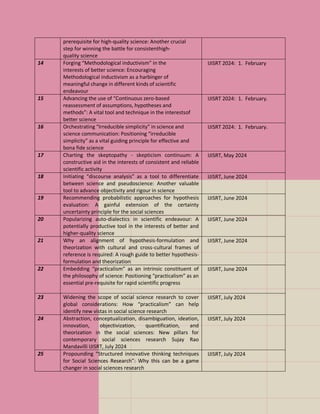
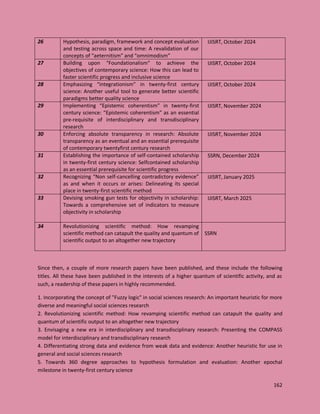
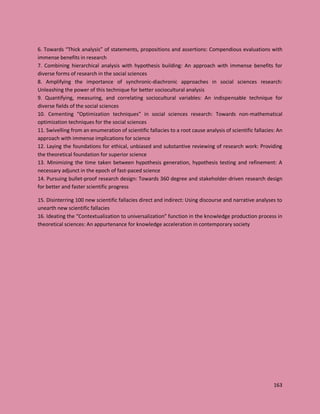





![183
also potentially reveal a wealth of information about the human psyche in general. Vested interests are
not only present in the private and the personal sphere, they also run rampant in the governmental and
the public sphere; they are also deeply entrenched on all forms of public affairs and policy making,
including governmental programs and the structural arrangements than enshroud them. All individuals
and institutions generate them to varying degrees either to perpetuate pelf, or to maintain and defend
the status quo. A status quo may either encompass a widely prevalent one, or one that has been
acquitted over a protracted span or period in time. Individuals also, more often than not, get
accustomed to them, or even take them for granted. 256 257
Individuals may also then willy nilly, factor them into their own personal plans and agendas over a
period in time. Vested interests also run through as a common thread in health care, manufacturing,
agriculture, defense, transportation, foreign policy, international trade and exports in virtually even
nation on the earth and under the sun. Vested interests exist because certain individuals, people and
groups invariably and inevitably reap rich rewards and benefits (often in myriad different ways, and
personally or collectively) from transactional dealings and paradigms in addition to the services they
may provide to the general public in the process, or the investments and jobs they may facilitate.
Individuals may therefore wish to sway policy making in their own favour often by eliminating other
vested interests. In additional to getting the job done, additional dividends are often seen as a
transactional bonus, and not always as a purely unhealthy one. Therefore, the idea and the concept of
vested interest, along with conflicts of interest needs to be factored into institutional theory too,
foundationally and fundamentally, and through the use of case study methods and techniques, and
inductive and nomothetic approaches too. These are principles we will swear by, and abide by at all
times, and these shall by our shining light and beacon light at all times. 258 259
Promoting the interests of a small, restricted or a closed group
Another common and a notable characteristic of an ideology is that it promotes the interests, or
alternatively serves the requirements of only a small, restricted or a closed group of people, and
individuals. Alternatively, it may represent the values and the cherished goals and ideals of only of a
small, restricted or a closed group. Dravidian nationalism, and Hindutva ideologies fall under this
caregory, as do Hindi chauvinism and parochialism. An ideology (often a monistic one) may even,
eventually, and in due course become the official ideology is a state or a nation. This is known
commonly as an ideocracy. An ideocracy is a "governance of a state according to the principles of a
particular (political) ideology; a state or country governed in this way". Sidney and Beatrice Webb coined
the term ideocracy way back in 1936, and Nicholas Berdyaev, Crane Brinton, J. William Fulbright, and
others added more meat and substance to it in the following decade.
256 H.H. Ben-Sasson, A History of the Jewish People, Harvard University Press, 1976
257 Neusner, Jacob (1962). "6". A Life of Rabban Yohanan Ben Zakkai: Ca. I–80 C.E. E.J. Brill.
258 Towards a formal analysis of “vested interests” as an intrinsic part of social science research techniques: Another crucial component of social
and cultural progress Sujay Rao Mandavilli IJISRT, September 2024
259 Lasswell, Harold D. (1963) [1958]. Politics: who gets what, when how. : With postscript. World.](https://image.slidesharecdn.com/sujayknowledgeproductionlifecyclefinalfinalfinalfinalfinal-251123121637-2bd4c78c/85/Sujay-Rao-Mandavilli-Knowledge-production-lifecycle-FINAL-FINAL-FINAL-FINAL-FINAL-pdf-183-320.jpg)





![206
Cartel
A cartel is a group of individuals who collude with each other in many different ways such as agreeing
not to compete with each other for example in order to increase their profits and dominate the market
collectively. The term is thought to have been derived from the Italian word cartello, the German Kartel,
and the French word cartel. Cartels have existed in some form or the other since ancient times, and in
medieval times, guilds were common as well. (Guilds represented medieval organizations or
associations of craftsmen and merchants) They however increased greatly in the twentieth century, and
flourished during the Nazi regime and contemporary Italian and Spanish regimes as well. A collusion is
for this purpose, and for all others, a secret or illegal cooperation or conspiracy carried out or executed
by a group of individuals in order to deceive others or trample upon their rights. Cartels may carry out
secretive misinformation campaigns; they may also create artificial shortages through low production
quotas, price manipulation, different forms of hoarding and stockpiling, and marketing quotas. Cartels
are usually formed with an industry, and in many cases, represent a collusion of rivals and competitors.
However, these have been outlawed in many nations and jurisdictions as they represent an interference
with a free market economy, and free competition. We therefore have many different cartels, and these
include selling or buying cartels, marketing cartels, buying cartels, quota cartels etc. 278 279
Cause groups
Cause groups which are also sometimes known as pressure groups, in popular and widespread parlance
refer to organizations that promote a particular cause or a particular value and therefore seek to
represent or protect an interest of a specific segment of society. They are also often classified into
different types, including causal groups which focus on a singular cause, aim or objective, sectional
groups which represent a specific section of society including specific professions, ethnic groups, or
industry. Attitude cause groups seek to mold or shape public opinion and shape or change people's
attitudes on a particular issue. For example, the famous organization Greenpeace has predominantly
focused on the environment as also have environmentalists such as Greta Thunberg. Malala Yousufsai
has focused on girls’ education and women’s rights in general after an unfortunate encounter with
Islamic radicals who sought to eliminate and exterminate her. Some other groups may be more political
in nature, and these refer to political cause groups. Cause groups may typically employ statistics,
reports, and other forms of well-evidenced arguments, engage in debates, dialogues and discussions
with the media and with other groups, prepare presentations and otherwise engage in lobbying and
other forms of pressure tactics, etc. Of course, cause groups may not be entirely devoid of vested
interests, and these may need to be analyzed on a case to case basis.
278 Brentano, Lujo (1969) [1870]. On the History and Development of Gilds and the Origin of Trade-Unions. Research & Source Works Series.
Burt Frankin
279 Fear, Jeffrey R.: Cartels. In: Geoffrey Jones; Jonathan Zeitlin (ed.): The Oxford handbook of business history. Oxford: Univ. Press, 2007,
p. 268–293](https://image.slidesharecdn.com/sujayknowledgeproductionlifecyclefinalfinalfinalfinalfinal-251123121637-2bd4c78c/85/Sujay-Rao-Mandavilli-Knowledge-production-lifecycle-FINAL-FINAL-FINAL-FINAL-FINAL-pdf-206-320.jpg)