Suicide risk assessment
Presentor- Surabhi H
Suicide –Death caused By self directed injurious behavior with
any intent to die as a result of the Behavior
Suicide attempt – a non fatal self-directed potentially injurious
Behavior with any intent to die as a result of Behavior
Suicidal ideation- thoughts Of suicide . Which can range in
severity from vague wish to be dead to active suicidal ideation
Parasuicide –suicide attempts or gestures which does not result in
death
Deliberate self harm- direct injuring of body tissue most often done
without suicidal intentions
Theories of suicide
• Sociological-relation of social factors to ill health and suicide or
suicidal behavior
• Psychological-relation with the functioning of human mind
• Biological- to understand the cause of suicide relates to the
functioning of human body
• Suicide prediction- refers to whether suicide will or will not occur at
some future time
• Suicide risk assessment-refers to the establishment of a clinical
judgement of risk in the very near future, based on weighing on a
large number of clinical detail
Protective factors
• Having social supports
• Obtaining treatment (especially psychotropic medications)
• Being younger female
• Being physically healthy
• Being hopeful
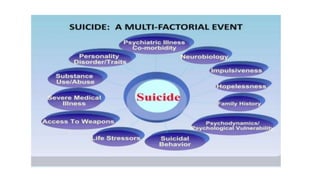
Risk factors
• Marked hopelessness
• A history of previous suicide attempts
• Social isolation
• Depressive disorder with severe mood change , with insomnia, anorexia
and weight loss
• Alcohol dependence
• Drug dependence
• Schizophrenia
• Epilepsy
• Abnormal personality
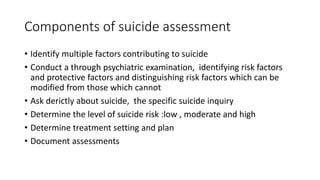
Components of suicide assessment
• Identify multiple factors contributing to suicide
• Conduct a through psychiatric examination, identifying risk factors
and protective factors and distinguishing risk factors which can be
modified from those which cannot
• Ask derictly about suicide, the specific suicide inquiry
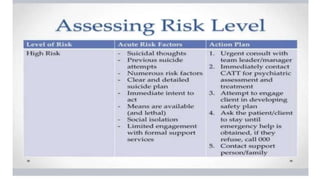
• Determine the level of suicide risk :low , moderate and high
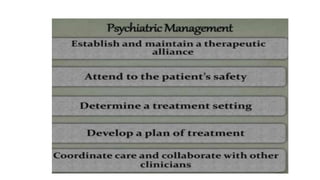
• Determine treatment setting and plan
• Document assessments
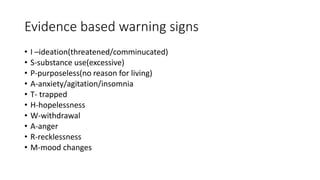
Evidence based warning signs
• I –ideation(threatened/comminucated)
• S-substance use(excessive)
• P-purposeless(no reason for living)
• A-anxiety/agitation/insomnia
• T- trapped
• H-hopelessness
• W-withdrawal
• A-anger
• R-recklessness
• M-mood changes
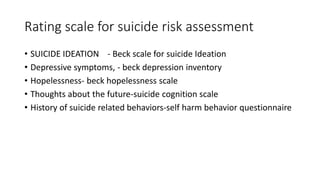
Rating scale for suicide risk assessment
• SUICIDE IDEATION - Beck scale for suicide Ideation
• Depressive symptoms, - beck depression inventory
• Hopelessness- beck hopelessness scale
• Thoughts about the future-suicide cognition scale
• History of suicide related behaviors-self harm behavior questionnaire
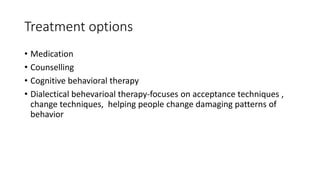
Treatment options
• Medication
• Counselling
• Cognitive behavioral therapy
• Dialectical behevarioal therapy-focuses on acceptance techniques ,
change techniques, helping people change damaging patterns of
behavior
suicide risk assessment.pptx

suicide risk assessment.pptx

  • 1.
  • 2.
    Suicide –Death causedBy self directed injurious behavior with any intent to die as a result of the Behavior Suicide attempt – a non fatal self-directed potentially injurious Behavior with any intent to die as a result of Behavior Suicidal ideation- thoughts Of suicide . Which can range in severity from vague wish to be dead to active suicidal ideation
  • 3.
    Parasuicide –suicide attemptsor gestures which does not result in death Deliberate self harm- direct injuring of body tissue most often done without suicidal intentions
  • 4.
    Theories of suicide •Sociological-relation of social factors to ill health and suicide or suicidal behavior • Psychological-relation with the functioning of human mind • Biological- to understand the cause of suicide relates to the functioning of human body
  • 5.
    • Suicide prediction-refers to whether suicide will or will not occur at some future time • Suicide risk assessment-refers to the establishment of a clinical judgement of risk in the very near future, based on weighing on a large number of clinical detail
  • 6.
    Protective factors • Havingsocial supports • Obtaining treatment (especially psychotropic medications) • Being younger female • Being physically healthy • Being hopeful
  • 7.
    Risk factors • Markedhopelessness • A history of previous suicide attempts • Social isolation • Depressive disorder with severe mood change , with insomnia, anorexia and weight loss • Alcohol dependence • Drug dependence • Schizophrenia • Epilepsy • Abnormal personality
  • 9.
    Components of suicideassessment • Identify multiple factors contributing to suicide • Conduct a through psychiatric examination, identifying risk factors and protective factors and distinguishing risk factors which can be modified from those which cannot • Ask derictly about suicide, the specific suicide inquiry • Determine the level of suicide risk :low , moderate and high • Determine treatment setting and plan • Document assessments
  • 14.
    Evidence based warningsigns • I –ideation(threatened/comminucated) • S-substance use(excessive) • P-purposeless(no reason for living) • A-anxiety/agitation/insomnia • T- trapped • H-hopelessness • W-withdrawal • A-anger • R-recklessness • M-mood changes
  • 15.
    Rating scale forsuicide risk assessment • SUICIDE IDEATION - Beck scale for suicide Ideation • Depressive symptoms, - beck depression inventory • Hopelessness- beck hopelessness scale • Thoughts about the future-suicide cognition scale • History of suicide related behaviors-self harm behavior questionnaire
  • 18.
    Treatment options • Medication •Counselling • Cognitive behavioral therapy • Dialectical behevarioal therapy-focuses on acceptance techniques , change techniques, helping people change damaging patterns of behavior