Done by Volhina Tanya
Buildings in this architectural style were constructed
mainly in Europe and North America. After the
destruction of many historic buildings in Europe during
World War II, repairing them was a difficult matter.
Architects had to decide between replicating the historic
elements or replacing it with new modern materials and
aesthetics.
The scientific and technological advances had a big impact
on societies in the 1970s. The Space Race climaxed in 1969
with Neil Armstrong’s landing on the moon, and came
along with excessive military developments. These
advances set people’s minds thinking that much more can
be achieved with advancing technology. Technological
instruments became a common sight for people at the
time because of the use of ramps, video screens,
headphones, and bare scaffolds. These high-tech
constructions became more visible everyday to the average
person.
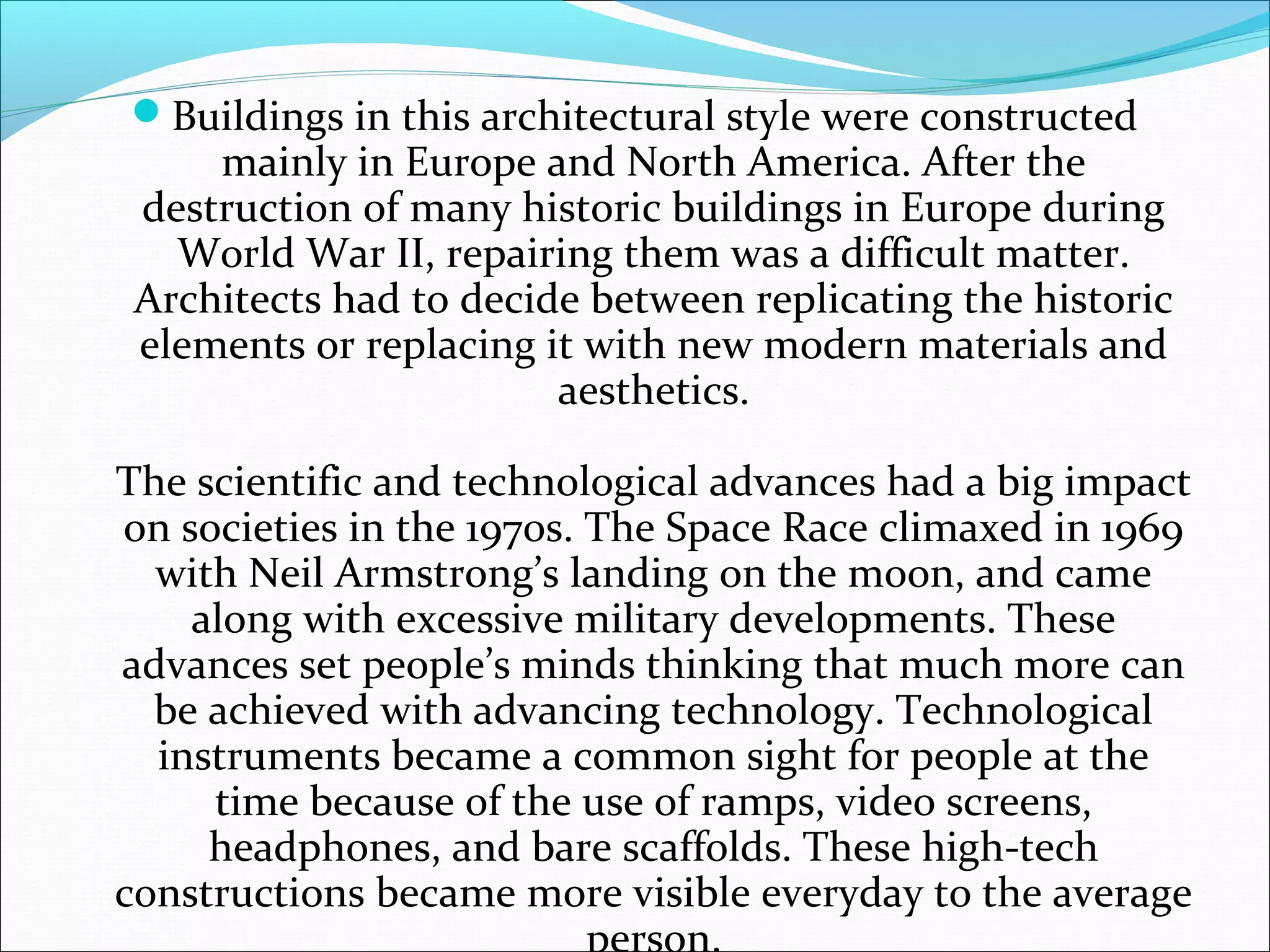
High-tech architecture was, in some ways, a response to
growing disillusionment with modern architecture. The
realization of Le Corbusier’s urban development plans led
to cities with monotonous and standardized buildings.
Enthusiasm for economic building led to extremely low-
quality finishes, with subsequent degradation countering a
now-waning aesthetic novelty. High-tech architecture
created a new aesthetic in contrast with standard modern
architecture. In High Tech: The Industrial Style and
Source Book for The Home, when discussing the high-tech
aesthetic, the authors emphasized using elements "your
parents might find insulting". This humour so aptly
demonstrates the rebellious attitude.
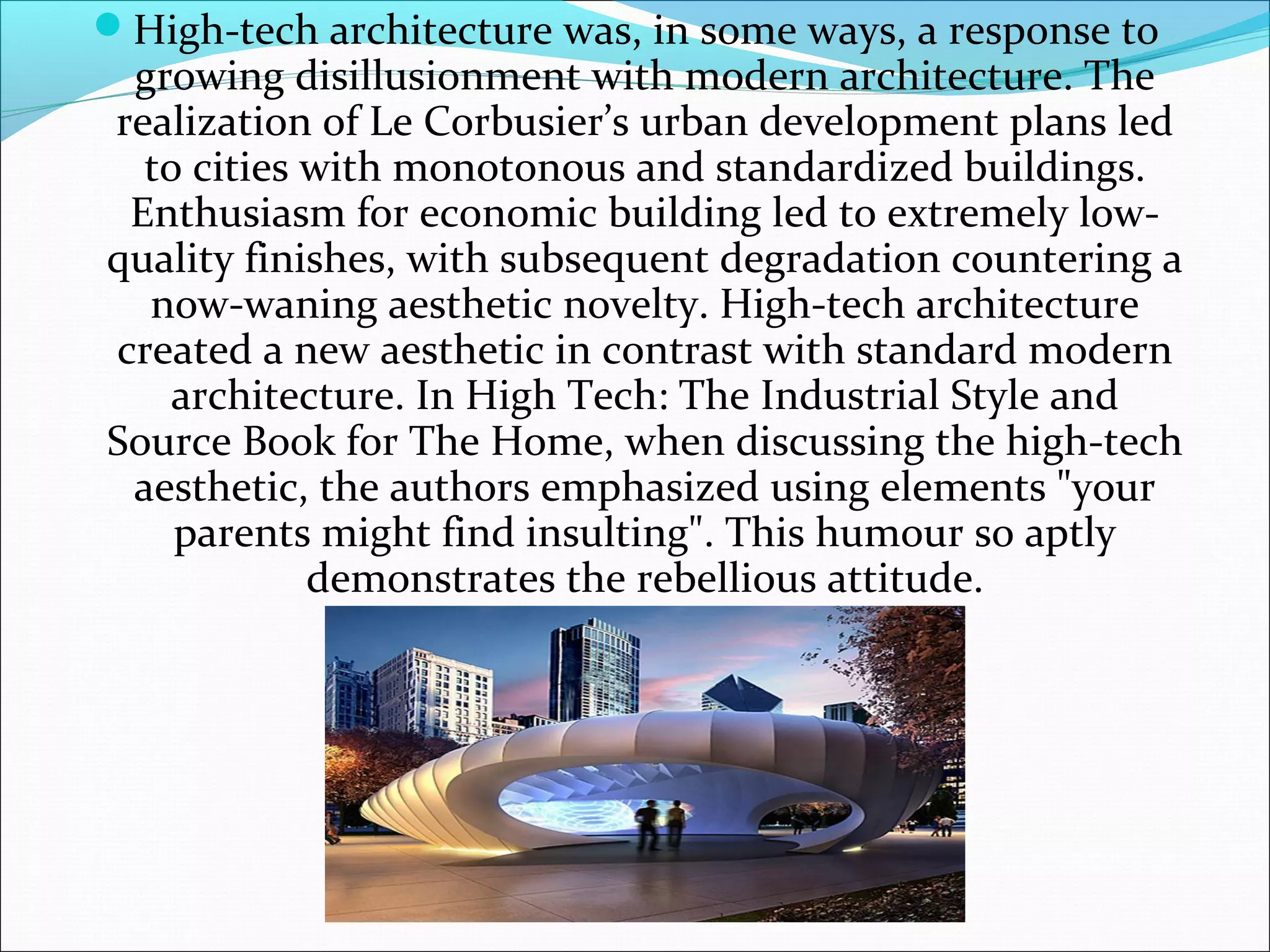
Directory of engineering and architectural style High-
tech (High technology), which is also known as Late
modernism. This important movement, which took
the base of modern architecture, relied on innovation
and technology and was one-time bridge between
modernism and postmodernism.
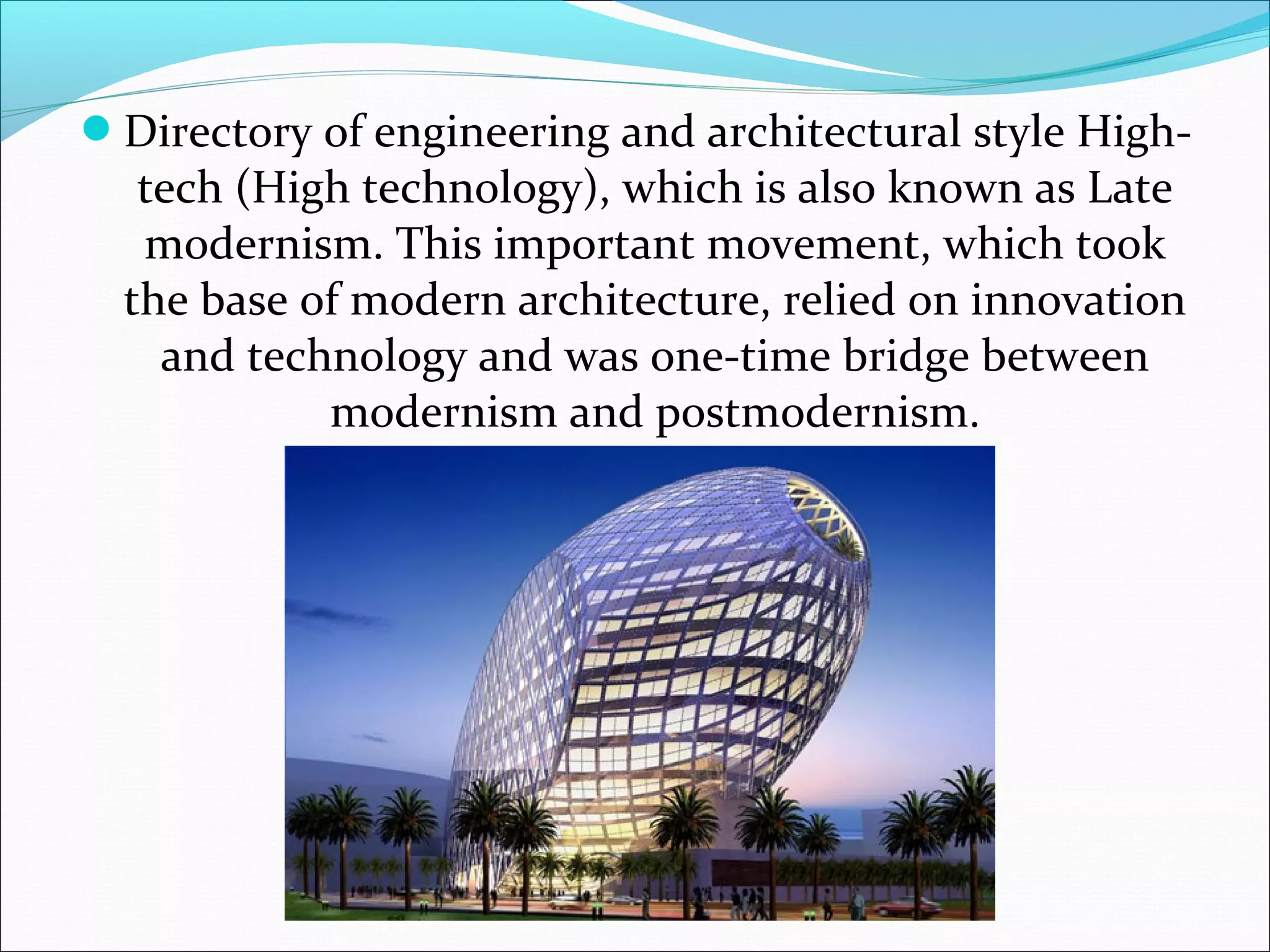
Buildings designed in this style usually consist of a
clear glass facade, with the building's network of
support beams exposed behind it. Perhaps the most
famous and easily recognized building built in this
style is I.M. Pei's Bank of China Tower in Hong Kong.
The World Trade Center in New York City, although
generally considered to be an International Style
building, was technically a Structural Expressionist
design due to its load-bearing steel exoskeleton.
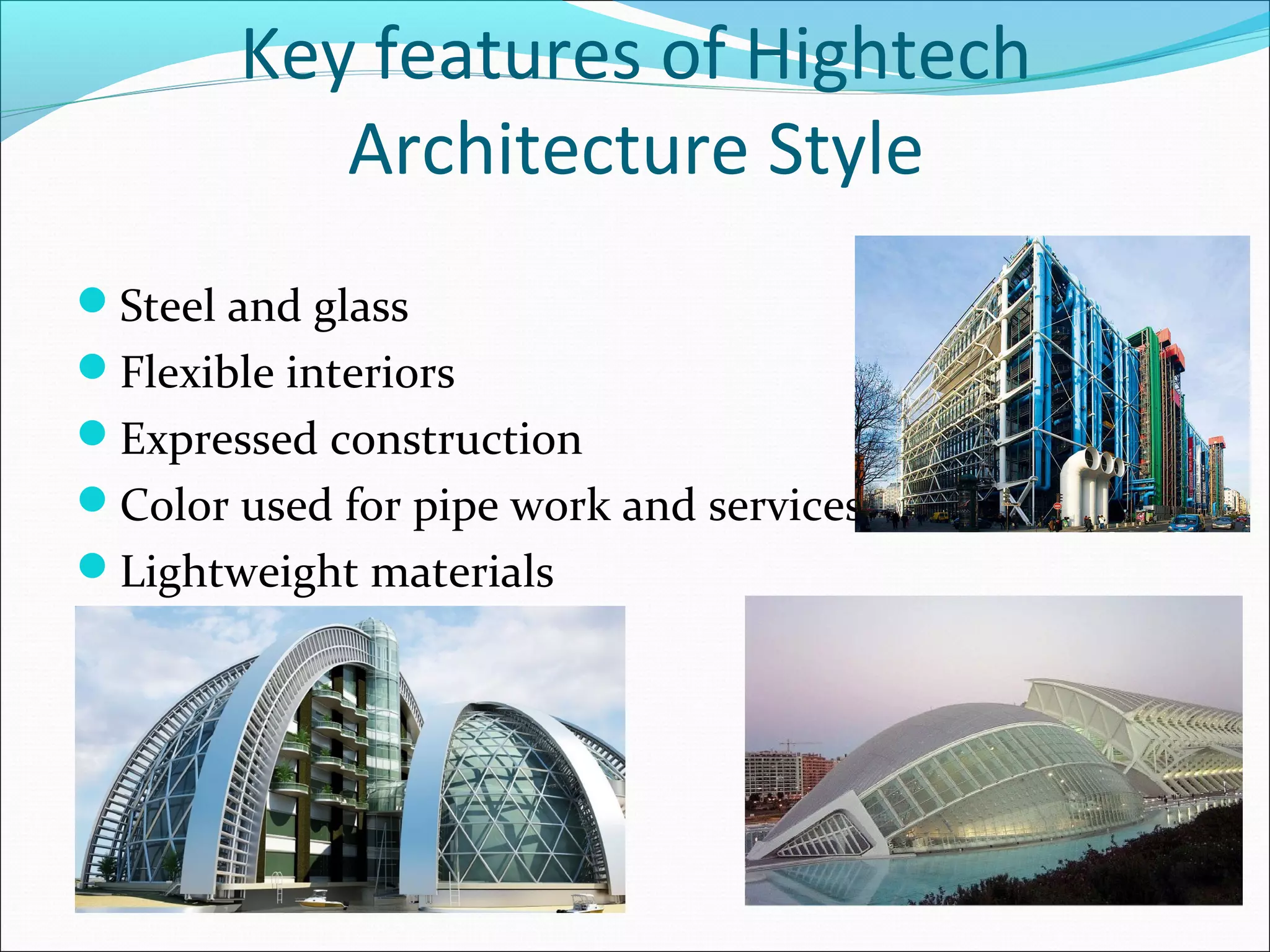
Key features of Hightech
Architecture Style
Steel and glass
Flexible interiors
Expressed construction
Color used for pipe work and services
Lightweight materials
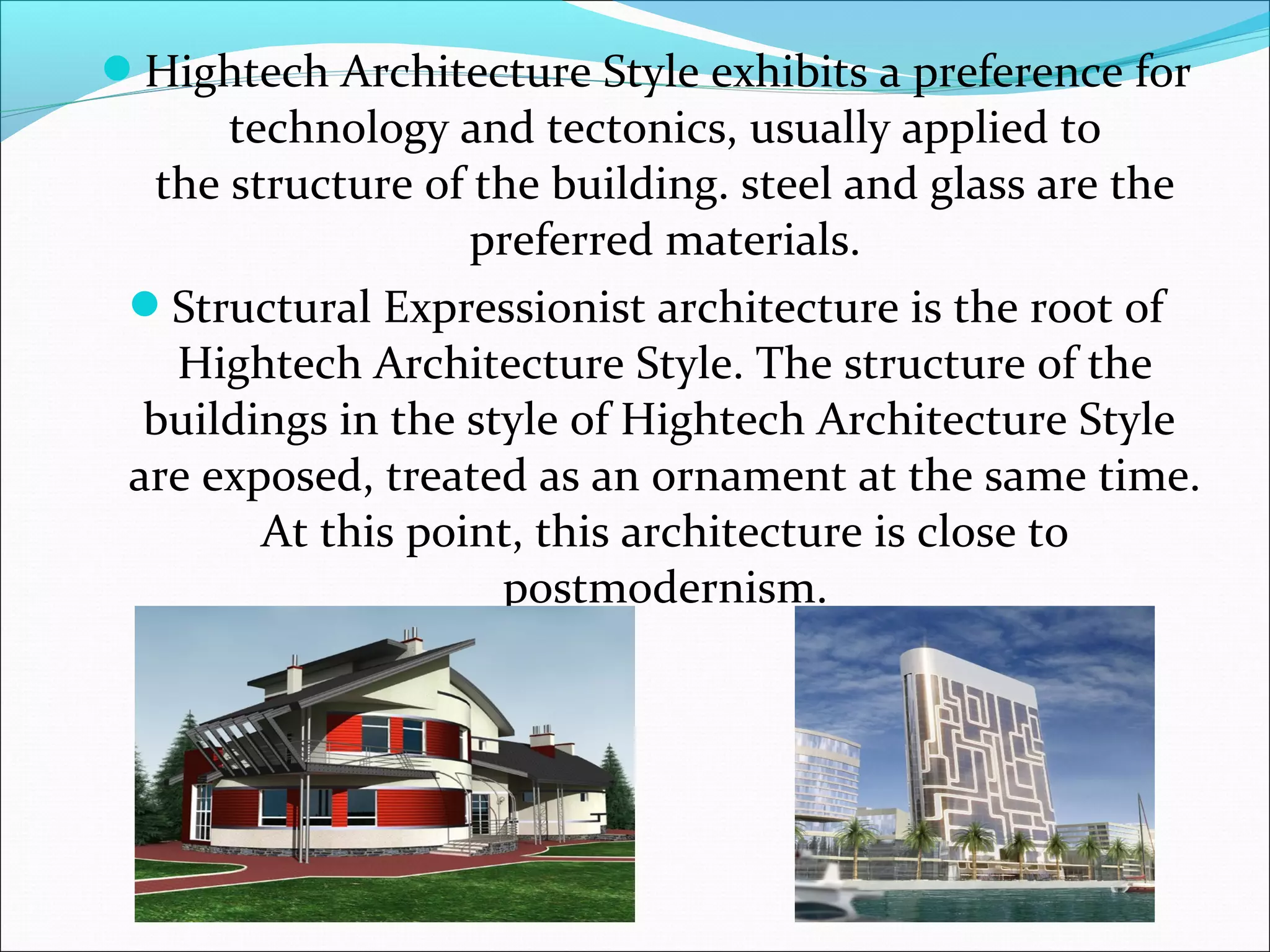
Hightech Architecture Style exhibits a preference for
technology and tectonics, usually applied to
the structure of the building. steel and glass are the
preferred materials.
Structural Expressionist architecture is the root of
Hightech Architecture Style. The structure of the
buildings in the style of Hightech Architecture Style
are exposed, treated as an ornament at the same time.
At this point, this architecture is close to
postmodernism.
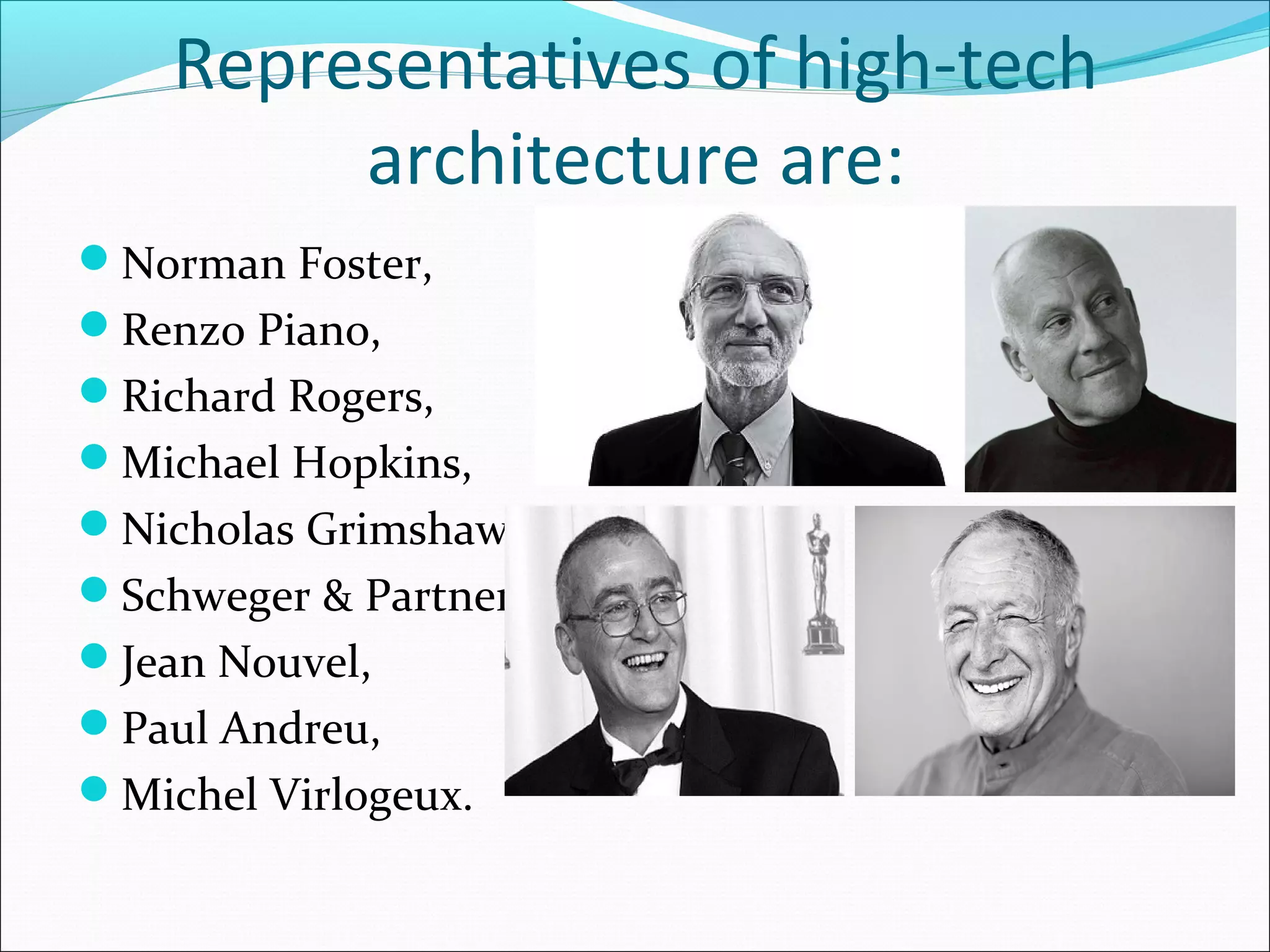
Representatives of high-tech
architecture are:
Norman Foster,
Renzo Piano,
Richard Rogers,
Michael Hopkins,
Nicholas Grimshaw,
Schweger & Partner,
Jean Nouvel,
Paul Andreu,
Michel Virlogeux.
Buildings of Tomorrow
by Paul Cattermole published by
Thames and Hudson
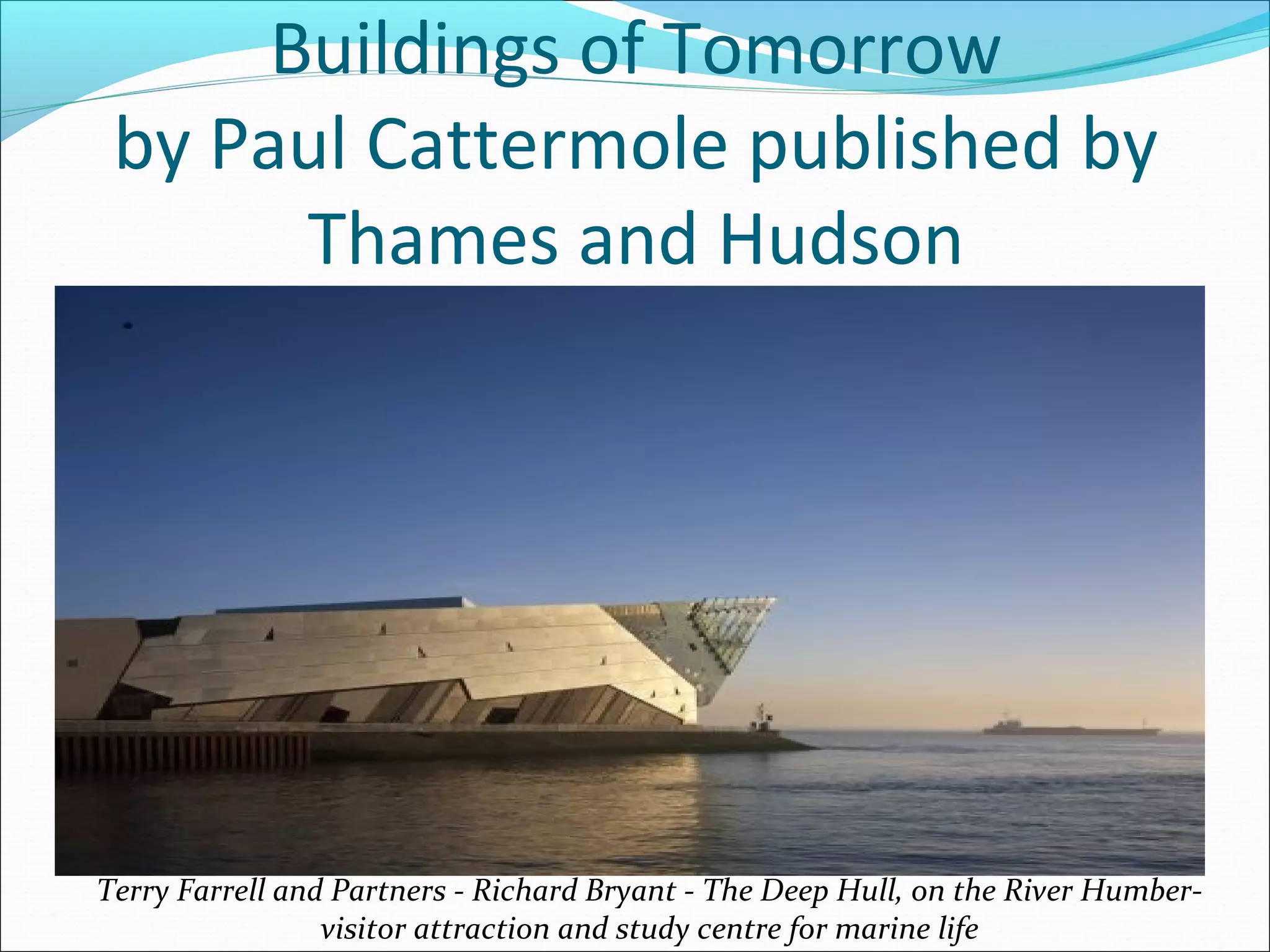
Terry Farrell and Partners - Richard Bryant - The Deep Hull, on the River Humber-
visitor attraction and study centre for marine life
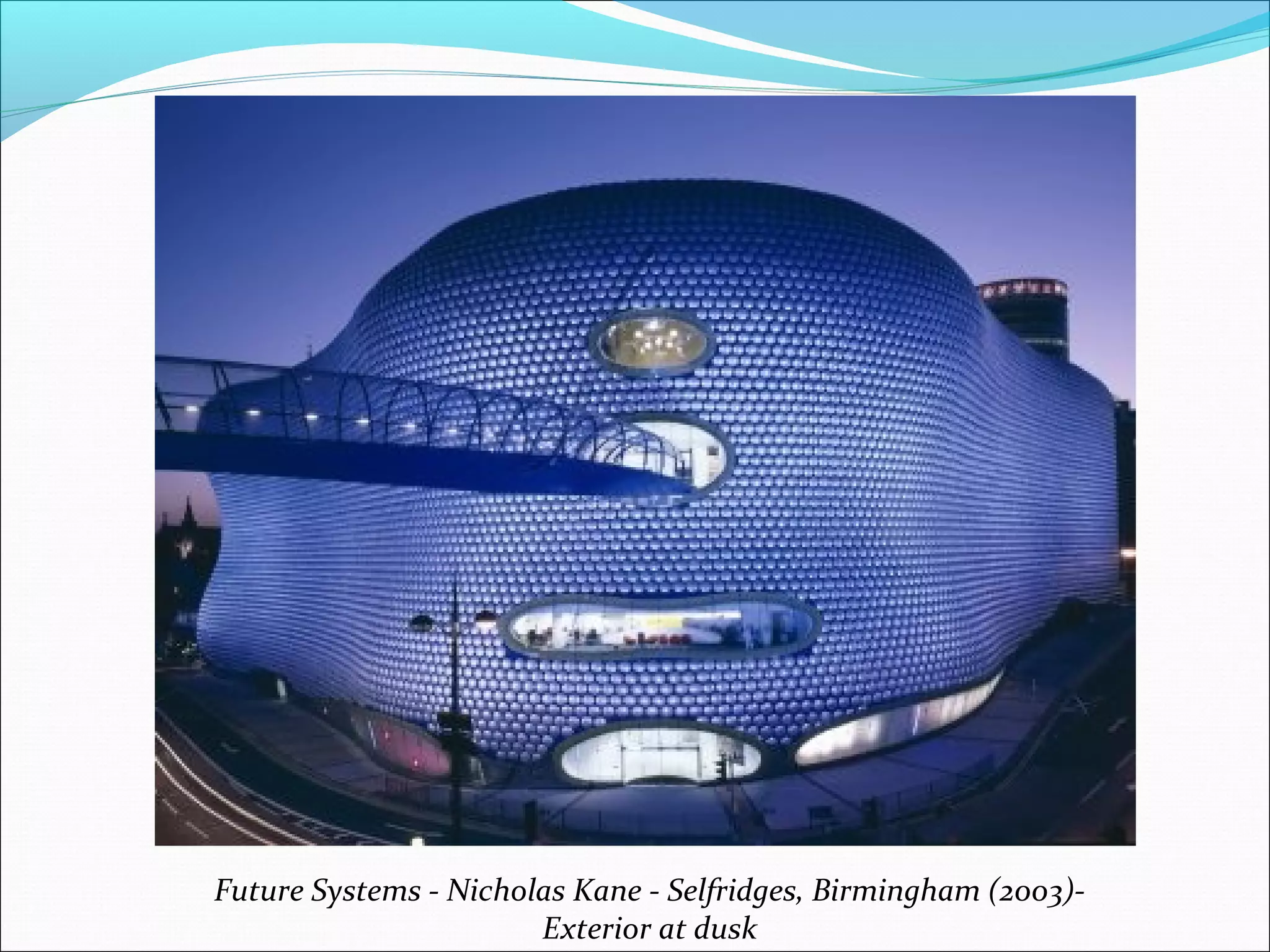
Future Systems - Nicholas Kane - Selfridges, Birmingham (2003)-
Exterior at dusk
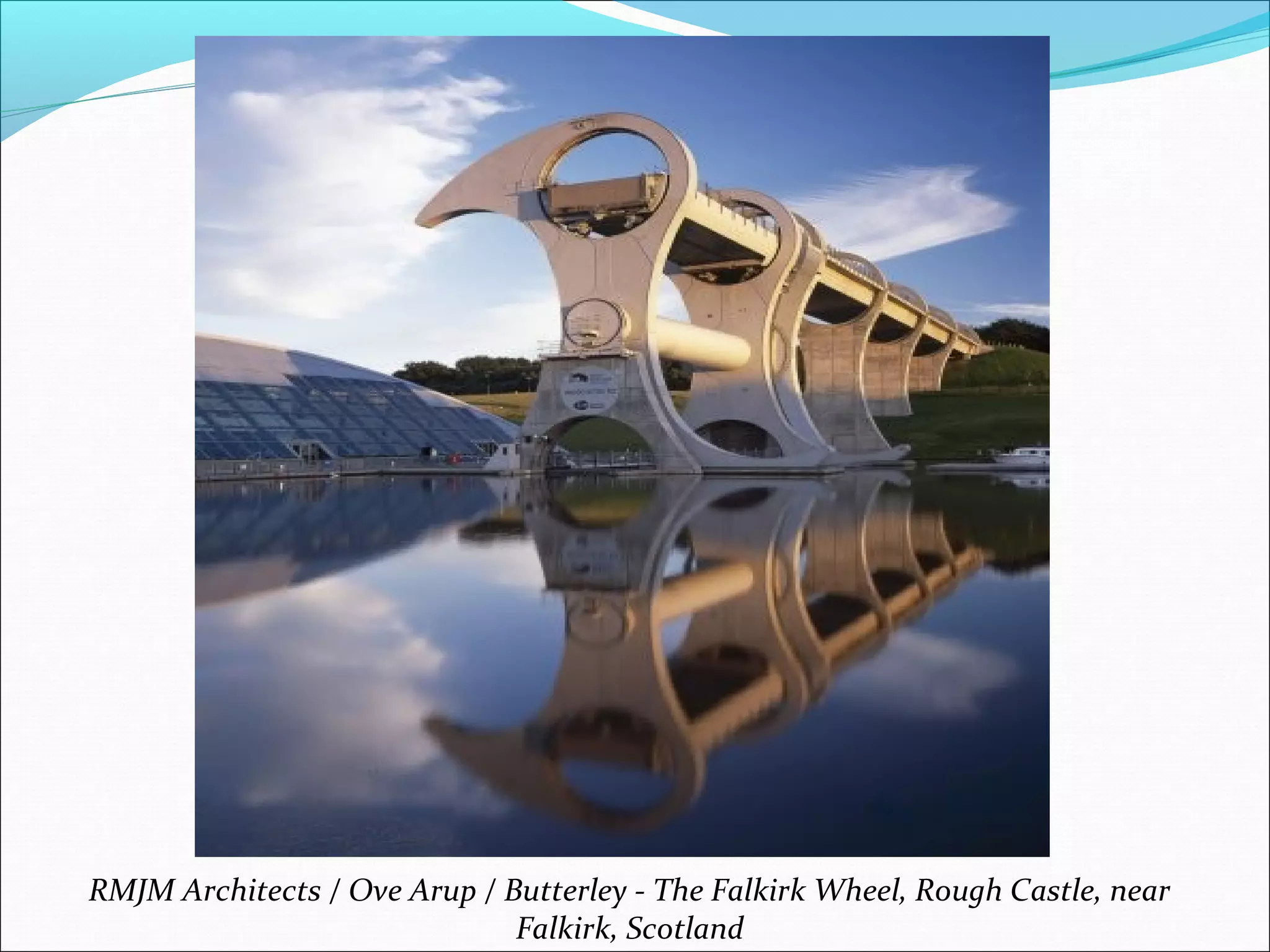
RMJM Architects / Ove Arup / Butterley - The Falkirk Wheel, Rough Castle, near
Falkirk, Scotland
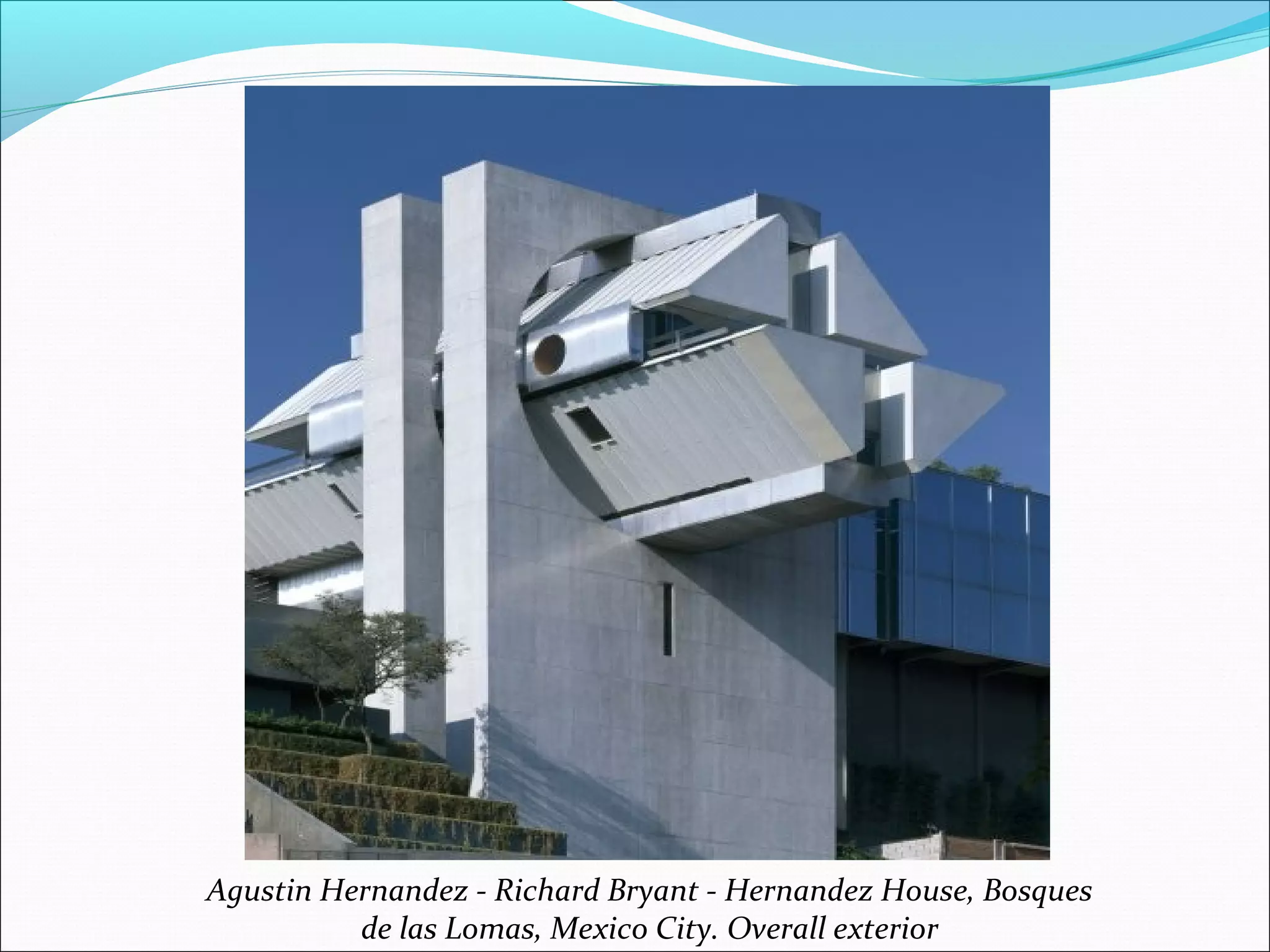
Agustin Hernandez - Richard Bryant - Hernandez House, Bosques
de las Lomas, Mexico City. Overall exterior
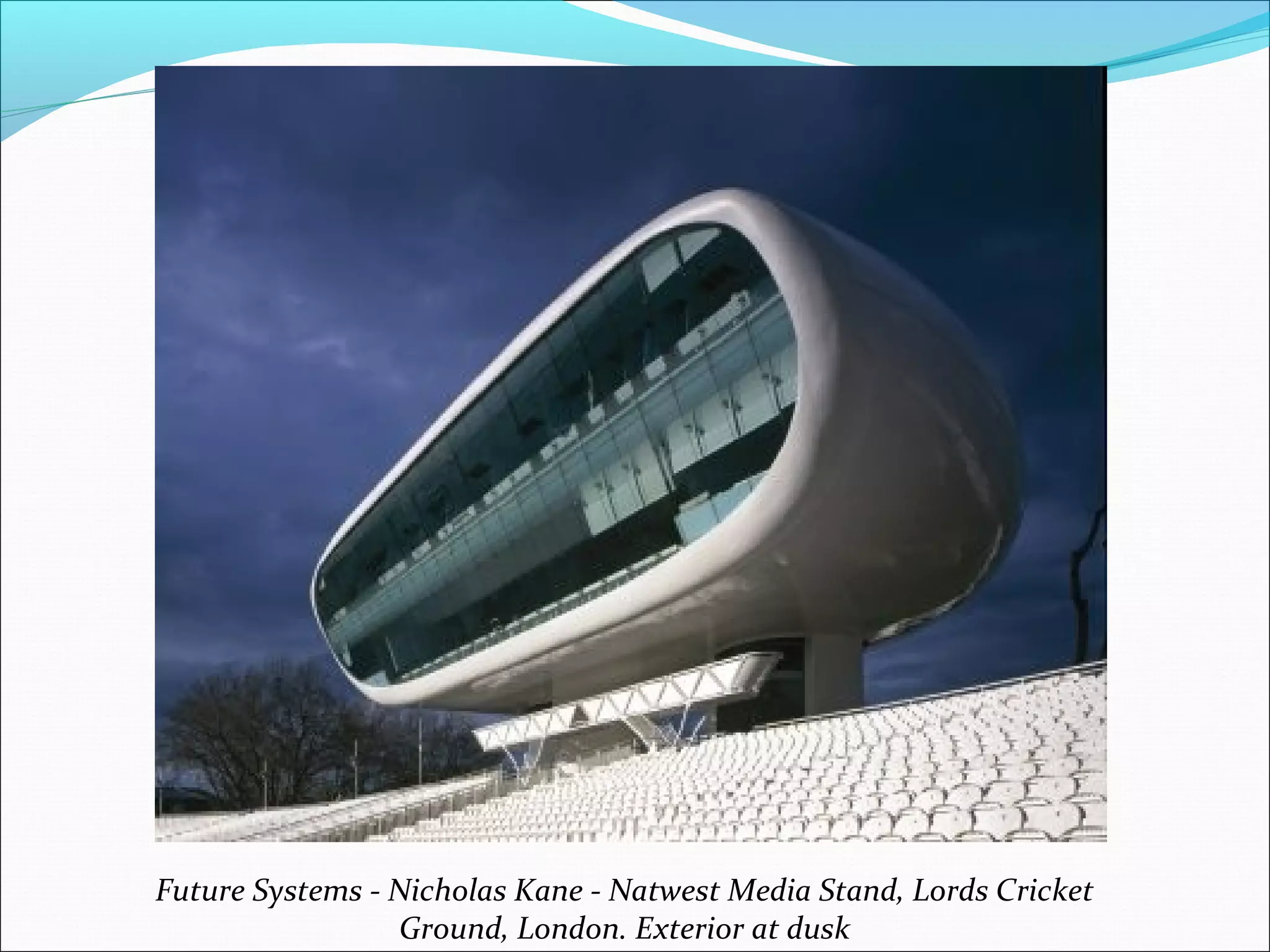
Future Systems - Nicholas Kane - Natwest Media Stand, Lords Cricket
Ground, London. Exterior at dusk
Thank you for attention!

Style high tech in architecture (tu-3-9a)

  • 1.
  • 2.
    Buildings in thisarchitectural style were constructed mainly in Europe and North America. After the destruction of many historic buildings in Europe during World War II, repairing them was a difficult matter. Architects had to decide between replicating the historic elements or replacing it with new modern materials and aesthetics. The scientific and technological advances had a big impact on societies in the 1970s. The Space Race climaxed in 1969 with Neil Armstrong’s landing on the moon, and came along with excessive military developments. These advances set people’s minds thinking that much more can be achieved with advancing technology. Technological instruments became a common sight for people at the time because of the use of ramps, video screens, headphones, and bare scaffolds. These high-tech constructions became more visible everyday to the average person.
  • 3.
    High-tech architecture was,in some ways, a response to growing disillusionment with modern architecture. The realization of Le Corbusier’s urban development plans led to cities with monotonous and standardized buildings. Enthusiasm for economic building led to extremely low- quality finishes, with subsequent degradation countering a now-waning aesthetic novelty. High-tech architecture created a new aesthetic in contrast with standard modern architecture. In High Tech: The Industrial Style and Source Book for The Home, when discussing the high-tech aesthetic, the authors emphasized using elements "your parents might find insulting". This humour so aptly demonstrates the rebellious attitude.
  • 4.
    Directory of engineeringand architectural style High- tech (High technology), which is also known as Late modernism. This important movement, which took the base of modern architecture, relied on innovation and technology and was one-time bridge between modernism and postmodernism.
  • 5.
    Buildings designed inthis style usually consist of a clear glass facade, with the building's network of support beams exposed behind it. Perhaps the most famous and easily recognized building built in this style is I.M. Pei's Bank of China Tower in Hong Kong. The World Trade Center in New York City, although generally considered to be an International Style building, was technically a Structural Expressionist design due to its load-bearing steel exoskeleton.
  • 6.
    Key features ofHightech Architecture Style Steel and glass Flexible interiors Expressed construction Color used for pipe work and services Lightweight materials
  • 7.
    Hightech Architecture Styleexhibits a preference for technology and tectonics, usually applied to the structure of the building. steel and glass are the preferred materials. Structural Expressionist architecture is the root of Hightech Architecture Style. The structure of the buildings in the style of Hightech Architecture Style are exposed, treated as an ornament at the same time. At this point, this architecture is close to postmodernism.
  • 8.
    Representatives of high-tech architectureare: Norman Foster, Renzo Piano, Richard Rogers, Michael Hopkins, Nicholas Grimshaw, Schweger & Partner, Jean Nouvel, Paul Andreu, Michel Virlogeux.
  • 9.
    Buildings of Tomorrow byPaul Cattermole published by Thames and Hudson Terry Farrell and Partners - Richard Bryant - The Deep Hull, on the River Humber- visitor attraction and study centre for marine life
  • 10.
    Future Systems -Nicholas Kane - Selfridges, Birmingham (2003)- Exterior at dusk
  • 11.
    RMJM Architects /Ove Arup / Butterley - The Falkirk Wheel, Rough Castle, near Falkirk, Scotland
  • 12.
    Agustin Hernandez -Richard Bryant - Hernandez House, Bosques de las Lomas, Mexico City. Overall exterior
  • 13.
    Future Systems -Nicholas Kane - Natwest Media Stand, Lords Cricket Ground, London. Exterior at dusk
  • 14.
    Thank you forattention!