Studying Islam The Critical Issues Clinton Bennett
Studying Islam The Critical Issues Clinton Bennett
Studying Islam The Critical Issues Clinton Bennett
Studying Islam The Critical Issues Clinton Bennett
Studying Islam The Critical Issues Clinton Bennett
1.
Studying Islam TheCritical Issues Clinton
Bennett download
https://ebookbell.com/product/studying-islam-the-critical-issues-
clinton-bennett-50673590
Explore and download more ebooks at ebookbell.com
2.
Here are somerecommended products that we believe you will be
interested in. You can click the link to download.
Studying Islam The Critical Issues Clinton Bennett
https://ebookbell.com/product/studying-islam-the-critical-issues-
clinton-bennett-1958842
Studying Islam In The Arab World The Rupture Between Religion And The
Social Sciences 1st Edition Sari Hanafi
https://ebookbell.com/product/studying-islam-in-the-arab-world-the-
rupture-between-religion-and-the-social-sciences-1st-edition-sari-
hanafi-54363118
Scripture Reason And The Contemporary Islamwest Encounter Studying The
Other Understanding The Self Basit Bilal Koshul
https://ebookbell.com/product/scripture-reason-and-the-contemporary-
islamwest-encounter-studying-the-other-understanding-the-self-basit-
bilal-koshul-5370738
Studying Islam In Practice Gabriele Marranci
https://ebookbell.com/product/studying-islam-in-practice-gabriele-
marranci-47104678
3.
Studying Online SucceedingThrough Distance Learning At University
Graham Jones
https://ebookbell.com/product/studying-online-succeeding-through-
distance-learning-at-university-graham-jones-46149584
Studying Those Who Study Us An Anthropologist In The World Of
Artificial Intelligence 1st Edition Diana E Forsythe
https://ebookbell.com/product/studying-those-who-study-us-an-
anthropologist-in-the-world-of-artificial-intelligence-1st-edition-
diana-e-forsythe-46191966
Studying Language In Interaction A Practical Research Guide To
Communicative Repertoire And Sociolinguistic Diversity Betsy Rymes
https://ebookbell.com/product/studying-language-in-interaction-a-
practical-research-guide-to-communicative-repertoire-and-
sociolinguistic-diversity-betsy-rymes-46517736
Studying Sound A Theory And Practice Of Sound Design Karen Collins
https://ebookbell.com/product/studying-sound-a-theory-and-practice-of-
sound-design-karen-collins-46706782
Studying Law Simon Askey Ian Mcleod
https://ebookbell.com/product/studying-law-simon-askey-ian-
mcleod-47678540
5.
This book isdedicated
With appreciation
To my fellow authors in this series
Series Preface
Religious Studiesand
Critical Enquiry: Toward a
New Relationship
Clinton Bennett
Birth of a discipline
This new series takes the view that, as a field of studies, the Study of Religion
is multidisciplinary and poly-methodological and needs to not merely affirm
this but to translate this claim into practice. Religious Studies has its academic,
historical roots within faculties or departments of Theology, where it began
as a Comparative Study of Religions predicated on the assumption that
Christianity was either a model, or a superior religion. The first University
appointment was in 1873, when William Fairfield Warren became Professor
of Comparative Theology and of the History and Philosophy of Religion at
Boston University. The concept of Christianity as a model meant that anything
that qualified as a religion ought to resemble Christianity. Traditional subdivi-
sions of Christian Studies, almost always called Theology, were applied to all
religious systems. Thus, a religion would have a founder, a scripture or scrip-
tures, doctrines, worship, art, sacred buildings and various rituals associated
with the human life cycle. These elements could be identified, and studied, in
any religion. This approach has obvious methodological advantages but it can
end up making all religions look remarkably similar to each other and of
course also to what serves as the template or model, that is, to Christianity.
The very terms “Hinduism” and “Buddhism” were of European origin, since
all religions had to be “isms” with coherent belief structures. The assumption
that Christianity was somehow superior, perhaps uniquely true or divinely
revealed to the exclusion of other religions meant that other religions had to be
understood either as human constructs or as having a more sinister origin.
Theology was thus concerned with evaluation and with truth claims. The
study of religions other than Christianity often aimed to demonstrate how
these religions fell short of the Christian ideal. Their strengths and weaknesses
8.
Series Preface
x
were delineated.Some classified religions according to their position on a
supposed evaluative scale, with the best at the top and the worst at the bottom.
Religious Studies, as it developed as a distinctive field of study, quickly dis-
tanced itself from Theology even when taught within Theology departments.
It would be mainly descriptive.
The break from theology
Evaluation would be left to theology. Assessing where a religion might be
considered right or wrong, strong or weak might occupy a theologian but the
student of religion would describe what he or she saw, regardless of their own
opinion or lack of an opinion about whether religions have any actual link
with a supra-human reality. Partly, this stemmed from Religious Studies’ early
interest in deconstructing religions. This was the attempt to determine how
they began. Usually, they were understood as a response to, or products
of, particular social and political contexts. This took the field closer to the
social sciences, which remain neutral on such issues as the existence of God
or whether any religion can claim to have been revealed, focusing instead
on understanding how religions operate, either in society or psychologically.
Incidentally, the term “Comparative Religion” has been used as a neutral term,
that is, one that does not imply a comparison in order to refute or evaluate. In
its neutral sense, it refers to the cataloguing of religious data under thematic
headings, such as ritual, myth, beliefs without any attempt to classify some as
better than others. The field has, to a degree, searched for a name. Contenders
include the Scientific Study of Religion, the History of Religion (or Religionge-
schichteschule, mainly in the German speaking academy) but since the found-
ing of the pioneering department of Religious Studies, at Lancaster University
under Ninian Smart in 1967, Religious Studies has become the preferred
description especially in secular institutions. One issue has been whether to
use “religion” in the plural or singular. If the singular is used, it implies that
different religions belong to the same category. If the plural is used, it could
denote the opposite, that they share nothing in common, arise from unrelated
causes and have no more to do with each other than, say, the Chinese and the
Latin scripts, except that the former are beliefs about the divine–human rela-
tionship or the purpose of life while the latter are alphabets. Geo Widengren,
professor of the History of Religion at Uppsala, rejected the notion that an
a priori, sui generis phenomenon called “religion” existed as breaking the
rules of objective, neutral, value-free scholarship. Incidentally, Buddhism and
9.
Series Preface xi
Confucianismwere often characterized as philosophies, not as religions
because they lacked a God or Gods at their center. On the history of the field,
see Capps (1995) and Sharpe (2006).
Privileging insidership
The field soon saw itself as having closer ties to the humanities and to social
science than to theology. It would be a multidisciplinary field, drawing on
anthropology, psychology, philosophy as well as on linguistics and literary
criticism to study different aspects of a religion, what people do as well as what
they say they believe, their sacred texts, their rituals, their buildings as well as
how they organize themselves. However, a shift occurred in the development
of the discipline, or field of study since it is a multidisciplinary field, that effec-
tively reduced the distance between itself, and theology, from which it had
tried so hard to divorce itself. While claiming to be a multidisciplinary field,
Religious Studies has in practice veered toward privileging a single approach,
or way of studying religion, above others. The shift toward what may be called
phenomenology or insider-ship took place for good reasons and as a much
needed corrective to past mistakes and distortions. In the post-colonial space,
much criticism has been voiced about how the Western world went about the
task of studying the religious and cultural Other. Here, the voice of Edward
Said is perhaps the most widely known. Much scholarship, as Said (1978)
argued, was placed at the service of Empire to justify colonial rule and atti-
tudes of racial or civilizational superiority. Such scholars, known as Oriental-
ists, said Said, described Others, whether Africans, native Americans, Hindus
or Muslims, Arabs or Chinese, who, so that they could be dominated, were
inalienably different from and inferior to themselves. However, this descrip-
tion did not correspond to any actual reality. The term “Other” is widely used
in postcolonial discourse and in writing about Alterity to refer to those who
are different from us. The term was first used by Hegel. In contemporary use,
it denotes how we stigmatize others, so that all Muslims or all Hindus, or all
Africans share the same characteristics which are radically different from
and less desirable than our own. Cabezón (2006) argues that “the dialectic of
alterity is as operative today in the discipline of Religious Studies as it was in
the discipline’s antecedents.” This is a sobering assessment (21). The Oriental-
ists portrayed the non-Western world as chaotic, immoral, backward and as
exotic, as sometimes offering forbidden fruits but always offering adventure,
riches and the opportunity to pursue a career as a colonial administrator, in
10.
Series Preface
xii
the military,in commerce or even as a Christian missionary. Religions were
often depicted as idolatrous, superstitious, oppressive and as the source of
much social evil.
Admittedly, some scholars, including the man who can be credited as
founding the scientific study of religion, F. Max Müller, thought that religions
such as Hinduism and Buddhism had become corrupt over time and that in
their most ancient, original form they represented genuine apprehensions of
divine truth. Writing in 1892, he remarked that if he seemed to speak too well
of these religions there was little danger of the public “forming too favorable
an opinion of them” since there were many other writers who presented their
“dark and hideous side” (78). It was in his Chips from a German Workshop
(1867) that Müller used the term “scientific study of religion.” Supposition
about the human origin of religion, perhaps excluding Christianity, resulted
in a range of theories about how religions began. Britain’s first professor of
Comparative Religion, T. W. Rhys-Davids of Manchester thought that his
work on the classical texts would help to separate the rational, ethical core of
Buddhism from the myths and legends that surrounded its contemporary
practice. Often, the social-political and cultural milieu in which a founder
type figure could be located were regarded as significant contributory factors.
In the case of Hinduism, the “lack of a founder” was often commented upon
almost as if this alone detracted from the possibility that Hinduism was a bone
fide faith. Even such a careful scholar as Whaling says that Hinduism lacks
a founder (1986: 43). In the case of Islam, Muhammad was invariably depicted
as the author of the Qur’an and as Islam’s founder, neither of which reflect
Muslim conviction. Of course, for Christian polemicists, Muhammad was a
charlatan and worse, Hinduism was a tissue of falsehood and Buddhism, if
it qualified as a religion at all, was selfish! The result of this approach was to
de-construct religion, to reduce religion to something other than revealed
truth. Instead, religion was a psychological prop or a sociological phenome-
non that helps to police societies or a political tool used by the powerful to
exploit the poor. Another aspect was that ancient or classical rather than
contemporary religion was the main subject matter of Religious Studies.
The personal dimension
Even before Said, in reaction to the above, a different approach began to domi-
nate the field. Partly, this was motivated by a desire—not absent in Müller—to
right some of the wrongs committed as a result of what can only be described
as racial bias. One of the most important contributors to the new approach
11.
Series Preface xiii
wasWilfred Cantwell Smith who, in 1950 in his own inaugural lecture as
professor of Comparative Religion at McGill, spoke of the earlier generation
of scholars as resembling “flies crawling on the surface of a goldfish bowl,
making accurate observations on the fish inside . . . and indeed contributing
much to our knowledge of the subject; but never asking themselves, and never
finding out, how it feels to be a goldfish” (2).1
Scholars such as Gerardus van
der Leeuw (1890–1950), influenced by the philosophical concept of phenome-
nology, had already applied its principles to Religious Studies, arguing that
the field should move beyond description, “an inventory and classification of
the phenomena as they appear in history” to an attempt to understand “all the
experiences born of what can only become reality after it has been admitted
into the life of the believer” (1954: 10). This introduced what Smith called a
personal element into the study of religion, an element that has always played
a part in theology, which deals with matters of faith, with people’s most cher-
ished and deeply held convictions. Smith suggested that all religions should
be understood in personal terms: religion is “the faith in men’s hearts”; it is
“a personal thing, in the lives of men” (1959: 42). Thus, the student will make
progress when he or she recognizes that they are not primarily dealing with
externals, with books and rituals that can be observed but with “religious
persons, or at least with something interior to persons” (1959: 53). In the past,
the study of “other men’s religions” had taken the form of an “impersonal pres-
entation of an ‘it’” (1959: 34). Now, instead of an “us” talking about “them,” it
would first become “us” talking “to them,” then a “‘we all’ talking with each
other about ‘us’” as Religious Studies took on the task of interpreting “intellec-
tually the cosmic significance of life generically, not just for one’s own group
specifically” (1981: 187). The Religious Studies’ professor now wrote for the
Other as well as for outsiders, since they would also read what he wrote. “The
day has long past,” said Smith, “when we write only for ourselves” (1981: 143).
Phenomenology, applied to the study of religions, is the effort to penetrate
to the essential core, to the eidos, of religion, by bracketing out assumptions,
theories, preconceptions so that we see the phenomenon for what it really is,
in its own terms. Instead of imposing categories and theories and value
judgments from outside, like the Orientalists did, we enter into the religion’s
worldview. We all but become the Other. Instead of decrying what we write as
a mockery, as inaccurate, as belittling what he or she believes, the Other ought
to voice their approval (1959: 44).
Leaving aside the problem that not all Muslims or all Hindus or all Buddhists
believe identically and that what one believer finds acceptable another may
not, nonetheless, the criterion that believers should recognize themselves in
12.
Series Preface
xiv
what getswritten, has become a generally accepted principle within Religious
Studies. It is also widely embraced in anthropology. Certainly, effort is made
to represent religions as diverse, to counter the impression given by earlier
writers that Islam, for example, was more or less the same everywhere and, for
that matter, throughout history. Smith himself insisted that there is actually no
such thing as Hinduism or as Christianity or as Islam, only what this Hindu or
that Muslim believes. At the deepest level, this is undoubtedly true. On the
other hand, Religious Studies would not survive if it took this too literally, so
pragmatically it accepts that while no abstract reality called “Christianity” or
“Islam” may exist, believers also believe that they belong to a religious tradi-
tion and share beliefs with others who belong to that tradition. They believe
that these are not merely their own, individual personal opinions but are “true,”
that is, according to the teachings of the religion itself. The phenomenological
approach, or methodology, then, tries to depict a religion in terms that insid-
ers recognize. Thus, when explaining how a religion began, it describes what
believers themselves hold to be true. An outsider writing about Islam might
attribute its origin to Muhammad’s genius in responding to the need for politi-
cal unity in seventh-century Arabia by supplying a religion as the unifying
creed that bound rival tribes together. The phenomenologist will write of how
Muhammad received the Qur’an from God via the Angel Gabriel in a cave on
Mt Hira in the year 610 of the Common Era (CE). The phenomenologist does
not have to ask, unlike a theologian, whether Muhammad really did receive
revelation. However, by neglecting other explanations of Islam’s origin they
veer, if not toward theology then at least toward a type of faith sensitivity that
is closer to that of a theologian than to a Freudian psychologist or a Durkheim-
ian sociologist.
Faith sensitivity: a paradigm too far
From at least the mid-1970s, what has been taught in most College and Uni-
versity departments of Religious Studies or in world religions courses within
departments of Theology or of Religion is the phenomenology of religion.
Most popular texts on the religions of the world depict their subject matter in
what can be described as an insider-sensitive style. Indeed, there is a tendency
to employ Hindus to teach about Hinduism, Muslims to teach about Islam, so
what gets taught represents a fairly standard and commonly accepted Hindu
or Muslim understanding of these faiths. Hinduism does not get described
as having kept millions of people in bondage to the evils of the caste or class
13.
Series Preface xv
system,nor is Islam depicted as an inherently violent religion, or as misogynist.
This tendency to appoint insiders has meant, in practice, little of the type of
collaboration, or “colloquy” that Smith anticipated (1981: 193) but also much
less misrepresentation. Partly, the trend stems from the suspicion that it takes
one to know one. In anthropology, Clifford Geertz has spoken of an “episte-
mological hypochondria concerning how one can know that anything one
says about other forms of life is as a matter of fact so” (1988: 71). There is a
reluctance to depict all religions as basically the same or to imply that the same
fundamental truths can be found in all of them—if differently expressed—
because this sounds like theology. However, a similar pedagogical approach to
teaching each tradition is commonly practiced. While this approach is more
sophisticated than the early model, which simply used Christianity as a tem-
plate, it is not so radically different. Here, the work of Ninian Smart and Frank
Whaling, among others, has been influential (Figure 0.1). Sharpe’s “four modes
of religion” model is worth examining but is less easy to translate into the
classroom (see Figure 0.2). Smart and Whaling say that most religions have
such elements as beliefs, scriptures, histories, sacred sites, worship and that
without imposing too much from the outside, an examination of each of these
provides a common framework of investigation. Smart’s term “worldview,”
too, easily includes Marxism as well as Buddhism, and is less problematic than
religion because no belief in the supernatural is implied. Flexibility is possible
Smart’s seven-fold scheme of
study (initially six; see Smart,
1968: 15–18)
Whaling’s eight inter-linked elements,
behind which lies some apprehension of
ultimate reality (Whaling, 1986: 37–48)
1. Doctrinal 1. Religious community
2. Mythological 2. Ritual
3. Ethical 3. Ethics
4. Ritual 4. Social involvement
5. Historical 5. Scriptures/myth
6. Social 6. Concepts
7. Material (added in his 1998 text) 7. Aesthetics
8. Spirituality
Note. Smart categorized 1-3 as “para-historical” and 4-6 as historical.
Figure 0.1 Comparison of Smart’s and Whaling’s models
14.
Series Preface
xvi
because sometraditions place more stress on certain elements, therefore these
can be discussed in more detail. The role, for example, of a seminal personality
in Islam, Christianity or Buddhism is very significant while less so in Judaism
and absent in Hinduism. One very positive development associated with this
personal understanding of religion was that the field started to take an interest
in contemporary religion, not only in ancient texts. Observation and field
work, alongside knowledge of languages and literary analysis, became part and
parcel of studying religion. If anything, the trend may have gone too far in the
other direction, to the neglect of texts. It is just as mistaken to think that you
can learn all about a religion by visiting a place of worship as it is to claim that
everything can be learnt from reading its texts. It is not insignificant that when
Smart proposed his original six dimensions it was in the context of a lecture
on the “Nature of Theology and the Idea of A Secular University,” thus his
concern was with the “logic of religious education in a secular or religiously
neutralist society . . . with the content of what should be taught” rather than
with the “question of how religion should be taught” (1968: 7).
Figure 0.2 Eric Sharpe’s “four-modes.” Source: Based on diagram on page 96 in Sharpe, 1983
Sharpe sees these as interlinking. Each can be represented by a noun:
Existential = faith; Intellectual = beliefs; Institutional = Organizations;
Ethical = conduct. A believer or a community may use either of the
four as the “dominant element,” that as, as a “gateway” to the others
(p 97). On page 96, he has four diagrams, substituting the dominant
dimension in each.
Ethical
Existential
Institutional
Intellectual
15.
Series Preface xvii
Thisseries takes the view that phenomenology or insider-sensitivity domi-
nates the field today at the expense of other ways of studying religion. This
series also takes the view that this dominance has cost Religious Studies its
ability to engage with critical issues. The reality of what a student experiences
in the field may be different, less pleasant, than what they learn in the class-
room. From what is taught in the classroom, religions are all sweetness and
light. True, the darker side of religion may indeed be a distortion, or a misrep-
resentation, or the result of the manipulation of religion for political or for
other ends. True, the earliest strand of the religion may not have contained
these elements. However, to say nothing about how a religion has been used to
sanction, even to bless violence, or to subjugate women, or to discriminate
against outsiders or certain designated groups, simply reverses the mistakes of
the past. If the Orientalists rarely had anything good to say about religions
other than the Christian, the contemporary student of religion appears blind
to anything negative. One of the most popular Religious Studies texts, at least
in North America, is Huston Smith’s The World’s Religions (1958; 1991; origi-
nally The Religions of Man). For all its merit, this deliberately set out to present
religions as sweetness and light, or, as the author put it, to show religions
“at their best” (5). Smith himself winced to think how someone closing his
chapter on Hinduism and stepping “directly into the Hinduism described by
Nehru as ‘a religion that enslaves you’” would react (4). He excluded references
to the Sunni–Shi’a and traditional–modernist divisions in Islam (3) because he
chose instead to note “different attitudes toward Sufism” by way of taking
Islam’s diversity seriously. Yet this also avoided discussing some less rose-
colored aspects of religion, the full story of which is “not rose-colored” but
“often crude” (4). What Smith set out to achieve may be said to characterize
the Religious Studies’ agenda; he wanted to “penetrate the worlds of the
Hindus, the Buddhists, and Muslims” and to “throw bridges from these worlds”
to his readers. His goal was “communication” (10). He wrote of aiming to see
through “others’ eyes” (8). Toward the end of his “Points of Departure” chapter
explaining his methodology, he gives an eloquent description of phenomenol-
ogy, which, although he does not call it that, is worth repeating:
First, we need to see their adherents [World religions’ adherents] as men and
women who faced problems much like our own. And second, we must rid our
minds of all preconceptions that could dull our sensitivity or alertness to fresh
insights. If we lay aside our preconceptions about these religions, seeing each as
forged by people who were struggling to see something that would give help and
meaning to their lives; and if we then try without prejudice to see ourselves what
16.
Series Preface
xviii
they see—ifwe do these things, the veil that separates us from them can turn
to gauze. (11)
Smart describes the process as one of “structured empathy,” a crossing over of
“our horizons into the worlds of other people” (1983: 16).
Avoiding the less “rosy”
Yet by ignoring such problematic an issue as the Sunni–Shi’a division in Islam,
Smith’s book, as admirable as it is, provides no tools that could help someone
trying to make sense of events in Lebanon, in Iran and in Iraq. Arguably, this
reluctance to deal with critical issues results from over sensitivity to insider
sensibilities. A theologian may justify elevating faith sensitivity over all alter-
natives but if Religious Studies is a social science, other, less faith-sensitive
explanations and content should also be given space on the curriculum.
A faith-sensitive treatment of Christianity, for example, would depict Jesus
as the son of God and as the second person of the Trinity, who died and
rose again, replicating what Christians believe. The implication here is not
that it can be stated as fact that Jesus died and rose again but that this is what
Christians believe. However, a critical approach might take Jesus’ humanity
as a starting point and try to understand the process by which belief in
his divinity developed. Christian scholars themselves explore the degree to
which the words of Jesus in the Gospels may reflect the convictions of the
primitive Christian community, rather than what Jesus really said. Yet this
rarely intrudes into a Religious Studies class on Christianity. The volume on
Christianity in this series, however, examines the problem of canonicity and
discusses the existence of later gospels and epistles as a case for a variegated
Christian tradition in the first three centuries. Similarly, a faith sensitive
explanation of Muhammad’s career depicts him as the sinless prophet of
God, who contributed nothing to the content of the Qur’an, replicating what
Muslims believe. Again, the implication here is not that it can be stated as fact
that Muhammad received the Qur’an from God but that Muslims believe that
he did. However, an alternative view of Muhammad might regard him as
someone who sincerely believed that God was speaking to him but whose
own ideas and perhaps those of some of his companions found expression,
consciously or unconsciously, in Islam’s scripture and teachings. Such an
alternative view does not have to follow the pattern of past anti-Muslim
polemic, in which Muhammad was a charlatan, an opportunist, insincere and
self-serving. Kenneth Cragg, who has contributed much to helping Christians
17.
Series Preface xix
forma more sympathetic view of Islam, sees Muhammad as a sincere servant
of God but he does not think that the Qur’an contains nothing of Muhammad’s
own ideas. Cragg, though, may be regarded as a theologian rather than as
a belonging properly to Religious Studies, which begs the question whether it
is useful to maintain a distinction between these two fields. Suggesting how
outsiders, who wish to remain committed members of a different faith, can
approximate an insider-like view without compromising their own beliefs
could be part of the agenda of Religious Studies. Currently, this role appears to
be undertaken by practitioners of interfaith dialogue, such as Hans Küng (see
Küng, 1986) and by theologians such as Cragg, rather than by Religious
Studies specialists. In many instances, the distinction is blurred because of the
different roles played by people themselves. Frank Whaling is a Religious
Studies specialist but also an ordained Methodist minister. W. C. Smith was
a Religious Studies specialist (although he preferred the term Comparative
Religion) but was an ordained Presbyterian minister. Methodist minister,
Kenneth Cracknell had contributed significantly to thinking on how to under-
stand the relationships between religions but it is difficult to say whether his
academic credentials identify him as a theologian or as a Religious Studies
specialist (see Cracknell, 1986; 2006). The same can probably be said of this
writer. Cabezón discusses the acceptability of scholars today declaring their
faith allegiances in relation to the “us” and “them” divide, pointing out that
some scholars “self-identify as belonging to multiple religious traditions” and
so a simplistic “us” and “them” polarity is problematic; “the Other is problem-
atic when we claim to BE-THEM” (33). The author of the volume on Buddhism
in this series, the topic of his doctorate, was born a Hindu, became Christian
but self-identifies as a Hindu-Christian. The author of the volume on Hinduism
regards himself as a Hindu but continues to be a licensed priest of the Church
of England, a fact that has attracted some criticism in the British press. How
will Religious Studies deal with such complexities?2
Discussion of some alternative explanations and critical theories can be
problematic, given that believers may find them offensive. Some scholars who
have challenged the Muslim consensus on Islam’s origins have received death
threats, so replicating insider views is less risky. A teacher who wants to attract
insider approval may find it expedient to ignore other views. The possibility
that material from the Gnostic gospels can be identified in the Qur’an, for
example, runs contrary to Muslim conviction, and is ignored by almost every-
one except Christian polemicists. A Muslim in the classroom may be offended
if the teacher alludes to this type of source and redaction critical approach to
18.
Series Preface
xx
the Qur’an.Such an approach, if it is pursued, may take place elsewhere in the
academy. What has been described as shattering the “consensus of scholarly
opinion on the origins of Islam” came from outside the corridors of any
Department of Religion or of Religious Studies (Neuwirth, 2006: 100). The
Aryan invasion theory is increasingly unpopular among Hindus, who dismiss
it as imperialist. This Euro-centric theory, it is said, denies that India’s heritage
is really Indian. Yet, to ignore the relationship between Indian and European
languages and the similarity of some ideas and myths could be to overlook
important facts about a more interconnected human story than is often
supposed. On the one hand, the term “Hinduism” is now accepted by many
Hindus. On the other, its appropriateness can be challenged. Smith com-
mented that “the mass of religious phenomena we shelter under that umbrella
is not an entity in any theoretical let alone practical sense” (1963: 64). As
taught, Hinduism arguably owes more to the Theosophist, Annie Besant, who
may have been the first to design a curriculum based around the four aims in
life, four ages, the four stages of life and the four classes and their duties than
to any classical Indian text, even though all these can be found in the texts. The
elevation of a great tradition over the myriad of smaller traditions needs to be
critiqued. Western fascination with Hinduism’s esoteric system, Tantra, has
attracted criticism that this elevates what is actually quite obscure to a seem-
ingly more central position. As sex is involved, this revives a certain Oriental-
ist preoccupation with the East as alluring and immoral, offering possibilities
for pleasure denied by the West. Wendy Doniger O’Flaherty, a former presi-
dent of the AAR, has been criticized for overstressing sensuality in her work
on Hinduism (see Ramaswamy et al., 2007).
What has been described as Protestant Buddhism, too, developed as a
result of the efforts of another Theosophist, Henry Steele Olcott, among
others. A type of “philosopher’s abstraction” (Gombrich, 1988: 50) it set out to
present Buddha’s teaching as a coherent, systematic system, beginning with
the four noble truths followed by the noble eightfold path. These were taught
by the Buddha but he loved lists, and these are two among many. This is not to
suggest that Buddhism is unsystematic, although use of the term “systematic”
here could be another example of transposing a European concept into non-
European space. In fact, believing that people at different spiritual stages
require different teachings, the Buddha sometimes gave different advice on the
same issue. Teaching that may appear contradictory, as the fourteenth Dalai
Lama put it, prevents “dogmatism” (1996: 72). It could be argued, then, that
the somewhat dogmatic way in which what the Buddha taught is presented
19.
Series Preface xxi
inmany Religious Studies classrooms, misrepresents what he actually taught.
Kitagawa (1959) observed, and arguably not much has changed, that “despite
its avowed neutrality and objectivity,” Religious Studies “has been operating
with Western categories” (27). More recently Cabezón has said that Religious
Studies is still dominated by Western terms, theories and paradigms. Theory
parity, says Cabezón, is a long way off; “for example, it is hard for us to even
conceive of the day when a “Theories of religion” course might be taught with
a substantial selection of readings from nonwestern sources” (31). How long
are Western views of religion and of what is to be included and excluded as
religiously interesting going to dominate? Cabezón identifies at least the start
of a much needed paradigm shift in which non-Western theologies are getting
some exposure (34). Cabezón also argues that some non-Buddhist scholars,
despite the insider-ship bias of the discipline, “still construct their identity
in contradistinction to the Buddhist Other” which effectively emphasizes the
distance between themselves and the “object (Buddhism)” they choose to
study (29 fn 22). The volume on Judaism discusses problems associated with
the very definition of Judaism as a religion, and the relationship between
Judaism and the Jewish people, often assumed to be identical. It asks whether
such a significant thinker as Freud, who was secular, can be located within
a Jewish religious framework. The same question could be asked of Marx.
Another issue, relevant to studying and teaching all religions on the curric-
ulum, is how much should realistically be attempted. If a degree is offered
in Islamic Studies, or Buddhist Studies, or Jewish Studies, this issue is less
relevant. However, more often than not what gets taught is a survey course
covering five or six religions. If a traditional course in Christian Studies covers
scripture, history, philosophy of religion, theology and languages, the student
usually has three or four years to master these. In a survey course, they have
perhaps a day to master a religion’s scripture, another day to study its historical
development, another to gain an understanding of its rituals. It is widely rec-
ognized that in order to understand another world view, some grasp of lan-
guage is necessary, given the difficulty of translating meaning across languages.
Muslims, indeed, say that the Qur’an is untranslatable, that it is only God’s
word in Arabic. How much Hebrew, how much Arabic, how much Sanskrit,
can students be expected to learn in a few days? If the answer is “hardly any,”
are they really able to achieve anything that approximates insider-ship? It is
often claimed that students learn more from attending a service of worship
than they do from books. This writer has taken students to mosques where
quite hostile attempts to convert them to Islam left them with a less positive
20.
Series Preface
xxii
view ofIslam than they had taken away from the classroom. Yet can any course
on Islam neglect a mosque visit? This author has chosen to leave one out on
the basis that no such course can cover everything anyway! Another issue, also
relevant to studying all traditions covered on the curriculum, is how different
interpretations of texts are to be dealt with. For example, the Qur’an can be
read by militants as permitting aggression, by others as prohibiting aggression
and sanctioning only defense. Can both be right? Is it the business of so-called
neutral Religious Studies scholars, who may well be located in a secular and
possibly public (State) school, to say what is, or is not, a more authentic version
of Judaism, of Islam or of Christianity? In some contexts, this could even raise
issues of Church–State relations. How seriously should a Religious Studies
specialist take the postmodern view that all texts have multiple meanings and
no single reading can claim to be exclusively or uniquely true? This certainly
challenges some religious voices, which claim infallibility or at least to speak
with special, privileged authority! Far from being fixed objects, or subjects of
study, religions are often in flux. The Christian volume, for example, shows
how ethical thinking on such issues as war and peace, justice, economic distri-
bution and human sexuality has changed over time and varies across Christian
communities.
Reviving critical enquiry
If Religious Studies is to live up to its claim to be a social science, it can not
afford to ignore other approaches and critical issues, even if these are less-faith
sensitive. Otherwise, it must resign itself to merely describing what believers
themselves hold to be true. Only by placing alternative approaches alongside
insider perspectives can Religious Studies claim to be treating religious beliefs
and practices as subjects of serious and critical investigation. This is not to
suggest that faith sensitivity should be abandoned. One reason why students
study religions other than their own, or any religion for that matter, is to
understand what believers really believe, often as opposed to how their beliefs
are popularly or commonly portrayed. A Religious Studies’ student may be
an agnostic, or an atheist but he or she will still want to know what a Hindu or
a Jew believes, not what some prejudiced outsider says about them. Stripping
away misconceptions, overcoming bias and prejudice, presenting a religion
from its believers’ perspective, will remain an important goal of any Religious
Studies program. On the other hand, the privileging of insider-ship to the
exclusion of other ways of seeing religion reduces Religious Studies to a
21.
Series Preface xxiii
descriptiveexercise, and compromises any claim to be a critical field of
academic enquiry. Religious Studies will be enriched, not impoverished, by
reclaiming its multidisciplinary credentials. This series examines how issues
and content that is often ignored in teaching about religions can be dealt with
in the classroom. The aim is, on the one hand, to avoid giving unnecessary
offence while on the other hand to avoid sacrificing critical scholarship at the
altar of a faith-sensitivity that effectively silences and censures other voices.
Since critical issues vary from religion to religion, authors have selected those
that are appropriate to the religion discussed in their particular volume. The
Smart-Whaling dimensional approach is used to help to give some coherency
to how authors treat their subjects but this is applied flexibly so that square
pegs are not forced into round holes. Each author pursues their enquiry
according to their expert view of what is important for the tradition concerned,
and of what will help to make Religious Studies a healthier, more critical field.
Each author had the freedom to treat their subject as they chose, although with
reference to the aim of this series and to the Smart-Whaling schema. What
is needed is a new relationship between Religious Studies and critical enquiry.
A balance between faith-sensitivity and other approaches is possible, as this
series proves. These texts, which aim to add critical edge to the study of the
religions of the world, aim to be useful to those who learn and to those who
teach, if indeed that distinction can properly be made. Emphasis on how to
tackle critical issues rather than on the content of each dimension may not
make them suitable to use as introductory texts for courses as these have
traditionally been taught. They might be used to supplement a standard text.
Primarily aids to study they point students toward relevant material including
films and novels as well as scholarly sources. They will, however, be very
appropriate as textbooks for innovative courses that adopt a more critical
approach to the subject, one that does not shy away from problematical issues
and their serious, disciplined exploration.
References
Cabezón, Josè Ignacio (2006) “The Discipline and its Others: The Dialectic of Alterity in the Study of
Religion,” Journal of the American Academy of Religion, 74: 1, 21–38
Capps, Walter H. (1995) Religious Studies: The Making of a Discipline, Minneapolis, MN: Fortress
Press
Cracknell, Kenneth (1986) Towards a New Relationship: Christians and People of Other Faith, London:
Epworth
22.
Series Preface
xxiv
Cracknell, Kenneth(2006) In Good and Generous Faith: Christian Responses to Religious Pluralism,
Cleveland, OH: The Pilgrim Press
Dalai Lama, Fourteenth (1996) The Good Heart: A Buddhist Perspective on the Teaching of Jesus, edited
by Robert Kierly, Boston, MA: Wisdom Publications
Geertz, Clifford (1988) Works and Lives: The Anthropologist as Author, Stanford, CA: Stanford
University Press
Gombrich, Richard (1988) Therevada Buddhism, London: Routledge
Kitagawa, Joseph (1959) “The history of religions in America,” in M. Eliade and J. Kitagawa (eds)
The History of Religions: Essays in Methodology, Chicago, IL: Chicago University Press (pp. 1–30)
Küng, Hans (1986) Christianity and the World Religions, London: SCM
Leeuw, G van der (1954) “Confession Scientique,” NUMEN, 1, 8–15
Müller, F. Max (1867) Chips from a German Workshop, London: Longmans & Co
Müller, F. Max (1882) Introduction to the Science of Religion, London: Longmans & Co
Neuwirth, Angelika (2006) “Structural, linguistic and literary features,” in Jane Dammen McAuliffe
(ed.) The Cambridge Companion to the Qur’an, Cambridge: Cambridge University Press
(pp. 97–113)
Ramaswamy, Krishnan, de Nicholas, Antonio and Banerjee, Aditi (eds) (2007) Invading the Sacred: An
Analysis of Hinduism Studies in America, Delhi: Rupa & Co
Said, Edward (1978) Orientalism, New York: Pantheon
Sharpe, Eric J (1983) Understanding Religion, London: Duckworth
Sharpe, Eric J (2006) Comparative Religion: A History, new edn, London: Duckworth
Smart, Ninian (1968) Secular Education and the Logic of Religion, New York: Humanities Press
Smart, Ninian (1983) Worldviews, New York: Macmillan
Smart, Ninian (1998) The World’s Religions, Cambridge: Cambridge University Press
Smith, Huston (1958; 1991) The World’s Religions, San Francisco, CA: HarperSanFrancisco
Smith, Wilfred Cantwell (1950) The Comparative Study of Religion: An Inaugural Lecture, Montreal:
McGill University
Smith, Wilfred Cantwell (1959) “Comparative religion: whither and why?” in M Eliade and J Kitagawa
(eds) The History of Religions: Essays in Methodology, Chicago, IL: Chicago University Press
(pp. 31–58), available online at http://www.religion-online.org/showchapter.asp?title=580&C=761
(accessed on March 2, 2009)
Smith, Wilfred Cantwell (1963) The Meaning and End of Religion: A New Approach to the Religious
Traditions of Mankind, New York: Macmillan
Smith, Wilfred Cantwell (1981) Towards a World Theology, Philadelphia, PA: Westminster Press
Whaling, Frank (1986) Christian Theology and World Religions: A Global Approach, London: Marshall,
Morgan & Scott
23.
First of all,I would like to acknowledge Rebecca Vaughan-Williams of
Continuum for commissioning this volume and the series of which it is
part, which I am also editing. The possibility of a series on world religions or
religious studies was originally proposed by Rebecca’s predecessor, Georgina
Brindley, when my initial reaction was that enough material exists and it would
be difficult to add anything new or to attract a market. However, Georgina
set me thinking about the idea of a series and subsequently, in conversation
with Rebecca, the idea of a series focusing less on the content of religions,
more on pedagogical issues in tackling difficult, controversial and problematic
areas in a critical yet faith-sensitive way emerged. This book’s and this series’
premise is that, in an understandable and commendable effort to avoid past
mistakes—when believers often failed to recognize their faith in what they
read—Religious Studies has become too dominated by insider-sensitivity at
the expense of exploring critical issues. For example, alternative explanations
of how a religion began that tend to stress the human processes at work,
rather than theology, often offend insiders. Yet in the secular academy that
Religious Studies has made its home, “faith perspectives” cannot properly
claim an exclusive place. Other voices have a valid claim to be heard. Indeed,
within any religion there are also different views, so multiple insider opinions
as well as multiple outsider opinions all require a hearing. On the one hand,
simply abandoning faith-sensitivity misses the point, since a legitimate aim
of Religious Studies is to teach what believers really do believe. Avoidance
of unnecessary offence, too, recognizes that whatever else religion is, it is
something that millions of people love, cherish, treasure and honor. Any
Religious Studies academic who gains a reputation for debunking religion,
or even for animosity toward it, may find it difficult to organize field trips
or to gain the cooperation of religious people in his or her research. On the
other hand, ignoring difficult areas reduces the field to simple description,
compromises its capacity for critical enquiry and endangers its claim to be
Acknowledgments
24.
xxvi
a serious scholarlyenterprise. If analysis has no place in Religious Studies,
contributing to scholarship becomes problematic and doctoral thesis writing
may fail standard requirements. This book, with reference to Islam, suggests a
way out of this dilemma and Continuum is to be commended for supporting
this potentially ground-breaking approach.
In writing and teaching about Islam over many years I have learnt much
from my students, and from those who have commented on what I have
written. The questions students bring with them into the classroom have
constantly challenged and changed my pedagogy. All who have ever sat and
listened to me teach on Islam more than deserve my gratitude. I have become
convinced that if questions students ask remain unanswered or—since defini-
tive answers are elusive—unexplored, Religious Studies loses its relevancy to
address issues that surround religion in the real world. For example, following
9/11, many people asked questions about the place of violence in Islam, about
whether the Qur’an justifies terrorism. Simply to tell students that Islam is
a religion of peace fails to engage with the fact that some Muslims who claim
to be good Muslims do engage in terrorist acts. Dealing with the range of
Muslim interpretations of what the Qur’an says about war is complex and
certainly challenges the idea that there is a single view to which all Muslims
subscribe. An exploration of this complexity, however, helps to free Islamic
Studies from the straightjacket of an insider-sensitivity that reduces its subject
to a monolithic abstraction based on what some but not all Muslims hold to be
true. Truth to tell, offence may sometimes be taken when none is intended.
Some Christian students have walked out of my classes because I fail to depict
Islam as diabolical although it must be said that Muslim students have gener-
ally responded positively to my handling of even some of the most controver-
sial topics.
The scholars, living and deceased, on whose shoulders I stand are too
numerous to mention and my debt to them is indicated in references through-
out the text. Two scholars, Ninian Smart and Frank Whaling, however, deserve
my particular gratitude because I have adapted their schemes of study for
exploring the religions of the world for use in this series. Ninian is to be cred-
ited either with founding the modern discipline of Religious Studies—when
he established the Lancaster University department in 1967—or with shaping
and directing its pioneer phase. I had the pleasure of meeting him, and of
hearing his speak, several times. He taught my senior colleague at Westminster
College, Oxford, Peggy Morgan, to whom I am indebted for most of what
I know about the methodology and principles of Religious Studies. Peggy was
Acknowledgments
25.
xxvii
officially my mentorduring my first year as a teacher in higher education and
while I completed the Certificate of Professional Studies in Education (Oxford
University Delegacy of Local Examinations). Ninian passionately believed that
Religious Studies should challenge tribal attitudes and contribute to improv-
ing relations, even help to resolve conflict and to promote peace. In 2001, when
he died, Ninian was presiding over the American Academy of Religion (AAR).
One of the services the AAR provides its members is the opportunity to frater-
nize with publishers, since most Exhibit at its annual meeting. Conversations
with Georgina and Rebecca of Continuum International about this book
and the series of which it is part took place at AAR meetings in November
2005 and November 2006 at Philadelphia and Washington, DC respectively.
I worked closely with Frank when he served as External Examiner for Reli-
gious Studies at Westminster College, Oxford where I was Subject Leader.
Frank usefully built on Ninian’s scheme, or dimensions, by adding several
adaptations of his own. A committed Christian and, like myself an ordained
minister, Frank wants to widen the scope of theological enquiry so that it
draws on insight from all religions even when pursued within a specific con-
fessional context. Apology may not properly be part of the task of the Religious
Studies instructor but identifying bias is. Behind some statements on Islam,
such as that it encourages violence, lies an often implicit but sometimes explicit
negative comparison with Christianity as, supposedly, a religion of peace.
Regardless of whether constantly placing my own tradition under critical
scrutiny is or is not appropriate for a Religious Studies specialist, I have con-
stantly found myself doing just this. Those who, like Frank, have not been
afraid to blur the distinction between Religious Studies and interfaith relations
have helped to make me less professionally anxious about this endeavor.
My interest in anthropology will be evident from my wide use of ethno-
graphic material. Since 1994, when I became a Fellow of the Royal Anthropo-
logical Institute, I have tried to combine observation and interview with textual
research to get to know Islam as a living tradition in people’s hearts. I would
therefore like to register special appreciation for those anthropologists on
whose work I draw. One of these, Charles Lindholm, kindly responded to a
query, adding to my indebtedness. It is often the case that my own experience
confirms what they write. While I allude to personal observation, particularly
with reference to Bangladesh, where I lived and worked from 1979 to 1982
I have generally not included the results of my own ethnographic work because
much is unpublished. As I hope that others will be able to consult and make
use of the same material, I have in the main cited published work. I have
Acknowledgments
26.
xxviii
visited Bangladesh severaltimes since 1982. My wife, Rekha Sarker Bennett,
is originally from that country. I am grateful to her for supporting and encour-
aging my passion for the study of her country’s culture, language and majority
faith. My textual study of Islam is complemented by personal observation
during visits to seven Muslim or Muslim majority states as well as encounter
and interaction with Muslims in Britain, North America, India and Europe
including time spent in mosques, Islamic schools and other institutions
such as the Islamic Foundation, Leicester and the Muslim College, Ealing. My
interest in pedagogy, which lies behind this book and this series, was initially
stimulated when I led Religious Studies as the subject specialization of what
was a degree in education for future school teachers at Westminster College.
This led to my pursuit of a second Master’s degree, in education, which was
awarded by Oxford University in 1996—six years after I gained my doctorate,
and eleven after achieving my MA! I am very grateful to all who taught me on
that programme, which included training in participant observation, reflec-
tive practice and ethnography. I especially acknowledge gratitude to my M.Ed.
dissertation supervisor, Lorraine Foreman-Peck, with whom I co-authored
Researching into Teaching Methods in Colleges and Universities (London: Kogan
Page, 1996).
While writing and researching this text, in addition to using internet mate-
rial, I enjoyed borrowing rights at the Sojourner Truth Library at the State
University of New York, New Paltz, where I currently teach Religious Studies.
The Kingston Public Library, Kingston, NY provided me with another valu-
able space for working on this book, as well as on other projects. I would like
to acknowledge the ever-helpful staff of both libraries. I am grateful, too, to
Dr Sigvard von Sicard of the University of Birmingham—my MA and PhD
internal examiner—who kindly checked a reference for me in the Orchard
Learning Resources Centre at the University’s Selly Oak campus and to
Dr Gerard Van Gelder, Oxford’s fourteenth Laudian Professor of Arabic, who
kindly responded to a query regarding the history of that distinguished Chair.
Qur’anic verses cited unless within a quotation are derived from the Arabic
guided by Ali (2002). For simplicity, limited use is made of diacriticals, so,
following recent convention, only the apostrophe is used apart from the odd
umlaut and a few of the more common markings. When citing, I tried to repli-
cate diacriticals. However, I sometimes found that my word processor refused
to do what I asked it to do so I failed to reproduce all of my sources use of
markings and accents. I apologize for this. I chose to use Mecca and Medina,
too, since they are more familiar to most readers than Makkah and Madinah,
Acknowledgments
27.
xxix
though this departsfrom my previous practice. My gratitude also goes to the
authors of the other volumes in this series. Reading their proposals and
exchanging chapters with them has been a mutually beneficial process. Some
of their ideas, adapted to the subject matter of Islam, were incorporated into
this book. I have worked with all of them in various capacities and it has been
a privilege to collaborate in this series. I dedicate this volume to them. A series
is made possible by its authors, not by its editor. The proposal that launched it
merely kicked the ball into play, which would not take place without a team of
willing and skilled participants in the enterprise, which might or might not
qualify as a game!
Clinton Bennett
Philosophy Dept
SUNY at New Paltz, NY
May 2008
Acknowledgments
Chapter Outline
Islamic studiesin the Western Academy 1
The dominance of faith sensitivity 2
Three contributors: Muir, Gibb, and Esposito 4
Critical issues: how to deal with them 22
Islamic studies in the
Western Academy
The purpose of this chapter is to describe the state of Islamic Studies in the
Western academy, and to identify issues, often neglected, that need to be
addressed if Islam is to be investigated in a robust, critical, comprehensive, and
ultimately useful way. Here, Islamic Studies is taken to be a specialty within
Religious Studies, so an instructor might be employed by a Department of
Religious Studies or as a Religious Studies specialist within a Department
of Religion but their expertise lies in the study of Islam. Some specialists in the
field are lucky enough to be employed within Departments of Islamic Studies,
or by Centers or Institutes devoted to the study of Islam, or to exploring
Christian–Muslim relations. Often, these overlap. This book begins with the
assumption that all is not as it ought to be within the study of Islam specifically
and within Religious Studies generally. This book’s premise is that the study of
Islam and teaching about Islam are so dominated by a faith-sensitive approach
that critical, difficult, challenging issues and content are ignored, or attract
only cursory attention. This book is not concerned with how Islam is studied
Introduction
Studying Islam—Identifying
Critical Issues
30.
Studying Islam
2
and taughtwithin Muslim academies. What gets covered, and how Islam is
presented in Muslim schools and institutions is a matter for Muslims. There,
the faithful teach the faithful. Scholars who identify with the tradition seek to
shed more light on the meaning of the Qur’an. They suggest how it can be
understood by and for Muslims, to strengthen their faith, not to challenge it.
This book does not posit that deliberately weakening anyone’s faith is an
appropriate task for the Religious Studies’ specialist in Islam, although, often
employed by a secular school, he or she, whether Muslim or non-Muslim, also
has no brief to nourish faith. That is the task of a school rooted in the Islamic
tradition, just as a Catholic school or a Baptist seminary is charged with nour-
ishing faith. Since critical, rigorous scholarship is the task of the secular acad-
emy, faith may be challenged when problematic issues are dealt with instead of
being ignored. This equally applies to schools that, although constitutionally
related to a religious body, claim to operate as full members of the academy.
Like science, medicine, and law, religion is on the curriculum as a subject
that needs to be studied for human life, and society, to flourish not because of
some inherent privilege.1
Books do deal with critical issues related to Islam
and Muslim life. These, though, are almost all written by people outside of the
Religious Studies community and some are critical of Religious and Islamic
Studies for what they dismiss as “political correctness.”2
This book argues that
critical issues can be dealt with in the Religious Studies classroom while
remaining sensitive to insider sensibilities. Abandoning faith-sensitivity misses
the point. Teaching what believers really do believe is a legitimate aim and
scholars who gain reputations for debunking religion, or for animosity toward
it, may find it difficult to organize field trips or to gain the cooperation of
religious people in their research.
The dominance of faith sensitivity
Religious Studies and, within this wider field, the Study of Islam has striven
to replace what passed for scholarship in the past—a distorted and often
inaccurate description of religions—with scholarship that is more sensitive to
what believers actually believe. In the West, the study of Islam began in the
context of Christian apologetic. It is has a distinguished history in the acad-
emy, dating from the establishment of chairs in Arabic at Paris (1535), Leiden
(1613), Cambridge’s Sir Thomas Adams professorship (1633), and Oxford’s
Laudian professorship (1635).3
On the one hand, the men appointed to these
new chairs pioneered the use of Islamic sources; previous scholars had relied
31.
Introduction 3
on secondarytexts, which, almost all by non-Muslims depicted Islam as a
monstrous evil and a curse on humanity. On the other hand, although some
excesses of the polemical picture of Islam were avoided, what emerged still
tended to reinforce a negative view of Muhammad. Muhammad had tradi-
tionally bore the brunt of anti-Islamic polemic, being depicted as a charlatan,
a womanizer, an opportunist, and usually as some sort of imposter, a false
prophet. Certain incidents in his life were highlighted to prove charges against
him. Often, it was Arab culture that attracted these new scholars, which they
deemed noble but which they distinguished from Islam, “which they detested”
(Daniel: 319). The picture painted still bore little resemblance to a Muslim
picture. Even when the study of Islam no longer aimed to promote Christian-
ity, and was in theory at least detached from polemic, other assumptions—for
example, about the superiority of Western culture—still resulted in a biased
picture. The need to justify the colonial and imperial projects, the idea that
the European had the moral right to dominate the Muslim world produced a
self-serving picture of Islam. Below, in order to understand how Western
scholarship of Islam has developed and why change has occurred, the work
of three eminent scholars of Islam is analyzed. This analysis is then used to
identify issues of critical importance to a better understanding of Islam and
to making sense of contemporary events in the Muslim world, which, for rea-
sons that will be explored, are often neglected. These form the agenda of
subsequent chapters. These issues, which rarely intrude into Religious Studies
texts, curricular or programs of study, tend to get discussed elsewhere. The
analysis utilizes the Smart-Whaling framework or scheme of study to structure
discussion. After indicating each scholar’s overall approach, analysis begins
with the scriptural dimension which it links with the role of Muhammad as
Islam’s seminal personality, since Prophet and book are intimately related.4
As will be suggested below, while most non-Muslim academics begin with the
Prophet and his Book, Muslims themselves tend to begin with the conceptual
dimension. To some degree, how Islam is taught in the Western academy still
follows Western modes and approaches, despite the general bias toward insider
sensitivity. Next, this chapter combines the community dimension with social
involvement before discussing the conceptual framework and ethics. These
are combined because Islam’s emphasis on praxis mandates the translation of
beliefs into “correct action” (Esposito, 1998: 68). Here, the annual contribution
to the poor, the zakat, is an important pillar of Islamic ethics and, of course, one
of the pillars of Islam. Although more complex creedal statements developed
later, the first pillar, the simple, unambiguous declaration of faith, “There is no
32.
Studying Islam
4
God butGod and Muhammad is the messenger of God” sums up for all
Muslims Islam’s basic beliefs, which are then expressed through “the remain-
ing four pillars,” which are “praxis oriented” (ibid., 89). This book has also
combined the ritual dimension with “spirituality,” since, arguably, it is through
prayer and fasting and the pilgrimage that Muslims develop their sense of
taqwa (God-consciousness), their inner religious or spiritual life as well as
their devotional life. These represent three of Islam’s five pillars, duties incum-
bent on all believers. Finally, the material or aesthetic dimension is considered.
Following the analysis of the three representative scholars, a comparative
exercise using the most popular college text on Islam by an outsider scholar
applying phenomenology, and several texts written by Muslims, suggests
that the dominant approach to studying Islam does not actually reflect a
Muslim one, at least in how it orders its material, even though content is all
but identical. The author of the outsider text, Esposito is one of the three rep-
resentative scholars discussed below.5
This comparison is set out in Figure I.1.
The Muslims are a leading Shi’a scholar and Sufi, the leader of a revivalist
movement often described as a father of Islamic fundamentalism, and a
renowned reformist thinker.
Three contributors: Muir, Gibb,
and Esposito
Identifying critical issues
Sir William Muir, whose books were standard texts for many years, may
have been the most respected nineteenth-century Western scholar of Islam.
His Life of Mahomet (1858–60), in various editions, remained in print for over
sixty years.6
The 1912 version was reprinted in 2005. Sir Hamilton Alexander
Rosskeen Gibb dominated the field for the first half of the twentieth century.
Said calls him a “dynastic figure” (279). His 1949 book, originally called
Mohammadenism, was the most popular textbook on Islam through until
the late 1970s. The third edition appeared in 1978.7
Esposito assumed Gibb’s
role in the second half of the twentieth century. His 1998 book, now the most
popular college text, has been revised several times. For most of his life Muir
was not employed in the academy and in this respect he does not compare
with Gibb or with Esposito. However, his scholarship was typical of his era,
and, representing the colonial legacy as well as missionary concern, serves the
33.
Introduction 5
purpose ofthis analysis by establishing what was taken to be an authoritative
description of Islam in the nineteenth century. With honorary doctorates from
Bologna, Cambridge, Oxford, and Edinburgh, where he ended his career as
Principal and Vice-Chancellor, Muir did enjoy the esteem of the academic
community. Hourani (1980) commented that Muir’s Life is “still not quite
superseded” (34). Said includes Muir in the “official intellectual genealogy of
Orientalism.” He helped, says Said, to shape Orientalism’s “scholarly frame of
reference” and his books are still “considered reliable monuments of scholar-
ship” (99; 224; 151).8
For most of his career Muir was a senior civil servant
in India.9
While the official policy of the British government in India was
religious neutrality, Muir, like many servants of the crown, vocally supported
the Christian cause in what he said was his private capacity. This intruded into
his writing on Islam which, however, he presented as scholarship, not as apol-
ogy. For the purpose of this analysis, Muir represents the earlier tradition of
Western writing on Islam since he was familiar with some of the key texts in
Christian polemic. It was because men such as Cromer and Muir had not
merely lived among Muslims but had governed them, that what they wrote
about Islam seemed to have an authority that could not easily be challenged.
Gibb, Oxford’s Laudian professor of Arabic 1937 to 1955,10
then professor
of Arabic and University Professor at Harvard, did not make reference to a
Christian critique of Islam, suggesting that what was meant to pass for schol-
arship in the academy could no longer acceptably do so. Said (1978) describes
Gibb as “the greatest name in modern Anglo-American Islamic Studies” (53).
He avoided expressing his personal opinions. This identified one difference
between Gibb and Muir. Yet, as shall be shown, what he presented was a por-
trait of Islam that in many ways resembles Muir’s. Both depicted Islam as
monolithic, immutable, and legalistic and, for Gibb more than for Muir, as
somehow linked to an inherent difference between the Arab and the European
mind. Esposito is a practicing Catholic but he never attempts a Christian
assessment or evaluation of Islam. He listens to Muslim voices. What he writes
commands Muslim respect. One Muslim writes of Esposito that his book is
“scholarship in the highest tradition,” which resonates well with how Muslims
themselves understand their own story as “a struggle to define and adhere to
their Islamic way of life” (Ahmed, 1992: 184). Of Muir, a leading nineteenth-
century Muslim writer who was also, as it happens, a personal friend of the
colonial officer, wrote that of all non-Muslim accounts of Muhammad Muir’s
“was the best” (Khan, 1870: xvii) but unfortunately his Christian prejudice
stood in the way of his seeing anything beautiful in Islam. As each scholar, in
34.
Studying Islam
6
their respectivegenerations, tried to improve on the scholarship of the previ-
ous generation, Islamic Studies was itself transformed. Muir’s books were still
in print when Gibb started his teaching career in 1921 at what was then the
London School of Oriental Studies. 1923 saw an edition of Muir’s Life, 1924 of
his history of the caliphate11
both edited by T. H. Weir of Glasgow University,
so in a sense they “overlapped.” When Esposito was a doctoral candidate, Gibb
although recently deceased was still the dominant name in his chosen field.
What follows summarizes similarities, differences, continuity, and change in
the work of these three scholars. On the one hand, the analysis identifies some
positive progress. On the other, it suggests that the process described has also
cost Islamic Studies, to a great extent, the ability to deal with or to discuss
problematic issues, tending, like its parent field of Religious Studies, to be
oversensitive to faith sensibilities. Gibb and Esposito are easier to compare
because both wrote introductions to Islam. Muir did not write a single, com-
prehensive volume on Islam, so his contribution spreads over several texts
although what follows is based on his life of Muhammad.
Muir’s Islam
Overall approach
Muir’s Life of Mahomet, in four volumes, was a huge work. At the time it was
the most detailed biography of Muhammad in English, based on the “earliest
sources.” He mainly used a MSS of the work of the “secretary of Wakidi” dated
1318 CE but also consulted Ibn Hisham (d. 838), Tabari (d. 923) and various
collections of hadith. Watt, perhaps the twentieth century’s best known bio-
grapher of the prophet in English, says that Muir “follows in detail the stan-
dard Muslim accounts, although not uncritically” and his discussion of the
sources provides a “useful statement of the position taken by Western scholars
toward the end of the nineteenth century,” alluding to later editions of the
life (1961: 244).12
Muir set out to write a biography because he believed that
this would help Christians in their efforts to evangelize Muslims. In the first
volume, he discusses sources for reconstructing Muhammad’s biography
and explores the historical, cultural, and religious background into which
Muhammad was born, since in his view the “ante-Mahometan history of
Arabia” provides a clue to understanding how Islam began. Muhammad,
said Muir, found certain “materials already existing in the popular beliefs of
Arabia.” The following words sum up his evaluation of Islam: “No system
could have been devised with more consummate skill for shutting out the
nations over which it has sway, from the light of truth” (V4: 321).
35.
Introduction 7
Approach tothe prophet and the Qur’an
Muir did not hesitate to intrude his Christian opinions into his text. Evaluat-
ing Islam in the light of what he took to be Christianity’s superior qualities
and claims, he properly belongs to the era of Comparative Religion. He was
well aware of traditional Christian anti-Muslim polemic, having paraphrased
the Apology of Al-Kindy (which he dated at 215 AH, or 830 CE; see Muir,
1881: 26) as well as having reviewed several books by Karl G. Pfander, the
Anglican missionary and anti-Muslim polemicist (see Muir, 1897) at whose
“insistence” Muir wrote his life. From their earliest encounter with Muslims,
Christians argued that Muhammad had composed the Qur’an, possibly aided
by heretical Christians, fabricated revelation to justify his personal conduct,
such as certain of his marriages and that his success was due to the sword
and promise of worldly inducements to his followers, at least to men. Use of
the sword and the attraction of worldly rewards was a constant refrain. Muir
was perfectly well aware that Muslims believe that every word of the Qur’an
was sent down, or revealed, to Muhammad by God, writing, “According to the
strict Mahometan doctrine every syllable of the Coran is of directly divine
origin” (1912: xiv). However, he attributed much of the Qur’an to Jewish,
non-canonical Christian and Zoroastrian sources and to “poem’s anterior
to Muhammad’s assumption of the prophetic office” (1901: 9). The Qur’an,
he wrote, is a ‘storehouse of Muhammad’s own words recorded during his life’
(1912: xxviii). Muir translated Tisdall’s The Sources of Islam (1901) which
proved, said Muir, the Qur’an’s “human origin” (xii). Aware of stories of early
encounter between Muhammad and certain Christian monks, probably
Nestorian, Muir wrote that Muhammad may have learnt of Christianity from
“ignorant Christian slaves or Christian Arabs” but that his “chief knowledge
of Christianity” was through “a Jewish medium” (2: 314).13
It may have been
contact with Christians, too, that predisposed Muhammad to experience
“visions and speculations” (2: 9) which resulted in his conviction that he was
God’s prophet. Muir devoted a chapter to Muhammad’s belief in his “own
inspiration” (2: 60–96). “Anxious yearnings after religious truth” sprang within
him (60). In “tracing the development of spiritual conception and religious
belief” in Muhammad, he wrote, it is necessary to cite “copious” extracts from
the Qur’an (61). Muhammad was led “by degrees . . . to believe that God had
called him to preach reformation to his countrymen” (68). When Muhammad
experienced his vision of Gabriel on Mt Hira, this was, Muir said, the fulfill-
ment of what “had long flitted vaguely before him,” that is, the appearance of
a heavenly visitor. Now, this “was realized . . . by his excited fancy” (74). Muir
makes much of Muhammad’s own self-doubt, of the fact that he contemplated
36.
Studying Islam
8
suicide and,according to Muir, thought that he “was possessed of evil
spirits” (85).14
“Thus was Mahomet,” Muir continued, “by whatever deceptive process,
led to the high blasphemy of forging the name of God . . . Thenceforward he
spoke literally in the name of the Lord” (75). While Muir expressed the opinion
that if Muhammad was inspired, it could very well have been by Satan, not by
God (2: 71; 73; 96) he thought that his motives were originally sincere. His
“pure longing after Truth” led him to speak “falsely and without commission
in the name of God” (73). Ambition, said Muir, began to mix with “spiritual
aspirations.” Yet Muir also wrote of Muhammad’s “earnestness and honesty at
Mecca” (4: 318). Only on one occasion, according to Muir, did Muhammad
deviate from his stern commitment to monotheism (4: 316). That occasion
was the so-called Satanic Verses affair, to which Muir devoted ten pages
(2: 150–60). Muhammad is alleged to have temporally conceded the efficacy of
prayer to three pagan deities, Allāt, al-’Uzzā and Manāt. See Q53: 21 for the
verse that Muir says substitutes for the original concession.15
Muir’s account
suggests that the “compromise” was a premeditated attempt at reconciliation
with the Qureishi-led opposition (2: 150). Of Muhammad at Mecca, Muir
wrote, “We search in vain through the pages of profane history for a parallel
to the struggle” which, “for thirteen years the Prophet of Arabia” endured
“in the face of discouragement and threats” (4: 314). Nothing in Muhammad’s
conduct at Mecca belies his claim to be what he professed to be, “a simple
preacher and a warner” (4: 319). Muhammad, too, was “a master in eloquence.”
“His language was cast in the purest and most persuasive style of Arabian
oratory,” said Muir (4: 316). It was at Medina, as he emerged as political and
military as well as religious leader, that worldly ambition so mixed with his
spiritual aspirations that, “a marked and rapid declension in the system he
inculcated” occurred (4: 319). All in all, concluded Muir, “Barely so much of
virtue and of spiritual truth is retained as will appease the religious principle
which exists in man, and his inward craving after the service of his Creator;
while the reins of passion and indulgence are relaxed to the utmost extent
compatible with the appearance of goodness” (2: 94). Islam represents a
“wonderful adaptation to fallen humanity.” Muhammad crafted Islam, largely
from preexisting sources, to promote his personal and political ambitions.
Foul murders were committed at Muhammad’s expressed command (3: 132)
such as that of Abu Afak, who “composed some stinging verses which annoyed”
the Muslims. Discussing the authenticity of traditions, Muir argued that
37.
Introduction 9
“Perverted traditionwas, in fact, the chief instrument” Muslims used to justify
whatever position they chose (1912: xxxviii). He had it that Muhammad
himself allowed deceit (1: fn 88; 4: 308–9; see 1912: lxv).16
However, he thought
that Islam’s traditions on Islam’s “early events” had been preserved with “toler-
able accuracy” (1912: xxxviii).
Muir on community dimension and social involvement
Muir depicted Islam’s uncompromising belief in “One God” and in the
brotherhood of all believers as a virtue. Nor, he wrote, were “social virtues”
lacking, listing temperance, humane treatment of slaves and care of orphans as
admirable (4: 321). However, Muir dismissed the above as of minor signifi-
cance compared with what he saw as Islam’s malign influence in society. Islam
perpetrates three evils, those of polygamy, divorce, and slavery (4: 321) which
“form an integral part of the teaching of Islam. ““They are,” he said, “bound
up in the charter of its existence” (1924: 601). Wherever Islam dominated
society, it keeps Muslims in a “backward and, in some respects, barbarous
state” (601). Christian nations might advance in “civilisation, freedom, and
morality, in philosophy, science, and the arts, but Islam stands still.” “And thus
stationary,” he declared, “so far as the lessons of the history avail, it will remain”
(603). Muir knew of the efforts of such Muslims as his friend, Sir Sayyid
Ahmad Khan, to reform Islam. In his view, however, “A reformed faith that
should question the divine authority on which” such practices “rest, or attempt
by rationalistic selection or abatement to effect a change, would be Islam no
longer” (601). According to Said, the idea that Islam was immutable, the same
in all places, and at all times was characteristic of Orientalism. Here, Muir is
close to Lord Cromer’s famous dictum that “Islam reformed is Islam no
longer.”17
Cromer, said Said, believed that Orientals of whatever faith or race
were “almost everywhere nearly the same,” thus “managing them, although
circumstances may differ slightly here and there,” was also much the same.
His own knowledge, acquired mainly in Egypt, could be universally applied,
since “‘Orientals’, for all practical purposes, were a Platonic essence” (1978:
37–8). Muir did attribute the strong sense of unity in Islam to an emphasis on
brotherhood but suggested that this really only embraced Arabs. In his view,
Islam prevented the development of “popular government” and of “free and
liberal institutions” instead encouraging “absolute and autocratic rule” (1924:
600). There was nothing here to interest Western students and certainly no
lessons to learn that might improve society or governance.
38.
Studying Islam
10
Muir onthe conceptual framework and ethics
For all his negativity toward Islam, Muir wrote approvingly of its most basic
concepts:
The doctrine of the unity and infinite perfections of God, and of a special all-
pervading Providence, became a living principle in the hearts and lives of the
followers of Mahomet, even as it had in his own. An absolute surrender and sub-
mission to the divine will (the very name of Islam) was demanded as the first
requirement of the religion. (4: 320)
Muhammad had mistakenly mixed the spiritual with the temporal, which,
for Muir, was his deepest error. Muir’s estimate of Islam as an ethical system,
alluded to above, was that it made immorality sacred. Sanctifying polygamy,
slavery, and divorce strikes at the “root of public morals, poisoning domestic
life, and disorganizing society” (4: 321). Islam according to Muir was espe-
cially oppressive of women. Like many polemicists, he believed that the Qur’an
also sanctified war and made fighting against idolaters a divine command
(1924: 602) so that in his view the Qur’an is intimately associated with the
“sword.” “The sword of Mahomet, and the Coran, are the most fatal enemies of
Civilization, Liberty, and Truth, which the world has yet known,” he declared
(4: 322). War “on grounds professedly religious” is an “ordinance of Islam”
(3: 79). As the Qur’an became more warlike, it also became less poetic (3: 309).
At one point, Muir described the Qur’an as “the vehicle of military commands”
(3: 224).
Muir on rituals, spirituality, and aesthetics in Islam
These dimensions held no attraction for Muir, who saw Islam primarily in
terms of law. Even if Muslims initially practiced prayer with zeal, this soon
became “barren.” Saints and sinners both join in their “stereotyped form”
(3: 40). Scattered throughout the Qur’an, we have, said Muir, “to some extent,
the archives of a theocratic government in all its departments” (3: 295).18
Arguing that free enquiry, indeed freedom generally, was “unknown” (1924:
600) he claimed that the “faculty of criticism was annihilated by the sword”
(1912: xliii; see 4: 321). Muir suggested that Islam’s ethos was itself responsible
for what he described as a malaise in Muslim societies, so that Islam remained
static in doctrine, philosophy, the arts, science and materially (1924: 603). This
reference to the material dimension gives Muslims no credit, though Muir
was familiar with some very elegant and beautiful Muslim buildings in India.
39.
Introduction 11
The killingof the poet, Ka’b ibn Ashraf, was one of the acts which darkened
the story of Muhammad’s life (3: 143). Some argue that Muhammad’s dislike
of poetry contributed to what has been described as a lack of works of the
imagination in Islam.19
Gibb’s Islam
General approach
At 144 pages with index, Gibb’s 1949 book is quite slim.20
Esposito’s is 286 with
index. Today, Gibb’s book would qualify more as a “concise” or “short” intro-
duction to Islam. However, it served for decades as the most popular College
text. It was intended to replace the earlier volume of the same name by his
Oxford predecessor, D. S. Margoliouth.21
Margoliouth might have been ana-
lyzed in this chapter instead of Muir but Muir was much more firmly rooted
in the colonial context and his work is a generation earlier. Margoliouth’s
book is longer than Gibb (255 pages). Apart from a chapter on “Islamic Art,
Literature and Science,” it covers much the same material and is not markedly
different in approach. Gibb has more on contemporary Islam. According to
Said, Gibb’s attitude toward Islam typified the Orientalist approach. Gibb pre-
ferred to be known as an Orientalist, rather than as an Arabist (Said, 1978: 53).
He cites Gibb’s 1945 lecture at Chicago, when he spoke of the Muslim mind’s
aversion to the “thought processes of rationalism” which said, Gibb, is “diffi-
cult for the Western mind to grasp,” presumably because it is steeped in reason
(105–6). Said argues that for Orientalists like Gibb, Islam was an immutable
essence “defined from the start by virtue of its permanent disabilities,” such
as an aversion to rational thinking, thus “the Orientalist will find himself
opposing any Islamic attempts to reform Islam, because according to his views,
reform is a betrayal of Islam.” “This is exactly Gibb’s arguments,” said Said
(106). Said describes Gibb as hostile toward “modernizing currents in Islam,”
clinging instead to what he saw as Orthodox Islam (28).
It must be said that Gibb’s 1949 book evidences more sympathy for Islamic
reform and for Islam generally than Said’s comments suggest. Gibb’s assump-
tion of European superiority, it could be argued, was more implicit than Muir’s
very explicit assertion of Christian truth compared with Islam’s falsity. Yet
positing the existence of a “Muslim mind” as opposed to the “European mind”
assumes that fundamental differences exist between “us” and “them,” creating
a Muslim Other whose essential qualities—including the inability to think
rationally—are less desirable than our own. According to Said, Gibb always
40.
Studying Islam
12
represented Islamas an abstraction, a “transcendent, compelling Oriental
faith” (179).22
Said says that when Gibb stated that Islam’s primary science was
law, not theology and chose the term “Mohammedanism” instead of Islam, he
was deliberately applying a logic from outside Islam, not from inside (280).
Characterizing Islam as dominated by law remains popular, yet of the Qur’an’s
6236 verses, only about 500 can be described as “legal” in content.23
Said says
that Gibb preferred those European writers who “understood the Orient”
because, like Muir, they had lived there (267). Said’s evaluation, though, is not
fully shared by Smith (1959) who describes Gibb as beginning the movement
toward recognizing Islam as “the faith of living persons.” “His greatness as a
scholar” lies in incorporating this “awareness . . . into the Western academic
tradition” (46). Gibb, who was born in Egypt where he spent part of each year
up until World War I, was a frequent visitor to the Muslim world. At Harvard,
he pioneered the concept of the regional study center where scholars from
different disciplines, including the social sciences, would research the culture
and society of a particular area of the world. It has been suggested that Esposito
achieved prominence by filling the scholarly hole created by Said’s devastating
critique of Orientalism, not least of all of Gibb (Kramer, 2001).24
If this is so,
then Said on Gibb has particular relevance to this analysis of similarities,
differences, and progress across three generations of non-Muslim scholars
of Islam. Muir helped to fashion Orientalism’s scholarly frame of reference,
which Gibb then helped to refashion, whereas Esposito represents the latest
phase in the development of Islamic Studies in the Western academy. Kramer’s
critique of the state of Middle East Studies is summarized in Chapter 2.
Gibb on Muhammad and on the Qur’an
Throughout the book, Gibb consciously attempted to develop a new approach
to his subject, remarking that previous writers either extolled Islam—such
people were usually “professing Muslims”—or vilified it. The latter, he said,
were often missionaries who assumed Christianity’s superiority (vi). On the
one hand, he realized how difficult it is to escape from the “intellectual modes
and the unconscious prejudices of the day” but on the other he wanted to view
Islam “in and through itself,” “its own principles and standards.” He realized,
too, that the practice of Islam, like that of “every religion to some extent falls
short of its own highest ideal” (vi). He begins with a chapter on the expansion
of Islam, which serves as a summary of the rest of the book. Muhammad is the
subject of chapter two. He does not cover Muhammad’s career in great detail.
Indeed, Muhammad’s call is hardly discussed at all (17).
41.
Introduction 13
Well awareof what others had said of Muhammad, he highlights his
“largeness of humanity—sympathy for the weak, a gentleness that seldom
turned to anger,” which “contrasts so strangely with the prevailing temper and
spirit of his age” (22). If his “numerous marriages” have been the subject of
much “insinuating comment,” then Islamic tradition makes “no secret of the
attraction which he felt toward women” (23). His use of war, even if partly
influenced by worldly motives, was necessary to defend and establish his reli-
gious community. Muir thought that Muhammad’s mixing of temporal ambi-
tion with religion caused a moral decline. Gibb refutes this and also challenged
the theory of discontinuity between Muhammad before and after the hijrah;
“There was no break in Mohammed’s own consciousness and conception.”
Rather, he had always “conceived of a community organized on political
grounds, not as a church within a secular state” (19). He does not speculate
about Muhammad’s sincerity, or whether he really did receive revelation from
God. The closest he comes to such speculation is when he remarks that what
most dominated Muhammad’s life was “fear of the wrath to come,” regardless
of “the channels through which these ideas reached him” (27). The impression
Gibb gives, though, is that Muhammad was Islam’s founder. On the Qur’an,
Gibb remarks that while it is blasphemous to Muslims to try to trace its sources
and development, scholars have postulated various theories although “we
are still confronted with many unsolved problems” (25). He favored Syrian
Christianity as the main external influence. Also important were the hanifs,25
“pre-Islamic Arab monotheists.” He suggests that Muhammad self-identified
with this tradition (26). A comment such as, “controversy with his Meccan
opponents” forced Muhammad to “develop the content of his preaching”
sounds like saying that Muhammad authored the verses he preached (28). Like
Muir, Gibb summarized Muslim belief in the Book as “the literal word of
God mediated through the Angel Gabriel” (24). Discussing the traditions, he
concluded, with Muir, that the presence of bias can be identified and that to
a large degree the various struggles between different parties in Islam can
be detected (59).
Gibb on Islam’s conceptual framework and rites
Gibb’s fourth chapter discussed “Doctrine and Ritual in the Qur’an,” so these
two dimensions are combined in this analysis. At the center of the Islamic
conceptual worldview, said Gibb, is its “uncompromising monotheism” (37)
summed up by the Shahada. Turning to the remaining four pillars (42–5) he
describes them briefly without any evaluative comment. He neither condemns
42.
Studying Islam
14
Muslim ritualas mechanical, formal, barren nor offers any positive comment
on Muslim piety and devotional fervor. He did, however, characterize the
totality of Islam as “rigid”:
The rigidity, the special emphasis upon the compulsory performance of legal and
religious duties, the demand for unquestioning obedience, can be explained
largely as a reaction against the social and spiritual anarchy of Arabia. (32)
This suggests that Gibb understood Islam as in part the product of the envi-
ronment in which Muhammad lived, typical of a social-scientific or so-called
value-free approach. He thought that retention of the pilgrimage may have
been a concession to “traditional ritual,” since apart from this Islam repre-
sented a “new experiment in human religion . . . unsupported by any of the
symbolism . . . embedded in the earlier monotheistic religion” (47).
Gibb on Islam’s community, social involvement, and ethics
Gibb is generally more positive about these dimensions of Islam than Muir
was. Muir thought that divorce was a curse in Islam and that Islamic law dealt
a severe blow to family life. Gibb pointed out that while Muhammad allowed
divorce, he declared it “odious in the sight of God” and did nothing to encour-
age repudiation (23). Establishing a religious-political community was always
Muhammad’s goal, said Gibb. Once this was achieved, the challenge was—and
remains—how to “accommodate the ideal to the stubborn facts and practical
conditions of mundane life” (19). This is what Said meant when he said that
in almost everything he wrote about Islam Gibb posited a tension between
Islam as a transcendent, abstract reality and what people actually experienced.
If Islam does not exist as a platonic-essence or abstraction, then there is only
what people experience, and the tension disappears. Unlike Muir, Gibb did not
attribute what he might have regarded as negative aspects of contemporary
Muslim life to the combination of temporal and religious authority, since he
pointed out that from the fourth Islamic decade, “Church and state were in
practice disjointed” (74). The “formulation of the religious Law was totally
independent of the secular authority,” he wrote (71). Gibb, unlike Muir, does
not depict Islam as immoral but as a “moral force” that “emerged into the
civilized outer world” and “commanded respect” (3). Slavery is “contrary to”
the Qur’an’s teaching on equality, while polygamy is “implicitly forbidden by
the conditions attached to it” (125). Indeed, Gibb suggests that Islam spread
because it offered people “new spiritual standards and ideals” (4), a far cry
43.
Introduction 15
from earlierexplanations. Not only is Islam a “moral imperative” but this is
firmly embedded in “the norms and way of life of a Community” (130). Muir
characterized Islam as intolerant. Gibb wrote that for non-Muslims in the
newly conquered territories, “there was . . . no persecution, no forced conver-
sion” (3). Gibb placed Law at Islam’s centre. It is, he says, “the master science.”
It embraces “all things, human and divine.” He describes it as “comprehensive”
(7), “inflexible” (64) and “authoritarian” (67). Nonetheless, at the heart of
this law is the duty to “do the good and restrain . . . from doing evil” (81).
In his chapter on “Islam in the Modern World” he describes traditional and
reformist strands in the context of Islam’s encounter with secularism, moder-
nity, and Western imperialism. Despite Said’s comment that he opposed
reform, he offered the following positive appraisal:
The history of Islam in the nineteenth and twentieth centuries is a history of revival
and efforts at readjustment under the double stimulus of challenge from within
and pressing dangers from without. Slowly at first, and not without setbacks
but with gathering momentum, the Muslim community has gathered itself
together . . . re-awakened and alert, it is searching for the programme with which
to advance united into an unknown and unpredictable future. (113)
In an earlier work, Gibb made a positive and widely cited statement about
Islam’s ability to be of service to humanity in what is the increasingly relevant,
even urgent area of interracial relations and international cooperation:
Islam . . . possesses a magnificent tradition of inter-racial understanding and coop-
eration. No other society has such a record of success uniting in an equality of
status, of opportunity, and of endeavours so many and so various races of man-
kind . . . Islam has still the power to reconcile apparently irreconcilable elements
of race and tradition. If ever the opposition of the great societies of East and West
is to be replaced by cooperation, the mediation of Islam is an indispensable condi-
tion. In its hands lies very largely the solution of the problem with which Europe is
faced in its relation with East. If they unite, the hope of a peaceful issue is immea-
surably enhanced. But if Europe, by rejecting the cooperation of Islam, throws
it into the arms of its rivals, the issue can only be disastrous for both. (1932: 379)
Gibb on Islamic spirituality and aesthetics
Gibb devoted two chapters to Sufi Islam. He appeared to warm to this expres-
sion of Islam; “Here, not in the abstractions of the theologians, is the true spirit
of popular Islam” (89). Pages 95–7 discuss al-Ghazali (d. 1111), who did much
to synthesize Islam’s intellectual, legal, and devotional traditions. In describing
44.
Studying Islam
16
the originsof Sufi Islam, Gibb hints at Christian influence. Certainly, he
points out similarities; “In the end it was mystical love, so close in its concep-
tions and language, to the primitive Christian mysticism, which reduced the
ascetic model of fear to the second place, and supplied the basis for Sufism”
(90). His argument was that Orthodox Islam, which evoked the fear of God,
only produced a “religious devotion” that was at best “stimulated by Muham-
mad’s preaching of the Judgement” (87). While Muhammad himself had
experienced a “deep mystical sense of the Presence of God,” the Arabs around
him could only understand the wrath of God. It was, said Gibb, non-Arabs
who developed the mysticism of love, especially Persians.26
He also depicts
Sufi Islam as a reaction to the dry legalism of Orthodoxy, which could be for
some little more than “external rituals” (88). Yet he also describes Sufism as
“too firmly based on the Koran and the moral teachings of Islam to be easily
put down” (91). He did not discuss Islamic art but referred briefly to Qur’anic
recitation (34). He did pay tribute to “the glories of Islamic civilization” repre-
sented by such men as Ibn Sina (d. 1037), Ibn Rushd (d. 1198) and Al-Farabi
(d. 950, “though many of them were far from Orthodox” (81).27
Orthodox
Islam, he said, is rigid, stagnant and crushes “originality and vitality,” which is
close to Muir. He described the Orthodox control of education as that of a
“dead hand” (98). Reason, he says, was suspect (48) as were “philosophy and
logic” (80). The former, he suggests, was regarded as a Greek import into Islam,
which, he says, was responsible for Islamic theology’s neglect of “the vital
element of personal religion” in favor of a dry debate about “dogmas” against
which the Sufis rebelled (80). Originally vibrant, once its law and dogmas had
been determined, Islamic thought became stagnant (see p. 119).28
Esposito’s Islam
General approach
Esposito sets out to listen to Muslim voices, to enable readers to “understand
and appreciate what Muslims believe and practice” (xi). He wants his readers
to grasp something of the faith that “has inspired and informed the lives of
a major portion of the world community.” Muir used primary sources but
failed to listen to how Muslims interpret the events he censured. Esposito hears
Muslim response to traditional criticism and echoes this in his text. Perhaps
what most clearly distinguished him from Muir is his rejection of the concept
of Islam as monolithic (252) and his affirmation that Islam is “dynamic,” with
which Gibb had struggled. Esposito tries to achieve a balance between the
45.
Introduction 17
“there isonly one Islam” approach and the opposite, that there are many
Islams. He does so by repeating Muslim conviction that there is only “one
divinely revealed and mandated Islam” while also describing many different
“interpretations of Islam” (xi). Muslims reading Muir are offended by much of
what they read; Muslims reading Esposito are likely to recognize that he does
not want to offend or misrepresent, and pursues a faith-sensitive approach
undreamt of in Muir’s day. Esposito takes full note of Muslim sensibilities.
Pipes claims that Esposito misled the Clinton administration, which some-
times consulted him, to be too soft on Muslim radicals (2002: 89).29
Esposito on Muhammad and on the Qur’an
Esposito does not say that he accepts Muhammad as God’s prophet. However,
he describes Muhammad, after his experience on Mt Hira, as “joining that
group of individuals whom Semitic faiths acknowledge as divinely inspired . . .
messengers of God” (6). Muhammad was not “the founder of Islam” but a
“reformer” (12). Well aware of the Western tradition of denigrating and vilify-
ing Muhammad (15) Esposito more often than not defends Muhammad’s
conduct in those areas that provided such writers as Muir with a “whipping
post.” He never even hints that Muhammad was insincere. By not elaborating
on Muhammad’s revelatory experience, like Gibb, he avoids speculation
about the cause and nature of his “trances,” a preoccupation of much polemi-
cal literature. Muhammad’s polygynous marriages, reviled by Muir, had in
the main “political and social motives” (16).30
His “use of warfare” was “alien
neither to Arab custom nor to that of the Hebrew prophets.” God had “sanc-
tioned battle with the enemies of the Lord” (15). On the relationship between
Muhammad and the Qur’an, Esposito summarizes, as had Muir although in
more detail, the Muslim view that “the Quran is the Book of God . . . the eter-
nal, uncreated, literal word of God . . . revealed . . . to the Prophet Muhammad
as a guide for humankind” (17). Esposito makes no reference to the possibility
that Muhammad wrote the Qur’an. He does not reference the work of scholars
who challenge the consensus on the origin of Islam, although such work has
taken place within the academy and has provoked serious, if heated, debate.
He briefly refers to those who search out “human sources and explanations”
but says that to establish cause and effect between Muhammad’s casual
“social and mercantile contacts” and the Qur’an is problematic. He repeats the
Muslim view that similarity between the Qu’ran and other scriptures “are
due to their common divine source” (21–2). Citing, in his summary of the
content of the Qur’an, the much repeated refrain that God is all merciful and
46.
Studying Islam
18
compassionate, heremarks that it is “no wonder that Muslims take exception
to those who describe Muslim faith as primarily based upon fear of a terrible
God” (24). His description of the redaction process (21) makes no reference to
alternative views, including those of a Muslim scholar such as Esack (2005)
who questions the traditional account.
This is a sensitive subject. When they wrote in this area, Crone and Cook
declared that they were writing as infidels for infidels (viii) which no serious
and principled Religious Studies specialist mindful of W. C. Smith’s dictum,
that the aim of an outsider scholar writing about Islam is to elicit Muslim
approval, would contemplate (see Smith, 1959: 44). Crone’s and Cook’s book,
discussed in Chapter 1, banned in parts of the Muslim world, has been
described by one Muslim as “a mockery of scholarship” (Buaben, 153). Does
this mean that such material has no place in the Religious Studies classroom,
that it must be forever ignored? Can such material be tackled while remaining
sensitive to Muslim sensibilities? Interestingly, while Esposito does not refer to
Crone and Cook on the Qur’an, he does refer to Western critical scholarship
on the hadith (traditions) although he endorses a conservative evaluation of
their reliability, in fact citing Gibb as upholding the “common acceptance of
the importance of tradition literature as a record of the early history of Islamic
belief and practice” (82). The authenticity of hadith is actually central to much
Muslim discussion, and has always been a concern of the study of the
traditions.
Esposito on Islam’s conceptual framework, community,
social involvement, and ethics
Esposito states that law is Islam’s “primary religious science” (74), which
echoes Gibb, and according to Said, is based “on logic . . . outside Islam” (280)
although he actually discusses Muslim theology before law. For Muslims, he
stresses, what is most significant is how to translate inner belief into correct,
ethical conduct, “for it is on earth and in society that God’s will is to govern
and prevail” (28). Esposito regards the concept of community as of central
importance, so his treatment of “concepts,” community, ethics and of social
involvement all overlap. Like Gibb, he characterizes Islam as a “moral order,”
a far cry from Muir’s view. Islam constantly underscores “the ultimate moral
responsibility and accountability of each believer” (30) on the one hand, while
on the other it emphasizes the “social dimension” (28). He describes many
debates and even schisms, both in his historical chapter (chapter two) and his
three chapters dealing with contemporary Islam, suggesting that Muslims in
47.
Introduction 19
different timesand places “struggle to interpret and follow the Straight
Path,” that is, Islam (31). He does not discuss as much as he might have the
difference between the Islamic ideal, and attempts to contextualize this in
practice. This is the approach that Akbar Ahmed follows in his writing, where
he characterizes Islamic history as a dynamic struggle to live up to Islam’s
ideals, which Muslims interpret and apply in various contexts. Sometimes,
they approximate the ideal; sometimes they fail. In stating that Islam is
“dynamic,” Esposito distances himself from Muir’s static Islam. His detailed
description of current issues in Islam, as well as of the experience of Muslims
living in the West, especially France and the United States, provide useful
material for stimulating discussion about attitudes toward migrants in plural-
ist, multicultural societies. Post-9/11 and 7/11, there has been talk of Muslims
as refusing to assimilate, as “fifth-columnist” and of Islam as “incompatible”
with various host cultures (see 206–7). He discusses Islamic education (246–7)
and the problem of “bifurcation” between traditional and Western pedagogy.
Outside of the United States, in countries where a concern for a child’s spiri-
tual as well as moral, social and cultural development within the public school
system is mandated by law, as in the United Kingdom, a more extensive
dialogue here might be profitable. In discussing reformist and traditionalist
movements, even if he prefers the former, Esposito represents both as attempts
to revitalize Islam, commenting that that this “neither denies the continued
presence of Islam in Muslim societies nor implies that it was dead or irrele-
vant” but that some Muslims wish to see an “increased emphasis on religious
observance” (158–9).
In emphasizing diversity, there is also the danger that what Muslims have in
common gets neglected. One mistake of the previous generation of scholars
was that everything in the Muslim world was reduced to Islam, denying that
culture and politics played any role. Said (1997) commented that to speak of
“Islam” in this way ignores “time” and “space”; “if you speak of Islam you more
or less automatically eliminate space and time, you eliminate political compli-
cations like democracy, socialism, and secularism” (42). The old depiction of
Islam, represented by Muir and Gibb, depicted a reality that, once described,
had “no specificity,” so that “all in all, things Islamic” are seen as “uniform,
indistinct, amorphous” (Al-Azmeh, 1993: 139). Yet by taking Islam’s diversity
seriously, Esposito may give the impression that there is no such thing as unity
among Muslims, that the Muslim world is so diverse that no Muslim regards
Islam as a meta-narrative. In fact, many do. For many Muslims, Islam is a
“universal totality, a final solution and a complex answer” (Ahmed, 1992: 10)
48.
Studying Islam
20
to theneeds of the world, operating for them as a “master signifier” (Sayyid,
1997: 48). In insisting that Islam has all the solutions needed to deal with the
problems of life in the Muslim world, that foreign solutions are bankrupt,
Islam is perceived to threaten the West’s sense of moral superiority. Islamism,
says Sayyid, infuriates the West because it refuses to play by the West’s
rules (160). This challenges those non-Muslims for whom Islam cannot be
a “master signifier,” because none exist in the postmodern space. Does
Esposito dissolve Islam as an “analytical concept,” which Sayyid describes as
the “hallmark” of the anti-Orient approach? Orientalism had spoken of a
single, monolithic Islam which explained everything about Muslim life; anti-
Orientalism reverses this, so that “Islam is de-centered and dispersed” (38).
Esposito on ritual and spirituality
Esposito’s outline of the five pillars of Islam (88–93) is an objective account
in which he does not offer any comment on the sincerity or genuineness of
Muslim piety. Nor does he describe Islamic prayer as formal or “barren.” He
identifies the importance of taqwa, which encourages constant mindfulness
of “the eternal consequences that await on the Last Day” (28), which sounds
like Gibb. Sufi Islam, he says, developed out of a longing for something more
than mere obedience to God’s will (101). Some contemporary Muslims con-
demn Sufi Islam as syncretistic, as an innovation or for neglecting the law, as
did Mawdudi (see Figure I.1). Like Gibb, Esposito has quite a lengthy section
on Al-Ghazali (103–5). While Esposito describes Islamic Law in some detail
(74–100), he does not elevate law over devotion or spirituality or devote a
separate chapter to this topic.
Esposito on Islam’s material dimension
This dimension does not attract much interest by any of the three. Esposito
includes some illustrations of mosques and of calligraphy (between pages 98
and 99) and describes one mosque as the epitome of Ottoman artistic
creativity. In passing, he refers to patronage of the arts and sciences. He does
not uphold the idea that Islam stifles enquiry, pointing out that the West
“appropriated and incorporated” the fruit of Islamic scholarship into its
own (55).31
He described Muslim “philosophy and science” as the “products of
men of genius,” of “multitalented intellectuals” (53) who synthesized religious
and observed, empirical knowledge. Here, he cites Nasr (see Figure I.1), who
has led the movement to revitalize Islamic Science (55).32
Like Gibb, Esposito
says that “reason” was “suspect” (74) but not in jurisprudence, where “analogi-
cal reasoning” (qiyas) played a vital role.33
49.
Esposito:
chapters in Islam:
TheStraight Path
3rd edn 1998
S. H. Nasra
: chapters in
Ideals and Realities of
Islam (new edn, 2001)
Mawdudib
:
chapters in Toward
Understanding
Islam (6th edn,
1960)
Fazlur Rahmanc
:
chapters in Islam
(1966)
Muhammad and
the Qur’an
Islam: the last religion and
the primordial religion. Its
universal and particular
traits
The Meaning of
Islam
Muhammad
The Muslim
Community in
History
The Quran—The Word
of God, the Source of
Knowledge and Action
Faith and
Obedience
The Qur’an
Religious Life:
Belief and Practice
The Prophet and Prophetic
Tradition—The Last
Prophet and Universal
Man
The Prophethood Origins and
Developments of the
Tradition
Modern
Interpretations of
Islam
Shari’ah—Divine Law—
Social and Human Norm
Articles of Faith The Structures of the
Law
Contemporary
Islam: Religion and
Politics
The Tariqah—The Spiritual
Path and its Quranic Roots
Prayer and Worship Dialectical Theology
and the Development
of Dogma
Islam and Change:
Issues of Authority
and Interpretation
Sunnism and Shi’ism—
Twelve-Imam Shi’ism and
Isma’ilism
Din and Shariah Shari’a
Analysis ↓
(Foreword by Huston
Smith)
The Principles of
the Shariah
The Philosophical
Movement
Esposito begins with Muhammad and the Qur’an. Of the Muslim
writers, two commence with concepts. One, like Esposito, starts with
Muhammad but separates Prophet and scripture, discussing scripture
as chapter three. Two of the Muslims discuss Muhammad in chapter
three. All three Muslims discuss Islamic Law (Shariah) in one or more
chapters. Esposito does not have a separate chapter on the Shariah.
Two Muslims have at least one dedicated chapter on Sufi Islam, which
Esposito discusses in chapter 3.d
Nasr and Rahman have chapters
dealing with the Sunni–Shi’a issue. Esposito includes this in chapter
two. Mawdudi omits this. Esposito and Rahman give considerable
space to modern Islam (their last three chapters) and both discuss the
issue of continuity and change. Does Esposito not have a separate
chapter on Shariah to avoid suggesting that Islam is all about “law”?
Is the Sunni–Shi’a issue given more prominence by two Muslims to
avoid obscuring what might be seen as compromising Islam’s bias
toward unity? Rahman’s chapter on Education suggests that this is an
important topic. Nasr’s 1987 text discusses this too. This also gives
detailed treatment of Islam’s architectural heritage, which is almost
entirely absent in non-Muslim texts. Nasr and Rahman are often used
by instructors who prefer an “insider” text.
Sufi Doctrine and
Practice
Sufi Organizations
Sectarian
Developments
Education
Pre-modernist
Movements
Modern Developments
Legacy and Prospects
Figure I.1: A comparison of Esposito and three Muslim writers.
Note: a.
S. H. Nasr , originally from Iran, is Professor of Islamic Studies at George Washington
University, Washington, DC. A Shi’a and a Sufi, he is an advocate of the perennial philosophy
and of “Traditional Islam.” b.
Sayyid Abul Ala Mawdudi (1903–79), a Sunni, is widely acknowl-
edged as one of the twentieth century’s most influential Muslim thinkers and activists. c.
Fazlur
Rahman (1919–88), a Pakistani citizen, was Distinguished Service Professor of Islamic Studies at
Chicago and a leading reformist thinker. d.
Mawdudi discussed Sufi Islam in chapter 6, condemn-
ing Sufis for placing themselves “above the requirements of the Shariah.”
50.
Studying Islam
22
Critical issues:how to deal with them
Esposito’s book, of the three, presents a picture of Islam that moves closest to
an insider view. Yet, as indicated by the comparative examination of texts, its
shape still follows a somewhat traditional outsider format. To begin with
Muhammad and the Qur’an is different from the typical Muslim starting point
of faith, and with the meaning of Islam. On the positive side, the analysis of the
three scholars’ contributions across their corresponding generations shows
that there is now more respect for Muslim sensitivity, avoiding unnecessary
offence, less positing of an “us” and “them” difference which Esposito replaces
by recognition that we live in the same world. His tendency to defend Islam
raises the issue of whether apology is part of the brief of Religious Studies
scholarship. On the other hand, Muir and to some degree Gibb were more
willing than Esposito to tread on critical ground. Esposito’s privileging of
insider-ship effectively silences and censures other voices, such as those
of scholars who challenge the “consensus on the origins of Islam” but also of
some Muslims who challenge aspects of the classical view, including Rahman
and Esack. Faith sensitivity may avoid discussing certain issues because they
do not want to present Islam as “politically incorrect.”
Issues
The following issues can be identified.
Seminal personality and scripture, closely linked in Islam, the relationship
between Muhammad and the Qur’an remains critical. Issues related to the collec-
tion and preservation of the Qur’an, the relationship between “revelation” and
context, text and context, the debate about the textuality of the Qur’an,34
which
were covered by Muir regardless of the polemical style of his treatment and by
Gibb, invite exploration. Esposito contains no reference to the large body of critical
literature on this subject or even to the work of some Muslims who do not fully
endorse the classical version. In the academy, are non-religious explanations that
might credit Muhammad as Islam’s founder to be banished from discussion because
they are predicated on secular scholarship, proposed by sociological or political
theorists? All three, including Esposito, take Muhammad as the point of departure
for discussing Islam; only one of the three Muslim writers did so. The others start
with “concepts.”
51.
Introduction 23
Ö
Community dimensionand social involvement, the gap between the ideal
and the actual, different Muslim understanding of the ideal vis-à-vis the strong
commitment to unity, differences between the classical Islamic view of society
and contemporary Western understandings, all invite discussion. Here, the “Islam is
essentially the same at all times and places and incapable of change” view of
Muir and Gibb has been replaced by Esposito’s informative, detailed and carefully
nuanced treatment. His survey of the actual relationship between religion and the
state across the Muslim world, references to the experience of Muslims living in
the West and to non-Muslim perceptions of these communities, brings the impor-
tance of Islamic Studies for international relations, foreign policy and thinking about
migration, into focus. Gibb’s remarks here, too, still bear further consideration.
Rituals and spirituality, such issues emerge as the perception that Islam is a
legalistic religion, the relationship between Islam and popular practice, and claims
of Christian influence on Sufi Islam. Esposito’s presentation of Islam does not reduce
it to law. However, his reliance on Muslim sources leads to neglect of other material,
such as anthropological research. Unavailable to Muir and Gibb, this can greatly
Conceptual framework and ethics: different Muslim approaches to such issues
as gender equality, war and peace, human rights and non-Muslim critiques of Islam,
including feminist approaches. What is the status of interpretations of Islam that
approves of attacking civilians?35
The Islamic view of education as integrating spirit-
uality and secular learning vis-à-vis the dominant, value-free pedagogy in the West
could be the subject of a profitable dialogue. Nasr (1987) thinks it vital for the
health of Muslim societies that they do not totally replace Islamic with Western
education. Muslim beliefs and practice in some controversial areas—such as homo-
sexuality to which Spencer (2005 refers in his Politically Incorrect Guide to Islam
(103–4)—may be neglected in the liberal academy as likely to represent Islam as
reactionary, to present a less “rosy-colored” view, or to suggest that some Muslims
are bad Muslims.36
Or, the postmodern view that what is morally unacceptable
in one culture should not be imposed elsewhere discourages criticism as a neo-
colonial tactic to control the Muslim world.
52.
Studying Islam
24
enrich acontemporary exploration of Muslim life. Esposito’s strong commitment
to insider-ship shuts out some important voices, although Muslims also do anthro-
pology. Ahmed, whose positive appraisal of Esposito’s work was cited above, is a
distinguished anthropologist. Possible interaction between Sufi Islam and certain
strands of Christianity tends to be ignored in current research because it gives the
impression that anything that can be affirmed as of value in Islam was actually
borrowed from elsewhere. However, study of the cross-fertilization of religious
traditions may assist dialogue and coexistence in what is an increasingly pluralist
world. Many people today find themselves drawing on insights or ideas from more
than one religion, and do not understand this as syncretistic or as compromising
loyalty to their own faith tradition.
Aesthetics/Material Dimension: issues include the charge that Islam stifles
the creative imagination and free critical enquiry, that it banishes reason from dis-
course, censorship and Islam, the alleged limits of artistic expression in Islam, and
controversy surrounding several novels. Muir and Gibb thought that Islam stifled
free-thought. Esposito defends the place of reason, at least in jurisprudence (82).
However, given widespread discussion about how some Muslims reacted to
Rusdhie’s 1988 novel, The Satanic Verses (referred to on p. 203) and more recently
to cartoons in a Danish newspaper (October 2005) and to the murder by a Muslim
of the Dutch filmmaker, Theo Van Gogh (November 2004), Esposito’s treatment of
issues related to the presence of Islam in the West could usefully be expanded
to embrace these. The three texts more or less ignore Islamic art and architecture,
their principles, and social application. There is more here that could be covered.37
A discussion could open up the possibility of exploring such critical issues as the
relationship between the human-natural worlds and its consequences for town
planning and for care of the environment, a widespread concern in Western politi-
cal and academic discourse, all discussed in Nasr’s 1987 book, a useful text on what
an eminent Muslim scholar thinks Islam can offer the contemporary world.
53.
1
Chapter Outline
Muhammad andcritical study 25
The Qur’an and critical study 26
The standard and critical approaches: a comparison 31
Muhammad and critical study
In the Introduction, the survey of texts across three generations of scholars of
Islam in the West suggested that the two earlier scholars, who were less inclined
or not at all inclined toward insider-ship or faith-sensitivity, included some
critical content in their writing. They discussed a number of issues that do not
feature as part of a standard Muslim treatment of the life of the prophet
Muhammad or of the Book which, according to Islam, he received from God.
Earlier, non-Muslim scholars speculated about the nature of the experience,
usually referred to as his Call, which convinced Muhammad that he had
received a revelation from God. Of course, much of this was speculation
steeped in polemic, so Muhammad had experienced some form of epileptic
seizure, a type of psychotic episode, or had simply faked the whole incident.
Muhammad’s moods and state of mind attracted a lot of interest, some of
which can be seen in Muir who suggested that Muhammad was predisposed
toward seeing visions.1
Other writers, of a less polemical bent, such as Tor
Andrae (1885–1946),2
drew on psychology. He saw parallels between descrip-
tions of Muhammad’s revelatory trances and the experiences of Shamans: “the
conception of a spirit which literally pounces upon the inspired man, throw-
ing him to the ground and conquering his human obstinacy, is found among
Seminal Personality
and Scripture
54.
Studying Islam
26
various peoples”(1936: 59). This leaves open the question as to whether God
causes such phenomena. However, it attempts to understand Muhammad’s
experience without presupposing that anything sinister, or devious, was
involved. Andrae himself concluded that whatever it was that caused
Muhammad’s trances, he was sincere, suggesting that anyone familiar with
“the psychology of inspiration” could not doubt “that Mohammed acted in
good faith” (62). Others suggested that it was the Muse that came upon
Muhammad, that his words were the inspired words of the poet, perhaps even
of the preacher.3
He may have felt that they came from beyond but they were,
nonetheless, like the words of a Wordsworth, generated deep within his own
subconsciousness, or psyche. Marxist scholar Maxime Rodinson (1915–2004)
in his widely respected biography of Muhammad also referred to the parallel
with Shamanism, pointing out similarities with the experiences of other mys-
tics, including an ascetic temperament and periods of barrenness between
episodes. There was a gap between Muhammad’s first, and second, experience
of revelation (1971: 56; 74–81). Muhammad, said Rodinson, “really did expe-
rience sensory phenomena . . . that he interpreted as messages from the
supreme being” (1971: 77) W. M. Watt4
has suggested that the Qur’an can be
understood as “the product of some part of Muhammad’s personality other
than his conscious mind” (1953: 53). In contrast, Esposito, the contemporary
scholar whose text was analyzed in this book’s Introduction, makes no
reference to attempts to understand what Muhammad experienced. Instead,
respecting Muslim conviction and sensitive to their sensibilities, he recounts
what Muslims believe.
The Qur’an and critical study
As for the Qur’an being word for word God’s Word, few non-Muslims counte-
nanced this. Instead, examining similarities between Qur’anic passages and
other literature, they looked for its sources. Muhammad was almost always
said to have composed the Qur’an, even if he did not write it down himself.5
Nonetheless, Muir concluded that what was eventually written was an “authen-
tic record of Mohammad’s character and actions” (1912: xxviii). Some quite
detailed work on the alleged source, form, and redaction process was carried
out. Muir translated one such work from Persian into English, written by an
Anglican missionary scholar, William St-Claire Tisdall. Gibb, the second
scholar reviewed, made passing reference to such work, pointing out that this
is blasphemy in Muslim eyes (1949: 29). In the nineteenth century and at the
The Project GutenbergeBook of The American
Missionary — Volume 33, No. 05, May, 1879
60.
This ebook isfor the use of anyone anywhere in the United States
and most other parts of the world at no cost and with almost no
restrictions whatsoever. You may copy it, give it away or re-use it
under the terms of the Project Gutenberg License included with this
ebook or online at www.gutenberg.org. If you are not located in the
United States, you will have to check the laws of the country where
you are located before using this eBook.
Title: The American Missionary — Volume 33, No. 05, May, 1879
Author: Various
Release date: January 15, 2017 [eBook #53966]
Most recently updated: October 23, 2024
Language: English
Credits: Produced by KarenD, Joshua Hutchinson and the Online
Distributed Proofreading Team at http://www.pgdp.net
(This
file was produced from images generously made available
by Cornell University Digital Collections)
*** START OF THE PROJECT GUTENBERG EBOOK THE AMERICAN
MISSIONARY — VOLUME 33, NO. 05, MAY, 1879 ***
61.
Vol. XXXIII. No.5.
THE
AMERICAN MISSIONARY.
“To the Poor the Gospel is Preached.”
MAY, 1879.
62.
CONTENTS:
EDITORIAL.
Paragraphs 129
The Land—ItsWealth and Its Want 130
War or Missions 132
The Negro Hegira 133
Woman’s Work for Woman—Congregationalism in the
South 135
Items from the Field 137
General Notes 138
THE FREEDMEN.
Tour Into the Southwest: Rev. J. E. Roy, D. D. 140
Georgia, Atlanta—Lady Missionary Needed 143
Alabama, Montgomery—Tenantry, Promising Field,
&c.: Rev. F. Bascom, D. D. 143
Alabama, Mobile—Emerson Institute: Rev. D. L.
Hickok 145
Alabama, Marion—Revival of Education; Rev. Geo. E.
Hill 146
Louisiana—Straight University: Prof. J. K. Cole 147
Texas—Corpus Christi—Revival 148
Tennessee—Yellow Fever Fund 149
AFRICA.
63.
Native Preachers—Advance Called,&c. 150
THE CHINESE.
Some Points on the Chinese Question:Rev. W. C. Pond 151
RECEIPTS 153
Constitution
157
Work, Statistics, Wants &c. 158
NEW YORK.
Published by the American Missionary Association,
Rooms, 56 Reade Street.
Price, 50 Cents a Year, in advance.
64.
American Missionary Association,
56READE STREET, N. Y.
PRESIDENT.
Hon. E. S. Tobey, Boston.
VICE-PRESIDENTS.
Hon. F. D. Parish, Ohio.
Hon. E. D. Holton, Wis.
Hon. William Claflin, Mass.
Rev. Stephen Thurston, D. D., Me.
Rev. Samuel Harris, D. D., Ct.
Wm. C. Chapin, Esq., R. I.
Rev. W. T. Eustis, D. D., Mass.
Hon. A. C. Barstow, R. I.
Rev. Thatcher Thayer, D. D., R. I.
Rev. Ray Palmer, D. D., N. Y.
Rev. J. M. Sturtevant, D. D., Ill.
Hon. W. W. Patton, D. D., D. C.
Hon. Seymour Straight, La.
Horace Hallock, Esq., Mich.
Rev. Cyrus W. Wallace, D. D., N. H.
Rev. Edward Hawes, Ct.
Douglas Putnam, Esq., Ohio.
Hon. Thaddeus Fairbanks, Vt.
Samuel D. Porter, Esq., N. Y.
Rev. M. M. G. Dana, D. D., Minn.
Rev. H. W. Beecher, N. Y.
Gen. O. O. Howard, Oregon.
Rev. G. F. Magoun, D. D., Iowa.
Col. C. G. Hammond, Ill.
Edward Spaulding, M. D., N. H.
David Ripley, Esq., N. J.
Rev. Wm. M. Barbour, D. D., Ct.
Rev. W. L. Gage, Ct.
A. S. Hatch, Esq., N. Y.
Rev. J. H. Fairchild, D. D., Ohio
Rev. H. A. Stimson, Minn.
Rev. J. W. Strong D. D., Minn.
Rev. George Thacher, Ll. D., Iowa.
Rev. A. L. Stone, D. D., California.
Rev. G. H. Atkinson, D. D., Oregon.
Rev. J. E. Rankin, D. D., D. C.
Rev. A. L. Chapin, D. D., Wis.
S. D. Smith, Esq., Mass.
Peter Smith, Esq., Mass.
Dea. John C. Whitin, Mass.
Rev. Wm. Patton, D. D., Ct.
Hon. J. B. Grinnell, Iowa.
Rev. Wm. T. Carr, Ct.
Rev. Horace Winslow, Ct.
Sir Peter Coats, Scotland.
Rev. Henry Allon, D. D., London, Eng.
Wm. E. Whiting, Esq., N. Y.
J. M. Pinkerton, Esq., Mass.
Rev. F. A. Noble, D. D., Ct.
Daniel Hand, Esq., Ct.
A. L. Williston, Esq., Mass.
Rev. A. F. Beard, D. D., N. Y.
Frederick Billings, Esq., Vt.
Joseph Carpenter, Esq., R. I.
CORRESPONDING SECRETARY.
65.
Rev. M. E.Strieby, D. D., 56 Reade Street, N. Y.
DISTRICT SECRETARIES.
Rev. C. L. WOODWORTH, Boston.
Rev. G. D. PIKE, New York.
Rev. JAS. POWELL, Chicago.
EDGAR KETCHUM. Esq., Treasurer, N. Y.
H. W. HUBBARD, Esq., Assistant Treasurer, N. Y.
Rev. M. E. STRIEBY, Recording Secretary.
EXECUTIVE COMMITTEE.
Alonzo S. Ball,
A. S. Barnes,
Edward Beecher,
Geo. M. Boynton,
Wm. B. Brown,
Clinton B. Fisk,
Addison P. Foster,
E. A. Graves,
S. B. Halliday,
Sam’l Holmes,
S. S. Jocelyn,
Andrew Luster,
Chas. L. Mead,
John H. Washburn,
G. B. Willcox.
COMMUNICATIONS
relating to the business of the Association may be addressed to either of the
Secretaries above; letters for the Editor of the “American Missionary” to Rev. Geo.
M. Boynton, at the New York Office.
DONATIONS AND SUBSCRIPTIONS
should be sent to H. W. Hubbard, Ass’t Treasurer, No. 56 Reade Street, New York,
or when more convenient, to either of the Branch Offices, 21 Congregational
House, Boston, Mass., or 112 West Washington Street, Chicago, Ill.
A payment of thirty dollars at one time constitutes a Life Member.
Correspondents are specially requested to place at the head of each letter the
name of their Post Office, and the County and State in which it is located.
66.
THE
AMERICAN MISSIONARY.
Vol. XXXIII.MAY, 1879.
No. 5.
American Missionary Association.
We wish to remind our readers that the offer of Mr. Arthington, as it
has come under our consideration by the report of the Foreign
Committee, and as it has been put before them by its publication in
the Missionary for April, is still commended to their consideration, and
open to acceptance or declinature, as they may decide. We are well
aware that such great things are not to be lightly or suddenly
decided. It is a subject which demands careful weighing, and all the
light which may be gained from earthly as well as from heavenly
sources. The first offer was not made suddenly or unadvisedly. Dr. O.
H. White, of the Freedmen’s Aid Society of England, writes us that
he conversed with Mr. Arthington about it more than a year ago,
who said then, “I will think of it, and you pray earnestly that Robert
Arthington may be led to a right decision.” We can say nothing
better now. Do you, friends, think about it, and we will pray
earnestly that you may be led to a right decision.
We have just received from the estate of the late Charles Avery, of
Pittsburgh, Pa., $12,000 as an endowment, the interest to be used in
the work of African evangelization. As the money has just come to
hand as we are going to press, there has been no opportunity for
action on the part of the Executive Committee as to its specific
appropriation. It may be deemed advisable to use it in furtherance of
the mission proposed to us by Mr. Arthington, of Leeds, England.
67.
In behalf ofAfrica and her descendants on two continents, we
cannot forbear another tribute to the memory of Mr. Avery, and to
his executors who have so faithfully carried out his benevolent
wishes.
Rev. W. H. Willcox, of Reading, Mass., and his brother, Rev. G. B.
Willcox, D.D., of Stamford, Conn., have returned from a tour among
our institutions of the South, in which they have been accompanied
by District Secretary Pike. It is with no small degree of pleasure that
we record their great satisfaction in what they saw and their hearty
approval of the work, and the proof they have given of their sincerity
in it. It is well known that Mr. Willcox has been acting in behalf of
Mrs. Daniel P. Stone, of Malden, Mass., in the distribution of a large
fund among the educational institutions of our land. As a result of
his observation of the work done at Atlanta and Fisk Universities, he
has appropriated one hundred thousand dollars to be divided equally
between these two institutions. This affords aid, which is greatly
needed, for the enlargement of the work at these most important
places. It will go into buildings and other permanent equipment. We
devoutly wish that men and women who have money to give would
go and do likewise,—visit our institutions for the education of the
Freedmen, see the work which is being done, and the work which
needs to be done, and then act in the light they have gained from
actual observation.
Rev. B. C. Church, of Goliad, Texas, who has been long and faithfully
occupied in our service, needs a buggy, not for pleasure-driving, we
assure our readers, but that he may be able to visit not only his
immediate field, but the new station at Flatonia, as often as may be
needed for the supervision of that new and promising work. He says
“the running part will do, and a second-hand one at that.” Surely
that is a modest request. Is there not some one of our readers who
has such a vehicle to spare for the Lord’s work, top and all?
68.
Two months ago,among our Items from the Field was a plea,
condensed into less than two lines, for an organ for the church at
Orangeburg, S. C. A few days after, Mr. S. T. Gordon generously
offered to give us the needed instrument, and it is now helping “the
service of song in the house of the Lord” in that place. The pastor
writes: “We have received that invaluable gift, the cabinet organ
donated by Mr. S. T. Gordon in aid of the day and Sunday-school and
church work in this field. For this goodness the children, the
congregation and ourselves unite in sending Mr. Gordon and the A.
M. A. ten thousand grateful thanks. And we beseech the Lord to
abundantly reward this labor of love. It will afford us very great aid
indeed.” It is encouraging to receive such prompt responses to wants
thus simply made known. We are emboldened to call attention to a
similar petition for an organ, in the letter from Corpus Christi, Texas.
What other generous and prompt friend will be moved to answer,
“Here it is?”
THE LAND—ITS WEALTH AND ITS WANT.
Among the explorers of the eastern part of Equatorial Africa no other
has given us so full descriptions of the land, its wants and woes, and
its brilliant possibilities, as Sir Samuel Baker. And he, too, in his
“Ismailia,” traverses largely the territory suggested for our
occupation by Mr. Arthington. The following paragraphs are from his
description of the natural scenery, and of the beauty and fertility of
the land on the east side of the Nile above and below Fatiko. Is this
not a pleasing picture of a portion of our proposed field?
“I reveled in this lovely country. The fine park-like trees were
clumped in dark-green masses here and there. The tall dolape-palms
(Borassus Ethiopicus) were scattered about the plain, sometimes
singly, at others growing in considerable numbers. High and bold
rocks, near and distant mountains, the richest plain imaginable in
the foreground, with the clear Un-y-Amé flowing now in a shallow
stream between its lofty banks, and the grand old Nile upon our
69.
right, all combinedto form a landscape that produced a paradise.
The air was delightful. There was an elasticity of spirit, the result of
a pure atmosphere, that made one feel happy in spite of many
anxieties. My legs felt like steel as we strode along before the
horses, with rifle on shoulder, into the magnificent valley, in which
the mountains we had descended seemed to have taken root. The
country was full of game. Antelopes in great numbers, and in some
variety, started from their repose in this beautiful wilderness, and
having for a few moments regarded the strange sights of horses,
and soldiers in scarlet uniform, they first trotted and then cantered
far away. The graceful leucotis stood in herds upon the river’s bank,
and was the last to retreat. * * * * * Magnificent trees (acacias),
whose thick, dark foliage drooped near the ground, were grouped in
clumps, springing from the crevices between huge blocks of granite.
Brooks of the purest water rippled over the time-worn channels, cut
through granite plateaux, and as we halted to drink at the tempting
stream, the water tasted as cold as though from a European spring.
The entire country on our left was a succession of the most beautiful
rocky undulations and deep, verdant glades, at the bottom of which
flowed perennial streams. The banks of these rivulets were richly
clothed with ornamental timber, the rich foliage contrasting strongly
with the dark gray blocks of granite, resembling the ruins of ancient
towers.”
But this land, so rich and beautiful, is all going to waste. Its game
and cattle are doomed to as swift destruction as the countless herds
of buffalo and antelope which only fifteen years ago thronged the
prairies of Dakota. We copy from the same source this picture of the
waste which is the sure precursor of want.
“By the Nile traders’ arrangements the companies of Abou Saood
receive as their perquisite one-third of all the cattle that may be
stolen in successful razzias. The consumption of cattle by these
brigands is enormous. All flour is purchased in exchange for flesh,
while flesh is also necessary for food: thus the cow is being eaten at
both ends. The frightful drain upon the country may be imagined by
the following calculation, which is certainly below the truth:
70.
“If 1,000 loadsof ivory must be carried to Ismailia,
2,000 cows are required as payment of carriers;
1,000 belong to the brigands as their perquisite;
300 are necessary to feed the native carriers and soldiers
during the journey;
—————
3,300 cows are required to deliver 1,000 loads of ivory a
distance of 165 miles from Fatiko to Ismailia
(Gondokoro).
A station of 35 men consumes
daily
700 lbs.
In addition they require to
exchange for flour
350 lbs.
——————————
Daily consumption of flesh 1,050 lbs.
The oxen of the country do not average more than 170
lbs. cleaned.
2,255 beasts are thus required annually.
—————
5,555 oxen are necessary to feed and pay for the transport
from a station only 350 strong, according to the customs
of White Nile brigandage.
“It must be remembered that at least a thousand, and sometimes
double that number of slaves, are prisoners in each station. All these
must be fed. The same principle is adopted in the exchange of flesh
for flour; thus the expenditure of cattle is frightful. Not only oxen,
but all the breeding cows and young calves are killed without the
slightest reflection. No country can support such wilful waste; thus,
after many years of ravage, this beautiful country has become
almost barren of cattle. The central districts, occupied by the slave-
traders, having been denuded of cattle, it has become necessary to
make journeys to distant countries.”
71.
But this isnot the worst aspect of affairs. For by how much a man is
better than a beast, by so much his life is more sacred, and to be
guarded with more jealous care. Read this story of a slave raid, its
treachery, its brutality, its capture not only of slaves, but its
slaughter of many times the number led away to sale. But this is not
all; for in the pages of “Ismailia” follows the record of a dreadful
retribution in which the whole 103 of Abou Saood’s men are put to
death and 150 of their allies. This is but one of many like scenes
which have helped to make the slave regions of Africa as degraded
as they are found to-day.
“A man named Ali Hussein was a well known employé of Abou
Saood. This ruffian was an Arab. He was a tall, wiry fellow, with a
determined but brutal cast of countenance, who was celebrated as a
scoundrel among scoundrels. Even his fellows dreaded his brutality.
There was no crime that he had not committed, and as his only
virtue was extreme daring, his reputation was terrible among the
native population. He had arranged to make a descent upon the
Umiro tribe, about six days’ march to the southeast. He accordingly
sent natives as spies with specious messages to the Umiro,
announcing his intention of visiting them to purchase ivory. With a
party increased by volunteers from other stations to a force of about
300 men, he arrived at Umiro. The simple natives received him
gladly and showed extreme hospitality. The country was thickly
populated and abounded with vast herds of the finest cattle. After a
week’s sojourn among the Umiro, during which he had received
large presents of elephants’ tusks and seventy head of oxen from
the confiding natives, the treacherous ruffian gave an order to his
brigands at sunset. They were to be under arms an hour before
daybreak on the following morning, to set fire to the adjacent
villages of their generous hosts and to capture their large herds of
cattle, together with their women and children.
“At the time appointed, while every Umiro slept, unconscious of
approaching danger, several villages were surrounded, and volleys of
musketry were poured upon the sleeping inmates. The straw huts
were ignited, and the flames rapidly spread, while a massacre
72.
commenced similar tothe butcheries to which the slave-hunters
were so well accustomed. The Umiro, thus taken by surprise, and
appalled by so dastardly a treachery, were easily defeated. Their
children and wives were captured, together with large herds of
cattle, which are celebrated for their size. All these were driven in
triumph to Fatiko.”
We only ask, in conclusion, is not this a field for Christian men to
occupy—this fair land, with such means of supporting life, and with
horrors like these enacted year by year, against which the presence
of even a few white Christian men would be a most effectual check?
WAR OR MISSIONS?
Christian England is at war with the Zulus, not altogether
successfully, we fear not altogether justly. It seems to be about the
same question which is at issue perpetually between the United
States Government and the Indians—a disputed strip of territory
lying between Transvaal and Zululand is, by arbitration mutually
agreed upon, decided to belong of right to the Zulus. But the Dutch
Boers who had settled therein decline to give up their claims. The
English Government, to whom that territory had been transferred,
defend them in maintaining their resistance to what had been
declared to be the rightful owner, and because King Cetywayo is a
small sovereign, the Queen on whose dominions the sun never sets
proposes to compel him. This is about the story as it comes to us.
So Christian England and America—not the Christianity in England
and America—treat their poor neighbors.
Now, in the prosecution of this Zulu war thousands of men are sent
out to do battle—generals, captains, common soldiers. Money is
freely spent, millions of dollars, to keep a rude race from
acknowledged rights. Blood is spilt and lives are sacrificed, not by
the one or two, but by the hundred. But there is another battle to be
fought in Africa, in the interests of the Christianity that is in England
73.
and America; abattle against superstition, and all the ignorance and
violence included in it, against the slave trade and its demoralizing
influences. It, too, will cost men and money. In its accomplishment,
lives will be laid down. Already in the new fields opening, one and
another have fallen, until six, perhaps, have thus far given up their
lives in this cause. The advance guard, the scouts, have not all
escaped the perils of such service. It costs money, too; but it will not
cost half as much to convert a savage African as it will to kill him.
Missions are cheap compared with war.
And then, look at the end of it all. Money and blood to extend
territory, to defend a flag! Where is the treasury, and where the lives
ready to be laid down that the banner of the Prince of Peace may be
set up in Equatorial Africa, and its inhabitants be made subjects of
Him whose dominion hath no end?
Read these emphatic words of David Livingstone, so well illustrated
by his own quietly heroic life:
“We talk of ‘sacrifices’ until we fear the word is nauseous to God. We
have no English female missionary biography worth reading, because
it is all polluted by the black man’s idea of sacrifice. It ought not so
to be. Jesus became a missionary and gave His life for us. Hundreds
of young men annually leave our shores as cadets. When any
dangerous expedition is planned by Government, more volunteers
apply than are necessary to man it. On the proposal to send a band
of brave men in search of Sir John Franklin, a full complement for
the ships could have been procured of officers alone, without any
common sailors. And what thousands rushed to California from
different parts of America on the discovery of gold! How many
husbands left their wives and families! How many Christian men tore
themselves away from all home endearments to suffer and toil and
perish by cold and starvation on the overland route! How many sank
from fever and exhaustion on the banks of the Sacramento! Yet no
word of sacrifices there! Our talk of sacrifices is ungenerous and
heathenish.”
74.
THE NEGRO HEGIRA.
Itis not many months since we had to record the Liberian exodus
fever. The movement which excited so great hopes among the
deluded blacks has passed out of sight, and the holders of ten-dollar
shares in the barque Azor are no nearer the tropical shores of Africa
than they were a year ago. From those who went out in so ill-
advised a manner, for a long time almost nothing came back to us
but their wail of suffering as they reached their journey’s end.
And now another impulse has seized upon thousands apparently of
the negro population of Mississippi and Louisiana, to leave the places
where they were born and reared and seek new homes. As early as
the middle of March probably fifteen hundred had found their way to
St. Louis under the impression, it is said, that they would be
supported in that city and provided with free transportation to
Kansas, where, on arrival, they would receive from the Government,
lands, mules, money and agricultural implements. A small proportion
of them appeared to be in comfortable circumstances, and
proceeded by steamer or rail to Kansas City or Topeka. Others were
entirely destitute and dependent from the first on charitable aid.
Thousands more were reported as only deterred from coming by
lack of means to pay their way up the river. The mayor and citizens
of St. Louis were in quite a panic over their visitors. What should
they do with them, or how keep them away? But the feeling of
kinship led the colored people of the city to give them such welcome
as they might. The basements of three colored churches were
opened to them, and food and shelter were generously given by
their brethren according to the flesh, and they were helped toward
their destination as far as might be.
Thus another is added to the many strange, sad stories in the
history of this dark-skinned race. This sudden impulse moving upon
this great mass of men and women may not have been reasonable,
and yet it must have had a reason. Kansas seems to be to them a
magical name, synonymous with freedom, friends and happiness, in
75.
their crude thought.It was sought to turn some of them to Iowa,
where work and pay were offered; but no, Kansas was the goal from
which they could not be turned away. There seems to be no possible
interpretation of this so general migration, other than that they have
given up in despair the thought of peace or prosperity in their old
homes. For of all the inhabitants of our soil they are the least
migratory in their nature; they cling to the old State and the old
homestead on which they were reared. But repeated wrongs have
worked at last on their slow minds the conviction that better things
can only be in store for them far away. Not political deprivations, for
they seem easily to have given up that contest, and they “don’t vote
much;” but the wrongs of a hard tenantry system, by which they
have been compelled to rent land at $10 an acre for the year—land
worth not much more than that at sale—with various other
extortionate charges by the way, bringing the laborer out at the
year’s end no better, but rather the worse off for all his toil, and with
no liberty even of complaint; these are the things which have at
length wrought out their natural and inevitable result.
The consequences of this movement, if it be suffered to go on—and
who can stop it?—are manifold and of most serious import. The
planters are already alarmed at the lack of laborers for the year
which is just opening upon them. A desertion of “hands” is a most
dire calamity in an agricultural community. Political changes may
follow those of population, and if this hegira goes on, the proportion
of representation may be seriously changed between Louisiana and
Kansas.
There can be no question but that the negro can, if he be well
treated, do better in the Gulf States than in the cold climate of
Kansas—at raising cotton and the sugar-cane than wheat and stock.
Is there no serious warning in this movement to the people of those
States?—a lesson not political so much as industrial; an intimation
that fair treatment even of the lowest, poorest and most ignorant
classes, especially if they are held by no artificial bond like
ownership, is essential to a rendering of the service for which they
were valued once as slaves, and for which they are no less
76.
indispensable as freemen.There is policy as well as right in justice,
and the law of gravitation is as real and as irresistible in masses of
men as in the realm of material things. The South needs the negro
quite as much as the negro needs the South; and unless its leaders
of thought and action help its people to recognize their mutual
dependence, and teach them to conciliate and not to abuse the arm
that is ready to sow and gather their crops, they will have to do
without it. The present hegira is but a hint of what may be. Is it not
a hint, also, as to how so great a loss may be avoided? For, after all,
dislike the truth who may, the negro is “a man and a brother.”
WOMAN’S WORK FOR WOMAN.
Every once in a while a feeling prevalent in the churches gets voice
in the question: “Cannot women find some recognized method of
doing more for the elevation of the freed women of the South than
they are doing now?” There has been an unwillingness on the part
of many to agitate this question lest there might be in it a seeming
antagonism to the work of the Woman’s Board; a work that in origin
and development is so clearly providential. Still the want has been
keenly felt. Some attention has been given it, and in a few instances
the thought has developed into action.
Nearly two years ago Mrs. Zachary Eddy, of Detroit, interested a
number of ladies in Eastern Michigan in the matter, and the result
was that these ladies became responsible for the support of a lady
missionary, to be appointed by the American Missionary Association,
to work exclusively among the freed women; and the work then
begun has been steadily sustained ever since by Miss Hattie Milton,
at Memphis, Tenn. It is no longer an experiment, it is now a success.
Miss Milton, in a letter, not long since, says: “This has been the
happiest year of my life; for this work has its own reward, both to
the missionary and those who send her, which is more valuable than
silver or gold. I sometimes think the angels might almost envy us in
this work.”
77.
Within a fewmonths the ladies connected with the First and Second
Churches of Oberlin have united to support a lady missionary among
the freed women. The money is already provided for, and the
missionary will soon start on her mission of love. And now I learn
that the young ladies connected with the Congregational church in
Waukegan, this State, have organized a society for the same
purpose, the aim being to work chiefly through the Sunday-school.
Monthly meetings, called “mission parties,” are held. A profitable
programme is prepared, consisting of an essay, information from
some mission station, brief addresses and singing. To these
meetings invitations are issued by card, with the understanding that
everybody invited will come. Thus far two meetings have been held,
and they give promise of great popularity.
May there not be in the organization of this young ladies’ society,
designing to work through the Sunday-school, a suggestion that the
ladies might take up everywhere? Why not, after first defining the
word young to have reference to feeling rather than years, organize
young ladies’ missionary societies in all our churches, to work
through the Sunday-schools for the support of lady missionaries
among the freed women?—Scrooby, in The Congregationalist.
CONGREGATIONALISM IN THE SOUTH.
2. Since the War.
DIST. SEC. C. L. WOODWORTH, BOSTON.
The denomination which took possession of this country in the name
of Christ, which brought in the cabin of the Mayflower the model of
a democratic state, as well as of a democratic church, was,
practically, ruled out of the South for two hundred and fifty years.
Only since 1865 has it been possible for her to enter the South in all
the largeness of her freedom and of her faith. If it now be asked,
What has she to show for these thirteen years of opportunity among
78.
the poorest ofthe poor, we answer, “Something of which she need
not be ashamed.”
Within five months from the time when the first gun of the rebellion
sent its shot at the heart of the Union, Congregationalism, through
the American Missionary Association, was at Fortress Monroe with
bread and clothing, with books and Bibles, with teachers and
preachers. Nor was this the only channel of its charity to the needy.
It maintained a vast work of physical relief during and after the war,
through the New England and National Freedmen’s Aid Societies,
and through agencies of more private bounty. And not alone in the
way of physical relief, but a large number of teachers were sent out
by these same agencies, and kept in the field for years and years.
They have passed away, indeed, but the amount expended by them
was very large, how large we will not try to estimate even
approximately.
The Society first in the field alone remains to do the work for the
Congregational churches. No sooner had General Butler established
himself at Fortress Monroe than the Association pushed in its
workers among the unhoused, half-clothed, half-starved thousands
of contrabands that had flocked inside his lines. From that
beginning, in 1861, the work has spread into every Southern State,
and though its income and its working force are scarcely half what
they were in 1870, yet it is among the great societies which our
churches cherish and love. It has just completed seventeen full years
of labor on the Southern field, and the number of laborers sent out
year by year are tabulated below:
Teachers
1862 15
1863 83
1864 250
1865 300
1866 353
1867 528
79.
1868 532
1869 532
1870533
1871 321
1872 346
1873 323
1874 273
1875 260
1876 206
1877 203
1878 209
—————
Total No. of Teachers 5,267
The tangible results of this work, as they appear in permanent
Christian institutions, and their natural outcome in the South, will be
seen in the statement below:
DETAILS OF SCHOOL WORK AT THE SOUTH.
Chartered Institutions, 8.—Hampton N. and A. Institute, Hampton,
Va.: Number of pupils, 332; boarding accommodations for 180.
Berea College, Berea, Ky.: Number of pupils, 273; boarding
accommodations for 180. Fisk University, Nashville, Tenn.: Number
of pupils, 338; boarding accommodations for 150. Atlanta University,
Atlanta, Ga.: Number of pupils, 244; boarding accommodations for
150. Talladega College, Talladega, Ala.: Number of pupils, 272;
boarding accommodations for 100. Tougaloo University, Tougaloo,
Miss.: Number of pupils, 193; boarding accommodations for 90.
Straight University, New Orleans, La.: Number of pupils, 287; no
boarding accommodations. Normal Institute, Austin, Texas: Number
of pupils, 146.
80.
Other Institutions, 11.—NormalSchool, Wilmington, N. C.: Number
of pupils, 126; Washington School, Raleigh, N. C., 435; Avery
Institute, Charleston, S. C., 294; Brewer Normal School, Greenwood,
S. C., 58; Storrs’ School, Atlanta, Ga., 701; Lewis High School,
Macon, Ga., 93; Trinity School, Athens, Ala., 158; Emerson Institute,
Mobile, Ala., 117; Swayne School, Montgomery, Ala., 436; Burrell
School, Selma, Ala., 421; Le Moyne School, Memphis, Tenn., 184;
Common Schools, 18;—total, 37.
Whole number of pupils, 7,229. Scholars in the South, taught by our
former pupils, estimated at 100,000.
Whole number of churches in the South, 64.—Virginia, 1; North
Carolina, 5; South Carolina, 2; Georgia, 12; Kentucky, 7; Tennessee,
4; Alabama, 13; Louisiana, 12; Mississippi, 1; Kansas, 2; Texas, 5.
Whole number of church members, 4,189.
From this exhibit it will be seen that eight of the schools are
chartered, and contain nearly two thousand students. Four of them
are of college grade, and are doing regular college work. The other
schools are of Normal grade, and designed to bring forward, as
rapidly as possible, the teachers for the untaught millions. They are
all children of the Association, and in them are gathered up the fruits
of Congregational liberality and labor in behalf of the colored race.
These schools are an enduring investment for this work, and hold
property in buildings, lands, apparatus and endowments, to the
value, probably, of eight hundred thousand dollars. It should be said,
however, that many of the buildings were put up by aid from the
Freedmen’s Bureau; but this aid was set apart as the proportion of
the public moneys which should appropriately flow through
Congregational channels. The churches established in the South are
a result of the same effort. Their chapels and houses of worship
represent a money value of fifty thousand dollars more. What
Congregationalism has to show is in these permanent institutions for
the mental and moral training of the colored people. It is not all that
is needed, but it is an investment of inestimable value, and one
which will compare favorably with the work of any other
81.
denomination, for thorougheducational and religious work among
the enfranchised race.
ITEMS FROM THE FIELD.
Dudley, N. C.—“We have quite a class of teachers in the school, and I
have spent a part of each day with them. I induced one of the young
men I found in Woodbridge to come here for the present. He has
had but little schooling, but is far ahead of all the young people here
and has taught several terms. He is now commencing Latin and
Algebra. He desires to fully fit himself for work among his people,
and his present idea is to devote himself to teaching. He has a
splendid voice and has never had any drill. One great object in
bringing him here was to train his voice and give him instrumental
lessons, and he is doing finely. Another was to secure him, if
possible, to us, and find a chance for him in one of the A. M. A.
Colleges. Is there any way of getting help for such a young man?”
McIntosh, Liberty Co., Ga.—“Nineteen persons united with the church
last Sunday on confession of faith.”
Woodville, Ga.—The annual examination of the school was held
March 28th. From 400 to 500 persons were present. One conversion
from the Sunday-school during the month.
The St. Philip’s Society, Sengstacke’s Band of Hope, and Sons and
Daughters of Jerusalem, celebrated emancipation, Jan. 1st, in the
Congregational church. Rev. Mr. Markham, of Savannah, addressed
them on the results of freedom and the work of the A. M. A. A
thank-offering was sent in the form of a contribution to the
Association.
Talladega, Ala.—Nine young men, students at Talladega, after
examination, were approved to preach by the Alabama Conference.
Montgomery, Ala.—A deep religious interest has been manifested
during the last month. Some of our pupils are trusting in a newly-
82.
found Saviour. ASabbath afternoon Bible-reading at the school-
house has been blessed.
Marion, Ala.—There are thirty subscribers to the New York Witness
among the colored people in this place—a fact which speaks well for
their general intelligence.
Mobile, Ala.—“God is pouring out His Spirit on our school. Several
have expressed a hope in Christ and many more are inquiring. The
interest is among the older scholars. We have a daily fifteen-minute
prayer-meeting just before school, and a half-hour prayer-meeting
after school on Friday. Pray for us.”
Anniston, Ala.—Sabbath-school very interesting, especially to the
older people. One conversion.
Corpus Christi, Texas.—The church has been revived. Six members
thus far have been received on profession.
Flatonia, Fayette Co., Texas.—This young church has twenty-five
members, and several are waiting an opportunity to unite. It is
negotiating for a church building.
Chattanooga, Tenn.—“The Sabbath-school is well attended. We had a
concert last Sabbath evening; the house was crowded and the
exercises went off quite well, after which a collection for the A. M. A.
was taken.”
Indian Agency, Keshena, Wis.—From the report of the school at the
Green Bay Agency we extract the following: “Our school closed on
the 20th, and we are happy to report that this has been the most
favorable term since the opening of the boarding-school. We have
had very little sickness and very few changes, nearly all who came at
the beginning of the term remaining till its close. In this respect, of
steady, persevering work, we notice great improvement. It is so
contrary to the habits of the Indian that we note it with pleasure.
The progress, too, in studies is very satisfactory.”
83.
GENERAL NOTES.
The Freedmen.
—Incommenting on the Windom Emigration Scheme, the Atlanta
Constitution says: “In Georgia the colored people are doing as well
as could be expected. If they are to remain citizens they ought to be
educated, and they ought to have constantly before them the
example of the whites. They are beginning to appreciate the
responsibilities of citizenship; they are thrifty enough to accumulate
property, and they are anxious to take advantage of the educational
opportunities afforded them.” The colored man is valuable to the
South. The white people know it. The above is important testimony
to his worth and increasing usefulness.
—The Bainbridge Democrat gives, unwittingly, testimony to the
industry and thrift of the colored laborer: “The ambition of every
negro man is to have a home of his own; and it is no mean
ambition; yet, if something is not done, this generation will live to
see the day when this class of labor cannot be obtained at any price;
and if we cannot supply it with labor just as good, there will be no
other alternative for the white man but to ‘go.’ People have no use
for lands when there is nobody to cultivate them; and as the colored
people set up in their little cabins upon their poor and sickly lands,
just in proportion will our finest and best acres depreciate in value.
This is a question big with interest to our people, beside which
others sink into nothingness.” Application: The colored laborer is
becoming a settled, independent property holder, and his own
master. When he can work, buy and sell for himself, and own his
cabin, he is emancipated from domineering dictation. Whoever owns
his own labor must control the market.
—After all, there is an inclination to block this aspiration of the
colored man. The Atlanta Constitution holds that it is an open
question whether this effort should be encouraged. It holds that
there are two solutions of the labor problem which is now vexing the
84.
Welcome to ourwebsite – the perfect destination for book lovers and
knowledge seekers. We believe that every book holds a new world,
offering opportunities for learning, discovery, and personal growth.
That’s why we are dedicated to bringing you a diverse collection of
books, ranging from classic literature and specialized publications to
self-development guides and children's books.
More than just a book-buying platform, we strive to be a bridge
connecting you with timeless cultural and intellectual values. With an
elegant, user-friendly interface and a smart search system, you can
quickly find the books that best suit your interests. Additionally,
our special promotions and home delivery services help you save time
and fully enjoy the joy of reading.
Join us on a journey of knowledge exploration, passion nurturing, and
personal growth every day!
ebookbell.com



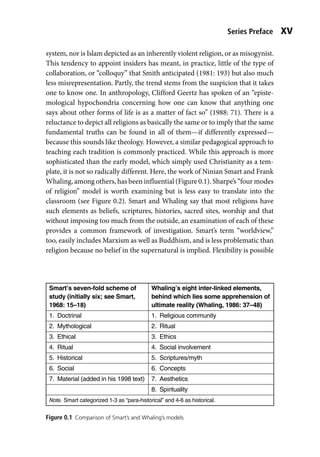
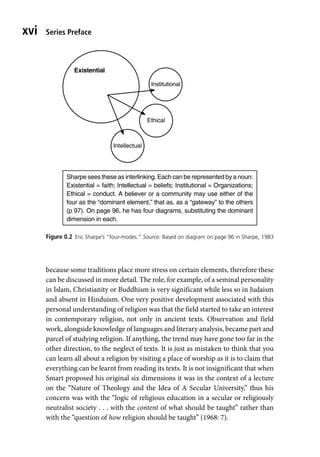
![Series Preface xvii
This series takes the view that phenomenology or insider-sensitivity domi-
nates the field today at the expense of other ways of studying religion. This
series also takes the view that this dominance has cost Religious Studies its
ability to engage with critical issues. The reality of what a student experiences
in the field may be different, less pleasant, than what they learn in the class-
room. From what is taught in the classroom, religions are all sweetness and
light. True, the darker side of religion may indeed be a distortion, or a misrep-
resentation, or the result of the manipulation of religion for political or for
other ends. True, the earliest strand of the religion may not have contained
these elements. However, to say nothing about how a religion has been used to
sanction, even to bless violence, or to subjugate women, or to discriminate
against outsiders or certain designated groups, simply reverses the mistakes of
the past. If the Orientalists rarely had anything good to say about religions
other than the Christian, the contemporary student of religion appears blind
to anything negative. One of the most popular Religious Studies texts, at least
in North America, is Huston Smith’s The World’s Religions (1958; 1991; origi-
nally The Religions of Man). For all its merit, this deliberately set out to present
religions as sweetness and light, or, as the author put it, to show religions
“at their best” (5). Smith himself winced to think how someone closing his
chapter on Hinduism and stepping “directly into the Hinduism described by
Nehru as ‘a religion that enslaves you’” would react (4). He excluded references
to the Sunni–Shi’a and traditional–modernist divisions in Islam (3) because he
chose instead to note “different attitudes toward Sufism” by way of taking
Islam’s diversity seriously. Yet this also avoided discussing some less rose-
colored aspects of religion, the full story of which is “not rose-colored” but
“often crude” (4). What Smith set out to achieve may be said to characterize
the Religious Studies’ agenda; he wanted to “penetrate the worlds of the
Hindus, the Buddhists, and Muslims” and to “throw bridges from these worlds”
to his readers. His goal was “communication” (10). He wrote of aiming to see
through “others’ eyes” (8). Toward the end of his “Points of Departure” chapter
explaining his methodology, he gives an eloquent description of phenomenol-
ogy, which, although he does not call it that, is worth repeating:
First, we need to see their adherents [World religions’ adherents] as men and
women who faced problems much like our own. And second, we must rid our
minds of all preconceptions that could dull our sensitivity or alertness to fresh
insights. If we lay aside our preconceptions about these religions, seeing each as
forged by people who were struggling to see something that would give help and
meaning to their lives; and if we then try without prejudice to see ourselves what](https://image.slidesharecdn.com/25336795-250513024624-312a3ecf/85/Studying-Islam-The-Critical-Issues-Clinton-Bennett-15-320.jpg)

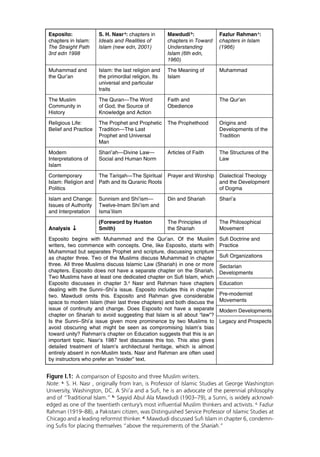


![This ebook is for the use of anyone anywhere in the United States
and most other parts of the world at no cost and with almost no
restrictions whatsoever. You may copy it, give it away or re-use it
under the terms of the Project Gutenberg License included with this
ebook or online at www.gutenberg.org. If you are not located in the
United States, you will have to check the laws of the country where
you are located before using this eBook.
Title: The American Missionary — Volume 33, No. 05, May, 1879
Author: Various
Release date: January 15, 2017 [eBook #53966]
Most recently updated: October 23, 2024
Language: English
Credits: Produced by KarenD, Joshua Hutchinson and the Online
Distributed Proofreading Team at http://www.pgdp.net
(This
file was produced from images generously made available
by Cornell University Digital Collections)
*** START OF THE PROJECT GUTENBERG EBOOK THE AMERICAN
MISSIONARY — VOLUME 33, NO. 05, MAY, 1879 ***](https://image.slidesharecdn.com/25336795-250513024624-312a3ecf/85/Studying-Islam-The-Critical-Issues-Clinton-Bennett-60-320.jpg)