STRUCTURED PROBLEM
SOLVING & CODING
STANDARDS
By: Kaiss AbouAbdallah
INTRODUCTION
- Importance of
structured problem
solving in debugging.
- Benefits of coding
standards in writing
maintainable code.
STRUCTURED TECHNIQUES
FOR PROBLEM SOLVING
• Definition:
• Structured problem solving involves a systematic
approach to identifying, analyzing, and resolving
issues.
• Steps:
1. Define the Problem: Clearly understand and
articulate the issue.
2. Analyze the Problem: Break down the problem
into smaller parts and understand the root cause.
3. Generate Solutions: Brainstorm possible solutions
and evaluate their feasibility.
4. Implement the Solution: Apply the chosen
solution to resolve the problem.
5. Evaluate the Results: Verify if the solution
effectively resolves the issue and adjust if
necessary.
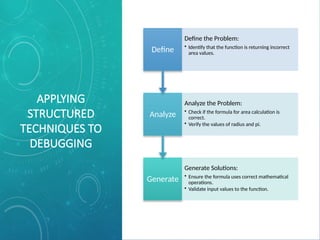
APPLYING
STRUCTURED
TECHNIQUES TO
DEBUGGING
Generate
Generate Solutions:
• Ensure the formula uses correct mathematical
operations.
• Validate input values to the function.
Analyze
Analyze the Problem:
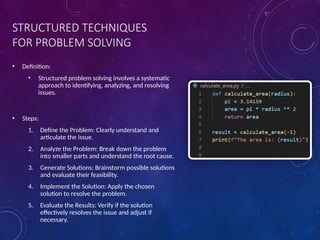
• Check if the formula for area calculation is
correct.
• Verify the values of radius and pi.
Define
Define the Problem:
• Identify that the function is returning incorrect
area values.
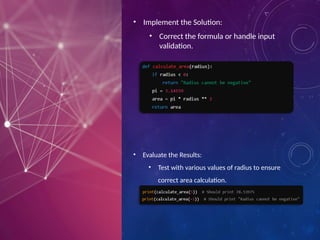
• Implement the Solution:
• Correct the formula or handle input
validation.
• Evaluate the Results:
• Test with various values of radius to ensure
correct area calculation.
CONSIDERING PROGRAM STRUCTURE
Importance:
A well-structured program is easier to debug and maintain.
Best Practices:
• Modularity: Break the program into smaller, reusable modules or functions.
• Readability: Write clear and understandable code with proper naming
conventions and comments.
• Error Handling: Implement error handling to manage unexpected inputs or
conditions.
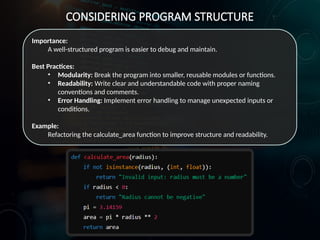
Example:
Refactoring the calculate_area function to improve structure and readability.
CODING
STANDARDS
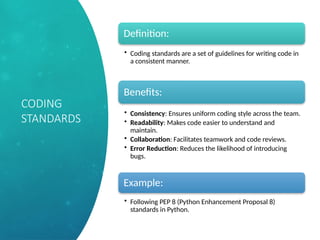
Definition:
• Coding standards are a set of guidelines for writing code in
a consistent manner.
Benefits:
• Consistency: Ensures uniform coding style across the team.
• Readability: Makes code easier to understand and
maintain.
• Collaboration: Facilitates teamwork and code reviews.
• Error Reduction: Reduces the likelihood of introducing
bugs.
Example:
• Following PEP 8 (Python Enhancement Proposal 8)
standards in Python.
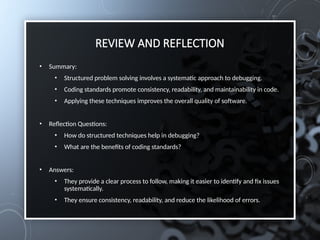
REVIEW AND REFLECTION
• Summary:
• Structured problem solving involves a systematic approach to debugging.
• Coding standards promote consistency, readability, and maintainability in code.
• Applying these techniques improves the overall quality of software.
• Reflection Questions:
• How do structured techniques help in debugging?
• What are the benefits of coding standards?
• Answers:
• They provide a clear process to follow, making it easier to identify and fix issues
systematically.
• They ensure consistency, readability, and reduce the likelihood of errors.

Structured Problem Solving & Coding Standards

  • 1.
    STRUCTURED PROBLEM SOLVING &CODING STANDARDS By: Kaiss AbouAbdallah
  • 2.
    INTRODUCTION - Importance of structuredproblem solving in debugging. - Benefits of coding standards in writing maintainable code.
  • 3.
    STRUCTURED TECHNIQUES FOR PROBLEMSOLVING • Definition: • Structured problem solving involves a systematic approach to identifying, analyzing, and resolving issues. • Steps: 1. Define the Problem: Clearly understand and articulate the issue. 2. Analyze the Problem: Break down the problem into smaller parts and understand the root cause. 3. Generate Solutions: Brainstorm possible solutions and evaluate their feasibility. 4. Implement the Solution: Apply the chosen solution to resolve the problem. 5. Evaluate the Results: Verify if the solution effectively resolves the issue and adjust if necessary.
  • 4.
    APPLYING STRUCTURED TECHNIQUES TO DEBUGGING Generate Generate Solutions: •Ensure the formula uses correct mathematical operations. • Validate input values to the function. Analyze Analyze the Problem: • Check if the formula for area calculation is correct. • Verify the values of radius and pi. Define Define the Problem: • Identify that the function is returning incorrect area values.
  • 5.
    • Implement theSolution: • Correct the formula or handle input validation. • Evaluate the Results: • Test with various values of radius to ensure correct area calculation.
  • 6.
    CONSIDERING PROGRAM STRUCTURE Importance: Awell-structured program is easier to debug and maintain. Best Practices: • Modularity: Break the program into smaller, reusable modules or functions. • Readability: Write clear and understandable code with proper naming conventions and comments. • Error Handling: Implement error handling to manage unexpected inputs or conditions. Example: Refactoring the calculate_area function to improve structure and readability.
  • 7.
    CODING STANDARDS Definition: • Coding standardsare a set of guidelines for writing code in a consistent manner. Benefits: • Consistency: Ensures uniform coding style across the team. • Readability: Makes code easier to understand and maintain. • Collaboration: Facilitates teamwork and code reviews. • Error Reduction: Reduces the likelihood of introducing bugs. Example: • Following PEP 8 (Python Enhancement Proposal 8) standards in Python.
  • 8.
    REVIEW AND REFLECTION •Summary: • Structured problem solving involves a systematic approach to debugging. • Coding standards promote consistency, readability, and maintainability in code. • Applying these techniques improves the overall quality of software. • Reflection Questions: • How do structured techniques help in debugging? • What are the benefits of coding standards? • Answers: • They provide a clear process to follow, making it easier to identify and fix issues systematically. • They ensure consistency, readability, and reduce the likelihood of errors.