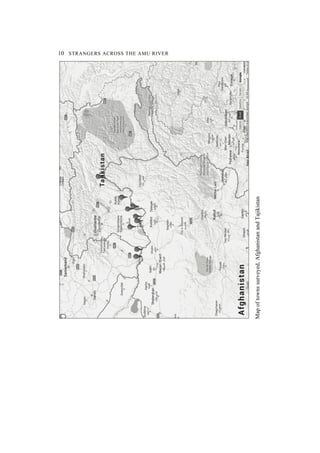
This document summarizes a study on perceptions of human security among communities living along the Tajik-Afghan border. It finds that border communities face significant economic and environmental insecurity due to poverty, lack of infrastructure, unreliable water supplies, and geographic isolation. While physical safety has improved since civil wars ended, communities remain concerned about long-term stability and threats from criminal groups. The document also examines cross-border perceptions and interactions, finding limited familiarity and some stereotypes between communities due to lack of direct contact and information sources. It concludes that addressing human security needs of border residents through development, services, and cross-border cooperation could enhance stability while complementing traditional security approaches.