STORE POULTRY AND
GAME BIRD
Techniques in Storing Poultry
•Poultry may be frozen whole, in halves, cut
into pieces, or parts after they are dressed.
Parts can be packed separately, ready to
cook, or for easy meal preparation and
thawing.
Handling and Storage of Poultry
Poultry spoils very quickly unless it is properly handled and stored. After
being brought home from the market, it should be unwrapped as quickly as
possible and wiped off with a damp cloth.Then it should be lightly covered with
waxed paper, placed in shallow utensils and stored in a cold part of the
refrigerator near the freezing unit or ice. Cooked poultry should be cooled as
quickly as possible, covered to prevent drying and refrigerated. Removing the
bones saves space. Frozen poultry must be kept in the freezing unit until it is
thawed for cooking.
Freezing andThawing Poultry
To prepare poultry properly for freezing, it should be
wrapped tightly in a moisture-vapor proof film, foil or
paper and then frozen at -170oC (0oF) or lower. Although
there are no abrupt changes in quality during the first few
months of poultry storage, it has always been a good
practice to use these chickens first which have been in
storage longest and those with torn wrapper.
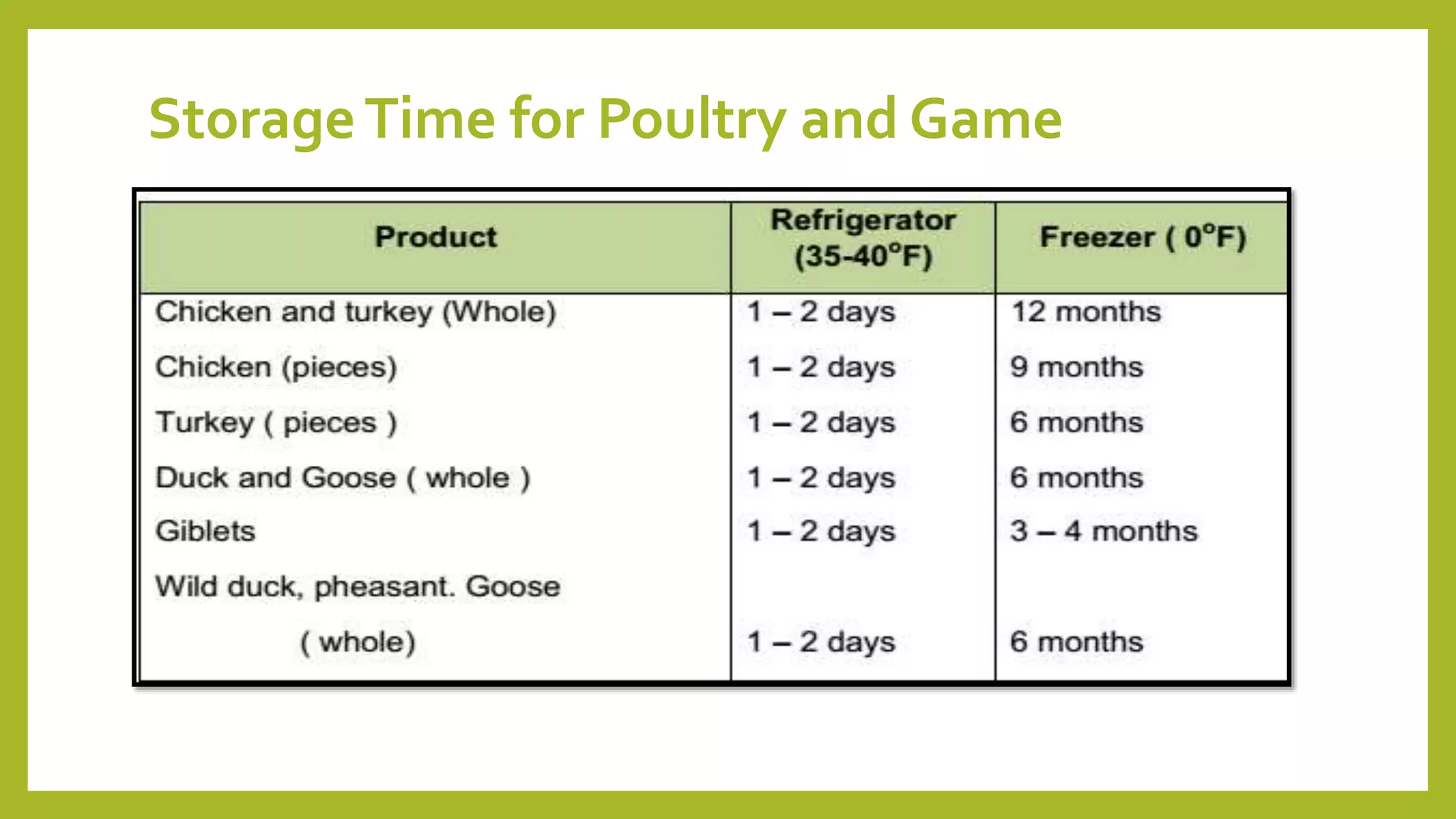
StorageTime for Poultry and Game
Safety Practices in Handling and Storing
Poultry and Game Products
•How to Handle Chicken Safely
Raw chicken and poultry can carry the
salmonella bacteria, which is responsible for more
cases of food poisoning than any other pathogen.
Fortunately, it's easy to avoid getting sick from
chicken and poultry, as long as you follow safe food
handling practices.
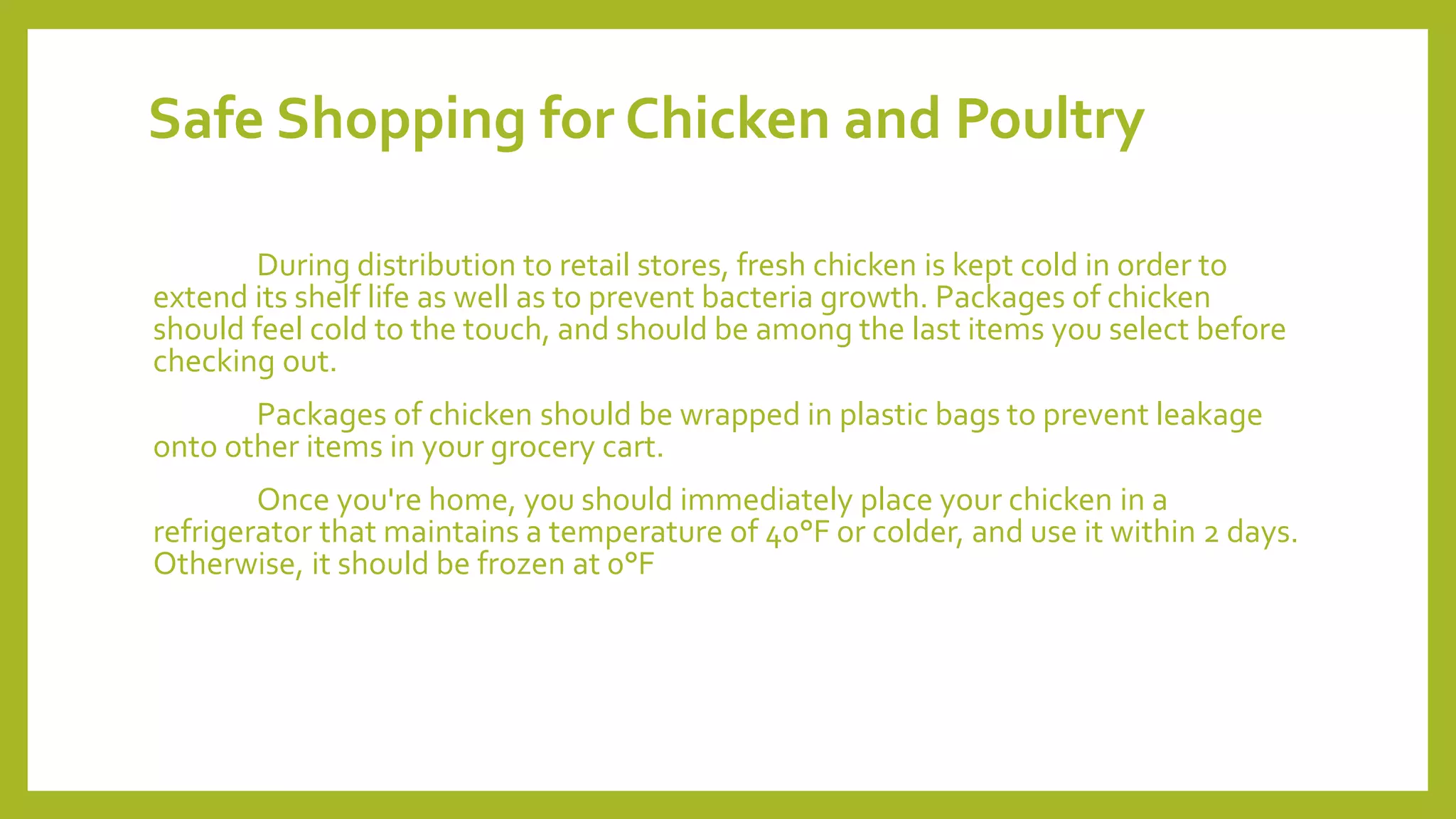
Safe Shopping for Chicken and Poultry
During distribution to retail stores, fresh chicken is kept cold in order to
extend its shelf life as well as to prevent bacteria growth. Packages of chicken
should feel cold to the touch, and should be among the last items you select before
checking out.
Packages of chicken should be wrapped in plastic bags to prevent leakage
onto other items in your grocery cart.
Once you're home, you should immediately place your chicken in a
refrigerator that maintains a temperature of 40°F or colder, and use it within 2 days.
Otherwise, it should be frozen at 0°F
Safe Handling of Chicken and Poultry
Just like meat, fish or any animal-based food product, raw or undercooked chicken
carry certain bacteria.These bacteria can cause illness in large numbers.
Therefore, to avoid illness we need to limit bacteria's ability to multiply, or kill them
altogether. Limiting their ability to multiply requires making sure that food products are not
left at room temperatures — or specifically, temperatures between 40°F and 140°F — for
more than an hour.
And remember, freezing doesn't kill bacteria, either — it just makes them cold.The
only way to kill food-borne pathogens is by thoroughly cooking the food.
Another concern with respect to working with uncooked poultry is cross-
contamination.Cross-contamination can happen when raw poultry — or even just its juices
— somehow come into contact with any other food products but especially ones that are
already cooked or ones that will be eaten raw, such as salad vegetables or greens.
Fresh vs. Frozen Chicken and Poultry
If the label on a raw poultry product bears the term
"fresh," that indicates that it has never been colder than
26°F. Poultry that has at any time been kept at 0°F or
colder must have a label indicating that it is "frozen" or
"previously frozen," whatever the case may be.
Interestingly, poultry that has been kept at
temperatures colder than 26°F but warmer than 0°F can
be labeled neither fresh nor frozen.
Chicken and Poultry Product Dating
Federal regulations don't require poultry
products to be dated. However, most retailers will
date the chicken products that they sell. If they do
opt to date the product, regulations do require that
there be a phrase signifying whether the date is a
"sell by" date or a "use before" date, and the
explanation must appear right next to the date.
Basics for Handling Food Safely
Shopping
Storage
Preparation
Thawing
Cooking
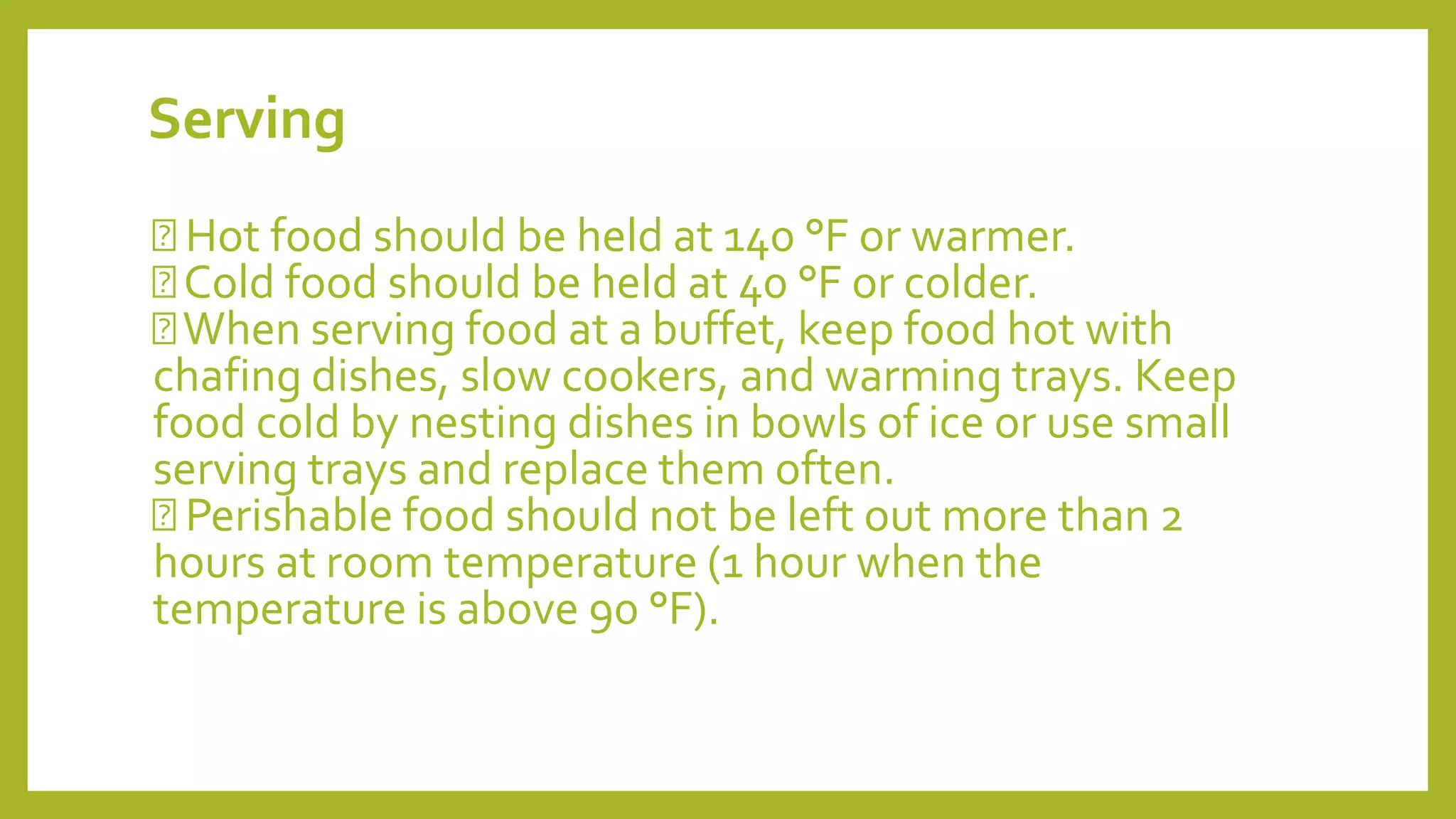
Serving
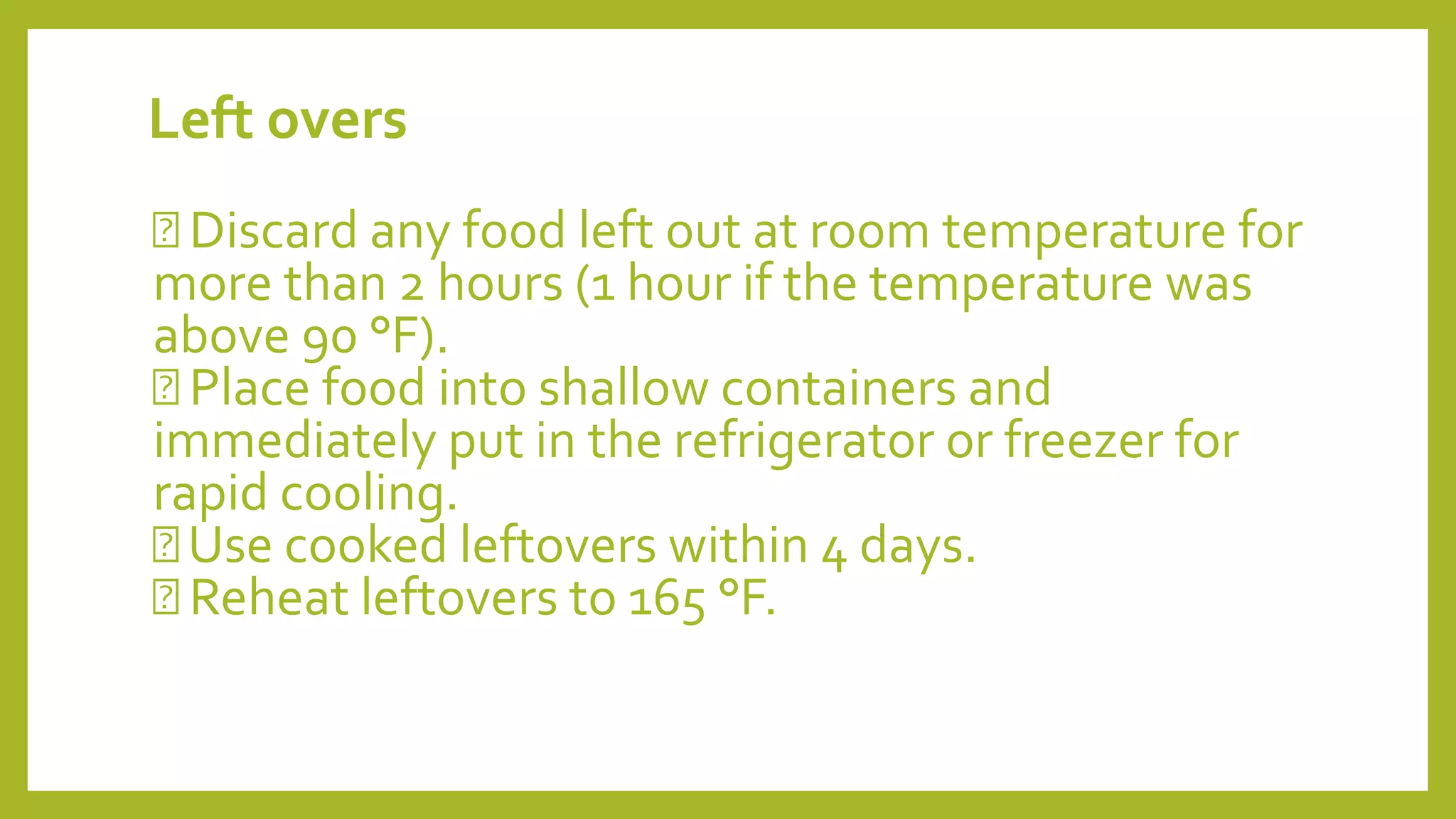
Leftovers
Refreezing
Safe steps in food handling, cooking, and storage are essential to prevent
foodborne illness.You can't see, smell, or taste harmful bacteria that may cause
illness. In every step of food preparation, follow the four Fight BAC! ™ guidelines to
keep food safe:
Clean —Wash hands and surfaces often.
Separate — Don't cross-contaminate.
Cook — Cook to proper temperatures.
Chill — Refrigerate promptly.
Shopping
Purchase refrigerated or frozen items after
selecting your nonperishables.
Never choose meat or poultry in packaging
that is torn or leaking.
Do not buy food without expiration dates
Storage
Always refrigerate perishable food within 2 hours (1 hour when
the temperature is above 90 °F).
Check the temperature of your refrigerator and freezer with an
appliance thermometer.The refrigerator should be at 40 °F or
below and the freezer at 0 °F or below.
Cook or freeze fresh poultry, fish, ground meats, and variety
meats within 2 days; other beef, veal, lamb, or pork, within 3 to 5
days.
Perishable food such as meat and poultry should be wrapped
securely to maintain quality and to prevent meat juices from
getting onto other food.
To maintain quality when freezing meat and poultry in
its original package, wrap the package again with foil or
plastic wrap that is recommended for the freezer.
In general, high-acid canned food such as tomatoes,
grapefruit, and pineapple can be stored on the shelf for 12
to 18 months. Low-acid canned food such as meat,
poultry, fish, and most vegetables will keep 2 to 5 years —
if the can remains in good condition and has been stored
in a cool, clean, and dry place. Discard cans that are
dented, leaking, bulging, or rusted.
Preparation
Always wash hands with warm water and soap for 20 seconds
before and after handling food.
Don't cross-contaminate. Keep raw meat, poultry, fish, and their
juices away from other food. After cutting raw meats, wash
cutting board, utensils, and countertops with hot, soapy water.
Cutting boards, utensils, and countertops can be sanitized by
using a solution of 1 tablespoon of unscented, liquid chlorine
bleach in 1 gallon of water.
Marinate meat and poultry in a covered dish in the refrigerator.
Thawing
Refrigerator:The refrigerator allows slow, safe
thawing. Make sure thawing meat and poultry juices do
not drip onto other food.
Cold Water: For faster thawing, place food in a leak-
proof plastic bag. Submerge in cold tap water. Change
the water every 30 minutes. Cook immediately after
thawing.
Microwave: Cook meat and poultry immediately after
microwave thawing
Cooking
Cook all raw poultry, beef, pork, lamb and veal steaks,
chops, and roasts to a minimum internal temperature of 145 °F as
measured with a food thermometer before removing meat from
the heat source. For safety and quality, allow meat to rest for at
least three minutes before carving or consuming. For reasons of
personal preference, consumers may choose to cook meat to
higher temperatures.
Poultry: Cook all poultry to an internal temperature of 165 °F as
measured with a food thermometer.
Serving
Hot food should be held at 140 °F or warmer.
Cold food should be held at 40 °F or colder.
When serving food at a buffet, keep food hot with
chafing dishes, slow cookers, and warming trays. Keep
food cold by nesting dishes in bowls of ice or use small
serving trays and replace them often.
Perishable food should not be left out more than 2
hours at room temperature (1 hour when the
temperature is above 90 °F).
Left overs
Discard any food left out at room temperature for
more than 2 hours (1 hour if the temperature was
above 90 °F).
Place food into shallow containers and
immediately put in the refrigerator or freezer for
rapid cooling.
Use cooked leftovers within 4 days.
Reheat leftovers to 165 °F.
Refreezing
Meat and poultry defrosted in the refrigerator
may be refrozen before or after cooking. If thawed
by other methods, cook before refreezing.

Store poultry and game bird

  • 1.
  • 2.
    Techniques in StoringPoultry •Poultry may be frozen whole, in halves, cut into pieces, or parts after they are dressed. Parts can be packed separately, ready to cook, or for easy meal preparation and thawing.
  • 3.
    Handling and Storageof Poultry Poultry spoils very quickly unless it is properly handled and stored. After being brought home from the market, it should be unwrapped as quickly as possible and wiped off with a damp cloth.Then it should be lightly covered with waxed paper, placed in shallow utensils and stored in a cold part of the refrigerator near the freezing unit or ice. Cooked poultry should be cooled as quickly as possible, covered to prevent drying and refrigerated. Removing the bones saves space. Frozen poultry must be kept in the freezing unit until it is thawed for cooking.
  • 4.
    Freezing andThawing Poultry Toprepare poultry properly for freezing, it should be wrapped tightly in a moisture-vapor proof film, foil or paper and then frozen at -170oC (0oF) or lower. Although there are no abrupt changes in quality during the first few months of poultry storage, it has always been a good practice to use these chickens first which have been in storage longest and those with torn wrapper.
  • 5.
  • 7.
    Safety Practices inHandling and Storing Poultry and Game Products •How to Handle Chicken Safely Raw chicken and poultry can carry the salmonella bacteria, which is responsible for more cases of food poisoning than any other pathogen. Fortunately, it's easy to avoid getting sick from chicken and poultry, as long as you follow safe food handling practices.
  • 8.
    Safe Shopping forChicken and Poultry During distribution to retail stores, fresh chicken is kept cold in order to extend its shelf life as well as to prevent bacteria growth. Packages of chicken should feel cold to the touch, and should be among the last items you select before checking out. Packages of chicken should be wrapped in plastic bags to prevent leakage onto other items in your grocery cart. Once you're home, you should immediately place your chicken in a refrigerator that maintains a temperature of 40°F or colder, and use it within 2 days. Otherwise, it should be frozen at 0°F
  • 9.
    Safe Handling ofChicken and Poultry Just like meat, fish or any animal-based food product, raw or undercooked chicken carry certain bacteria.These bacteria can cause illness in large numbers. Therefore, to avoid illness we need to limit bacteria's ability to multiply, or kill them altogether. Limiting their ability to multiply requires making sure that food products are not left at room temperatures — or specifically, temperatures between 40°F and 140°F — for more than an hour. And remember, freezing doesn't kill bacteria, either — it just makes them cold.The only way to kill food-borne pathogens is by thoroughly cooking the food. Another concern with respect to working with uncooked poultry is cross- contamination.Cross-contamination can happen when raw poultry — or even just its juices — somehow come into contact with any other food products but especially ones that are already cooked or ones that will be eaten raw, such as salad vegetables or greens.
  • 10.
    Fresh vs. FrozenChicken and Poultry If the label on a raw poultry product bears the term "fresh," that indicates that it has never been colder than 26°F. Poultry that has at any time been kept at 0°F or colder must have a label indicating that it is "frozen" or "previously frozen," whatever the case may be. Interestingly, poultry that has been kept at temperatures colder than 26°F but warmer than 0°F can be labeled neither fresh nor frozen.
  • 11.
    Chicken and PoultryProduct Dating Federal regulations don't require poultry products to be dated. However, most retailers will date the chicken products that they sell. If they do opt to date the product, regulations do require that there be a phrase signifying whether the date is a "sell by" date or a "use before" date, and the explanation must appear right next to the date.
  • 12.
    Basics for HandlingFood Safely Shopping Storage Preparation Thawing Cooking Serving Leftovers Refreezing Safe steps in food handling, cooking, and storage are essential to prevent foodborne illness.You can't see, smell, or taste harmful bacteria that may cause illness. In every step of food preparation, follow the four Fight BAC! ™ guidelines to keep food safe: Clean —Wash hands and surfaces often. Separate — Don't cross-contaminate. Cook — Cook to proper temperatures. Chill — Refrigerate promptly.
  • 13.
    Shopping Purchase refrigerated orfrozen items after selecting your nonperishables. Never choose meat or poultry in packaging that is torn or leaking. Do not buy food without expiration dates
  • 14.
    Storage Always refrigerate perishablefood within 2 hours (1 hour when the temperature is above 90 °F). Check the temperature of your refrigerator and freezer with an appliance thermometer.The refrigerator should be at 40 °F or below and the freezer at 0 °F or below. Cook or freeze fresh poultry, fish, ground meats, and variety meats within 2 days; other beef, veal, lamb, or pork, within 3 to 5 days. Perishable food such as meat and poultry should be wrapped securely to maintain quality and to prevent meat juices from getting onto other food.
  • 15.
    To maintain qualitywhen freezing meat and poultry in its original package, wrap the package again with foil or plastic wrap that is recommended for the freezer. In general, high-acid canned food such as tomatoes, grapefruit, and pineapple can be stored on the shelf for 12 to 18 months. Low-acid canned food such as meat, poultry, fish, and most vegetables will keep 2 to 5 years — if the can remains in good condition and has been stored in a cool, clean, and dry place. Discard cans that are dented, leaking, bulging, or rusted.
  • 16.
    Preparation Always wash handswith warm water and soap for 20 seconds before and after handling food. Don't cross-contaminate. Keep raw meat, poultry, fish, and their juices away from other food. After cutting raw meats, wash cutting board, utensils, and countertops with hot, soapy water. Cutting boards, utensils, and countertops can be sanitized by using a solution of 1 tablespoon of unscented, liquid chlorine bleach in 1 gallon of water. Marinate meat and poultry in a covered dish in the refrigerator.
  • 17.
    Thawing Refrigerator:The refrigerator allowsslow, safe thawing. Make sure thawing meat and poultry juices do not drip onto other food. Cold Water: For faster thawing, place food in a leak- proof plastic bag. Submerge in cold tap water. Change the water every 30 minutes. Cook immediately after thawing. Microwave: Cook meat and poultry immediately after microwave thawing
  • 18.
    Cooking Cook all rawpoultry, beef, pork, lamb and veal steaks, chops, and roasts to a minimum internal temperature of 145 °F as measured with a food thermometer before removing meat from the heat source. For safety and quality, allow meat to rest for at least three minutes before carving or consuming. For reasons of personal preference, consumers may choose to cook meat to higher temperatures. Poultry: Cook all poultry to an internal temperature of 165 °F as measured with a food thermometer.
  • 19.
    Serving Hot food shouldbe held at 140 °F or warmer. Cold food should be held at 40 °F or colder. When serving food at a buffet, keep food hot with chafing dishes, slow cookers, and warming trays. Keep food cold by nesting dishes in bowls of ice or use small serving trays and replace them often. Perishable food should not be left out more than 2 hours at room temperature (1 hour when the temperature is above 90 °F).
  • 20.
    Left overs Discard anyfood left out at room temperature for more than 2 hours (1 hour if the temperature was above 90 °F). Place food into shallow containers and immediately put in the refrigerator or freezer for rapid cooling. Use cooked leftovers within 4 days. Reheat leftovers to 165 °F.
  • 21.
    Refreezing Meat and poultrydefrosted in the refrigerator may be refrozen before or after cooking. If thawed by other methods, cook before refreezing.