<Chapter 3>
Some Key Ingredients for Inferential Statistics
: Z Scores, the Normal Curve, Sample versus Population, and Probability
๊ฒฝํฌ๋Œ€ํ•™๊ต IIIXR LAB ์„œ๋ฏผ์˜
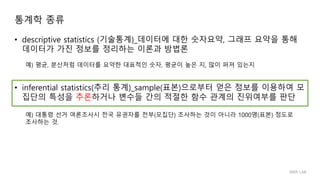
โ€ข descriptive statistics (๊ธฐ์ˆ ํ†ต๊ณ„)_๋ฐ์ดํ„ฐ์— ๋Œ€ํ•œ ์ˆซ์ž์š”์•ฝ, ๊ทธ๋ž˜ํ”„ ์š”์•ฝ์„ ํ†ตํ•ด
๋ฐ์ดํ„ฐ๊ฐ€ ๊ฐ€์ง„ ์ •๋ณด๋ฅผ ์ •๋ฆฌํ•˜๋Š” ์ด๋ก ๊ณผ ๋ฐฉ๋ฒ•๋ก 
โ€ข inferential statistics(์ถ”๋ฆฌ ํ†ต๊ณ„)_sample(ํ‘œ๋ณธ)์œผ๋กœ๋ถ€ํ„ฐ ์–ป์€ ์ •๋ณด๋ฅผ ์ด์šฉํ•˜์—ฌ ๋ชจ
์ง‘๋‹จ์˜ ํŠน์„ฑ์„ ์ถ”๋ก ํ•˜๊ฑฐ๋‚˜ ๋ณ€์ˆ˜๋“ค ๊ฐ„์˜ ์ ์ ˆํ•œ ํ•จ์ˆ˜ ๊ด€๊ณ„์˜ ์ง„์œ„์—ฌ๋ถ€๋ฅผ ํŒ๋‹จ
์˜ˆ) ๋Œ€ํ†ต๋ น ์„ ๊ฑฐ ์—ฌ๋ก ์กฐ์‚ฌ์‹œ ์ „๊ตญ ์œ ๊ถŒ์ž๋ฅผ ์ „๋ถ€(๋ชจ์ง‘๋‹จ) ์กฐ์‚ฌํ•˜๋Š” ๊ฒƒ์ด ์•„๋‹ˆ๋ผ 1000๋ช…(ํ‘œ๋ณธ) ์ •๋„๋กœ
์กฐ์‚ฌํ•˜๋Š” ๊ฒƒ.
์˜ˆ) ํ‰๊ท , ๋ถ„์‚ฐ์ฒ˜๋Ÿผ ๋ฐ์ดํ„ฐ๋ฅผ ์š”์•ฝํ•œ ๋Œ€ํ‘œ์ ์ธ ์ˆซ์ž, ํ‰๊ท ์ด ๋†’์€ ์ง€, ๋งŽ์ด ํผ์ ธ ์žˆ๋Š”์ง€
ํ†ต๊ณ„ํ•™ ์ข…๋ฅ˜
IIIXR LAB
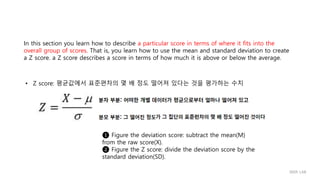
In this section you learn how to describe a particular score in terms of where it fits into the
overall group of scores. That is, you learn how to use the mean and standard deviation to create
a Z score. a Z score describes a score in terms of how much it is above or below the average.
โ€ข Z score: ํ‰๊ท ๊ฐ’์—์„œ ํ‘œ์ค€ํŽธ์ฐจ์˜ ๋ช‡ ๋ฐฐ ์ •๋„ ๋–จ์–ด์ ธ ์žˆ๋‹ค๋Š” ๊ฒƒ์„ ํ‰๊ฐ€ํ•˜๋Š” ์ˆ˜์น˜
โถ Figure the deviation score: subtract the mean(M)
from the raw score(X).
โท Figure the Z score: divide the deviation score by the
standard deviation(SD).
IIIXR LAB
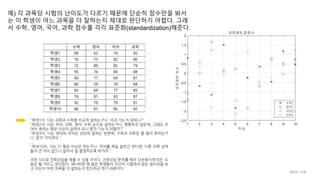
์˜ˆ) ๊ฐ ๊ณผ๋ชฉ๋‹น ์‹œํ—˜์˜ ๋‚œ์ด๋„๊ฐ€ ๋‹ค๋ฅด๊ธฐ ๋•Œ๋ฌธ์— ๋‹จ์ˆœํžˆ ์ ์ˆ˜๋งŒ์„ ๋ด์„œ
๋Š” ์ด ํ•™์ƒ์ด ์–ด๋А ๊ณผ๋ชฉ์„ ๋” ์ž˜ํ•˜๋Š”์ง€ ์ œ๋Œ€๋กœ ํŒ๋‹จํ•˜๊ธฐ ์–ด๋ ต๋‹ค. ๊ทธ๋ž˜
์„œ ์ˆ˜ํ•™, ์˜์–ด, ๊ตญ์–ด, ๊ณผํ•™ ์ ์ˆ˜๋ฅผ ๊ฐ๊ฐ ํ‘œ์ค€ํ™”(standardization)ํ•ด์ค€๋‹ค.
IIIXR LAB
์„ฑ์ ์ด ํ‰๊ท ์œผ๋กœ๋ถ€ํ„ฐ ๋ช‡ ํ‘œ์ค€ํŽธ์ฐจ๋งŒํผ ๋–จ์–ด์ ธ ์žˆ๋Š”๊ฐ€๋ฅผ ๋‚˜ํƒ€๋‚ด๋Š” ๊ฐ’์œผ๋กœ Z
์ ์ˆ˜๊ฐ€ 2๋ผ๋ฉด ๊ทธ ์ˆ˜ํ—˜์ƒ์€ ํ‰๊ท ์œผ๋กœ๋ถ€ํ„ฐ ํ‘œ์ค€ํŽธ์ฐจ์˜ 2๋ฐฐ ๋งŽ์€ ์ ์ˆ˜๋ฅผ ์–ป์—ˆ
๋‹ค๋Š” ๊ฒƒ์„ ์˜๋ฏธํ•ฉ๋‹ˆ๋‹ค.
Z์ ์ˆ˜๋Š” ์ƒ๋Œ€์ ์ธ ์œ„์น˜์— ๊ด€ํ•œ ์ •๋ณด๋ฅผ ์ œ๊ณตํ•จ์œผ๋กœ์จ ์ ์ˆ˜์˜ ๋น„๊ต์— ์œ ์šฉํ•˜
๊ฒŒ ํ™œ์šฉํ•  ์ˆ˜ ์žˆ์Šต๋‹ˆ๋‹ค. '๋ณด๋‹ค ํฌ๋‹ค', '๋ณด๋‹ค ์ž‘๋‹ค'๋ผ๋Š” ์ •๋ณด๋ฅผ ์ œ๊ณตํ•ฉ๋‹ˆ๋‹ค.
IIIXR LAB
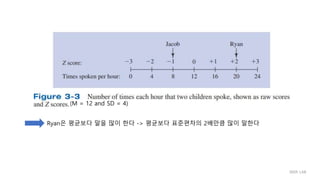
(M = 12 and SD = 4)
Ryan์€ ํ‰๊ท ๋ณด๋‹ค ๋ง์„ ๋งŽ์ด ํ•œ๋‹ค -> ํ‰๊ท ๋ณด๋‹ค ํ‘œ์ค€ํŽธ์ฐจ์˜ 2๋ฐฐ๋งŒํผ ๋งŽ์ด ๋งํ•œ๋‹ค
IIIXR LAB
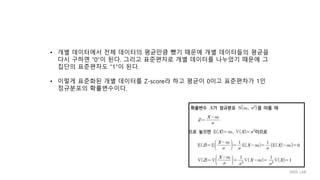
โ€ข ๊ฐœ๋ณ„ ๋ฐ์ดํ„ฐ์—์„œ ์ „์ฒด ๋ฐ์ดํ„ฐ์˜ ํ‰๊ท ๋งŒํผ ๋บ๊ธฐ ๋•Œ๋ฌธ์— ๊ฐœ๋ณ„ ๋ฐ์ดํ„ฐ๋“ค์˜ ํ‰๊ท ์„
๋‹ค์‹œ ๊ตฌํ•˜๋ฉด โ€œ0โ€์ด ๋œ๋‹ค. ๊ทธ๋ฆฌ๊ณ  ํ‘œ์ค€ํŽธ์ฐจ๋กœ ๊ฐœ๋ณ„ ๋ฐ์ดํ„ฐ๋ฅผ ๋‚˜๋ˆ„์—ˆ๊ธฐ ๋•Œ๋ฌธ์— ๊ทธ
์ง‘๋‹จ์˜ ํ‘œ์ค€ํŽธ์ฐจ๋„ โ€œ1โ€์ด ๋œ๋‹ค.
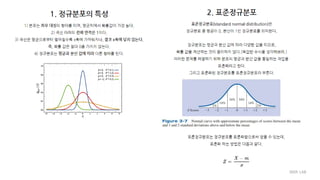
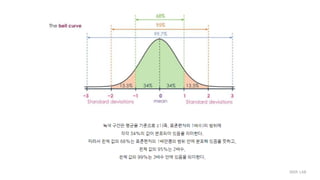
โ€ข ์ด๋ ‡๊ฒŒ ํ‘œ์ค€ํ™”๋œ ๊ฐœ๋ณ„ ๋ฐ์ดํ„ฐ๋ฅผ Z-score๋ผ ํ•˜๊ณ  ํ‰๊ท ์ด 0์ด๊ณ  ํ‘œ์ค€ํŽธ์ฐจ๊ฐ€ 1์ธ
์ •๊ทœ๋ถ„ํฌ์˜ ํ™•๋ฅ ๋ณ€์ˆ˜์ด๋‹ค.
IIIXR LAB
IIIXR LAB
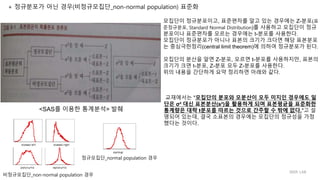
+ ์ •๊ทœ๋ถ„ํฌ๊ฐ€ ์•„๋‹Œ ๊ฒฝ์šฐ(๋น„์ •๊ทœ๋ชจ์ง‘๋‹จ_non-normal population) ํ‘œ์ค€ํ™”
<SAS๋ฅผ ์ด์šฉํ•œ ํ†ต๊ณ„๋ถ„์„> ๋ฐœ์ทŒ
๋ชจ์ง‘๋‹จ์ด ์ •๊ทœ๋ถ„ํฌ์ด๊ณ , ํ‘œ์ค€ํŽธ์ฐจ๋ฅผ ์•Œ๊ณ  ์žˆ๋Š” ๊ฒฝ์šฐ์—๋Š” Z-๋ถ„ํฌ(ํ‘œ
์ค€์ •๊ทœ๋ถ„ํฌ, Standard Normal Distribution)๋ฅผ ์‚ฌ์šฉํ•˜๊ณ  ๋ชจ์ง‘๋‹จ์ด ์ •๊ทœ
๋ถ„ํฌ์ด๋‚˜ ํ‘œ์ค€ํŽธ์ฐจ๋ฅผ ๋ชจ๋ฅด๋Š” ๊ฒฝ์šฐ์—๋Š” t-๋ถ„ํฌ๋ฅผ ์‚ฌ์šฉํ•œ๋‹ค.
๋ชจ์ง‘๋‹จ์ด ์ •๊ทœ๋ถ„ํฌ๊ฐ€ ์•„๋‹ˆ๋‚˜ ํ‘œ๋ณธ์˜ ํฌ๊ธฐ๊ฐ€ ํฌ๋‹ค๋ฉด ํ•ด๋‹น ํ‘œ๋ณธ๋ถ„ํฌ
๋Š” ์ค‘์‹ฌ๊ทนํ•œ์ •๋ฆฌ(central limit theorem)์— ์˜ํ•˜์—ฌ ์ •๊ทœ๋ถ„ํฌ๊ฐ€ ๋œ๋‹ค.
๋ชจ์ง‘๋‹จ์˜ ๋ถ„์‚ฐ์„ ์•Œ๋ฉด Z-๋ถ„ํฌ, ๋ชจ๋ฅด๋ฉด t-๋ถ„ํฌ๋ฅผ ์‚ฌ์šฉํ•˜์ง€๋งŒ, ํ‘œ๋ณธ์˜
ํฌ๊ธฐ๊ฐ€ ํฌ๋ฉด t-๋ถ„ํฌ, Z-๋ถ„ํฌ ๋ชจ๋‘ Z-๋ถ„ํฌ๋ฅผ ์‚ฌ์šฉํ•œ๋‹ค.
์œ„์˜ ๋‚ด์šฉ์„ ๊ฐ„๋‹จํ•˜๊ฒŒ ์š”์•ฝ ์ •๋ฆฌํ•˜๋ฉด ์•„๋ž˜์™€ ๊ฐ™๋‹ค.
๊ต์žฌ์—์„œ๋Š” "๋ชจ์ง‘๋‹จ์˜ ๋ถ„ํฌ์™€ ๋ชจ๋ถ„์‚ฐ์ด ๋ชจ๋‘ ๋ฏธ์ง€์ธ ๊ฒฝ์šฐ์—๋„ ์ผ
๋‹จ์€ ฯƒยฒ ๋Œ€์‹  ํ‘œ๋ณธ๋ถ„์‚ฐ(sยฒ)์„ ํ™œ์šฉํ•˜๊ฒŒ ๋˜๋ฉฐ ํ‘œ๋ณธํ‰๊ท ์„ ํ‘œ์ค€ํ™”ํ•œ
ํ†ต๊ณ„๋Ÿ‰์€ ๋Œ€๋žต t๋ถ„ํฌ๋ฅผ ๋”ฐ๋ฅด๋Š” ๊ฒƒ์œผ๋กœ ๊ฐ„์ฃผํ•  ์ˆ˜ ๋ฐ–์— ์—†๋‹ค."๊ณ  ์„ค
๋ช…๋˜์–ด ์žˆ๋Š”๋ฐ, ๊ฒฐ๊ตญ ์†Œํ‘œ๋ณธ์˜ ๊ฒฝ์šฐ์—๋Š” ๋ชจ์ง‘๋‹จ์˜ ์ •๊ทœ์„ฑ์„ ๊ฐ€์ •
ํ–ˆ๋‹ค๋Š” ๊ฒƒ์ด๋‹ค.
๋น„์ •๊ทœ๋ชจ์ง‘๋‹จ_non-normal population ๊ฒฝ์šฐ
์ •๊ทœ๋ชจ์ง‘๋‹จ_normal population ๊ฒฝ์šฐ
IIIXR LAB
+ ์ •๊ทœ๋ถ„ํฌ๊ฐ€ ์•„๋‹Œ ๊ฒฝ์šฐ ํ‘œ์ค€ํ™”(์•ž๊ณผ ๋‹ค๋ฅธ ๊ฒฝ์šฐ)
IIIXR LAB
+ ์ •๊ทœ๋ถ„ํฌ๊ฐ€ ์•„๋‹Œ ๊ฒฝ์šฐ ํ‘œ์ค€ํ™”
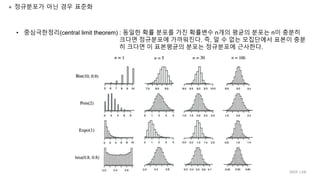
โ€ข ์ค‘์‹ฌ๊ทนํ•œ์ •๋ฆฌ(central limit theorem) : ๋™์ผํ•œ ํ™•๋ฅ  ๋ถ„ํฌ๋ฅผ ๊ฐ€์ง„ ํ™•๋ฅ ๋ณ€์ˆ˜ n๊ฐœ์˜ ํ‰๊ท ์˜ ๋ถ„ํฌ๋Š” n์ด ์ถฉ๋ถ„ํžˆ
ํฌ๋‹ค๋ฉด ์ •๊ทœ๋ถ„ํฌ์— ๊ฐ€๊นŒ์›Œ์ง„๋‹ค. ์ฆ‰, ์•Œ ์ˆ˜ ์—†๋Š” ๋ชจ์ง‘๋‹จ์—์„œ ํ‘œ๋ณธ์ด ์ถฉ๋ถ„
ํžˆ ํฌ๋‹ค๋ฉด ์ด ํ‘œ๋ณธํ‰๊ท ์˜ ๋ถ„ํฌ๋Š” ์ •๊ทœ๋ถ„ํฌ์— ๊ทผ์‚ฌํ•œ๋‹ค.
IIIXR LAB
IIIXR LAB
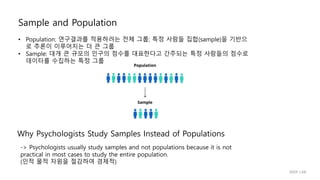
Sample and Population
โ€ข Population: ์—ฐ๊ตฌ๊ฒฐ๊ณผ๋ฅผ ์ ์šฉํ•˜๋ ค๋Š” ์ „์ฒด ๊ทธ๋ฃน; ํŠน์ • ์‚ฌ๋žŒ๋“ค ์ง‘ํ•ฉ(sample)์„ ๊ธฐ๋ฐ˜์œผ
๋กœ ์ถ”๋ก ์ด ์ด๋ฃจ์–ด์ง€๋Š” ๋” ํฐ ๊ทธ๋ฃน
โ€ข Sample: ๋Œ€๊ฐœ ํฐ ๊ทœ๋ชจ์˜ ์ธ๊ตฌ์˜ ์ ์ˆ˜๋ฅผ ๋Œ€ํ‘œํ•œ๋‹ค๊ณ  ๊ฐ„์ฃผ๋˜๋Š” ํŠน์ • ์‚ฌ๋žŒ๋“ค์˜ ์ ์ˆ˜๋กœ
๋ฐ์ดํ„ฐ๋ฅผ ์ˆ˜์ง‘ํ•˜๋Š” ํŠน์ • ๊ทธ๋ฃน
Why Psychologists Study Samples Instead of Populations
-> Psychologists usually study samples and not populations because it is not
practical in most cases to study the entire population.
(์ธ์  ๋ฌผ์  ์ž์›์„ ์ ˆ๊ฐํ•˜์—ฌ ๊ฒฝ์ œ์ )
IIIXR LAB
Methods of Sampling
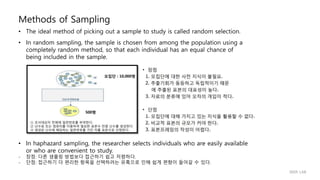
โ€ข The ideal method of picking out a sample to study is called random selection.
โ€ข In random sampling, the sample is chosen from among the population using a
completely random method, so that each individual has an equal chance of
being included in the sample.
โ€ข In haphazard sampling, the researcher selects individuals who are easily available
or who are convenient to study.
- ์žฅ์ : ๋‹ค๋ฅธ ์ƒ˜ํ”Œ๋ง ๋ฐฉ๋ฒ•๋ณด๋‹ค ์ ‘๊ทผํ•˜๊ธฐ ์‰ฝ๊ณ  ์ €๋ ดํ•˜๋‹ค.
- ๋‹จ์ : ์ ‘๊ทผํ•˜๊ธฐ ๋” ํŽธ๋ฆฌํ•œ ํ•ญ๋ชฉ์„ ์„ ํƒํ•˜๋ ค๋Š” ์œ ํ˜น์œผ๋กœ ์ธํ•ด ์‰ฝ๊ฒŒ ํŽธํ–ฅ์ด ๋“ค์–ด๊ฐˆ ์ˆ˜ ์žˆ๋‹ค.
IIIXR LAB
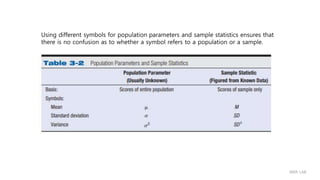
Using different symbols for population parameters and sample statistics ensures that
there is no confusion as to whether a symbol refers to a population or a sample.
IIIXR LAB
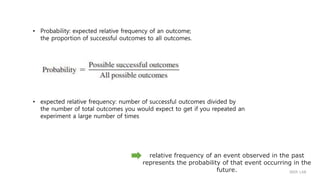
โ€ข Probability: expected relative frequency of an outcome;
the proportion of successful outcomes to all outcomes.
โ€ข expected relative frequency: number of successful outcomes divided by
the number of total outcomes you would expect to get if you repeated an
experiment a large number of times
relative frequency of an event observed in the past
represents the probability of that event occurring in the
future. IIIXR LAB
<Chapter 4>
Introduction to Hypothesis Testing
:This chapter focuses on the basic logic for analyzing
results of a research study to test a hypothesis
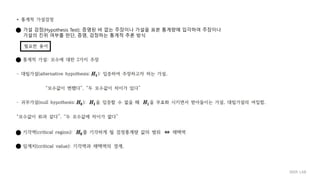
๊ฐ€์„ค ๊ฒ€์ •(Hypothesis Test): ์ฆ๋ช…๋œ ๋ฐ” ์—†๋Š” ์ฃผ์žฅ์ด๋‚˜ ๊ฐ€์„ค์„ ํ‘œ๋ณธ ํ†ต๊ณ„๋Ÿ‰์— ์ž…๊ฐํ•˜์—ฌ ์ฃผ์žฅ์ด๋‚˜
๊ฐ€์„ค์˜ ์ง„์œ„ ์—ฌ๋ถ€๋ฅผ ํŒ๋‹จ, ์ฆ๋ช…, ๊ฒ€์ •ํ•˜๋Š” ํ†ต๊ณ„์  ์ถ”๋ก  ๋ฐฉ์‹
IIIXR LAB
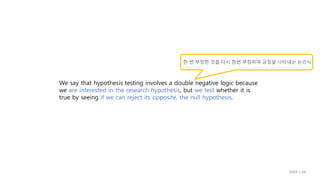
We say that hypothesis testing involves a double negative logic because
we are interested in the research hypothesis, but we test whether it is
true by seeing if we can reject its opposite, the null hypothesis.
ํ•œ ๋ฒˆ ๋ถ€์ •ํ•œ ๊ฒƒ์„ ๋‹ค์‹œ ํ•œ๋ฒˆ ๋ถ€์ •ํ•˜์—ฌ ๊ธ์ •์„ ๋‚˜ํƒ€๋‚ด๋Š” ๋…ผ๋ฆฌ์‹
IIIXR LAB
The research hypothesis is supported when a result is so extreme that
you reject the null hypothesis; the result is statistically significant.
The result is not statistically significant when a result is not very
extreme; the result is inconclusive.
IIIXR LAB
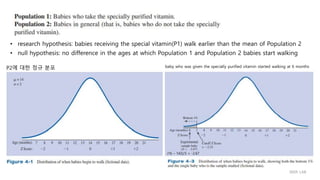
P2์— ๋Œ€ํ•œ ์ •๊ทœ ๋ถ„ํฌ
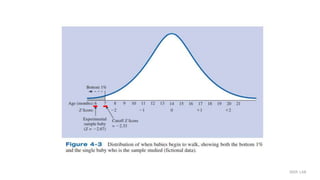
โ€ข research hypothesis: babies receiving the special vitamin(P1) walk earlier than the mean of Population 2
โ€ข null hypothesis: no difference in the ages at which Population 1 and Population 2 babies start walking
baby who was given the specially purified vitamin started walking at 6 months
(16 โ€“ 142)/3 = -2.67
IIIXR LAB
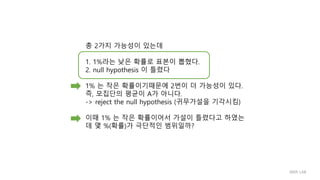
์ด 2๊ฐ€์ง€ ๊ฐ€๋Šฅ์„ฑ์ด ์žˆ๋Š”๋ฐ
1. 1%๋ผ๋Š” ๋‚ฎ์€ ํ™•๋ฅ ๋กœ ํ‘œ๋ณธ์ด ๋ฝ‘ํ˜”๋‹ค.
2. null hypothesis ์ด ํ‹€๋ ธ๋‹ค
1% ๋Š” ์ž‘์€ ํ™•๋ฅ ์ด๊ธฐ๋•Œ๋ฌธ์— 2๋ฒˆ์ด ๋” ๊ฐ€๋Šฅ์„ฑ์ด ์žˆ๋‹ค.
์ฆ‰, ๋ชจ์ง‘๋‹จ์˜ ํ‰๊ท ์ด A๊ฐ€ ์•„๋‹ˆ๋‹ค.
-> reject the null hypothesis (๊ท€๋ฌด๊ฐ€์„ค์„ ๊ธฐ๊ฐ์‹œํ‚ด)
์ด๋•Œ 1% ๋Š” ์ž‘์€ ํ™•๋ฅ ์ด์–ด์„œ ๊ฐ€์„ค์ด ํ‹€๋ ธ๋‹ค๊ณ  ํ•˜์˜€๋Š”
๋ฐ ๋ช‡ %(ํ™•๋ฅ )๊ฐ€ ๊ทน๋‹จ์ ์ธ ๋ฒ”์œ„์ผ๊นŒ?
IIIXR LAB
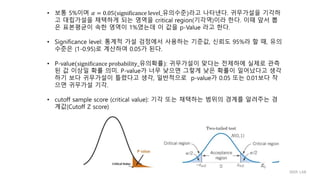
โ€ข ๋ณดํ†ต 5%์ด๋ฉฐ ๐›ผ = 0.05(significance level_์œ ์˜์ˆ˜์ค€)๋ผ๊ณ  ๋‚˜ํƒ€๋‚ธ๋‹ค. ๊ท€๋ฌด๊ฐ€์„ค์„ ๊ธฐ๊ฐํ•˜
๊ณ  ๋Œ€๋ฆฝ๊ฐ€์„ค์„ ์ฑ„ํƒํ•˜๊ฒŒ ๋˜๋Š” ์˜์—ญ์„ critical region(๊ธฐ๊ฐ์—ญ)์ด๋ผ ํ•œ๋‹ค. ์ด๋•Œ ์•ž์„œ ๋ฝ‘
์€ ํ‘œ๋ณธํ‰๊ท ์ด ์†ํ•œ ์˜์—ญ์ด 1%์˜€๋Š”๋ฐ ์ด ๊ฐ’์„ p-Value ๋ผ๊ณ  ํ•œ๋‹ค.
โ€ข Significance level: ํ†ต๊ณ„์  ๊ฐ€์„ค ๊ฒ€์ •์—์„œ ์‚ฌ์šฉํ•˜๋Š” ๊ธฐ์ค€๊ฐ’, ์‹ ๋ขฐ๋„ 95%๋ผ ํ•  ๋•Œ, ์œ ์˜
์ˆ˜์ค€์€ (1-0.95)๋กœ ๊ณ„์‚ฐํ•˜์—ฌ 0.05๊ฐ€ ๋œ๋‹ค.
โ€ข P-value(significance probability_์œ ์˜ํ™•๋ฅ ): ๊ท€๋ฌด๊ฐ€์„ค์ด ๋งž๋‹ค๋Š” ์ „์ œํ•˜์— ์‹ค์ œ๋กœ ๊ด€์ธก
๋œ ๊ฐ’ ์ด์ƒ์ผ ํ™•๋ฅ  ์˜๋ฏธ. P-value๊ฐ€ ๋„ˆ๋ฌด ๋‚ฎ์œผ๋ฉด ๊ทธ๋ ‡๊ฒŒ ๋‚ฎ์€ ํ™•๋ฅ ์ด ์ผ์–ด๋‚ฌ๋‹ค๊ณ  ์ƒ๊ฐ
ํ•˜๊ธฐ ๋ณด๋‹ค ๊ท€๋ฌด๊ฐ€์„ค์ด ํ‹€๋ ธ๋‹ค๊ณ  ์ƒ๊ฐ, ์ผ๋ฐ˜์ ์œผ๋กœ p-value๊ฐ€ 0.05 ๋˜๋Š” 0.01๋ณด๋‹ค ์ž‘
์œผ๋ฉด ๊ท€๋ฌด๊ฐ€์„ค ๊ธฐ๊ฐ.
โ€ข cutoff sample score (critical value): ๊ธฐ๊ฐ ๋˜๋Š” ์ฑ„ํƒํ•˜๋Š” ๋ฒ”์œ„์˜ ๊ฒฝ๊ณ„๋ฅผ ์•Œ๋ ค์ฃผ๋Š” ๊ฒฝ
๊ณ„๊ฐ’(Cutoff Z score)
IIIXR LAB
IIIXR LAB
It is important to emphasize two points about the conclusions you can make from
the hypothesis-testing process.
โ€ข First, when you reject the null hypothesis, all you are saying is that your results
support the research hypothesis (as in our example). What you do say when you
reject the null hypothesis is that the results are statistically significant. You can
also say that the results โ€œsupportโ€ or โ€œprovide evidence forโ€ the research
hypothesis.
โ€ข Second, when a result is not extreme enough to reject the null hypothesis, you
do not say that the result supports (or proves) the null hypothesis. You simply
say the result is not statistically significant. (inconclusive)
+ statistically significant: ๋ชจ์ง‘๋‹จ์— ๋Œ€ํ•œ ๊ฐ€์„ค์ด ๊ฐ€์ง€๋Š” ํ†ต๊ณ„์ 
์˜๋ฏธ๋กœ, ํ™•๋ฅ ์ ์œผ๋กœ ๋ด์„œ ๋‹จ์ˆœํ•œ ์šฐ์—ฐ์ด๋ผ๊ณ  ์ƒ๊ฐ๋˜์ง€ ์•Š์„ ์ •๋„
๋กœ ์˜๋ฏธ๊ฐ€ ์žˆ๋‹ค
IIIXR LAB
One-Tailed and Two-Tailed Tests
IIIXR LAB
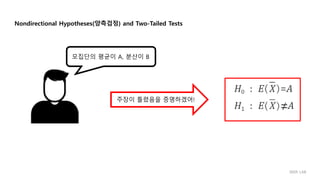
Nondirectional Hypotheses(์–‘์ธก๊ฒ€์ •) and Two-Tailed Tests
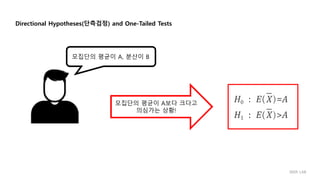
๋ชจ์ง‘๋‹จ์˜ ํ‰๊ท ์ด A, ๋ถ„์‚ฐ์ด B
์ฃผ์žฅ์ด ํ‹€๋ ธ์Œ์„ ์ฆ๋ช…ํ•˜๊ฒ ์–ด!
IIIXR LAB
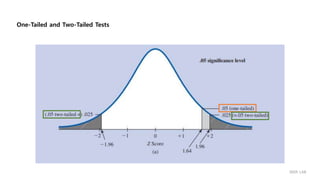
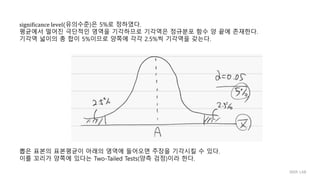
๋ฝ‘์€ ํ‘œ๋ณธ์˜ ํ‘œ๋ณธํ‰๊ท ์ด ์•„๋ž˜์˜ ์˜์—ญ์— ๋“ค์–ด์˜ค๋ฉด ์ฃผ์žฅ์„ ๊ธฐ๊ฐ์‹œํ‚ฌ ์ˆ˜ ์žˆ๋‹ค.
์ด๋ฅผ ๊ผฌ๋ฆฌ๊ฐ€ ์–‘์ชฝ์— ์žˆ๋‹ค๋Š” Two-Tailed Tests(์–‘์ธก ๊ฒ€์ •)์ด๋ผ ํ•œ๋‹ค.
significance level(์œ ์˜์ˆ˜์ค€)์€ 5%๋กœ ์ •ํ•˜์˜€๋‹ค.
ํ‰๊ท ์—์„œ ๋–จ์–ด์ง„ ๊ทน๋‹จ์ ์ธ ์˜์—ญ์„ ๊ธฐ๊ฐํ•˜๋ฏ€๋กœ ๊ธฐ๊ฐ์—ญ์€ ์ •๊ทœ๋ถ„ํฌ ํ•จ์ˆ˜ ์–‘ ๋์— ์กด์žฌํ•œ๋‹ค.
๊ธฐ๊ฐ์—ญ ๋„“์ด์˜ ์ด ํ•ฉ์ด 5%์ด๋ฏ€๋กœ ์–‘์ชฝ์— ๊ฐ๊ฐ 2.5%์”ฉ ๊ธฐ๊ฐ์—ญ์„ ๊ฐ–๋Š”๋‹ค.
IIIXR LAB
Directional Hypotheses(๋‹จ์ธก๊ฒ€์ •) and One-Tailed Tests
๋ชจ์ง‘๋‹จ์˜ ํ‰๊ท ์ด A๋ณด๋‹ค ํฌ๋‹ค๊ณ 
์˜์‹ฌ๊ฐ€๋Š” ์ƒํ™ฉ!
๋ชจ์ง‘๋‹จ์˜ ํ‰๊ท ์ด A, ๋ถ„์‚ฐ์ด B
IIIXR LAB
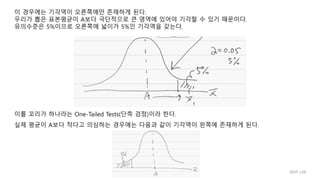
์ด ๊ฒฝ์šฐ์—๋Š” ๊ธฐ๊ฐ์—ญ์ด ์˜ค๋ฅธ์ชฝ์—๋งŒ ์กด์žฌํ•˜๊ฒŒ ๋œ๋‹ค.
์šฐ๋ฆฌ๊ฐ€ ๋ฝ‘์€ ํ‘œ๋ณธํ‰๊ท ์ด A๋ณด๋‹ค ๊ทน๋‹จ์ ์œผ๋กœ ํฐ ์˜์—ญ์— ์žˆ์–ด์•ผ ๊ธฐ๊ฐํ•  ์ˆ˜ ์žˆ๊ธฐ ๋•Œ๋ฌธ์ด๋‹ค.
์œ ์˜์ˆ˜์ค€์€ 5%์ด๋ฏ€๋กœ ์˜ค๋ฅธ์ชฝ์— ๋„“์ด๊ฐ€ 5%์ธ ๊ธฐ๊ฐ์—ญ์„ ๊ฐ–๋Š”๋‹ค.
์ด๋ฅผ ๊ผฌ๋ฆฌ๊ฐ€ ํ•˜๋‚˜๋ผ๋Š” One-Tailed Tests(๋‹จ์ธก ๊ฒ€์ •)์ด๋ผ ํ•œ๋‹ค.
์‹ค์ œ ํ‰๊ท ์ด A๋ณด๋‹ค ์ž‘๋‹ค๊ณ  ์˜์‹ฌํ•˜๋Š” ๊ฒฝ์šฐ์—๋Š” ๋‹ค์Œ๊ณผ ๊ฐ™์ด ๊ธฐ๊ฐ์—ญ์ด ์™ผ์ชฝ์— ์กด์žฌํ•˜๊ฒŒ ๋œ๋‹ค.
IIIXR LAB
โ€ข ๊ทธ๋ฃน ๊ฐ„์— ์ฐจ์ด๊ฐ€ ์žˆ๋Š”์ง€ ํ™•์ธํ•˜๋ ค๋ฉด ์–‘์ธก ๊ฒ€์ •์ด ์ ํ•ฉ
ํ•˜๋‹ค. ์˜ˆ๋ฅผ ๋“ค์–ด ๊ทธ๋ฃน A์˜ ์ ์ˆ˜๊ฐ€ ๊ทธ๋ฃน B๋ณด๋‹ค ๋†’๊ฑฐ๋‚˜ ๋‚ฎ
์€ ์ง€ ํ™•์ธํ•˜๋ ค๋ฉด ์–‘์ธก ๊ฒ€์ •์„ ์‚ฌ์šฉํ•˜๋Š” ๊ฒƒ์ด ์ข‹์€๋ฐ ๊ธ
์ •์  ๋˜๋Š” ๋ถ€์ •์  ์ฐจ์ด์˜ ๊ฐ€๋Šฅ์„ฑ์„ ํ…Œ์ŠคํŠธํ•˜๊ธฐ ๋•Œ๋ฌธ์ด
๋‹ค.
โ€ข ๋‹จ์ธก ๊ฒ€์ •์€ ํŠน์ • ๋ฐฉํ–ฅ์˜ ๊ทธ๋ฃน ๊ฐ„์— ์ฐจ์ด๊ฐ€ ์žˆ๋Š”์ง€ ํ™•์ธ
ํ•˜๋ ค๋Š” ๊ฒฝ์šฐ์—๋งŒ ์ ํ•ฉํ•˜๋‹ค. ๊ทธ๋ฃน A๊ฐ€ ๊ทธ๋ฃน B๋ณด๋‹ค ๋†’์€
์ ์ˆ˜๋ฅผ ๋ฐ›์•˜๋Š”์ง€ ํ™•์ธํ•˜๋Š” ๋ฐ๋งŒ ๊ด€์‹ฌ์ด ์žˆ๊ณ  ๊ทธ๋ฃน A๊ฐ€
๊ทธ๋ฃน B๋ณด๋‹ค ๋‚ฎ์€ ์ ์ˆ˜๋ฅผ ๋ฐ›์„ ๊ฐ€๋Šฅ์„ฑ์— ์ „ํ˜€ ๊ด€์‹ฌ์ด ์—†
๋‹ค๋ฉด ๋‹จ์ธก ํ…Œ์ŠคํŠธ๋ฅผ ์‚ฌ์šฉํ•œ๋‹ค.
โ€ข ๋‹จ์ธก ๊ฒ€์ • ์‚ฌ์šฉ์˜ ์ฃผ์š” ์ด์ ์€ ๋™์ผํ•œ ์œ ์˜์„ฑ (์•ŒํŒŒ) ์ˆ˜
์ค€์—์„œ ์–‘์ธก ๊ฒ€์ •๋ณด๋‹ค ํ†ต๊ณ„์  ๊ฒ€์ •๋ ฅ์ด ๋” ๋†’๋‹ค๋Š” ๊ฒƒ์ด
๋‹ค. ์ฆ‰, ์˜ˆ์ธก ํ•œ ๋ฐฉํ–ฅ์œผ๋กœ ๊ทธ๋ฃน ๊ฐ„์— ์‹ค์ œ๋กœ ์ฐจ์ด๊ฐ€ ์žˆ๋Š”
๊ฒฝ์šฐ ๋‹จ์ธก ๊ฒ€์ •์—์„œ ๊ฒฐ๊ณผ๊ฐ€ ๋” ์ค‘์š”ํ•  ๊ฐ€๋Šฅ์„ฑ์ด ๋†’๋‹ค. ์ด
๋Š” ๋ถ„ํฌ์˜ ํ•œ์ชฝ ๊ผฌ๋ฆฌ ๋งŒ ๊ฒ€์ •์— ์‚ฌ์šฉ๋˜๊ธฐ ๋•Œ๋ฌธ์ด๋‹ค.
โ€ข ํ™•์‹คํ•˜์ง€ ์•Š์€ ๊ฒฝ์šฐ ์–‘์ธก ๊ฒ€์ •์„ ์‚ฌ์šฉํ•˜๋Š” ๊ฒƒ์ด ๊ฑฐ์˜
ํ•ญ์ƒ ๋” ์ ์ ˆํ•ฉ๋‹ˆ๋‹ค. ๋‹จ์ธก ๊ฒ€์ •์€ ์ฐจ์ด์˜ ๋ฐฉํ–ฅ์— ๋Œ€ํ•œ
๊ตฌ์ฒด์ ์ธ ์˜ˆ์ธก์ด ์žˆ๊ณ  ๋ฐ˜๋Œ€ ๊ฒฐ๊ณผ์— ๊ด€์‹ฌ์ด ์—†๋Š” ๊ฒฝ์šฐ์—
์‚ฌ์šฉ๋œ๋‹ค. IIIXR LAB
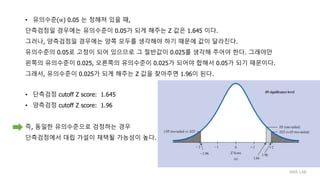
โ€ข ์œ ์˜์ˆ˜์ค€(โˆ) 0.05 ๋Š” ์ •ํ•ด์ ธ ์žˆ์„ ๋•Œ,
๋‹จ์ธก๊ฒ€์ •์ผ ๊ฒฝ์šฐ์—๋Š” ์œ ์˜์ˆ˜์ค€์ด 0.05๊ฐ€ ๋˜๊ฒŒ ํ•ด์ฃผ๋Š” Z ๊ฐ’์€ 1.645 ์ด๋‹ค.
๊ทธ๋Ÿฌ๋‚˜, ์–‘์ธก๊ฒ€์ •์ผ ๊ฒฝ์šฐ์—๋Š” ์–‘์ชฝ ๋ชจ๋‘๋ฅผ ์ƒ๊ฐํ•ด์•ผ ํ•˜๊ธฐ ๋•Œ๋ฌธ์— ๊ฐ’์ด ๋‹ฌ๋ผ์ง„๋‹ค.
์œ ์˜์ˆ˜์ค€์˜ 0.05๋กœ ๊ณ ์ •์ด ๋˜์–ด ์žˆ์œผ๋ฏ€๋กœ ๊ทธ ์ ˆ๋ฐ˜๊ฐ’์ด 0.025๋ฅผ ์ƒ๊ฐํ•ด ์ฃผ์–ด์•ผ ํ•œ๋‹ค. ๊ทธ๋ž˜์•ผ๋งŒ
์™ผ์ชฝ์˜ ์œ ์˜์ˆ˜์ค€์ด 0.025, ์˜ค๋ฅธ์ชฝ์˜ ์œ ์˜์ˆ˜์ค€์ด 0.025๊ฐ€ ๋˜์–ด์•ผ ํ•ฉํ•ด์„œ 0.05๊ฐ€ ๋˜๊ธฐ ๋•Œ๋ฌธ์ด๋‹ค.
๊ทธ๋ž˜์„œ, ์œ ์˜์ˆ˜์ค€์ด 0.025๊ฐ€ ๋˜๊ฒŒ ํ•ด์ฃผ๋Š” Z ๊ฐ’์„ ์ฐพ์•„์ฃผ๋ฉด 1.96์ด ๋œ๋‹ค.
โ€ข ๋‹จ์ธก๊ฒ€์ • cutoff Z score: 1.645
โ€ข ์–‘์ธก๊ฒ€์ • cutoff Z score: 1.96
์ฆ‰, ๋™์ผํ•œ ์œ ์˜์ˆ˜์ค€์œผ๋กœ ๊ฒ€์ •ํ•˜๋Š” ๊ฒฝ์šฐ
๋‹จ์ธก๊ฒ€์ •์—์„œ ๋Œ€๋ฆฝ ๊ฐ€์„ค์ด ์ฑ„ํƒ๋  ๊ฐ€๋Šฅ์„ฑ์ด ๋†’๋‹ค.
IIIXR LAB
โ€ข Asterisk
***์€ p < 0.001, **์€ p < 0.01, *๋Š” p < 0.05์˜ ์ˆœ์œผ๋กœ ์ˆซ์ž ์˜†์— ๋ณ„ํ‘œ(asterisk)๊ฐ€ ๋ถ™๋Š”๋‹ค.
*์ด ๋ถ™์ง€ ์•Š์€ ๋งˆ์ผ๋ฆฌ์ง€๊ฐ€ ๊ฐ€๊ฒฉ์— ์ฃผ๋Š” ์˜ํ–ฅ์€ โ€˜ํ†ต๊ณ„์ ์œผ๋กœ ์œ ์˜ํ•˜์ง€ ์•Š์•˜๋‹คโ€™๋ผ๋Š” ๊ฒฐ๋ก ์„ ๋‚ด๋ฆฌ๊ฒŒ ๋œ๋‹ค.
IIIXR LAB
๊ฐ์‚ฌํ•ฉ๋‹ˆ๋‹ค.
IIIXR LAB

Statistics for psychology, Inferential Statistics and Hypothesis Testing

  • 1.
    <Chapter 3> Some KeyIngredients for Inferential Statistics : Z Scores, the Normal Curve, Sample versus Population, and Probability ๊ฒฝํฌ๋Œ€ํ•™๊ต IIIXR LAB ์„œ๋ฏผ์˜
  • 2.
    โ€ข descriptive statistics(๊ธฐ์ˆ ํ†ต๊ณ„)_๋ฐ์ดํ„ฐ์— ๋Œ€ํ•œ ์ˆซ์ž์š”์•ฝ, ๊ทธ๋ž˜ํ”„ ์š”์•ฝ์„ ํ†ตํ•ด ๋ฐ์ดํ„ฐ๊ฐ€ ๊ฐ€์ง„ ์ •๋ณด๋ฅผ ์ •๋ฆฌํ•˜๋Š” ์ด๋ก ๊ณผ ๋ฐฉ๋ฒ•๋ก  โ€ข inferential statistics(์ถ”๋ฆฌ ํ†ต๊ณ„)_sample(ํ‘œ๋ณธ)์œผ๋กœ๋ถ€ํ„ฐ ์–ป์€ ์ •๋ณด๋ฅผ ์ด์šฉํ•˜์—ฌ ๋ชจ ์ง‘๋‹จ์˜ ํŠน์„ฑ์„ ์ถ”๋ก ํ•˜๊ฑฐ๋‚˜ ๋ณ€์ˆ˜๋“ค ๊ฐ„์˜ ์ ์ ˆํ•œ ํ•จ์ˆ˜ ๊ด€๊ณ„์˜ ์ง„์œ„์—ฌ๋ถ€๋ฅผ ํŒ๋‹จ ์˜ˆ) ๋Œ€ํ†ต๋ น ์„ ๊ฑฐ ์—ฌ๋ก ์กฐ์‚ฌ์‹œ ์ „๊ตญ ์œ ๊ถŒ์ž๋ฅผ ์ „๋ถ€(๋ชจ์ง‘๋‹จ) ์กฐ์‚ฌํ•˜๋Š” ๊ฒƒ์ด ์•„๋‹ˆ๋ผ 1000๋ช…(ํ‘œ๋ณธ) ์ •๋„๋กœ ์กฐ์‚ฌํ•˜๋Š” ๊ฒƒ. ์˜ˆ) ํ‰๊ท , ๋ถ„์‚ฐ์ฒ˜๋Ÿผ ๋ฐ์ดํ„ฐ๋ฅผ ์š”์•ฝํ•œ ๋Œ€ํ‘œ์ ์ธ ์ˆซ์ž, ํ‰๊ท ์ด ๋†’์€ ์ง€, ๋งŽ์ด ํผ์ ธ ์žˆ๋Š”์ง€ ํ†ต๊ณ„ํ•™ ์ข…๋ฅ˜ IIIXR LAB
  • 3.
    In this sectionyou learn how to describe a particular score in terms of where it fits into the overall group of scores. That is, you learn how to use the mean and standard deviation to create a Z score. a Z score describes a score in terms of how much it is above or below the average. โ€ข Z score: ํ‰๊ท ๊ฐ’์—์„œ ํ‘œ์ค€ํŽธ์ฐจ์˜ ๋ช‡ ๋ฐฐ ์ •๋„ ๋–จ์–ด์ ธ ์žˆ๋‹ค๋Š” ๊ฒƒ์„ ํ‰๊ฐ€ํ•˜๋Š” ์ˆ˜์น˜ โถ Figure the deviation score: subtract the mean(M) from the raw score(X). โท Figure the Z score: divide the deviation score by the standard deviation(SD). IIIXR LAB
  • 4.
    ์˜ˆ) ๊ฐ ๊ณผ๋ชฉ๋‹น์‹œํ—˜์˜ ๋‚œ์ด๋„๊ฐ€ ๋‹ค๋ฅด๊ธฐ ๋•Œ๋ฌธ์— ๋‹จ์ˆœํžˆ ์ ์ˆ˜๋งŒ์„ ๋ด์„œ ๋Š” ์ด ํ•™์ƒ์ด ์–ด๋А ๊ณผ๋ชฉ์„ ๋” ์ž˜ํ•˜๋Š”์ง€ ์ œ๋Œ€๋กœ ํŒ๋‹จํ•˜๊ธฐ ์–ด๋ ต๋‹ค. ๊ทธ๋ž˜ ์„œ ์ˆ˜ํ•™, ์˜์–ด, ๊ตญ์–ด, ๊ณผํ•™ ์ ์ˆ˜๋ฅผ ๊ฐ๊ฐ ํ‘œ์ค€ํ™”(standardization)ํ•ด์ค€๋‹ค. IIIXR LAB
  • 5.
    ์„ฑ์ ์ด ํ‰๊ท ์œผ๋กœ๋ถ€ํ„ฐ ๋ช‡ํ‘œ์ค€ํŽธ์ฐจ๋งŒํผ ๋–จ์–ด์ ธ ์žˆ๋Š”๊ฐ€๋ฅผ ๋‚˜ํƒ€๋‚ด๋Š” ๊ฐ’์œผ๋กœ Z ์ ์ˆ˜๊ฐ€ 2๋ผ๋ฉด ๊ทธ ์ˆ˜ํ—˜์ƒ์€ ํ‰๊ท ์œผ๋กœ๋ถ€ํ„ฐ ํ‘œ์ค€ํŽธ์ฐจ์˜ 2๋ฐฐ ๋งŽ์€ ์ ์ˆ˜๋ฅผ ์–ป์—ˆ ๋‹ค๋Š” ๊ฒƒ์„ ์˜๋ฏธํ•ฉ๋‹ˆ๋‹ค. Z์ ์ˆ˜๋Š” ์ƒ๋Œ€์ ์ธ ์œ„์น˜์— ๊ด€ํ•œ ์ •๋ณด๋ฅผ ์ œ๊ณตํ•จ์œผ๋กœ์จ ์ ์ˆ˜์˜ ๋น„๊ต์— ์œ ์šฉํ•˜ ๊ฒŒ ํ™œ์šฉํ•  ์ˆ˜ ์žˆ์Šต๋‹ˆ๋‹ค. '๋ณด๋‹ค ํฌ๋‹ค', '๋ณด๋‹ค ์ž‘๋‹ค'๋ผ๋Š” ์ •๋ณด๋ฅผ ์ œ๊ณตํ•ฉ๋‹ˆ๋‹ค. IIIXR LAB
  • 6.
    (M = 12and SD = 4) Ryan์€ ํ‰๊ท ๋ณด๋‹ค ๋ง์„ ๋งŽ์ด ํ•œ๋‹ค -> ํ‰๊ท ๋ณด๋‹ค ํ‘œ์ค€ํŽธ์ฐจ์˜ 2๋ฐฐ๋งŒํผ ๋งŽ์ด ๋งํ•œ๋‹ค IIIXR LAB
  • 7.
    โ€ข ๊ฐœ๋ณ„ ๋ฐ์ดํ„ฐ์—์„œ์ „์ฒด ๋ฐ์ดํ„ฐ์˜ ํ‰๊ท ๋งŒํผ ๋บ๊ธฐ ๋•Œ๋ฌธ์— ๊ฐœ๋ณ„ ๋ฐ์ดํ„ฐ๋“ค์˜ ํ‰๊ท ์„ ๋‹ค์‹œ ๊ตฌํ•˜๋ฉด โ€œ0โ€์ด ๋œ๋‹ค. ๊ทธ๋ฆฌ๊ณ  ํ‘œ์ค€ํŽธ์ฐจ๋กœ ๊ฐœ๋ณ„ ๋ฐ์ดํ„ฐ๋ฅผ ๋‚˜๋ˆ„์—ˆ๊ธฐ ๋•Œ๋ฌธ์— ๊ทธ ์ง‘๋‹จ์˜ ํ‘œ์ค€ํŽธ์ฐจ๋„ โ€œ1โ€์ด ๋œ๋‹ค. โ€ข ์ด๋ ‡๊ฒŒ ํ‘œ์ค€ํ™”๋œ ๊ฐœ๋ณ„ ๋ฐ์ดํ„ฐ๋ฅผ Z-score๋ผ ํ•˜๊ณ  ํ‰๊ท ์ด 0์ด๊ณ  ํ‘œ์ค€ํŽธ์ฐจ๊ฐ€ 1์ธ ์ •๊ทœ๋ถ„ํฌ์˜ ํ™•๋ฅ ๋ณ€์ˆ˜์ด๋‹ค. IIIXR LAB
  • 8.
  • 9.
    + ์ •๊ทœ๋ถ„ํฌ๊ฐ€ ์•„๋‹Œ๊ฒฝ์šฐ(๋น„์ •๊ทœ๋ชจ์ง‘๋‹จ_non-normal population) ํ‘œ์ค€ํ™” <SAS๋ฅผ ์ด์šฉํ•œ ํ†ต๊ณ„๋ถ„์„> ๋ฐœ์ทŒ ๋ชจ์ง‘๋‹จ์ด ์ •๊ทœ๋ถ„ํฌ์ด๊ณ , ํ‘œ์ค€ํŽธ์ฐจ๋ฅผ ์•Œ๊ณ  ์žˆ๋Š” ๊ฒฝ์šฐ์—๋Š” Z-๋ถ„ํฌ(ํ‘œ ์ค€์ •๊ทœ๋ถ„ํฌ, Standard Normal Distribution)๋ฅผ ์‚ฌ์šฉํ•˜๊ณ  ๋ชจ์ง‘๋‹จ์ด ์ •๊ทœ ๋ถ„ํฌ์ด๋‚˜ ํ‘œ์ค€ํŽธ์ฐจ๋ฅผ ๋ชจ๋ฅด๋Š” ๊ฒฝ์šฐ์—๋Š” t-๋ถ„ํฌ๋ฅผ ์‚ฌ์šฉํ•œ๋‹ค. ๋ชจ์ง‘๋‹จ์ด ์ •๊ทœ๋ถ„ํฌ๊ฐ€ ์•„๋‹ˆ๋‚˜ ํ‘œ๋ณธ์˜ ํฌ๊ธฐ๊ฐ€ ํฌ๋‹ค๋ฉด ํ•ด๋‹น ํ‘œ๋ณธ๋ถ„ํฌ ๋Š” ์ค‘์‹ฌ๊ทนํ•œ์ •๋ฆฌ(central limit theorem)์— ์˜ํ•˜์—ฌ ์ •๊ทœ๋ถ„ํฌ๊ฐ€ ๋œ๋‹ค. ๋ชจ์ง‘๋‹จ์˜ ๋ถ„์‚ฐ์„ ์•Œ๋ฉด Z-๋ถ„ํฌ, ๋ชจ๋ฅด๋ฉด t-๋ถ„ํฌ๋ฅผ ์‚ฌ์šฉํ•˜์ง€๋งŒ, ํ‘œ๋ณธ์˜ ํฌ๊ธฐ๊ฐ€ ํฌ๋ฉด t-๋ถ„ํฌ, Z-๋ถ„ํฌ ๋ชจ๋‘ Z-๋ถ„ํฌ๋ฅผ ์‚ฌ์šฉํ•œ๋‹ค. ์œ„์˜ ๋‚ด์šฉ์„ ๊ฐ„๋‹จํ•˜๊ฒŒ ์š”์•ฝ ์ •๋ฆฌํ•˜๋ฉด ์•„๋ž˜์™€ ๊ฐ™๋‹ค. ๊ต์žฌ์—์„œ๋Š” "๋ชจ์ง‘๋‹จ์˜ ๋ถ„ํฌ์™€ ๋ชจ๋ถ„์‚ฐ์ด ๋ชจ๋‘ ๋ฏธ์ง€์ธ ๊ฒฝ์šฐ์—๋„ ์ผ ๋‹จ์€ ฯƒยฒ ๋Œ€์‹  ํ‘œ๋ณธ๋ถ„์‚ฐ(sยฒ)์„ ํ™œ์šฉํ•˜๊ฒŒ ๋˜๋ฉฐ ํ‘œ๋ณธํ‰๊ท ์„ ํ‘œ์ค€ํ™”ํ•œ ํ†ต๊ณ„๋Ÿ‰์€ ๋Œ€๋žต t๋ถ„ํฌ๋ฅผ ๋”ฐ๋ฅด๋Š” ๊ฒƒ์œผ๋กœ ๊ฐ„์ฃผํ•  ์ˆ˜ ๋ฐ–์— ์—†๋‹ค."๊ณ  ์„ค ๋ช…๋˜์–ด ์žˆ๋Š”๋ฐ, ๊ฒฐ๊ตญ ์†Œํ‘œ๋ณธ์˜ ๊ฒฝ์šฐ์—๋Š” ๋ชจ์ง‘๋‹จ์˜ ์ •๊ทœ์„ฑ์„ ๊ฐ€์ • ํ–ˆ๋‹ค๋Š” ๊ฒƒ์ด๋‹ค. ๋น„์ •๊ทœ๋ชจ์ง‘๋‹จ_non-normal population ๊ฒฝ์šฐ ์ •๊ทœ๋ชจ์ง‘๋‹จ_normal population ๊ฒฝ์šฐ IIIXR LAB
  • 10.
    + ์ •๊ทœ๋ถ„ํฌ๊ฐ€ ์•„๋‹Œ๊ฒฝ์šฐ ํ‘œ์ค€ํ™”(์•ž๊ณผ ๋‹ค๋ฅธ ๊ฒฝ์šฐ) IIIXR LAB
  • 11.
    + ์ •๊ทœ๋ถ„ํฌ๊ฐ€ ์•„๋‹Œ๊ฒฝ์šฐ ํ‘œ์ค€ํ™” โ€ข ์ค‘์‹ฌ๊ทนํ•œ์ •๋ฆฌ(central limit theorem) : ๋™์ผํ•œ ํ™•๋ฅ  ๋ถ„ํฌ๋ฅผ ๊ฐ€์ง„ ํ™•๋ฅ ๋ณ€์ˆ˜ n๊ฐœ์˜ ํ‰๊ท ์˜ ๋ถ„ํฌ๋Š” n์ด ์ถฉ๋ถ„ํžˆ ํฌ๋‹ค๋ฉด ์ •๊ทœ๋ถ„ํฌ์— ๊ฐ€๊นŒ์›Œ์ง„๋‹ค. ์ฆ‰, ์•Œ ์ˆ˜ ์—†๋Š” ๋ชจ์ง‘๋‹จ์—์„œ ํ‘œ๋ณธ์ด ์ถฉ๋ถ„ ํžˆ ํฌ๋‹ค๋ฉด ์ด ํ‘œ๋ณธํ‰๊ท ์˜ ๋ถ„ํฌ๋Š” ์ •๊ทœ๋ถ„ํฌ์— ๊ทผ์‚ฌํ•œ๋‹ค. IIIXR LAB
  • 12.
  • 13.
    Sample and Population โ€ขPopulation: ์—ฐ๊ตฌ๊ฒฐ๊ณผ๋ฅผ ์ ์šฉํ•˜๋ ค๋Š” ์ „์ฒด ๊ทธ๋ฃน; ํŠน์ • ์‚ฌ๋žŒ๋“ค ์ง‘ํ•ฉ(sample)์„ ๊ธฐ๋ฐ˜์œผ ๋กœ ์ถ”๋ก ์ด ์ด๋ฃจ์–ด์ง€๋Š” ๋” ํฐ ๊ทธ๋ฃน โ€ข Sample: ๋Œ€๊ฐœ ํฐ ๊ทœ๋ชจ์˜ ์ธ๊ตฌ์˜ ์ ์ˆ˜๋ฅผ ๋Œ€ํ‘œํ•œ๋‹ค๊ณ  ๊ฐ„์ฃผ๋˜๋Š” ํŠน์ • ์‚ฌ๋žŒ๋“ค์˜ ์ ์ˆ˜๋กœ ๋ฐ์ดํ„ฐ๋ฅผ ์ˆ˜์ง‘ํ•˜๋Š” ํŠน์ • ๊ทธ๋ฃน Why Psychologists Study Samples Instead of Populations -> Psychologists usually study samples and not populations because it is not practical in most cases to study the entire population. (์ธ์  ๋ฌผ์  ์ž์›์„ ์ ˆ๊ฐํ•˜์—ฌ ๊ฒฝ์ œ์ ) IIIXR LAB
  • 14.
    Methods of Sampling โ€ขThe ideal method of picking out a sample to study is called random selection. โ€ข In random sampling, the sample is chosen from among the population using a completely random method, so that each individual has an equal chance of being included in the sample. โ€ข In haphazard sampling, the researcher selects individuals who are easily available or who are convenient to study. - ์žฅ์ : ๋‹ค๋ฅธ ์ƒ˜ํ”Œ๋ง ๋ฐฉ๋ฒ•๋ณด๋‹ค ์ ‘๊ทผํ•˜๊ธฐ ์‰ฝ๊ณ  ์ €๋ ดํ•˜๋‹ค. - ๋‹จ์ : ์ ‘๊ทผํ•˜๊ธฐ ๋” ํŽธ๋ฆฌํ•œ ํ•ญ๋ชฉ์„ ์„ ํƒํ•˜๋ ค๋Š” ์œ ํ˜น์œผ๋กœ ์ธํ•ด ์‰ฝ๊ฒŒ ํŽธํ–ฅ์ด ๋“ค์–ด๊ฐˆ ์ˆ˜ ์žˆ๋‹ค. IIIXR LAB
  • 15.
    Using different symbolsfor population parameters and sample statistics ensures that there is no confusion as to whether a symbol refers to a population or a sample. IIIXR LAB
  • 16.
    โ€ข Probability: expectedrelative frequency of an outcome; the proportion of successful outcomes to all outcomes. โ€ข expected relative frequency: number of successful outcomes divided by the number of total outcomes you would expect to get if you repeated an experiment a large number of times relative frequency of an event observed in the past represents the probability of that event occurring in the future. IIIXR LAB
  • 17.
    <Chapter 4> Introduction toHypothesis Testing :This chapter focuses on the basic logic for analyzing results of a research study to test a hypothesis
  • 18.
    ๊ฐ€์„ค ๊ฒ€์ •(Hypothesis Test):์ฆ๋ช…๋œ ๋ฐ” ์—†๋Š” ์ฃผ์žฅ์ด๋‚˜ ๊ฐ€์„ค์„ ํ‘œ๋ณธ ํ†ต๊ณ„๋Ÿ‰์— ์ž…๊ฐํ•˜์—ฌ ์ฃผ์žฅ์ด๋‚˜ ๊ฐ€์„ค์˜ ์ง„์œ„ ์—ฌ๋ถ€๋ฅผ ํŒ๋‹จ, ์ฆ๋ช…, ๊ฒ€์ •ํ•˜๋Š” ํ†ต๊ณ„์  ์ถ”๋ก  ๋ฐฉ์‹ IIIXR LAB
  • 19.
    We say thathypothesis testing involves a double negative logic because we are interested in the research hypothesis, but we test whether it is true by seeing if we can reject its opposite, the null hypothesis. ํ•œ ๋ฒˆ ๋ถ€์ •ํ•œ ๊ฒƒ์„ ๋‹ค์‹œ ํ•œ๋ฒˆ ๋ถ€์ •ํ•˜์—ฌ ๊ธ์ •์„ ๋‚˜ํƒ€๋‚ด๋Š” ๋…ผ๋ฆฌ์‹ IIIXR LAB
  • 20.
    The research hypothesisis supported when a result is so extreme that you reject the null hypothesis; the result is statistically significant. The result is not statistically significant when a result is not very extreme; the result is inconclusive. IIIXR LAB
  • 21.
    P2์— ๋Œ€ํ•œ ์ •๊ทœ๋ถ„ํฌ โ€ข research hypothesis: babies receiving the special vitamin(P1) walk earlier than the mean of Population 2 โ€ข null hypothesis: no difference in the ages at which Population 1 and Population 2 babies start walking baby who was given the specially purified vitamin started walking at 6 months (16 โ€“ 142)/3 = -2.67 IIIXR LAB
  • 22.
    ์ด 2๊ฐ€์ง€ ๊ฐ€๋Šฅ์„ฑ์ด์žˆ๋Š”๋ฐ 1. 1%๋ผ๋Š” ๋‚ฎ์€ ํ™•๋ฅ ๋กœ ํ‘œ๋ณธ์ด ๋ฝ‘ํ˜”๋‹ค. 2. null hypothesis ์ด ํ‹€๋ ธ๋‹ค 1% ๋Š” ์ž‘์€ ํ™•๋ฅ ์ด๊ธฐ๋•Œ๋ฌธ์— 2๋ฒˆ์ด ๋” ๊ฐ€๋Šฅ์„ฑ์ด ์žˆ๋‹ค. ์ฆ‰, ๋ชจ์ง‘๋‹จ์˜ ํ‰๊ท ์ด A๊ฐ€ ์•„๋‹ˆ๋‹ค. -> reject the null hypothesis (๊ท€๋ฌด๊ฐ€์„ค์„ ๊ธฐ๊ฐ์‹œํ‚ด) ์ด๋•Œ 1% ๋Š” ์ž‘์€ ํ™•๋ฅ ์ด์–ด์„œ ๊ฐ€์„ค์ด ํ‹€๋ ธ๋‹ค๊ณ  ํ•˜์˜€๋Š” ๋ฐ ๋ช‡ %(ํ™•๋ฅ )๊ฐ€ ๊ทน๋‹จ์ ์ธ ๋ฒ”์œ„์ผ๊นŒ? IIIXR LAB
  • 23.
    โ€ข ๋ณดํ†ต 5%์ด๋ฉฐ๐›ผ = 0.05(significance level_์œ ์˜์ˆ˜์ค€)๋ผ๊ณ  ๋‚˜ํƒ€๋‚ธ๋‹ค. ๊ท€๋ฌด๊ฐ€์„ค์„ ๊ธฐ๊ฐํ•˜ ๊ณ  ๋Œ€๋ฆฝ๊ฐ€์„ค์„ ์ฑ„ํƒํ•˜๊ฒŒ ๋˜๋Š” ์˜์—ญ์„ critical region(๊ธฐ๊ฐ์—ญ)์ด๋ผ ํ•œ๋‹ค. ์ด๋•Œ ์•ž์„œ ๋ฝ‘ ์€ ํ‘œ๋ณธํ‰๊ท ์ด ์†ํ•œ ์˜์—ญ์ด 1%์˜€๋Š”๋ฐ ์ด ๊ฐ’์„ p-Value ๋ผ๊ณ  ํ•œ๋‹ค. โ€ข Significance level: ํ†ต๊ณ„์  ๊ฐ€์„ค ๊ฒ€์ •์—์„œ ์‚ฌ์šฉํ•˜๋Š” ๊ธฐ์ค€๊ฐ’, ์‹ ๋ขฐ๋„ 95%๋ผ ํ•  ๋•Œ, ์œ ์˜ ์ˆ˜์ค€์€ (1-0.95)๋กœ ๊ณ„์‚ฐํ•˜์—ฌ 0.05๊ฐ€ ๋œ๋‹ค. โ€ข P-value(significance probability_์œ ์˜ํ™•๋ฅ ): ๊ท€๋ฌด๊ฐ€์„ค์ด ๋งž๋‹ค๋Š” ์ „์ œํ•˜์— ์‹ค์ œ๋กœ ๊ด€์ธก ๋œ ๊ฐ’ ์ด์ƒ์ผ ํ™•๋ฅ  ์˜๋ฏธ. P-value๊ฐ€ ๋„ˆ๋ฌด ๋‚ฎ์œผ๋ฉด ๊ทธ๋ ‡๊ฒŒ ๋‚ฎ์€ ํ™•๋ฅ ์ด ์ผ์–ด๋‚ฌ๋‹ค๊ณ  ์ƒ๊ฐ ํ•˜๊ธฐ ๋ณด๋‹ค ๊ท€๋ฌด๊ฐ€์„ค์ด ํ‹€๋ ธ๋‹ค๊ณ  ์ƒ๊ฐ, ์ผ๋ฐ˜์ ์œผ๋กœ p-value๊ฐ€ 0.05 ๋˜๋Š” 0.01๋ณด๋‹ค ์ž‘ ์œผ๋ฉด ๊ท€๋ฌด๊ฐ€์„ค ๊ธฐ๊ฐ. โ€ข cutoff sample score (critical value): ๊ธฐ๊ฐ ๋˜๋Š” ์ฑ„ํƒํ•˜๋Š” ๋ฒ”์œ„์˜ ๊ฒฝ๊ณ„๋ฅผ ์•Œ๋ ค์ฃผ๋Š” ๊ฒฝ ๊ณ„๊ฐ’(Cutoff Z score) IIIXR LAB
  • 24.
  • 25.
    It is importantto emphasize two points about the conclusions you can make from the hypothesis-testing process. โ€ข First, when you reject the null hypothesis, all you are saying is that your results support the research hypothesis (as in our example). What you do say when you reject the null hypothesis is that the results are statistically significant. You can also say that the results โ€œsupportโ€ or โ€œprovide evidence forโ€ the research hypothesis. โ€ข Second, when a result is not extreme enough to reject the null hypothesis, you do not say that the result supports (or proves) the null hypothesis. You simply say the result is not statistically significant. (inconclusive) + statistically significant: ๋ชจ์ง‘๋‹จ์— ๋Œ€ํ•œ ๊ฐ€์„ค์ด ๊ฐ€์ง€๋Š” ํ†ต๊ณ„์  ์˜๋ฏธ๋กœ, ํ™•๋ฅ ์ ์œผ๋กœ ๋ด์„œ ๋‹จ์ˆœํ•œ ์šฐ์—ฐ์ด๋ผ๊ณ  ์ƒ๊ฐ๋˜์ง€ ์•Š์„ ์ •๋„ ๋กœ ์˜๋ฏธ๊ฐ€ ์žˆ๋‹ค IIIXR LAB

  • 26.
  • 27.
    Nondirectional Hypotheses(์–‘์ธก๊ฒ€์ •) andTwo-Tailed Tests ๋ชจ์ง‘๋‹จ์˜ ํ‰๊ท ์ด A, ๋ถ„์‚ฐ์ด B ์ฃผ์žฅ์ด ํ‹€๋ ธ์Œ์„ ์ฆ๋ช…ํ•˜๊ฒ ์–ด! IIIXR LAB
  • 28.
    ๋ฝ‘์€ ํ‘œ๋ณธ์˜ ํ‘œ๋ณธํ‰๊ท ์ด์•„๋ž˜์˜ ์˜์—ญ์— ๋“ค์–ด์˜ค๋ฉด ์ฃผ์žฅ์„ ๊ธฐ๊ฐ์‹œํ‚ฌ ์ˆ˜ ์žˆ๋‹ค. ์ด๋ฅผ ๊ผฌ๋ฆฌ๊ฐ€ ์–‘์ชฝ์— ์žˆ๋‹ค๋Š” Two-Tailed Tests(์–‘์ธก ๊ฒ€์ •)์ด๋ผ ํ•œ๋‹ค. significance level(์œ ์˜์ˆ˜์ค€)์€ 5%๋กœ ์ •ํ•˜์˜€๋‹ค. ํ‰๊ท ์—์„œ ๋–จ์–ด์ง„ ๊ทน๋‹จ์ ์ธ ์˜์—ญ์„ ๊ธฐ๊ฐํ•˜๋ฏ€๋กœ ๊ธฐ๊ฐ์—ญ์€ ์ •๊ทœ๋ถ„ํฌ ํ•จ์ˆ˜ ์–‘ ๋์— ์กด์žฌํ•œ๋‹ค. ๊ธฐ๊ฐ์—ญ ๋„“์ด์˜ ์ด ํ•ฉ์ด 5%์ด๋ฏ€๋กœ ์–‘์ชฝ์— ๊ฐ๊ฐ 2.5%์”ฉ ๊ธฐ๊ฐ์—ญ์„ ๊ฐ–๋Š”๋‹ค. IIIXR LAB
  • 29.
    Directional Hypotheses(๋‹จ์ธก๊ฒ€์ •) andOne-Tailed Tests ๋ชจ์ง‘๋‹จ์˜ ํ‰๊ท ์ด A๋ณด๋‹ค ํฌ๋‹ค๊ณ  ์˜์‹ฌ๊ฐ€๋Š” ์ƒํ™ฉ! ๋ชจ์ง‘๋‹จ์˜ ํ‰๊ท ์ด A, ๋ถ„์‚ฐ์ด B IIIXR LAB
  • 30.
    ์ด ๊ฒฝ์šฐ์—๋Š” ๊ธฐ๊ฐ์—ญ์ด์˜ค๋ฅธ์ชฝ์—๋งŒ ์กด์žฌํ•˜๊ฒŒ ๋œ๋‹ค. ์šฐ๋ฆฌ๊ฐ€ ๋ฝ‘์€ ํ‘œ๋ณธํ‰๊ท ์ด A๋ณด๋‹ค ๊ทน๋‹จ์ ์œผ๋กœ ํฐ ์˜์—ญ์— ์žˆ์–ด์•ผ ๊ธฐ๊ฐํ•  ์ˆ˜ ์žˆ๊ธฐ ๋•Œ๋ฌธ์ด๋‹ค. ์œ ์˜์ˆ˜์ค€์€ 5%์ด๋ฏ€๋กœ ์˜ค๋ฅธ์ชฝ์— ๋„“์ด๊ฐ€ 5%์ธ ๊ธฐ๊ฐ์—ญ์„ ๊ฐ–๋Š”๋‹ค. ์ด๋ฅผ ๊ผฌ๋ฆฌ๊ฐ€ ํ•˜๋‚˜๋ผ๋Š” One-Tailed Tests(๋‹จ์ธก ๊ฒ€์ •)์ด๋ผ ํ•œ๋‹ค. ์‹ค์ œ ํ‰๊ท ์ด A๋ณด๋‹ค ์ž‘๋‹ค๊ณ  ์˜์‹ฌํ•˜๋Š” ๊ฒฝ์šฐ์—๋Š” ๋‹ค์Œ๊ณผ ๊ฐ™์ด ๊ธฐ๊ฐ์—ญ์ด ์™ผ์ชฝ์— ์กด์žฌํ•˜๊ฒŒ ๋œ๋‹ค. IIIXR LAB
  • 31.
    โ€ข ๊ทธ๋ฃน ๊ฐ„์—์ฐจ์ด๊ฐ€ ์žˆ๋Š”์ง€ ํ™•์ธํ•˜๋ ค๋ฉด ์–‘์ธก ๊ฒ€์ •์ด ์ ํ•ฉ ํ•˜๋‹ค. ์˜ˆ๋ฅผ ๋“ค์–ด ๊ทธ๋ฃน A์˜ ์ ์ˆ˜๊ฐ€ ๊ทธ๋ฃน B๋ณด๋‹ค ๋†’๊ฑฐ๋‚˜ ๋‚ฎ ์€ ์ง€ ํ™•์ธํ•˜๋ ค๋ฉด ์–‘์ธก ๊ฒ€์ •์„ ์‚ฌ์šฉํ•˜๋Š” ๊ฒƒ์ด ์ข‹์€๋ฐ ๊ธ ์ •์  ๋˜๋Š” ๋ถ€์ •์  ์ฐจ์ด์˜ ๊ฐ€๋Šฅ์„ฑ์„ ํ…Œ์ŠคํŠธํ•˜๊ธฐ ๋•Œ๋ฌธ์ด ๋‹ค. โ€ข ๋‹จ์ธก ๊ฒ€์ •์€ ํŠน์ • ๋ฐฉํ–ฅ์˜ ๊ทธ๋ฃน ๊ฐ„์— ์ฐจ์ด๊ฐ€ ์žˆ๋Š”์ง€ ํ™•์ธ ํ•˜๋ ค๋Š” ๊ฒฝ์šฐ์—๋งŒ ์ ํ•ฉํ•˜๋‹ค. ๊ทธ๋ฃน A๊ฐ€ ๊ทธ๋ฃน B๋ณด๋‹ค ๋†’์€ ์ ์ˆ˜๋ฅผ ๋ฐ›์•˜๋Š”์ง€ ํ™•์ธํ•˜๋Š” ๋ฐ๋งŒ ๊ด€์‹ฌ์ด ์žˆ๊ณ  ๊ทธ๋ฃน A๊ฐ€ ๊ทธ๋ฃน B๋ณด๋‹ค ๋‚ฎ์€ ์ ์ˆ˜๋ฅผ ๋ฐ›์„ ๊ฐ€๋Šฅ์„ฑ์— ์ „ํ˜€ ๊ด€์‹ฌ์ด ์—† ๋‹ค๋ฉด ๋‹จ์ธก ํ…Œ์ŠคํŠธ๋ฅผ ์‚ฌ์šฉํ•œ๋‹ค. โ€ข ๋‹จ์ธก ๊ฒ€์ • ์‚ฌ์šฉ์˜ ์ฃผ์š” ์ด์ ์€ ๋™์ผํ•œ ์œ ์˜์„ฑ (์•ŒํŒŒ) ์ˆ˜ ์ค€์—์„œ ์–‘์ธก ๊ฒ€์ •๋ณด๋‹ค ํ†ต๊ณ„์  ๊ฒ€์ •๋ ฅ์ด ๋” ๋†’๋‹ค๋Š” ๊ฒƒ์ด ๋‹ค. ์ฆ‰, ์˜ˆ์ธก ํ•œ ๋ฐฉํ–ฅ์œผ๋กœ ๊ทธ๋ฃน ๊ฐ„์— ์‹ค์ œ๋กœ ์ฐจ์ด๊ฐ€ ์žˆ๋Š” ๊ฒฝ์šฐ ๋‹จ์ธก ๊ฒ€์ •์—์„œ ๊ฒฐ๊ณผ๊ฐ€ ๋” ์ค‘์š”ํ•  ๊ฐ€๋Šฅ์„ฑ์ด ๋†’๋‹ค. ์ด ๋Š” ๋ถ„ํฌ์˜ ํ•œ์ชฝ ๊ผฌ๋ฆฌ ๋งŒ ๊ฒ€์ •์— ์‚ฌ์šฉ๋˜๊ธฐ ๋•Œ๋ฌธ์ด๋‹ค. โ€ข ํ™•์‹คํ•˜์ง€ ์•Š์€ ๊ฒฝ์šฐ ์–‘์ธก ๊ฒ€์ •์„ ์‚ฌ์šฉํ•˜๋Š” ๊ฒƒ์ด ๊ฑฐ์˜ ํ•ญ์ƒ ๋” ์ ์ ˆํ•ฉ๋‹ˆ๋‹ค. ๋‹จ์ธก ๊ฒ€์ •์€ ์ฐจ์ด์˜ ๋ฐฉํ–ฅ์— ๋Œ€ํ•œ ๊ตฌ์ฒด์ ์ธ ์˜ˆ์ธก์ด ์žˆ๊ณ  ๋ฐ˜๋Œ€ ๊ฒฐ๊ณผ์— ๊ด€์‹ฌ์ด ์—†๋Š” ๊ฒฝ์šฐ์— ์‚ฌ์šฉ๋œ๋‹ค. IIIXR LAB
  • 32.
    โ€ข ์œ ์˜์ˆ˜์ค€(โˆ) 0.05๋Š” ์ •ํ•ด์ ธ ์žˆ์„ ๋•Œ, ๋‹จ์ธก๊ฒ€์ •์ผ ๊ฒฝ์šฐ์—๋Š” ์œ ์˜์ˆ˜์ค€์ด 0.05๊ฐ€ ๋˜๊ฒŒ ํ•ด์ฃผ๋Š” Z ๊ฐ’์€ 1.645 ์ด๋‹ค. ๊ทธ๋Ÿฌ๋‚˜, ์–‘์ธก๊ฒ€์ •์ผ ๊ฒฝ์šฐ์—๋Š” ์–‘์ชฝ ๋ชจ๋‘๋ฅผ ์ƒ๊ฐํ•ด์•ผ ํ•˜๊ธฐ ๋•Œ๋ฌธ์— ๊ฐ’์ด ๋‹ฌ๋ผ์ง„๋‹ค. ์œ ์˜์ˆ˜์ค€์˜ 0.05๋กœ ๊ณ ์ •์ด ๋˜์–ด ์žˆ์œผ๋ฏ€๋กœ ๊ทธ ์ ˆ๋ฐ˜๊ฐ’์ด 0.025๋ฅผ ์ƒ๊ฐํ•ด ์ฃผ์–ด์•ผ ํ•œ๋‹ค. ๊ทธ๋ž˜์•ผ๋งŒ ์™ผ์ชฝ์˜ ์œ ์˜์ˆ˜์ค€์ด 0.025, ์˜ค๋ฅธ์ชฝ์˜ ์œ ์˜์ˆ˜์ค€์ด 0.025๊ฐ€ ๋˜์–ด์•ผ ํ•ฉํ•ด์„œ 0.05๊ฐ€ ๋˜๊ธฐ ๋•Œ๋ฌธ์ด๋‹ค. ๊ทธ๋ž˜์„œ, ์œ ์˜์ˆ˜์ค€์ด 0.025๊ฐ€ ๋˜๊ฒŒ ํ•ด์ฃผ๋Š” Z ๊ฐ’์„ ์ฐพ์•„์ฃผ๋ฉด 1.96์ด ๋œ๋‹ค. โ€ข ๋‹จ์ธก๊ฒ€์ • cutoff Z score: 1.645 โ€ข ์–‘์ธก๊ฒ€์ • cutoff Z score: 1.96 ์ฆ‰, ๋™์ผํ•œ ์œ ์˜์ˆ˜์ค€์œผ๋กœ ๊ฒ€์ •ํ•˜๋Š” ๊ฒฝ์šฐ ๋‹จ์ธก๊ฒ€์ •์—์„œ ๋Œ€๋ฆฝ ๊ฐ€์„ค์ด ์ฑ„ํƒ๋  ๊ฐ€๋Šฅ์„ฑ์ด ๋†’๋‹ค. IIIXR LAB
  • 33.
    โ€ข Asterisk ***์€ p< 0.001, **์€ p < 0.01, *๋Š” p < 0.05์˜ ์ˆœ์œผ๋กœ ์ˆซ์ž ์˜†์— ๋ณ„ํ‘œ(asterisk)๊ฐ€ ๋ถ™๋Š”๋‹ค. *์ด ๋ถ™์ง€ ์•Š์€ ๋งˆ์ผ๋ฆฌ์ง€๊ฐ€ ๊ฐ€๊ฒฉ์— ์ฃผ๋Š” ์˜ํ–ฅ์€ โ€˜ํ†ต๊ณ„์ ์œผ๋กœ ์œ ์˜ํ•˜์ง€ ์•Š์•˜๋‹คโ€™๋ผ๋Š” ๊ฒฐ๋ก ์„ ๋‚ด๋ฆฌ๊ฒŒ ๋œ๋‹ค. IIIXR LAB
  • 34.

Editor's Notes

  • #3ย ํŠน์ • ์ ์ˆ˜๋ฅผ ์–ด๋–ป๊ฒŒ ์ „์ฒด ์ ์ˆ˜ ๊ทธ๋ฃน์—์„œ ์„ค๋ช…ํ•  ๊ฒƒ์ธ์ง€์— ๋Œ€ํ•œ ์„ค๋ช…: Z-score
  • #4ย http://commres.net/wiki/standard_deviation http://commres.net/wiki/standard_score
  • #10ย https://m.blog.naver.com/definitice/221031927257 ์–ด์ œ ๋™ํ˜„์ด๊ฐ€ ๋ฌผ์–ด๋ณธ ์งˆ๋ฌธ์— ๋Œ€ํ•ด์„œ ์ฐพ์•˜์Šต๋‹ˆ๋‹ค. ์ •๊ทœ๋ชจ์ง‘๋‹จ์ด ์•„๋‹ˆ๋ผ ๋น„์ •๊ทœ๋ชจ์ง‘๋‹จ์ธ ๊ฒฝ์šฐ ํ‘œ์ค€ํ™”ํ•˜๋Š” ๋ฒ•์— ์ฐพ์•„์„œ ์ฐพ์•„๋ณด์•˜๋Š”๋ฐ ๋น„์ •๊ทœ๋ชจ์ง‘๋‹จ์˜ ๊ฒฝ์šฐ ํ‘œ๋ณธ์˜ ์ˆ˜๊ฐ€ ํฌ๋ฉด ์–ด์ œ ๋ฐœํ‘œํ–ˆ๋˜ ๊ฒƒ์ฒ˜๋Ÿผ ์ •๊ทœ๋ชจ์ง‘๋‹จ๊ณผ ๊ฐ™์ด z๋ถ„ํฌ(ํ‘œ์ค€์ •๊ทœ๋ถ„ํฌ,Standard Normal Distribution)๋ฅผ ์‚ฌ์šฉํ•œ๋‹ค๊ณ  ํ•ฉ๋‹ˆ๋‹ค. ํ‘œ๋ณธ์˜ ํฌ๊ธฐ๊ฐ€ ํฌ๋ฉด ์ค‘์‹ฌ๊ทนํ•œ์ •๋ฆฌ(central limit theorem)์— ์˜ํ•ด์„œ ์ •๊ทœ๋ถ„ํฌ๋ผ ๊ฐ€์ •ํ•œ๋‹ค๊ณ  ํ•ฉ๋‹ˆ๋‹ค. central limit theorem๋Š” ๋™์ผํ•œ ํ™•๋ฅ  ๋ถ„ํฌ๋ฅผ ๊ฐ€์ง„ ํ™•๋ฅ ๋ณ€์ˆ˜ n๊ฐœ์˜ ํ‰๊ท ์˜ ๋ถ„ํฌ๋Š” n์ด ์ถฉ๋ถ„ํžˆ ํฌ๋‹ค๋ฉด ์ •๊ทœ๋ถ„ํฌ์— ๊ฐ€๊นŒ์›Œ์ง„๋‹ค. ์ฆ‰, ์•Œ ์ˆ˜ ์—†๋Š” ๋ชจ์ง‘๋‹จ์—์„œ ํ‘œ๋ณธ์ด ์ถฉ๋ถ„ํžˆ ํฌ๋‹ค๋ฉด ์ด ํ‘œ๋ณธํ‰๊ท ์˜ ๋ถ„ํฌ๋Š” ์ •๊ทœ๋ถ„ํฌ์— ๊ทผ์‚ฌํ•œ๋‹ค๋ผ๋Š” ์ด๋ก ์ž…๋‹ˆ๋‹ค. ๊ทผ๋ฐ ๋น„์ •๊ทœ๋ชจ์ง‘๋‹จ์—์„œ ํ‘œ๋ณธ์˜ ํฌ๊ธฐ๊ฐ€ ์ž‘์œผ๋ฉด t๋ถ„ํฌ๋ฅผ ์‚ฌ์šฉํ•œ๋‹ค๊ณ  ํ•˜๋Š”๋ฐ ์ด์— ๋Œ€ํ•ด์„œ๋Š” ๊ต์žฌ๋งˆ๋‹ค t๋ถ„ํฌ๋ฅผ ์‚ฌ์šฉํ•œ๋‹ค๊ณ  ํ•˜๋Š” ๊ณณ๋„ ์žˆ๊ณ  ๋ฐฉ๋ฒ•์ด ์—†๋‹ค๊ณ  ํ•˜๋Š” ๊ต์žฌ๋„ ์žˆ์–ด์„œ ์ด์— ๋Œ€ํ•ด์„œ๋Š” ํ›„์— ์ฑ•ํ„ฐ๋ฅผ t๋ถ„ํฌ์— ๋Œ€ํ•ด ๊ณต๋ถ€ํ•  ๋•Œ ๋” ์ค€๋น„ํ•ด ๋ณด๋„๋ก ํ•˜๊ฒ ์Šต๋‹ˆ๋‹ค. t ๋ถ„ํฌ์— ๊ด€๋ จํ•ด์„œ๋Š” ์ดํ›„ ์ฑ•ํ„ฐ์—์„œ ๋‹ค๋ฃจ๊ณ  ์žˆ์œผ๋ฏ€๋กœ ๊ทธ๋•Œ ๋” ์ •๋ฆฌํ•ด์„œ ์•Œ๋ ค๋“œ๋ฆฌ๋„๋ก ํ•˜๊ฒ ์Šต๋‹ˆ๋‹ค. ์•„๋ž˜๋Š” ์ˆ˜์›”ํ•œ ์ดํ•ด๋ฅผ ์œ„ํ•ด ๋งŒ๋“  ppt์ž…๋‹ˆ๋‹ค. // ์ข€ ํ—ท๊ฐˆ๋ฆฌ๋Š” ๋ถ€๋ถ„์ด ์žˆ์–ด, ๋น„์ •๊ทœ ๋ชจ์ง‘๋‹จ์˜ ๊ฒฝ์šฐ์— t๋ถ„ํฌ๋ฅผ ํ™œ์šฉํ•˜๋Š” ๊ฒƒ๊ณผ ๊ด€๋ จํ•ด์„œ ๊ตฌ๊ธ€ ๊ฒ€์ƒ‰์„ ํ†ตํ•ด์„œ ๋” ์ž˜ ์ •๋ฆฌ๋˜์–ด ์žˆ๋Š” ๊ธ€์„ ์ฐพ์•„๋ƒˆ๋‹ค. ๋ฒ„์ง€๋‹ˆ์•„ ๋Œ€ํ•™๊ต์˜ Ron Michener ๊ฒฝ์ œํ•™๊ณผ ๊ต์ˆ˜๊ฐ€ ์ •๋ฆฌํ•œ ๊ธ€์ธ๋ฐ, ๊ต์žฌ๋งˆ๋‹ค ์„ค๋ช…ํ•˜๋Š” ๊ฒƒ๋“ค์ด ์ข€ ๋‹ฌ๋ผ ํ—ท๊ฐˆ๋ คํ•˜๋Š” ํ•™์ƒ๋“ค์„ ์œ„ํ•ด์„œ ์ •๋ฆฌํ–ˆ๋‹ค๊ณ  ํ•œ๋‹ค. ํ•™์ƒ๋“ค์ด ํ—ท๊ฐˆ๋ ค ํ•  ์ˆ˜ ์žˆ์œผ๋ฏ€๋กœ ์ˆ˜์—…์‹œ๊ฐ„์—๋„ ์ด๋Ÿฐ ๊ฒƒ์„ ๊ตณ์ด ๋งํ•˜์ง„ ์•Š๊ณ , ์ฐธ๊ณ  ๋ชฉ์ ์œผ๋กœ๋งŒ ๋ช‡ ์žฅ ์ •๋ฆฌํ•ด์„œ ๊ณต์ง€ํ–ˆ๋‹ค๊ณ .
  • #12ย https://m.blog.naver.com/mykepzzang/220851280035 https://towardsdatascience.com/what-if-your-data-is-not-normal-d7293f7b8f0 non-normal population standardization https://www.isixsigma.com/tools-templates/normality/dealing-non-normal-data-strategies-and-tools/
  • #13ย https://bookdown.org/mathemedicine/Stat_book/normal-distribution.html#-1
  • #14ย +Why Psychologists Study Samples Instead of Populations ์—ฐ๊ตฌ์˜ ์š”์ ์€ ์ผ๋ฐ˜์ ์œผ๋กœ ์ผ๋ฐ˜ํ™” ๋˜๋Š” ์˜ˆ์ธก์„ ํ•  ์ˆ˜ ์žˆ๋‹ค๋Š” ๊ฒƒ์ž…๋‹ˆ๋‹ค The whole point of research usually is to be able to make generalizations or predictions about events beyond your reach.
  • #15ย Mu_๋ฎค Sigma_์‹œ๊ทธ๋งˆ ๋กœ ์ฝ์Œ
  • #19ย Hypothesis: ์ฃผ์–ด์ง„ ์‚ฌ์‹ค ํ˜น์€ ์กฐ์‚ฌํ•˜๊ณ ์ž ํ•˜๋Š” ์‚ฌ์‹ค์ด ์–ด๋– ํ•˜๋‹ค๋Š” ์ฃผ์žฅ์ด๋‚˜ ์ถ”์ธก Hypothesis Testing: ๊ฐ€์„ค์„ ์„ธ์šฐ๊ณ  ๊ฐ€์„ค์ด ๋งž๋Š”์ง€ ํ‹€๋ฆฌ๋Š”์ง€์— ๋Œ€ํ•ด ์‹คํ—˜ํ•˜๋Š” ๊ฒƒ ํ†ต๊ณ„์  ๊ฐ€์„ค์‹œํ—˜์€ ํ†ต๊ณ„์—์„œ ๋ฐฐ์šด ํ‰๊ท ๊ณผ ํ‘œ์ค€ํŽธ์ฐจ๋ฅผ ๊ฐ€์ง€๊ณ  ๊ฐ€์„ค์„ ์„ธ์›€. ์˜ˆ๋ฅผ ๋“ค์–ด โ€˜์–ด๋–ค ์ง‘๋‹จ์˜ ํ‰๊ท ์ด m์ด๋‹ค. ๋‘ ์ง‘๋‹จ์˜ ํ‰๊ท ์ด ๊ฐ™๋‹ค. ์ฒ˜๋ฆฌ ์ „๊ณผ ํ›„ ์ง‘๋‹จ์˜ ํ‰๊ท ์ด ๊ฐ™๋‹ค.โ€™ ์™€ ๊ฐ™์ด ํ†ต๊ณ„๊ฒ€์ •์„ ํ•  ์ˆ˜ ์žˆ๋Š” ๊ฐ€์„ค์ด ์žˆ๋‹ค. null hypothesis์€ ํ•œ๊ตญ์–ด๋กœ ๊ท€๋ฌด๊ฐ€์„ค์ด๋ผ๊ณ  ํ•˜๋Š”๋ฐ ๋ฌด๋กœ ๋Œ์•„๊ฐˆ ๊ฐ€์„ค, ์—†์–ด์งˆ ๊ฐ€์„ค์ด๋ผ๋Š” ์˜๋ฏธ๋กœ ์˜๊ตฌ์‹ฌ์ด ๋“ค์–ด์„œ ๊ฐ€์„ค๊ฒ€์ •์„ ํ•˜๋ ค๋Š”, ์šฐ๋ฆฌ๊ฐ€ ํ‹€๋ ธ๋‹ค๊ณ  ์ƒ๊ฐํ•˜๋Š” ๊ฐ€์„ค์ด๋‹ค. Research(Alternative)hypothesis์€ ๊ท€๋ฌด๊ฐ€์„ค์ด ํ‹€๋ ธ๋‹ค๋Š” ๊ฒƒ์„ ๋ณด์ด๋Š” ๋Œ€๋ฆฝ๊ฐ€์„ค๋กœ, ์ฑ„ํƒํ•˜๊ณ  ์‹ถ์€ ๊ฐ€์„ค์ด๋‹ค.
  • #24ย https://www.youtube.com/watch?v=YSwmpAmLV2s https://www.statisticshowto.com/p-value/ https://www.youtube.com/watch?v=vemZtEM63GY https://hsm-edu.tistory.com/146?category=741767 ์ •ํ™•ํžˆ cutoff sample score(ํฌ์ธํŠธ_z๊ฐ’(x์ถ•)), P-value(ํ™•๋ฅ _๋„“์ด) p<0.05์ด๋ฉด ์ข‹๋‹ค->์˜๋ฏธ๊ฐ€ ์žˆ๋‹ค. ์™œ๋ƒ๋ฉด ์ด๋ ‡๊ฒŒ ๋˜๋ฉด null hypothesis์ด ์•„๋‹ˆ๋‹ˆ๊นŒ research hypothesis๊ฐ€ ๋งž๋‹ค๋ผ๋Š” ์˜๋ฏธ๊ฐ€ ๋˜์–ด์„œ ์˜๋ฏธ๊ฐ€ ์žˆ๋‹ค. https://www.youtube.com/watch?v=ZH2TWIKgXF4 -> the null hypothesis reject ๋  ๋•Œ, p-value < 0.025
  • #25ย conventional levels of significance: ํ•œ๊ตญ์–ด๋กœ ์œ ์˜ ์ˆ˜์ค€์ด๋ผ ํ•จ
  • #26ย ์ฒซ๋ฒˆ์งธ๋กœ null hypothesis๊ฐ€ reject๋˜๋ฉด ๋‚ด๊ฐ€ ๊ฐ€์„ค๋กœ ์„ธ์šฐ๊ณ  ์—ฐ๊ตฌํ•˜๊ณ ์ž ํ•˜๋Š” ์—ฐ๊ตฌ ๊ฐ€์„ค์ด ๋งž๋‹ค๋Š” ๋’ท๋ฐ›์นจ์„ ๋ฐ›์„ ์ˆ˜ ์žˆ์Œ. ๋‘๋ฒˆ์งธ๋กœ null hypothesis๊ฐ€ reject๋  ์ •๋„๋กœ ์ถฉ๋ถ„ํ•˜์ง€ ์•Š์„ ๋•Œ null hypothesis๋ฅผ ์ง€์ง€ํ•œ๋‹ค๊ณ  ํ•˜๋Š” ๊ฒƒ์ด ์•„๋‹ˆ๋ผ ๊ทธ ๊ฒฐ๊ณผ๊ฐ€ ํ†ต๊ณ„์ ์œผ๋กœ ์œ ์˜ํ•˜์ง€ ์•Š๋‹ค๊ณ  ํ•œ๋‹ค. statistically significant: ย ๋ชจ์ง‘๋‹จ์— ๋Œ€ํ•œย ๊ฐ€์„ค์ด ๊ฐ€์ง€๋Š” ํ†ต๊ณ„์  ์˜๋ฏธ๋กœ, ํ™•๋ฅ ์ ์œผ๋กœ ๋ด์„œ ๋‹จ์ˆœํ•œ ์šฐ์—ฐ์ด๋ผ๊ณ  ์ƒ๊ฐ๋˜์ง€ ์•Š์„ ์ •๋„๋กœ ์˜๋ฏธ๊ฐ€ ์žˆ๋‹ค
  • #27ย ์ด์— ๋Œ€ํ•ด ์•Œ์•„๋ณด๊ฒ ์Šต๋‹ˆ๋‹ค~ํ•˜๊ณ  ๋„˜์–ด๊ฐ€๋Š” ์žฅ
  • #28ย ์–‘์ธก๊ฒ€์ • ๋ชจ์ง‘๋‹จ์˜ ํ‰๊ท ์ด A, ๋ถ„์‚ฐ์ด B๋ผ๊ณ  ์ฃผ์žฅํ•˜๋Š” ์‚ฌ๋žŒ์ด ์žˆ๋‹ค. ์ด ์ฃผ์žฅ์ด ํ‹€๋ ธ๋‹ค๋Š” ๊ฒƒ์„ ๋ณด์ด๊ธฐ ์œ„ํ•ด ํ‘œ๋ณธ์„ ๋ฝ‘์•˜๋‹ค. ๊ท€๋ฌด๊ฐ€์„ค๊ณผ ๋Œ€๋ฆฝ๊ฐ€์„ค์„ ๋‹ค์Œ๊ณผ ๊ฐ™์ด ์ž‘์„ฑํ•˜์˜€๋‹ค.
  • #30ย ๋‹จ์ธก๊ฒ€์ •