The Banana
Wars

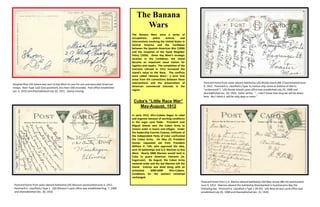
Hospital Ship USS Solace was sent to Key West to care for sick and wounded American
troops. Rare Type 1u(S-52a) postmark, less than 100 recorded. Post office established
Jan. 4, 1910 and disestablished July 20, 1921. Stamp missing.

The Banana Wars were a series of
occupations,
police
actions,
and
interventions involving the United States in
Central America and the Caribbean
between the Spanish–American War (1898)
and the inception of the Good Neighbor
Policy (1934). Given Key West’s strategic
location in the Caribbean, the island
became an important naval station for
logistics and repairs. The completion of the
overseas railroad in 1912 increased the
island’s value to the Navy. The conflicts
were called "Banana Wars", a term that
arose from the connections between these
interventions and the preservation of
American commercial interests in the
region.

Postcard home from sailor aboard battleship USS Rhode Island (BB-17)postmarked June
9, 1912. Postmark is classified a Type 1u (notice ship name at bottom of dial or
“underneath”). USS Rhode Island’s post office was established July 29, 1908 and
disestablished Jun. 30, 1920. Sailor writes: “…I don’t know how long we will be down
here. But I think it will be sixty days or more.”

Cuba’s “Little Race War”
May-August, 1912
In early 1912, Afro-Cubans began to rebel
and organize because of working conditions
in the sugar cane fields. President José
Miguel Gómez sent the Cuban Army to
restore order in towns and villages. Under
the leadership Evaristo Estenoz, militants of
the Independent Party of Color confronted
the Cuban Army. On May 23, President
Gomez requested aid from President
William H. Taft, who approved the idea,
sent 10 battleships and U.S. Marines to Key
West. Nearly 2800 Marines would land in
Cuba to guard American interests (ie.
Sugarcane). By August, the Cuban Army
restored order and the last Marines left the
island. Estenoz was dead along with an
estimated
3000-6000
Afro-Cubans.
Conditions for the workers remained
unchanged.
Postcard home from sailor aboard battleship USS Missouri postmarked June 4, 1912.
Postmark is classified a Type 1. USS Missouri’s post office was established Aug. 7, 1908
and disestablished Dec. 30, 1918.

Postcard home from U.S. Marine aboard battleship USS New Jersey (BB-16) postmarked
June 9, 1912. Marines aboard this battleship disembarked in Guantanamo Bay the
following day. Postmark is classified a Type 1 (N-29). USS New Jersey’s post office was
established July 29, 1908 and disestablished Jan. 23, 1920.
World War I, 1917-1919
Key West’s military footprint expanded during World War I. The Navy established one of the first naval air stations on land leased from the Florida East Coast Railroad. The
Navy’s submarine service used the base as a training station and welcomed Thomas Edison who assisted the Navy in anti-submarine warfare tests which included developing
sonar and camouflage. Lastly, reports of German submarines in the Caribbean led to the establishment of the American Patrol Detachment for protection of merchant ships.
The air station was decommissioned following the armistice and costly damage following the 1919 hurricane.

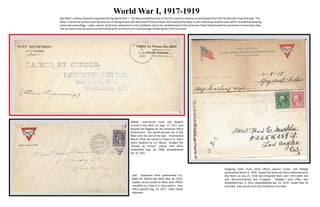
ABOVE: Unarmored cruise USS Dolphin
arrived in Key West on Sept. 17, 1917, and
became the flagship for the American Patrol
Detachment. She would operate out of Key
West until the end of the war. Postmarked
May 8, 1918, the cancel is a Type 1z (z- ship’s
name replaced by U.S. Navy). Straight line
“Passed by Censor” stamp. Post office
established Aug. 10, 1908; disestablished
Dec. 8, 1921.

Left: Outbound letter postmarked U.S.
Naval Air Station Key West May 18, 1919.
Duplex cancel issued to Navy post offices
classified as a Type 6 in Locy-system. Post
office opened Aug. 24, 1917. Date closed
unknown .

Outgoing letter from naval officer aboard cruiser USS Raleigh
postmarked March 9, 1919. Joined the American Patrol Detachment at
Key West, on July 21, 1918 and remained there until 1919 when she
was decommissioned and scrapped. Raleigh’s post office was
established Dec. 2, 1911; disestablished Apr. 21, 1919. Fewer than 25
recorded ship cancels from this timeframe recorded.
World War II, 1941-1945
Key West became a major Navy complex that included a Navy base, three air fields, and the Navy’s sonar school. Its location again made it a
strategic base to protect merchant shipping as well as strike at German U-Boats who were resupplied in the Caribbean.

USS Wildcat arrived at Key West on Apr, 10, 1944 and was converted to a water distilling ship. After
the conversion, the ship went to the Philippines where she provided water services to the fleet. This
postmark is classified at a Type 2z. The ship’s post office was established Aug. 25, 1944;
disestablished Oct. 21, 1946. Postage was free for service members and letter passed through a Navy
censor.

Naval Air Station Key West re-opened at its original location albeit with new facilities. The land was
purchased from the Florida East Coast Railroad which had ended rail service to Key West after the Labor
Day Hurricane of 1939. The post office remains in operation at NAS Key West, Boca Chica Key, 8 miles
north from this former air field.

Outgoing letter from naval officer aboard
Patrol Yacht USS Coral (a converted yacht
formerly owned by Henry Ford). She served
at Key West with Service Squadron 9 until
decommissioned Aug. 12, 1943.
It is
postmarked with a Type 3z (BBT) cancel
rated as scarce. Cover includes censor mark.
USS Coral’s post office was established Oct.
1, 1941; disestablished Aug. 1, 1943.

Stamp exhibit double pages

  • 1.
    The Banana Wars Hospital ShipUSS Solace was sent to Key West to care for sick and wounded American troops. Rare Type 1u(S-52a) postmark, less than 100 recorded. Post office established Jan. 4, 1910 and disestablished July 20, 1921. Stamp missing. The Banana Wars were a series of occupations, police actions, and interventions involving the United States in Central America and the Caribbean between the Spanish–American War (1898) and the inception of the Good Neighbor Policy (1934). Given Key West’s strategic location in the Caribbean, the island became an important naval station for logistics and repairs. The completion of the overseas railroad in 1912 increased the island’s value to the Navy. The conflicts were called "Banana Wars", a term that arose from the connections between these interventions and the preservation of American commercial interests in the region. Postcard home from sailor aboard battleship USS Rhode Island (BB-17)postmarked June 9, 1912. Postmark is classified a Type 1u (notice ship name at bottom of dial or “underneath”). USS Rhode Island’s post office was established July 29, 1908 and disestablished Jun. 30, 1920. Sailor writes: “…I don’t know how long we will be down here. But I think it will be sixty days or more.” Cuba’s “Little Race War” May-August, 1912 In early 1912, Afro-Cubans began to rebel and organize because of working conditions in the sugar cane fields. President José Miguel Gómez sent the Cuban Army to restore order in towns and villages. Under the leadership Evaristo Estenoz, militants of the Independent Party of Color confronted the Cuban Army. On May 23, President Gomez requested aid from President William H. Taft, who approved the idea, sent 10 battleships and U.S. Marines to Key West. Nearly 2800 Marines would land in Cuba to guard American interests (ie. Sugarcane). By August, the Cuban Army restored order and the last Marines left the island. Estenoz was dead along with an estimated 3000-6000 Afro-Cubans. Conditions for the workers remained unchanged. Postcard home from sailor aboard battleship USS Missouri postmarked June 4, 1912. Postmark is classified a Type 1. USS Missouri’s post office was established Aug. 7, 1908 and disestablished Dec. 30, 1918. Postcard home from U.S. Marine aboard battleship USS New Jersey (BB-16) postmarked June 9, 1912. Marines aboard this battleship disembarked in Guantanamo Bay the following day. Postmark is classified a Type 1 (N-29). USS New Jersey’s post office was established July 29, 1908 and disestablished Jan. 23, 1920.
  • 2.
    World War I,1917-1919 Key West’s military footprint expanded during World War I. The Navy established one of the first naval air stations on land leased from the Florida East Coast Railroad. The Navy’s submarine service used the base as a training station and welcomed Thomas Edison who assisted the Navy in anti-submarine warfare tests which included developing sonar and camouflage. Lastly, reports of German submarines in the Caribbean led to the establishment of the American Patrol Detachment for protection of merchant ships. The air station was decommissioned following the armistice and costly damage following the 1919 hurricane. ABOVE: Unarmored cruise USS Dolphin arrived in Key West on Sept. 17, 1917, and became the flagship for the American Patrol Detachment. She would operate out of Key West until the end of the war. Postmarked May 8, 1918, the cancel is a Type 1z (z- ship’s name replaced by U.S. Navy). Straight line “Passed by Censor” stamp. Post office established Aug. 10, 1908; disestablished Dec. 8, 1921. Left: Outbound letter postmarked U.S. Naval Air Station Key West May 18, 1919. Duplex cancel issued to Navy post offices classified as a Type 6 in Locy-system. Post office opened Aug. 24, 1917. Date closed unknown . Outgoing letter from naval officer aboard cruiser USS Raleigh postmarked March 9, 1919. Joined the American Patrol Detachment at Key West, on July 21, 1918 and remained there until 1919 when she was decommissioned and scrapped. Raleigh’s post office was established Dec. 2, 1911; disestablished Apr. 21, 1919. Fewer than 25 recorded ship cancels from this timeframe recorded.
  • 3.
    World War II,1941-1945 Key West became a major Navy complex that included a Navy base, three air fields, and the Navy’s sonar school. Its location again made it a strategic base to protect merchant shipping as well as strike at German U-Boats who were resupplied in the Caribbean. USS Wildcat arrived at Key West on Apr, 10, 1944 and was converted to a water distilling ship. After the conversion, the ship went to the Philippines where she provided water services to the fleet. This postmark is classified at a Type 2z. The ship’s post office was established Aug. 25, 1944; disestablished Oct. 21, 1946. Postage was free for service members and letter passed through a Navy censor. Naval Air Station Key West re-opened at its original location albeit with new facilities. The land was purchased from the Florida East Coast Railroad which had ended rail service to Key West after the Labor Day Hurricane of 1939. The post office remains in operation at NAS Key West, Boca Chica Key, 8 miles north from this former air field. Outgoing letter from naval officer aboard Patrol Yacht USS Coral (a converted yacht formerly owned by Henry Ford). She served at Key West with Service Squadron 9 until decommissioned Aug. 12, 1943. It is postmarked with a Type 3z (BBT) cancel rated as scarce. Cover includes censor mark. USS Coral’s post office was established Oct. 1, 1941; disestablished Aug. 1, 1943.