


STAFF DEVELOPMENT 
Presented by: 
Merafe A. Ebreo 
Michael Abaricia 
Ph. D Educational Management-Students
The word STAFF is defined as 
people employed to assist in the day-to- 
day affairs of running a business, 
organization or government while the 
word DEVELOPMENT means to bring out 
or expand the potentials.
WHAT IS STAFF DEVELOPMENT? 
Staff development provides the activities 
intended to upgrade and update the knowledge, 
skills and understanding of the human resource in the 
school. The aims to create positive and productive 
changes in the human resource’s thinking and 
behavior, and to secure compliance with school and 
national policies.
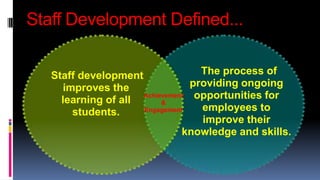
Staff Development Defined... 
Staff development 
improves the 
learning of all 
students. 
The process of 
providing ongoing 
opportunities for 
employees to 
improve their 
Achievement 
knowledge and skills. 
& 
Engagement
WHY TO PARTICIPATE IN STAFF 
DEVELOPMENT? 
 interest lifelong learning 
 sense of moral obligation 
 To maintain and improve professional competence 
 To enhance career progression 
 To keep abreast of new technology and practices
BENEFITS OF STAFF DEVELOPMENT 
1.gives teacher the ability to get the most 
current information 
2. gives school the opportunity to affirm their 
goal 
3. allows teachers to perform their job better 
4. personal development of staff 
5. provide students with the latest on the 
topic that is being taught
TYPES OF STAFF 
DEVELOPMENT 
1. Induction Training 
 is a brief, standardized indoctrination to an 
agency’s philosophy, purposes, policies and 
regulation given to each worker.
2. Job Orientation 
– individualized training to acquaint a 
newly hired employee
3. In-service Education 
– planned learning experience provided by 
the employing agency to its employee. It is 
also a planned educational experience 
provided in the job setting and closely 
identified with services in order to help 
perform more effectively as a person and as 
a worker.
4. Continuing Education 
– is all the learning activities that occur after 
an individual has completed his basic 
education.
5. Training for Special Function 
– that is concerned with developing expert 
technical or manual skills, communication 
and helps the personnel to perform their 
functions effectively.
STEPS TO BE FOLLOWED IN THE IMPLEMENTATION OF A 
NEW OR REVISED CURRICULUM: 
1. Identify a staff with curriculum leadership skills. 
2. Establish a plan and schedule. 
3. Preparation to training sessions. 
4. Disseminate the new curriculum documents. 
5. Plan for a communicate availability of follow-up assistance. 
6. Include the training for school heads about coaching and 
monitoring. 
7. Orient the parents about the new curriculum (grading system, the 
lessons and activities) 
8. Considers feedbacking. 
9. When planning a future staff development, consider the questions 
and suggestions that surface during the implementation.
“Not all of us can do great things. But we can do small things 
with great love.” 
(Mother Teresa)
Thank you for listening!

Staff development and implementation (ed.m 607)

  • 1.
    STAFF DEVELOPMENT Presentedby: Merafe A. Ebreo Michael Abaricia Ph. D Educational Management-Students
  • 2.
    The word STAFFis defined as people employed to assist in the day-to- day affairs of running a business, organization or government while the word DEVELOPMENT means to bring out or expand the potentials.
  • 3.
    WHAT IS STAFFDEVELOPMENT? Staff development provides the activities intended to upgrade and update the knowledge, skills and understanding of the human resource in the school. The aims to create positive and productive changes in the human resource’s thinking and behavior, and to secure compliance with school and national policies.
  • 4.
    Staff Development Defined... Staff development improves the learning of all students. The process of providing ongoing opportunities for employees to improve their Achievement knowledge and skills. & Engagement
  • 5.
    WHY TO PARTICIPATEIN STAFF DEVELOPMENT?  interest lifelong learning  sense of moral obligation  To maintain and improve professional competence  To enhance career progression  To keep abreast of new technology and practices
  • 6.
    BENEFITS OF STAFFDEVELOPMENT 1.gives teacher the ability to get the most current information 2. gives school the opportunity to affirm their goal 3. allows teachers to perform their job better 4. personal development of staff 5. provide students with the latest on the topic that is being taught
  • 7.
    TYPES OF STAFF DEVELOPMENT 1. Induction Training  is a brief, standardized indoctrination to an agency’s philosophy, purposes, policies and regulation given to each worker.
  • 8.
    2. Job Orientation – individualized training to acquaint a newly hired employee
  • 9.
    3. In-service Education – planned learning experience provided by the employing agency to its employee. It is also a planned educational experience provided in the job setting and closely identified with services in order to help perform more effectively as a person and as a worker.
  • 10.
    4. Continuing Education – is all the learning activities that occur after an individual has completed his basic education.
  • 11.
    5. Training forSpecial Function – that is concerned with developing expert technical or manual skills, communication and helps the personnel to perform their functions effectively.
  • 12.
    STEPS TO BEFOLLOWED IN THE IMPLEMENTATION OF A NEW OR REVISED CURRICULUM: 1. Identify a staff with curriculum leadership skills. 2. Establish a plan and schedule. 3. Preparation to training sessions. 4. Disseminate the new curriculum documents. 5. Plan for a communicate availability of follow-up assistance. 6. Include the training for school heads about coaching and monitoring. 7. Orient the parents about the new curriculum (grading system, the lessons and activities) 8. Considers feedbacking. 9. When planning a future staff development, consider the questions and suggestions that surface during the implementation.
  • 13.
    “Not all ofus can do great things. But we can do small things with great love.” (Mother Teresa)
  • 14.
    Thank you forlistening!