STAFF DEVELOPMENT
Sherrel M. Felismino
Sub Topics:
STAFF DEVELOPMENT AND TODAY’S
SUPERVISION
STAFF DEVELOPMENT AND IN-
SERVICE
TEACHER EDUCATION
The word STAFF is defined as people
employed to assist in the day-to-day
affairs of running a
business, organization or government
while the word DEVELOPMENT means
to bring out or expand the potentials.
WHAT IS STAFF DEVELOPMENT?
Staff development provides the activities
intended to upgrade and update the
knowledge, skills and understanding of the
human resource in the school. The aims to
create positive and productive changes in the
human resource’s thinking and behavior, and to
secure compliance with school and national
Lawrence Dale’s Planning Document
1. In-service education
2. Organization development
3. Consultation
4. Leadership training
5. Evaluation
Olrich:
to provide thoughtful and guided enhancement of
human talent in the school through a long-range
working model which incorporates well-conceived
strategies.
Seyfarth:
an effective staff development program may be
measured by the changes in personnel behavior
and better working relationship in school.
WHY TO PARTICIPATE IN STAFF
DEVELOPMENT?
interest lifelong learning
sense of moral obligation
To maintain and improve professional competence
To enhance career progression
To keep abreast of new technology and practices
BENEFITS OF STAFF DEVELOPMENT
1. gives teacher the ability to get the most
current information
2. gives school the opportunity to affirm
their goal
3. allows teachers to perform their job
better
4. personal development of staff
5. provide students with the latest on
the topic that is being taught
TYPES OF STAFF
DEVELOPMENT
1. Induction Training
is a brief, standardized indoctrination to an
agency’s philosophy, purposes, policies and
regulation given to each worker.
2. Job Orientation
– individualized training to
acquaint a newly hired employee
3. In-service Education
– planned learning experience provided by
the employing agency to its employee. It is
also a planned educational experience
provided in the job setting and closely
identified with services in order to help
perform more effectively as a person and as
a worker.
4. Continuing Education
– is all the learning activities that
occur after an individual has
completed his basic education.
5. Training for Special Function
– that is concerned with developing
expert technical or manual
skills, communication and helps the
personnel to perform their functions
effectively.
FORMS OF INDUCTION
1. Internship –
works as an exchange of
services for experience between
the students and his or her
employer.
2. Preceptorship –
a short term relationship between a student as
novice and an experienced staff person
professional who provides individual attention to
the student’s learning needs and feedback
regarding performance; student experience
relative independence in making
decisions, setting priorities, management of
time, and care activities.
3. Mentorship –
programs offered to support in program
completion, confidence building and
transitioning to further education or the
workforce.
STAFF DEVELOPMENT
AND TODAY’S
SUPERVISION
What is supervision?
 Supervision is carried out by the supervisor
to oversee the productivity and progress of
the employee.
Supervision is defined as any communication
between two or more staff, one of whom is a line
manager, where the primary purpose is to
enhance staff performance and effectiveness in
carrying out the requirements of their post and
meeting the objectives of the organisation. It is
an accountable process.
ROLES OF SUPERVISOR IN STAFF
DEVELOPMENT
 Coaching employees to help them determined what they
need for development
 Providing both positive and corrective feedback
 Offering organizational insight, information and advice
 Guiding and planning through goal setting and checking back
overtime
 Allocating fund and money for development expenses
 Ensuring opportunities for application of new learning
STAFF DEVELOPMENT
AND IN-SERVICE
 In-service training is a process of staff
development for the purpose of improving the
performance of an incumbent holding a
position with assign job responsibilities.
Four Types of In-Service Training
1.Induction or Orientation
2.Foundation Training
3.Maintenance or Refresher
4.Career Development
In-School Training Program
1.Mentoring program
2.Direct training
3.Echo training
TEACHER EDUCATION
Teacher education refers to the policies and
procedures designed to equip
prospective teachers with
the knowledge, attitudes, behaviors and skills
they require to perform their tasks effectively in
the classroom, school and wider community.
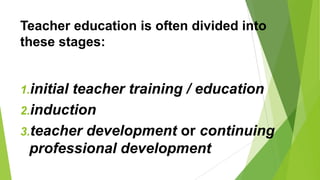
Teacher education is often divided into
these stages:
1.initial teacher training / education
2.induction
3.teacher development or continuing
professional development
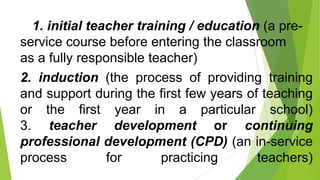
1. initial teacher training / education (a pre-
service course before entering the classroom
as a fully responsible teacher)
2. induction (the process of providing training
and support during the first few years of teaching
or the first year in a particular school)
3. teacher development or continuing
professional development (CPD) (an in-service
process for practicing teachers)
“Not all of us can do great
things. But we can do small
things with great love.”
(Mother Teresa)
Staff development slides

Staff development slides

  • 1.
  • 2.
    Sub Topics: STAFF DEVELOPMENTAND TODAY’S SUPERVISION STAFF DEVELOPMENT AND IN- SERVICE TEACHER EDUCATION
  • 3.
    The word STAFFis defined as people employed to assist in the day-to-day affairs of running a business, organization or government while the word DEVELOPMENT means to bring out or expand the potentials.
  • 4.
    WHAT IS STAFFDEVELOPMENT? Staff development provides the activities intended to upgrade and update the knowledge, skills and understanding of the human resource in the school. The aims to create positive and productive changes in the human resource’s thinking and behavior, and to secure compliance with school and national
  • 5.
    Lawrence Dale’s PlanningDocument 1. In-service education 2. Organization development 3. Consultation 4. Leadership training 5. Evaluation
  • 6.
    Olrich: to provide thoughtfuland guided enhancement of human talent in the school through a long-range working model which incorporates well-conceived strategies. Seyfarth: an effective staff development program may be measured by the changes in personnel behavior and better working relationship in school.
  • 7.
    WHY TO PARTICIPATEIN STAFF DEVELOPMENT? interest lifelong learning sense of moral obligation To maintain and improve professional competence To enhance career progression To keep abreast of new technology and practices
  • 8.
    BENEFITS OF STAFFDEVELOPMENT 1. gives teacher the ability to get the most current information 2. gives school the opportunity to affirm their goal 3. allows teachers to perform their job better
  • 9.
    4. personal developmentof staff 5. provide students with the latest on the topic that is being taught
  • 10.
    TYPES OF STAFF DEVELOPMENT 1.Induction Training is a brief, standardized indoctrination to an agency’s philosophy, purposes, policies and regulation given to each worker.
  • 11.
    2. Job Orientation –individualized training to acquaint a newly hired employee
  • 12.
    3. In-service Education –planned learning experience provided by the employing agency to its employee. It is also a planned educational experience provided in the job setting and closely identified with services in order to help perform more effectively as a person and as a worker.
  • 13.
    4. Continuing Education –is all the learning activities that occur after an individual has completed his basic education.
  • 14.
    5. Training forSpecial Function – that is concerned with developing expert technical or manual skills, communication and helps the personnel to perform their functions effectively.
  • 15.
  • 16.
    1. Internship – worksas an exchange of services for experience between the students and his or her employer.
  • 17.
    2. Preceptorship – ashort term relationship between a student as novice and an experienced staff person professional who provides individual attention to the student’s learning needs and feedback regarding performance; student experience relative independence in making decisions, setting priorities, management of time, and care activities.
  • 18.
    3. Mentorship – programsoffered to support in program completion, confidence building and transitioning to further education or the workforce.
  • 19.
  • 20.
    What is supervision? Supervision is carried out by the supervisor to oversee the productivity and progress of the employee.
  • 21.
    Supervision is definedas any communication between two or more staff, one of whom is a line manager, where the primary purpose is to enhance staff performance and effectiveness in carrying out the requirements of their post and meeting the objectives of the organisation. It is an accountable process.
  • 22.
    ROLES OF SUPERVISORIN STAFF DEVELOPMENT  Coaching employees to help them determined what they need for development  Providing both positive and corrective feedback  Offering organizational insight, information and advice  Guiding and planning through goal setting and checking back overtime  Allocating fund and money for development expenses  Ensuring opportunities for application of new learning
  • 23.
  • 24.
     In-service trainingis a process of staff development for the purpose of improving the performance of an incumbent holding a position with assign job responsibilities.
  • 25.
    Four Types ofIn-Service Training 1.Induction or Orientation 2.Foundation Training 3.Maintenance or Refresher 4.Career Development
  • 26.
    In-School Training Program 1.Mentoringprogram 2.Direct training 3.Echo training
  • 27.
  • 28.
    Teacher education refersto the policies and procedures designed to equip prospective teachers with the knowledge, attitudes, behaviors and skills they require to perform their tasks effectively in the classroom, school and wider community.
  • 29.
    Teacher education isoften divided into these stages: 1.initial teacher training / education 2.induction 3.teacher development or continuing professional development
  • 30.
    1. initial teachertraining / education (a pre- service course before entering the classroom as a fully responsible teacher) 2. induction (the process of providing training and support during the first few years of teaching or the first year in a particular school) 3. teacher development or continuing professional development (CPD) (an in-service process for practicing teachers)
  • 31.
    “Not all ofus can do great things. But we can do small things with great love.” (Mother Teresa)