SSBI 2017 Highlights
November 2017
2PROPRIETARY AND CONFIDENTIAL. ALL RIGHTS RESERVED
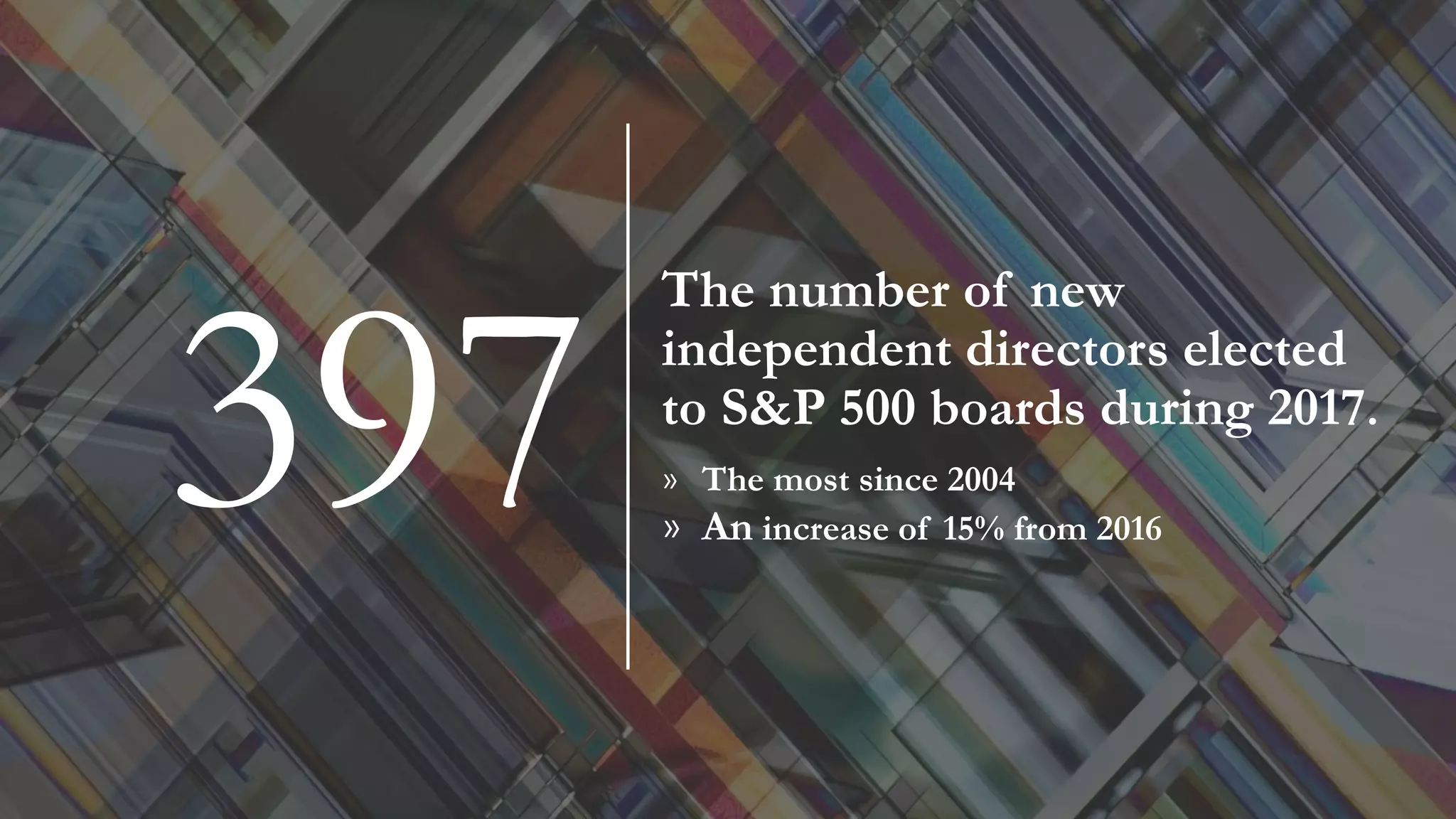
The number of new
independent directors elected
to S&P 500 boards during 2017.
» The most since 2004
» An increase of 15% from 2016
3PROPRIETARY AND CONFIDENTIAL. ALL RIGHTS RESERVED
For the first time
in the history of
this survey, more
than half of the
397 new S&P 500
directors are
women and/or
minorities*
Female representation among new directors rose to 36% in
2017, a 20-year high since we began tracking this data
Women directors on
S&P 500 boards
22%
Female New Directors
36%
32% 31% 30%
24%
2017 2016 2015 2014 2013
*Minorities are defined as African-American, Hispanic/Latino or Asian. Individuals of Indian
descent have been counted as Asian, which is consistent with U.S. Census Bureau methodology
4PROPRIETARY AND CONFIDENTIAL. ALL RIGHTS RESERVED
Boards are casting
a wider and
deeper net to
identify director
candidates as fewer
active CEOs
take on outside
board roles:
45% incoming directors are serving on
their first outside corporate board,
compared to 32% in 2016
37%
42%
Female
13%
Diverse Male
S&P 500 CEOs serve on one or more outside boards,
down from 52% 10 years ago
5PROPRIETARY AND CONFIDENTIAL. ALL RIGHTS RESERVED
In terms
of female
representation
in the boardroom,
Spencer Stuart’s
research
also found:
80%
S&P 500 boards
include two or more
female directors
41%
S&P 500 boards
have three or more
female directors
2% of companies have
a woman serving
as independent
chairman
10% of companies
have a female
lead or presiding
director
15%
11%
20%
20%
17%
22%
Audit
Committee
Compensation
Committee
Nominating
Committee
Women in committee chair roles
2017 2016
6PROPRIETARY AND CONFIDENTIAL. ALL RIGHTS RESERVED
» For the first time, more than half (51%) of boards have a separate
chair and CEO
» 28% of S&P 500 boards have an independent chairBoard leadership
continues to
evolve
27%13%
2007 2016
28%
2017
Boards with independent chairs 2007-2017
7PROPRIETARY AND CONFIDENTIAL. ALL RIGHTS RESERVED
Director
skills and
qualifications
are changing
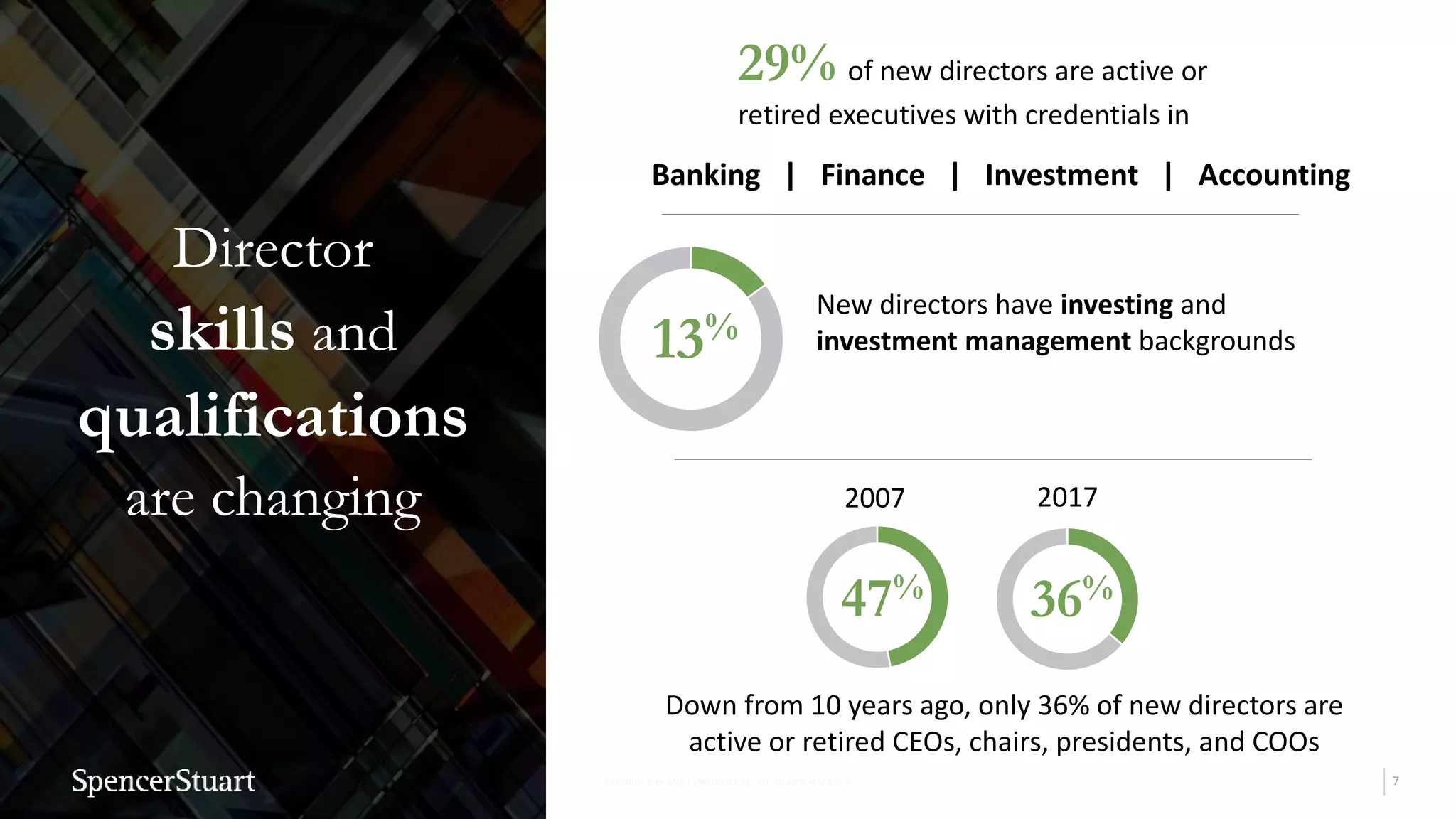
Banking | Finance | Investment | Accounting
29% of new directors are active or
retired executives with credentials in
13%
New directors have investing and
investment management backgrounds
47%
2007 2017
36%
Down from 10 years ago, only 36% of new directors are
active or retired CEOs, chairs, presidents, and COOs
8PROPRIETARY AND CONFIDENTIAL. ALL RIGHTS RESERVED
Mandatory
retirement
policies remain a
prevalent
mechanism to
promote turnover
24
S&P 500 boards have
term limits for
directors
ONLY
73+
For the first time, a
majority of boards
with mandatory
retirement policies
set the age at
S&P 500 boards with
retirement age set it
at 75 or higher
42%
73%
S&P 500 boards
report having a
mandatory retirement
age for directors,
unchanged over the past
five years
9PROPRIETARY AND CONFIDENTIAL. ALL RIGHTS RESERVED
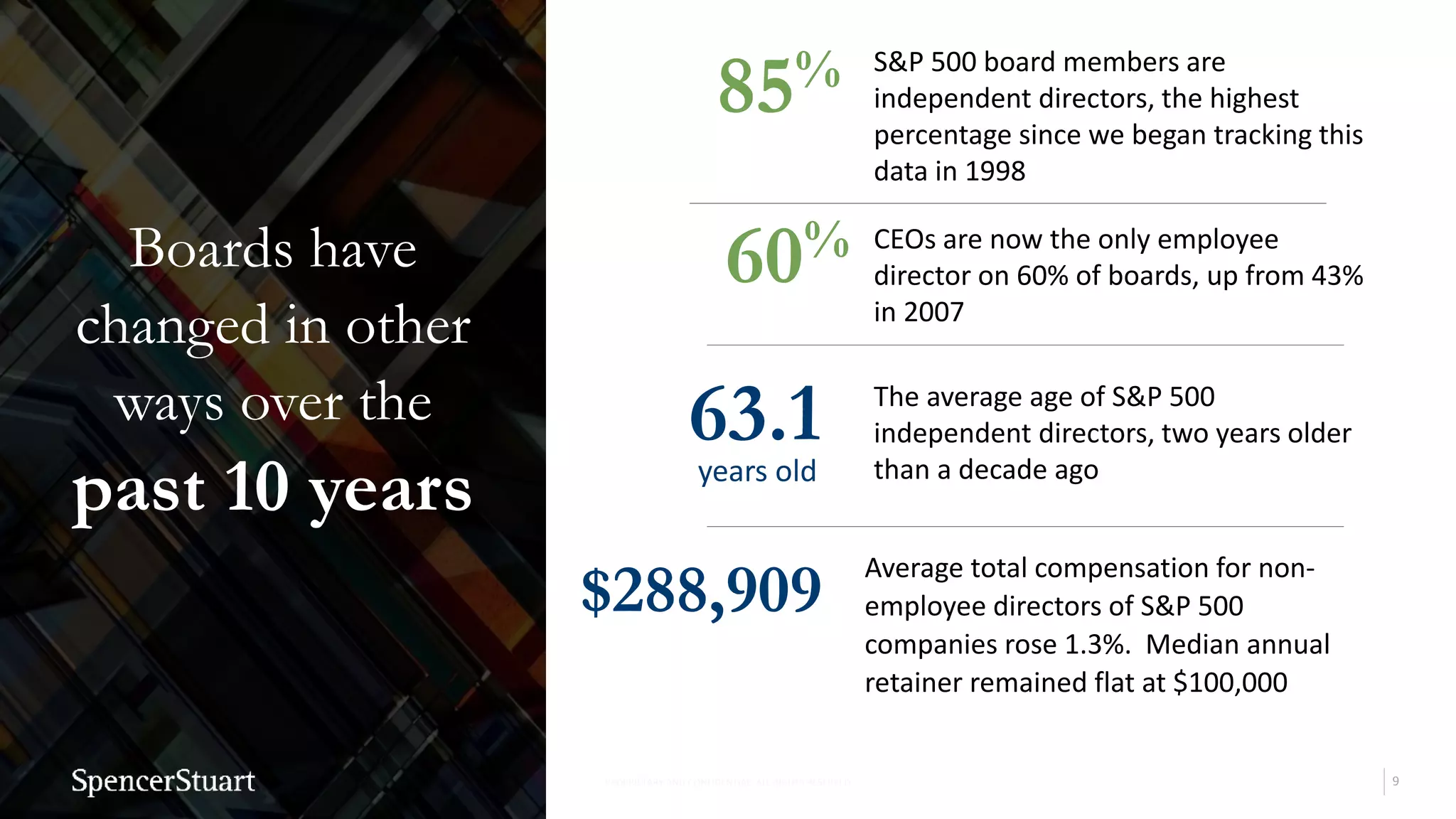
85% S&P 500 board members are
independent directors, the highest
percentage since we began tracking this
data in 1998
60% CEOs are now the only employee
director on 60% of boards, up from 43%
in 2007
The average age of S&P 500
independent directors, two years older
than a decade ago
63.1years old
$288,909 Average total compensation for non-
employee directors of S&P 500
companies rose 1.3%. Median annual
retainer remained flat at $100,000
Boards have
changed in other
ways over the
past 10 years
10PROPRIETARY AND CONFIDENTIAL. ALL RIGHTS RESERVED

SSBI 2017 Highlights

  • 1.
  • 2.
    2PROPRIETARY AND CONFIDENTIAL.ALL RIGHTS RESERVED The number of new independent directors elected to S&P 500 boards during 2017. » The most since 2004 » An increase of 15% from 2016
  • 3.
    3PROPRIETARY AND CONFIDENTIAL.ALL RIGHTS RESERVED For the first time in the history of this survey, more than half of the 397 new S&P 500 directors are women and/or minorities* Female representation among new directors rose to 36% in 2017, a 20-year high since we began tracking this data Women directors on S&P 500 boards 22% Female New Directors 36% 32% 31% 30% 24% 2017 2016 2015 2014 2013 *Minorities are defined as African-American, Hispanic/Latino or Asian. Individuals of Indian descent have been counted as Asian, which is consistent with U.S. Census Bureau methodology
  • 4.
    4PROPRIETARY AND CONFIDENTIAL.ALL RIGHTS RESERVED Boards are casting a wider and deeper net to identify director candidates as fewer active CEOs take on outside board roles: 45% incoming directors are serving on their first outside corporate board, compared to 32% in 2016 37% 42% Female 13% Diverse Male S&P 500 CEOs serve on one or more outside boards, down from 52% 10 years ago
  • 5.
    5PROPRIETARY AND CONFIDENTIAL.ALL RIGHTS RESERVED In terms of female representation in the boardroom, Spencer Stuart’s research also found: 80% S&P 500 boards include two or more female directors 41% S&P 500 boards have three or more female directors 2% of companies have a woman serving as independent chairman 10% of companies have a female lead or presiding director 15% 11% 20% 20% 17% 22% Audit Committee Compensation Committee Nominating Committee Women in committee chair roles 2017 2016
  • 6.
    6PROPRIETARY AND CONFIDENTIAL.ALL RIGHTS RESERVED » For the first time, more than half (51%) of boards have a separate chair and CEO » 28% of S&P 500 boards have an independent chairBoard leadership continues to evolve 27%13% 2007 2016 28% 2017 Boards with independent chairs 2007-2017
  • 7.
    7PROPRIETARY AND CONFIDENTIAL.ALL RIGHTS RESERVED Director skills and qualifications are changing Banking | Finance | Investment | Accounting 29% of new directors are active or retired executives with credentials in 13% New directors have investing and investment management backgrounds 47% 2007 2017 36% Down from 10 years ago, only 36% of new directors are active or retired CEOs, chairs, presidents, and COOs
  • 8.
    8PROPRIETARY AND CONFIDENTIAL.ALL RIGHTS RESERVED Mandatory retirement policies remain a prevalent mechanism to promote turnover 24 S&P 500 boards have term limits for directors ONLY 73+ For the first time, a majority of boards with mandatory retirement policies set the age at S&P 500 boards with retirement age set it at 75 or higher 42% 73% S&P 500 boards report having a mandatory retirement age for directors, unchanged over the past five years
  • 9.
    9PROPRIETARY AND CONFIDENTIAL.ALL RIGHTS RESERVED 85% S&P 500 board members are independent directors, the highest percentage since we began tracking this data in 1998 60% CEOs are now the only employee director on 60% of boards, up from 43% in 2007 The average age of S&P 500 independent directors, two years older than a decade ago 63.1years old $288,909 Average total compensation for non- employee directors of S&P 500 companies rose 1.3%. Median annual retainer remained flat at $100,000 Boards have changed in other ways over the past 10 years
  • 10.