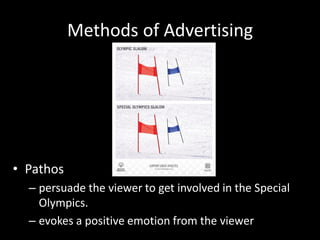
The document provides background information on the Special Olympics organization, which was founded in 1968 by Eunice Kennedy Shriver to encourage physical activity for people with disabilities. It discusses the Special Olympics' target markets of local, national, and worldwide athletes, volunteers, coaches, and families. The document also outlines creative advertising strategies like using emotional words and transferring techniques, as well as methods like pathos and rational appeals. Research findings show the Special Olympics served over 4 million athletes worldwide with over 300,000 coaches in over 50,000 competitions, generating $257 million in revenue. The outcomes include improved attitudes and eliminating discrimination. The Special Olympics is deemed a successful cultural event that is rewarding, educational, and life changing.