Spanish flu
Presentation made by:Bella A. mora
What is the spanish flu
The Spanish flu is a 1918 flu pandemic, also known as the
Great Influenza epidemic or by the common misnomer of the
Spanish flu, was an exceptionally deadly global influenza
pandemic caused by the H1N1 influenza A virus.
Where/When was the spanish flu
located?
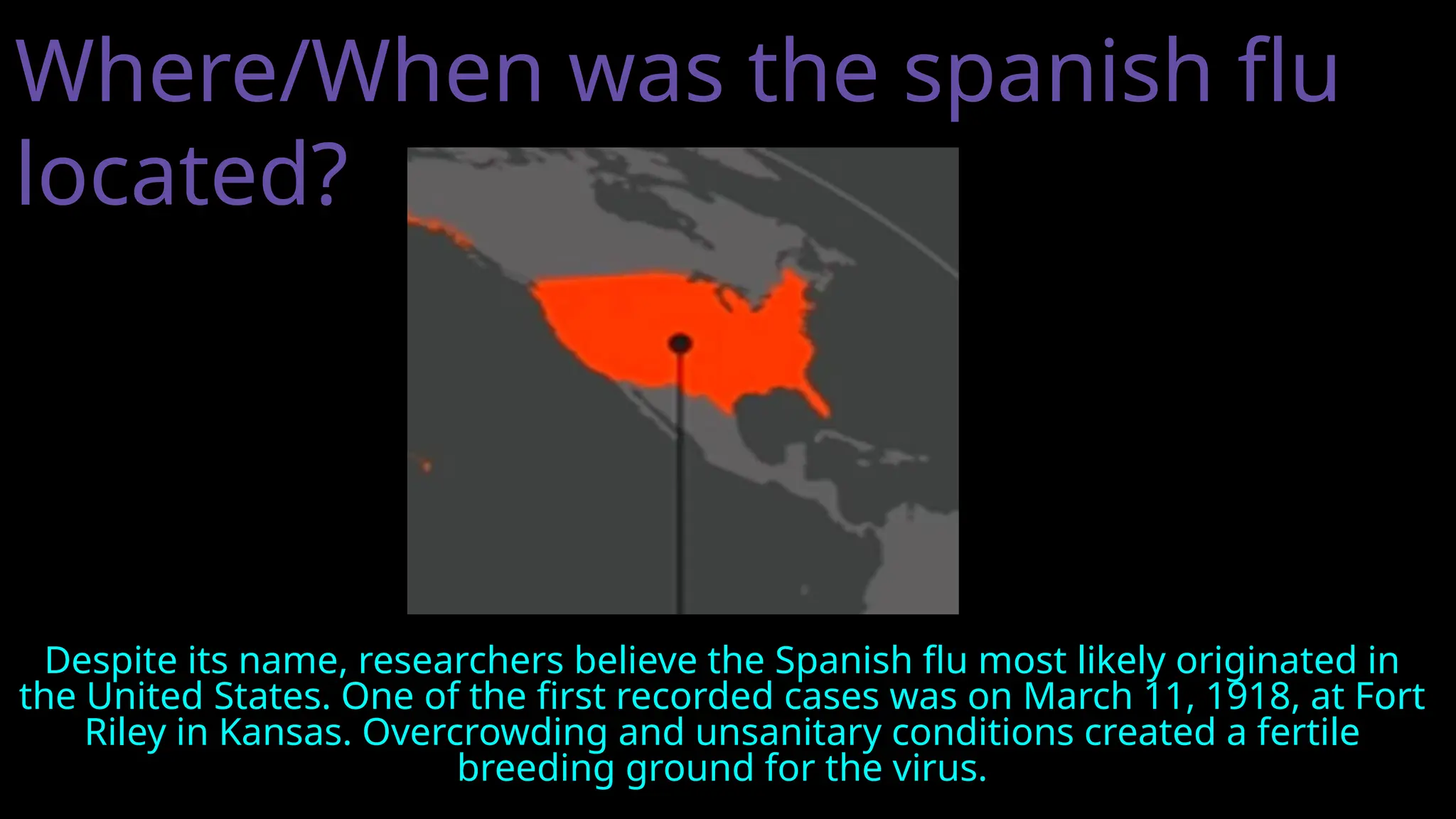
Despite its name, researchers believe the Spanish flu most likely originated in
the United States. One of the first recorded cases was on March 11, 1918, at Fort
Riley in Kansas. Overcrowding and unsanitary conditions created a fertile
breeding ground for the virus.
Who discovered the spanish flu?
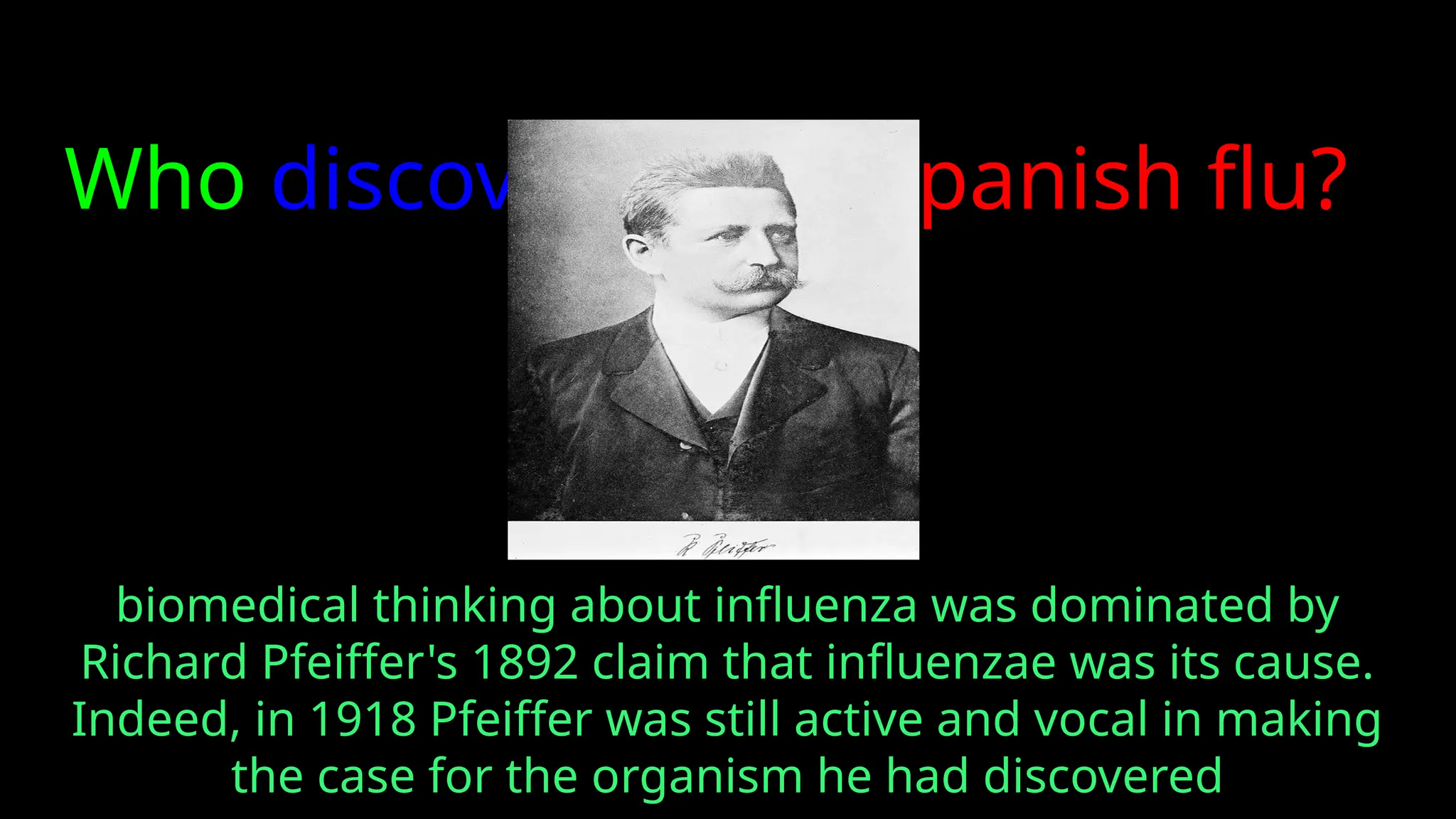
biomedical thinking about influenza was dominated by
Richard Pfeiffer's 1892 claim that influenzae was its cause.
Indeed, in 1918 Pfeiffer was still active and vocal in making
the case for the organism he had discovered
What happen during the
spanish flu?
The microscopic killer circled the entire globe in four months, claiming the lives of
more than 21 million people. The United States lost 675,000 people to the Spanish
flu in 1918-more casualties than World War I, World War II, the Korean War and the
Vietnam War combined.
infected by the
spanish flu?
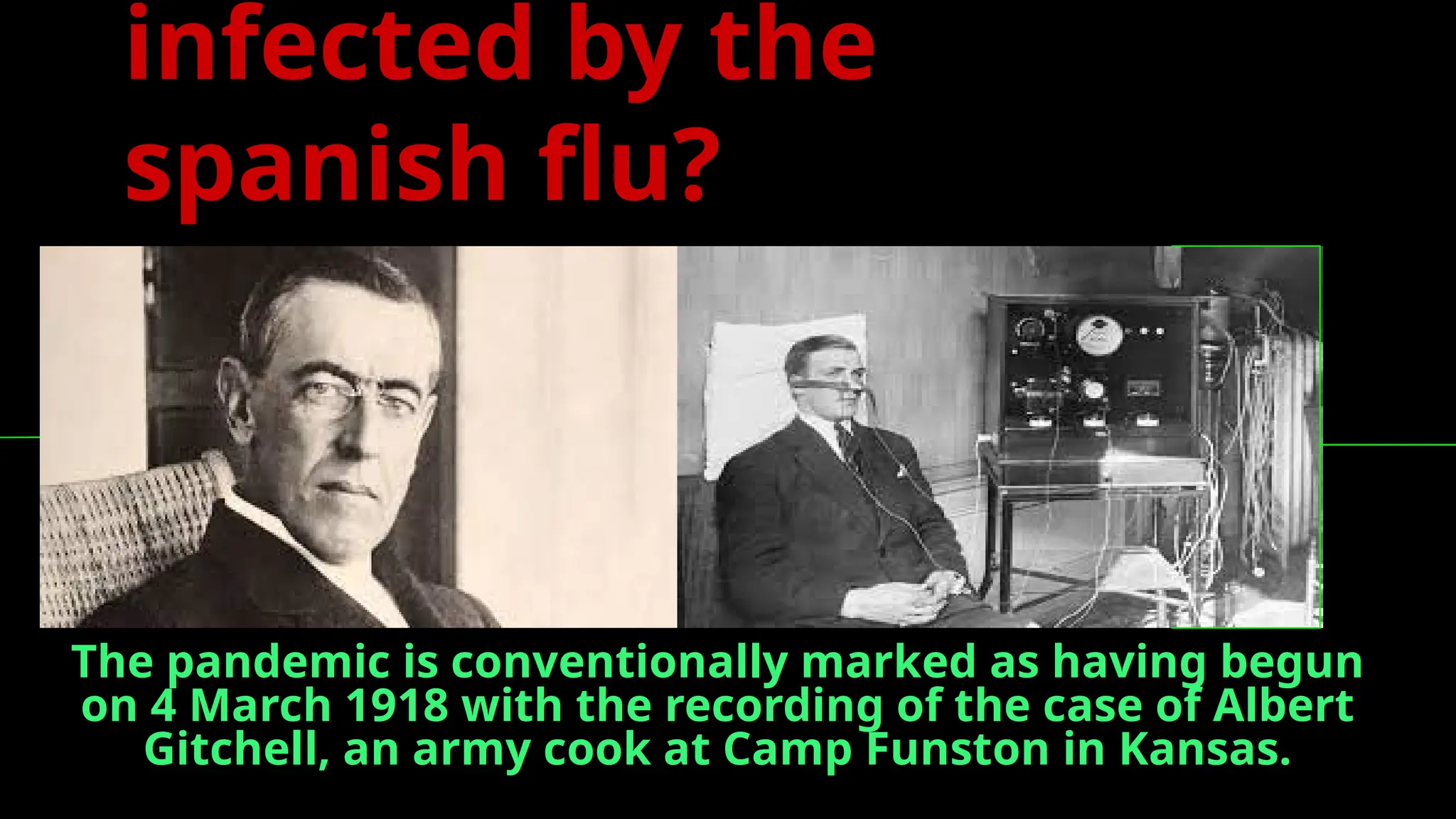
The pandemic is conventionally marked as having begun
on 4 March 1918 with the recording of the case of Albert
Gitchell, an army cook at Camp Funston in Kansas.
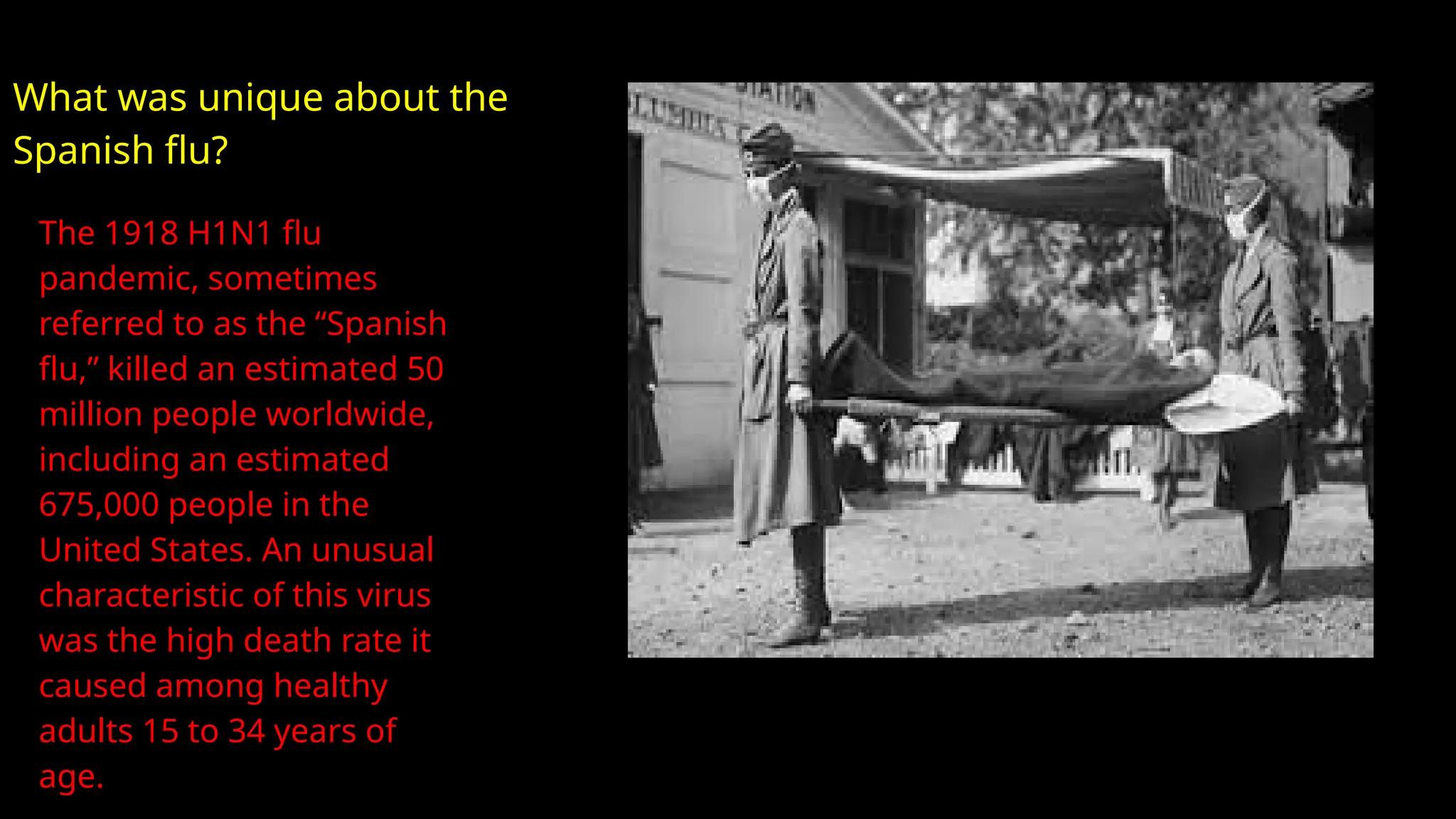
The 1918 H1N1 flu pandemic, sometimes referred to as the “Spanish flu,”
killed an estimated 50 million people worldwide, including an estimated
675,000 people in the United States. An unusual characteristic of this virus
was the high death rate it caused among healthy adults 15 to 34 years of age.
What was unique about the Spanish flu?
Were people immune
to spanish flu?
Thus, these studies reveal
that survivors of the 1918
influenza pandemic
possess highly functional,
virus-neutralizing
antibodies to this
uniquely virulent virus,
and that humans can
sustain circulating B
The 1918 H1N1 flu
pandemic, sometimes
referred to as the “Spanish
flu,” killed an estimated 50
million people worldwide,
including an estimated
675,000 people in the
United States. An unusual
characteristic of this virus
was the high death rate it
caused among healthy
adults 15 to 34 years of
age.
What was unique about the
Spanish flu?
It started like any other
influenza case, with a sore
throat, chills and fever. Then
came the deadly twist: the
virus ravaged its victim's
lungs. Sometimes within
hours, patients succumbed
to complete respiratory
failure. Autopsies showed
hard, red lungs drenched in
fluid.
What organs did
the Spanish flu
affect?
Spanish flu
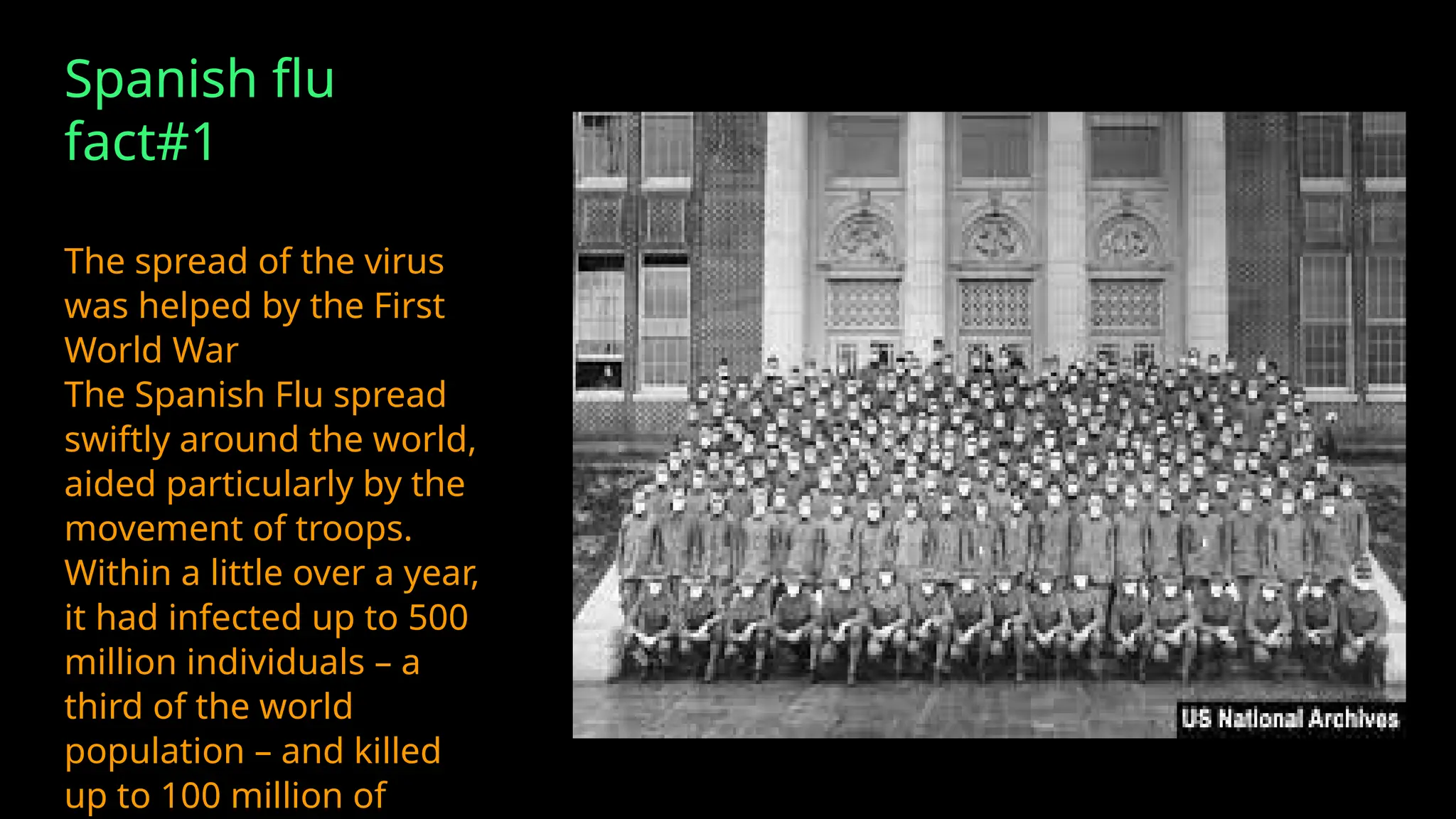
fact#1
The spread of the virus
was helped by the First
World War
The Spanish Flu spread
swiftly around the world,
aided particularly by the
movement of troops.
Within a little over a year,
it had infected up to 500
million individuals – a
third of the world
population – and killed
up to 100 million of
[hospitals/people during the spanish flu]
A range of interventions was tried in the U.S. in 1918, including
closure of schools and churches, banning of mass gatherings,
mandated mask wearing, case isolation, and disinfection/hygiene
What 4 things were done to
decrease the spread of spanish
flu.
Why is the 1918 flu pandemic called the Spanish Flu?
The first public news of the epidemic appeared in
Madrid on 22 May 1918 in Madrid's ABC newspaper;
hence, it became known as the Spanish influenza.
[Were i got all this info from]
COVID-19: a comparison to the 1
918 influenza and how we ...
National Institutes of Health (.gov)
https://www.ncbi.nlm.nih.gov › articles › P
MC8108277

-Spanish flu -google slide- presentation

  • 1.
  • 2.
    What is thespanish flu The Spanish flu is a 1918 flu pandemic, also known as the Great Influenza epidemic or by the common misnomer of the Spanish flu, was an exceptionally deadly global influenza pandemic caused by the H1N1 influenza A virus.
  • 3.
    Where/When was thespanish flu located? Despite its name, researchers believe the Spanish flu most likely originated in the United States. One of the first recorded cases was on March 11, 1918, at Fort Riley in Kansas. Overcrowding and unsanitary conditions created a fertile breeding ground for the virus.
  • 4.
    Who discovered thespanish flu? biomedical thinking about influenza was dominated by Richard Pfeiffer's 1892 claim that influenzae was its cause. Indeed, in 1918 Pfeiffer was still active and vocal in making the case for the organism he had discovered
  • 5.
    What happen duringthe spanish flu? The microscopic killer circled the entire globe in four months, claiming the lives of more than 21 million people. The United States lost 675,000 people to the Spanish flu in 1918-more casualties than World War I, World War II, the Korean War and the Vietnam War combined.
  • 6.
    infected by the spanishflu? The pandemic is conventionally marked as having begun on 4 March 1918 with the recording of the case of Albert Gitchell, an army cook at Camp Funston in Kansas.
  • 7.
    The 1918 H1N1flu pandemic, sometimes referred to as the “Spanish flu,” killed an estimated 50 million people worldwide, including an estimated 675,000 people in the United States. An unusual characteristic of this virus was the high death rate it caused among healthy adults 15 to 34 years of age. What was unique about the Spanish flu?
  • 8.
    Were people immune tospanish flu? Thus, these studies reveal that survivors of the 1918 influenza pandemic possess highly functional, virus-neutralizing antibodies to this uniquely virulent virus, and that humans can sustain circulating B
  • 9.
    The 1918 H1N1flu pandemic, sometimes referred to as the “Spanish flu,” killed an estimated 50 million people worldwide, including an estimated 675,000 people in the United States. An unusual characteristic of this virus was the high death rate it caused among healthy adults 15 to 34 years of age. What was unique about the Spanish flu?
  • 10.
    It started likeany other influenza case, with a sore throat, chills and fever. Then came the deadly twist: the virus ravaged its victim's lungs. Sometimes within hours, patients succumbed to complete respiratory failure. Autopsies showed hard, red lungs drenched in fluid. What organs did the Spanish flu affect?
  • 11.
    Spanish flu fact#1 The spreadof the virus was helped by the First World War The Spanish Flu spread swiftly around the world, aided particularly by the movement of troops. Within a little over a year, it had infected up to 500 million individuals – a third of the world population – and killed up to 100 million of
  • 12.
  • 13.
    A range ofinterventions was tried in the U.S. in 1918, including closure of schools and churches, banning of mass gatherings, mandated mask wearing, case isolation, and disinfection/hygiene What 4 things were done to decrease the spread of spanish flu.
  • 14.
    Why is the1918 flu pandemic called the Spanish Flu? The first public news of the epidemic appeared in Madrid on 22 May 1918 in Madrid's ABC newspaper; hence, it became known as the Spanish influenza.
  • 15.
    [Were i gotall this info from] COVID-19: a comparison to the 1 918 influenza and how we ... National Institutes of Health (.gov) https://www.ncbi.nlm.nih.gov › articles › P MC8108277