Solution Manual for Statistics for The Behavioral Sciences, 10th Edition
Solution Manual for Statistics for The Behavioral Sciences, 10th Edition
Solution Manual for Statistics for The Behavioral Sciences, 10th Edition
Solution Manual for Statistics for The Behavioral Sciences, 10th Edition
Solution Manual for Statistics for The Behavioral Sciences, 10th Edition
1.
Solution Manual forStatistics for The
Behavioral Sciences, 10th Edition download
http://testbankbell.com/product/solution-manual-for-statistics-
for-the-behavioral-sciences-10th-edition/
Visit testbankbell.com today to download the complete set of
test bank or solution manual
2.
We believe theseproducts will be a great fit for you. Click
the link to download now, or visit testbankbell.com
to discover even more!
Test Bank for Statistics for The Behavioral Sciences, 10th
Edition
http://testbankbell.com/product/test-bank-for-statistics-for-the-
behavioral-sciences-10th-edition/
Statistics for the Behavioral Sciences Gravetter 9th
Edition Solutions Manual
http://testbankbell.com/product/statistics-for-the-behavioral-
sciences-gravetter-9th-edition-solutions-manual/
Essential Statistics for the Behavioral Sciences 1st
Edition Privitera Solutions Manual
http://testbankbell.com/product/essential-statistics-for-the-
behavioral-sciences-1st-edition-privitera-solutions-manual/
Solution Manual for Neue Horizonte, 8th Edition
http://testbankbell.com/product/solution-manual-for-neue-
horizonte-8th-edition/
3.
Bates’ Guide toPhysical Examination and History Taking
Bickley 10th Edition Test Bank
http://testbankbell.com/product/bates-guide-to-physical-examination-
and-history-taking-bickley-10th-edition-test-bank/
Solution Manual for Structural Dynamics: Theory and
Applications Joseph W. Tedesco, William G. McDougal, C.
Allen Ross
http://testbankbell.com/product/solution-manual-for-structural-
dynamics-theory-and-applications-joseph-w-tedesco-william-g-mcdougal-
c-allen-ross/
Test Bank for Calculate with Confidence, 5th Edition:
Morris
http://testbankbell.com/product/test-bank-for-calculate-with-
confidence-5th-edition-morris/
Test Bank for Anatomy and Physiology 4th Edition by Marieb
http://testbankbell.com/product/test-bank-for-anatomy-and-
physiology-4th-edition-by-marieb/
Test Bank for New Perspectives on Microsoft Project 2010
Introductory 1st Edition Rachel Biheller Bunin
http://testbankbell.com/product/test-bank-for-new-perspectives-on-
microsoft-project-2010-introductory-1st-edition-rachel-biheller-bunin/
4.
Thomas Calculus 12thEdition Thomas Solutions Manual
http://testbankbell.com/product/thomas-calculus-12th-edition-thomas-
solutions-manual/
5.
Solution Manual forStatistics for The
Behavioral Sciences, 10th Edition
Full download chapter at: https://testbankbell.com/product/solution-
manual-for-statistics-for-the-behavioral-sciences-10th-edition/
Chapter 1:Introduction to Statistics
Chapter Outline
1.1 Statistics, Science, and Observations
Definitions of Statistics
Populations and Samples
Variables and Data
Parameters and Statistics
Descriptive and Inferential Statistical Methods
Statistics in the Context of Research
1.2 Data Structures, Research Methods, and Statistics
Individual Variables
Relationships between Variables
Statistics for the Correlational Method
Limitations of the Correlational Method
Statistics for Comparing Two (or More) Groups of Scores
Experimental and Nonexperimental Methods
The Experimental Method
Terminology in the Experimental Method
Nonexperimental Methods: Nonequivalent Groups and Pre-Post Studies
1.3 Variables and Measurement
Constructs and Operational Definitions
Discrete and Continuous Variables
Scales of Measurement
The Nominal Scale
The Ordinal Scale
The Interval and Ratio Scales
1.4 Statistical Notation
Scores
Summation Notation
Learning Objectives and Chapter Summary
6.
1. Define theterms population, sample, parameter, and statistic, and describe the
relationships between them.
The term statistics is used to refer to methods for organizing, summarizing, and
interpreting data.
Scientific questions usually concern a population, which is the entire set of individuals
one wishes to study. Usually, populations are so large that it is impossible to examine
every individual, so most research is conducted with samples. A sample is a group
selected from a population, usually for purposes of a research study.
A characteristic that describes a sample is called a statistic, and a characteristic that
describes a population is called a parameter. Although sample statistics are usually
representative of corresponding population parameters, there is typically some
discrepancy between a statistic and a parameter.
2. Define descriptive and inferential statistics and describe how these two general categories
of statistics are used in a typical research study.
Statistical methods can be classified into two broad categories: descriptive statistics,
which organize and summarize data, and inferential statistics, which use sample data to
draw inferences about populations.
3. Describe the concept of sampling error and explain how this concept creates the
fundamental problem that inferential statistics must address.
The naturally occurring difference between a statistic and a parameter is called sampling
error.
4. Differentiate correlational, experimental, and nonexperimental research and describe the
data structures associated with each.
5. Define independent, dependent, and quasi-independent variables and recognize examples
of each.
6. Explain why operational definitions are developed for constructs and identify the two
components of an operational definition.
The correlational method examines relationships between variables by measuring two
different variables for each individual. This method allows researchers to measure and
describe relationships, but cannot produce a cause-and-effect explanation for the
relationship.
The experimental method examines relationships between variables by manipulating an
independent variable to create different treatment conditions and then measuring a
7.
dependent variable toobtain a group of scores in each condition. The groups of scores are
then compared. A systematic difference between groups provides evidence that changing
the independent variable from one condition to another also caused a change in the
dependent variable. All other variables are controlled to prevent them from influencing
the relationship. The intent of the experimental method is to demonstrate a cause-and-
effect relationship between variables. The experimental method examines relationships
between variables by manipulating an independent variable to create different treatment
conditions and then measuring a dependent variable to obtain a group of scores in each
condition. The groups of scores are then compared. A systematic difference between
groups provides evidence that changing the independent variable from one condition to
another also caused a change in the dependent variable. All other variables are controlled
to prevent them from influencing the relationship. The intent of the experimental method
is to demonstrate a cause-and-effect relationship between variables.
Nonexperimental studies also examine relationships between variables by comparing
groups of scores, but they do not have the rigor of true experiments and cannot produce
cause-and-effect explanations. Instead of manipulating a variable to create different
groups, a nonexperimental study uses a preexisting participant characteristic (such as
male/female) or the passage of time (before/after) to create the groups being compared.
7. Describe discrete and continuous variables and identify examples of each.
8. Differentiate nominal, ordinal, interval, and ratio scales of measurement.
A discrete variable consists of indivisible categories, often whole numbers that vary in
countable steps. A continuous variable consists of categories that are infinitely divisible
and each score corresponds to an interval on the scale. The boundaries that separate
intervals are called real limits and are located exactly halfway between adjacent scores.
A measurement scale consists of a set of categories that are used to classify individuals.
A nominal scale consists of categories that differ only in name and are not differentiated
in terms of magnitude or direction. In an ordinal scale, the categories are differentiated in
terms of direction, forming an ordered series. An interval scale consists of an ordered
series of categories that are all equal-sized intervals. With an interval scale, it is possible
to differentiate direction and magnitude (or distance) between categories. Finally, a ratio
scale is an interval scale for which the zero point indicates none of the variable being
measured. With a ratio scale, ratios of measurements reflect ratios of magnitude.
9. Identify what is represented by each of the following symbols: X, Y, N, n and ∑.
10. Perform calculations using summation notation and other mathematical operations
following the correct order of operations.
The letter X is used to represent scores for a variable. If a second variable is used, Y
represents its scores. The letter N is used as the symbol for the number of scores in a
population; n is the symbol for a number of scores in a sample.
8.
The Greek lettersigma (Σ) is used to stand for summation. Therefore, the expression ΣX
is read “the sum of the scores.” Summation is a mathematical operation (like addition or
multiplication) and must be performed in its proper place in the order of operations;
summation occurs after parentheses, exponents, and multiplying/dividing have been
completed.
Other Lecture Suggestions
1. Early in the first class, acknowledge that:
• Most students are not there by choice. (No one picked statistics as an elective because
it looked like a fun class.)
• Many students have some anxiety about the course.
However, try to reassure them that the class will probably be easier and more enjoyable
(less painful) than they would predict, provided they follow a few simple rules:
• Keep Up. In statistics, each bit of new material builds on the previous material.As long
as you have mastered the old material, then the new stuff is just one small step
forward.On the other hand, if you do not know the old material, then the new stuff is
totally incomprehensible.(For example, try reading Chapter 10 on the first day of
class.It will make no sense at all.However, by the time we get to Chapter 10, you will
have enough background to understand it.)Keeping up means coming to class, asking
questions, and doing homework on a regular basis.If you are getting lost, then get help
immediately.
• Test Yourself. It is very easy to sit in class and watch an instructor work through
examples.Also, it is very easy to complete homework assignments if you can look
back at example problems in the book.Neither activity means that you really know the
material.For each chapter, try one or two of the end-of-chapter problems without
looking back at the examples in the book or checking your notes.Can you really do the
problems on your own?If not, pay attention to where you get stuck in the problem, so
you will know exactly what you still need to learn.
2. Give students a list of variables, for example items from a survey (age, gender, education
level, income, occupation) and ask students to identify the scale of measurement most likely
to be used and whether the variable is discrete or continuous.
3. Describe a non-experimental or correlational study and have students identify reasons that
you cannot make a cause-and-effect conclusion from the results.For example, a researcher
finds that children in the local school who regularly eat a nutritious breakfast have higher
grades than students who do not eat a nutritious breakfast.Does this mean that a nutritious
breakfast causes higher grades?For example, a researcher finds that employees who regularly
9.
use the company’snew fitness center have fewer sick days than employees who do not use
the center.Does this mean that using the fitness center causes people to be healthier?
In either case, describe how the study could be made into an experiment by:
a. beginning with equivalent groups (random assignment).
b. manipulating the independent variable (this introduces the ethical question of
forcing people to eat a nutritious breakfast).
c. controlling other variables (the rest of the children’s diet).
4. After introducing some basic applications of summation notation, present a simple list of
scores (1, 3, 5, 4) and a relatively complex expression containing summation notation, for
example, Σ(X – 1)2
.Ask the students to compute the answer.You are likely to obtain several
different responses.
Note that this is not a democratic process - the most popular answer is not necessarily
correct.There is only one correct answer because there is only one correct sequence for
performing the calculations.Have the class identify the step by step
sequence of operations specified by the expression.(First, subtract 1
from each of the scores.Second, square the resulting values.Third,
sum the squared numbers.)Then apply the steps, one by one, to
compute the answer.As a variation, present a list of steps and ask
students to write the mathematical expression corresponding to the
series of steps.
Alternatively, there are frequently social media posts that test
knowledge of the order of operations. Google “social media order
operations” and click on “images” to see recent ones. Present several
to students to review the order of operations. One that claims a certain percentage of people
get it wrong will allow an opportunity to discuss the misuse of statistics as well.
5. Invite students to explore how they come into contact with statistics in their everyday lives.
Use an article like Statistics in Everyday Life
(http://www.isixsigma.com/community/blogs/statistics-everyday-life/) to stimulate
discussion. Invite the students to find an article online or in a newspaper about a topic of
interest to them and to review how that article uses (or misuses) statistics. Ask them to
consider the implications of not understanding statistics and their use.
Answers to Even-Numbered Problems
2. The population is the entire group of individuals (or scores) of interest for a particular
research study. A sample is a group selected from a population that usually is used to represent
the population in a research study. A parameter is a characteristic, usually a numerical value, that
describes a population. A statistic is a characteristic, usually numerical, that describes a sample.
4. Sampling error is the naturally occurring difference between a sample and the population
from which the sample is obtained. Specifically, the statistics obtained for a sample will be
10.
different from thecorresponding parameters for the population and the statistics will differ from
one sample to another. This is a problem for inferential statistics because any difference found
between two treatment conditions may be explained by the treatments but it also may be
explained by sampling error.
6. The goal of an experiment is to demonstrate the existence of a cause-and-effect relationship
between two variables. To accomplish the goal, an experiment must manipulate an independent
variable and control other, extraneous variables.
8. This is not an experiment because no independent variable is manipulated. The researchers
are comparing two preexisting groups of individuals.
10. a. The dependent variable is comprehension of the passage, which is measured by the test
scores.
b. Knowledge or comprehension is continuous.
c. ratio scale (zero means no correct answers)
12. a. The independent variable is taking the Tai Chi course versus not taking the course.
b. Nominal scale
c. The dependent variable is the amount of arthritis pain experienced.
d. The amount of pain probably is measured with an interval or a ratio scale.
14. a. An ordinal scale provides information about the direction of difference (greater or less)
between two measurements.
b. An interval scale provides information about the magnitude of the difference between
two measurements.
c. A ratio scale provides information about the ratio of two measurements.
16. Honesty is an attribute or personality characteristic that cannot be observed or measured
directly. Shyness could be operationally defined by identifying and observing external behaviors
associated with being shy. Or, participants could be given a questionnaire asking how they
behave or feel in situations for which shyness might have an influence.
18. a.X = 10
b. X2
= 38
c. X + 1 = 11
d.(X + 1) = 14
20. a.X = 0
b.X2
= 50
c.(X + 3) = 15
22. a. (ΣX)2
b. X2
c. Σ(X – 2)
d. Σ(X – 1)2
11.
Chapter 2: FrequencyDistributions
Chapter Outline
2.1 Frequency Distributions and Frequency Distribution Tables
Frequency Distribution Tables
Proportions and Percentages
2.2 Grouped Frequency Distribution Tables
Real Limits and Frequency Distributions
2.3 Frequency Distribution Graphs
Graphs for Interval or Ratio Data
Graphs for Nominal or Ordinal Data
Graphs for Population Distributions
The Shape of a Frequency Distribution
2.4 Percentiles, Percentile Ranks, and Interpolation
Cumulative Frequency and Cumulative Percentage
Interpolation
2.5 Stem and Leaf Displays
Comparing Stem and Leaf Displays with Frequency Distributions
Learning Objectives and Chapter Summary
1. Describe the basic elements of a frequency distribution table and explain how they are related
to the original set of scores.
The goal of descriptive statistics is to simplify the organization and presentation of data.
One descriptive technique is to place the data in a frequency distribution table or graph
that shows exactly how many individuals (or scores) are located in each category on the
scale of measurement.
2. Calculate the following from a frequency table: ΣX, ΣX2
, and the proportion and percentage of
the group associated with each score.
A frequency distribution table lists the categories that make up the scale of measurement
(the X values) in one column. Beside each X value, in a second column, is the frequency
(f) or number of individuals in that category. The table may include a proportion (p)
column showing the relative frequency for each category and it may include a percentage
column showing the percentage (%) associated with each X value.
3. Identify when it is useful to set up a grouped frequency distribution table, and explain how to
construct this type of table for a set of scores.
It is recommended that a frequency distribution table have a maximum of 10–15 rows to
keep it simple. If the scores cover a range that is wider than this suggested maximum, it is
12.
customary to dividethe range into sections called class intervals. These intervals are then
listed in the frequency distribution table along with the frequency or number of
individuals with scores in each interval. The result is called a grouped frequency
distribution.The guidelines for constructing a grouped frequency distribution table are as
follows:
a. There should be about 10 intervals.
b. The width of each interval should be a simple number (e.g., 2, 5, or 10).
c. The bottom score in each interval should be a multiple of the width.
d. All intervals should be the same width, and they should cover the range of
scores with no gaps.
4. Describe how the three types of frequency distribution graphs - histograms, polygons, and bar
graphs - are constructed and identify when each is used.
5. Describe the basic elements of a frequency distribution graph and explain how they are related
to the original set of scores.
6. Explain how frequency distribution graphs for populations differ from the graphs used for
samples.
A frequency distribution graph lists scores on the horizontal axis and frequencies on the
vertical axis. Thetype of graph used to display a distribution depends on the scale of
measurement used. For interval or ratio scales, you should use a histogram or a polygon.
For a histogram, a bar is drawn above each score so that the height of the bar corresponds
to the frequency. Each bar extends to the real limits of the score, so that adjacent bars
touch. For a polygon, a dot is placed above the mid- point of each score or class interval
so that the height of the dot corresponds to the frequency; then lines are drawn to connect
the dots. Bar graphs are used with nominal or ordinal scales. Bar graphs are similar to
histograms except that gaps are left between adjacent bars.
7. Identify the shape - symmetrical, and positively or negatively skewed - of a distribution in a
frequency distribution graph.
Shape is one of the basic characteristics used to describe a distribution of scores. Most
distributions can be classified as either symmetrical or skewed. A skewed distribution
that tails off to the right is positively skewed. If it tails off to the left, it is negatively
skewed.
8. Define percentiles and percentile ranks.
9. Determine percentiles and percentile ranks for values corresponding to real limits in a
frequency distribution table.
The cumulative percentage is the percentage of individuals with scores at or below a
particular point in the distribution. The cumulative percentage values are associated with
the upper real limits of the corresponding scores or intervals.
13.
Percentiles and percentileranks are used to describe the position of individual scores
within a distribution. Percentile rank gives the cumulative percentage associated with a
particular score. A score that is identified by its rank is called a percentile.
10.Estimate percentiles and percentile ranks using interpolation for values that do not correspond
to real limits in a frequency distribution table.
When a desired percentile or percentile rank is located between two known values, it is
possible to estimate the desired value using the process of interpolation. Interpolation
assumes a regular linear change between the two known values.
11. Describe the basic elements of a stem and leaf display and explain how the display shows the
entire distribution of scores.
A stem and leaf display is an alternative procedure for organizing data. Each score is
separated into a stem (the first digit or digits) and a leaf (the last digit). The display
consists of the stems listed in a column with the leaf for each score written beside its
stem. A stem and leaf display is similar to a grouped frequency distribution table,
however the stem and leaf display identifies the exact value of each score and the
grouped frequency distribution does not.
Other Lecture Suggestions
1. Begin with an unorganized list of scores as in Example 2.1, and then organize the scores into a
table. If you use a set of 20 or 25 scores, it will be easy to compute proportions and percentages
for the same example.
2. Present a relatively simple, regular frequency distribution table (for example, use scores of 5,
4, 3, 2, and 1 with corresponding frequencies of 1, 3, 5, 3, 2. Ask the students to determine the
values of N and ΣX for the scores. Note that ΣX can be obtained two different ways: 1) by
computing and summing the fX values within the table, 2) by retrieving the complete list of
individual scores and working outside the table.
Next, ask the students to determine the value of ΣX2
. You probably will find a lot of wrong
answers from students who are trying to use the fX values within the table. The common mistake
is to compute (fX)2
and then sum these values. Note that whenever it is necessary to do complex
calculations with a set of scores, the safe method is to retrieve the list of individual scores from
the table before you try any computations.
3. It sometimes helps to make a distinction between graphs that are being used in a formal
presentation and sketches that are used to get a quick overview of a set of data. In one case, the
graphs should be drawn precisely and the axes should be labeled clearly so that the graph can be
easily understood without any outside explanation. On the other hand, a sketch that is intended
for your own personal use can be much less precise. As an instructor, if you are expecting
14.
precise, detailed graphsfrom your students, you should be sure that they know your
expectations.
4. Introduce interpolation with a simple, real-world example. For example, in Buffalo, the
average snowfall during the month of February is 30 inches. Ask students, how much snow they
would expect during the first half of the month. Then point out that the same interval (February)
is being measured in terms of days and in terms of inches of snow. A point that is half-way
through the interval in terms of days should also be half-way through the interval in terms of
snow.
5. Refer to Box 2.1 The Use and Misuse of Graphs and discuss common misuses. For more
examples, refer to the subtly-named How to Lie with Data Visualization
(http://data.heapanalytics.com/how-to-lie-with-data-visualization/). Challenge students to bring
in examples of misleading graphs they find online or in print. (Hint: The more stridently a
website advocates for or against a particular point of view on a social, political or other
controversial issue, the more likely you are to find misrepresentation of data.)
Answers to Even-Numbered Problems
2. X f p %
────────────
9 1 0.05 5%
8 0 0.00 0%
7 1 0.05 5%
6 2 0.10 10%
5 4 0.20 20%
4 2 0.10 10%
3 3 0.15 15%
2 5 0.25 25%
1 2 0.10 10%
────────────
4. a. n = 14
b. ΣX = 44
c. ΣX2
= 168
15.
6. X f
60-641
55-59 2
50-54 2
45-49 1 Younger drivers, especially those 20 to 29
40-44 2 years old, tend to get more tickets.
35-39 3
30-34 3
25-29 5
20-24 8
15-19 3
8. A regular table reports the exact frequency for each category on the scale of measurement.
After the categories have been grouped into class intervals, the table reports only the overall
frequency for the interval but does not indicate how many scores are in each of the individual
categories.
10. a. X f
10 2
9 4
8 4
7 4
6 3
5 2
4 1
b.
5 │
│
4 │ ┌───┬───┬───┐
│││ │ │
f 3 │┌───┤│││
││││││
2 │┌───┤││ │├───┐
││││││││
1 │┌───┤││││ ││
│││││││││
└─ ──┴───┴───┴───┴───┴───┴───┴───┴───── X
4 5 6 7 8 9 10 11
subject of anhypothetical biographical memoir, beginning with the words, “Ich
finde es wahrscheinlich”, but without seeming to be aware of what Gerard says
respecting his hero, except so far only as it is repeated by Witsen. By this writer,
therefore, no additional light is thrown on the subject now under consideration;
and, in fact, it is to the original authority, after all, that we must revert for the
only information that is really available and useful.
From this authority, then, we learn that Oliver Brunel, a native of Brussels, went
in a vessel belonging to the town [cii]of Enkhuysen on a trading voyage into the
Russian seas, where, after collecting a valuable cargo, he was lost; and that his
enterprise (though unsuccessful), together with those of the English in the same
quarter, induced the Dutch to set on foot the memorable expeditions which form
the subject of the following pages. If this person was really the Alferius who was
recommended by Balak to Mercator in the year 1581, he must subsequently
have been engaged in the Russian trade for several years before his unlucky
end; or else Gerard, writing in 1612, would surely not have named him as an
immediate cause of an undertaking which was not projected till 1593.
It is not, however, to be imagined that the Netherlanders—we can scarcely
speak of the “Dutch” at the earliest period to which we are now adverting—had
no previous connexion with the northern coasts of Russia, though it is true that
that connexion was then but of recent date. For, as is stated by Edge, the
English Russia Company having “made their first discoverie in the yeere 1553,
there was neuer heard of any Netherlander that frequented those seas vntil the
yeere 1578. At which time they first began to come to Cola, and within a yeere
or two after, one Iohn de Whale [de Walle], a Netherlander, came to the Bay of
Saint Nicholas, being drawne thither by the perswasion of some English, for
their better meane of interloping; which was the first man of that nation that
euer was seene there.”93 It was this same John de Walle, who was afterwards
present at the coronation of the Emperor Fedor Ivanovich, at Moscow, on the
10th of June, 1584, when he had a dispute with Jerome Horsey, the English
ambassador, as to precedency, which was decided by the emperor in favour of
the latter. He is described by Horsey as “a famous merchant of Netherland,
being newly come to [ciii]Mosco, who gaue himselfe out to be the king of Spaines
subiect.”94
It is unnecessary, for the consideration of the subject before us, to enter into
any details respecting the commercial and political relations with Russia of the
Netherlanders generally, in the first instance, and eventually of the natives of
19.
the United Provinces—commonly,though not very correctly, called the Dutch—in
particular. It is sufficient to remark, that after their first entrance into the White
Sea, they soon became powerful rivals of the English in the trade with Russia,
and that it was also not long before their attention was directed to the extension
of their commerce to the eastward of that country, and to the endeavour to
reach China and the Indian Seas by a passage to the north-east.
Among the earliest and most eminent Dutch merchants trading to the White
Sea, was Balthazar Moucheron, of the town of Middelburg, in Zeelandt. He it
was, who, in the year 1593, in conjunction with Jacob Valck, treasurer of the
same town, and Dr. Francis Maelson, of Enkhuysen, syndic of West Friesland,
conceived the project of fitting out two fly-boats (vlyboots), each of between
fifty and sixty lasts, or about one hundred tons, burthen, armed and provisioned
for eight months, being one from each of those towns, to attempt a voyage to
China and India by the way of the Northern Ocean. In this enterprise they were
assisted by the courts of admiralty of those two provinces, having first obtained
the necessary permission from the higher authorities.95
The two vessels thus fitted up were the Swan (Swane),96 [civ]of Ter Veere, in
Zeelandt, under the command of Cornelis Corneliszoon Nai (or Nay), a burgher
of Enkhuysen, who had for some years been a pilot or master of a merchantman
in the Russian trade, in Moucheron’s service, and was well acquainted with the
northern coasts of Europe; having with him, as under-pilot or mate, Pieter
Dirckszoon Strickbolle, also of Enkhuysen, and, like Nai, in the service of
Moucheron. The other vessel was the Mercury (Mercurius), of Enkhuysen, under
the command of Brant Ysbrantszoon, otherwise Brant Tetgales, a skilful and
experienced seaman, with Claes Corneliszoon as his mate or under-pilot; both
being likewise natives of Enkhuysen. As supercargo and interpreter on board the
Swan went François de la Dale, a relative of Moucheron, who had resided
several years in Russia, and as additional interpreter, “Meester” Christoffel
Splindler, a Slavonian by birth, who had studied in the university of Leyden;
while on board the Mercury the supercargo was John Hugh van Linschoten,97
who was likewise engaged to keep a journal of their proceedings.
This movement on the part of the merchants of Middelburg and Enkhuysen had
the effect of inducing those of Amsterdam to desire to participate in the
enterprise, or, it should rather be said, to undertake one on their own account,
having the same general object in view, but adopting a somewhat different
mode of carrying it out. Instead of attempting a way to China by passing
20.
between Novaya Zemlyaand the Russian continent, the Amsterdammers, at the
instance of the celebrated cosmographer and astronomer, Peter Plancius,
decided on sending their vessel round to the north of Novaya Zemlya, as
offering a far easier and preferable route. This difference of opinion between the
promoters of the two parts of the first expedition must be borne in mind, as
explaining several circumstances which, [cv]in the course of our subsequent
narrative, will have to be adverted to. A third vessel was accordingly fitted out
by the merchants of Amsterdam, aided by the court of admiralty there. It was of
the same size and character as the other two, and like Tetgales’s vessel was
named the Mercury (Mercurius);98 its command being entrusted to William
Barents,99 who took with him also a fishing-boat belonging to Ter Schelling.100
Before proceeding further, a few words must be said respecting the individual
whose name has become inseparably associated with the three memorable
expeditions, of which the first is now under consideration.
Willem Barentszoon—that is to say, William, the son of Barent or Bernard—was
a native of Ter Schelling, an island belonging to the province of Friesland, and
lying to the north-east of Vlieland or ’tVlie. He was also a burgher of
Amsterdam. Of his family and early life no particulars have been handed down
to us. But that he was not of any considerable family is manifest from his
having, like most of his countrymen in the lower, or even the middle ranks of
life, no other surname than the patronymic, Barents-zoon. He possessed,
however, a good, if not a learned education, as is proved by the translation
made by him from the High Dutch into his native tongue of the “Treatise of Iver
Boty, a Gronlander,” which together with a note written by him on the tides in
the Sea of Kara, was found by Purchas [cvi]“amongst Master Hakluyt’s paper,”
and preserved by him, and which, following that laborious collector’s example,
we have “thought good to adde hither for Barents or Barentsons sake.”101 He
appears also to have written the narrative of the first voyage, which was
published by Gerrit de Veer, and of which a translation is given in the present
volume. Nothing to that effect is stated by De Veer; but as the latter did not go
on that voyage, he must necessarily have obtained the particulars of it from
some one who did, and from Linschoten’s statement102 it may be inferred that
this was Barents himself.
But whatever may have been Barents’s general education, it is unquestionable
that he was a man of considerable capacity and talent, and that as a seaman he
was possessed of far more than ordinary acquirements. By Linschoten he is
21.
described as havinggreat knowledge of the science of navigation, and as being
a practical seaman of much experience and ability; his astronomical
observations have stood the severest tests of modern science; while his feats of
seamanship will bear comparison with those of the ablest and most daring of
our modern navigators. Of his great determination, perseverance, and
indomitable courage, some remarkable instances will be adduced; and that his
personal character, and general conduct, were such as to secure to him the
respect, confidence, and attachment of those who sailed with him, is clearly
manifest from various expressions in Gerrit de Veer’s simple narrative, and from
its tone throughout.
The name of this able navigator has been written in various ways. The Dutch
usually have Barentsz., which has been adopted in the notes on Phillip’s text in
the [cvii]present volume, it being the usual native contraction of the full name,
Barentszoon. In the Amsterdam Latin and French versions of De Veer’s work,
the name is translated “filius Bernardi,” and “fils de Bernard”. Purchas and other
early English writers, have Barents or Barentson, and sometimes even
Bernardson. The first of these forms—namely, Barents—is most conformable to
the genius of our language (in which we have Williams and Williamson, Richards
and Richardson, etc.), at the same time that it accords with that of the Dutch, in
which language this form of name is not uncommon. Barentz and Barentzen, as
it has not unfrequently been written, are incorrect.
On the 4th of June, 1594, the little fleet lying off Huysdunen, by the Texel, the
commander of the Swan, Cornelis Nai, was named admiral or commodore, and
an agreement made103 that they should keep company as far as Kildin, on the
coast of Lapland. On the following morning, being Sunday, the admiral set sail,
commanding the others to follow; but as the Amsterdammers said they were
not quite ready, they remained behind, though, as appears from their journal,104
they too sailed in the course of the same day. On the 21st, the Mercury of
Enkhuysen arrived at Kildin, on the 22nd, the Swan, and on the 23rd, Barents’
two vessels. On the 29th of the same month Barents left Kildin on his separate
voyage to Novaya Zemlya, arranging with the others that, in case they should
not meet beyond that country, but should have to return, they would wait for
one another at Kildin till the end of September. On the 2nd of July the ships of
Nai and Tetgales took their departure for Vaigats.
For want of taking a comprehensive view of this, and the subsequent voyages in
which Barents was engaged, most writers on the subject have fallen into
22.
considerable [cviii]error. Bysome the two expeditions of Nai and Barents have
been treated as totally distinct; while by others Barents has been regarded as
the chief commander of the whole. Thus, Blaeu, in the first part of his Grand
Atlas,105 published at Amsterdam in 1667, speaks of this expedition in the
following terms:—“Dans cette grande entreprise, la ville d’Amsterdam,
aujourd’huy la plus puissante des sept Provinces unies, se porta des premières,
et fournit deux vaisseaux, qui furent accompagnez d’un troisiesme de Zelande et
d’un quatrième d’Enchuse, tous quatre excellemment equippez, et qui eurent
pour principal gouverneur et pilote tres-expert Guillaume fils de Bernard.” It
would be a mere loss of time to refer to what other writers have said on the
subject.
The voyage of William Barents in the Mercury of Amsterdam, forms the subject
of the “First Part” of the present volume. Without entering here into any
needless repetition of the particulars of this voyage, it shall be merely remarked
that on the 4th of July, Barents first came in sight of Novaya Zemlya in 73° 25′
N. lat., near a low projecting point, called by him Langenes, whence he
proceeded northwards along the coast, till, on the 10th of the same month, he
passed Cape Nassau.106 Thus far he had met with no obstacle to his progress.
But during the night of the 13th he fell in with immense quantities of ice, and
here his difficulties began. After vainly endeavouring to make his way through
the ice, he, on the 19th of the month, found himself again close to the land
about Cape Nassau.107 Nothing daunted, he once more struggled forwards, and
at length, on the last day of July, reached the Islands of Orange. Here, “after he
had taken all that paine, and finding that he could hardly get through to
accomplish and ende his intended voyage, his men also beginning to bee weary
and would saile no further, they all [cix]together agreed to returne back
againe.”108 On the following day, therefore, they commenced their homeward
voyage, and on the 3rd of August they reached Cape Nassau.
From a perusal of the mere dry details of their various courses in this part of
their voyage, which are nearly all that is recorded in their journal, no idea could
be formed of the difficulties they had to contend with, or the amount of labour
actually performed. It is only when their track is laid down on the map,—as it
has been, most carefully and with all possible accuracy, by Mr. Augustus
Petermann,—that their enormous exertions become apparent. The result is
really astonishing. Their voyage from Cape Nassau to the Orange islands and
back occupied them from the 10th of July till the 3rd of August, being twenty-
five days. During this period, Barents put his ship about eighty-one times, and
23.
sailed 1,546 geographicalmiles, according to the distances noted in the journal;
to which, however, must be added the courses sailed along the coast, and also
those which in some instances have been omitted to be specified, so that it may
be reasonably assumed that the entire distance gone over was not much (if
anything) short of 1,700 miles. This is equal to the distance from the Thames to
the northern extremity of Spitzbergen, or from Cape Nassau to Cape Yakan, not
far from Bering’s Strait. And all this was performed in a vessel of one hundred
tons’ burthen, accompanied by a fishing smack!
One remarkable fact must not be omitted to be mentioned. On laying down
Barents’s track from the bearings and distances given in his journal, from the
10th to the 19th of July, being the interval between his passing Cape Nassau,
and being driven back again to that point,—during which period he tacked about
in numerous directions, and sailed more than six hundred miles,—Mr. Petermann
found it to agree so accurately, that its termination [cx]fell precisely upon Cape
Nassau, without any difference whatever. This extreme precision can hardly be
regarded as anything but a singular coincidence. Nevertheless, when viewed in
connexion with Barents’s other tracks, and with his observations generally, as
tested by the recent explorations of Lütke and other modern navigators, it must
still remain a striking proof of the wonderful ability and accuracy of that
extraordinary man.
After passing Cape Nassau, Barents continued his course southwards without
any remarkable incident, till on the 15th of August he reached the islands of
“Matfloe and Dolgoy,”—Matvyeéa Ostrov and Dolgoi Ostrov of the Russians,
meaning Matthew’s Island and Long Island,—where he fell in with Nai and
Tetgales, who had just arrived there, on their return from the Sea of Kara
through Yugorsky Shar (Pet’s Strait), to which, with pardonable national vanity,
they had given the name of the Strait of Nassau. Their report was that they had
sailed fifty or sixty Dutch miles (200 or 240 geographical miles) to the eastward
of that strait, and in their opinion had reached about the longitude of the river
Ob, and were not far from Cape Tabin (Taimur), the furthest point of Tartary,
whence the coast trended to the south-east, and afterwards to the south,
towards the kingdom of Cathay.109
After much rejoicing on both sides at their happy meeting, the whole fleet now
sailed homewards in company, and on the 14th of September came to the
Doggers Sand, whence Nai, in the Swan, proceeded to Middelburg, whilst the
other vessels passed by the Texel to their several ports.
24.
The reports madeby Barents and Linschoten of the results of their respective
voyages were very different in character. The former, though anything but an
illiterate man, could make no pretensions to scholarship. The latter [cxi]was an
accomplished scholar, as is plainly shown by his narrative of this first and of the
second voyage (which will be more particularly noticed in the sequel), and by his
other published works; and though the vessels which he accompanied had not
in reality accomplished so much as those of Barents, yet he appears to have had
no difficulty in convincing their employers and the higher authorities that they
had been not far from the realisation of the object of their voyage.
That, in the estimation of the Amsterdammers, Linschoten represented matters
in too favourable a light, is manifest from Gerrit de Veer’s innuendo at the
commencement of his description of the second voyage, that he “de saeck vry
wat breedt voort stelde,”110 which caused Linschoten to reply that, whether he
had done so or not, he left to the judgment of the discreet reader.111
Our present knowledge of those seas enables us to judge the question fairly and
impartially between the two, and to decide that, when at the Islands of Orange,
Barents had sailed from Kildin, their point of separation, further in a direct line,
and made a more easterly longitude, than Nai and Tetgales had when at their
furthest point on the eastern side of the Sea of Kara; and that, when there, he
was quite as near as they were to the mouth of the Ob, and as near again to
Cape Taimur; with the certainty, further, that from the former position a passage
eastwards would at most times, if not always, be attended with fewer difficulties
than from the latter. And it cannot be denied that Linschoten, in stating as he
does on the title-page of his work, and at the commencement of his
Introduction, without any [cxii]qualification, that he “sailed through the Strait of
Nassau to beyond the river Oby,” has certainly afforded a justification for De
Veer’s imputation that he represented matters “vry wat breedt.”112
Stimulated by Linschoten’s report, the adventurers who had fitted out the
former expedition, with others who now joined them, determined on dispatching
in the following year a large and well-appointed fleet, not merely in the hope of
accomplishing the passage to China which had been so well commenced, but
also with a view to the establishment of an advantageous trade with that
kingdom, and the other countries that might be discovered and visited in the
course of the voyage, in respect of which trade they obtained from the
Government of the United Provinces certain exclusive privileges and advantages.
25.
This fleet consistedof seven vessels, namely, two from Zeelandt, two from
Enkhuysen, two from Amsterdam (which city, in consequence of the want of
success of Barents’s first voyage by Novaya Zemlya, was now willing to take part
in the undertaking of the other ports), and one from Rotterdam. The following
are the names of the vessels and of their commanders. The Griffin (Griffoen), of
Zeelandt, of the burthen of 100 lasts (200 tons), commanded by Cornelis
Cornelisz. Nai, who was appointed admiral or superintendent of the fleet; the
Swan (Swane), also of Zeelandt, of the burthen of 50 lasts (100 tons), which
had been on the former voyage, and was now commanded by Lambert Gerritsz.
Oom, of Enkhuysen; the Hope (Hoope), of Enkhuysen, a new war-pinnace
(oorlogspinas) of 100 lasts, commanded by Brant Ysbrantsz. Tetgales, vice-
admiral; the Mercury (Mercurius), of Enkhuysen, of 50 lasts, which had been on
the former voyage, and was now commanded by Thomas Willemszoon; the
Greyhound (Winthont), of Amsterdam, likewise a new war-pinnace, [cxiii]of 100
lasts, commanded by William Barents, pilot-major of the fleet, under whom was
Cornelis Jacobszoon as skipper;113 a yacht114 of Amsterdam, of 50 lasts
(probably the Mercury of the former voyage), commanded by Harman Janszoon;
and lastly, a yacht of Rotterdam, of about 20 lasts, or 40 tons burthen,
commanded by Hendrick Hartman. The last-named vessel was commissioned,
when the fleet should have reached Cape Tabin, or so far that it might thence
continue its course southwards without hindrance from the ice, to return and
bring news of their success to Holland. The vessels were all well equipped, with
a double complement of men, and ammunition and victuals for a year and a
half. The interpreter of the fleet was Meester Christoffel Splindler, as on the
former voyage. As supercargoes on behalf of the merchants of Holland and West
Friesland, were Jan Huyghen van Linschoten, Jacob van Heemskerck, and Jan
Cornelisz. Rijp; and for those of Zeelandt, François de la Dale and N. Buys, with
some other relatives of Balthazar Moucheron. Linschoten and De la Dale were
further appointed chief commissioners of the fleet on behalf of his excellency
prince Maurice and the States General, from whom they received the following
commission:—
Instructions to Jan Huygen van Linschoten and Françoys de la Dale, Chief
Commissioners, for the regulation of their conduct in the kingdom of China, and
other kingdoms and countries which shall be visited by the ships and yachts
destined for the voyage round by the North, through the Vaigats or Strait of
Nassau.
In the first place, after Mr. Christoffel Splindler, the Slavonian, shall have been on shore
and ascertained whether they may land there, they shall go on shore to the king,
26.
governor, [cxiv]or otherauthority of the place, to whom they shall, on behalf of these
States, offer all friendship, and shall explain the circumstances of these States, namely,
that they hold communication by sea with all countries and nations in the whole world,
for the purpose of trafficking, trading, and dealing with them in a friendly and upright
manner, for which they possess many advantages of divers sorts of merchandise and
otherwise.
Item, that the Government of this Country being surely informed that upright trade,
traffic, and dealings are carried on in the said kingdoms and countries, have found it
good to send thither some ships, under good order, government, and regulation, with
merchandise, money, and other commodities, in order to begin dealings, by means of
certain trusty and honest persons on board the said ships, for whom they shall ask
free intercourse there, to the end aforesaid.
They shall do their best to come to an agreement for a fair, faithful, upright, and
uninterrupted trade, traffic, and navigation, to the mutual advantage of the said
kingdoms and of these States, as well as of their respective inhabitants; and in case
the same shall be found good there, they shall declare that to that end it is intended to
visit them with a good embassy by the first opportunity, provided the same shall be
agreeable to them.
They shall explain there what commodities and merchandizes can from time to time be
taken thither from these States; and they shall also carefully examine so as to
ascertain what merchandizes and wares may, in return for the same, be obtained from
those kingdoms and countries and brought to these States.
They shall keep a good and accurate account of everything that shall occur during the
voyage, as well on ship-board, in the discovery of countries and ports, and on all other
occasions, as likewise of that which shall happen to them on shore; so that,
immediately on their return, they may of all things make a good and faithful report in
writing to the Lords the States General.
Done and concluded in the Assembly of the Lords the States General of the United
Netherlands at the Hague, the 16th of June 1595.
Sloeth vt.
By order of the Lords, the States aforesaid.
C. Aersens, &c.115
[cxv]
The several vessels composing the fleet having assembled at the Texel, they all
sailed out of Mars Diep on the morning of Sunday, the 2d of July, 1595. It was
not till the 10th of August that they passed the North Cape, and on the 17th
27.
they fell inwith ice, being then about fifty miles distant from the coast of
Novaya Zemlya. On the following day they reached the island of “Matfloe”,116
and on the 19th came to the mouth of the strait to the south of Vaigats Island
(Yugorsky Shar), where they found the ice to lie in such quantities, “that the
entire channel was closed up as far as the eye could see, so that it had the
appearance of a continent, which was most frightful to behold”.117 Under these
circumstances they scarcely knew how to act, but at length resolved to go into
the roadstead called Train-oil Bay (Traenbay118), where, as it was under the
shelter of Idol Cape (Afgoden Hoeck), and thus out of the current which set
from the strait, there was a little open water.119 The preceding winter appears to
have been more than ordinarily severe, and the ice-masses set in motion by the
summer’s sun were consequently far greater in quantity than usual. This,
coupled with the late period of the year at which, from some unexplained cause,
they had commenced their voyage, soon convinced them that they had but little
prospect of being able to get forward. On the 20th August, while thus lying in
Train-oil Bay, a council was held on board the admiral’s ship, when it was
decided that a yacht should be sent to examine the condition of the strait and
the probability of their getting through, and also that a party of thirty or forty
armed men should proceed across the Island of Vaigats for the same purpose.
The yacht could go no further than Cross Point, where the entire sea was found
to be covered with ice without the least break or [cxvi]opening; but the crew
thence proceeded by land as far as Cape Dispute, though without better
success. The party of men—whom De Veer describes120 as fifty-four in number,
himself included—returned with a somewhat more favourable report; for they
thought they had discovered a practicable passage, because they saw so little
ice there.121 In this their experience agreed with that of Pet and Jackman, who
found a passage close along the shore, between the ice and the land, at times
when the deep sea was entirely filled with ice-masses.122
On the 24th of August a yacht was again sent out to inspect the strait, and got
as far as Cross Point, bringing back the consolatory intelligence that the ice was
beginning to move, and that all was clear, with open water, as far as Cape
Dispute. On the following day therefore the fleet weighed anchor, and sailed as
far as beyond the latter cape, without meeting with any ice; but soon afterwards
they fell in with such quantities that they were forced to return. That night they
anchored between Cape Dispute and Cross Point, and on the following day
betook themselves to their former station under Idol Cape, “there to stay for a
28.
more convenient time.”123Here they were so entirely surrounded by the ice, that
they could walk dry-foot from one ship to the other.124
The admiral and other officers had now evidently given up all hopes of effecting
a passage, to which result the murmurings of the crews may perhaps have
contributed. Barents, however, with that determination and perseverance for
which he appears to have been distinguished, was not so satisfied as they were
that nothing more could be done; and as on the 30th of August the ice began
again to move, he, on the following day, had a good many words with the
admiral on the subject,125 after which he in person crossed [cxvii]over the strait to
the main land of the Samoyedes, where he made inquiries of the natives. On his
return the following day, he again “spake to the admirall to will him to set sayle,
that they might goe forward; but they had not so many wordes together as was
betweene them the day before.”126 The conversation which ensued is quaintly
told by De Veer, and with an air of perfect truthfulness. On the following
morning (September 2nd), a little before sun-rise, Barents began to warp his
vessel out, when Nai and Tetgales, on seeing him do so, “began also to hoyse
their anchors and to set sayle.”127 The result of this movement was, that, with
immense labour and difficulty and no little danger, they succeeded in making
their way through the ice as far as States Island, which they reached in the
evening of the 3rd September; sailing on the following morning a little further
along the channel between that island and the mainland, so as to be sheltered
from the drifting of the ice.128
This was virtually the termination of their voyage. On the following day
(September 4th) a council was held on board the admiral’s ship, when it was
decided that, “in order not to fail in their duty,”129—which means that it was little
more than a matter of form,—they should on the following day make one more
endeavour to get through the ice; and if they did not succeed, that then they
should not attempt it any further, seeing that the time was passing rapidly, and
the winter, with its dreadful cold and long nights, was on the point of setting in.
“For,” adds Linschoten,130 “it is now sufficiently clear and manifest that it does
not please the Lord God to permit us this time to proceed further on our voyage
of discovery, so that it is not [cxviii]fitting that we should wilfully tempt Him any
longer and run with our heads against the wall.”
It cannot be denied that Nai and his companions were beset with great
difficulties, and that any further attempts might have been extremely hazardous.
The crews too of the vessels were now louder in their murmurs, and complained
29.
that their commandersdesired their deaths, inasmuch as being surrounded by
the ice, they ran the chance of remaining locked up during the whole winter;131
added to which, the loss of two men, who were killed by a bear on the 6th of
September,132 was not at all unlikely to augment the panic, and to cause
insubordination among the survivors.
Finding the sea to continue quite full of ice, a council was again held on the 8th
September on board the admiral’s ship, in order to determine finally whether
they should proceed or return, whereon a great debate took place.133 Most of
them were of opinion that they should at once return. To this however, the
Amsterdammers were opposed, their opinion being that some of them should
volunteer to remain there with two of the vessels during the winter, and take
their chance of the wintering, besides seeing whether they could not manage to
get through, or else trying whether they might not be able to make their way to
the west of Vaigats, and so round by the north of Novaya Zemlya. But it was
replied, that the time for doing so was past, and that moreover it did not accord
with their instructions. Nevertheless, if they wished it, they could do it of their
own authority, and then see how they might afterwards answer for their
conduct.134
On the following day the indefatigable Barents “went on shoare on the south
side of the States Iland, and layd a [cxix]stone on the brinke of the water, to
proue whether there were a tide, and went round about the iland to shoote at a
hare; and returning”—as he says in the only writing undoubtedly of his original
composition which has been preserved to us—“I found the stone as I left it, and
the water neither higher nor lower; which prooueth, as afore, that there is no
flood nor ebbe.”135
He could scarcely have returned on board before the fleet set sail from States
Island, on their return to the strait; but the ice came in so thick and with such
force, that they could not get through, and therefore had to put back in the
evening.136 Next day, however, they succeeded in again reaching Cape Dispute,
where they anchored.
On the 11th, it was decided that they should once more sail towards the ice, for
the purpose of removing all doubts as to the impossibility of proceeding; but
they had not sailed three hours before they reached the firm ice, which
stretched round in all directions, completely preventing all further passage.137
They therefore returned and anchored at Cross Point, where they remained till
30.
the morning ofthe 14th, when Barents weighed his anchor and set his top
mast, thinking once again to try what he could do to further his voyage; but the
admiral, being of another mind, lay still till the 15th of September.138
On that day, as Linschoten relates in no very courteous language, “seeing how
the weather had set in, the Amsterdammers thought better of the matter, and
let their obstinacy somewhat abate (lieten hun obstinaetheyt wat sincken),
agreeing to conform with all the rest.”139 The following protest, which had been
drawn up by Linschoten, was accordingly signed by Barents together with the
other officers,140 and the [cxx]same day the whole fleet sailed out from the west
end of the strait homeward bound.
PROTEST.
On this day, the 15th of September, 1595, in the country and in the roads of the Cross
Point, in the Strait of Nassau, where the ships are now lying at anchor all together, by
desire and command of the admiral, Cornelis Cornelisz., the captains or pilots of all the
aforesaid ships being assembled and met together in the cabin of the ship of the said
admiral, in order that, jointly and each of them severally, they may without
dissimulation and freely declare their opinion and final decision, and so consult
together as to what is best and most advantageous to be done and undertaken in
respect of the voyage which they have commenced round by the north towards China,
Japan, etc.; and they having maturely and most earnestly considered and examined
the subject, and also desiring strictly to carry out, as far as is practicable and possible,
the instructions of His Excellency and the Lords the States, for the welfare and
preservation of the same ships, their crews and merchandize: It is found that they
have all of them hitherto done their utmost duty and their best, with all zeal and
diligence, not fearing to hazard and sometimes to put in peril the ships and their own
persons (whenever need required it), in order to preserve their honour in everything,
and so as to be able with a clear conscience to answer for the same to God and to the
whole world. But inasmuch as it has pleased the Lord God not to permit it on the
present voyage, they find themselves most unwillingly compelled, because of the time
that has elapsed, to discontinue the same navigation for this time, being prevented by
the ice caused by the severe and unusually long frost, which, from what they have
heard on the information of others and from their own experience, has this year been
very hard and extraordinary in these parts. All which having been well considered and
discussed by them together, they find no better means, being forced by necessity,
than, with the first fit weather and favourable [cxxi]wind, to take their course
homewards, all together and in the order in which they came, using every diligence so
as if possible to preserve themselves from the frost which is momentarily expected to
set in, and with God’s help to bring the ships, before all the perils of winter, into a safe
harbour; inasmuch as at the present time no other better means can be found to lead
them to a better judgment. Protesting before God and the whole world, that they have
acted in this matter as they wish God may act in the salvation of their souls, and as
31.
they hope andtrust cannot be gainsaid or controverted by any of those who have
accompanied them; and they willingly submit themselves to defend this at all times, if
requisite, by means of the fuller and more detailed journals and notes, which each of
them, separately and without communication with the others, has kept thereof. And in
order that there may be no disorder or idle talking unjustly spread abroad, to the
disadvantage or derogation of those who with such good will have braved so many
perils for the honour and advantage of our country, whereby they might be deprived of
their merited reward, they have, for their defence and in order to provide before hand
against the same, unanimously signed this Act, which I, Ian Huyghen van Linschoten,
have drawn up at their request, and together with Françoys de la Dale, as chief
commissioners of the said fleet, have, with the like affirmation and in further
corroboration, in like manner signed, the day and date above written.
Cornelis Cornelisz.
Brant Ysbrantsz.
Willem Barentsz.
Lambert Gerritsz.
Thomas Willemsz.
Harmen Ianssz.
Hendrick Hartman.
Ian Huyghen van Linschoten.
Françoys de la Dale.
It may well be conceived that it was no easy task for a bold and resolute sailor,
and at the same time a devout and conscientious man, as William Barents
undoubtedly was, to “protest before God, as he wished He might act in the
salvation of his soul”, that it was impossible for him to do more than he had
done, so long as his ship was staunch [cxxii]and he had a crew willing to go
forward with him, or even to brave a winter residence in those inhospitable
regions. Linschoten speaks of the dissentient Amsterdammers in the plural
number; whence it is to be inferred that Barents did not stand alone, but that
Harmen Ianszoon, the master of the other Amsterdam vessel, was at first of the
same opinion; and, most probably, it was only when he yielded, that Barents
saw himself, however reluctantly, forced to give in.
After the protest had been so signed, the fleet proceeded on its homeward
voyage, and on the 30th of September reached Wardhuus, where it remained till
the 10th of the following month. The vessels then again set sail all together; but
the vice-admiral’s ship, the Hope, on board of which was Linschoten, managed
to get the start of the rest, arriving at the Texel on the 26th of October. It was
not till the 18th of the following month that Barents’s vessel arrived in the river
Maas.
32.
The journal ofthe proceedings of the fleet, which was kept by Linschoten in
pursuance of his instructions, was communicated by him to the Government
immediately on his arrival; but it was not till six years afterwards that he
published his very interesting and valuable narrative of this voyage, as well as of
that of the preceding year so far as concerns the Enkhuysen vessels, which had
sailed through Yugorsky Shar—“Pet’s Strait” or the “Strait of Nassau”—into the
Sea of Kara.
So little appears to be known by bibliographers respecting Linschoten’s narrative
of these voyages, that we have scarcely the means of describing any other
editions than those which happen to exist in the British Museum.
The earliest of these appeared in Dutch, in 1601, in folio, under the following
title:—
Voyagie, ofte Schip-vaert, van Ian Hvyghen van Linschoten, van by Noorden om langes
Noorwegen, de Noort
caep, [cxxiii]Laplant, Vinlant, Ruslandt, de Witte Zee, de Custen
van Candenoes, Swetenoes, Pitzora, &c. door de Strate ofte Engte van Nassau tot
voorby de Revier Oby. Waer inne seer distinctelicken Verbaels-ghewijse beschreven
ende aenghewesen wordt, alle t’ghene dat hem op de selve Reyse van dach tot dach
bejeghent en voorghecomen is. Met de af beeldtsels van alle de Custen, Hoecken,
Landen, Opdoeningen, Streckinghen, Coursen, Mijlen, ende d’ander merckelicke dingen
meer: Gelijc als hy’t alles selfs sichtelicken en̄ waerachtelicken nae’t leven
uytgeworpen ende gheannoteert heeft, &c. Anno 1594 en̄ 1595.
Ghedruct tot Franeker, by Gerard Ketel.
The colophon has—
Ghedruct tot Franeker, by Gerard Ketel, voor Ian Huyghen van Linschoten,
resideerende binnen Enchuysen, anno 1601.
This rare edition consists of thirty-eight numbered leaves, with a dedication to
the States General, dated June 1st, 1601, on two leaves unnumbered, and
contains numerous maps and coast views by Johannes and Baptista a
Doetechum. It was reprinted at Amsterdam in 1624, likewise in folio, with the
same plates.
In the first edition, between the dedication and the text, are inserted several
eulogistic poems, the longest of which is an ode on “Vaygats ofte de Straet van
Nassau”, by C. Taemssoon van Hoorn, and another is a “Lof-dicht”, by Jacobus
33.
Viverius, which isdirected to be sung to the tune of the forty-second Psalm. It is
worthy of remark, that, even so early as 1595, allusion was made to the first
north-east voyage of Linschoten in the commendatory verses (which included
also the poem on Vaygats above referred to) at the commencement of the
“Reys-gheschrift van de Navigatien der Portugaloysers in Orienten.….….door Jan
Huyghen van Linschoten. Amstelredam, MDXCV. folio”; which work, though it
bears the date of 1595, the register shows to be a portion of the author’s
“Itinerario, Voyage ofte Schipvaert van Jan Huygen van Linschoten naer Oost
[cxxiv]ofte Portugaels Indien”, the title-page of which is dated a year later. This
was reprinted in 1604 with the same verses.
An abstract in Dutch of Linschoten’s narrative was printed at Amsterdam by G. J.
Saeghman, in 4to., with the following title:—
Twee Journalen van twee verscheyde Voyagien, gedaen door Jan Huygen van
Linschooten, van by Noorden om, langhs Noorwegen, de Noordt-Caep, Laplandt,
Findlandt, Ruslandt, de Witte Zee, de Kusten van Candenoes, Sweetenoes, Pitzora,
etc., door de Strate ofte Enghte van Nassouw, tot voorby de Reviere Oby, na Vay-gats,
gedaen in de Jaren 1594 en 1595. Waer in seer pertinent beschreven ende aen
gewesen wordt, al het geene hem op de selve Reysen van dagh tot dagh voor gevallen
is, als mede de Besschryvingh van alle de Kusten, Landen, Opdoeningen, Streckingen
en Courssen, etc. T’Amsterdam, Gedruckt by Gillis Joosten Saeghman, in de Nieuwe-
Straet, Ordinaris Drucker van de Journalen ter Zee, en de Reysen te Lande.
This has no date, but was probably printed in or about 1663, the year in which
Saeghman printed the “Verhael van de vier eerste Schip-vaerden der
Hollandtsche en Zeeuwsche Schepen naar Nova Zembla, etc.”, which will be
more particularly described when we come to speak of the editions of Gerrit de
Veer’s work.
We learn from Mr. Henry Stevens that a copy of this abstract is in the possession
of John Carter Brown, Esq., of Providence, Rhode Island.
In 1610, appeared a French translation of Linschoten’s voyages, with the
following title:—
Histoire de la Navigation de Iean Hvgves de Linscot, Hollandois, et de son voyage es
Indes Orientales: contenante diuerses descriptions des Pays, Costes, Haures, Riuieres,
Caps, et autres lieux iusques à present descouuerts par les Portugais: Obseruations
des coustumes des nations de delà quant à la Religion, Estat Politic et Domestic, de
leurs Commerces, des Arbres, Fruicts, Herbes, Espiceries, et autres singularitez qui s’y
34.
trouuent: Et narrationsdes choses memorables [cxxv]qui y sont aduenues de son
temps. Avec annotations de Bernard Paludanus, Docteur en Medecine,.….. à quoy sont
adiovstées quelques avtres descriptions tant du pays de Guinee et autres costes
d’Ethiopie, que des nauigations des Hollandois vers le Nord au Vaygat et en la nouuelle
Zembla. Le tovt recveilli et descript par le mesme de Linscot en bas Alleman, &
nouuellement traduict en Francois. A Amstelredam, de l’Imprimerie de Theodore
Pierre, MDCX. folio.
Although the voyages to the north are thus announced in the title-page, they
are not inserted in the only copy which we have been able to consult, namely,
that in the British Museum; nor is any light thrown on the matter by
bibliographers.
In the title of the third edition, published at Amsterdam in 1638, fol., these
northern voyages are not announced, nor are they given, but the edition is
described as “troixiesme édition augmentée”.
The second French edition has not fallen within our reach, but we believe the
date to be 1619.
The only French version of Linschoten’s narrative of his northern voyages with
which we are acquainted, is that inserted in the fourth volume of the “Recueil de
Voiages au Nord”, published in eight volumes, Amsterdam, 1715–27, 12mo.; of
which another edition, in ten volumes, 12mo., was published at the same place,
1731–38.
This French version formed the basis of the German description of these
voyages given by Johann Christoph Adelung, at pp. 107–213 of his Geschichte
der Schiffahrten, published at Halle, 1768, 4to.
An abstract of Linschoten’s work is given in Latin, at fol. 31 of the first volume of
Blaeu’s “Atlas Major sive Cosmographia Blaviana, qua Solum, Salum, Cœlum
accuratissime describuntur”. Eleven volumes in folio, Amsterdam, 1662.
In the French edition, entitled “Le Grand Atlas ou [cxxvi]Cosmographie Blaviane”,
etc., 12 vols. in folio, Amsterdam, 1663, and republished in 1667, the same
appears at fol. 35 of the first volume of the latter edition, which is the only one
in the British Museum.
It is also at fol. 52 of the first volume of the Spanish edition, entitled “Atlas
Mayor, Geographia Blaviana”, etc.; Amsterdam, 1659–72, 10 vols., fol.
35.
In the elaboratedissertation on the works of John Blaeu, contained in the fourth
volume of Clement’s “Bibliothèque Curieuse”, mention is made, at page 277, of
an “Atlas Flamand de l’an 1662”. This is apparently a Dutch edition, to which
reference is made by Lütke, under the title of “J. Blaeu’s Grooten Atlas, of
Werelt Beschrijving, Erste Deel, ’t Amsterdam, 1662”. Beyond this reference, we
know nothing of that edition.
A German edition is also described by Brunet as announced in a catalogue of
Blaeu’s; but it is not alluded to by Clement, nor can we find any other trace of it.
If ever printed or in progress of printing, it may have been consumed in the
great fire, by which, on the 22nd February, 1672, nearly all Blaeu’s stock in
trade was destroyed.
In part XII, pp. 20–23, of Levinus Hulsius’s Collection, is an extract from
Linschoten’s Navigation, stating the progress of the Dutch in the attempt to find
the passage, the discovery of which formed a favourite scheme of his
countrymen at the end of the sixteenth and beginning of the seventeenth
centuries.
Summaries more or less concise, derived apparently from Blaeu’s abstract, the
French “Recueil de Voyages au Nord”, or Adelung’s “Geschichte der
Schiffahrten”, have also been given in most of the histories of Arctic discovery.
Gerrit de Veer’s description of the second voyage, contained in the present
volume, must be understood to relate almost exclusively to the proceedings of
Barents’s vessel, as forming one of the fleet under Nai’s command. This
reconciles [cxxvii]or explains away such differences as may appear to exist
between his narrative and that of Linschoten.
Seeing the signal failure of the second expedition, the States General, after
mature deliberation, decided that no further attempt should be made at the
public expense to discover a north-east passage. Nevertheless, they were still
willing to encourage any private undertaking, by the promise of a considerable
reward in the event of success.141 And Plantius and Barents persisting in their
opinion that a passage might be effected by the north of Novaya Zemlya, the
authorities and merchants of Amsterdam were induced to take on themselves
the fitting out of another expedition to proceed in that direction. It consisted of
only two vessels—the names and tonnage of which are not mentioned—of which
the one was commanded by Jacob van Heemskerck, who was also supercargo,
36.
and the otherby Jan Corneliszoon Rijp, in the like double capacity. Barents
accompanied Heemskerck, with the rank of chief pilot (opperste stuerman).
Surprise has been expressed that though Barents thus occupied a subordinate
station, yet in the narrative of the voyage he is made to perform the principal
part. This is, however, a mistake, arising from the fact that in the abridgements
and summaries of this narrative, which alone appear to have been consulted by
modern writers, most of the personal matters are omitted. For it will be seen
that in De Veer’s original work, the skipper (or “maister”, as he is called in
Phillip’s translation) is repeatedly mentioned, and Barents’ subordinate position
is clearly and unequivocally shown.142
A better founded cause of surprise might be, that Barents himself had not the
command of the expedition. Yet for this a sufficient reason suggests itself. He
was evidently resolved to perform (as it were) impossibilities, rather than fail in
a project on which he had set his heart; and the [cxxviii]merchants, however
willing to risk their property on the adventure, may naturally have been
disinclined to entrust it absolutely to one, who would not have hesitated to
sacrifice it, or even his own life, in the attempt to accomplish his long-cherished
undertaking.
In being made subordinate to a nobleman like Jacob van Heemskerck, who,
though no seaman by profession, had already sailed with him, and had thus had
an opportunity of learning and appreciating his many estimable qualities,
Barents, a man of humble birth, could however in no wise have felt himself
humiliated or aggrieved. It was a case similar to that of Sir Hugh Willoughby
and Richard Chancellor, and was moreover quite in accordance with the practice
of those times, which afford repeated instances of the command of a naval
expedition being entrusted to a soldier, who had probably never before been on
salt water.
But while Heemskerck thus held the superior rank of captain, Barents’s relation
to him was evidently that of an equal, rather than that of an inferior. This is
particularly evidenced in the conversation which took place between them
shortly before Barents’s death, when the latter called his nominal commander
“mate”.143 And that the crew looked on Barents as virtually the leader of the
expedition is shown, not only by their appeals to him on all important occasions,
but by the curious fact that in the signatures to the “letter” which they wrote on
the eve of their departure from their winter quarters,144 the name “WILLEM
BARENTSZ.” is printed in capital letters, while that of Heemskerck, though
37.
placed in rankabove Barents’s name, is only in ordinary type, like those of the
rest of the crew.
We have now to take a rapid glance at some of the most important results of
this third voyage, into the particulars of which, as they are recorded in De Veer’s
journal, it is unnecessary to enter. [cxxix]
The experience of the two former voyages appears to have impressed Rijp, even
more than Barents himself, with the expediency of giving the land to the east a
wide sea room; for, notwithstanding that they at first steered their course much
more to the northward than before, yet it was not long before disputes arose
between them, Barents contending that they were too far to the west, while
Rijp’s pilot asserted that he had no desire to sail towards Vaigats.145 Barents
gave way; and the result was, that on the 9th of June they came to a small
steep island, in latitude 74° 30′, to which they gave the name of Bear Island,
from the circumstance of their killing there a large white bear.146
Seven years later this island was visited by Stephen Bennet, who called it Cherie
Island, after his patron, Master (subsequently Sir) Francis Cherie, a
distinguished member of the Russian Company. This latter name has usually
been inscribed in our English maps, though unjustly, inasmuch as the merit of
the first discovery of the island unquestionably belongs to the Dutch. Captain
Beechey says, indeed, that “a passage in Purchas seems to imply that it had
been known before Barents made this voyage;”147 but the only passage bearing
on the subject which we have been able to find, is the statement of Captain
Thomas Edge, in “A briefe Discouerie of the Northern Discoueries of Seas,” etc.,
that the Dutch came “to an iland in the latitude of 74 degrees, which wee call
Cherie Iland, and they call Beare Iland,”148 as if the former name had been given
before the latter. It is to be hoped that in future English maps, the original and
correct name will always be inserted.
From Bear Island our adventurers continued their course northwards, and on
the 19th of June, when in latitude 79° 49′ N., they again saw land,149 which was
supposed by them [cxxx]to be a part of Greenland, but which subsequent
investigation has shown to be the cluster of islands known by the name of
Spitzbergen. Round this land they coasted till the 29th, when they again sailed
southwards towards Bear Island.150
38.
The first discoveryof this country by our Dutch navigators is now universally
admitted, though formerly the idea was entertained that they had been
anticipated by Sir Hugh Willoughby. But that Spitzbergen was actually
circumnavigated by them is a fact which, as far as we are aware, has never
been adverted to by any writer on Arctic discovery. The details of this portion of
Barents’ and Rijp’s voyage are neither full nor precise enough to enable us to
follow them minutely in their course; added to which, the maps of Spitzbergen,
especially of its eastern side, are still not sufficiently trustworthy to render us
much assistance in laying down their track. There can, however, be no doubt
that they sailed up its eastern shores, passed along its northern extremity, and
returned by the western coast. That part of Spitzbergen which they first saw in
79° 49′ N. lat., seems to be the south-east coast of the Noord Ooster Land of
the Dutch maps, along which they sailed in a westerly direction, and entered
Weygatz or Hinlopen Strait. This assumption agrees with the above latitude and
with those of the subsequent positions in 79° 30′151 and 79° 42′,152 as also with
the time it took—several days—to get out of that strait. The two havens
described under the date of June 24th,153 may be the Hecla Bay and Lomme Bay
of Parry. The considerable bay or inlet (gheweldigen inham) under 79°, to which
they came on the following day, and “whereinto they sailed forty miles at the
least, holding their course southward”,154 can only be Weide Bay. Finding that its
southern extremity “reached to the firme land”, they were forced to [cxxxi]work
their way back against the wind, till they “gate beyonde the point that lay on the
west side, where there was so great a number of birds that they flew against
their sailes”.155 This point, in consequence, received the name of Bird Cape.
From thence their course is plainly to be traced along the western coast of
Spitzbergen, and so back to Bear Island.
On the 1st of June, when near that island, disputes again arose between Rijp
and Barents as to the course which they should take. The result was that they
separated, Rijp returning northwards, while Barents proceeded southwards
because of the ice.156
Of Rijp’s subsequent proceedings nothing is known except that he is stated to
have sailed back to Bird Cape, on the west side of Spitzbergen, whence he
returned with the intention of going after Barents.157 How far he carried his
[cxxxii]intention into effect is not said; but nothing worthy of remark can have
occurred to him, or otherwise it could not have failed to be recorded. We may
therefore conclude [cxxxiii]that he soon gave up his search after Barents and
returned to Holland, and that, in the following year, he went from thence on a
39.
trading voyage tothe coasts of Norway or Russia, and was on the point of
sailing from Kola on his way home, when Heemskerck and the survivors of his
crew arrived there, as is related by De Veer.158
Meanwhile Barents, having cleared the ice, held on his course to the east till he
reached the western shore of Novaya Zemlya, in about latitude 73° 20′,159
whence he coasted along the land till he had passed considerably beyond the
furthest point reached by him on his first voyage, and had rounded the north-
eastern extremity of that country. Here, being at length quite shut in by the ice,
and unable to make his way either forwards towards the north-east, or round by
the eastern side of the land, or even back again by the way he had come, he
and his adventurous companions, on the evening of the 26th of August, “got to
the west side of the [cxxxiv]Ice Haven, where they were forced, in great cold,
poverty, misery, and grief, to stay all that winter.”160
Before adverting to the subject of the memorable wintering of the Dutch at this
spot, it is necessary to make a few remarks with respect to the identification of
the several points along the coast, which were reached and noted by them
during the course of their first and third voyages. This is the more needful,
because widely different opinions are entertained by two of the highest living
authorities on the subject, Admiral Lütke and Professor von Baer.
The former, as is well known, was engaged in surveying the Northern Ocean
between the years 1821 and 1825, during which period he visited many parts of
the western coast of Novaya Zemlya between its southern extremity and Cape
Nassau to the north, and identified most of the points visited by the Dutch,
which he laid down in the map accompanying the published account of his four
voyages, to the German translation of which allusion has already been made.
Professor von Baer, on the other hand, who also made a scientific visit to
Novaya Zemlya in the year 1837, read in the preceeding year, before the
Imperial Academy of Sciences of St. Petersburg, a “Report of the latest
Discoveries on the Coast of Novaya Zemlya”, an illustration of a map of that
country constructed by a pilot in the Russian navy, named Zivolka; of which
report a German translation is published in Berghaus’s “Annalen der Erd-Vôlker-
und Staatenkunde.”161
In this report the learned Professor comes to widely different conclusions from
those of Lütke with respect to the identification of the several stations visited by
the Dutch; the great point of difference between them being, that Baer bases
40.
his arguments almostexclusively on the distances along the western coast of
Novaya Zemlya recorded by De [cxxxv]Veer, especially in the Table given near the
end of his third voyage.162
This Table, however, we cannot but regard as little better than a mere list of the
various stations reached by the Dutch on their return voyage; the distances, and
even the bearings, therein recorded, being quite untrustworthy, as may indeed
be perceived on the most cursory inspection. Every allowance has, of course, to
be made for any inaccuracies that may exist in that Table, in consideration of
the circumstances under which the return voyage was made; but, even were we
to assume the distances sailed by them in their two small open boats to have
been correctly noted down, still there is a sufficient reason for contending that
those distances, in themselves, are no sure guide, but, on the contrary, only
lead to very erroneous conclusions. For, on a comparison of them with the
differences of latitude recorded by De Veer,—which, as being the results of
astronomical observations made by so experienced a navigator as Barents was,
are subject only to the imperfections of the instruments employed by him,—it
will be seen that the former, especially between Langenes and Cape Nassau, are
throughout much too small. No reason is given by De Veer for this discrepancy;
and, indeed, it would be difficult to account for it, were it not for the fact
established by the observations of Admiral Lütke, that a very powerful current
from south to north sets along the western coast of Novaya Zemlya as far as
Cape Nassau. The velocity of this current was ascertained by that intelligent
seaman to be as much as sixty miles per diem,163 and owing to it he frequently
found himself in a latitude from forty-five to fifty-five miles further north than
was shown by his dead reckoning.164 A remarkable confirmation of this fact is
afforded by Henry Hudson’s journal of his visit to Novaya Zemlya, printed in
[cxxxvi]the Appendix to the present work,165 in which, under the date of 28th
June 1608, it is stated that, between eight o’clock on the previous evening and
four o’clock in the morning, they were drawn back to the northwards, by a
stream or tide, as far as they were the last evening at four o’clock. Applying this,
then, to the case of our Dutch navigators, we obtain a satisfactory explanation
of the apparent discrepancies in their several data.
Having premised thus much, and remarking further that the southern portion of
the coast of Novaya Zemlya, and also the northern coast of Russia, require no
discussion here, we shall proceed to the investigation of the position of the
principal points between Langenes and Cape Nassau, with respect to which a
difference of opinion exists. The former point (as has already been stated) is
41.
that which wasfirst approached by Barents on his first voyage. On the 4th of
July 1794, he found himself, by observation, in latitude 73° 25′, being then
about five or six miles west of Langenes,—a low projecting point reaching far
out into the sea.166 This agrees best with the Dry Cape (Trockenes Cap) of the
Russian map, which lies in latitude 73° 45′; and Lütke accordingly identifies
Langenes with it. Baer, however, contends for Britwin Cape,167 which, after Dry
Cape, is the nearest projecting point of importance. But that cape lies a whole
degree further to the south, and would consequently differ as much as 40′ from
Barents’s observed latitude; and such a difference is more than we are justified
in admitting, inasmuch as 15′ or 20′ must be taken as the maximum of error.
The next point to be noted is Loms Bay, which is stated by De Veer to lie under
74⅓°;168 the observation not being further particularized, as in most other
cases. This would make its difference of longitude from Langenes to be 55′;
[cxxxvii]whereas, in De Veer’s map, the difference is only 20′. Lütke169 identifies
Loms Bay with Cross Bay, though without sufficiently stating his reasons for so
doing. Baer170 follows Lütke’s example, saying, however, still less on the subject.
The latitude of Cross Bay is 74° 10′ (Lütke says 74° 20′, but this must be an
error, as his map shows 10′, as does that also of Ziwolka), making a difference
of 25′ from Dry Cape. This would agree with De Veer’s map, and might, in this
case, constitute a reason for considering the latitude of Loms Bay, as stated by
him in his text in so very general a way, less trustworthy than that in his map.
De Veer also gives171 a separate plan of Loms Bay, which neither Lütke nor Baer
alludes to, evidently from their not being acquainted with it. On a comparison of
this special plan, as also of De Veer’s general chart, with the Russian maps, it
seems much more probable that Loms Bay is not Cross Bay, but the bay
immediately to the south of it. For Cross Bay is, in fact, not a bay, but an
extensive inlet, of which the end has not yet been explored, and which is indeed
regarded by the best Russian authorities as forming a strait or passage
completely across Novaya Zemlya, and communicating with Rosmuislov’s
Unknown Bay.172 The Dutch, however, anchored in Loms Bay, went ashore,
erected a beacon there, and made a plan of the surrounding country; so that
they must assuredly have ascertained whether Loms Bay was a bay or strait.
Moreover, they distinctly describe a “great wide creek or inlet”173 as lying to the
north-east of Loms Bay, which is also shown in their plan, and which cannot be
any other than Cross Bay itself; and from this alone it would seem to follow that
the bay to the south of that inlet must be Loms Bay. Had Lütke made a careful
survey of the bay, which he was prevented from doing, and had he also been
42.
acquainted with theDutch plan, he would [cxxxviii]no doubt have been able to set
this point at rest. Meanwhile we deem ourselves justified, from what has been
adduced, in regarding the Flache Bay of Lütke, or the Seichte Bay of Ziwolka
(both terms meaning “Shallow Bay”), as the Loms Bay of the Dutch; and hence
Cross Bay will be their “great wide creek or inlet,” while Lütke’s Cape Prokofyev
and Wrangel’s Island174 will be respectively their “Capo de Plantius” and their
“small Island seawards from the point.”
The Admiraliteyts Eyland of the Dutch175 is unquestionably the Admiralty Island
or Peninsula of the Russians, there not being any other point to the northward
which answers to the description. Its latitude is not given; but the Dutch and
Russian maps agree satisfactorily.
Capo Negro, or De Swart Hoeck (Black Point), is stated to be in latitude 75°
20′,176 and answers to the first prominent cape in Lütke’s maps, after passing
Admiralty Island, which lies in 75° 28′.
Willems Eyland177 is the Wilhelms Insel of Lütke, and the Bücklige Insel of
Ziwolka. For this point the elements of Barents’s observation for latitude are
given, and they can consequently be checked. It is most satisfactory to find that
it differs only 9′ from the latitude given in the Russian maps, the former being
75° 56′, and the latter 75° 47′. This also confirms the probable correctness of
the identifications of Admiralty Island and Black Point.
De Hoeck van Nassau, placed by Barents in 76° 30′,178 can be no other than
Lütke’s Cape Nassau, in 76° 34′. Not only does the latitude agree within 4′, but
likewise its general bearing. There is also another point of correspondence. It
was not till the Hollanders reached Cape Nassau that their real difficulties
began, especially on the first voyage. This was the most northerly point ever
attained by Lütke, [cxxxix]and twice did he come within sight of this cape, but
without being able to reach it. Adverse winds and currents seem always to
prevail here, even in the height of summer. Baer differs, however,179 from
Lütke’s opinion, and regards his Cape Nassau as the north-easternmost point of
Novaya Zemlya, and identical with either the Ice Cape or Cape Desire of the
Dutch, while he places their Cape Nassau much further down towards the south-
west, though without being able to fix its precise position. But, for the reasons
which have already been adduced, we feel bound to dissent entirely from the
learned Professor’s conclusions; and we cannot but think that, had he been
43.
acquainted with DeVeer’s original narrative, he too would have seen that
Lütke’s general identifications cannot well be disturbed.
As regards the north-eastern portion of Novaya Zemlya beyond Cape Nassau,
Lütke justly argues180 that the general accuracy of Barents’s coast-line, as far as
he has been able to check it,—namely, as far as Cape Nassau,—warrants the
assumption that those parts which lie beyond that cape are in a similar degree
correct; and, accordingly, he adopts from the Dutch map the entire extent of
country to the eastward of Cape Nassau, as laid down in De Veer’s chart. This
sound conclusion is, however, impugned by Baer,181 who does not hesitate to
erase the whole from his predecessor’s map, and to round off the north-eastern
extremity of Novaya Zemlya at a short distance beyond Cape Nassau.
Nevertheless, after mature consideration of the entire subject, we are bound to
declare that not only do we concur in Lütke’s opinion generally, but we must add
that no part of the coast of Novaya Zemlya was so thoroughly explored by
Barents as just that portion which Baer has thus thought fit to dispute. Barents
traced that coast no less than four times, and his observation of the longitude of
his winter station, which has now for the first time been accurately [cxl]calculated
by Mr. Edward Vogel (assistant at Mr. Bishop’s observatory),182 shows a
difference of only about twenty-five miles in the distance between that spot and
Cape Nassau, as laid down in Gerrit de Veer’s chart:—a result which, as being
derived from totally independent data, is conclusive as to the general accuracy
of that chart.
Consequently, without waiting for any corroboration to be obtained from future
surveys, we deem it perfectly safe to reinsert in our maps the north-eastern
portion of Novaya Zemlya, which has been omitted on the authority of Zivolka
and Baer. This is a matter not without importance, inasmuch as an extent of at
least ten thousand square geographical miles will thereby be restored to the
Russian dominions. And we likewise consider it due to the memory of the first
and only explorer of this region, that it should bear the specific designation of
“Barents’s Land,” which name is accordingly given to it in the accompanying
map. To that portion of Novaya Zemlya which lies between Barents’s Land and
Matthew’s Land, we have further thought that no more fitting appellation can be
given than “Lütke’s Land,” in honour of that able navigator, who has done more
for the geography of Novaya Zemlya than any one since the time of Barents.
44.
For a considerableportion of the preceding remarks on the geography of Novaya
Zemlya we are indebted to Mr. Augustus Petermann, who has otherwise
rendered us much assistance during the progress of our labours, and by whose
care the track of Barents on his several voyages has been laid down in the
accompanying charts,183 from the data furnished by Gerrit de Veer’s journals.
The route from Kildin to Langenes on the first voyage, was found by him to
agree precisely with the true distance between the former place [cxli]and Dry
Cape; but the route from Bear Island to the coast of Novaya Zemlya, on the
third voyage, from its not being so minutely described, could only be laid down
approximately. Those along the more northerly portion of Novaya Zemlya are
sufficiently correct, and some of them are exceedingly precise, as has been
shown in the preceding pages.
On these voyages a number of soundings were taken in an otherwise unknown
sea, the value of which will be appreciated by nautical men. Those to the north
of Novaya Zemlya are most important. In about latitude 77° 45′, the highest
point reached by Barents, they give a depth of one hundred and fifty fathoms,
without bottom;184 showing the unlikelihood of the existence of any other land
in that vicinity. We feel persuaded that navigators of all nations will concur with
us in the propriety of distinguishing the mare innominatum between Spitzbergen
and Novaya Zemlya by the appellation of “the Spitzbergen, or Barents’s Sea,” as
it is called in Mr. Petermann’s chart.
Barents made so many discoveries and traced so large an extent of coast, both
of Spitzbergen and Novaya Zemlya, that the surveys of the whole of our recent
explorers, put together, are insufficient to identify all the points visited by him.
One inference is obvious, namely, that an able, fearless, and determined
seaman like Barentz might yet achieve much in those seas. Admiral Lütke was
twice prevented by the ice from proceeding beyond Cape Nassau; but he
frequently alludes to the unfitness of his vessel to venture among the ice, and
gives it clearly as his opinion, at the end of his work,185 that better success
might be expected from vessels similar to those despatched from England to the
Arctic regions.
The ten months’ residence of Barents and his companions at the furthest
extremity of Novaya Zemlya, has so often formed the subject of comment on the
part of writers on [cxlii]Arctic discovery, that we deem it unnecessary to dilate on
it here, especially as our other introductory remarks have already extended to so
great a length.
45.
There can beno doubt that their stay at this particular spot was a forced one. At
the same time, when we bear in mind that, on the second voyage in the year
preceding, Barents and his colleague, Harman Janszoon, proposed that two of
the vessels should winter in the Sea of Kara; and that, on the fitting out of this
third expedition, they took up “as many vnmarryed men as they could, that they
might not be disswaded, by means of their wiues and children, to leaue off the
uoyage;”186 it will not be unreasonable to infer that they went fully resolved and
prepared, if obliged, to winter in those inhospitable regions.
No words are sufficient to extol their exemplary conduct during their long and
miserable stay there. Though no means are afforded of determining the precise
degree of cold to which they were exposed, various incidents narrated by De
Veer prove that it must have been intense; and it was not merely a sharp clear
cold, which the experience of other Arctic explorers has shown may be borne to
an almost inconceivable degree, but it was accompanied by terrific storms of
wind and snow, so that “a man could hardly draw his breath,”187 and they “could
hardly thrust their heads out of the dore.”188 One advantage was however
derived from the snow which fell in such quantities as completely to cover up
their house, and thereby imparted to it a degree of comparative warmth,
without which it is most probable that their residence in it would not have been
endurable.
Yet during the whole time perfect order, discipline, and subordination, joined to
the greatest unanimity and good feeling, prevailed among them. Scarcely a
murmur passed their lips; and when, in the beginning of May, after they had
remained shut up more than eight months, and the [cxliii]weather had the
appearance of favouring their departure, some of the men “agreed amongst
themselues to speake unto the skipper (Heemskerck), and to tell him that it was
more than time to see about getting from thence”;189 still each man was
reluctant to be the spokesman, “because he had given them to understand that
he desired to staie vntil the end of June, which was the best of the sommer, to
see if the ship would then be loose”.190 And even when at length they “agreed to
speake to William Barents to moue the master to goe from thence”, De Veer is
careful to explain that “it was not done in a mutinous manner, but to take the
best counsell with reason and good advice, for they let themselves easily be
talked over.”191
Gerrit De Veer’s simple narrative has further an air of unaffected and
unostentatious piety and resignation to the will of Providence, which contrasts
46.
remarkably with thegeneral tone of Linschoten’s works, of which some
instances have been given in the preceding pages; and we may perceive that
the reliance of himself and his comrades on the Almighty was not less firm or
sincere because His name was not incessantly on their lips. Cheerfulness, and
even frequent hilarity, could not fail to be the concomitants of so wholesome a
tone of mind; and these, joined to the bodily exercise which they took at every
possible opportunity, and the labour which they were compelled to perform in
preparing for their return voyage, must have been very instrumental in
preserving them from sickness.
Still, with all the means employed to keep themselves in health,—and of these
warm bathing was no inconsiderable one,—it would be wrong to imagine that
they were able to preserve themselves from that dreaded scourge of Arctic
navigators, the scurvy. Lütke observes192 that “it is most remarkable that in the
account of their long sufferings this [cxliv]disease is not once mentioned, and that
of seventeen men only two died in Novaya Zemlya.” But it is from having known
only the abbreviated translations of Gerrit de Veer’s journal that the Russian
admiral has been led to view the position of those unfortunate men in this
favourable light. For we see from De Veer’s narrative,193 that as early as the
26th of January, 1597, when one of the crew died, he had even then long lain
seriously ill: and two days later it is expressly stated,194 that, from their having
“long time sitten without motion, several had thereby fallen sick of the scurvy.”
Indeed, when we consider what they had to undergo for six months, during
which period we find it positively recorded that they suffered from the scurvy,
until on the 28th of July they first met with a remedy,195—and how long
previously the disease had shown itself among them cannot be said,—it is
almost miraculous that only five (not two) out of the seventeen should have
fallen victims to it.
The tradition of the memorable wintering of the Hollanders in the Ice Haven
(Ledyanoi Gávan) is still preserved among the Novaya Zemlya morse and seal
hunters, who call the spot where they so resided Sporai Navolok. It is not known
however whether any remains of the Behouden-huis, or “house of safety”, have
ever been found.196
The most remarkable occurrence during their stay in Novaya Zemlya, was the
unexpected reappearance of the sun on the 24th of January, 1597. This
phenomenon not only caused the greatest surprise to the observers and their
companions, but after their return to Holland gave rise to much controversy
47.
Welcome to ourwebsite – the perfect destination for book lovers and
knowledge seekers. We believe that every book holds a new world,
offering opportunities for learning, discovery, and personal growth.
That’s why we are dedicated to bringing you a diverse collection of
books, ranging from classic literature and specialized publications to
self-development guides and children's books.
More than just a book-buying platform, we strive to be a bridge
connecting you with timeless cultural and intellectual values. With an
elegant, user-friendly interface and a smart search system, you can
quickly find the books that best suit your interests. Additionally,
our special promotions and home delivery services help you save time
and fully enjoy the joy of reading.
Join us on a journey of knowledge exploration, passion nurturing, and
personal growth every day!
testbankbell.com







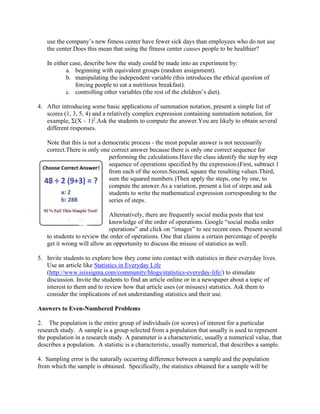
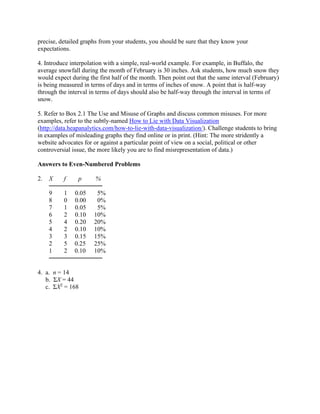
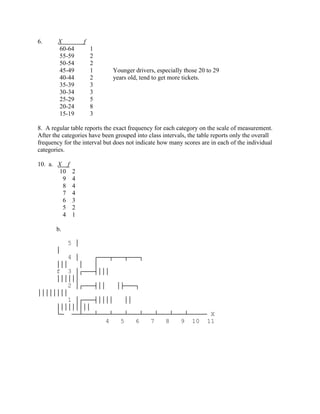
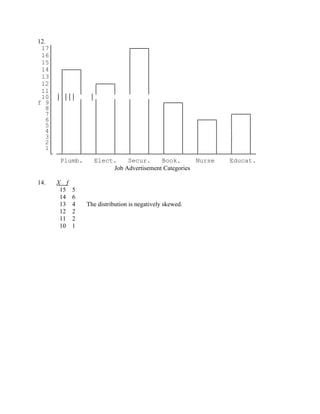

![subject of an hypothetical biographical memoir, beginning with the words, “Ich
finde es wahrscheinlich”, but without seeming to be aware of what Gerard says
respecting his hero, except so far only as it is repeated by Witsen. By this writer,
therefore, no additional light is thrown on the subject now under consideration;
and, in fact, it is to the original authority, after all, that we must revert for the
only information that is really available and useful.
From this authority, then, we learn that Oliver Brunel, a native of Brussels, went
in a vessel belonging to the town [cii]of Enkhuysen on a trading voyage into the
Russian seas, where, after collecting a valuable cargo, he was lost; and that his
enterprise (though unsuccessful), together with those of the English in the same
quarter, induced the Dutch to set on foot the memorable expeditions which form
the subject of the following pages. If this person was really the Alferius who was
recommended by Balak to Mercator in the year 1581, he must subsequently
have been engaged in the Russian trade for several years before his unlucky
end; or else Gerard, writing in 1612, would surely not have named him as an
immediate cause of an undertaking which was not projected till 1593.
It is not, however, to be imagined that the Netherlanders—we can scarcely
speak of the “Dutch” at the earliest period to which we are now adverting—had
no previous connexion with the northern coasts of Russia, though it is true that
that connexion was then but of recent date. For, as is stated by Edge, the
English Russia Company having “made their first discoverie in the yeere 1553,
there was neuer heard of any Netherlander that frequented those seas vntil the
yeere 1578. At which time they first began to come to Cola, and within a yeere
or two after, one Iohn de Whale [de Walle], a Netherlander, came to the Bay of
Saint Nicholas, being drawne thither by the perswasion of some English, for
their better meane of interloping; which was the first man of that nation that
euer was seene there.”93 It was this same John de Walle, who was afterwards
present at the coronation of the Emperor Fedor Ivanovich, at Moscow, on the
10th of June, 1584, when he had a dispute with Jerome Horsey, the English
ambassador, as to precedency, which was decided by the emperor in favour of
the latter. He is described by Horsey as “a famous merchant of Netherland,
being newly come to [ciii]Mosco, who gaue himselfe out to be the king of Spaines
subiect.”94
It is unnecessary, for the consideration of the subject before us, to enter into
any details respecting the commercial and political relations with Russia of the
Netherlanders generally, in the first instance, and eventually of the natives of](https://image.slidesharecdn.com/8845-250708035804-9ea8aa5b/85/Solution-Manual-for-Statistics-for-The-Behavioral-Sciences-10th-Edition-18-320.jpg)
![the United Provinces—commonly, though not very correctly, called the Dutch—in
particular. It is sufficient to remark, that after their first entrance into the White
Sea, they soon became powerful rivals of the English in the trade with Russia,
and that it was also not long before their attention was directed to the extension
of their commerce to the eastward of that country, and to the endeavour to
reach China and the Indian Seas by a passage to the north-east.
Among the earliest and most eminent Dutch merchants trading to the White
Sea, was Balthazar Moucheron, of the town of Middelburg, in Zeelandt. He it
was, who, in the year 1593, in conjunction with Jacob Valck, treasurer of the
same town, and Dr. Francis Maelson, of Enkhuysen, syndic of West Friesland,
conceived the project of fitting out two fly-boats (vlyboots), each of between
fifty and sixty lasts, or about one hundred tons, burthen, armed and provisioned
for eight months, being one from each of those towns, to attempt a voyage to
China and India by the way of the Northern Ocean. In this enterprise they were
assisted by the courts of admiralty of those two provinces, having first obtained
the necessary permission from the higher authorities.95
The two vessels thus fitted up were the Swan (Swane),96 [civ]of Ter Veere, in
Zeelandt, under the command of Cornelis Corneliszoon Nai (or Nay), a burgher
of Enkhuysen, who had for some years been a pilot or master of a merchantman
in the Russian trade, in Moucheron’s service, and was well acquainted with the
northern coasts of Europe; having with him, as under-pilot or mate, Pieter
Dirckszoon Strickbolle, also of Enkhuysen, and, like Nai, in the service of
Moucheron. The other vessel was the Mercury (Mercurius), of Enkhuysen, under
the command of Brant Ysbrantszoon, otherwise Brant Tetgales, a skilful and
experienced seaman, with Claes Corneliszoon as his mate or under-pilot; both
being likewise natives of Enkhuysen. As supercargo and interpreter on board the
Swan went François de la Dale, a relative of Moucheron, who had resided
several years in Russia, and as additional interpreter, “Meester” Christoffel
Splindler, a Slavonian by birth, who had studied in the university of Leyden;
while on board the Mercury the supercargo was John Hugh van Linschoten,97
who was likewise engaged to keep a journal of their proceedings.
This movement on the part of the merchants of Middelburg and Enkhuysen had
the effect of inducing those of Amsterdam to desire to participate in the
enterprise, or, it should rather be said, to undertake one on their own account,
having the same general object in view, but adopting a somewhat different
mode of carrying it out. Instead of attempting a way to China by passing](https://image.slidesharecdn.com/8845-250708035804-9ea8aa5b/85/Solution-Manual-for-Statistics-for-The-Behavioral-Sciences-10th-Edition-19-320.jpg)
![between Novaya Zemlya and the Russian continent, the Amsterdammers, at the
instance of the celebrated cosmographer and astronomer, Peter Plancius,
decided on sending their vessel round to the north of Novaya Zemlya, as
offering a far easier and preferable route. This difference of opinion between the
promoters of the two parts of the first expedition must be borne in mind, as
explaining several circumstances which, [cv]in the course of our subsequent
narrative, will have to be adverted to. A third vessel was accordingly fitted out
by the merchants of Amsterdam, aided by the court of admiralty there. It was of
the same size and character as the other two, and like Tetgales’s vessel was
named the Mercury (Mercurius);98 its command being entrusted to William
Barents,99 who took with him also a fishing-boat belonging to Ter Schelling.100
Before proceeding further, a few words must be said respecting the individual
whose name has become inseparably associated with the three memorable
expeditions, of which the first is now under consideration.
Willem Barentszoon—that is to say, William, the son of Barent or Bernard—was
a native of Ter Schelling, an island belonging to the province of Friesland, and
lying to the north-east of Vlieland or ’tVlie. He was also a burgher of
Amsterdam. Of his family and early life no particulars have been handed down
to us. But that he was not of any considerable family is manifest from his
having, like most of his countrymen in the lower, or even the middle ranks of
life, no other surname than the patronymic, Barents-zoon. He possessed,
however, a good, if not a learned education, as is proved by the translation
made by him from the High Dutch into his native tongue of the “Treatise of Iver
Boty, a Gronlander,” which together with a note written by him on the tides in
the Sea of Kara, was found by Purchas [cvi]“amongst Master Hakluyt’s paper,”
and preserved by him, and which, following that laborious collector’s example,
we have “thought good to adde hither for Barents or Barentsons sake.”101 He
appears also to have written the narrative of the first voyage, which was
published by Gerrit de Veer, and of which a translation is given in the present
volume. Nothing to that effect is stated by De Veer; but as the latter did not go
on that voyage, he must necessarily have obtained the particulars of it from
some one who did, and from Linschoten’s statement102 it may be inferred that
this was Barents himself.
But whatever may have been Barents’s general education, it is unquestionable
that he was a man of considerable capacity and talent, and that as a seaman he
was possessed of far more than ordinary acquirements. By Linschoten he is](https://image.slidesharecdn.com/8845-250708035804-9ea8aa5b/85/Solution-Manual-for-Statistics-for-The-Behavioral-Sciences-10th-Edition-20-320.jpg)
![described as having great knowledge of the science of navigation, and as being
a practical seaman of much experience and ability; his astronomical
observations have stood the severest tests of modern science; while his feats of
seamanship will bear comparison with those of the ablest and most daring of
our modern navigators. Of his great determination, perseverance, and
indomitable courage, some remarkable instances will be adduced; and that his
personal character, and general conduct, were such as to secure to him the
respect, confidence, and attachment of those who sailed with him, is clearly
manifest from various expressions in Gerrit de Veer’s simple narrative, and from
its tone throughout.
The name of this able navigator has been written in various ways. The Dutch
usually have Barentsz., which has been adopted in the notes on Phillip’s text in
the [cvii]present volume, it being the usual native contraction of the full name,
Barentszoon. In the Amsterdam Latin and French versions of De Veer’s work,
the name is translated “filius Bernardi,” and “fils de Bernard”. Purchas and other
early English writers, have Barents or Barentson, and sometimes even
Bernardson. The first of these forms—namely, Barents—is most conformable to
the genius of our language (in which we have Williams and Williamson, Richards
and Richardson, etc.), at the same time that it accords with that of the Dutch, in
which language this form of name is not uncommon. Barentz and Barentzen, as
it has not unfrequently been written, are incorrect.
On the 4th of June, 1594, the little fleet lying off Huysdunen, by the Texel, the
commander of the Swan, Cornelis Nai, was named admiral or commodore, and
an agreement made103 that they should keep company as far as Kildin, on the
coast of Lapland. On the following morning, being Sunday, the admiral set sail,
commanding the others to follow; but as the Amsterdammers said they were
not quite ready, they remained behind, though, as appears from their journal,104
they too sailed in the course of the same day. On the 21st, the Mercury of
Enkhuysen arrived at Kildin, on the 22nd, the Swan, and on the 23rd, Barents’
two vessels. On the 29th of the same month Barents left Kildin on his separate
voyage to Novaya Zemlya, arranging with the others that, in case they should
not meet beyond that country, but should have to return, they would wait for
one another at Kildin till the end of September. On the 2nd of July the ships of
Nai and Tetgales took their departure for Vaigats.
For want of taking a comprehensive view of this, and the subsequent voyages in
which Barents was engaged, most writers on the subject have fallen into](https://image.slidesharecdn.com/8845-250708035804-9ea8aa5b/85/Solution-Manual-for-Statistics-for-The-Behavioral-Sciences-10th-Edition-21-320.jpg)
![considerable [cviii]error. By some the two expeditions of Nai and Barents have
been treated as totally distinct; while by others Barents has been regarded as
the chief commander of the whole. Thus, Blaeu, in the first part of his Grand
Atlas,105 published at Amsterdam in 1667, speaks of this expedition in the
following terms:—“Dans cette grande entreprise, la ville d’Amsterdam,
aujourd’huy la plus puissante des sept Provinces unies, se porta des premières,
et fournit deux vaisseaux, qui furent accompagnez d’un troisiesme de Zelande et
d’un quatrième d’Enchuse, tous quatre excellemment equippez, et qui eurent
pour principal gouverneur et pilote tres-expert Guillaume fils de Bernard.” It
would be a mere loss of time to refer to what other writers have said on the
subject.
The voyage of William Barents in the Mercury of Amsterdam, forms the subject
of the “First Part” of the present volume. Without entering here into any
needless repetition of the particulars of this voyage, it shall be merely remarked
that on the 4th of July, Barents first came in sight of Novaya Zemlya in 73° 25′
N. lat., near a low projecting point, called by him Langenes, whence he
proceeded northwards along the coast, till, on the 10th of the same month, he
passed Cape Nassau.106 Thus far he had met with no obstacle to his progress.
But during the night of the 13th he fell in with immense quantities of ice, and
here his difficulties began. After vainly endeavouring to make his way through
the ice, he, on the 19th of the month, found himself again close to the land
about Cape Nassau.107 Nothing daunted, he once more struggled forwards, and
at length, on the last day of July, reached the Islands of Orange. Here, “after he
had taken all that paine, and finding that he could hardly get through to
accomplish and ende his intended voyage, his men also beginning to bee weary
and would saile no further, they all [cix]together agreed to returne back
againe.”108 On the following day, therefore, they commenced their homeward
voyage, and on the 3rd of August they reached Cape Nassau.
From a perusal of the mere dry details of their various courses in this part of
their voyage, which are nearly all that is recorded in their journal, no idea could
be formed of the difficulties they had to contend with, or the amount of labour
actually performed. It is only when their track is laid down on the map,—as it
has been, most carefully and with all possible accuracy, by Mr. Augustus
Petermann,—that their enormous exertions become apparent. The result is
really astonishing. Their voyage from Cape Nassau to the Orange islands and
back occupied them from the 10th of July till the 3rd of August, being twenty-
five days. During this period, Barents put his ship about eighty-one times, and](https://image.slidesharecdn.com/8845-250708035804-9ea8aa5b/85/Solution-Manual-for-Statistics-for-The-Behavioral-Sciences-10th-Edition-22-320.jpg)
![sailed 1,546 geographical miles, according to the distances noted in the journal;
to which, however, must be added the courses sailed along the coast, and also
those which in some instances have been omitted to be specified, so that it may
be reasonably assumed that the entire distance gone over was not much (if
anything) short of 1,700 miles. This is equal to the distance from the Thames to
the northern extremity of Spitzbergen, or from Cape Nassau to Cape Yakan, not
far from Bering’s Strait. And all this was performed in a vessel of one hundred
tons’ burthen, accompanied by a fishing smack!
One remarkable fact must not be omitted to be mentioned. On laying down
Barents’s track from the bearings and distances given in his journal, from the
10th to the 19th of July, being the interval between his passing Cape Nassau,
and being driven back again to that point,—during which period he tacked about
in numerous directions, and sailed more than six hundred miles,—Mr. Petermann
found it to agree so accurately, that its termination [cx]fell precisely upon Cape
Nassau, without any difference whatever. This extreme precision can hardly be
regarded as anything but a singular coincidence. Nevertheless, when viewed in
connexion with Barents’s other tracks, and with his observations generally, as
tested by the recent explorations of Lütke and other modern navigators, it must
still remain a striking proof of the wonderful ability and accuracy of that
extraordinary man.
After passing Cape Nassau, Barents continued his course southwards without
any remarkable incident, till on the 15th of August he reached the islands of
“Matfloe and Dolgoy,”—Matvyeéa Ostrov and Dolgoi Ostrov of the Russians,
meaning Matthew’s Island and Long Island,—where he fell in with Nai and
Tetgales, who had just arrived there, on their return from the Sea of Kara
through Yugorsky Shar (Pet’s Strait), to which, with pardonable national vanity,
they had given the name of the Strait of Nassau. Their report was that they had
sailed fifty or sixty Dutch miles (200 or 240 geographical miles) to the eastward
of that strait, and in their opinion had reached about the longitude of the river
Ob, and were not far from Cape Tabin (Taimur), the furthest point of Tartary,
whence the coast trended to the south-east, and afterwards to the south,
towards the kingdom of Cathay.109
After much rejoicing on both sides at their happy meeting, the whole fleet now
sailed homewards in company, and on the 14th of September came to the
Doggers Sand, whence Nai, in the Swan, proceeded to Middelburg, whilst the
other vessels passed by the Texel to their several ports.](https://image.slidesharecdn.com/8845-250708035804-9ea8aa5b/85/Solution-Manual-for-Statistics-for-The-Behavioral-Sciences-10th-Edition-23-320.jpg)
![The reports made by Barents and Linschoten of the results of their respective
voyages were very different in character. The former, though anything but an
illiterate man, could make no pretensions to scholarship. The latter [cxi]was an
accomplished scholar, as is plainly shown by his narrative of this first and of the
second voyage (which will be more particularly noticed in the sequel), and by his
other published works; and though the vessels which he accompanied had not
in reality accomplished so much as those of Barents, yet he appears to have had
no difficulty in convincing their employers and the higher authorities that they
had been not far from the realisation of the object of their voyage.
That, in the estimation of the Amsterdammers, Linschoten represented matters
in too favourable a light, is manifest from Gerrit de Veer’s innuendo at the
commencement of his description of the second voyage, that he “de saeck vry
wat breedt voort stelde,”110 which caused Linschoten to reply that, whether he
had done so or not, he left to the judgment of the discreet reader.111
Our present knowledge of those seas enables us to judge the question fairly and
impartially between the two, and to decide that, when at the Islands of Orange,
Barents had sailed from Kildin, their point of separation, further in a direct line,
and made a more easterly longitude, than Nai and Tetgales had when at their
furthest point on the eastern side of the Sea of Kara; and that, when there, he
was quite as near as they were to the mouth of the Ob, and as near again to
Cape Taimur; with the certainty, further, that from the former position a passage
eastwards would at most times, if not always, be attended with fewer difficulties
than from the latter. And it cannot be denied that Linschoten, in stating as he
does on the title-page of his work, and at the commencement of his
Introduction, without any [cxii]qualification, that he “sailed through the Strait of
Nassau to beyond the river Oby,” has certainly afforded a justification for De
Veer’s imputation that he represented matters “vry wat breedt.”112
Stimulated by Linschoten’s report, the adventurers who had fitted out the
former expedition, with others who now joined them, determined on dispatching
in the following year a large and well-appointed fleet, not merely in the hope of
accomplishing the passage to China which had been so well commenced, but
also with a view to the establishment of an advantageous trade with that
kingdom, and the other countries that might be discovered and visited in the
course of the voyage, in respect of which trade they obtained from the
Government of the United Provinces certain exclusive privileges and advantages.](https://image.slidesharecdn.com/8845-250708035804-9ea8aa5b/85/Solution-Manual-for-Statistics-for-The-Behavioral-Sciences-10th-Edition-24-320.jpg)
![This fleet consisted of seven vessels, namely, two from Zeelandt, two from
Enkhuysen, two from Amsterdam (which city, in consequence of the want of
success of Barents’s first voyage by Novaya Zemlya, was now willing to take part
in the undertaking of the other ports), and one from Rotterdam. The following
are the names of the vessels and of their commanders. The Griffin (Griffoen), of
Zeelandt, of the burthen of 100 lasts (200 tons), commanded by Cornelis
Cornelisz. Nai, who was appointed admiral or superintendent of the fleet; the
Swan (Swane), also of Zeelandt, of the burthen of 50 lasts (100 tons), which
had been on the former voyage, and was now commanded by Lambert Gerritsz.
Oom, of Enkhuysen; the Hope (Hoope), of Enkhuysen, a new war-pinnace
(oorlogspinas) of 100 lasts, commanded by Brant Ysbrantsz. Tetgales, vice-
admiral; the Mercury (Mercurius), of Enkhuysen, of 50 lasts, which had been on
the former voyage, and was now commanded by Thomas Willemszoon; the
Greyhound (Winthont), of Amsterdam, likewise a new war-pinnace, [cxiii]of 100
lasts, commanded by William Barents, pilot-major of the fleet, under whom was
Cornelis Jacobszoon as skipper;113 a yacht114 of Amsterdam, of 50 lasts
(probably the Mercury of the former voyage), commanded by Harman Janszoon;
and lastly, a yacht of Rotterdam, of about 20 lasts, or 40 tons burthen,
commanded by Hendrick Hartman. The last-named vessel was commissioned,
when the fleet should have reached Cape Tabin, or so far that it might thence
continue its course southwards without hindrance from the ice, to return and
bring news of their success to Holland. The vessels were all well equipped, with
a double complement of men, and ammunition and victuals for a year and a
half. The interpreter of the fleet was Meester Christoffel Splindler, as on the
former voyage. As supercargoes on behalf of the merchants of Holland and West
Friesland, were Jan Huyghen van Linschoten, Jacob van Heemskerck, and Jan
Cornelisz. Rijp; and for those of Zeelandt, François de la Dale and N. Buys, with
some other relatives of Balthazar Moucheron. Linschoten and De la Dale were
further appointed chief commissioners of the fleet on behalf of his excellency
prince Maurice and the States General, from whom they received the following
commission:—
Instructions to Jan Huygen van Linschoten and Françoys de la Dale, Chief
Commissioners, for the regulation of their conduct in the kingdom of China, and
other kingdoms and countries which shall be visited by the ships and yachts
destined for the voyage round by the North, through the Vaigats or Strait of
Nassau.
In the first place, after Mr. Christoffel Splindler, the Slavonian, shall have been on shore
and ascertained whether they may land there, they shall go on shore to the king,](https://image.slidesharecdn.com/8845-250708035804-9ea8aa5b/85/Solution-Manual-for-Statistics-for-The-Behavioral-Sciences-10th-Edition-25-320.jpg)
![governor, [cxiv]or other authority of the place, to whom they shall, on behalf of these
States, offer all friendship, and shall explain the circumstances of these States, namely,
that they hold communication by sea with all countries and nations in the whole world,
for the purpose of trafficking, trading, and dealing with them in a friendly and upright
manner, for which they possess many advantages of divers sorts of merchandise and
otherwise.
Item, that the Government of this Country being surely informed that upright trade,
traffic, and dealings are carried on in the said kingdoms and countries, have found it
good to send thither some ships, under good order, government, and regulation, with
merchandise, money, and other commodities, in order to begin dealings, by means of
certain trusty and honest persons on board the said ships, for whom they shall ask
free intercourse there, to the end aforesaid.
They shall do their best to come to an agreement for a fair, faithful, upright, and
uninterrupted trade, traffic, and navigation, to the mutual advantage of the said
kingdoms and of these States, as well as of their respective inhabitants; and in case
the same shall be found good there, they shall declare that to that end it is intended to
visit them with a good embassy by the first opportunity, provided the same shall be
agreeable to them.
They shall explain there what commodities and merchandizes can from time to time be
taken thither from these States; and they shall also carefully examine so as to
ascertain what merchandizes and wares may, in return for the same, be obtained from
those kingdoms and countries and brought to these States.
They shall keep a good and accurate account of everything that shall occur during the
voyage, as well on ship-board, in the discovery of countries and ports, and on all other
occasions, as likewise of that which shall happen to them on shore; so that,
immediately on their return, they may of all things make a good and faithful report in
writing to the Lords the States General.
Done and concluded in the Assembly of the Lords the States General of the United
Netherlands at the Hague, the 16th of June 1595.
Sloeth vt.
By order of the Lords, the States aforesaid.
C. Aersens, &c.115
[cxv]
The several vessels composing the fleet having assembled at the Texel, they all
sailed out of Mars Diep on the morning of Sunday, the 2d of July, 1595. It was
not till the 10th of August that they passed the North Cape, and on the 17th](https://image.slidesharecdn.com/8845-250708035804-9ea8aa5b/85/Solution-Manual-for-Statistics-for-The-Behavioral-Sciences-10th-Edition-26-320.jpg)
![they fell in with ice, being then about fifty miles distant from the coast of
Novaya Zemlya. On the following day they reached the island of “Matfloe”,116
and on the 19th came to the mouth of the strait to the south of Vaigats Island
(Yugorsky Shar), where they found the ice to lie in such quantities, “that the
entire channel was closed up as far as the eye could see, so that it had the
appearance of a continent, which was most frightful to behold”.117 Under these
circumstances they scarcely knew how to act, but at length resolved to go into
the roadstead called Train-oil Bay (Traenbay118), where, as it was under the
shelter of Idol Cape (Afgoden Hoeck), and thus out of the current which set
from the strait, there was a little open water.119 The preceding winter appears to
have been more than ordinarily severe, and the ice-masses set in motion by the
summer’s sun were consequently far greater in quantity than usual. This,
coupled with the late period of the year at which, from some unexplained cause,
they had commenced their voyage, soon convinced them that they had but little
prospect of being able to get forward. On the 20th August, while thus lying in
Train-oil Bay, a council was held on board the admiral’s ship, when it was
decided that a yacht should be sent to examine the condition of the strait and
the probability of their getting through, and also that a party of thirty or forty
armed men should proceed across the Island of Vaigats for the same purpose.
The yacht could go no further than Cross Point, where the entire sea was found
to be covered with ice without the least break or [cxvi]opening; but the crew
thence proceeded by land as far as Cape Dispute, though without better
success. The party of men—whom De Veer describes120 as fifty-four in number,
himself included—returned with a somewhat more favourable report; for they
thought they had discovered a practicable passage, because they saw so little
ice there.121 In this their experience agreed with that of Pet and Jackman, who
found a passage close along the shore, between the ice and the land, at times
when the deep sea was entirely filled with ice-masses.122
On the 24th of August a yacht was again sent out to inspect the strait, and got
as far as Cross Point, bringing back the consolatory intelligence that the ice was
beginning to move, and that all was clear, with open water, as far as Cape
Dispute. On the following day therefore the fleet weighed anchor, and sailed as
far as beyond the latter cape, without meeting with any ice; but soon afterwards
they fell in with such quantities that they were forced to return. That night they
anchored between Cape Dispute and Cross Point, and on the following day
betook themselves to their former station under Idol Cape, “there to stay for a](https://image.slidesharecdn.com/8845-250708035804-9ea8aa5b/85/Solution-Manual-for-Statistics-for-The-Behavioral-Sciences-10th-Edition-27-320.jpg)
![more convenient time.”123 Here they were so entirely surrounded by the ice, that
they could walk dry-foot from one ship to the other.124
The admiral and other officers had now evidently given up all hopes of effecting
a passage, to which result the murmurings of the crews may perhaps have
contributed. Barents, however, with that determination and perseverance for
which he appears to have been distinguished, was not so satisfied as they were
that nothing more could be done; and as on the 30th of August the ice began
again to move, he, on the following day, had a good many words with the
admiral on the subject,125 after which he in person crossed [cxvii]over the strait to
the main land of the Samoyedes, where he made inquiries of the natives. On his
return the following day, he again “spake to the admirall to will him to set sayle,
that they might goe forward; but they had not so many wordes together as was
betweene them the day before.”126 The conversation which ensued is quaintly
told by De Veer, and with an air of perfect truthfulness. On the following
morning (September 2nd), a little before sun-rise, Barents began to warp his
vessel out, when Nai and Tetgales, on seeing him do so, “began also to hoyse
their anchors and to set sayle.”127 The result of this movement was, that, with
immense labour and difficulty and no little danger, they succeeded in making
their way through the ice as far as States Island, which they reached in the
evening of the 3rd September; sailing on the following morning a little further
along the channel between that island and the mainland, so as to be sheltered
from the drifting of the ice.128
This was virtually the termination of their voyage. On the following day
(September 4th) a council was held on board the admiral’s ship, when it was
decided that, “in order not to fail in their duty,”129—which means that it was little
more than a matter of form,—they should on the following day make one more
endeavour to get through the ice; and if they did not succeed, that then they
should not attempt it any further, seeing that the time was passing rapidly, and
the winter, with its dreadful cold and long nights, was on the point of setting in.
“For,” adds Linschoten,130 “it is now sufficiently clear and manifest that it does
not please the Lord God to permit us this time to proceed further on our voyage
of discovery, so that it is not [cxviii]fitting that we should wilfully tempt Him any
longer and run with our heads against the wall.”
It cannot be denied that Nai and his companions were beset with great
difficulties, and that any further attempts might have been extremely hazardous.
The crews too of the vessels were now louder in their murmurs, and complained](https://image.slidesharecdn.com/8845-250708035804-9ea8aa5b/85/Solution-Manual-for-Statistics-for-The-Behavioral-Sciences-10th-Edition-28-320.jpg)
![that their commanders desired their deaths, inasmuch as being surrounded by
the ice, they ran the chance of remaining locked up during the whole winter;131
added to which, the loss of two men, who were killed by a bear on the 6th of
September,132 was not at all unlikely to augment the panic, and to cause
insubordination among the survivors.
Finding the sea to continue quite full of ice, a council was again held on the 8th
September on board the admiral’s ship, in order to determine finally whether
they should proceed or return, whereon a great debate took place.133 Most of
them were of opinion that they should at once return. To this however, the
Amsterdammers were opposed, their opinion being that some of them should
volunteer to remain there with two of the vessels during the winter, and take
their chance of the wintering, besides seeing whether they could not manage to
get through, or else trying whether they might not be able to make their way to
the west of Vaigats, and so round by the north of Novaya Zemlya. But it was
replied, that the time for doing so was past, and that moreover it did not accord
with their instructions. Nevertheless, if they wished it, they could do it of their
own authority, and then see how they might afterwards answer for their
conduct.134
On the following day the indefatigable Barents “went on shoare on the south
side of the States Iland, and layd a [cxix]stone on the brinke of the water, to
proue whether there were a tide, and went round about the iland to shoote at a
hare; and returning”—as he says in the only writing undoubtedly of his original
composition which has been preserved to us—“I found the stone as I left it, and
the water neither higher nor lower; which prooueth, as afore, that there is no
flood nor ebbe.”135
He could scarcely have returned on board before the fleet set sail from States
Island, on their return to the strait; but the ice came in so thick and with such
force, that they could not get through, and therefore had to put back in the
evening.136 Next day, however, they succeeded in again reaching Cape Dispute,
where they anchored.
On the 11th, it was decided that they should once more sail towards the ice, for
the purpose of removing all doubts as to the impossibility of proceeding; but
they had not sailed three hours before they reached the firm ice, which
stretched round in all directions, completely preventing all further passage.137
They therefore returned and anchored at Cross Point, where they remained till](https://image.slidesharecdn.com/8845-250708035804-9ea8aa5b/85/Solution-Manual-for-Statistics-for-The-Behavioral-Sciences-10th-Edition-29-320.jpg)
![the morning of the 14th, when Barents weighed his anchor and set his top
mast, thinking once again to try what he could do to further his voyage; but the
admiral, being of another mind, lay still till the 15th of September.138
On that day, as Linschoten relates in no very courteous language, “seeing how
the weather had set in, the Amsterdammers thought better of the matter, and
let their obstinacy somewhat abate (lieten hun obstinaetheyt wat sincken),
agreeing to conform with all the rest.”139 The following protest, which had been
drawn up by Linschoten, was accordingly signed by Barents together with the
other officers,140 and the [cxx]same day the whole fleet sailed out from the west
end of the strait homeward bound.
PROTEST.
On this day, the 15th of September, 1595, in the country and in the roads of the Cross
Point, in the Strait of Nassau, where the ships are now lying at anchor all together, by
desire and command of the admiral, Cornelis Cornelisz., the captains or pilots of all the
aforesaid ships being assembled and met together in the cabin of the ship of the said
admiral, in order that, jointly and each of them severally, they may without
dissimulation and freely declare their opinion and final decision, and so consult
together as to what is best and most advantageous to be done and undertaken in
respect of the voyage which they have commenced round by the north towards China,
Japan, etc.; and they having maturely and most earnestly considered and examined
the subject, and also desiring strictly to carry out, as far as is practicable and possible,
the instructions of His Excellency and the Lords the States, for the welfare and
preservation of the same ships, their crews and merchandize: It is found that they
have all of them hitherto done their utmost duty and their best, with all zeal and
diligence, not fearing to hazard and sometimes to put in peril the ships and their own
persons (whenever need required it), in order to preserve their honour in everything,
and so as to be able with a clear conscience to answer for the same to God and to the
whole world. But inasmuch as it has pleased the Lord God not to permit it on the
present voyage, they find themselves most unwillingly compelled, because of the time
that has elapsed, to discontinue the same navigation for this time, being prevented by
the ice caused by the severe and unusually long frost, which, from what they have
heard on the information of others and from their own experience, has this year been
very hard and extraordinary in these parts. All which having been well considered and
discussed by them together, they find no better means, being forced by necessity,
than, with the first fit weather and favourable [cxxi]wind, to take their course
homewards, all together and in the order in which they came, using every diligence so
as if possible to preserve themselves from the frost which is momentarily expected to
set in, and with God’s help to bring the ships, before all the perils of winter, into a safe
harbour; inasmuch as at the present time no other better means can be found to lead
them to a better judgment. Protesting before God and the whole world, that they have
acted in this matter as they wish God may act in the salvation of their souls, and as](https://image.slidesharecdn.com/8845-250708035804-9ea8aa5b/85/Solution-Manual-for-Statistics-for-The-Behavioral-Sciences-10th-Edition-30-320.jpg)
![they hope and trust cannot be gainsaid or controverted by any of those who have
accompanied them; and they willingly submit themselves to defend this at all times, if
requisite, by means of the fuller and more detailed journals and notes, which each of
them, separately and without communication with the others, has kept thereof. And in
order that there may be no disorder or idle talking unjustly spread abroad, to the
disadvantage or derogation of those who with such good will have braved so many
perils for the honour and advantage of our country, whereby they might be deprived of
their merited reward, they have, for their defence and in order to provide before hand
against the same, unanimously signed this Act, which I, Ian Huyghen van Linschoten,
have drawn up at their request, and together with Françoys de la Dale, as chief
commissioners of the said fleet, have, with the like affirmation and in further
corroboration, in like manner signed, the day and date above written.
Cornelis Cornelisz.
Brant Ysbrantsz.
Willem Barentsz.
Lambert Gerritsz.
Thomas Willemsz.
Harmen Ianssz.
Hendrick Hartman.
Ian Huyghen van Linschoten.
Françoys de la Dale.
It may well be conceived that it was no easy task for a bold and resolute sailor,
and at the same time a devout and conscientious man, as William Barents
undoubtedly was, to “protest before God, as he wished He might act in the
salvation of his soul”, that it was impossible for him to do more than he had
done, so long as his ship was staunch [cxxii]and he had a crew willing to go
forward with him, or even to brave a winter residence in those inhospitable
regions. Linschoten speaks of the dissentient Amsterdammers in the plural
number; whence it is to be inferred that Barents did not stand alone, but that
Harmen Ianszoon, the master of the other Amsterdam vessel, was at first of the
same opinion; and, most probably, it was only when he yielded, that Barents
saw himself, however reluctantly, forced to give in.
After the protest had been so signed, the fleet proceeded on its homeward
voyage, and on the 30th of September reached Wardhuus, where it remained till
the 10th of the following month. The vessels then again set sail all together; but
the vice-admiral’s ship, the Hope, on board of which was Linschoten, managed
to get the start of the rest, arriving at the Texel on the 26th of October. It was
not till the 18th of the following month that Barents’s vessel arrived in the river
Maas.](https://image.slidesharecdn.com/8845-250708035804-9ea8aa5b/85/Solution-Manual-for-Statistics-for-The-Behavioral-Sciences-10th-Edition-31-320.jpg)
![The journal of the proceedings of the fleet, which was kept by Linschoten in
pursuance of his instructions, was communicated by him to the Government
immediately on his arrival; but it was not till six years afterwards that he
published his very interesting and valuable narrative of this voyage, as well as of
that of the preceding year so far as concerns the Enkhuysen vessels, which had
sailed through Yugorsky Shar—“Pet’s Strait” or the “Strait of Nassau”—into the
Sea of Kara.
So little appears to be known by bibliographers respecting Linschoten’s narrative
of these voyages, that we have scarcely the means of describing any other
editions than those which happen to exist in the British Museum.
The earliest of these appeared in Dutch, in 1601, in folio, under the following
title:—
Voyagie, ofte Schip-vaert, van Ian Hvyghen van Linschoten, van by Noorden om langes
Noorwegen, de Noort
caep, [cxxiii]Laplant, Vinlant, Ruslandt, de Witte Zee, de Custen
van Candenoes, Swetenoes, Pitzora, &c. door de Strate ofte Engte van Nassau tot
voorby de Revier Oby. Waer inne seer distinctelicken Verbaels-ghewijse beschreven
ende aenghewesen wordt, alle t’ghene dat hem op de selve Reyse van dach tot dach
bejeghent en voorghecomen is. Met de af beeldtsels van alle de Custen, Hoecken,
Landen, Opdoeningen, Streckinghen, Coursen, Mijlen, ende d’ander merckelicke dingen
meer: Gelijc als hy’t alles selfs sichtelicken en̄ waerachtelicken nae’t leven
uytgeworpen ende gheannoteert heeft, &c. Anno 1594 en̄ 1595.
Ghedruct tot Franeker, by Gerard Ketel.
The colophon has—
Ghedruct tot Franeker, by Gerard Ketel, voor Ian Huyghen van Linschoten,
resideerende binnen Enchuysen, anno 1601.
This rare edition consists of thirty-eight numbered leaves, with a dedication to
the States General, dated June 1st, 1601, on two leaves unnumbered, and
contains numerous maps and coast views by Johannes and Baptista a
Doetechum. It was reprinted at Amsterdam in 1624, likewise in folio, with the
same plates.
In the first edition, between the dedication and the text, are inserted several
eulogistic poems, the longest of which is an ode on “Vaygats ofte de Straet van
Nassau”, by C. Taemssoon van Hoorn, and another is a “Lof-dicht”, by Jacobus](https://image.slidesharecdn.com/8845-250708035804-9ea8aa5b/85/Solution-Manual-for-Statistics-for-The-Behavioral-Sciences-10th-Edition-32-320.jpg)
![Viverius, which is directed to be sung to the tune of the forty-second Psalm. It is
worthy of remark, that, even so early as 1595, allusion was made to the first
north-east voyage of Linschoten in the commendatory verses (which included
also the poem on Vaygats above referred to) at the commencement of the
“Reys-gheschrift van de Navigatien der Portugaloysers in Orienten.….….door Jan
Huyghen van Linschoten. Amstelredam, MDXCV. folio”; which work, though it
bears the date of 1595, the register shows to be a portion of the author’s
“Itinerario, Voyage ofte Schipvaert van Jan Huygen van Linschoten naer Oost
[cxxiv]ofte Portugaels Indien”, the title-page of which is dated a year later. This
was reprinted in 1604 with the same verses.
An abstract in Dutch of Linschoten’s narrative was printed at Amsterdam by G. J.
Saeghman, in 4to., with the following title:—
Twee Journalen van twee verscheyde Voyagien, gedaen door Jan Huygen van
Linschooten, van by Noorden om, langhs Noorwegen, de Noordt-Caep, Laplandt,
Findlandt, Ruslandt, de Witte Zee, de Kusten van Candenoes, Sweetenoes, Pitzora,
etc., door de Strate ofte Enghte van Nassouw, tot voorby de Reviere Oby, na Vay-gats,
gedaen in de Jaren 1594 en 1595. Waer in seer pertinent beschreven ende aen
gewesen wordt, al het geene hem op de selve Reysen van dagh tot dagh voor gevallen
is, als mede de Besschryvingh van alle de Kusten, Landen, Opdoeningen, Streckingen
en Courssen, etc. T’Amsterdam, Gedruckt by Gillis Joosten Saeghman, in de Nieuwe-
Straet, Ordinaris Drucker van de Journalen ter Zee, en de Reysen te Lande.
This has no date, but was probably printed in or about 1663, the year in which
Saeghman printed the “Verhael van de vier eerste Schip-vaerden der
Hollandtsche en Zeeuwsche Schepen naar Nova Zembla, etc.”, which will be
more particularly described when we come to speak of the editions of Gerrit de
Veer’s work.
We learn from Mr. Henry Stevens that a copy of this abstract is in the possession
of John Carter Brown, Esq., of Providence, Rhode Island.
In 1610, appeared a French translation of Linschoten’s voyages, with the
following title:—
Histoire de la Navigation de Iean Hvgves de Linscot, Hollandois, et de son voyage es
Indes Orientales: contenante diuerses descriptions des Pays, Costes, Haures, Riuieres,
Caps, et autres lieux iusques à present descouuerts par les Portugais: Obseruations
des coustumes des nations de delà quant à la Religion, Estat Politic et Domestic, de
leurs Commerces, des Arbres, Fruicts, Herbes, Espiceries, et autres singularitez qui s’y](https://image.slidesharecdn.com/8845-250708035804-9ea8aa5b/85/Solution-Manual-for-Statistics-for-The-Behavioral-Sciences-10th-Edition-33-320.jpg)
![trouuent: Et narrations des choses memorables [cxxv]qui y sont aduenues de son
temps. Avec annotations de Bernard Paludanus, Docteur en Medecine,.….. à quoy sont
adiovstées quelques avtres descriptions tant du pays de Guinee et autres costes
d’Ethiopie, que des nauigations des Hollandois vers le Nord au Vaygat et en la nouuelle
Zembla. Le tovt recveilli et descript par le mesme de Linscot en bas Alleman, &
nouuellement traduict en Francois. A Amstelredam, de l’Imprimerie de Theodore
Pierre, MDCX. folio.
Although the voyages to the north are thus announced in the title-page, they
are not inserted in the only copy which we have been able to consult, namely,
that in the British Museum; nor is any light thrown on the matter by
bibliographers.
In the title of the third edition, published at Amsterdam in 1638, fol., these
northern voyages are not announced, nor are they given, but the edition is
described as “troixiesme édition augmentée”.
The second French edition has not fallen within our reach, but we believe the
date to be 1619.
The only French version of Linschoten’s narrative of his northern voyages with
which we are acquainted, is that inserted in the fourth volume of the “Recueil de
Voiages au Nord”, published in eight volumes, Amsterdam, 1715–27, 12mo.; of
which another edition, in ten volumes, 12mo., was published at the same place,
1731–38.
This French version formed the basis of the German description of these
voyages given by Johann Christoph Adelung, at pp. 107–213 of his Geschichte
der Schiffahrten, published at Halle, 1768, 4to.
An abstract of Linschoten’s work is given in Latin, at fol. 31 of the first volume of
Blaeu’s “Atlas Major sive Cosmographia Blaviana, qua Solum, Salum, Cœlum
accuratissime describuntur”. Eleven volumes in folio, Amsterdam, 1662.
In the French edition, entitled “Le Grand Atlas ou [cxxvi]Cosmographie Blaviane”,
etc., 12 vols. in folio, Amsterdam, 1663, and republished in 1667, the same
appears at fol. 35 of the first volume of the latter edition, which is the only one
in the British Museum.
It is also at fol. 52 of the first volume of the Spanish edition, entitled “Atlas
Mayor, Geographia Blaviana”, etc.; Amsterdam, 1659–72, 10 vols., fol.](https://image.slidesharecdn.com/8845-250708035804-9ea8aa5b/85/Solution-Manual-for-Statistics-for-The-Behavioral-Sciences-10th-Edition-34-320.jpg)
![In the elaborate dissertation on the works of John Blaeu, contained in the fourth
volume of Clement’s “Bibliothèque Curieuse”, mention is made, at page 277, of
an “Atlas Flamand de l’an 1662”. This is apparently a Dutch edition, to which
reference is made by Lütke, under the title of “J. Blaeu’s Grooten Atlas, of
Werelt Beschrijving, Erste Deel, ’t Amsterdam, 1662”. Beyond this reference, we
know nothing of that edition.
A German edition is also described by Brunet as announced in a catalogue of
Blaeu’s; but it is not alluded to by Clement, nor can we find any other trace of it.
If ever printed or in progress of printing, it may have been consumed in the
great fire, by which, on the 22nd February, 1672, nearly all Blaeu’s stock in
trade was destroyed.
In part XII, pp. 20–23, of Levinus Hulsius’s Collection, is an extract from
Linschoten’s Navigation, stating the progress of the Dutch in the attempt to find
the passage, the discovery of which formed a favourite scheme of his
countrymen at the end of the sixteenth and beginning of the seventeenth
centuries.
Summaries more or less concise, derived apparently from Blaeu’s abstract, the
French “Recueil de Voyages au Nord”, or Adelung’s “Geschichte der
Schiffahrten”, have also been given in most of the histories of Arctic discovery.
Gerrit de Veer’s description of the second voyage, contained in the present
volume, must be understood to relate almost exclusively to the proceedings of
Barents’s vessel, as forming one of the fleet under Nai’s command. This
reconciles [cxxvii]or explains away such differences as may appear to exist
between his narrative and that of Linschoten.
Seeing the signal failure of the second expedition, the States General, after
mature deliberation, decided that no further attempt should be made at the
public expense to discover a north-east passage. Nevertheless, they were still
willing to encourage any private undertaking, by the promise of a considerable
reward in the event of success.141 And Plantius and Barents persisting in their
opinion that a passage might be effected by the north of Novaya Zemlya, the
authorities and merchants of Amsterdam were induced to take on themselves
the fitting out of another expedition to proceed in that direction. It consisted of
only two vessels—the names and tonnage of which are not mentioned—of which
the one was commanded by Jacob van Heemskerck, who was also supercargo,](https://image.slidesharecdn.com/8845-250708035804-9ea8aa5b/85/Solution-Manual-for-Statistics-for-The-Behavioral-Sciences-10th-Edition-35-320.jpg)
![and the other by Jan Corneliszoon Rijp, in the like double capacity. Barents
accompanied Heemskerck, with the rank of chief pilot (opperste stuerman).
Surprise has been expressed that though Barents thus occupied a subordinate
station, yet in the narrative of the voyage he is made to perform the principal
part. This is, however, a mistake, arising from the fact that in the abridgements
and summaries of this narrative, which alone appear to have been consulted by
modern writers, most of the personal matters are omitted. For it will be seen
that in De Veer’s original work, the skipper (or “maister”, as he is called in
Phillip’s translation) is repeatedly mentioned, and Barents’ subordinate position
is clearly and unequivocally shown.142
A better founded cause of surprise might be, that Barents himself had not the
command of the expedition. Yet for this a sufficient reason suggests itself. He
was evidently resolved to perform (as it were) impossibilities, rather than fail in
a project on which he had set his heart; and the [cxxviii]merchants, however
willing to risk their property on the adventure, may naturally have been
disinclined to entrust it absolutely to one, who would not have hesitated to
sacrifice it, or even his own life, in the attempt to accomplish his long-cherished
undertaking.
In being made subordinate to a nobleman like Jacob van Heemskerck, who,
though no seaman by profession, had already sailed with him, and had thus had
an opportunity of learning and appreciating his many estimable qualities,
Barents, a man of humble birth, could however in no wise have felt himself
humiliated or aggrieved. It was a case similar to that of Sir Hugh Willoughby
and Richard Chancellor, and was moreover quite in accordance with the practice
of those times, which afford repeated instances of the command of a naval
expedition being entrusted to a soldier, who had probably never before been on
salt water.
But while Heemskerck thus held the superior rank of captain, Barents’s relation
to him was evidently that of an equal, rather than that of an inferior. This is
particularly evidenced in the conversation which took place between them
shortly before Barents’s death, when the latter called his nominal commander
“mate”.143 And that the crew looked on Barents as virtually the leader of the
expedition is shown, not only by their appeals to him on all important occasions,
but by the curious fact that in the signatures to the “letter” which they wrote on
the eve of their departure from their winter quarters,144 the name “WILLEM
BARENTSZ.” is printed in capital letters, while that of Heemskerck, though](https://image.slidesharecdn.com/8845-250708035804-9ea8aa5b/85/Solution-Manual-for-Statistics-for-The-Behavioral-Sciences-10th-Edition-36-320.jpg)
![placed in rank above Barents’s name, is only in ordinary type, like those of the
rest of the crew.
We have now to take a rapid glance at some of the most important results of
this third voyage, into the particulars of which, as they are recorded in De Veer’s
journal, it is unnecessary to enter. [cxxix]
The experience of the two former voyages appears to have impressed Rijp, even
more than Barents himself, with the expediency of giving the land to the east a
wide sea room; for, notwithstanding that they at first steered their course much
more to the northward than before, yet it was not long before disputes arose
between them, Barents contending that they were too far to the west, while
Rijp’s pilot asserted that he had no desire to sail towards Vaigats.145 Barents
gave way; and the result was, that on the 9th of June they came to a small
steep island, in latitude 74° 30′, to which they gave the name of Bear Island,
from the circumstance of their killing there a large white bear.146
Seven years later this island was visited by Stephen Bennet, who called it Cherie
Island, after his patron, Master (subsequently Sir) Francis Cherie, a
distinguished member of the Russian Company. This latter name has usually
been inscribed in our English maps, though unjustly, inasmuch as the merit of
the first discovery of the island unquestionably belongs to the Dutch. Captain
Beechey says, indeed, that “a passage in Purchas seems to imply that it had
been known before Barents made this voyage;”147 but the only passage bearing
on the subject which we have been able to find, is the statement of Captain
Thomas Edge, in “A briefe Discouerie of the Northern Discoueries of Seas,” etc.,
that the Dutch came “to an iland in the latitude of 74 degrees, which wee call
Cherie Iland, and they call Beare Iland,”148 as if the former name had been given
before the latter. It is to be hoped that in future English maps, the original and
correct name will always be inserted.
From Bear Island our adventurers continued their course northwards, and on
the 19th of June, when in latitude 79° 49′ N., they again saw land,149 which was
supposed by them [cxxx]to be a part of Greenland, but which subsequent
investigation has shown to be the cluster of islands known by the name of
Spitzbergen. Round this land they coasted till the 29th, when they again sailed
southwards towards Bear Island.150](https://image.slidesharecdn.com/8845-250708035804-9ea8aa5b/85/Solution-Manual-for-Statistics-for-The-Behavioral-Sciences-10th-Edition-37-320.jpg)
![The first discovery of this country by our Dutch navigators is now universally
admitted, though formerly the idea was entertained that they had been
anticipated by Sir Hugh Willoughby. But that Spitzbergen was actually
circumnavigated by them is a fact which, as far as we are aware, has never
been adverted to by any writer on Arctic discovery. The details of this portion of
Barents’ and Rijp’s voyage are neither full nor precise enough to enable us to
follow them minutely in their course; added to which, the maps of Spitzbergen,
especially of its eastern side, are still not sufficiently trustworthy to render us
much assistance in laying down their track. There can, however, be no doubt
that they sailed up its eastern shores, passed along its northern extremity, and
returned by the western coast. That part of Spitzbergen which they first saw in
79° 49′ N. lat., seems to be the south-east coast of the Noord Ooster Land of
the Dutch maps, along which they sailed in a westerly direction, and entered
Weygatz or Hinlopen Strait. This assumption agrees with the above latitude and
with those of the subsequent positions in 79° 30′151 and 79° 42′,152 as also with
the time it took—several days—to get out of that strait. The two havens
described under the date of June 24th,153 may be the Hecla Bay and Lomme Bay
of Parry. The considerable bay or inlet (gheweldigen inham) under 79°, to which
they came on the following day, and “whereinto they sailed forty miles at the
least, holding their course southward”,154 can only be Weide Bay. Finding that its
southern extremity “reached to the firme land”, they were forced to [cxxxi]work
their way back against the wind, till they “gate beyonde the point that lay on the
west side, where there was so great a number of birds that they flew against
their sailes”.155 This point, in consequence, received the name of Bird Cape.
From thence their course is plainly to be traced along the western coast of
Spitzbergen, and so back to Bear Island.
On the 1st of June, when near that island, disputes again arose between Rijp
and Barents as to the course which they should take. The result was that they
separated, Rijp returning northwards, while Barents proceeded southwards
because of the ice.156
Of Rijp’s subsequent proceedings nothing is known except that he is stated to
have sailed back to Bird Cape, on the west side of Spitzbergen, whence he
returned with the intention of going after Barents.157 How far he carried his
[cxxxii]intention into effect is not said; but nothing worthy of remark can have
occurred to him, or otherwise it could not have failed to be recorded. We may
therefore conclude [cxxxiii]that he soon gave up his search after Barents and
returned to Holland, and that, in the following year, he went from thence on a](https://image.slidesharecdn.com/8845-250708035804-9ea8aa5b/85/Solution-Manual-for-Statistics-for-The-Behavioral-Sciences-10th-Edition-38-320.jpg)
![trading voyage to the coasts of Norway or Russia, and was on the point of
sailing from Kola on his way home, when Heemskerck and the survivors of his
crew arrived there, as is related by De Veer.158
Meanwhile Barents, having cleared the ice, held on his course to the east till he
reached the western shore of Novaya Zemlya, in about latitude 73° 20′,159
whence he coasted along the land till he had passed considerably beyond the
furthest point reached by him on his first voyage, and had rounded the north-
eastern extremity of that country. Here, being at length quite shut in by the ice,
and unable to make his way either forwards towards the north-east, or round by
the eastern side of the land, or even back again by the way he had come, he
and his adventurous companions, on the evening of the 26th of August, “got to
the west side of the [cxxxiv]Ice Haven, where they were forced, in great cold,
poverty, misery, and grief, to stay all that winter.”160
Before adverting to the subject of the memorable wintering of the Dutch at this
spot, it is necessary to make a few remarks with respect to the identification of
the several points along the coast, which were reached and noted by them
during the course of their first and third voyages. This is the more needful,
because widely different opinions are entertained by two of the highest living
authorities on the subject, Admiral Lütke and Professor von Baer.
The former, as is well known, was engaged in surveying the Northern Ocean
between the years 1821 and 1825, during which period he visited many parts of
the western coast of Novaya Zemlya between its southern extremity and Cape
Nassau to the north, and identified most of the points visited by the Dutch,
which he laid down in the map accompanying the published account of his four
voyages, to the German translation of which allusion has already been made.
Professor von Baer, on the other hand, who also made a scientific visit to
Novaya Zemlya in the year 1837, read in the preceeding year, before the
Imperial Academy of Sciences of St. Petersburg, a “Report of the latest
Discoveries on the Coast of Novaya Zemlya”, an illustration of a map of that
country constructed by a pilot in the Russian navy, named Zivolka; of which
report a German translation is published in Berghaus’s “Annalen der Erd-Vôlker-
und Staatenkunde.”161
In this report the learned Professor comes to widely different conclusions from
those of Lütke with respect to the identification of the several stations visited by
the Dutch; the great point of difference between them being, that Baer bases](https://image.slidesharecdn.com/8845-250708035804-9ea8aa5b/85/Solution-Manual-for-Statistics-for-The-Behavioral-Sciences-10th-Edition-39-320.jpg)
![his arguments almost exclusively on the distances along the western coast of
Novaya Zemlya recorded by De [cxxxv]Veer, especially in the Table given near the
end of his third voyage.162
This Table, however, we cannot but regard as little better than a mere list of the
various stations reached by the Dutch on their return voyage; the distances, and
even the bearings, therein recorded, being quite untrustworthy, as may indeed
be perceived on the most cursory inspection. Every allowance has, of course, to
be made for any inaccuracies that may exist in that Table, in consideration of
the circumstances under which the return voyage was made; but, even were we
to assume the distances sailed by them in their two small open boats to have
been correctly noted down, still there is a sufficient reason for contending that
those distances, in themselves, are no sure guide, but, on the contrary, only
lead to very erroneous conclusions. For, on a comparison of them with the
differences of latitude recorded by De Veer,—which, as being the results of
astronomical observations made by so experienced a navigator as Barents was,
are subject only to the imperfections of the instruments employed by him,—it
will be seen that the former, especially between Langenes and Cape Nassau, are
throughout much too small. No reason is given by De Veer for this discrepancy;
and, indeed, it would be difficult to account for it, were it not for the fact
established by the observations of Admiral Lütke, that a very powerful current
from south to north sets along the western coast of Novaya Zemlya as far as
Cape Nassau. The velocity of this current was ascertained by that intelligent
seaman to be as much as sixty miles per diem,163 and owing to it he frequently
found himself in a latitude from forty-five to fifty-five miles further north than
was shown by his dead reckoning.164 A remarkable confirmation of this fact is
afforded by Henry Hudson’s journal of his visit to Novaya Zemlya, printed in
[cxxxvi]the Appendix to the present work,165 in which, under the date of 28th
June 1608, it is stated that, between eight o’clock on the previous evening and
four o’clock in the morning, they were drawn back to the northwards, by a
stream or tide, as far as they were the last evening at four o’clock. Applying this,
then, to the case of our Dutch navigators, we obtain a satisfactory explanation
of the apparent discrepancies in their several data.
Having premised thus much, and remarking further that the southern portion of
the coast of Novaya Zemlya, and also the northern coast of Russia, require no
discussion here, we shall proceed to the investigation of the position of the
principal points between Langenes and Cape Nassau, with respect to which a
difference of opinion exists. The former point (as has already been stated) is](https://image.slidesharecdn.com/8845-250708035804-9ea8aa5b/85/Solution-Manual-for-Statistics-for-The-Behavioral-Sciences-10th-Edition-40-320.jpg)
![that which was first approached by Barents on his first voyage. On the 4th of
July 1794, he found himself, by observation, in latitude 73° 25′, being then
about five or six miles west of Langenes,—a low projecting point reaching far
out into the sea.166 This agrees best with the Dry Cape (Trockenes Cap) of the
Russian map, which lies in latitude 73° 45′; and Lütke accordingly identifies
Langenes with it. Baer, however, contends for Britwin Cape,167 which, after Dry
Cape, is the nearest projecting point of importance. But that cape lies a whole
degree further to the south, and would consequently differ as much as 40′ from
Barents’s observed latitude; and such a difference is more than we are justified
in admitting, inasmuch as 15′ or 20′ must be taken as the maximum of error.
The next point to be noted is Loms Bay, which is stated by De Veer to lie under
74⅓°;168 the observation not being further particularized, as in most other
cases. This would make its difference of longitude from Langenes to be 55′;
[cxxxvii]whereas, in De Veer’s map, the difference is only 20′. Lütke169 identifies
Loms Bay with Cross Bay, though without sufficiently stating his reasons for so
doing. Baer170 follows Lütke’s example, saying, however, still less on the subject.
The latitude of Cross Bay is 74° 10′ (Lütke says 74° 20′, but this must be an
error, as his map shows 10′, as does that also of Ziwolka), making a difference
of 25′ from Dry Cape. This would agree with De Veer’s map, and might, in this
case, constitute a reason for considering the latitude of Loms Bay, as stated by
him in his text in so very general a way, less trustworthy than that in his map.
De Veer also gives171 a separate plan of Loms Bay, which neither Lütke nor Baer
alludes to, evidently from their not being acquainted with it. On a comparison of
this special plan, as also of De Veer’s general chart, with the Russian maps, it
seems much more probable that Loms Bay is not Cross Bay, but the bay
immediately to the south of it. For Cross Bay is, in fact, not a bay, but an
extensive inlet, of which the end has not yet been explored, and which is indeed
regarded by the best Russian authorities as forming a strait or passage
completely across Novaya Zemlya, and communicating with Rosmuislov’s
Unknown Bay.172 The Dutch, however, anchored in Loms Bay, went ashore,
erected a beacon there, and made a plan of the surrounding country; so that
they must assuredly have ascertained whether Loms Bay was a bay or strait.
Moreover, they distinctly describe a “great wide creek or inlet”173 as lying to the
north-east of Loms Bay, which is also shown in their plan, and which cannot be
any other than Cross Bay itself; and from this alone it would seem to follow that
the bay to the south of that inlet must be Loms Bay. Had Lütke made a careful
survey of the bay, which he was prevented from doing, and had he also been](https://image.slidesharecdn.com/8845-250708035804-9ea8aa5b/85/Solution-Manual-for-Statistics-for-The-Behavioral-Sciences-10th-Edition-41-320.jpg)
![acquainted with the Dutch plan, he would [cxxxviii]no doubt have been able to set
this point at rest. Meanwhile we deem ourselves justified, from what has been
adduced, in regarding the Flache Bay of Lütke, or the Seichte Bay of Ziwolka
(both terms meaning “Shallow Bay”), as the Loms Bay of the Dutch; and hence
Cross Bay will be their “great wide creek or inlet,” while Lütke’s Cape Prokofyev
and Wrangel’s Island174 will be respectively their “Capo de Plantius” and their
“small Island seawards from the point.”
The Admiraliteyts Eyland of the Dutch175 is unquestionably the Admiralty Island
or Peninsula of the Russians, there not being any other point to the northward
which answers to the description. Its latitude is not given; but the Dutch and
Russian maps agree satisfactorily.
Capo Negro, or De Swart Hoeck (Black Point), is stated to be in latitude 75°
20′,176 and answers to the first prominent cape in Lütke’s maps, after passing
Admiralty Island, which lies in 75° 28′.
Willems Eyland177 is the Wilhelms Insel of Lütke, and the Bücklige Insel of
Ziwolka. For this point the elements of Barents’s observation for latitude are
given, and they can consequently be checked. It is most satisfactory to find that
it differs only 9′ from the latitude given in the Russian maps, the former being
75° 56′, and the latter 75° 47′. This also confirms the probable correctness of
the identifications of Admiralty Island and Black Point.
De Hoeck van Nassau, placed by Barents in 76° 30′,178 can be no other than
Lütke’s Cape Nassau, in 76° 34′. Not only does the latitude agree within 4′, but
likewise its general bearing. There is also another point of correspondence. It
was not till the Hollanders reached Cape Nassau that their real difficulties
began, especially on the first voyage. This was the most northerly point ever
attained by Lütke, [cxxxix]and twice did he come within sight of this cape, but
without being able to reach it. Adverse winds and currents seem always to
prevail here, even in the height of summer. Baer differs, however,179 from
Lütke’s opinion, and regards his Cape Nassau as the north-easternmost point of
Novaya Zemlya, and identical with either the Ice Cape or Cape Desire of the
Dutch, while he places their Cape Nassau much further down towards the south-
west, though without being able to fix its precise position. But, for the reasons
which have already been adduced, we feel bound to dissent entirely from the
learned Professor’s conclusions; and we cannot but think that, had he been](https://image.slidesharecdn.com/8845-250708035804-9ea8aa5b/85/Solution-Manual-for-Statistics-for-The-Behavioral-Sciences-10th-Edition-42-320.jpg)
![acquainted with De Veer’s original narrative, he too would have seen that
Lütke’s general identifications cannot well be disturbed.
As regards the north-eastern portion of Novaya Zemlya beyond Cape Nassau,
Lütke justly argues180 that the general accuracy of Barents’s coast-line, as far as
he has been able to check it,—namely, as far as Cape Nassau,—warrants the
assumption that those parts which lie beyond that cape are in a similar degree
correct; and, accordingly, he adopts from the Dutch map the entire extent of
country to the eastward of Cape Nassau, as laid down in De Veer’s chart. This
sound conclusion is, however, impugned by Baer,181 who does not hesitate to
erase the whole from his predecessor’s map, and to round off the north-eastern
extremity of Novaya Zemlya at a short distance beyond Cape Nassau.
Nevertheless, after mature consideration of the entire subject, we are bound to
declare that not only do we concur in Lütke’s opinion generally, but we must add
that no part of the coast of Novaya Zemlya was so thoroughly explored by
Barents as just that portion which Baer has thus thought fit to dispute. Barents
traced that coast no less than four times, and his observation of the longitude of
his winter station, which has now for the first time been accurately [cxl]calculated
by Mr. Edward Vogel (assistant at Mr. Bishop’s observatory),182 shows a
difference of only about twenty-five miles in the distance between that spot and
Cape Nassau, as laid down in Gerrit de Veer’s chart:—a result which, as being
derived from totally independent data, is conclusive as to the general accuracy
of that chart.
Consequently, without waiting for any corroboration to be obtained from future
surveys, we deem it perfectly safe to reinsert in our maps the north-eastern
portion of Novaya Zemlya, which has been omitted on the authority of Zivolka
and Baer. This is a matter not without importance, inasmuch as an extent of at
least ten thousand square geographical miles will thereby be restored to the
Russian dominions. And we likewise consider it due to the memory of the first
and only explorer of this region, that it should bear the specific designation of
“Barents’s Land,” which name is accordingly given to it in the accompanying
map. To that portion of Novaya Zemlya which lies between Barents’s Land and
Matthew’s Land, we have further thought that no more fitting appellation can be
given than “Lütke’s Land,” in honour of that able navigator, who has done more
for the geography of Novaya Zemlya than any one since the time of Barents.](https://image.slidesharecdn.com/8845-250708035804-9ea8aa5b/85/Solution-Manual-for-Statistics-for-The-Behavioral-Sciences-10th-Edition-43-320.jpg)
![For a considerable portion of the preceding remarks on the geography of Novaya
Zemlya we are indebted to Mr. Augustus Petermann, who has otherwise
rendered us much assistance during the progress of our labours, and by whose
care the track of Barents on his several voyages has been laid down in the
accompanying charts,183 from the data furnished by Gerrit de Veer’s journals.
The route from Kildin to Langenes on the first voyage, was found by him to
agree precisely with the true distance between the former place [cxli]and Dry
Cape; but the route from Bear Island to the coast of Novaya Zemlya, on the
third voyage, from its not being so minutely described, could only be laid down
approximately. Those along the more northerly portion of Novaya Zemlya are
sufficiently correct, and some of them are exceedingly precise, as has been
shown in the preceding pages.
On these voyages a number of soundings were taken in an otherwise unknown
sea, the value of which will be appreciated by nautical men. Those to the north
of Novaya Zemlya are most important. In about latitude 77° 45′, the highest
point reached by Barents, they give a depth of one hundred and fifty fathoms,
without bottom;184 showing the unlikelihood of the existence of any other land
in that vicinity. We feel persuaded that navigators of all nations will concur with
us in the propriety of distinguishing the mare innominatum between Spitzbergen
and Novaya Zemlya by the appellation of “the Spitzbergen, or Barents’s Sea,” as
it is called in Mr. Petermann’s chart.
Barents made so many discoveries and traced so large an extent of coast, both
of Spitzbergen and Novaya Zemlya, that the surveys of the whole of our recent
explorers, put together, are insufficient to identify all the points visited by him.
One inference is obvious, namely, that an able, fearless, and determined
seaman like Barentz might yet achieve much in those seas. Admiral Lütke was
twice prevented by the ice from proceeding beyond Cape Nassau; but he
frequently alludes to the unfitness of his vessel to venture among the ice, and
gives it clearly as his opinion, at the end of his work,185 that better success
might be expected from vessels similar to those despatched from England to the
Arctic regions.
The ten months’ residence of Barents and his companions at the furthest
extremity of Novaya Zemlya, has so often formed the subject of comment on the
part of writers on [cxlii]Arctic discovery, that we deem it unnecessary to dilate on
it here, especially as our other introductory remarks have already extended to so
great a length.](https://image.slidesharecdn.com/8845-250708035804-9ea8aa5b/85/Solution-Manual-for-Statistics-for-The-Behavioral-Sciences-10th-Edition-44-320.jpg)
![There can be no doubt that their stay at this particular spot was a forced one. At
the same time, when we bear in mind that, on the second voyage in the year
preceding, Barents and his colleague, Harman Janszoon, proposed that two of
the vessels should winter in the Sea of Kara; and that, on the fitting out of this
third expedition, they took up “as many vnmarryed men as they could, that they
might not be disswaded, by means of their wiues and children, to leaue off the
uoyage;”186 it will not be unreasonable to infer that they went fully resolved and
prepared, if obliged, to winter in those inhospitable regions.
No words are sufficient to extol their exemplary conduct during their long and
miserable stay there. Though no means are afforded of determining the precise
degree of cold to which they were exposed, various incidents narrated by De
Veer prove that it must have been intense; and it was not merely a sharp clear
cold, which the experience of other Arctic explorers has shown may be borne to
an almost inconceivable degree, but it was accompanied by terrific storms of
wind and snow, so that “a man could hardly draw his breath,”187 and they “could
hardly thrust their heads out of the dore.”188 One advantage was however
derived from the snow which fell in such quantities as completely to cover up
their house, and thereby imparted to it a degree of comparative warmth,
without which it is most probable that their residence in it would not have been
endurable.
Yet during the whole time perfect order, discipline, and subordination, joined to
the greatest unanimity and good feeling, prevailed among them. Scarcely a
murmur passed their lips; and when, in the beginning of May, after they had
remained shut up more than eight months, and the [cxliii]weather had the
appearance of favouring their departure, some of the men “agreed amongst
themselues to speake unto the skipper (Heemskerck), and to tell him that it was
more than time to see about getting from thence”;189 still each man was
reluctant to be the spokesman, “because he had given them to understand that
he desired to staie vntil the end of June, which was the best of the sommer, to
see if the ship would then be loose”.190 And even when at length they “agreed to
speake to William Barents to moue the master to goe from thence”, De Veer is
careful to explain that “it was not done in a mutinous manner, but to take the
best counsell with reason and good advice, for they let themselves easily be
talked over.”191
Gerrit De Veer’s simple narrative has further an air of unaffected and
unostentatious piety and resignation to the will of Providence, which contrasts](https://image.slidesharecdn.com/8845-250708035804-9ea8aa5b/85/Solution-Manual-for-Statistics-for-The-Behavioral-Sciences-10th-Edition-45-320.jpg)
![remarkably with the general tone of Linschoten’s works, of which some
instances have been given in the preceding pages; and we may perceive that
the reliance of himself and his comrades on the Almighty was not less firm or
sincere because His name was not incessantly on their lips. Cheerfulness, and
even frequent hilarity, could not fail to be the concomitants of so wholesome a
tone of mind; and these, joined to the bodily exercise which they took at every
possible opportunity, and the labour which they were compelled to perform in
preparing for their return voyage, must have been very instrumental in
preserving them from sickness.
Still, with all the means employed to keep themselves in health,—and of these
warm bathing was no inconsiderable one,—it would be wrong to imagine that
they were able to preserve themselves from that dreaded scourge of Arctic
navigators, the scurvy. Lütke observes192 that “it is most remarkable that in the
account of their long sufferings this [cxliv]disease is not once mentioned, and that
of seventeen men only two died in Novaya Zemlya.” But it is from having known
only the abbreviated translations of Gerrit de Veer’s journal that the Russian
admiral has been led to view the position of those unfortunate men in this
favourable light. For we see from De Veer’s narrative,193 that as early as the
26th of January, 1597, when one of the crew died, he had even then long lain
seriously ill: and two days later it is expressly stated,194 that, from their having
“long time sitten without motion, several had thereby fallen sick of the scurvy.”
Indeed, when we consider what they had to undergo for six months, during
which period we find it positively recorded that they suffered from the scurvy,
until on the 28th of July they first met with a remedy,195—and how long
previously the disease had shown itself among them cannot be said,—it is
almost miraculous that only five (not two) out of the seventeen should have
fallen victims to it.
The tradition of the memorable wintering of the Hollanders in the Ice Haven
(Ledyanoi Gávan) is still preserved among the Novaya Zemlya morse and seal
hunters, who call the spot where they so resided Sporai Navolok. It is not known
however whether any remains of the Behouden-huis, or “house of safety”, have
ever been found.196
The most remarkable occurrence during their stay in Novaya Zemlya, was the
unexpected reappearance of the sun on the 24th of January, 1597. This
phenomenon not only caused the greatest surprise to the observers and their
companions, but after their return to Holland gave rise to much controversy](https://image.slidesharecdn.com/8845-250708035804-9ea8aa5b/85/Solution-Manual-for-Statistics-for-The-Behavioral-Sciences-10th-Edition-46-320.jpg)