Solution Manual for Auditing and Assurance Services 17th by Arens
Solution Manual for Auditing and Assurance Services 17th by Arens
Solution Manual for Auditing and Assurance Services 17th by Arens
Solution Manual for Auditing and Assurance Services 17th by Arens
Solution Manual for Auditing and Assurance Services 17th by Arens
1.
Solution Manual forAuditing and Assurance Services
17th by Arens download pdf
http://testbankbell.com/product/solution-manual-for-auditing-and-
assurance-services-17th-by-arens/
Visit testbankbell.com today to download the complete set of
test banks or solution manuals!
2.
Here are somerecommended products for you. Click the link to
download, or explore more at testbankbell.com
Test Bank for Auditing and Assurance Services 17th by
Arens
http://testbankbell.com/product/test-bank-for-auditing-and-assurance-
services-17th-by-arens/
Auditing and Assurance Services 16th Edition Arens
Solutions Manual
http://testbankbell.com/product/auditing-and-assurance-services-16th-
edition-arens-solutions-manual/
Solution manual for Auditing and Assurance Services Arens
Elder Beasley 15th edition
http://testbankbell.com/product/solution-manual-for-auditing-and-
assurance-services-arens-elder-beasley-15th-edition/
Test Bank for Contemporary Advertising and Integrated
Marketing Communications, 14th Edition : Arens
http://testbankbell.com/product/test-bank-for-contemporary-
advertising-and-integrated-marketing-communications-14th-edition-
arens/
3.
Human Resource ManagementNoe 8th Edition Solutions Manual
http://testbankbell.com/product/human-resource-management-noe-8th-
edition-solutions-manual/
Test Bank for Principles of Auditing and Other Assurance
Services, 21st Edition, Whittington
http://testbankbell.com/product/test-bank-for-principles-of-auditing-
and-other-assurance-services-21st-edition-whittington/
Test Bank for Precalculus: Concepts Through Functions, A
Unit Circle Approach to Trigonometry 4th Edition by
Sullivan
http://testbankbell.com/product/test-bank-for-precalculus-concepts-
through-functions-a-unit-circle-approach-to-trigonometry-4th-edition-
by-sullivan/
Test Bank for Business Essentials 9th Edition by Ebert
http://testbankbell.com/product/test-bank-for-business-essentials-9th-
edition-by-ebert/
Test Bank for C++ Programming: From Problem Analysis to
Program Design, 6th Edition – D.S. Malik
http://testbankbell.com/product/test-bank-for-c-programming-from-
problem-analysis-to-program-design-6th-edition-d-s-malik/
4.
Solution Manual forTerrorism and Homeland Security, 9th
Edition
http://testbankbell.com/product/solution-manual-for-terrorism-and-
homeland-security-9th-edition/
5.
1-1
Solution Manual forAuditing and Assurance
Services 17th by Arens
Full download link at: https://testbankbell.com/product/solution-
manual-for-auditing-and-assurance-services-17th-by-arens/
Chapter 1
The Demand for Audit and Other Assurance Services
Concept Checks
P. 8
1. To do an audit, there must be information in a verifiable form and some
standards (criteria) by which the auditor can evaluate the information.
Determining the degree of correspondence between information and
established criteria is determining whether a given set of information is in
accordance with the established criteria. For an audit of a company’s financial
statements the criteria are U.S. generally accepted accounting principles or
International Financial Reporting Standards.
2. The four primary causes of information risk are remoteness of information,
biases and motives of the provider, voluminous data, and the existence of complex
exchange transactions.
The three main ways to reduce information risk are:
1. User verifies the information.
2. User shares the information risk with management.
3. Audited financial statements are provided.
P. 16
1. The three main types of audits are operational audits, compliance audits, and
financial statement audits. The table below summarizes the purposes and
nature of each type of audit.
OPERATIONAL
AUDITS
COMPLIANCE
AUDITS
AUDITS OF
FINANCIAL
STATEMENTS
6.
1-2
PURPOSE To evaluate
whether
operating
proceduresare
efficient and
effective
To determine
whether the client is
following specific
procedures set by a
higher authority
To determine
whether the
overall financial
statements are
presented in
accordance with
specified criteria
(usually GAAP)
7.
1-3
Concept Checks (continued)
OPERATIONAL
AUDITS
COMPLIANCE
AUDITS
AUDITSOF
FINANCIAL
STATEMENTS
USERS OF
AUDIT
REPORT
Management of
organization
Authority that
established rules,
regulations, and
procedures, either
internal or external to
auditee
Different groups
for different
purposes — many
outside entities
NATURE Highly
nonstandard;
often subjective
Not standardized,
but specific and
usually objective
Highly
standardized
PERFORMED
BY:
CPAs Frequently Occasionally
Almost
universally
GAO
AUDITORS Frequently Frequently Occasionally
IRS
AUDITORS Never Universally Never
INTERNAL
AUDITORS Frequently Frequently Frequently*
* Internal auditors may assist CPAs in the audit of financial statements. Internal
auditors may also audit internal financial statements for use by management.
2. The major differences in the scope of audit responsibilities for CPAs, GAO
auditors, IRS agents, and internal auditors are:
• CPAs perform audits of financial statements prepared using U.S.
GAAP or IFRS in accordance with auditing standards.
• GAO auditors perform compliance or operational audits in order to
assure the Congress of the expenditure of public funds in accordance with
its directives and the law.
• IRS agents perform compliance audits to enforce the federal tax laws as
defined by Congress, interpreted by the courts, and regulated by the IRS.
• Internal auditors perform compliance or operational audits in order to
assure management or the board of directors that controls and policies
are properly and consistently developed, applied, and evaluated.
8.
1-4
Review Questions
1-1To do an audit, there must be information in a verifiable form and some
standards (criteria) by which the auditor can evaluate the information. The
information for Jones Company's tax return is the federal tax returns filed by the
company. The established criteria are found in the Internal Revenue Code
and all interpretations. For the audit of Jones Company's financial statements
the information is the financial statements being audited and the established
criteria are U.S. GAAP or IFRS.
1-2 This apparent paradox arises from the distinction between the function of
auditing and the function of accounting. The accounting function is the recording,
classifying, and summarizing of economic events to provide relevant information
to decision makers. The rules of accounting are the criteria used by the auditor for
evaluating the presentation of economic events for financial statements and he or
she must therefore have an understanding of accounting standards, as well as
auditing standards. The accountant need not, and frequently does not, understand
what auditors do, unless he or she is involved in doing audits, or has been trained
as an auditor.
1-3 An independent audit is a means of satisfying the need for reliable
information on the part of decision makers. Recent changes in accounting and
business operations include:
1. Increased global activities of many businesses
a. Multiple product lines and transaction locations
b. Foreign exchange affects transactions
2. Complex accounting and exchange transactions
a. Increasing use of derivatives and hedging activities
b. Increasingly complex accounting standards in areas such as
revenue recognition
3. More complex information systems
a. Possibly millions of transactions processed daily through on-
line and traditional sales channels
b. Voluminous data requires interpretation
1-4 1. Risk-free interest rate This is approximately the rate the bank could
earn by investing in U.S. treasury notes for the same length of time
as the business loan.
2. Business risk for the customer This risk reflects the possibility that
the business will not be able to repay its loan because of economic
or business conditions such as a recession, poor management
decisions, or unexpected competition in the industry.
3. Information risk This risk reflects the possibility that the information
upon which the business risk decision was made was inaccurate. A
likely cause of the information risk is the possibility of inaccurate
financial statements.
9.
1-5
1-4 (continued)
Auditing hasno effect on either the risk-free interest rate or business risk.
However, auditing can significantly reduce information risk.
1-5 The three main ways to reduce information risk are:
1. User verifies the information.
2. User shares the information risk with management.
3. Audited financial statements are provided.
The advantages and disadvantages of each are as follows:
ADVANTAGES DISADVANTAGES
USER VERIFIES
INFORMATION
1. User obtains information
desired.
2. User can be more confident
of the qualifications and
activities of the person
getting the information.
1. High cost of obtaining
information.
2. Inconvenience to the
person providing the
information because
large number of users
would be on premises.
USER SHARES
INFORMATION
RISK WITH
MANAGEMENT
1. No audit costs incurred. 1. User may not be able
to collect on losses.
AUDITED
FINANCIAL
STATEMENTS
ARE PROVIDED
1. Multiple users obtain the
information.
2. Information risk can usually
be reduced sufficiently to
satisfy users at reasonable
cost.
3. Minimal inconvenience to
management by having
only one auditor.
1. May not meet needs
of certain users.
2. Cost may be higher
than the benefits in
some situations, such
as for a small
company.
1-6 Information risk is the risk that information upon which a business decision is
made is inaccurate. Fair value accounting is often based on estimates and requires
judgment. Fair value can be estimated using multiple methods with some estimates
being more subjective than others. Fair value estimates are made at a point in time, but
can also change rapidly, depending on market conditions. All of these factors increase
information risk.
1-7 An assurance service is an independent professional service to improve the
quality of information for decision makers. An attestation service is a form of
assurance service in which the CPA firm issues a report about the reliability of an
assertion that is the responsibility of another party.
10.
1-6
1-7 (continued)
The mostcommon form of audit service is an audit of historical financial
statements, in which the auditor expresses a conclusion as to whether the
financial statements are presented in accordance with an applicable financial
reporting framework such as U.S. GAAP or IFRS. An example of an attestation
service is a report on the effectiveness of an entity’s internal control over financial
reporting. There are many possible forms of assurance services, including services
related to business performance measurement, health care performance, and
information system reliability.
1-8 Some organizations issue sustainability reports to highlight the work they
are doing related to the environment, social issues, and governance (often referred
to as ESG). These reports include different types of data that reflect the
organization’s overall performance related to their sustainability efforts. For
example, some organizations provide data related to carbon emissions, resource
usage, and waste generation to highlight their impact on the environment. Others
report demographic data about the types of individuals they hire as employees or
serve as customers. Investors and other users of these sustainability reports may
desire assurance from CPAs about the accuracy and reliability of these data items.
1-9 The primary evidence the internal revenue agent will use in the audit of the
Jones Company's tax return include all available documentation and other
information available in Jones’ office or from other sources. For example, when the
internal revenue agent audits taxable income, a major source of information will be
bank statements, the cash receipts journal and deposit slips. The internal revenue
agent is likely to emphasize unrecorded receipts and revenues. For expenses,
major sources of evidence are likely to be cancelled checks and electronic funds
transfers, vendors' invoices, and other supporting documentation.
1-10 Five examples of specific operational audits that could be conducted by an
internal auditor in a manufacturing company are:
1. Examine employee time records and personnel records to determine
if sufficient information is available to maximize the effective use of
personnel.
2. Review the processing of sales invoices to determine if it could be
done more efficiently.
3. Review the acquisitions of goods, including costs, to determine if
they are being purchased at the lowest possible cost considering the
quality needed.
4. Review and evaluate the efficiency of the manufacturing process.
5. Review the processing of cash receipts to determine if they are
deposited as quickly as possible.
11.
1-7
1-11 When auditinghistorical financial statements, an auditor must have a
thorough understanding of the client and its environment, including knowledge
about the client’s regulatory and operating environment, business strategies and
processes, and measurement indicators. This strategic understanding is also
useful in other assurance or consulting engagements. For example, an auditor
performing an assurance service on information technology would need to
understand the client’s business strategies and processes related to information
technology, including such things as purchases and sales via the Internet.
Similarly, a practitioner performing a consulting engagement to evaluate the
efficiency and effectiveness of a client’s manufacturing process would likely start
with an analysis of various measurement indicators, including ratio analysis and
benchmarking against key competitors.
1-12 The four parts of the Uniform CPA Examination are: Auditing and Attestation,
Financial Accounting and Reporting, Regulation, and Business Environment and
Concepts.
Multiple Choice Questions From CPA Examinations
1-13 a. (1) b. (4) c. (1)
1-14 a. (3) b. (4) c. (1)
Multiple Choice Questions From Becker CPA Exam Review
1-15 a. (4) b. (3) c. (3)
Discussion Questions And Problems
1-16 a. Audit services are a form of attestation service, and attestation
services are a form of assurance service. In a diagram, audit
services are located within the attestation service area, and
attestation services are located within the assurance service area.
b. 1. (2) An attestation service other than an audit service
2. (2) An attestation service other than an audit service
3. (1) An audit of historical financial statements
4. (3) An assurance or nonassurance service that is not an
attestation service
5. (2) An attestation service other than an audit service
6. (2) An attestation service other than an audit service
7. (2) An attestation service other than an audit service
(Review services are a form of attestation, but are
performed according to Statements on Standards for
Accounting and Review Services.)
8. (2) An attestation service other than an audit service
9. (2) An attestation service other than an audit service
12.
1-8
11-16 (continued)
10. (2)An attestation service other than an audit service
11. (3) An assurance or nonassurance service that is not an
attestation service
1-17 a. The interest rate for the loan that requires a review report is lower
than the loan that did not require a review because of lower
information risk. A review report provides moderate assurance to
financial statement users, which lowers information risk. An audit
report provides further assurance and lower information risk. As a
result of reduced information risk, the interest rate is lowest for the
loan with the audit report.
b. Given these circumstances, Monterrey should select the loan from
First City Bank that requires an annual audit. In this situation, the
additional cost of the audit is less than the reduction in interest due
to lower information risk. The following is the calculation of total costs
for each loan:
LENDER
CPA
SERVICE
COST OF CPA
SERVICES
ANNUAL
INTEREST
ANNUAL
LOAN COST
Existing loan None 0 $ 455,000 $ 455,000
Southwest National
Bank
Review $ 45,000 $ 385,000 $ 430,000
First City Bank Audit $ 80,000 $ 315,000 $ 395,000
c. Monterrey should select the loan from Southwest National Bank due
to the higher cost of the audit and the reduced interest rate for the
loan from Southwest National Bank. The following is the calculation
of total costs for each loan:
LENDER
CPA
SERVICE
COST OF CPA
SERVICES
ANNUAL
INTEREST
ANNUAL
LOAN COST
Existing loan None 0 $ 455,000 $ 455,000
Southwest National
Bank
Review $ 45,000 $ 385,000 $ 430,000
First City Bank Audit $125,000 $ 315,000 $ 440,000
d. Monterrey may desire to have an audit because of the many other
benefits that an audit provides. The audit will provide Monterrey’s
management with assurance about annual financial information used for
decision-making purposes. The audit may detect errors or fraud, and provide
management with information about the
13.
1-9
1-17 (continued)
effectiveness ofcontrols. In addition, the audit may result in
recommendations to management that will improve efficiency or
effectiveness.
e. The auditor must have a thorough understanding of the client and its
environment, including the client’s e-commerce technologies, industry,
regulatory and operating environment, suppliers, customers, creditors,
and business strategies and processes. This thorough analysis helps
the auditor identify risks associated with the client’s strategies that
may affect whether the financial statements are fairly stated. This
strategic knowledge of the client’s business often helps the auditor
identify ways to help the client improve business operations, thereby
providing added value to the audit function.
1-18 a. The services provided by Consumers Union are very similar to
assurance services provided by CPA firms. The services provided by
Consumers Union and assurance services provided by CPA firms
are designed to improve the quality of information for decision
makers. CPAs are valued for their independence, and the reports
provided by Consumers Union are valued because Consumers
Union is independent of the products tested.
b. The concepts of information risk for the buyer of an automobile and
for the user of financial statements are essentially the same. They
are both concerned with the problem of unreliable information being
provided. In the case of the auditor, the user is concerned about
unreliable information being provided in the financial statements. The
buyer of an automobile is likely to be concerned about the
manufacturer or dealer providing unreliable information.
c. The four causes of information risk are essentially the same for a
buyer of an automobile and a user of financial statements:
(1) Remoteness of information It is difficult for a user to obtain
much information about either an automobile manufacturer or
the automobile itself without incurring considerable cost. The
automobile buyer does have the advantage of possibly
knowing other users who are satisfied or dissatisfied with a
similar automobile, and the ability to perform online research
of new vehicles.
(2) Biases and motives of provider There is a conflict between
the automobile buyer and the manufacturer. The buyer wants
to buy a high quality product at minimum cost whereas the seller
wants to maximize the selling price and quantity sold.
(3) Voluminous data There is a large amount of available
information about automobiles that users might like to have in
14.
1-10
1-18 (continued)
order toevaluate an automobile. Either that information is not
available or too costly to obtain.
(4) Complex exchange transactions The acquisition of an
automobile is expensive and certainly a complex decision
because of all the components that go into making a good
automobile and choosing between a large number of
alternatives.
d. The three ways users of financial statements and buyers of
automobiles reduce information risk are also similar:
(1) User verifies information him or herself That can be obtained by
driving different automobiles, examining the specifications of the
automobiles, talking to other users and doing research in
various magazines.
(2) User shares information risk with management The
manufacturer of a product has a responsibility to meet its
warranties and to provide a reasonable product. The buyer of
an automobile can return the automobile for correction of
defects. In some cases a refund may be obtained.
(3) Examine the information prepared by Consumer Reports
This is similar to an audit in the sense that independent
information is provided by an independent party. The
information provided by Consumer Reports is comparable to
that provided by a CPA firm in an audit of financial statements.
1-19 a. The following parts of the definition of auditing are related to the
narrative:
(1) Altman is being asked to issue a report about qualitative and
quantitative information for trucks. The trucks are therefore
the information with which the auditor is concerned.
(2) There are four established criteria which must be evaluated
and reported by Altman: existence of the trucks on the night
of June 30, 2019, ownership of each truck by Regional
Delivery Service, physical condition of each truck and fair
market value of each truck.
(3) Samantha Altman will accumulate and evaluate four types of
evidence:
(a) Count the trucks to determine their existence.
(b) Use registration documents held by Burrow for
comparison to the serial number on each truck to
determine ownership.
(c) Examine the trucks to determine each truck's physical
condition.
(d) Examine the blue book to determine the fair market
value of each truck.
15.
1-11
1-19 (continued)
(4) SamanthaAltman, CPA, appears qualified, as a competent,
independent person. She is a CPA, and she spends most of
her time auditing used automobile and truck dealerships and
has extensive specialized knowledge about used trucks that
is consistent with the nature of the engagement.
(5) The report results are to include:
(a) which of the 25 trucks are parked in Regional's
parking lot the night of June 30.
(b) whether all of the trucks are owned by Regional
Delivery Service.
(c) the condition of each truck, using established
guidelines.
(d) fair market value of each truck using the current blue
book for trucks.
b. The only parts of the audit that will be difficult for Altman are:
(1) Evaluating the condition, using the guidelines of poor, good,
and excellent. It is highly subjective to do so. If she uses a
different criterion than the "blue book," the fair market value
will not be meaningful. Her experience will be essential in
using this guideline.
(2) Determining the fair market value, unless it is clearly defined
in the blue book for each condition.
1-20 a. The major advantages and disadvantages of a career as an IRS
agent, CPA, GAO auditor, or an internal auditor are:
EMPLOYMENT ADVANTAGES DISADVANTAGES
INTERNAL
REVENUE
AGENT
1. Extensive training in
individual, corporate, gift,
trust and other taxes is
available with concentration
in area chosen.
2. Hands-on experience with
sophisticated selection
techniques.
1. Experience limited to
taxes.
2. No experience with
operational or financial
statement auditing.
3. Training is not extensive
with any business
enterprise.
16.
1-12
1-20 (continued)
EMPLOYMENT ADVANTAGESDISADVANTAGES
CPA 1. Extensive training in audit of
financial statements,
compliance auditing and
operational auditing.
2. Opportunity for experience in
auditing, tax consulting, and
management consulting
practices.
3. Experience in a diversity of
enterprises and industries
with the opportunity to
specialize in a specific
industry.
1. Exposure to taxes and to
the business enterprise
may not be as in-depth as
the internal revenue agent
or the internal auditor.
2. Likely to be less exposed
to operational auditing
than is likely for internal
auditors.
INTERNAL
AUDITOR
1. Extensive exposure to all
segments of the enterprise
with which employed.
2. Constant exposure to one
industry presenting
opportunity for expertise in
that industry.
3. Likely to have exposure to
compliance, financial, and
operational auditing.
1. Little exposure to taxation
and the audit of taxes.
2. Experience is limited to
one enterprise, usually
within one or a limited
number of industries.
GAO AUDITOR 1. Increasing opportunity for
experience in operational
auditing.
2. Exposure to highly
sophisticated statistical
sampling and computer
auditing techniques.
1. Little exposure to diversity
of enterprises and
industries.
2. Bureaucracy of federal
government.
b. The two best choices for the senior interested in becoming a certified
fraud examiner would be starting out as either a CPA or an internal
auditor. A CPA gains experience with internal controls and has an
understanding of incentives and opportunities to commit fraud. An
internal auditor gains experience with internal controls and has an in-
depth understanding of operations and the many facets of a
business. IRS agents and GAO auditors would be in demand for
fraud examinations relating specifically to tax fraud or governmental
entities.
c. Other auditing careers that are available are:
Auditors within many of the branches of the federal government
(e.g., Department of Homeland Security)
Auditors for many state and local government units (e.g., state
insurance or bank auditors)
17.
1-13
1-21 The mostlikely type of auditor and the type of audit for each of the examples
are:
EXAMPLE a. TYPE OF AUDITOR b. TYPE OF AUDIT
1.
2.
3.
4.
5.
6.
7.
8.
9.
10.
11.
12.
Internal auditor or CPA
CPA
Internal auditor or CPA
Internal auditor or CPA
Internal auditor or CPA
CPA or internal auditor
GAO
CPA
GAO
GAO
IRS
IRS
Financial statements or operational
Financial statements
Compliance
Compliance
Operational
Financial statements
Operational
Financial statements
Financial statements
Compliance
Compliance
Compliance
1-22 a. Financial statement audits reduce information risk, which lowers
borrowing costs. An audit also provides assurances to management
about information used for decision-making purposes, and may also
provide recommendations to improve efficiency or effectiveness of
operations.
b. Czarnecki and Hogan likely provide tax services, accounting
services, and management advisory services. They may also provide
additional assurance and attestation services other than audits of
financial statements.
c. Student answers will vary. They may identify new types of information
that require assurance, such as environmental or corporate
responsibility reporting. Students may also identify opportunities
for consulting or management advisory services, such as assistance
with the adoption of International Financial Reporting Standards.
1-23 a. Assurance related to financial statements are the most likely forms
of assurance that are likely to be provided only by public accounting
firms. Examples include audits of historical financial statements,
reviews of historical financial statements, audits of internal control
over financial reporting, and compliance auditing such as that
required by the Single Audit Act and OMB Circular A-133 (although
these audits may also be provided by government auditors).
18.
1-14
1-23 (continued)
b. Thereare many types of information that are assured by providers
other than public accounting firms. Some of these assurances are
provided by government entities, such as food inspections, elevator
inspections, and pumps at gasoline stations. Other assurances are
provided by nonprofit and for-profit assurance providers, such as ISO
9000 certifications.
c. Table 1-1 on p. 11 includes some examples of assurance that may
be provided by public accounting firms or other assurance providers.
For example, assurance on corporate responsibility and
sustainability may be provided by public accounting firms or other
assurance providers. Other examples included assurance on
website controls, and information such as website traffic or
newspaper circulation.
1-24 a. The vision of the Global Reporting Initiative (GRI) is a sustainable
global economy where organizations manage their economic,
environmental, social and governance performance and impacts
responsibly, and report transparently. Its mission is to make
sustainability reporting standard practice by providing guidance and
support to organizations.
b. According to the GRI “A sustainability report is a report published by
a company or organization about the economic, environmental, and
social impacts caused by its everyday activities. A sustainability
report also presents the organization's values and governance
model, and demonstrates the link between its strategy and its
commitment to a sustainable global economy.”
In an integrated report, sustainability information is included
along with financial information. These reports emphasize the links
between financial and non-financial performance. An integrated
report also presents the risks and opportunities the company faces,
integrated with disclosure of environmental, social, and governance
issues.
c. GRI offers two “in accordance” reporting options, Core and
Comprehensive. For each option, there is a corresponding claim, or
statement of use, that the organization is required to include in the
report. The Core report provides the essential elements of a
sustainability report. The Comprehensive report includes additional
disclosures of the organization’s strategy and analysis, governance,
and ethics and integrity. The GRI recommends external assurance,
but it is not required for either type of “in accordance” report.
19.
1-15
1-25 a. Answerswill vary by state. Most states require 150 hours of
education, with specific requirements for number of accounting hours
and credit hours in other subject areas.
b. Answers will vary by state. Many states require one or two years of
work experience gained in public practice, or possibly government,
academia or industry, depending on the state. In many states,
experience in industry or internal audit is sufficient, depending on the
type of work performed.
c. Most states have frequently addressed questions. Many of these
address education requirements, as well as information on how to
prepare for the exam, as well as information on applying for licensure.
d. The Elijah Watt Sells award program was established in 1923 by
the American Institute of Certified Public Accountants (AICPA)
to recognize outstanding performance on the Uniform CPA
Examination. The award is presented to candidates who obtained a
cumulative average score above 95.50 across all four sections of the
Uniform CPA Examination, completed testing during the previous
calendar year, and passed all four sections of the Examination on
their first attempt.
e. Passing information is available on the CPA Examination portion of
the AICPA web site. Recent passing rates have ranged from
approximately 42% to 60% across the four sections.
the religious continuityof the nation, so much reverenced in ancient
times, was attached. This ancient town, which lay on the Roman
Egnatian way from Lychnidus to Pella and Thessalonika, formed the
pass over the mountain-ridge called Bermius, or that prolongation to
the northward of Mount Olympus, through which the Haliakmôn
makes its way out into the maritime plain at Verria, by a cleft more
precipitous and impracticable than that of the Peneius in the defile of
Tempê.
This mountain-chain called Bermius, extending from Olympus
considerably to the north of Edessa, formed the original eastern
boundary of the Macedonian tribes; who seem at first not to have
reached the valley of the Axius in any part of its course, and who
certainly did not reach at first to the Thermaic gulf. Between the
last-mentioned gulf and the eastern counterforts of Olympus and
Bermius there exists a narrow strip of plain land or low hill, which
reaches from the mouth of the Peneius to the head of the Thermaic
gulf. It there widens into the spacious and fertile plain of Salonichi,
comprising the mouths of the Haliakmôn, the Axius, and the
Echeidôrus: the river Ludias, which flows from Edessa into the
marshes surrounding Pella, and which in antiquity joined the
Haliakmôn near its mouth, has now altered its course so as to join
the Axius. This narrow strip, between the mouths of the Peneius and
the Haliakmôn, was the original abode of the Pierian Thracians, who
dwelt close to the foot of Olympus, and among whom the worship of
the Muses seems to have been a primitive characteristic; Grecian
poetry teems with local allusions and epithets which appear
traceable to this early fact, though we are unable to follow it in
detail. North of the Pierians, from the mouth of the Haliakmôn to
that of the Axius, dwelt the Bottiæans.[22] Beyond the river Axius, at
the lower part of its course, began the tribes of the great Thracian
race,—Mygdonians, Krestônians, Edônians, Bisaltæ, Sithonians: the
Mygdonians seem to have been originally the most powerful, since
the country still continued to be called by their name, Mygdonia,
even after the Macedonian conquest. These, and various other
Thracian tribes, originally occupied most part of the country between
22.
the mouth ofthe Axius and that of the Strymon; together with that
memorable three-pronged peninsula which derived from the Grecian
colonies its name of Chalkidikê. It will thus appear, if we consider the
Bottiæans as well as the Pierians to be Thracians, that the Thracian
race extended originally southward as far as the mouth of the
Peneius: the Bottiæans professed, indeed, a Kretan origin, but this
pretension is not noticed by either Herodotus or Thucydidês. In the
time of Skylax,[23] seemingly during the early reign of Philip the son
of Amyntas, Macedonia and Thrace were separated by the Strymon.
We have yet to notice the Pæonians, a numerous and much-
divided race,—seemingly neither Thracian nor Macedonian nor
Illyrian, but professing to be descended from the Teukri of Troy,—
who occupied both banks of the Strymon, from the neighborhood of
Mount Skomius, in which that river rises, down to the lake near its
mouth. Some of their tribes possessed the fertile plain of Siris (now
Seres),—the land immediately north of Mount Pangæus,—and even
a portion of the space through which Xerxês marched on his route
from Akanthus to Therma. Besides this, it appears that the upper
parts of the valley of the Axius were also occupied by Pæonian
tribes; how far down the river they extended, we are unable to say.
We are not to suppose that the whole territory between Axius and
Strymon was continuously peopled by them. Continuous population
is not the character of the ancient world, and it seems, moreover,
that while the land immediately bordering on both rivers is in very
many places of the richest quality, the spaces between the two are
either mountain or barren low hill,—forming a marked contrast with
the rich alluvial basin of the Macedonian river Erigon.[24] The
Pæonians, in their north-western tribes, thus bordered upon the
Macedonian Pelagonia,—in their northern tribes, upon the Illyrian
Dardani and Autariatæ,—in their eastern, southern, and south-
eastern tribes, upon the Thracians and Pierians;[25] that is, upon the
second seats occupied by the expelled Pierians under Mount
Pangæus.
23.
Such was, asfar as we can make it out, the position of the
Macedonians and their immediate neighbors, in the seventh century
B. C. It was first altered by the enterprise and ability of a family of
exiled Greeks, who conducted a section of the Macedonian people to
those conquests which their descendants, Philip and Alexander the
Great, afterwards so marvellously multiplied.
Respecting the primitive ancestry of these two princes, there
were different stories, but all concurred in tracing the origin of the
family to the Herakleid or Temenid race of Argos. According to one
story (which apparently cannot be traced higher than Theopompus),
Karanus, brother of the despot Pheidon, had migrated from Argos to
Macedonia, and established himself as conqueror at Edessa;
according to another tale, which we find in Herodotus, there were
three exiles of the Temenid race, Gauanês, Aëropus, and Perdikkas,
who fled from Argos to Illyria, from whence they passed into Upper
Macedonia, in such poverty as to be compelled to serve the petty
king of the town Lebæa in the capacity of shepherds. A remarkable
prodigy happening to Perdikkas foreshadows the future eminence of
his family, and leads to his dismissal by the king of Lebæa,—from
whom he makes his escape with difficulty, by the sudden rise of a
river immediately after he had crossed it, so as to become
impassable by the horsemen who pursued him. To this river, as to
the saviour of the family, solemn sacrifices were still offered by the
kings of Macedonia in the time of Herodotus. Perdikkas with his two
brothers having thus escaped, established himself near the spot
called the Garden of Midas on Mount Bermius, and from the loins of
this hardy young shepherd sprang the dynasty of Edessa.[26] This
tale bears much more the marks of a genuine local tradition than
that of Theopompus. And the origin of the Macedonian family, or
Argeadæ, from Argos, appears to have been universally recognized
by Grecian inquirers,[27]—so that Alexander the son of Amyntas, the
contemporary of the Persian invasion, was admitted by the
Hellanodikæ to contend at the Olympic games as a genuine Greek,
though his competitors sought to exclude him as a Macedonian.
24.
The talent forcommand was so much more the attribute of the
Greek mind than of any of the neighboring barbarians, that we easily
conceive a courageous Argeian adventurer acquiring to himself great
ascendency in the local disputes of the Macedonian tribes, and
transmitting the chieftainship of one of those tribes to his offspring.
The influence acquired by Miltiadês among the Thracians of the
Chersonese, and by Phormion among the Akarnanians (who specially
requested that, after his death, his son, or some one of his kindred,
might be sent from Athens to command them),[28] was very much of
this character: we may add the case of Sertorius among the native
Iberians. In like manner, the kings of the Macedonian Lynkêstæ
professed to be descended from the Bacchiadæ[29] of Corinth; and
the neighborhood of Epidamnus and Apollonia, in both of which
doubtless members of that great gens were domiciliated, renders
this tale even more plausible than that of an emigration from Argos.
The kings of the Epirotic Molossi pretended also to a descent from
the heroic Æakid race of Greece. In fact, our means of knowledge
do not enable us to discriminate the cases in which these reigning
families were originally Greeks, from those in which they were
Hellenized natives pretending to Grecian blood.
After the foundation-legend of the Macedonian kingdom, we
have nothing but a long blank until the reign of king Amyntas (about
520-500 B. C.), and his son Alexander, (about 480 B. C.) Herodotus
gives us five successive kings between the founder Perdikkas and
Amyntas,—Perdikkas, Argæus, Philippus, Aëropus, Alketas, Amyntas,
and Alexander,—the contemporary and to a certain extent the ally of
Xerxês.[30] Though we have no means of establishing any dates in
this early series, either of names or of facts, yet we see that the
Temenid kings, beginning from a humble origin, extended their
dominions successively on all sides. They conquered the Briges,[31]—
originally their neighbors on Mount Bermius,—the Eordi, bordering
on Edessa to the westward, who were either destroyed or expelled
from the country, leaving a small remnant still existing in the time of
Thucydidês at Physka between Strymon and Axius,—the Almopians,
an inland tribe of unknown site,—and many of the interior
25.
Macedonian tribes whohad been at first autonomous. Besides these
inland conquests, they had made the still more important acquisition
of Pieria, the territory which lay between Mount Bermius and the
sea, from whence they expelled the original Pierians, who found new
seats on the eastern bank of the Strymon between Mount Pangæus
and the sea. Amyntas king of Macedon was thus master of a very
considerable territory, comprising the coast of the Thermaic gulf as
far north as the mouth of the Haliakmôn, and also some other
territory on the same gulf from which the Bottiæans had been
expelled; but not comprising the coast between the mouths of the
Axius and the Haliakmôn, nor even Pella, the subsequent capital,
which were still in the hands of the Bottiæans at the period when
Xerxês passed through.[32] He possessed also Anthemus, a town and
territory in the peninsula of Chalkidikê, and some parts of Mygdonia,
the territory east of the mouth of the Axius; but how much, we do
not know. We shall find the Macedonians hereafter extending their
dominion still farther, during the period between the Persian and
Peloponnesian war.
We hear of king Amyntas in friendly connection with the
Peisistratid princes at Athens, whose dominion was in part sustained
by mercenaries from the Strymon, and this amicable sentiment was
continued between his son Alexander and the emancipated
Athenians.[33] It is only in the reigns of these two princes that
Macedonia begins to be implicated in Grecian affairs: the regal
dynasty had become so completely Macedonized, and had so far
renounced its Hellenic brotherhood, that the claim of Alexander to
run at the Olympic games was contested by his competitors, and he
was called upon to prove his lineage before the Hellanodikæ.
26.
CHAPTER XXVI.
THRACIANS ANDGREEK COLONIES IN THRACE.
That vast space comprised between the rivers Strymon and
Danube, and bounded to the west by the easternmost Illyrian tribes,
northward of the Strymon, was occupied by the innumerable
subdivisions of the race called Thracians, or Threïcians. They were
the most numerous and most terrible race known to Herodotus:
could they by possibility act in unison or under one dominion (he
says), they would be irresistible. A conjunction thus formidable once
seemed impending, during the first years of the Peloponnesian war,
under the reign of Sitalkês king of the Odrysæ, who reigned from
Abdêra at the mouth of the Nestus to the Euxine, and compressed
under his sceptre a large proportion of these ferocious but warlike
plunderers; so that the Greeks even down to Thermopylæ trembled
at his expected approach. But the abilities of that prince were not
found adequate to bring the whole force of Thrace into effective
coöperation and aggression against others.
Numerous as the tribes of Thracians were, their customs and
character (according to Herodotus) were marked by great
uniformity: of the Getæ, the Trausi, and others, he tells us a few
particularities. And the large tract over which the race were spread,
comprising as it did the whole chain of Mount Hæmus and the still
loftier chain of Rhodopê, together with a portion of the mountains
Orbêlus and Skomius, was yet partly occupied by level and fertile
surface,—such as the great plain of Adrianople, and the land
towards the lower course of the rivers Nestus and Hebrus. The
Thracians of the plain, though not less warlike, were at least more
home-keeping, and less greedy of foreign plunder, than those of the
27.
mountains. But thegeneral character of the race presents an
aggregate of repulsive features unredeemed by the presence of even
the commonest domestic affections.[34] The Thracian chief deduced
his pedigree from a god called by the Greeks Hermês, to whom he
offered up worship apart from the rest of his tribe, sometimes with
the acceptable present of a human victim. He tattooed his body,[35]
and that of the women belonging to him, as a privilege of honorable
descent: he bought his wives from their parents, and sold his
children for exportation to the foreign merchant: he held it
disgraceful to cultivate the earth, and felt honored only by the
acquisitions of war and robbery. The Thracian tribes worshipped
deities whom the Greeks assimilate to Arês, Dionysus, and Artemis:
the great sanctuary and oracle of their god Dionysus was in one of
the loftiest summits of Rhodopê, amidst dense and foggy thickets,—
the residence of the fierce and unassailable Satræ. To illustrate the
Thracian character, we may turn to a deed perpetrated by the king
of the Bisaltæ,—perhaps one out of several chiefs of that extensive
Thracian tribe,—whose territory, between Strymon and Axius, lay in
the direct march of Xerxês into Greece, and who fled to the desolate
heights of Rhodopê, to escape the ignominy of being dragged along
amidst the compulsory auxiliaries of the Persian invasion, forbidding
his six sons to take any part in it. From recklessness, or curiosity, the
sons disobeyed his commands, and accompanied Xerxês into
Greece; they returned unhurt by the Greek spear; but the incensed
father, when they again came into his presence, caused the eyes of
all of them to be put out. Exultation of success manifested itself in
the Thracians by increased alacrity in shedding blood; but as
warriors, the only occupation which they esteemed, they were not
less brave than patient of hardship, and maintained a good front,
under their own peculiar array, against forces much superior in all
military efficacy.[36] It appears that the Thynians and Bithynians,[37]
on the Asiatic side of the Bosphorus, perhaps also the Mysians, were
members of this great Thracian race, which was more remotely
connected, also, with the Phrygians. And the whole race may be said
to present a character more Asiatic than European, especially in
those ecstatic and maddening religious rites, which prevailed not
28.
less among theEdonian Thracians than in the mountains of Ida and
Dindymon of Asia, though with some important differences. The
Thracians served to furnish the Greeks with mercenary troops and
slaves, and the number of Grecian colonies planted on the coast had
the effect of partially softening the tribes in the immediate vicinity,
between whose chiefs and the Greek leaders intermarriages were
not unfrequent. But the tribes in the interior seem to have retained
their savage habits with little mitigation, so that the language in
which Tacitus[38] describes them is an apt continuation to that of
Herodotus, though coming more than five centuries after.
To note the situation of each one among these many different
tribes, in the huge territory of Thrace, which is even now so
imperfectly known and badly mapped, would be unnecessary, and,
indeed, impracticable. I shall proceed to mention the principal
Grecian colonies which were formed in the country, noticing
occasionally the particular Thracian tribes with which they came in
contact.
The Grecian colonies established on the Thermaic gulf, as well as
in the peninsula of Chalkidikê, emanating principally from Chalkis
and Eretria, though we do not know their precise epoch, appear to
have been of early date, and probably preceded the time when the
Macedonians of Edessa extended their conquests to the sea. At that
early period, they would find the Pierians still between the Peneius
and Haliakmôn,—also a number of petty Thracian tribes throughout
the broad part of the Chalkidic peninsula; they would find Pydna a
Pierian town, and Therma, Anthemus, Chalastra, etc. Mygdonian.
The most ancient Grecian colony in these regions seems to have
been Methônê, founded by the Eretrians in Pieria; nearly at the
same time (if we may trust a statement of rather suspicious
character, though the date itself is noway improbable) as Korkyra
was settled by the Corinthians (about 730-720 B. C.).[39] It was a little
to the north of the Pierian town of Pydna, and separated by about
ten miles from the Bottiæan town of Alôrus, which lay north of the
Haliakmôn.[40] We know very little about Methônê, except that it
29.
preserved its autonomyand its Hellenism until the time of Philip of
Macedon, who took and destroyed it. But though, when once
established, it was strong enough to maintain itself in spite of
conquests made all around by the Macedonians of Edessa, we may
fairly presume that it could not have been originally planted on
Macedonian territory. Nor in point of fact was the situation peculiarly
advantageous for Grecian colonists, inasmuch as there were other
maritime towns, not Grecian, in its neighborhood,—Pydna, Alôrus,
Therma, Chalastra; whereas the point of advantage for a Grecian
colony was, to become the exclusive seaport for inland indigenous
people.
The colonies, founded by Chalkis and Eretria on all the three
projections of the Chalkidic peninsula, were numerous, though for a
long time inconsiderable. We do not know how far these projecting
headlands were occupied before the arrival of the settlers from
Eubœa,—an event which we may probably place at some period
earlier than 600 B. C.; for after that period Chalkis and Eretria seem
rather on the decline,—and it appears too, that the Chalkidian
colonists in Thrace aided their mother-city Chalkis in her war against
Eretria, which cannot be much later than 600 B. C., though it may be
considerably earlier.
The range of mountains which crosses from the Thermaic to the
Strymonic gulf, and forms the northern limit of the Chalkidic
peninsula, slopes down towards the southern extremity, so as to
leave a considerable tract of fertile land between the Torônaic and
the Thermaic gulfs, including the fertile headland called Pallênê,—
the westernmost of those three prongs of Chalkidikê which run out
into the Ægean. Of the other two prongs, or projections, the
easternmost is terminated by the sublime Mount Athos, which rises
out of the sea as a precipitous rock six thousand four hundred feet
in height, connected with the mainland by a ridge not more than half
the height of the mountain itself, yet still high, rugged, and woody
from sea to sea, leaving only little occasional spaces fit to be
occupied or cultivated. The intermediate or Sithonian headland is
30.
also hilly andwoody, though in a less degree,—both less inviting and
less productive than Pallênê.[41]
Æneia, near that cape which marks the entrance of the inner
Thermaic gulf,—and Potidæa, at the narrow isthmus of Pallênê,—
were both founded by Corinth. Between these two towns lay the
fertile territory called Krusis, or Krossæa, forming in after-times a
part of the domain of Olynthus, but in the sixth century B. C.
occupied by petty Thracian townships.[42] Within Pallênê were the
towns of Mendê, a colony from Eretria,—Skiônê, which, having no
legitimate mother-city traced its origin to Pellenian warriors returning
from Troy,—Aphytis, Neapolis, Ægê, Therambôs, and Sanê,[43] either
wholly or partly colonies from Eretria. In the Sithonian peninsula
were Assa, Pilôrus, Singus, Sartê, Torônê, Galêpsus, Sermylê, and
Mekyberna; all or most of these seem to have been of Chalkidic
origin. But at the head of the Torônaic gulf (which lies between
Sithonia and Pallênê) was placed Olynthus, surrounded by an
extensive and fertile plain. Originally a Bottiæan town, Olynthus will
be seen at the time of the Persian invasion to pass into the hands of
the Chalkidian Greeks,[44] and gradually to incorporate with itself
several of the petty neighboring establishments belonging to that
race; whereby the Chalkidians acquired that marked preponderance
in the peninsula which they retained, even against the efforts of
Athens, until the days of Philip of Macedon.
On the scanty spaces, admitted by the mountainous promontory,
or ridge, ending in Athos, were planted some Thracian and some
Pelasgic settlements of the same inhabitants as those who occupied
Lemnos and Imbros; a few Chalkidic citizens being domiciliated with
them, and the people speaking both Pelasgic and Hellenic. But near
the narrow isthmus which joins this promontory to Thrace, and
along the north-western coast of the Strymonic gulf, were Grecian
towns of considerable importance,—Sanê, Akanthus, Stageira, and
Argilus, all colonies from Andros, which had itself been colonized
from Eretria.[45] Akanthus and Stageira are said to have been
founded in 654 B. C.
31.
Following the southerncoast of Thrace, from the mouth of the
river Strymôn towards the east, we may doubt whether, in the year
560 B. C., any considerable independent colonies of Greeks had yet
been formed upon it. The Ionic colony of Abdêra, eastward of the
mouth of the river Nestus, formed from Teôs in Ionia, is of more
recent date, though the Klazomenians[46] had begun an unsuccessful
settlement there as early as the year 651 B. C.; while Dikæa—the
Chian settlement of Marôneia—and the Lesbian settlement of Ænus
at the mouth of the Hebrus, are of unknown date.[47] The important
and valuable territory near the mouth of the Strymôn, where, after
many ruinous failures,[48] the Athenian colony of Amphipolis
afterwards maintained itself, was at the date here mentioned
possessed by Edonian Thracians and Pierians: the various Thracian
tribes,—Satræ, Edonians, Dersæans, Sapæans, Bistones, Kikones,
Pætians, etc.—were in force on the principal part of the tract
between Strymôn and Hebrus, even to the sea-coast. It is to be
remarked, however, that the island of Thasus, and that of
Samothrace, each possessed what in Greek was called a Peræa,[49]
—a strip of the adjoining mainland cultivated and defended by
means of fortified posts, or small towns: probably, these occupations
are of very ancient date, since they seem almost indispensable as a
means of support to the islands. For the barren Thasus, especially,
merits even at this day the uninviting description applied to it by the
poet Archilochus, in the seventh century B. C.,—“an ass’s backbone,
overspread with wild wood:”[50] so wholly is it composed of
mountain, naked or wooded, and so scanty are the patches of
cultivable soil left in it, nearly all close to the sea-shore. This island
was originally occupied by the Phenicians, who worked the gold
mines in its mountains with a degree of industry which, even in its
remains, excited the admiration of Herodotus. How and when it was
evacuated by them, we do not know; but the poet Archilochus[51]
formed one of a body of Parian colonists who planted themselves on
it in the seventh century B. C., and carried on war, not always
successful, against the Thracian tribe called Saians: on one occasion,
Archilochus found himself compelled to throw away his shield. By
their mines and their possessions on the mainland (which contained
32.
even richer mines,at Skaptê Hylê, and elsewhere, than those in the
island), the Thasian Greeks rose to considerable power and
population. And as they seem to have been the only Greeks, until
the settlement of the Milesian Histiæus on the Strymôn about 510
B. C., who actively concerned themselves in the mining districts of
Thrace opposite to their island, we cannot be surprised to hear that
their clear surplus revenue before the Persian conquest, about 493
B. C., after defraying the charges of their government without any
taxation, amounted to the large sum of two hundred talents,
sometimes even to three hundred talents, in each year (from forty-
six thousand to sixty-six thousand pounds).
On the long peninsula called the Thracian Chersonese there may
probably have been small Grecian settlements at an early date,
though we do not know at what time either the Milesian settlement
of Kardia, on the western side of the isthmus of that peninsula, near
the Ægean sea,—or the Æolic colony of Sestus on the Hellespont,—
were founded; while the Athenian ascendency in the peninsula
begins only with the migration of the first Miltiadês, during the reign
of Peisistratus at Athens. The Samian colony of Perinthus, on the
northern coast of the Propontis,[52] is spoken of as ancient in date,
and the Megarian colonies, Selymbria and Byzantium, belong to the
seventh century B. C.: the latter of these two is assigned to the 30th
Olympiad (657 B. C.), and its neighbor Chalkêdôn, on the opposite
coast, was a few years earlier. The site of Byzantium in the narrow
strait of the Bosphorus, with its abundant thunny-fishery,[53] which
both employed and nourished a large proportion of the poorer
freemen, was alike convenient either for maritime traffic, or for
levying contributions on the numerous corn ships which passed from
the Euxine into the Ægean; and we are even told that it held a
considerable number of the neighboring Bithynian Thracians as
tributary Periœki. Such dominion, though probably maintained
during the more vigorous period of Grecian city life, became in later
times impracticable, and we even find the Byzantines not always
competent to the defence of their own small surrounding territory.
33.
The place, however,will be found to possess considerable
importance during all the period of this history.[54]
The Grecian settlements on the inhospitable south-western coast
of the Euxine, south of the Danube, appear never to have attained
any consideration: the principal traffic of Greek ships in that sea
tended to more northerly ports, on the banks of the Borysthenês
and in the Tauric Chersonese. Istria was founded by the Milesians
near the southern embouchure of the Danube,—Apollonia and
Odêssus on the same coast, more to the south,—all probably
between 600-560 B. C. The Megarian or Byzantine colony of
Mesambria, seems to have been later than the Ionic revolt; of
Kallatis the age is not known. Tomi, north of Kallatis and south of
Istria, is renowned as the place of Ovid’s banishment.[55] The picture
which he gives of that uninviting spot, which enjoyed but little truce
from the neighborhood of the murderous Getæ, explains to us
sufficiently why these towns acquired little or no importance.
The islands of Lemnos and Imbros, in the Ægean, were at this
early period occupied by Tyrrhenian Pelasgi, were conquered by the
Persians about 508 B. C., and seem to have passed into the power of
the Athenians at the time when Ionia revolted from the Persians. If
the mythical or poetical stories respecting these Tyrrhenian Pelasgi
contain any basis of truth, they must have been a race of
buccaneers not less rapacious than cruel. At one time, these Pelasgi
seem also to have possessed Samothrace, but how or when they
were supplanted by Greeks, we find no trustworthy account; the
population of Samothrace at the time of the Persian war was Ionic.
[56]
34.
CHAPTER XXVII.
KYRENE ANDBARKA. — HESPERIDES.
It has been already mentioned, in a former chapter, that
Psammetichus king of Egypt, about the middle of the seventh
century B. C., first removed those prohibitions which had excluded
Grecian commerce from his country. In his reign, Grecian
mercenaries were first established in Egypt, and Grecian traders
admitted, under certain regulations, into the Nile. The opening of
this new market emboldened them to traverse the direct sea which
separates Krête from Egypt,—a dangerous voyage with vessels
which rarely ventured to lose sight of land,—and seems to have first
made them acquainted with the neighboring coast of Libya, between
the Nile and the gulf called the Great Syrtis. Hence arose the
foundation of the important colony called Kyrênê.
As in the case of most other Grecian colonies, so in that of
Kyrênê, both the foundation and the early history are very
imperfectly known. The date of the event, as far as can be made out
amidst much contradiction of statement, was about 630 B. C.:[57]
Thêra was the mother-city, herself a colony from Lacedæmon; and
the settlements formed in Libya became no inconsiderable
ornaments to the Dorian name in Hellas.
According to the account of a lost historian, Meneklês,[58]—
political dissension among the inhabitants of Thêra led to that
emigration which founded Kyrênê; and the more ample legendary
details which Herodotus collected, partly from Theræan, partly from
Kyrenæan informants, are not positively inconsistent with this
statement, though they indicate more particularly bad seasons,
distress, and over-population. Both of them dwell emphatically on
35.
the Delphian oracleas the instigator as well as the director of the
first emigrants, whose apprehensions of a dangerous voyage and an
unknown country were very difficult to overcome. Both of them
affirmed that the original œkist Battus was selected and consecrated
to the work by the divine command: both called Battus the son of
Polymnêstus, of the mythical breed called Minyæ. But on other
points there was complete divergence between the two stories, and
the Kyrenæans themselves, whose town was partly peopled by
emigrants from Krête, described the mother of Battus as daughter of
Etearchus, prince of the Kretan town of Axus.[59] Battus had an
impediment in his speech, and it was on his intreating from the
Delphian oracle a cure for this infirmity that he received directions to
go as “a cattle-breeding œkist to Libya.” The suffering Theræans
were directed to assist him, but neither he nor they knew where
Libya was, nor could they find any resident in Krête who had ever
visited it. Such was the limited reach of Grecian navigation to the
south of the Ægean sea, even a century after the foundation of
Syracuse. At length, by prolonged inquiry, they discovered a man
employed in catching the purple shellfish, named Korôbius,—who
said that he had been once forced by stress of weather to the island
of Platea, close to the shores of Libya, and on the side not far
removed from the western limit of Egypt. Some Theræans being
sent along with Korôbius to inspect this island, left him there with a
stock of provisions, and returned to Thêra to conduct the emigrants.
From the seven districts into which Thêra was divided, emigrants
were drafted for the colony, one brother being singled out by lot
from the different numerous families. But so long was their return to
Platea deferred, that the provisions of Korôbius were exhausted, and
he was only saved from starvation by the accidental arrival of a
Samian ship, driven by contrary winds out of her course on the
voyage to Egypt. Kôlæus, the master of this ship (whose immense
profits made by the first voyage to Tartêssus have been noticed in a
former chapter), supplied him with provisions for a year,—an act of
kindness, which is said to have laid the first foundation of the
alliance and good feeling afterwards prevalent between Thêra,
Kyrênê, and Samos. At length the expected emigrants reached the
36.
island, having foundthe voyage so perilous and difficult, that they
once returned in despair to Thêra, where they were only prevented
by force from relanding. The band which accompanied Battus was all
conveyed in two pentekonters,—armed ships, with fifty rowers each.
Thus humble was the start of the mighty Kyrênê, which, in the days
of Herodotus, covered a city-area equal to the entire island of Platea.
[60]
That island, however, though near to Libya, and supposed by the
colonists to be Libya, was not so in reality: the commands of the
oracle had not been literally fulfilled. Accordingly, the settlement
carried with it nothing but hardship for the space of two years, and
Battus returned with his companions to Delphi, to complain that the
promised land had proved a bitter disappointment. The god, through
his priestess, returned for answer, “If you, who have never visited
the cattle-breeding Libya, know it better than I, who have, I greatly
admire your cleverness.” Again the inexorable mandate forced them
to return; and this time they planted themselves on the actual
continent of Libya, nearly over against the island of Platea, in a
district called Aziris, surrounded on both sides by fine woods, and
with a running stream adjoining. After six years of residence in this
spot, they were persuaded by some of the indigenous Libyans to
abandon it, under the promise that they should be conducted to a
better situation: and their guides now brought them to the actual
site of Kyrênê, saying, “Here, men of Hellas, is the place for you to
dwell, for here the sky is perforated.”[61] The road through which
they passed had led through the tempting region of Irasa with its
fountain Thestê, and their guides took the precaution to carry them
through it by night, in order that they might remain ignorant of its
beauties.
Such were the preliminary steps, divine and human, which
brought Battus and his colonists to Kyrênê. In the time of Herodotus,
Irasa was an outlying portion of the eastern territory of this powerful
city. But we trace in the story just related an opinion prevalent
among his Kyrenæan informants, that Irasa with its fountain Thestê
37.
was a moreinviting position than Kyrênê with its fountain of Apollo,
and ought in prudence to have been originally chosen; out of which
opinion, according to the general habit of the Greek mind, an
anecdote is engendered and accredited, explaining how the
supposed mistake was committed. What may have been the
recommendations of Irasa, we are not permitted to know: but
descriptions of modern travellers, no less than the subsequent
history of Kyrênê, go far to justify the choice actually made. The city
was placed at the distance of about ten miles from the sea, having a
sheltered port called Apollonia, itself afterwards a considerable town,
—it was about twenty miles from the promontory Phykus, which
forms the northernmost projection of the African coast, nearly in the
longitude of the Peloponnesian Cape Tænarus (Matapan). Kyrênê
was situated about eighteen hundred feet above the level of the
Mediterranean, of which it commanded a fine view, and from which
it was conspicuously visible, on the edge of a range of hills which
slope by successive terraces down to the port. The soil immediately
around, partly calcareous, partly sandy, is described by Captain
Beechey to present a vigorous vegetation and remarkable fertility,
though the ancients considered it inferior in this respect both to
Barka[62] and Hesperides, and still more inferior to the more westerly
region near Kinyps. But the abundant periodical rains, attracted by
the lofty heights around, and justifying the expression of the
“perforated sky,” were even of greater importance, under an African
sun, than extraordinary richness of soil.[63] The maritime regions
near Kyrênê and Barka, and Hesperides, produced oil and wine as
well as corn, while the extensive district between these towns,
composed of alternate mountain, wood, and plain, was eminently
suited for pasture and cattle-breeding; and the ports were secure,
presenting conveniences for the intercourse of the Greek trader with
Northern Africa, such as were not to be found along all the coasts of
the Great Syrtis westward of Hesperides. Abundance of applicable
land,—great diversity both of climate and of productive season,
between the sea-side, the low hill, and the upper mountain, within a
small space, so that harvest was continually going on, and fresh
produce coming in from the earth, during eight months of the year,
38.
—together with themonopoly of the valuable plant called the
Silphium, which grew nowhere except in the Kyrenaic region, and
the juice of which was extensively demanded throughout Greece and
Italy,—led to the rapid growth of Kyrênê, in spite of serious and
renewed political troubles. And even now, the immense remains
which still mark its desolate site, the evidences of past labor and
solicitude at the Fountain of Apollo, and elsewhere, together with
the profusion of excavated and ornamented tombs,—attest
sufficiently what the grandeur of the place must have been in the
days of Herodotus and Pindar. So much did the Kyrenæans pride
themselves on the Silphium, found wild in their back country, from
the island of Platea on the east to the inner recess of the Great
Syrtis westward,—the leaves of which were highly salubrious for
cattle, and the stalk for man, while the root furnished the peculiar
juice for export,—that they maintained it to have first appeared
seven years prior to the arrival of the first Grecian colonists in their
city.[64]
But it was not only the properties of the soil which promoted the
prosperity of Kyrênê. Isokratês[65] praises the well-chosen site of
that colony because it was planted in the midst of indigenous natives
apt for subjection, and far distant from any formidable enemies.
That the native Libyan tribes were made conducive in an eminent
degree to the growth of the Greco-Libyan cities, admits of no doubt;
and in reviewing the history of these cities, we must bear in mind
that their population was not pure Greek, but more or less mixed,
like that of the colonies in Italy, Sicily, or Ionia. Though our
information is very imperfect, we see enough to prove that the small
force brought over by Battus the Stammerer was enabled first to
fraternize with the indigenous Libyans,—next, reinforced by
additional colonists and availing themselves of the power of native
chiefs, to overawe and subjugate them. Kyrênê—combined with
Barka and Hesperides, both of them sprung from her root[66]—
exercised over the Libyan tribes between the borders of Egypt and
the inner recess of the Great Syrtis, for a space of three degrees of
longitude, an ascendency similar to that which Carthage possessed
39.
over the morewesterly Libyans near the Lesser Syrtis. Within these
Kyrenæan limits, and further westward along the shores of the Great
Syrtis, the Libyan tribes were of pastoral habits; westward, beyond
the Lake Tritônis and the Lesser Syrtis,[67] they began to be
agricultural. Immediately westward of Egypt were the Adyrmachidæ,
bordering upon Apis and Marea, the Egyptian frontier towns;[68] they
were subject to the Egyptians, and had adopted some of the minute
ritual and religious observances which characterized the region of
the Nile. Proceeding westward from the Adyrmachidæ were found
the Giligammæ, the Asbystæ, the Auschisæ, the Kabales, and the
Nasamônes,—the latter of whom occupied the south-eastern corner
of the Great Syrtis;—next, the Makæ, Gindânes, Lotophagi,
Machlyes, as far as a certain river and lake called Tritôn and Tritônis,
which seems to have been near the Lesser Syrtis. These last-
mentioned tribes were not dependent either on Kyrênê or on
Carthage, at the time of Herodotus, nor probably during the proper
period of free Grecian history, (600-300 B. C.) In the third century
B. C., the Ptolemaic governors of Kyrênê extended their dominion
westward, while Carthage pushed her colonies and castles eastward,
so that the two powers embraced between them the whole line of
coast between the Greater and Lesser Syrtis, meeting at the spot
called the Altars of the Brothers Philæni,—so celebrated for its
commemorative legend.[69] But even in the sixth century B. C.,
Carthage was jealous of the extension of Grecian colonies along this
coast, and aided the Libyan Makæ (about 510 B. C.) to expel the
Spartan prince Dorieus from his settlement near the river Kinyps.
Near that spot was afterwards planted, by Phenician or Carthaginian
exiles, the town of Leptis Magna[70] (now Lebida), which does not
seem to have existed in the time of Herodotus. Nor does the latter
historian notice the Marmaridæ, who appear as the principal Libyan
tribe near the west of Egypt, between the age of Skylax and the
third century of the Christian era. Some migration or revolution
subsequent to the time of Herodotus must have brought this name
into predominance.[71]
40.
The interior country,stretching westward from Egypt along the
thirtieth and thirty-first parallel of latitude, to the Great Syrtis, and
then along the southern shore of that gulf, is to a great degree low
and sandy, and quite destitute of trees; yet affording in many parts
water, herbage, and a fertile soil.[72] But the maritime region north
of this, constituting the projecting bosom of the African coast from
the island of Platea (Gulf of Bomba) on the east to Hesperides
(Bengazi) on the west, is of a totally different character; covered
with mountains of considerable elevation, which reach their highest
point near Kyrênê, interspersed with productive plain and valley,
broken by frequent ravines which carry off the winter torrents into
the sea, and never at any time of the year destitute of water. It is
this latter advantage that causes them to be now visited every
summer by the Bedouin Arabs, who flock to the inexhaustible
Fountain of Apollo and to other parts of the mountainous region
from Kyrênê to Hesperides, when their supply of water and herbage
fails in the interior:[73] and the same circumstance must have
operated in ancient times to hold the nomadic Libyans in a sort of
dependence on Kyrênê and Barka. Kyrênê appropriated the maritime
portion of the territory of the Libyan Asbystæ;[74] the Auschisæ
occupied the region south of Barka, touching the sea near
Hesperides,—the Kabales near Teucheira in the territory of Barka.
Over the interior spaces these Libyan Nomads, with their cattle and
twisted tents, wandered unrestrained, amply fed upon meat and
milk,[75] clothed in goatskins, and enjoying better health than any
people known to Herodotus. Their breed of horses was excellent,
and their chariots or wagons with four horses could perform feats
admired even by Greeks: it was to these horses that the princes[76]
and magnates of Kyrênê and Barka often owed the success of their
chariots in the games of Greece. The Libyan Nasamônes, leaving
their cattle near the sea, were in the habit of making an annual
journey up the country to the Oasis of Augila, for the purpose of
gathering the date-harvest,[77] or of purchasing dates,—a journey
which the Bedouin Arabs from Bengazi still make annually, carrying
up their wheat and barley, for the same purpose. Each of the Libyan
tribes was distinguished by a distinct mode of cutting the hair, and
41.
by some peculiaritiesof religious worship, though generally all
worshipped the Sun and the Moon.[78] But in the neighborhood of
the Lake Tritônis (seemingly the western extremity of Grecian
coasting trade in the time of Herodotus, who knows little beyond,
and begins to appeal to Carthaginian authorities), the Grecian deities
Poseidôn and Athênê, together with the legend of Jason and the
Argonauts, had been localized. There were, moreover, current
prophecies announcing that one hundred Hellenic cities were
destined one day to be founded round the lake,—and that one city in
the island Phla, surrounded by the lake, was to be planted by the
Lacedæmonians.[79] These, indeed, were among the many unfulfilled
prophecies which from every side cheated the Grecian ear,—
proceeding in this case probably from Kyrenæan or Theræan
traders, who thought the spot advantageous for settlement, and
circulated their own hopes under the form of divine assurances. It
was about the year 510 B. C.[80] that some of these Theræans
conducted the Spartan prince Dorieus to found a colony in the fertile
region of Kinyps, belonging to the Libyan Makæ. But Carthage,
interested in preventing the extension of Greek settlements
westward, aided the Libyans in driving him out.
The Libyans in the immediate neighborhood of Kyrênê were
materially changed by the establishment of that town, and
constituted a large part—at first, probably, far the largest part—of its
constituent population. Not possessing that fierce tenacity of habits
which the Mohammedan religion has impressed upon the Arabs of
the present day, they were open to the mingled influence of
constraint and seduction applied by Grecian settlers; so that in the
time of Herodotus, the Kabales and the Asbystæ of the interior had
come to copy Kyrenæan tastes and customs.[81] The Theræan
colonists, having obtained not merely the consent but even the
guidance of the natives to their occupation of Kyrênê, constituted
themselves like privileged Spartan citizens in the midst of Libyan
Periœki.[82] They seem to have married Libyan wives, whence
Herodotus describes the women of Kyrênê and Barka as following,
even in his time, religious observances indigenous and not Hellenic.
42.
[83] Even thedescendants of the primitive œkist Battus were semi-
Libyan. For Herodotus gives us the curious information that Battus
was the Libyan word for a king, deducing from it the just inference,
that the name Battus was not originally personal to the œkist, but
acquired in Libya first as a title,[84]—and that it afterwards passed to
his descendants as a proper name. For eight generations the
reigning princes were called Battus and Arkesilaus, the Libyan
denomination alternating with the Greek, until the family was finally
deprived of its power. Moreover, we find the chief of Barka, kinsman
of Arkesilaus of Kyrênê bearing the name of Alazir; a name certainly
not Hellenic, and probably Libyan.[85] We are, therefore, to conceive
the first Theræan colonists as established in their lofty fortified post
Kyrênê, in the centre of Libyan Periœki, till then strangers to walls,
to arts, and perhaps even to cultivated land. Probably these Periœki
were always subject and tributary, in a greater or less degree,
though they continued for half a century to retain their own king.
To these rude men the Theræans communicated the elements of
Hellenism and civilization, not without receiving themselves much
that was non-Hellenic in return; and perhaps the reactionary
influence of the Libyan element against the Hellenic might have
proved the stronger of the two, had they not been reinforced by
new-comers from Greece. After forty years of Battus the œkist
(about 630-590 B. C.), and sixteen years of his son Arkesilaus (about
590-574 B. C.), a second Battus[86] succeeded, called Battus the
Prosperous, to mark the extraordinary increase of Kyrênê during his
presidency. The Kyrenæans under him took pains to invite new
settlers from all parts of Greece without distinction,—a circumstance
deserving notice in Grecian colonization, which usually manifested a
preference for certain races, if it did not positively exclude the rest.
To every new-comer was promised a lot of land, and the Delphian
priestess strenuously seconded the wishes of the Kyrenæans,
proclaiming that “whosoever should reach the place too late for the
land-division, would have reason to repent it.” Such promise of new
land, as well as the sanction of the oracle, were doubtless made
public at all the games and meetings of Greeks, and a large number
43.
of new colonistsembarked for Kyrênê. The exact number is not
mentioned, but we must conceive it to have been very great, when
we are told that during the succeeding generation, not less than
seven thousand Grecian hoplites of Kyrênê perished by the hands of
the revolted Libyans,—yet leaving both the city itself and its
neighbor Barka still powerful. The loss of so great a number as
seven thousand Grecian hoplites has very few parallels throughout
the whole history of Greece. In fact, this second migration, during
the government of Battus the Prosperous, which must have taken
place between 574-554 B. C., ought to be looked upon as the
moment of real and effective colonization for Kyrênê. It was on this
occasion, probably, that the port of Apollonia, which afterwards
came to equal the city itself in importance, was first occupied and
fortified,—for this second swarm of emigrants came by sea direct,
while the original colonists had reached Kyrênê by land from the
island of Platea through Irasa. The fresh emigrants came from
Peloponnesus, Krete, and some other islands of the Ægean.
To furnish so many new lots of land, it was either necessary, or it
was deemed expedient, to dispossess many of the Libyan Periœki,
who found their situation in other respects also greatly changed for
the worse. The Libyan king Adikran, himself among the sufferers,
implored aid from Apriês king of Egypt, then in the height of his
power; sending to declare himself and his people Egyptian subjects,
like their neighbors the Adyrmachidæ. The Egyptian prince,
accepting the offer, despatched a large military force of the native
soldier-caste, who were constantly in station at the western frontier-
town Marea, by the route along shore to attack Kyrênê. They were
met at Irasa by the Greeks of Kyrênê, and, being totally ignorant of
Grecian arms and tactics, experienced a defeat so complete that few
of them reached home.[87] The consequences of this disaster in
Egypt, where it caused the transfer of the throne from Apriês to
Amasis, have been noticed in a former chapter.
Of course the Libyan Periœki were put down, and the redivision
of lands near Kyrênê among the Greek settlers accomplished, to the
44.
Welcome to ourwebsite – the perfect destination for book lovers and
knowledge seekers. We believe that every book holds a new world,
offering opportunities for learning, discovery, and personal growth.
That’s why we are dedicated to bringing you a diverse collection of
books, ranging from classic literature and specialized publications to
self-development guides and children's books.
More than just a book-buying platform, we strive to be a bridge
connecting you with timeless cultural and intellectual values. With an
elegant, user-friendly interface and a smart search system, you can
quickly find the books that best suit your interests. Additionally,
our special promotions and home delivery services help you save time
and fully enjoy the joy of reading.
Join us on a journey of knowledge exploration, passion nurturing, and
personal growth every day!
testbankbell.com






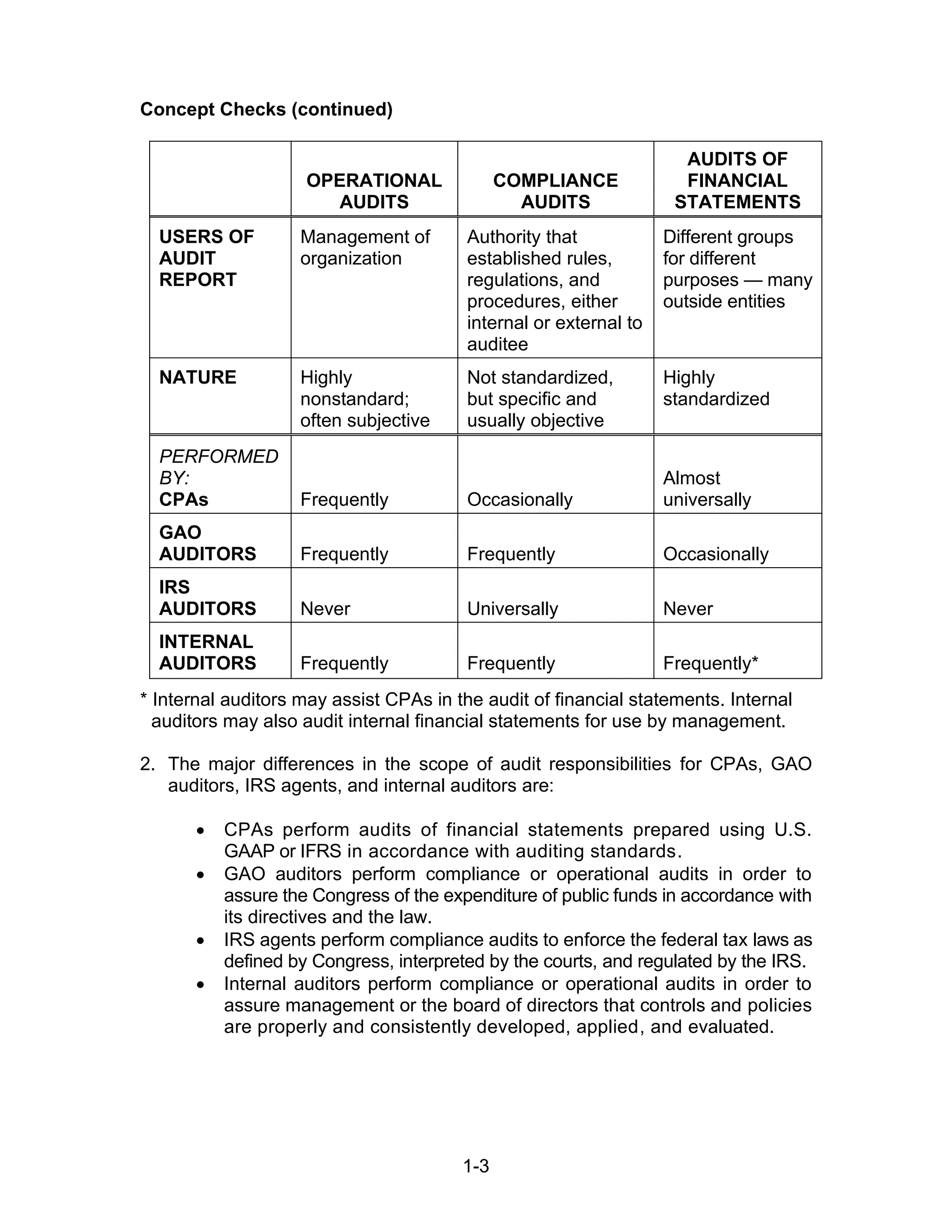
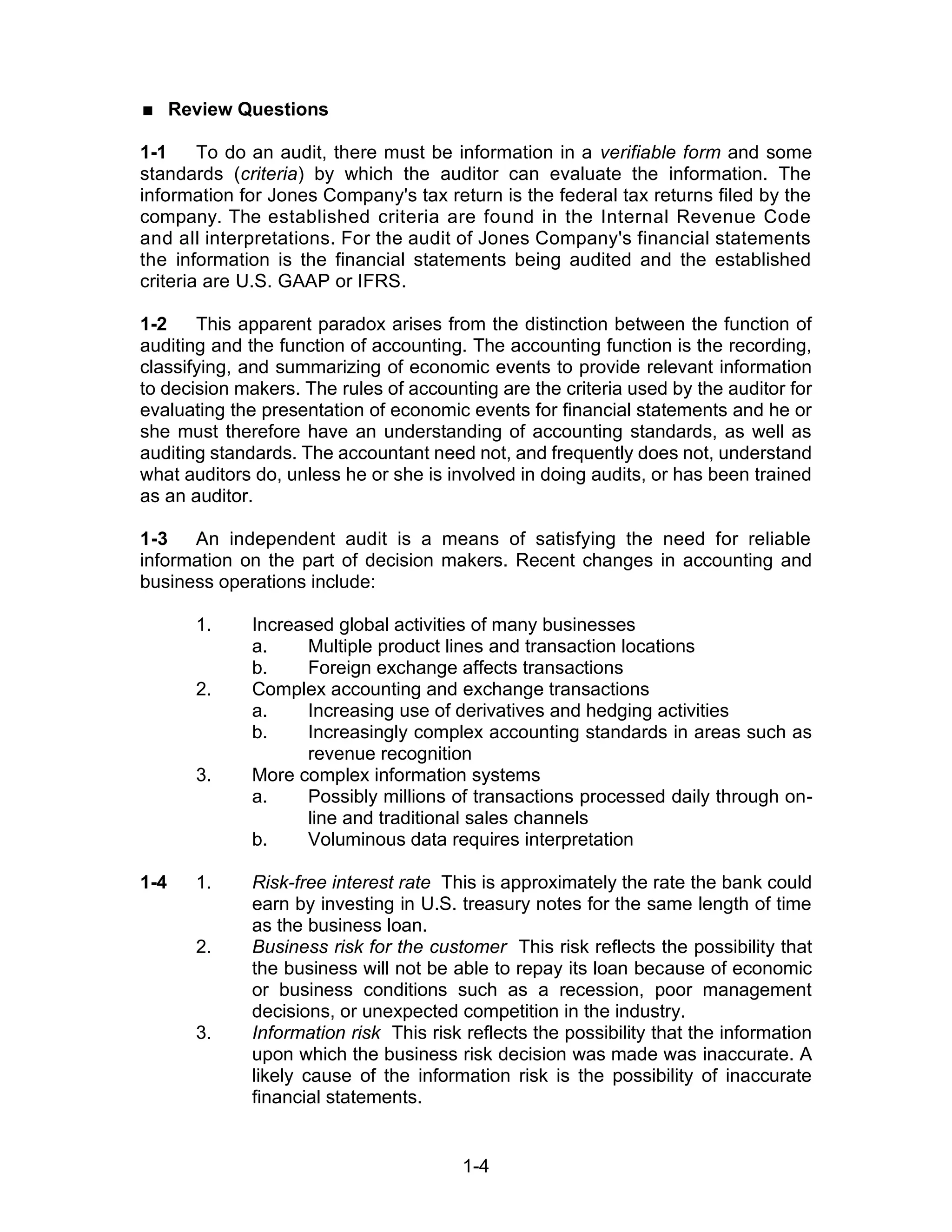
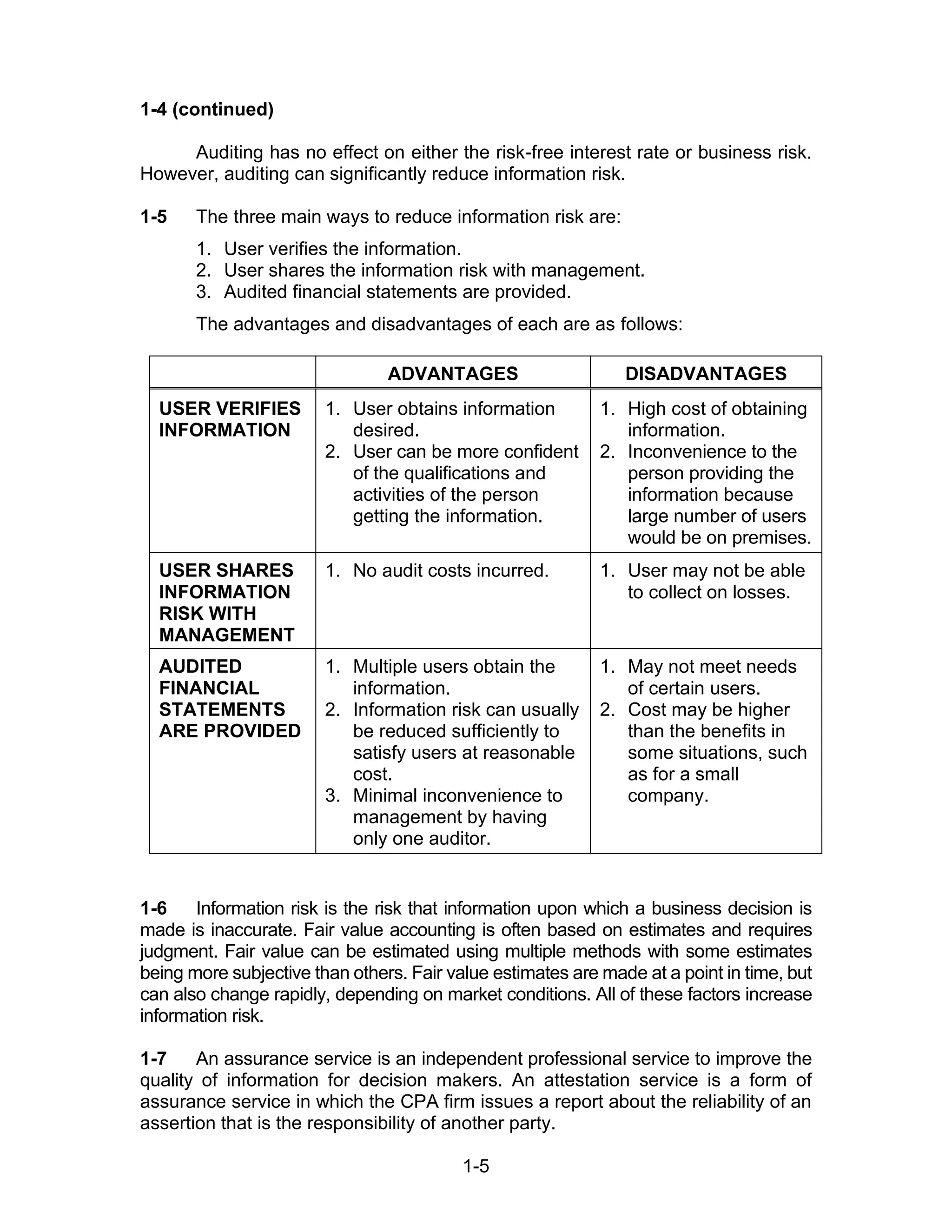
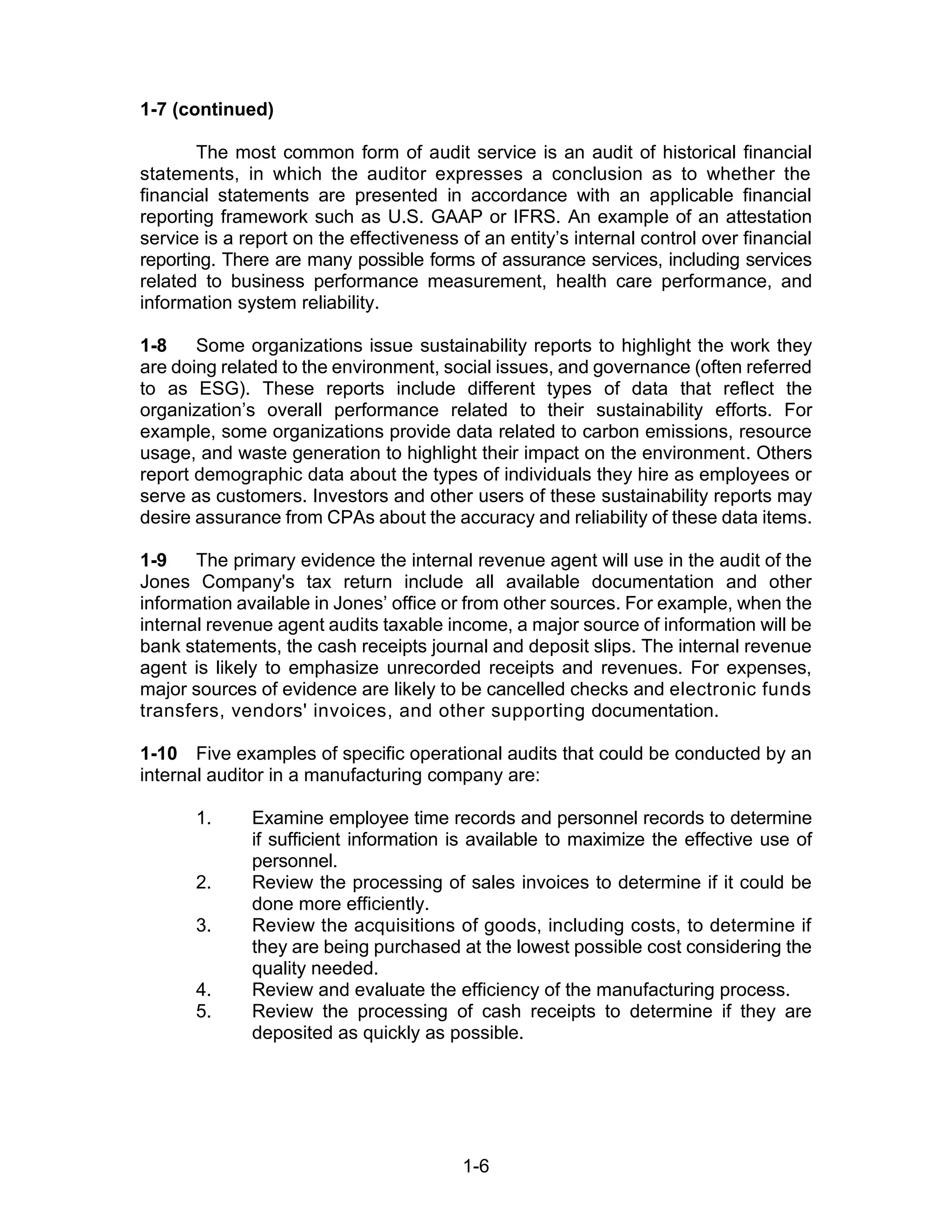
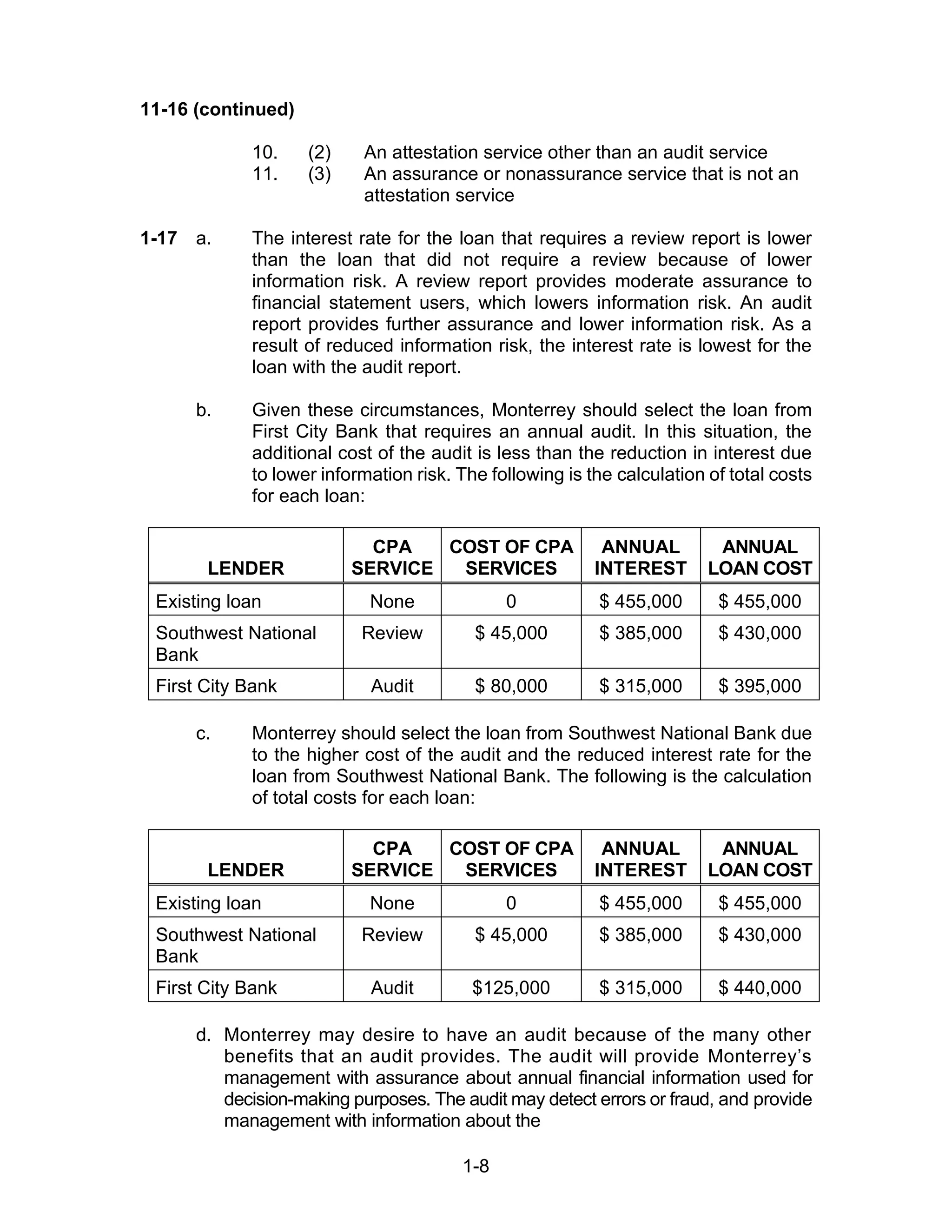
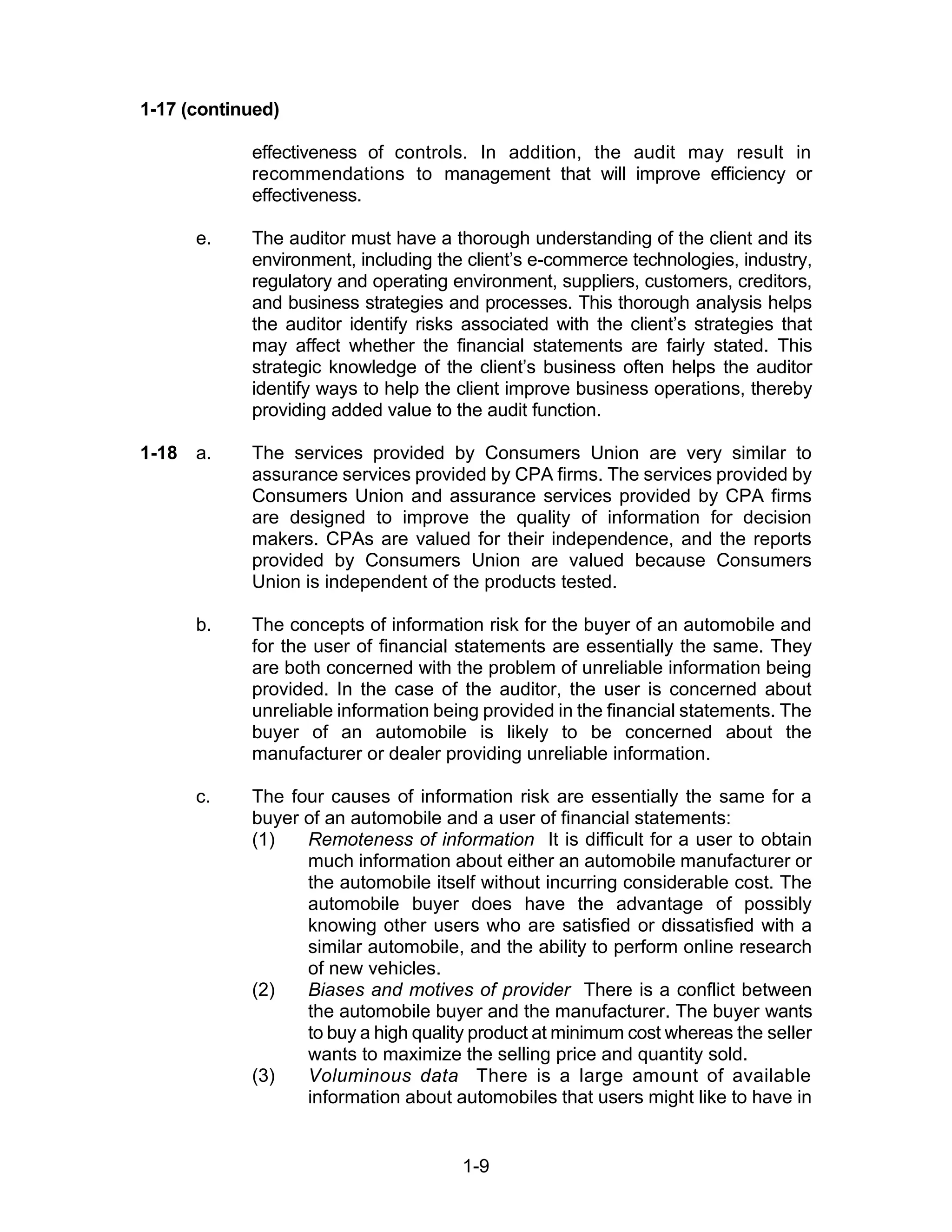
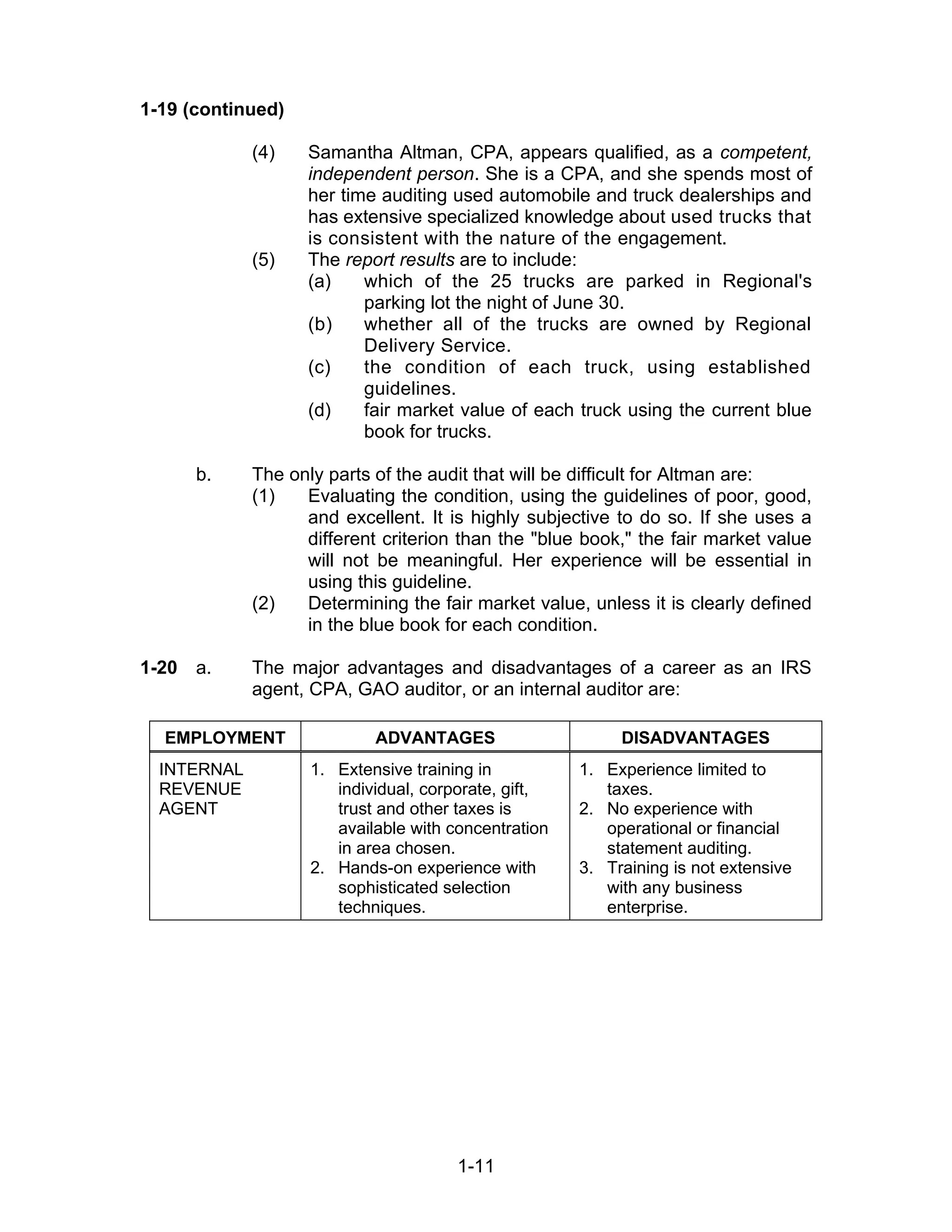
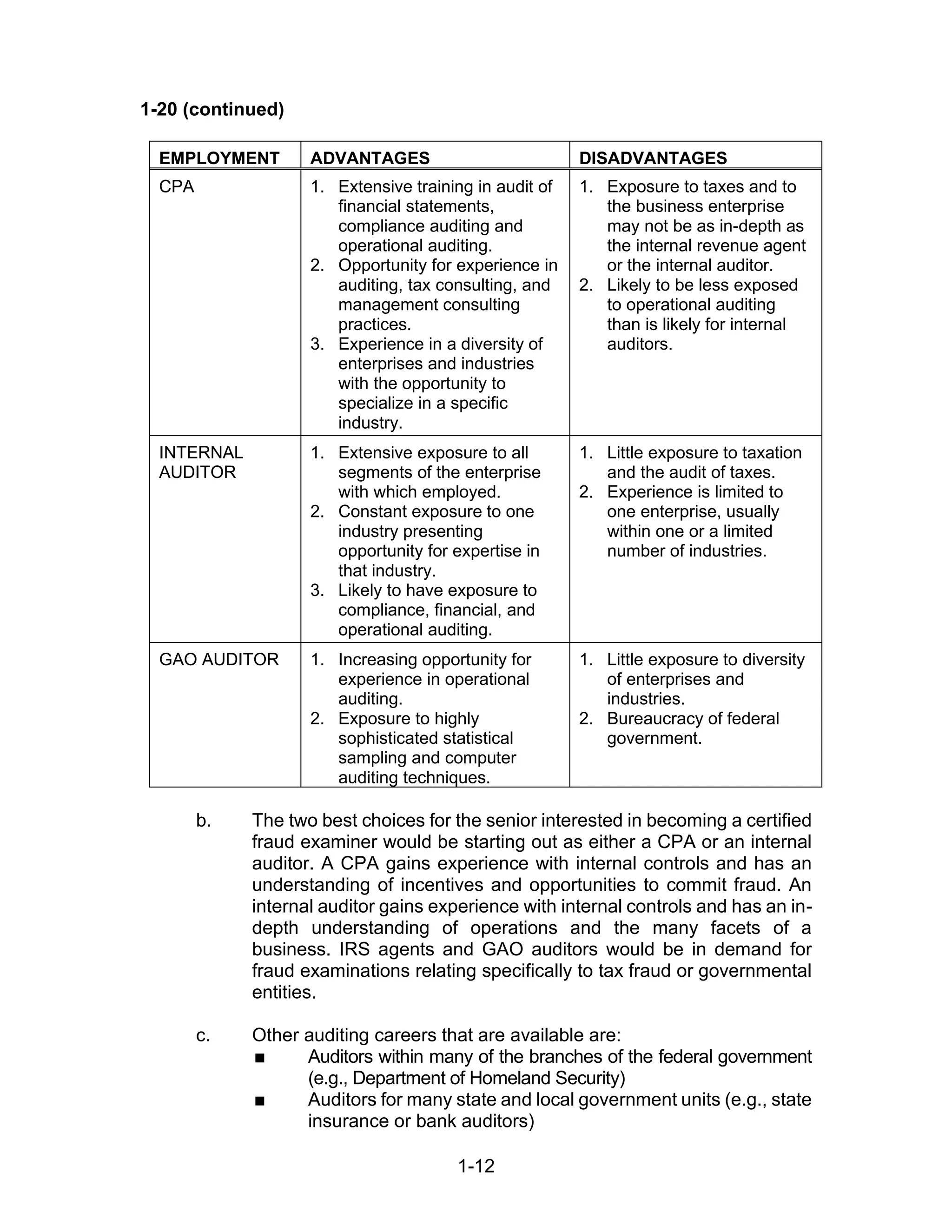

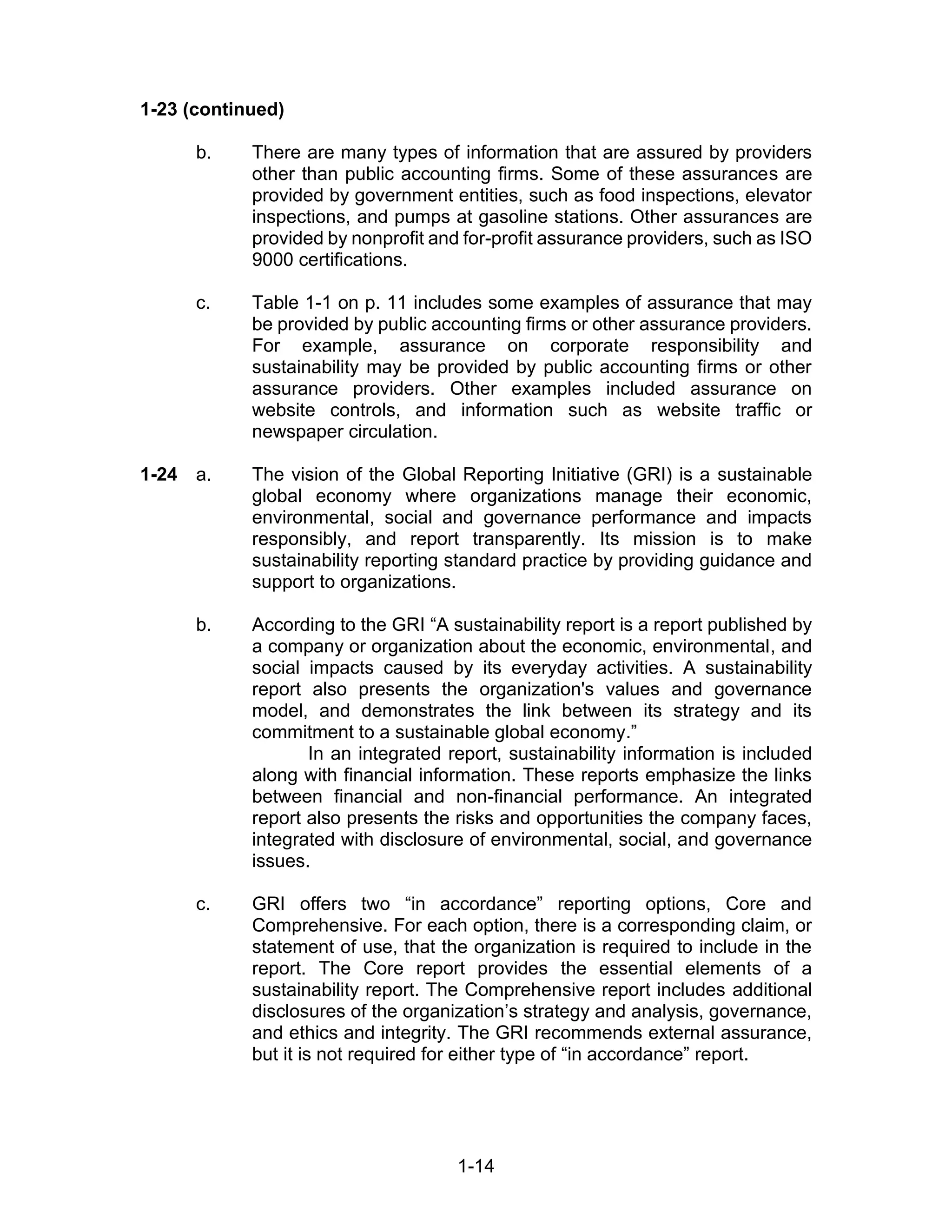
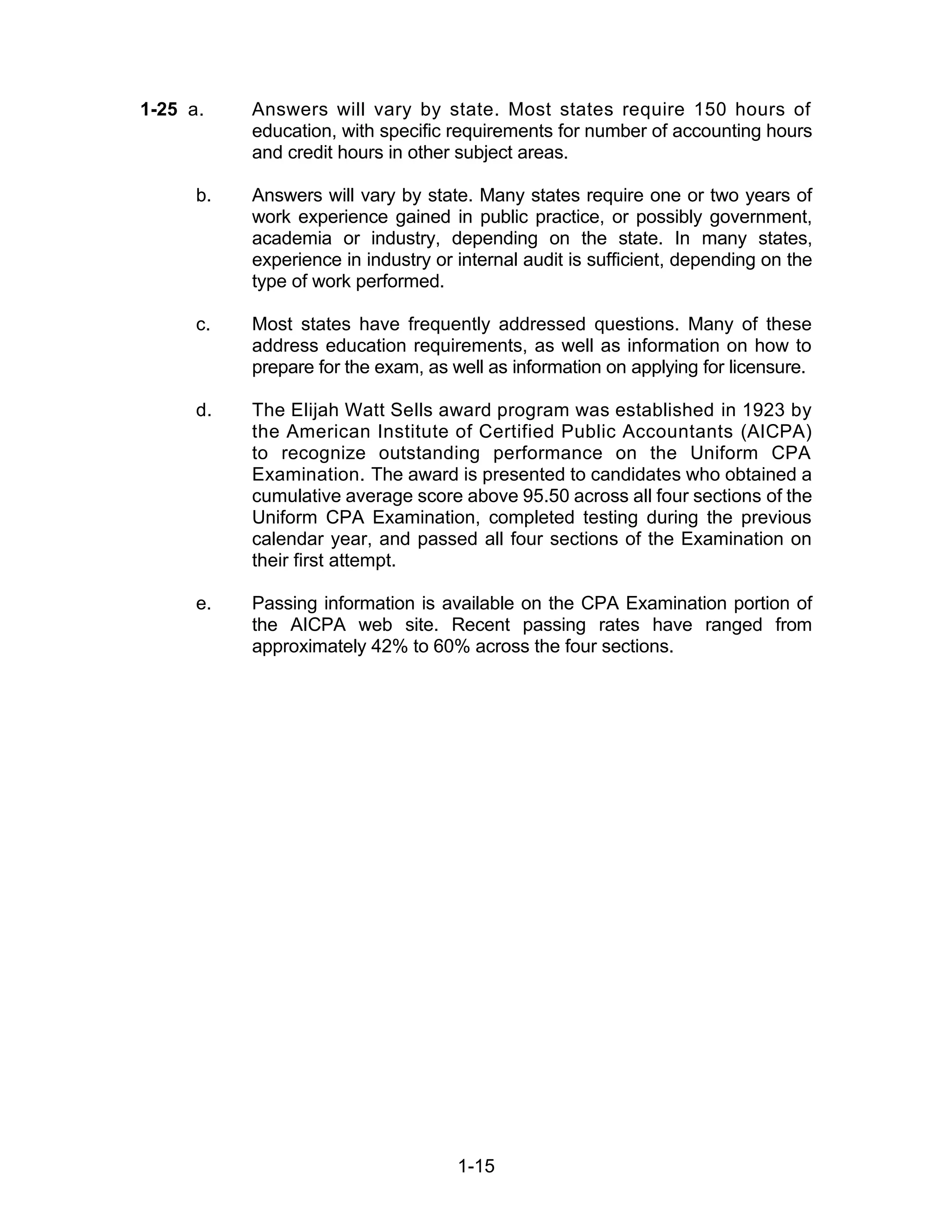

![the religious continuity of the nation, so much reverenced in ancient
times, was attached. This ancient town, which lay on the Roman
Egnatian way from Lychnidus to Pella and Thessalonika, formed the
pass over the mountain-ridge called Bermius, or that prolongation to
the northward of Mount Olympus, through which the Haliakmôn
makes its way out into the maritime plain at Verria, by a cleft more
precipitous and impracticable than that of the Peneius in the defile of
Tempê.
This mountain-chain called Bermius, extending from Olympus
considerably to the north of Edessa, formed the original eastern
boundary of the Macedonian tribes; who seem at first not to have
reached the valley of the Axius in any part of its course, and who
certainly did not reach at first to the Thermaic gulf. Between the
last-mentioned gulf and the eastern counterforts of Olympus and
Bermius there exists a narrow strip of plain land or low hill, which
reaches from the mouth of the Peneius to the head of the Thermaic
gulf. It there widens into the spacious and fertile plain of Salonichi,
comprising the mouths of the Haliakmôn, the Axius, and the
Echeidôrus: the river Ludias, which flows from Edessa into the
marshes surrounding Pella, and which in antiquity joined the
Haliakmôn near its mouth, has now altered its course so as to join
the Axius. This narrow strip, between the mouths of the Peneius and
the Haliakmôn, was the original abode of the Pierian Thracians, who
dwelt close to the foot of Olympus, and among whom the worship of
the Muses seems to have been a primitive characteristic; Grecian
poetry teems with local allusions and epithets which appear
traceable to this early fact, though we are unable to follow it in
detail. North of the Pierians, from the mouth of the Haliakmôn to
that of the Axius, dwelt the Bottiæans.[22] Beyond the river Axius, at
the lower part of its course, began the tribes of the great Thracian
race,—Mygdonians, Krestônians, Edônians, Bisaltæ, Sithonians: the
Mygdonians seem to have been originally the most powerful, since
the country still continued to be called by their name, Mygdonia,
even after the Macedonian conquest. These, and various other
Thracian tribes, originally occupied most part of the country between](https://image.slidesharecdn.com/14682-250518045824-c9f248c1/75/Solution-Manual-for-Auditing-and-Assurance-Services-17th-by-Arens-21-2048.jpg)
![the mouth of the Axius and that of the Strymon; together with that
memorable three-pronged peninsula which derived from the Grecian
colonies its name of Chalkidikê. It will thus appear, if we consider the
Bottiæans as well as the Pierians to be Thracians, that the Thracian
race extended originally southward as far as the mouth of the
Peneius: the Bottiæans professed, indeed, a Kretan origin, but this
pretension is not noticed by either Herodotus or Thucydidês. In the
time of Skylax,[23] seemingly during the early reign of Philip the son
of Amyntas, Macedonia and Thrace were separated by the Strymon.
We have yet to notice the Pæonians, a numerous and much-
divided race,—seemingly neither Thracian nor Macedonian nor
Illyrian, but professing to be descended from the Teukri of Troy,—
who occupied both banks of the Strymon, from the neighborhood of
Mount Skomius, in which that river rises, down to the lake near its
mouth. Some of their tribes possessed the fertile plain of Siris (now
Seres),—the land immediately north of Mount Pangæus,—and even
a portion of the space through which Xerxês marched on his route
from Akanthus to Therma. Besides this, it appears that the upper
parts of the valley of the Axius were also occupied by Pæonian
tribes; how far down the river they extended, we are unable to say.
We are not to suppose that the whole territory between Axius and
Strymon was continuously peopled by them. Continuous population
is not the character of the ancient world, and it seems, moreover,
that while the land immediately bordering on both rivers is in very
many places of the richest quality, the spaces between the two are
either mountain or barren low hill,—forming a marked contrast with
the rich alluvial basin of the Macedonian river Erigon.[24] The
Pæonians, in their north-western tribes, thus bordered upon the
Macedonian Pelagonia,—in their northern tribes, upon the Illyrian
Dardani and Autariatæ,—in their eastern, southern, and south-
eastern tribes, upon the Thracians and Pierians;[25] that is, upon the
second seats occupied by the expelled Pierians under Mount
Pangæus.](https://image.slidesharecdn.com/14682-250518045824-c9f248c1/75/Solution-Manual-for-Auditing-and-Assurance-Services-17th-by-Arens-22-2048.jpg)
![Such was, as far as we can make it out, the position of the
Macedonians and their immediate neighbors, in the seventh century
B. C. It was first altered by the enterprise and ability of a family of
exiled Greeks, who conducted a section of the Macedonian people to
those conquests which their descendants, Philip and Alexander the
Great, afterwards so marvellously multiplied.
Respecting the primitive ancestry of these two princes, there
were different stories, but all concurred in tracing the origin of the
family to the Herakleid or Temenid race of Argos. According to one
story (which apparently cannot be traced higher than Theopompus),
Karanus, brother of the despot Pheidon, had migrated from Argos to
Macedonia, and established himself as conqueror at Edessa;
according to another tale, which we find in Herodotus, there were
three exiles of the Temenid race, Gauanês, Aëropus, and Perdikkas,
who fled from Argos to Illyria, from whence they passed into Upper
Macedonia, in such poverty as to be compelled to serve the petty
king of the town Lebæa in the capacity of shepherds. A remarkable
prodigy happening to Perdikkas foreshadows the future eminence of
his family, and leads to his dismissal by the king of Lebæa,—from
whom he makes his escape with difficulty, by the sudden rise of a
river immediately after he had crossed it, so as to become
impassable by the horsemen who pursued him. To this river, as to
the saviour of the family, solemn sacrifices were still offered by the
kings of Macedonia in the time of Herodotus. Perdikkas with his two
brothers having thus escaped, established himself near the spot
called the Garden of Midas on Mount Bermius, and from the loins of
this hardy young shepherd sprang the dynasty of Edessa.[26] This
tale bears much more the marks of a genuine local tradition than
that of Theopompus. And the origin of the Macedonian family, or
Argeadæ, from Argos, appears to have been universally recognized
by Grecian inquirers,[27]—so that Alexander the son of Amyntas, the
contemporary of the Persian invasion, was admitted by the
Hellanodikæ to contend at the Olympic games as a genuine Greek,
though his competitors sought to exclude him as a Macedonian.](https://image.slidesharecdn.com/14682-250518045824-c9f248c1/75/Solution-Manual-for-Auditing-and-Assurance-Services-17th-by-Arens-23-2048.jpg)
![The talent for command was so much more the attribute of the
Greek mind than of any of the neighboring barbarians, that we easily
conceive a courageous Argeian adventurer acquiring to himself great
ascendency in the local disputes of the Macedonian tribes, and
transmitting the chieftainship of one of those tribes to his offspring.
The influence acquired by Miltiadês among the Thracians of the
Chersonese, and by Phormion among the Akarnanians (who specially
requested that, after his death, his son, or some one of his kindred,
might be sent from Athens to command them),[28] was very much of
this character: we may add the case of Sertorius among the native
Iberians. In like manner, the kings of the Macedonian Lynkêstæ
professed to be descended from the Bacchiadæ[29] of Corinth; and
the neighborhood of Epidamnus and Apollonia, in both of which
doubtless members of that great gens were domiciliated, renders
this tale even more plausible than that of an emigration from Argos.
The kings of the Epirotic Molossi pretended also to a descent from
the heroic Æakid race of Greece. In fact, our means of knowledge
do not enable us to discriminate the cases in which these reigning
families were originally Greeks, from those in which they were
Hellenized natives pretending to Grecian blood.
After the foundation-legend of the Macedonian kingdom, we
have nothing but a long blank until the reign of king Amyntas (about
520-500 B. C.), and his son Alexander, (about 480 B. C.) Herodotus
gives us five successive kings between the founder Perdikkas and
Amyntas,—Perdikkas, Argæus, Philippus, Aëropus, Alketas, Amyntas,
and Alexander,—the contemporary and to a certain extent the ally of
Xerxês.[30] Though we have no means of establishing any dates in
this early series, either of names or of facts, yet we see that the
Temenid kings, beginning from a humble origin, extended their
dominions successively on all sides. They conquered the Briges,[31]—
originally their neighbors on Mount Bermius,—the Eordi, bordering
on Edessa to the westward, who were either destroyed or expelled
from the country, leaving a small remnant still existing in the time of
Thucydidês at Physka between Strymon and Axius,—the Almopians,
an inland tribe of unknown site,—and many of the interior](https://image.slidesharecdn.com/14682-250518045824-c9f248c1/75/Solution-Manual-for-Auditing-and-Assurance-Services-17th-by-Arens-24-2048.jpg)
![Macedonian tribes who had been at first autonomous. Besides these
inland conquests, they had made the still more important acquisition
of Pieria, the territory which lay between Mount Bermius and the
sea, from whence they expelled the original Pierians, who found new
seats on the eastern bank of the Strymon between Mount Pangæus
and the sea. Amyntas king of Macedon was thus master of a very
considerable territory, comprising the coast of the Thermaic gulf as
far north as the mouth of the Haliakmôn, and also some other
territory on the same gulf from which the Bottiæans had been
expelled; but not comprising the coast between the mouths of the
Axius and the Haliakmôn, nor even Pella, the subsequent capital,
which were still in the hands of the Bottiæans at the period when
Xerxês passed through.[32] He possessed also Anthemus, a town and
territory in the peninsula of Chalkidikê, and some parts of Mygdonia,
the territory east of the mouth of the Axius; but how much, we do
not know. We shall find the Macedonians hereafter extending their
dominion still farther, during the period between the Persian and
Peloponnesian war.
We hear of king Amyntas in friendly connection with the
Peisistratid princes at Athens, whose dominion was in part sustained
by mercenaries from the Strymon, and this amicable sentiment was
continued between his son Alexander and the emancipated
Athenians.[33] It is only in the reigns of these two princes that
Macedonia begins to be implicated in Grecian affairs: the regal
dynasty had become so completely Macedonized, and had so far
renounced its Hellenic brotherhood, that the claim of Alexander to
run at the Olympic games was contested by his competitors, and he
was called upon to prove his lineage before the Hellanodikæ.](https://image.slidesharecdn.com/14682-250518045824-c9f248c1/75/Solution-Manual-for-Auditing-and-Assurance-Services-17th-by-Arens-25-2048.jpg)
![mountains. But the general character of the race presents an
aggregate of repulsive features unredeemed by the presence of even
the commonest domestic affections.[34] The Thracian chief deduced
his pedigree from a god called by the Greeks Hermês, to whom he
offered up worship apart from the rest of his tribe, sometimes with
the acceptable present of a human victim. He tattooed his body,[35]
and that of the women belonging to him, as a privilege of honorable
descent: he bought his wives from their parents, and sold his
children for exportation to the foreign merchant: he held it
disgraceful to cultivate the earth, and felt honored only by the
acquisitions of war and robbery. The Thracian tribes worshipped
deities whom the Greeks assimilate to Arês, Dionysus, and Artemis:
the great sanctuary and oracle of their god Dionysus was in one of
the loftiest summits of Rhodopê, amidst dense and foggy thickets,—
the residence of the fierce and unassailable Satræ. To illustrate the
Thracian character, we may turn to a deed perpetrated by the king
of the Bisaltæ,—perhaps one out of several chiefs of that extensive
Thracian tribe,—whose territory, between Strymon and Axius, lay in
the direct march of Xerxês into Greece, and who fled to the desolate
heights of Rhodopê, to escape the ignominy of being dragged along
amidst the compulsory auxiliaries of the Persian invasion, forbidding
his six sons to take any part in it. From recklessness, or curiosity, the
sons disobeyed his commands, and accompanied Xerxês into
Greece; they returned unhurt by the Greek spear; but the incensed
father, when they again came into his presence, caused the eyes of
all of them to be put out. Exultation of success manifested itself in
the Thracians by increased alacrity in shedding blood; but as
warriors, the only occupation which they esteemed, they were not
less brave than patient of hardship, and maintained a good front,
under their own peculiar array, against forces much superior in all
military efficacy.[36] It appears that the Thynians and Bithynians,[37]
on the Asiatic side of the Bosphorus, perhaps also the Mysians, were
members of this great Thracian race, which was more remotely
connected, also, with the Phrygians. And the whole race may be said
to present a character more Asiatic than European, especially in
those ecstatic and maddening religious rites, which prevailed not](https://image.slidesharecdn.com/14682-250518045824-c9f248c1/75/Solution-Manual-for-Auditing-and-Assurance-Services-17th-by-Arens-27-2048.jpg)
![less among the Edonian Thracians than in the mountains of Ida and
Dindymon of Asia, though with some important differences. The
Thracians served to furnish the Greeks with mercenary troops and
slaves, and the number of Grecian colonies planted on the coast had
the effect of partially softening the tribes in the immediate vicinity,
between whose chiefs and the Greek leaders intermarriages were
not unfrequent. But the tribes in the interior seem to have retained
their savage habits with little mitigation, so that the language in
which Tacitus[38] describes them is an apt continuation to that of
Herodotus, though coming more than five centuries after.
To note the situation of each one among these many different
tribes, in the huge territory of Thrace, which is even now so
imperfectly known and badly mapped, would be unnecessary, and,
indeed, impracticable. I shall proceed to mention the principal
Grecian colonies which were formed in the country, noticing
occasionally the particular Thracian tribes with which they came in
contact.
The Grecian colonies established on the Thermaic gulf, as well as
in the peninsula of Chalkidikê, emanating principally from Chalkis
and Eretria, though we do not know their precise epoch, appear to
have been of early date, and probably preceded the time when the
Macedonians of Edessa extended their conquests to the sea. At that
early period, they would find the Pierians still between the Peneius
and Haliakmôn,—also a number of petty Thracian tribes throughout
the broad part of the Chalkidic peninsula; they would find Pydna a
Pierian town, and Therma, Anthemus, Chalastra, etc. Mygdonian.
The most ancient Grecian colony in these regions seems to have
been Methônê, founded by the Eretrians in Pieria; nearly at the
same time (if we may trust a statement of rather suspicious
character, though the date itself is noway improbable) as Korkyra
was settled by the Corinthians (about 730-720 B. C.).[39] It was a little
to the north of the Pierian town of Pydna, and separated by about
ten miles from the Bottiæan town of Alôrus, which lay north of the
Haliakmôn.[40] We know very little about Methônê, except that it](https://image.slidesharecdn.com/14682-250518045824-c9f248c1/75/Solution-Manual-for-Auditing-and-Assurance-Services-17th-by-Arens-28-2048.jpg)
![also hilly and woody, though in a less degree,—both less inviting and
less productive than Pallênê.[41]
Æneia, near that cape which marks the entrance of the inner
Thermaic gulf,—and Potidæa, at the narrow isthmus of Pallênê,—
were both founded by Corinth. Between these two towns lay the
fertile territory called Krusis, or Krossæa, forming in after-times a
part of the domain of Olynthus, but in the sixth century B. C.
occupied by petty Thracian townships.[42] Within Pallênê were the
towns of Mendê, a colony from Eretria,—Skiônê, which, having no
legitimate mother-city traced its origin to Pellenian warriors returning
from Troy,—Aphytis, Neapolis, Ægê, Therambôs, and Sanê,[43] either
wholly or partly colonies from Eretria. In the Sithonian peninsula
were Assa, Pilôrus, Singus, Sartê, Torônê, Galêpsus, Sermylê, and
Mekyberna; all or most of these seem to have been of Chalkidic
origin. But at the head of the Torônaic gulf (which lies between
Sithonia and Pallênê) was placed Olynthus, surrounded by an
extensive and fertile plain. Originally a Bottiæan town, Olynthus will
be seen at the time of the Persian invasion to pass into the hands of
the Chalkidian Greeks,[44] and gradually to incorporate with itself
several of the petty neighboring establishments belonging to that
race; whereby the Chalkidians acquired that marked preponderance
in the peninsula which they retained, even against the efforts of
Athens, until the days of Philip of Macedon.
On the scanty spaces, admitted by the mountainous promontory,
or ridge, ending in Athos, were planted some Thracian and some
Pelasgic settlements of the same inhabitants as those who occupied
Lemnos and Imbros; a few Chalkidic citizens being domiciliated with
them, and the people speaking both Pelasgic and Hellenic. But near
the narrow isthmus which joins this promontory to Thrace, and
along the north-western coast of the Strymonic gulf, were Grecian
towns of considerable importance,—Sanê, Akanthus, Stageira, and
Argilus, all colonies from Andros, which had itself been colonized
from Eretria.[45] Akanthus and Stageira are said to have been
founded in 654 B. C.](https://image.slidesharecdn.com/14682-250518045824-c9f248c1/75/Solution-Manual-for-Auditing-and-Assurance-Services-17th-by-Arens-30-2048.jpg)
![Following the southern coast of Thrace, from the mouth of the
river Strymôn towards the east, we may doubt whether, in the year
560 B. C., any considerable independent colonies of Greeks had yet
been formed upon it. The Ionic colony of Abdêra, eastward of the
mouth of the river Nestus, formed from Teôs in Ionia, is of more
recent date, though the Klazomenians[46] had begun an unsuccessful
settlement there as early as the year 651 B. C.; while Dikæa—the
Chian settlement of Marôneia—and the Lesbian settlement of Ænus
at the mouth of the Hebrus, are of unknown date.[47] The important
and valuable territory near the mouth of the Strymôn, where, after
many ruinous failures,[48] the Athenian colony of Amphipolis
afterwards maintained itself, was at the date here mentioned
possessed by Edonian Thracians and Pierians: the various Thracian
tribes,—Satræ, Edonians, Dersæans, Sapæans, Bistones, Kikones,
Pætians, etc.—were in force on the principal part of the tract
between Strymôn and Hebrus, even to the sea-coast. It is to be
remarked, however, that the island of Thasus, and that of
Samothrace, each possessed what in Greek was called a Peræa,[49]
—a strip of the adjoining mainland cultivated and defended by
means of fortified posts, or small towns: probably, these occupations
are of very ancient date, since they seem almost indispensable as a
means of support to the islands. For the barren Thasus, especially,
merits even at this day the uninviting description applied to it by the
poet Archilochus, in the seventh century B. C.,—“an ass’s backbone,
overspread with wild wood:”[50] so wholly is it composed of
mountain, naked or wooded, and so scanty are the patches of
cultivable soil left in it, nearly all close to the sea-shore. This island
was originally occupied by the Phenicians, who worked the gold
mines in its mountains with a degree of industry which, even in its
remains, excited the admiration of Herodotus. How and when it was
evacuated by them, we do not know; but the poet Archilochus[51]
formed one of a body of Parian colonists who planted themselves on
it in the seventh century B. C., and carried on war, not always
successful, against the Thracian tribe called Saians: on one occasion,
Archilochus found himself compelled to throw away his shield. By
their mines and their possessions on the mainland (which contained](https://image.slidesharecdn.com/14682-250518045824-c9f248c1/75/Solution-Manual-for-Auditing-and-Assurance-Services-17th-by-Arens-31-2048.jpg)
![even richer mines, at Skaptê Hylê, and elsewhere, than those in the
island), the Thasian Greeks rose to considerable power and
population. And as they seem to have been the only Greeks, until
the settlement of the Milesian Histiæus on the Strymôn about 510
B. C., who actively concerned themselves in the mining districts of
Thrace opposite to their island, we cannot be surprised to hear that
their clear surplus revenue before the Persian conquest, about 493
B. C., after defraying the charges of their government without any
taxation, amounted to the large sum of two hundred talents,
sometimes even to three hundred talents, in each year (from forty-
six thousand to sixty-six thousand pounds).
On the long peninsula called the Thracian Chersonese there may
probably have been small Grecian settlements at an early date,
though we do not know at what time either the Milesian settlement
of Kardia, on the western side of the isthmus of that peninsula, near
the Ægean sea,—or the Æolic colony of Sestus on the Hellespont,—
were founded; while the Athenian ascendency in the peninsula
begins only with the migration of the first Miltiadês, during the reign
of Peisistratus at Athens. The Samian colony of Perinthus, on the
northern coast of the Propontis,[52] is spoken of as ancient in date,
and the Megarian colonies, Selymbria and Byzantium, belong to the
seventh century B. C.: the latter of these two is assigned to the 30th
Olympiad (657 B. C.), and its neighbor Chalkêdôn, on the opposite
coast, was a few years earlier. The site of Byzantium in the narrow
strait of the Bosphorus, with its abundant thunny-fishery,[53] which
both employed and nourished a large proportion of the poorer
freemen, was alike convenient either for maritime traffic, or for
levying contributions on the numerous corn ships which passed from
the Euxine into the Ægean; and we are even told that it held a
considerable number of the neighboring Bithynian Thracians as
tributary Periœki. Such dominion, though probably maintained
during the more vigorous period of Grecian city life, became in later
times impracticable, and we even find the Byzantines not always
competent to the defence of their own small surrounding territory.](https://image.slidesharecdn.com/14682-250518045824-c9f248c1/75/Solution-Manual-for-Auditing-and-Assurance-Services-17th-by-Arens-32-2048.jpg)
![The place, however, will be found to possess considerable
importance during all the period of this history.[54]
The Grecian settlements on the inhospitable south-western coast
of the Euxine, south of the Danube, appear never to have attained
any consideration: the principal traffic of Greek ships in that sea
tended to more northerly ports, on the banks of the Borysthenês
and in the Tauric Chersonese. Istria was founded by the Milesians
near the southern embouchure of the Danube,—Apollonia and
Odêssus on the same coast, more to the south,—all probably
between 600-560 B. C. The Megarian or Byzantine colony of
Mesambria, seems to have been later than the Ionic revolt; of
Kallatis the age is not known. Tomi, north of Kallatis and south of
Istria, is renowned as the place of Ovid’s banishment.[55] The picture
which he gives of that uninviting spot, which enjoyed but little truce
from the neighborhood of the murderous Getæ, explains to us
sufficiently why these towns acquired little or no importance.
The islands of Lemnos and Imbros, in the Ægean, were at this
early period occupied by Tyrrhenian Pelasgi, were conquered by the
Persians about 508 B. C., and seem to have passed into the power of
the Athenians at the time when Ionia revolted from the Persians. If
the mythical or poetical stories respecting these Tyrrhenian Pelasgi
contain any basis of truth, they must have been a race of
buccaneers not less rapacious than cruel. At one time, these Pelasgi
seem also to have possessed Samothrace, but how or when they
were supplanted by Greeks, we find no trustworthy account; the
population of Samothrace at the time of the Persian war was Ionic.
[56]](https://image.slidesharecdn.com/14682-250518045824-c9f248c1/75/Solution-Manual-for-Auditing-and-Assurance-Services-17th-by-Arens-33-2048.jpg)
![CHAPTER XXVII.
KYRENE AND BARKA. — HESPERIDES.
It has been already mentioned, in a former chapter, that
Psammetichus king of Egypt, about the middle of the seventh
century B. C., first removed those prohibitions which had excluded
Grecian commerce from his country. In his reign, Grecian
mercenaries were first established in Egypt, and Grecian traders
admitted, under certain regulations, into the Nile. The opening of
this new market emboldened them to traverse the direct sea which
separates Krête from Egypt,—a dangerous voyage with vessels
which rarely ventured to lose sight of land,—and seems to have first
made them acquainted with the neighboring coast of Libya, between
the Nile and the gulf called the Great Syrtis. Hence arose the
foundation of the important colony called Kyrênê.
As in the case of most other Grecian colonies, so in that of
Kyrênê, both the foundation and the early history are very
imperfectly known. The date of the event, as far as can be made out
amidst much contradiction of statement, was about 630 B. C.:[57]
Thêra was the mother-city, herself a colony from Lacedæmon; and
the settlements formed in Libya became no inconsiderable
ornaments to the Dorian name in Hellas.
According to the account of a lost historian, Meneklês,[58]—
political dissension among the inhabitants of Thêra led to that
emigration which founded Kyrênê; and the more ample legendary
details which Herodotus collected, partly from Theræan, partly from
Kyrenæan informants, are not positively inconsistent with this
statement, though they indicate more particularly bad seasons,
distress, and over-population. Both of them dwell emphatically on](https://image.slidesharecdn.com/14682-250518045824-c9f248c1/75/Solution-Manual-for-Auditing-and-Assurance-Services-17th-by-Arens-34-2048.jpg)
![the Delphian oracle as the instigator as well as the director of the
first emigrants, whose apprehensions of a dangerous voyage and an
unknown country were very difficult to overcome. Both of them
affirmed that the original œkist Battus was selected and consecrated
to the work by the divine command: both called Battus the son of
Polymnêstus, of the mythical breed called Minyæ. But on other
points there was complete divergence between the two stories, and
the Kyrenæans themselves, whose town was partly peopled by
emigrants from Krête, described the mother of Battus as daughter of
Etearchus, prince of the Kretan town of Axus.[59] Battus had an
impediment in his speech, and it was on his intreating from the
Delphian oracle a cure for this infirmity that he received directions to
go as “a cattle-breeding œkist to Libya.” The suffering Theræans
were directed to assist him, but neither he nor they knew where
Libya was, nor could they find any resident in Krête who had ever
visited it. Such was the limited reach of Grecian navigation to the
south of the Ægean sea, even a century after the foundation of
Syracuse. At length, by prolonged inquiry, they discovered a man
employed in catching the purple shellfish, named Korôbius,—who
said that he had been once forced by stress of weather to the island
of Platea, close to the shores of Libya, and on the side not far
removed from the western limit of Egypt. Some Theræans being
sent along with Korôbius to inspect this island, left him there with a
stock of provisions, and returned to Thêra to conduct the emigrants.
From the seven districts into which Thêra was divided, emigrants
were drafted for the colony, one brother being singled out by lot
from the different numerous families. But so long was their return to
Platea deferred, that the provisions of Korôbius were exhausted, and
he was only saved from starvation by the accidental arrival of a
Samian ship, driven by contrary winds out of her course on the
voyage to Egypt. Kôlæus, the master of this ship (whose immense
profits made by the first voyage to Tartêssus have been noticed in a
former chapter), supplied him with provisions for a year,—an act of
kindness, which is said to have laid the first foundation of the
alliance and good feeling afterwards prevalent between Thêra,
Kyrênê, and Samos. At length the expected emigrants reached the](https://image.slidesharecdn.com/14682-250518045824-c9f248c1/75/Solution-Manual-for-Auditing-and-Assurance-Services-17th-by-Arens-35-2048.jpg)
![island, having found the voyage so perilous and difficult, that they
once returned in despair to Thêra, where they were only prevented
by force from relanding. The band which accompanied Battus was all
conveyed in two pentekonters,—armed ships, with fifty rowers each.
Thus humble was the start of the mighty Kyrênê, which, in the days
of Herodotus, covered a city-area equal to the entire island of Platea.
[60]
That island, however, though near to Libya, and supposed by the
colonists to be Libya, was not so in reality: the commands of the
oracle had not been literally fulfilled. Accordingly, the settlement
carried with it nothing but hardship for the space of two years, and
Battus returned with his companions to Delphi, to complain that the
promised land had proved a bitter disappointment. The god, through
his priestess, returned for answer, “If you, who have never visited
the cattle-breeding Libya, know it better than I, who have, I greatly
admire your cleverness.” Again the inexorable mandate forced them
to return; and this time they planted themselves on the actual
continent of Libya, nearly over against the island of Platea, in a
district called Aziris, surrounded on both sides by fine woods, and
with a running stream adjoining. After six years of residence in this
spot, they were persuaded by some of the indigenous Libyans to
abandon it, under the promise that they should be conducted to a
better situation: and their guides now brought them to the actual
site of Kyrênê, saying, “Here, men of Hellas, is the place for you to
dwell, for here the sky is perforated.”[61] The road through which
they passed had led through the tempting region of Irasa with its
fountain Thestê, and their guides took the precaution to carry them
through it by night, in order that they might remain ignorant of its
beauties.
Such were the preliminary steps, divine and human, which
brought Battus and his colonists to Kyrênê. In the time of Herodotus,
Irasa was an outlying portion of the eastern territory of this powerful
city. But we trace in the story just related an opinion prevalent
among his Kyrenæan informants, that Irasa with its fountain Thestê](https://image.slidesharecdn.com/14682-250518045824-c9f248c1/75/Solution-Manual-for-Auditing-and-Assurance-Services-17th-by-Arens-36-2048.jpg)
![was a more inviting position than Kyrênê with its fountain of Apollo,
and ought in prudence to have been originally chosen; out of which
opinion, according to the general habit of the Greek mind, an
anecdote is engendered and accredited, explaining how the
supposed mistake was committed. What may have been the
recommendations of Irasa, we are not permitted to know: but
descriptions of modern travellers, no less than the subsequent
history of Kyrênê, go far to justify the choice actually made. The city
was placed at the distance of about ten miles from the sea, having a
sheltered port called Apollonia, itself afterwards a considerable town,
—it was about twenty miles from the promontory Phykus, which
forms the northernmost projection of the African coast, nearly in the
longitude of the Peloponnesian Cape Tænarus (Matapan). Kyrênê
was situated about eighteen hundred feet above the level of the
Mediterranean, of which it commanded a fine view, and from which
it was conspicuously visible, on the edge of a range of hills which
slope by successive terraces down to the port. The soil immediately
around, partly calcareous, partly sandy, is described by Captain
Beechey to present a vigorous vegetation and remarkable fertility,
though the ancients considered it inferior in this respect both to
Barka[62] and Hesperides, and still more inferior to the more westerly
region near Kinyps. But the abundant periodical rains, attracted by
the lofty heights around, and justifying the expression of the
“perforated sky,” were even of greater importance, under an African
sun, than extraordinary richness of soil.[63] The maritime regions
near Kyrênê and Barka, and Hesperides, produced oil and wine as
well as corn, while the extensive district between these towns,
composed of alternate mountain, wood, and plain, was eminently
suited for pasture and cattle-breeding; and the ports were secure,
presenting conveniences for the intercourse of the Greek trader with
Northern Africa, such as were not to be found along all the coasts of
the Great Syrtis westward of Hesperides. Abundance of applicable
land,—great diversity both of climate and of productive season,
between the sea-side, the low hill, and the upper mountain, within a
small space, so that harvest was continually going on, and fresh
produce coming in from the earth, during eight months of the year,](https://image.slidesharecdn.com/14682-250518045824-c9f248c1/75/Solution-Manual-for-Auditing-and-Assurance-Services-17th-by-Arens-37-2048.jpg)
![—together with the monopoly of the valuable plant called the
Silphium, which grew nowhere except in the Kyrenaic region, and
the juice of which was extensively demanded throughout Greece and
Italy,—led to the rapid growth of Kyrênê, in spite of serious and
renewed political troubles. And even now, the immense remains
which still mark its desolate site, the evidences of past labor and
solicitude at the Fountain of Apollo, and elsewhere, together with
the profusion of excavated and ornamented tombs,—attest
sufficiently what the grandeur of the place must have been in the
days of Herodotus and Pindar. So much did the Kyrenæans pride
themselves on the Silphium, found wild in their back country, from
the island of Platea on the east to the inner recess of the Great
Syrtis westward,—the leaves of which were highly salubrious for
cattle, and the stalk for man, while the root furnished the peculiar
juice for export,—that they maintained it to have first appeared
seven years prior to the arrival of the first Grecian colonists in their
city.[64]
But it was not only the properties of the soil which promoted the
prosperity of Kyrênê. Isokratês[65] praises the well-chosen site of
that colony because it was planted in the midst of indigenous natives
apt for subjection, and far distant from any formidable enemies.
That the native Libyan tribes were made conducive in an eminent
degree to the growth of the Greco-Libyan cities, admits of no doubt;
and in reviewing the history of these cities, we must bear in mind
that their population was not pure Greek, but more or less mixed,
like that of the colonies in Italy, Sicily, or Ionia. Though our
information is very imperfect, we see enough to prove that the small
force brought over by Battus the Stammerer was enabled first to
fraternize with the indigenous Libyans,—next, reinforced by
additional colonists and availing themselves of the power of native
chiefs, to overawe and subjugate them. Kyrênê—combined with
Barka and Hesperides, both of them sprung from her root[66]—
exercised over the Libyan tribes between the borders of Egypt and
the inner recess of the Great Syrtis, for a space of three degrees of
longitude, an ascendency similar to that which Carthage possessed](https://image.slidesharecdn.com/14682-250518045824-c9f248c1/75/Solution-Manual-for-Auditing-and-Assurance-Services-17th-by-Arens-38-2048.jpg)
![over the more westerly Libyans near the Lesser Syrtis. Within these
Kyrenæan limits, and further westward along the shores of the Great
Syrtis, the Libyan tribes were of pastoral habits; westward, beyond
the Lake Tritônis and the Lesser Syrtis,[67] they began to be
agricultural. Immediately westward of Egypt were the Adyrmachidæ,
bordering upon Apis and Marea, the Egyptian frontier towns;[68] they
were subject to the Egyptians, and had adopted some of the minute
ritual and religious observances which characterized the region of
the Nile. Proceeding westward from the Adyrmachidæ were found
the Giligammæ, the Asbystæ, the Auschisæ, the Kabales, and the
Nasamônes,—the latter of whom occupied the south-eastern corner
of the Great Syrtis;—next, the Makæ, Gindânes, Lotophagi,
Machlyes, as far as a certain river and lake called Tritôn and Tritônis,
which seems to have been near the Lesser Syrtis. These last-
mentioned tribes were not dependent either on Kyrênê or on
Carthage, at the time of Herodotus, nor probably during the proper
period of free Grecian history, (600-300 B. C.) In the third century
B. C., the Ptolemaic governors of Kyrênê extended their dominion
westward, while Carthage pushed her colonies and castles eastward,
so that the two powers embraced between them the whole line of
coast between the Greater and Lesser Syrtis, meeting at the spot
called the Altars of the Brothers Philæni,—so celebrated for its
commemorative legend.[69] But even in the sixth century B. C.,
Carthage was jealous of the extension of Grecian colonies along this
coast, and aided the Libyan Makæ (about 510 B. C.) to expel the
Spartan prince Dorieus from his settlement near the river Kinyps.
Near that spot was afterwards planted, by Phenician or Carthaginian
exiles, the town of Leptis Magna[70] (now Lebida), which does not
seem to have existed in the time of Herodotus. Nor does the latter
historian notice the Marmaridæ, who appear as the principal Libyan
tribe near the west of Egypt, between the age of Skylax and the
third century of the Christian era. Some migration or revolution
subsequent to the time of Herodotus must have brought this name
into predominance.[71]](https://image.slidesharecdn.com/14682-250518045824-c9f248c1/75/Solution-Manual-for-Auditing-and-Assurance-Services-17th-by-Arens-39-2048.jpg)
![The interior country, stretching westward from Egypt along the
thirtieth and thirty-first parallel of latitude, to the Great Syrtis, and
then along the southern shore of that gulf, is to a great degree low
and sandy, and quite destitute of trees; yet affording in many parts
water, herbage, and a fertile soil.[72] But the maritime region north
of this, constituting the projecting bosom of the African coast from
the island of Platea (Gulf of Bomba) on the east to Hesperides
(Bengazi) on the west, is of a totally different character; covered
with mountains of considerable elevation, which reach their highest
point near Kyrênê, interspersed with productive plain and valley,
broken by frequent ravines which carry off the winter torrents into
the sea, and never at any time of the year destitute of water. It is
this latter advantage that causes them to be now visited every
summer by the Bedouin Arabs, who flock to the inexhaustible
Fountain of Apollo and to other parts of the mountainous region
from Kyrênê to Hesperides, when their supply of water and herbage
fails in the interior:[73] and the same circumstance must have
operated in ancient times to hold the nomadic Libyans in a sort of
dependence on Kyrênê and Barka. Kyrênê appropriated the maritime
portion of the territory of the Libyan Asbystæ;[74] the Auschisæ
occupied the region south of Barka, touching the sea near
Hesperides,—the Kabales near Teucheira in the territory of Barka.
Over the interior spaces these Libyan Nomads, with their cattle and
twisted tents, wandered unrestrained, amply fed upon meat and
milk,[75] clothed in goatskins, and enjoying better health than any
people known to Herodotus. Their breed of horses was excellent,
and their chariots or wagons with four horses could perform feats
admired even by Greeks: it was to these horses that the princes[76]
and magnates of Kyrênê and Barka often owed the success of their
chariots in the games of Greece. The Libyan Nasamônes, leaving
their cattle near the sea, were in the habit of making an annual
journey up the country to the Oasis of Augila, for the purpose of
gathering the date-harvest,[77] or of purchasing dates,—a journey
which the Bedouin Arabs from Bengazi still make annually, carrying
up their wheat and barley, for the same purpose. Each of the Libyan
tribes was distinguished by a distinct mode of cutting the hair, and](https://image.slidesharecdn.com/14682-250518045824-c9f248c1/75/Solution-Manual-for-Auditing-and-Assurance-Services-17th-by-Arens-40-2048.jpg)
![by some peculiarities of religious worship, though generally all
worshipped the Sun and the Moon.[78] But in the neighborhood of
the Lake Tritônis (seemingly the western extremity of Grecian
coasting trade in the time of Herodotus, who knows little beyond,
and begins to appeal to Carthaginian authorities), the Grecian deities
Poseidôn and Athênê, together with the legend of Jason and the
Argonauts, had been localized. There were, moreover, current
prophecies announcing that one hundred Hellenic cities were
destined one day to be founded round the lake,—and that one city in
the island Phla, surrounded by the lake, was to be planted by the
Lacedæmonians.[79] These, indeed, were among the many unfulfilled
prophecies which from every side cheated the Grecian ear,—
proceeding in this case probably from Kyrenæan or Theræan
traders, who thought the spot advantageous for settlement, and
circulated their own hopes under the form of divine assurances. It
was about the year 510 B. C.[80] that some of these Theræans
conducted the Spartan prince Dorieus to found a colony in the fertile
region of Kinyps, belonging to the Libyan Makæ. But Carthage,
interested in preventing the extension of Greek settlements
westward, aided the Libyans in driving him out.
The Libyans in the immediate neighborhood of Kyrênê were
materially changed by the establishment of that town, and
constituted a large part—at first, probably, far the largest part—of its
constituent population. Not possessing that fierce tenacity of habits
which the Mohammedan religion has impressed upon the Arabs of
the present day, they were open to the mingled influence of
constraint and seduction applied by Grecian settlers; so that in the
time of Herodotus, the Kabales and the Asbystæ of the interior had
come to copy Kyrenæan tastes and customs.[81] The Theræan
colonists, having obtained not merely the consent but even the
guidance of the natives to their occupation of Kyrênê, constituted
themselves like privileged Spartan citizens in the midst of Libyan
Periœki.[82] They seem to have married Libyan wives, whence
Herodotus describes the women of Kyrênê and Barka as following,
even in his time, religious observances indigenous and not Hellenic.](https://image.slidesharecdn.com/14682-250518045824-c9f248c1/75/Solution-Manual-for-Auditing-and-Assurance-Services-17th-by-Arens-41-2048.jpg)
![[83] Even the descendants of the primitive œkist Battus were semi-
Libyan. For Herodotus gives us the curious information that Battus
was the Libyan word for a king, deducing from it the just inference,
that the name Battus was not originally personal to the œkist, but
acquired in Libya first as a title,[84]—and that it afterwards passed to
his descendants as a proper name. For eight generations the
reigning princes were called Battus and Arkesilaus, the Libyan
denomination alternating with the Greek, until the family was finally
deprived of its power. Moreover, we find the chief of Barka, kinsman
of Arkesilaus of Kyrênê bearing the name of Alazir; a name certainly
not Hellenic, and probably Libyan.[85] We are, therefore, to conceive
the first Theræan colonists as established in their lofty fortified post
Kyrênê, in the centre of Libyan Periœki, till then strangers to walls,
to arts, and perhaps even to cultivated land. Probably these Periœki
were always subject and tributary, in a greater or less degree,
though they continued for half a century to retain their own king.
To these rude men the Theræans communicated the elements of
Hellenism and civilization, not without receiving themselves much
that was non-Hellenic in return; and perhaps the reactionary
influence of the Libyan element against the Hellenic might have
proved the stronger of the two, had they not been reinforced by
new-comers from Greece. After forty years of Battus the œkist
(about 630-590 B. C.), and sixteen years of his son Arkesilaus (about
590-574 B. C.), a second Battus[86] succeeded, called Battus the
Prosperous, to mark the extraordinary increase of Kyrênê during his
presidency. The Kyrenæans under him took pains to invite new
settlers from all parts of Greece without distinction,—a circumstance
deserving notice in Grecian colonization, which usually manifested a
preference for certain races, if it did not positively exclude the rest.
To every new-comer was promised a lot of land, and the Delphian
priestess strenuously seconded the wishes of the Kyrenæans,
proclaiming that “whosoever should reach the place too late for the
land-division, would have reason to repent it.” Such promise of new
land, as well as the sanction of the oracle, were doubtless made
public at all the games and meetings of Greeks, and a large number](https://image.slidesharecdn.com/14682-250518045824-c9f248c1/75/Solution-Manual-for-Auditing-and-Assurance-Services-17th-by-Arens-42-2048.jpg)
![of new colonists embarked for Kyrênê. The exact number is not
mentioned, but we must conceive it to have been very great, when
we are told that during the succeeding generation, not less than
seven thousand Grecian hoplites of Kyrênê perished by the hands of
the revolted Libyans,—yet leaving both the city itself and its
neighbor Barka still powerful. The loss of so great a number as
seven thousand Grecian hoplites has very few parallels throughout
the whole history of Greece. In fact, this second migration, during
the government of Battus the Prosperous, which must have taken
place between 574-554 B. C., ought to be looked upon as the
moment of real and effective colonization for Kyrênê. It was on this
occasion, probably, that the port of Apollonia, which afterwards
came to equal the city itself in importance, was first occupied and
fortified,—for this second swarm of emigrants came by sea direct,
while the original colonists had reached Kyrênê by land from the
island of Platea through Irasa. The fresh emigrants came from
Peloponnesus, Krete, and some other islands of the Ægean.
To furnish so many new lots of land, it was either necessary, or it
was deemed expedient, to dispossess many of the Libyan Periœki,
who found their situation in other respects also greatly changed for
the worse. The Libyan king Adikran, himself among the sufferers,
implored aid from Apriês king of Egypt, then in the height of his
power; sending to declare himself and his people Egyptian subjects,
like their neighbors the Adyrmachidæ. The Egyptian prince,
accepting the offer, despatched a large military force of the native
soldier-caste, who were constantly in station at the western frontier-
town Marea, by the route along shore to attack Kyrênê. They were
met at Irasa by the Greeks of Kyrênê, and, being totally ignorant of
Grecian arms and tactics, experienced a defeat so complete that few
of them reached home.[87] The consequences of this disaster in
Egypt, where it caused the transfer of the throne from Apriês to
Amasis, have been noticed in a former chapter.
Of course the Libyan Periœki were put down, and the redivision
of lands near Kyrênê among the Greek settlers accomplished, to the](https://image.slidesharecdn.com/14682-250518045824-c9f248c1/75/Solution-Manual-for-Auditing-and-Assurance-Services-17th-by-Arens-43-2048.jpg)