UNIT 2
SOCKET PROGRAMMING
INTRODUCTION:
Programming with TCP/IP sockets:
Step 1. Create a socket:
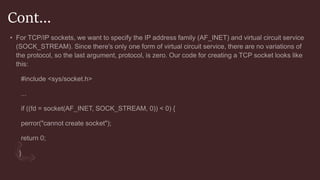
Cont…
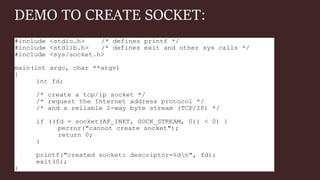
DEMO TO CREATE SOCKET:
#include <stdio.h> /* defines printf */
#include <stdlib.h> /* defines exit and other sys calls */
#include <sys/socket.h>
main(int argc, char **argv)
{
int fd;
/* create a tcp/ip socket */
/* request the Internet address protocol */
/* and a reliable 2-way byte stream (TCP/IP) */
if ((fd = socket(AF_INET, SOCK_STREAM, 0)) < 0) {
perror("cannot create socket");
return 0;
}
printf("created socket: descriptor=%dn", fd);
exit(0);
}
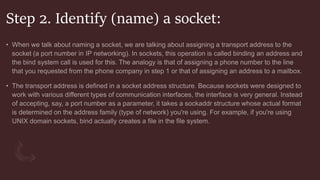
Step 2. Identify (name) a socket:
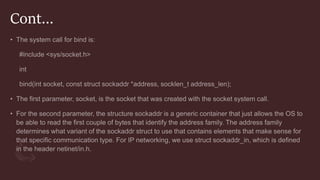
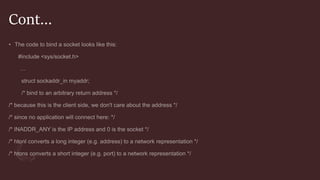
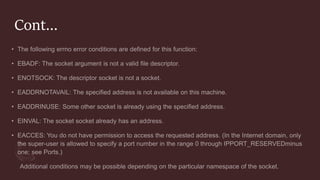
Cont…
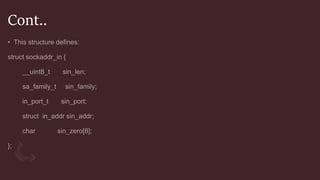
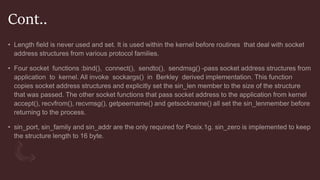
Cont..
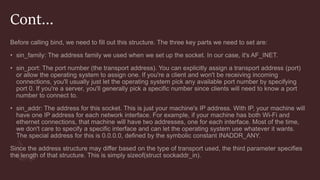
Cont…
Cont…
Cont…
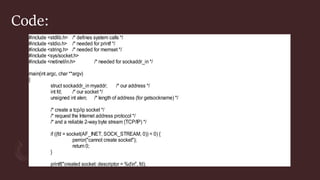
Code:
#include <stdlib.h> /* defines system calls */
#include <stdio.h> /* needed for printf */
#include <string.h> /* needed for memset */
#include <sys/socket.h>
#include <netinet/in.h> /* needed for sockaddr_in */
main(int argc, char **argv)
{
struct sockaddr_in myaddr; /* our address */
int fd; /* our socket */
unsigned int alen; /* length of address (for getsockname) */
/* create a tcp/ip socket */
/* request the Internet address protocol */
/* and a reliable 2-way byte stream (TCP/IP) */
if ((fd = socket(AF_INET, SOCK_STREAM, 0)) < 0) {
perror("cannot create socket");
return 0;
}
printf("created socket: descriptor = %dn", fd);
Cont…
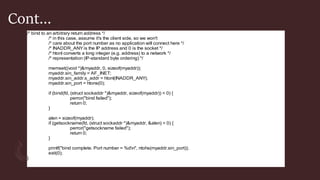
/* bind to an arbitrary return address */
/* in this case, assume it's the client side, so we won't
/* care about the port number as no application will connect here */
/* INADDR_ANY is the IP address and 0 is the socket */
/* htonl converts a long integer (e.g. address) to a network */
/* representation (IP-standard byte ordering) */
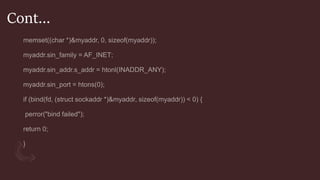
memset((void *)&myaddr, 0, sizeof(myaddr));
myaddr.sin_family = AF_INET;
myaddr.sin_addr.s_addr = htonl(INADDR_ANY);
myaddr.sin_port = htons(0);
if (bind(fd, (struct sockaddr *)&myaddr, sizeof(myaddr)) < 0) {
perror("bind failed");
return 0;
}
alen = sizeof(myaddr);
if (getsockname(fd, (struct sockaddr *)&myaddr, &alen) < 0) {
perror("getsockname failed");
return 0;
}
printf("bind complete. Port number = %dn", ntohs(myaddr.sin_port));
exit(0);
}
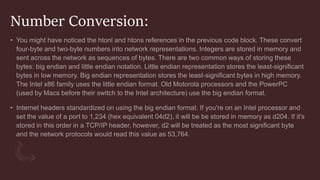
Number Conversion:
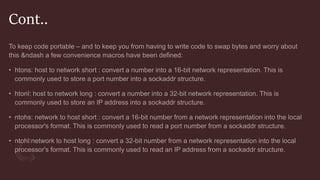
Cont..
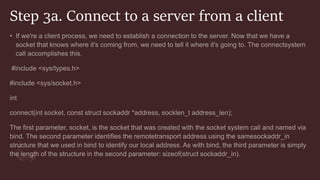
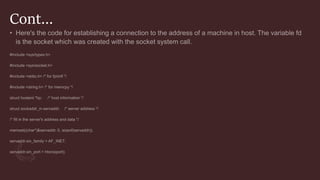
Step 3a. Connect to a server from a client
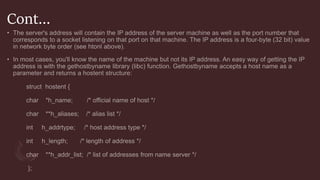
Cont…
Cont…
Cont…
Cont…
Cont…
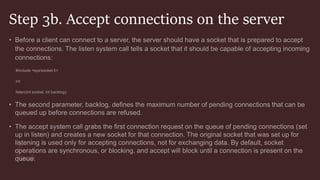
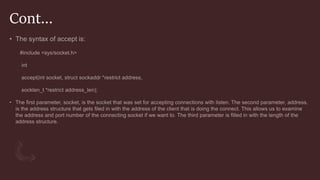
Step 3b. Accept connections on the server
Cont…
Step 4. Communicate
Cont…
Cont…
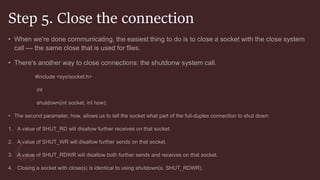
Step 5. Close the connection
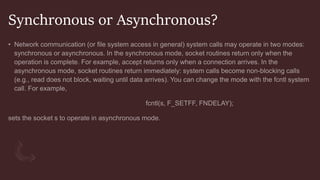
Synchronous or Asynchronous?
POSIX DATATYPES:
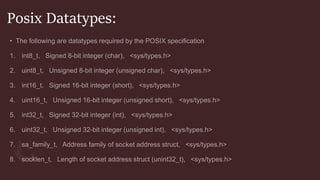
Posix Datatypes:
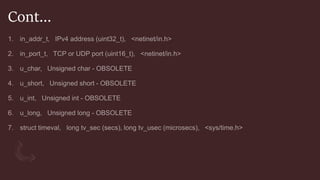
Cont…
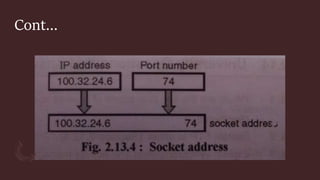
Socket Addresses:
Cont…
Cont…
Cont…
Assigning Address To Socket:
Cont…
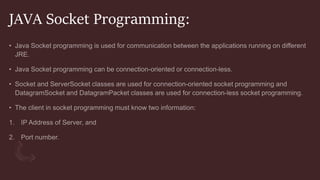
JAVA Socket Programming:
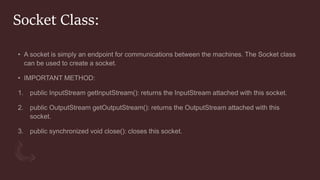
Socket Class:
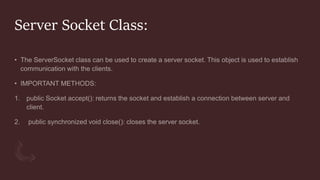
Server Socket Class:
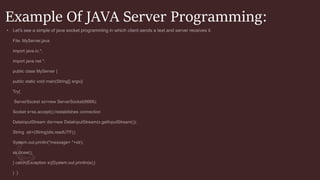
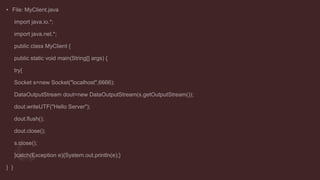
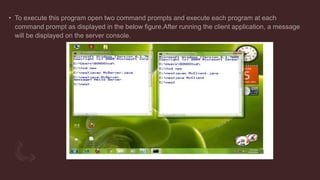
Example Of JAVA Server Programming:
Thread Programming:
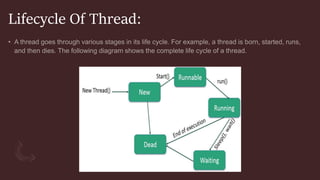
Lifecycle Of Thread:
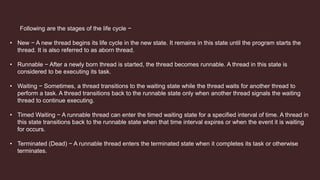
Following are the stages of the life cycle −
• New − A new thread begins its life cycle in the new state. It remains in this state until the program starts the
thread. It is also referred to as aborn thread.
• Runnable − After a newly born thread is started, the thread becomes runnable. A thread in this state is
considered to be executing its task.
• Waiting − Sometimes, a thread transitions to the waiting state while the thread waits for another thread to
perform a task. A thread transitions back to the runnable state only when another thread signals the waiting
thread to continue executing.
• Timed Waiting − A runnable thread can enter the timed waiting state for a specified interval of time. A thread in
this state transitions back to the runnable state when that time interval expires or when the event it is waiting
for occurs.
• Terminated (Dead) − A runnable thread enters the terminated state when it completes its task or otherwise
terminates.
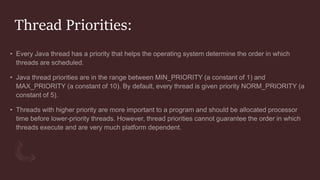
Thread Priorities:
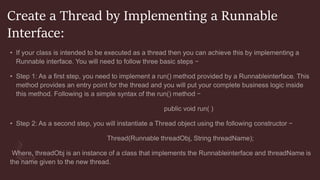
Create a Thread by Implementing a Runnable
Interface:
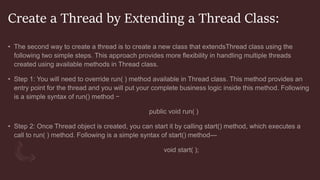
• Step 3
Once a Thread object is created, you can start it by calling start() method, which executes a call to run( )
method. Following is a simple syntax of start() method −
void start();
Create a Thread by Extending a Thread Class:
Berkeley Sockets:
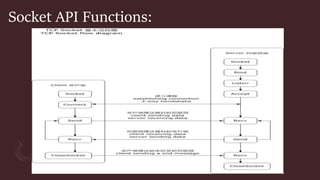
Socket API Functions:
Cont…
Cont…
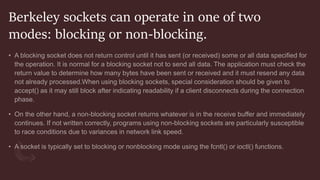
Berkeley sockets can operate in one of two
modes: blocking or non-blocking.
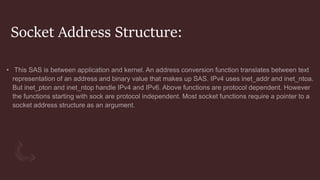
Socket Address Structure:
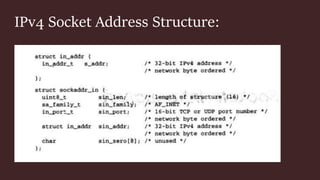
IPv4 Socket Address Structure:
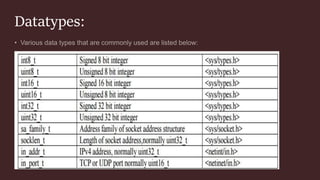
Datatypes:
Cont..
Generic Socket Address Structure
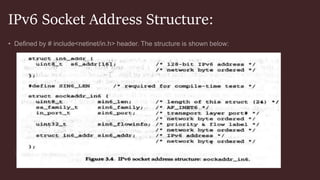
IPv6 Socket Address Structure:
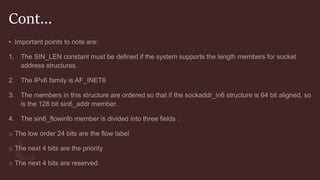
Cont…
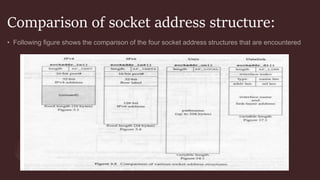
Comparison of socket address structure:
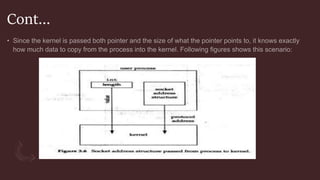
Value Result Arguments:
Cont…
Cont…
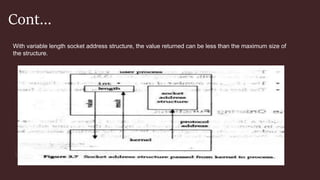
Cont…
With variable length socket address structure, the value returned can be less than the maximum size of
the structure.
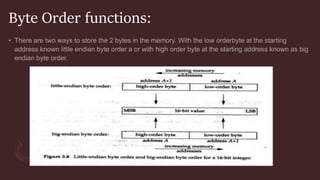
Byte Order functions:
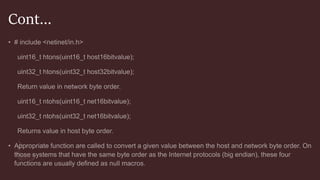
Cont…
Cont…
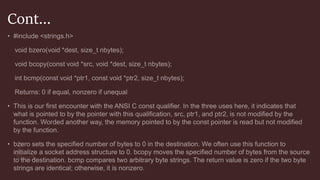
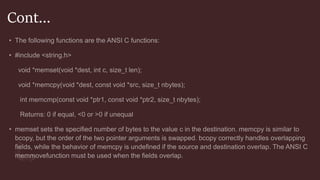
Byte Manipulation Functions:
Cont…
Cont…
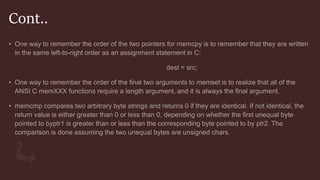
Cont..
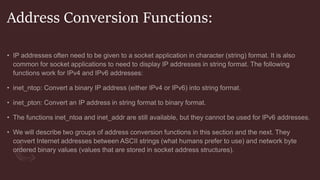
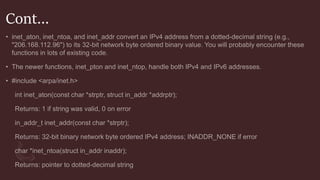
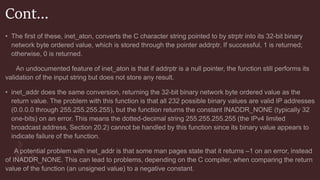
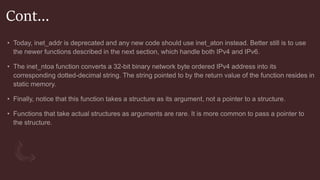
Address Conversion Functions:
Cont…
Cont…
Cont…
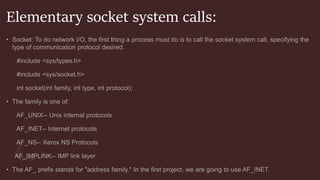
Elementary socket system calls:
Cont…
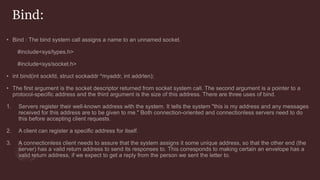
Bind:
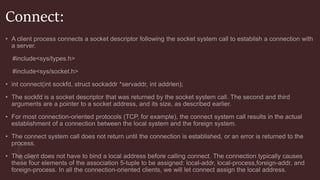
Connect:
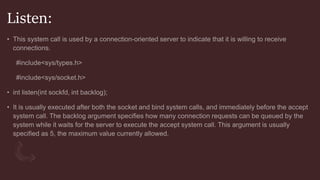
Listen:
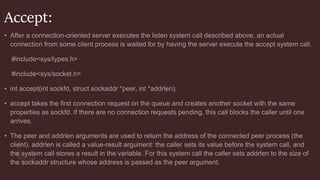
Accept:
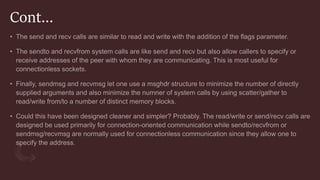
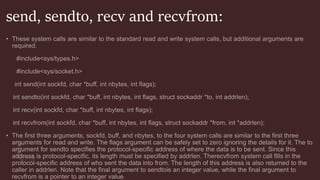
send, sendto, recv and recvfrom:
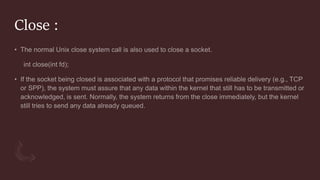
Close :
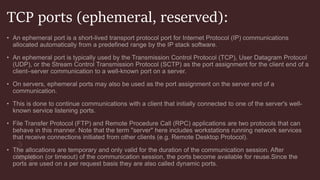
TCP ports (ephemeral, reserved):
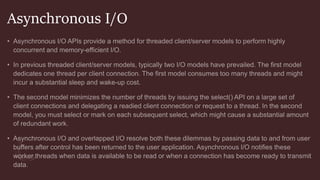
Asynchronous I/O
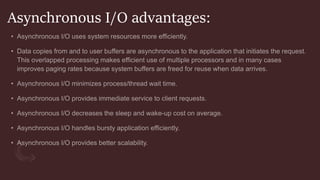
Asynchronous I/O advantages:
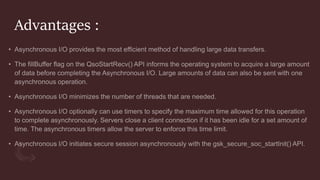
Advantages :
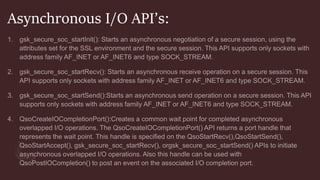
Asynchronous I/O API’s:
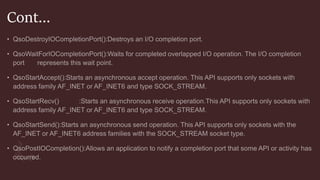
Cont…
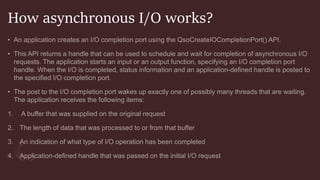
How asynchronous I/O works?
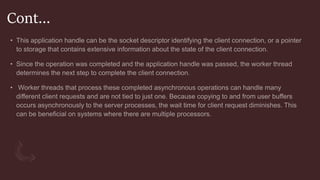
Cont…
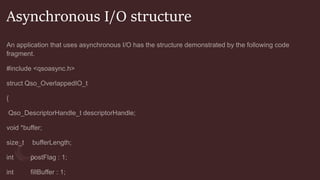
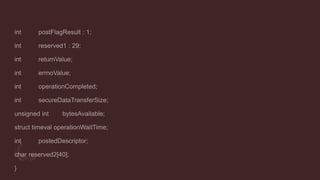
Asynchronous I/O structure
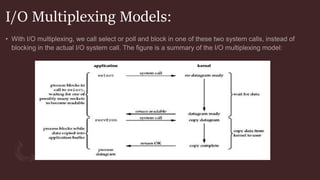
I/O Multiplexing Models:
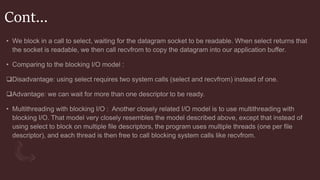
Cont…
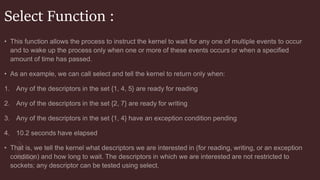
Select Function :
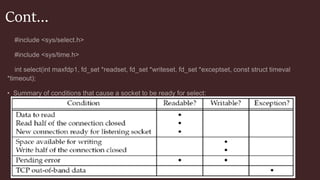
Cont…
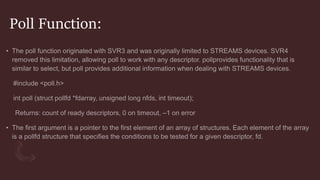
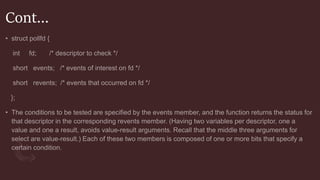
Poll Function:
Cont…
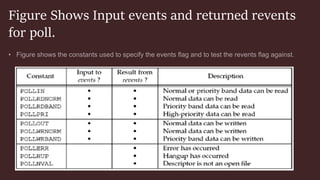
Figure Shows Input events and returned revents
for poll.
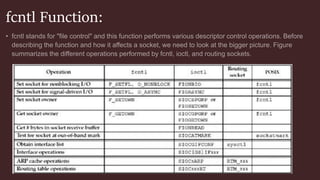
fcntl Function:
Cont…
Cont…
Cont…
Unix Domain Protocols:
Cont…
Cont…
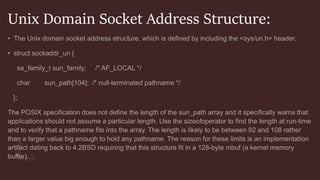
Unix Domain Socket Address Structure:
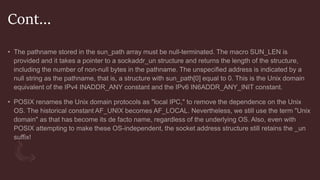
Cont…

Socket Programming Intro.pptx