Design SOA Project using IBM SOMA
Author – Shibu Subhakaran
Contents
 IBM SOMA and SOA transformation
 How to adopt SOMA for SOA Projects
 Modeling SOMA
 Proposed Architecture
 Proposed Middleware Tools and technologies
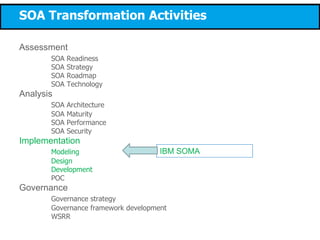
SOA Transformation Activities
Assessment
SOA Readiness
SOA Strategy
SOA Roadmap
SOA Technology
Analysis
SOA Architecture
SOA Maturity
SOA Performance
SOA Security
Implementation
Modeling
Design
Development
POC
Governance
Governance strategy
Governance framework development
WSRR
IBM SOMA
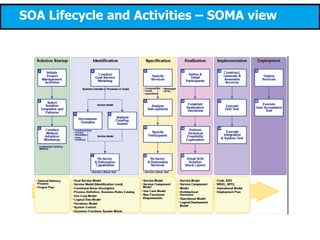
SOA Lifecycle and Activities – SOMA view
SOMA Stages
The IBM SOMA soa development method divides the whole soa
development lifecycle into:
 Service Identification
 Service Specification
 Service Realization
 Service Implementation
 Service deployment
SOMA Modeling Language, Tools
Modeling SOA using IBM SOMA uses -
 UML 2.0
UML 2 specifications have been created to address two
main points:
Service-oriented architectures
Model-driven development
UML 2 has many improvements and they are about these
topics: Complex structures
Activities
Interactions
State machines
 SoaML
A uml Profile for modeling SOA artifacts - service architecture, contracts,
service interfaces
 UML2 supporting Tools – IBM Rational Software Architect, ARIS UML
Designer(ARIS 9.7)
Software AG ARIS for SOA Modeling
 ARIS Can be used for modeling different stages of SOA
Transformation :
• SOA Governance
• Business Architecture and Business Services Modeling
• SOMA Activities (Service Identification, Specification, Realization)
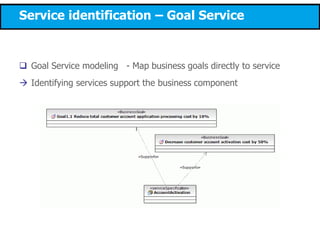
Service identification – Goal Service
 Goal Service modeling - Map business goals directly to service
 Identifying services support the business component
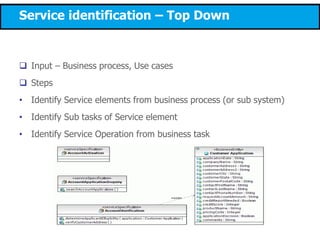
Service identification – Top Down
 Input – Business process, Use cases
 Steps
• Identify Service elements from business process (or sub system)
• Identify Sub tasks of Service element
• Identify Service Operation from business task
Service Identification – Bottom up
 Existing System Analysis
 Involves the analysis of the existing applications (legacy, COTS etc.)
in Production.
 requires the participation of specialists for the systems
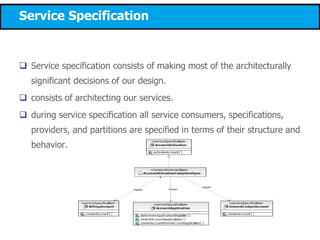
Service Specification
 Service specification consists of making most of the architecturally
significant decisions of our design.
 consists of architecting our services.
 during service specification all service consumers, specifications,
providers, and partitions are specified in terms of their structure and
behavior.
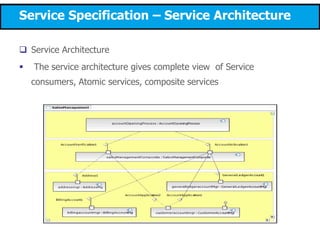
Service Specification – Service Architecture
 Service Architecture
 The service architecture gives complete view of Service
consumers, Atomic services, composite services
Service Realization
Service Realization involves :
 Service Realization shows the complete design
 Detailed view of all the operations in services
 Components used by the service
 Design Patterns used for the implementations
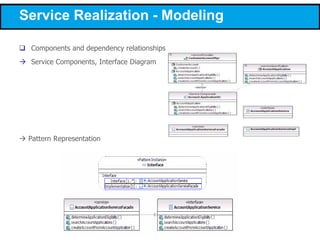
Service Realization - Modeling
 Components and dependency relationships
 Service Components, Interface Diagram
 Pattern Representation
Method adoption plan
 Incremental Approach
 Start small
 Add new integration services, business services and processes
 over time, as part of specific projects, in response to specific
business needs
 Flexibility and capabilities increase exponentially with each new
service.
 Analyze and Short list a Group of the legacy/COTS applications
 Use SOMA for the identified applications
Reference Architecture
 SOA Ref Architecture
Summary
 SOA Transformation Process, Tasks, Activities
 How SOMA can be used in SOA Based Projects
 Modeling SOMA Activities
 How ARIS can support the modeling for SOA and SOMA phases
 Solution Architecture for SOA

SOA Project Design - IBM SOMA

  • 1.
    Design SOA Projectusing IBM SOMA Author – Shibu Subhakaran
  • 2.
    Contents  IBM SOMAand SOA transformation  How to adopt SOMA for SOA Projects  Modeling SOMA  Proposed Architecture  Proposed Middleware Tools and technologies
  • 3.
    SOA Transformation Activities Assessment SOAReadiness SOA Strategy SOA Roadmap SOA Technology Analysis SOA Architecture SOA Maturity SOA Performance SOA Security Implementation Modeling Design Development POC Governance Governance strategy Governance framework development WSRR IBM SOMA
  • 4.
    SOA Lifecycle andActivities – SOMA view
  • 5.
    SOMA Stages The IBMSOMA soa development method divides the whole soa development lifecycle into:  Service Identification  Service Specification  Service Realization  Service Implementation  Service deployment
  • 6.
    SOMA Modeling Language,Tools Modeling SOA using IBM SOMA uses -  UML 2.0 UML 2 specifications have been created to address two main points: Service-oriented architectures Model-driven development UML 2 has many improvements and they are about these topics: Complex structures Activities Interactions State machines  SoaML A uml Profile for modeling SOA artifacts - service architecture, contracts, service interfaces  UML2 supporting Tools – IBM Rational Software Architect, ARIS UML Designer(ARIS 9.7)
  • 7.
    Software AG ARISfor SOA Modeling  ARIS Can be used for modeling different stages of SOA Transformation : • SOA Governance • Business Architecture and Business Services Modeling • SOMA Activities (Service Identification, Specification, Realization)
  • 8.
    Service identification –Goal Service  Goal Service modeling - Map business goals directly to service  Identifying services support the business component
  • 9.
    Service identification –Top Down  Input – Business process, Use cases  Steps • Identify Service elements from business process (or sub system) • Identify Sub tasks of Service element • Identify Service Operation from business task
  • 10.
    Service Identification –Bottom up  Existing System Analysis  Involves the analysis of the existing applications (legacy, COTS etc.) in Production.  requires the participation of specialists for the systems
  • 11.
    Service Specification  Servicespecification consists of making most of the architecturally significant decisions of our design.  consists of architecting our services.  during service specification all service consumers, specifications, providers, and partitions are specified in terms of their structure and behavior.
  • 12.
    Service Specification –Service Architecture  Service Architecture  The service architecture gives complete view of Service consumers, Atomic services, composite services
  • 13.
    Service Realization Service Realizationinvolves :  Service Realization shows the complete design  Detailed view of all the operations in services  Components used by the service  Design Patterns used for the implementations
  • 14.
    Service Realization -Modeling  Components and dependency relationships  Service Components, Interface Diagram  Pattern Representation
  • 15.
    Method adoption plan Incremental Approach  Start small  Add new integration services, business services and processes  over time, as part of specific projects, in response to specific business needs  Flexibility and capabilities increase exponentially with each new service.  Analyze and Short list a Group of the legacy/COTS applications  Use SOMA for the identified applications
  • 16.
  • 17.
    Summary  SOA TransformationProcess, Tasks, Activities  How SOMA can be used in SOA Based Projects  Modeling SOMA Activities  How ARIS can support the modeling for SOA and SOMA phases  Solution Architecture for SOA