Aleksandra Turkiewicz, PhD, CStat
Associate editor for statistics, Osteoarthritis and Cartilage
Clinical epidemiology unit, Lund University, Lund, Sweden
So You Want To Be a Reviewer?
Tips for Writing an Effective Review
for Peer-Reviewed Journals
Disclosures
• None
When do we need statistical review?
• (Almost) always
Deputy editor:
Prof. Jonas Ranstam
Lund University
Associate editor:
Prof. Simon Skene
University of Surrey
Sample size
Sampling
Randomization
Blinding
The Four Riders of the Apocalypse (1498)
Albrecht Durer
The four horsemen of the Apocalypse
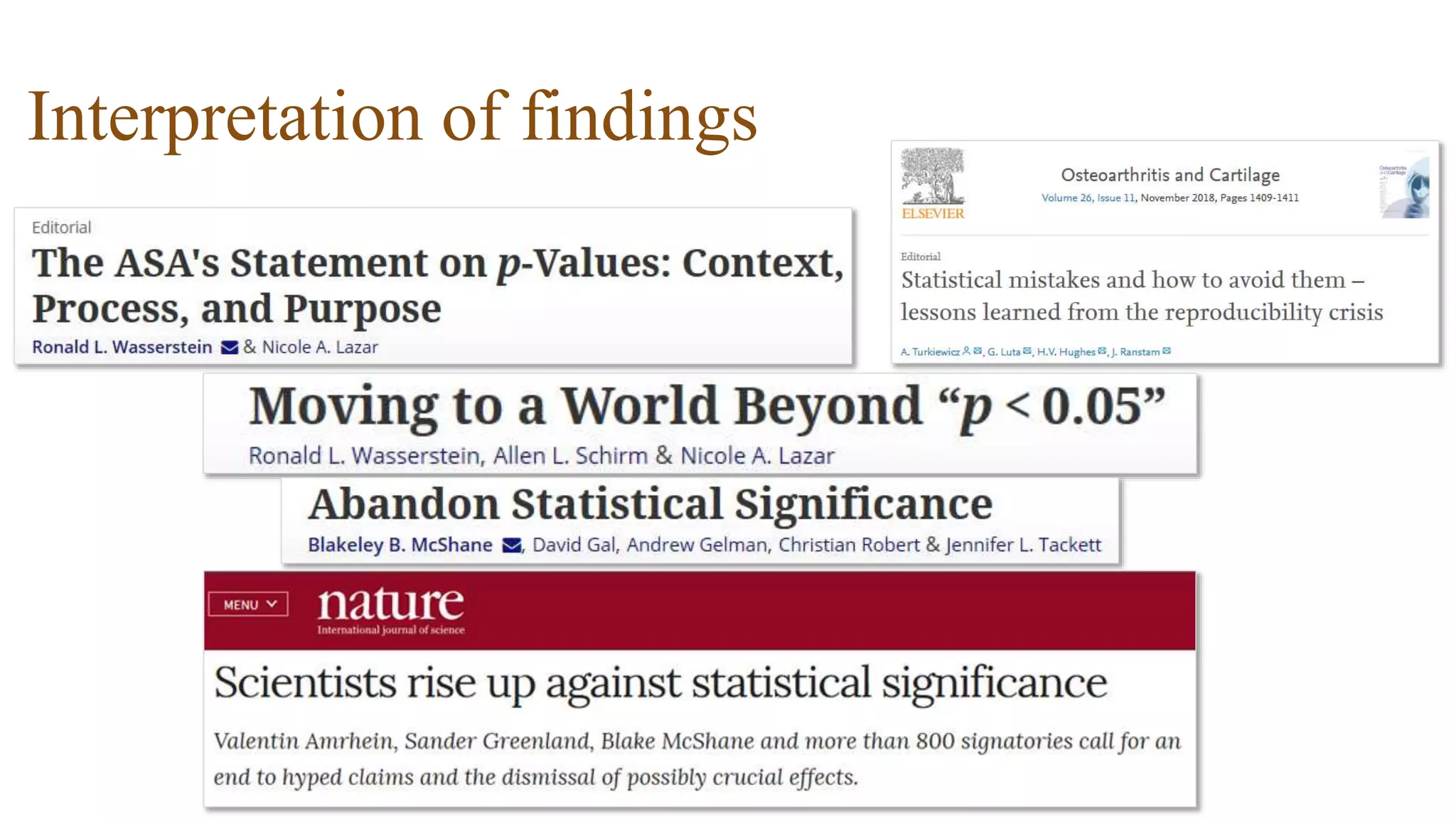
Interpretation of findings
@dr_englund
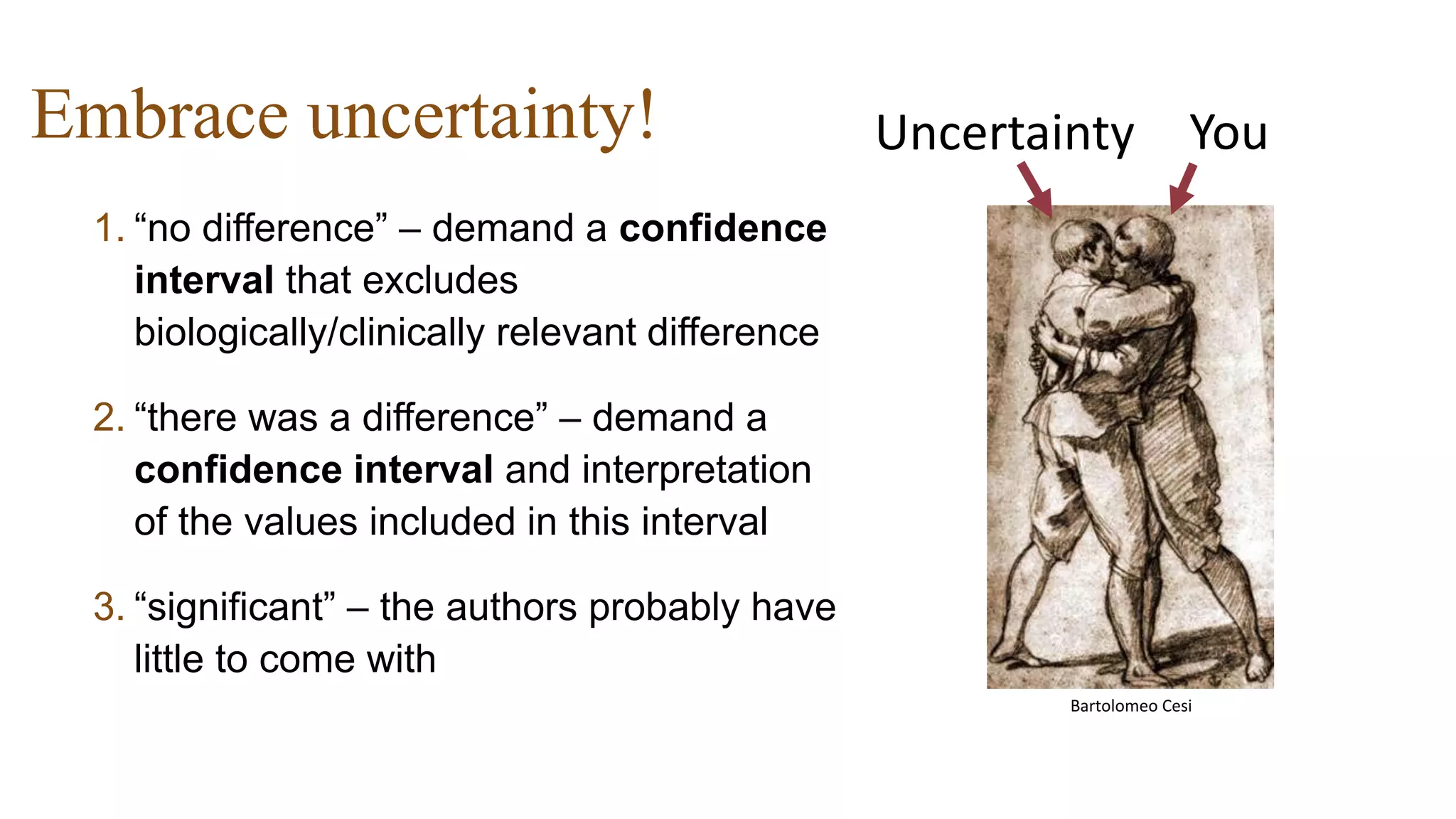
Embrace uncertainty!
1. “no difference” – demand a confidence
interval that excludes
biologically/clinically relevant difference
2. “there was a difference” – demand a
confidence interval and interpretation
of the values included in this interval
3. “significant” – the authors probably have
little to come with
YouUncertainty
Bartolomeo Cesi
So You Want To Be a Reviewer?

So You Want To Be a Reviewer?

  • 1.
    Aleksandra Turkiewicz, PhD,CStat Associate editor for statistics, Osteoarthritis and Cartilage Clinical epidemiology unit, Lund University, Lund, Sweden So You Want To Be a Reviewer? Tips for Writing an Effective Review for Peer-Reviewed Journals
  • 2.
  • 3.
    When do weneed statistical review? • (Almost) always Deputy editor: Prof. Jonas Ranstam Lund University Associate editor: Prof. Simon Skene University of Surrey
  • 4.
    Sample size Sampling Randomization Blinding The FourRiders of the Apocalypse (1498) Albrecht Durer The four horsemen of the Apocalypse
  • 5.
  • 6.
  • 7.
    Embrace uncertainty! 1. “nodifference” – demand a confidence interval that excludes biologically/clinically relevant difference 2. “there was a difference” – demand a confidence interval and interpretation of the values included in this interval 3. “significant” – the authors probably have little to come with YouUncertainty Bartolomeo Cesi

Editor's Notes

  • #5 – how was the sample size arrived at? – how were the participants/samples selected? – what was randomized (cell wells, joints, animals, humans) and how? - in conduct of experiment – how or why not? In assessment of outcome – a “must have” in experimental research!
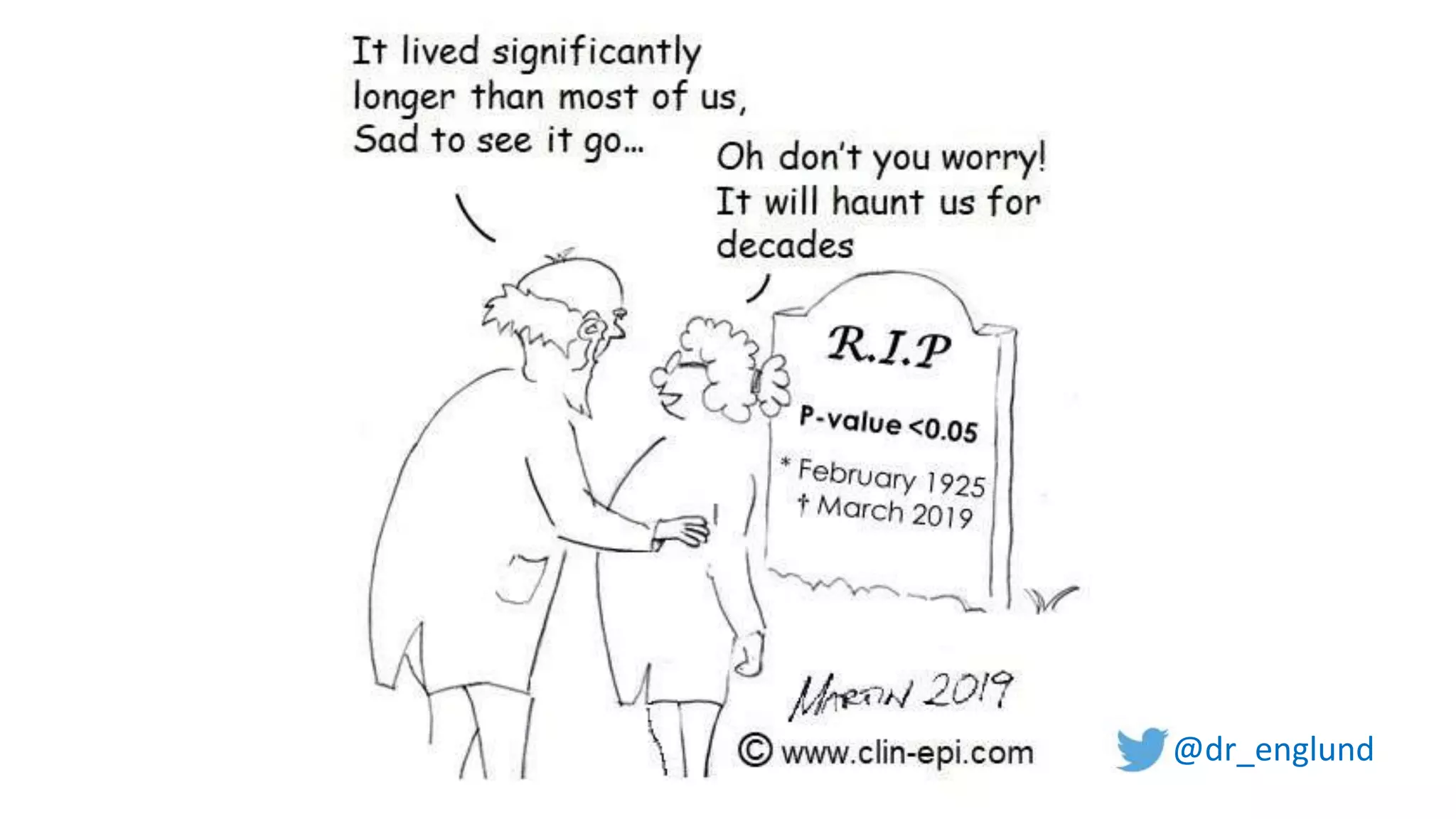
  • #6 Criticism of the use of p-values is almost as old as p-values but has intensified in recent years and this for good reason. In effect the concept of ”statistical significance” has died recently.
  • #7 Statistical significance has recently died. Why is p-value, and especially classifying results into statistically significant and non-significant so bad? There are many reasons, but some of the main ones are: - a large p-value does not mean that there is no difference - a small p-value does not mean that there is a difference - It is not important at all if there is a difference or if there is no difference, such a distinction is artificial. What matters is how big is the difference and what biological and clinical consequences and meaning does a difference of this size have. And p-values does not answer this crucial question. Further, practically any data can be analysed in a way that will lead to a statistically significant p-value through data driven decisions, both conscious and unconscious. I think we should all be happy that it is gone and dance on its grave. So what to do instead?
  • #8 Two men in Florence kissing