Leveraging AI in Digital Marketing
Presentation
Agenda
What is AI in Digital Marketing?
Key Benefits & Applications of AI
AI in Content Creation & SEO
AI in Personalization & Customer Experience
AI in Advertising & Media Buying
AI in Data Analysis & Insights
Challenges & Ethical Considerations
Future Trends & Conclusion
What is AI in Digital Marketing?
• AI refers to the use of intelligent machines that simulate human cognitive functions like
learning and problem-solving.
• In digital marketing, AI automates tasks, analyzes vast datasets, and predicts consumer
behavior.
• It enables more precise targeting, highly personalized experiences, and optimized
campaign performance.
• Goes beyond traditional automation by learning and adapting over time to improve
results.
Key Benefits of AI in Marketing
• Enhanced Personalization: Delivering tailored content and offers to individual users at
scale.
• Improved Efficiency & Automation: Automating repetitive tasks like reporting, ad
bidding, and lead nurturing.
• Superior Data Analysis: Uncovering deep, actionable insights from massive datasets to
inform strategy.
• Optimized ROI: Maximizing campaign performance and budget allocation through
predictive analytics.
• Better Customer Experience: Providing instant support, relevant interactions, and
seamless journeys.
AI in Content Creation & SEO
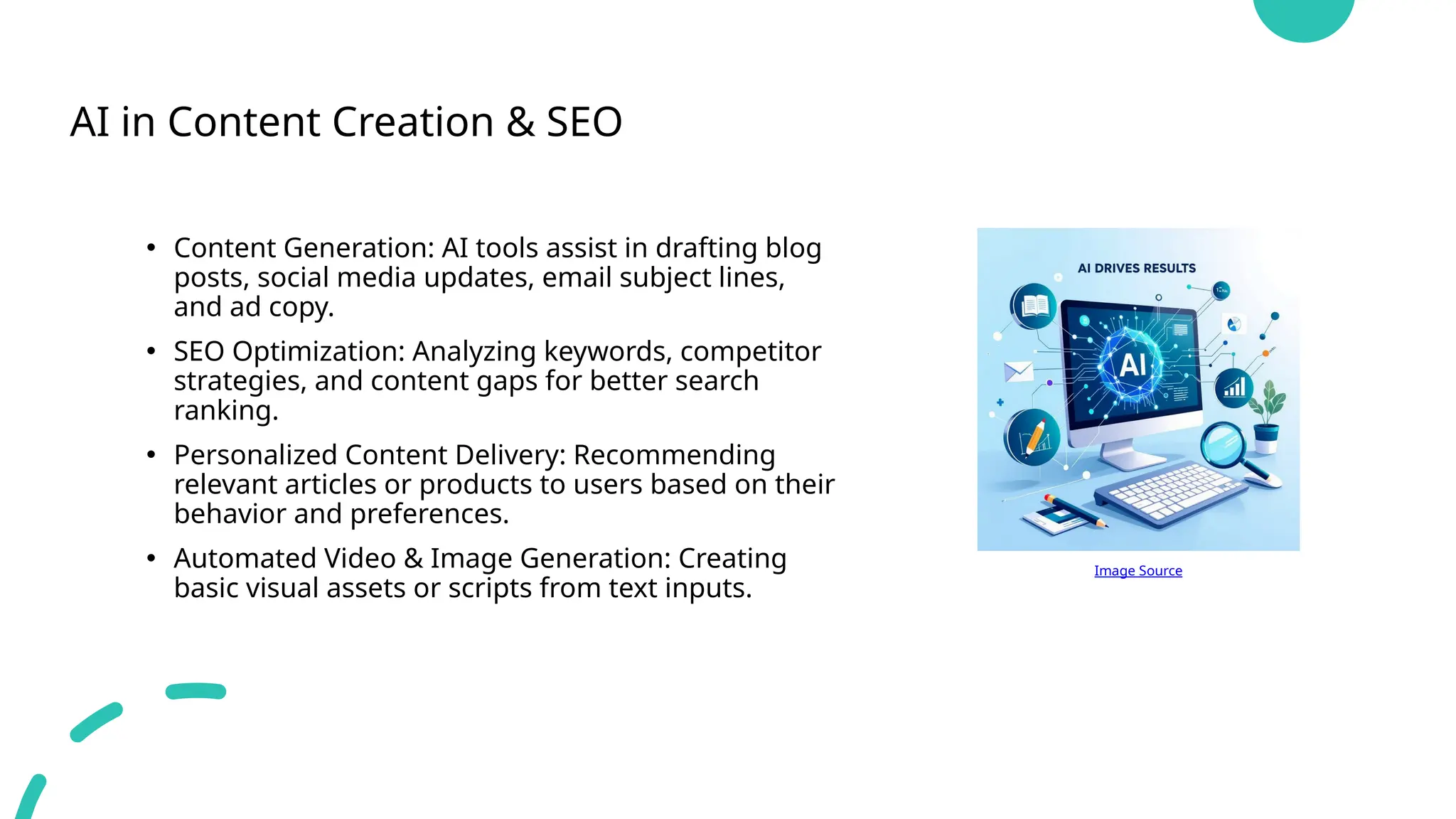
• Content Generation: AI tools assist in drafting blog
posts, social media updates, email subject lines,
and ad copy.
• SEO Optimization: Analyzing keywords, competitor
strategies, and content gaps for better search
ranking.
• Personalized Content Delivery: Recommending
relevant articles or products to users based on their
behavior and preferences.
• Automated Video & Image Generation: Creating
basic visual assets or scripts from text inputs.
Image Source
AI in Personalization & Customer Experience
• Dynamic Website Content: Adapting site elements,
product displays, and landing pages based on user
demographics and past interactions.
• Product Recommendations: Suggesting items
based on browsing history, purchase patterns, and
similar user behavior.
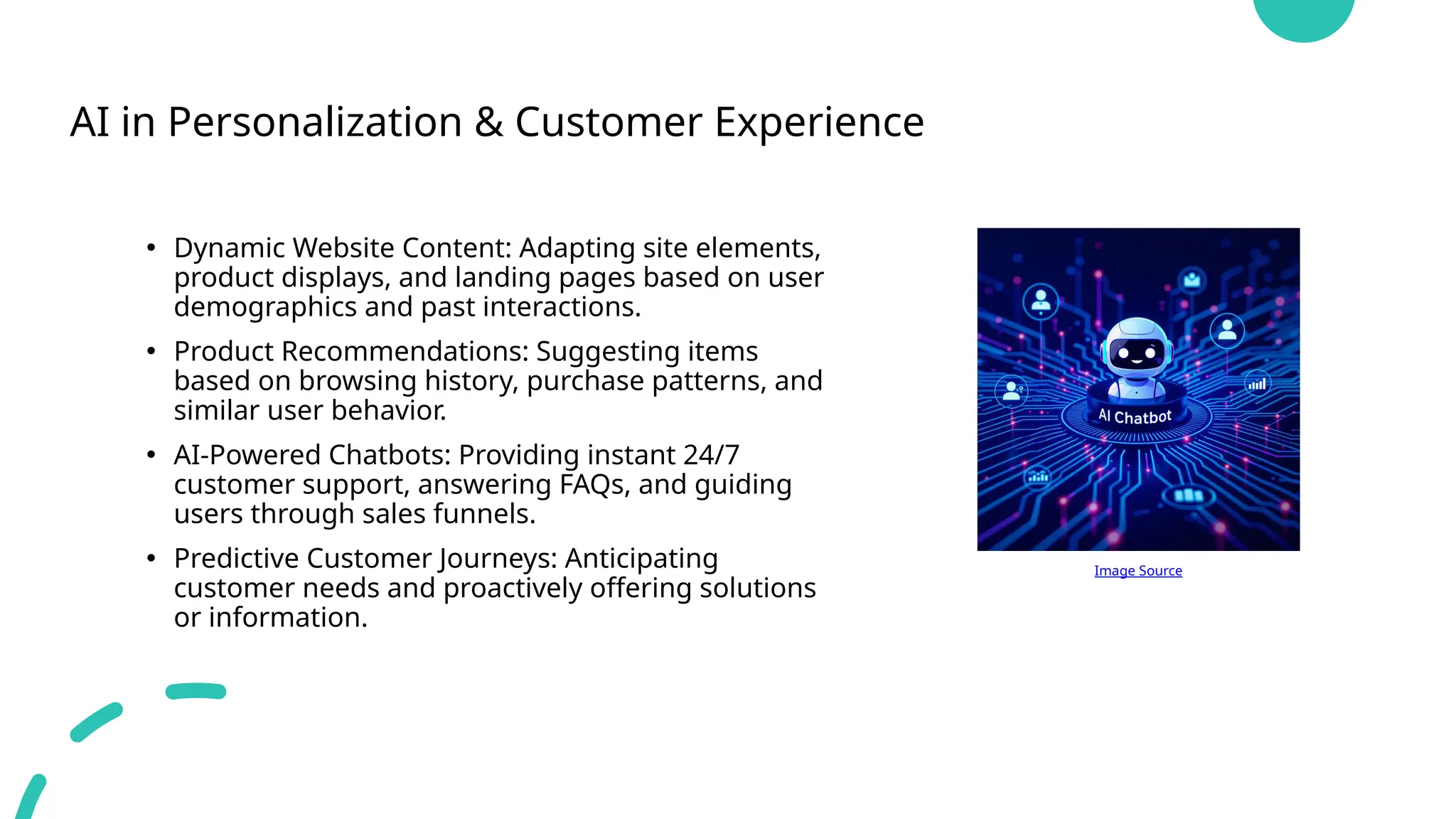
• AI-Powered Chatbots: Providing instant 24/7
customer support, answering FAQs, and guiding
users through sales funnels.
• Predictive Customer Journeys: Anticipating
customer needs and proactively offering solutions
or information.
Image Source
AI in Advertising & Media Buying
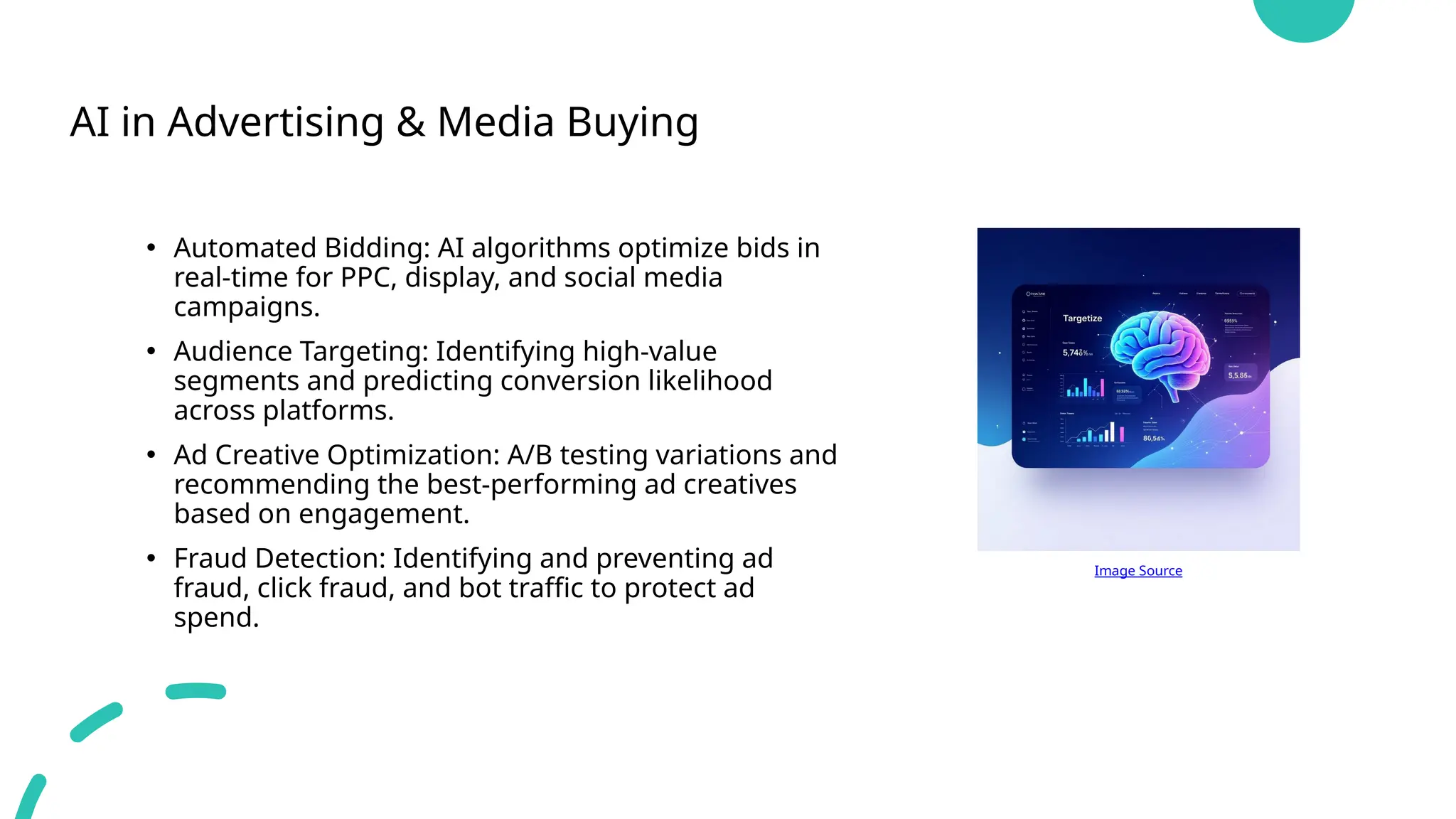
• Automated Bidding: AI algorithms optimize bids in
real-time for PPC, display, and social media
campaigns.
• Audience Targeting: Identifying high-value
segments and predicting conversion likelihood
across platforms.
• Ad Creative Optimization: A/B testing variations and
recommending the best-performing ad creatives
based on engagement.
• Fraud Detection: Identifying and preventing ad
fraud, click fraud, and bot traffic to protect ad
spend.
Image Source
AI in Data Analysis & Insights
• Predictive Analytics: Forecasting market trends, customer churn rates, and sales
performance with high accuracy.
• Sentiment Analysis: Understanding public opinion, brand perception, and customer
feedback from social media and reviews.
• Attribution Modeling: Determining which marketing touchpoints contribute most to
conversions and revenue.
• Anomaly Detection: Spotting unusual patterns in data that might indicate emerging
issues or new opportunities.
Challenges & Ethical Considerations
• Data Privacy Concerns: Ensuring ethical use and security of personal data collected by AI
systems.
• Algorithmic Bias: Potential for AI systems to perpetuate or amplify existing biases if not
trained on diverse, unbiased data.
• Job Displacement: Impact on human roles as AI automates more marketing tasks,
requiring skill adaptation.
• Transparency & Explainability: Difficulty in understanding how complex AI models make
decisions ('black box' problem).
• High Implementation Costs: Initial investment in AI tools, infrastructure, and specialized
talent can be significant.
Future Trends & Conclusion
• Hyper-Personalization at Scale: Moving towards individual-level marketing tailored to
unique preferences and contexts.
• Voice Search Optimization: AI plays an increasingly crucial role in understanding and
responding to natural language voice queries.
• Generative AI Evolution: More sophisticated content creation, personalized marketing
messages, and interactive experiences.
• AI-Powered Metaverse Marketing: New opportunities for immersive brand experiences
and data collection in virtual environments.
• Conclusion: AI is an indispensable tool for the modern marketer, but human ingenuity,
strategy, and ethical oversight remain vital for success.

"Smart, Human-Centered Digital Marketing with AI"

  • 1.
    Leveraging AI inDigital Marketing
  • 2.
    Presentation Agenda What is AIin Digital Marketing? Key Benefits & Applications of AI AI in Content Creation & SEO AI in Personalization & Customer Experience AI in Advertising & Media Buying AI in Data Analysis & Insights Challenges & Ethical Considerations Future Trends & Conclusion
  • 3.
    What is AIin Digital Marketing? • AI refers to the use of intelligent machines that simulate human cognitive functions like learning and problem-solving. • In digital marketing, AI automates tasks, analyzes vast datasets, and predicts consumer behavior. • It enables more precise targeting, highly personalized experiences, and optimized campaign performance. • Goes beyond traditional automation by learning and adapting over time to improve results.
  • 4.
    Key Benefits ofAI in Marketing • Enhanced Personalization: Delivering tailored content and offers to individual users at scale. • Improved Efficiency & Automation: Automating repetitive tasks like reporting, ad bidding, and lead nurturing. • Superior Data Analysis: Uncovering deep, actionable insights from massive datasets to inform strategy. • Optimized ROI: Maximizing campaign performance and budget allocation through predictive analytics. • Better Customer Experience: Providing instant support, relevant interactions, and seamless journeys.
  • 5.
    AI in ContentCreation & SEO • Content Generation: AI tools assist in drafting blog posts, social media updates, email subject lines, and ad copy. • SEO Optimization: Analyzing keywords, competitor strategies, and content gaps for better search ranking. • Personalized Content Delivery: Recommending relevant articles or products to users based on their behavior and preferences. • Automated Video & Image Generation: Creating basic visual assets or scripts from text inputs. Image Source
  • 6.
    AI in Personalization& Customer Experience • Dynamic Website Content: Adapting site elements, product displays, and landing pages based on user demographics and past interactions. • Product Recommendations: Suggesting items based on browsing history, purchase patterns, and similar user behavior. • AI-Powered Chatbots: Providing instant 24/7 customer support, answering FAQs, and guiding users through sales funnels. • Predictive Customer Journeys: Anticipating customer needs and proactively offering solutions or information. Image Source
  • 7.
    AI in Advertising& Media Buying • Automated Bidding: AI algorithms optimize bids in real-time for PPC, display, and social media campaigns. • Audience Targeting: Identifying high-value segments and predicting conversion likelihood across platforms. • Ad Creative Optimization: A/B testing variations and recommending the best-performing ad creatives based on engagement. • Fraud Detection: Identifying and preventing ad fraud, click fraud, and bot traffic to protect ad spend. Image Source
  • 8.
    AI in DataAnalysis & Insights • Predictive Analytics: Forecasting market trends, customer churn rates, and sales performance with high accuracy. • Sentiment Analysis: Understanding public opinion, brand perception, and customer feedback from social media and reviews. • Attribution Modeling: Determining which marketing touchpoints contribute most to conversions and revenue. • Anomaly Detection: Spotting unusual patterns in data that might indicate emerging issues or new opportunities.
  • 9.
    Challenges & EthicalConsiderations • Data Privacy Concerns: Ensuring ethical use and security of personal data collected by AI systems. • Algorithmic Bias: Potential for AI systems to perpetuate or amplify existing biases if not trained on diverse, unbiased data. • Job Displacement: Impact on human roles as AI automates more marketing tasks, requiring skill adaptation. • Transparency & Explainability: Difficulty in understanding how complex AI models make decisions ('black box' problem). • High Implementation Costs: Initial investment in AI tools, infrastructure, and specialized talent can be significant.
  • 10.
    Future Trends &Conclusion • Hyper-Personalization at Scale: Moving towards individual-level marketing tailored to unique preferences and contexts. • Voice Search Optimization: AI plays an increasingly crucial role in understanding and responding to natural language voice queries. • Generative AI Evolution: More sophisticated content creation, personalized marketing messages, and interactive experiences. • AI-Powered Metaverse Marketing: New opportunities for immersive brand experiences and data collection in virtual environments. • Conclusion: AI is an indispensable tool for the modern marketer, but human ingenuity, strategy, and ethical oversight remain vital for success.