STRATEGIES FOR
TEACHER STRESS
MANAGEMENT
OBJECTIVES:
At the end of the session, participants are expected to:
a. discuss the strategies for teacher stress management;
b. apply the different tips on how to cope up with stress;
c. demonstrate appreciation on the importance of coping
with stress.
How can you
relate to this
image?
You speak, we listen!
1. Brainstorm with your group and
list down the things that keep you
stressed at work.
1. How did you manage and cope up
with it?
How were you able to come up with those
brainstormed ideas?
How did you find the activity?
What are the factors that can contribute to
stress?
WHAT IS STRESS?
Stress is the feeling of being
overwhelmed or unable to cope with
mental or emotional pressure. It is our
body’s response to pressure. It is often
triggered when we experience
something new, unexpected or that
threatens our sense of self, or when we
feel we have little control over a
situation.
WHAT ARE THE SIGNS OF STRESS?
You may feel:
anxious
afraid
angry or aggressive
sad
irritable
frustrated
depressed
WHAT ARE THE SIGNS OF STRESS?
You may experience:
headaches
nausea
indigestion
digestive problems such as constipation, bloating or diarrhea
shallow breathing or hyperventilating
sweating
heart palpitations
aches and pains
WHAT ARE THE SIGNS OF STRESS?
You may behave differently if you’re stressed. You may:
withdraw from other people or snap at them
be indecisive or inflexible
be tearful
have problems getting to sleep or staying asleep
experience sexual problems
smoke, drink alcohol or take drugs more than usual
WHAT IS STRESS MANAGEMENT?
It is a wide spectrum of
techniques and psychotherapies
aimed at controlling a person's
level of stress, especially chronic
stress, usually for the purpose of
and for the motive of improving
everyday functioning.
ADDRESSING STRESS AT THE
SCHOOL LEVEL
1. Create a supportive workplace.
A supportive workplace is one in which
teachers have strong leadership from their
principal, where they collaborate openly with their
colleagues and where there are structures in place
for wellbeing.
2. Encourage mentorship.
Teachers (especially those who are new to the
profession) can benefit greatly from the
experience of others who have been there before.
Mentoring can also connect teachers across grade
levels and subject areas to share insights and
promote more effective communication.
3. Build coping skills into
professional development.
Educating teachers on effective strategies for
mental health management as part of their
ongoing professional development sends the
message that their wellbeing is important. It can
also help normalize talking about mental health
in the workplace.
4. Listen to (and involve) teachers.
Let teachers know their opinions matter by
giving them a seat at the decision-making table.
Set time aside to listen to their concerns and
work with them to find solutions to their
problems. Then show them that their voices are
being heard through your actions.
5. Provide the right resources.
Teachers and school staff alike can benefit
from access to apps, support groups, websites,
books and podcasts that discuss mental health
and stress-busting strategies. Not only can these
resources help manage an in-the-moment crisis,
but they can also prevent a crisis from happening
in the first place.
STRESS MANAGEMENT TIPS
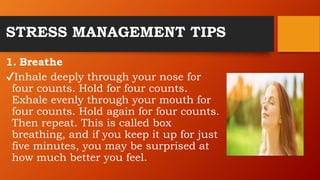
1. Breathe
✔Inhale deeply through your nose for
four counts. Hold for four counts.
Exhale evenly through your mouth for
four counts. Hold again for four counts.
Then repeat. This is called box
breathing, and if you keep it up for just
five minutes, you may be surprised at
how much better you feel.
STRESS MANAGEMENT TIPS
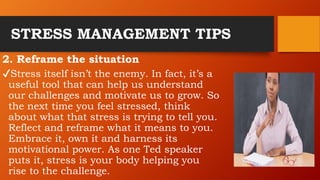
2. Reframe the situation
✔Stress itself isn’t the enemy. In fact, it’s a
useful tool that can help us understand
our challenges and motivate us to grow. So
the next time you feel stressed, think
about what that stress is trying to tell you.
Reflect and reframe what it means to you.
Embrace it, own it and harness its
motivational power. As one Ted speaker
puts it, stress is your body helping you
rise to the challenge.
STRESS MANAGEMENT TIPS
3. Reaching out
✔Asking for help is not a sign of
weakness. Rather, it’s a sign of
strength; a sign that you recognize you
can’t do everything on your own and
that you’re willing to work alongside
others to grow. Research shows it can
put you at an advantage rather than a
disadvantage – and that others are
more willing to assist than you might
expect.
STRESS MANAGEMENT TIPS
4. Get moving
✔You don’t need to squeeze a
whole workout into your routine
to benefit from the stress-
relieving properties of exercise.
Even a 20-minute walk can take
you far when it comes to kick-
starting those endorphins and
boosting your mood.
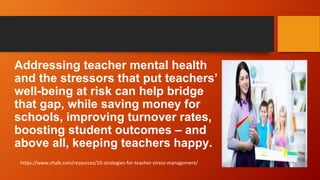
Addressing teacher mental health
and the stressors that put teachers’
well-being at risk can help bridge
that gap, while saving money for
schools, improving turnover rates,
boosting student outcomes – and
above all, keeping teachers happy.
https://www.chalk.com/resources/10-strategies-for-teacher-stress-management/
Direction:
In your group, create a hashtag
depicting your understanding on
effective stress management.
Slide-Deck-on-Stress-Management.pptx

Slide-Deck-on-Stress-Management.pptx

  • 1.
  • 2.
    OBJECTIVES: At the endof the session, participants are expected to: a. discuss the strategies for teacher stress management; b. apply the different tips on how to cope up with stress; c. demonstrate appreciation on the importance of coping with stress.
  • 3.
    How can you relateto this image?
  • 4.
    You speak, welisten! 1. Brainstorm with your group and list down the things that keep you stressed at work. 1. How did you manage and cope up with it?
  • 5.
    How were youable to come up with those brainstormed ideas? How did you find the activity? What are the factors that can contribute to stress?
  • 6.
    WHAT IS STRESS? Stressis the feeling of being overwhelmed or unable to cope with mental or emotional pressure. It is our body’s response to pressure. It is often triggered when we experience something new, unexpected or that threatens our sense of self, or when we feel we have little control over a situation.
  • 7.
    WHAT ARE THESIGNS OF STRESS?
  • 8.
    You may feel: anxious afraid angryor aggressive sad irritable frustrated depressed WHAT ARE THE SIGNS OF STRESS?
  • 9.
    WHAT ARE THESIGNS OF STRESS? You may experience: headaches nausea indigestion digestive problems such as constipation, bloating or diarrhea shallow breathing or hyperventilating sweating heart palpitations aches and pains
  • 10.
    WHAT ARE THESIGNS OF STRESS? You may behave differently if you’re stressed. You may: withdraw from other people or snap at them be indecisive or inflexible be tearful have problems getting to sleep or staying asleep experience sexual problems smoke, drink alcohol or take drugs more than usual
  • 11.
    WHAT IS STRESSMANAGEMENT? It is a wide spectrum of techniques and psychotherapies aimed at controlling a person's level of stress, especially chronic stress, usually for the purpose of and for the motive of improving everyday functioning.
  • 12.
    ADDRESSING STRESS ATTHE SCHOOL LEVEL 1. Create a supportive workplace. A supportive workplace is one in which teachers have strong leadership from their principal, where they collaborate openly with their colleagues and where there are structures in place for wellbeing.
  • 13.
    2. Encourage mentorship. Teachers(especially those who are new to the profession) can benefit greatly from the experience of others who have been there before. Mentoring can also connect teachers across grade levels and subject areas to share insights and promote more effective communication.
  • 14.
    3. Build copingskills into professional development. Educating teachers on effective strategies for mental health management as part of their ongoing professional development sends the message that their wellbeing is important. It can also help normalize talking about mental health in the workplace.
  • 15.
    4. Listen to(and involve) teachers. Let teachers know their opinions matter by giving them a seat at the decision-making table. Set time aside to listen to their concerns and work with them to find solutions to their problems. Then show them that their voices are being heard through your actions.
  • 16.
    5. Provide theright resources. Teachers and school staff alike can benefit from access to apps, support groups, websites, books and podcasts that discuss mental health and stress-busting strategies. Not only can these resources help manage an in-the-moment crisis, but they can also prevent a crisis from happening in the first place.
  • 17.
    STRESS MANAGEMENT TIPS 1.Breathe ✔Inhale deeply through your nose for four counts. Hold for four counts. Exhale evenly through your mouth for four counts. Hold again for four counts. Then repeat. This is called box breathing, and if you keep it up for just five minutes, you may be surprised at how much better you feel.
  • 18.
    STRESS MANAGEMENT TIPS 2.Reframe the situation ✔Stress itself isn’t the enemy. In fact, it’s a useful tool that can help us understand our challenges and motivate us to grow. So the next time you feel stressed, think about what that stress is trying to tell you. Reflect and reframe what it means to you. Embrace it, own it and harness its motivational power. As one Ted speaker puts it, stress is your body helping you rise to the challenge.
  • 19.
    STRESS MANAGEMENT TIPS 3.Reaching out ✔Asking for help is not a sign of weakness. Rather, it’s a sign of strength; a sign that you recognize you can’t do everything on your own and that you’re willing to work alongside others to grow. Research shows it can put you at an advantage rather than a disadvantage – and that others are more willing to assist than you might expect.
  • 20.
    STRESS MANAGEMENT TIPS 4.Get moving ✔You don’t need to squeeze a whole workout into your routine to benefit from the stress- relieving properties of exercise. Even a 20-minute walk can take you far when it comes to kick- starting those endorphins and boosting your mood.
  • 21.
    Addressing teacher mentalhealth and the stressors that put teachers’ well-being at risk can help bridge that gap, while saving money for schools, improving turnover rates, boosting student outcomes – and above all, keeping teachers happy. https://www.chalk.com/resources/10-strategies-for-teacher-stress-management/
  • 22.
    Direction: In your group,create a hashtag depicting your understanding on effective stress management.