Philippine History
Philippine
History
Agenda
1. Definition of History
2. Importance of History
3. Who Qualifies as a Historian
4. Historical Sources
Definition of History
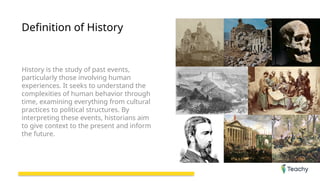
History is the study of past events,
particularly those involving human
experiences. It seeks to understand the
complexities of human behavior through
time, examining everything from cultural
practices to political structures. By
interpreting these events, historians aim
to give context to the present and inform
the future.
Meaning of History
1. History is essential for understanding how past
events shape societal norms and values. It reflects
the journey of humanity, showing how
civilizations rise and fall over time.
2. The study of history encompasses various
dimensions, including political, social, and
economic factors that contribute to the
complexity of human life.
3. By comprehending these factors, students can
better grasp the world they live in and the various
influences that have shaped their cultures.
Different Perspectives
1. History can be viewed through various lenses,
such as cultural, social, and political perspectives.
Each perspective provides a unique
understanding of past events.
2. Cultural history focuses on traditions, beliefs,
and practices of different societies, while social
history examines the lives and experiences of
ordinary people.
3. Political history, on the other hand, investigates
the actions of leaders and governments and how
their decisions impact societies.
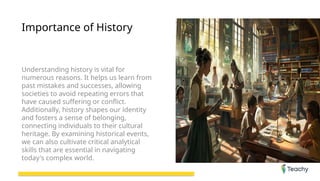
Importance of History
Understanding history is vital for
numerous reasons. It helps us learn from
past mistakes and successes, allowing
societies to avoid repeating errors that
have caused suffering or conflict.
Additionally, history shapes our identity
and fosters a sense of belonging,
connecting individuals to their cultural
heritage. By examining historical events,
we can also cultivate critical analytical
skills that are essential in navigating
today's complex world.
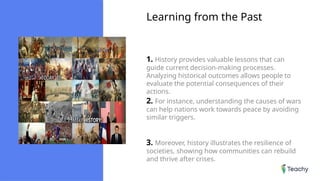
Learning from the Past
1. History provides valuable lessons that can
guide current decision-making processes.
Analyzing historical outcomes allows people to
evaluate the potential consequences of their
actions.
2. For instance, understanding the causes of wars
can help nations work towards peace by avoiding
similar triggers.
3. Moreover, history illustrates the resilience of
societies, showing how communities can rebuild
and thrive after crises.
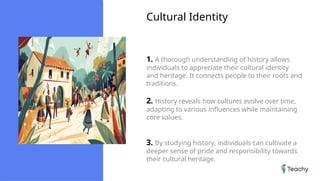
Cultural Identity
1. A thorough understanding of history allows
individuals to appreciate their cultural identity
and heritage. It connects people to their roots and
traditions.
2. History reveals how cultures evolve over time,
adapting to various influences while maintaining
core values.
3. By studying history, individuals can cultivate a
deeper sense of pride and responsibility towards
their cultural heritage.
Critical Thinking Skills
1. Studying history fosters critical thinking skills
as individuals analyze various interpretations of
events and assess the reliability of sources.
2. Engaging with historical narratives prompts
questions that encourage deeper understanding
and exploration of human motivations.
3. These skills are transferable and beneficial in
various aspects of life, preparing students for
future challenges.
Who Qualifies as a
Historian
A historian is someone who engages with
the study of history, often possessing
specific qualifications and skills that
enable them to analyze and interpret
historical events. While formal education
in history or related fields is common, it is
not always necessary. Passion for
research, critical thinking, and effective
communication are equally crucial traits
that define a historian's work.
Educational Background
1. Historians typically have formal education in
history, often holding advanced degrees in the
field. This educational background equips them
with specialized knowledge and methodologies.
2. A broad understanding of various historical
periods and concepts is essential for historians,
allowing them to connect diverse historical
threads.
3. Additionally, interdisciplinary studies such as
anthropology, sociology, or archaeology can
enhance a historian's perspective and analytical
skills.
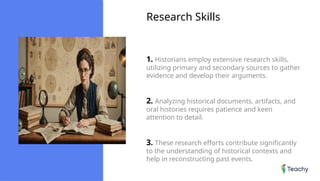
Research Skills
1. Historians employ extensive research skills,
utilizing primary and secondary sources to gather
evidence and develop their arguments.
2. Analyzing historical documents, artifacts, and
oral histories requires patience and keen
attention to detail.
3. These research efforts contribute significantly
to the understanding of historical contexts and
help in reconstructing past events.
Contributions to
Historical Knowledge
1. Historians contribute to the collective
knowledge of history by publishing their findings
in books, journals, and articles. This dissemination
of information is crucial for education and public
understanding.
2. Through their work, historians challenge
existing narratives and promote new
interpretations, fostering a more nuanced
understanding of the past.
3. Public history initiatives, including exhibitions
and community projects, further extend their
contributions to broader audiences.
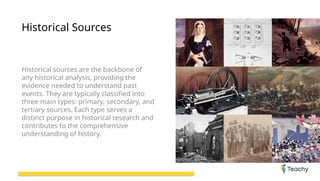
Historical Sources
Historical sources are the backbone of
any historical analysis, providing the
evidence needed to understand past
events. They are typically classified into
three main types: primary, secondary, and
tertiary sources. Each type serves a
distinct purpose in historical research and
contributes to the comprehensive
understanding of history.
Primary Sources
1. Primary sources are original documents and
evidence created during the time being studied.
Examples include letters, photographs, diaries,
and artifacts.
2. These sources provide firsthand accounts and
direct evidence, offering valuable insights into
historical contexts.
3. Analyzing primary sources allows historians to
construct narratives and assess the authenticity of
accounts from the past.
Secondary Sources
1. Secondary sources analyze, interpret, or
summarize primary sources. Common examples
include textbooks, articles, and documentaries.
2. These sources contextualize historical events
and provide synthesized information for a
broader understanding.
3. While invaluable, secondary sources should be
evaluated for bias and perspective, as they are
created by historians interpreting the past.
Tertiary Sources
1. Tertiary sources compile and summarize
information from primary and secondary sources.
Examples include encyclopedias, indexes, and
bibliographies.
2. These sources serve as valuable reference
materials, providing quick access to a broad range
of information.
3. While they are useful for starting research,
tertiary sources should be supplemented with
primary and secondary sources for deeper
inquiry.
Exercises and Questions
1. Analyze a primary source document related to
Philippine history. What insights does it provide about
the era it represents?
2. Discuss how cultural identity is shaped by historical events. Can you give
examples from Philippine history?
3. Consider the role of historians in shaping our understanding of the past.
How do their interpretations influence our view of history?
Conclusion
Philippine History
1. History is a vital study that influences
our understanding of ourselves and our
society.
2. Engaging with diverse historical
perspectives enriches our
comprehension of cultural identities.
3. Historians play a crucial role in
analyzing and interpreting historical
events, contributing to our collective
knowledge.

Slide_Philippine_history introducton.pptx

  • 1.
  • 2.
    Philippine History Agenda 1. Definition ofHistory 2. Importance of History 3. Who Qualifies as a Historian 4. Historical Sources
  • 3.
    Definition of History Historyis the study of past events, particularly those involving human experiences. It seeks to understand the complexities of human behavior through time, examining everything from cultural practices to political structures. By interpreting these events, historians aim to give context to the present and inform the future.
  • 4.
    Meaning of History 1.History is essential for understanding how past events shape societal norms and values. It reflects the journey of humanity, showing how civilizations rise and fall over time. 2. The study of history encompasses various dimensions, including political, social, and economic factors that contribute to the complexity of human life. 3. By comprehending these factors, students can better grasp the world they live in and the various influences that have shaped their cultures.
  • 5.
    Different Perspectives 1. Historycan be viewed through various lenses, such as cultural, social, and political perspectives. Each perspective provides a unique understanding of past events. 2. Cultural history focuses on traditions, beliefs, and practices of different societies, while social history examines the lives and experiences of ordinary people. 3. Political history, on the other hand, investigates the actions of leaders and governments and how their decisions impact societies.
  • 6.
    Importance of History Understandinghistory is vital for numerous reasons. It helps us learn from past mistakes and successes, allowing societies to avoid repeating errors that have caused suffering or conflict. Additionally, history shapes our identity and fosters a sense of belonging, connecting individuals to their cultural heritage. By examining historical events, we can also cultivate critical analytical skills that are essential in navigating today's complex world.
  • 7.
    Learning from thePast 1. History provides valuable lessons that can guide current decision-making processes. Analyzing historical outcomes allows people to evaluate the potential consequences of their actions. 2. For instance, understanding the causes of wars can help nations work towards peace by avoiding similar triggers. 3. Moreover, history illustrates the resilience of societies, showing how communities can rebuild and thrive after crises.
  • 8.
    Cultural Identity 1. Athorough understanding of history allows individuals to appreciate their cultural identity and heritage. It connects people to their roots and traditions. 2. History reveals how cultures evolve over time, adapting to various influences while maintaining core values. 3. By studying history, individuals can cultivate a deeper sense of pride and responsibility towards their cultural heritage.
  • 9.
    Critical Thinking Skills 1.Studying history fosters critical thinking skills as individuals analyze various interpretations of events and assess the reliability of sources. 2. Engaging with historical narratives prompts questions that encourage deeper understanding and exploration of human motivations. 3. These skills are transferable and beneficial in various aspects of life, preparing students for future challenges.
  • 10.
    Who Qualifies asa Historian A historian is someone who engages with the study of history, often possessing specific qualifications and skills that enable them to analyze and interpret historical events. While formal education in history or related fields is common, it is not always necessary. Passion for research, critical thinking, and effective communication are equally crucial traits that define a historian's work.
  • 11.
    Educational Background 1. Historianstypically have formal education in history, often holding advanced degrees in the field. This educational background equips them with specialized knowledge and methodologies. 2. A broad understanding of various historical periods and concepts is essential for historians, allowing them to connect diverse historical threads. 3. Additionally, interdisciplinary studies such as anthropology, sociology, or archaeology can enhance a historian's perspective and analytical skills.
  • 12.
    Research Skills 1. Historiansemploy extensive research skills, utilizing primary and secondary sources to gather evidence and develop their arguments. 2. Analyzing historical documents, artifacts, and oral histories requires patience and keen attention to detail. 3. These research efforts contribute significantly to the understanding of historical contexts and help in reconstructing past events.
  • 13.
    Contributions to Historical Knowledge 1.Historians contribute to the collective knowledge of history by publishing their findings in books, journals, and articles. This dissemination of information is crucial for education and public understanding. 2. Through their work, historians challenge existing narratives and promote new interpretations, fostering a more nuanced understanding of the past. 3. Public history initiatives, including exhibitions and community projects, further extend their contributions to broader audiences.
  • 14.
    Historical Sources Historical sourcesare the backbone of any historical analysis, providing the evidence needed to understand past events. They are typically classified into three main types: primary, secondary, and tertiary sources. Each type serves a distinct purpose in historical research and contributes to the comprehensive understanding of history.
  • 15.
    Primary Sources 1. Primarysources are original documents and evidence created during the time being studied. Examples include letters, photographs, diaries, and artifacts. 2. These sources provide firsthand accounts and direct evidence, offering valuable insights into historical contexts. 3. Analyzing primary sources allows historians to construct narratives and assess the authenticity of accounts from the past.
  • 16.
    Secondary Sources 1. Secondarysources analyze, interpret, or summarize primary sources. Common examples include textbooks, articles, and documentaries. 2. These sources contextualize historical events and provide synthesized information for a broader understanding. 3. While invaluable, secondary sources should be evaluated for bias and perspective, as they are created by historians interpreting the past.
  • 17.
    Tertiary Sources 1. Tertiarysources compile and summarize information from primary and secondary sources. Examples include encyclopedias, indexes, and bibliographies. 2. These sources serve as valuable reference materials, providing quick access to a broad range of information. 3. While they are useful for starting research, tertiary sources should be supplemented with primary and secondary sources for deeper inquiry.
  • 18.
    Exercises and Questions 1.Analyze a primary source document related to Philippine history. What insights does it provide about the era it represents? 2. Discuss how cultural identity is shaped by historical events. Can you give examples from Philippine history? 3. Consider the role of historians in shaping our understanding of the past. How do their interpretations influence our view of history?
  • 19.
    Conclusion Philippine History 1. Historyis a vital study that influences our understanding of ourselves and our society. 2. Engaging with diverse historical perspectives enriches our comprehension of cultural identities. 3. Historians play a crucial role in analyzing and interpreting historical events, contributing to our collective knowledge.