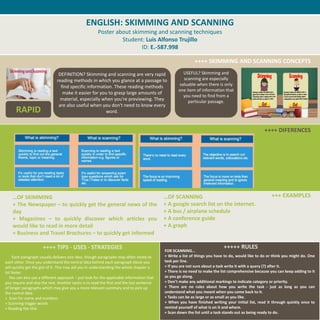
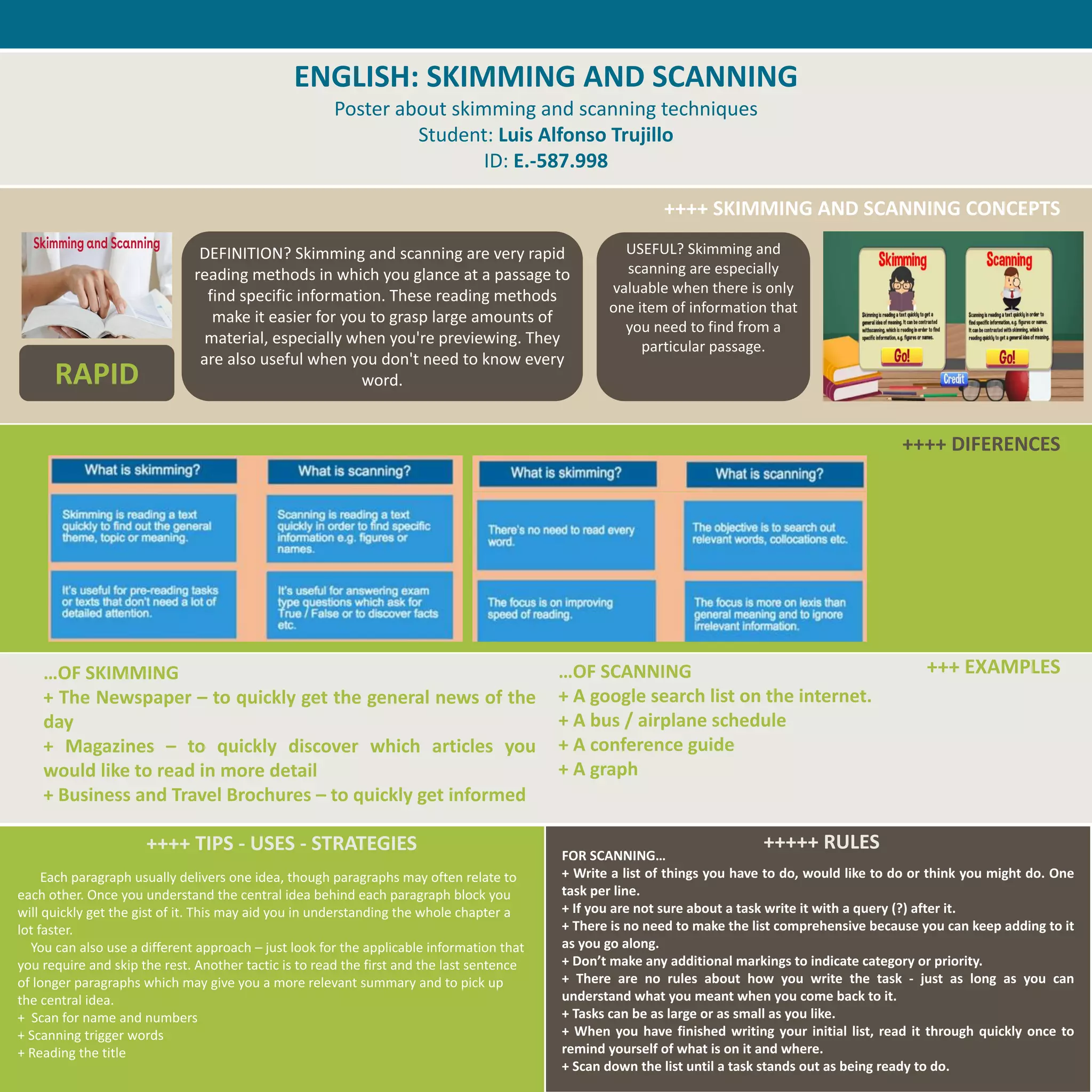
ENGLISH: SKIMMING AND SCANNING
Poster about skimming and scanning techniques
Student: Luis Alfonso Trujillo
ID: E.-587.998
++++ SKIMMING AND SCANNING CONCEPTS
RAPID
DEFINITION? Skimming and scanning are very rapid
reading methods in which you glance at a passage to
find specific information. These reading methods
make it easier for you to grasp large amounts of
material, especially when you're previewing. They
are also useful when you don't need to know every
word.
++++ DIFERENCES
USEFUL? Skimming and
scanning are especially
valuable when there is only
one item of information that
you need to find from a
particular passage.
+++ EXAMPLES…OF SKIMMING
+ The Newspaper – to quickly get the general news of the
day
+ Magazines – to quickly discover which articles you
would like to read in more detail
+ Business and Travel Brochures – to quickly get informed
+++++ RULES++++ TIPS - USES - STRATEGIES FOR SCANNING…
+ Write a list of things you have to do, would like to do or think you might do. One
task per line.
+ If you are not sure about a task write it with a query (?) after it.
+ There is no need to make the list comprehensive because you can keep adding to it
as you go along.
+ Don’t make any additional markings to indicate category or priority.
+ There are no rules about how you write the task - just as long as you can
understand what you meant when you come back to it.
+ Tasks can be as large or as small as you like.
+ When you have finished writing your initial list, read it through quickly once to
remind yourself of what is on it and where.
+ Scan down the list until a task stands out as being ready to do.
…OF SCANNING
+ A google search list on the internet.
+ A bus / airplane schedule
+ A conference guide
+ A graph
Each paragraph usually delivers one idea, though paragraphs may often relate to
each other. Once you understand the central idea behind each paragraph block you
will quickly get the gist of it. This may aid you in understanding the whole chapter a
lot faster.
You can also use a different approach – just look for the applicable information that
you require and skip the rest. Another tactic is to read the first and the last sentence
of longer paragraphs which may give you a more relevant summary and to pick up
the central idea.
+ Scan for name and numbers
+ Scanning trigger words
+ Reading the title

SKIMMING AND SCANNING

  • 1.
    ENGLISH: SKIMMING ANDSCANNING Poster about skimming and scanning techniques Student: Luis Alfonso Trujillo ID: E.-587.998 ++++ SKIMMING AND SCANNING CONCEPTS RAPID DEFINITION? Skimming and scanning are very rapid reading methods in which you glance at a passage to find specific information. These reading methods make it easier for you to grasp large amounts of material, especially when you're previewing. They are also useful when you don't need to know every word. ++++ DIFERENCES USEFUL? Skimming and scanning are especially valuable when there is only one item of information that you need to find from a particular passage. +++ EXAMPLES…OF SKIMMING + The Newspaper – to quickly get the general news of the day + Magazines – to quickly discover which articles you would like to read in more detail + Business and Travel Brochures – to quickly get informed +++++ RULES++++ TIPS - USES - STRATEGIES FOR SCANNING… + Write a list of things you have to do, would like to do or think you might do. One task per line. + If you are not sure about a task write it with a query (?) after it. + There is no need to make the list comprehensive because you can keep adding to it as you go along. + Don’t make any additional markings to indicate category or priority. + There are no rules about how you write the task - just as long as you can understand what you meant when you come back to it. + Tasks can be as large or as small as you like. + When you have finished writing your initial list, read it through quickly once to remind yourself of what is on it and where. + Scan down the list until a task stands out as being ready to do. …OF SCANNING + A google search list on the internet. + A bus / airplane schedule + A conference guide + A graph Each paragraph usually delivers one idea, though paragraphs may often relate to each other. Once you understand the central idea behind each paragraph block you will quickly get the gist of it. This may aid you in understanding the whole chapter a lot faster. You can also use a different approach – just look for the applicable information that you require and skip the rest. Another tactic is to read the first and the last sentence of longer paragraphs which may give you a more relevant summary and to pick up the central idea. + Scan for name and numbers + Scanning trigger words + Reading the title