‌
‌ ‌
‌
‌
‌
‌
Final‌‌
Report‌ ‌
‌
‌
SITUATIONAL‌‌
ANALYSIS‌‌
ON‌‌
DIGITAL‌‌
LEARNING‌‌ ‌
LANDSCAPE‌‌
IN‌‌
INDONESIA‌ ‌
‌
Submitted‌‌
February‌‌
2021‌‌ ‌
Quicksand‌‌
Design‌‌
Studio‌‌
Pvt.‌‌
Ltd.‌ ‌
‌
‌
‌
1‌ ‌
‌
‌
Contents‌ ‌
‌
‌ ‌
1. Introduction‌‌
/‌‌
6‌‌ ‌
2. About‌‌
this‌‌
research‌ ‌
/‌‌
11‌ ‌ ‌
2.1. Research‌‌
Objectives‌‌ ‌
2.2. Research‌‌
Methodology‌ ‌
Research‌‌
Limitations‌‌ ‌
2.3. Disclaimer‌
s‌‌ ‌
‌
3. Pillar‌‌
1:‌
‌‌
Digital‌‌
content‌‌
and‌‌
platforms‌ ‌
/‌‌
14‌‌ ‌
3.1. The‌‌
pandemic‌‌
has‌‌
resulted‌‌
in‌‌
an‌‌
upsurge‌‌
of‌‌
platform‌‌
and‌‌
content‌‌
innovations‌‌
within‌‌
the‌‌
education‌‌
space,‌‌
by‌‌
both‌‌
the‌‌
government‌‌
and‌‌
the‌‌
private‌‌
sector.‌‌
However,‌‌
little‌‌
awareness‌‌
and‌‌
perceptions‌‌
of‌‌
low‌‌
quality‌‌
content‌‌
have‌‌
limited‌‌
its‌‌
uptake.‌‌ ‌
3.2. Private‌‌
EdTech‌‌
platforms‌‌
are‌‌
mostly‌‌
focused‌‌
on‌‌
first‌‌
mile‌‌
users‌‌
and‌‌
final-year‌‌
school‌‌
students.‌‌
While‌‌
some‌‌
government‌‌
programs‌‌
have‌‌
come‌‌
up‌‌
to‌‌
address‌‌
private‌‌
sector‌‌
gaps,‌‌
the‌‌
needs‌‌
of‌‌
vulnerable‌‌
communities‌‌
are‌‌
not‌‌
yet‌‌
adequately‌‌
met,‌‌
especially‌‌
in‌‌
the‌‌
case‌‌
of‌‌
special‌‌
needs‌‌
students.‌‌ ‌
3.3. The‌‌
shift‌‌
of‌‌
education‌‌
outside‌‌
the‌‌
physical‌‌
space‌‌
of‌‌
classrooms‌‌
has‌‌
led‌‌
to‌‌
challenges‌‌
for‌‌
monitoring‌‌
teaching‌‌
and‌‌
learning‌‌
performance.‌ ‌
3.4. Limitations‌‌
on‌‌
social‌‌
interaction‌‌
and‌‌
safeguards‌‌
for‌‌
online‌‌
safety‌‌
have‌‌
reduced‌‌
active‌‌
learning‌‌
and‌‌
posed‌‌
a‌‌
risk‌‌
to‌‌
the‌‌
well-being‌‌
of‌‌
students.‌ ‌ ‌
4. Pillar‌‌
2:‌‌
‌
Internet,‌‌
devices,‌‌
and‌‌
infrastructure‌ ‌
/‌‌
39‌ ‌
4.1. Despite‌‌
numerous‌‌
initiatives‌‌
to‌‌
improve‌‌
the‌‌
poor‌‌
internet‌‌
connectivity‌‌
across‌‌
the‌‌
archipelago,‌‌
progress‌‌
is‌‌
slow‌‌
and‌‌
a‌‌
large‌‌
proportion‌‌
of‌‌
the‌‌
population‌‌
still‌‌
does‌‌
not‌‌
have‌‌
adequate‌‌
internet‌‌
connectivity‌‌
to‌‌
learn‌‌
online.‌ ‌
4.2. Limited‌‌
access‌‌
to‌‌
affordable‌‌
quality‌‌
internet‌‌
and‌‌
poor‌‌
availability‌‌
of‌‌
appropriate‌‌
digital‌‌
devices‌‌
makes‌‌
learning‌‌
from‌‌
home‌‌
less‌‌
conducive‌‌
for‌‌
most‌‌
students‌‌
-‌‌
especially‌‌
those‌‌
in‌‌
remote‌‌
and‌‌
poor‌‌
settings‌‌
like‌ ‌
3T‌‌
areas.‌ ‌
4.3. The‌‌
Government's‌‌
efforts‌‌
to‌‌
provide‌‌
free‌‌
internet‌‌
packages‌‌
have‌‌
faced‌‌
limitations‌‌
in‌‌
design‌‌
and‌‌
implementation,‌‌
limiting‌‌
its‌‌
uptake.‌ ‌
5. Pillar‌‌
3:‌‌
‌
Digital‌‌
skills‌ ‌
/‌‌
56‌ ‌
5.1. Students‌‌
have‌‌
strong‌‌
potential‌‌
for‌‌
digital‌‌
learning,‌‌
as‌‌
many‌‌
of‌‌
them‌‌
are‌‌
'digital‌‌
natives'.‌‌
Despite‌‌
this,‌‌
they‌‌
lack‌‌
adequate‌‌
'digital‌‌
skills'‌‌
that‌‌
would‌‌
prepare‌‌
them‌‌
for‌‌
the‌‌
'digital‌‌
economy'.‌ ‌
5.2. Many‌‌
students‌‌
struggle‌‌
to‌‌
adjust‌‌
to‌‌
this‌‌
new‌‌
way‌‌
of‌‌
learning,‌‌
and‌‌
their‌‌
parents‌‌
lack‌‌
the‌‌
capacity‌‌
to‌‌
adequately‌‌
support‌‌
them.‌ ‌
5.3. Inadequate‌‌
support‌‌
for‌‌
teachers‌‌
to‌‌
transition‌‌
to‌‌
digital‌‌
learning‌‌
has‌‌
posed‌‌
challenges‌‌
for‌‌
them‌‌
to‌‌
adapt.‌‌
This‌‌
is‌‌
accentuated‌‌
by‌‌
their‌‌
poor‌‌
formative‌‌
training‌‌
and‌‌
limited‌‌
pre-existing‌‌
digital‌‌
skills.‌‌ ‌
‌
‌
2‌ ‌ ‌
‌
‌ ‌
‌
‌
‌
5.4. Government‌‌
interventions‌‌
focussed‌‌
on‌‌
teachers,‌‌
have‌‌
thus‌‌
far‌‌
been‌‌
top-down‌‌
in‌‌
their‌‌
approach‌‌
and‌‌
largely‌‌
failed‌‌
to‌‌
include‌‌
teachers‌‌
in‌‌
their‌‌
design‌‌
and‌‌
formulation.‌ ‌
‌
6. Recommendations‌ ‌
/‌‌
84‌ ‌
‌
‌ ‌
‌
Annexures‌
‌ ‌
‌
/‌‌
95‌ ‌
Annex‌‌
1‌
:‌‌
‌
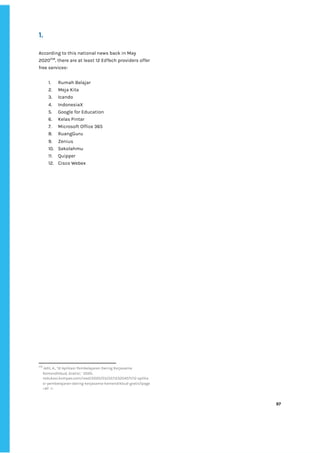
EdTech‌‌
providers‌‌
offering‌‌
free‌‌
services.‌‌ ‌
Annex‌‌
2‌
:‌‌
‌
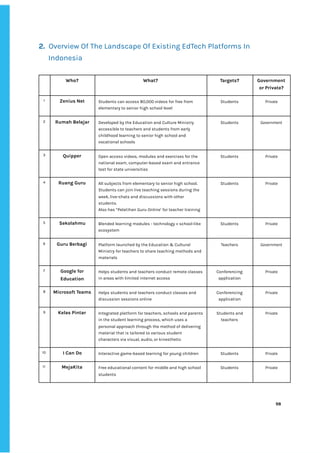
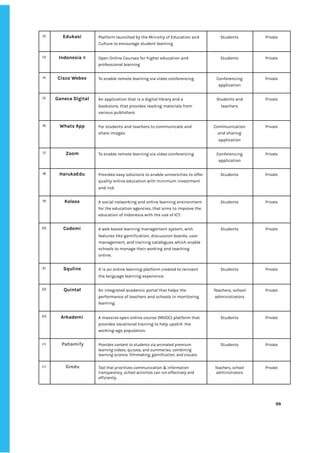
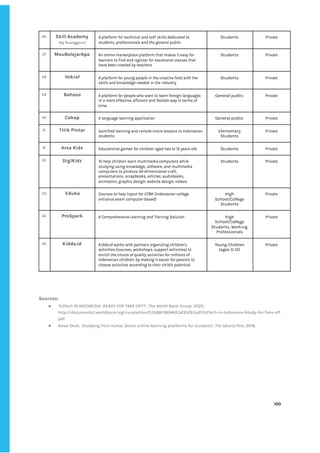
Overview‌‌
of‌‌
the‌‌
landscape‌‌
of‌‌
existing‌‌
EdTech‌‌
platforms‌‌
in‌‌
Indonesia.‌ ‌
Annex‌‌
3‌
:‌‌‌
Government‌‌
of‌‌
Indonesia‌‌
EdTech‌‌
initiatives‌‌ ‌
Annex‌‌
4‌
:‌‌‌
Citations‌‌ ‌
Annex‌‌
5:‌
‌‌
List‌‌
of‌‌
Experts‌‌ ‌
‌
‌
‌
3‌ ‌
‌
‌ ‌
‌
‌
‌
Acknowledgements‌ ‌
‌ ‌ ‌ ‌
‌
‌
This‌‌
report‌‌
was‌‌
commissioned‌‌
by‌‌
the‌‌
UNICEF‌‌
Indonesia‌‌
Country‌‌
Office.‌‌ ‌
The‌‌
authors‌‌
are‌‌
grateful‌‌
for‌‌
the‌‌
opportunity‌‌
and‌‌
research‌‌
guidance‌‌
provided‌‌
by‌‌
the‌‌
team‌‌
at‌‌
the‌‌
Indonesia‌‌
Country‌‌
Office‌‌
-‌‌
Ticiana‌‌
Garcia-Tapia,‌‌
Hiroyuki‌‌
Hattori,‌‌
and‌‌
Abdullah‌‌
Modhesh.‌‌
The‌‌
authors‌‌
are‌‌
especially‌‌
grateful‌‌
to‌‌
all‌‌
the‌‌
research‌‌
participants‌‌
and‌‌
experts‌‌
who‌‌
gave‌‌
their‌‌
time‌‌
to‌‌
share‌‌
their‌‌
experiences‌‌
and‌‌
knowledge‌‌
on‌‌
this‌‌
topic.‌‌ ‌
The‌‌
research‌‌
was‌‌
conducted‌‌
and‌‌
consolidated‌‌
by‌‌
Chitrangna‌‌
Dewan,‌‌
Nitya‌‌
Kuthiala,‌‌
Mallika‌‌
Vaznaik,‌‌
Ritika‌‌
Khinvasara,‌‌
Shruti‌‌
Jagirdar‌‌
(Consultant)‌‌
from‌‌
Quicksand‌‌
Design‌‌
Studio‌‌
in‌‌
India.‌‌
The‌‌
authors‌‌
are‌‌
thankful‌‌
to‌‌
the‌‌
management‌‌
and‌‌
entire‌‌
team‌‌
at‌‌
Quicksand‌‌
Design‌‌
Studio‌‌
for‌‌
their‌‌
support‌‌
to‌‌
put‌‌
this‌‌
research‌‌
together.‌‌
The‌‌
research‌‌
team‌‌
in‌‌
Indonesia‌‌
included‌‌
Steven‌‌
Ellis,‌‌
Frisca‌‌
Tobing,‌‌
and‌‌
Thalia‌‌
Shylendra‌‌
at‌‌
Empatika‌‌
and‌‌
Winastwan‌‌
Gora.‌‌ ‌
We‌‌
hope‌‌
that‌‌
the‌‌
research‌‌
is‌‌
useful‌‌
in‌‌
creating‌‌
a‌‌
resilient‌‌
education‌‌
system‌‌
which‌‌
ensures‌‌
that‌‌
all‌‌
children‌‌
are‌‌
able‌‌
to‌‌
learn‌‌
and‌‌
flourish‌‌
in‌‌
a‌‌
safe‌‌
digital‌‌
environment‌‌
-‌‌
leading‌‌
to‌‌
a‌‌
boost‌‌
in‌‌
Indonesia’s‌‌
human‌‌
capital‌‌
and‌‌
recovery‌‌
post‌‌
the‌‌
COVID‌‌
-19‌‌
pandemic.‌ ‌
Disclaimer:‌‌
The‌‌
views‌‌
expressed‌‌
in‌‌
this‌‌
publication‌‌
are‌‌
those‌‌
of‌‌
the‌‌
authors‌‌
and‌‌
do‌‌
not‌‌
necessarily‌‌
represent‌‌
those‌‌
of‌‌
the‌‌
United‌‌
Nations,‌‌
including‌‌
UNICEF‌‌
or‌‌
the‌‌
UN‌‌
Member‌‌
States.‌‌
The‌‌
presentation‌‌
of‌‌
maps‌‌
in‌‌
this‌‌
publication‌‌
do‌‌
not‌‌
imply‌‌
the‌‌
expression‌‌
of‌‌
any‌‌
opinion‌‌
whatsoever‌‌
on‌‌
the‌‌
part‌‌
of‌‌
the‌‌
United‌‌
Nations‌‌
concerning‌‌
the‌‌
legal‌‌
status‌‌
of‌‌
any‌‌
country,‌‌
territory,‌‌
city‌‌
or‌‌
area‌‌
or‌‌
its‌‌
authorities,‌‌
or‌‌
concerning‌‌
the‌‌
delimitation‌‌
of‌‌
its‌‌
frontiers‌‌
or‌‌
boundaries.‌‌
Links‌‌
contained‌‌
in‌‌
the‌‌
present‌‌
publication‌‌
are‌‌
provided‌‌
for‌‌
the‌‌
convenience‌‌
of‌‌
the‌‌
reader‌‌
and‌‌
are‌‌
correct‌‌
at‌‌
the‌‌
time‌‌
of‌‌
issue.‌‌
Authors‌‌
take‌‌
no‌‌
responsibility‌‌
for‌‌
the‌‌
continued‌‌
accuracy‌‌
of‌‌
that‌‌
information‌‌
or‌‌
for‌‌
the‌‌
content‌‌
of‌‌
any‌‌
external‌‌
website.‌ ‌
Design‌‌
and‌‌
layout:‌‌
Quicksand‌‌
Design‌‌
Studio‌ ‌
Cover‌‌
photo‌‌
credit:‌‌
Freepik‌
Illustration‌‌
and‌‌
Image‌‌
credits:‌‌
Freepik‌‌
and‌‌
UNICEF‌‌
Indonesia‌ ‌ ‌
‌
‌
‌
‌
‌
‌
4‌ ‌ ‌
‌
‌ ‌
‌
‌
‌
Glossary‌‌
INOVASI‌‌
-‌‌
The‌‌
Innovation‌‌
for‌‌
Indonesia’s‌‌
School‌‌
Children‌‌ ‌
‌
KOMINFO‌‌
-‌‌
Ministry‌‌
of‌‌
Communication‌‌
and‌‌
Information‌‌
technology‌‌ ‌
‌
KEMDIKBUD‌‌
-‌‌
Ministry‌‌
of‌‌
Education‌‌
and‌‌
Culture‌‌ ‌
‌
MoEC-‌‌
Ministry‌‌
of‌‌
Education‌‌
and‌‌
Culture‌‌ ‌
‌
PSPK‌‌
-‌ ‌
Center‌‌
for‌‌
Education‌‌
and‌‌
Policy‌‌
Studies‌ ‌
‌
PUSDATIN‌‌
-‌ ‌
Data‌‌
and‌‌
information‌‌
technology‌‌
centre‌‌ ‌
‌
Pustekkom‌‌
-‌‌
Center‌‌
for‌‌
Data‌‌
and‌‌
Information‌‌
Technology,‌‌
Ministry‌‌
of‌‌
Education‌‌
and‌‌
Culture‌‌ ‌
‌
BPS‌‌
-‌‌
Central‌‌
Bureau‌‌
of‌‌
Statistics‌ ‌
‌
ICT‌‌
-‌‌
Information‌‌
and‌‌
Communication‌‌
Technology‌ ‌
‌
KPAI‌‌
-‌‌
Komisi‌‌
Perlindungan‌‌
Anak‌‌
Indonesia,‌‌
which‌‌
translates‌‌
to‌‌
Indonesian‌‌
Child‌‌
Protection‌‌
Commission‌ ‌
‌
BOS‌‌
-‌‌
School‌‌
Operational‌‌
Assistance‌ ‌
‌
‌
‌
‌
‌
‌
‌
‌
‌
‌
‌
‌
‌
‌
‌
‌
‌
‌
‌
‌
‌
‌
‌
‌
‌
‌
‌
5‌ ‌ ‌
‌
‌ ‌
‌
‌
‌
‌
‌
1. Introduction‌ ‌
‌
‌
While‌‌
literacy‌‌
rates‌‌
have‌‌
been‌‌
steadily‌‌
increasing‌‌
in‌‌
Indonesia‌‌
in‌‌
the‌‌
current‌‌
millennium,‌‌
digitization‌‌
presents‌‌
a‌‌
new‌‌
future‌‌
for‌‌
education.‌‌
Law‌‌
no.‌‌
20‌‌
of‌‌
the‌‌
National‌‌
Education‌‌
System,‌‌
passed‌‌
in‌‌
2003,‌ ‌
stipulates‌‌
a‌‌
nine-year‌‌
compulsory‌‌
basic‌‌
education‌‌
(six‌‌
years‌‌
of‌‌
primary‌‌
and‌‌
three‌‌
years‌‌
of‌‌
junior‌‌
secondary‌‌
education)‌‌
for‌‌
all‌‌
citizens‌‌
of‌‌
Indonesia‌‌
aged‌‌
7-15years‌‌
and‌‌
has‌‌
helped‌‌
increase‌‌
enrollment‌‌
in‌‌
Indonesian‌‌
schools‌
1‌
.‌ ‌
Furthermore,‌‌
this‌‌
law‌‌
also‌‌
requires‌‌
central‌‌
and‌‌
local‌‌
governments‌‌
to‌‌
allocate‌‌
a‌
minimum‌‌
of‌‌
twenty‌‌
per‌‌
cent‌‌
of‌‌
their‌‌
budget‌‌
to‌‌
education‌
2‌
.‌‌
This‌‌
drastically‌‌
improved‌‌
school‌‌
enrollment‌‌
of‌‌
15-year-olds‌‌
in‌‌
Indonesia‌‌
from‌‌
46‌‌
per‌‌
cent‌‌
in‌‌
2001‌‌
to‌‌
85‌‌
per‌‌
cent‌‌
in‌‌
2018‌‌
‌
3‌
.‌‌
However,‌‌
despite‌‌
these‌‌
efforts,‌‌
according‌‌
to‌‌
the‌‌
Central‌‌
Bureau‌‌
of‌‌
Statistics‌‌
Report‌‌
of‌‌
2015,‌‌
an‌‌
overall‌‌
estimated‌‌
4.4‌‌
million‌‌
children‌‌
and‌‌
adolescents‌‌
aged‌‌
7–18‌‌
years‌‌
are‌‌
still‌‌
out‌‌
of‌‌
school‌
4‌
.‌‌
As‌‌
of‌‌
an‌‌
Oxfam‌‌
Report‌‌
from‌‌
2017‌
5‌
,‌‌
only‌‌
55‌‌
per‌‌
cent‌‌
of‌‌
children‌‌
from‌‌
poor‌‌
families‌‌
are‌‌
enrolled‌‌
in‌‌
secondary‌‌
school,‌‌
highlighting‌‌
that‌‌
these‌‌
efforts‌‌
have‌‌
still‌‌
left‌‌
out‌‌
a‌‌
significant‌‌
number‌‌
of‌‌
young‌‌
Indonesians.‌‌ ‌
‌
In‌‌
parallel,‌‌
there‌‌
is‌‌
increasing‌‌
digitisation‌‌
and‌‌
device‌‌
availability‌‌
across‌‌
the‌‌
archipelago.‌‌
As‌‌
the‌‌
internet‌‌
becomes‌‌
cheaper‌‌
and‌‌
more‌‌
widely‌‌
available,‌‌
giving‌‌
more‌‌
regular‌‌
access,‌‌
digital‌‌
education‌‌
becomes‌‌
increasingly‌‌
pertinent‌‌
and‌‌
advantageous‌‌
to‌‌
school-based‌‌
learning.‌‌
While‌‌
subjects‌‌
involving‌‌
information‌‌
and‌‌
communication‌‌
1
‌
The‌‌
World‌‌
Bank,‌‌
‌
Indonesia‌‌
Public‌‌
Expenditure‌‌
Review:‌‌
Spending‌‌
for‌‌
Better‌‌
Results,‌‌‌
The‌‌
World‌‌
Bank‌‌
Group,‌ ‌
Ministry‌‌
of‌‌
Finance‌‌
Republic‌‌
of‌‌
Indonesia,‌‌
European‌‌
Union,‌‌
Swiss‌‌
Confederation‌‌
and‌‌
Australian‌‌
Government,‌‌
2020.‌ ‌
2
‌
‌
Jasmina‌
,‌‌
‌
T.,‌ ‌
‘The‌‌
Role‌‌
of‌‌
Government‌‌
Spending‌‌
on‌‌
Basic‌‌
Education‌‌
at‌‌
the‌‌
District‌‌
Level‌‌
in‌‌
Indonesia’,‌‌
2007,‌‌
p.‌‌
1-18.‌‌
3
Organisation‌‌
for‌‌
Economic‌‌
Co-operation‌‌
and‌‌
Development,‌ ‌
Bridging‌‌
the‌‌
Digital‌‌
Gender‌‌
Divide:‌‌
Include,‌‌
Upskill,‌‌
Innovate,,‌‌
OECD,‌ ‌
2018.‌ ‌
4
‌
UNICEF‌‌
Indonesia,‌ ‌
‘Education‌‌
and‌‌
adolescents’‌‌
,‌‌
<‌
https://www.unicef.org/indonesia/education-and-adolescents>‌
.‌‌ ‌
5
‌
OXFAM‌‌
International,‌‌
‘Towards‌‌
a‌‌
more‌‌
Equal‌‌
Indonesia’,‌‌
OXFAM‌‌
Briefing‌‌
Paper,‌‌
Kilimani,‌‌
February‌‌
2017.‌ ‌
technology‌‌
(ICT)‌‌
first‌‌
appeared‌‌
in‌‌
school‌‌
syllabi‌‌
in‌‌
2006,‌‌
the‌‌
internet‌‌
itself‌‌
has‌‌
equally‌‌
become‌‌
the‌‌
means‌‌
of‌‌
delivering‌‌
quality‌‌
education‌‌
opportunities‌‌
to‌‌
millions‌‌
of‌‌
students‌‌
across‌‌
the‌‌
country.‌‌
Though‌‌
ICT‌‌
was‌‌
removed‌‌
as‌‌
a‌‌
subject‌‌
from‌‌
the‌‌
national‌‌
curriculum‌‌
in‌‌
2014,‌‌
the‌‌
government,‌‌
having‌‌
realised‌‌
the‌‌
importance‌‌
of‌‌
ICT,‌ ‌
encouraged‌‌
schools‌‌
to‌‌
conduct‌‌
education‌‌
processes‌‌
within‌‌
an‌‌
‘IT‌‌
environment’,‌‌
allowing‌‌
students‌‌
in‌‌
schools‌‌
to‌‌
use‌‌
computers‌‌
and‌‌
conduct‌‌
online‌‌
research‌‌
inside‌‌
the‌‌
classroom‌
6‌
.‌ ‌ ‌
‌
The‌‌
government‌‌
and‌‌
the‌‌
private‌‌
sector‌‌
have‌‌
made‌‌
efforts‌‌
to‌‌
support‌‌
the‌‌
growth‌‌
of‌‌
ICT‌‌
and‌‌
internet-based‌‌
learning.‌‌
The‌‌
government‌‌
has‌‌
introduced‌‌
initiatives‌‌
including‌‌
those‌‌
targeting‌‌
infrastructure‌‌
and‌‌
device‌‌
access,‌‌
developing‌‌
platforms‌‌
to‌‌
make‌‌
educational‌‌
content‌‌
freely‌‌
and‌‌
widely‌‌
available,‌‌
and‌‌
training‌‌
schoolteachers‌‌
to‌‌
adopt‌‌
better‌‌
technology‌‌
practices.‌‌
The‌‌
private‌‌
sector‌‌
has‌‌
also‌‌
taken‌‌
cognisance‌‌
of‌‌
these‌‌
trends‌‌
and‌‌
come‌‌
forward‌‌
to‌‌
develop‌‌
education‌‌
technology‌‌
(EdTech)‌‌
applications‌‌
and‌‌
platforms‌‌
which‌‌
are‌‌
gaining‌‌
popularity‌‌
in‌‌
Indonesia.‌‌
These‌‌
include‌ ‌
platforms‌‌
like‌‌
Ruangguru,‌‌
Zenius,‌‌
and‌‌
Sekohlamu‌‌
that‌‌
allow‌‌
self-paced‌‌
learning‌‌
for‌‌
students‌‌
and‌‌
others‌‌
like‌ ‌
Codemi‌‌
and‌‌
Quintal‌‌
that‌‌
provide‌‌
learning‌‌
management‌‌
services‌‌
for‌‌
teachers‌‌
and‌‌
institutions.‌ ‌
‌
Given‌‌
the‌‌
circumstances‌‌
of‌‌
a‌‌
growing‌‌
young‌‌
population‌‌
that‌‌
is‌‌
becoming‌‌
increasingly‌‌
familiar‌‌
with‌‌
the‌‌
many‌‌
uses‌‌
of‌‌
the‌‌
internet,‌‌
and‌‌
the‌‌
need‌‌
to‌‌
adapt‌‌
to‌‌
digitising‌‌
markets,‌‌
a‌‌
move‌‌
towards‌‌
digital‌‌
education‌‌
is‌‌
imminent.‌‌
In‌‌
spite‌‌
of‌‌
a‌‌
general‌‌
move‌‌
towards‌‌
digital‌‌
education‌‌
in‌‌
Indonesia,‌‌
there‌‌
have‌‌
been‌ ‌
perpetuating‌‌
challenges‌‌
in‌‌
its‌‌
adoption.‌ ‌
In‌‌
6
‌
Lukman,‌‌
Enrico.,‌ ‌
‘A‌‌
dilemma‌‌
over‌‌
Indonesia’s‌‌
curriculum‌‌
that‌‌
“removes”‌‌
IT‌‌
studies‌‌
in‌‌
schools’,‌‌
TECHINASIA,‌ ‌
<‌
https://www.techinasia.com/dilemma-indonesias-curriculum-re‌
moves-studies-schools‌
>.‌ ‌
‌
‌
6‌ ‌ ‌
‌
‌ ‌
‌
‌
‌
2020,‌‌
this‌‌
shift‌‌
was‌‌
hastened‌‌
by‌‌
the‌‌
COVID-19‌‌
pandemic‌‌
which‌‌
resulted‌‌
in‌‌
the‌‌
immediate‌‌
closure‌‌
of‌‌
530,000‌‌
schools‌‌
across‌‌
Indonesia‌‌
and‌‌
a‌‌
rapid‌‌
shift‌‌
to‌‌
distance‌‌
learning,‌‌
with‌‌
a‌‌
large‌‌
number‌‌
of‌‌
students‌‌
having‌‌
to‌‌
turn‌‌
to‌‌
digital‌‌
interventions.‌‌
However,‌‌
the‌‌
digital‌‌
education‌‌
infrastructure‌‌
across‌‌
the‌‌
country‌‌
is‌‌
not‌‌
adequately‌‌
evolved‌‌
to‌‌
the‌‌
level‌‌
required‌‌
to‌‌
sustain‌‌
and‌ ‌
improve‌‌
existing‌‌
learning‌‌
outcomes‌‌
for‌‌
all.‌ ‌
Though‌‌
the‌‌
pandemic‌‌
brought‌‌
forward‌‌
myriad‌‌
innovations‌‌
for‌‌
digital‌‌
learning,‌‌
it‌‌
also‌‌
highlighted‌‌
the‌‌
gaps‌‌
and‌‌
inequities‌‌
within‌‌
the‌‌
Indonesian‌‌
digital‌‌
education‌‌
ecosystem‌‌
that‌‌
need‌‌
to‌‌
be‌‌
addressed.‌ ‌ ‌
‌
The‌‌
Economist’s‌‌
‘Inclusive‌‌
Internet‌‌
Index‌‌
2020’‌
7‌
‌
commissioned‌‌
by‌‌
Facebook,‌‌
which‌‌
surveyed‌‌
100‌‌
countries‌‌
revealed‌‌
that,‌‌
despite‌‌
increasing‌‌
internet‌‌
connectivity‌‌
across‌‌
Indonesia,‌‌
there‌‌
are‌‌
vast‌‌
disparities‌‌
within‌‌
regions.‌‌
Measured‌‌
across‌‌
four‌‌
indices‌‌
—‌‌
availability,‌‌
affordability,‌‌
relevance,‌‌
and‌‌
readiness;‌‌
Indonesia’s‌‌
ranked‌‌
63th‌‌
overall,‌‌
55th‌‌
in‌‌
availability‌‌
(the‌‌
quality‌‌
and‌‌
breadth‌‌
of‌‌
available‌‌
infrastructure‌‌
required‌‌
for‌‌
access‌‌
and‌‌
levels‌‌
of‌‌
Internet‌‌
usage);‌‌
61st‌‌
in‌‌
affordability‌‌
(the‌‌
cost‌‌
of‌‌
access‌‌
relative‌‌
to‌‌
income‌‌
and‌‌
the‌‌
level‌‌
of‌‌
competition‌‌
in‌‌
the‌‌
Internet‌‌
marketplace);‌‌
62nd‌‌
in‌‌
relevance‌‌
(the‌‌
existence‌‌
and‌‌
extent‌‌
of‌‌
local‌‌
language‌‌
content‌‌
and‌‌
relevant‌‌
content);‌‌
and‌‌
40th‌‌
in‌‌
readiness‌‌
(the‌‌
capacity‌‌
to‌‌
access‌‌
the‌‌
Internet,‌‌
including‌‌
skills,‌‌
cultural‌‌
acceptance,‌‌
and‌‌
supporting‌‌
policy).‌‌
Indonesia’s‌‌
poor‌‌
performance‌ ‌
across‌‌
all‌‌
metrics‌‌
highlights‌‌
the‌‌
extent‌‌
of‌‌
Indonesia’s‌‌
unequal‌‌
internet‌‌
usage,‌‌
underdeveloped‌‌
internet‌‌
infrastructure,‌‌
and‌‌
limited‌‌
digital‌‌
literacy.‌‌ ‌
‌
COVID-19‌‌
impacts‌‌
on‌‌
schools‌‌
and‌‌
learning‌ ‌
in‌‌
Indonesia‌‌ ‌
‌
There‌‌
is‌‌
an‌‌
urgent‌‌
need‌‌
to‌‌
address‌‌
the‌‌
digital‌‌
divide‌‌
in‌‌
Indonesia‌‌
more‌‌
than‌‌
ever‌‌
before,‌‌
a‌‌
situation‌‌
that‌‌
the‌‌
onset‌‌
of‌‌
the‌‌
COVID-19‌‌
pandemic‌‌
has‌‌
only‌ ‌
exacerbated‌‌
further.‌‌
The‌‌
pandemic‌‌
has‌‌
resulted‌‌
in‌‌
the‌‌
closure‌‌
of‌‌
schools‌‌
across‌‌
the‌‌
country‌‌
and‌‌
forced‌‌
68‌‌
million‌‌
students‌‌
into‌‌
distance‌‌
learning‌‌
7
‌
The‌‌
Economist,‌‌
‘The‌‌
Inclusive‌‌
Internet‌‌
Index‌‌
2020’,‌‌
2020,‌ ‌
<‌
https://theinclusiveinternet.eiu.com/explore/countries/perform‌
ance‌
>‌‌ ‌
systems‌
8‌
.‌‌
According‌‌
to‌‌
estimates‌‌
from‌‌
the‌‌
Ministry‌‌
of‌‌
Education‌‌
and‌‌
Culture‌‌
(MoEC),‌‌
97.6‌‌
per‌‌
cent‌‌
of‌‌
schools‌‌
in‌‌
Indonesia‌‌
have‌‌
implemented‌‌
distance‌‌
learning‌‌
since‌‌
March‌‌
2020‌
9‌
.‌‌
Subsequent‌‌
surveys‌‌
by‌‌
the‌‌
MoEC‌‌
and‌‌
Ministry‌‌
of‌‌
Religious‌‌
Affairs‌‌
(MoRA)‌‌
found‌‌
that‌‌
a‌‌
small‌‌
minority‌‌
of‌‌
only‌‌
2.4‌‌
per‌‌
cent‌‌
of‌‌
teachers‌‌
and‌‌
principals‌‌
did‌‌
not‌‌
implement‌‌
‘learning‌‌
from‌‌
home’.‌‌
Reasons‌‌
for‌‌
this‌‌
included‌‌
the‌‌
lack‌‌
of‌‌
supporting‌‌
devices‌‌
and‌‌
connectivity‌‌
as‌‌
many‌‌
of‌‌
them‌‌
were‌‌
from‌‌
isolated‌‌
areas.‌ ‌
The‌‌
methods‌‌
employed‌‌
by‌‌
teachers‌‌
under‌‌
‘learning‌‌
from‌‌
home’‌‌
were‌‌
diverse‌‌
and‌‌
include‌‌
activities‌‌
like‌‌
teachers‌‌
conducting‌‌
classes‌‌
digitally,‌‌
sending‌‌
offline‌‌
learning‌‌
packets‌‌
to‌‌
students,‌‌
referencing‌‌
textbooks‌‌
for‌‌
lessons,‌‌
recommending‌‌
TV‌‌
and‌‌
radio‌‌
broadcast‌‌
programs,‌‌
and‌‌
even‌‌
conducting‌‌
physical‌‌
home/community‌‌
visits.‌‌ ‌
‌
‌
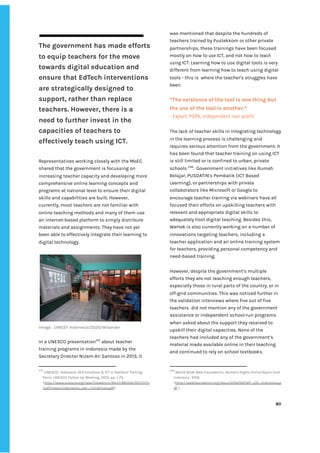
Image‌‌
:‌‌
UNICEF‌‌
Indonesia/2020/Sumule‌ ‌
‌
The‌‌
transition‌‌
to‌‌
digital‌‌
education‌‌
has‌‌
not‌‌
been‌‌
smooth‌‌
for‌‌
all‌‌
—‌‌
many‌‌
students‌‌
in‌‌
rural‌‌
areas‌‌
lack‌‌
internet‌‌
connectivity‌ ‌
and‌‌
many‌‌
low-income‌‌
students‌‌
lack‌‌
access‌‌
to‌‌
devices‌‌
required‌‌
for‌‌
existing‌‌
‘home‌‌
based‌‌
learning’‌‌
and‌‌
EdTech‌‌
solutions‌
10‌
.‌‌
Children‌‌
from‌‌
lower‌‌
income‌‌
groups‌‌
are‌‌
likely‌‌
to‌‌
fall‌‌
behind‌‌
their‌‌
wealthier‌‌
peers‌‌
who‌‌
have‌‌
better‌‌
access‌‌
to‌‌
online‌‌
learning‌‌
infrastructure.‌‌
Children‌‌
with‌‌
disabilities‌‌
are‌‌
likely‌‌
to‌‌
be‌‌
worst‌‌
affected‌‌
as‌‌
many‌‌
have‌‌
been‌‌
unable‌‌
to‌‌
access‌‌
special‌‌
services‌‌
required‌‌
for‌‌
their‌‌
personalised‌‌
8
Variyan,‌‌
George.‌‌
and‌‌
Agus‌‌
Mutohar,‌‌
‘Reimagining‌‌
education‌‌
in‌‌
shadow‌‌
of‌‌
COVID-19‌‌
pandemic’‌
,‌‌
TheJakartaPost,‌‌
‌
2020,‌ ‌
<‌
https://www.thejakartapost.com/academia/2020/10/02/reimagi‌
ning-education-in-shadow-of-COVID-19-pandemic.html‌
‌‌
>‌‌ ‌
9
‌
Kemdikbud,‌‌
‘Homepage’,‌ ‌
<https://www.kemdikbud.go.id/main/>‌ ‌
10
‌
Yarrow,‌‌
Noah,‌‌
and‌‌
Riaz‌‌
Bhardwaj,‌‌
‘Indonesia's‌‌
education‌‌
technology‌‌
during‌‌
COVID-19‌‌
and‌‌
beyond’,‌‌
‌
The‌‌
World‌‌
Bank,‌
‌‌
19‌‌
May‌‌
2020,‌‌
<‌
https://blogs.worldbank.org/eastasiapacific/indonesias-educati‌
on-technology-during-COVID-19-and-beyond‌
‌‌
>‌ ‌
‌
‌
7‌ ‌ ‌
‌
‌ ‌
‌
‌
‌
learning‌
11‌
.‌‌
The‌‌
ability‌‌
for‌‌
students‌‌
to‌‌
effectively‌‌
access‌‌
distance‌‌
learning‌‌
systems‌‌
has‌‌
been‌‌
further‌‌
complicated‌‌
by‌‌
Indonesia’s‌‌
geography.‌ ‌
The‌‌
fragmented‌‌
island‌‌
landscape‌‌
results‌‌
in‌‌
infrastructural‌‌
constraints‌‌
leading‌‌
to‌ ‌
poor‌‌
connectivity‌‌
‌
12‌
.‌‌
According‌‌
to‌‌
the‌‌
Global‌‌
System‌‌
for‌‌
Mobile‌‌
Communications’‌‌
(GSMA)‌‌
Mobile‌‌
Economy‌‌
Asia‌‌
Pacific‌‌
2020‌‌
Report,‌‌
about‌‌
61‌‌
million‌‌
Indonesians‌‌
do‌‌
not‌‌
have‌‌
access‌‌
to‌‌
the‌‌
internet‌
13‌
.‌‌
According‌‌
to‌‌
data‌‌
from‌‌
Indonesia’s‌‌
Central‌‌
Statistics‌‌
Agency,‌‌
around‌‌
21‌‌
per‌‌
cent‌‌
of‌‌
people‌‌
in‌‌
low-income‌‌
areas‌‌
have‌‌
access‌‌
to‌‌
the‌‌
internet‌‌
in‌‌
contrast‌‌
with‌‌
the‌‌
93‌‌
per‌‌
cent‌‌
in‌‌
high-income‌‌
areas‌‌
like‌‌
Java‌
14‌
.‌‌
Besides‌‌
students‌‌
and‌‌
teachers‌‌
too‌‌
do‌‌
not‌‌
have‌‌
the‌‌
resources‌‌
and‌‌
skills‌‌
to‌‌
effectively‌‌
engage‌‌
in‌‌
online‌‌
learning.‌ ‌
According‌‌
to‌‌
a‌‌
Service‌‌
Delivery‌‌
Indicator‌‌
(SDI)‌‌
survey‌‌
conducted‌‌
by‌‌
the‌‌
MoEC‌‌
and‌‌
MoRA‌‌
in‌‌
2020,‌‌
67‌‌
per‌‌
cent‌‌
of‌‌
teachers‌‌
reported‌‌
difficulties‌‌
in‌‌
operating‌‌
digital‌‌
devices‌‌
and‌‌
using‌‌
online‌‌
learning‌‌
platforms‌
15‌
.‌‌ ‌
‌
The‌‌
COVID-19‌‌
pandemic‌‌
has‌‌
changed‌‌
the‌‌
digital‌‌
education‌‌
landscape‌‌
in‌‌
areas‌‌
including‌‌
digital‌‌
content‌‌
and‌‌
platforms,‌‌
infrastructure,‌‌
and‌‌
digital‌‌
skills.‌‌
Both‌‌
the‌‌
government‌‌
as‌‌
well‌‌
as‌‌
the‌‌
private‌‌
player‌‌
sector‌‌
responses‌‌
have‌‌
given‌‌
a‌‌
significant‌‌
impetus‌‌
to‌‌
the‌‌
uptake‌‌
of‌‌
digital‌‌
education.‌‌
The‌‌
pandemic‌‌
has‌‌
seen‌‌
a‌‌
sharp‌‌
rise‌‌
in‌‌
the‌‌
popularity‌‌
of‌‌
both‌‌
public‌‌
and‌‌
private‌‌
EdTech‌‌
platforms,‌‌
including‌‌
the‌‌
government’s‌‌
own‌‌
platform‌‌
Rumah‌‌
Belajar‌‌
‌
16‌
.‌‌
Around‌‌
80‌‌
per‌‌
cent‌‌
of‌‌
EdTech‌‌
firms‌‌
in‌‌
Indonesia‌‌
are‌‌
11
‌
‌
Gupta,‌‌
Deepali‌‌
and‌‌
Khairina,‌‌
Noviandri‌‌
N.,‌‌
‘COVID-19‌‌
and‌‌
the‌‌
learning‌‌
inequities‌‌
in‌‌
Indonesia:‌‌
Four‌‌
ways‌‌
to‌‌
bridge‌‌
the‌‌
gap.‌‌
World‌‌
Bank‌
’,‌‌
21‌‌
August‌‌
2020,‌‌
<‌
https://blogs.worldbank.org/eastasiapacific/COVID-19-and-learni‌
ng-inequities-indonesia-four-ways-bridge-gap‌
>‌ ‌
12
‌
Lee,‌‌
Yen‌‌
Nee,’The‌‌
pandemic’s‌‌
effect‌‌
on‌‌
education‌‌
is‌‌
not‌‌
being‌‌
discussed‌‌
enough,‌‌
says‌‌
Indonesian‌‌
minister’‌
.‌‌
Singapore‌‌
Summit,‌‌
2020.‌‌
<‌
https://www.cnbc.com/2020/09/14/indonesias-education-minis‌
ter-on-COVIDs-effect-on-students-learning.html‌
‌ ‌
>‌‌ ‌
13
‌
Devanesan,‌‌
Joe,‌‌
‘Can‌‌
Open‌‌
RAN‌‌
help‌‌
conquer‌‌
Indonesia’s‌‌
connectivity‌‌
issues?’‌‌
‌
TECHWIRE‌‌
ASIA‌
,‌‌
29‌‌
July‌‌
2020.‌‌
<‌
https://techwireasia.com/2020/07/can-open-ran-help-conquer-i‌
ndonesias-connectivity-issues/‌
‌ ‌
>‌‌ ‌
14
‌
Agahari,‌‌
Wirawan,’‌‌
Digital‌‌
innovation‌‌
in‌‌
Indonesia:‌‌
inequalities‌‌
between‌‌
the‌‌
east‌‌
and‌‌
the‌‌
west’,‌‌
The‌‌
Conversation,‌‌
10‌‌
October‌‌
2018.‌‌
Retrieved‌‌
from:‌ ‌
https://theconversation.com/digital-innovation-in-indonesia-in‌
equalities-between-the-east-and-the-west-95218‌ ‌ ‌
15
‌‌
Yarrow,‌‌
Noah;‌‌
Masood,‌‌
Eema;‌‌
Afkar,‌‌
Rythia.,‌ ‌
‌
Estimated‌‌
Impacts‌‌
of‌‌
COVID-19‌‌
on‌‌
Learning‌‌
and‌‌
Earning‌‌
in‌‌
Indonesia:‌‌
How‌‌
to‌‌
Turn‌‌
the‌‌
Tide‌
,‌ ‌
The‌‌
World‌‌
Bank,‌‌
<‌
http://documents1.worldbank.org/curated/en/18465159738362‌
8008/pdf/Main-Report.pdf‌
‌‌
>‌ ‌
16
‌
Pusdatin‌‌
Kemdikbud,‌‌
‌
Survey‌
,‌ ‌
1‌‌
Jan-12‌‌
May‌‌
2020.‌‌ ‌
posited‌‌
to‌‌
have‌‌
come‌‌
into‌‌
existence‌‌
from‌‌
2013,‌‌
when‌‌
investment‌‌
for‌‌
EdTech‌‌
has‌‌
steadily‌‌
been‌‌
increasing‌‌
over‌‌
the‌‌
years‌
17‌
.‌ ‌
At‌‌
the‌‌
beginning‌‌
of‌‌
2020,‌‌
at‌‌
least‌‌
four‌‌
private‌‌
educational‌‌
startups‌‌
received‌‌
funding‌
18‌
‌
‌
namely‌‌
Arkademi‌‌
(from‌‌
a‌‌
US-based‌‌
VC‌‌
firm‌‌
SOSV‌‌
to‌‌
scale‌‌
its‌‌
operations),‌‌
Pahamify‌‌
(led‌‌
by‌‌
Shunwei‌‌
Capital),‌‌
Gredu‌‌
(from‌‌
Vertex‌‌
Ventures‌‌
Southeast‌‌
Asia‌‌
and‌‌
India),‌‌
and‌‌
Zenius‌‌
(from‌‌
Alpha‌‌
JWC‌‌
Ventures,‌‌
Openspace‌‌
Ventures,‌‌
along‌‌
with‌‌
existing‌‌
investors‌‌
Northstar,‌‌
Kinesys,‌‌
and‌‌
Beenext).‌‌
In‌‌
the‌‌
second‌‌
and‌‌
third‌‌
quarters,‌‌
Eduka‌‌
(from‌‌
Init‌‌
6),‌‌
ProSpark‌‌
(from‌‌
Agaeti‌‌
Ventures),‌‌
Infradigital‌‌
(from‌‌
AppWorks),‌‌
and‌‌
Kiddo‌‌
(from‌‌
OCBC‌‌
NISP‌‌
Ventura)‌‌
received‌‌
fresh‌‌
funds.‌‌
According‌‌
to‌‌
Crunchbase‌‌
data,‌‌
Ruangguru‌‌
had‌‌
approached‌‌
a‌‌
valuation‌‌
of‌‌
US‌‌
$‌‌
1‌‌
billion‌‌
(Rp.14‌‌
trillion)‌‌
or‌‌
the‌‌
‘unicorn’‌‌
scale‌‌
during‌‌
the‌‌
year‌‌
of‌‌
2020‌
19‌
.‌ ‌
‌
While‌‌
further‌‌
opportunities‌‌
to‌‌
drive‌‌
digital‌‌
education‌‌
forward‌‌
exist,‌‌
the‌‌
opportunities‌‌
for‌‌
inclusion,‌‌
especially‌‌
among‌‌
disabled‌‌
students,‌‌
economically‌‌
disadvantaged‌‌
students,‌‌
and‌‌
those‌‌
in‌‌
3T‌‌
areas‌‌
(underdeveloped‌‌
and‌‌
outermost‌‌
areas)‌‌
remain‌‌
limited.‌‌
The‌‌
World‌‌
Bank‌‌
estimates‌‌
that‌‌
the‌‌
pandemic-induced‌‌
income‌‌
shock‌‌
of‌‌
negative‌‌
1.1‌‌
per‌‌
cent‌‌
could‌‌
lead‌‌
to‌‌
91,000‌‌
children‌‌
in‌‌
Indonesia‌‌
dropping‌‌
out‌‌
of‌‌
school‌
20‌
.‌‌
This‌‌
new‌‌
system‌‌
of‌‌
teaching‌‌
is‌‌
expected‌‌
to‌‌
negatively‌‌
impact‌‌
academic‌‌
learning‌‌
since‌‌
effective‌‌
distance‌‌
learning‌‌
requires‌‌
new‌‌
skills‌‌
and‌‌
increased‌‌
internet‌‌
access‌ ‌
for‌‌
both‌‌
teachers‌‌
and‌‌
students‌
21‌
.‌‌
The‌‌
need‌‌
to‌‌
build‌‌
evidence‌‌
on‌‌
the‌‌
issue‌‌
of‌‌
digital‌‌
learning‌‌
warrants‌‌
action‌‌
that‌‌
17
‌
‌
Wan,‌‌
T.,‌‌
&‌‌
McNally,‌‌
T.,‌‌
‘Education‌‌
Technology‌‌
Deals‌‌
Reach‌‌
$1.6‌‌
Billion‌‌
in‌‌
First‌‌
Half‌‌
of‌‌
2015.‌‌
EdSurge‘,‌‌
EdSurge,‌‌
29‌‌
July‌‌
2015,‌‌ ‌
<‌
https://www.edsurge.com/news/2015-07-29-education-technolog‌
y-deals-reach-1-6-billion-in-firsthalf-of-2015‌
>.‌ ‌ ‌
18
‌
Transforming‌‌
Education‌‌
EdTech‌‌
Report‌
.,‌‌
DailySocial/‌‌
DSResearch,‌‌
2020.‌‌ ‌
19
‌
‌
Setyowati,‌‌
D.,‌‌
‘‌‌
Kans‌‌
Ruangguru‌‌
dan‌‌
Alodokter‌‌
Become‌‌
Indonesia’s‌ ‌
6th‌‌
Unicorn‌‌
during‌‌
the‌‌
Pandemic.’,‌‌‌
‌
Katadata,‌‌
November‌ ‌
2020,‌‌
<3.‌
https://katadata.co.id/desysetyowati/digital/5fa18220d2ba9/‌
kans-ruangguru-dan-alodokter-jadi-unicorn-ke-6-indonesia-saa‌
t-pandemi‌
‌‌
>‌‌ ‌
20
Gupta,‌‌
D.,‌‌
N.‌‌
Khairina,‌
‌‌
COVID-19‌‌
and‌‌
learning‌‌
inequities‌‌
in‌‌
Indonesia:‌‌
Four‌‌
ways‌‌
to‌‌
bridge‌‌
the‌‌
gap,‌‌
21‌‌
August,‌‌
2020,‌‌
<https://blogs.worldbank.org/eastasiapacific/COVID-19-and-lear‌
ning-inequities-indonesia-four-ways-bridge-gap>.‌ ‌
21
‌
Yarrow,‌‌
Noah;‌‌
Masood,‌‌
Eema;‌‌
Afkar,‌‌
Rythia.,‌ ‌
‌
Estimated‌‌
Impacts‌‌
of‌‌
COVID-19‌‌
on‌‌
Learning‌‌
and‌‌
Earning‌‌
in‌‌
Indonesia:‌‌
How‌‌
to‌‌
Turn‌‌
the‌‌
Tide‌
,‌‌
the‌‌
World‌‌
Bank,‌
<‌
http://documents1.worldbank.org/curated/en/18465159738362‌
8008/pdf/Main-Report.pdf‌
‌‌
>.‌‌ ‌
‌
‌
‌
8‌ ‌ ‌
‌
‌ ‌
‌
‌
‌
ensures‌‌
accessibility,‌‌
usability,‌‌
and‌‌
appropriateness‌‌
for‌‌
all‌‌
and‌‌
is‌‌
more‌‌
critical‌‌
today‌‌
than‌‌
ever‌‌
before.‌‌ ‌
‌
This‌‌
report‌‌
examines‌‌
the‌‌
present‌‌
scenario‌‌
of‌‌
digital‌‌
education‌‌
in‌‌
Indonesia‌‌
by‌‌
taking‌‌
a‌‌
closer‌‌
look‌‌
at‌‌
digital‌‌
content‌‌
and‌‌
platforms;‌‌
internet,‌‌
infrastructure,‌‌
and‌‌
device‌‌
access;‌‌
and‌‌
the‌‌
digital‌‌
skills‌‌
among‌‌
the‌‌
primary‌‌
users‌‌
(teachers‌‌
and‌‌
students)‌‌
and‌‌
make‌‌
recommendations‌‌
to‌‌
strengthen‌‌
this‌‌
ecosystem‌‌
in‌‌
the‌‌
short‌‌
and‌‌
long‌‌
term.‌‌ ‌
‌
In‌‌
the‌‌
upcoming‌‌
sections‌‌
of‌‌
the‌‌
report,‌‌
the‌‌
key‌‌
research‌‌
approach‌‌
and‌‌
findings‌‌
of‌‌
the‌‌
research‌‌
under‌‌
the‌‌
following‌ ‌
three‌‌
pillars‌‌
—‌‌ ‌
‌
1. Digital‌‌
content‌‌
and‌‌
platforms‌ ‌
2. Internet,‌‌
infrastructure,‌‌
and‌‌
devices‌ ‌
3. Digital‌‌
skills‌ ‌
‌
Each‌‌
of‌‌
the‌‌
sections‌‌
begins‌‌
with‌‌
an‌‌
overview‌‌
of‌‌
the‌‌
landscape‌‌
and‌‌
moves‌‌
on‌‌
to‌‌
share‌‌
insights‌‌
on‌‌
issues‌‌
that‌‌
might‌‌
be‌‌
impeding‌‌
availability‌‌
and‌‌
effective‌‌
uptake‌‌
of‌‌
digital‌‌
learning.‌‌ ‌
‌
‌
‌
‌
‌
‌
‌
‌
‌
‌
‌
‌
‌
‌
‌
‌
‌
‌
‌
‌
‌
‌
‌
‌
‌
‌
‌
‌
‌
‌
‌
9‌ ‌ ‌
‌
‌ ‌
‌
‌
‌
‌
‌
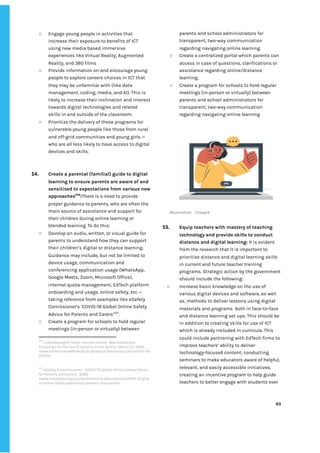
Illustration‌‌
:‌‌
Freepik‌ ‌
‌
‌
‌
‌
‌
10‌ ‌ ‌
‌
‌ ‌
‌
‌
‌
2. About‌‌
this‌‌
Research‌ ‌
‌
‌
This‌‌
research‌‌
intends‌‌
to‌‌
help‌‌
UNICEF‌‌
in‌‌
its‌‌
work‌‌
to‌‌
ensure‌‌
equitable‌‌
access‌‌
to‌‌
digital‌‌
education‌‌
for‌‌
all.‌‌
Through‌‌
its‌‌
GIGA‌‌
and‌‌
Reimagine‌‌
Education‌‌
initiatives,‌‌
UNICEF‌‌
aims‌‌
to‌‌
address‌‌
gaps‌‌
in‌‌
digital‌‌
learning‌‌
by‌‌
connecting‌‌
every‌‌
school‌‌
to‌‌
the‌‌
internet,‌‌
and‌‌
every‌‌
person‌‌
to‌‌
information,‌‌
opportunity,‌‌
and‌‌
choice.‌‌
The‌‌
initiative‌‌
aims‌‌
to‌‌
upgrade‌‌
digital‌‌
learning‌‌
content‌‌
and‌‌
platforms‌‌
and‌‌
strengthen‌‌
digital‌‌
skills‌‌
among‌‌
both‌‌
students‌‌
and‌‌
teachers.‌‌
UNICEF‌‌
also‌‌
aims‌‌
to‌‌
enhance‌‌
connectivity‌‌
and‌‌
digital‌‌
capacity‌‌
of‌‌
learning‌‌
systems‌‌
in‌‌
collaboration‌‌
with‌‌
the‌‌
private‌‌
sector.‌‌
This‌‌
research‌‌
is‌‌
focused‌‌
on‌‌
understanding‌‌
user‌‌
behavior‌‌
and‌‌
equity‌‌
gaps‌‌
in‌‌
digital‌‌
learning‌ ‌
to‌‌
support‌‌
foundational‌‌
research‌‌
of‌‌
UNICEF‌‌
programs‌‌
and‌‌
potential‌‌
opportunities‌‌
for‌‌
collaboration‌‌
and‌‌
scale‌‌
up.‌‌ ‌
‌
Research‌‌
objectives‌ ‌
‌
The‌‌
study‌‌
aims‌‌
to‌‌
carry‌‌
out‌‌
a‌‌
comprehensive‌‌
situational‌‌
analysis‌‌
of‌‌
the‌‌
digital‌‌
learning‌‌
landscape‌‌
in‌‌
Indonesia.‌‌
It‌‌
aims‌‌
to‌‌
apply‌‌
an‌‌
equity‌‌
lens‌‌
to‌‌
highlight‌‌
key‌‌
disparities‌‌
that‌‌
exist‌‌
among‌‌
regions‌‌
and‌‌
socio-economic‌‌
groups.‌‌
It‌‌
provides‌‌
an‌‌
overview‌‌
of‌‌
the‌‌
access‌‌
to‌‌
and‌‌
quality‌‌
of‌‌
digital‌‌
learning;‌‌
internet‌‌
connectivity‌‌
and‌‌
affordability;‌ ‌
availability‌‌
of‌‌
digital‌‌
learning‌‌
devices;‌‌
relevance‌‌
and‌‌
content‌‌
of‌‌
platforms;‌‌
and‌‌
digital‌‌
skills‌‌
of‌‌
students‌‌
and‌‌
teachers.‌‌ ‌
‌
Specifically,‌‌
it‌‌
aims‌‌
to:‌ ‌
‌
1. Analyse‌‌
the‌‌
digital‌‌
divide‌‌
for‌‌
children‌‌
and‌‌
adolescents‌‌
in‌‌
Indonesia‌ ‌
(including‌‌
accessibility‌‌
and‌‌
connectivity‌‌
of‌‌
schools‌‌
and‌‌
learning‌‌
centres‌‌
to‌‌
the‌‌
internet;‌‌
availability,‌‌
quality‌‌
and‌‌
use‌‌
of‌‌
digital‌‌
learning‌‌
content‌‌
and‌‌
platforms;‌‌
and‌‌
the‌‌
skills‌‌
gap‌‌
for‌‌
digital‌‌
learning‌‌
among‌‌
teachers,‌‌
students‌‌
and‌‌
other‌‌
stakeholders)‌‌
with‌‌
a‌‌
special‌‌
emphasis‌‌
on‌‌
understanding‌‌
equity‌‌
gaps‌‌
and‌‌
other‌ ‌
bottlenecks‌‌
that‌‌
could‌‌
impact‌‌
the‌‌
quantitative‌‌
and‌‌
qualitative‌‌
expansion‌‌
of‌‌
digital‌‌
learning‌‌ ‌
‌
2. Provide‌‌
practical‌‌
recommendations‌‌
on‌‌
key‌‌
strategies‌‌
and‌‌
priorities‌‌
to‌‌
be‌‌
taken‌‌
by‌‌
the‌‌
government,‌‌
the‌‌
private‌‌
sector,‌‌
and‌‌
development‌‌
partners‌‌
(including‌‌
UNICEF)‌‌
to‌‌
expand‌‌
and‌‌
improve‌‌
digital‌‌
learning‌‌
across‌‌
Indonesia‌ ‌
‌
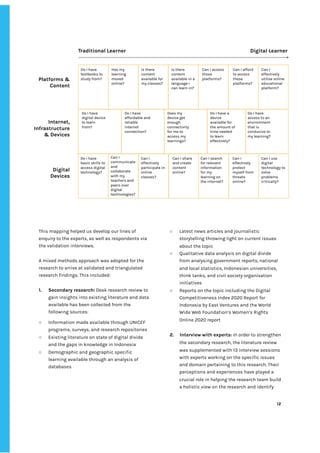
Research‌‌
methodology‌ ‌
‌
The‌‌
following‌‌
journey‌‌
mapp‌‌
helped‌‌
us‌‌
identify‌‌
lines‌‌
of‌‌
enquiries,‌‌
various‌‌
challenges,‌‌
barriers,‌‌
and‌‌
possible‌‌
opportunities‌‌
that‌‌
exist‌‌
in‌‌
the‌‌
ecosystem‌‌
for‌‌
a‌‌
young‌‌
person‌‌
to‌‌
transition‌‌
from‌‌
a‌‌
‘traditional‌‌
learner’‌‌
to‌‌
a‌‌
‘digital‌‌
learner’.‌ ‌
‌
‌
‌
‌
‌
‌
‌
‌
‌
‌
‌
‌
‌
11‌ ‌ ‌
‌
‌ ‌
‌
‌
‌
‌
‌
‌
‌
This‌‌
mapping‌‌
helped‌‌
us‌‌
develop‌‌
our‌‌
lines‌‌
of‌‌
enquiry‌‌
to‌‌
the‌‌
experts,‌‌
as‌‌
well‌‌
as‌‌
respondents‌‌
via‌‌
the‌‌
validation‌‌
interviews.‌ ‌
‌
A‌‌
mixed‌‌
methods‌‌
approach‌‌
was‌‌
adopted‌‌
for‌‌
the‌‌
research‌‌
to‌‌
arrive‌‌
at‌‌
validated‌‌
and‌‌
triangulated‌‌
research‌‌
findings.‌‌
This‌‌
included:‌‌ ‌
‌
1. Secondary‌‌
research:‌
‌‌
Desk‌‌
research‌‌
review‌‌
to‌‌
gain‌‌
insights‌‌
into‌‌
existing‌‌
literature‌‌
and‌‌
data‌‌
available‌‌
has‌‌
been‌‌
collected‌‌
from‌‌
the‌‌
following‌‌
sources:‌ ‌ ‌
‌
○ Information‌‌
made‌‌
available‌‌
through‌‌
UNICEF‌‌
programs,‌‌
surveys,‌‌
and‌‌
research‌‌
repositories‌‌ ‌
○ Existing‌‌
literature‌‌
on‌‌
state‌‌
of‌‌
digital‌‌
divide‌‌
and‌‌
the‌‌
gaps‌‌
in‌‌
knowledge‌‌
in‌‌
Indonesia‌‌ ‌
○ Demographic‌‌
and‌‌
geographic‌‌
specific‌‌
learning‌‌
available‌‌
through‌‌
an‌‌
analysis‌‌
of‌‌
databases‌ ‌
○ Latest‌‌
news‌‌
articles‌‌
and‌‌
journalistic‌‌
storytelling‌‌
throwing‌‌
light‌‌
on‌‌
current‌‌
issues‌‌
about‌‌
the‌‌
topic‌‌ ‌
○ Qualitative‌‌
data‌‌
analysis‌‌
on‌‌
digital‌‌
divide‌‌
from‌‌
analysing‌‌
government‌‌
reports,‌‌
national‌‌
and‌‌
local‌‌
statistics,‌‌
Indonesian‌‌
universities,‌‌
think‌‌
tanks,‌‌
and‌‌
civil‌‌
society‌‌
organisation‌‌
initiatives‌‌ ‌
○ Reports‌‌
on‌‌
the‌‌
topic‌‌
including‌‌
the‌‌
Digital‌‌
Competitiveness‌‌
Index‌‌
2020‌‌
Report‌‌
for‌‌
Indonesia‌‌
by‌‌
East‌‌
Ventures‌‌
and‌‌
the‌‌
World‌‌
Wide‌‌
Web‌‌
Foundation’s‌‌
Women’s‌‌
Rights‌‌
Online‌‌
2020‌‌
report‌ ‌
‌
2.‌ ‌
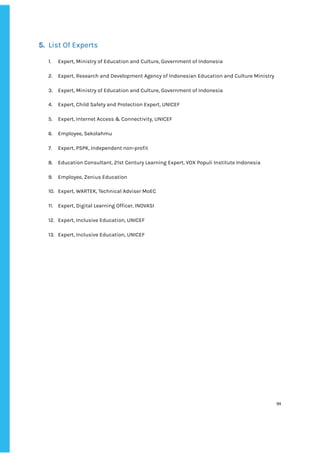
Interview‌
‌‌
‌
with‌‌
experts‌
:‌
‌‌
‌
In‌‌
order‌‌
to‌‌
strengthen‌‌
the‌‌
secondary‌‌
research,‌‌
the‌‌
literature‌‌
review‌‌
was‌‌
supplemented‌‌
with‌‌
13‌‌
interview‌‌
sessions‌‌
with‌‌
experts‌‌
working‌‌
on‌‌
the‌‌
specific‌‌
issues‌‌
and‌‌
domain‌‌
pertaining‌‌
to‌‌
this‌‌
research.‌‌
Their‌‌
perceptions‌‌
and‌‌
experiences‌‌
have‌‌
played‌‌
a‌‌
crucial‌‌
role‌‌
in‌‌
helping‌‌
the‌‌
research‌‌
team‌‌
build‌‌
a‌‌
holistic‌‌
view‌‌
on‌‌
the‌‌
research‌‌
and‌‌
identify‌‌
‌
‌
12‌ ‌ ‌
‌
‌ ‌
‌
‌
‌
strategies‌‌
to‌‌
resolve‌‌
existing‌‌
challenges‌‌
in‌‌
partnership‌‌
with‌‌
key‌‌
stakeholders‌‌
for‌‌
sustained‌‌
impact.‌ ‌
A‌‌
list‌‌
of‌‌
all‌‌
the‌‌
experts‌‌
interviewed‌‌
has‌‌
been‌‌
provided‌‌
at‌‌
the‌‌
end‌‌
of‌‌
this‌‌
report,‌
‌‌
(see‌‌
Annex‌‌
5)‌
.‌‌
To‌‌
respect‌‌
the‌‌
privacy‌‌
of‌‌
the‌‌
experts,‌‌
no‌‌
personal‌‌
data‌‌
has‌‌
been‌‌
disclosed‌‌
but‌‌
their‌‌
designation‌‌
(or‌‌
specified‌‌
expertise)‌‌
and‌‌
affiliated‌‌
organisation‌‌
have‌‌
been‌‌
mentioned.‌ ‌
‌
3.‌ ‌
Validation‌‌
interviews‌
:‌‌
‌
The‌‌
research‌‌
collected‌‌
via‌‌
secondary‌‌
research‌‌
and‌‌
expert‌‌
interviews‌‌
was‌‌
validated‌‌
by‌‌
speaking‌‌
to‌‌
students,‌‌
parents,‌‌
and‌‌
teachers‌‌
across‌‌
the‌‌
archipelago.‌‌
In‌‌
order‌‌
to‌‌
obtain‌‌
diverse‌‌
profiles‌‌
and‌‌
contexts,‌‌
our‌‌
primary‌‌
research‌‌
included‌‌
in-depth‌‌
interviews‌‌
and‌‌
conversations‌‌
with‌‌
five‌‌
students,‌‌
five‌‌
teachers‌‌
and‌‌
four‌‌
parents‌‌
from‌‌
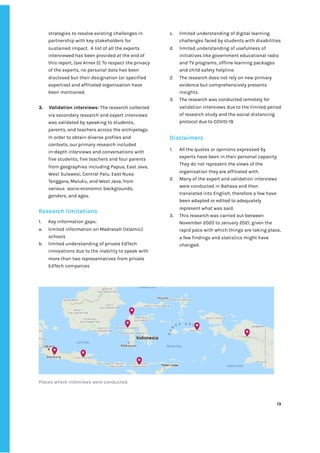
geographies‌‌
including‌‌
Papua,‌‌
East‌‌
Java,‌‌
West‌‌
Sulawesi,‌‌
Central‌‌
Palu,‌‌
East‌‌
Nusa‌‌
Tenggara,‌‌
Maluku,‌‌
and‌‌
West‌‌
Java,‌‌
from‌‌
various‌ ‌
socio-economic‌‌
backgrounds,‌‌
genders,‌‌
and‌‌
ages.‌ ‌
‌
Research‌‌
limitations‌ ‌
‌
1. Key‌‌
information‌‌
gaps:‌‌ ‌
a. limited‌‌
information‌‌
on‌‌
Madrasah‌‌
(Islamic)‌‌
schools‌ ‌
b. limited‌‌
understanding‌‌
of‌‌
private‌‌
EdTech‌‌
innovations‌‌
due‌‌
to‌‌
the‌‌
inability‌‌
to‌‌
speak‌‌
with‌‌
more‌‌
than‌‌
two‌‌
representatives‌‌
from‌‌
private‌‌
EdTech‌‌
companies‌ ‌
c. limited‌‌
understanding‌‌
of‌‌
digital‌‌
learning‌‌
challenges‌‌
faced‌‌
by‌‌
students‌‌
with‌‌
disabilities‌‌ ‌
d. limited‌‌
understanding‌‌
of‌‌
usefulness‌‌
of‌‌
initiatives‌‌
like‌‌
government‌‌
educational‌‌
radio‌‌
and‌‌
TV‌‌
programs,‌‌
offline‌‌
learning‌‌
packages‌‌
and‌‌
child‌‌
safety‌‌
helpline.‌‌ ‌
2. The‌‌
research‌‌
does‌‌
not‌‌
rely‌‌
on‌‌
new‌‌
primary‌‌
evidence‌‌
but‌‌
comprehensively‌‌
presents‌‌
insights.‌ ‌
3. The‌‌
research‌‌
was‌‌
conducted‌‌
remotely‌‌
for‌‌
validation‌‌
interviews‌‌
due‌‌
to‌‌
the‌‌
limited‌‌
period‌‌
of‌‌
research‌‌
study‌‌
and‌‌
the‌‌
social‌‌
distancing‌‌
protocol‌‌
due‌‌
to‌‌
COVID-19.‌ ‌
‌
Disclaimers‌‌ ‌
‌
1. All‌‌
the‌‌
quotes‌‌
or‌‌
opinions‌‌
expressed‌‌
by‌‌
experts‌‌
have‌‌
been‌‌
in‌‌
their‌‌
personal‌‌
capacity.‌‌
They‌‌
do‌‌
not‌‌
represent‌‌
the‌‌
views‌‌
of‌‌
the‌‌
organisation‌‌
they‌‌
are‌‌
affiliated‌‌
with.‌ ‌
2. Many‌‌
of‌‌
the‌‌
expert‌‌
and‌‌
validation‌‌
interviews‌‌
were‌‌
conducted‌‌
in‌‌
Bahasa‌‌
and‌‌
then‌‌
translated‌‌
into‌‌
English,‌‌
therefore‌‌
a‌‌
few‌‌
have‌‌
been‌‌
adapted‌‌
or‌‌
edited‌‌
to‌‌
adequately‌‌
represent‌‌
what‌‌
was‌‌
said.‌ ‌
3. This‌‌
research‌‌
was‌‌
carried‌‌
out‌‌
between‌‌
November‌‌
2020‌‌
to‌‌
January‌‌
2021,‌‌
given‌‌
the‌‌
rapid‌‌
pace‌‌
with‌‌
which‌‌
things‌‌
are‌‌
taking‌‌
place,‌‌
a‌‌
few‌‌
findings‌‌
and‌‌
statistics‌‌
might‌‌
have‌‌
changed.‌‌ ‌
‌
Places‌‌
where‌‌
interviews‌‌
were‌‌
conducted.‌ ‌
‌
‌
13‌ ‌ ‌
‌
‌ ‌
‌
‌
‌
‌
‌
Pillar‌‌
1‌‌
:‌
‌‌
‌
Digital‌‌
content‌‌
and‌‌
platforms‌ ‌
‌
‌
‌
‌
‌
‌
‌
‌
‌
‌
‌
‌
‌
Illustration‌‌
:‌‌
Freepik‌ ‌ ‌
‌
‌
14‌ ‌ ‌
‌
‌ ‌
‌
‌
‌
‌
3. Pillar‌‌
1‌‌
:‌ ‌
‌
Digital‌‌
content‌‌
and‌‌
platforms‌ ‌
‌ ‌
‌
‌
‌
The‌‌
COVID‌‌
-19‌‌
pandemic‌‌
has‌‌
created‌‌
a‌‌
vibrant‌‌
ecosystem‌‌
for‌‌
digital‌‌
learning‌‌
in‌‌
Indonesia.‌‌
Prior‌‌
to‌‌
the‌‌
pandemic,‌‌
government‌‌
support‌‌
for‌‌
digital‌‌
learning‌‌
primarily‌‌
focused‌‌
on‌‌
TV‌‌
programming‌‌
and‌‌
making‌‌
digital‌‌
versions‌‌
of‌‌
textbooks‌‌
available‌‌
online.‌‌
In‌‌
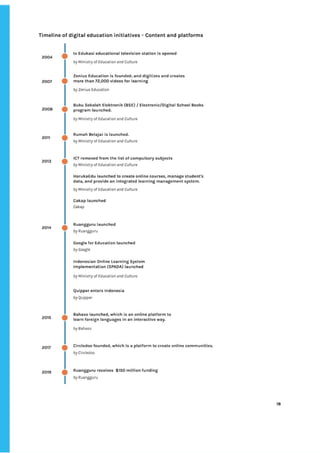
2004,‌‌
the‌‌
MoEC‌‌
launched‌‌
educational‌‌
TV‌‌
programming‌‌
–‌
‌‌
Belajar‌‌
dari‌‌
Rumah‌‌
(Study‌‌
from‌‌
Home)‌‌
as‌‌
a‌‌
key‌‌
learning‌‌
resource‌‌
for‌‌
students‌‌
without‌‌
access‌‌
to‌‌
the‌‌
internet.‌‌
The‌‌
‘‌
Electronic‌‌
School‌‌
Books‌‌
program’‌
‌‌
‌
was‌‌
introduced‌‌
in‌‌
2008‌‌
by‌‌
the‌‌
MoEC,‌‌
to‌‌
guarantee‌‌
the‌‌
availability‌‌
of‌‌
books‌‌
to‌‌
educational‌‌
institutions,‌‌
as‌‌
well‌‌
as,‌‌
ensure‌‌
teachers‌‌
and‌‌
students‌‌
were‌‌
protected‌‌
from‌‌
price‌‌
rises‌
22‌
.‌ ‌
The‌‌
number‌‌
of‌‌
e-books‌‌
provided‌‌
by‌‌
the‌‌
government‌‌
for‌‌
free‌‌
grows‌‌
every‌‌
year‌‌
with‌ ‌
thousands‌‌
of‌‌
resources‌‌
available‌‌
for‌‌
download‌‌
on‌‌
the‌‌
‘Electronic‌‌
School‌‌
Books‌‌
program’‌
‌‌
‌
website‌
.‌‌
The‌‌
Directorate‌‌
of‌‌
Learning‌‌
and‌‌
Student‌‌
Affairs,‌‌
Directorate‌‌
General‌‌
of‌‌
Higher‌‌
Education,‌‌
and‌‌
MoEC‌‌
launched‌‌
the‌‌
Indonesian‌
‌‌
‌
Online‌‌
Learning‌‌
System‌‌
Implementation‌‌
(SPADA)‌‌
program‌‌
in‌‌
2014.‌‌
SPADA‌‌
Indonesia‌‌
is‌‌
intended‌‌
to‌‌
increase‌‌
student‌‌
access‌‌
to‌‌
learning‌‌
through‌‌
quality‌‌
massive‌‌
open‌‌
online‌‌
courses‌‌
(MOOCs)‌‌
from‌‌
tertiary‌‌
institutions.‌‌ ‌
‌
22
‌
Muhaj,‌‌
‘Presiden‌‌
Resmikan‌‌
Peluncuran‌‌
program‌‌
Buku‌‌
Elektronik‌‌
Gratis.’,‌‌
20‌‌
August‌‌
2020,‌‌
<‌
https://www.antaranews.com/berita/113478/presiden-resmik‌
an-peluncuran-program-buku-elektronik-gratis‌
‌‌
>‌‌
.‌ ‌
‌
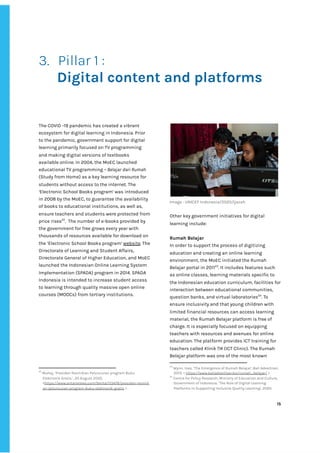
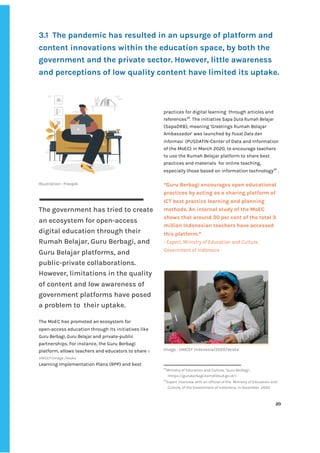
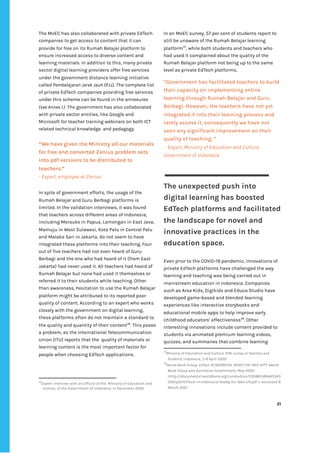
Image‌‌
:‌‌
UNICEF‌‌
Indonesia/2020/Ijazah‌ ‌
‌
Other‌‌
key‌‌
government‌‌
initiatives‌‌
for‌‌
digital‌‌
learning‌‌
include:‌ ‌
‌
Rumah‌‌
Belajar‌ ‌
In‌‌
order‌‌
to‌‌
support‌‌
the‌‌
process‌‌
of‌‌
digitizing‌‌
education‌‌
and‌‌
creating‌‌
an‌‌
online‌‌
learning‌‌
environment,‌‌
the‌‌
MoEC‌‌
initiated‌‌
the‌‌
Rumah‌‌
Belajar‌‌
portal‌‌
in‌‌
2011‌
23‌
.‌‌
It‌‌
includes‌‌
features‌‌
such‌‌
as‌‌
online‌‌
classes,‌‌
learning‌‌
materials‌‌
specific‌‌
to‌‌
the‌‌
Indonesian‌‌
education‌‌
curriculum,‌‌
facilities‌‌
for‌
interaction‌‌
between‌‌
educational‌‌
communities,‌‌
question‌‌
banks,‌‌
and‌‌
virtual‌‌
laboratories‌
24‌
.‌‌
To‌‌
ensure‌‌
inclusivity‌‌
and‌‌
that‌‌
young‌‌
children‌‌
with‌‌
limited‌‌
financial‌‌
resources‌‌
can‌‌
access‌‌
learning‌‌
material,‌‌
the‌‌
Rumah‌‌
Belajar‌
‌‌
‌
platform‌‌
is‌‌
free‌‌
of‌‌
charge.‌‌
It‌‌
is‌‌
especially‌‌
focused‌‌
on‌‌
equipping‌‌
teachers‌‌
with‌‌
resources‌‌
and‌‌
avenues‌‌
for‌‌
online‌
education.‌‌
The‌‌
platform‌‌
provides‌‌
ICT‌‌
training‌‌
for‌‌
teachers‌‌
called‌‌
‌
Klinik‌‌
TIK‌‌
‌
(ICT‌‌
Clinic).‌‌
The‌
‌‌
‌
Rumah‌‌
Belajar‌‌
platform‌‌
was‌‌
one‌‌
of‌‌
the‌‌
most‌‌
known‌‌
23
‌
Wynn,‌‌
Ines,‌‌
‘The‌‌
Emergence‌‌
of‌‌
Rumah‌‌
Belajar‌
’,‌‌
‌
Bali‌‌
Advertiser,‌‌
2013,‌‌
<‌‌
‌
https://www.baliadvertiser.biz/rumah_belajar/‌
‌‌
>.‌ ‌
24
‌
Centre‌‌
for‌‌
Policy‌‌
Research,‌‌
Ministry‌‌
of‌‌
Education‌‌
and‌‌
Culture,‌‌
Government‌‌
of‌‌
Indonesia,‌‌
‘The‌‌
Role‌‌
of‌‌
Digital‌‌
Learning‌‌
Platforms‌‌
in‌‌
Supporting‌‌
Inclusive‌‌
Quality‌‌
Learning’,‌
‌‌
‌
2020.‌ ‌
‌
‌
15‌ ‌ ‌
‌
‌ ‌
‌
‌
‌
digital‌‌
learning‌‌
platforms‌‌
during‌‌
the‌‌
unexpected‌‌
jump‌‌
into‌‌
digital‌‌
education‌‌
caused‌‌
by‌‌
the‌‌
COVID-19‌‌
pandemic‌‌
in‌‌
2020.‌‌
According‌‌
to‌‌
the‌‌
Rumah‌‌
Belajar‌‌
website‌‌
accessed‌‌
on‌‌
9‌‌
March‌‌
2021,‌ ‌
it‌‌
consists‌‌
of‌‌
a‌‌
registered‌‌
user‌‌
base‌‌
of‌‌
273,509‌‌
teachers‌‌
and‌‌
666,‌‌
708‌‌
students‌
25‌
.‌ ‌
According‌‌
to‌‌
Kompas,‌‌
on‌‌
4‌‌
March‌‌
2020‌‌
Rumah‌‌
Belajar‌‌
reached‌‌
18‌‌
million‌‌
users‌
26‌
.‌‌ ‌
‌
Guru‌‌
Berbagi‌ ‌
In‌‌
June‌‌
2020,‌‌
the‌‌
MoEC‌‌
launched‌‌
the‌‌
Teacher‌‌
Sharing‌‌
program,‌‌
Guru‌‌
Berbagi‌
27‌
.‌‌
Available‌‌
for‌‌
teachers‌‌
to‌‌
use‌‌
for‌‌
free,‌‌
this‌‌
platform‌‌
makes‌‌
available‌‌
best‌‌
practices‌‌
around‌‌
quality‌‌
teaching‌‌
methods‌‌
and‌‌
also‌‌
includes‌‌
lesson‌‌
plans‌‌
curated‌‌
by‌‌
the‌‌
MoEC.‌‌
Through‌‌
Guru‌‌
Berbagi,‌‌
the‌
government‌‌
encourages‌‌
teachers‌‌
to‌‌
have‌‌
active‌‌
involvement‌‌
in‌‌
teacher‌‌
capacity‌‌
building‌‌
and‌‌
become‌‌
resource‌‌
persons‌‌
for‌‌
ICT‌‌
based‌‌
learning‌‌
in‌‌
their‌‌
area.‌‌
An‌‌
internal‌‌
study‌‌
of‌‌
the‌‌
MoEC‌‌
shows‌‌
that‌‌
around‌‌
30‌‌
per‌‌
cent‌‌
of‌‌
the‌‌
total‌‌
3‌‌
million‌‌
Indonesian‌‌
teachers‌‌
have‌‌
accessed‌‌
this‌‌
platform‌
28‌
.‌ ‌
‌
Guru‌‌
Belajar‌‌ ‌
Guru‌‌
Belajar‌‌
is‌‌
another‌‌
initiative‌‌
by‌‌
the‌ ‌
MoEC‌‌
to‌‌
capacitate‌‌
teachers‌‌
through‌‌
different‌‌
skill‌‌
development‌‌
programs.‌‌
It‌‌
provides‌‌
teachers‌‌
with‌‌
an‌‌
avenue‌‌
to‌‌
assess‌‌
their‌‌
competencies‌‌
and‌‌
develop‌‌
them‌‌
further‌‌
through‌‌
Teacher‌‌
Learning‌‌
Programs‌‌
including‌ ‌
the‌‌
‘COVID-19‌‌
Pandemic‌‌
Series’,‌‌
‘Life‌‌
Skills‌‌
Education‌‌
Series’,‌‌
‘Minimum‌‌
Competency‌‌
Assessment‌‌
Series’,‌‌
‘Teacher‌‌
Learning‌‌
and‌‌
Sharing‌‌
program‌‌
Independent‌‌
Study‌‌
series‌‌
for‌‌
Prospective‌‌
ASN‌‌
PPPK‌
29‌
‌
‌
Teacher‌‌
Registrants’‌‌
and‌‌
‘Teacher's‌‌
program‌‌
Learning‌‌
and‌‌
Sharing‌‌
Inclusive‌‌
Education‌‌
series’‌
30‌
.‌‌
The‌‌
‘COVID-19‌‌
Pandemic‌‌
Series’‌‌
specifically‌‌
provides‌‌
teachers‌‌
with‌‌
guidelines‌‌
on‌‌
how‌‌
to‌‌
conduct‌‌
distance‌‌
learning.‌‌ ‌
‌
25
Ministry‌‌
of‌‌
Education‌‌
and‌‌
Culture,‌‌
‘Rumah‌‌
Belajar’,‌‌
<‌
https://belajar.kemdikbud.go.id/‌
>.‌‌ ‌
26
Kompas,‌‌
<‌
https://epaper.kompas.id/pdf/show/20210304‌
>.‌ ‌ ‌
27
Ministry‌‌
of‌‌
Education‌‌
and‌‌
Culture,‌‌
‘Guru‌‌
Berbagi’,‌‌
<‌
https://guruberbagi.kemdikbud.go.id/‌
>.‌ ‌ ‌
28
Expert‌‌
interview‌‌
with‌‌
an‌ ‌
official‌‌
of‌‌
the‌ ‌
Ministry‌‌
of‌‌
Education‌‌
and‌‌
Culture,‌‌
of‌‌
the‌‌
Government‌‌
of‌‌
Indonesia,‌‌
in‌‌
2020.‌‌ ‌
29
PPPK‌‌
teachers‌‌
are‌‌
contract-based‌‌
government‌‌
employee‌‌
(PPPK)‌ ‌
teachers.‌‌
ASN‌‌
refers‌‌
to‌‌
the‌‌
State‌‌
Civil‌‌
Apparatus‌‌
composed‌‌
of‌‌
civil‌‌
servants‌‌
and‌‌
contract‌‌
based‌‌
government‌‌
employees.‌ ‌
30
Ministry‌‌
of‌‌
Education‌‌
and‌‌
Culture,‌‌
‘Guru‌‌
Belajar’,‌ ‌
<‌
https://gurubelajar.kemdikbud.go.id/‌
>‌‌ ‌
Other‌‌
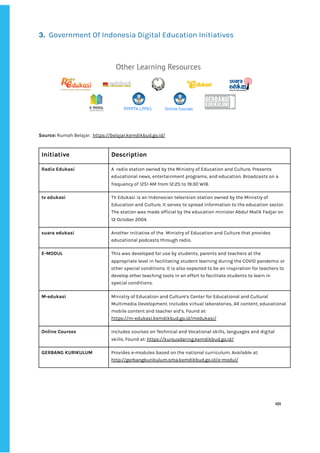
government‌‌
digital‌‌
education‌‌
initiatives‌‌ ‌
The‌ ‌
MoEC‌‌
has‌‌
a‌‌
host‌‌
of‌‌
both‌‌
online‌‌
and‌‌
offline‌‌
initiatives‌‌
to‌‌
support‌‌
digital‌‌
learning.‌‌
Online‌‌
initiatives‌‌
include‌‌
e-modules‌‌
catering‌‌
to‌‌
the‌‌
national‌‌
curriculum‌‌
through‌‌
programs‌‌
like‌‌
Gerbang‌‌
Kurikulum;‌‌
online‌‌
courses‌‌
for‌‌
technical‌‌
and‌‌
vocational,‌‌
language‌‌
and‌‌
digital‌‌
skills;‌‌
and‌‌
educational‌‌
multimedia‌‌
(M-edukasi)‌‌
in‌‌
the‌‌
form‌‌
of‌‌
virtual‌‌
laboratories,‌‌
Augmented‌‌
Reality‌‌
(AR)‌‌
content,‌‌
and‌‌
educational‌‌
mobile‌‌
content.‌‌
Offline‌‌
initiatives‌‌
include‌‌
Radio‌‌
Edukasi,‌‌
tv‌‌
edukasi,‌‌
and‌‌
suara‌‌
edukasi.‌‌
While‌‌
Radio‌‌
Edukasi‌‌
provides‌‌
educational‌‌
news‌‌
and‌‌
programs‌‌
on‌‌
the‌‌
radio;‌‌
suara‌‌
edukasi‌‌
provides‌‌
educational‌‌
podcasts‌‌
through‌‌
the‌‌
radio;‌‌
and,‌‌
tv‌‌
edukasi‌‌
is‌‌
an‌‌
Indonesian‌‌
television‌‌
station‌‌
owned‌‌
by‌‌
the‌‌
MoEC‌‌
to‌‌
spread‌‌
educational‌‌
information.‌‌
In‌‌
partnership‌‌
with‌‌
Indonesian‌‌
public‌‌
television‌‌
network‌‌
TVRI,‌‌
the‌‌
MoEC‌‌
also‌‌
launched‌
‌‌
Belajar‌‌
dari‌‌
Rumah‌
‌‌
(Study‌‌
from‌‌
Home),‌ ‌
a‌‌
series‌‌
of‌‌
educational‌‌
TV‌‌
programs‌‌
as‌‌
a‌‌
key‌‌
learning‌‌
resource‌‌
for‌‌
students‌‌
without‌‌
access‌‌
to‌‌
the‌‌
internet‌‌
during‌‌
the‌‌
pandemic.‌‌
An‌‌
overview‌‌
of‌‌
all‌‌
the‌‌
digital‌‌
education‌‌
initiatives‌‌
to‌‌
provide‌‌
platforms‌‌
and‌‌
content‌‌
in‌‌
the‌‌
space‌‌
by‌ ‌
the‌‌
Indonesian‌‌
government‌‌
can‌‌
be‌‌
found‌‌
in‌‌
the‌‌
annex‌‌
(see‌‌
Annex‌‌
3).‌‌
‌
The‌‌
MoEC‌‌
has‌‌
also‌‌
tried‌‌
to‌‌
strengthen‌‌
the‌‌
digital‌‌
education‌‌
infrastructure‌‌
in‌‌
Indonesia‌‌
through‌‌
its‌ ‌
School‌‌
Digitization‌‌
initiatives‌‌
under‌‌
its‌‌
‌
Sekolah‌‌
Penggerak‌
‌‌
(Pioneering‌‌
Schools)‌‌
program‌‌
in‌‌
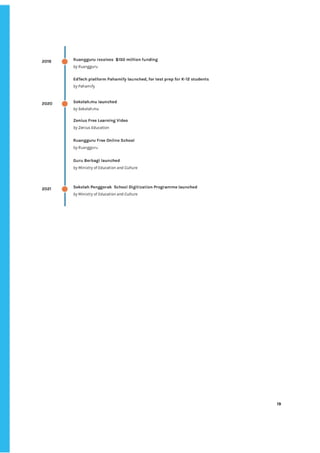
2021,‌‌
elaborated‌‌
in‌‌
Section‌‌
4‌‌
of‌‌
this‌‌
report.‌‌ ‌
‌
In‌‌
addition‌‌
to‌‌
these‌‌
initiatives,‌‌
the‌‌
MoEC‌‌
has‌‌
set‌‌
up‌‌
Wartek,‌‌
a‌‌
special‌‌
task‌‌
force‌‌
that‌‌
is‌‌
constantly‌‌
innovating‌‌
to‌‌
develop‌‌
the‌‌
digital‌‌
ecosystem‌‌
in‌‌
Indonesia.‌‌
They‌‌
have‌‌
four‌‌
programs‌‌
including‌‌
a‌‌
school‌‌
resource‌‌
management‌‌
platform,‌‌
a‌‌
teacher‌‌
learning‌‌
platform,‌‌
a‌‌
curriculum‌‌
and‌‌
assessment‌‌
platform‌‌
and‌‌
a‌‌
career‌‌
readiness‌‌
platform.‌ ‌
‌
Private‌‌
sector-led‌‌
digital‌‌
education‌‌
initiatives‌ ‌
In‌‌
addition‌‌
to‌‌
the‌‌
government’s‌‌
platforms‌‌
and‌‌
initiatives,‌‌
the‌‌
digital‌‌
learning‌‌
landscape‌‌
in‌‌
Indonesia‌‌
includes‌‌
several‌‌
private‌‌
sector‌‌
EdTech‌‌
platforms,‌‌
the‌‌
most‌‌
popular‌‌
of‌‌
which‌‌
is‌‌
‌
Ruangguru‌
.‌‌
Ruangguru‌‌
was‌‌
launched‌‌
in‌‌
2014‌‌
as‌‌
an‌‌
online‌‌
marketplace‌‌
for‌‌
private‌‌
tutors‌‌
but‌‌
is‌‌
now‌‌
aimed‌‌
at‌‌
transforming‌‌
educational‌‌
performance‌‌
by‌‌
offering‌‌
‌
‌
16‌ ‌ ‌
‌
‌ ‌
‌
‌
‌
a‌‌
range‌‌
of‌‌
products‌‌
and‌‌
services‌
31‌
.‌‌
It‌‌
currently‌‌
has‌
more‌‌
than‌‌
22,000,000‌‌
users‌‌
offers‌‌
services‌‌
for‌‌
more‌‌
than‌‌
100‌‌
subject‌‌
areas‌
32‌
.‌‌ ‌
‌
Zenius‌‌
Education,‌‌
founded‌‌
in‌‌
2007,‌‌
even‌‌
prior‌‌
to‌‌
the‌‌
government's‌‌
flagship‌‌
platform‌‌
Rumah‌‌
Belajar,‌‌
was‌‌
one‌‌
of‌‌
the‌‌
first‌‌
EdTech‌‌
platforms‌‌
in‌‌
Indonesia.‌‌
Zenius‌‌
offers‌‌
video‌‌
content‌‌
and‌‌
exercises‌‌
for‌‌
elementary‌‌
to‌‌
senior‌‌
high‌‌
school‌‌
students,‌‌
focusing‌‌
on‌‌
subjects‌‌
that‌‌
are‌‌
tested‌‌
in‌‌
national‌‌
examinations.‌‌ ‌
‌
The‌‌
majority‌‌
of‌‌
other‌‌
private‌‌
EdTech‌‌
platforms‌‌
in‌‌
Indonesia‌‌
were‌‌
founded‌‌
in‌‌
the‌‌
years‌‌
after‌‌
2013,‌‌
or‌‌
in‌‌
a‌‌
post‌‌
COVID-19‌‌
world,‌‌
where‌‌
people‌‌
began‌‌
to‌
realise‌‌
the‌‌
potential‌‌
of‌‌
digital‌‌
learning‌‌
solutions.‌‌ ‌
Sekolah.mu‌‌
‌
was‌‌
launched‌‌
and‌‌
has‌‌
already‌‌
seen‌‌
immense‌‌
growth‌‌
and‌‌
consumer‌‌
usage.‌‌
Google‌‌
Indonesia‌‌
started‌‌
a‌‌
‘Google‌‌
for‌‌
Education’‌‌
initiative‌‌
that‌‌
provides‌‌
free,‌‌
secure‌‌
tools‌‌
for‌‌
students‌‌
and‌‌
teachers‌‌
in‌‌
schools‌‌
and‌‌
universities‌‌
to‌‌
learn,‌‌
innovate‌‌
and‌‌
collaborate‌
33‌
.‌‌
Many‌‌
free‌‌
programs‌‌
offered‌‌
by‌‌
private‌‌
EdTech‌‌
platforms‌‌
are‌‌
accessible‌‌
through‌‌
the‌‌
government’s‌‌
Rumah‌‌
Belajar‌‌
platform.‌‌
A‌‌
list‌‌
of‌‌
EdTech‌‌
solutions‌‌
available‌‌
in‌‌
Indonesia‌‌
can‌‌
be‌‌
found‌‌
in‌‌
the‌‌
annexures‌‌
‌
(see‌ ‌
Annex‌‌
2)‌
.‌ ‌
‌
Despite‌‌
these‌‌
efforts,‌‌
there‌‌
continue‌‌
to‌‌
be‌‌
challenges‌‌
in‌‌
the‌‌
uptake‌‌
of‌‌
EdTech,‌‌
the‌‌
provision‌‌
of‌‌
inclusive‌‌
EdTech‌‌
solutions‌‌
and‌‌
in‌‌
ensuring‌‌
accountability,‌‌
online‌‌
safety‌‌
and‌‌
safeguarding‌‌
the‌‌
mental‌‌
health‌‌
and‌‌
social‌‌
interaction‌‌
needs‌‌
of‌‌
students.‌‌
The‌‌
insights‌‌
in‌‌
this‌‌
section‌ ‌
aim‌‌
to‌‌
provide‌‌
an‌‌
assessment‌‌
of‌‌
these‌‌
efforts‌‌
in‌‌
the‌‌
landscape‌‌
for‌‌
digital‌‌
learning‌‌
content‌‌
and‌‌
platforms‌‌
in‌‌
Indonesia.‌ ‌ ‌
‌
31
‌
‌
Pouezevara,‌‌
Sarah,‌‌
et‌‌
al.,‌‌
‌
Scaling‌‌
Access‌‌
&‌‌
Impact‌‌
Realizing‌‌
the‌‌
Power‌‌
of‌‌
EdTech,‌ ‌
‌
Indonesia,‌‌
Country‌‌
Report,‌‌
RTI‌‌
International‌‌
and‌‌
Omidyar‌‌
Network,‌‌
2019,‌‌
<‌
https://omidyar.com/wp-content/uploads/2020/09/Scaling-‌
Access-and-Impact_Indonesia-Report_vFinal_r.pdf‌
>.‌ ‌
32
‌
‌
‘Ruangguru’,‌‌
<‌
https://www.ruangguru.com/about-us‌
‌‌
>.‌‌ ‌
33
‌
‌
Google,‌‌
‘Google‌‌
for‌‌
Education’,‌‌
<‌
https://edu.google.com/intl/id/‌
‌‌
>.‌‌ ‌
‌
Illustration‌‌
:‌‌
Free‌ ‌
‌
‌
17‌ ‌ ‌
‌
‌ ‌
‌
‌
‌
Timeline‌‌
of‌‌
digital‌‌
education‌‌
initiatives‌
‌‌
‌
-‌‌
‌
Content‌‌
and‌‌
platforms‌ ‌
‌
‌
18‌ ‌ ‌
‌
‌ ‌
‌
‌
‌
‌
‌
‌
‌
‌
‌
‌
‌
‌
‌
‌
‌
‌
‌
‌
‌
‌
‌
‌
‌
‌
‌
‌
‌
‌
‌
‌
‌
‌
‌
19‌ ‌ ‌
‌
‌ ‌
‌
‌
‌
3.1‌ ‌
The‌‌
pandemic‌‌
has‌‌
resulted‌‌
in‌‌
an‌‌
upsurge‌‌
of‌‌
platform‌‌
and‌‌
content‌‌
innovations‌‌
within‌‌
the‌‌
education‌‌
space,‌‌
by‌‌
both‌‌
the‌‌
government‌‌
and‌‌
the‌‌
private‌‌
sector.‌‌
However,‌‌
little‌‌
awareness‌‌
and‌‌
perceptions‌‌
of‌‌
low‌‌
quality‌‌
content‌‌
have‌‌
limited‌‌
its‌‌
uptake.‌‌ ‌
‌
‌
Illustration‌‌
:‌‌
Freepik‌ ‌
‌
The‌‌
government‌‌
has‌‌
tried‌‌
to‌‌
create‌‌
an‌‌
ecosystem‌‌
for‌‌
open-access‌‌
digital‌‌
education‌‌
through‌‌
their‌ ‌
Rumah‌‌
Belajar,‌‌
Guru‌‌
Berbagi,‌‌
and‌‌
Guru‌‌
Belajar‌‌
platforms,‌‌
and‌‌
public-private‌‌
collaborations.‌ ‌
However,‌‌
limitations‌‌
in‌‌
the‌‌
quality‌‌
of‌‌
content‌‌
and‌‌
low‌‌
awareness‌‌
of‌‌
government‌‌
platforms‌‌
have‌‌
posed‌‌
a‌‌
problem‌‌
to‌ ‌
their‌‌
uptake.‌‌ ‌
‌
The‌‌
MoEC‌‌
has‌‌
promoted‌‌
an‌‌
ecosystem‌‌
for‌‌
open-access‌‌
education‌‌
through‌‌
its‌‌
initiatives‌‌
like‌‌
Guru‌‌
Berbagi,‌‌
Guru‌‌
Belajar‌
‌‌
and‌‌
private-public‌‌
partnerships.‌‌
For‌‌
instance,‌‌
the‌‌
Guru‌‌
Berbagi‌‌
platform,‌‌
allows‌‌
teachers‌‌
and‌‌
educators‌‌
to‌‌
share‌‌
‌
©‌‌
UNICEF/Image‌‌
/Veska‌ ‌
Learning‌‌
Implementation‌‌
Plans‌‌
(RPP)‌‌
and‌‌
best‌ ‌ ‌
‌
‌
‌
‌
‌
‌
‌
practices‌‌
for‌‌
digital‌‌
learning‌ ‌
through‌‌
articles‌‌
and‌‌
references‌
34‌
.‌‌
The‌‌
initiative‌‌
S‌
apa‌‌
Duta‌‌
Rumah‌‌
Belajar‌‌
(SapaDRB),‌‌
meaning‌‌
‘Greetings‌‌
Rumah‌‌
Belajar‌‌
Ambassador’‌‌
was‌‌
launched‌‌
by‌‌
‌
Pusat‌‌
Data‌‌
dan‌‌
Informasi‌ ‌
‌
(PUSDATIN-Center‌‌
of‌‌
Data‌‌
and‌‌
Information‌‌
of‌‌
the‌‌
MoEC)‌‌
in‌‌
March‌‌
2020,‌‌
to‌‌
encourage‌‌
teachers‌‌
to‌‌
use‌‌
the‌‌
Rumah‌‌
Belajar‌‌
platform‌‌
to‌‌
share‌‌
best‌‌
practices‌‌
and‌‌
materials‌ ‌
for‌‌
online‌‌
teaching,‌‌
especially‌‌
those‌‌
based‌‌
on‌‌
information‌‌
technology‌
35‌
‌
‌
.‌‌ ‌
‌
“‌
Guru‌‌
Berbagi‌‌
encourages‌‌
open‌‌
educational‌‌
practices‌‌
by‌‌
acting‌‌
as‌‌
a‌‌
sharing‌‌
platform‌‌
of‌‌
ICT‌‌
best‌‌
practice‌‌
learning‌‌
and‌‌
planning‌‌
methods.‌‌
An‌‌
internal‌‌
study‌‌
of‌‌
the‌‌
MoEC‌‌
shows‌‌
that‌‌
around‌‌
30‌‌
per‌‌
cent‌‌
of‌‌
the‌‌
total‌‌
3‌‌
million‌‌
Indonesian‌‌
teachers‌‌
have‌‌
accessed‌‌
this‌‌
platform.”‌‌ ‌
-‌‌
Expert,‌‌
Ministry‌‌
of‌‌
Education‌‌
and‌‌
Culture,‌‌
Government‌‌
of‌‌
Indonesia‌‌ ‌
‌
‌
Image‌‌
:‌‌
UNICEF‌‌
Indonesia/2020/Veska‌ ‌
34
Ministry‌‌
of‌‌
Education‌‌
and‌‌
Culture,‌‌
‘Guru‌‌
Berbagi’,‌‌
<‌
https://guruberbagi.kemdikbud.go.id/‌
>.‌ ‌ ‌
35
Expert‌‌
interview‌‌
with‌‌
an‌‌
official‌‌
of‌‌
the‌ ‌
Ministry‌‌
of‌‌
Education‌‌
and‌‌
Culture,‌‌
of‌‌
the‌‌
Government‌‌
of‌‌
Indonesia,‌‌
in‌‌
December‌ ‌
2020.‌‌ ‌
‌
‌
20‌ ‌ ‌
‌
‌ ‌
‌
‌
‌
The‌‌
MoEC‌‌
has‌‌
also‌‌
collaborated‌‌
with‌‌
private‌‌
EdTech‌‌
companies‌‌
to‌‌
get‌‌
access‌‌
to‌‌
content‌‌
that‌‌
it‌‌
can‌‌
provide‌‌
for‌‌
free‌‌
on‌‌
its‌‌
Rumah‌‌
Belajar‌‌
platform‌‌
to‌‌
ensure‌‌
increased‌‌
access‌‌
to‌‌
diverse‌‌
content‌‌
and‌‌
learning‌‌
materials.‌‌
In‌‌
addition‌‌
to‌‌
this,‌‌
many‌‌
private‌‌
sector‌‌
digital‌‌
learning‌‌
providers‌‌
offer‌‌
free‌‌
services‌‌
under‌‌
the‌‌
government‌‌
distance‌‌
learning‌‌
initiative‌‌
called‌
‌‌
Pembelajaran‌‌
Jarak‌‌
Jauh‌
‌‌
(PJJ).‌‌
The‌‌
complete‌‌
list‌‌
of‌‌
private‌‌
EdTech‌‌
companies‌‌
providing‌‌
free‌‌
services‌‌
under‌‌
this‌‌
scheme‌‌
can‌‌
be‌‌
found‌‌
in‌‌
the‌‌
annexures‌‌
(see‌‌
Annex‌‌
1.)‌‌‌
The‌‌
government‌‌
has‌‌
also‌‌
collaborated‌‌
with‌‌
private‌‌
sector‌‌
entities,‌‌
like‌‌
Google‌‌
and‌‌
Microsoft‌‌
for‌‌
teacher‌‌
training‌‌
webinars‌‌
on‌‌
both‌‌
ICT‌‌
related‌‌
technical‌‌
knowledge‌ ‌
and‌‌
pedagogy.‌ ‌
‌
“We‌‌
have‌‌
given‌‌
the‌‌
Ministry‌‌
all‌‌
our‌‌
materials‌‌
for‌‌
free‌‌
and‌‌
converted‌‌
Zenius‌‌
problem‌‌
sets‌‌
into‌‌
pdf‌‌
versions‌‌
to‌‌
be‌‌
distributed‌‌
to‌‌
teachers.”‌ ‌
-‌‌
Expert,‌‌
employee‌‌
at‌‌
Zenius‌ ‌
In‌‌
spite‌‌
of‌‌
government‌‌
efforts,‌‌
the‌‌
usage‌‌
of‌‌
the‌‌
Rumah‌‌
Belajar‌‌
and‌
‌‌
‌
Guru‌‌
Berbagi‌‌
platforms‌‌
is‌‌
limited.‌‌
In‌‌
the‌‌
validation‌‌
interviews,‌‌
it‌‌
was‌‌
found‌‌
that‌‌
teachers‌‌
across‌‌
different‌‌
areas‌‌
of‌‌
Indonesia,‌‌
including‌‌
Merauke‌‌
in‌‌
Papua,‌‌
Lamongan‌‌
in‌‌
East‌‌
Java,‌‌
Mamuju‌‌
in‌‌
West‌‌
Sulawesi,‌‌
Kota‌‌
Palu‌‌
in‌‌
Central‌‌
Palu‌‌
and‌‌
Malaka‌‌
Sari‌‌
in‌‌
Jakarta,‌‌
do‌‌
not‌‌
seem‌‌
to‌‌
have‌‌
integrated‌‌
these‌‌
platforms‌‌
into‌‌
their‌‌
teaching.‌‌
Four‌‌
out‌‌
of‌‌
five‌‌
teachers‌‌
had‌‌
not‌‌
even‌‌
heard‌‌
of‌‌
Guru‌‌
Berbagi‌‌
and‌‌
the‌‌
one‌‌
who‌‌
had‌‌
heard‌‌
of‌‌
it‌‌
(from‌‌
East‌‌
Jakarta)‌‌
had‌‌
never‌‌
used‌‌
it.‌‌
All‌‌
teachers‌‌
had‌‌
heard‌‌
of‌‌
Rumah‌‌
Belajar‌‌
but‌‌
none‌‌
had‌‌
used‌‌
it‌‌
themselves‌‌
or‌‌
referred‌‌
it‌‌
to‌‌
their‌‌
students‌‌
while‌‌
teaching.‌‌
Other‌‌
than‌‌
awareness,‌‌
hesitation‌‌
to‌‌
use‌‌
the‌‌
Rumah‌‌
Belajar‌‌
platform‌‌
might‌‌
be‌‌
attributed‌‌
to‌‌
its‌‌
reported‌‌
poor‌‌
quality‌‌
of‌‌
content.‌‌
According‌‌
to‌‌
an‌‌
expert‌‌
who‌‌
works‌‌
closely‌‌
with‌‌
the‌‌
government‌‌
on‌‌
digital‌‌
learning,‌ ‌
these‌‌
platforms‌‌
often‌‌
do‌‌
not‌‌
maintain‌‌
a‌‌
standard‌‌
to‌‌
the‌‌
quality‌‌
and‌‌
quantity‌‌
of‌‌
their‌‌
content‌
36‌
.‌‌
This‌‌
poses‌‌
a‌‌
problem,‌‌
as‌‌
the‌‌
International‌‌
Telecommunication‌‌
Union‌‌
(ITU)‌‌
reports‌‌
that‌‌
the‌ ‌
quality‌‌
of‌‌
materials‌‌
or‌‌
learning‌‌
content‌‌
is‌‌
the‌‌
most‌‌
important‌‌
factor‌‌
for‌‌
people‌‌
when‌‌
choosing‌‌
EdTech‌‌
applications.‌‌ ‌
‌
36
Expert‌‌
interview‌‌
with‌‌
an‌‌
official‌‌
of‌‌
the‌ ‌
Ministry‌‌
of‌‌
Education‌‌
and‌‌
Culture,‌‌
of‌‌
the‌‌
Government‌‌
of‌‌
Indonesia,‌‌
in‌‌
December‌‌
2020.‌‌ ‌
In‌‌
an‌‌
MoEC‌‌
survey,‌‌
57‌‌
per‌‌
cent‌‌
of‌‌
students‌‌
report‌‌
to‌‌
still‌‌
be‌‌
unaware‌‌
of‌‌
the‌‌
Rumah‌‌
Belajar‌‌
learning‌‌
platform‌
37‌
,‌‌
while‌‌
both‌‌
students‌‌
and‌‌
teachers‌‌
who‌‌
had‌‌
used‌‌
it‌‌
complained‌‌
about‌‌
the‌‌
quality‌‌
of‌‌
the‌‌
Rumah‌‌
Belajar‌‌
platform‌‌
not‌‌
being‌‌
up‌‌
to‌‌
the‌‌
same‌‌
level‌‌
as‌‌
private‌‌
EdTech‌‌
platforms.‌‌ ‌
‌
“Government‌‌
has‌‌
facilitated‌‌
teachers‌‌
to‌‌
build‌‌
their‌‌
capacity‌‌
on‌‌
implementing‌‌
online‌‌
learning‌‌
through‌‌
Rumah‌‌
Belajar‌‌
and‌‌
Guru‌‌
Berbagi.‌‌
However,‌‌
the‌‌
teachers‌‌
have‌‌
not‌‌
yet‌‌
integrated‌‌
it‌‌
into‌‌
their‌‌
learning‌‌
process‌‌
and‌‌
rarely‌‌
access‌‌
it,‌‌
consequently‌‌
we‌‌
have‌‌
not‌‌
seen‌‌
any‌‌
significant‌‌
improvement‌‌
on‌‌
their‌‌
quality‌‌
of‌‌
teaching.‌‌
”‌‌ ‌
‌
-‌‌
Expert,‌‌
Ministry‌‌
of‌‌
Education‌‌
and‌‌
Culture,‌‌
Government‌‌
of‌‌
Indonesia‌ ‌
‌
‌
The‌‌
unexpected‌‌
push‌‌
into‌‌
digital‌‌
learning‌‌
has‌‌
boosted‌‌
EdTech‌‌
platforms‌‌
and‌‌
facilitated‌‌
the‌‌
landscape‌‌
for‌‌
novel‌‌
and‌‌
innovative‌‌
practices‌‌
in‌‌
the‌‌
education‌‌
space.‌ ‌
‌
Even‌‌
prior‌‌
to‌‌
the‌‌
COVID-19‌‌
pandemic,‌‌
innovations‌‌
of‌‌
private‌‌
EdTech‌‌
platforms‌‌
have‌‌
challenged‌‌
the‌‌
way‌‌
learning‌‌
and‌‌
teaching‌‌
was‌‌
being‌‌
carried‌‌
out‌‌
in‌‌
mainstream‌‌
education‌‌
in‌‌
Indonesia.‌‌
Companies‌‌
such‌‌
as‌‌
Arsa‌‌
Kids,‌‌
Digikids‌‌
and‌‌
Educa‌‌
Studio‌‌
have‌‌
developed‌‌
game-based‌‌
and‌‌
blended‌‌
learning‌‌
experiences‌‌
like‌‌
interactive‌‌
storybooks‌‌
and‌‌
educational‌‌
mobile‌‌
apps‌‌
to‌‌
help‌‌
improve‌‌
early‌‌
childhood‌‌
educators’‌‌
effectiveness‌
38‌
.‌‌
Other‌‌
interesting‌‌
innovations‌‌
include‌‌
content‌‌
provided‌‌
to‌‌
students‌‌
via‌‌
animated‌‌
premium‌‌
learning‌‌
videos,‌‌
quizzes,‌‌
and‌‌
summaries‌‌
that‌‌
combine‌‌
learning‌‌
37
Ministry‌‌
of‌‌
Education‌‌
and‌‌
Culture,‌‌
‌
KPAI‌‌
survey‌‌
on‌‌
Teachers‌‌
and‌‌
Students,‌
‌‌
Indonesia,‌‌
3-8‌‌
April‌‌
2020.‌‌ ‌
38
World‌‌
Bank‌‌
Group,‌‌
‌
EdTech‌‌
IN‌‌
INDONESIA-‌‌
READY‌‌
FOR‌‌
TAKE-OFF?,‌
‌‌
World‌‌
Bank‌‌
Group‌‌
and‌‌
Australian‌‌
Government,‌‌
May‌‌
2020,‌‌
<http://documents1.worldbank.org/curated/en/535881589465343‌
528/pdf/EdTech-in-Indonesia-Ready-for-Take-off.pdf‌‌
>,‌‌
accessed‌‌
8‌‌
March‌‌
2021.‌‌ ‌
‌
‌
21‌ ‌ ‌
‌
‌ ‌
‌
‌
‌
science,‌‌
filmmaking,‌‌
gamification,‌‌
and‌‌
visuals‌‌
like‌‌
on‌‌
Pahamify;‌‌
MauBelajarApa,‌‌
which‌‌
is‌‌
an‌‌
online‌‌
marketplace‌‌
platform‌‌
that‌‌
makes‌‌
it‌‌
easy‌‌
for‌‌
learners‌‌
to‌‌
find‌‌
and‌‌
register‌‌
for‌‌
vocational‌‌
classes‌‌
that‌‌
have‌‌
been‌‌
created‌‌
by‌‌
teachers;‌‌
and‌‌
Zenius‌‌
that‌‌
has‌‌
a‌
repository‌‌
of‌‌
more‌‌
than‌‌
80,000‌‌
educational‌‌
videos‌‌
for‌‌
K-12‌‌
students‌‌
and‌‌
has‌‌
created‌‌
a‌‌
compressed‌‌
version‌‌
of‌‌
their‌‌
application‌‌
to‌‌
be‌‌
easily‌‌
accessed‌‌
by‌‌
those‌‌
with‌‌
poor‌‌
internet‌‌
speed‌‌
and‌‌
connectivity.‌‌ ‌
“Zenius‌‌
focuses‌‌
on‌‌
goal‌‌
setting,‌‌
mind‌‌
mapping,‌‌
which‌‌
is‌‌
in‌‌
contrast‌‌
to‌‌
traditional‌‌
education‌‌
in‌‌
Indonesia.‌‌
Google‌‌
Meet‌‌
is‌‌
too‌‌
large‌‌
in‌‌
space‌‌
for‌‌
many‌‌
to‌‌
access,‌‌
so‌‌
the‌‌
Zenius‌‌
team‌‌
has‌‌
created‌‌
a‌‌
compressed‌‌
version‌‌
that‌‌
is‌‌
2MB‌‌
per‌‌
minute‌‌
and‌‌
there‌‌
is‌‌
web‌‌
based‌‌
and‌‌
an‌‌
application‌‌
for‌‌
it‌‌
-‌‌
this‌‌
can‌‌
be‌‌
accessed‌‌
on‌‌
the‌‌
mobile‌‌
phone‌‌
and‌‌
by‌‌
installing‌‌
the‌‌
application‌‌
the‌‌
students‌‌
can‌‌
view‌‌
it‌‌
on‌‌
the‌‌
video.”‌‌ ‌
-‌‌
Expert,‌‌
employee‌‌
at‌‌
Zenius‌ ‌
‌
However,‌‌
the‌‌
unexpected‌‌
push‌‌
into‌‌
digital‌‌
learning‌‌
caused‌‌
by‌‌
the‌‌
COVID-19‌‌
pandemic‌‌
has‌‌
encouraged‌‌
the‌‌
use‌‌
of‌‌
digital‌‌
solutions‌‌
more‌‌
than‌‌
ever‌‌
before.‌‌
Even‌‌
if‌‌
such‌‌
innovations‌‌
existed‌‌
before‌‌
the‌‌
pandemic,‌‌
they‌‌
were‌‌
not‌‌
as‌‌
widely‌‌
used.‌‌
The‌‌
validation‌‌
interviews‌‌
showed‌‌
that‌‌
four‌‌
out‌‌
of‌‌
five‌‌
teachers‌‌
had‌‌
never‌‌
before‌‌
used‌‌
digital‌‌
tools‌‌
in‌‌
their‌‌
teaching‌‌
prior‌‌
to‌‌
the‌‌
pandemic,‌‌
while‌‌
five‌‌
out‌‌
of‌‌
five‌‌
teachers‌‌
said‌‌
they‌‌
were‌‌
currently‌‌
using‌‌
some‌‌
digital‌‌
solution‌‌
for‌‌
their‌‌
teaching,‌‌
mostly‌‌
WhatsApp.‌‌
Initial‌‌
reluctance‌‌
in‌‌
adopting‌‌
technology‌‌
among‌‌
some‌‌
educational‌‌
institutions,‌‌
teachers‌‌
and‌‌
parents‌‌
has‌‌
been‌‌
replaced‌‌
by‌‌
an‌‌
urgent‌‌
necessity‌‌
to‌‌
do‌‌
so,‌‌
with‌‌
large‌‌
numbers‌‌
of‌‌
students‌‌
now‌‌
reliant‌‌
on‌‌
online‌‌
and‌‌
distance‌‌
education‌‌
with‌‌
the‌‌
closure‌‌
of‌‌
schools‌
39‌
.‌‌ ‌
‌
‌
‌
‌
‌
39
World‌‌
Bank‌‌
Group,‌‌
‌
EdTech‌‌
IN‌‌
INDONESIA-‌‌
READY‌‌
FOR‌‌
TAKE-OFF?,‌
‌‌
World‌‌
Bank‌‌
Group‌‌
and‌‌
Australian‌‌
Government,‌‌
May‌‌
2020,‌‌
<http://documents1.worldbank.org/curated/en/535881589465343‌
528/pdf/EdTech-in-Indonesia-Ready-for-Take-off.pdf‌‌
>.‌‌ ‌
“Digital‌‌
learning‌‌
was‌‌
fairly‌‌
limited‌‌
before‌‌
COVID-19‌‌
-‌‌
besides‌‌
Ruangguru‌‌
(good‌‌
private‌‌
platform‌‌
for‌‌
online‌‌
learning‌‌
even‌‌
before‌‌
the‌‌
pandemic)‌‌
there‌‌
was‌‌
barely‌‌
anything.‌‌
There‌‌
was‌‌
not‌‌
much‌‌
demand‌‌
for‌‌
this.‌‌
There‌‌
was‌‌
no‌‌
real‌‌
culture‌‌
for‌‌
online‌‌
learning‌‌
before‌‌
COVID-19.”‌ ‌
-‌‌
Expert,‌‌
Child‌‌
Protection,‌‌
UNICEF‌‌ ‌
Consequently,‌‌
local‌‌
EdTech‌‌
platforms‌‌
have‌‌
experienced‌‌
exponential‌‌
growth‌‌
in‌‌
their‌‌
user‌‌
base‌‌
during‌‌
the‌‌
pandemic.‌‌
Since‌‌
the‌‌
beginning‌‌
of‌‌
2020‌‌
,‌‌
Ruangguru‌‌
reported‌‌
five‌‌
million‌‌
new‌‌
customers‌
40‌
.‌‌
Other‌‌
local‌‌
platforms‌‌
like‌‌
Harukaedu‌‌
(a‌‌
platform‌‌
offering‌‌
online‌‌
university‌‌
degrees),‌‌
and‌‌
Cakap‌‌
by‌‌
Squline‌‌
(a‌‌
tutoring‌‌
platform‌‌
for‌‌
language‌‌
learning)‌
41‌
‌
have‌‌
also‌‌
reported‌‌
growth‌‌
in‌‌
their‌‌
user‌‌
base.‌‌
Even‌‌
newer‌‌
platforms‌‌
like‌‌
‌
Sekolah.mu‌
‌‌
which‌‌
were‌‌
launched‌‌
recently‌‌
in‌‌
January‌‌
of‌‌
2020‌‌
reported‌‌
a‌‌
large‌‌
user‌‌
base‌‌
in‌‌
the‌‌
short‌‌
time‌‌
since‌‌
their‌‌
launch.‌‌
The‌‌
government’s‌‌
EdTech‌‌
platform‌‌
Rumah‌‌
Belajar‌‌
has‌‌
also‌‌
experienced‌‌
an‌‌
increase‌‌
in‌‌
its‌‌
user‌‌
base,‌‌
going‌‌
from‌‌
128,000‌‌
teachers,‌‌
and‌‌
300,000‌‌
students‌‌
as‌‌
per‌‌
November‌ ‌
2018‌
42‌
,‌‌
to‌‌
18‌‌
million‌‌
users‌‌
on‌‌
4‌‌
March‌‌
2020‌
43‌
.‌‌ ‌
‌
“Sekolah.mu‌‌
was‌‌
launched‌‌
in‌‌
January‌‌
2020‌‌
and‌‌
has‌‌
already‌‌
reached‌‌
2.5‌‌
millions‌‌
users!‌‌
It‌‌
was‌‌
launched‌‌
during‌‌
the‌‌
pandemic,‌‌
and‌‌
has‌‌
had‌‌
tremendous‌‌
uptake‌‌
in‌‌
less‌‌
than‌‌
a‌‌
year.”‌ ‌
-‌‌
Expert,‌‌
employee‌‌
at‌‌
Sekolahmu‌ ‌
The‌‌
COVID-19‌‌
crisis‌‌
provides‌‌
an‌‌
opportunity‌‌
for‌‌
the‌‌
EdTech‌‌
sector‌‌
to‌‌
provide‌‌
sustainable‌‌
solutions‌‌
in‌‌
improving‌‌
student‌‌
learning,‌‌
and‌‌
in‌‌
supporting‌‌
traditional‌‌
educational‌‌
institutions‌‌
in‌‌
the‌‌
delivery‌‌ ‌
40
Setyowati,‌‌
D.,‌‌
‘‌‌
Kans‌‌
Ruangguru‌‌
dan‌‌
Alodokter‌‌
Become‌‌
Indonesia’s‌ ‌
6th‌‌
Unicorn‌‌
during‌‌
the‌‌
Pandemic.’,‌‌‌
‌
Katadata,‌‌
November‌ ‌
2020,‌‌
<3.‌
https://katadata.co.id/desysetyowati/digital/5fa18220d2ba9/k‌
ans-ruangguru-dan-alodokter-jadi-unicorn-ke-6-indonesia-saat-p‌
andemi‌
‌‌
>‌‌ ‌
41
Yarrow,‌‌
Noah;‌‌
Masood,‌‌
Eema;‌‌
Afkar,‌‌
Rythia.,‌ ‌
‌
Estimated‌‌
Impacts‌‌
of‌‌
COVID-19‌‌
on‌‌
Learning‌‌
and‌‌
Earning‌‌
in‌‌
Indonesia:‌‌
How‌‌
to‌‌
Turn‌‌
the‌‌
Tide‌
,‌ ‌
World‌‌
Bank,‌‌
<‌
http://documents1.worldbank.org/curated/en/184651597383628‌
008/pdf/Main-Report.pdf‌
‌‌
>.‌‌ ‌
42
Pouezevara,‌‌
Sarah,‌‌
et‌‌
al.,‌‌
‌
Scaling‌‌
Access‌‌
&‌‌
Impact‌‌
Realizing‌‌
the‌‌
Power‌‌
of‌‌
EdTech,‌ ‌
‌
Indonesia,‌‌
Country‌‌
Report,‌‌
RTI‌‌
International‌‌
and‌‌
Omidyar‌‌
Network,‌‌
2019,‌‌
<‌
https://omidyar.com/wp-content/uploads/2020/09/Scaling-Acc‌
ess-and-Impact_Indonesia-Report_vFinal_r.pdf‌
>.‌‌ ‌
43
Kompas,‌‌
<‌
https://epaper.kompas.id/pdf/show/20210304‌
>.‌ ‌ ‌
‌
‌
22‌ ‌ ‌
‌
‌ ‌
‌
‌
‌
of‌‌
online‌‌
education‌
44‌
.‌‌
In‌‌
2020,‌‌
Zenius‌‌
Education‌‌
provided‌‌
free‌‌
access‌‌
to‌‌
80,000‌‌
video‌‌
learning‌‌
materials.‌‌
This‌‌
Zenius‌‌
service‌‌
can‌‌
be‌‌
used‌‌
by‌‌
students‌‌
to‌‌
undergo‌‌
learning‌‌
activities‌‌
during‌‌
their‌‌
study‌‌
period‌‌
at‌‌
home‌‌
and‌‌
can‌‌
also‌‌
help‌‌
prepare‌‌
for‌‌
the‌‌
optimal‌‌
National‌‌
Examination‌‌
(UN)‌
45‌
.‌‌
In‌‌
March‌‌
2020,‌‌
Ruangguru‌‌
also‌‌
launched‌‌
the‌‌
Ruangguru‌‌
Free‌‌
Online‌‌
School,‌‌
where‌‌
students‌‌
could‌‌
take‌‌
part‌‌
in‌‌
online‌‌
distance‌‌
learning‌‌
(live‌‌
teaching)‌‌
every‌‌
Monday‌‌
to‌‌
Friday‌‌
on‌‌
the‌‌
application,‌‌
just‌‌
like‌‌
they‌‌
would‌‌
in‌‌
school.‌‌
Students‌‌
who‌‌
were‌‌
not‌‌
able‌‌
to‌‌
take‌‌
part‌‌
in‌‌
the‌‌
morning‌‌
session‌‌
could‌‌
access‌‌
the‌‌
recordings.‌‌
Apart‌‌
from‌‌
the‌‌
live‌‌
teaching‌‌
facility,‌‌
students‌‌
can‌‌
continue‌‌
to‌‌
practice‌‌
through‌‌
the‌‌
free‌‌
practice‌‌
questions‌‌
and‌‌
online‌‌
trial‌‌
features‌‌
‌
46‌
.‌ ‌
‌
The‌‌
sudden‌‌
transition‌‌
to‌‌
digital‌‌
learning‌ ‌
has‌‌
also‌‌
been‌‌
a‌‌
positive‌‌
catalyst‌‌
for‌‌
motivating‌‌
teachers‌‌
to‌‌
be‌‌
more‌‌
explorative‌‌
and‌‌
creative‌‌
in‌‌
their‌‌
teaching‌‌
techniques.‌‌
They‌‌
have‌‌
been‌‌
encouraged‌‌
to‌‌
adapt‌‌
existing‌‌
and‌‌
create‌‌
new‌‌
teaching‌‌
content‌‌
by‌‌
accessing‌‌
sources‌‌
like‌‌
Guru‌‌
Berbagi‌‌
and‌‌
multiple‌‌
others‌‌
sources‌‌
on‌ ‌
the‌‌
internet‌
47‌
.‌‌
This‌‌
has‌‌
given‌‌
them‌‌
access‌‌
to‌‌
a‌‌
huge‌‌
body‌‌
of‌‌
content‌‌
and‌‌
teaching‌‌
practices‌‌
beyond‌‌
their‌‌
immediate‌‌
schools‌‌
and‌‌
colleagues.‌‌
On‌‌
Guru‌‌
Berbagi,‌‌
teachers‌‌
can‌‌
also‌‌
record‌‌
material‌‌
in‌‌
media‌‌
formats‌‌
like‌‌
video‌‌
and‌‌
audio‌‌
compared‌‌
to‌‌
standard‌‌
written‌‌
formats‌‌
for‌‌
their‌‌
students‌‌
to‌‌
learn‌‌
from.‌‌ ‌
‌
Wartek‌‌
is‌‌
currently‌‌
working‌‌
on‌‌
the‌‌
development‌‌
of‌‌
a‌‌
comprehensive‌‌
teacher‌‌
app‌‌
through‌‌
which‌‌
teachers‌‌
will‌‌
have‌‌
access‌‌
to‌‌
a‌‌
rich‌‌
collection‌‌
of‌‌
toolkits‌‌
that‌‌
enable‌‌
them‌‌
to‌‌
conduct‌‌
individualized‌‌
and‌‌
differentiated‌‌
learning‌‌
based‌‌
on‌‌
the‌‌
learning‌
progress‌‌
of‌‌
each‌‌
student.‌‌
This‌‌
app‌‌
will‌‌
be‌‌
rolled‌‌
out‌‌
44
‌
‌
World‌‌
Bank‌‌
Group,‌‌
‌
EdTech‌‌
IN‌‌
INDONESIA-‌‌
READY‌‌
FOR‌‌
TAKE-OFF?,‌
‌‌
World‌‌
Bank‌‌
Group‌‌
and‌‌
Australian‌‌
Government,‌‌
May‌‌
2020,‌‌
<http://documents1.worldbank.org/curated/en/535881589465343‌
528/pdf/EdTech-in-Indonesia-Ready-for-Take-off.pdf‌‌
>‌‌ ‌
45
‌
‌
Zenius,‌‌
‘Dukungan‌‌
Zenius‌‌
untuk‌‌
Kebijakan‌‌
Belajar‌‌
di‌‌
Rumah:‌
Zenius‌‌
NB19’,‌‌
15‌‌
March‌‌
2020,‌
<‌
https://www.zenius.net/blog/23693/corona-belajar-di-rumah-ke‌
bijakan-pemda‌
>.‌‌ ‌
46
‌
Alfarizi,‌‌
M.‌‌
K.,‌‌
‘Pandemi‌‌
COVID-19,‌‌
Ratusan‌‌
Ribu‌‌
Siswa‌‌
'Berkerumun'‌‌
di‌‌
Ruangguru,‌‌
16‌‌
March‌‌
2020,‌‌
March‌‌
16‌‌
<‌
https://tekno.tempo.co/read/1320212/pandemi-COVID-19-ratusa‌
n-ribu-siswa-berkerumun-di-ruangguru‌
>,‌‌
accessed‌‌
8‌‌
March‌‌
2021.‌‌ ‌
47
Luhar,‌‌
Bima,‌‌
‘A‌
nalisis‌‌
Awal‌‌
Terhadap‌‌
Faktor‌‌
Pendorong‌‌
Ketimpangan‌‌
Dalam‌‌
Pembelajaran‌‌
Jarak‌‌
Jauh‌‌
Di‌‌
Tingkat‌‌
Sekolah‌‌
Dasar‌
’,‌ ‌
CATATAN‌‌
ISU‌‌
SMERU,‌‌
2020.‌‌
<‌
http://smeru.or.id/sites/default/files/publication/ib02_analisis‌
_bjj-ind_0.pdf‌
>‌ ‌ ‌
across‌‌
the‌‌
country‌‌
as‌‌
part‌‌
of‌‌
Sekolah‌‌
Penggerak‌‌
implementation.‌‌ ‌
‌
‌
IllustratIon‌‌
:‌‌
Freepik‌ ‌
“There‌‌
is‌‌
a‌‌
silver‌‌
lining‌‌
to‌‌
the‌‌
pandemic‌‌
as‌‌
we‌‌
can‌‌
see‌‌
a‌ ‌
shift‌‌
in‌‌
the‌‌
efforts‌‌
and‌‌
mindsets‌‌
of‌‌
teachers.‌‌
They‌‌
are‌‌
now‌‌
more‌‌
explorative‌‌
than‌‌
ever‌‌
before‌‌
to‌‌
find‌‌
teaching‌‌
materials‌‌
or‌‌
are‌‌
tweaking‌‌
their‌‌
methods.”‌ ‌
-‌‌
Expert,‌‌
PSPK,‌‌
Independent‌‌
non-profit‌ ‌
“I‌‌
have‌‌
joined‌‌
a‌‌
WhatsApp‌‌
group‌‌
of‌‌
model‌‌
teachers‌‌
from‌‌
the‌‌
‌
Trakindo‌‌
program‌
48‌
.‌‌
We‌‌
often‌‌
chat‌‌
among‌‌
ourselves‌‌
and‌‌
exchange‌‌
approaches‌‌
and‌‌
methods‌‌
of‌‌
teaching.‌‌
I‌‌
have‌‌
tried‌‌
a‌‌
few‌‌
that‌‌
fellow‌‌
teachers‌‌
had‌‌
suggested.”‌‌ ‌
-‌‌
Teacher,‌‌
28,‌‌
Merauke‌‌
City,‌‌
Papua‌ ‌
Social‌‌
media,‌‌
followed‌‌
by‌
conferencing‌‌
applications‌‌
are‌‌
preferred‌‌
over‌‌
EdTech‌‌
platforms‌‌
as‌‌
the‌‌
most‌‌
popular‌‌
choices‌‌
for‌‌
digital‌‌
learning.‌‌ ‌
‌
Social‌‌
media‌‌
platforms‌‌
like‌‌
Facebook,‌‌
WhatsApp,‌‌
and‌‌
LINE;‌‌
and‌‌
conferencing‌‌
applications‌‌
like‌ ‌
Google-meet‌‌
and‌‌
Zoom‌‌
seem‌‌
to‌‌
be‌‌
the‌‌
most‌‌
popular‌‌
choices‌‌
for‌‌
conducting‌‌
digital‌‌
learning.‌‌
These‌‌
are‌‌
48
‌
‌
Basil,‌‌
Debra,‌‌
Z.‌‌
and‌‌
Runte,‌‌
Mary,‌‌
S.‌‌
‘Trakindo‌‌
Volunteer‌‌
Mengajar‌‌
Named‌‌
as‌‌
One‌‌
of‌‌
the‌‌
Best‌‌
Community‌‌
Programs’,‌‌
8‌‌
August‌‌
2017,‌‌
<‌
https://www.researchgate.net/publication/44285629_Company‌
_Support_for_Employee_Volunteering_A_National_Survey_of_‌
Companies_in_Canada‌
>.‌‌ ‌
‌
‌
23‌ ‌ ‌
‌
‌ ‌
‌
‌
‌
used‌‌
for‌‌
educational‌‌
purposes‌‌
by‌‌
serving‌‌
as‌‌
mediums‌‌
for‌‌
communication‌‌
and‌‌
the‌‌
sharing‌‌
of‌‌
educational‌‌
materials‌‌
like‌‌
assignments‌‌
and‌‌
notes.‌‌
They‌‌
seem‌‌
to‌‌
be‌‌
preferred‌‌
over‌‌
EdTech‌‌
platforms‌‌
that‌‌
curate‌‌
specific‌‌
courses‌‌
and‌‌
material.‌‌ ‌
‌
In‌‌
an‌‌
INOVASI‌‌
study‌‌
conducted‌‌
in‌‌
April‌‌
2020,‌‌
of‌‌
221‌‌
participants‌‌
from‌‌
19‌‌
cities‌‌
in‌‌
4‌‌
provinces‌‌
mostly‌‌
from‌‌
SD‌‌
(primary)‌‌
schools,‌‌
it‌‌
was‌‌
found‌‌
that‌‌
over‌‌
70‌‌
per‌‌
cent‌‌
of‌‌
students‌‌
are‌‌
reportedly‌‌
still‌‌
learning‌‌
offline‌‌
with‌‌
instructions‌‌
communicated‌‌
by‌‌
SMS‌‌
from‌‌
teachers‌‌
to‌‌
parents‌
49‌
.‌ ‌
Of‌‌
the‌‌
24‌‌
per‌‌
cent‌‌
that‌‌
reported‌‌
studying‌‌
online,‌‌
98‌‌
per‌‌
cent‌‌
did‌‌
so‌‌
through‌‌
instant‌‌
messaging‌‌
(WhatsApp,‌‌
LINE,‌‌
or‌‌
Facebook),‌‌
and‌‌
very‌‌
few‌‌
did‌‌
so‌‌
through‌‌
public‌‌
online‌‌
learning‌‌
platforms‌‌
like‌‌
Rumah‌‌
Belajar,‌‌
or‌‌
private‌‌
ones‌‌
like‌‌
Ruangguru‌‌
and‌‌
Zenius.‌‌ ‌
“As‌‌
time‌‌
passed,‌‌
more‌‌
and‌‌
more‌‌
teachers‌‌
are‌‌
learning‌‌
to‌‌
use‌‌
video‌‌
conferencing‌‌
such‌‌
as‌‌
Zoom‌‌
or‌‌
the‌‌
Google‌‌
Class‌‌
Room‌‌
facility,‌‌
so‌‌
that‌‌
WhatsApp‌‌
is‌‌
not‌‌
the‌‌
only‌‌
option.”‌‌ ‌
-Expert,‌‌
PSPK,‌ ‌
Independent‌‌
non-profit‌ ‌
‌
In‌‌
an‌‌
MoEC‌‌
primary‌‌
school‌‌
survey‌‌
of‌‌ ‌
14,‌‌
668‌‌
respondents‌‌
in‌‌
April‌‌
2020‌‌
,‌‌
70‌‌
per‌‌
cent‌‌
reported‌‌
learning‌‌
through‌‌
WhatsApp‌‌
groups‌‌
and‌‌
only‌‌
296‌‌
respondents‌‌
(not‌‌
even‌‌
0.1‌‌
per‌‌
cent)‌‌
reported‌‌
learning‌‌
through‌‌
websites‌‌
or‌‌
school‌‌
platforms.‌‌
This‌‌
was‌‌
despite‌‌
39‌‌
per‌‌
cent‌‌
of‌‌
students‌‌
being‌‌
advised‌‌
to‌‌
use‌‌
Rumah‌‌
Belajar,‌‌
23‌‌
per‌‌
cent‌‌
being‌‌
advised‌‌
to‌‌
use‌‌
Ruangguru,‌‌
10‌‌
per‌‌
cent‌‌
being‌‌
advised‌‌
to‌‌
use‌‌
educational‌‌
TV‌‌
programs,‌‌
and‌‌
16‌‌
per‌‌
cent‌‌
being‌‌
advised‌‌
to‌‌
use‌‌
‘others’‌‌
‌
50‌
.‌‌
For‌‌
teachers‌‌
too,‌‌
89‌‌
per‌‌
cent‌‌
received‌‌
‘guidance’‌‌
through‌‌
the‌‌
school’s‌‌
social‌‌
media‌‌
groups‌
51‌
.‌‌ ‌
‌
49
‌
‌
INOVASI,‌
‌‌
Teacher‌‌
Survey‌
,‌‌
Indonesia,‌‌
13-14‌‌
April,‌‌
2020.‌‌ ‌
50
‌
‌
Ministry‌‌
of‌‌
Education‌‌
and‌‌
Culture,‌‌
‌
SD‌‌
survey,‌
‌‌
Indonesia,‌‌
3-8‌‌
April‌‌
2020.‌‌ ‌
51
‌
‌
Ministry‌‌
of‌‌
Education‌‌
and‌‌
Culture,‌
‌‌
KPAI‌‌
Teachers‌‌
survey,‌
‌‌
Indonesia,‌‌
3-8‌‌
April‌‌
2020.‌‌ ‌
‌
‌
Illustration‌‌
:‌‌
Freepik‌ ‌
‌
The‌‌
validation‌‌
interviews‌‌
conducted‌‌
during‌‌
the‌‌
research‌‌
further‌‌
corroborated‌‌
these‌‌
findings,‌‌
with‌‌
five‌‌
out‌‌
of‌‌
five‌‌
students‌‌
ranking‌‌
WhatsApp,‌‌
Zoom‌‌
and‌‌
Googlemeet‌‌
as‌‌
their‌‌
most‌‌
preferred‌‌
platforms‌‌
for‌‌
digital‌‌
learning.‌‌
While‌‌
four‌‌
out‌‌
of‌‌
five‌‌
students‌‌
had‌‌
heard‌‌
of‌‌
Ruangguru,‌‌
but‌‌
never‌‌
used‌‌
it‌‌
themselves.‌‌
Only‌‌
one‌‌
student‌‌
from‌‌
Jember,‌‌
East‌‌
Java‌ ‌
had‌‌
heard‌‌
of‌‌
private‌‌
EdTech‌‌
interventions‌‌
like‌‌
Brainly,‌‌
Qanda,‌‌
Zenius,‌‌
and‌‌
Quipper,‌‌
but‌‌
did‌‌
not‌‌
seem‌‌
to‌‌
mention‌‌
it‌‌
as‌‌
one‌‌
of‌‌
the‌‌
solutions‌‌
she‌‌
used‌‌
regularly‌‌
for‌‌
her‌‌
own‌‌
studying.‌‌
None‌‌
of‌‌
the‌‌
five‌‌
students‌‌
had‌‌
subscribed‌‌
to‌‌
any‌‌
EdTech‌‌
platform‌‌
for‌‌
their‌‌
digital‌‌
learning.‌‌
As‌‌
for‌‌
Rumah‌‌
Belajar,‌‌
only‌‌
two‌‌
out‌‌
of‌‌
five‌‌
of‌‌
the‌‌
students,‌‌
one‌‌
from‌ ‌
Maluku‌‌
and‌‌
the‌‌
other‌‌
from‌‌
East‌‌
Nusa‌‌
Tenggara‌‌
had‌‌
heard‌‌
of‌‌
it,‌‌
but‌‌
none‌‌
of‌‌
the‌‌
five‌‌
students‌‌
had‌‌
used‌‌
it‌‌
for‌‌
their‌‌
digital‌‌
learning.‌‌
Furthermore,‌‌
five‌‌
out‌‌
of‌‌
five‌‌
teachers‌‌
mentioned‌‌
using‌‌
WhatsApp,‌‌
Google‌‌
Meet,‌‌
Google‌‌
Classrooms,‌‌
or‌‌
Zoom‌‌
for‌‌
their‌‌
teaching.‌‌
None‌‌
mentioned‌‌
using‌‌
any‌‌
EdTech‌‌
platforms‌‌
with‌‌
curated‌‌
courses‌‌
and‌‌
material.‌‌
Lastly,‌‌
even‌‌
all‌‌
three‌‌
parents‌‌
interviewed‌‌
mentioned‌‌
that‌‌
their‌‌
children‌‌
used‌‌
WhatsApp‌‌
or‌‌
a‌‌
video‌‌
conferencing‌‌
application‌‌
like‌‌
Zoom,‌‌
or‌‌
Google‌‌
Classrooms‌‌
for‌‌
learning.‌ ‌
‌
“I‌‌
have‌‌
so‌‌
many‌‌
WhatsApp‌‌
groups‌‌
for‌‌
school.‌‌
One‌‌
for‌‌
each‌‌
subject‌‌
and‌‌
one‌‌
big‌‌
group‌‌
for‌‌
everyone‌‌
at‌‌
school.‌‌
For‌‌
each‌‌
session,‌‌
the‌‌
teacher‌‌
will‌‌
use‌‌
the‌‌
subject‌‌
WhatsApp‌‌
group‌‌
to‌‌
share‌‌
materials,‌‌
which‌‌
can‌‌
be‌‌
pdf,‌‌
photos,‌‌
voice‌‌
notes,‌‌
or‌‌
link‌‌
to‌‌
youtube‌‌
videos.”‌‌ ‌
-‌‌
Student,‌‌
16,‌‌
Garut‌‌
District,‌‌
West‌‌
Java‌‌ ‌
‌
‌
‌
24‌ ‌ ‌
‌
‌ ‌
‌
‌
‌
Perpetuating‌‌
choices‌‌
shaped‌‌
by‌‌
one’s‌‌
low‌‌
internet‌‌
speed,‌‌
affordability‌ ‌
and‌‌
poor‌‌
digital‌‌
skills‌‌
are‌‌
underlying‌‌
causes‌‌
behind‌‌
the‌‌
use‌‌
of‌‌
social‌‌
media‌‌
platforms‌‌
as‌‌
tools‌‌
for‌‌
online‌‌
learning.‌‌
In‌‌
2017,‌‌
a‌‌
large‌‌
number‌‌
of‌‌
Indonesians‌‌
only‌‌
used‌‌
the‌‌
internet‌‌
on‌‌
their‌‌
mobile‌‌
phones‌‌
via‌‌
low‌‌
speed‌‌
2G‌‌
satellite‌‌
technology,‌‌
which‌‌
prevented‌‌
them‌‌
even‌‌
from‌‌
using‌‌
Google‌‌
and‌‌
Wikipedia‌‌
effectively‌
52‌
.‌‌
Mobile‌‌
internet‌‌
users‌‌
tended‌‌
to‌‌
have‌‌
limited‌‌
prepaid‌‌
data‌‌
packages‌‌
that‌‌
prevented‌‌
them‌‌
from‌‌
using‌‌
EdTech‌‌
platforms‌‌
that‌‌
would‌‌
require‌‌
a‌‌
lot‌‌
of‌‌
data,‌‌
limiting‌‌
them‌‌
to‌‌
using‌‌
social‌‌
media‌
53‌
.‌‌
A‌‌
recent‌‌
report‌‌
titled‌‌
‘Indonesia:‌‌
A‌‌
Mobile‌‌
Network‌‌
Experience’‌‌
shows‌‌
that‌‌
users‌‌
of‌‌
four‌‌
out‌‌
of‌‌
five‌‌
mobile‌‌
networks‌‌
now‌‌
have‌‌
access‌‌
to‌‌
4G‌‌
services‌‌
at‌‌
least‌‌
90‌‌
percent‌‌
of‌‌
the‌‌
time‌
54‌
.‌‌
However,‌‌
users‌‌
still‌‌
seem‌‌
to‌‌
prefer‌‌
the‌‌
use‌‌
of‌‌
social‌‌
media‌‌
due‌‌
to‌‌
familiarity‌‌
and‌‌
possibly‌‌
also‌‌
limited‌‌
digital‌‌
skills‌‌
to‌‌
use‌‌
more‌‌
curated‌‌
platforms,‌‌
especially‌‌
in‌‌
the‌‌
case‌‌
of‌‌
teachers.‌‌ ‌
“I‌‌
use‌‌
Whats‌‌
App‌‌
and‌‌
messenger‌‌
only‌‌
because‌‌
those‌‌
apps‌‌
don’t‌‌
require‌‌
a‌‌
strong‌‌
internet‌‌
connection,‌‌
and‌‌
many‌‌
of‌‌
my‌‌
students‌‌
live‌‌
in‌‌
rural‌‌
and‌‌
mountainous‌‌
areas‌‌
with‌‌
bad‌‌
internet‌‌
connection.”‌‌ ‌
-‌‌
Teacher,‌‌
25,‌‌
Mamuju‌‌
District,‌‌
West‌‌
Sulawesi‌ ‌
“[For‌‌
my‌‌
teaching]‌‌
I‌‌
can‌‌
only‌‌
do‌‌
WhatsApp,‌‌
because‌‌
we‌‌
have‌‌
been‌‌
using‌‌
it‌‌
for‌‌
a‌‌
long‌‌
time.‌‌
But‌‌
for‌‌
Zoom‌‌
or‌‌
Google‌‌
classroom,‌‌
I‌‌
do‌‌
not‌‌
know‌‌
how‌‌
to‌‌
use‌‌
it.”‌‌ ‌
-‌‌
Teacher,‌‌
49,‌‌
Palu‌‌
City,‌‌
Central‌‌
Sulawesi‌ ‌ ‌
52
Tapsell,‌‌
Ross‌‌
and‌‌
Jurriens,‌‌
Edwin,‌‌
‘Bridging‌‌
the‌‌
digital‌‌
divide‌‌
in‌‌
Indonesia.’‌ ‌
East‌‌
Asia‌‌
Forum,‌ ‌
15‌‌
August‌‌
2017,‌‌
<‌
https://www.eastasiaforum.org/2017/08/15/bridging-the-digital-di‌
vide-in-indonesia/‌
>‌‌
.‌ ‌
53
Azali,‌ ‌
Kathleen.‌‌
‘Indonesia's‌‌
Divided‌‌
Digital‌‌
Economy’,‌‌
‌
Perspective‌
,‌‌
ISSUE:‌‌
2017,‌‌
No.‌‌
70,‌‌
pp.1-12,‌‌
Singapore,‌‌
ISEAS-‌‌
Yusof‌‌
Ishak‌‌
Institute,‌‌
14‌‌
September‌‌
2017.‌‌
<‌
www.iseas.edu.sg/images/pdf/ISEAS_Perspective_2017_70.pdf‌
>‌‌
.‌ ‌
54
Khatri,‌‌
H.‌‌
,‌‌
‌
INDONESIA‌‌
Mobile‌‌
Network‌‌
Experience‌‌
Report‌
,‌‌
OPENSIGNAL,‌‌
July‌‌
2020,‌‌
<‌
https://www.opensignal.com/reports/2020/07/indonesia/mobile-n‌
etwork-experience‌
>.‌‌ ‌
‌
Uptake‌‌
of‌‌
EdTech‌‌
platforms‌‌
seems‌‌
to‌‌
be‌‌
limited‌‌
to‌‌
urban,‌‌
first‌‌
mile‌‌
users.‌‌ ‌
‌
Validation‌‌
interviews‌‌
conducted‌ ‌
across‌‌
rural‌‌
geographies‌‌
showed‌‌
that‌‌
none‌‌
of‌‌
the‌‌
five‌‌
students‌‌
spoken‌‌
to‌‌
had‌‌
a‌‌
paid‌‌
subscription‌‌
to‌‌
any‌‌
EdTech‌‌
platform,‌‌
and‌‌
neither‌‌
did‌‌
the‌‌
children‌‌
of‌‌
the‌‌
three‌‌
parents‌‌
who‌‌
were‌‌
interviewed.‌‌
Students‌‌
had‌‌
heard‌‌
of‌‌
Ruangguru,‌‌
but‌‌
never‌‌
used‌‌
it‌‌
themselves.‌‌
Only‌‌
one‌‌
student‌‌
from‌‌
Jember,‌‌
East‌‌
Java‌ ‌
had‌‌
heard‌‌
of‌‌
private‌‌
EdTech‌‌
interventions‌‌
like‌‌
Brainly,‌‌
Qanda,‌‌
Zenius,‌‌
Quipper.‌‌
None‌‌
of‌‌
the‌‌
students‌‌
had‌‌
subscribed‌‌
to‌‌
any‌‌
EdTech‌‌
platform‌‌
for‌‌
their‌‌
digital‌‌
learning.‌‌
No‌‌
teachers‌‌
mentioned‌‌
using‌‌
any‌‌
EdTech‌‌
platforms‌‌
with‌‌
curated‌‌
courses‌‌
and‌‌
material.‌‌ ‌
‌
In‌‌
spite‌‌
of‌‌
private‌‌
EdTech‌‌
firms‌‌
having‌‌
made‌‌
free‌‌
versions,‌‌
their‌‌
premium‌‌
versions‌‌
with‌‌
paid‌‌
content‌‌
are‌‌
not‌‌
affordable‌‌
to‌‌
the‌‌
majority,‌‌
resulting‌‌
in‌‌
equity‌‌
gaps‌‌
in‌‌
access‌‌
to‌‌
digital‌‌
education.‌‌
In‌‌
a‌‌
survey‌‌
conducted‌‌
by‌
‌‌
Saiful‌‌
Mujani‌‌
Research‌‌
&‌‌
Consulting‌‌
‌
in‌‌
August‌‌
of‌‌
2020,‌‌
of‌‌
the‌‌
2,200‌‌
respondents,‌‌
94‌‌
percent‌‌
found‌‌
distance‌‌
learning‌‌
costly,‌‌
out‌‌
of‌‌
which‌‌
67‌‌
percent‌‌
said‌‌
it‌‌
was‌‌
“very”‌‌
or‌‌
“quite”‌‌
costly”‌
55‌
.‌‌
Many‌‌
EdTech‌‌
firms‌‌
in‌‌
Indonesia‌‌
have‌‌
adopted‌‌
a‌‌
“freemium”‌‌
pricing‌‌
model‌‌
as‌‌
a‌‌
means‌‌
of‌‌
attracting‌‌
more‌‌
users‌‌
by‌‌
providing‌‌
a‌‌
teaser‌‌
for‌‌
users‌‌
to‌‌
first‌‌
try‌‌
the‌‌
product.‌‌
However,‌‌
less‌‌
than‌‌
3‌‌
percent‌‌
of‌‌
those‌‌
using‌‌
the‌‌
free‌‌
versions‌‌
of‌‌
the‌‌
products‌‌
actually‌‌
end‌‌
up‌‌
upgrading‌‌
to‌‌
the‌‌
paid‌‌
versions.‌
56‌
‌
‌
Additionally,‌‌
the‌‌
cost‌‌
of‌‌
internet‌‌
and‌‌
devices‌‌
act‌‌
as‌‌
inhibitors‌‌
to‌‌
those‌‌
other‌‌
than‌‌
urban,‌‌
first-mile‌‌
consumers‌‌
using‌‌
them.‌‌ ‌
‌
‌
‌
‌
‌
55
Ghaliya,‌‌
Ghina,‌ ‌
‘Majority‌‌
of‌‌
Indonesians‌‌
find‌‌
distance‌‌
learning‌‌
costly:‌‌
Study’,‌ ‌
The‌‌
Jakarta‌‌
Post,‌‌
19‌‌
August‌‌
2020,‌‌
<‌
https://www.thejakartapost.com/news/2020/08/19/majority-of-in‌
donesians-find-distance-learning-costly-study.html‌
>‌‌
.‌‌ ‌
56
World‌‌
Bank‌‌
Group,‌‌
‌
EdTech‌‌
IN‌‌
INDONESIA-‌‌
READY‌‌
FOR‌‌
TAKE-OFF?,‌
‌‌
World‌‌
Bank‌‌
Group‌‌
and‌‌
Australian‌‌
Government,‌‌
May‌‌
2020,‌‌
<http://documents1.worldbank.org/curated/en/5358815894653435‌
28/pdf/EdTech-in-Indonesia-Ready-for-Take-off.pdf‌‌
>.‌‌ ‌
‌
‌
25‌ ‌ ‌
‌
‌ ‌
‌
‌
‌
“I‌‌
have‌‌
four‌‌
school‌‌
going‌‌
children,‌‌
and‌‌
I‌‌
have‌‌
never‌‌
heard‌‌
of‌‌
any‌‌
EdTech‌‌
platform.‌‌
Anything‌‌
related‌‌
to‌‌
purchasing‌‌
a‌‌
mobile‌‌
and‌‌
paying‌‌
for‌‌
an‌‌
internet‌‌
voucher‌‌
must‌‌
be‌‌
expensive”.‌‌ ‌
-‌‌
Parent,‌‌
59,‌‌
Alor‌‌
Kecil‌‌
District,‌‌
East‌‌
Nusa‌‌
Tenggara‌‌ ‌
‌
‌
‌
26‌ ‌ ‌
‌
‌ ‌
‌
‌
‌
‌ ‌‌
HOW‌‌
MIGHT‌‌
WE...‌ ‌
● Leverage‌‌
an‌‌
enabler:‌‌
‌
How‌‌
might‌‌
‌
we‌‌
support‌‌
and‌‌
scale‌‌
innovative‌‌
teaching‌‌
methods‌‌
that‌‌
have‌‌
come‌‌
about‌‌
during‌‌
the‌‌
pandemic?‌‌ ‌
● Leverage‌‌
an‌‌
enabler:‌
‌‌
‌
How‌‌
might‌‌
we‌
‌‌
positively‌‌
harness‌‌
the‌‌
pent‌‌
up‌‌
energy‌‌
for‌‌
change‌‌
in‌‌
the‌‌
education‌‌
innovation‌‌
ecosystem‌‌
in‌‌
Indonesia?‌ ‌
● Overcome‌‌
an‌‌
inhibitor:‌
‌‌
‌
How‌‌
might‌‌
we‌‌
increase‌‌
uptake‌‌
and‌‌
awareness‌‌
of‌‌
EdTech‌‌
platforms,‌‌
beyond‌‌
urban‌‌
students?‌ ‌
● Cover‌‌
a‌‌
gap:‌
‌‌
‌
How‌‌
might‌‌
we‌
‌‌
improve‌‌
the‌
quality‌‌
of‌‌
content‌‌
available‌‌
on‌
‌‌
Rumah‌‌
Belajar‌
?‌ ‌
‌
‌
‌
3.2‌‌‌
Private‌‌
EdTech‌‌
platforms‌‌
are‌‌
mostly‌‌
focused‌‌
on‌‌
first‌‌
mile‌‌
users‌‌
and‌‌
final-year‌‌
school‌‌
students.‌‌
While‌‌
some‌‌
government‌‌
programs‌‌
have‌‌
come‌‌
up‌‌
to‌‌
address‌‌
private‌‌
sector‌‌
gaps,‌‌
the‌‌
needs‌‌
of‌‌
vulnerable‌‌
communities‌‌
are‌‌
not‌‌
yet‌‌
adequately‌‌
met,‌‌
especially‌‌
in‌‌
the‌‌
case‌‌
of‌‌
special‌‌
needs‌‌
students.‌‌ ‌
‌
‌
‌
Private‌‌
EdTech‌‌
solutions‌‌
are‌‌
focused‌‌
on‌‌
students‌‌
in‌‌
the‌‌
final‌‌
years‌‌
of‌‌
school‌‌
and‌‌
on‌‌
private‌‌
schools.‌‌ ‌
‌
One‌‌
in‌‌
four‌‌
EdTech‌‌
firms‌‌
was‌‌
found‌‌
to‌‌
be‌ ‌
exclusively‌ ‌
targeting‌‌
private‌‌
sector‌‌
education‌‌
providers‌
57‌
.‌‌
Targeting‌‌
private‌‌
institutions‌‌
was‌‌
seen‌‌
as‌‌
desirable‌‌
among‌‌
private‌‌
EdTech‌‌
firms‌‌
as‌‌
they‌‌
were‌‌
considered‌‌
to‌‌
be‌‌
more‌‌
likely‌‌
to‌‌
have‌‌
both‌‌
the‌‌
willingness‌‌
and‌‌
ability‌‌
to‌‌
pay‌‌
for‌‌
services.‌‌
Furthermore,‌‌
within‌‌
formal‌‌
education‌‌
institutions‌‌
(schools,‌‌
universities,‌‌
and‌‌
training‌‌
institutes),‌‌
Indonesian‌‌
EdTech‌‌
firms‌‌
typically‌‌
target‌‌
senior‌‌
students,‌‌
especially‌‌
those‌‌
in‌‌
their‌‌
final‌‌
years‌‌
of‌‌
schooling‌‌
(Grades‌‌
10‌‌
to‌‌
12)‌‌
and‌‌
those‌‌
in‌‌
university.‌‌
Private‌‌
EdTech‌‌
solutions‌‌
Ruangguru,‌‌
Zenius,‌‌
and‌‌
Quipper‌‌
develop‌‌
and‌‌
provide‌‌
self‌‌
e-learning‌
content,‌‌
interactive‌‌
learning‌‌
platforms‌‌
and‌‌
study‌
tools‌‌
that‌‌
help‌‌
K-12‌‌
students‌‌
expedite‌‌
the‌‌
learning‌‌
process‌‌
and‌‌
help‌‌
with‌‌
their‌‌
assignments‌‌
and‌‌
test‌‌
preparation.‌‌
Solutions‌‌
like‌‌
Quipper,‌‌
MejaKita,‌‌
Indonesia‌‌
X,‌‌
HarukaEdu,‌‌
Arkademi,‌‌
and‌‌
Skill‌‌
Academy,‌‌
to‌‌
name‌‌
a‌‌
few,‌‌
all‌‌
focus‌‌
on‌‌
an‌‌
older‌‌
age‌‌
group,‌‌
students‌‌
from‌‌
high‌‌
school‌‌
and‌‌
college‌‌
or‌‌
working,‌‌
older‌‌
working‌‌
professionals.‌‌ ‌
‌
‌
‌
57
‌
‌
World‌‌
Bank‌‌
Group,‌‌
‌
EdTech‌‌
IN‌‌
INDONESIA-‌‌
READY‌‌
FOR‌‌
TAKE-OFF?,‌‌
World‌‌
Bank‌‌
Group‌‌
and‌‌
Australian‌‌
Government,‌‌
May‌‌
2020,‌‌
<http://documents1.worldbank.org/curated/en/535881589465‌
343528/pdf/EdTech-in-Indonesia-Ready-for-Take-off.pdf‌‌
>.‌‌ ‌
“The‌‌
challenge‌‌
of‌‌
EdTech‌‌
in‌‌
Indonesia‌‌
is‌‌
that‌‌
the‌‌
majority‌‌
of‌‌
the‌‌
initiatives‌‌
are‌‌
business‌‌
driven,‌‌
so‌‌
it's‌‌
within‌‌
their‌‌
interests‌‌
to‌‌
maximise‌‌
revenue,‌‌
so‌‌
as‌‌
a‌‌
result‌‌
the‌‌
equality‌‌
part‌‌
of‌‌
EdTech‌‌
becomes‌‌
a‌‌
lot‌‌
more‌‌
questionable.‌‌
The‌‌
moment‌‌
they‌‌
charge‌‌
some‌‌
fee‌‌
or‌‌
subscription‌‌
it‌‌
leads‌‌
to‌‌
the‌‌
question‌‌
whether‌‌
their‌‌
existence‌‌
encourages‌‌
equality‌‌
or‌‌
widens‌‌
the‌‌
gap,‌‌
because‌‌
those‌‌
who‌‌
can‌‌
afford‌‌
these‌‌
resources‌‌
will‌‌
have‌‌
more‌‌
available‌‌
than‌‌
those‌‌
who‌‌
cannot‌‌
afford‌‌
it.”‌ ‌
-‌‌
Expert,‌‌
Wartek,‌‌
Government‌‌
of‌‌
Indonesia.‌ ‌
Though‌‌
there‌‌
have‌‌
been‌‌
government‌‌
efforts‌‌
to‌‌
provide‌‌
access‌‌
to‌‌
digital‌‌
education‌‌
for‌‌
vulnerable‌‌
groups,‌‌
their‌‌
uptake‌‌
has‌‌
been‌‌
limited.‌‌
Furthermore,‌‌
there‌‌
are‌‌
very‌‌
few‌‌
Civil‌‌
Society‌‌
Organisations‌‌
that‌‌
exist‌‌
in‌‌
the‌
EdTech‌‌
space‌‌
to‌‌
cater‌‌
to‌‌
these‌‌
groups.‌‌ ‌
‌
The‌‌
government‌‌
has‌‌
tried‌‌
to‌‌
extend‌‌
access‌‌
for‌‌
digital‌‌
education‌‌
to‌‌
vulnerable‌‌
groups‌‌
through‌‌
several‌‌
means.‌‌
Firstly,‌‌
the‌‌
MoEC‌‌
EdTech‌‌
platform,‌ ‌
Rumah‌‌
Belajar‌‌
is‌‌
free‌‌
of‌‌
cost.‌‌
For‌‌
poor‌‌
and‌‌
off-grid‌‌
‌
‌
27‌ ‌ ‌
‌
‌ ‌
‌
‌
‌
communities,‌‌
with‌‌
limited‌‌
access‌‌
to‌‌
internet‌‌
devices,‌‌
the‌‌
government‌‌
has‌‌
offered‌‌
TV‌‌
and‌‌
radio‌‌
based‌‌
programs,‌‌
as‌‌
well‌‌
as,‌‌
offline‌‌
learning‌‌
packages,‌‌
referred‌‌
to‌‌
as‌‌
‌
buku‌
‌‌
‌
packet‌
.‌‌
The‌‌
offline‌‌
learning‌‌
packages‌‌
include‌‌
the‌‌
mediums‌‌
of‌‌
SMS‌‌
and‌‌
printed‌‌
materials‌‌
that‌‌
are‌‌
based‌‌
on‌‌
the‌‌
National‌‌
Curriculum.‌‌
These‌‌
offline‌‌
learning‌‌
packages‌‌
seem‌‌
to‌‌
be‌‌
particularly‌‌
popular,‌‌
40‌‌
per‌‌
cent‌‌
of‌‌
14,668‌‌
respondents‌‌
in‌‌
an‌‌
MoEC‌‌
rapid‌‌
survey‌‌
still‌‌
reporting‌‌
doing‌‌
school‌‌
work‌‌
from‌‌
offline‌‌
learning‌‌
packages,‌‌
and‌‌
respondents‌‌
being‌‌
three‌‌
times‌‌
more‌‌
likely‌‌
to‌‌
be‌‌
using‌‌
offline‌‌
learning‌‌
packages‌‌
than‌‌
educational‌‌
TV‌‌
programs‌
58‌
.‌‌
An‌‌
expert‌‌
from‌‌
the‌‌
MoEC‌‌
shared‌‌
that‌‌
the‌‌
government‌‌
is‌‌
also‌‌
currently‌‌
piloting‌‌
a‌‌
platform‌‌
similar‌‌
to‌‌
Rumah‌‌
Belajar‌‌
that‌‌
can‌‌
be‌‌
accessed‌‌
offline‌‌
and‌‌
makes‌‌
use‌‌
of‌‌
project-based‌‌
learning‌‌
for‌‌
areas‌‌
and‌‌
communities‌‌
that‌‌
have‌‌
minimal‌‌
connectivity‌
59‌
.‌‌ ‌
The‌‌
government‌‌
has‌‌
also‌‌
initiated‌‌
several‌‌
programs‌‌
to‌‌
improve‌‌
access‌‌
to‌‌
digital‌‌
education‌‌
for‌‌
special‌‌
needs‌‌
students.‌‌
These‌‌
include‌‌
Government‌‌
Regulation‌‌
No.‌‌
13/2020‌‌
and‌ ‌
PUSDATIN’s‌‌
initiative‌‌
for‌‌
children‌‌
with‌‌
special‌‌
needs.‌‌
Government‌‌
Regulation‌‌
No.‌‌
13/2020‌‌
on‌‌
‘‌
Reasonable‌‌
Adjustments‌‌
for‌‌
Students‌‌
with‌‌
a‌‌
Disability’‌‌
requires‌‌
educational‌‌
institutions‌‌
to‌‌
make‌‌
appropriate‌‌
adjustments‌‌
to‌‌
provide‌‌
quality‌‌
education‌‌
to‌‌
students‌‌
with‌‌
disabilities‌
60‌
.‌‌
PUSDATIN‌‌
collaborated‌‌
with‌‌
‌
Sekolah‌‌
Luar‌‌
Biasa‌
61‌
,‌‌
schools‌‌
for‌‌
students‌‌
with‌‌
special‌‌
needs‌‌
to‌‌
deliver‌‌
learning‌‌
materials‌‌
to‌‌
20,000‌‌
student’‌
62‌
.‌ ‌
The‌
‌‌
‌
Guru‌‌
Belajar‌‌
platform‌‌
of‌‌
the‌‌
MoEC‌‌
also‌‌
has‌‌
an‌‌
‘Inclusive‌‌
Education‌‌
Series’,‌‌
which‌‌
aims‌‌
to‌‌
increase‌‌
the‌ ‌
knowledge‌‌
of‌‌
teachers‌‌
on‌‌
how‌‌
to‌‌
provide‌‌
learning‌‌
services‌‌
and‌‌
systems‌‌
that‌‌
cater‌‌
58
Ministry‌‌
of‌‌
Education‌‌
and‌‌
Culture,‌‌
‌
KPAI‌‌
survey‌‌
on‌‌
Teachers‌‌
and‌‌
Students‌
,‌‌
Indonesia,‌‌
3-8‌‌
April‌‌
2020.‌‌ ‌
59
Expert‌‌
interview‌‌
with‌‌
an‌‌
official‌‌
of‌‌
the‌ ‌
Ministry‌‌
of‌‌
Education‌‌
and‌‌
Culture,‌‌
of‌‌
the‌‌
Government‌‌
of‌‌
Indonesia,‌‌
in‌‌
2020.‌‌ ‌
60
Australia-Indonesia‌‌
Disability‌‌
Research‌‌
and‌‌
Advocacy‌‌
Network,‌‌
‘COVID-19‌‌
New‌‌
Normal?‌‌
What‌‌
does‌‌
it‌‌
mean‌‌
for‌‌
Inclusive‌‌
Education‌‌
and‌‌
what‌‌
government‌‌
must‌‌
do‌‌
to‌‌
support‌‌
students‌‌
with‌‌
disabilities’,‌‌
AIDRAN,‌‌
3‌‌
June‌‌
2020,‌‌
<‌
https://aidran.org/2020/06/03/COVID-19-new-normal-what-d‌
oes-it-mean-for-inclusive-education-and-what-government-m‌
ust-do-to-support-students-with-disabilities/‌
‌‌
>.‌ ‌
61
Special‌‌
schools‌‌
that‌‌
are‌‌
intended‌‌
for‌‌
children‌‌
with‌‌
special‌‌
needs‌‌
so‌‌
they‌‌
can‌‌
get‌‌
basic‌‌
services‌‌
that‌‌
can‌‌
help‌‌
get‌‌
access‌‌
to‌‌
education.‌‌ ‌
62
Expert‌‌
interview‌‌
with‌‌
an‌‌
official‌‌
of‌‌
the‌ ‌
Ministry‌‌
of‌‌
Education‌‌
and‌‌
Culture,‌‌
of‌‌
the‌‌
Government‌‌
of‌‌
Indonesia,‌‌
in‌‌
December‌‌
2020.‌‌ ‌
to‌‌
students‌‌
with‌‌
special‌‌
needs‌
63‌
.‌‌
However,‌‌
limitations‌‌
in‌‌
the‌‌
quality‌‌
and‌‌
outreach‌‌
of‌‌
existing‌‌
government‌‌
initiatives‌‌
along‌‌
with‌‌
few‌‌
CSOs‌‌
operating‌‌
in‌‌
the‌‌
EdTech‌‌
space‌‌
pose‌‌
a‌‌
challenge‌‌
to‌‌
fulfilling‌‌
the‌‌
digital‌‌
education‌‌
needs‌‌
of‌‌
vulnerable‌‌
communities.‌‌
None‌‌
of‌‌
the‌‌
experts‌‌
consulted‌‌
in‌‌
this‌‌
research‌‌
were‌‌
able‌‌
to‌‌
name‌‌
any‌‌
CSOs‌‌
active‌‌
in‌‌
the‌‌
EdTech‌‌
space‌‌
in‌‌
Indonesia.‌ ‌ ‌
‌
“There‌‌
are‌‌
few‌‌
CSOs‌‌
in‌‌
the‌‌
digital‌‌
education‌‌
space.”‌ ‌
-‌‌
Expert,‌‌
Inclusive‌‌
Education,‌‌
UNICEF‌‌ ‌
Children‌‌
with‌‌
disabilities,‌‌
who‌
already‌‌
face‌‌
exclusion‌‌
from‌‌
in-person‌‌
schooling,‌‌
are‌‌
worse‌‌
affected‌‌
by‌‌
the‌‌
move‌‌
to‌‌
digital‌‌
learning‌‌
as‌‌
there‌‌
is‌‌
a‌‌
lack‌‌
of‌‌
support‌‌
structures,‌‌
methods,‌‌
and‌‌
platforms‌‌
that‌‌
adequately‌‌
cater‌‌
to‌‌
their‌‌
special‌‌
needs.‌‌ ‌
‌
Even‌‌
prior‌‌
to‌‌
the‌‌
shift‌‌
into‌‌
digital‌‌
education,‌‌
children‌‌
with‌‌
disabilities‌‌
in‌‌
Indonesia‌‌
were‌‌
unable‌‌
to‌‌
access‌‌
education‌‌
equal‌‌
to‌‌
their‌‌
peers‌‌
who‌‌
do‌‌
not‌‌
have‌‌
disabilities.‌‌
While‌‌
Indonesia‌‌
has‌‌
achieved‌‌
near‌‌
universal‌‌
access‌‌
to‌‌
primary‌‌
education,‌‌
3‌‌
in‌‌
10‌‌
children‌‌
with‌‌
disabilities‌‌
have‌‌
never‌‌
been‌‌
to‌‌
school‌
64‌
.‌‌
Only‌‌
56‌‌
per‌‌
cent‌‌
of‌‌
children‌‌
with‌‌
disabilities‌‌
finish‌‌
primary‌‌
school,‌‌
compared‌‌
to‌‌
95‌‌
per‌‌
cent‌‌
of‌‌
children‌‌
who‌‌
do‌‌
not‌‌
have‌‌
disabilities.‌‌
The‌‌
gap‌‌
increases‌‌
for‌‌
higher‌‌
levels‌‌
of‌‌
education,‌‌
with‌‌
only‌‌
26‌‌
per‌‌
cent‌‌
of‌‌
children‌‌
with‌‌
disabilities‌‌
having‌‌
completed‌‌
upper‌‌
secondary‌‌
school‌‌
compared‌‌
with‌‌
62‌‌
per‌‌
cent‌‌
of‌‌
children‌‌
63
Ministry‌‌
of‌‌
Education‌‌
and‌‌
Culture,‌‌
‘Guru‌‌
Belajar’,‌ ‌
<‌
https://gurubelajar.kemdikbud.go.id/‌
>‌‌ ‌
64
United‌‌
Nations‌‌
Children‌‌
Fund,‌‌
Indonesia,‌‌
‘New‌‌
global‌‌
UNICEF‌‌
paper‌‌
highlights‌‌
major‌‌
disparities‌‌
in‌‌
distribution‌‌
of‌‌
public‌‌
education‌‌
spending‌‌
worldwide’,‌‌
Press‌‌
release,‌‌
UNICEF‌‌
Indonesia,‌‌
20‌‌
January‌‌
2020,‌‌
<‌
https://www.unicef.org/indonesia/press-releases/new-global‌
-unicef-paper-highlights-major-disparities-distribution-publi‌
c-education‌
>.‌‌ ‌
‌
‌
28‌ ‌ ‌
‌
‌ ‌
‌
‌
‌
without‌‌
disabilities‌
65‌
.‌‌
According‌‌
to‌‌
data‌‌
from‌‌
the‌‌
Central‌‌
Bureau‌‌
of‌‌
Statistics‌‌
(BPS)‌‌
in‌‌
2017,‌‌
70‌‌
per‌‌
cent‌‌
of‌‌
children‌‌
with‌‌
special‌‌
needs‌‌
have‌‌
not‌‌
received‌‌
proper‌‌
education‌‌
services.‌‌
Only‌‌
30‌‌
per‌‌
cent‌‌
have‌‌
received‌‌
education‌‌
and‌‌
only‌‌
18‌‌
per‌‌
cent‌‌
have‌‌
received‌‌
inclusive‌‌
education‌
66‌
.‌‌
Government‌‌
regulations‌‌
for‌‌
children‌‌
with‌‌
special‌‌
needs‌‌
do‌‌
not‌‌
have‌‌
a‌
‌‌
Learning‌‌
Implementation‌‌
Plan‌‌
‌
that‌‌
makes‌‌
provisions‌‌
for‌‌
their‌‌
learning‌‌
needs.‌‌
Standards‌‌
and‌‌
indices‌‌
of‌‌
inclusive‌‌
education‌‌
do‌‌
not‌‌
exist‌‌
in‌‌
Indonesia‌‌
to‌‌
date‌
67‌
.‌ ‌
“Supporting‌‌
students‌‌
with‌‌
disabilities‌‌
is‌‌
something‌‌
that‌‌
we‌‌
also‌‌
need‌‌
to‌‌
develop‌‌
better,‌‌
because‌‌
each‌‌
disability‌‌
has‌‌
specific‌‌
sets‌‌
of‌‌
needs‌‌
and‌‌
supports‌‌
to‌‌
enable‌‌
a‌‌
suitable‌‌
learning‌‌
environment.”‌‌ ‌
-‌‌
Expert,‌‌
21st‌‌
Century‌‌
Learning‌‌
&‌‌
Education,‌‌
VOX‌‌
Populi‌‌
Institute‌‌
Indonesia‌‌ ‌
‌
In‌‌
2020,‌‌
UNICEF‌‌
Indonesia‌‌
conducted‌‌
a‌‌
study‌‌
called‌‌
‘Rapid‌‌
Assessment‌‌
of‌‌
Emerging‌‌
Needs,‌‌
Challenges,‌‌
and‌‌
Recommended‌‌
Services‌‌
During‌‌
COVID-19‌‌
Pandemic​
‌‌
for‌‌
children‌‌
with‌‌
disabilities’‌
68‌
,‌‌
in‌‌
which‌‌
of‌‌
the‌‌
533‌‌
surveyed,‌‌
72‌‌
per‌‌
cent‌‌
of‌‌
parents‌‌
felt‌‌
that‌‌
their‌‌
children‌‌
received‌‌
assisting‌‌
devices‌‌
from‌‌
schools‌‌
before‌‌
the‌‌
pandemic‌‌
and‌‌
only‌‌
half‌‌
of‌‌
them‌‌
reported‌‌
that‌‌
they‌‌
received‌‌
them‌‌
during‌‌
the‌‌
pandemic.‌‌
Other‌‌
learning‌‌
support‌‌
such‌‌
as‌‌
routine‌‌
therapies‌‌
and‌‌
consultation‌‌
sessions‌‌
with‌‌
counselling‌‌
teachers‌‌
had‌‌
significantly‌‌
reduced.​
‌‌
A‌‌
learning‌‌
from‌‌
the‌‌
‘Home‌‌
Rapid‌‌
Survey’,‌‌
65
United‌‌
Nations‌‌
Children‌‌
Fund,‌‌
Indonesia,‌‌
‘New‌‌
global‌‌
UNICEF‌‌
paper‌‌
highlights‌‌
major‌‌
disparities‌‌
in‌‌
distribution‌‌
of‌‌
public‌‌
education‌‌
spending‌‌
worldwide’,‌‌
Press‌‌
release,‌‌
UNICEF‌‌
Indonesia,‌‌
20‌‌
January‌‌
2020,‌‌
<‌
https://www.unicef.org/indonesia/press-releases/new-global‌
-unicef-paper-highlights-major-disparities-distribution-publi‌
c-education‌
>.‌ ‌
66
Wibowo,‌‌
A.M.‌‌
and‌‌
Prihatin,‌‌
T.,‌‌
‘The‌‌
Diffusion‌‌
Innovation‌‌
of‌‌
Madrasa‌‌
Ibtidaiya‌‌
Inclusion‌‌
from‌‌
Regular‌‌
School‌‌
to‌‌
Inclusive’,‌
Advances‌‌
in‌‌
Social‌‌
Science,‌‌
Education‌‌
and‌‌
Humanities‌‌
Research‌
,‌‌
vol.‌‌
443,‌‌
Atlantis‌‌
Press,‌‌
2019.‌‌ ‌
67
Purba,‌‌
T.‌‌
A.,‌‌
‘70‌‌
Persen‌‌
Anak‌‌
Berkebutuhan‌‌
Khusus‌‌
Tak‌‌
Dapat‌‌
Pendidikan‌‌
Layak’,‌‌
26‌‌
Maret‌‌
2919,‌‌
2019.‌‌
<‌
https://lifestyle.bisnis.com/read/20190326/236/904431/70-p‌
ersen-anak-berkebutuhan-khusus-tak-dapat-pendidikan-laya‌
k‌
>.‌ ‌
68
United‌‌
Nations‌‌
Children‌‌
Fund,‌‌
‘Children‌‌
with‌‌
Disabilities‌‌
Learning‌‌
from‌‌
Home​
:‌‌
Rapid‌‌
Assessment‌‌
of‌‌
Emerging‌‌
Needs,‌‌
Challenges,‌‌
and‌‌
Recommended‌‌
Services‌‌
During‌‌
COVID-19‌‌
Pandemic’,‌‌
PowerPoint‌‌
presentation‌‌
,‌‌
2020.‌‌ ‌
‌
conducted‌‌
by‌‌
the‌‌
MoEC‌‌
and‌‌
UNICEF‌‌
using‌‌
RapidPro‌‌
showed‌‌
that‌‌
73‌‌
per‌‌
cent‌‌
of‌‌
children‌‌
with‌‌
disabilities‌‌
were‌‌
having‌‌
difficulties‌‌
with‌‌
learning‌‌
from‌‌
home‌‌
activities.‌‌ ‌
‌
“Very‌‌
concerning‌‌
because‌‌
there‌‌
are‌‌
no‌‌
online‌‌
learning‌‌
methods‌‌
that‌‌
specifically‌‌
consider‌‌
the‌‌
needs‌‌
of‌‌
children‌‌
with‌‌
disabilities.‌‌
For‌‌
this‌‌
INOVASI‌‌
is‌‌
supporting‌‌
the‌‌
government‌‌
to‌‌
identify‌‌
the‌‌
learning‌‌
profiles‌‌
of‌‌
disabled‌‌
students‌‌
to‌‌
develop‌‌
learning‌‌
that‌‌
fits‌‌
their‌‌
conditions.”‌ ‌
-‌ ‌
Expert,‌‌
Digital‌‌
Learning‌‌
Officer,‌‌
INOVASI‌ ‌
‌
Image‌‌
:‌‌
UNICEF‌‌
Indonesia‌‌
/2020/Ijazah‌ ‌
“Children‌‌
with‌‌
disabilities‌‌
might‌‌
be‌‌
overlooked‌‌
for‌‌
support‌‌
for‌‌
engagement.‌‌
Many‌‌
online‌‌
platforms‌‌
are‌‌
designed‌‌
for‌‌
‘normal‌‌
children’.‌ ‌
The‌‌
platforms‌‌
of‌‌
online‌‌
learning‌‌
have‌‌
not‌‌
been‌‌
designed‌‌
for‌‌
students‌‌
with‌‌
disabilities.‌‌
We‌‌
are‌‌
having‌‌
difficulties‌‌
engaging‌‌
disabled‌‌
students‌ ‌ ‌
-‌‌
they‌‌
need‌‌
a‌‌
lot‌‌
more‌‌
support,‌‌
and‌‌
often‌‌
even‌‌
their‌‌
parents‌‌
cannot‌‌
provide‌‌
this.”‌ ‌
-‌‌
Expert,‌‌
Child‌‌
Protection,‌‌
UNICEF‌ ‌
‌
The‌‌
shift‌‌
to‌‌
digital‌‌
education‌‌
runs‌‌
the‌‌
risk‌‌
of‌‌
excluding‌‌
special‌‌
needs‌‌
students‌‌
from‌‌
accessing‌‌
learning‌‌
opportunities‌‌
further.‌‌
This‌‌
can‌‌
be‌‌
attributed‌‌
to‌‌
the‌‌
lack‌‌
of‌‌
support‌‌
structures,‌‌
methods‌‌
and‌‌
platforms‌‌
that‌‌
adequately‌‌
cater‌‌
to‌‌
their‌‌
needs.‌‌
Existing‌‌
EdTech‌‌
platforms‌‌
do‌‌
not‌‌
currently‌‌
have‌‌
any‌‌
special‌‌
adaptations‌‌
for‌‌
students‌‌
with‌‌
disabilities.‌‌
This‌‌
presents‌‌
the‌‌
need‌‌
for‌‌
parents‌‌
to‌‌
assume‌‌
the‌‌
role‌‌
of‌‌
special‌‌
needs‌‌
‌
‌
29‌ ‌ ‌
‌
‌ ‌
‌
‌
‌
educators,‌‌
for‌‌
which‌‌
they‌‌
often‌‌
lack‌‌
the‌‌
capacities.‌‌ ‌
‌
‌
‌
‌
30‌ ‌ ‌
‌
‌ ‌
‌
‌
‌
‌‌‌
HOW‌‌
MIGHT‌‌
WE...‌ ‌
● Leverage‌‌
an‌‌
enabler‌
:‌‌
‌
How‌‌
might‌‌
we‌
‌‌
increase‌‌
innovations‌‌
and‌‌
foster‌‌
solutions‌‌
catering‌‌
to‌‌
the‌‌
digital‌‌
learning‌‌
needs‌‌
of‌‌
disabled‌‌
students?‌ ‌ ‌
● Overcome‌‌
an‌‌
inhibitor:‌‌
‌
How‌‌
might‌‌
we‌‌
incentivize‌‌
private‌‌
EdTech‌‌
providers‌‌
to‌‌
create‌‌
solutions‌‌
for‌‌
vulnerable‌‌
communities‌‌
and‌‌
communities‌‌
at‌‌
the‌‌
last‌‌
mile?‌ ‌
● Fill‌‌
a‌‌
gap:‌
‌‌
‌
How‌‌
might‌‌
we‌
‌‌
encourage‌‌
stakeholders‌‌
beyond‌‌
just‌‌
CSOs‌‌
to‌‌
develop‌‌
EdTech‌‌
solutions‌‌
for‌‌
vulnerable‌‌
communities,‌‌
especially‌‌
special‌‌
needs‌‌
and‌‌
vulnerable‌‌
communities?‌ ‌
‌
‌
3.3‌‌
The‌‌
shift‌‌
of‌‌
education‌‌
outside‌‌
the‌‌
physical‌‌
space‌‌
of‌‌
classrooms‌‌
has‌‌
led‌‌
to‌‌
challenges‌‌
for‌‌
monitoring‌‌
teaching‌‌
and‌‌
learning‌‌
performance.‌ ‌
‌
There‌‌
is‌‌
a‌‌
need‌‌
for‌‌
digital‌‌
learning‌‌
programs‌‌
and‌‌
platforms‌‌
to‌‌
enable‌‌
teachers‌‌
to‌‌
systematically‌‌
monitor‌‌
and‌‌
assess‌‌
students’‌‌
performance.‌‌ ‌
The‌‌
absence‌‌
of‌‌
the‌‌
physical‌‌
space‌‌
of‌‌
the‌‌
school‌‌
and‌‌
being‌‌
in‌‌
close‌‌
proximity‌‌
to‌‌
a‌‌
teacher‌‌
who‌‌
monitors‌‌
their‌‌
performance,‌‌
has‌‌
resulted‌‌
in‌‌
students‌‌
taking‌‌
their‌‌
studies‌‌
less‌‌
seriously.‌‌
Students‌‌
reported‌‌
challenges‌‌
including‌‌
putting‌‌
less‌‌
effort‌‌
into‌‌
assignments‌
69‌
,‌‌
not‌‌
being‌‌
able‌‌
to‌‌
understand‌‌
learning‌‌
materials‌‌
clearly,‌‌
feeling‌‌
lazy,‌‌
having‌‌
less‌‌
motivation‌‌
to‌‌
work,‌‌
and‌‌
‘cheating’‌‌
by‌‌
using‌‌
Google‌‌
or‌‌
asking‌‌
their‌‌
parents‌‌
or‌‌
older‌‌
siblings‌‌
to‌‌
solve‌‌
their‌‌
answers‌‌
and‌‌
assignments.‌‌
Moreover,‌‌
the‌‌
mindset‌‌
of‌‌
people‌‌
in‌‌
Indonesia‌‌
which‌‌
equates‌‌
digital‌‌
spaces‌‌
with‌‌
leisure‌‌
and‌‌
entertainment‌‌
rather‌‌
than‌‌
serious‌‌
education‌‌
poses‌‌
further‌‌
challenges‌
70‌
.‌‌
Students‌‌
tend‌‌
to‌‌
get‌‌
distracted‌‌
by‌‌
entertaining‌‌
content‌‌
available‌‌
on‌‌
the‌‌
learning‌‌
devices‌‌
while‌‌
using‌‌
them‌‌
to‌‌
study,‌‌
or‌
other‌‌
activities‌‌
at‌‌
home.‌‌ ‌
69
Empatika,‌‌
‌
Remote‌‌
Insights‌‌
Gathering‌‌
study‌‌
into‌‌
People’s‌‌
Experiences‌‌
of‌‌
the‌‌
COVID-19‌‌
Pandemic‌‌
across‌‌
Indonesia‌
,‌ ‌
Indonesia,‌ ‌
2020.‌ ‌
70
Expert‌‌
interview‌‌
with‌‌
an‌‌
official‌‌
of‌‌
the‌ ‌
Ministry‌‌
of‌‌
Education‌‌
and‌‌
Culture,‌‌
of‌‌
the‌‌
Government‌‌
of‌‌
Indonesia,‌‌
in‌‌
December‌‌
2020.‌‌ ‌
“Many‌‌
children‌‌
and‌‌
parents‌‌
do‌‌
not‌‌
understand‌‌
the‌‌
concept‌‌
of‌‌
learning‌‌
from‌‌
home.‌‌
They‌‌
interpret‌‌
not‌‌
going‌‌
to‌‌
school‌‌
equal‌‌
to‌‌
time‌‌
off,‌‌
not‌‌
learning‌‌
from‌‌
home.‌
It‌‌
occurs‌‌
because:‌‌
1.‌‌
Learning‌‌
is‌‌
something‌‌
that‌‌
is‌‌
only‌‌
associated‌‌
with‌‌
school‌‌
and‌‌
done‌‌
only‌‌
at‌‌
school;‌‌
2.‌‌
learning‌‌
must‌‌
be‌‌
supervised‌‌
and‌‌
controlled‌‌
by‌‌
the‌‌
teacher;‌‌
3.‌‌
parents‌‌
do‌‌
not‌‌
have‌‌
the‌‌
capacity‌‌
to‌‌
support‌‌
the‌‌
learning‌‌
process‌‌
from‌‌
home.”‌ ‌
-‌‌
Expert,‌‌
Digital‌‌
Learning‌‌
Officer,‌‌
INOVASI‌ ‌
Inadequate‌‌
mechanisms‌‌
by‌‌
schools‌‌
or‌‌
learning‌‌
platforms‌‌
to‌‌
monitor‌‌
children‌‌
when‌‌
learning‌‌
from‌‌
home‌‌
has‌‌
resulted‌‌
in‌‌
cheating,‌‌
a‌‌
fall‌‌
in‌‌
learning‌
outcomes,‌‌
and‌‌
students‌‌
dropping‌‌
out‌‌
of‌‌
school.‌‌
A‌‌
study‌‌
by‌‌
researchers‌‌
with‌‌
the‌‌
World‌‌
Bank‌‌
in‌‌
2020‌‌
estimated‌‌
that‌‌
distance‌‌
education‌‌
methods‌‌
achieve,‌‌
on‌‌
average,‌‌
only‌‌
33‌‌
per‌‌
cent‌‌
of‌‌
the‌‌
learning‌‌
effect‌‌
of‌‌
in-classroom‌‌
instruction.‌‌
The‌‌
author's‌‌
model‌‌
estimates‌‌
that‌‌
secondary‌‌
students‌‌
in‌‌
Indonesia‌‌
will‌‌
lose‌‌
on‌‌
average‌‌
about‌‌
11‌‌
points‌‌
in‌‌
PISA‌‌
reading‌‌
scores‌‌
under‌‌
the‌‌
scenario‌‌
of‌‌
four‌‌
months‌‌
of‌‌
school‌‌
closures‌‌
caused‌‌
by‌‌
the‌‌
COVID-19‌‌
pandemic‌‌
in‌‌
2020.‌‌
Furthermore,‌‌
they‌‌
hypothesize‌‌
that‌‌
the‌‌
share‌‌
of‌‌
students‌‌
who‌‌
will‌‌
not‌‌
meet‌‌
minimum‌‌
PISA‌‌
reading‌‌
proficiency‌‌
will‌‌
rise‌‌
from‌‌
70‌‌
per‌‌
cent‌‌
to‌‌
75‌‌
per‌‌
cent‌‌
under‌‌
the‌‌
current‌‌
scenario‌
71‌
.‌‌
This‌‌
is‌‌
detrimental‌‌
in‌‌
a‌‌
country‌‌
that‌‌
already‌‌
scores‌‌
low‌‌
on‌‌
key‌‌
competencies‌‌
—‌ ‌
ranking‌‌
74th‌‌
out‌‌
of‌‌
79‌‌
countries‌‌
on‌‌
reading,‌‌
71st‌‌
out‌‌
of‌‌
79‌‌
for‌ ‌
science‌‌
and‌‌
73rd‌‌
out‌‌
of‌‌
79‌‌
for‌‌
mathematics‌‌
as‌‌
per‌‌
the‌‌
most‌‌
recent‌‌
PISA‌‌
index,‌‌
conducted‌‌
in‌‌
2018‌
72‌
.‌‌
The‌‌
World‌‌
bank‌‌
also‌‌
71
Yarrow,‌‌
Noah;‌‌
Masood,‌‌
Eema;‌‌
Afkar,‌‌
Rythia.,‌ ‌
‌
Estimated‌‌
Impacts‌‌
of‌‌
COVID-19‌‌
on‌‌
Learning‌‌
and‌‌
Earning‌‌
in‌‌
Indonesia:‌‌
How‌‌
to‌‌
Turn‌‌
the‌‌
Tide‌
,‌ ‌
World‌‌
Bank,‌‌
<‌
http://documents1.worldbank.org/curated/en/1846515973836‌
28008/pdf/Main-Report.pdf‌
‌‌
>.‌‌ ‌
72
Organisation‌‌
for‌‌
Economic‌‌
Co-operation‌‌
and‌‌
Development,‌‌
‌
PISA‌‌
2018‌‌
results‌
,‌‌
‌
‌
31‌ ‌ ‌
‌
‌ ‌
‌
‌
‌
estimates‌‌
that‌‌
an‌‌
additional‌‌
91,000‌‌
students‌‌
in‌‌
Indonesia‌‌
are‌‌
likely‌‌
to‌ ‌
drop‌‌
out‌‌
of‌‌
school‌‌
due‌‌
to‌‌
the‌‌
pandemic-induced‌‌
shift‌‌
to‌‌
digital‌‌
learning‌
73‌
.‌ ‌ ‌
‌
“The‌‌
weakness‌‌
of‌‌
online‌‌
learning‌‌
is‌‌
that‌‌
we‌‌
teachers‌‌
cannot‌‌
oversee‌‌
the‌‌
learning‌‌
process.‌‌
Parents‌‌
take‌‌
our‌‌
job‌‌
as‌‌
teachers‌‌
at‌‌
home‌‌
–‌‌
but‌‌
some‌‌
of‌‌
them‌‌
take‌‌
it‌‌
too‌‌
much,‌‌
they‌‌
do‌‌
their‌‌
children's‌‌
homework!”‌‌ ‌
-‌‌
Teacher,‌‌
28,‌‌
Merauke‌‌
City,‌‌
Papua‌ ‌
“My‌‌
younger‌‌
sibling‌‌
always‌‌
disturbs‌‌
me‌‌
while‌‌
I‌‌
am‌‌
studying.‌‌
I‌‌
sit‌‌
at‌‌
my‌‌
parents‌‌
kiosk,‌‌
so‌‌
sometimes‌‌
there‌‌
are‌‌
people‌‌
who‌‌
want‌‌
to‌‌
buy‌‌
things‌‌
so‌‌
I‌‌
have‌‌
to‌‌
pause‌‌
my‌‌
study‌‌
and‌‌
provide‌‌
service‌‌
for‌‌
the‌‌
buyer.‌‌
”‌‌ ‌
-‌‌
Student,‌‌
15,‌‌
Southeast‌‌
Maluku‌‌
District,‌‌
Maluku‌‌ ‌
‌
‌
‌
The‌‌
shift‌‌
to‌‌
digital‌‌
learning‌‌
has‌‌
resulted‌‌
in‌‌
challenges‌‌
for‌‌
obtaining‌‌
feedback‌‌
on‌‌
assignments‌‌
and‌‌
fair‌‌
scores‌‌
from‌‌
teachers.‌‌
There‌‌
is‌‌
a‌‌
need‌‌
for‌‌
mechanisms‌‌
on‌‌
digital‌‌
platforms‌‌
to‌‌
monitor‌‌
teaching‌‌
performance.‌‌ ‌
‌
During‌‌
Empatika’s‌‌
research‌‌
on‌‌
‘Remote‌‌
Insights‌‌
Gathering‌‌
study‌‌
into‌‌
People’s‌‌
Experiences‌‌
of‌‌
the‌‌
COVID-19‌‌
Pandemic‌‌
across‌‌
Indonesia‌
’‌‌
in‌‌
‌
2020‌‌
many‌‌
students‌‌
and‌‌
parents‌‌
said‌‌
that‌‌
they‌‌
did‌‌
not‌‌
receive‌‌
scores‌‌
and‌‌
feedback‌‌
from‌‌
teachers‌‌
on‌‌
assignments‌‌
or‌‌
exams‌‌
that‌‌
they‌‌
had‌‌
submitted.‌‌
A‌‌
few‌‌
cases‌‌
reported‌‌
that‌‌
students‌‌
received‌‌
better‌‌
scores,‌‌
while‌‌
a‌‌
few‌‌
others‌‌
shared‌‌
that‌‌
teachers‌‌
give‌‌
the‌‌
same‌‌
score‌‌
to‌‌
all‌‌
students‌‌
as‌‌
long‌‌
as‌‌
they‌‌
<‌
https://www.oecd.org/pisa/publications/pisa-2018-results.ht‌
m‌
>‌‌ ‌
73
Gupta,‌‌
Deepali‌‌
and‌‌
Khairina,‌‌
Noviandri‌‌
N.,‌‌
‘COVID-19‌‌
and‌‌
the‌‌
learning‌‌
inequities‌‌
in‌‌
Indonesia:‌‌
Four‌‌
ways‌‌
to‌‌
bridge‌‌
the‌‌
gap.‌‌
World‌‌
Bank‌
’,‌‌
21‌‌
August‌‌
2020,‌‌
<‌
https://blogs.worldbank.org/eastasiapacific/COVID-19-and-le‌
arning-inequities-indonesia-four-ways-bridge-gap‌
>‌ ‌
submit‌‌
assignments,‌‌
indicating‌‌
that‌‌
the‌‌
feedback‌‌
has‌‌
not‌‌
been‌‌
personalised‌‌
to‌‌
individual‌‌
student‌‌
performances‌
74‌
.‌‌
Some‌‌
students‌‌
mentioned‌‌
they‌‌
had‌‌
to‌‌
wait‌‌
for‌‌
longer‌‌
than‌‌
usual‌‌
to‌‌
receive‌‌
a‌‌
reply‌‌
to‌‌
queries‌‌
and‌‌
feedback‌‌
on‌‌
work‌‌
submitted‌‌
from‌‌
teachers,‌‌
and‌‌
some‌‌
even‌‌
cited‌‌
that‌‌
they‌‌
never‌‌
received‌‌
responses.‌‌ ‌
‌
“In-class‌‌
learning‌‌
makes‌‌
it‌‌
easier‌‌
to‌‌
ask‌‌
a‌‌
teacher‌‌
something,‌‌
during‌‌
distance‌‌
learning‌‌
I‌‌
have‌‌
sometimes‌‌
written‌‌
to‌‌
my‌‌
teacher‌‌
and‌‌
have‌‌
not‌‌
gotten‌‌
a‌‌
response.‌‌
I‌‌
only‌‌
write‌‌
to‌‌
teachers‌‌
I‌‌
am‌‌
close‌‌
to‌‌
and‌‌
am‌‌
afraid‌‌
to‌‌
ask‌‌
‘scary‌‌
teachers’‌‌
my‌‌
doubts‌‌
and‌‌
questions.”‌ ‌
-‌‌
Student,‌‌
17,‌‌
Garut‌‌
District,‌‌
West‌‌
Java‌ ‌
Due‌‌
to‌‌
limited‌‌
digital‌‌
skills‌‌
and‌‌
ability‌‌
to‌‌
communicate‌‌
effectively‌‌
with‌‌
their‌‌
students‌‌
through‌‌
digital‌‌
platforms,‌‌
teachers‌‌
complain‌‌
of‌‌
the‌‌
inability‌‌
to‌‌
oversee‌‌
student’s‌‌
learning‌‌
effectively‌‌
during‌‌
digital‌‌
education‌
75‌
.‌‌
This‌‌
is‌‌
especially‌‌
challenging‌‌
for‌‌
teachers‌‌
of‌‌
younger‌‌
students‌‌
who‌‌
require‌‌
more‌‌
supervision‌‌
and‌‌
monitoring.‌ ‌
In‌‌
the‌‌
KPAI‌‌
(Komisi‌‌
Perlindungan‌‌
Anak‌‌
Indonesia,‌‌
translates‌‌
to‌‌
Indonesian‌‌
Child‌‌
Protection‌‌
Commission)‌‌
Report‌‌
survey‌‌
titled‌‌
“Persepsi‌‌
Dan‌‌
Evaluasi‌‌
Guru‌‌
Terhadap‌‌
Pelaksanaan‌‌
Pembelajaran‌‌
Jarak‌‌
Jauh”‌
‌‌
(Teachers'‌‌
Perceptions‌‌
and‌‌
Evaluations‌‌
of‌‌
the‌‌
Implementation‌‌
of‌‌
Distance‌‌
Learning)‌‌
with‌‌
602‌‌
private‌‌
and‌‌
public‌‌
school‌‌
teachers,‌‌
it‌‌
was‌‌
found‌‌
that‌‌
around‌‌
50‌‌
per‌‌
cent‌‌
of‌‌
respondents‌‌
are‌‌
still‌‌
not‌‌
monitored,‌‌
evaluated,‌‌
and‌‌
guided‌‌
in‌‌
a‌‌
routine‌‌
way.‌
76‌
‌
‌
‌
‌
‌
‌
‌
74
Empatika,‌‌
‌
Remote‌‌
Insights‌‌
Gathering‌‌
study‌‌
into‌‌
People’s‌‌
Experiences‌‌
of‌‌
the‌‌
COVID-19‌‌
Pandemic‌‌
across‌‌
Indonesia‌
,‌ ‌
Indonesia,‌ ‌
2020.‌ ‌
75
Ministry‌‌
of‌‌
Education‌‌
and‌‌
Culture,‌
‌‌
SD‌‌
survey‌
,‌‌
Indonesia,‌‌
3-8‌‌
April‌‌
2020.‌‌ ‌
76
‌
KPAI‌‌
Report,‌‌
‌
Persepsi‌‌
Dan‌‌
Evaluasi‌‌
Guru‌‌
Terhadap‌‌
Pelaksanaan‌‌
Pembelajaran‌‌
Jarak‌‌
Jauh‌
,‌‌
16-20‌‌
April‌‌
2020.‌ ‌
‌
‌
32‌ ‌ ‌
‌
‌ ‌
‌
‌
‌
“My‌‌
friends‌‌
and‌‌
I‌‌
were‌‌
wondering‌‌
about‌‌
how‌‌
the‌‌
non-active‌‌
teachers‌‌
(teachers‌‌
who‌‌
do‌‌
not‌‌
teach‌‌
actively‌‌
or‌‌
frequently)‌‌
gave‌‌
us‌‌
scores‌‌
without‌‌
sending‌‌
materials‌‌
and‌‌
submitting‌‌
any‌‌
online‌‌
tasks‌‌
for‌‌
a‌‌
semester.”‌‌ ‌
-‌‌
Student,‌‌
17,‌ ‌
Garut‌‌
District,‌‌
West‌‌
Java‌‌ ‌
“When‌‌
there’s‌‌
difficulty‌‌
with‌‌
the‌‌
material‌‌
and‌‌
I‌‌
message‌‌
my‌‌
teachers‌‌
for‌‌
help,‌‌
some‌‌
teachers‌‌
don't‌‌
reply‌‌
directly.‌‌
Sometimes‌‌
I‌‌
need‌‌
to‌‌
wait‌‌
hours‌‌
or‌‌
the‌‌
next‌‌
day‌‌
for‌‌
the‌‌
reply.”‌‌ ‌
-‌‌
Student,‌‌
15,‌‌
Southeast‌‌
Maluku‌‌
District,‌‌
Maluku‌‌ ‌
‌
‌
‌
‌
‌
‌
‌
‌
‌
‌
‌
‌
‌
‌
‌
‌
‌
‌
‌
‌
‌
‌
‌
‌
‌
‌
‌
‌
‌
‌
‌
‌
‌
‌
‌
‌
‌
‌
‌
‌
‌
‌
‌
‌
‌
‌
‌
‌
‌
‌
‌
‌
‌
‌
‌
‌
‌
‌
‌
‌
‌
‌
‌
‌
‌
‌
‌
‌
‌
33‌ ‌ ‌
‌
‌ ‌
‌
‌
‌
‌
HOW‌‌
MIGHT‌‌
WE...‌ ‌
● Overcome‌‌
an‌‌
inhibitor:‌
‌‌‌
‌
How‌‌
might‌‌
we‌
‌‌
reduce‌‌
the‌‌
scope‌‌
for‌‌
students‌‌
to‌‌
be‌‌
distracted‌‌
by‌‌
non-learning‌‌
digital‌‌
content,‌‌
household‌‌
work‌‌
and‌‌
boredom‌‌
during‌‌
online‌‌
learning?‌ ‌
● ‌
Fill‌‌
a‌‌
gap:‌‌
‌
How‌‌
might‌‌
we‌
‌‌
create‌‌
mechanisms‌‌
to‌‌
monitor‌‌
teaching‌‌
and‌‌
learning‌‌
performance‌‌
on‌‌
EdTech‌‌
platforms?‌ ‌
‌
‌
‌
‌
‌
‌
‌
3.4‌ ‌
Limitations‌‌
on‌‌
social‌‌
interaction‌‌
and‌‌
safeguards‌‌
for‌‌
online‌‌
safety‌‌
have‌‌
reduced‌‌
active‌‌
learning‌‌
and‌‌
posed‌‌
a‌‌
risk‌‌
to‌‌
the‌‌
well-being‌‌
of‌‌
students.‌ ‌ ‌
‌
Students‌‌
miss‌‌
interactions‌‌
with‌‌
their‌‌
peers‌‌
and‌‌
teachers‌‌
in‌‌
physical‌‌
spaces.‌‌
This‌‌
negatively‌‌
impacts‌‌
their‌‌
mental‌‌
health‌‌
and‌‌
reduces‌‌
their‌‌
capacity‌‌
to‌‌
be‌‌
active‌‌
learners.‌ ‌
‌
‌
Illustration‌‌
:‌‌
Freepik‌ ‌
‌
Distance‌‌
learning‌‌
reduces‌‌
social‌‌
interaction‌‌
among‌‌
students‌‌
in‌‌
contrast‌‌
to‌‌
a‌‌
physical‌‌
classroom‌‌
where‌‌
students‌‌
can‌‌
interact‌‌
with‌‌
one‌‌
another‌‌
and‌‌
learn‌‌
together.‌‌
In‌‌
a‌‌
U-report‌‌
survey‌‌
conducted‌‌
with‌‌
233‌‌
students,‌‌
mostly‌‌
in‌‌
Java,‌‌
14‌‌
percent‌‌
of‌‌
respondents‌‌
expressed‌‌
their‌‌
concern‌‌
on‌‌
missing‌‌
and‌‌
interacting‌‌
with‌‌
other‌‌
people‌
77‌
.‌‌
77
‌
‌
UNICEF,‌
‌‌
‌
U-report-‌‌
Ruang‌‌
Peduli‌‌
Kesehatan‌‌
Mental‌‌
(PEKA):‌‌
Menciptakan‌‌
LIngkungan‌‌
yang‌‌
Sehat‌‌
bagi‌‌
Kesehatan‌‌
Mental‌‌
di‌‌
Tengah‌‌
Pandemi‌‌
COVID-19‌‌
(mental‌‌
health‌‌
during‌‌
COVID-19)‌
,‌‌
#UReportPEKA‌‌
Vol.‌‌
4.‌ ‌
Another‌‌
report‌‌
also‌‌
showed‌‌
that‌ ‌
31‌‌
percent‌‌
of‌‌
parents‌‌
found‌‌
to‌‌
consider‌‌
the‌‌
lack‌‌
of‌‌
direct‌‌
interaction‌‌
with‌‌
teachers‌‌
to‌‌
be‌‌
a‌‌
major‌‌
challenge‌
78‌
.‌‌ ‌
‌
This‌‌
was‌‌
corroborated‌‌
by‌‌
findings‌‌
from‌‌
the‌‌
validation‌‌
interviews‌‌
where‌‌
all‌‌
five‌‌
students‌‌
interviewed‌‌
missed‌‌
interacting‌‌
physically‌‌
with‌‌
their‌‌
peers‌‌
and‌‌
stated‌‌
a‌‌
preference‌‌
for‌‌
physical‌‌
interaction‌‌
with‌‌
their‌‌
teachers‌‌
as‌‌
compared‌‌
to‌‌
distance‌‌
learning.‌‌
Further,‌‌
all‌‌
five‌‌
students‌‌
said‌‌
they‌‌
were‌‌
looking‌‌
forward‌‌
to‌‌
going‌‌
back‌‌
to‌‌
school‌‌
because‌‌
they‌‌
missed‌‌
their‌‌
friends.‌‌
Even‌‌
the‌‌
three‌‌
parents‌‌
mentioned‌‌
the‌‌
same,‌‌
citing‌‌
that‌‌
distance‌‌
learning‌‌
was‌‌
not‌‌
as‌‌
effective‌‌
as‌‌
in-person‌‌
learning‌‌
due‌‌
to‌‌
the‌‌
limited‌‌
interactions‌‌
their‌‌
children‌‌
had‌‌
with‌‌
teachers.‌‌ ‌
‌
“I‌‌
am‌‌
looking‌‌
forward‌‌
to‌‌
schools‌‌
re-opening‌‌
as‌‌
my‌‌
daughter’s‌‌
relationship‌‌
with‌‌
friends‌‌
and‌‌
teacher‌‌
will‌‌
be‌‌
better‌‌
by‌‌
physical‌‌
interaction‌‌
rather‌‌
than‌‌
virtual.”‌‌ ‌
-‌‌
Parent,‌‌
47,‌‌
Jember‌‌
City,‌‌
East‌‌
Java‌ ‌ ‌
Interaction‌‌
with‌‌
teachers‌‌
during‌‌
distance‌‌
learning‌‌
was‌‌
worse‌‌
in‌‌
rural‌‌
areas‌‌
with‌‌
poor‌‌
internet‌‌
connectivity‌
79‌
.‌‌
This‌‌
not‌‌
only‌‌
reduces‌‌
the‌‌
frequency‌‌
78
‌
‌
United‌‌
Nations‌‌
Children‌‌
Fund,‌‌
‌
Transferable‌‌
skills‌‌
report‌
,‌‌
UNICEF,‌‌
2019.‌‌ ‌
79
‌
‌
Barasa,‌‌
Arjuni‌‌
Rahmi‌‌
and‌‌
Shintia‌‌
Revina,‌‌
‘Home‌‌
schooling‌‌
exacerbates‌‌
inequalities.‌‌
More‌‌
options‌‌
are‌‌
needed‌‌
for‌‌
reopening‌‌
schools’,‌‌
University‌‌
of‌‌
Melbourne:‌‌
Indonesia‌‌
at‌‌
Melbourne,‌‌
2020.‌‌
<https://indonesiaatmelbourne.unimelb.edu.au/more-options‌
-needed-for-reopening-schools-to-stop-disadvantaged-studen‌
ts-falling-further-behind-t‌
ools-to-stop-disadvantaged-studen‌
ts-falling-further-behind/‌
>‌ ‌ ‌
‌
‌
34‌ ‌ ‌
‌
‌ ‌
‌
‌
‌
but‌‌
also‌‌
limits‌‌
the‌‌
nature‌‌
of‌‌
interactions‌‌
with‌‌
teachers‌‌
to‌‌
SMS,‌‌
WhatsApp‌‌
or‌‌
phone‌‌
calls,‌‌
due‌‌
to‌‌
poor‌‌
and‌‌
expensive‌‌
internet‌‌
connectivity.‌‌
Around‌
50‌‌
per‌‌
cent‌‌
of‌‌
teachers‌‌
outside‌‌
Java‌‌
and‌‌
in‌‌
rural‌‌
areas‌‌
do‌‌
not‌‌
teach‌‌
every‌‌
day‌‌
compared‌‌
to‌‌
30‌‌
per‌‌
cent‌‌
in‌‌
Java‌
80‌
.‌‌
Teachers‌‌
outside‌‌
Java‌‌
are‌‌
also‌‌
found‌‌
to‌‌
provide‌‌
less‌‌
opportunities‌‌
for‌‌
students‌‌
to‌‌
ask‌‌
questions,‌‌
compared‌‌
to‌‌
teachers‌‌
in‌‌
Java.‌‌ ‌
Communication‌‌
with‌‌
teachers‌‌
in‌‌
a‌‌
distance‌‌
learning‌‌
setup‌‌
is‌‌
mostly‌‌
reduced‌‌
to‌‌
a‌‌
one-way‌‌
interaction.‌‌
In‌‌
an‌‌
MoEC‌‌
survey‌‌
of‌‌
primary‌‌
school‌‌
students,‌‌
81‌‌
per‌‌
cent‌‌
reported‌‌
that‌‌
from‌‌
the‌‌
over‌‌
4‌‌
weeks‌‌
of‌‌
studying‌‌
from‌‌
home,‌‌
their‌‌
interactions‌‌
were‌‌
mainly‌‌
limited‌‌
to‌‌
being‌‌
given‌‌
homework,‌‌
only‌‌
11‌‌
per‌‌
cent‌‌
reported‌‌
having‌‌
discussions,‌‌
and‌‌
18‌‌
per‌‌
cent‌‌
having‌‌
question‌‌
and‌‌
answer‌‌
sessions‌
81‌
.‌ ‌
Teachers‌‌
formed‌‌
WhatsApp‌‌
groups‌‌
with‌‌
students‌‌
or‌‌
with‌‌
parents‌‌
in‌‌
the‌‌
case‌‌
of‌‌
younger‌‌
students.‌‌
These‌‌
groups‌‌
were‌‌
used‌‌
to‌‌
direct‌‌
students‌‌
to‌‌
complete‌‌
specific‌‌
pages‌‌
of‌‌
work;‌‌
share‌‌
photos‌‌
of‌‌
specific‌‌
materials‌‌
or‌‌
give‌‌
written‌‌
explanations‌‌
of‌‌
the‌‌
material‌
82‌
.‌‌
The‌‌
scope‌‌
for‌‌
having‌‌
discussion‌‌
and‌‌
question-answer‌‌
sessions‌‌
were‌‌
also‌‌
limited‌‌
on‌‌
these‌‌
platforms.‌‌
The‌‌
same‌‌
was‌‌
reported‌‌
to‌‌
be‌‌
the‌‌
issue‌‌
with‌‌
other‌‌
digital‌‌
learning‌‌
platforms‌‌
like‌‌
Google‌‌
Classroom‌‌
and‌‌
Ruangguru.‌‌
A‌‌
survey‌‌
by‌‌
Empatika‌‌
found‌‌
that‌‌
29‌‌
out‌‌
of‌‌
77‌‌
children‌‌
rely‌‌
on‌‌
remote‌‌
learning‌‌
which‌‌
has‌‌
no‌‌
personal‌‌
communication‌‌
with‌‌
their‌‌
teachers‌
83‌
.‌‌
EdTech‌‌
platforms‌‌
like‌‌
Ruangguru‌‌
too‌‌
were‌‌
reported‌‌
to‌‌
be‌‌
limited‌‌
in‌‌
allowing‌‌
for‌‌
discussions.‌ ‌
‌
The‌‌
validation‌‌
interviews‌‌
corroborated‌‌
these‌‌
findings‌‌
as‌‌
all‌‌
five‌‌
students‌‌
mentioned‌‌
mostly‌‌
using‌‌
social‌‌
media‌‌
or‌‌
direct‌‌
SMS‌‌
or‌‌
phone‌‌
calls‌‌
from‌‌
teachers‌‌
for‌‌
their‌‌
school‌‌
work.‌‌
They‌‌
all‌‌
mentioned‌‌
the‌‌
limited‌‌
capacity‌‌
for‌‌
discussions‌‌
with‌‌
teachers‌‌
and‌‌
peers‌‌
of‌‌
such‌‌
platforms.‌‌ ‌
80
‌
‌
Ulfah,‌‌
A.,‌ ‌
‘COVID-19‌‌
widening‌‌
Indonesia’s‌‌
Education‌‌
Gap’,‌‌‌
RISE‌‌
program‌‌
IN‌‌
INDONESIA‌
.,‌‌
2020,‌‌
<‌
http://rise.smeru.or.id/en/blog/COVID-19-widening-indonesia‌‌
per‌‌
centE2‌‌
per‌‌
cent80‌‌
per‌‌
cent99s-education-gap‌
‌‌
>‌ ‌
81
‌
‌
Ministry‌‌
of‌‌
Education‌‌
and‌‌
Culture,‌‌
‌
SD‌‌
survey,‌
‌‌
Indonesia,‌‌
3-8‌‌
April‌‌
2020.‌‌ ‌
82
‌
‌
Empatika,‌‌
‌
Remote‌‌
Insights‌‌
Gathering‌‌
study‌‌
into‌‌
People’s‌‌
Experiences‌‌
of‌‌
the‌‌
COVID-19‌‌
Pandemic‌‌
across‌‌
Indonesia‌
,‌ ‌
Indonesia,‌ ‌
2020.‌ ‌
83
‌
‌
Empatika,‌‌
‌
Remote‌‌
Insights‌‌
Gathering‌‌
study‌‌
into‌‌
People’s‌‌
Experiences‌‌
of‌‌
the‌‌
COVID-19‌‌
Pandemic‌‌
across‌‌
Indonesia‌
,‌ ‌
Indonesia,‌ ‌
2020.‌ ‌
‌
“The‌‌
worst‌‌
part‌‌
of‌‌
my‌‌
day‌‌
is‌‌
that‌‌
I‌‌
cannot‌‌
meet‌‌
my‌‌
friends‌‌
physically.”‌‌ ‌
-‌ ‌
Student,‌‌
15,‌‌
‌
Southeast‌‌
Maluku‌‌
District,‌‌
Maluku‌‌ ‌
‌
Image‌‌
:‌‌‌
UNICEF‌‌
Indonesia/2020/Wilander‌ ‌
‌
Limited‌‌
scope‌‌
for‌‌
interacting‌‌
with‌‌
peers‌‌
and‌‌
teachers‌‌
is‌‌
likely‌‌
to‌‌
contribute‌‌
to‌‌
boredom‌‌
in‌‌
learning‌‌
and‌‌
reduce‌‌
the‌‌
engagement‌‌
of‌‌
students,‌‌
while‌‌
having‌‌
a‌‌
negative‌‌
effect‌‌
on‌‌
their‌‌
mental‌‌
health.‌‌
69‌‌
per‌‌
cent‌‌
of‌‌
student‌‌
responses‌‌
in‌‌
the‌‌
‘Young‌‌
People's‌‌
Perspective‌‌
about‌‌
School‌‌
Reopening,‌‌
2020’‌‌
U-report‌‌
poll‌‌
said‌‌
that‌‌
they‌‌
felt‌‌
bored‌‌
during‌‌
learning-from-home,‌‌
and‌‌
87‌‌
per‌‌
cent‌‌
felt‌‌
that‌‌
they‌‌
wanted‌‌
to‌‌
go‌‌
back‌‌
to‌‌
school‌‌
soon‌
84‌
.‌‌
Students‌‌
reported‌‌
the‌‌
following‌‌
reasons‌‌
for‌‌
home-learning‌‌
programs‌‌
to‌‌
be‌‌
more‌‌
stressful‌‌
than‌‌
regular‌‌
classrooms‌
85‌
:‌‌
normal‌‌
classes‌‌
may‌‌
have‌‌
been‌‌
difficult,‌‌
but‌‌
having‌‌
friends‌‌
makes‌‌
it‌‌
so‌‌
much‌‌
more‌‌
manageable‌‌
and‌‌
less‌‌
stressful;‌‌
online‌‌
classes‌‌
do‌‌
not‌‌
have‌‌
the‌‌
benefits‌‌
of‌‌
having‌‌
friends‌
to‌‌
socialize‌‌
with;‌‌
and‌‌
being‌‌
stuck‌‌
alone‌‌
with‌‌
nothing‌‌
but‌‌
assignments.‌‌ ‌
‌
“Some‌‌
teachers‌‌
give‌‌
too‌‌
many‌‌
assignments‌‌
during‌‌
online‌‌
learning,‌‌
it‌‌
is‌
hard‌‌
to‌‌
manage‌‌
all‌‌
the‌‌
work‌‌
together,‌‌
also‌‌
we‌‌
are‌‌
having‌‌
no‌‌
support‌‌
for‌‌
all‌‌
the‌‌
work,‌‌
it‌‌
is‌‌
difficult‌‌
to‌‌
manage‌‌
it‌‌
all‌‌
alone.”‌‌ ‌
-‌‌
Student,‌‌
14,‌‌
Jember‌‌
City,‌‌
East‌‌
Java‌‌ ‌
‌
84
‌
‌
UNICEF‌
,‌‌
‌
U-Report‌‌
Poll‌‌
Result‌‌
on‌‌
Young‌‌
People's‌‌
Perspective‌‌
about‌‌
School‌‌
Reopening‌
.‌‌
June‌‌
2020.‌ ‌
85
‌
‌
P.‌‌
Anghiri,‌‌
R.,‌ ‌
‘Challenges‌‌
of‌‌
home‌‌
learning‌‌
during‌‌
a‌‌
pandemic‌‌
through‌‌
the‌‌
eyes‌‌
of‌‌
a‌‌
student’,‌‌
The‌‌
Jakarta‌‌
Post,‌‌
21‌‌
July‌‌
2020,‌ ‌
<‌
https://www.thejakartapost.com/life/2020/04/11/challenges-‌
of-home-learning-during-a-pandemic-through-the-eyes-of-a-s‌
tudent.html‌
‌‌
>‌ ‌ ‌
‌
‌
35‌ ‌
‌
‌ ‌
‌
‌
‌
During‌‌
Empatika’s‌‌
field‌‌
work‌‌
for‌‌
their‌‌
study‌‌
on‌‌
‘‌
Remote‌‌
Insights‌‌
Gathering‌‌
study‌‌
into‌‌
People’s‌‌
Experiences‌‌
of‌‌
the‌‌
COVID-19‌‌
Pandemic‌‌
across‌‌
Indonesia‌
’‌
,‌‌
one‌‌
young‌‌
participant‌‌
from‌‌
Sorong,‌‌
West‌‌
Papua‌‌
referred‌‌
to‌‌
her‌‌
group‌‌
of‌‌
classmates‌‌
as‌‌
a‌‌
'ghost‌‌
class'‌‌
having‌‌
only‌‌
seen‌‌
their‌‌
chat‌‌
profile‌‌
images‌‌
on‌‌
screen‌‌
but‌‌
not‌‌
necessarily‌‌
knowing‌‌
who‌‌
they‌‌
were.‌‌
Further,‌‌
their‌‌
study‌‌
found‌‌
that‌‌
students‌‌
who‌‌
started‌‌
university‌‌
in‌‌
2020‌‌
felt‌‌
they‌‌
were‌‌
missing‌‌
out‌‌
on‌‌
social‌‌
aspects‌‌
having‌‌
never‌‌
met‌‌
any‌‌
of‌‌
their‌‌
classmates‌‌
and‌‌
making‌‌
it‌‌
hard‌‌
for‌‌
them‌‌
to‌‌
support‌‌
each‌‌
other‌
86‌
.‌ ‌
While‌‌
78‌‌
per‌‌
cent‌‌
of‌‌
the‌‌
365‌‌
responses‌‌
in‌‌
the‌‌
‘Mental‌‌
Health‌‌
Care‌‌
Room:‌‌
Concerns‌‌
in‌‌
Distance‌‌
Learning’‌‌
U-report‌‌
survey‌‌
mentioned‌‌
that‌‌
distance‌‌
learning‌‌
was‌‌
hard‌‌
for‌‌
them,‌‌
38‌‌
per‌‌
cent‌‌
expressed‌‌
concerns‌‌
in‌‌
being‌
‌‌
‌
able‌‌
to‌‌
follow‌‌
subjects‌‌
and‌‌
materials‌
87‌
.‌‌
This‌‌
is‌‌
likely‌‌
to‌‌
come‌‌
from‌‌
the‌‌
limited‌‌
chances‌‌
they‌‌
have‌‌
to‌‌
interact‌‌
with‌‌
teachers‌‌
to‌‌
clarify‌‌
doubts,‌‌
raise‌‌
questions‌‌
and‌‌
to‌‌
stay‌‌
engaged‌‌
during‌‌
distance‌‌
learning‌‌
sessions.‌‌
Students‌‌
also‌‌
have‌‌
fewer‌‌
opportunities‌‌
to‌‌
interact‌‌
with‌‌
and‌‌
learn‌‌
from‌‌
their‌‌
peers.‌‌ ‌
‌
“Moving‌‌
to‌‌
online‌‌
learning‌‌
has‌‌
suddenly‌‌
impacted‌‌
students'‌‌
mental‌‌
health.‌‌
Students‌‌
lose‌‌
direct‌‌
interaction‌‌
in‌‌
learning,‌‌
this‌‌
brings‌‌
a‌‌
higher‌‌
stress‌‌
potential‌‌
on‌‌
students.‌‌
Data‌‌
from‌‌
the‌‌
national‌‌
COVID‌‌
taskforce‌‌
shows‌‌
that‌‌
the‌‌
condition‌‌
has‌‌
increased‌‌
the‌‌
potency‌‌
of‌‌
self-harm‌‌
and‌‌
stress‌‌
among‌‌
teenagers.”‌ ‌
-‌‌
Expert,‌‌
MoEC,‌‌
Government‌‌
of‌‌
Indonesia‌ ‌
‌
Children‌‌
also‌‌
reported‌‌
feeling‌‌
anxious,‌‌
overwhelmed‌‌
and‌‌
suffering‌‌
from‌‌
poorer‌‌
mental‌‌
health‌‌
due‌‌
to‌‌
the‌‌
sudden,‌‌
unexpected‌‌
shift‌‌
to‌‌
digital‌‌
learning.‌‌
In‌‌
a‌‌
U-report‌‌
survey‌‌
looking‌‌
at‌‌
the‌‌
effects‌‌
of‌‌
COVID-19‌‌
on‌‌
mental‌‌
health,‌‌
52‌‌
per‌‌
cent‌‌
of‌‌
students‌‌
said‌‌
that‌‌
they‌‌
required‌‌
mental‌‌
health‌‌
86
‌
Empatika,‌‌
‌
Remote‌‌
Insights‌‌
Gathering‌‌
study‌‌
into‌‌
People’s‌‌
Experiences‌‌
of‌‌
the‌‌
COVID-19‌‌
Pandemic‌‌
across‌‌
Indonesia‌
,‌ ‌
Indonesia,‌ ‌
2020.‌ ‌
87
‌
UNICEF,‌‌
‌
U-report-‌‌
Ruang‌‌
Peduli‌‌
Kesehatan‌‌
Mental‌‌
(PEKA):‌‌
Menciptakan‌‌
LIngkungan‌‌
yang‌‌
Sehat‌‌
bagi‌‌
Kesehatan‌‌
Mental‌‌
di‌‌
Tengah‌‌
Pandemi‌‌
COVID-19‌‌
(mental‌‌
health‌‌
during‌‌
COVID-19)‌
,‌‌
#UReportPEKA‌‌
Vol.‌‌
4.‌‌
,‌‌
Indonesia,‌‌
<‌
https://indonesia.ureport.in/opinion/4598/‌
‌‌
>‌ ‌ ‌
professionals‌‌
to‌‌
support‌‌
them‌‌
due‌‌
to‌‌
their‌‌
concerns‌‌
with‌‌
distance‌‌
learning.‌
88‌
‌
‌
In‌‌
the‌‌
UReport‌‌
survey,‌‌
‌
‘‌
Creating‌‌
a‌‌
Healthy‌‌
Environment‌‌
for‌‌
Mental‌‌
Health‌‌
Amid‌‌
the‌‌
COVID-19‌‌
Pandemic’‌
,‌
‌‌
conducted‌‌
in‌‌
September‌‌
of‌‌
2020,‌‌
82‌‌
per‌‌
cent‌‌
of‌‌
the‌‌
total‌‌
233‌‌
student‌‌
responses,‌‌
felt‌‌
that‌‌
the‌‌
move‌‌
to‌‌
digital‌‌
education‌‌
had‌‌
resulted‌‌
in‌‌
their‌‌
mental‌‌
health‌‌
“being‌‌
not‌‌
good”,‌‌
and‌‌
48‌‌
per‌‌
cent‌‌
responded‌‌
that‌‌
their‌‌
schools‌‌
did‌‌
not‌‌
have‌‌
any‌‌
programs‌‌
or‌‌
schemes‌‌
to‌‌
adequately‌‌
address‌‌
their‌‌
mental‌‌
health‌‌
needs.‌
89‌
‌ ‌
‌
“Remote‌‌
learning‌‌
has‌‌
made‌‌
subjects‌‌
like‌‌
Math‌‌
and‌‌
Physics‌‌
more‌‌
difficult.‌‌
These‌‌
subjects‌‌
are‌‌
harder‌‌
now,‌‌
despite‌‌
the‌‌
teacher‌‌
sharing‌‌
explanations‌‌
over‌‌
voice‌‌
notes,‌‌
but‌‌
sometimes‌‌
this‌‌
is‌‌
not‌‌
enough‌‌
and‌‌
I‌‌
cannot‌‌
meet‌‌
the‌‌
teacher‌‌
physically‌‌
to‌‌
clear‌‌
doubts.”‌ ‌
-‌‌
Student,‌‌
17,‌‌
Jember‌‌
City,‌‌
East‌‌
Java‌ ‌
“Sometimes‌‌
I‌‌
feel‌‌
my‌‌
brain‌‌
is‌‌
still‌‌
empty.‌‌
But‌‌
I‌‌
do‌‌
not‌‌
know‌‌
who‌‌
to‌‌
ask,‌‌
I‌‌
worry‌‌
about‌‌
facing‌‌
my‌‌
senior‌‌
year‌‌
next‌‌
year.”‌‌ ‌
-‌‌
Student,‌‌
17,‌‌
Garut‌‌
District,‌‌
West‌‌
Java‌ ‌
‌
‌
Illustration‌‌
:‌‌
Freepik‌ ‌
88
‌
UNICEF,‌‌
‌
U-report-‌‌
Ruang‌‌
Peduli‌‌
Kesehatan‌‌
Mental‌‌
(PEKA):‌‌
Menciptakan‌‌
LIngkungan‌‌
yang‌‌
Sehat‌‌
bagi‌‌
Kesehatan‌‌
Mental‌‌
di‌‌
Tengah‌‌
Pandemi‌‌
COVID-19‌‌
(mental‌‌
health‌‌
during‌‌
COVID-19)‌
,‌‌
#UReportPEKA‌‌
Vol.‌‌
4.‌‌
,‌‌
Indonesia,‌‌
<‌
https://indonesia.ureport.in/opinion/4598/‌
‌‌
>‌ ‌ ‌
89
‌
UNICEF,‌‌
‌
UReport‌‌
survey,‌‌
“Creating‌‌
a‌‌
Healthy‌‌
Environment‌‌
for‌‌
Mental‌‌
Health‌‌
Amid‌‌
the‌‌
COVID-19‌‌
Pandemic‌
,‌‌
September‌‌
2020.‌‌ ‌
‌
‌
36‌ ‌ ‌
‌
‌ ‌
‌
‌
‌
Online‌‌
education‌‌
can‌‌
often‌‌
lead‌‌
to‌‌
threats‌‌
to‌‌
students’‌‌
safety‌‌
and‌‌
well-being‌‌
from‌‌
exposing‌‌
them‌‌
to‌‌
inappropriate‌‌
content,‌‌
cyber-bullying‌‌
and‌‌
grooming.‌‌
Efforts‌‌
to‌‌
promote‌‌
online‌‌
safety‌‌
and‌‌
well-being‌‌
by‌‌
the‌‌
government,‌‌
UNICEF‌‌
and‌‌
the‌‌
private‌‌
sector‌‌
have‌‌
been‌‌
largely‌‌
insufficient.‌‌ ‌
‌
Online‌‌
education‌‌
involving‌‌
moving‌‌
from‌‌
physical‌‌
into‌‌
digital‌‌
learning‌‌
spaces‌‌
poses‌‌
the‌‌
danger‌‌
of‌‌
exposing‌‌
children‌‌
to‌‌
threats‌‌
including‌‌
cyber‌‌
bullying,‌‌
inappropriate‌‌
content,‌‌
scams,‌‌
grooming,‌‌
and‌‌
advertisements.‌‌
The‌‌
National‌‌
Cyber‌‌
and‌‌
Encryption‌‌
Agency‌‌
(BSSN)‌‌
revealed‌‌
that‌‌
Indonesia‌‌
had‌‌
recorded‌‌
more‌‌
than‌‌
88‌‌
million‌‌
cyberattacks‌‌
during‌‌
the‌‌
first‌‌
four‌‌
months‌‌
of‌‌
2020‌
90‌
.‌ ‌
In‌‌
February‌‌
2021,‌‌
Indonesia‌‌
ranked‌‌
29th‌‌
out‌‌
of‌‌
the‌‌
32‌‌
geographies‌‌
for‌‌
the‌‌
most‌‌
reported‌‌
negative‌‌
online‌‌
experiences‌‌
in‌‌
Microsoft’s‌‌
annual‌
‌‌
Digital‌‌
Civility‌‌
Index‌
.‌‌ ‌
‌
“With‌‌
children,‌‌
increased‌‌
risks‌‌
include‌‌
-‌‌
sextoring,‌‌
porn‌‌
messages‌‌
being‌‌
sent‌‌
-‌‌
I‌‌
couldn't‌‌
find‌‌
that‌‌
this‌‌
was‌‌
related‌‌
to‌‌
the‌‌
learning‌‌
platforms,‌‌
but‌‌
because‌‌
children‌‌
are‌‌
spending‌‌
more‌‌
time‌‌
online‌‌
and‌‌
that's‌‌
where‌‌
they‌‌
open‌‌
different‌‌
links,‌‌
platforms,‌‌
people,‌‌
there‌‌
are‌‌
increased‌‌
incidents‌‌
of‌‌
child‌‌
protection‌‌
cases.”‌ ‌
-‌‌
Expert,‌‌
Child‌‌
protection,‌‌
UNICEF‌ ‌
90
‌
‌
Eloksari,‌‌
Eisya‌‌
A.,‌‌
‘Indonesian‌‌
internet‌‌
users‌‌
hit‌‌
196‌‌
million,‌‌
still‌‌
concentrated‌‌
in‌‌
Java:‌‌
APJII‌‌
survey’,‌‌
TheJakartaPost,‌‌
11‌‌
November‌‌
2020,‌‌
<https://www.thejakartapost.com/news/2020/11/11/indonesia‌
n-internet-users-hit-196-million-still-concentrated-in-java-apj‌
ii-survey.html>‌ ‌
“I‌‌
caught‌‌
students‌‌
accessing‌‌
porn‌‌
websites‌‌
while‌‌
learning.”‌‌ ‌
-‌‌
Teacher,‌‌
35,‌‌
Lamongan‌‌
District,‌ ‌
East‌‌
Java‌ ‌
‌
Experts‌‌
also‌‌
express‌‌
concern‌‌
over‌‌
cybersecurity‌‌
in‌‌
Indonesia.‌‌
Communication‌‌
and‌‌
Information‌‌
System‌‌
Security‌‌
Research‌‌
Center‌‌
(CISSReC)‌‌
chairman‌‌
Pratama‌‌
Persadha‌‌
has‌‌
also‌‌
shared‌‌
concerns‌‌
over‌‌
increased‌‌
threats‌‌
to‌‌
cybersecurity,‌‌
and‌‌
went‌‌
on‌‌
to‌‌
say‌‌
that‌‌
“a‌‌
lack‌‌
of‌‌
education‌‌
causes‌‌
widespread‌‌
low‌‌
awareness‌‌
of‌‌
digital‌‌
safety,‌‌
which‌‌
can‌‌
be‌‌
harmful‌‌
as‌‌
it‌‌
increases‌‌
people’s‌‌
vulnerability‌‌
to‌‌
cyber‌‌
crimes”‌
91‌
.‌‌
He‌‌
recommended‌‌
that‌‌
the‌‌
government‌‌
should‌‌
“include‌‌
cybersecurity‌‌
as‌‌
part‌‌
of‌‌
the‌‌
curriculum‌‌
in‌‌
schools‌‌
and‌‌
internet‌‌
providers‌‌
should‌‌
constantly‌‌
educate‌‌
their‌‌
consumers”,‌‌
which‌‌
does‌‌
not‌‌
seem‌‌
to‌‌
be‌‌
a‌‌
priority‌‌
for‌‌
many‌‌
including‌‌
EdTeach‌‌
platforms.‌‌
Similarly,‌‌
digital‌‌
literacy‌‌
organization‌‌
ICT‌‌
Watch’s‌‌
program‌‌
director,‌‌
Indriyatno‌
Banyumurti‌‌
also‌‌
mentioned‌
92‌
‌
‌
that‌‌
“the‌‌
national‌‌
curriculum‌‌
should‌‌
include‌‌
lessons‌‌
on‌‌
digital‌‌
literacy‌‌
such‌‌
as‌‌
data‌‌
privacy‌‌
and‌‌
security‌‌
and‌‌
critical‌‌
thinking‌‌
when‌‌
gathering‌‌
information‌‌
online”.‌‌ ‌
‌
Lawmakers‌‌
in‌‌
Indonesia‌‌
commented‌‌
on‌‌
the‌‌
need‌‌
for‌‌
a‌‌
higher‌‌
age‌‌
limit‌‌
of‌‌
17‌‌
years‌‌
old,‌‌
(an‌‌
increase‌‌
from‌‌
the‌‌
age‌‌
limit‌‌
on‌‌
platforms‌‌
like‌‌
Facebook‌‌
and‌‌
Twitter‌‌
which‌‌
is‌‌
13‌‌
years)‌‌
to‌‌
better‌‌
protect‌‌
children‌‌
from‌‌
dangers‌‌
online.‌‌
An‌‌
official‌‌
from‌‌
the‌‌
Communications‌‌
Ministry‌‌
admitted‌‌
that‌‌
the‌‌
new‌‌
rules‌‌
might‌‌
be‌‌
“hard”‌‌
to‌‌
impose,‌‌
but‌‌
would‌‌
require‌‌
users‌‌
under‌‌
17‌‌
to‌‌
have‌‌
parental‌‌
consent‌‌
to‌‌
open‌‌
social‌‌
media‌‌
accounts‌
93‌
.‌‌ ‌
91
‌
‌
Eloksari,‌‌
Eisya‌‌
A.,‌‌
‘Indonesian‌‌
internet‌‌
users‌‌
hit‌‌
196‌‌
million,‌‌
still‌‌
concentrated‌‌
in‌‌
Java:‌‌
APJII‌‌
survey’,‌‌
TheJakartaPost,‌‌
11‌‌
November‌‌
2020,‌‌
<https://www.thejakartapost.com/news/2020/11/11/indonesia‌
n-internet-users-hit-196-million-still-concentrated-in-java-apj‌
ii-survey.html>‌ ‌
92
‌
‌
Eloksari,‌‌
Eisya‌‌
A.,‌‌
‘Indonesian‌‌
internet‌‌
users‌‌
hit‌‌
196‌‌
million,‌‌
still‌‌
concentrated‌‌
in‌‌
Java:‌‌
APJII‌‌
survey’,‌‌
TheJakartaPost,‌‌
11‌‌
November‌‌
2020,‌‌
<https://www.thejakartapost.com/news/2020/11/11/indonesia‌
n-internet-users-hit-196-million-still-concentrated-in-java-apj‌
ii-survey.html>‌ ‌
93
‌
‌
Folia,‌‌
Rosa,‌‌
‘Indonesian‌‌
Teenagers‌‌
Face‌‌
Sweeping‌‌
Restrictions‌‌
On‌‌
Social‌‌
Media‌‌
Use’,‌‌
VICE‌‌
World‌‌
News,‌‌
25‌‌
November‌‌
2020,‌‌
‌
‌
37‌ ‌ ‌
‌
‌ ‌
‌
‌
‌
UNICEF‌‌
has‌‌
put‌‌
in‌‌
place‌‌
several‌‌
measures‌‌
to‌‌
promote‌‌
online‌‌
safety‌‌
and‌‌
wellbeing.‌‌
UNICEF‌‌
started‌‌
the‌‌
‌
Life‌‌
Skills‌‌
Education‌‌
program‌
‌‌
in‌‌
10‌‌
primary‌‌
and‌‌
12‌‌
junior‌‌
secondary‌‌
schools‌‌
in‌‌
Sorong,‌‌
West‌‌
Papua.‌‌
The‌‌
program‌‌
began‌‌
in‌‌
January,‌‌
2020‌‌
and‌‌
has‌‌
continued‌‌
during‌‌
the‌‌
pandemic‌‌
through‌‌
educational‌‌
radio‌‌
broadcasts‌‌
providing‌‌
messaging‌‌
and‌‌
tips‌‌
to‌‌
students‌‌
on‌‌
what‌‌
they‌‌
can‌‌
do‌‌
to‌‌
prevent‌‌
cyber‌‌
bullying‌
94‌
.‌‌
Additionally,‌‌
UNICEF‌‌
organized‌‌
a‌‌
‘coaching‌‌
clinic’‌‌
during‌‌
the‌‌
pandemic‌‌
to‌‌
strengthen‌‌
the‌‌
capacity‌‌
of‌‌
social‌‌
workers‌‌
in‌‌
online‌‌
protection.‌‌
UNICEF‌‌
has‌‌
also‌‌
tried‌‌
to‌‌
spread‌‌
awareness‌‌
on‌‌
online‌‌
safety‌‌
by‌‌
disseminating‌‌
messages‌‌
on‌‌
their‌‌
website‌‌
and‌‌
through‌‌
EdTech‌‌
platforms‌‌
like‌‌
Ruangguru.‌‌
In‌‌
spite‌‌
of‌‌
these‌‌
efforts,‌‌
students‌‌
were‌‌
still‌‌
found‌‌
to‌‌
lack‌‌
adequate‌‌
awareness‌‌
about‌‌
online‌‌
safety.‌‌
This‌‌
might‌‌
be‌‌
because‌‌
EdTech‌‌
platforms‌‌
like‌‌
Ruangguru‌‌
primarily‌‌
address‌‌
threats‌‌
to‌‌
online‌‌
safety‌ ‌
through‌‌
their‌‌
customer‌‌
services,‌‌
and‌‌
mechanisms‌‌
to‌‌
ensure‌‌
online‌‌
safety‌‌
are‌‌
not‌‌
strongly‌‌
built‌‌
into‌‌
the‌‌
platform.‌‌ ‌
‌
“It‌‌
seems‌‌
like‌‌
the‌‌
teachers‌‌
are‌‌
not‌‌
ready‌‌
to‌‌
disseminate‌‌
messages‌‌
about‌‌
online‌‌
safety‌‌
to‌‌
the‌‌
students.‌‌
Students‌‌
either‌‌
do‌‌
not‌‌
receive‌‌
those‌‌
messages‌‌
or‌‌
do‌‌
not‌‌
know‌‌
how‌‌
to‌‌
engage‌‌
with‌‌
these‌‌
risks.‌ ‌
From‌‌
my‌‌
experience‌‌
-‌‌
there‌‌
have‌‌
been‌‌
no‌‌
messages‌‌
for‌‌
my‌‌
child.‌‌
My‌‌
child‌‌
has‌‌
class‌‌
discussion‌‌
about‌‌
this‌‌
once‌‌
a‌‌
week,‌‌
but‌‌
it‌‌
is‌‌
not‌‌
very‌‌
meaningful.”‌ ‌
-‌‌
Expert,‌‌
Child‌‌
Protection,‌‌
UNICEF‌‌ ‌
‌
The‌‌
government‌‌
is‌‌
also‌‌
taking‌‌
steps‌‌
towards‌‌
promoting‌‌
online‌‌
safety‌‌
but‌‌
these‌‌
are‌‌
currently‌‌
inadequate‌‌
to‌‌
address‌‌
the‌‌
concerns‌‌
around‌‌
cyber‌‌
safety‌‌
of‌‌
young‌‌
people.‌‌
The‌‌
Ministry‌‌
of‌‌
Social‌‌
Affairs‌‌
has‌‌
a‌‌
child‌‌
helpline‌‌
(1500771)‌‌
which‌‌
is‌‌
supposed‌‌
to‌‌
be‌‌
disseminated‌‌
widely.‌‌
However,‌‌
through‌‌
our‌‌
research,‌‌
we‌‌
found‌‌
evidence‌‌
that‌‌
the‌‌
awareness‌‌
levels‌‌
of‌‌
young‌‌
people‌‌
about‌‌
the‌‌
<‌
https://www.vice.com/en/article/bvxmam/indonesian-teena‌
gers-face-sweeping-restrictions-on-social-media-use‌
>‌‌ ‌
94
‌
‌
Nagel,‌‌
Yuanita,‌‌
M.,‌
‌‌
‌
Building‌‌
Confidence‌‌
to‌‌
Take‌‌
On‌‌
Bullying’,‌‌
UNICEF‌‌
Indonesia,‌‌
11‌‌
November,‌‌
<‌
https://www.unicef.org/indonesia/coronavirus/stories/buildi‌
ng-confidence-take-bullying‌
‌‌
>‌ ‌
helpline‌‌
are‌‌
low.‌‌
A‌‌
draft‌‌
data‌‌
privacy‌‌
law‌‌
that‌‌
is‌‌
intended‌‌
to‌‌
put‌‌
into‌‌
place‌‌
regulations‌‌
for‌‌
online‌‌
data‌‌
privacy‌‌
is‌‌
also‌‌
currently‌‌
under‌‌
consideration‌‌
by‌‌
the‌‌
government‌‌
.‌‌
Another‌‌
serious‌‌
challenge‌‌
is‌‌
that‌‌
law‌‌
enforcement‌‌
officials‌‌
lack‌‌
training‌‌
and‌‌
resources‌‌
to‌‌
deal‌‌
with‌‌
ICT‌‌
violence‌
95‌
.‌‌ ‌
‌
‌
‌
95
World‌‌
Wide‌‌
Web‌‌
Foundation,‌‌
‌
Women's‌‌
Rights‌‌
Online‌‌
Report‌‌
Card‌‌
Indonesia',‌‌
2016,‌ ‌
<‌
http://webfoundation.org/docs/2016/09/WF_GR_Indonesia.pdf‌
>‌ ‌
‌
‌
38‌ ‌ ‌
‌
‌ ‌
‌
‌
‌
‌
HOW‌‌
MIGHT‌‌
WE...‌ ‌
● Overcome‌‌
an‌‌
inhibitor:‌
‌ ‌
‌
How‌‌
might‌‌
we‌‌
increase‌‌
scope‌‌
for‌‌
social‌‌
interaction‌‌
for‌‌
students‌‌
with‌‌
teachers‌‌
and‌‌
peers‌‌
in‌‌
digital‌‌
learning?‌ ‌ ‌
● Overcome‌‌
an‌‌
inhibitor:‌
‌‌‌
‌
How‌‌
might‌‌
we‌
‌‌
teach‌‌
students‌‌
how‌‌
to‌‌
navigate‌‌
away‌‌
from‌‌
harmful‌‌
content?‌ ‌
● Fill‌‌
a‌‌
gap:‌
‌‌
‌
How‌‌
might‌‌
we‌
‌‌
ensure‌‌
that‌‌
online‌‌
learning‌‌
platforms‌‌
focus‌‌
on‌‌
disseminating‌‌
information‌‌
regarding‌‌
online‌‌
safety?‌ ‌
‌
‌
‌
‌
Pillar‌‌
2‌‌
:‌
‌‌
‌
Internet,‌‌
infrastructure‌‌
and‌‌
devices‌ ‌
‌
Illustration‌‌
:‌‌
Freepik‌ ‌
‌
‌
‌
‌
‌
39‌ ‌ ‌
‌
‌ ‌
‌
‌
‌
‌
4. Pillar‌‌
2‌‌
:‌‌ ‌
Internet,‌‌
infrastructure‌‌
and‌‌
devices‌‌‌
‌
‌
‌
‌
‌
‌
Image‌‌
:‌‌
‌
UNICEF‌‌
Indonesia/2020/Wilander‌ ‌
‌
Majority‌‌
of‌‌
Indonesians‌‌
have‌‌
access‌‌
to‌‌
the‌‌
internet,‌‌
especially‌‌
the‌‌
youth‌‌
demographic.‌‌
According‌‌
to‌‌
the‌‌
Indonesian‌‌
Internet‌‌
Service‌‌
Providers‌‌
Association‌
96‌
‌
‌
(APJII),‌‌
internet‌‌
penetration‌‌
is‌‌
over‌‌
74‌‌
per‌‌
cent‌‌
with‌‌
197‌‌
million‌‌
having‌‌
used‌‌
the‌‌
internet‌‌
in‌‌
2020‌‌
—‌‌
an‌‌
8.9‌‌
per‌‌
cent‌‌
points‌‌
increase‌‌
from‌‌
2019‌
97‌
.‌ ‌
Of‌‌
these‌‌
internet‌‌
users‌‌
in‌‌
2019,‌‌
70‌‌
per‌‌
cent‌‌
of‌‌
them‌‌
are‌‌
between‌‌
13‌‌
and‌‌
34‌‌
years‌‌
old.‌
98‌
‌
‌
Moreover,‌‌
about‌‌
half‌‌
(30‌‌
million)‌‌
of‌‌
65‌‌
million‌‌
children‌‌
and‌‌
adolescents‌‌
are‌‌
estimated‌‌
to‌‌
be‌‌
internet‌‌
users‌‌
in‌‌
Indonesia.‌
99‌
‌
‌
However,‌‌
internet‌‌
penetration‌‌
in‌‌
Indonesia‌‌
is‌‌
characterized‌‌
by‌‌
unequal‌‌
access‌‌
and‌‌
poor‌‌
bandwidth.‌ ‌
With‌‌
high‌‌
concentration‌‌
in‌‌
developed‌‌ ‌
96
‌
APJII,‌‌
Indonesian‌‌
Internet‌‌
Service‌‌
Providers‌‌
Association,‌‌
Survey‌‌
2019.‌ ‌
97
‌
Herman,‌‌
‘Indonesia‌‌
Has‌‌
197‌‌
Million‌‌
Internet‌‌
Users‌‌
in‌‌
2020,‌‌
APJII‌‌
Survey‌‌
Shows’,‌‌
‌
The‌‌
Jakarta‌‌
Globe,‌‌
‌
9‌‌
November,‌‌
2020‌‌
<jakartaglobe.id/tech/indonesia-has-197-million-internet-user‌
s-in-2020-apjii-survey-shows>‌‌ ‌
98
‌
Omidyar‌‌
Network,‌
‌‌
Scaling‌‌
Access‌‌
&‌‌
Impact‌‌
Realizing‌‌
the‌‌
Power‌‌
of‌‌
EdTech.‌‌
Indonesia‌‌
Country‌‌
Report‌
,‌‌
2019,‌‌
<omidyar.com/wp-content/uploads/2020/09/Scaling-Access-‌
and-Impact_Indonesia-Report_vFinal_r.pdf>.‌ ‌
99
‌
UNICEF,‌‌
How‌‌
to‌‌
be‌‌
safe‌‌
on‌‌
the‌‌
internet.‌ ‌ ‌
‌
‌
‌
‌
‌
urban‌‌
metropolis‌‌
areas‌‌
like‌‌
Java‌‌
and‌‌
poor‌‌
connectivity‌‌
in‌‌
expansive‌‌
rural‌‌
land‌‌
masses‌‌
across‌‌
Eastern‌‌
Indonesia,‌ ‌
there‌‌
are‌‌
many‌‌
Indonesians‌‌
who‌‌
have‌‌
never‌‌
been‌‌
exposed‌‌
to‌‌
digital‌‌
technology‌‌
in‌‌
their‌‌
daily‌‌
lives‌‌
‌
100‌
.‌‌
‌
The‌‌
island‌‌
geography‌‌
of‌‌
Indonesia‌‌
plays‌‌
a‌‌
large‌‌
role‌‌
in‌‌
its‌‌
erratic‌‌
and‌‌
unequal‌‌
internet‌‌
penetration‌‌
and‌‌
connectivity.‌‌ ‌
‌
As‌‌
per‌‌
the‌‌
SUSENAS‌‌
survey‌‌
in‌‌
2018,‌‌
the‌‌
percentage‌‌
of‌‌
households‌‌
ever‌‌
accessing‌‌
the‌‌
Internet‌‌
(in‌‌
the‌‌
last‌‌
3‌‌
months)‌‌
was‌‌
at‌‌
78‌‌
per‌‌
cent‌ ‌
in‌‌
cities‌‌
and‌‌
at‌‌
51‌‌
per‌‌
cent‌‌
in‌‌
rural‌‌
areas.‌‌
In‌‌
terms‌‌
of‌‌
distribution‌‌
by‌‌
province,‌‌
the‌‌
highest‌‌
internet‌‌
access‌‌
for‌‌
households‌‌
in‌‌
2019‌ ‌
was‌‌
in‌‌
DKI‌‌
Jakarta‌‌
Province‌‌
at‌‌
93‌‌
per‌‌
cent‌‌
and‌‌
the‌‌
lowest‌‌
levels‌‌
of‌‌
access‌‌
were‌‌
in‌‌
Papua‌‌
Province‌‌
and‌‌
Nusa‌‌
Tenggara‌‌
at‌‌
49‌‌
and‌‌
31‌‌
per‌‌
cent‌‌
respectively.‌
101‌
‌
‌
The‌‌
disparities‌‌
in‌‌
accessing‌‌
the‌‌
internet‌‌
vary‌‌
by‌‌
location,‌‌
levels‌‌
of‌‌
education,‌‌
and‌‌
income‌‌
and‌‌
wealth.‌‌
According‌‌
to‌‌
the‌‌
‘Demographic‌‌
and‌‌
Health‌‌
Survey‌‌
of‌‌
Indonesia’‌‌
(2017),‌‌
the‌‌
percentage‌‌
of‌‌
women‌‌
and‌‌
men‌‌
using‌‌
the‌‌
internet‌‌
in‌‌
the‌‌
increases‌‌
steadily‌‌
by‌‌
wealth‌‌
quintile‌‌
-‌ ‌
only‌‌
11‌‌
per‌‌
cent‌‌
of‌‌
men‌‌
in‌‌
the‌‌
lowest‌‌
wealth‌‌
quintile‌‌
have‌‌
used‌‌
the‌‌
internet‌‌
in‌‌
the‌‌
past‌‌
12‌‌
months‌‌
and‌‌
the‌‌
percentage‌‌
increased‌‌
to‌‌
75‌‌
per‌‌
cent‌‌
for‌‌
men‌‌
in‌‌
the‌‌
highest‌‌
wealth‌‌
quintile.‌
102‌‌
‌
This‌‌
unequal‌‌
access‌‌
to‌‌
the‌‌
internet‌‌
in‌‌
rural‌‌
and‌‌
remote‌‌
100
East‌‌
Ventures,‌‌
Digital‌‌
Competitiveness‌‌
Index‌‌
2020:Insight‌‌
Report‌‌
-‌‌
Opportunities‌‌
and‌‌
Challenges‌‌
of‌‌
the‌‌
Digital‌‌
Economy‌‌
in‌‌
Indonesia’s‌‌
34‌‌
Provinces‌‌
and‌‌
24‌‌
Cities,‌‌
pp‌‌
1-179,‌
‌‌‌
2020.‌ ‌
101
Sub‌‌
Directorate‌‌
of‌‌
Communications‌‌
and‌‌
Information‌‌
Technology‌‌
(Ed.),‌‌
Telecommunications‌‌
Statistics‌‌
in‌‌
Indonesia‌‌
2019.‌‌
Badan‌‌
Pusat‌‌
Statistik,‌‌
Jakarta‌‌
–‌‌
Indonesia,‌‌
1-359.‌ ‌
102
Demographic‌‌
and‌‌
Health‌‌
Survey,‌‌
Indonesia‌‌
(2017-2018)‌ ‌
‌
‌
‌
40‌ ‌ ‌
‌
‌ ‌
‌
‌
‌
areas‌‌
continues‌‌
to‌‌
be‌‌
the‌‌
reason‌‌
why‌‌
Indonesia‌‌
fares‌‌
poorly‌‌
on‌ ‌
global‌‌
digital‌‌
competitiveness.‌‌ ‌
Owning‌‌
a‌‌
mobile‌‌
phone‌‌
is‌‌
the‌‌
key‌‌
for‌‌
access‌‌
to‌‌
the‌‌
internet.‌‌ ‌
‌
According‌‌
to‌‌
data‌‌
from‌‌
the‌‌
Communication‌‌
and‌‌
Information‌‌
Technology‌‌
Ministry,‌‌
95.4‌‌
per‌‌
cent‌‌
of‌‌
those‌‌
who‌‌
access‌‌
the‌‌
internet,‌‌
use‌‌
smartphones‌‌
to‌‌
do‌‌
so.‌
103‌
‌
‌
In‌‌
2019,‌‌
about‌‌
63‌‌
per‌‌
cent‌‌
of‌‌
the‌‌
Indonesian‌‌
population‌‌
owned‌‌
and‌‌
used‌‌
a‌‌
mobile‌‌
phone.‌ ‌
This‌‌
number‌‌
has‌‌
increased‌‌
exponentially‌‌
from‌‌
38‌‌
percent‌‌
in‌‌
2010.‌ ‌
The‌‌
highest‌‌
share‌‌
was‌‌
found‌‌
in‌‌
Jakarta‌‌
where‌‌
over‌‌
78‌‌
per‌‌
cent‌‌
of‌‌
the‌‌
population‌‌
owned‌‌
a‌‌
mobile‌‌
phone.‌‌
However,‌‌
the‌‌
same‌‌
figure‌‌
stood‌‌
at‌ ‌
38.5‌‌
percent‌‌
in‌‌
Papua‌
104‌
.‌‌
It‌‌
is‌‌
estimated‌‌
that‌‌
around‌‌
45‌‌
per‌‌
cent‌ ‌
of‌‌
people‌‌
in‌‌
rural‌‌
communities‌‌
have‌‌
access‌‌
to‌‌
smartphones‌‌
and‌‌
the‌‌
internet‌‌
compared‌‌
to‌‌
about‌‌
70‌‌
per‌‌
cent‌ ‌
in‌‌
urban‌‌
cities‌
105‌
.‌‌
In‌‌
2019,‌ ‌
89‌‌
per‌‌
cent‌‌
households‌‌
in‌‌
Indonesia‌‌
owned‌‌
at‌‌
least‌‌
one‌‌
active‌‌
cellular‌‌
phone‌‌
number‌
106‌
.‌ ‌
In‌‌
terms‌‌
of‌‌
cellular‌‌
phone‌‌
internet‌‌
signal‌‌
reception,‌‌
the‌‌
highest‌‌
coverage‌‌
is‌‌
found‌‌
in‌‌
urban‌‌
areas‌‌
of‌‌
Central‌‌
and‌‌
East‌‌
Java‌‌
and‌‌
the‌‌
lowest‌‌
is‌‌
in‌‌
areas‌‌
of‌‌
Kalimantan‌‌
Utara‌
107‌
.‌ ‌
‌
103
‌
‌
Herman,‌‌
‘Indonesia‌‌
Has‌‌
197‌‌
Million‌‌
Internet‌‌
Users‌‌
in‌‌
2020,‌‌
APJII‌‌
Survey‌‌
Shows’,‌‌
‌
The‌‌
Jakarta‌‌
Globe,‌‌
‌
9‌‌
November,‌‌
2020‌‌
<jakartaglobe.id/tech/indonesia-has-197-million-internet-user‌
s-in-2020-apjii-survey-shows>.‌‌ ‌
104
‌
‘Indonesia:‌‌
Share‌‌
of‌‌
population‌‌
owning‌‌
a‌‌
mobile‌‌
phone‌‌
2019’,‌‌
Statista‌‌
Research‌‌
Department,‌‌
10‌‌
December,‌‌
2020,‌‌
<‌
www.statista.com/statistics/1084069/indonesia-share-of-po‌
pulation-owning-a-mobile-phone/‌
>.‌‌ ‌
105
‌
‌
Agahari,‌‌
Wirawan,’‌‌
Digital‌‌
innovation‌‌
in‌‌
Indonesia:‌‌
inequalities‌‌
between‌‌
the‌‌
east‌‌
and‌‌
the‌‌
west’,‌‌
The‌‌
Conversation,‌‌
10‌‌
October‌‌
2018,‌‌
<‌
https://theconversation.com/digital-innovation-in-indonesia‌
-inequalities-between-the-east-and-the-west-95218‌
>.‌ ‌ ‌
106
‌
‌
Sub‌‌
Directorate‌‌
of‌‌
Communications‌‌
and‌‌
Information‌‌
Technology‌‌
(Ed.).‌‌
(2019).‌‌
Telecommunications‌‌
Statistics‌‌
in‌‌
Indonesia‌‌
2019.‌‌
‌
Badan‌‌
Pusat‌‌
Statistik,‌‌
Jakarta‌‌
–‌‌
Indonesia,‌
‌‌
1-359,‌‌
2019.‌‌ ‌
107
‌
‌
Sub‌‌
Directorate‌‌
of‌‌
Communications‌‌
and‌‌
Information‌‌
Technology‌‌
(Ed.).‌‌
(2019).‌‌
Telecommunications‌‌
Statistics‌‌
in‌‌
Indonesia‌‌
2019.‌‌
‌
Badan‌‌
Pusat‌‌
Statistik,‌‌
Jakarta‌‌
–‌‌
Indonesia,‌
‌‌
1-359,‌‌
2019.‌‌ ‌
‌
Illustration‌‌
:‌‌
Freepik‌ ‌
‌
Mobile‌‌
ownership‌‌
(while‌‌
high)‌‌
does‌‌
not‌‌
translate‌‌
to‌‌
computer‌‌
and‌‌
fixed‌‌
internet‌‌
availability‌‌
which‌‌
are‌‌
essential‌‌
for‌‌
digital‌‌
learning.‌‌
As‌‌
per‌‌
the‌‌
Indonesian‌‌
Internet‌‌
Service‌‌
Providers‌‌
Association‌‌
survey‌‌
in‌‌
2020,‌‌
less‌‌
than‌‌
10‌‌
per‌‌
cent‌‌
of‌‌
the‌‌
internet‌‌
users‌‌
used‌‌
a‌‌
fixed‌‌
broadband‌‌
connection‌‌
at‌‌
home,‌‌
offices‌‌
or‌‌
in‌‌
public‌‌
spaces.‌‌
Online‌‌
learning‌‌
remains‌‌
affected‌‌
by‌‌
poor‌‌
connectivity‌‌
and‌‌
device‌‌
ownership‌‌
as‌‌
less‌‌
than‌‌
15‌‌
per‌‌
cent‌ ‌
of‌‌
children‌‌
in‌‌
rural‌‌
areas‌‌
and‌‌
25‌‌
per‌‌
cent‌‌
of‌‌
urban‌
children‌‌
have‌‌
computers‌‌
for‌‌
home-based‌‌
learning.‌‌ ‌
‌
Government‌‌
programs‌‌
that‌‌
enhance‌‌
and‌‌
support‌‌
internet‌‌
and‌‌
device‌‌
access‌‌
have‌‌
focused‌‌
on‌‌
a‌‌
combination‌‌
of‌‌
solutions:‌ ‌
introducing‌‌
institution-level‌‌
intranet‌‌
and‌‌
internet‌‌
connectivity,‌‌
providing‌‌
budgets‌‌
to‌‌
schools‌‌
to‌‌
purchase‌‌
devices‌‌
(e.g.‌‌
tablets),‌‌
increasing‌‌
device‌‌
availability‌‌
in‌‌
3T‌‌
areas,‌‌
and‌‌
increasing‌‌
the‌‌
reach‌‌
of‌‌
fibre-optic‌‌
cable‌‌
internet‌‌
across‌‌
the‌‌
archipelago.‌ ‌
Some‌‌
key‌‌
initiatives‌‌
include:‌ ‌
‌
JARDIKNAS‌‌
‌
(National‌‌
Education‌‌
Network)‌‌
program:‌
‌‌
‌
Based‌‌
on‌‌
the‌‌
policies‌‌
contained‌‌
in‌‌
the‌‌
2006‌‌
Presidential‌‌
Decree,‌‌
through‌‌
the‌‌
Ministry‌‌
of‌‌
National‌‌
Education‌‌
the‌‌
Government‌‌
of‌‌
Indonesia‌‌
launched‌‌
the‌
‌‌
JARDIKNAS‌‌
‌
program,‌‌
national‌‌
scale‌‌
network‌‌
infrastructure‌‌
connecting‌‌
all‌‌
educational‌‌
institutions‌‌
—provincial,‌ ‌
city,‌‌
district‌‌
education‌‌
offices,‌‌
universities,‌‌
and‌‌
schools‌‌
—‌‌
throughout‌‌
Indonesia.‌ ‌
In‌‌
line‌‌
with‌‌
the‌‌
JARDIKNAS‌‌
program‌‌
in‌‌
2006,‌‌
the‌‌
Directorate‌‌
General‌‌
of‌‌
Higher‌‌
Education‌‌
(Dikti‌‌
Depdiknas)‌‌
also‌‌
developed‌‌
a‌‌
special‌
national‌‌
scale‌‌
network‌‌
infrastructure‌‌
between‌‌
tertiary‌‌
institutions‌‌
called‌‌
INHERENT‌‌
(Indonesia‌‌
Higher‌‌
Education‌‌
Network).‌‌
There‌‌
were‌‌
32‌‌
state‌‌
universities‌‌
that‌‌
became‌‌
local‌‌
INHERENT‌‌
nodes,‌‌
‌
‌
41‌ ‌ ‌
‌
‌ ‌
‌
‌
‌
distributing‌‌
their‌‌
connections‌‌
to‌‌
other‌‌
universities‌‌
in‌‌
their‌‌
respective‌‌
regions.‌‌
It‌‌
was‌‌
estimated‌‌
that‌‌
until‌‌
the‌‌
end‌‌
of‌‌
2013‌‌
only‌‌
about‌‌
25,000‌‌
schools‌‌
throughout‌‌
Indonesia‌‌
had‌‌
been‌‌
provided‌‌
with‌‌
ICT‌‌
learning‌‌
services‌‌
by‌‌
the‌‌
government.‌
108‌
‌ ‌
‌
Universal‌‌
Service‌‌
Obligation‌‌
(USO)‌‌
program:‌‌ ‌
For‌‌
institutions‌‌
in‌‌
the‌‌
3T‌‌
areas,‌‌
the‌‌
Government‌‌
of‌‌
Indonesia‌‌
provided‌‌
assistance‌‌
in‌‌
the‌‌
form‌‌
of‌‌
internet‌‌
connections‌‌
and‌‌
ICT‌‌
devices‌‌
for‌‌
learning‌
109‌
.‌‌
The‌
‌‌
‌
USO‌‌
program‌‌
was‌‌
started‌‌
in‌‌
2015‌‌
as‌‌
a‌‌
collaboration‌‌
between‌‌
the‌‌
MoEC‌‌
and‌‌
the‌‌
Ministry‌‌
of‌‌
Communication‌‌
and‌‌
Information‌‌
Technology.‌ ‌
In‌‌
2018,‌‌
the‌‌
number‌‌
of‌‌
schools‌‌
that‌‌
had‌‌
received‌‌
internet‌‌
access‌‌
assistance‌‌
through‌‌
USO‌‌
was‌‌
1,472,‌‌
but‌‌
this‌‌
is‌‌
far‌‌
from‌‌
sufficient.‌‌
By‌‌
2019,‌‌
the‌‌
government‌‌
estimated‌‌
that‌‌
as‌‌
many‌‌
as‌
4,000‌‌
schools‌‌
in‌‌
3T‌‌
areas‌‌
would‌‌
be‌‌
supported‌ ‌
to‌‌
the‌‌
internet‌‌
network‌‌
for‌‌
teaching‌‌
and‌‌
learning‌‌
activities‌‌
in‌‌
schools‌‌
with‌‌
this‌‌
assistance‌‌
scheme‌
110‌
.‌ ‌
‌
Palapa‌‌
Ring‌‌
Project:‌‌
‌
The‌‌
government’s‌‌
aim‌‌
to‌‌
unify‌‌
Indonesia‌‌
via‌‌
the‌‌
internet‌‌
reached‌‌
a‌‌
milestone‌‌
in‌‌
2019‌‌
through‌‌
the‌‌
Palapa‌‌
Ring‌‌
Project‌‌
when‌‌
it‌‌
was‌‌
inaugurated‌‌
by‌‌
the‌‌
President.‌‌
The‌‌
12,128‌‌
kilometer‌‌
fiber‌‌
optic‌‌
backbone‌‌
network‌‌
project‌‌
was‌‌
built‌‌
by‌‌
the‌‌
government‌‌
through‌‌
the‌‌
Telecommunication‌‌
and‌‌
Information‌‌
Accessibility‌‌
Agency‌‌
(BAKTI)‌‌
of‌‌
the‌‌
Ministry‌‌
of‌‌
Communication‌‌
and‌‌
Information‌‌
Technology.‌‌
The‌‌
Palapa‌‌
Ring‌‌
project,‌‌
which‌‌
began‌‌
in‌‌
2015,‌‌
is‌‌
part‌‌
of‌‌
the‌‌
'Sky‌‌
Toll‌‌
Road'‌‌
infrastructure‌‌
that‌‌
connects‌‌
514‌‌
cities/regencies‌‌
in‌‌
Indonesia‌‌
with‌‌
fiber‌‌
optic‌‌
networks.‌‌
Palapa‌‌
Ring‌‌
is‌‌
a‌‌
manifestation‌‌
of‌‌
the‌‌
government's‌‌
affirmative‌‌
policy‌‌
to‌‌
provide‌‌
fast‌‌
internet‌‌
and‌‌
reduce‌‌
the‌‌
digital‌‌
divide,‌‌
especially‌‌
in‌‌
the‌‌
outermost,‌‌
frontier,‌‌
and‌‌
disadvantaged‌‌
(3T)‌‌
108
‌
‌
Contribution‌‌
Of‌‌
Ict‌‌
And‌‌
Its‌‌
Utilization‌‌
Training‌‌
To‌‌
Increase‌‌
The‌‌
National‌‌
Examination‌‌
Values‌‌
In‌‌
Maluku‌‌
Province‌
,‌‌
Jurnal‌‌
Teknodik‌‌
Vol.‌‌
17‌‌
-‌‌
No.‌‌
3,‌‌
Waldopo,‌‌
2013.‌ ‌
109
‌
‌
Kominfo,‌‌
P.,’Guru‌‌
Harus‌‌
Melek‌‌
Internet’,‌‌
16‌‌
June,‌‌
2016,‌‌
<kominfo.go.id/content/detail/7674/guru-harus-melek-interne‌
t/0/sorotan_media>.‌‌ ‌
110
‌
‌
Kemendikbud‌‌
Berikan‌‌
Bantuan‌‌
Perangkat‌‌
TIK‌‌
kepada‌‌
Sekolah‌‌
Daerah‌‌
3T,‌‌
21‌‌
September,‌‌
2020,‌‌
<www.kemdikbud.go.id/main/blog/2018/09/kemendikbud-ber‌
ikan-bantuan-perangkat-tik-kepada-sekolah-daerah-3t>.‌ ‌
areas,‌‌
which‌‌
are‌‌
not‌‌
seen‌‌
as‌‌
commercially‌‌
viable‌‌
by‌‌
private‌‌
telecommunications‌‌
operators.‌ ‌
School‌‌
Digitalization‌‌
program:‌‌
‌
In‌‌
order‌‌
to‌‌
prepare‌‌
schools‌‌
to‌‌
enter‌‌
the‌‌
era‌‌
of‌‌
the‌‌
4th‌‌
industrial‌‌
revolution,‌‌
the‌‌
MoEC‌‌
is‌‌
also‌‌
developing‌‌
a‌‌
School‌‌
Digitalization‌‌
program.‌‌
Funds‌‌
are‌‌
allocated‌‌
to‌‌
schools‌‌
through‌‌
the‌‌
School‌‌
Operational‌‌
Assistance‌‌
(BOS)‌‌
in‌‌
the‌‌
form‌‌
of‌‌
Affirmation‌‌
BOS‌‌
and‌‌
Performance‌‌
BOS.‌‌
Affirmation‌‌
BOS‌‌
is‌‌
given‌‌
as‌‌
a‌‌
form‌‌
of‌‌
the‌‌
government's‌‌
support‌‌
for‌‌
schools‌‌
in‌‌
special‌‌
areas‌‌
(like‌‌
the‌‌
3T‌‌
areas),‌‌
while‌‌
BOS‌‌
Performance‌‌
as‌‌
rewards‌‌
for‌‌
schools‌‌
that‌‌
improve‌‌
their‌‌
quality.‌‌
In‌‌
2019,‌‌
the‌‌
School‌‌
Digitalization‌‌
program‌‌
reached‌‌
an‌‌
estimated‌‌
30,227‌‌
schools‌‌
through‌‌
BOS‌‌
affirmations‌‌
and‌‌
6,004‌‌
schools‌‌
through‌‌
BOS‌‌
Performance.‌ ‌ ‌
‌
This‌‌
program‌‌
was‌‌
launched‌‌
to‌‌
increase‌‌
the‌‌
development‌‌
of‌‌
school‌‌
digitization,‌‌
especially‌‌
in‌‌
frontier,‌‌
outermost,‌‌
and‌‌
disadvantaged‌‌
(3T)‌‌
regions.‌‌
The‌‌
inaugural‌‌
launch‌‌
of‌‌
the‌‌
program‌‌
was‌‌
carried‌‌
out‌‌
in‌‌
Natuna‌‌
Regency,‌‌
Riau‌‌
Islands.‌ ‌
Since,‌‌
marked‌‌
by‌‌
the‌‌
provision‌‌
of‌‌
information‌‌
and‌‌
communication‌‌
technology‌‌
(ICT)‌‌
learning‌‌
facilities‌‌
like‌ ‌
PCs,‌‌
laptops,‌‌
LCDs,‌‌
routers,‌‌
and‌‌
external‌‌
hard‌‌
disks‌‌
to‌‌
schools,‌‌
and‌‌
tablet‌‌
computers‌‌
to‌‌
students.‌
111‌
‌
‌
The‌‌
ability‌‌
for‌‌
students‌‌
to‌‌
access‌‌
all‌‌
teaching‌‌
material‌‌
or‌‌
exam‌‌
material‌‌
on‌‌
a‌‌
single‌‌
network‌‌
is‌‌
said‌‌
to‌‌
be‌‌
the‌‌
advantage‌‌
of‌‌
this‌‌
program.‌
112‌
‌
‌
In‌‌
November‌‌
2020,‌‌
the‌‌
MoEC‌‌
shared‌‌
that‌‌
there‌‌
are‌‌
still‌‌
around‌‌
12,000‌‌
schools‌‌
in‌‌
3T‌‌
areas‌‌
that‌‌
do‌‌
not‌‌
have‌‌
internet‌‌
access.‌‌
They‌‌
added‌‌
that‌‌
over‌‌
48‌‌
thousand‌‌
schools‌‌
in‌‌
these‌‌
areas‌‌
have‌‌
bad‌‌
internet‌‌
connectivity.‌
113‌
‌ ‌
‌
‌
111
‌
‌
Ministry‌‌
of‌‌
Education‌‌
and‌‌
Culture‌‌
Launches‌‌
School‌‌
Digitalization‌‌
Program,‌‌
19‌‌
September‌‌
2019,‌‌
<en.bizlaw.id/read/381/Ministry-of-Education-and-Culture-Lau‌
nches-School-Digitalization-Program>.‌‌ ‌
112
‌
‌
Indonesia‌‌
Window,‌‌
Ministry‌‌
launches‌‌
School‌‌
Digitization‌‌
program,‌‌
18‌‌
September‌‌
2020,‌‌
<indonesiawindow.com/en/ministry-launches-school-digitizat‌
ion-program/>.‌‌ ‌
113
‌
‌
Fadel,‌‌
Thousand‌‌
Schools‌‌
Still‌‌
Don’t‌‌
Have‌‌
Internet‌‌
Access,‌‌
November‌‌
11,‌‌
2019,‌‌
<liputanislam.com/english/121097/>.‌‌ ‌
‌
‌
42‌ ‌ ‌
‌
‌ ‌
‌
‌
‌
Internet‌‌
Quota‌‌
Assistance‌‌
programs:‌‌
‌
MoEC‌ ‌
and‌‌
MoRA‌‌
have‌‌
partnered‌‌
with‌‌
telecommunications‌‌
operators‌‌
to‌‌
distribute‌‌
free‌‌
internet‌‌
quotas‌‌
for‌‌
teachers,‌‌
students,‌‌
university‌‌
students,‌‌
and‌‌
lecturers‌‌
to‌‌
maintain‌‌
the‌‌
continuity‌‌
and‌‌
quality‌‌
of‌‌
education‌‌
during‌‌
the‌‌
pandemic.‌‌
Internet‌‌
quota‌‌
packages‌‌
include‌‌
a)‌‌
study‌‌
quota‌‌
for‌‌
access‌‌
to‌‌
ed-tech‌‌
apps;‌‌
and‌‌
b)‌‌
5‌‌
GB‌‌
of‌‌
general‌‌
quota‌‌
for‌‌
access‌‌
to‌‌
other‌‌
online‌‌
apps‌‌
and‌‌
social‌‌
media.‌‌
The‌‌
provision‌‌
of‌‌
free‌‌
internet‌‌
quotas‌‌
ranges‌‌
from‌‌
20‌‌
GB‌‌
for‌‌
early‌‌
childhood‌‌
education‌‌
to‌‌
50‌‌
GB‌‌
for‌‌
university‌‌
students.‌ ‌
‌
MoRA‌‌
also‌‌
collaborated‌‌
with‌‌
the‌‌
state-owned‌‌
PT‌‌
Telkomsel‌‌
to‌‌
create‌‌
the‌‌
‘Affordable‌‌
Quota‌‌
Provision‌‌
program’‌‌
to‌‌
support‌‌
distance‌‌
learning‌‌
for‌‌
madrasah‌‌
students,‌‌
staff,‌‌
and‌‌
employees‌‌
to‌‌
get‌‌
an‌‌
affordable‌‌
data‌‌
quota‌‌
package‌‌
while‌‌
helping‌‌
related‌‌
institutions‌‌
carry‌‌
out‌‌
teaching‌‌
and‌‌
learning‌‌
activities‌‌
remotely.‌‌
The‌‌
program‌‌
ran‌‌
from‌‌
September‌‌
21‌‌
to‌‌
December‌‌
31,‌‌
2020.‌‌
There‌‌
are‌‌
two‌‌
data‌‌
package‌‌
options‌‌
available‌‌
under‌‌
this‌‌
program,‌‌
namely‌‌
the‌‌
‘Society‌‌
Package’‌‌
and‌‌
‘Bulk‌‌
Package’.‌‌
The‌‌
‘Society‌‌
Package’‌‌
is‌‌
a‌‌
data‌‌
package‌‌
for‌‌
teachers‌‌
and‌‌
other‌‌
education‌‌
personnel‌‌
in‌‌
Madrasahs‌‌
with‌‌
a‌‌
choice‌‌
of‌‌
quota‌‌
sizes‌‌
starting‌‌
from‌‌
10‌‌
GB‌‌
and‌‌
prices‌‌
starting‌‌
from‌‌
IDR‌‌
40,000.‌‌
Meanwhile,‌‌
‘Bulk‌‌
Packages’‌‌
can‌‌
be‌‌
purchased‌‌
by‌‌
Madrasah‌‌
administrators‌‌
and‌‌
provide‌‌
various‌‌
data‌‌
quota‌‌
options‌‌
in‌‌
it‌‌
for‌‌
students,‌‌
both‌‌
those‌‌
using‌‌
prepaid‌‌
and‌‌
postpaid‌‌
Telkomsel‌‌
services.‌‌
‌
114‌
‌ ‌
‌
Digitalisasi‌‌
Sekolah‌‌
‌
(Pioneering‌‌
Schools)‌‌
under‌
Sekolah‌‌
Penggerak:‌‌‌
‌
Sekolah‌‌
Penggerak‌
‌‌
is‌‌
a‌‌
program‌‌
launched‌‌
in‌‌
2021,‌‌
as‌‌
an‌‌
effort‌‌
by‌‌
the‌‌
MoEC‌ ‌
and‌‌
the‌‌
regional‌‌
government.‌‌
It‌‌
aims‌‌
to‌‌
realize‌‌
the‌‌
vision‌‌
of‌‌
Indonesian‌‌
Education‌‌
in‌‌
realizing‌‌
an‌‌
advanced‌‌
Indonesia‌‌
that‌‌
is‌‌
sovereign,‌‌
independent,‌‌
and‌‌
has‌‌
a‌‌
personality‌‌
through‌‌
the‌‌
creation‌‌
of‌‌
‘Pancasila’‌‌
Students.‌‌
Pancasila,‌‌
translated‌‌
as‌‌
Five‌‌
Principles,‌‌
is‌‌
the‌‌
official,‌‌
foundational‌‌
philosophical‌‌
theory‌‌
of‌‌
Indonesia‌‌
promulgated‌‌
in‌‌
1945.‌‌
The‌‌
Five‌‌
Principles,‌‌
viewed‌‌
114
‌
‌
Kolaborasi‌‌
Telkomsel‌‌
dan‌‌
Kementerian‌‌
Agama‌‌
RI‌‌
Hadirkan‌‌
program‌‌
Bantuan‌‌
Kuota‌‌
Terjangkau‌‌
Madrasah.‌‌
9‌‌
June,‌‌
2020.‌
Retrieved‌‌
from‌‌
https://www.telkomsel.com/about-us/news/kolaborasi-telko‌
msel-dan-kementerian-agama-ri-hadirkan-program-bantuan-‌
kuota‌ ‌
as‌‌
a‌‌
form‌‌
of‌‌
pluralism‌‌
and‌‌
moderation‌‌
for‌‌
modern‌‌
Indonesia,‌‌
are:‌‌
the‌‌
belief‌‌
in‌‌
one‌‌
God,‌‌
just‌‌
and‌‌
civilized‌‌
humanity,‌‌
Indonesian‌‌
unity,‌‌
democracy‌‌
under‌‌
the‌‌
wise‌‌
guidance‌‌
of‌‌
representative‌‌
consultations,‌‌
and‌‌
social‌‌
justice‌‌
for‌‌
all‌‌
the‌‌
peoples‌‌
of‌‌
Indonesia.‌‌
The‌‌
MoEC‌‌
defines‌‌
the‌‌
profile‌‌
of‌‌
the‌‌
Pancasila‌‌
Student‌‌
as‌‌
being‌‌
made‌‌
up‌‌
of‌‌
5‌‌
characters:‌‌
independence,‌‌
critical‌‌
thinking,‌‌
mutual‌‌
cooperation,‌‌
creativity,‌‌
global‌‌
diversity‌‌
and‌‌
noble‌‌
character.‌‌
The‌‌
program‌‌
is‌‌
based‌‌
on‌‌
developing‌‌
student‌‌
learning‌‌
outcomes‌‌
holistically‌‌
which‌‌
includes‌‌
literacy‌‌
and‌‌
numeracy‌‌
competencies‌‌
with‌‌
superior‌‌
human‌‌
resources‌‌
(school‌‌
principals‌‌
and‌‌
teachers).‌ ‌
‌
The‌‌
Pioneering‌‌
School‌‌
program‌‌
is‌‌
carried‌‌
out‌‌
through‌‌
five‌‌
interventions‌‌
to‌‌
boost‌‌
the‌‌
quality‌‌
of‌‌
learning.‌‌
These‌‌
include‌‌
strengthening‌‌
human‌‌
resources,‌‌
forming‌‌
a‌‌
new‌‌
learning‌‌
paradigm,‌‌
data-based‌‌
planning,‌‌
digitizing‌‌
schools‌‌
and‌‌
mentoring‌‌
the‌‌
central‌‌
government‌‌
to‌‌
local‌‌
governments.‌‌
The‌‌
driving‌‌
school‌‌
program‌‌
is‌‌
a‌‌
refinement‌‌
of‌‌
the‌‌
previous‌‌
school‌‌
transformation‌‌
program‌‌
and‌ ‌
will‌‌
accelerate‌‌
public‌‌
and‌‌
private‌‌
schools‌‌
in‌‌
all‌‌
school‌‌
conditions.‌‌
The‌‌
digitalization‌‌
component‌‌
is‌‌
focused‌‌
on‌‌
building‌‌
an‌‌
easy‌‌
and‌‌
accessible‌‌
technology‌‌
platform‌‌
aimed‌‌
to‌‌
support‌‌
the‌‌
implementation‌‌
of‌‌
educational‌‌
policies‌‌
applied‌‌
to‌‌
Pioneering‌‌
Schools‌‌
for‌‌
the‌‌
learning‌‌
process,‌‌
teacher‌‌
competency‌‌
development,‌‌
and‌‌
governance‌‌
of‌‌
school‌‌
resources.‌‌
Schools‌‌
will‌‌
be‌‌
supported‌‌
through‌‌
various‌‌
resources‌‌
to‌‌
develop‌‌
the‌‌
internet‌‌
infrastructure‌‌
required‌‌
for‌‌
optimised‌‌
use‌‌
of‌‌
the‌‌
technology‌‌
platform.‌‌
The‌‌
MoEC‌‌
will‌‌
support‌‌
content‌‌
development‌‌
in‌‌
offline‌‌
mode‌‌
for‌‌
schools‌‌
in‌‌
areas‌‌
of‌‌
low‌‌
connectivity.‌‌
While‌‌
the‌‌
technology‌‌
platform‌‌
is‌‌
expected‌‌
to‌‌
be‌‌
ready‌‌
in‌‌
the‌‌
new‌‌
school‌‌
year‌‌
between‌‌
2021‌‌
to2022,‌‌
its‌‌
development‌‌
will‌‌
be‌‌
on-going‌‌
one‌‌
and‌‌
is‌‌
expected‌‌
to‌‌
continue‌‌
to‌‌
develop‌‌
to‌‌
be‌‌
suited‌‌
to‌‌
the‌‌
needs‌‌
of‌‌
teachers‌‌
and‌‌
other‌‌
users.‌‌ ‌
‌
The‌‌
timeline‌‌
below‌‌
represents‌‌
various‌‌
initiatives‌‌
aimed‌‌
at‌‌
boosting‌‌
the‌‌
internet‌‌
infrastructure‌‌
in‌‌
Indonesia.‌ ‌
‌
‌
‌
‌
43‌ ‌ ‌
‌
‌ ‌
‌
‌
‌
Timeline‌‌
of‌‌
digital‌‌
education‌‌
Initiatives‌‌
-‌‌
Internet,‌‌
infrastructure,‌‌
and‌‌
devices‌ ‌
‌
‌
Despite‌‌
efforts‌‌
made‌‌
by‌‌
the‌‌
government‌‌
and‌‌
private‌‌
sector‌‌
to‌‌
boost‌‌
internet‌‌
connectivity,‌‌
the‌‌
digital‌‌
divide‌‌
has‌‌
impeded‌‌
the‌‌
government’s‌‌
efforts‌‌
to‌‌
support‌‌
digital‌‌
learning‌‌
in‌‌
the‌‌
time‌‌
of‌‌
the‌‌
pandemic.‌ ‌
In‌‌
August‌‌
2020,‌‌
President‌‌
Widodo‌‌
announced‌‌
that‌‌
his‌‌
administration‌‌
would‌‌
allocate‌‌
Rp‌‌
30.5‌‌
trillion‌‌
(US$2.1‌‌
billion)‌‌
in‌‌
the‌‌
2021‌‌
state‌‌
budget‌‌
for‌‌
ICT‌‌
development‌‌
to‌‌
accelerate‌‌
digital‌‌
transformation‌‌
for‌‌
governance‌‌
and‌‌
to‌‌
push‌‌
for‌‌
connectivity‌‌
inclusion‌
115‌
.‌‌
Yet,‌‌
long-distance‌‌
learning‌‌
or‌‌
‌
Pembelajaran‌‌
Jarak‌‌
Juah‌
‌‌
(PJJ)‌‌
has‌‌
been‌‌
suboptimal‌‌
on‌‌
account‌‌
of‌‌
poor‌‌
electricity,‌‌
bad‌‌
networks,‌‌
affordability‌‌
and‌‌
accessibility‌‌
in‌‌
115
‌
Eloksari,‌‌
E.‌‌
A.,‌‌
Indonesian‌‌
internet‌‌
users‌‌
hit‌‌
196‌‌
million,‌‌
still‌‌
concentrated‌‌
in‌‌
Java:‌‌
APJII‌‌
survey,‌‌
11‌‌
November‌‌
2020,‌‌
<www.thejakartapost.com/news/2020/11/11/indonesian-intern‌
et-users-hit-196-million-still-concentrated-in-java-apjii-survey‌
.html>.‌ ‌
students'‌‌
homes‌‌
which‌‌
are‌‌
far‌‌
or‌‌
difficult‌‌
to‌‌
reach‌
116‌
‌
‌
.‌‌
This‌‌
is‌‌
particularly‌‌
pronounced‌‌
in‌‌
Eastern‌‌
provinces‌‌
spread‌‌
over‌‌
expansive‌‌
land‌‌
masses‌‌
characterized‌‌
by‌‌
poverty‌‌
and‌‌
low‌‌
revenue‌‌
per‌‌
user.‌ ‌
‌
In‌‌
this‌‌
section,‌‌
we‌‌
present‌‌
some‌‌
of‌‌
the‌‌
findings‌‌
related‌‌
to‌‌
availability,‌‌
uptake,‌‌
utilisation‌‌
related‌‌
to‌‌
the‌‌
internet,‌‌
infrastructure‌‌
and‌‌
devices‌‌
that‌‌
may‌‌
influence‌‌
digital‌‌
learning‌‌
and‌‌
its‌‌
effective‌‌
uptake‌ ‌
in‌‌
the‌‌
time‌‌
of‌‌
the‌‌
pandemic.‌‌
The‌‌
insights‌‌
provided‌‌
below‌‌
provide‌‌
an‌‌
evaluation‌‌
of‌‌
these‌‌
efforts‌‌
in‌‌
the‌‌
landscape‌‌
for‌‌
internet‌‌
infrastructure‌‌
and‌‌
devices‌‌
for‌‌
accessing‌‌
digital‌‌
learning‌‌
in‌‌
Indonesia.‌ ‌
116
Prabowo,‌‌
H.,‌‌
Apinino,‌‌
R.,‌‌
&‌‌
Setiawan,‌‌
R.,‌‌
Saat‌‌
Kebijakan‌‌
Menteri‌‌
Nadiem‌‌
Memunculkan‌‌
Klaster‌‌
Baru‌‌
COVID-19,‌‌
August‌‌
14,‌‌
2020,‌‌
<tirto.id/saat-kebijakan-menteri-nadiem-memunculkan-klast‌
er-baru-COVID-19-fXE1>.‌ ‌
‌
‌
44‌ ‌ ‌
‌
‌ ‌
‌
‌
‌
‌
‌
4.1.‌‌
Despite‌‌
numerous‌‌
initiatives‌‌
to‌‌
improve‌‌
the‌‌
poor‌‌
internet‌‌
connectivity‌‌
across‌‌
the‌‌
archipelago,‌‌
progress‌‌
is‌‌
slow‌‌
and‌‌
a‌‌
large‌‌
proportion‌‌
of‌‌
the‌‌
population‌‌
still‌‌
does‌‌
not‌‌
have‌‌
adequate‌‌
internet‌‌
connectivity‌‌
to‌‌
learn‌‌
online.‌ ‌
‌
‌
‌
The‌‌
geographic‌‌
landscape‌ ‌
of‌‌
Indonesia‌‌
makes‌‌
it‌‌
challenging‌‌
to‌‌
put‌‌
into‌‌
place‌‌
adequate‌‌
internet‌‌
infrastructure.‌‌
It‌‌
is‌‌
also‌‌
unprofitable‌‌
for‌‌
private‌‌
network‌‌
providers,‌‌
in‌‌
spite‌‌
of‌‌
government‌‌
efforts‌‌
to‌‌
address‌‌
this‌‌
through‌‌
initiatives‌‌
like‌‌
the‌‌
Palapa‌‌
Ring‌‌
infrastructure‌‌
project.‌ ‌
‌
Expansion‌‌
of‌‌
broadband‌‌
services‌‌
faces‌‌
several‌‌
hurdles‌‌
on‌‌
account‌‌
of‌‌
geography.‌‌
Indonesia‌‌
spans‌‌
over‌‌
17,500‌‌
islands‌‌
and‌‌
underdeveloped‌‌
infrastructure‌‌
in‌‌
eastern‌‌
and‌‌
rural‌‌
areas‌‌
making‌ ‌
the‌‌
challenge‌‌
of‌‌
ensuring‌‌
all‌‌
students‌‌
have‌‌
access‌‌
to‌‌
education‌‌
infrastructure‌‌
enormous.‌ ‌
Network‌‌
operators‌‌
struggle‌‌
to‌‌
put‌‌
in‌‌
place‌‌
infrastructure‌‌
over‌ ‌
expansive‌‌
landmasses‌‌
required‌‌
to‌‌
give‌‌
rural‌‌
population‌‌
access‌‌
to‌‌
communications‌‌
services.‌‌
This‌‌
is‌‌
because‌‌
low‌‌
average‌‌
revenue‌‌
per‌‌
user‌‌
in‌‌
these‌‌
areas‌‌
results‌‌
in‌‌
relatively‌‌
poor‌‌
returns‌‌
on‌‌
heavy‌‌
cost‌‌
investments.‌
117‌
‌
‌
Government‌‌
infrastructure‌‌
programs‌‌
like‌‌
the‌‌
Palapa‌‌
Ring‌‌
initiative‌‌
that‌‌
aim‌‌
to‌‌
support‌‌
infrastructure‌‌
development‌‌
have‌‌
failed‌‌
on‌‌
117
Devanesan,‌‌
Joe,‌‌
‘Can‌‌
Open‌‌
RAN‌‌
help‌‌
conquer‌‌
Indonesia’s‌‌
connectivity‌‌
issues?’‌‌
‌
TECHWIRE‌‌
ASIA‌
,‌‌
29‌‌
July‌‌
2020.‌‌
<‌
https://techwireasia.com/2020/07/can-open-ran-help-conque‌
r-indonesias-connectivity-issues/‌
>‌‌ ‌
‌
account‌‌
of‌‌
operational‌‌
feasibility‌‌
and‌‌
viability‌ ‌
-‌‌
especially‌‌
in‌‌
areas‌‌
characterised‌‌
by‌‌
poverty.‌‌
Moreover,‌‌
there‌‌
has‌‌
been‌‌
hesitation‌‌
from‌‌
network‌‌
providers‌‌
to‌‌
use‌‌
the‌‌
Palapa‌‌
Ring‌‌
fiber‌‌
optic‌‌
network‌‌
due‌‌
to‌‌
its‌‌
high‌‌
cost‌‌
rental‌‌
charges.‌ ‌
The‌‌
low‌‌
revenue‌‌
per‌‌
user‌‌
leads‌‌
these‌‌
to‌‌
become‌‌
unprofitable‌‌
investments‌‌
for‌‌
businesses.‌‌
‌
118‌
‌
Moreover,‌‌
the‌‌
Palapa‌‌
Ring‌‌
needs‌‌
more‌‌
outreach‌‌
to‌‌
the‌‌
interior‌‌
as‌‌
the‌‌
infrastructure‌‌
is‌‌
only‌‌
connected‌‌
to‌‌
the‌‌
outermost‌‌
and‌‌
Western‌‌
regions‌‌
so‌‌
far.‌‌ ‌
‌
“This‌‌
gap‌‌
of‌‌
accessing‌‌
technology‌‌
and‌‌
the‌‌
internet‌‌
occurs‌‌
between‌‌
generations,‌‌
socio-economic‌‌
conditions,‌‌
geography‌‌
and‌‌
also‌‌
at‌‌
the‌‌
school‌‌
level.‌‌
The‌‌
connecting‌‌
seven‌‌
islands‌‌
program‌‌
is‌‌
one‌‌
of‌‌
the‌‌
government’s‌‌
programs‌‌
to‌‌
tackle‌‌
this‌‌
condition,‌‌
but‌‌
still‌‌
needs‌‌
a‌‌
lot‌‌
of‌‌
improvement.”‌‌ ‌
-‌‌
Expert,‌‌
Ministry‌‌
of‌‌
Education‌‌
and‌‌
Culture,‌‌
Government‌‌
of‌‌
Indonesia‌‌ ‌
118
Anam,‌‌
‘Palapa‌‌
Ring’s‌‌
Broken‌‌
Promises’,‌‌
2020.‌‌
<https://magz.tempo.co/read/36452/palapa-rings-broken-pro‌
mises>‌ ‌
‌
‌
45‌ ‌ ‌
‌
‌ ‌
‌
‌
‌
‌
The‌‌
speed‌‌
and‌‌
reliable‌‌
quality‌‌
of‌‌
the‌‌
internet‌‌
in‌‌
Indonesia‌‌
is‌‌
one‌‌
of‌‌
the‌‌
poorest‌‌
in‌‌
the‌‌
ASEAN‌‌
region‌‌
and‌‌
is‌‌
insufficient‌‌
to‌‌
support‌‌
digital‌‌
learning.‌‌ ‌
‌
While‌‌
internet‌‌
penetration‌‌
has‌‌
been‌‌
on‌‌
the‌‌
rise,‌ ‌
overall‌‌
penetration,‌‌
inclusive‌‌
access‌‌
and‌‌
internet‌‌
speed‌‌
in‌‌
Indonesia‌‌
is‌‌
also‌‌
one‌‌
of‌‌
the‌‌
slowest‌‌
in‌‌
the‌‌
South‌‌
East‌‌
Asian‌‌
region‌
119‌
.‌‌
Connectivity‌‌
remains‌‌
slow‌‌
in‌‌
many‌‌
parts‌‌
of‌‌
the‌‌
country.‌
120‌
‌ ‌
According‌‌
to‌‌
the‌‌
Speedtest‌‌
Global‌‌
Index‌
121‌
‌
‌
in‌‌
March‌‌
2019,‌‌
Indonesia‌‌
was‌‌
placed‌‌
118‌‌
out‌‌
of‌‌
139‌‌
countries‌‌
for‌‌
its‌‌
mobile‌‌
internet‌‌
speed‌‌
of‌‌
10.51‌‌
Mbps,‌‌
and‌‌
111‌‌
out‌‌
of‌‌
178‌‌
for‌‌
its‌‌
fixed‌‌
broadband‌‌
speed‌‌
of‌‌
16.7‌‌
Mbps.‌‌ ‌
‌
In‌‌
February,‌‌
Opensignal‌‌
-‌‌
a‌‌
London-based‌‌
company‌‌
that‌‌
specialises‌‌
in‌‌
mapping‌‌
wireless‌‌
coverage‌‌
-‌‌
found‌‌
that‌‌
in‌‌
terms‌‌
of‌‌
the‌‌
best‌‌
4G‌‌
speeds‌‌
offered‌‌
in‌‌
each‌‌
country,‌‌
Indonesia‌‌
ranked‌‌
68‌‌
out‌‌
of‌‌
77‌‌
countries‌‌
with‌‌
an‌‌
average‌‌
of‌‌
18.5‌‌
Mbps‌‌
during‌‌
off‌‌
peak‌‌
hours‌
122‌
.‌‌
This‌‌
was‌‌
validated‌‌
in‌‌
more‌‌
recent‌‌
studies‌‌
conducted‌‌
in‌‌
2020,‌‌
Surf‌‌
Shark’s‌‌
2020‌‌
Digital‌‌
Quality‌‌
of‌‌
Life‌‌
Index‌‌
Report‌‌
which‌‌
reported‌‌
that‌ ‌
Indonesia‌‌
is‌‌
among‌‌
the‌‌
lowest‌‌
performing‌‌
on‌‌
stability‌‌
and‌‌
reliability‌‌
of‌‌
the‌‌
internet‌‌
as‌‌
well‌‌
as‌‌
on‌‌
e-infrastructure‌‌
development‌‌
-‌‌
at‌‌
ranks‌‌
80th‌‌
and‌‌
76th‌‌
respectively‌‌
out‌‌
of‌‌
a‌‌
total‌‌
of‌‌
85‌‌
countries‌
123‌
.‌‌
On‌‌
the‌ ‌
same‌‌
index,‌‌
it‌‌
ranks‌‌
at‌‌
79th‌‌
position‌‌
for‌‌
individuals‌‌
using‌‌
the‌‌
internet‌‌
per‌‌
100‌‌
habitants‌‌
exhibiting‌‌
low‌‌
penetration‌‌
per‌‌
capita.‌ ‌ ‌
‌
119
‌
The‌‌
Economist,‌‌
The‌‌
Inclusive‌‌
Internet‌‌
Index‌‌
2020:‌‌
Executive‌‌
summary,‌‌
2020‌ ‌
<theinclusiveinternet.eiu.com/assets/external/downloads/3i-‌
executive-summary.pdf">.‌ ‌
120
‌
Omidyar‌‌
Network‌
‌‌
Scaling‌‌
Access‌‌
&‌‌
Impact‌‌
Realizing‌‌
the‌‌
Power‌‌
of‌‌
EdTech.‌‌
Indonesia‌‌
Country‌‌
Report‌
,‌‌
2019,‌‌
<omidyar.com/wp-content/uploads/2020/09/Scaling-Access-‌
and-Impact_Indonesia-Report_vFinal_r.pdf>.‌ ‌
121
Speedtest‌‌
Global‌‌
Index‌‌
<https://www.speedtest.net/global-index/indonesia#fixed>‌ ‌
122
Khidhir,‌‌
S.,‌‌
Indonesia‌‌
is‌‌
too‌‌
slow!,‌‌
April‌‌
26,‌‌
2019,‌‌
<theaseanpost.com/article/indonesia-too-slow#:~:text=Accord‌
ing‌‌
to‌‌
the‌‌
Speedtest‌‌
Global,broadband‌‌
speed‌‌
of‌‌
16.65‌‌
Mbps>.‌ ‌
123
Digital‌‌
Quality‌‌
of‌‌
Life‌‌
Index‌‌
2020,‌‌
2020,‌‌
<surfshark.com/dql2020>.‌ ‌ ‌
This‌‌
is‌‌
likely‌‌
to‌‌
impact‌‌
digital‌‌
learning‌‌
as‌‌
a‌‌
large‌‌
number‌‌
of‌‌
Indonesians‌‌
only‌‌
use‌‌
the‌‌
internet‌‌
on‌‌
their‌‌
mobile‌‌
phones‌‌
via‌‌
low‌‌
speed‌‌
2G‌‌
satellite‌‌
technology.‌‌
Moreover,‌‌
these‌‌
mobile‌‌
internet‌‌
users‌‌
have‌‌
limited‌‌
prepaid‌‌
data‌‌
packages‌‌
that‌‌
prevent‌‌
them‌‌
from‌‌
using‌‌
EdTech‌‌
platforms‌‌
that‌‌
would‌‌
require‌‌
a‌‌
lot‌‌
of‌‌
data‌‌
limiting‌‌
their‌‌
use‌‌
to‌‌
social‌‌
media‌‌
platforms.‌‌
According‌‌
to‌‌
survey‌‌
data‌‌
by‌‌
SMERU,‌‌
teachers‌‌
are‌‌
also‌‌
more‌‌
likely‌‌
to‌‌
teach‌‌
their‌‌
students‌‌
everyday‌‌
if‌‌
they‌‌
have‌‌
access‌‌
to‌‌
the‌‌
internet‌‌
but‌‌
because‌‌
of‌‌
the‌‌
erratic‌‌
internet‌‌
connectivity,‌‌
teaching‌‌
routines‌‌
are‌‌
impacted,‌‌
especially‌‌
for‌‌
those‌‌
in‌‌
rural‌‌
areas‌
124‌
.‌‌
Where‌‌
connectivity‌‌
is‌‌
available‌‌
or‌‌
even‌‌
free‌‌
of‌‌
cost,‌‌
it‌‌
is‌‌
unable‌‌
to‌‌
support‌‌
video‌‌
calls‌‌
on‌‌
programs‌‌
such‌‌
as‌‌
Zoom‌‌
without‌‌
interruptions‌
125‌
.‌‌ ‌
“In‌‌
the‌‌
beginning‌‌
I‌‌
tried‌‌
making‌‌
videos‌‌
but‌‌
it‌‌
took‌‌
too‌‌
much‌‌
quota‌‌
while‌‌
loading‌‌
and‌‌
sending,‌‌
so‌‌
I‌‌
changed‌‌
to‌‌
voice‌‌
note‌‌
and‌‌
text.‌‌
I‌‌
also‌‌
tried‌‌
video‌‌
calling‌‌
but‌‌
the‌‌
signal‌‌
was‌‌
unstable.”‌‌ ‌
-‌‌
Teacher,‌‌
35,‌‌
Lamongan‌‌
District,‌‌
East‌‌
Java‌‌ ‌
‌
“Not‌‌
every‌‌
family‌‌
can‌‌
afford‌‌
buying‌‌
internet‌‌
quota.‌‌
In‌‌
addition,‌‌
old‌‌
smartphones‌‌
aren't‌‌
proper‌‌
for‌‌
learning‌‌
applications‌‌
because‌‌
they‌‌
are‌‌
slow.”‌‌ ‌
‌
-‌‌
Parent,‌‌
47,‌‌
Jember‌‌
City,‌‌
East‌‌
Java‌ ‌
‌
‌
‌
‌
‌
‌
‌
‌
124
Alifia,‌‌
U.‌‌
et‌‌
al,‌‌
.Learning‌‌
from‌‌
Home-‌‌
A‌‌
Portrait‌‌
of‌‌
Teaching‌‌
and‌‌
Learning‌‌
in‌‌
times‌‌
of‌‌
the‌‌
COVID-19‌‌
Pandemic,‌ ‌
Smeru‌‌
Research‌‌
Institute‌‌
&‌‌
Knowledge‌‌
Sector‌‌
Initiative,‌‌
pp.‌‌
1-8,‌‌
Rep.‌‌
No.‌‌
1/2020.‌‌ ‌
125
Faza,‌‌
What‌‌
the‌‌
pandemic‌‌
looks‌‌
like‌‌
for‌‌
girls‌‌
around‌‌
the‌‌
world,‌‌
Evoke,‌‌
2020.‌‌
<www.evoke.org/articles/october-2020/girls-around-world-offe‌
r-window-into-lives-during-pandemic-COVID-19?utm_source=‌
LI&utm_medium=MG_OG&utm_campaign=EVER&utm_con‌
tent=102320_POST_NF>.‌ ‌ ‌
‌
‌
46‌ ‌ ‌
‌
‌ ‌
‌
‌
‌
‌
Limited‌‌
coordination‌‌
amongst‌‌
government‌‌
ministries‌‌
has‌‌
made‌‌
it‌‌
difficult‌‌
to‌‌
efficiently‌‌
map‌ ‌
school‌‌
connectivity.‌ ‌
‌
Several‌‌
experts‌‌
commented‌‌
that,‌‌
often‌‌
different‌‌
ministries‌‌
with‌‌
complementary‌‌
responsibilities‌‌
tend‌‌
to‌‌
work‌‌
in‌‌
silos‌‌
—‌‌
each‌‌
with‌‌
their‌‌
own‌‌
protocols,‌‌
budgets,‌‌
and‌‌
services,‌‌
and‌‌
with‌‌
limited‌ ‌
communication‌‌
with‌‌
each‌‌
other.‌‌ ‌
‌
The‌‌
mapping‌‌
of‌‌
data‌‌
for‌‌
madrasa‌‌
schools‌‌
is‌‌
under‌‌
the‌‌
domain‌‌
of‌‌
MoRA‌‌
and‌‌
limited‌‌
information‌‌
is‌‌
available‌‌
on‌‌
their‌‌
connectivity.‌‌
All‌‌
other‌‌
public‌‌
schools‌‌
are‌‌
in‌‌
the‌‌
domain‌‌
of‌‌
MoEC.‌ ‌
The‌‌
limited‌‌
coordination‌‌
between‌‌
the‌‌
two‌‌
Ministries‌‌
has‌‌
resulted‌‌
in‌‌
a‌‌
gap‌‌
of‌‌
mapping‌‌
schools‌‌
connected‌‌
to‌‌
the‌‌
internet.‌‌
It‌‌
is‌‌
worth‌‌
highlighting‌‌
that‌‌
while‌‌
the‌‌
proportion‌‌
of‌‌
students‌‌
served‌‌
by‌‌
regular‌‌
schools‌‌
outnumber‌‌
those‌‌
in‌‌
madrasa,‌‌
most‌‌
madrasas‌‌
are‌‌
run‌‌
by‌‌
private‌‌
foundations.‌‌
These‌‌
private‌‌
schools‌‌
account‌‌
for‌‌
approximately‌‌
48‌‌
per‌‌
cent‌‌
of‌‌
all‌‌
primary‌‌
and‌‌
junior‌‌
secondary‌‌
schools‌
126‌
,‌‌
and‌‌
therefore‌‌
the‌‌
inability‌‌
to‌‌
adequately‌‌
map‌‌
their‌‌
connectivity‌‌
results‌‌
in‌‌
the‌‌
lack‌‌
of‌‌
reliable‌‌
data.‌‌
This,‌‌
in‌‌
turn,‌‌
further‌‌
affects‌‌
the‌‌
planning‌‌
and‌‌
effective‌‌
roll‌‌
out‌‌
of‌‌
ICT‌‌
programs‌‌
and‌‌
services.‌‌ ‌
‌
Moreover,‌‌
this‌‌
setup‌‌
of‌‌
multiple‌‌
authoritative‌‌
bodies‌‌
in‌‌
the‌‌
education‌‌
system‌‌
requires‌‌
EdTech‌‌
companies‌‌
wishing‌‌
to‌‌
scale‌‌
to‌‌
successfully‌‌
communicate,‌‌
negotiate,‌‌
and‌‌
design‌‌
for‌‌
many‌‌
stakeholders‌‌
ranging‌‌
from‌‌
central‌‌
and‌‌
regional-level‌‌
government‌‌
to‌‌
different‌‌
ministries.‌‌
This‌‌
makes‌‌
the‌‌
ecosystem‌‌
less‌‌
conducive‌‌
for‌‌
providers‌‌
who‌‌
not‌‌
only‌‌
have‌‌
to‌‌
manage‌‌
diverse‌‌
stakeholders‌‌
but‌‌
also‌‌
have‌‌
to‌‌
design‌‌
for‌‌
the‌‌
differing‌‌
needs‌‌
of‌‌
regular‌‌
vs.‌‌
madrasa‌‌
and‌‌
public‌‌
vs.‌‌
private‌‌
schools‌
127‌
.‌‌ ‌
126
Omidyar‌‌
Network,‌‌‌
Scaling‌‌
Access‌‌
&‌‌
Impact‌‌
Realizing‌‌
the‌‌
Power‌‌
of‌‌
EdTech.‌‌
Indonesia‌‌
Country‌‌
Report,‌
‌‌
2019.‌‌
<omidyar.com/wp-content/uploads/2020/09/Scaling-Access-‌
and-Impact_Indonesia-Report_vFinal_r.pdf>.‌ ‌
127
Omidyar‌‌
Network,‌
‌‌
Scaling‌‌
Access‌‌
&‌‌
Impact‌‌
Realizing‌‌
the‌‌
Power‌‌
of‌‌
EdTech.‌‌
Indonesia‌‌
Country‌‌
Report‌
,‌‌
2019.‌‌
<omidyar.com/wp-content/uploads/2020/09/Scaling-Access-‌
and-Impact_Indonesia-Report_vFinal_r.pdf>.‌ ‌
There‌‌
is‌‌
also‌‌
evidence‌‌
from‌‌
the‌‌
research‌‌
with‌‌
experts‌‌
on‌‌
the‌‌
need‌‌
for‌‌
increased‌‌
coordination‌‌
between‌‌
the‌‌
MoEC‌‌
that‌‌
works‌‌
on‌‌
motivating‌‌
students‌‌
and‌‌
teachers‌‌
towards‌‌
digital‌‌
learning‌‌
with‌ ‌
the‌‌
Ministry‌‌
of‌‌
Information‌‌
and‌‌
Communication‌‌
that‌‌
is‌‌
leading‌‌
the‌‌
infrastructure‌‌
development.‌ ‌
‌
“MoEC‌‌
and‌‌
MoRA‌‌
do‌‌
not‌‌
talk‌‌
to‌‌
each‌‌
other.‌‌
This‌‌
leads‌‌
to‌‌
lack‌‌
of‌‌
coordination‌‌
on‌‌
budget‌‌
allocation‌‌
and‌‌
consistent‌‌
policy‌‌
formulation‌‌
and‌‌
thereby‌‌
on‌‌
accessing‌‌
digital‌‌
learning‌‌
solutions.”‌‌ ‌
‌
Expert,‌‌
Inclusive‌‌
Education,‌‌
UNICEF‌ ‌
‌
‌
‌
‌
‌
‌
47‌ ‌ ‌
‌
‌ ‌
‌
‌
‌
‌
HOW‌‌
MIGHT‌‌
WE...‌ ‌
● Overcome‌‌
an‌‌
inhibitor:‌
‌ ‌
‌
How‌‌
might‌‌
we‌‌
create‌‌
better‌‌
and‌‌
more‌‌
affordable‌‌
access‌‌
to‌‌
infrastructure‌‌
for‌‌
digital‌‌
learning‌‌
both‌‌
inside‌‌
and‌‌
out‌‌
of‌‌
schools?‌ ‌
● Leverage‌‌
an‌‌
enabler:‌‌
‌
How‌‌
might‌‌
we‌‌
incentivise‌‌
the‌‌
private‌‌
sector‌‌
to‌‌
create‌‌
innovations‌‌
service‌‌
delivery‌‌
for‌‌
effective‌‌
outreach?‌‌ ‌
● Fill‌‌
in‌‌
a‌‌
gap:‌‌
‌
How‌‌
might‌‌
we‌
‌‌
increase‌‌
the‌‌
speed,‌‌
availability‌‌
and‌‌
quality‌‌
of‌‌
the‌‌
internet‌‌
in‌‌
Indonesia‌‌
to‌‌
effectively‌‌
support‌‌
the‌‌
digital‌‌
learning‌‌
landscape?‌‌ ‌
● Overcome‌‌
an‌‌
inhibitor:‌
‌‌
‌
How‌‌
might‌‌
we‌‌
improve‌‌
coordination‌‌
across‌‌
government‌‌
ministries‌‌
to‌‌
optimise‌‌
the‌‌
implementation‌‌
of‌‌
digital‌‌
learning‌‌
in‌‌
Indonesia?‌ ‌
‌
‌
4.2‌ ‌
Limited‌‌
access‌‌
to‌‌
affordable‌‌
quality‌‌
internet‌‌
and‌‌
poor‌‌
availability‌‌
of‌‌
appropriate‌‌
digital‌‌
devices‌‌
makes‌‌
learning‌‌
from‌‌
home‌‌
less‌‌
conducive‌‌
for‌‌
most‌‌
students‌‌
-‌‌
especially‌‌
those‌‌
in‌‌
remote‌‌
and‌‌
poor‌‌
settings‌‌
like‌‌
3T‌‌
areas.‌ ‌
‌
‌
The‌‌
high‌‌
cost‌‌
of‌‌
internet‌‌
and‌‌
lack‌‌
of‌‌
reliable‌‌
4G‌‌
connectivity‌‌
makes‌‌
digital‌‌
learning‌‌
inaccessible‌‌
for‌‌
the‌‌
majority‌‌
of‌‌
students‌‌
and‌‌
their‌‌
families.‌‌ ‌
‌
While‌‌
geographical‌‌
barriers‌‌
are‌‌
paramount,‌‌
the‌‌
research‌‌
shows‌‌
that‌‌
poverty‌‌
and‌‌
affordability‌‌
of‌‌
the‌‌
internet‌ ‌
is‌‌
the‌‌
primary‌‌
reason‌‌
why‌‌
most‌‌
people‌‌
have‌‌
limited‌‌
access‌‌
to‌‌
the‌‌
internet.‌‌
For‌‌
instance,‌‌
experts‌‌
mention‌‌
that‌‌
while‌‌
East‌‌
Java‌‌
is‌‌
mountainous‌‌
with‌‌
patchy‌‌
internet‌‌
services,‌‌
the‌‌
majority‌‌
of‌‌
schools‌‌
have‌‌
good‌‌
connectivity.‌‌
Areas‌‌
characterised‌‌
by‌‌
extreme‌‌
poverty‌‌
like‌ ‌
Maluku,‌‌
NTT‌‌
and‌‌
Papua‌‌
have‌‌
the‌‌
worst‌‌
connectivity.‌‌
The‌‌
bad‌‌
connectivity‌‌
may‌‌
be‌‌
attributed‌‌
to‌‌
poverty‌‌
as‌‌
opposed‌‌
to‌‌
their‌‌
geography‌‌
alone.‌‌
Market‌‌
growth‌‌
is‌‌
also‌‌
limited‌‌
for‌‌
the‌‌
rising‌‌
demand‌‌
for‌‌
data,‌‌
with‌‌
existing‌‌
networks‌‌
frequently‌‌
criticised‌‌
by‌‌
consumers‌‌
as‌‌
slow‌‌
and‌‌
unreliable.‌‌
Provider‌‌
companies‌‌
are‌‌
unwilling‌‌
to‌‌
invest‌‌
in‌‌
high‌‌
cost‌
infrastructure‌‌
in‌‌
these‌‌
locations‌‌
(like‌‌
Papua)‌‌
on‌‌
account‌‌
of‌‌
their‌‌
poor‌‌
economic‌‌
status‌‌
making‌‌
the‌‌
return‌‌
on‌‌
investment‌‌
unviable‌‌
due‌‌
to‌‌
low‌‌
marginal‌‌
revenue‌‌
per‌‌
user‌
128‌
.‌ ‌
‌
“Families,‌‌
especially‌‌
those‌‌
who‌‌
live‌‌
in‌‌
villages‌‌
do‌‌
not‌‌
have‌‌
the‌‌
capacity‌‌
to‌‌
procure‌‌
facilities‌‌
for‌‌
digital‌‌
learning‌‌
—‌‌
like‌‌
mobile‌‌
devices‌‌
and‌‌
reliable‌‌
internet‌‌
connection.”‌‌ ‌
-‌‌
Teacher,‌‌
45,‌‌
Palu‌‌
City,‌‌
Central‌‌
Sulawesi‌ ‌
128
‌
‌
Anam‌‌
2020:‌‌
Palapa‌‌
Ring’s‌‌
Broken‌‌
Promises‌‌
<https://magz.tempo.co/read/36452/palapa-rings-broken-pro‌
mises>‌ ‌
‌
‌
As‌‌
a‌‌
result‌‌
of‌‌
this,‌‌
service‌‌
providers‌‌
struggle‌‌
to‌‌
ensure‌‌
affordability‌‌
of‌‌
good‌‌
quality‌‌
mobile‌‌
and‌‌
fixed‌‌
broadband‌‌
data‌
129‌
.‌‌
Network‌‌
limitations‌‌
in‌‌
these‌‌
remote‌‌
areas‌‌
have‌‌
worsened‌‌
this‌‌
condition‌‌
and‌‌
people‌‌
need‌‌
to‌‌
pay‌‌
a‌‌
premium‌‌
to‌‌
access‌‌
the‌‌
internet‌‌
as‌‌
compared‌‌
to‌‌
other‌‌
areas.‌‌
In‌‌
addition,‌‌
distance‌‌
learning‌‌
appears‌‌
to‌‌
have‌‌
shifted‌‌
internet‌‌
access‌‌
cost‌‌
from‌‌
occasional‌‌
expense‌‌
to‌‌
runtime‌‌
expense‌‌
making‌‌
it‌‌
difficult‌‌
for‌‌
communities‌‌
to‌‌
allocate‌‌
expenses‌‌
to‌‌
access‌‌
learning‌‌
online.‌‌ ‌
‌
Majority‌‌
of‌‌
students‌‌
find‌‌
distance‌‌
learning‌‌
costly.‌‌
In‌‌
a‌‌
survey‌‌
conducted‌‌
on‌‌
distance‌‌
learning‌‌
with‌‌
2200‌‌
students‌‌
in‌‌
August‌‌
2020‌‌
by‌‌
Saiful‌‌
Mujani‌‌
Research‌‌
and‌‌
Consulting,‌‌
94‌‌
per‌‌
cent‌‌
of‌‌
student‌‌
respondents‌ ‌
considered‌‌
distance‌‌
learning‌‌
costly‌‌
-‌‌
out‌‌
of‌‌
which‌‌
67‌‌
per‌‌
cent‌‌
said‌‌
it‌‌
was‌‌
“very”‌‌
or‌‌
“quite‌‌
costly”‌
130‌
.‌ ‌
80‌‌
per‌‌
cent‌‌
of‌‌
respondents‌‌
had‌‌
a‌‌
maximum‌‌
income‌‌
of‌‌
Rp‌‌
1‌‌
million‌‌
(US$67)‌‌
per‌‌
month.‌‌
The‌‌
survey‌‌
showed‌‌
that‌‌
the‌‌
higher‌‌
a‌‌
person's‌‌
education,‌‌
the‌‌
lower‌‌
the‌‌
tendency‌‌
to‌‌
state‌‌
that‌‌
distance‌‌
learning‌‌
was‌‌
quite‌‌
or‌‌
heavily‌‌
costly,‌‌
and‌‌
the‌‌
higher‌‌
a‌‌
person's‌‌
income,‌‌
the‌‌
lower‌‌
the‌‌
tendency‌‌
to‌‌
state‌‌
that‌‌
it‌‌
was‌‌
costly‌‌
-‌‌
implying‌‌
the‌‌
socioeconomic‌‌
burden‌‌
of‌‌
distance‌‌
education‌
131‌
.‌‌ ‌
129
Iswara,‌‌
M.A.,‌‌
2020‌‌
NDTV.(2020).‌‌
Microsoft‌‌
to‌‌
Invest‌‌
in‌‌
ant‌‌
Group-Backed‌‌
Indonesian‌‌
Startup‌‌
Bukalapak.‌‌
Gadgets‌‌
360,‌‌
3‌‌
November.‌‌
https://gadgets.ndtv.com/laptops/news/microsoft-bukalapak‌
-ant-group-investment-azure-cloud-digital-skills-training-ind‌
onesia-2319985‌ ‌ ‌
130
Ghaliya,‌‌
G.,‌‌
‘Majority‌‌
of‌‌
Indonesians‌‌
find‌‌
distance‌‌
learning‌‌
costly:‌‌
Study’,‌ ‌
The‌‌
Jakarta‌‌
Post,‌‌
19‌‌
August‌‌
2020.‌‌
<https://www.thejakartapost.com/news/2020/08/19/majority-‌
of-indonesians-find-distance-learning-costly-study.html>‌ ‌ ‌
131
Ghaliya,‌‌
G.,‌‌
‘Majority‌‌
of‌‌
Indonesians‌‌
find‌‌
distance‌‌
learning‌‌
costly:‌‌
Study’,‌ ‌
The‌‌
Jakarta‌‌
Post,‌‌
19‌‌
August‌‌
2020.‌‌
<https://www.thejakartapost.com/news/2020/08/19/majority-‌
of-indonesians-find-distance-learning-costly-study.html>‌ ‌ ‌
‌
‌
48‌ ‌ ‌
‌
‌ ‌
‌
‌
‌
‌
Illustration‌‌
:‌‌
Freepik‌ ‌
“5GB‌‌
internet‌‌
quota‌‌
only‌‌
lasts‌‌
for‌‌
about‌‌
2‌‌
weeks‌‌
and‌‌
my‌‌
parents‌‌
have‌‌
no‌‌
money‌‌
to‌‌
buy‌‌
internet‌‌
quota‌‌
for‌‌
me.‌‌
Once,‌‌
I‌‌
called‌‌
my‌‌
parents‌‌
and‌‌
asked‌‌
for‌‌
money‌‌
to‌‌
buy‌‌
an‌‌ ‌
internet‌‌
quota‌‌
and‌‌
they‌‌
said‌‌
they‌‌
don’t‌‌
have‌‌
any‌‌
money.‌‌
The‌‌
internet‌‌
quota‌‌
for‌‌
my‌‌
phone‌‌
number‌‌
is‌‌
expensive.‌‌
I‌‌
used‌‌
to‌‌
buy‌‌
11GB‌‌
internet‌‌
for‌‌
Rp‌‌
85,000‌‌
(~6‌‌
USD)‌‌
while‌‌
studying‌‌
from‌‌
home.‌‌
So‌‌
when‌‌
I‌‌
have‌‌
no‌‌
internet‌‌
access‌‌
and‌‌
need‌‌
to‌‌
send‌‌
my‌‌
assignment,‌‌
I‌‌
ask‌‌
for‌‌
a‌‌
hotspot‌‌
from‌‌
my‌‌
friend.”‌‌ ‌
-‌‌
Student,‌‌
18,‌‌
North‌‌
Timor‌‌
Tengah‌‌
District,‌‌
East‌‌
Nusa‌‌
Tenggara‌‌ ‌
‌
The‌‌
internet‌‌
services‌‌
of‌‌
the‌‌
Government‌‌
provider‌‌
are‌‌
more‌‌
reliable‌‌
but‌‌
come‌‌
at‌‌
a‌‌
high‌‌
cost‌‌
which‌‌
are‌‌
not‌‌
affordable‌‌
even‌‌
in‌‌
Jakarta.‌‌
In‌‌
a‌‌
research‌‌
study‌‌
conducted‌‌
in‌‌
2020‌‌
by‌‌
Empatika‌‌
in‌‌
Sorong‌‌
West‌‌
Papua,‌ ‌
Pasaman‌‌
and‌‌
Central‌‌
Lombok,‌‌
it‌‌
emerged‌‌
that‌‌
parents‌‌
perceived‌‌
that‌‌
spending‌‌
on‌‌
internet‌‌
quota‌‌
was‌‌
expensive‌‌
and‌‌
while‌‌
costs‌‌
varied‌‌
by‌‌
location‌‌
and‌‌
how‌‌
many‌‌
in‌‌
the‌‌
family‌‌
they‌‌
were‌‌
sharing‌‌
the‌‌
quota,‌‌
parents‌‌
were‌‌
spending‌‌
IDR‌‌
80,000‌‌
(~5.5‌‌
USD)‌‌
per‌‌
child‌‌
per‌‌
month‌‌
on‌‌
an‌‌
average.‌‌
Some‌‌
families‌‌
also‌‌
reported‌‌
that‌‌
they‌‌
buy‌‌
internet‌‌
quota‌‌
only‌‌
when‌‌
they‌‌
have‌‌
extra‌‌
cash‌‌
at‌‌
the‌‌
time‌‌
the‌‌
data‌‌
runs‌‌
out.‌‌
While‌‌
this‌‌
was‌‌
not‌‌
a‌‌
problem‌‌
earlier,‌‌
it‌‌
resulted‌‌
in‌‌
periods‌‌
when‌‌
their‌‌
children‌‌
could‌‌
not‌‌
receive‌‌
or‌‌
submit‌‌
assignments.‌‌
Internet‌‌
costs‌‌
have‌‌
also‌‌
increased‌‌
as‌‌
children‌‌
spend‌‌
more‌‌
time‌‌
at‌‌
home‌‌
watching‌‌
videos‌‌
and‌‌
spend‌‌
less‌‌
time‌‌
in-person‌‌
socialising.‌‌
Older‌‌
students‌‌
whose‌‌
parents‌‌
rationed‌‌
monthly‌‌
internet‌‌
use‌‌
often‌‌
struggled‌‌
to‌‌
make‌‌
sure‌‌
they‌‌
had‌‌
enough‌‌
internet‌‌
for‌‌
both‌‌
school‌‌
and‌‌
entertainment.‌‌
It‌‌
also‌‌
emerged‌‌
from‌‌
this‌‌
study‌‌
that‌‌
university‌‌
students‌‌
are‌‌
likely‌‌
to‌‌
spend‌‌
about‌‌
IDR‌‌
150,000/month‌‌
(USD‌‌
10)‌‌
though‌‌
this‌‌
could‌‌
be‌‌
as‌‌
much‌‌
as‌‌
IDR‌‌
100,000/‌‌
week‌‌
(USD‌‌
7).‌‌
These‌‌
costs‌‌
are‌‌
burdensome‌‌
for‌‌
them‌‌
in‌‌
addition‌‌
to‌‌
the‌‌
rent‌‌
that‌‌
they‌‌
have‌‌
to‌‌
pay‌
132‌
.‌ ‌
‌
In‌‌
an‌‌
online‌‌
survey‌‌
(U-Report)‌‌
conducted‌‌
on‌‌
‘Young‌‌
people's‌‌
perspective‌‌
about‌‌
school‌‌
reopening’‌‌
by‌‌
UNICEF‌‌
in‌‌
June‌‌
2020,‌‌
more‌‌
than‌‌
35‌‌
per‌‌
cent‌‌
of‌‌
4000‌‌
students‌‌
reported‌‌
that‌‌
internet‌‌
access‌‌
is‌‌
the‌‌
main‌‌
challenge‌‌
for‌‌
learning‌‌
from‌‌
home.‌‌
Other‌‌
key‌‌
challenges‌‌
include‌‌
the‌‌
high‌‌
cost‌‌
of‌‌
a‌‌
decent‌‌
gadget‌‌
for‌‌
video‌‌
conferencing,‌‌
price‌‌
of‌‌
internet‌‌
data‌‌
package,‌‌
and‌‌
slow‌‌
or‌‌
non-existent‌‌
signals‌
133‌
.‌ ‌
‌
According‌‌
to‌‌
the‌‌
World‌‌
Web‌‌
Foundation‌‌
in‌‌
2016,‌‌
with‌‌
the‌‌
provision‌‌
of‌ ‌
1‌‌
GB‌‌
of‌‌
data‌‌
at‌‌
an‌‌
average‌‌
of‌‌
1.4‌‌
percent‌‌
of‌‌
monthly‌‌
incomes,‌‌
Indonesia‌ ‌
has‌‌
met‌‌
its‌‌
“1‌‌
for‌‌
2”‌‌
Alliance‌‌
for‌‌
Affordable‌‌
Internet‌‌
target‌‌
—‌‌
one‌‌
of‌‌
the‌‌
Sustainable‌‌
Development‌‌
Goals‌‌
set‌‌
by‌‌
the‌‌
global‌‌
community‌‌
in‌‌
September‌‌
2015.‌‌
This‌‌
initiative‌‌
calls‌‌
for‌‌
universal,‌‌
affordable‌‌
internet‌‌
access‌‌
by‌‌
2020‌‌
where‌‌
1‌‌
GB‌‌
of‌‌
mobile‌‌
broadband‌‌
data‌‌
is‌‌
priced‌‌
at‌‌
two‌‌
per‌‌
cent‌‌
or‌‌
less‌‌
of‌‌
average‌‌
monthly‌‌
income.‌
134‌
‌
‌
However‌‌
despite‌‌
this,‌‌
the‌‌
lack‌‌
of‌‌
supporting‌‌
internet‌‌
infrastructure‌‌
in‌‌
rural‌‌
and‌‌
remote‌‌
areas‌‌
makes‌‌
securing‌‌
reliable‌‌
the‌
‌‌
‌
internet‌‌
connectivity‌‌
challenging‌
‌‌
and‌‌
expensive‌
135‌
.‌ ‌
The‌‌
struggle‌‌
to‌‌
provide‌‌
internet‌‌
connection‌‌
in‌‌
remote‌‌
areas‌‌
has‌‌
led‌‌
to‌‌
unequal‌‌
access‌‌
to‌‌
the‌‌
internet‌‌
and‌ ‌
has‌‌
kept‌‌
Indonesia‌‌
in‌‌
132
‌
‌
Empatika,‌‌
Remote‌‌
Insights‌‌
Gathering‌‌
study‌‌
into‌‌
People’s‌‌
Experiences‌‌
of‌‌
the‌‌
COVID-19‌‌
Pandemic‌‌
across‌‌
Indonesia,‌‌
2020.‌‌ ‌
133
‌
‌
Faza,‌‌
What‌‌
the‌‌
pandemic‌‌
looks‌‌
like‌‌
for‌‌
girls‌‌
around‌‌
the‌‌
world,‌‌
Evoke,‌‌
2020,‌‌
<www.evoke.org/articles/october-2020/girls-around-world-offe‌
r-window-into-lives-during-pandemic-COVID-19?utm_source=‌
LI&utm_medium=MG_OG&utm_campaign=EVER&utm_con‌
tent=102320_POST_NF>.‌ ‌ ‌
134
‌
A4ai,‌‌
Affordable‌‌
Internet‌‌
is‌‌
"1‌‌
for‌‌
2".‌‌
<a4ai.org/affordable-internet-is-1-for-2#:~:text=Changing‌‌
how‌‌
we‌‌
define‌‌
affordability,less‌‌
of‌‌
average‌‌
monthly‌‌
income>.‌ ‌
135
‌
‌
World‌‌
Wide‌‌
Web‌‌
Foundation,‌‌
Women's‌‌
Rights‌‌
Online‌‌
Report‌‌
Card‌‌
Indonesia,‌‌
2020,‌‌
<webfoundation.org/docs/2016/09/WF_GR_Indonesia.pdf>.‌‌ ‌
‌
‌
49‌ ‌ ‌
‌
‌ ‌
‌
‌
‌
low‌‌
place‌‌
in‌‌
the‌‌
global‌‌
digital‌‌
competitiveness‌‌
index.‌‌
‌
136‌
‌
‌
“Internet‌‌
connection‌‌
in‌‌
the‌‌
house‌‌
is‌‌
good‌‌
and‌‌
reliable.‌‌
However,‌‌
it‌‌
is‌‌
costly,‌‌
so‌‌
parents‌‌
do‌‌
not‌‌
always‌‌
buy‌‌
the‌‌
top‌‌
up‌‌
voucher.”‌‌ ‌
-‌‌
Parent,‌‌
50,‌‌
‌
Palu‌‌
City,‌‌
Central‌‌
Sulawesi‌ ‌
‌
“Many‌‌
of‌‌
my‌‌
friends‌‌
struggle‌‌
with‌‌
having‌‌
no‌‌
mobile‌‌
phone,‌‌
living‌‌
in‌‌
a‌‌
rural‌‌
area‌‌
where‌‌
there’s‌‌
internet‌‌
signal‌‌
difficulty.”‌‌ ‌
-‌‌
Student,‌‌
15,‌‌
Southeast‌‌
Maluku‌‌
District,‌‌
Maluku‌‌ ‌
‌ ‌
‌
‌
UNICEF‌‌
Indonesia/2020/Wilander‌ ‌
‌
Issues‌‌
of‌‌
affordability‌‌
have‌‌
emerged‌‌
for‌‌
teachers‌‌
too.‌‌
In‌‌
a‌‌
survey‌‌
on‌‌
‘Learning‌‌
from‌‌
home’‌‌
conducted‌‌
in‌‌
August‌‌
2020,‌ ‌
62‌‌
per‌‌
cent‌‌
teachers‌‌
answered‌‌
they‌‌
use‌‌
their‌‌
personal‌‌
budget‌‌
to‌‌
pay‌‌
for‌‌
internet‌‌
access‌‌
and‌‌
their‌‌
teacher‌‌
credit‌‌
spending‌‌
has‌‌
increased‌‌
by‌‌
69‌‌
per‌‌
cent‌‌
per‌‌
month‌‌
since‌‌
learning‌‌
from‌‌
home‌‌
started‌
137‌
.‌ ‌
Moreover,‌‌
in‌‌
a‌‌
survey‌‌
conducted‌‌
by‌‌
the‌‌
MoEC‌‌
titled,‌‌
‘Support‌‌
and‌‌
safety‌‌
nets‌‌
for‌‌
early‌‌
childhood‌‌
(PAUD)‌‌
educators‌‌
affected‌‌
by‌‌
COVID-19’‌‌
of‌‌
the‌‌
42,357‌‌
respondents,‌‌
47‌‌
per‌‌
cent‌‌
of‌‌
PAUD‌‌
teachers'‌‌
wages‌‌
had‌‌
been‌‌
affected,‌‌
35‌‌
percent‌‌
were‌‌
unpaid‌‌
at‌‌
all,‌‌
and‌‌
13‌‌
percent‌‌
received‌‌
pay‌‌
cuts.‌‌
Of‌‌
these‌‌
affected‌‌
teachers‌‌
(19,907‌‌
teachers),‌‌
70‌‌
per‌‌
cent‌‌
did‌‌
not‌‌
136
‌
‌
Eloksari,‌‌
E.‌‌
A.,‌‌
Indonesian‌‌
internet‌‌
users‌‌
hit‌‌
196‌‌
million,‌‌
still‌‌
concentrated‌‌
in‌‌
Java:‌‌
APJII‌‌
survey,‌‌
11‌‌
November‌‌
2020.‌‌
<www.thejakartapost.com/news/2020/11/11/indonesian-intern‌
et-users-hit-196-million-still-concentrated-in-java-apjii-survey‌
.html>.‌ ‌
137
‌
‌
Survei‌‌
Belajar‌‌
dari‌‌
Rumah‌‌
Tahun‌‌
Ajaran,‌‌
Survey‌‌
on‌‌
learning‌‌
from‌‌
home,‌
‌ ‌
August‌‌
2020.‌ ‌
have‌‌
an‌‌
alternative‌‌
means‌‌
of‌‌
income‌
138‌
.‌‌
It‌‌
emerged‌‌
from‌‌
the‌‌
survey,‌‌
in‌‌
remote‌‌
and‌‌
non-‌‌
remote‌‌
areas‌‌
alike,‌‌
that‌‌
an‌‌
internet‌‌
package‌‌
with‌‌
supporting‌‌
devices‌‌
is‌‌
the‌‌
most‌‌
pertinent‌‌
need‌‌
for‌‌
a‌‌
seamless‌‌
learning‌‌
experience.‌ ‌
Thereby‌‌
showing‌‌
that‌‌
some‌‌
of‌‌
the‌‌
MoEC‌‌
initiatives,‌‌
though‌‌
well‌‌
intended,‌‌
did‌‌
not‌‌
adequately‌‌
support‌‌
the‌‌
teachers.‌‌ ‌
‌
“Most‌‌
people‌‌
are‌‌
familiar‌‌
with‌‌
WhatsApp.‌‌
It‌‌
is‌‌
easy‌‌
to‌‌
manage‌‌
but‌‌
rather‌‌
costly,‌
because‌‌
sending‌‌
pictures‌‌
and‌‌
videos‌‌
will‌‌
take‌‌
much‌‌
of‌‌
your‌‌
balance.”‌‌ ‌
-‌‌
Teacher,‌‌
45,‌‌
Palu‌‌
City,‌‌
Central‌‌
Sulawesi‌ ‌
‌
‌
Many‌‌
students‌‌
from‌‌
poorer‌‌
contexts‌‌
do‌‌
not‌‌
have‌‌
access‌‌
to‌‌
the‌‌
appropriate‌‌
digital‌‌
devices‌‌
for‌‌
adequate‌‌
lengths‌‌
of‌‌
time‌‌
to‌‌
undertake‌‌
conducive‌‌
learning‌‌
at‌‌
home.‌‌‌
‌
According‌‌
to‌‌
the‌‌
Indonesian‌‌
Internet‌‌
Service‌‌
Providers‌‌
Association‌‌
survey‌‌
in‌‌
2020,‌‌
95.4‌‌
per‌‌
cent‌‌
of‌‌
internet‌‌
users‌‌
in‌‌
Indonesia‌‌
use‌‌
smartphones‌‌
to‌‌
connect‌‌
to‌‌
the‌‌
internet‌
139‌
‌
‌
and‌ ‌
less‌‌
than‌‌
10‌‌
percent‌‌
use‌‌
a‌‌
fixed‌‌
broadband‌‌
connection‌‌
at‌‌
home,‌‌
offices‌‌
or‌‌
public‌‌
spaces‌
140‌
.‌ ‌
In‌‌
addition‌‌
to‌‌
this,‌‌
with‌‌
​
60‌‌
per‌‌
cent‌‌
of‌‌
Indonesian‌‌
students‌‌
with‌‌
no‌‌
individual‌‌
access‌‌
to‌‌
internet‌‌
access‌‌
and‌‌
digital‌‌
technology‌‌
devices,‌‌
digital‌‌
learning‌ ‌
outcomes‌‌
are‌‌
negatively‌‌
affected.​
‌‌
According‌‌
to‌‌
estimates‌‌
by‌‌
UNICEF,‌‌
less‌‌
than‌‌
15‌‌
per‌‌
cent‌‌
of‌‌
rural‌‌
children‌‌
have‌‌
computers‌‌
to‌‌
use‌‌
for‌‌
home-based‌‌
learning‌‌
while‌‌
25‌‌
per‌‌
cent‌‌
of‌‌
urban‌‌
children‌‌
do‌
141‌
.‌‌
As‌‌
a‌‌
result,‌‌
most‌‌
‘online‌‌
138
‌
MoEC,‌‌
‌
PAUD:‌‌
Support‌‌
and‌‌
safety‌‌
nets‌‌
for‌‌
early‌‌
childhood‌ ‌
PAUD‌‌
educators‌‌
affected‌‌
by‌‌
COVID-19’‌‌
Presentation.‌ ‌
139
‌
Herman,.‌‌
Indonesia‌‌
Has‌‌
197‌‌
Million‌‌
Internet‌‌
Users‌‌
in‌‌
2020,‌‌
APJII‌‌
Survey‌‌
Shows,‌‌
9‌‌
November,‌‌
2020,‌‌
<jakartaglobe.id/tech/indonesia-has-197-million-internet-user‌
s-in-2020-apjii-survey-shows>.‌ ‌
140
‌
‌
Eloksari,‌‌
E.‌‌
A.,Indonesian‌‌
internet‌‌
users‌‌
hit‌‌
196‌‌
million,‌‌
still‌‌
concentrated‌‌
in‌‌
Java:‌‌
APJII‌‌
survey.,‌‌
11‌‌
November‌‌
2020,‌‌
<www.thejakartapost.com/news/2020/11/11/indonesian-intern‌
et-users-hit-196-million-still-concentrated-in-java-apjii-survey‌
.html>.‌ ‌
141
‌
‌
UNICEF,‌‌
Transferable‌‌
skills‌‌
report,‌‌
2019.‌ ‌
‌
‌
50‌ ‌ ‌
‌
‌ ‌
‌
‌
‌
learning’‌‌
still‌‌
takes‌‌
the‌‌
form‌‌
of‌‌
using‌‌
smartphones‌‌
through‌‌
messenger‌‌
applications‌‌
(WA,‌‌
Line,‌‌
Facebook,‌‌
SMS)‌‌
and‌‌
or‌‌
by‌‌
using‌‌
‌
Lembar‌‌
Kerja‌‌
Siswa‌‌
‌
(worksheets)‌‌
as‌‌
a‌‌
form‌‌
of‌‌
work‌‌
given‌‌
by‌‌
teachers.‌ ‌
‌
Most‌‌
teachers‌‌
report‌‌
having‌‌
access‌‌
to‌‌
laptops‌‌
or‌‌
computers,‌‌
smartphones‌‌
and‌‌
the‌‌
internet‌‌
for‌‌
digital‌‌
learning.‌‌
However,‌‌
from‌‌
the‌‌
survey‌‌
conducted‌‌
by‌‌
INOVASI‌‌
in‌‌
April‌‌
2020‌‌
with‌‌
221‌‌
participants‌‌
only‌‌
a‌‌
small‌‌
portion‌‌
reported‌‌
that‌‌
their‌‌
children‌‌
have‌‌
these‌‌
facilities.‌ ‌
‌
“Digital‌‌
learning‌‌
using‌‌
mobile‌‌
is‌‌
a‌‌
good‌‌
idea,‌‌
in‌‌
the‌‌
sense‌‌
that‌‌
students‌‌
could‌‌
use‌‌
mobile‌‌
for‌‌
learning.‌‌
However,‌‌
it‌‌
is‌‌
difficult‌‌
to‌‌
implement‌‌
equally‌‌
for‌‌
all‌‌
students,‌‌
due‌‌
to‌‌
limited‌‌
ownership‌‌
of‌‌
mobile‌‌
and‌‌
the‌‌
cost‌‌
of‌‌
purchasing‌‌
internet‌‌
vouchers.”‌‌ ‌
-‌‌
Parent,‌ ‌
59,‌‌
Alor‌‌
Kecil‌‌
District,‌‌
East‌‌
Nusa‌‌
Tenggara‌ ‌
‌
In‌‌
the‌‌
survey‌‌
on‌‌
learning‌‌
from‌‌
home‌‌
conducted‌‌
in‌‌
August‌‌
2020‌‌
by‌‌
the‌‌
MoEC‌‌
titled;‌‌
‌
Survei‌‌
Belajar‌‌
dari‌‌
Rumah‌‌
Tahun‌‌
Ajaran’‌
‌‌
(Home‌‌
Learning‌‌
Survey‌‌
Academic‌‌
Year),‌‌
it‌‌
emerged‌‌
that‌‌
most‌‌
students‌‌
relied‌‌
on‌‌
smartphones‌‌
and‌‌
access‌‌
the‌‌
internet‌‌
via‌‌
cellular‌‌
phone‌‌
data‌‌
packages.‌‌
46.5‌‌
per‌‌
cent‌‌
for‌‌
students‌‌
in‌‌
3T‌‌
areas‌‌
and‌‌
77.4‌‌
per‌‌
cent‌‌
in‌‌
non-3T‌‌
areas‌‌
access‌‌
the‌‌
internet‌‌
from‌‌
their‌‌
mobile‌‌
networks.‌‌
For‌‌
most‌‌
teachers,‌‌
the‌‌
access‌‌
pattern‌‌
was‌‌
the‌‌
same‌‌
-‌‌
7.8‌‌
per‌‌
cent‌‌
for‌‌
3T‌‌
teachers‌‌
and‌‌
63.3‌‌
per‌‌
cent‌‌
for‌‌
non-3T‌‌
teachers‌‌
answered‌‌
that‌‌
they‌‌
access‌‌
the‌‌
internet‌‌
from‌‌
mobile‌‌
phones.‌‌
In‌‌
remote‌‌
areas,‌‌
quite‌‌
a‌‌
number‌‌
of‌‌
students‌‌
relied‌‌
on‌‌
internet‌‌
access‌‌
using‌‌
a‌‌
wifi‌‌
network‌‌
in‌‌
public‌‌
areas.‌‌
In‌‌
cases‌‌
when‌‌
there‌‌
are‌‌
not‌‌
enough‌‌
smartphones‌‌
for‌‌
all‌‌
students‌‌
in‌‌
the‌‌
family,‌‌
distance‌‌
learning‌‌
outcomes‌‌
have‌‌
been‌‌
poor.‌ ‌
In‌‌
the‌‌
same‌‌
survey,‌‌
students‌‌
mentioned‌‌
that‌‌
support‌‌
in‌‌
the‌‌
form‌‌
of‌‌
an‌‌
internet‌‌
package‌‌
and‌‌
smartphones‌‌
were‌‌
the‌‌
most‌‌
pertinent‌‌
needs‌‌
for‌‌
them.‌‌
For‌‌
students‌‌
in‌‌
remote‌‌
areas,‌‌
books‌‌
and‌‌
laptops‌‌
also‌‌
emerged‌‌
as‌‌
a‌‌
need,‌‌
particularly‌‌
for‌‌
those‌‌
in‌‌
elementary‌‌
and‌‌
secondary‌‌
schools‌
142‌
.‌ ‌
142
‌
‌
Survei‌‌
Belajar‌‌
dari‌‌
Rumah‌‌
Tahun‌‌
Ajaran‌‌
2020/2021‌‌
‌
(Survey‌‌
on‌‌
learning‌‌
from‌‌
home),‌‌
August‌‌
2020.‌‌ ‌
In‌‌
a‌‌
research‌‌
study‌‌
conducted‌‌
by‌‌
Empatika,‌‌
it‌‌
was‌‌
found‌‌
that‌‌
while‌‌
over‌‌
half‌‌
of‌‌
SMP‌‌
students‌‌
and‌‌
above‌‌
had‌‌
their‌‌
own‌‌
smartphone,‌‌
many‌‌
children‌‌
(particularly‌‌
in‌‌
Sekolah‌‌
Dasar)‌‌
shared‌‌
smartphones‌‌
with‌‌
their‌‌
siblings‌‌
or‌‌
parents‌‌
which‌‌
meant‌‌
remote‌‌
learning‌‌
messages‌‌
were‌‌
sometimes‌‌
missed.‌‌
Some‌‌
families‌‌
also‌‌
said‌‌
they‌‌
had‌‌
invested‌‌
in‌‌
a‌‌
smartphone‌‌
since‌‌
the‌‌
start‌‌
of‌‌
the‌‌
pandemic‌‌
to‌‌
try‌‌
to‌‌
keep‌‌
up‌‌
with‌‌
the‌‌
assignments‌‌
and‌‌
the‌‌
increasing‌‌
need‌‌
to‌‌
stay‌‌
connected.‌‌
Young‌‌
children‌‌
without‌‌
smartphones‌‌
relied‌‌
on‌‌
friends‌‌
to‌‌
share‌‌
school‌‌
assignments,‌‌
leaving‌‌
them‌‌
further‌‌
removed‌‌
from‌‌
teachers.‌‌ ‌
‌
From‌‌
the‌‌
validation‌‌
interviews,‌‌
one‌‌
young‌‌
respondent‌‌
from‌‌
Jember‌‌
in‌‌
East‌‌
Java‌‌
shared‌‌
that‌‌
she‌‌
had‌‌
to‌‌
wait‌‌
until‌‌
night‌‌
time‌‌
to‌‌
use‌‌
the‌‌
mobile‌‌
phone‌‌
for‌‌
her‌‌
studying‌‌
as‌‌
the‌‌
device‌‌
was‌‌
her‌‌
older‌‌
sisters.‌‌
She‌‌
had‌‌
to‌‌
wait‌‌
for‌‌
her‌‌
sister‌‌
to‌‌
return‌‌
home‌‌
from‌‌
work‌‌
in‌‌
order‌‌
to‌‌
access‌‌
her‌‌
mobile‌‌
phone‌‌
due‌‌
to‌‌
limited‌‌
devices‌‌
at‌‌
home.‌‌
She‌‌
went‌‌
on‌‌
to‌‌
share‌‌
that‌‌
often‌‌
she‌‌
had‌‌
access‌‌
to‌‌
the‌‌
mobile‌‌
for‌‌
30‌‌
minutes,‌‌
sometimes‌‌
an‌‌
hour,‌‌
or‌‌
sometimes‌‌
even‌‌
less‌‌
—‌‌
it‌‌
all‌‌
depended‌‌
on‌‌
when‌‌
her‌‌
sister‌‌
did‌‌
not‌‌
need‌‌
to‌‌
use‌‌
the‌‌
mobile‌‌
herself,‌‌
she‌‌
could‌‌
then‌‌
use‌‌
it‌‌
for‌‌
her‌‌
school‌‌
work.‌‌ ‌
‌
“Internet‌‌
penetration‌‌
rates‌‌
are‌‌
high‌‌
but‌‌
they‌‌
do‌‌
not‌‌
reflect‌‌
equity‌‌
gaps‌‌
and‌‌
the‌‌
digital‌‌
divide‌‌
as‌‌
access‌‌
to‌‌
internet‌‌
in‌‌
Eastern‌‌
Indonesia‌‌
is‌‌
very‌‌
low‌‌
and‌‌
people‌‌
do‌‌
not‌‌
have‌‌
internet‌‌
-‌‌
except‌‌
through‌‌
their‌‌
mobile.”‌‌ ‌
-‌‌
Expert,‌‌
Data‌‌
Scientist,‌‌
UNICEF‌‌ ‌
“I‌‌
spend‌‌
more‌‌
time‌‌
now‌‌
learning‌‌
at‌‌
night‌‌
time‌‌
using‌‌
mobile‌‌
because‌‌
I‌‌
must‌‌
wait‌‌
for‌‌
my‌‌
older‌‌
sister‌‌
to‌‌
go‌‌
back‌‌
home‌‌
from‌‌
working.‌‌
I‌‌
must‌‌
see‌‌
when‌‌
my‌‌
sister‌‌
does‌‌
not‌‌
use‌‌
her‌‌
mobile.‌‌
Sometimes‌‌
I‌‌
could‌‌
use‌‌
it‌‌
for‌‌
a‌‌
half‌‌
hour,‌‌
sometime‌‌
less,‌‌
sometimes‌‌
more‌‌
than‌‌
1‌‌
hour.‌‌
It‌‌
just‌‌
depends‌‌
upon‌‌
my‌‌
sister’s‌‌
mobile‌‌
availability”‌‌ ‌
-‌‌
Student,‌‌
14,‌‌
Jember‌‌
City,‌‌
East‌‌
Java‌ ‌
‌
‌
51‌ ‌ ‌
‌
‌ ‌
‌
‌
‌
‌
Image‌‌
:‌ ‌
UNICEF‌‌
Indonesia/2020/Ijazah‌ ‌
‌
‌
These‌‌
patterns‌‌
of‌‌
unequal‌‌
access‌‌
exacerbate‌‌
inequalities‌‌
in‌‌
learning‌‌
and‌‌
opportunities‌‌
for‌‌
the‌‌
future,‌‌
especially‌‌
for‌‌
those‌‌
in‌
rural‌‌
areas‌‌
of‌‌
the‌‌
country‌‌ ‌
‌
Compared‌‌
to‌‌
their‌‌
peers,‌‌
disadvantaged‌‌
students‌‌
in‌‌
remote‌‌
settings‌‌
have‌‌
the‌‌
most‌‌
inadequate‌‌
access‌‌
to‌‌
learning‌‌
resources‌‌
to‌‌
learn‌‌
from‌‌
home,‌‌
which‌‌
leaves‌‌
them‌‌
further‌‌
behind‌‌
in‌‌
learning‌‌
when‌‌
they‌‌
return‌‌
to‌‌
school.‌‌
Data‌‌
from‌‌
Indonesia’s‌‌
Central‌‌
Statistics‌‌
Agency‌‌
estimates‌‌
that‌‌
21‌‌
per‌‌
cent‌‌
of‌‌
people‌‌
in‌‌
low-income‌‌
areas‌‌
have‌‌
access‌‌
to‌‌
the‌‌
internet‌‌
while‌‌
the‌‌
figure‌‌
reached‌‌
93‌‌
per‌‌
cent‌‌
in‌‌
high-income‌‌
areas‌‌
‌
143‌
.‌ ‌
The‌‌
internet‌‌
is‌‌
widely‌‌
used‌‌
among‌‌
high‌‌
education‌‌
respondents‌‌
(84.3‌‌
percent),‌‌
almost‌‌
double‌‌
the‌‌
rate‌‌
of‌‌
medium‌‌
education‌‌
respondents‌‌
(43.3‌‌
percent),‌‌
while‌‌
the‌‌
use‌‌
among‌‌
low‌‌
education‌‌
respondents‌‌
is‌‌
only‌‌
7.1‌‌
per‌‌
cent.‌ ‌ ‌
‌
In‌‌
addition‌‌
to‌‌
socio-economic‌‌
status,‌‌
learning‌‌
practices‌‌
are‌‌
unequal‌‌
on‌‌
account‌‌
of‌‌
a‌‌
host‌‌
of‌‌
infrastructure‌‌
related‌‌
issues.‌‌
For‌‌
instance,‌ ‌
in‌‌
many‌‌
areas‌‌
outside‌‌
of‌‌
Java‌‌
Island,‌‌
low‌‌
ownership‌‌
of‌ ‌
smartphones‌‌
or‌‌
even‌‌
reliable‌‌
signal‌‌
becomes‌‌
the‌‌
obstacle‌‌
for‌‌
students‌‌
to‌‌
remain‌‌
present‌‌
143
‌
‌
Agahari,‌‌
Wirawan,’‌‌
Digital‌‌
innovation‌‌
in‌‌
Indonesia:‌‌
inequalities‌‌
between‌‌
the‌‌
east‌‌
and‌‌
the‌‌
west’,‌‌
The‌‌
Conversation,‌‌
10‌‌
October‌‌
2018,‌‌
<https://theconversation.com/digital-innovation-in-indonesia‌
-inequalities-between-the-east-and-the-west-95218>‌ ‌ ‌
throughout‌‌
the‌‌
distance‌‌
learning‌‌
period.‌‌
This‌‌
hits‌‌
hard‌‌
particularly‌‌
for‌‌
those‌‌
who‌‌
live‌‌
in‌‌
areas‌‌
like‌‌
Papua‌‌
where‌‌
connection‌‌
is‌‌
weaker‌‌
or‌‌
not‌‌
available.‌‌
In‌‌
these‌‌
areas,‌‌
teachers‌‌
have‌‌
to‌‌
visit‌‌
their‌‌
students‌‌
physically‌‌
since‌‌
they‌‌
can‌‌
hardly‌‌
access‌‌
or‌‌
afford‌‌
the‌‌
internet‌
144‌
.‌‌
The‌‌
additional‌‌
cost‌‌
of‌‌
internet‌‌
data‌‌
also‌‌
becomes‌‌
an‌‌
issue‌‌
among‌‌
poor‌‌
groups‌‌
in‌‌
rural‌‌
areas.‌‌
In‌‌
Papua,‌‌
where‌‌
coverage‌‌
is‌‌
the‌‌
poorest,‌‌
teachers‌‌
stated‌‌
that‌‌
their‌‌
worry‌‌
that‌‌
children‌‌
were‌‌
unable‌‌
to‌‌
learn‌‌
and‌‌
are‌‌
at‌‌
higher‌‌
risk‌‌
of‌‌
dropping‌‌
out‌‌
‌
145‌
.‌‌ ‌
‌
In‌‌
a‌‌
Rapid‌‌
Survey‌‌
conducted‌‌
by‌‌
MoEC,‌‌
88‌‌
percent‌‌
of‌‌
students‌‌
nationally‌‌
(96‌‌
percent‌‌
in‌‌
3T‌‌
area),‌‌
reported‌‌
the‌‌
challenge‌‌
of‌‌
not‌‌
having‌‌
the‌‌
facilities‌‌
for‌‌
effective‌‌
distance‌‌
studying‌‌
(like‌‌
internet,‌‌
electricity,‌‌
technological‌‌
devices)‌‌
while‌‌
53‌‌
percent‌‌
(56‌‌
percent‌‌
in‌‌
non-3T‌‌
areas)‌‌
reported‌‌
being‌‌
unable‌‌
to‌‌
optimize‌‌
digital‌‌
media‌‌
for‌‌
learning‌‌
purposes.‌ ‌
‌
“If‌‌
we‌‌
focus‌‌
on‌‌
developing‌‌
and‌‌
improving‌‌
the‌‌
existing‌‌
network‌‌
and‌‌
connectivity,‌‌
particularly‌‌
in‌‌
rural‌‌
and‌‌
remote‌‌
areas,‌‌
then‌‌
we‌‌
can‌‌
promote‌‌
more‌‌
inclusive‌‌
EdTech‌‌
apps‌‌
in‌‌
education.”‌‌ ‌
-‌‌
Expert,‌‌
Ministry‌‌
of‌‌
Education‌‌
and‌‌
Culture,‌‌
Government‌‌
of‌‌
Indonesia‌‌ ‌
‌
“One‌‌
of‌‌
the‌‌
biggest‌‌
challenges‌‌
is‌‌
in‌‌
the‌‌
access‌‌
and‌‌
the‌‌
infrastructure‌‌
available.‌‌
A‌‌
majority‌‌
of‌‌
households‌‌
probably‌‌
do‌‌
have‌‌
access‌‌
to‌‌
smartphones,‌‌
but‌‌
if‌‌
they‌‌
have‌‌
3‌‌
kids‌‌
and‌‌
all‌‌
are‌‌
studying‌‌
from‌‌
home,‌‌
it's‌‌
not‌‌
really‌‌
optimal‌‌
or‌‌
conducive‌‌
to‌‌
digitally‌‌
learn.”‌‌ ‌
-‌‌
Expert,‌‌
Ministry‌‌
of‌‌
Education‌‌
and‌‌
Culture,‌‌
Government‌‌
of‌‌
Indonesia‌‌ ‌
‌
144
Alifia,‌‌
U.,et‌‌
al..,’Learning‌‌
from‌‌
home:‌‌
A‌‌
portrait‌‌
of‌‌
teaching‌‌
and‌‌
learning‌‌
inequalities‌‌
in‌‌
the‌‌
times‌‌
of‌‌
the‌‌
COVID-19‌‌
pandemic’,‌‌
Smeru‌‌
Research‌‌
Institute,‌‌
July‌‌
2020.‌‌ ‌
145
‌
Ernis,‌‌
D,‌‌
‘Miss‌‌
Me‌‌
to‌‌
Teacher’,‌‌
2020.‌ ‌
<‌
https://majalah.tempo.co/read/nasional/161153/tanpa-intern‌
et-dan-gawai-perjuangan-guru-dan-murid-belajar-saat-pande‌
mic‌
>‌‌ ‌
‌
‌
52‌ ‌ ‌
‌
‌ ‌
‌
‌
‌
‌
‌
‌
53‌ ‌
‌
‌ ‌
‌
‌
‌
‌
HOW‌‌
MIGHT‌‌
WE….‌‌ ‌
● Overcome‌‌
an‌‌
inhibitor:‌
‌‌
‌
How‌‌
might‌‌
we‌
‌‌
ensure‌‌
that‌‌
even‌‌
those‌‌
burdened‌‌
by‌‌
poverty,‌‌
are‌‌
able‌‌
to‌‌
access‌‌
the‌‌
internet‌‌
for‌‌
their‌‌
learning?‌‌
‌
How‌‌
might‌‌
we‌
‌‌
curate‌‌
digital‌‌
learning‌‌
platforms‌‌
and‌‌
content‌‌
to‌‌
be‌‌
easily‌‌
accessible‌‌
on‌‌
a‌‌
mobile‌‌
phone‌‌
for‌‌
effective‌‌
learning?‌‌ ‌
● Fill‌‌
in‌‌
a‌‌
gap:‌‌
‌
How‌‌
might‌‌
we‌
‌‌
create‌‌
more‌‌
inclusive‌‌
access‌‌
to‌‌
digital‌‌
education‌‌
by‌‌
filling‌‌
in‌‌
the‌‌
gaps‌‌
of‌‌
groups‌‌
including‌‌
primary‌‌
and‌‌
junior‌‌
schools,‌‌
rural‌‌
and‌‌
eastern‌‌
areas‌‌
of‌‌
the‌‌
country‌‌
and‌‌
individuals‌‌
with‌‌
lower‌‌
levels‌‌
of‌‌
education?‌‌
‌
How‌‌
might‌‌
we‌‌
improve‌‌
access‌‌
to‌‌
an‌‌
appropriate‌‌
digital‌‌
device‌‌
for‌‌
the‌‌
adequate‌‌
amount‌‌
of‌‌
time‌‌
required‌‌
for‌‌
digital‌‌
learning?‌‌ ‌
‌
‌
4.3‌ ‌
The‌‌
Government's‌‌
efforts‌‌
to‌‌
provide‌‌
free‌‌
internet‌‌
packages‌‌
have‌‌
faced‌‌
limitations‌‌
in‌‌
design‌‌
and‌‌
implementation,‌‌
limiting‌‌
its‌‌
uptake.‌ ‌
‌
Quota‌‌
systems‌‌
for‌‌
internet‌‌
access‌‌
put‌‌
in‌‌
place‌‌
by‌‌
the‌‌
Government‌‌
to‌‌
incentivize‌‌
digital‌‌
learning‌‌
have‌‌
not‌‌
been‌‌
taken‌‌
up‌‌
as‌‌
desired‌‌
as‌‌
they‌‌
don’t‌‌
cover‌‌
the‌‌
main‌‌
channels‌‌
being‌‌
used‌‌
by‌‌
students‌‌
and‌‌
teachers.‌ ‌
‌
With‌‌
the‌‌
onset‌‌
of‌‌
the‌‌
pandemic,‌‌
the‌ ‌
government‌‌
has‌‌
provided‌‌
a‌‌
series‌‌
of‌‌
distance‌‌
learning‌‌
benefits‌‌
to‌‌
students‌‌
and‌‌
teachers‌‌
which‌‌
includes‌‌
free‌‌
access‌‌
to‌‌
internet‌‌
quotas.‌ ‌
Unfortunately,‌‌
despite‌‌
the‌‌
impetus,‌ ‌
the‌‌
government‌‌
was‌‌
unable‌‌
to‌‌
meet‌‌
its‌‌
target‌‌
of‌‌
reaching‌‌
58‌‌
million‌‌
‌
146‌
educators‌‌
and‌‌
students‌‌
in‌‌
Indonesia,‌‌
and‌‌
managed‌‌
to‌‌
reach‌‌
out‌‌
to‌‌
only‌‌
38.6‌‌
million‌‌
numbers‌
147‌
.‌ ‌
‌
“I‌‌
was‌‌
supported‌‌
with‌‌
an‌‌
internet‌‌
quota‌‌
and‌‌
learning‌‌
package‌‌
from‌‌
the‌‌
government.The‌‌
learning‌‌
package‌‌
I‌‌
received‌‌
was‌‌
of‌‌
30‌‌
GB‌‌
and‌‌
internet‌‌
quota‌‌
is‌‌
5‌‌
GB‌‌
for‌‌
each‌‌
month.‌‌
The‌‌
learning‌‌
package‌‌
was‌‌
to‌‌
access‌‌
Google‌‌
Classroom‌‌
and‌‌
Zoom,‌‌
while‌‌
the‌‌
internet‌‌
quota‌‌
was‌‌
for‌‌
accessing‌‌
WhatsApp‌‌
and‌‌
Instagram.‌‌
For‌‌
December,‌‌
I‌‌
received‌‌
10‌‌
GB‌‌
internet‌‌
quota‌‌
and‌‌
60‌‌
GB‌‌
for‌‌
the‌‌
learning‌‌
package,‌‌
active‌‌
until‌‌
2021.”‌‌ ‌
-‌‌
Student,‌‌
13,‌‌
Jember,‌‌
East‌‌
Java‌‌ ‌
146
BeritaSatu,‌‌
P2G:‌‌
Target‌‌
Bantuan‌‌
Kuota‌‌
Internet‌‌
Tahap‌‌
Terakhir‌‌
Meleset,‌‌
Nomvember‌‌
30,‌‌
2020,‌‌
<www.beritasatu.com/nasional/704487/p2g-target-bantuan-k‌
uota-internet-tahap-terakhir-meleset>.‌ ‌
147
Kemendikbud,‌‌
Ministry‌‌
of‌‌
Education‌‌
and‌‌
Culture‌‌
Distributes‌‌
Internet‌‌
Data‌‌
Quota‌‌
Assistance‌‌
to‌‌
27‌‌
Million‌‌
Mobile‌‌
Numbers‌‌
in‌‌
September,‌‌
29‌‌
September,‌‌
2020,‌‌
<pusdatin.kemdikbud.go.id/kemendikbud-salurkan-bantuan-‌
kuota-data-internet-ke-27-juta-nomor-ponsel-di-bulan-septe‌
mber/>.‌ ‌
However,‌‌
from‌‌
the‌‌
research‌‌
it‌‌
emerges‌‌
that‌‌
students‌‌
are‌‌
less‌‌
likely‌‌
to‌‌
opt‌‌
for‌‌
internet‌‌
quota‌‌
schemes‌‌
as‌‌
they‌‌
do‌‌
not‌‌
include‌‌
more‌‌
than‌‌
5‌‌
GB‌‌
for‌‌
access‌‌
to‌‌
social‌‌
media‌‌
platforms‌‌
like‌‌
WhatsApp‌‌
for‌‌
socializing‌‌
and‌‌
entertainment.‌‌
Many‌‌
online‌‌
learners‌‌
rely‌‌
on‌‌
WhatsApp‌‌
for‌‌
school‌‌
work,‌‌
which‌‌
falls‌‌
under‌‌
the‌‌
general‌‌
quota‌‌
and‌‌
have‌‌
limited‌‌
data‌‌
availability.‌‌
Empatika‌‌
during‌‌
their‌‌
research‌‌
study,‌‌
reported‌‌
that‌‌
in‌‌
the‌‌
interviews‌‌
with‌‌
young‌‌
people,‌‌
one‌‌
student‌‌
from‌‌
Central‌‌
Lombok‌‌
said‌‌
he‌‌
received‌‌
10‌‌
GB‌‌
from‌ ‌
'from‌
the‌‌
government',‌‌
but‌‌
only‌‌
for‌‌
official‌‌
educational‌‌
platforms,‌‌
and‌‌
not‌‌
WhatsApp‌‌
or‌‌
Youtube,‌‌
even‌‌
though‌‌
they‌‌
were‌‌
being‌‌
used‌‌
by‌‌
his‌‌
school.‌ ‌
‌
The‌‌
government‌‌
is‌‌
trying‌‌
to‌‌
incentivize‌‌
the‌‌
use‌‌
of‌‌
EdTech‌‌
as‌‌
earlier‌‌
the‌‌
cheaper‌‌
internet‌‌
quotas‌‌
allowed‌‌
for‌‌
use‌‌
of‌‌
social‌‌
media‌‌
like‌‌
WhatsApp,‌‌
so‌‌
people‌‌
could‌‌
not‌‌
afford‌‌
to‌‌
spend‌‌
on‌‌
anything‌‌
else.‌‌
The‌‌
government‌‌
tried‌‌
to‌‌
reverse‌‌
this‌‌
through‌‌
quota‌‌
schemes‌‌
for‌‌
EdTech‌‌
which‌‌
limited‌‌
social‌‌
media‌‌
use‌‌
but‌‌
young‌‌
people‌‌
and‌‌
teachers‌‌
seem‌‌
to‌‌
be‌‌
familiar‌‌
and‌‌
comfortable‌‌
with‌‌
use‌‌
of‌‌
WhatsApp‌‌
and‌‌
are‌‌
reluctant‌‌
to‌‌
switch‌‌
to‌‌
other‌‌
platforms.‌ ‌
‌
‌
In‌‌
addition‌‌
to‌‌
design,‌‌
limitations‌‌
in‌‌
the‌‌
information‌‌
and‌‌
distribution‌‌
of‌‌
government‌‌
internet‌‌
quota‌‌
schemes‌‌
have‌‌
also‌‌
limited‌‌
their‌‌
uptake.‌‌ ‌
‌ ‌
Students,‌‌
parents,‌‌
and‌‌
teachers‌‌
have‌‌
reported‌‌
difficulties‌‌
in‌‌
availing‌‌
of‌‌
government‌‌
internet‌‌
quota‌‌
schemes‌‌
due‌‌
to‌‌
ineffective‌‌
distribution‌‌
and‌‌
inadequate‌‌
information‌‌
on‌‌
usage.‌ ‌
In‌‌
research‌‌
with‌‌
young‌‌
people‌‌
and‌‌
teachers,‌‌
early‌‌
evidence‌‌
points‌‌
to‌‌
the‌‌
fact‌ ‌
that‌‌
the‌‌
quota‌‌
scheme‌‌
might‌‌
‌
‌
54‌ ‌ ‌
‌
‌ ‌
‌
‌
‌
have‌‌
limitations‌‌
on‌‌
account‌‌
of‌‌
poor‌‌
information‌‌
on‌‌
usage‌‌
or‌‌
poor‌‌
or‌‌
unequal‌‌
administration‌‌
in‌‌
its‌‌
distribution.‌ ‌ ‌
‌
“I‌‌
have‌‌
been‌‌
receiving‌‌
an‌‌
internet‌‌
quota‌‌
since‌‌
October‌‌
that‌‌
I‌‌
think‌‌
is‌‌
from‌‌
school‌‌
because‌‌
my‌‌
teacher‌‌
used‌‌
to‌‌
make‌‌
a‌‌
list‌‌
of‌‌
students’‌‌
phone‌‌
numbers.‌‌
In‌‌
October‌‌
and‌‌
November,‌‌
I‌‌
received‌‌
30‌‌
GB‌‌
for‌‌
the‌‌
learning‌‌
package‌‌
and‌‌
5‌‌
GB‌‌
internet‌‌
quota‌‌
respectively.‌‌
While‌‌
in‌‌
December,‌‌
I‌‌
got‌‌
a‌‌
60‌‌
GB‌‌
learning‌‌
package‌‌
and‌‌
10‌‌
GB‌‌
internet‌‌
quota,‌‌
which‌‌
last‌‌
until‌‌
February‌‌
2021.‌‌
The‌‌
internet‌‌
quota‌‌
is‌‌
able‌‌
to‌‌
access‌‌
TikTok,‌‌
WhatsApp,‌‌
Google,‌‌
and‌‌
Google‌‌
Classroom.‌‌
When‌‌
the‌‌
internet‌‌
quota‌‌
is‌‌
fully‌‌
used,‌‌
the‌‌
learning‌‌
package‌‌
can’t‌‌
access‌‌
those‌‌
applications”‌‌ ‌
-‌‌
‌
Student,‌‌
18,‌‌
North‌‌
Timor‌‌
Tengah‌‌
District,‌‌
East‌‌
Nusa‌‌
Tenggara‌‌ ‌
‌
In‌‌
remote‌‌
areas,‌‌
teachers‌‌
report‌‌
that‌‌
the‌‌
bandwidth‌‌
of‌‌
the‌‌
internet‌‌
is‌‌
often‌‌
poor‌‌
and‌‌
they‌‌
are‌‌
unable‌‌
to‌‌
upload‌‌
student‌‌
data.‌ ‌
When‌‌
they‌‌
are‌‌
able‌‌
to‌‌
do‌‌
so,‌ ‌
uneven‌‌
distribution‌‌
or‌‌
provision‌‌
for‌‌
all‌‌
students‌‌
from‌‌
the‌‌
backend‌‌
limits‌‌
the‌‌
implementation.‌ ‌
In‌‌
a‌‌
KPAI‌‌
Report‌‌
survey‌‌
titled,‌‌
‘Persepsi‌‌
Dan‌‌
Evaluasi‌‌
Guru‌‌
Terhadap‌‌
Pelaksanaan‌‌
Pembelajaran‌‌
Jarak‌‌
Jauh’‌‌
(Teachers'‌‌
Perceptions‌‌
and‌‌
Evaluations‌‌
of‌‌
the‌‌
Implementation‌‌
of‌‌
Distance‌‌
Learning)‌‌
of‌‌
the‌‌
602‌‌
private‌‌
and‌‌
public‌‌
school‌‌
teachers‌‌
less‌‌
than‌‌
25‌‌
per‌‌
cent‌‌
reported‌‌
their‌‌
school‌‌
provided‌‌
support‌‌
in‌‌
terms‌‌
of‌‌
training‌‌
and‌‌
giving‌‌
incentives‌‌
(providing‌‌
hotspots‌‌
and‌‌
internet‌‌
quota)‌‌
to‌‌
conduct‌‌
distance‌‌
learning‌‌
more‌‌
effectively.‌
148‌
‌
‌
Also,‌‌
the‌‌
proportion‌‌
of‌‌
teachers‌‌
in‌‌
private‌‌
schools‌‌
receiving‌‌
aid‌‌
from‌‌
their‌‌
school‌‌
is‌‌
relatively‌‌
greater‌‌
than‌‌
that‌‌
in‌‌
public‌‌
schools.‌‌
‌
149‌
‌
‌
‌
‌
148
KPAI‌‌
Report,‌‌
‌
Persepsi‌‌
Dan‌‌
Evaluasi‌‌
Guru‌‌
Terhadap‌‌
Pelaksanaan‌‌
Pembelajaran‌‌
Jarak‌‌
Jauh‌
,‌‌
16-20‌‌
April‌‌
2020.‌
‌
149
Alifia,‌‌
U.‌‌
et‌‌
al,‌‌
.‌
Learning‌‌
from‌‌
Home-‌‌
A‌‌
Portrait‌‌
of‌‌
Teaching‌‌
and‌‌
Learning‌‌
in‌‌
times‌‌
of‌‌
the‌‌
COVID-19‌‌
Pandemic,‌
‌ ‌
Smeru‌‌
Research‌‌
Institute,‌‌
Rep.‌‌
No.‌‌
1/2020,‌‌
2020,‌‌
pp.‌‌
1-8.‌‌ ‌
‌
“My‌‌
daughter‌‌
received‌‌
no‌‌
support‌‌
in‌‌
terms‌‌
of‌‌
free‌‌
devices,‌‌
subsidy,‌‌
internet‌‌
plans‌‌
from‌‌
the‌‌
government‌‌
for‌‌
her‌‌
school‌‌
for‌‌
digital‌‌
learning.”‌‌ ‌
-‌‌
Parent,‌‌
47,‌‌
Jember‌‌
City,‌‌
East‌‌
Java‌ ‌ ‌
‌ ‌
“The‌‌
internet‌‌
signal‌‌
is‌‌
so‌‌
weak.‌‌
I‌ ‌
have‌‌
not‌‌
even‌‌
been‌‌
able‌‌
to‌‌
upload‌‌
students'‌‌
phone‌‌
numbers‌‌
to‌‌
the‌‌
central‌‌
database‌‌
to‌‌
allow‌‌
them‌‌
to‌‌
obtain‌‌
quota.”‌ ‌ ‌
-‌‌
Teacher,‌‌
44,‌‌
Duren‌‌
Sawit,‌‌
East‌‌
Jakarta‌‌ ‌
“As‌‌
a‌‌
teacher‌‌
coordinator,‌‌
I‌‌
collected‌‌
phone‌‌
numbers‌‌
of‌‌
students‌‌
to‌‌
be‌‌
registered‌‌
and‌‌
verified‌‌
for‌‌
monthly‌‌
internet‌‌
quota‌‌
–‌‌
unfortunately,‌‌
the‌‌
data‌‌
seems‌‌
mismatched‌‌
which‌‌
caused‌‌
30‌‌
percent‌‌
of‌‌
students‌‌
to‌‌
not‌‌
get‌‌
the‌‌
internet‌‌
quota‌‌
from‌‌
the‌‌
government.”‌ ‌ ‌
-‌‌
Teacher,‌‌
35,‌‌
Lamongan‌‌
District‌‌
,‌‌
East‌‌
Java‌ ‌
‌
‌
‌
55‌ ‌ ‌
‌
‌ ‌
‌
‌
‌
‌
HOW‌‌
MIGHT‌‌
WE….‌‌ ‌
● Overcome‌‌
an‌‌
inhibitor:‌
‌ ‌
‌
How‌‌
might‌‌
we‌
‌‌
create‌‌
better‌‌
and‌‌
more‌‌
affordable‌‌
access‌‌
to‌‌
infrastructure‌‌
for‌‌
digital‌‌
learning‌‌
both‌‌
inside‌‌
and‌‌
out‌‌
of‌‌
schools?‌ ‌
● Fill‌‌
in‌‌
a‌‌
gap:‌‌
‌
How‌‌
might‌‌
we‌
‌‌
increase‌‌
effectiveness‌‌
of‌‌
distribution‌‌
and‌‌
information‌‌
around‌‌
usage‌‌
of‌‌
government‌‌
internet‌‌
quotas?‌‌ ‌
‌
‌
‌
‌
‌
Pillar‌‌
3‌
‌‌
:‌‌
Digital‌‌
skills‌‌ ‌
Illustration‌‌
:‌‌
Freepik‌ ‌ ‌
‌
‌
56‌ ‌ ‌
‌
‌ ‌
‌
‌
‌
‌
5. ‌
Pillar‌‌
3‌‌
:‌‌ ‌
‌
Digital‌‌
Skills‌‌ ‌
‌
‌
‌
Although‌‌
daily‌‌
internet‌‌
usage‌‌
is‌‌
considerably‌‌
high‌‌
in‌‌
Indonesia,‌‌
the‌‌
level‌‌
of‌‌
digital‌‌
literacy‌‌
remains‌‌
to‌‌
lag‌‌
behind‌‌
other‌‌
countries‌‌
in‌‌
the‌‌
Southeast‌‌
Asia‌‌
region‌
150‌
.‌‌
According‌‌
to‌‌
the‌‌
IMD‌‌
World‌‌
Digital‌‌
Competitiveness‌‌
Ranking‌‌
2020‌
151‌
Indonesia‌‌
ranked‌‌
last‌‌
on‌‌
knowledge‌‌
indicating‌‌
the‌‌
amount‌‌
of‌‌
work‌‌
yet‌‌
to‌‌
be‌‌
done‌‌
to‌‌
build‌‌
digital‌‌
skills‌‌
for‌‌
the‌‌
country.‌‌
This‌‌
is‌‌
also‌‌
reflected‌‌
in‌‌
the‌‌
labour‌‌
market‌‌
as‌‌
a‌‌
chronic‌‌
shortfall‌‌
in‌‌
skilled‌‌
labour,‌‌
human‌‌
resources,‌‌
and‌‌
ICT‌‌
specialists‌‌
(programmers,‌‌
developers,‌‌
and‌‌
engineers‌‌
in‌‌
particular)‌‌
is‌‌
frequently‌‌
cited‌‌
as‌‌
one‌‌
of‌‌
the‌‌
most‌‌
long-standing‌‌
constraints‌‌
on‌‌
the‌‌
development‌‌
of‌‌
Indonesia’s‌‌
digital‌‌
economy‌
152‌
.‌‌
As‌‌
per‌‌
research‌‌
conducted‌‌
by‌‌
the‌‌
World‌‌
Bank,‌‌
Indonesia‌‌
was‌‌
facing‌‌
a‌‌
shortage‌‌
of‌‌
around‌‌
nine‌‌
million‌‌
semi-skilled‌‌
and‌‌
skilled‌‌
digital‌‌
talent‌‌
in‌‌
a‌‌
period‌‌
of‌‌
15‌‌
years‌‌
in‌‌
2016‌
153‌
.‌‌
More‌‌
recent‌‌
data‌‌
from‌‌
the‌‌
Communications‌‌
and‌‌
Information‌‌
Ministry‌‌
in‌‌
2019,‌‌
showed‌‌
a‌‌
deficit‌‌
of‌‌
around‌‌
600,000‌‌
talents‌‌
in‌‌
the‌‌
tech‌‌
sector.‌‌
According‌‌
to‌‌
Vivek‌‌
Lath,‌‌
Associate‌‌
Partner‌‌
with‌‌
the‌‌
local‌‌
arm‌‌
of‌‌
US‌‌
consulting‌‌
firm‌‌
Mckinsey‌‌
&‌‌
Company,‌‌
there‌‌
will‌‌
be‌‌
10‌‌
million‌‌
novel‌‌
jobs‌‌
150
‌
‌
Rumata,‌‌
Vience‌‌
Mutiara,‌‌
and‌‌
A.S‌‌
Sastrosubroto.‌‌
‘The‌‌
Paradox‌‌
of‌‌
Indonesian‌‌
Digital‌‌
Economy‌‌
Development.’,‌‌
in‌‌
‌
E-Business‌‌
edited‌‌
by‌‌
Dr.‌‌
Robert‌‌
Wu‌‌
and‌‌
Prof.‌‌
Marinela‌‌
Mircea,‌‌‌
‌
IntechOpen,‌‌
2019.‌‌
<‌
https://www.intechopen.com/online-first/the-paradox-of-ind‌
onesian-digital-economy-development‌
>‌ ‌ ‌
151
‌
‌
IMD‌‌
World‌‌
Competitiveness‌‌
Center,‌‌
‘IMD‌‌
World‌‌
Digital‌‌
Competitiveness‌‌
Ranking‌‌
2020’.‌‌
<‌
https://www.imd.org/wcc/world-competitiveness-center-rank‌
ings/world-digital-competitiveness-rankings-2020/‌
>‌ ‌ ‌
152
‌
‌
Azali,‌ ‌
Kathleen.‌‌
‘Indonesia's‌‌
Divided‌‌
Digital‌‌
Economy’,‌‌
Perspective,‌
‌‌
ISSUE:‌‌
2017,‌‌
No.‌‌
70,‌‌
pp.1-12,‌‌
ISEAS-‌‌
Yusof‌‌
Ishak‌‌
Institute.‌‌
<‌
https://www.iseas.edu.sg/images/pdf/ISEAS_Perspective_2‌
017_70.pdf‌
>‌‌ ‌
153
‌
‌
Andarningtyas,‌‌
‌
Natisha‌‌
and‌‌
Aria‌‌
Cin,‌‌
‘Indonesia‌‌
requires‌‌
abundant‌‌
digital‌‌
talent‌‌
pool‌‌
to‌‌
face‌‌
Industry‌‌
4.0.’,‌‌
‌
Antara‌‌
News‌
,‌ ‌
November‌‌
03,‌‌
2020,‌‌
Retrieved‌‌
from‌‌
<‌
https://en.antaranews.com/news/160404/indonesia-requires‌
-abundant-digital-talent-pool-to-face-industry-40‌
>‌‌ ‌
created‌‌
in‌‌
Indonesia‌‌
by‌‌
2030‌
154‌
.‌‌
As‌‌
global‌‌
digitization‌‌
continues,‌‌
ICT‌‌
skills‌‌
will‌‌
need‌‌
to‌‌
become‌‌
more‌‌
universal‌‌
to‌‌
young‌‌
people.‌‌
Education‌‌
and‌‌
curriculum‌‌
must‌‌
be‌‌
updated‌‌
to‌‌
equip‌‌
young‌‌
people‌‌
with‌‌
relevant‌‌
job‌‌
and‌‌
digital‌‌
skills‌‌
as‌‌
well‌‌
as‌‌
soft‌‌
skills‌‌
such‌‌
as‌‌
logical‌‌
thinking,‌‌
creativity‌‌
and‌‌
communication‌‌
skills‌‌
for‌‌
the‌‌
21st‌‌
century‌‌
economy‌
155‌
.‌‌
Not‌‌
doing‌‌
so,‌‌
would‌‌
lead‌‌
to‌‌
a‌‌
significant‌‌
skill‌‌
gap‌‌
and‌‌
rampant‌‌
youth‌‌
unemployment.‌ ‌
‌
As‌‌
the‌‌
world‌‌
moves‌‌
towards‌‌
automation‌‌
and‌‌
digitisation,‌‌
there‌‌
is‌‌
a‌‌
need‌‌
to‌‌
better‌‌
unpack‌‌
what‌‌
‘digital‌‌
skills’‌‌
or‌‌
‘digital‌‌
literacy’‌‌
refers‌‌
to.‌‌
A‌‌
2019‌‌
APEC‌‌
(Asia‌‌
Pacific‌‌
Economic‌‌
Cooperation)‌‌
survey‌
156‌
‌
‌
revealed‌‌
that‌‌
more‌‌
than‌‌
50‌‌
per‌‌
cent‌‌
of‌‌
the‌‌
3000‌‌
respondents‌‌
across‌‌
the‌‌
APAC‌‌
countries‌‌
(including‌‌
Indonesia)‌‌
believed‌‌
their‌‌
governments‌‌
and‌‌
educational‌‌
institutions‌‌
had‌‌
a‌‌
‘weak‌‌
understanding’‌‌
of‌‌
the‌‌
digital‌‌
skills‌‌
landscape‌‌
in‌‌
their‌‌
countries.‌‌
More‌‌
than‌‌
half‌‌
of‌‌
survey‌‌
respondents‌‌
felt‌‌
that‌‌
educational‌‌
institutions‌‌
did‌‌
not‌‌
provide‌‌
for‌‌
their‌‌
digital‌‌
skill‌‌
needs.‌‌
This‌‌
was,‌‌
in‌‌
particular,‌‌
highlighted‌‌
for‌‌
specific‌‌
digital‌‌
skills‌‌
that‌‌
were‌‌
deemed‌‌
inadequate‌‌
in‌‌
the‌‌
workforce.‌‌ ‌
‌
At‌‌
the‌‌
same‌‌
time,‌‌
much‌‌
of‌‌
the‌‌
past‌‌
literature‌‌
and‌‌
existing‌‌
understanding‌‌
of‌‌
‘digital‌‌
skills’‌‌
seems‌‌
to‌‌
place‌‌
under‌‌
a‌‌
homogenous‌‌
category.‌‌
With‌‌
digital‌‌
technologies‌‌
becoming‌‌
ubiquitous‌‌
in‌‌
young‌‌
people’s‌‌
everyday‌‌
lives‌‌
and‌‌
their‌‌
workplaces,‌‌
a‌‌
more‌‌
granular‌‌
understanding‌‌
of‌‌
digital‌‌
skill‌‌
needs‌‌
154
‌
‌
Akhlas,‌‌
Adrian‌‌
Wail,‌‌
‘Workers‌‌
told‌‌
to‌‌
improve‌‌
as‌‌
digital‌‌
tech‌‌
steams‌‌
ahead’,‌‌
‌
The‌‌
Jakarta‌‌
Post‌
,‌‌
6‌‌
December‌‌
2019..‌‌
<‌
https://www.thejakartapost.com/news/2019/12/06/workers-t‌
old-to-improve-as-digital-tech-steams-ahead.html‌
>‌‌ ‌
155
‌
‌
International‌‌
Telecommunication‌‌
Union,‌‌
‘Digital‌‌
Skills‌‌
Insights’:‌‌
Publication,‌‌
Geneva,‌‌
2019.‌‌ ‌
156
‘Unlocking‌‌
APAC's‌‌
Digital‌‌
Potential:‌‌
Changing‌‌
Digital‌‌
Skills‌‌
Needs‌‌
and‌‌
and‌‌
Policy‌‌
Approaches’,‌‌
‌
AlphaBeta‌
,‌‌
pp.‌‌
1-100,‌‌
2021.‌‌ ‌
‌
‌
57‌ ‌ ‌
‌
‌ ‌
‌
‌
‌
is‌‌
eminent‌‌
‌
157‌
.‌‌
This‌‌
trend‌‌
can‌‌
also‌‌
be‌‌
seen‌‌
in‌‌
Indonesia‌‌
as‌‌
digital‌‌
skills‌‌
is‌‌
used‌‌
as‌‌
an‌‌
umbrella‌‌
category‌‌
to‌‌
describe‌‌
a‌‌
myriad‌‌
of‌‌
technical‌‌
as‌‌
well‌‌
as‌‌
soft‌‌
skills.‌‌ ‌
‌
Currently‌‌
all‌‌
digital‌‌
skills‌‌
like‌‌
—‌‌
digital‌‌
ethics‌‌
and‌‌
security,‌‌
cloud‌‌
computing,‌‌
artificial‌‌
intelligence,‌‌
information‌‌
and‌‌
data‌‌
literacy,‌‌
digital‌‌
problem‌‌
solving,‌‌
digital‌‌
infrastructure,‌‌
browsing‌‌
the‌‌
internet,‌‌
using‌‌
search‌‌
engines,‌‌
among‌‌
many‌‌
others,‌‌
are‌‌
understood‌‌
as‌‌
‘digital‌‌
skills’,‌‌
without‌‌
much‌‌
nuance.‌
158‌
‌ ‌
‌
Multiple‌‌
metrics‌‌
to‌‌
unpack‌‌
‘digital‌‌
skills’‌‌
exist,‌‌
for‌‌
example,‌‌
Cenfri’s‌‌
(an‌‌
independent‌‌
African‌‌
economic‌‌
impact‌‌
agency)‌‌
four‌‌
categories‌‌
of‌‌
‘digital‌‌
skills’‌
159‌
‌
‌
required‌‌
for‌‌
the‌‌
digital‌‌
economy,‌‌
namely‌‌
—‌‌ ‌
● Consumer‌‌
digital‌‌
skills‌
‌‌
-‌‌
the‌‌
capabilities‌‌
that‌‌
all‌‌
individuals‌‌
need‌‌
to‌‌
function‌‌
socially,‌‌
economically‌‌
and‌‌
politically‌‌
in‌‌
a‌‌
digital‌‌
society:‌‌
using‌‌
messaging‌‌
or‌‌
social‌‌
media,‌‌
making‌‌
an‌‌
online‌‌
purchase,‌‌
filling‌‌
in‌‌
an‌‌
online‌‌
application‌‌
for‌‌
a‌‌
passport,‌‌
navigating‌‌
a‌‌
search;‌ ‌
● Productive‌‌
digital‌‌
skills‌
‌‌
-‌‌
the‌‌
skills‌‌
that‌‌
individuals‌‌
require‌‌
to‌‌
apply‌‌
existing‌‌
digital‌‌
technologies‌‌
for‌‌
productive‌‌
purposes:‌‌
selling‌‌
goods‌‌
or‌‌
services‌‌
via‌‌
a‌‌
digital‌‌
platform,‌‌
using‌‌
programs‌‌
like‌‌
Excel‌‌
or‌‌
Word‌‌
for‌‌
business‌‌
purposes,‌‌
and‌‌
online‌‌
advertising;‌ ‌
● Developer‌‌
digital‌‌
skills‌
‌‌
-‌‌
the‌‌
skills‌‌
required‌‌
to‌‌
develop,‌‌
customize‌‌
or‌‌
modify‌‌
digital‌‌
technologies‌‌
and‌‌
digital‌‌
infrastructure:‌‌
coding,‌‌
data‌‌
analytics‌‌
and‌‌
data‌‌
science,‌‌
creating‌‌
and‌‌
applying‌‌
AI‌‌
and‌‌
IoT‌‌
technology,‌‌
cyber‌‌
security,‌
network‌‌
administration;‌ ‌
157
‌
‌
APEC‌‌
Human‌‌
Resources‌‌
Development‌‌
Working‌‌
Group,‌‌
‘Close‌‌
the‌‌
Digital‌‌
Skills‌‌
Gap‌‌
by‌‌
2025‌‌
through‌‌
Collaboration’,‌‌
July,‌‌
2019.‌‌
<‌
https://www.apec.org/Press/News-Releases/2019/0719_Digit‌
al‌
‌‌
>‌ ‌
158
‌
‌
Unlocking‌‌
APAC's‌‌
Digital‌‌
Potential:‌‌
Changing‌‌
Digital‌‌
Skills‌‌
Needs‌‌
and‌‌
and‌‌
Policy‌‌
Approaches‌‌
,‌‌
AlphaBeta,‌‌
commissioned‌‌
by‌‌
Amazon‌‌
Web‌‌
Services,‌‌
2021,‌‌
pp.‌‌
1-100.‌‌ ‌
159
‌
‌
Carboni,‌‌
Isabelle‌‌
and‌‌
Annabel‌‌
Schiff,’How‌‌
do‌‌
we‌‌
develop‌‌
work-ready‌‌
youth‌‌
in‌‌
a‌‌
digital‌‌
age?’,‌‌
‌
Cenfri,‌‌
‌
3‌‌
September,‌‌
2020.‌‌
<‌
https://cenfri.org/articles/how-do-we-develop-work-ready-yo‌
uth-in-a-digital-age/‌
>‌
● e-leadership‌‌
digital‌‌
skills‌
‌‌
-‌‌
the‌‌
skills‌‌
required‌‌
to‌‌
conceive‌‌
and‌‌
execute‌‌
business‌‌
models‌‌
to‌‌
deliver‌‌
public‌‌
or‌‌
private‌‌
goods‌‌
by‌‌
utilizing‌‌
digital‌‌
technologies.‌ ‌
‌
Another‌‌
example‌‌
is,‌‌
the‌‌
APAC‌‌
Digital‌‌
Skills‌‌
Framework‌‌
which‌‌
lists‌‌
eight‌‌
digital‌‌
skill‌‌
competencies‌‌
namely‌‌
—‌‌
device‌‌
and‌‌
software‌‌
operations,‌‌
information‌‌
and‌‌
data‌‌
literacy,‌‌
digital‌‌
content‌‌
or‌‌
product‌‌
creation,‌‌
cloud‌‌
computing‌‌
competencies,‌‌
digital‌‌
communication‌‌
and‌‌
collaboration,‌‌
digital‌‌
problem‌‌
solving,‌‌
data‌‌
security‌‌
and‌‌
ethics,‌‌
and‌‌
digital‌‌
project‌‌
management.‌‌ ‌
‌
UNICEF,‌‌
in‌‌
its‌‌
‘Global‌‌
Framework‌‌
on‌
Transferable‌‌
Skills’‌
160‌
‌
‌
Report‌‌
of‌‌
2019,‌‌
defines‌‌
digitals‌‌
skills‌‌
as‌‌
“those‌‌
that‌‌
build‌‌
digital‌‌
literacy‌‌
enabling‌‌
people‌‌
to‌‌
use‌‌
and‌‌
understand‌‌
technology,‌‌
search‌‌
for‌‌
and‌‌
manage‌‌
information,‌‌
create‌‌
and‌‌
share‌‌
content,‌‌
collaborate,‌‌
communicate,‌‌
build‌‌
knowledge,‌‌
and‌‌
solve‌‌
problems‌‌
safely,‌‌
critically‌‌
and‌‌
ethically.”‌ ‌
‌
Similarly,‌‌
there‌‌
is‌‌
a‌‌
need‌‌
for‌‌
Indonesia,‌‌
perhaps‌‌
at‌‌
a‌‌
central‌‌
level,‌‌
to‌‌
better‌‌
define‌‌
their‌‌
understanding‌‌
of‌‌
‘digital‌‌
skills’,‌‌
so‌‌
EdTech‌‌
platforms‌‌
can‌‌
work‌‌
to‌‌
create‌‌
adequate‌‌
learning‌‌
opportunities‌‌
and‌‌
young‌‌
people‌‌
know‌‌
what‌‌
skills‌‌
they‌‌
need‌‌
to‌‌
build‌‌
to‌‌
secure‌‌
jobs‌‌
required‌‌
in‌‌
the‌‌
Indonesian‌‌
market.‌‌ ‌
‌
Illustration‌‌
:‌‌
Freepik‌ ‌
160
‌
‌
UNICEF,‌‌
‘Global‌‌
Framework‌‌
on‌‌
Transferable‌‌
Skills’,‌‌
November,‌‌
2019.‌ ‌
‌
‌
‌
58‌ ‌ ‌
‌
‌ ‌
‌
‌
‌
The‌‌
need‌‌
for‌‌
building‌‌
digital‌‌
skills‌‌
has‌‌
been‌‌
highlighted‌‌
even‌‌
prior‌‌
to‌‌
the‌‌
pandemic‌ ‌
in‌‌
response‌‌
to‌‌
Indonesia’s‌‌
poor‌‌
PISA‌‌
scores‌
161‌
.‌‌
Indonesia‌‌
ranked‌‌
70‌‌
out‌‌
of‌‌
78‌‌
countries‌‌
in‌‌
science,‌‌
71‌‌
for‌‌
mathematics,‌‌
and‌‌
72‌‌
for‌‌
reading.‌ ‌
‌
‌
The‌‌
move‌‌
to‌‌
digital‌‌
learning‌‌
with‌‌
the‌‌
pandemic‌‌
has‌‌
brought‌‌
to‌‌
light‌‌
this‌‌
lack‌‌
of‌‌
digital‌‌
skills‌‌
among‌‌
Indonesian‌‌
students‌‌
and‌‌
teachers.‌‌
Young‌‌
people‌‌
across‌‌
the‌‌
country‌‌
are‌‌
also‌‌
increasingly‌‌
aware‌‌
of‌‌
the‌‌
need‌‌
to‌‌
build‌‌
their‌‌
digital‌‌
skills.‌‌
In‌‌
a‌‌
March‌‌
2019‌
162‌
‌
‌
U‌‌
-Report‌‌
SurveyPoll:‌‌
‘The‌‌
Skills‌‌
Young‌‌
People‌‌
Need‌‌
To‌‌
Succeed‌‌
In‌‌
The‌‌
Future’,‌ ‌
17‌‌
per‌‌
cent‌‌
of‌‌
the‌‌
2,908‌‌
respondents‌‌
mentioned‌‌
that‌‌
‘digital‌‌
skills’‌‌
were‌‌
one‌‌
of‌‌
the‌‌
three‌‌
skills‌‌
that‌‌
they‌‌
think‌‌
they‌‌
need‌‌
to‌‌
acquire‌‌
the‌‌
most‌‌
for‌‌
the‌‌
future.‌ ‌
‌
Initiatives‌‌
by‌‌
the‌‌
government,‌‌
private‌‌
companies‌‌
such‌‌
as‌‌
Intel,‌‌
Microsoft,‌‌
and‌‌
Google‌‌
have‌‌
also‌‌
contributed‌‌
to‌‌
increasing‌‌
the‌‌
capacity‌‌
of‌‌
teachers‌
in‌‌
order‌‌
to‌‌
increase‌‌
the‌‌
use‌‌
of‌‌
ICT‌‌
for‌‌
learning‌‌
over‌‌
the‌‌
years.‌‌
These‌‌
are‌‌
detailed‌‌
below:‌ ‌
‌
Intel‌‌
Teach‌‌
program‌
:‌‌
In‌‌
2007,‌‌
Intel‌‌
signed‌‌
a‌‌
collaboration‌‌
with‌‌
the‌‌
MoEC‌‌
to‌‌
run‌‌
the‌‌
‘Intel‌‌
Teach‌‌
program‌
’‌
.‌‌
The‌‌
program‌‌
was‌‌
based‌‌
on‌‌
Intel's‌‌
education‌‌
transformation‌‌
model‌‌
that‌‌
emphasizes‌‌
a‌‌
holistic‌‌
approach‌‌
to‌‌
teaching‌‌
covering‌‌
five‌‌
main‌‌
components‌‌
—‌‌
policy‌‌
reform,‌‌
curriculum‌‌
and‌‌
assessment,‌‌
professional‌‌
teacher‌‌
development,‌‌
information‌‌
communication‌‌
technology,‌‌
and‌‌
research‌‌
and‌‌
evaluation.‌‌
This‌‌
program‌‌
was‌‌
delivered‌‌
through‌‌
public-private‌‌
partnerships‌‌
with‌‌
government‌‌
ministries‌‌
and‌‌
teacher‌‌
education‌‌
institutions‌‌
around‌‌
the‌‌
world.‌‌
It‌‌
aimed‌‌
to‌‌
enable‌‌
teachers‌‌
to‌‌
learn‌‌
from‌‌
the‌‌
best‌‌
practices‌‌
of‌ ‌
other‌‌
teachers‌‌
on‌‌
how‌‌
technology‌‌
integration‌‌
enhances‌‌
student‌‌
learning.‌‌
Indonesia‌‌
was‌‌
the‌‌
45th‌‌
country‌‌
to‌‌
be‌‌
part‌‌
of‌‌
this‌‌
program,‌‌
which‌‌
as‌‌
of‌‌
2015‌‌
had‌‌
trained‌‌
10‌‌
million‌‌
teachers‌‌
across‌‌
70‌‌
countries‌
163‌
.‌‌ ‌
‌
161
‌
Indonesia‌‌
ranked‌‌
70‌‌
out‌‌
of‌‌
78‌‌
countries‌‌
on‌‌
PISA‌‌
in‌‌
science,‌‌
71‌‌
for‌‌
mathematics,‌‌
and‌‌
72‌‌
for‌‌
reading‌‌ ‌
162
‌
‌
UNICEF,‌‌
UReport‌‌
Survey,‌‌
‌
Poll:‌‌
The‌‌
Skills‌‌
Youth‌‌
Need‌‌
To‌‌
Succeed‌‌
In‌‌
The‌‌
Future,‌‌
‌
2019,‌ ‌
163
‌
Noor‌‌
II,‌‌
‌
Achmad‌‌
Rouzni,‌‌
‘Intel‌‌
Latih‌‌
90‌‌
Ribu‌‌
Guru‌‌
di‌‌
Indonesia’‌‌
Detikcom‌
,‌‌
29‌‌
November‌‌
2015.‌‌
<‌
https://inet.detik.com/cyberlife/d-3083139/intel-latih-90-rib‌
u-guru-di-indonesia‌
>‌ ‌
In‌‌
2009,‌‌
DBE3‌‌
(Decentralized‌‌
Basic‌‌
Education‌‌
3)‌‌
conducted‌‌
an‌‌
evaluation‌‌
of‌‌
the‌‌
program‌
164‌
‌
‌
in‌‌
order‌‌
to‌‌
assess‌‌
how‌‌
successful‌ ‌
the‌‌
program‌‌
had‌‌
been.‌‌ ‌
‌
The‌‌
evaluation‌‌
concluded‌‌
that‌‌
the‌‌
program‌‌
achieved‌‌
some‌‌
notable‌‌
success‌‌
in‌‌
terms‌‌
of‌‌
improving‌‌
teachers‌‌
ICT‌‌
skills‌‌
and‌‌
increasing‌‌
the‌‌
use‌‌
of‌‌
ICT‌‌
as‌‌
a‌‌
teaching‌‌
tool‌‌
but‌‌
had‌‌
been‌‌
much‌‌
less‌‌
successful‌‌
impact‌‌
on‌‌
improving‌‌
the‌‌
use‌‌
of‌‌
ICT‌‌
in‌‌
the‌‌
classroom‌‌
as‌‌
a‌‌
learning‌‌
tool.‌ ‌
‌
Microsoft‌‌
Education‌
:‌‌
In‌‌
2013,‌‌
Microsoft‌‌
Education‌‌
introduced‌‌
online‌‌
training‌‌
for‌‌
ICT‌‌
in‌‌
education‌‌
as‌‌
part‌‌
of‌‌
the‌‌
Microsoft‌‌
Innovative‌‌
Educators,‌‌
allowing‌‌
teachers‌‌
to‌‌
learn‌‌
independently‌‌
and‌‌
at‌‌
their‌‌
own‌‌
pace.‌‌
As‌‌
of‌‌
2016,‌‌
as‌‌
many‌‌
as‌‌
150,000‌‌
teachers‌‌
had‌‌
been‌‌
trained‌‌
by‌‌
this‌‌
program.‌‌
This‌‌
program‌‌
ran‌‌
until‌‌
2020‌
165‌
.‌ ‌
To‌‌
support‌‌
the‌‌
government‌‌
in‌‌
increasing‌‌
the‌‌
capacity‌‌
of‌‌
educators‌‌
in‌‌
utilizing‌‌
ICT‌‌
to‌‌
support‌‌
distance‌‌
learning,‌‌
Microsoft‌‌
and‌‌
The‌‌
Indonesian‌‌
Teachers‌‌
Association‌‌
(PGRI)‌‌
began‌‌
the‌‌
‘Training‌‌
of‌‌
Trainers’‌‌
(TOT)‌‌
program‌‌
aimed‌‌
at‌‌
developing‌‌
the‌‌
competencies‌‌
of‌‌
students‌‌
by‌‌
improving‌‌
the‌‌
teaching‌‌
methods‌‌
of‌‌
trainers.‌‌
The‌‌
TOT‌‌
program‌‌
also‌‌
launched‌‌
‌
‘Gurulympics‌
‌‌
2020’‌‌
to‌‌
encourage‌‌
the‌‌
enthusiasm‌‌
for‌‌
learning‌‌
and‌‌
innovation‌‌
of‌‌
teachers‌‌
in‌‌
Indonesia‌‌
through‌‌
the‌‌
use‌‌
of‌‌
technology‌‌
which‌‌
in‌‌
turn‌‌
was‌‌
expected‌‌
to‌‌
increase‌‌
the‌‌
skills‌‌
of‌‌
teachers‌‌
and‌‌
improve‌‌
the‌‌
quality‌‌
of‌‌
education‌‌
starting‌‌
with‌‌
the‌‌
teaching‌‌
staff.‌‌
The‌‌
‘Gurulympics’‌‌
‌
and‌‌
TOT‌‌
programs‌‌
hope‌‌
to‌‌
help‌‌
teachers‌‌
throughout‌‌
Indonesia‌‌
to‌‌
increase‌‌
creativity‌‌
and‌‌
strengthen‌‌
collaboration‌‌
with‌‌
students.‌‌
‌
166‌
‌
‌
164
‌
Vota,‌‌
Wayan,‌‌
‘Evaluation‌‌
of‌‌
Intel‌‌
Teach‌‌
Getting‌‌
Started‌‌
Program‌‌
in‌‌
Indonesia’,‌‌
ICT‌‌
Works,‌‌
6‌‌
May,‌‌
2011.‌‌
<https://www.ictworks.org/intel-teach-indonesia/#.YEj2H2gzZPZ‌
>‌‌ ‌
165
‌
‌
Vishnum,‌‌
‘‌
Teknologi‌‌
Dorong‌‌
Perkembangan‌‌
Sistem‌‌
Pembelajaran‌‌
Berbasis‌‌
Digital’‌‌
(Technology‌‌
Encourages‌‌
the‌‌
Development‌‌
of‌‌
Digital-Based‌‌
Learning‌‌
Systems),‌‌
‌
Microsoft‌‌
Indonesia‌‌
News‌‌
Center,‌‌
‌
22‌‌
February‌‌
2016.‌‌
<‌
https://news.microsoft.com/id-id/2016/02/22/teknologi-doro‌
ng-perkembangan-sistem-pembelajaran-berbasis-digital/‌
‌‌
>‌ ‌
166
‌
‌
‘‌
Berdayakan‌‌
Guru‌‌
di‌‌
Indonesia,‌‌
PGRI‌‌
&‌‌
Microsoft‌‌
Luncurkan‌‌
Gurulympics‌‌
2020’‌‌
(Empowering‌‌
Teachers‌‌
in‌‌
Indonesia,‌‌
PGRI‌‌
&‌‌
Microsoft‌‌
Launch‌‌
Gurulympics‌‌
2020),‌‌
‌
Microsoft‌‌
Indonesia‌‌
News‌‌
Center,‌‌
‌
9‌‌
October‌‌
2020.‌‌
<‌
https://news.microsoft.com/id-id/2020/10/07/berdayakan-g‌
uru-di-indonesia-pgri-microsoft-luncurkan-gurulympics-2020‌
/‌
‌‌
>‌ ‌
‌
‌
59‌ ‌ ‌
‌
‌ ‌
‌
‌
‌
Google‌‌
for‌‌
Education:‌‌
‌
Google‌‌
began‌‌
the‌‌
‘‌
G‌
oogle‌‌
for‌‌
Education‌
’‌
‌‌
program‌‌
in‌‌
2014‌‌
to‌‌
introduce‌‌
and‌‌
encourage‌‌
the‌‌
use‌‌
of‌‌
the‌‌
G-Suite‌‌
application‌‌
for‌‌
teacher‌‌
and‌‌
student‌‌
productivity,‌‌
learning,‌‌
and‌‌
in‌‌
educational‌‌
administration.‌‌
While‌‌
the‌‌
program‌‌
continues,‌‌
it‌‌
is‌‌
not‌‌
publicly‌‌
known‌‌
how‌‌
many‌‌
teachers‌‌
have‌‌
been‌‌
trained‌‌
by‌‌
Google‌‌
and‌‌
its‌‌
partners.‌‌
In‌‌
2019,‌‌
Google.org‌‌
announced‌‌
US‌‌
$‌‌
1‌‌
million‌‌
(Rp.‌‌
13.7‌‌
billion)‌‌
in‌‌
aid‌‌
to‌‌
the‌‌
non-profit‌‌
Bebras‌
167‌
‌
‌
Indonesia‌‌
(an‌‌
organization‌‌
that‌‌
aims‌‌
to‌‌
promote‌‌
computer‌‌
science‌‌
and‌‌
computational‌‌
thinking‌‌
among‌‌
school‌‌
students‌‌
at‌‌
all‌‌
ages)‌
168‌
.‌‌
This‌‌
was‌‌
intended‌ ‌
to‌‌
assist‌‌
the‌‌
implementation‌‌
of‌‌
computational‌‌
thinking‌‌
skills‌‌
training‌‌
for‌‌
22‌‌
thousand‌‌
teachers‌‌
in‌‌
22‌‌
cities‌‌
via‌‌
offline‌‌
and‌‌
online‌‌
training‌‌
programs.‌‌
The‌‌
program‌‌
hopes‌‌
to‌‌
impact‌‌
as‌‌
many‌‌
as‌‌
2‌‌
million‌‌
students‌
169‌
.‌ ‌
‌
The‌‌
Women‌‌
in‌‌
STEM‌‌
project‌
170‌
:‌
‌‌
The‌‌
International‌‌
Labor‌‌
Organisation‌‌
in‌‌
partnership‌‌
with‌‌
JP‌‌
Morgan‌‌
Chase‌‌
launched‌‌
the‌‌
Women‌‌
in‌‌
STEM‌‌
project‌‌
in‌‌
2017.‌‌
It‌‌
aims‌‌
to‌‌
empower‌‌
pre-employed‌‌
female‌‌
youth‌‌
by‌‌
providing‌‌
them‌‌
with‌‌
relevant‌‌
ICT‌‌
technical‌‌
skills‌‌
and‌‌
soft/core‌‌
skills‌‌
training‌‌
as‌‌
well‌‌
as‌‌
female‌‌
employees‌‌
by‌‌
strengthening‌‌
their‌‌
soft/core‌‌
skills‌‌
training‌‌
that‌‌
are‌‌
relevant‌‌
for‌‌
career‌‌
development.‌‌
The‌‌
main‌‌
activities‌‌
of‌‌
this‌‌
program‌‌
included‌‌
skill‌‌
gap‌‌
identification,‌‌
skill‌‌
upgrading,‌‌
job‌‌
placement,‌‌
and‌‌
in-company‌‌
development‌‌
and‌‌
mentorship.‌‌
This‌‌
program‌‌
ran‌‌
for‌‌
three‌‌
years‌‌
till‌‌
December‌‌
2020.‌‌ ‌
‌
Starting‌‌
Them‌‌
Young‌‌
program‌
171‌
:‌‌
In‌‌
2018,‌‌
the‌‌
Open‌‌
Data‌‌
Lab‌‌
Jakarta‌‌
(a‌‌
non-profit‌‌
data‌‌
innovation‌‌
and‌‌
research‌‌
lab)‌‌
partnered‌‌
with‌‌
Goethe-Institut‌‌
Indonesien‌‌
(Federal‌‌
Republic‌‌
of‌‌
Germany’s‌‌
cultural‌‌
institute)‌‌
and‌‌
PASCH‌‌
(Partner‌‌
Schools‌‌
in‌‌
Indonesia)‌‌
on‌‌
a‌‌
project‌‌
designed‌‌
to‌‌
167
‌
‌
Bebras‌‌
<‌
https://www.bebras.org/‌
>‌‌
‌
168
‌
‌
Bebras‌‌
is‌‌
an‌‌
organization‌‌
that‌‌
started‌‌
in‌‌
Lithuania‌‌
in‌‌
2003‌‌
and‌‌
has‌‌
now‌‌
expanded‌‌
to‌‌
55‌‌
‌
countries‌
.‌ ‌
169
‌
‌
Alfarizi,‌‌
Moh‌‌
Khory,‌‌
‘‌‌
Google.org‌‌
Donasi‌‌
Pelatihan‌‌
Komputasi‌‌
22‌‌
Ribu‌‌
Guru‌‌
Rp‌‌
13,7‌‌
Miliar’,‌‌
‌
Tempo,‌‌‌
18‌‌
February‌‌
2020.‌‌
https://tekno.tempo.co/read/1309085/google-org-donasi-pela‌
tihan-komputasi-22-ribu-guru-rp-137-miliar‌ ‌ ‌
170
‌
‌
International‌‌
Labour‌‌
Organisation,‌‌
‘Women‌‌
in‌‌
STEM‌‌
workforce‌‌
readiness‌‌
and‌‌
development‌‌
program‌‌
in‌‌
Indonesia’,‌‌
pp.‌‌
1-2,‌‌
2020.‌ ‌ ‌
171
‌
Open‌‌
Data‌‌
Labs,‌‌
‘Digital‌‌
Literacy‌‌
and‌‌
Young‌‌
Girls‌‌
in‌‌
Indonesia:‌‌
Bridging‌‌
the‌‌
Gap’‌‌
14‌‌
August‌‌
2018,‌‌
<‌
https://labs.webfoundation.org/digital-literacy-and-young-gir‌
ls-in-indonesia-bridging-the-gap/‌
>‌
‌
strengthen‌‌
girls’‌‌
and‌‌
young‌‌
women’s‌‌
digital‌‌
literacy‌‌
skills‌‌
and‌‌
use‌‌
these‌‌
to‌‌
tackle‌‌
social‌‌
issues‌‌
like‌‌
dealing‌‌
with‌‌
gender-based‌‌
violence‌‌
online.‌‌
In‌‌
July‌‌
2018,‌‌
the‌‌
program‌‌
held‌‌
its‌‌
first‌‌
workshop‌‌
and‌‌
public‌‌
forum‌‌
with‌‌
22‌‌
female‌‌
students‌‌
to‌‌
build‌‌
up‌‌
their‌‌
skills‌‌
in‌‌
understanding,‌‌
analysing,‌‌
and‌‌
visualising‌‌
open‌‌
data‌‌
so‌‌
they‌‌
can‌‌
better‌‌
advocate‌‌
for‌‌
social‌‌
issues.‌ ‌
‌
Public‌‌
awareness‌‌
campaign‌‌
on‌‌
Online‌‌
Safety‌
172‌
:‌‌
In‌‌
2020,‌‌
Go-Jek‌‌
partnered‌‌
with‌‌
the‌‌
Ministry‌‌
of‌‌
Communication‌‌
and‌‌
Information‌‌
Technology‌‌
and‌‌
the‌‌
University‌‌
of‌‌
Gadjah‌‌
Mada‌‌
to‌‌
create‌‌
a‌‌
public‌‌
awareness‌‌
campaign‌‌
titled‌‌
‌
#AmanBersamaGojek‌‌
(Safe‌‌
with‌‌
Go-jek).‌ ‌
The‌‌
aim‌‌
of‌‌
this‌‌
campaign‌‌
is‌‌
to‌‌
enhance‌‌
digital‌‌
literacy‌‌
in‌‌
Indonesia‌‌
and‌‌
arm‌‌
consumers‌‌
with‌‌
knowledge‌‌
on‌‌
protecting‌‌
themselves‌‌
against‌‌
various‌‌
types‌‌
of‌‌
online‌‌
fraud.‌‌
The‌‌
education‌‌
campaign‌‌
is‌‌
designed‌‌
to‌‌
take‌‌
place‌‌
in‌‌
six‌‌
cities‌‌
and‌‌
include‌‌
public-service‌‌
announcements‌‌
and‌‌
seminars‌‌
conducted‌‌
by‌‌
the‌‌
university.‌‌
Go-jek‌‌
attempts‌‌
to‌‌
increase‌‌
education‌‌
and‌‌
instill‌‌
good‌‌
cybersecurity‌‌
habits‌‌
through‌‌
in-app‌‌
games.‌ ‌
‌
Girls4Tech‌
173‌
:‌
‌‌
Building‌‌
on‌‌
previous‌‌
initiatives‌‌
that‌‌
attempt‌‌
to‌‌
bridge‌‌
the‌‌
digital‌‌
skills‌‌
divide‌‌
between‌‌
young‌‌
girls‌‌
and‌‌
boys,‌‌
YCAB‌‌
Foundation‌‌
(Yayasan‌‌
Cinta‌‌
Anak‌‌
Bangsa,‌‌
translates‌‌
to‌‌
Loving‌‌
the‌‌
Nation's‌‌
Children‌‌
Foundation)‌‌
and‌‌
Mastercard‌‌
Center‌‌
for‌‌
Inclusive‌‌
Growth,‌‌
in‌‌
partnership‌‌
with‌
the‌‌
Ministry‌‌
of‌‌
Communication‌‌
and‌‌
Informatics‌‌
and‌‌
the‌‌
Ministry‌‌
of‌‌
Education‌‌
and‌‌
Culture,‌‌
launched‌‌
the‌‌
Girls4Tech‌‌
program‌‌
in‌‌
2020.‌‌
This‌‌
program‌‌
hopes‌‌
to‌‌
build‌‌
skills‌‌
for‌‌
60,000‌‌
girls‌‌
in‌
STEM‌‌
subjects‌‌
(science,‌‌
technology,‌‌
engineering‌‌
and‌‌
mathematics)‌‌
over‌‌
the‌‌
course‌‌
of‌‌
three‌‌
years.‌‌
It‌‌
is‌‌
organised‌‌
as‌‌
an‌‌
online‌‌
training‌‌
program,‌‌
172
‌
‌
Farveen,‌‌
Farzanah,‌‌
‘Gojek‌‌
launches‌‌
#AmanBersamaGojek‌‌
to‌‌
grow‌‌
digital‌‌
literacy‌‌
in‌‌
Indonesia’‌‌
‌
Marketing‌
,‌‌
2‌‌
March‌‌
2020.‌ ‌
https://www.marketing-interactive.com/gojek-launches-aman‌
bersamagojek-campaign-to-enhance-digital-literacy‌‌ ‌
173
‌
‌
YCAB,‌ ‌
‘STEM‌‌
for‌‌
Girls‌‌
in‌‌
Indonesia:‌‌
Developing‌‌
the‌‌
Next‌‌
Generation‌‌
of‌‌
Girls‌‌
in‌‌
Tech‌‌
with‌‌
YCAB‌‌
Foundation,‌‌
Mastercard,‌‌
Ministry‌‌
of‌‌
Communication‌‌
and‌‌
Informatics,‌‌
and‌‌
Ministry‌‌
of‌‌
Education‌‌
and‌‌
Culture’,‌‌
14‌‌
September‌‌
2020.‌ ‌ ‌
<‌
https://www.ycabfoundation.org/news-highlights/news-upda‌
tes/stem-for-girls-in-indonesia-developing-the-next-generatio‌
n-of-girls-in-tech-with-ycab-foundation-mastercard-ministry-‌
of-communication-and-informatics-and-ministry-of-educatio‌
n-and-culture/‌
>‌ ‌ ‌
‌
‌
60‌ ‌ ‌
‌
‌ ‌
‌
‌
‌
supervised‌‌
by‌‌
teachers‌‌
as‌‌
mentors.‌‌
Since‌‌
its‌‌
launch,‌‌
more‌‌
than‌‌
2,000‌‌
girls‌‌
have‌‌
registered‌‌
for‌‌
the‌‌
program.‌‌
The‌‌
goal‌‌
of‌‌
this‌‌
program‌‌
is‌‌
to‌‌
inspire‌‌
Indonesian‌‌
girls‌‌
aged‌‌
10‌‌
to‌‌
15‌‌
years‌‌
old‌‌
to‌‌
pursue‌‌
careers‌‌
in‌‌
STEM.‌ ‌
‌
The‌‌
government‌‌
too,‌‌
has‌‌
launched‌‌
multiple‌‌
initiatives‌‌
to‌‌
build‌‌
digital‌‌
capacities.‌‌ ‌
‌
Sekolah‌‌
Penggerak‌‌
(Pioneering‌‌
Schools)‌‌
program:‌‌
‌
Initiated‌‌
by‌‌
the‌‌
MoEC‌‌
in‌‌
2021,‌‌
the‌‌
Sekolah‌‌
Penggerak‌‌
‌
program‌‌
focuses‌‌
on‌‌
developing‌‌
student‌‌
learning‌‌
outcomes‌‌
in‌‌
a‌‌
holistic‌‌
manner‌‌
that‌‌
includes‌‌
competence‌‌
(literacy‌‌
and‌‌
numeracy)‌‌
and‌‌
character‌‌
starting‌‌
with‌‌
superior‌‌
human‌‌
resources‌‌
(school‌‌
principals‌‌
and‌‌
teachers)‌
174‌
.‌‌
It‌‌
aims‌‌
to‌‌
accelerate‌‌
private‌‌
and‌‌
public‌‌
schools‌‌
across‌‌
all‌‌
conditions‌‌
to‌‌
realize‌‌
the‌‌
vision‌‌
of‌‌
an‌‌
advanced‌‌
Indonesia.‌‌
The‌‌
‌
Sekolah‌‌
Penggerak‌‌
program‌‌
‌
consists‌‌
of‌‌
five‌‌
types‌‌
of‌‌
integrated‌‌
interventions‌‌
to‌‌
be‌‌
carried‌‌
out‌‌
with‌‌
assistance‌‌
from‌‌
regional‌‌
governments,‌‌
namely‌‌
training‌‌
and‌‌
mentoring‌‌
of‌‌
school‌‌
principals‌‌
and‌‌
teachers,‌‌
learning‌‌
with‌‌
a‌‌
new‌‌
paradigm,‌‌
data-based‌‌
planning,‌‌
and‌‌
school‌‌
digitization.‌‌
In‌‌
the‌‌
times‌‌
of‌‌
the‌‌
COVID-19‌‌
pandemic‌‌
and‌‌
shift‌‌
to‌‌
digital‌‌
education,‌‌
the‌‌
‌
Sekolah‌‌
Penggerak‌‌
‌
program‌‌
is‌‌
focusing‌‌
on‌ ‌
developing‌‌
the‌‌
capacity‌‌
of‌‌
select‌‌
schools,‌‌
including‌‌
poor‌‌
schools,‌‌
in‌‌
online‌‌
learning.‌‌
This‌‌
program‌‌
allows‌‌
for‌‌
selected‌‌
schools‌‌
to‌‌
serve‌‌
as‌‌
role‌‌
models‌‌
for‌‌
good‌‌
learning‌‌
practices‌‌
and‌‌
a‌‌
source‌‌
of‌‌
information‌‌
for‌‌
other‌‌
schools‌‌
in‌‌
the‌‌
area‌‌
to‌‌
learn‌‌
from.‌‌ ‌
‌
Pusat‌‌
Studi‌‌
Pendidikan‌‌
dan‌‌
Kebijakan‌
‌‌
(Center‌‌
for‌‌
Education‌‌
and‌‌
Policy‌‌
Studies):‌
‌‌
Pusat‌‌
Studi‌‌
Pendidikan‌‌
dan‌‌
Kebijakan‌
‌‌
(PSPK)‌‌
is‌‌
an‌‌
independent‌‌
non-profit‌‌
foundation‌‌
that‌‌
focuses‌‌
on‌‌
strengthening‌‌
pro-child‌‌
learning‌‌
policies.‌ ‌
It‌‌
creates‌‌
simulations‌‌
to‌‌
capacitate‌‌
teachers‌‌
in‌‌
the‌‌
use‌‌
of‌‌
existing‌‌
technology‌‌
and‌‌
aims‌‌
to‌‌
disseminate‌‌
good‌‌
practices‌‌
in‌‌
the‌‌
field‌‌
in‌‌
Indonesia's‌‌
education‌‌
ecosystem.‌ ‌
‌
174
‌
‌
Ministry‌‌
of‌‌
Education‌‌
and‌‌
Culture,‌‌
‘Activator‌‌
School‌‌
Program’‌‌
(program‌‌
Sekolah‌‌
Penggerak.‌‌
Kementerian‌‌
Pendidikan‌‌
dan‌‌
Kebudayaan)‌‌ ‌
<‌
https://sekolah.penggerak.kemdikbud.go.id/programsekolah‌
penggerak/‌
>‌‌ ‌
"During‌‌
the‌‌
beginning‌‌
of‌‌
the‌‌
lockdown‌‌
we‌‌
[PSPK]‌‌
helped‌‌
teachers‌‌
use‌‌
the‌‌
most‌‌
popular‌‌
platform,‌‌
WhatsApp,‌‌
by‌‌
making‌‌
learning‌‌
simulations‌‌
on‌‌
scenarios‌‌
such‌‌
as‌‌
how‌‌
to‌‌
greet‌‌
students‌‌
on‌‌
WhatsApp‌‌
and‌‌
use‌‌
emoticons‌‌
and‌‌
voice‌‌
notes."‌ ‌
-‌‌
‌
Expert,‌‌
PSPK,‌‌
Independent‌‌
non-profit‌ ‌
‌
Pustekkom‌‌
(Center‌‌
for‌‌
Data‌‌
and‌‌
Information‌‌
Technology)‌‌
initiatives‌
:‌‌
‌
Over‌‌
the‌‌
years,‌‌
the‌‌
Center‌‌
for‌‌
Data‌‌
and‌‌
Information‌‌
Technology‌‌
of‌‌
the‌‌
MoEC‌‌
has‌‌
carried‌‌
out‌‌
several‌‌
initiatives,‌‌
some‌‌
in‌‌
partnership‌‌
with‌‌
the‌‌
private‌‌
sector,‌‌
to‌‌
enhance‌‌
the‌‌
digital‌‌
skills‌‌
of‌‌
school‌‌
and‌‌
university‌‌
teachers.‌
Originally,‌‌
it‌‌
was‌‌
focused‌‌
on‌‌
developing‌‌
audiovisual‌‌
materials‌‌
for‌‌
teaching‌‌
and‌‌
learning,‌‌
meant‌‌
for‌‌
radio‌‌
and‌‌
TV‌‌
distribution.‌‌
Since‌‌
the‌‌
2000s,‌‌
the‌‌
focus‌‌
has‌‌
been‌‌
on‌‌
developing‌‌
web-based‌‌
multimedia‌‌
materials.‌
175‌
‌
Since‌‌
2008,‌‌
Pustekkom‌‌
has‌‌
conducted‌‌
several‌‌
training‌‌
sessions‌‌
on‌‌
the‌‌
use‌‌
of‌‌
ICT‌‌
for‌‌
learning‌‌
for‌‌
teachers‌‌
and‌‌
education‌‌
personnel‌‌
from‌‌
elementary‌‌
school‌‌
to‌‌
higher‌‌
education‌‌
levels‌‌
under‌‌
the‌‌
‌
Training‌‌
in‌‌
Utilizing‌‌
ICT‌‌
for‌‌
Master‌‌
Trainer‌‌
Teachers‌
.‌‌
The‌‌
purpose‌‌
of‌‌
this‌‌
training‌‌
is‌‌
to‌‌
improve‌‌
the‌‌
ability‌‌
of‌‌
teachers‌‌
to‌‌
develop‌‌
teaching‌‌
materials‌‌
and‌‌
use‌‌
ICT‌‌
more‌‌
effectively‌‌
in‌‌
teaching.‌‌
In‌‌
its‌‌
introductory‌‌
phases‌‌
the‌‌
training‌‌
reached‌‌
4,575‌‌
teachers‌‌
from‌‌
33‌‌
provinces‌‌
in‌‌
Indonesia.‌‌
Since‌‌
2008,‌‌
similar‌‌
training‌‌
programs‌‌
have‌‌
been‌‌
carried‌‌
out‌‌
and‌‌
as‌‌
of‌‌
2018,‌‌
it‌‌
had‌‌
reached‌‌
an‌‌
estimated‌‌
5,000‌‌
teachers‌‌
each‌‌
year.‌
176‌
‌
‌
In‌‌
2018,‌‌
‌
Pustekkom‌
‌‌
began‌‌
organizing‌‌
a‌‌
blended‌‌
(mixed)‌‌
training‌‌
program‌‌
for‌‌
teachers‌‌
called‌‌
PembaTIK‌
‌‌
which‌‌
stands‌‌
for‌‌
ICT-Based‌‌
Learning.‌‌
This‌‌
program‌‌
aims‌‌
to‌‌
motivate‌‌
teachers‌‌
in‌‌
the‌
application‌‌
of‌‌
innovative‌‌
learning‌‌
models‌‌
and‌‌
the‌‌
development‌‌
of‌‌
ICT-based‌‌
learning‌‌
materials,‌‌
in‌‌
particular‌‌
by‌‌
using‌‌
the‌‌
‌
Rumah‌‌
Belajar‌
‌‌
application.‌‌
The‌‌
program‌‌
targeted‌‌
teachers‌‌
from‌‌
elementary‌‌
to‌‌
175
‌
‌
Omidyar‌‌
Network,‌‌
‌
Scaling‌‌
Access‌‌
&‌‌
Impact‌‌
Realizing‌‌
the‌‌
Power‌‌
of‌‌
EdTech‌
.‌‌
Indonesia‌‌
Country‌‌
Report,‌‌
2019.‌‌
<‌
https://omidyar.com/wp-content/uploads/2020/09/Scaling-‌
Access-and-Impact_Indonesia-Report_vFinal_r.pdf‌
>‌‌ ‌
176
‌
‌
Susilawati,‌‌
E,‌‌
‘‌
DAMPAK‌‌
program‌‌
DIKLAT‌‌
ONLINE‌‌
TIK‌‌
GURU‌‌
PUSTEKKOM‌‌
TERHADAP‌‌
AKSESBILITAS‌‌
KONTEN‌‌
PEMBELAJARAN‌‌
PADA‌‌
FITUR‌‌
RUMAH‌‌
BELAJAR’‌
.‌‌
Jurnal‌‌
Pendidikan,‌‌
19(2),‌‌
84-103,‌‌
2018.‌‌
<‌
https://doi.org/10.33830/jp.v19i2.153.2018‌
>‌ ‌ ‌
‌
‌
61‌ ‌ ‌
‌
‌ ‌
‌
‌
‌
high‌‌
school‌‌
levels‌‌
from‌‌
all‌‌
provinces‌‌
of‌‌
Indonesia.‌‌
With‌‌
reference‌‌
to‌‌
the‌‌
UNESCO‌‌
ICT‌‌
Competency‌‌
Framework‌‌
for‌‌
Teachers,‌‌
the‌‌
PembaTIK‌‌
program‌‌
is‌‌
implemented‌‌
at‌‌
four‌‌
levels:‌‌
ICT‌‌
Literacy,‌‌
ICT‌‌
Implementation,‌‌
ICT‌‌
Creation,‌‌
and‌‌
ICT‌‌
Sharing.‌‌
The‌‌
ICT‌‌
Literacy‌‌
Level‌‌
and‌‌
ICT‌‌
Implementation‌‌
are‌‌
carried‌‌
out‌‌
online,‌‌
while‌‌
the‌‌
ICT‌‌
Creation‌‌
and‌‌
ICT‌‌
Sharing‌‌
are‌‌
carried‌‌
out‌‌
face-to-face.‌‌ ‌
‌
In‌‌
the‌‌
two‌‌
years‌‌
since‌‌
its‌‌
introduction,‌‌
PembaTIK‌‌
has‌‌
been‌‌
attended‌‌
by‌‌
over‌‌
70,000‌‌
teachers.‌‌
This‌‌
figure‌‌
is‌‌
an‌‌
extraordinary‌‌
achievement‌‌
as‌‌
well‌‌
as‌‌
an‌‌
indicator‌‌
that‌‌
many‌ ‌
teachers‌‌
want‌‌
to‌‌
improve‌‌
their‌‌
ability‌‌
to‌‌
implement‌‌
technology‌‌
in‌‌
their‌‌
teaching‌‌
instruction.‌ ‌
‌
Digital‌‌
Talent‌‌
Scholarship‌‌
(DTS):‌‌
‌
In‌‌
2018,‌‌
the‌‌
Ministry‌‌
of‌‌
Communication‌‌
and‌‌
Information‌‌
Technology‌‌
launched‌‌
the‌‌
‌
Digital‌‌
Talent‌‌
Scholarship‌‌
to‌‌
prepare‌‌
human‌‌
resources‌‌
to‌‌
support‌‌
digital‌‌
transformation‌‌
in‌‌
Indonesia‌‌
towards‌‌
Industry‌‌
4.0‌‌
and‌‌
the‌‌
improvement‌‌
of‌‌
the‌‌
digital‌‌
economy.‌‌
This‌‌
scholarship‌‌
is‌‌
managed‌‌
by‌‌
the‌‌
Human‌‌
Resources‌‌
Research‌‌
and‌‌
Development‌‌
Agency‌‌
of‌‌
the‌‌
Ministry‌‌
of‌‌
Communication‌‌
and‌‌
Information‌‌
in‌‌
collaboration‌‌
with‌‌
five‌‌
state‌‌
universities‌‌
in‌‌
Indonesia,‌‌
as‌‌
hosts‌‌
and‌‌
providers‌‌
of‌‌
teaching‌‌
staff.‌ ‌
This‌‌
scholarship‌‌
is‌‌
administered‌‌
by‌‌
the‌‌
Ministry‌‌
of‌‌
Communication‌‌
and‌‌
Informatics‌‌
Research‌‌
and‌‌
Development‌‌
Agency‌‌
to‌‌
reach‌‌
31‌‌
leading‌‌
universities‌‌
in‌‌
Indonesia,‌‌
23‌‌
Polytechnics‌‌
and‌‌
four‌‌
global‌‌
technology‌‌
companies‌‌
including‌‌
AWS,‌‌
Cisco,‌‌
Google‌‌
and‌‌
Microsoft.‌
177‌
‌
‌
Recipients‌‌
of‌‌
the‌‌
scholarship‌‌
get‌‌
training‌‌
on‌‌
data‌‌
analysis,‌‌
artificial‌‌
intelligence‌‌
(AI),‌‌
cloud‌‌
computing‌‌
and‌‌
cybersecurity‌‌
among‌‌
other‌‌
skills‌
178‌
.‌‌
The‌‌
program‌‌
aims‌‌
to‌‌
improve‌‌
skills,‌‌
competitiveness,‌‌
productivity,‌‌
professionalism‌‌
of‌‌
human‌‌
resources‌‌
in‌‌
the‌‌
information‌‌
and‌‌
communication‌‌
177
‌
‌
Kominfo,‌‌
‘Indonesia‌‌
Digital‌‌
Talent‌‌
Intensive‌‌
Training‌‌
Scholarship’,‌‌
September‌ ‌
2018.‌‌
Retrieved‌‌
from‌‌
<‌
https://kominfo.go.id/index.php/content/detail/14408/siaran‌
-pers-no-223hmkominfo082018-tentang-beasiswa-pelatihan-i‌
ntensif-digital-talent-indonesia/0/siaran_pers‌
>‌‌ ‌
178
‌
‌
Eloksari,‌‌
Eisya,‌‌
‘Ministry‌‌
offers‌‌
scholarship‌‌
program‌‌
to‌‌
address‌‌
digital‌‌
talent‌‌
gap’‌‌
‌
The‌‌
Jakarta‌‌
Post,‌‌
‌
16‌‌
June‌‌
2020.‌‌
Retrieved‌‌
from‌‌
<‌
https://www.thejakartapost.com/news/2020/06/16/ministry-‌
offers-scholarship-program-to-address-digital-talent-gap.htm‌
l‌
>‌ ‌ ‌
technology‌‌
for‌‌
Indonesia's‌‌
young‌‌
workforce,‌‌
the‌‌
general‌‌
public,‌‌
and‌‌
the‌‌
country's‌‌
civil‌‌
servants.‌‌ ‌
The‌‌
DTS‌‌
program‌‌
is‌‌
designed‌‌
to‌‌
create‌‌
a‌‌
balanced‌‌
ecosystem‌‌
in‌‌
maximizing‌‌
the‌‌
role‌‌
of‌‌
the‌‌
government,‌‌
community,‌‌
higher‌‌
education‌‌
institutions,‌‌
the‌‌
business‌‌
world,‌‌
and‌‌
the‌‌
media‌‌
for‌‌
young‌‌
people‌‌
to‌‌
become‌‌
facilitators‌‌
and‌‌
accelerators‌‌
to‌‌
support‌‌
the‌‌
digital‌‌
economy‌
179‌
.‌ ‌
‌
Digital‌‌
Training‌‌
System‌‌
for‌‌
Young‌‌
Workers:‌
‌‌
‌
In‌‌
2019,‌‌
the‌‌
Ministry‌‌
of‌‌
Manpower‌‌
and‌‌
Plan‌‌
International‌‌
Indonesia‌‌
signed‌‌
a‌‌
collective‌‌
agreement‌‌
to‌‌
develop‌‌
a‌‌
competency-based,‌‌
inclusive‌‌
digital‌‌
training‌‌
system‌‌
for‌‌
young‌‌
workers‌‌
and‌‌
reduce‌‌
unemployment.‌‌
The‌‌
program‌
180‌
‌
‌
was‌‌
initiated‌‌
in‌‌
Jakarta,‌‌
Semarang‌‌
and‌‌
Lombok‌‌
and‌‌
will‌‌
gradually‌‌
be‌‌
expanded‌‌
to‌‌
all‌‌
regions‌‌
of‌‌
Indonesia‌
181‌
.‌‌
This‌‌
initiative‌‌
intended‌‌
to‌‌
bring‌ ‌
together‌‌
industry‌‌
representatives,‌‌
policy‌‌
makers,‌‌
academia,‌‌
vocational‌‌
schools‌‌
and‌‌
training‌‌
centres‌‌
to‌‌
map‌‌
local‌‌
labour‌‌
market‌‌
needs,‌‌
available‌‌
training‌‌
and‌‌
vacancies.‌‌
The‌‌
objective‌‌
of‌‌
such‌‌
centres‌‌
is‌‌
to‌‌
enhance‌‌
coordination‌‌
among‌‌
different‌‌
actors‌‌
to‌‌
tackle‌‌
labour‌‌
market‌‌
issues,‌‌
facilitating‌‌
matching‌‌
between‌‌
labour‌‌
demand‌‌
and‌‌
supply,‌‌
enhance‌‌
productivity‌‌
and‌‌
lower‌‌
the‌‌
share‌‌
of‌‌
jobseekers‌
182‌
.‌‌ ‌
‌
The‌‌
timeline‌‌
below‌‌
shows‌‌
initiatives‌‌
undertaken‌‌
in‌‌
Indonesia‌‌
to‌‌
build‌‌
the‌‌
digital‌‌
capacities‌‌
of‌‌
teachers‌‌
and‌‌
young‌‌
people.‌‌ ‌
‌
‌
‌
‌
‌
‌
‌
‌
179
‌
Digital‌‌
Talent‌‌
Scholarship,‌‌
‘About‌‌
us’‌‌
<‌
https://digitalent.kominfo.go.id/about‌
>‌ ‌
180
Lelono,‌ ‌
Bambang‌‌
Satrio,‌‌
‘PREPARING‌‌
INDONESIA’S‌ ‌
WORKFORCE‌‌
FOR‌‌
INDUSTRY‌‌
4.0:‌‌
Presentation’,‌‌
Siemens‌‌
Digitalize‌‌
Indonesia,‌‌
slide‌‌
17,‌‌
31‌‌
October,‌‌
2019.‌‌
<https://assets.new.siemens.com/siemens/assets/api/uuid:362‌
cdcd2-3944-4b02-b24a-5e77b6751de1/digitalize-indonesia-2019-‌
3-ministry-of-manpower-2.pdf>‌ ‌
181
‌
‘‌
Kemnaker‌‌
Kembangkan‌‌
Sistem‌‌
Pelatihan‌‌
Digital‌‌
bagi‌‌
Tenaga’,‌ ‌
July‌‌
4,‌‌
2020.‌‌
Retrieved‌‌
from‌‌
<‌
https://akurat.co/ekonomi/id-677102-read-kemnaker-kembang‌
kan-sistem-pelatihan-digital-bagi-tenaga-kerja-muda‌
>‌ ‌ ‌
182
‘Fostering‌‌
local‌‌
approaches‌‌
to‌‌
skills‌‌
in‌‌
Indonesia’,‌‌
OECD‌‌
library.‌‌
<https://www.oecd-ilibrary.org/sites/df6c4fbb-en/index.html?ite‌
mId=/content/component/df6c4fbb-en>‌ ‌
‌
‌
62‌ ‌ ‌
‌
‌ ‌
‌
‌
‌
‌ ‌
‌
Timeline‌‌
of‌‌
Digital‌‌
Education‌‌
Initiatives‌
‌‌
‌
-‌‌
‌
Digital‌‌
skills‌‌ ‌
‌
‌
The‌‌
insights‌‌
provided‌‌
below‌‌
provide‌‌
an‌‌
evaluation‌‌
of‌‌
these‌‌
efforts‌‌
in‌‌
the‌‌
landscape‌‌
for‌‌
digital‌‌
skills‌‌
in‌‌
Indonesia.‌‌ ‌
‌
‌
63‌ ‌ ‌
‌
‌ ‌
‌
‌
‌
‌
‌
5.1‌ ‌
Students‌‌
have‌‌
strong‌‌
potential‌‌
for‌‌
digital‌‌
learning‌‌
as‌‌
many‌‌
of‌‌
them‌‌
are‌‌
'digital‌‌
natives'.‌‌
Despite‌‌
this,‌‌
they‌‌
lack‌‌
adequate‌‌
'digital‌‌
skills'‌‌
that‌‌
would‌‌
prepare‌‌
them‌‌
for‌‌
the‌‌
'digital‌‌
economy'.‌ ‌
‌
Students‌‌
seem‌‌
to‌‌
have‌‌
more‌ ‌
affinity‌‌
towards‌‌
digital‌‌
learning‌‌
than‌‌
teachers,‌‌
and‌‌
therefore‌‌
have‌‌
managed‌‌
to‌‌
adapt‌‌
to‌‌
digital‌‌
schooling‌‌
more‌‌
easily.‌ ‌
‌
‌
Illustration‌‌
:‌‌
Freepik‌ ‌
‌
According‌‌
to‌‌
SUSENAS‌‌
estimates,‌‌
77‌‌
per‌‌
cent‌‌
of‌‌
Indonesian‌‌
youth‌‌
between‌‌
the‌‌
ages‌‌
of‌‌
15‌‌
to‌‌
24‌‌
years‌‌
old‌‌
accessed‌‌
the‌‌
internet‌‌
in‌‌
the‌‌
last‌‌
three‌‌
months‌‌
of‌‌
2020,‌‌
and‌‌
this‌‌
is‌‌
projected‌‌
to‌‌
grow‌‌
to‌‌
100‌‌
per‌‌
cent‌‌
by‌‌
the‌‌
year‌‌
2030‌
183‌
.‌‌
Young‌‌
people‌‌
are‌‌
increasingly‌‌
growing‌‌
up‌‌
in‌‌
environments‌‌
with‌‌
some‌‌
level‌‌
of‌‌
technological‌‌
familiarity,‌‌
and‌‌
because‌‌
of‌‌
this,‌‌
they‌‌
have‌‌
the‌‌
capacity‌‌
to‌‌
learn‌‌
and‌‌
adapt‌‌
to‌‌
digital‌‌
learning‌‌
far‌‌
more‌‌
quickly‌‌
than‌‌
ever‌‌
before‌
184‌
.‌‌ ‌
‌
183
‌
‌
UNICEF-UNCT:‌‌
Children‌‌
and‌‌
the‌‌
digital‌‌
divide,‌‌
2020.‌ ‌ ‌
184
‌
Expert‌‌
interview‌‌
with‌‌
a‌‌
Digital‌‌
Learning‌‌
Officer,‌‌
INOVASI,‌‌
30th‌‌
of‌‌
November‌‌
2020.‌ ‌
“Previously‌‌
it‌‌
was‌‌
dictate,‌‌
dictate,‌‌
dictate,‌‌
but‌‌
now‌‌
children‌‌
nowadays‌‌
are‌‌
more‌‌
creative‌‌
and‌‌
interested‌‌
in‌‌
different‌‌
approaches‌‌
of‌‌
learning.”‌‌ ‌
-‌‌
Teacher,‌‌
28,‌‌
Merauke‌‌
City,‌‌
Papua‌ ‌
“In‌‌
contexts‌‌
where‌‌
children‌‌
have‌‌
access‌‌
to‌‌
technology‌‌
and‌‌
the‌‌
internet,‌‌
they‌‌
can‌‌
quickly‌‌
learn‌‌
and‌‌
master‌‌
the‌‌
use‌‌
of‌‌
learning‌‌
platforms‌‌
according‌‌
to‌‌
teacher‌‌
directions.‌‌
They‌‌
can‌‌
adapt‌‌
easily.”‌‌ ‌
-‌‌
Expert,‌‌
Digital‌‌
Learning‌‌
Officer,‌‌
INOVASI‌ ‌
Teachers,‌‌
on‌‌
the‌‌
other‌‌
hand,‌‌
have‌‌
reportedly‌‌
been‌‌
struggling‌‌
to‌‌
make‌‌
the‌‌
transition‌‌
from‌‌
offline‌‌
to‌‌
online‌‌
learning,‌‌
as‌‌
many‌‌
of‌‌
them‌‌
are‌‌
digital‌‌
immigrants‌
185‌
.‌ ‌
As‌‌
proclaimed‌‌
by‌‌
Marc‌‌
Prensky,‌‌
people‌‌
who‌‌
were‌‌
not‌‌
born‌‌
in‌‌
the‌‌
digital‌‌
era‌‌
and‌‌
later‌‌
adopted‌‌
the‌‌
new‌‌
technology‌‌
are‌‌
named‌‌
as‌‌
“digital‌‌
immigrants”‌‌
—‌‌
and‌‌
the‌‌
way‌‌
teachers‌‌
understand‌‌
digital‌‌
literacy‌‌
drives‌‌
the‌‌
way‌‌
the‌‌
teachers‌‌
apply‌‌
their‌‌
digital‌‌
literacy‌‌
in‌‌
the‌‌
classroom,‌‌
and‌‌
thereby‌‌
impacts‌‌
the‌‌
way‌‌
students‌‌
learn‌‌
‌
186‌
.‌
185
‌
Prensky,‌‌
Marc.,‌ ‌
‘Digital‌‌
Natives,‌‌
Digital‌‌
Immigrants’,‌‌
Working‌‌
paper,‌‌
No.‌‌
5‌‌
ed.,‌ ‌
Vol.‌‌
9,‌‌
On‌‌
the‌‌
Horizon,‌‌
MCB‌‌
University‌‌
Press.,‌‌
October‌‌
2001,‌‌
pp.‌‌
1-6.‌‌ ‌
186
‌
Lase,‌‌
Delipher,‌‌
Sonny‌ ‌
Zaluchu,Dorkas‌‌
Daeli,‌‌
et‌‌
al.‌ ‌
‘Parents‌‌
Perceptions‌‌
of‌‌
Distance‌‌
Learning‌‌
during‌‌
COVID-19‌‌
Pandemic‌‌
in‌‌
Rural‌‌
Indonesia’,‌‌
EdArXiv,‌‌
2020,‌‌
pp‌‌
1-16,‌‌
2020.‌ ‌
‌
‌
64‌ ‌ ‌
‌
‌ ‌
‌
‌
‌
“There‌‌
is‌‌
a‌‌
large‌‌
gap‌‌
in‌‌
the‌‌
ability‌‌
of‌‌
teachers’‌‌
proficiency‌‌
to‌‌
use‌‌
technology.‌‌
Currently‌‌
it‌‌
is‌‌
estimated‌‌
that‌‌
only‌‌
about‌‌
2.5‌‌
per‌‌
cent‌‌
(of‌‌
teachers)‌‌
have‌‌
a‌‌
good‌‌
ability‌‌
to‌‌
use‌‌
technology.”‌ ‌
-‌‌
Expert,‌‌
21st‌‌
Century‌‌
Learning‌‌
&‌‌
Education,‌‌
VOX‌‌
Populi‌‌
Institute‌‌
Indonesia‌‌ ‌
As‌‌
per‌‌
the‌‌
validation‌‌
interviews,‌‌
four‌‌
out‌‌
of‌‌
five‌‌
teachers‌‌
mentioned‌‌
struggling‌‌
with‌‌
the‌‌
move‌‌
to‌‌
digital‌‌
learning,‌‌
most‌‌
often‌‌
citing‌‌
that‌‌
they‌‌
did‌‌
not‌‌
feel‌‌
they‌‌
had‌‌
the‌‌
adequate‌‌
digital‌‌
skills‌‌
or‌‌
knowledge‌‌
to‌‌
effectively‌‌
conduct‌‌
their‌‌
classes‌‌
online‌‌
using‌‌
digital‌‌
technology.‌‌
Only‌‌
one‌‌
teacher‌‌
from‌‌
a‌‌
private‌‌
school,‌‌
based‌‌
in‌‌
Merauke‌‌
in‌‌
Papua,‌‌
mentioned‌‌
that‌‌
she‌‌
felt‌‌
confident‌‌
about‌‌
digital‌‌
learning‌‌
as‌‌
her‌‌
school‌‌
had‌‌
begun‌‌
using‌‌
digital‌‌
technologies‌‌
for‌‌
teaching‌‌
prior‌‌
to‌‌
the‌‌
pandemic‌‌
for‌‌
Project‌‌
Based‌‌
Learning‌‌
(PBL)‌‌
and‌ ‌
Inquiry‌‌
Based‌‌
Learning‌‌
(IBL).‌‌
PBL‌‌
is‌‌
a‌‌
student-centered‌‌
pedagogy‌‌
that‌‌
involves‌‌
a‌‌
dynamic‌‌
classroom‌‌
approach‌‌
in‌‌
which‌‌
it‌‌
is‌‌
believed‌‌
that‌‌
students‌‌
acquire‌‌
a‌‌
deeper‌‌
knowledge‌‌
through‌‌
active‌‌
exploration‌‌
of‌‌
real-world‌‌
challenges‌‌
and‌‌
problems;‌‌
IBL‌‌
is‌‌
a‌‌
form‌‌
of‌‌
active‌‌
learning‌‌
that‌‌
starts‌‌
by‌‌
posing‌‌
questions,‌‌
problems‌‌
or‌‌
scenarios.‌‌
It‌‌
contrasts‌‌
with‌‌
traditional‌‌
education,‌‌
which‌‌
generally‌‌
relies‌‌
on‌‌
the‌‌
teacher‌‌
presenting‌‌
facts‌‌
and‌‌
their‌‌
own‌‌
knowledge‌‌
about‌‌
the‌‌
subject.‌‌
However,‌‌
she‌‌
went‌‌
further‌‌
to‌‌
comment‌‌
that‌‌
her‌‌
students‌‌
were‌‌
better‌‌
able‌‌
to‌‌
navigate‌‌
digital‌‌
learning‌‌
and‌‌
managed‌‌
to‌‌
easily‌‌
present‌‌
in‌‌
front‌‌
of‌‌
the‌‌
camera‌‌
and‌‌
to‌‌
use‌‌
a‌‌
video‌‌
editing‌‌
software‌‌
for‌‌
assignments.‌‌ ‌
‌
"[Some‌‌
of‌‌
the]‌‌
biggest‌‌
challenges‌‌
are‌‌
that‌‌
teachers‌‌
have‌‌
limited‌‌
or‌‌
no‌‌
knowledge‌‌
and‌‌
skills‌‌
on‌‌
how‌‌
to‌‌
deliver‌‌
material,‌‌
and‌‌
interact‌‌
or‌‌
communicate‌‌
with‌‌
their‌‌
students‌‌
online‌‌
and‌‌
they‌‌
don't‌‌
possess‌‌
the‌‌
technical‌‌
knowledge‌‌
of‌‌
being‌‌
familiar‌‌
with‌‌
the‌‌
existing‌‌
digital‌‌
learning‌‌
softwares‌‌
and‌‌
platforms.”‌ ‌
-‌‌
Expert,‌‌
Digital‌‌
Learning‌‌
Officer,‌‌
INOVASI‌ ‌
“I‌‌
don’t‌‌
have‌‌
skills‌‌
or‌‌
experience‌‌
to‌‌
teach‌‌
[my]‌‌
students‌‌
online.”‌‌ ‌
-‌‌
Teacher,‌‌
45,‌‌
‌
Palu‌‌
City,‌‌
Central‌‌
Sulawesi‌
‌
Globally,‌‌
there‌‌
has‌‌
been‌‌
a‌‌
recent‌‌
trend‌‌
to‌‌
gamify‌‌
learning‌‌
experiences‌‌
as‌‌
‘gaming‌‌
environments’‌‌
are‌‌
increasingly‌‌
familiar‌‌
to‌‌
young‌‌
people.‌‌
This‌‌
has‌‌
been‌‌
seen‌‌
in‌‌
Indonesia‌‌
with‌‌
initiatives‌‌
such‌‌
as‌‌
Arsa‌‌
Kids,‌‌
Digikids,‌‌
and‌‌
Educa‌‌
Studio‌‌
which‌‌
have‌‌
all‌‌
developed‌‌
game-based‌‌
learning‌‌
for‌‌
students.‌‌
This‌‌
new‌‌
way‌‌
of‌‌
learning‌‌
is‌‌
based‌‌
on‌‌
the‌‌
hypothesis‌‌
that‌‌
young‌‌
people‌‌
are‌‌
increasingly‌‌
spending‌‌
more‌‌
time‌‌
online,‌‌
often‌‌
for‌‌
recreational‌‌
purposes,‌‌
therefore‌‌
by‌‌
overlaying‌‌
or‌‌
including‌ ‌
educational‌‌
material‌‌
within‌‌
these‌‌
‘gaming’‌‌
settings‌‌
would‌‌
go‌‌
a‌‌
long‌‌
way‌‌
in‌‌
children’s‌‌
learning.‌ ‌
‌
The‌‌
popularity‌‌
of‌‌
such‌‌
EdTech‌‌
solutions‌‌
that‌‌
employed‌‌
gamified‌‌
experiences‌‌
has‌‌
been‌‌
steadily‌‌
increasing,‌‌
as‌‌
can‌‌
be‌‌
seen‌‌
with‌‌
Pahamify,‌‌
a‌‌
learning‌‌
application‌‌
that‌‌
uses‌‌
filmmaking,‌‌
gamification,‌‌
and‌‌
visuals‌‌
to‌‌
encourage‌‌
learning,‌ ‌
(led‌‌
by‌‌
Shunwei‌‌
Capital);‌‌
Titik‌‌
Pintar,‌‌
a‌‌
learning‌‌
solution‌‌
that‌‌
gamifies‌‌
elementary‌‌
school‌‌
curriculum‌‌
(from‌‌
Indonesia‌‌
Women‌‌
Empowerment‌‌
Fund);‌‌
and‌‌
Arsa‌‌
Kids‌‌
that‌‌
uses‌ ‌
learning‌‌
methods,‌‌
visuals,‌‌
animation,‌‌
and‌‌
voice‌‌
feedback‌‌
to‌‌
motivate‌‌
children‌‌
to‌‌
learn‌‌
(from‌‌
Discovery‌‌
Nusantara‌‌
Capital).‌‌
These‌‌
solutions‌ ‌
have‌‌
secured‌‌
considerable‌‌
funding‌‌
in‌‌
the‌‌
last‌‌
five‌‌
years.‌‌ ‌
‌
‌
Young‌‌
people‌‌
are‌‌
most‌‌
often‌‌
interacting‌‌
with‌‌
the‌‌
internet‌‌
and‌‌
digital‌‌
technologies‌‌
in‌‌
casual‌‌
ways‌‌
for‌‌
recreation‌‌
and‌‌
entertainment.‌‌ ‌
‌
Indonesia’s‌‌
digital‌‌
denizens‌‌
are‌‌
among‌‌
the‌‌
world’s‌‌
most‌‌
active,‌‌
and‌‌
the‌‌
country‌‌
has‌‌
a‌‌
vibrant‌‌
start-up‌‌
ecosystem.‌‌
However,‌‌
overall‌‌
the‌‌
country‌‌
lags‌‌
in‌‌
embracing‌‌
the‌‌
benefits‌‌
of‌‌
modern‌‌
‌
‌
65‌ ‌ ‌
‌
‌ ‌
‌
‌
‌
technology.‌
187‌
‌
‌
The‌‌
level‌‌
of‌‌
digital‌‌
literacy‌‌
in‌‌
Indonesia‌‌
remains‌‌
behind‌‌
other‌‌
countries‌‌
in‌‌
the‌‌
Southeast‌‌
Asia‌‌
region.‌‌
This‌‌
indicates‌‌
a‌‌
low‌‌
capacity‌‌
and‌‌
readiness‌‌
to‌‌
adopt‌‌
and‌‌
explore‌‌
digital‌‌
technologies‌‌
for‌‌
economic‌‌
transformation‌‌
in‌‌
business,‌‌
government‌‌
and‌‌
wider‌‌
society‌
188‌
.‌ ‌
‌
Indonesia’s‌‌
social‌‌
media‌‌
usage‌‌
is‌‌
among‌‌
the‌‌
highest‌‌
of‌‌
any‌‌
population‌‌
in‌‌
the‌‌
world.‌‌
Jakarta‌‌
is‌‌
considered‌‌
the‌‌
Twitter‌‌
capital‌‌
of‌‌
the‌‌
world,‌‌
with‌‌
the‌‌
most‌‌
number‌‌
of‌‌
active‌‌
twitter‌‌
users‌
189‌
.‌‌
In‌‌
2017,‌‌
out‌‌
of‌‌
143.3‌‌
million‌‌
internet‌‌
users‌‌
in‌‌
Indonesia,‌‌
89‌‌
per‌‌
cent‌ ‌
used‌‌
the‌‌
internet‌‌
for‌‌
instant‌‌
messaging‌‌
and‌‌
87‌‌
per‌‌
cent‌‌
for‌‌
social‌‌
media‌
190‌
.‌‌
Based‌‌
on‌‌
a‌‌
2020‌‌
Global‌‌
Digital‌‌
Report‌‌
by‌‌
Hootsuite‌‌
and‌‌
We‌‌
are‌‌
Social,‌‌
the‌‌
active‌‌
social‌‌
media‌‌
users‌‌
in‌‌
Indonesia‌‌
in‌‌
2020‌‌
wasabout‌‌
59‌‌
per‌‌
cent‌‌
of‌‌
the‌‌
total‌‌
population‌
191‌
.‌ ‌
The‌‌
number‌‌
of‌‌
young‌‌
people‌‌
who‌‌
access‌‌
the‌‌
internet‌‌
in‌‌
Indonesia‌‌
is‌‌
rapidly‌‌
increasing.‌‌
More‌‌
recently,‌‌
middle-class‌‌
children‌‌
in‌‌
public‌‌
schools,‌‌
refugee‌‌
children‌‌
in‌‌
private‌‌
schools,‌‌
or‌‌
street‌‌
children‌‌
in‌‌
shelters,‌‌
all‌‌
reported‌‌
that‌‌
they‌‌
use‌‌
smartphones‌
192‌
‌
‌
to‌‌
access‌‌
applications‌‌
for‌‌
communication,‌‌
entertainment‌‌
and‌‌
education.‌‌
This‌‌
trend‌‌
indicates‌‌
that‌‌
many‌‌
young‌‌
people‌‌
in‌‌
Indonesia‌‌
are‌‌
growing‌‌
up‌‌
as‌‌
‘digital‌‌
natives’.‌ ‌
‌
‌
‌
‌
‌
‌
187
‌
‌
Das,‌‌
Kaushik,‌‌
Michael‌‌
Gryseels,‌‌
Priyanka‌‌
Sudhir‌‌
et‌‌
al.,‌‌
‘Unlocking‌‌
Indonesia’s‌‌
digital‌‌
opportunity’,‌ ‌
McKinsey‌‌
Indonesia‌‌
Office,‌‌
2016,‌‌
pp‌‌
1-28.‌ ‌ ‌
188
‌
‌
IMD‌‌
World‌‌
Competitiveness‌‌
Center,‌‌
‘IMD‌‌
World‌‌
Digital‌‌
Competitiveness‌‌
Ranking‌‌
2020’.‌‌
<‌
https://www.imd.org/wcc/world-competitiveness-center-rank‌
ings/world-digital-competitiveness-rankings-2020/‌
>‌‌ ‌
189
‌
‌
Das,‌‌
Kaushik,‌‌
Michael‌‌
Gryseels,‌‌
Priyanka‌‌
Sudhir‌‌
et‌‌
al.,‌‌
‘Unlocking‌‌
Indonesia’s‌‌
digital‌‌
opportunity’,‌ ‌
McKinsey‌‌
Indonesia‌‌
Office,‌‌
pp‌‌
1-28,‌‌
2016.‌‌ ‌
190
‌
‌
Agahari,‌‌
Wirawan,’‌‌
Digital‌‌
innovation‌‌
in‌‌
Indonesia:‌‌
inequalities‌‌
between‌‌
the‌‌
east‌‌
and‌‌
the‌‌
west’,‌‌
‌
The‌‌
Conversation‌
,‌‌
10‌‌
October‌‌
2018.‌‌
<‌
https://theconversation.com/digital-innovation-in-indonesia‌
-inequalities-between-the-east-and-the-west-95218‌
>‌ ‌ ‌
191
‌
‌
Kemp,‌‌
Simon,‌‌
’Digital‌‌
2020:‌‌
Indonesia‌‌
-‌‌
DataReportal‌‌
–‌‌
Global‌‌
Digital‌‌
Insights’,‌‌
18‌‌
February‌‌
2020..‌‌
Retrieved‌‌
from‌‌
<‌
https://d>atareportal.com/reports/digital-2020-indonesia?rq‌
=indonesia‌ ‌ ‌
192
‌
‌
UNICEF,‌‌
‘‌
Our‌‌
Lives‌‌
Online‌
’,‌‌
2020.‌ ‌
“Internet‌‌
connectivity‌‌
and‌‌
penetration‌‌
[in‌‌
Indonesia]‌‌
is‌‌
extremely‌‌
high.‌‌
There‌‌
are‌‌
more‌‌
mobile‌‌
phone‌‌
connections‌‌
than‌‌
people‌‌
who‌‌
have‌‌
access‌‌
to‌‌
clean‌‌
water‌‌
and‌‌
smartphone‌‌
ownership‌‌
is‌‌
above‌‌
the‌‌
60‌‌
per‌‌
cent‌‌
mark.‌‌
The‌‌
environment‌‌
is‌‌
ripe‌‌
for‌‌
digital‌‌
interventions.”‌‌ ‌
-‌‌
Expert,‌‌
Data‌‌
Scientist,‌‌
UNICEF‌‌
Indonesia‌‌ ‌
Young‌‌
people’s‌‌
active‌‌
internet‌‌
usage‌‌
is‌‌
not‌‌
translating‌‌
into‌‌
high‌‌
levels‌‌
of‌‌
digital‌‌
literacy.‌‌
According‌‌
to‌‌
the‌‌
IMD‌‌
World‌‌
Digital‌‌
Competitiveness‌‌
Ranking‌‌
2020‌
193‌
,which‌‌
ranks‌‌
63‌‌
economies‌‌
globally‌‌
on‌‌
their‌‌
digital‌‌
competitiveness,‌‌
Indonesia‌‌
fares‌‌
quite‌‌
poorly‌‌
and‌‌
ranks‌‌
54th‌‌
on‌‌
readiness‌‌
(54th).‌‌
This‌‌
was‌‌
also‌‌
reflected‌‌
in‌‌
the‌‌
Report,‌‌
‌
Unlocking‌‌
APAC's‌‌
Digital‌‌
Potential:‌‌
Changing‌‌
Digital‌‌
Skills‌‌
Needs‌‌
and‌‌
and‌‌
Policy‌‌
Approaches,‌‌
‌
which‌‌
found‌‌
that‌
‌‌
‌
only‌‌
19‌‌
per‌‌
cent‌‌
of‌‌
Indonesia’s‌‌
workforce‌‌
in‌‌
2020‌‌
applied‌‌
overall‌‌
digital‌‌
skills‌‌
and‌‌
only‌‌
a‌‌
mere‌‌
6‌‌
per‌‌
cent‌‌
applied‌‌
advanced‌‌
digital‌‌
skills‌
194‌
.‌‌
Even‌‌
within‌‌
the‌‌
education‌‌
sector,‌‌
the‌‌
most‌‌
commonly‌‌
applied‌‌
digital‌‌
skill‌‌
was‌‌
the‌‌
ability‌‌
to‌‌
communicate‌‌
via‌‌
digital‌‌
mediums.‌‌ ‌
‌
This‌‌
is‌‌
felt‌‌
by‌‌
young‌‌
people‌‌
too‌‌
who‌‌
state‌‌
that,‌‌
they‌‌
are‌‌
increasingly‌‌
understanding‌‌
the‌‌
importance‌‌
of‌‌
digital‌‌
skills‌‌
but‌‌
realise‌‌
that‌‌
this‌‌
may‌‌
not‌‌
be‌‌
a‌‌
skill‌‌
they‌‌
have‌‌
developed‌‌
adequately‌‌
yet‌
195‌
.‌‌
According‌‌
to‌‌
a‌‌
March‌‌
2019‌‌
U-Report‌‌
Survey‌‌
(with‌‌
2908‌‌
respondents)‌‌
‘Poll:‌‌
The‌‌
Skills‌‌
Young‌‌
People‌‌
Need‌‌
To‌‌
Succeed‌‌
In‌‌
The‌‌
Future’,‌‌
young‌‌
people‌‌
responded‌‌
that‌‌
‘digital‌‌
skills’‌‌
were‌‌
one‌‌
of‌‌
the‌‌
three‌‌
skills‌‌
that‌‌
they‌‌
think‌‌
they‌‌
need‌‌
most‌‌
in‌‌
the‌‌
future.‌
196‌
‌ ‌
‌
‌
193
‌
‌
IMD‌‌
World‌‌
Competitiveness‌‌
Center,‌‌
‘IMD‌‌
World‌‌
Digital‌‌
Competitiveness‌‌
Ranking‌‌
2020’.‌‌
<https://www.imd.org/wcc/world-competitiveness-center-rank‌
ings/world-digital-competitiveness-rankings-2020/>‌ ‌ ‌
194
‌
‌
‘Unlocking‌‌
APAC's‌‌
Digital‌‌
Potential:‌‌
Changing‌‌
Digital‌‌
Skills‌‌
Needs‌‌
and‌‌
and‌‌
Policy‌‌
Approaches’,‌‌
‌
AlphaBeta,‌‌
‌
pp.‌‌
1-100,‌‌
2021.‌ ‌
195
‌
‌
ASEAN,‌‌
‌
Key‌‌
Takeaways‌
,‌‌
2020‌ ‌
196
‌
‌
UNICEF,‌‌
‌
UReport‌‌
Survey,‌‌
Poll:‌‌
The‌‌
Skills‌‌
Youth‌‌
Need‌‌
To‌‌
Succeed‌‌
In‌‌
The‌‌
Future,‌‌
‌
2019.‌ ‌
‌
‌
66‌ ‌ ‌
‌
‌ ‌
‌
‌
‌
“Most‌‌
people‌‌
in‌‌
Indonesia‌‌
still‌‌
use‌‌
internet-based‌‌
technology‌‌
for‌‌
entertainment‌‌
purposes‌‌
only.‌‌
In‌‌
order‌‌
to‌‌
optimize‌‌
the‌‌
use‌‌
of‌‌
technology‌‌
in‌‌
education,‌‌
it‌‌
is‌‌
necessary‌‌
to‌‌
change‌‌
their‌‌
mindset‌‌
and‌‌
understanding‌‌
of‌‌
the‌‌
usage‌‌
and‌‌
benefits‌‌
of‌‌
technology,‌‌
one‌‌
of‌‌
which‌‌
is‌‌
for‌‌
education.”‌ ‌
-‌‌
Expert,‌‌
21st‌‌
Century‌‌
Learning‌‌
&‌‌
Education,‌‌
VOX‌‌
Populi‌‌
Institute‌‌
Indonesia‌‌ ‌
‌
Another‌‌
challenge‌‌
with‌‌
digital‌‌
engagement‌‌
is‌‌
that‌‌
young‌‌
people‌‌
are‌‌
more‌‌
exposed‌‌
to‌‌
visuals‌‌
or‌‌
pictures‌‌
on‌‌
social‌‌
media‌‌
applications,‌‌
limiting‌ ‌
their‌‌
ability‌‌
to‌‌
read‌‌
and‌‌
interpret‌‌
readings‌‌
‌
197‌
.‌‌
This‌‌
further‌‌
creates‌‌
challenges‌‌
while‌‌
they‌‌
undertake‌‌
digital‌‌
learning,‌‌
or‌‌
online‌‌
tasks‌‌
that‌‌
require‌‌
technical‌‌
skills.‌ ‌
‌
‌
Illustration‌‌
:‌‌
Freepik‌ ‌
‌
The‌‌
ability‌‌
to‌‌
navigate‌‌
social‌‌
media‌‌
applications‌‌
versus‌‌
being‌‌
‘digitally‌‌
literate’‌‌
require‌‌
diverse‌‌
skill‌‌
sets.‌‌
Young‌‌
people‌‌
in‌‌
Indonesia‌‌
seem‌‌
to‌‌
possess‌
the‌‌
ability‌‌
to‌‌
browse‌‌
and‌‌
use‌‌
social‌‌
media,‌‌
but‌‌
lack‌‌
the‌‌
technical‌‌
digital‌‌
skills‌‌
that‌‌
would‌‌
enhance‌‌
their‌‌
job‌‌
opportunities‌‌
and‌‌
make‌‌
them‌‌
ready‌‌
for‌‌
the‌‌
impending‌‌
Industrial‌‌
Revolution‌‌
4.0‌
198‌
.‌‌
The‌‌
skills‌‌
young‌‌
people‌‌
require‌‌
include‌‌
more‌‌
197
‌
‌
UNDP‌‌
Report,‌‌
Quicksand‌‌
findings,‌‌
2020‌
.‌ ‌
198
‌
‌
Agahari,‌‌
Wirawan,’‌‌
Digital‌‌
innovation‌‌
in‌‌
Indonesia:‌‌
inequalities‌‌
between‌‌
the‌‌
east‌‌
and‌‌
the‌‌
west’,‌‌
The‌‌
Conversation,‌‌
technical‌‌
and‌‌
formalised‌‌
digital‌‌
skills‌‌
like‌‌
coding,‌‌
artificial‌‌
intelligence,‌‌
navigating‌‌
search‌‌
engines‌‌
across‌‌
the‌‌
internet,‌‌
being‌‌
able‌‌
to‌‌
make‌‌
transactions‌‌
online,‌‌
and‌‌
using‌‌
programs‌‌
like‌‌
Word‌‌
or‌‌
Excel,‌‌
among‌‌
others‌‌
for‌‌
productive‌‌
use.‌ ‌
‌
“I‌‌
spend‌‌
time‌‌
watching‌‌
videos‌‌
on‌‌
YouTube‌‌
for‌‌
entertainment,‌‌
but‌‌
I‌‌
struggle‌‌
to‌‌
download‌‌
applications‌‌
for‌‌
my‌‌
digital‌‌
learning‌‌
(Google‌‌
classroom‌‌
and‌‌
Zoom),‌‌
I‌‌
ask‌‌
my‌‌
father‌‌
and‌‌
brother‌‌
to‌‌
help‌‌
me‌‌
with‌‌
this.”‌‌ ‌
-‌‌
Student,‌‌
14,‌‌
Jember‌‌
City,‌‌
East‌‌
Java‌‌ ‌
There‌‌
is‌‌
a‌‌
significant‌‌
gap‌‌
between‌‌
the‌‌
skills‌‌
young‌‌
people‌‌
possess,‌‌
versus‌‌
skills‌‌
they‌‌
need‌‌
to‌‌
enter‌‌
the‌‌
workplace.‌‌
EdTech‌‌
interventions‌‌
do‌‌
not‌‌
seem‌‌
to‌‌
be‌‌
doing‌‌
enough‌‌
to‌‌
fill‌‌
this‌‌
gap.‌‌ ‌
Indonesia‌‌
is‌‌
blessed‌‌
with‌‌
a‌‌
demographic‌‌
dividend,‌‌
(economic‌‌
growth‌‌
brought‌‌
about‌‌
by‌‌
a‌‌
change‌‌
in‌‌
a‌‌
country’s‌‌
population,‌‌
having‌‌
more‌‌
young‌‌
people‌‌
than‌‌
old,‌‌
resulting‌‌
in‌‌
the‌‌
hypothesis‌‌
of‌‌
higher‌‌
economic‌‌
growth‌‌
due‌‌
to‌‌
more‌‌
years‌‌
of‌‌
productivity)‌‌
but‌‌
in‌‌
order‌‌
to‌‌
reap‌‌
the‌‌
benefits‌‌
of‌‌
this‌‌
65‌‌
million‌‌
young‌‌
population,‌‌
the‌‌
youth‌‌
of‌‌
the‌‌
country‌‌
have‌‌
to‌‌
be‌‌
aligned‌‌
with‌‌
the‌‌
skills‌‌
of‌‌
the‌‌
job-market‌‌
—‌‌
which‌‌
is‌‌
moving‌‌
more‌‌
towards‌‌
automation‌‌
and‌‌
digitization.‌‌ ‌
‌
According‌‌
to‌‌
the‌‌
founder‌‌
of‌‌
a‌‌
non-profit‌‌
organization‌‌
based‌‌
in‌‌
Jakarta,‌‌
aimed‌‌
at‌‌
introducing‌‌
young‌‌
girls‌‌
to‌‌
STEM‌‌
subjects,‌‌
prior‌‌
to‌‌
this‌‌
push‌‌
into‌‌
digital‌‌
learning,‌‌
the‌‌
education‌‌
system‌‌
in‌‌
Indonesia‌‌
focused‌‌
on‌‌
teachers‌‌
teaching‌‌
from‌‌
textbooks‌‌
according‌‌
to‌‌
a‌‌
syllabus‌‌
set‌‌
by‌‌
the‌‌
MoEC,‌‌
for‌‌
students‌‌
to‌‌
then‌‌
regurgitate‌‌
the‌‌
information‌‌
on‌‌
test‌‌
papers‌
199‌
.‌‌
It‌‌
has‌‌
not‌‌
focused‌‌
10‌‌
October‌‌
2018.‌‌
Retrieved‌‌
from:‌ ‌
https://theconversation.com/digital-innovation-in-indonesia-‌
inequalities-between-the-east-and-the-west-95218‌ ‌ ‌
199
‌
‌
Quicksand‌‌
findings,‌‌
UNDP‌‌
Report,‌‌
2020.‌‌ ‌
‌
‌
67‌ ‌ ‌
‌
‌ ‌
‌
‌
‌
on‌‌
building‌‌
skills‌‌
like‌‌
critical‌‌
thinking,‌‌
leadership,‌‌
and‌‌
creativity,‌‌
which‌‌
are‌‌
all‌‌
important‌‌
skills‌‌
required‌‌
by‌‌
the‌‌
job‌‌
market.‌ ‌
‌
“The‌‌
biggest‌‌
problem‌‌
of‌‌
Indonesia’s‌‌
education‌‌
sector‌‌
is‌‌
the‌‌
complacency‌‌
of‌‌
the‌‌
learning‌‌
system.‌‌
Judging‌‌
that‌‌
everything‌‌
is‌‌
sufficient‌‌
and‌‌
does‌‌
not‌‌
require‌‌
any‌‌
change.‌‌
The‌‌
process‌‌
has‌‌
lacked‌‌
the‌‌
integration‌‌
of‌‌
‘appropriate’‌‌
methods‌‌
for‌‌
effective‌‌
learning.‌‌
It‌‌
serves‌‌
the‌‌
function‌‌
to‌‌
transfer‌‌
material‌‌
but‌‌
lacks‌‌
a‌‌
learning‌‌
process‌‌
for‌‌
students.”‌ ‌
-‌‌
Expert,‌‌
21st‌‌
Century‌‌
Learning‌‌
&‌‌
Education,‌‌
VOX‌‌
Populi‌‌
Institute‌‌
Indonesia‌ ‌
‌
The‌‌
lack‌‌
of‌‌
such‌‌
skills‌‌
has‌‌
also‌‌
been‌‌
felt‌‌
by‌‌
employers‌‌
who‌‌
have‌‌
complained‌‌
about‌‌
the‌‌
absence‌‌
of‌‌
transferable‌‌
skills‌‌
in‌‌
graduates‌‌
such‌‌
the‌‌
right‌‌
attitude‌‌
towards‌‌
work,‌‌
communication‌‌
skills,‌‌
diligence,‌‌
and‌‌
persistence‌
200‌
.‌‌
Indonesian‌‌
employers‌‌
do‌‌
not‌‌
believe‌‌
that‌‌
the‌‌
education‌‌
system‌‌
is‌‌
producing‌‌
quality‌‌
graduates,‌‌
and‌‌
the‌‌
issue‌‌
is‌‌
likely‌‌
going‌‌
to‌‌
get‌‌
worse‌‌
as‌‌
the‌‌
world‌‌
moves‌‌
towards‌‌
technological‌‌
transformation‌‌
and‌‌
automation‌
201‌
.‌‌
Research‌‌
by‌‌
the‌‌
Asian‌‌
Development‌‌
Bank‌‌
in‌‌
2018,‌‌
also‌‌
highlighted‌‌
that‌‌
Indonesia‌‌
is‌‌
characterised‌‌
by‌‌
an‌‌
oversupply‌‌
of‌‌
semi-skilled‌‌
workers‌‌
and‌‌
the‌‌
education‌‌
system‌‌
is‌‌
not‌‌
providing‌‌
students‌‌
or‌‌
jobseekers‌‌
with‌‌
the‌‌
skills‌‌
needed‌‌
to‌‌
perform‌‌
the‌‌
jobs‌‌
available‌‌
in‌‌
the‌‌
country‌
202‌
.‌‌ ‌
A‌‌
lack‌‌
of‌‌
foundational‌‌
knowledge‌‌
and‌‌
skills,‌‌
impedes‌‌
the‌‌
ability‌‌
for‌‌
young‌‌
people‌‌
to‌‌
acquire‌‌
the‌‌
relevant‌‌
skills‌‌
they‌‌
need‌‌
for‌‌
the‌‌
future,‌‌
like‌‌
soft‌‌
skills,‌‌
transferable‌‌
skills,‌‌
and‌‌
digital‌‌
skills.‌ ‌
EdTech‌‌
interventions‌‌
are‌‌
not‌‌
doing‌‌
enough‌‌
to‌‌
build‌‌
these‌‌
skills‌‌
in‌‌
young‌‌
people.‌‌
Most‌‌
EdTech‌‌
initiatives‌‌
in‌‌
Indonesia‌‌
focus‌‌
on‌‌
building‌
200
‌
‌
UNICEF,‌‌
‘‌
Skills‌‌
for‌‌
the‌‌
Future’‌
,‌‌
2017.‌‌ ‌
201
‌
‌
Indonesia‌‌
Skills‌‌
Development‌‌
Project:‌‌
program‌‌
Information‌‌
Document,‌‌
‌
The‌‌
World‌‌
Bank,‌‌‌
pp‌‌
1-21,‌‌
2019.‌ ‌
doi:‌
http://documents1.worldbank.org/curated/en/5947415633699925‌
90/pdf/Concept-Stage-Program-Information-Document-PID-Indonesi‌
a-Skills-Development-Project-P166693.pdf‌‌ ‌
202
‌
‌
‘Indonesia:‌‌
Enhancing‌‌
Productivity‌‌
through‌‌
Quality‌‌
Jobs,‌‌
Asian‌‌
Development‌‌
Bank,‌‌
Manila,‌‌
Philippines’‌
,‌‌
Asian‌‌
Development‌‌
Bank‌
,‌‌
2018.‌ ‌ ‌
http://dx.doi.org/10.22617/tcs189213-2.‌ ‌
technical‌‌
skills‌‌
or‌‌
on‌‌
test/exam‌‌
preparations.‌‌
There‌‌
is‌‌
a‌‌
significant‌‌
gap‌‌
of‌‌
EdTech‌‌
offerings‌‌
that‌‌
concentrate‌‌
on‌‌
building‌‌
soft‌‌
skills‌‌
and‌‌
transferable‌‌
skills,‌‌
especially‌‌
for‌‌
a‌‌
younger‌‌
audience.‌‌
A‌‌
World‌‌
Bank‌‌
Report‌‌
highlights‌‌
that‌‌
less‌ ‌
than‌‌
15‌‌
per‌‌
cent‌‌
of‌‌
the‌‌
firms‌‌
they‌‌
surveyed‌‌
for‌‌
their‌‌
study‌‌
offered‌‌
specific‌‌
content‌‌
focus‌‌
on‌‌
mathematics,‌‌
science‌‌
and‌‌
reading.‌‌
This‌‌
also‌‌
translates‌‌
into‌‌
Indonesia’s‌‌
poor‌‌
performance‌‌
in‌‌
the‌‌
PISA‌‌
rankings‌‌
of‌‌
2018.‌‌
Their‌‌
findings‌‌
concluded‌‌
that‌‌
the‌‌
majority‌‌
of‌‌
EdTech‌‌
firms‌‌
in‌‌
Indonesia‌‌
are‌‌
targeting‌‌
a‌‌
breadth‌‌
of‌‌
products‌‌
and‌‌
services,‌‌
rather‌‌
than‌‌
offering‌‌
fewer‌‌
products‌‌
and‌‌
services‌‌
with‌‌
greater‌‌
depth‌
203‌
.‌ ‌ ‌
‌
“For‌‌
us‌‌
in‌‌
Indonesia,‌‌
foundational‌‌
skills,‌‌
like‌‌
the‌‌
ability‌‌
to‌‌
comprehend‌‌
text,‌‌
numbers,‌‌
meaning,‌‌
literacy‌‌
and‌‌
numeracy‌‌
is‌‌
still‌‌
lacking,‌‌
and‌‌
at‌‌
the‌‌
same‌‌
time‌‌
we‌‌
are‌‌
pushed‌‌
to‌‌
teach‌‌
kids‌‌
advanced‌‌
hard‌‌
skills‌‌
like‌‌
coding,‌‌
which‌‌
can‌‌
actually‌‌
be‌‌
self‌‌
learned,‌‌
if‌‌
one‌‌
has‌‌
the‌‌
foundational‌‌
skills.”‌ ‌
-‌‌
Expert,‌‌
Education,‌‌
CSO‌‌ ‌
‌
‌
203
‌
‌
‘EdTech‌‌
IN‌‌
INDONESIA-‌‌
READY‌‌
FOR‌‌
TAKE-OFF?’,‌‌
‌
The‌‌
World‌‌
Bank‌‌
Group,‌‌
2020.‌‌
http://documents1.worldbank.org/curated/en/5358815894653‌
43528/pdf/EdTech-in-Indonesia-Ready-for-Take-off.pdf‌ ‌ ‌
‌
‌
68‌ ‌ ‌
‌
‌ ‌
‌
‌
‌
‌
HOW‌‌
MIGHT‌‌
WE….‌‌ ‌
● Leverage‌‌
an‌‌
enabler:‌
‌‌
‌
How‌‌
might‌‌
we‌
‌‌
leverage‌‌
casual‌‌
and‌‌
recreational‌‌
online‌‌
activities‌‌
(like‌‌
gaming)‌‌
for‌‌
more‌‌
conducive‌‌
learning‌‌
of‌‌
students?‌‌ ‌
● Overcome‌‌
an‌‌
inhibitor:‌‌
‌
How‌‌
might‌‌
we‌
‌‌
change‌‌
student’s‌‌
attitudes‌‌
towards‌‌
the‌‌
digital‌‌
world‌‌
so‌‌
that‌‌
they‌‌
can‌‌
see‌‌
and‌‌
utilise‌‌
it‌‌
as‌‌
a‌‌
serious‌‌
learning‌‌
environment?‌‌ ‌
‌
‌
‌
‌
‌
5.2‌‌
Many‌‌
students‌‌
struggle‌‌
to‌‌
adjust‌‌
to‌‌
this‌‌
new‌‌
way‌‌
of‌‌
learning,‌‌
and‌‌
their‌‌
parents‌‌
lack‌‌
the‌‌
capacity‌‌
to‌‌
adequately‌‌
support‌‌
them‌
.‌ ‌
‌
‌
The‌‌
transition‌‌
to‌‌
digital‌‌
learning‌‌
has‌‌
been‌‌
overwhelming‌‌
for‌‌
many,‌‌
especially‌‌
young,‌‌
vulnerable‌‌
students,‌‌
or‌‌
those‌‌
from‌‌
marginalised‌‌
communities‌‌
who‌‌
have‌‌
limited‌‌
digital‌‌
skills.‌‌ ‌
‌
‌
Illustration‌‌
:‌‌
Freepik‌ ‌
In‌‌
a‌‌
KPAI‌‌
survey‌‌
titled,‌‌
‘‌
Survei‌‌
Pelaksanaan‌‌
Pembelajaran‌‌
Jarak‌‌
Jauh‌‌
(PJJ)‌‌
dan‌‌
Sistem‌‌
Penilaian‌‌
Jarak‌‌
Jauh’‌
‌‌
(Surveillance‌‌
on‌‌
the‌‌
Implementation‌‌
of‌‌
Distance‌‌
Learning‌‌
and‌‌
the‌‌
Remote‌‌
Assessment‌‌
System)‌‌
with‌‌
246‌‌
student‌‌
respondents,‌‌
77.8‌‌
per‌‌
cent‌‌
reported‌‌
difficulties‌‌
doing‌‌
their‌‌
school‌‌
work‌‌
because‌‌
teachers‌‌
were‌‌
giving‌‌
too‌‌
much‌‌
work‌
204‌
.‌‌
Moreover,‌‌
in‌‌
MoEC‌‌
Rapid‌‌
Survey‌‌
conducted‌‌
in‌‌
April‌‌
2020‌‌
with‌‌
422‌‌
teachers,‌‌
60‌‌
per‌‌
cent‌‌
reported‌ ‌
that‌‌
they‌‌
provided‌‌
‘uniform’‌‌
school‌‌
work,‌‌
not‌‌
accounting‌‌
for‌‌
the‌‌
diverse‌‌
capabilities‌‌
and‌‌
204
‌
‌
KPAI‌‌
Report,‌‌
‌
SurveI‌‌
Pelaksanaan‌‌
Pembelajaran‌‌
Jarak‌‌
Jauh‌‌
(PJJ)‌‌
dan‌‌
Sistem‌‌
Penilaian‌‌
Jarak‌‌
Jauh‌‌
Ber‌‌
basis‌‌
Pengaduan‌‌
KPAI‌
,‌‌
2020.‌‌ ‌
technological‌‌
facilities‌‌
of‌‌
students‌
205‌
.‌‌
In‌‌
Nielsen’s‌‌
OMNIBUS‌‌
Survey‌‌
‌
conducted‌‌
in‌‌
August‌‌
of‌‌
2020‌
206‌
,‌‌
‌
76‌‌
per‌‌
cent‌‌
of‌‌
2000‌‌
respondents‌‌
(people‌‌
between‌‌
the‌‌
ages‌‌
of‌‌
15‌‌
to‌‌
65‌‌
years‌‌
old)‌‌
said‌‌
they‌‌
felt‌‌
that‌‌
distance‌‌
learning‌‌
is‌‌
not‌‌
successful‌‌
and‌‌
struggled‌‌
with‌‌
it.‌ ‌
‌
“I‌‌
am‌‌
anxious‌‌
about‌‌
remote‌‌
learning.‌‌
I‌‌
am‌‌
afraid‌‌
I‌‌
can’t‌‌
understand‌‌
the‌‌
lesson‌‌
well‌‌
and‌‌
it’s‌‌
harder‌‌
to‌‌
keep‌‌
up‌‌
with‌‌
the‌‌
lesson‌‌
and‌‌
assignments.”‌‌ ‌
-‌‌
Student,‌‌
13,‌‌
Jember‌‌
City,‌‌
East‌‌
Java‌ ‌
‌
However,‌‌
the‌‌
adjustment‌‌
has‌‌
been‌‌
harder‌‌
for‌‌
some.‌‌
Younger‌‌
students‌‌
and‌‌
those‌‌
from‌‌
disadvantaged‌‌
rural‌‌
areas‌‌
often‌‌
require‌‌
hand-holding‌‌
and‌‌
extra‌‌
support‌‌
from‌‌
family‌‌
members‌‌
or‌‌
friends‌‌
to‌‌
attend‌‌
their‌‌
lessons‌‌
and‌‌
complete‌‌
assignments,‌‌
owing‌‌
to‌‌
their‌‌
limited‌‌
familiarity‌‌
with‌‌
digital‌‌
technology.‌‌
This‌‌
presents‌‌
a‌‌
compounded‌‌
challenge‌‌
if‌‌
parents‌‌
themselves‌‌
struggle‌‌
with‌‌
digital‌‌
technology‌‌
and‌‌
have‌‌
competing‌‌
demands‌‌
on‌‌
their‌‌
time,‌‌
balancing‌‌
their‌‌
job,‌‌
household‌‌
responsibilities,‌‌
or‌‌
other‌‌
commitments.‌‌
This‌‌
leaves‌‌
such‌‌
students‌‌
further‌‌
behind‌‌
when‌‌
they‌‌
return‌‌
to‌‌
school‌
207‌
.‌ ‌
‌
‌
‌
205
‌
‌
Ministry‌‌
of‌‌
Education‌‌
and‌‌
Culture,‌
‌‌
Rapid‌‌
Survey‌‌
Results:‌‌
Key‌‌
Findings,‌‌
Indonesia‌
,‌‌
3-8‌‌
April‌‌
2020.‌‌ ‌
206
‌
‌
UNICEF:‌‌
Nielsen‌‌
OMNIBUS,‌‌
‌
Public‌‌
View‌‌
on‌‌
School‌‌
Re‌‌
-‌‌
Opening‌‌
&‌‌
Distance‌‌
Learning‌
.,‌‌
2020.‌‌ ‌
207
‌
‌
Barasa,‌‌
Arjuni‌‌
Rahmi‌‌
and‌‌
Shintia‌‌
Revina,‌‌
‘Home‌‌
schooling‌‌
exacerbates‌‌
inequalities.‌‌
More‌‌
options‌‌
are‌‌
needed‌‌
for‌‌
reopening‌‌
schools’,‌‌
‌
University‌‌
of‌‌
Melbourne:‌‌
Indonesia‌‌
at‌‌
Melbourne‌
,‌‌
2020.‌‌
<‌
https://indonesiaatmelbourne.unimelb.edu.au/more-options-neede‌
d-for-reopening-schools-to-stop-disadvantaged-students-falling-furt‌
her-behind/‌
‌‌
>‌ ‌
‌
‌
69‌ ‌ ‌
‌
‌ ‌
‌
‌
‌
“Many‌‌
platforms‌‌
focus‌‌
on‌‌
serving‌‌
the‌‌
learning‌‌
process‌‌
for‌‌
students‌‌
who‌‌
can‌‌
read,‌‌
write,‌‌
and‌‌
respond‌‌
to‌‌
the‌‌
learning‌‌
process‌‌
independently.‌‌
Meanwhile,‌‌
for‌‌
the‌‌
younger‌‌
age‌‌
group,‌‌
the‌‌
existing‌‌
platform‌‌
has‌‌
not‌‌
been‌‌
able‌‌
to‌‌
assist‌‌
digital‌‌
literacy‌‌
teaching‌‌
nor‌‌
has‌‌
it‌‌
been‌‌
able‌‌
to‌‌
assist‌‌
in‌‌
providing‌‌
appropriate‌‌
guidance‌‌
for‌‌
this‌‌
age‌‌
group.”‌‌ ‌
-‌‌
Expert,‌‌
Digital‌‌
Learning‌‌
Officer,‌‌
INOVASI‌‌ ‌
‌
According‌‌
to‌‌
an‌‌
INOVASI‌‌
survey‌
208‌
,‌‌
with‌‌
300‌‌
parents‌‌
of‌‌
elementary‌‌
schools‌‌
children‌‌
across‌ ‌
18‌‌
districts‌‌
and‌‌
cities‌‌
in‌‌
the‌‌
provinces‌‌
of‌‌
East‌‌
Nusa‌‌
Tenggara,‌‌
West‌‌
Nusa‌‌
Tenggara,‌‌
North‌‌
Kalimantan,‌‌
and‌‌
East‌‌
Java,‌ ‌
95‌‌
per‌‌
cent‌‌
of‌‌
parents‌‌
said‌‌
their‌‌
children’s‌‌
schools‌‌
have‌‌
implemented‌‌
distance‌‌
learning‌‌
programs‌‌
but‌‌
only‌‌
28‌‌
per‌‌
cent‌‌
of‌‌
the‌‌
respondents‌‌
commented‌‌
that‌‌
their‌‌
kids‌‌
are‌
learning‌‌
using‌‌
online‌‌
media‌‌
platforms,‌‌
while‌‌
the‌‌
rest‌‌
still‌‌
use‌‌
books‌‌
and‌‌
worksheets,‌‌
and‌‌
complete‌‌
their‌‌
school‌‌
work‌‌
offline.‌‌
Reasons‌‌
for‌‌
this‌‌
were‌‌
the‌‌
lack‌‌
of‌‌
digital‌‌
infrastructure‌‌
access‌‌
(internet‌‌
and‌‌
devices)‌‌
and‌‌
limited‌‌
digital‌‌
skills‌‌
to‌‌
navigate‌
distance‌‌
learning‌‌
across‌‌
the‌‌
various‌‌
online‌‌
platforms..‌ ‌
“My‌‌
students‌‌
who‌‌
live‌‌
in‌‌
the‌‌
village‌‌
have‌‌
slow‌‌
responses‌‌
towards‌‌
online‌‌
learning.”‌‌ ‌
-‌‌
Teacher,‌‌
25,‌‌
Mamuju‌‌
District,‌‌
West‌‌
Sulawesi‌ ‌
‌
‌
Illustration‌‌
:‌‌
Freepik‌ ‌
208
‌
Mulia,‌‌
Khamila,‌‌
‘Long‌‌
distance‌‌
learning‌‌
in‌‌
Indonesia:‌‌
How‌‌
much‌‌
can‌‌
EdTech‌‌
startups‌‌
help?’,‌‌
‌
KrAsia‌
,‌‌
25‌‌
November‌‌
2020.‌ ‌
<‌
https://kr-asia.com/long-distance-learning-in-indonesia-ho‌
w-much-can-EdTech-startups-help‌
>‌‌ ‌
‌
There‌‌
is‌‌
a‌‌
slight‌‌
gender‌‌
imbalance‌‌
in‌‌
digital‌‌
skills‌‌
of‌‌
men‌‌
and‌‌
women,‌‌
especially‌‌
in‌‌
rural‌‌
areas.‌ ‌
‌
As‌‌
per‌‌
the‌‌
2020‌‌
World‌‌
Wide‌‌
Web’s‌‌
‘Women’s‌‌
Rights‌‌
Online‌‌
Report’,‌‌
a‌‌
lack‌‌
of‌‌
digital‌‌
skills‌‌
is‌‌
one‌‌
of‌‌
the‌‌
biggest‌‌
barriers‌‌
to‌‌
internet‌‌
use,‌‌
with‌‌
an‌‌
average‌‌
of‌‌
78‌‌
per‌‌
cent‌‌
of‌‌
non‌‌
internet‌‌
users‌‌
citing‌‌
skills‌‌
as‌‌
a‌‌
barrier‌
209‌
.‌‌
This‌‌
barrier‌‌
is‌‌
felt‌‌
even‌‌
more‌‌
so‌‌
among‌‌
women,‌‌
as‌‌
Indonesia‌‌
has‌‌
historically‌‌
been‌‌
marked‌‌
with‌‌
women‌‌
having‌‌
less‌‌
access‌‌
to‌‌
asset‌‌
and‌‌
productive‌‌
resources.‌‌ ‌
‌
In‌‌
2014,‌‌
in‌‌
Indonesia‌‌
out‌‌
of‌‌
of‌‌
the‌‌
82‌‌
million‌‌
internet‌‌
users‌
210‌
,‌‌
56‌‌
percent‌‌
were‌‌
men‌‌
and‌‌
44‌‌
percent‌‌
were‌‌
women‌
211‌
.‌‌
This‌‌
trend‌‌
of‌‌
unequal‌‌
internet‌‌
access‌‌
is‌‌
also‌‌
seen‌‌
globally.‌‌
Research‌‌
from‌‌
the‌‌
McKinsey‌‌
Global‌‌
Institute‌
212‌
‌
‌
in‌‌
(MGI)‌‌
on‌‌
financial‌‌
and‌‌
digital‌‌
inclusion,‌‌
reported‌‌
that‌‌
globally‌‌
some‌‌
4.4‌‌
billion‌‌
people,‌‌
52‌‌
percent‌‌
of‌‌
them‌‌
women‌‌
were‌‌
offline‌‌
as‌‌
of‌‌
2013.‌ ‌
‌
According‌‌
to‌‌
the‌‌
Report,‌‌
‘Women’s‌‌
Rights‌‌
Online:‌‌
Indonesia’,‌‌
in‌‌
2016‌‌
only‌‌
20‌‌
per‌‌
cent‌‌
of‌‌
women‌‌
had‌‌
access‌‌
to‌‌
the‌‌
internet,‌‌
indicating‌‌
that‌‌
a‌‌
majority‌‌
of‌‌
women‌‌
were‌‌
unfamiliar‌‌
with‌‌
digital‌‌
technology‌‌
and‌‌
possessed‌‌
limited‌‌
digital‌‌
skills‌
213‌
.‌‌
Reasons‌‌
for‌‌
209
‌
‌
World‌‌
Wide‌‌
Web‌‌
Foundation,‌‌
‘Women’s‌‌
Rights‌‌
Online:‌‌
Closing‌‌
the‌‌
digital‌‌
gender‌‌
gap‌‌
for‌‌
a‌‌
more‌‌
equal‌‌
world’,‌‌
pp.‌‌
1-31,‌‌
2020.‌‌ ‌
210
‌
‌
Kominfo,‌‌
Kementerian‌‌
Komunikasi‌‌
Informasi‌‌
dan‌‌
Teknologi‌‌
Republik‌‌
Indonesia‌‌
Kemkominfo:‌‌
Pengguna‌‌
Internet‌‌
di‌
Indonesia‌‌
Capai‌‌
82‌‌
Juta‌‌
[Indonesian‌‌
ministry‌‌
of‌‌
communication‌‌
and‌‌
information:‌‌
internet‌‌
users‌‌
in‌‌
Indonesia‌‌
reached‌‌
82‌‌
million],‌‌
2014.‌‌
Retrieved‌‌
from‌ ‌
<‌
http://kominfo.go.id/index.php/content/detail/3980/Kemkomi‌
nfo%3A+Pengguna+Internet+di+Indonesia+Capai+82+Juta/0/b‌
erita_satker‌
>‌ ‌ ‌
211
‌
‌
‘Southeast‌‌
Asia‌‌
digital‌‌
future‌‌
in‌‌
focus‌‌
2013’,‌‌
‌
Comscore:‌‌
White‌‌
Paper,‌‌
‌
2013.‌‌
Retrieved‌‌
from‌ ‌
http://www.comscore.com/Insights/Presentations_and_Whitep‌
apers/2013/2013_Southeast_Asia_Digital_Future_in_Focus‌‌ ‌
212
‌
‌
McKinsey‌‌
Global‌‌
Institute‌‌
report,‌‌
‘The‌‌
power‌‌
of‌‌
parity:‌‌
How‌‌
advancing‌‌
women's‌‌
equality‌‌
can‌‌
add‌‌
$12‌‌
trillion‌‌
to‌‌
global‌‌
growth’,‌‌
2015.‌‌
<‌
http://www.mckinsey.com/global-themes/employment-and-‌
growth/how-advancing-womens-equality-can-add-12-trillion-t‌
o-global-growth‌
>‌‌
213
‌
‌
World‌‌
Wide‌‌
Web‌‌
Foundation,‌‌
‘‌
Women's‌‌
Rights‌‌
Online‌‌
Report‌‌
Card‌‌
Indonesia'‌‌
,‌‌
‌
2016.‌‌ ‌
http://webfoundation.org/docs/2016/09/WF_GR_Indonesia.pdf‌ ‌ ‌
‌
‌
70‌ ‌ ‌
‌
‌ ‌
‌
‌
‌
this‌‌
perpetuating‌‌
gender‌‌
divide‌‌
has‌‌
been‌‌
the‌‌
unequal‌‌
use‌‌
of‌‌
computers‌‌
or‌‌
digital‌‌
media‌‌
limiting‌ ‌
their‌‌
opportunities‌‌
to‌‌
join‌‌
in‌‌
ICT‌‌
communities‌‌
compared‌‌
to‌‌
men‌
214‌
.‌‌
This‌‌
may‌‌
be‌‌
attributed‌‌
to‌‌
societal‌‌
biases‌‌
which‌‌
believe‌‌
in‌‌
the‌‌
unequal‌‌
power‌‌
between‌‌
female‌‌
and‌‌
male‌‌
members,‌‌
hindering‌‌
access‌‌
to‌‌
technology‌‌
for‌‌
girls‌‌
and‌‌
women‌‌
from‌‌
an‌‌
early‌‌
age‌
215‌
.‌‌
This‌‌
is‌‌
further‌‌
reinforced‌‌
by‌‌
societal‌‌
perceptions‌‌
that‌‌
claim‌‌
women‌‌
are‌‌
technophobic,‌‌
lack‌‌
interest,‌‌
and‌‌
lack‌‌
technological‌‌
capabilities.‌ ‌
‌
In‌‌
Indonesia,‌‌
no‌‌
ICT‌‌
policy‌‌
nor‌‌
the‌‌
national‌‌
broadband‌‌
plan,‌‌
specifically‌‌
mention‌‌
gender‌‌
or‌‌
the‌‌
promotion‌‌
of‌‌
women's‌‌
access‌‌
to‌‌
the‌‌
internet‌‌
and‌‌
ICT.‌‌
The‌‌
roads‌‌
to‌‌
utilize‌‌
the‌‌
potential‌‌
of‌‌
ICT‌‌
to‌‌
the‌‌
highest‌‌
potential‌‌
are‌‌
still‌‌
very‌‌
long‌‌
for‌‌
girls‌‌
and‌‌
women‌‌
of‌‌
low-income‌‌
residents‌‌
in‌‌
the‌‌
city.‌ ‌
‌
According‌‌
to‌‌
UNICEF’s‌
‌‌
‘‌
Skills‌‌
for‌‌
the‌‌
Future‌‌
Report’‌‌
of‌‌
2017,‌‌
there‌‌
is‌‌
also‌‌
a‌‌
slight‌‌
gender‌‌
division‌‌
on‌‌
digital‌‌
skills,‌‌
with‌‌
more‌‌
female‌‌
than‌‌
male‌‌
adolescents‌‌
identifying‌‌
that‌‌
their‌‌
digital‌‌
skills‌‌
were‌‌
lacking‌
216‌
.‌ ‌
Further,‌‌
the‌‌
World‌‌
Bank‌‌
found‌‌
that‌‌
in‌‌
ICT‌‌
companies,‌‌
programers‌‌
are‌‌
mainly‌‌
male‌‌
with‌‌
the‌‌
ratio‌‌
around‌‌
one‌‌
female‌‌
to‌‌
nine‌‌
males‌
217‌
signifying‌‌
the‌‌
gender‌‌
disparity‌‌
in‌‌
digital‌‌
specialization‌‌
roles.‌‌
This‌‌
is‌‌
also‌‌
reflected‌‌
in‌‌
the‌‌
BPS‌‌
2017‌
218‌
,‌‌
which‌‌
reveals‌‌
that‌‌
only‌‌
30‌‌
per‌‌
cent‌‌
of‌‌
the‌‌
workforce‌‌
in‌‌
the‌‌
STEM‌‌
sector‌‌
is‌‌
female.‌‌ ‌
UNICEF,‌‌
’Learning‌‌
from‌‌
Home‌‌
Survey’‌‌
found‌‌
that‌‌
in‌‌
Indonesia‌‌
68‌‌
per‌‌
cent‌‌
of‌‌
school‌‌
age‌‌
girls‌‌
are‌‌
studying‌‌
only‌‌
two‌‌
hours‌‌
or‌‌
less‌‌
a‌‌
day‌‌
when‌‌
they‌‌
are‌‌
learning‌‌
from‌‌
home,‌‌
and‌‌
30%‌‌
of‌‌
them‌‌
didn’t‌‌
receive‌‌
any‌‌
support‌‌
from‌‌
the‌‌
school‌‌
such‌‌
as‌‌
learning.‌ ‌ ‌
‌
214
‌
McLean,‌‌
‘Alliance‌‌
For‌‌
Women‌‌
in‌‌
Media‌‌
Foundation‌‌
Special‌‌
report‌‌
on‌‌
digital‌‌
literacy‌‌
for‌‌
women‌‌
and‌‌
girls’,‌‌
ITU,‌‌
2011.‌‌
<https://www.itu.int/en/ITU-D/Digital-Inclusion/Women-and-G‌
irls/Documents/ReportsModules/Special%20report%20on%20‌
digital%20literacy%20for%20Women%20Girls.pdf>‌ ‌ ‌
215
‌
‌
Lestaria,‌‌
A.‌‌
P.,‌‌
and‌‌
Sunarto,‌‌
S.,‌‌
‘Digital‌‌
Gender‌‌
Gap‌‌
Pattern‌‌
in‌‌
Indonesia’‌‌
E3S‌‌
Web‌‌
of‌‌
Conferences,‌‌
Vol‌‌
73,‌‌
2018,‌‌
pp‌‌
1-3.‌‌ ‌
216
‌
‌
UNICEF,‌‌
‌
Skills‌‌
for‌‌
the‌‌
Future,‌‌
‌
2017‌ ‌
217
‌
‌
‘Preparing‌‌
ICT‌‌
Skills‌‌
for‌‌
Digital‌‌
Economy:‌‌
Indonesia‌‌
within‌‌
the‌‌
ASEAN‌‌
context’‌‌
‌
the‌‌
World‌‌
Bank,‌
‌‌
March,‌‌
2018.‌‌ ‌
<‌
https://blogs.worldbank.org/sites/default/files/preparing_ic‌
t_skills_for_digital_economy-revised_7mar2018.pdf‌
‌‌
>‌ ‌
218
‌
Wibowo,‌‌
A.M.‌‌
and‌‌
Prihatin,‌‌
T.,‌‌
‘The‌‌
Diffusion‌‌
Innovation‌‌
of‌‌
Madrasa‌‌
Ibtidaiya‌‌
Inclusion‌‌
from‌‌
Regular‌‌
School‌‌
to‌‌
Inclusive’.‌‌
Advances‌‌
in‌‌
Social‌‌
Science,‌‌
Education‌‌
and‌‌
Humanities‌‌
Research‌
,‌‌
volume‌‌
443.‌‌
Atlantis‌‌
Press,‌‌
2019.‌‌ ‌
The‌‌
gender‌‌
imbalance‌‌
trend‌‌
was‌‌
not‌‌
observed‌‌
in‌‌
any‌‌
of‌‌
our‌‌
validation‌‌
interviews.‌‌
No‌‌
student,‌‌
teacher,‌‌
or‌‌
parent‌‌
mentioned‌‌
an‌‌
explicit‌‌
gender‌‌
imbalance‌‌
between‌‌
young‌‌
girls‌‌
and‌‌
boys‌‌
digital‌‌
skills.‌‌ ‌
‌
UNICEF’s‌‌
GirlForce‌‌
Skills,‌‌
Education‌‌
and‌‌
Training‌‌
for‌‌
Girls‌‌
Report‌
219‌
‌
‌
in‌‌
2018‌‌
revealed‌‌
a‌‌
gender‌‌
imbalance‌‌
in‌‌
the‌‌
percentage‌‌
of‌‌
youths‌‌
aged‌‌
15‌‌
to‌‌
24‌‌
years‌‌
old‌ ‌
‘Not‌‌
in‌‌
Education,‌‌
Employment,‌‌
or‌‌
Training’‌‌
(NEET),‌‌
with‌‌
81‌‌
per‌‌
cent‌‌
females‌‌
versus‌‌
45‌‌
per‌‌
cent‌‌
males‌‌
respectively.‌‌
With‌‌
this‌‌
exclusion‌‌
of‌‌
young‌‌
girls‌‌
from‌‌
formal‌‌
institutions,‌‌
it‌‌
is‌‌
likely‌
that‌‌
their‌‌
digital‌‌
skills‌‌
are‌‌
minimal‌‌
and‌‌
the‌‌
COVID-19‌‌
situation‌‌
would‌‌
have‌‌
exacerbated‌‌
their‌‌
circumstances,‌‌
putting‌‌
them‌‌
further‌‌
behind‌‌
in‌‌
the‌‌
digital‌‌
economy.‌‌
This‌‌
runs‌‌
the‌‌
risk‌‌
of‌‌
young‌‌
girls‌‌
continuing‌‌
to‌‌
be‌‌
economically‌‌
inactive‌‌
and‌‌
unlikely‌‌
to‌‌
enter‌‌
the‌‌
workforce.‌‌ ‌
‌
Global‌‌
study‌‌
indicators‌‌
and‌‌
available‌‌
data‌‌
(as‌‌
well‌‌
as‌‌
our‌‌
limited‌‌
validation‌‌
interviews)‌‌
reflect‌‌
only‌ ‌
slight‌‌
gender‌‌
differences‌‌
when‌‌
it‌‌
comes‌‌
to‌‌
the‌‌
digital‌‌
divide.‌‌
These‌‌
findings‌‌
seem‌‌
to‌‌
be‌‌
at‌‌
odds‌‌
with‌‌
reality,‌‌
as‌‌
most‌‌
of‌‌
these‌‌
statistics‌‌
do‌‌
not‌‌
account‌‌
for‌‌
access,‌‌
affordability‌‌
and‌‌
persisting‌‌
gendered‌‌
social‌‌
norms.‌‌
There‌‌
is‌‌
a‌‌
need‌‌
to‌‌
address‌‌
this‌‌
information‌‌
gap‌‌
that‌‌
exists,‌‌
to‌‌
better‌‌
understand‌‌
the‌‌
lived‌‌
realities‌‌
of‌‌
young‌‌
girls,‌‌
especially‌‌
from‌‌
3T‌‌
and‌‌
off-grid‌‌
communities.‌‌ ‌
‌
‌
‌
‌
‌
‌
‌
‌
‌
‌
‌
‌
‌
‌
‌
219
‌
‌
UNICEF,‌‌
‘GirlForce‌‌
Skills,‌‌
Education‌‌
and‌‌
Training‌‌
for‌‌
Girls‌‌
Now’,‌ ‌
1-22,‌‌
2018.‌ ‌
<‌
https://www.unicef.org/sites/default/files/2018-10/Unicef_D‌
ayoftheGirl_Brochure_R7.pdf‌
.>‌‌ ‌
‌
‌
71‌ ‌ ‌
‌
‌ ‌
‌
‌
‌
‌
Parents‌‌
are‌‌
important‌‌
stakeholders‌‌
for‌‌
the‌‌
success‌‌
of‌‌
digital‌‌
learning,‌‌
as‌‌
they‌‌
can‌‌
support‌‌
their‌‌
children’s‌‌
learning‌‌
outside‌‌
classrooms‌‌
—‌‌
but‌‌
they‌‌
need‌‌
better‌‌
guidance‌‌
on‌‌
how‌‌
to‌‌
manage‌‌
home-based‌‌
learning.‌‌ ‌
Without‌‌
teachers‌‌
being‌‌
able‌‌
to‌‌
physically‌‌
oversee‌‌
their‌‌
students‌‌
to‌‌
monitor‌‌
their‌‌
study‌‌
from‌‌
home‌‌
scenarios,‌‌
parents‌‌
must‌‌
share‌‌
some‌‌
of‌‌
these‌‌
responsibilities,‌‌
even‌‌
more‌‌
so‌‌
the‌‌
case‌‌
in‌‌
areas‌‌
outside‌‌
of‌‌
Java‌‌
that‌‌
have‌‌
poor‌‌
internet‌‌
connectivity‌‌
where‌‌
digital‌‌
learning‌‌
has‌‌
often‌‌
been‌‌
erratic.‌‌
In‌‌
these‌‌
areas,‌‌
sometimes‌‌
study‌‌
from‌‌
home‌‌
involves‌‌
parents‌‌
having‌‌
to‌‌
pick‌‌
up‌‌
and‌‌
drop‌‌
assignments‌‌
from‌‌
school,‌‌
communicating‌‌
with‌‌
teachers‌‌
over‌‌
SMS‌‌
or‌‌
phone‌‌
calls,‌‌
organising‌‌
sessions‌‌
when‌‌
teachers‌‌
visit‌‌
their‌‌
homes,‌‌
assisting‌‌
their‌‌
children‌‌
with‌‌
technology‌‌
devices‌‌
and‌‌
supporting‌‌
students‌‌
with‌‌
their‌‌
assignments.‌ ‌
‌
‌
Image‌‌
:‌‌
UNICEF‌‌
Indonesia/2020/Wilander‌ ‌
“Need‌‌
to‌‌
have‌‌
better‌‌
communication‌‌
between‌‌
teachers‌‌
and‌‌
parents‌‌
because‌‌
they‌‌
are‌‌
shifting‌‌
where‌‌
usually‌‌
the‌‌
teachers‌‌
can‌‌
physically‌‌
be‌‌
present‌‌
to‌‌
teach‌‌
and‌‌
monitor‌‌
the‌‌
students‌‌
whilst‌‌
now‌‌
parents‌‌
need‌‌
to‌‌
participate‌‌
in‌‌
that‌‌
role‌‌
at‌‌
home.”‌ ‌
-‌‌
Expert,‌‌
MoEC,‌‌
Government‌‌
of‌‌
Indonesia‌ ‌
According‌‌
to‌‌
SMERU’s,‌‌
‘Learning‌‌
from‌‌
Home:‌‌
A‌‌
Portrait‌‌
of‌‌
Teaching‌‌
and‌‌
Learning‌‌
Inequalities‌‌
in‌‌
Times‌‌
of‌‌
the‌‌
COVID-19‌‌
Pandemic‌
’‌‌
‌
Report‌
220‌
,‌‌
students‌‌
with‌‌
above-average‌‌
performance‌‌
in‌‌
class‌‌
are‌‌
likely‌‌
to‌‌
have‌‌
a‌‌
supportive‌‌
home‌‌
environment‌‌
for‌‌
distance‌‌
learning.‌‌
They‌‌
most‌‌
often‌‌
live‌‌
in‌‌
urban‌‌
areas,‌‌
with‌‌
better‌‌
access‌‌
to‌‌
facilities‌‌
during‌‌
remote‌‌
learning.‌‌
Their‌‌
parents‌‌
tend‌‌
to‌‌
be‌‌
well-educated‌‌
and‌‌
actively‌‌
participate‌‌
in‌‌
guiding‌‌
their‌‌
learning‌‌
from‌‌
home,‌‌
as‌‌
well‌‌
as,‌‌
communicating‌‌
with‌‌
their‌‌
teachers‌‌
regularly.‌‌
While,‌‌
on‌‌
the‌‌
other‌‌
hand,‌‌
children‌‌
with‌‌
poorly‌‌
educated‌‌
parents,‌‌
and‌‌
who‌‌
live‌‌
in‌‌
rural‌‌
areas,‌‌
tend‌‌
to‌‌
spend‌‌
most‌‌
of‌‌
their‌‌
time‌‌
playing‌‌
rather‌‌
than‌‌
studying.‌‌
Their‌‌
parents‌‌
are‌‌
usually‌‌
unaware‌‌
of‌‌
their‌‌
children’s‌‌
education‌‌
and‌‌
they‌‌
are‌‌
less‌‌
likely‌‌
to‌‌
participate‌‌
in‌‌
children’s‌‌
learning‌‌
because‌‌
they‌‌
do‌‌
not‌‌
know‌‌
how‌‌
to‌‌
fill‌‌
that‌‌
role.‌‌
These‌‌
findings‌‌
confirm‌‌
that‌‌
children‌‌
from‌‌
lower‌‌
socio-economic‌‌
backgrounds‌‌
suffer‌‌
a‌‌
proportionally‌‌
greater‌‌
loss‌‌
due‌‌
to‌‌
COVID-19‌‌
school‌‌
closures.‌‌ ‌
‌
“I‌‌
have‌‌
never‌‌
interacted‌‌
with‌‌
school‌‌
or‌‌
teachers‌‌
or‌‌
any‌‌
parties‌‌
for‌‌
digital‌
learning.”‌ ‌
-‌‌
Parent,‌‌
59,‌‌
Alor‌‌
Kecil‌‌
District,‌‌
East‌‌
Nusa‌‌
Tenggara‌‌ ‌
‌
Monitoring‌‌
and‌‌
supervision‌‌
by‌‌
parents‌‌
is‌‌
also‌‌
more‌‌
important‌‌
for‌‌
younger‌‌
children‌‌
who‌‌
may‌‌
not‌‌
have‌‌
their‌‌
own‌‌
digital‌‌
devices‌‌
or‌‌
be‌‌
unable‌‌
to‌‌
independently‌‌
use‌‌
digital‌‌
devices.‌‌
While‌‌
parents‌‌
are‌‌
required‌‌
to‌‌
assume‌‌
the‌‌
responsibility‌‌
of‌‌
monitoring‌‌
and‌‌
supervising‌‌
their‌‌
children,‌‌
they‌‌
do‌‌
not‌‌
have‌‌
the‌‌
same‌‌
teaching‌‌
capacities‌‌
or‌‌
time‌‌
as‌‌
teachers‌‌
do‌‌
to‌‌
fulfill‌‌
this‌‌
responsibility.‌‌
Different‌‌
levels‌‌
of‌‌
supervision‌‌
by‌‌
different‌‌
parents‌‌
also‌‌
poses‌‌
a‌‌
challenge‌‌
to‌‌
giving‌‌
all‌‌
children‌‌
equal‌‌
opportunities‌‌
to‌‌
learn‌‌
and‌‌
perform‌‌
well.‌‌
This‌‌
new‌‌
way‌‌
of‌‌
learning‌‌
has‌‌
resulted‌‌
in‌‌
parents‌‌
having‌‌
to‌‌
balance‌‌
a‌‌
number‌‌
of‌‌
responsibilities‌‌
like‌‌
household‌‌
chores,‌‌
taking‌‌
care‌‌
of‌‌
the‌‌
family,‌‌
their‌‌
own‌‌
jobs/professions.‌‌
This‌‌
is‌‌
especially‌‌
challenging‌‌
for‌‌
parents‌‌
who‌‌
have‌‌
multiple‌‌
children‌‌
studying‌‌
from‌‌
home‌‌
at‌‌
the‌‌
same‌‌
time.‌‌ ‌
‌
220
Alifia,‌‌
U.,et‌‌
al..,’Learning‌‌
from‌‌
home:‌‌
A‌‌
portrait‌‌
of‌‌
teaching‌‌
and‌‌
learning‌‌
inequalities‌‌
in‌‌
the‌‌
times‌‌
of‌‌
the‌‌
COVID-19‌‌
pandemic’,‌‌
Smeru‌‌
Research‌‌
Institute‌
,‌‌
July‌‌
2020‌
,‌‌‌
Rep.‌‌
No.‌‌
1/2020,‌‌
pp‌‌
1-8.‌ ‌
‌
‌
72‌ ‌ ‌
‌
‌ ‌
‌
‌
‌
‌
Image‌‌
:‌ ‌
UNICEF/2020/Dinda‌‌
Veska‌ ‌
‌
“This‌‌
new‌‌
learning‌‌
arrangement‌‌
doesn’t‌‌
only‌‌
involve‌‌
the‌‌
student,‌‌
but‌‌
also‌‌
the‌‌
whole‌‌
family‌‌
to‌‌
assist‌‌
with‌‌
some‌‌
aspects.‌‌
Sometimes‌‌
when‌‌
my‌‌
daughter‌‌
needs‌‌
help,‌‌
the‌‌
family‌‌
can’t‌‌
help‌‌
with‌‌
her‌‌
assignment‌‌
because‌‌
they‌‌
have‌‌
work‌‌
online‌‌
too.‌‌
Sometimes‌‌
there’s‌‌
a‌‌
sudden‌‌
task‌‌
for‌‌
my‌‌
daughter‌‌
to‌‌
take‌‌
part‌‌
in‌‌
a‌‌
kind‌‌
of‌‌
seminar‌‌
online.‌‌
It‌‌
turns‌‌
out‌‌
that‌‌
it‌‌
requires‌‌
the‌‌
student‌‌
to‌‌
install‌‌
an‌‌
app‌‌
and‌‌
create‌‌
an‌‌
account‌‌
on‌‌
it.‌‌
That’s‌‌
something‌‌
difficult‌‌
for‌‌
my‌‌
daughter‌‌
so‌‌
I‌‌
help‌‌
her‌‌
out‌‌
with‌‌
that.‌‌
Although‌‌
it’s‌‌
the‌‌
students’‌‌
need‌‌
in‌‌
searching‌‌
about‌‌
how‌‌
to‌‌
operate‌‌
the‌‌
new‌‌
learning‌‌
apps,‌‌
it‌‌
leads‌‌
the‌‌
parents‌‌
to‌‌
learn‌‌
about‌‌
that‌‌
too‌‌
so‌‌
they‌‌
will‌‌
be‌‌
able‌‌
to‌‌
assist‌‌
the‌‌
student.”‌‌ ‌
-‌‌
Parent,‌‌
47,‌‌
Jember‌‌
City,‌‌
East‌‌
Java‌ ‌
‌
The‌‌
validation‌‌
interviews‌‌
conducted‌‌
in‌‌
the‌‌
research‌‌
revealed‌‌
that‌‌
none‌‌
of‌‌
the‌‌
parents‌‌
spoken‌‌
to‌‌
had‌‌
received‌‌
any‌‌
guidance‌‌
or‌‌
training‌‌
in‌‌
how‌‌
to‌‌
navigate‌‌
and‌‌
support‌‌
their‌‌
children‌‌
in‌‌
this‌‌
new‌‌
learning‌‌
environment.‌‌
Two‌‌
out‌‌
of‌‌
three‌‌
parents‌‌
mentioned‌‌
that‌‌
they‌‌
had‌‌
to‌‌
take‌‌
a‌‌
more‌‌
active‌‌
role‌‌
in‌‌
their‌‌
children’s‌‌
learning,‌‌
while‌‌
one‌‌
parent‌‌
remained‌‌
distanced‌‌
from‌‌
his‌‌
children’s‌‌
schooling‌‌
experience,‌‌
as‌‌
he‌‌
had‌‌
to‌‌
manage‌‌
his‌‌
own‌‌
work‌‌
and‌‌
other‌‌
family‌‌
commitments.‌‌ ‌
‌
‌
‌
‌
‌
‌
73‌ ‌ ‌
‌
‌ ‌
‌
‌
‌
‌
HOW‌‌
MIGHT‌‌
WE..‌‌ ‌
● Overcome‌‌
an‌‌
inhibitor:‌‌
‌
How‌‌
might‌‌
we‌
‌‌
create‌‌
a‌‌
digital‌‌
learning‌‌
system‌‌
that‌‌
takes‌‌
into‌‌
account‌‌
the‌‌
digital‌‌
limitations‌‌
that‌‌
students‌‌
who‌‌
are‌‌
younger‌‌
and‌‌
from‌‌
vulnerable‌‌
communities‌‌
have?‌ ‌
● Fill‌‌
a‌‌
gap:‌
‌‌
‌
How‌‌
might‌‌
we‌
‌‌
integrate‌‌
parents‌‌
into‌‌
the‌‌
digital‌‌
learning‌‌
ecosystem‌‌
to‌‌
effectively‌‌
support‌‌
their‌‌
children‌‌
with‌‌
their‌‌
schooling?‌ ‌
‌
‌
5.3‌‌
Inadequate‌‌
support‌‌
for‌‌
teachers‌‌
to‌‌
transition‌‌
to‌‌
digital‌‌
learning‌‌
has‌‌
posed‌‌
challenges‌‌
for‌‌
them‌‌
to‌‌
adapt.‌‌
This‌‌
is‌‌
accentuated‌‌
by‌‌
their‌‌
poor‌‌
formative‌‌
training‌‌
and‌‌
limited‌‌
pre-existing‌‌
digital‌‌
skills.‌‌ ‌
‌
‌
Limited‌‌
guidelines,‌‌
support,‌‌
and‌‌
training‌‌
for‌‌
teachers‌‌
for‌‌
digital‌‌
learning‌‌
has‌‌
presented‌‌
issues‌‌
while‌‌
transitioning‌‌
to‌‌
digital‌‌
teaching.‌‌
This‌‌
has‌‌
included‌‌
them‌‌
having‌‌
to‌‌
formulate‌‌
their‌‌
own‌‌
teaching‌‌
schedules‌‌
and‌‌
not‌‌
knowing‌‌
how‌‌
to‌‌
effectively‌‌
interact‌‌
with‌‌
students.‌‌ ‌
‌
The‌‌
unexpected‌‌
shift‌‌
to‌‌
digital‌‌
learning‌‌
has‌‌
been‌‌
tumultuous‌‌
and‌‌
challenging‌‌
for‌‌
teachers‌‌
due‌‌
to‌‌
the‌‌
absence‌‌
of‌‌
formalised‌‌
support‌‌
and‌‌
training‌‌
for‌‌
them‌‌
to‌‌
conduct‌‌
teaching‌‌
online.‌‌
They‌‌
lack‌‌
guidelines‌‌
to‌‌
reach‌‌
specific‌‌
targets‌‌
and‌‌
achieve‌‌
learning‌‌
outcomes.‌‌
The‌‌
fact‌‌
that‌‌
many‌‌
of‌‌
them‌‌
do‌‌
not‌‌
have‌‌
the‌‌
digital‌‌
skills‌‌
required‌‌
for‌‌
online‌‌
education‌‌
makes‌‌
the‌‌
process‌‌
even‌‌
more‌‌
challenging.‌‌
From‌‌
the‌‌
validation‌‌
interviews,‌‌
teachers‌‌
reported‌‌
that‌‌
they‌‌
received‌‌
limited‌‌
formative‌‌
training‌‌
even‌‌
before‌‌
the‌‌
sudden‌‌
shift‌‌
into‌‌
digital‌‌
learning‌‌
caused‌‌
by‌‌
the‌‌
COVID-19‌‌
pandemic,‌‌
and‌‌
are‌‌
not‌‌
confident‌‌
about‌‌
their‌‌
foundational‌‌
digital‌‌
skills‌‌
to‌‌
meet‌‌
up‌‌
to‌‌
challenges‌‌
in‌‌
their‌‌
daily‌‌
work.‌‌ ‌
‌
“I‌‌
do‌‌
not‌‌
think‌‌
I‌‌
have‌‌
the‌‌
skills‌‌
or‌‌
experience‌‌
to‌‌
teach‌‌
my‌‌
students‌‌
online.”‌‌ ‌
-‌‌
Teacher,‌‌
45,‌‌
‌
Palu‌‌
City,‌‌
Central‌‌
Sulawesi‌
“Teachers‌‌
have‌‌
limited‌‌
or‌‌
no‌‌
knowledge‌‌
and‌‌
skills‌‌
on‌‌
how‌‌
to‌‌
deliver‌‌
material‌‌
and‌‌
interact/engage‌‌
or‌‌
even‌‌
to‌‌
communicate‌‌
with‌‌
their‌‌
students‌‌
online.”‌ ‌
-‌‌
Expert,‌‌
Digital‌‌
Learning‌‌
Officer,‌‌
INOVASI‌ ‌
Teachers‌‌
have‌‌
reported‌‌
that‌‌
their‌‌
schools‌‌
have‌‌
provided‌‌
limited‌‌
support‌‌
resulting‌‌
in‌‌
the‌‌
burden‌‌
of‌‌
customizing‌‌
learning‌‌
plans‌‌
to‌‌
online‌‌
learning‌‌
solely‌‌
falling‌‌
on‌‌
them,‌‌
without‌‌
any‌‌
external‌‌
support.‌‌
In‌‌
an‌‌
INOVASI‌‌
survey‌‌
with‌‌
221‌‌
teachers‌‌
conducted‌‌
in‌‌
April‌‌
2020,‌‌
64‌‌
per‌‌
cent‌‌
of‌‌
teachers‌‌
reported‌‌
heavier‌‌
workloads‌‌
with‌‌
46‌‌
per‌‌
cent‌‌
unsure‌‌
whether‌‌
studying‌‌
from‌‌
home‌‌
is‌‌
being‌‌
delivered‌‌
well‌‌
by‌‌
them‌‌
‌
221‌
.‌‌
Further‌‌
an‌‌
expert‌
222‌
‌
‌
who‌‌
works‌‌
closely‌‌
with‌‌
teacher‌‌
training‌‌
programs‌‌
shared‌‌
that‌‌
many‌‌
teachers‌‌
reported‌‌
feeling‌‌
‘overworked’‌‌
as‌‌
the‌‌
line‌‌
between‌‌
work‌‌
and‌‌
home‌‌
had‌‌
blurred.‌ ‌
‌
“There‌‌
has‌‌
been‌‌
no‌‌
specific‌‌
direction‌‌
for‌‌
teachers‌‌
to‌‌
conduct‌‌
online‌‌
learning.‌‌
It‌‌
has‌‌
caused‌‌
wide‌‌
variation‌‌
in‌‌
learning‌‌
outcomes.‌‌
This‌‌
condition‌‌
was‌‌
intensified‌‌
by‌‌
the‌‌
gap‌‌
of‌‌
teachers’‌‌
proficiency‌‌
to‌‌
use‌‌
technology.‌‌
Currently‌‌
it‌‌
is‌‌
estimated‌‌
that‌‌
only‌‌
about‌‌
2.5‌‌
per‌‌
cent‌‌
have‌‌
a‌‌
good‌‌
ability‌‌
to‌‌
use‌‌
technology.”‌ ‌
-‌‌
Expert,‌‌
21st‌‌
Century‌‌
Learning‌‌
&‌‌
Education,‌‌
VOX‌‌
Populi‌‌
Institute‌‌
Indonesia‌ ‌
221
‌
INOVASI,‌‌
‌
Teacher‌‌
Survey,‌‌
Indonesia‌
,‌‌
13-14‌‌
April,‌‌
2020.‌‌ ‌
222
‌
Expert‌‌
interview‌‌
with‌‌
a‌‌
representative‌‌
from‌‌
Zenius‌‌
Education‌‌
on‌‌
9‌‌
December,‌‌
2020.‌‌ ‌
‌
‌
74‌ ‌ ‌
‌
‌ ‌
‌
‌
‌
“Biggest‌‌
challenge‌‌
is‌‌
here‌‌
-‌‌
asking‌‌
teachers‌‌
to‌‌
do‌‌
a‌‌
simple‌‌
google‌‌
keyword‌‌
search,‌‌
it's‌‌
surprising‌‌
that‌‌
many‌‌
of‌‌
them‌‌
don't‌‌
know‌‌
how‌‌
to‌‌
do‌‌
even‌‌
that‌‌
-‌‌
that's‌‌
not‌‌
a‌‌
tech‌‌
challenge‌‌
that's‌‌
a‌‌
literacy‌‌
challenge.”‌ ‌
-‌‌
Expert,‌‌
Design‌‌
and‌‌
Research‌‌
Advisor,‌‌
Wartek‌ ‌ ‌
‌
According‌‌
to‌‌
an‌‌
MoEC‌‌
survey‌‌
conducted‌‌
with‌‌
mostly‌‌
Public‌‌
School‌‌
(PNS)‌‌
and‌‌
High‌‌
School‌‌
(SMA)‌‌
teachers,‌‌
83‌‌
per‌‌
cent‌‌
of‌‌
teachers,‌‌
including‌‌
those‌‌
with‌‌
relatively‌‌
‘well‌‌
-off’‌‌
conditions,‌‌
still‌‌
used‌‌
social‌‌
media‌‌
messaging‌‌
platforms‌‌
to‌‌
conduct‌‌
distance‌‌
learning‌‌
for‌‌
their‌‌
students‌
223‌
.‌‌
This‌‌
reduced‌‌
their‌‌
ability‌‌
to‌‌
monitor‌‌
students‌‌
and‌‌
is‌‌
likely‌‌
to‌‌
have‌‌
reduced‌‌
learning‌‌
outcomes‌
224‌
.‌ ‌
Though‌‌
teachers‌‌
have‌‌
adopted‌‌
their‌‌
own‌‌
ways‌‌
of‌‌
managing‌‌
their‌‌
classes,‌‌
all‌‌
were‌‌
characterised‌‌
by‌‌
low‌‌
levels‌‌
of‌‌
student-teacher‌‌
interaction‌‌
-‌‌
shifting‌‌
much‌‌
of‌‌
the‌‌
burden‌‌
of‌‌
teaching‌‌
from‌‌
teachers‌‌
to‌‌
students‌‌
and‌‌
their‌‌
parents.‌‌ ‌
‌
“In‌‌
the‌‌
beginning‌‌
of‌‌
online‌‌
learning,‌‌
I‌‌
myself,‌‌
could‌‌
see‌‌
how‌‌
the‌‌
teacher‌‌
was‌‌
struggling‌‌
with‌‌
the‌‌
learning‌‌
app‌‌
and‌‌
had‌‌
to‌‌
be‌‌
assisted‌‌
by‌‌
the‌‌
school‌‌
operator”.‌ ‌
-‌‌
Parent,‌‌
47,‌‌
Jember‌‌
City,‌‌
East‌‌
Java‌‌ ‌
Due‌‌
to‌‌
the‌‌
absence‌‌
of‌‌
guidelines‌‌
for‌‌
teachers‌‌
to‌‌
follow,‌‌
they‌‌
have‌‌
taken‌‌
to‌‌
creating‌‌
their‌‌
own‌‌
teaching‌‌
schedules‌‌
characterised‌‌
by‌‌
irregular‌‌
class‌‌
timings‌‌
and‌‌
frequency,‌‌
sudden‌‌
assignment‌‌
of‌‌
tasks‌‌
or‌‌
even‌‌
switching‌‌
between‌‌
multiple‌‌
online‌‌
platforms‌‌
-‌‌
all‌‌
of‌‌
which‌‌
have‌‌
had‌‌
a‌‌
negative‌‌
effect‌‌
on‌‌
students‌‌
who‌‌
feel‌‌
overwhelmed‌‌
by‌‌
the‌‌
constantly‌‌
changing‌‌
schedule‌‌
of‌‌
their‌‌
classes‌‌
and‌‌
excessive‌‌
workload.‌‌
This‌‌
was‌‌
mostly‌‌
the‌‌
case‌‌
for‌‌
schools‌‌
outside‌‌
Java‌‌
where‌‌
50‌‌
per‌‌
cent‌‌
of‌‌
teachers‌‌
in‌‌
schools‌‌
outside‌‌
Java‌‌
and‌‌
in‌‌
rural‌‌
areas‌‌
reported‌‌
not‌‌
teaching‌‌
everyday‌‌
compared‌‌
to‌‌
223
‌
Ministry‌‌
of‌‌
Education‌‌
and‌‌
Culture,‌‌
‌
KPAI‌‌
Teacher‌‌
Survey,‌‌
Indonesia,‌‌
3-8‌‌
April‌‌
2020.‌‌ ‌
224
‌
Ministry‌‌
of‌‌
Education‌‌
and‌‌
Culture,‌‌
SD‌‌
survey,‌‌
Indonesia,‌‌
3-8‌‌
April‌‌
2020.‌‌ ‌
30‌‌
per‌‌
cent‌‌
of‌‌
teachers‌‌
in‌‌
Java‌
225‌
‌
‌
who‌‌
did‌‌
not‌‌
teach‌‌
everyday.‌‌ ‌
‌
“The‌‌
teacher‌‌
sends‌‌
the‌‌
assignment‌‌
through‌‌
WhatsApp,‌‌
sometimes‌‌
there's‌‌
a‌‌
video‌‌
call‌‌
session‌‌
through‌‌
Google‌‌
Classroom,‌‌
and‌‌
sometimes‌‌
students‌‌
work‌‌
on‌‌
paper‌‌
or‌‌
notebook‌‌
and‌‌
collect‌‌
it‌‌
at‌‌
school.”‌‌ ‌
-‌‌
Parent,‌‌
47,‌‌
Jember‌‌
City,‌‌
East‌‌
Java‌‌ ‌
“The‌‌
teacher‌‌
needs‌‌
to‌‌
inform‌‌
us‌‌
of‌‌
the‌‌
assignment,‌‌
and‌‌
not‌‌
announce‌‌
them‌‌
suddenly.‌‌
It’s‌‌
better‌‌
to‌‌
make‌‌
it‌‌
on‌‌
schedule.‌‌
In‌‌
addition,‌‌
give‌‌
the‌‌
student‌‌
time‌‌
to‌‌
work‌‌
on‌‌
it‌‌
at‌‌
least‌‌
3‌‌
days‌‌
for‌‌
each‌‌
subject.‌‌
Having‌‌
many‌‌
assignments‌‌
that‌‌
need‌‌
to‌‌
be‌‌
submitted‌‌
in‌‌
the‌‌
same‌‌
days‌‌
is‌‌
too‌‌
much.‌‌
Especially‌‌
if‌‌
they‌‌
are‌‌
difficult‌‌
tasks‌‌
and‌‌
the‌‌
students‌‌
have‌‌
no‌‌
help.‌‌
Some‌‌
students‌‌
might‌‌
be‌‌
ok‌‌
with‌‌
that,‌‌
some‌‌
might‌‌
cry,‌‌
like‌‌
my‌‌
daughter.”‌‌ ‌
-‌‌
Parent,‌‌
47,‌‌
Jember‌‌
City,‌‌
East‌‌
Java‌ ‌
‌
Some‌‌
teachers‌‌
even‌‌
had‌‌
to‌‌
balance‌‌
between‌‌
teaching‌‌
online,‌‌
visiting‌‌
houses‌‌
in‌‌
their‌‌
communities‌‌
to‌‌
meet‌‌
their‌‌
students,‌‌
and‌‌
coordinate‌‌
their‌‌
own‌‌
children’s‌‌
learning.‌‌
Teachers‌‌
were‌‌
also‌‌
found‌‌
working‌‌
late‌‌
into‌‌
the‌‌
night‌‌
to‌‌
prepare‌‌
learning‌‌
materials,‌‌
give‌‌
feedback,‌‌
and‌‌
struggle‌‌
to‌‌
monitor‌‌
students’‌‌
learning‌‌
progress‌
226‌
.‌ ‌
“Some‌‌
of‌‌
us‌‌
teachers‌‌
must‌‌
divide‌‌
attention‌‌
into‌‌
two‌‌
works‌‌
-‌‌
preparing‌‌
the‌‌
teaching‌‌
materials‌‌
or‌‌
assignment‌‌
paper‌‌
and‌‌
also‌‌
preparing‌‌
the‌‌
technical‌‌
arrangement‌‌
of‌‌
the‌‌
community‌‌
visits,‌‌
this‌‌
gets‌‌
challenging‌‌
to‌‌
manage.”‌‌ ‌
-‌‌
Teacher,‌‌
45,‌‌
‌
Palu‌‌
City,‌‌
Central‌‌
Sulawesi‌
225
‌
Ulfah,‌‌
A,‌‌
‘COVID-19‌‌
widening‌‌
Indonesia’s‌‌
Education‌‌
Gap’,‌ ‌
RISE‌‌
program‌‌
IN‌‌
INDONESIA,‌‌
2020,‌‌
<http://rise.smeru.or.id/en/blog/COVID-19-widening-indonesia‌‌
per‌‌
centE2‌‌
per‌‌
cent80‌‌
per‌‌
cent99s-education-gap>‌‌ ‌
226
Putri,‌‌
Ratna,‌‌
,‌‌
et‌‌
al.,‌‌
’Impact‌‌
of‌‌
the‌‌
COVID-19‌‌
Pandemic‌‌
on‌‌
Online‌‌
Home‌‌
Learning:‌‌
An‌‌
Explorative‌‌
Study‌‌
of‌‌
Primary‌‌
Schools‌‌
in‌‌
Indonesia’,‌‌
2020,‌‌
pp‌‌
4809-4818.‌‌ ‌
‌
‌
75‌ ‌ ‌
‌
‌ ‌
‌
‌
‌
“I‌‌
am‌‌
spending‌‌
more‌‌
time‌‌
during‌‌
digital‌‌
learning.‌‌
Previously‌‌
I‌‌
would‌‌
go‌‌
home‌‌
after‌‌
school‌‌
at‌‌
around‌‌
3‌‌
or‌‌
4‌‌
PM‌‌
daily.‌‌
Now,‌‌
even‌‌
at‌‌
night,‌‌
I‌‌
still‌‌
need‌‌
to‌‌
make‌‌
sure‌‌
my‌‌
students‌‌
submit‌‌
their‌‌
assignments.”‌
-‌‌
Teacher,‌‌
44,‌‌
Duren‌‌
Sawit‌‌
District,‌‌
East‌‌
Jakarta‌ ‌
‌
Despite‌‌
the‌‌
multiple‌‌
teacher‌‌
training‌‌
initiatives‌‌
undertaken‌‌
by‌‌
the‌‌
government,‌‌
as‌‌
well‌‌
as‌‌
some‌‌
private‌‌
organisations,‌‌
a‌‌
lot‌‌
more‌‌
needs‌‌
to‌‌
be‌‌
done‌‌
to‌‌
equip‌‌
teachers‌‌
during‌‌
this‌‌
new‌‌
era‌‌
of‌‌
digital‌‌
teaching.‌ ‌
‌
‌
Teachers‌‌
who‌‌
have‌‌
an‌‌
affinity‌‌
towards‌‌
embracing‌‌
new‌‌
technology‌‌
and/or‌‌
are‌‌
creative‌‌
and‌‌
proactive‌‌
are‌‌
able‌‌
to‌‌
create‌‌
opportunities‌‌
for‌‌
innovative‌‌
teaching‌‌
methods.‌‌
This‌‌
has‌‌
been‌‌
noticed‌‌
among‌‌
young‌‌
teachers,‌‌
while‌‌
a‌‌
majority‌‌
of‌‌
the‌‌
older‌‌
teachers‌‌
seem‌‌
to‌‌
hold‌‌
onto‌‌
traditional‌‌
methods‌‌
of‌‌
teaching‌‌
like‌‌
lectures‌‌
and‌‌
referencing‌‌
textbooks.‌ ‌
It‌‌
is‌‌
important‌‌
to‌‌
acknowledge‌‌
that‌‌
teachers’‌‌
response‌‌
and‌‌
reaction‌‌
to‌‌
distance‌‌
teaching‌‌
has‌‌
not‌‌
been‌‌
homogenous.‌‌
There‌‌
have‌‌
been‌‌
notable‌‌
differences‌‌
among‌‌
teachers,‌‌
across‌‌
ages‌‌
and‌‌
locations.‌‌
These‌‌
depended‌‌
not‌‌
only‌‌
on‌‌
their‌‌
accessibility‌‌
to‌‌
digital‌‌
technology‌‌
but‌‌
also‌‌
their‌‌
personal‌‌
abilities‌‌
to‌‌
use‌‌
these‌‌
technologies.‌‌
Attitudes‌‌
and‌‌
motivation‌‌
towards‌‌
adopting‌‌
these‌‌
new‌‌
technologies‌‌
was‌‌
also‌‌
a‌‌
crucial‌‌
factor.‌‌
It‌‌
is‌‌
proven‌‌
that‌‌
the‌‌
success‌‌
of‌‌
integrating‌‌
technology‌‌
in‌‌
the‌‌
classroom‌‌
is‌‌
reflected‌‌
by‌‌
the‌‌
teachers'‌‌
positive‌‌
understanding‌‌
about‌‌
using‌‌
technology‌
227‌
.‌‌
227
‌
‌
Sadaf,‌‌
A.‌ ‌
and‌‌
B.‌‌
Johnson,‌‌
‘‌
Teachers‌‌
’‌‌
Beliefs‌‌
About‌‌
Integrating‌ ‌
Digital‌‌
Literacy‌‌
Into‌‌
Classroom‌‌
Practice:Teachers‌‌
’‌‌
Beliefs‌‌
about‌‌
Therefore,‌‌
a‌‌
teacher's‌‌
mindset‌‌
and‌‌
motivation‌‌
has‌‌
a‌‌
significant‌‌
impact‌‌
on‌‌
students’‌‌
experience‌‌
with‌‌
digital‌‌
learning.‌‌
It‌‌
is‌‌
worth‌‌
noting‌‌
that‌‌
teachers‌‌
in‌‌
urban‌‌
areas,‌‌
like‌‌
Java,‌‌
are‌‌
better‌‌
at‌‌
using‌‌
digital‌‌
applications‌‌
to‌‌
deliver‌‌
lessons‌‌
or‌‌
assignments‌‌
than‌‌
those‌‌
from‌‌
rural‌‌
areas.‌‌
This‌‌
was‌‌
due‌‌
to‌‌
a‌‌
number‌‌
of‌‌
factors‌‌
like‌‌
their‌‌
familiarity‌‌
with‌‌
digital‌‌
technologies,‌‌
their‌‌
internet‌‌
and‌‌
phone‌‌
connectivity,‌‌
and‌‌
their‌‌
skills‌‌
and‌‌
knowledge‌‌
to‌‌
effectively‌‌
use‌‌
these‌‌
technologies‌‌
to‌‌
deliver‌‌
their‌‌
teaching.‌‌
We‌‌
heard‌‌
this‌‌
both‌‌
from‌‌
experts‌‌
as‌‌
well‌‌
as‌‌
teachers‌‌
and‌‌
parents‌‌
from‌‌
the‌‌
validation‌‌
interviews.‌ ‌
‌
‌
Image‌‌
:‌‌
‌
UNICEF‌‌
Indonesia/2020/Wilander‌ ‌
‌
“There‌‌
are‌‌
active‌‌
teachers‌‌
and‌‌
there‌‌
are‌‌
non-active‌‌
teachers.‌‌
Active‌‌
teachers‌‌
send‌‌
us‌‌
materials‌‌
daily.‌‌
In‌‌
the‌‌
beginning‌‌
of‌‌
the‌‌
semester,‌‌
all‌‌
teachers‌‌
were‌‌
active,‌‌
after‌‌
that‌‌
some‌‌
teachers‌‌
continued‌‌
to‌‌
send‌‌
material,‌‌
some‌‌
send‌‌
once‌‌
a‌‌
week,‌‌
some‌‌
once‌‌
a‌‌
month‌‌
and‌‌
some‌‌
even‌‌
stopped‌‌
sending‌‌
anything‌‌
at‌‌
all.”‌‌ ‌
-‌‌
Student,‌‌
16,‌‌
Garut‌‌
District,‌‌
West‌‌
Java‌ ‌
‌
An‌‌
interesting‌‌
observation‌‌
from‌‌
research‌‌
was‌‌
that‌‌
there‌‌
are‌‌
significant‌‌
differences‌‌
between‌‌
how‌‌
young‌‌
and‌‌
old‌‌
teachers‌‌
respond‌‌
to‌‌
online‌‌
learning.‌‌
Young‌‌
teachers‌‌
tend‌‌
to‌‌
be‌‌
more‌‌
creative‌‌
and‌‌
adapt‌‌
to‌‌
the‌‌
online‌‌
learning‌‌
system‌‌
faster.‌
228‌
‌
‌
They‌‌
are‌‌
familiar‌‌
with‌‌
ICT‌‌
material‌‌
and‌‌
can‌‌
often‌‌
find‌‌
their‌‌
own‌‌
solution‌‌
to‌‌
carry‌‌
out‌‌
online‌‌
learning.‌‌
They‌‌
are‌‌
also‌‌
more‌‌
willing‌‌
to‌‌
explore‌‌
and‌‌
innovate‌‌
Integrating‌‌
Digital‌‌
Literacy‌‌
Into‌‌
Classroom‌‌
Practice:‌‌
An‌‌
Investigation‌‌
Based‌‌
on‌‌
the‌‌
Theory‌‌
of‌‌
Planned‌‌
Behavior,‌
‌‌
August,‌‌
2017.‌ ‌
228
‌
‌
Expert‌‌
interview‌‌
with‌‌
a‌‌
representative‌‌
from‌‌
PSPK,‌‌
Independent‌‌
non-profit,‌‌
3‌‌
December,‌‌
2020.‌‌ ‌
‌
‌
76‌ ‌ ‌
‌
‌ ‌
‌
‌
‌
using‌‌
digital‌‌
learning‌‌
platforms.‌‌
On‌‌
the‌‌
other‌‌
hand,‌‌
older‌‌
teachers‌‌
rely‌‌
on‌‌
the‌‌
traditional‌‌
education‌‌
methods‌‌
of‌‌
using‌‌
textbooks‌‌
and‌‌
are‌‌
often‌‌
found‌‌
to‌‌
be‌‌
not‌‌
experimenting‌‌
with‌‌
learning‌‌
material‌‌
from‌‌
diverse‌‌
sources.‌‌
Traditionally,‌‌
the‌‌
education‌‌
system‌‌
in‌‌
Indonesia‌‌
has‌‌
focused‌‌
on‌‌
teachers‌‌
referring‌‌
to‌‌
textbooks‌‌
and‌‌
following‌‌
a‌
fixed‌‌
syllabus‌‌
set‌‌
by‌‌
the‌‌
MoEC,‌‌
with‌‌
little‌‌
room‌‌
for‌‌
explorative‌‌
methods‌‌
of‌‌
teaching‌‌
and‌‌
learning.‌‌
As‌‌
a‌‌
result,‌ ‌
the‌‌
ability‌‌
to‌‌
create‌‌
and‌‌
adopt‌‌
a‌‌
curriculum‌‌
that‌‌
includes‌‌
content‌‌
across‌‌
multiple‌‌
platforms‌‌
has‌‌
been‌‌
challenging‌‌
for‌‌
older,‌‌
more‌‌
traditional‌‌
teachers.‌‌ ‌
‌
“It’s‌‌
been‌‌
difficult‌‌
for‌‌
older‌‌
teachers‌‌
above‌‌
the‌‌
age‌‌
of‌‌
40‌‌
to‌‌
keep‌‌
up.‌‌
They‌‌
even‌‌
struggle‌‌
with‌‌
simple‌‌
tasks‌‌
like‌‌
checking‌‌
the‌‌
phone‌‌
capacity‌‌
or‌‌
memory‌‌
on‌‌
their‌‌
phones.”‌‌ ‌
-‌‌
Teacher,‌‌
28,‌‌
Merauke‌‌
City,‌‌
Papua‌ ‌
‌
Research‌‌
from‌‌
the‌‌
2017‌‌
study‌
,‌‌
‘‌
Teacher‌‌
reform‌‌
in‌‌
Indonesia:‌‌
can‌‌
offshore‌‌
programs‌‌
create‌‌
lasting‌‌
pedagogical‌‌
shift?’‌
229‌
‌
‌
‌
involving‌‌
80‌‌
teachers‌‌
and‌‌
principals‌‌
from‌‌
Eastern‌‌
Indonesia‌‌
highlighted‌‌
that‌‌
most‌‌
educators‌‌
were‌‌
not‌‌
familiar‌‌
with‌‌
collaborative‌‌
teaching‌‌
styles‌‌
and‌‌
tended‌‌
to‌‌
focus‌‌
solely‌‌
on‌‌
textbooks.‌‌
This‌‌
distinction‌‌
has‌‌
also‌‌
been‌‌
understood‌‌
as‌‌
teachers‌‌
either‌‌
being‌‌
‘adaptive’‌‌
or‌‌
‘non-adaptive’‌
230‌
.‌ ‌
The‌‌
former‌‌
being‌‌
younger‌‌
teachers‌‌
who‌‌
are‌‌
fairly‌‌
comfortable‌‌
with‌‌
online‌‌
teaching‌‌
methods‌‌
and‌‌
are‌‌
willing‌‌
to‌‌
try‌‌
new‌‌
alternatives‌‌
to‌‌
the‌‌
traditional‌‌
methods‌‌
of‌‌
learning‌‌
and‌‌
the‌‌
latter‌‌
are‌‌
mostly‌‌
above‌‌
the‌‌
age‌‌
of‌‌
40‌‌
years‌‌
old‌‌
and‌‌
have‌‌
limited‌‌
knowledge‌‌
or‌‌
experience‌‌
with‌‌
digital‌‌
learning‌‌
and‌‌
prefer‌‌
to‌‌
focus‌‌
on‌‌
offline‌‌
learning‌‌
using‌‌
traditional‌‌
teaching‌‌
practices.‌‌ ‌
‌
‌
‌
‌
‌
229
‌
‌
Allen,‌‌
William,‌ ‌
Mervyn‌‌
Hyde,‌ ‌
Robert‌‌
Whannel,‌‌
et.‌‌
al.,‌‌
‘Teacher‌‌
reform‌‌
in‌‌
Indonesia:‌‌
can‌‌
offshore‌‌
programs‌‌
create‌‌
lasting‌‌
pedagogical‌‌
shift?’,‌‌
‌
Asia-Pacific‌‌
Journal‌‌
of‌‌
Teacher‌‌
Education,‌‌
2018,‌‌
pp‌‌
22-37.‌‌ ‌
230
‌
‌
Expert‌‌
interview‌‌
with‌‌
an‌‌
official‌‌
from‌‌
the‌‌
Ministry‌‌
of‌‌
Education‌‌
and‌‌
Culture,‌ ‌
Government‌‌
of‌‌
Indonesia,‌‌
3‌‌
December,‌‌
2020.‌ ‌ ‌
“In‌‌
July,‌‌
the‌‌
headmaster‌‌
actually‌‌
proposed‌‌
that‌‌
we‌‌
should‌‌
think‌‌
about‌‌
using‌‌
Zoom‌‌
or‌‌
Google-Meets‌‌
for‌‌
online‌‌
class.‌‌
However,‌‌
the‌‌
idea‌‌
was‌‌
just‌‌
suddenly‌‌
dropped‌‌
because‌‌
all‌‌
teachers‌‌
declined‌‌
doing‌‌
so.”‌ ‌
-‌‌
Teacher,‌‌
45,‌‌
Palu‌‌
city,‌‌
Central‌‌
Sulawesi‌ ‌
‌
Image‌‌
:‌‌
UNICEF‌‌
Indonesia/2020/Wilander‌ ‌
‌
“There‌‌
are‌‌
a‌‌
high‌‌
number‌‌
of‌‌
senior‌‌
(older)‌‌
teachers‌‌
in‌‌
the‌‌
Indonesian‌‌
education‌‌
system‌‌
who‌‌
have‌‌
limited‌‌
online‌‌
teaching‌‌
skills.‌‌
Even‌‌
if‌‌
non-adaptive‌‌
teachers‌‌
were‌‌
trained‌‌
with‌‌
online‌‌
teaching‌‌
methods,‌‌
they‌‌
would‌‌
choose‌‌
to‌‌
stick‌‌
to‌‌
offline‌‌
teaching‌‌
methods‌‌
like‌‌
referencing‌‌
school‌‌
textbooks‌‌
and‌‌
sharing‌‌
images‌‌
with‌‌
students.‌‌
Even‌‌
when‌‌
conducting‌‌
video‌‌
conferencing‌‌
on‌‌
tools‌‌
like‌‌
Zoom,‌‌
the‌‌
teacher‌‌
still‌‌
uses‌‌
the‌‌
same‌‌
lecture‌‌
method,‌‌
without‌‌
much‌‌
interaction‌‌
between‌‌
students‌‌
and‌‌
teachers.”‌ ‌
-‌‌
Expert,‌‌
Ministry‌‌
of‌‌
Education‌‌
and‌‌
Culture,‌‌
Government‌‌
of‌‌
Indonesia‌ ‌ ‌
‌
As‌‌
per‌‌
data‌‌
from‌‌
qualitative‌‌
research‌‌
conducted‌‌
by‌‌
SMERU‌‌
with‌‌
31‌‌
teachers,‌‌
some‌‌
teachers‌‌
opined‌‌
that‌‌
technology‌‌
mastery‌‌
would‌‌
allow‌‌
them‌‌
to‌‌
make‌‌
their‌‌
online‌‌
teaching‌‌
and‌‌
learning‌‌
more‌‌
effective.‌‌
In‌‌
the‌‌
same‌‌
survey,‌‌
the‌‌
“technologically‌‌
challenged”‌‌
teachers,‌‌
generally‌‌
the‌‌
senior‌‌
ones,‌‌
found‌‌
it‌‌
hard‌‌
to‌‌
facilitate‌‌
their‌‌
students‌‌
in‌‌
learning‌‌
from‌‌
home‌‌
activities‌
231‌
.‌‌
Despite‌‌
there‌‌
231
‌
‌
Alifia,‌‌
U.,et‌‌
al..,’Learning‌‌
from‌‌
home:‌‌
A‌‌
portrait‌‌
of‌‌
teaching‌‌
and‌‌
learning‌‌
inequalities‌‌
in‌‌
the‌‌
times‌‌
of‌‌
the‌‌
COVID-19‌‌
pandemic’,‌‌
Smeru‌‌
Research‌‌
Institute‌
,‌‌
July‌‌
2020,‌ ‌
Rep.‌‌
No.‌‌
1/2020,‌‌
pp‌‌
1-8.‌ ‌
‌
‌
77‌ ‌ ‌
‌
‌ ‌
‌
‌
‌
being‌‌
multiple‌‌
content‌‌
platforms‌‌
and‌‌
materials,‌‌
both‌‌
private‌‌
and‌‌
public‌‌
to‌‌
choose‌‌
from,‌‌
teachers‌‌
prefer‌‌
to‌‌
rely‌‌
on‌‌
using‌‌
textbooks.‌‌
Therefore,‌‌
this‌‌
new‌‌
method‌‌
of‌‌
teaching‌‌
which‌‌
requires‌‌
choosing‌‌
learning‌‌
material‌‌
from‌‌
multiple‌‌
sources‌‌
has‌‌
been‌‌
difficult‌‌
for‌‌
them.‌‌ ‌
“So‌‌
far,‌‌
teachers‌‌
have‌‌
to‌‌
find‌‌
their‌‌
own‌‌
educational‌‌
material‌‌
or‌‌
content‌‌
that‌‌
matches‌‌
what‌‌
they‌‌
want‌‌
to‌‌
teach.‌‌
This‌‌
requires‌‌
time‌‌
and‌‌
cognitive‌‌
skills‌‌
from‌‌
the‌‌
teacher.‌‌
Teachers‌‌
rely‌‌
on‌‌
the‌‌
tradition‌‌
that‌‌
has‌‌
existed‌‌
for‌‌
a‌‌
long‌‌
time‌‌
where‌‌
they‌‌
are‌‌
used‌‌
to‌‌
using‌‌
textbooks‌‌
and‌‌
not‌‌
used‌‌
to‌‌
choose‌‌
learning‌‌
material‌‌
from‌‌
multiple‌‌
sources,‌‌
so‌‌
choosing‌‌
their‌‌
own‌‌
learning‌‌
curriculum‌‌
has‌‌
been‌‌
difficult‌‌
.”‌ ‌
-‌‌
Expert,‌‌
PSPK,‌‌
Independent‌‌
non-profit‌ ‌
‌
The‌‌
abilities,‌‌
motivations,‌‌
and‌‌
mindset‌‌
of‌‌
the‌‌
teachers‌‌
have‌‌
to‌‌
be‌‌
supported‌‌
with‌‌
the‌‌
technical‌
support‌‌
and‌‌
skills‌‌
for‌‌
them‌‌
to‌‌
effectively‌‌
teach‌‌
their‌‌
students‌‌
online.‌‌
However,‌‌
the‌‌
journey‌‌
begins‌‌
with‌‌
them‌‌
being‌‌
open‌‌
to‌‌
the‌‌
idea‌‌
of‌‌
teaching‌‌
their‌‌
students‌‌
outside‌‌
traditional‌‌
methods‌‌
and‌‌
exploring‌‌
new,‌‌
modern‌‌
avenues‌‌
like‌‌
digital‌‌
technologies.‌‌
There‌‌
is‌‌
a‌‌
need‌‌
for‌‌
older‌‌
teachers‌‌
to‌‌
‘unlearn’‌‌
conventional,‌‌
traditional‌‌
styles‌‌
of‌‌
teaching‌‌
to‌‌
bring‌‌
about‌‌
meaningful‌‌
change‌‌
in‌‌
this‌‌
time‌‌
of‌‌
crisis‌
232‌
.‌ ‌
‌
“The‌‌
challenge‌‌
comes‌‌
from‌‌
teachers'‌‌
lack‌‌
of‌‌
confidence‌‌
to‌‌
do‌‌
something‌‌
that‌‌
they‌‌
are‌‌
not‌‌
familiar‌‌
with,‌‌
like‌‌
using‌‌
technology‌‌
applications.‌‌
This‌‌
is‌‌
a‌‌
hard‌‌
mindset‌‌
to‌‌
change.‌‌
They‌‌
acknowledge‌‌
that‌‌
the‌‌
apps‌‌
are‌‌
good,‌‌
but‌‌
they‌‌
feel‌‌
nervous‌‌
that‌‌
they‌‌
are‌‌
too‌‌
old‌‌
to‌‌
learn‌‌
new‌‌
technology.”‌‌ ‌
-‌ ‌
Expert,‌‌
Design‌‌
and‌‌
Research‌‌
Advisor,‌‌
Wartek‌ ‌ ‌
232
Luciana,‌‌
‘For‌‌
online‌‌
teaching‌‌
to‌‌
succeed,‌‌
train‌‌
educators‌‌
to‌‌
embrace‌‌
uncertainty‌‌
in‌‌
learning’,‌‌
‌
The‌‌
Conversation,‌‌
‌
8‌‌
June‌‌
2020.‌‌
<‌
https://theconversation.com/for-online-teaching-to-succeed‌
-train-educators-to-embrace-uncertainty-in-learning-135570‌
‌‌
>‌ ‌
“I‌‌
am‌‌
not‌‌
familiar‌‌
with‌‌
all‌‌
the‌‌
new‌‌
technology‌‌
for‌‌
teaching‌‌
and‌‌
struggle‌‌
with‌‌
using‌‌
it.‌‌
The‌‌
headmaster‌‌
introduced‌‌
Google‌‌
classroom‌‌
to‌‌
us.‌‌
I‌‌
tried‌‌
to‌‌
open‌‌
it‌‌
once‌‌
using‌‌
my‌‌
friend’s‌‌
laptop,‌‌
but‌‌
I‌‌
was‌‌
confused‌‌
and‌‌
did‌‌
not‌‌
know‌‌
how‌‌
to‌‌
operate‌‌
it.”‌‌ ‌
-‌‌
Teacher,‌‌
45,‌‌
Palu‌‌
City,‌‌
Central‌‌
Sulawesi‌ ‌
From‌‌
the‌‌
validations‌‌
interviews,‌‌
all‌‌
five‌‌
students‌‌
shared‌‌
that‌‌
all‌‌
their‌‌
lessons‌‌
or‌‌
school‌‌
work‌‌
took‌‌
place‌‌
via‌‌
WhatsApp‌‌
or‌‌
Zoom.‌‌
The‌‌
method‌‌
of‌‌
digital‌‌
learning‌‌
is‌‌
most‌‌
often‌‌
dictated‌‌
by‌‌
the‌‌
teachers.‌‌
All‌‌
students‌‌
mentioned‌‌
sending‌‌
their‌‌
assignments‌‌
over‌‌
WhatsApp,‌‌
and‌‌
two‌‌
even‌‌
mentioned‌‌
physically‌‌
dropping‌‌
them‌‌
off‌‌
at‌‌
school‌‌
a‌‌
few‌‌
times‌‌
a‌‌
week.‌‌
None‌‌
of‌‌
the‌‌
students’‌‌
teachers‌‌
had‌‌
recommended‌‌
that‌‌
they‌‌
use‌‌
curated‌‌
resources‌‌
material‌‌
available‌‌
online.‌ ‌ ‌
‌
‌
‌
‌
‌
78‌ ‌ ‌
‌
‌ ‌
‌
‌
‌
‌
HOW‌‌
MIGHT‌‌
WE….‌‌ ‌
● Overcome‌‌
an‌‌
inhibitor:‌
‌ ‌
‌
How‌‌
might‌‌
we‌‌
support‌‌
older‌‌
teachers‌‌
to‌‌
overcome‌‌
traditional‌‌
mindsets‌‌
towards‌‌
education‌‌
and‌
adopt‌‌
the‌‌
creative‌‌
and‌‌
proactive‌‌
attitudes‌‌
required‌‌
to‌‌
flourish‌‌
in‌‌
the‌‌
currently‌‌
changing‌‌
education‌‌
sector?‌ ‌
● Leverage‌‌
an‌‌
enabler:‌
‌‌
‌
How‌‌
might‌‌
we‌
‌‌
enable‌‌
young‌‌
teachers‌‌
that‌‌
are‌‌
adopting‌‌
innovative‌‌
new‌‌
teaching‌‌
techniques‌‌
to‌‌
be‌‌
‘torch‌‌
bearers’‌‌
or‌‌
‘champions’‌‌
for‌‌
inspiration‌‌
for‌‌
other‌‌
teachers‌‌
to‌‌
learn‌‌
from?‌‌ ‌
● Fill‌‌
in‌‌
a‌‌
gap:‌‌
‌
How‌‌
might‌‌
we‌
‌‌
ensure‌‌
that‌‌
the‌‌
teachers‌‌
who‌‌
require‌‌
training‌‌
and‌‌
capacity‌‌
building‌‌
for‌‌
digital‌‌
teaching,‌‌
are‌‌
able‌‌
to‌‌
access‌‌
these‌‌
resources?‌‌ ‌
‌
‌
‌
‌
‌
5.4‌‌
Government‌‌
interventions‌‌
focussed‌‌
on‌‌
teachers,‌‌
have‌‌
thus‌‌
far‌‌
been‌‌
top-down‌‌
in‌‌
their‌‌
approach‌‌
and‌‌
largely‌‌
failed‌‌
to‌‌
include‌‌
teachers‌‌
in‌‌
their‌‌
design‌‌
and‌‌
formulation.‌‌
‌
‌
‌
‌
Majority‌‌
of‌‌
private‌‌
sector‌‌
initiatives‌‌
prioritise‌‌
their‌‌
focus‌‌
on‌‌
building‌‌
the‌‌
digital‌‌
capacities‌‌
and‌‌
skills‌‌
of‌‌
students,‌‌
not‌‌
teachers.‌ ‌ ‌
‌
The‌‌
Indonesian‌‌
market‌‌
is‌‌
also‌‌
in‌‌
sync‌‌
with‌‌
the‌‌
global‌‌
trends‌‌
of‌‌
the‌‌
private‌‌
sectors‌‌
largely‌‌
driving‌‌
the‌‌
use‌‌
of‌‌
ICT‌‌
for‌‌
education‌
233‌
.‌‌
Thus‌‌
far,‌‌
private‌‌
sector‌‌
initiatives‌‌
seem‌‌
to‌‌
focus‌‌
more‌‌
on‌‌
student-centric‌‌
content.‌‌
Almost‌‌
90‌‌
per‌‌
cent‌‌
of‌‌
EdTech‌‌
firms‌‌
target‌‌
their‌‌
products‌‌
and‌‌
services‌‌
to‌‌
students‌
234‌
,‌‌
whilst‌‌
leaving‌‌
a‌‌
gap‌‌
in‌‌
materials‌‌
and‌‌
content‌‌
that‌‌
cater‌‌
to‌‌
teachers.‌‌
A‌‌
government‌‌
representative‌‌
who‌‌
works‌‌
closely‌‌
with‌‌
the‌‌
MoEC‌‌
shared‌‌
that‌‌
a‌‌
possible‌‌
reason‌‌
for‌‌
this‌‌
is‌‌
because‌‌
there‌‌
is‌‌
more‌‌
money‌‌
to‌‌
be‌‌
made‌‌
in‌‌
focusing‌‌
content‌‌
and‌‌
material‌‌
on‌‌
students.‌‌
The‌‌
number‌‌
of‌‌
private‌‌
sector‌‌
players‌‌
that‌‌
focus‌‌
on‌‌
student-centric‌‌
products‌‌
far‌‌
outweigh‌‌
those‌‌
targeted‌‌
to‌‌
teachers‌‌
as‌‌
private‌‌
players‌‌
probably‌‌
see‌‌
this‌‌
offering‌‌
as‌‌
more‌‌
viable.‌‌ ‌
‌
Private‌‌
EdTech‌‌
companies‌‌
such‌‌
as‌‌
Ruangguru,‌‌
Zenius,‌‌
and‌‌
Quipper‌‌
provide‌‌
self‌‌
e-learning‌‌
content,‌‌
interactive‌‌
learning‌‌
platforms‌‌
and‌‌
study‌
tools‌‌
that‌‌
help‌‌
K-12‌‌
students‌‌
to‌‌
expedite‌‌
the‌‌ ‌
233
World‌‌
Bank‌‌
Group,‌‌
‌
EdTech‌‌
IN‌‌
INDONESIA-‌‌
READY‌‌
FOR‌‌
TAKE-OFF?‌
,‌‌
World‌‌
Bank‌‌
Group‌‌
and‌‌
Australian‌‌
Government,‌‌
May‌‌
2020,‌‌
<http://documents1.worldbank.org/curated/en/535881589465‌
343528/pdf/EdTech-in-Indonesia-Ready-for-Take-off.pdf‌‌
>‌‌ ‌
234
World‌‌
Bank‌‌
Group,‌‌
‌
EdTech‌‌
IN‌‌
INDONESIA-‌‌
READY‌‌
FOR‌‌
TAKE-OFF?‌
,‌‌
World‌‌
Bank‌‌
Group‌‌
and‌‌
Australian‌‌
Government,‌‌
May‌‌
2020,‌‌
<http://documents1.worldbank.org/curated/en/535881589465‌
343528/pdf/EdTech-in-Indonesia-Ready-for-Take-off.pdf‌‌
>.‌ ‌
learning‌‌
process.‌‌
These‌‌
are‌‌
supplemented‌‌
with‌‌
interactive‌‌
online‌‌
services‌‌
that‌‌
help‌‌
students‌‌
with‌‌
their‌‌
assignments‌‌
and‌‌
test‌‌
preparation.‌‌
Companies‌‌
such‌‌
as‌‌
Arsa‌‌
Kids,‌‌
Digikids‌‌
and‌‌
Educa‌‌
Studio‌‌
develop‌‌
game-based‌‌
and‌‌
blended‌‌
learning‌‌
experiences,‌‌
including‌‌
interactive‌‌
storybooks‌‌
and‌‌
educational‌‌
mobile‌‌
apps‌
235‌
.‌‌ ‌
“There‌‌
is‌‌
urgency‌‌
to‌‌
develop‌‌
a‌‌
curriculum‌‌
that‌‌
can‌‌
help‌‌
teachers‌‌
adapt‌‌
to‌‌
online‌‌
learning.‌‌
Efforts‌‌
should‌‌
be‌‌
made‌‌
immediately‌‌
to‌‌
increase‌‌
the‌‌
capacity‌‌
of‌‌
teachers‌‌
in‌‌
adapting‌‌
to‌‌
technology.”‌‌ ‌
-‌‌
Expert,‌‌
Digital‌‌
Learning‌‌
Officer,‌‌
INOVASI‌ ‌
Through‌‌
the‌‌
validation‌‌
interviews,‌‌
it‌‌
was‌‌
found‌‌
that‌‌
none‌‌
of‌‌
the‌‌
teachers‌‌
had‌‌
used‌‌
any‌‌
private‌‌
EdTech‌‌
platform‌‌
for‌‌
their‌‌
digital‌‌
teaching‌‌
routines‌‌
or‌‌
for‌‌
their‌‌
own‌‌
digital‌‌
literacy‌‌
upskilling.‌‌
If‌‌
at‌‌
all‌‌
they‌‌
received‌‌
guidance‌‌
or‌‌
support‌‌
for‌‌
their‌‌
digital‌‌
teaching,‌‌
it‌‌
was‌‌
done‌‌
informally‌‌
via‌‌
their‌‌
school‌‌
headmaster‌‌
or‌‌
administration.‌‌
According‌‌
to‌‌
the‌‌
MoEC’s‌‌
Rapid‌‌
Survey‌‌
68‌‌
per‌‌
cent‌‌
of‌‌
the‌‌
422‌‌
teacher‌‌
respondents‌‌
said‌‌
they‌‌
were‌‌
learning‌‌
how‌‌
to‌‌
utilize‌‌
the‌‌
online‌‌
distance‌‌
learning‌‌
tools‌‌
or‌‌
platforms‌‌
either‌‌
on‌‌
their‌‌
own‌‌
or‌‌
through‌‌
community‌‌
groups‌‌
(with‌‌
family‌‌
or‌‌
fellow‌‌
teachers)‌
236‌
.‌ ‌
‌
‌
235
World‌‌
Bank‌‌
Group,‌‌
‌
EdTech‌‌
IN‌‌
INDONESIA-‌‌
READY‌‌
FOR‌‌
TAKE-OFF?‌
,‌‌
World‌‌
Bank‌‌
Group‌‌
and‌‌
Australian‌‌
Government,‌‌
May‌‌
2020,‌‌
<http://documents1.worldbank.org/curated/en/535881589465‌
343528/pdf/EdTech-in-Indonesia-Ready-for-Take-off.pdf‌‌
>‌‌ ‌
236
‌
‌
Ministry‌‌
of‌‌
Education‌‌
and‌‌
Culture,‌‌
‌
Rapid‌‌
Survey‌‌
Results:‌‌
Key‌‌
Findings,‌‌
Indonesia‌
,‌‌
3-8‌‌
April‌‌
2020.‌‌ ‌
‌
‌
79‌ ‌ ‌
‌
‌ ‌
‌
‌
‌
The‌‌
government‌‌
has‌‌
made‌‌
efforts‌‌
to‌‌
equip‌‌
teachers‌‌
for‌‌
the‌‌
move‌‌
towards‌‌
digital‌‌
education‌‌
and‌‌
ensure‌‌
that‌‌
EdTech‌‌
interventions‌‌
are‌‌
strategically‌‌
designed‌‌
to‌‌
support,‌‌
rather‌‌
than‌‌
replace‌‌
teachers.‌‌
However,‌‌
there‌‌
is‌‌
a‌‌
need‌‌
to‌‌
further‌‌
invest‌‌
in‌‌
the‌‌
capacities‌‌
of‌‌
teachers‌‌
to‌‌
effectively‌‌
teach‌‌
using‌‌
ICT.‌‌ ‌
‌
Representatives‌‌
working‌‌
closely‌‌
with‌‌
the‌‌
MoEC‌‌
shared‌‌
that‌‌
the‌‌
government‌‌
is‌‌
focussing‌‌
on‌‌
increasing‌‌
teacher‌‌
capacity‌‌
and‌‌
developing‌‌
more‌‌
comprehensive‌‌
online‌‌
learning‌‌
concepts‌‌
and‌‌
programs‌‌
at‌‌
national‌‌
level‌‌
to‌‌
ensure‌‌
their‌‌
digital‌‌
skills‌‌
and‌‌
capabilities‌‌
are‌‌
built.‌‌
However,‌‌
currently,‌‌
most‌‌
teachers‌‌
are‌‌
not‌‌
familiar‌‌
with‌‌
online‌‌
teaching‌‌
methods‌‌
and‌‌
many‌‌
of‌‌
them‌‌
use‌‌
an‌‌
internet-based‌‌
platform‌‌
to‌‌
simply‌‌
distribute‌‌
materials‌‌
and‌‌
assignments.‌‌
They‌‌
have‌‌
not‌‌
yet‌‌
been‌‌
able‌‌
to‌‌
effectively‌‌
integrate‌‌
their‌‌
learning‌‌
to‌‌
digital‌‌
technology.‌‌ ‌
‌
Image‌‌
:‌
‌‌
‌
UNICEF‌‌
Indonesia/2020/Wilander‌ ‌
‌
In‌‌
a‌‌
UNESCO‌‌
presentation‌
237‌
‌
‌
about‌‌
teacher‌‌
training‌‌
programs‌‌
in‌‌
Indonesia‌‌
made‌‌
by‌‌
the‌‌
Secretary‌‌
Director‌‌
Nizam‌‌
Ari‌‌
Santoso‌‌
in‌‌
2013,‌‌
it‌‌
237
‌
‌
UNESCO,‌‌
‘‌
Indonesia:‌‌
OER‌‌
Initiatives‌‌
&‌‌
ICT‌‌
in‌‌
Teachers’‌‌
Training,‌ ‌
Paris:‌‌
UNESCO‌‌
Follow‌‌
Up‌‌
Meeting,‌‌
2013,‌‌
pp.‌‌
1-73.‌ ‌
<‌
http://www.unesco.org/new/fileadmin/MULTIMEDIA/HQ/CI/CI‌
/pdf/news/indonesia_oer_initiatives.pdf‌
>‌‌ ‌
was‌‌
mentioned‌‌
that‌‌
despite‌‌
the‌‌
hundreds‌‌
of‌‌
teachers‌‌
trained‌‌
by‌‌
Pustekkom‌‌
or‌‌
other‌‌
private‌‌
partnerships,‌‌
these‌‌
trainings‌‌
have‌‌
been‌‌
focused‌‌
mostly‌‌
on‌‌
how‌‌
to‌‌
‌
use‌‌
‌
ICT,‌‌
and‌‌
not‌‌
how‌‌
to‌‌
‌
teach‌‌
using‌‌
‌
ICT.‌‌
Learning‌‌
how‌‌
to‌‌
use‌‌
digital‌‌
tools‌‌
is‌‌
very‌‌
different‌‌
from‌‌
learning‌‌
how‌‌
to‌‌
teach‌‌
using‌‌
digital‌‌
tools‌‌
-‌‌
this‌‌
is‌ ‌
where‌‌
the‌‌
teacher’s‌‌
struggles‌‌
have‌‌
been.‌‌ ‌
‌
“The‌‌
existence‌‌
of‌‌
the‌‌
tool‌‌
is‌‌
one‌‌
thing‌‌
but‌‌
the‌‌
use‌‌
of‌‌
the‌‌
tool‌‌
is‌‌
another.”‌‌ ‌
-‌‌
Expert,‌‌
PSPK,‌‌
Independent‌‌
non-profit‌ ‌
‌
The‌‌
lack‌‌
of‌‌
teacher‌‌
skills‌‌
in‌‌
integrating‌‌
technology‌‌
in‌‌
the‌‌
learning‌‌
process‌‌
is‌‌
challenging‌‌
and‌‌
requires‌‌
serious‌‌
attention‌‌
from‌‌
the‌‌
government.‌‌
It‌‌
has‌‌
been‌‌
found‌‌
that‌‌
teacher‌‌
training‌‌
on‌‌
using‌‌
ICT‌‌
is‌‌
still‌‌
limited‌‌
or‌‌
is‌‌
confined‌‌
to‌‌
urban,‌‌
private‌‌
schools‌‌
‌
238‌
.‌ ‌
Government‌‌
initiatives‌‌
like‌‌
Rumah‌‌
Belajar,‌‌
PUSDATIN’s‌‌
Pembatik‌‌
(ICT‌‌
Based‌‌
Learning),‌‌
or‌‌
partnerships‌‌
with‌‌
private‌‌
collaborators‌‌
like‌‌
Microsoft‌‌
or‌‌
Google‌‌
to‌‌
encourage‌‌
teacher‌‌
training‌‌
via‌‌
webinars‌‌
have‌‌
all‌‌
focused‌‌
their‌‌
efforts‌‌
on‌‌
upskilling‌‌
teachers‌‌
with‌‌
relevant‌‌
and‌‌
appropriate‌‌
digital‌‌
skills‌‌
to‌‌
adequately‌‌
host‌‌
digital‌‌
teaching.‌‌
Besides‌‌
this,‌‌
Wartek‌‌
is‌‌
also‌‌
currently‌‌
working‌‌
on‌‌
a‌‌
number‌‌
of‌‌
innovations‌‌
targeting‌‌
teachers,‌‌
including‌‌
a‌‌
teacher‌‌
application‌‌
and‌‌
an‌‌
online‌‌
training‌‌
system‌‌
for‌‌
teachers,‌‌
providing‌‌
personal‌‌
competency‌‌
and‌‌
need-based‌‌
training.‌‌ ‌
‌
However,‌‌
despite‌‌
the‌‌
government’s‌‌
multiple‌‌
efforts‌‌
they‌‌
are‌‌
not‌‌
reaching‌‌
enough‌‌
teachers,‌‌
especially‌‌
those‌‌
in‌‌
rural‌‌
parts‌‌
of‌‌
the‌‌
country,‌‌
or‌‌
in‌‌
off-grid‌‌
communities.‌‌
This‌‌
was‌‌
noticed‌‌
further‌‌
in‌‌
the‌‌
validation‌‌
interviews‌‌
where‌‌
five‌‌
out‌‌
of‌‌
five‌‌
teachers‌ ‌
did‌‌
not‌‌
mention‌‌
any‌‌
of‌‌
the‌‌
government‌‌
assistance‌‌
or‌‌
independent‌‌
school-run‌‌
programs‌‌
when‌‌
asked‌‌
about‌‌
the‌‌
support‌‌
they‌‌
received‌‌
to‌‌
upskill‌‌
their‌‌
digital‌‌
capacities.‌‌
None‌‌
of‌‌
the‌‌
teachers‌‌
had‌‌
included‌‌
any‌‌
of‌‌
the‌‌
government’s‌‌
material‌‌
made‌‌
available‌‌
online‌‌
in‌‌
their‌‌
teaching‌‌
and‌‌
continued‌‌
to‌‌
rely‌‌
on‌‌
school‌‌
textbooks.‌‌ ‌
‌
238
‌
‌
World‌‌
Wide‌‌
Web‌‌
Foundation,‌‌
‌
Women's‌‌
Rights‌‌
Online‌‌
Report‌‌
Card‌‌
Indonesia‌
‌‌
,‌‌
2016.‌‌
<‌
http://webfoundation.org/docs/2016/09/WF_GR_Indonesia.p‌
df‌
‌‌
>‌ ‌
‌
‌
80‌ ‌
‌
‌ ‌
‌
‌
‌
‌
“Wartek‌‌
does‌‌
not‌‌
intend‌‌
to‌‌
replace‌‌
the‌‌
role‌
of‌‌
teachers,‌‌
but‌‌
provide‌‌
technology‌‌
innovations‌‌
to‌‌
enhance‌‌
the‌‌
role‌‌
of‌‌
teachers,‌‌
educators,‌‌
principals‌‌
,for‌‌
them‌‌
to‌‌
be‌‌
able‌‌
to‌‌
deliver‌‌
more‌‌
student-centered‌‌
learning.”‌‌ ‌
-‌‌
Expert,‌‌
Design‌‌
and‌‌
Research‌‌
Advisor,‌‌
Wartek‌‌ ‌
‌
Though‌‌
the‌‌
multiple‌‌
government‌‌
initiatives‌‌
are‌‌
a‌‌
step‌‌
in‌‌
the‌‌
right‌‌
direction,‌‌
a‌‌
lot‌‌
more‌‌
needs‌‌
to‌‌
be‌‌
done‌‌
in‌‌
terms‌‌
of‌‌
getting‌‌
the‌‌
right‌‌
resources‌‌
to‌‌
teachers‌‌
for‌‌
delivering‌‌
digital‌‌
learning.‌ ‌
Illustration‌‌
:‌‌
Freepik‌ ‌
‌
Teachers‌‌
should‌‌
be‌‌
more‌‌
involved‌‌
in‌‌
identifying‌‌
and‌‌
co-creating‌‌
teaching‌‌
material‌‌
and‌‌
training‌‌
programs‌‌
to‌‌
ensure‌‌
that‌‌
they‌‌
are‌‌
addressed‌‌
to‌‌
suit‌‌
their‌‌
needs‌‌
and‌‌
capacities.‌‌ ‌
The‌‌
‌
MoEC‌‌
Rapid‌‌
Survey‌
‌‌
revealed‌‌
that‌‌
the‌‌
MoEC’s‌‌
official‌
‌‌
‘‌
Guidance‌‌
for‌‌
Distance‌‌
Learning‌
’‌‌
‌
itself‌‌
was‌‌
very‌‌
‘conceptual’‌‌
and‌‌
somewhat‌‌
‘lacked‌‌
clarity‌‌
or‌‌
concrete‌‌
steps’‌‌
for‌‌
teachers‌‌
and‌‌
educators‌‌
to‌‌
follow‌
239‌
.‌‌ ‌
239
Ministry‌‌
of‌‌
Education‌‌
and‌‌
Culture,‌‌
‌
Rapid‌‌
Survey‌‌
Results:‌‌
Key‌‌
Findings,‌‌
Indonesia‌
,‌‌
3-8‌‌
April‌‌
2020.‌‌ ‌
“Despite‌‌
the‌‌
government’s‌‌
efforts‌‌
to‌‌
facilitate‌‌
teachers’‌‌
capacity‌‌
building‌‌
through‌‌
programs‌‌
like‌ ‌
Rumah‌‌
Belajar‌‌
and‌‌
Guru‌‌
Berbagi,‌‌
the‌‌
teachers‌‌
have‌‌
not‌‌
yet‌‌
integrated‌‌
these‌‌
into‌‌
their‌‌
learning‌‌
process‌‌
and‌‌
rarely‌‌
access‌‌
it.‌‌
Consequently,‌‌
we‌‌
have‌‌
not‌‌
seen‌‌
any‌‌
significant‌‌
improvement‌‌
on‌‌
their‌‌
quality‌‌
of‌‌
teaching.”‌‌ ‌
-‌‌
Expert,‌‌
Ministry‌‌
of‌‌
Education‌‌
and‌‌
Culture,‌‌
Government‌‌
of‌‌
Indonesia‌‌ ‌
The‌‌
creation‌‌
of‌‌
the‌‌
teacher-training‌‌
material,‌‌
content,‌‌
and‌‌
platforms‌‌
seems‌‌
to‌‌
take‌‌
place‌‌
in‌‌
a‌‌
top-down‌‌
manner‌‌
with‌‌
the‌‌
government‌‌
not‌‌
including‌‌
teachers,‌‌
especially‌‌
those‌‌
from‌‌
rural‌‌
and‌‌
remote‌‌
areas‌‌
in‌‌
the‌‌
process.‌‌
According‌‌
to‌‌
an‌‌
expert‌
240‌
‌
‌
affiliated‌‌
with‌‌
an‌‌
education‌‌
think‌‌
tank‌
that‌‌
works‌‌
closely‌‌
with‌‌
the‌‌
MoEC,‌‌
there‌‌
is‌‌
a‌‌
general‌‌
lack‌‌
of‌‌
trust‌‌
towards‌‌
teachers‌‌
from‌‌
the‌‌
education‌‌
office,‌‌
resulting‌‌
in‌‌
a‌‌
system‌‌
where‌‌
the‌‌
officials‌‌
direct‌‌
and‌‌
oversee‌‌
every‌‌
step‌‌
of‌‌
the‌‌
digital‌‌
teaching‌‌
process.‌‌
Consequently,‌‌
this‌‌
has‌
adversely‌‌
impacted‌‌
teachers‌‌
because‌‌
they‌‌
are‌‌
used‌‌
to‌‌
following‌‌
directives‌‌
from‌‌
officials‌‌
instead‌‌
of‌‌
innovating.‌‌ ‌
‌
“Limited‌‌
knowledge‌‌
on‌‌
the‌‌
platforms‌‌
that‌‌
are‌‌
compatible‌‌
with‌‌
teaching‌‌
and‌‌
learning‌‌
processes,‌‌
is‌‌
worsened‌‌
by‌‌
not‌‌
having‌‌
or‌‌
knowing‌‌
the‌‌
source‌‌
that‌‌
provides‌‌
this‌‌
information.”‌ ‌
-‌‌
Expert,‌‌
Digital‌‌
Learning‌‌
Officer,‌‌
INOVASI‌ ‌
‌
There‌‌
is‌‌
an‌‌
opportunity‌‌
for‌‌
the‌‌
government‌‌
to‌‌
work‌‌
closely‌‌
with‌‌
local‌‌
teacher‌‌
communities‌‌
who‌‌
are‌‌
working‌‌
in‌‌
unique‌‌
ways‌‌
to‌‌
support‌‌
teachers‌‌
in‌‌
this‌‌
time‌‌
of‌‌
digital‌‌
teaching‌‌
like‌‌
the‌‌
‘Learning‌‌
Teacher‌‌
Community‌
’‌
.‌‌
This‌‌
community‌‌
has‌ ‌
networks‌‌
in‌‌
various‌‌
regions‌‌
and‌‌
has‌‌
created‌‌
the‌‌
‘School‌‌
Against‌‌
Corona’‌
‌‌
‌
movement‌‌
to‌‌
help‌‌
teachers‌‌
with‌‌
their‌‌
distance‌‌
learning‌‌
challenges‌
241‌
.‌‌
Many‌ ‌
community‌‌
networks‌‌
provide‌‌
training‌‌
for‌‌
teachers‌‌
such‌‌
as‌‌
how‌‌
to‌‌
use‌‌
tablets‌‌
for‌‌
learning,‌‌
240
‌
Expert‌‌
interview‌‌
with‌‌
an‌‌
official‌‌
from‌‌
PSPK,‌‌
on‌‌
6‌‌
December,‌‌
2020.‌ ‌
241
‌
Expert‌‌
interview‌‌
with‌‌
a‌‌
representative‌‌
from‌‌
Zenius‌‌
Education‌‌
on‌‌
9‌‌
December,‌‌
2020.‌ ‌
‌
‌
81‌ ‌ ‌
‌
‌ ‌
‌
‌
‌
making‌‌
quizzes‌‌
among‌‌
others.‌‌
Such‌‌
local‌‌
communities‌‌
have‌‌
taken‌‌
an‌‌
active‌‌
role‌‌
and‌‌
been‌‌
more‌‌
responsive‌‌
and‌‌
flexible‌‌
to‌‌
support‌‌
teachers‌‌
in‌‌
the‌‌
time‌‌
of‌‌
the‌‌
pandemic.‌ ‌
‌ ‌
“‌
The‌‌
community‌‌
has‌‌
a‌‌
very‌‌
real‌‌
role‌‌
in‌‌
this‌‌
time‌‌
of‌‌
this‌‌
pandemic.‌‌
The‌‌
communities‌‌
are‌‌
responsive‌‌
because‌‌
the‌‌
government‌‌
is‌‌
limited‌‌
by‌‌
bureaucracy.‌‌
For‌‌
example,‌‌
if‌‌
the‌‌
government‌‌
wants‌‌
to‌‌
conduct‌‌
online‌‌
training‌‌
for‌‌
teachers‌‌
it‌‌
will‌‌
require‌‌
a‌‌
long‌‌
process.‌‌
They‌‌
have‌‌
to‌‌
prepare‌‌
resources,‌‌
budget,‌‌
then‌‌
think‌‌
about‌‌
who‌‌
will‌‌
prepare‌‌
etc.‌‌
Whereas‌‌
in‌‌
the‌‌
local‌‌
networks‌‌
and‌‌
communities,‌‌
if‌ ‌
they‌‌
want‌‌
to‌‌
hold‌‌
training,‌‌
they‌‌
can‌‌
immediately‌‌
hold‌‌
it.”‌ ‌
-‌‌
Expert,‌‌
PSPK,‌‌
Independent‌‌
non-profit‌ ‌
‌
‌
‌
‌
82‌ ‌ ‌
‌
‌ ‌
‌
‌
‌
‌
HOW‌‌
MIGHT‌‌
WE….‌‌ ‌
● Leverage‌‌
an‌‌
enabler:‌
‌‌
‌
How‌‌
might‌‌
we‌‌
‌
leverage‌
informal‌‌
teacher‌‌
communities‌‌
for‌‌
more‌‌
effective‌‌
uptake‌‌
of‌‌
government‌‌
capacity‌‌
building‌‌
programs?‌‌ ‌
● Fill‌‌
in‌‌
a‌‌
gap:‌
‌‌
‌
How‌‌
might‌‌
we‌‌
‌
address‌‌
the‌‌
gaps‌‌
in‌‌
digital‌‌
skills‌‌
of‌‌
teachers‌‌
in‌‌
the‌‌
Indonesian‌‌
education‌‌
system?‌ ‌
‌
‌
‌ ‌
‌
‌
‌
‌
Illustration‌‌
:‌‌
Freepik‌ ‌
‌
‌
83‌ ‌ ‌
‌
‌ ‌
‌
‌
‌
‌
‌
6.‌‌
Recommendations‌ ‌ ‌
‌
‌
This‌‌
research‌‌
aims‌‌
to‌‌
present‌‌
a‌‌
perspective‌‌
on‌‌
digital‌‌
learning‌‌
in‌‌
Indonesia‌‌
in‌‌
light‌‌
of‌‌
the‌‌
school‌‌
closures‌‌
caused‌‌
by‌‌
the‌‌
COVID‌‌
-19‌‌
pandemic.‌‌
In‌‌
order‌‌
to‌‌
effectively‌‌
evaluate‌‌
the‌‌
digital‌‌
learning‌‌
ecosystem,‌‌
the‌‌
research‌‌
focuses‌‌
on‌‌
analysing‌‌
multiple‌‌
variables‌‌
that‌‌
influence‌‌
it‌‌
—‌‌
learning‌‌
and‌‌
teaching‌‌
environments,‌‌
attitude‌‌
of‌‌
students‌‌
and‌‌
teachers‌‌
towards‌‌
digital‌‌
learning,‌‌
the‌‌
interactivity‌‌
between‌‌
students‌‌
and‌‌
teachers,‌‌
the‌‌
devices‌‌
they‌‌
use,‌‌
their‌‌
supporting‌‌
infrastructure,‌ ‌
their‌‌
existing‌‌
skills‌‌
to‌‌
navigate‌‌
the‌‌
digital‌‌
learning‌‌
among‌‌
others‌
242‌
.‌‌
All‌‌
these‌‌
factors‌‌
come‌‌
together‌‌
as‌‌
part‌‌
of‌‌
a‌‌
larger‌‌
ecosystem‌‌
—‌‌
to‌‌
determine‌‌
the‌‌
efficacy‌‌
and‌‌
the‌‌
effectiveness‌‌
of‌‌
the‌‌
digital‌‌
learning‌‌
system.‌‌
For‌‌
instance,‌‌
access‌‌
to‌‌
technology‌‌
does‌‌
not‌‌
guarantee‌‌
its‌‌
use,‌‌
which‌‌
in‌‌
turn‌‌
does‌‌
not‌‌
guarantee‌‌
learning,‌‌
unless‌‌
the‌‌
technology‌‌
and‌‌
pedagogical‌‌
approaches‌‌
are‌‌
effective‌‌
in‌‌
increasing‌‌
student‌‌
learning‌‌
outcomes‌
243‌
.‌‌
There‌‌
are‌‌
a‌‌
myriad‌‌
of‌‌
factors‌‌
that‌‌
impact‌‌
learning,‌‌
even‌‌
more‌‌
so‌‌
during‌‌
this‌‌
time‌‌
dominated‌‌
by‌‌
online‌‌
learning.‌‌ ‌
‌
Students‌‌
have‌‌
struggled‌‌
to‌‌
effectively‌‌
adapt‌‌
to‌‌
the‌‌
digital‌‌
switch‌‌
for‌‌
multiple‌‌
reasons,‌‌
not‌‌
only‌‌
because‌‌
they‌‌
have‌‌
not‌‌
been‌‌
able‌‌
to‌‌
access‌‌
technology.‌‌
Many‌‌
students‌‌
learning‌‌
remotely‌‌
struggled‌‌
to‌‌
understand‌‌
the‌‌
materials‌‌
being‌‌
taught‌‌
because‌‌
they‌‌
lacked‌‌
individual‌‌
attention‌‌
and‌‌
could‌‌
not‌‌
ask‌‌
questions.‌‌
A‌‌
few‌‌
used‌‌
WhatsApp‌‌
to‌‌
ask‌‌
questions‌‌
and‌‌
found‌‌
delays‌‌
in‌
response‌‌
time‌‌
challenging.‌‌
Students‌‌
struggled‌‌
to‌ ‌
complete‌‌
assignments‌‌
on‌‌
their‌‌
own,‌‌
as‌‌
they‌‌
would‌‌
have‌‌
done‌‌
normally.‌‌
Many‌‌
students‌‌
lacked‌‌
basic‌‌
infrastructure‌‌
to‌‌
even‌‌
access‌‌
digital‌‌
242
‌
ASEAN‌‌
Takeaways,‌‌
2020.‌ ‌
243
‌
World‌‌
Bank‌‌
Group,‌‌
EdTech‌‌
IN‌‌
INDONESIA-‌‌
READY‌‌
FOR‌‌
TAKE-OFF?,‌‌
World‌‌
Bank‌‌
Group‌‌
and‌‌
Australian‌‌
Government,‌‌
May‌‌
2020,‌‌
<http://documents1.worldbank.org/curated/en/535881589465‌
343528/pdf/EdTech-in-Indonesia-Ready-for-Take-off.pdf‌‌
>.‌ ‌
learning‌‌
solutions‌‌
‌
244‌
.‌ ‌
‌
“It‌‌
is‌‌
problematic‌‌
to‌‌
say‌‌
students‌‌
participating‌‌
in‌‌
digital‌‌
learning‌‌
results‌‌
in‌‌
their‌‌
performance‌‌
getting‌‌
worse.‌‌
There‌‌
is‌‌
not‌‌
enough‌‌
evidence‌‌
to‌‌
make‌‌
this‌‌
assertion‌‌
because‌‌
many‌‌
things‌‌
affect‌‌
students'‌‌
performance‌‌
score.‌‌
We‌‌
need‌‌
to‌‌
evaluate‌‌
the‌‌
whole‌‌
ecosystem,‌‌
not‌‌
only‌‌
the‌‌
digital‌‌
platform.”‌‌ ‌
-‌‌
Expert,‌‌
Design‌‌
and‌‌
Research‌‌
advisor,‌‌
Wartek‌‌ ‌
‌
When‌‌
fully‌‌
realised,‌‌
digital‌‌
learning‌‌
can‌‌
provide‌‌
access‌‌
to‌‌
education‌‌
for‌‌
many‌‌
more‌‌
students‌‌
as‌‌
well‌‌
as‌‌
enhance‌‌
the‌‌
quality‌‌
of‌‌
learning‌‌
every‌‌
student‌‌
receives.‌‌
However,‌‌
the‌‌
move‌‌
to‌‌
digital‌‌
learning‌‌
has‌‌
been‌‌
fairly‌‌
recent‌‌
and‌‌
it‌‌
is‌‌
too‌‌
soon‌‌
to‌‌
map‌‌
them‌‌
against‌‌
long-term‌‌
learning‌‌
outcomes.‌‌
Due‌‌
to‌‌
the‌‌
sudden‌‌
and‌‌
unexpected‌‌
move‌‌
to‌‌
digital‌‌
learning,‌‌
countries‌‌
all‌‌
over‌‌
the‌‌
world‌‌
struggled‌‌
to‌‌
make‌‌
the‌‌
transition‌‌
from‌‌
offline‌‌
to‌‌
online‌‌
learning‌‌
—‌‌
this‌‌
was‌‌
the‌‌
case‌‌
in‌‌
Indonesia‌‌
as‌‌
well.‌‌
For‌‌
many,‌‌
it‌‌
was‌‌
the‌‌
first‌‌
time‌‌
they‌‌
had‌‌
to‌‌
use‌‌
their‌‌
mobile‌‌
devices‌‌
for‌‌
teaching‌‌
or‌‌
learning,‌‌
use‌‌
the‌‌
internet‌‌
for‌‌
their‌‌
lessons,‌‌
and‌‌
experience‌‌
a‌‌
whole‌‌
new‌‌
way‌‌
of‌‌
schooling.‌‌
But‌‌
as‌‌
time‌‌
passed,‌‌
improvements‌‌
were‌‌
observed‌‌
among‌ ‌
teachers‌‌
and‌‌
students.‌ ‌
However,‌‌
there‌‌
has‌‌
not‌‌
been‌‌
a‌‌
large-scale‌‌
study‌‌
that‌‌
has‌‌
effectively‌‌
mapped‌‌
the‌‌
pre-COVID‌‌
and‌‌
post-COVID‌‌
learning‌‌
outcomes‌‌
in‌‌
Indonesia,‌‌
and‌‌
there‌‌
is‌‌
limited‌
evidence‌‌
to‌‌
declare‌‌
the‌‌
transition‌‌
as‌‌
a‌‌
success‌‌
or‌‌
a‌‌
failure‌‌
during‌‌
this‌‌
short‌‌
span‌‌
of‌‌
time.‌‌ ‌
‌
‌
‌
244
Empatika,‌‌
‌
Remote‌‌
Insights‌‌
Gathering‌‌
study‌‌
into‌‌
People’s‌‌
Experiences‌‌
of‌‌
the‌‌
COVID-19‌‌
Pandemic‌‌
across‌‌
Indonesia‌
,‌ ‌
Indonesia,‌ ‌
2020.‌ ‌
‌
‌
84‌ ‌ ‌
‌
‌ ‌
‌
‌
‌
“Not‌‌
much‌‌
information‌‌
is‌‌
available‌‌
on‌‌
changes‌‌
in‌‌
test‌‌
results‌‌
or‌‌
learning‌‌
outcomes‌‌
post‌‌
pandemic‌‌
shift‌‌
that‌‌
measures‌‌
digital‌‌
learning.”‌
-‌‌
Expert,‌‌
Design‌‌
and‌‌
Research‌‌
advisor,‌‌
Wartek‌‌ ‌
‌
Although‌‌
private‌‌
and‌‌
public‌‌
EdTech‌‌
interventions‌‌
have‌‌
access‌‌
to‌‌
data‌‌
on‌‌
platform‌‌
and‌‌
content‌‌
usage,‌‌
this‌‌
information‌‌
cannot‌‌
demonstrate‌‌
whether‌‌
the‌‌
products‌‌
are‌‌
effectively‌‌
and‌‌
meaningfully‌‌
improving‌‌
student‌‌
learning.‌‌
To‌‌
better‌‌
map‌‌
the‌‌
long-term‌‌
successes‌‌
and‌‌
possible‌‌
opportunities‌‌
from‌‌
digital‌‌
learning‌‌
innovations‌‌
across‌‌
the‌‌
country,‌‌
there‌‌
is‌‌
a‌‌
need‌
245‌
‌
‌
to‌‌
roll‌‌
out‌‌
a‌‌
large‌‌
scale‌‌
evaluation‌‌
study‌‌
that‌‌
would‌‌
effectively‌‌
map‌‌
the‌‌
gaps,‌‌
challenges,‌‌
and‌‌
successes‌‌
of‌‌
this‌‌
system,‌‌
as‌‌
well‌‌
as‌‌
better‌‌
guide‌‌
the‌‌
various‌‌
stakeholders‌‌
of‌‌
their‌‌
roles‌‌
and‌‌
interventions.‌‌ ‌
‌
In‌‌
the‌‌
attempt‌‌
to‌‌
analyse‌‌
the‌‌
ecosystem‌‌
of‌‌
digital‌‌
learning,‌‌
this‌‌
research‌‌
makes‌‌
recommendations‌‌
for‌‌
some‌‌
measures‌‌
to‌‌
mitigate‌‌
the‌‌
impact‌‌
of‌‌
COVID-19‌‌
on‌‌
distant‌‌
learning‌‌
as‌‌
well‌‌
as‌‌
support‌‌
digital‌‌
learning‌‌
in‌‌
Indonesia.‌ ‌ ‌
‌
‌
‌
DIGITAL‌‌
LEARNING,‌‌
CONTENT,‌‌
&‌‌
PLATFORMS‌ ‌
‌
1. Facilitate‌‌
inclusive‌‌
and‌‌
sustainable‌‌
digital‌‌
skill‌‌
development‌‌
and‌‌
education,‌‌
with‌‌
provisions‌‌
for‌‌
differentiated‌‌
learning:‌‌
Teachers‌‌
need‌‌
to‌‌
apply‌‌
differentiated‌‌
teaching‌‌
approaches‌‌
based‌‌
on‌‌
their‌‌
students’‌‌
needs,‌‌
and‌‌
not‌‌
employ‌‌
a‌‌
‘one-size-fits-all’‌‌
approach.‌‌
This‌‌
is‌‌
particularly‌‌
important‌‌
for‌‌
special‌‌
needs‌‌
students‌‌
and‌‌
those‌‌
poor‌‌
and‌‌
off-grid‌‌
communities‌‌
who‌‌
are‌‌
underserved‌‌
by‌‌
existing‌‌
EdTech‌‌
solutions.‌‌
Students‌‌
and‌‌
teachers‌‌
have‌‌
different‌‌
digital‌‌
capacities‌‌
and‌‌
learning/teaching‌‌
needs‌‌
and‌‌
abilities‌‌
and‌‌
in‌‌
order‌‌
to‌‌
fill‌‌
this‌‌
gap,‌‌
the‌‌
government‌‌
can:‌ ‌
245
‌
Pouezevara,‌‌
Sarah,‌‌
et‌‌
al.,‌‌
‌
Scaling‌‌
Access‌‌
&‌‌
Impact‌‌
Realizing‌‌
the‌‌
Power‌‌
of‌‌
EdTech‌
,‌ ‌
Indonesia‌‌
Country‌‌
Report,‌‌
RTI‌‌
International‌‌
and‌‌
Omidyar‌‌
Network,‌‌
2019,‌‌
<https://omidyar.com/wp-content/uploads/2020/09/Scaling-‌
Access-and-Impact_Indonesia-Report_vFinal_r.pdf>‌ ‌
○ Make‌‌
provisions‌‌
for‌‌
personalized‌‌
and‌‌
differentiated‌‌
learning‌‌
by‌‌
creating‌‌
assessment‌‌
tools‌‌
to‌‌
continuously‌ ‌
assess‌‌
the‌‌
learning‌‌
needs‌‌
and‌‌
avail‌‌
a‌‌
repository‌‌
of‌‌
various‌‌
materials‌‌
that‌‌
suit‌‌
the‌‌
learning‌‌
progress‌‌
of‌‌
each‌‌
student‌‌
and‌‌
ensure‌‌
they‌‌
are‌‌
integrated‌‌
in‌‌
EdTech‌‌
Platforms‌‌
.‌‌
This‌‌
is‌‌
to‌‌
cater‌‌
to‌‌
the‌‌
diverse‌‌
digital‌‌
and‌‌
learning/teaching‌‌
needs‌‌
and‌‌
abilities‌‌
of‌‌
different‌‌
teachers‌‌
and‌‌
students,‌‌
especially‌‌
special‌‌
needs‌‌
and‌‌
talented‌‌
students.‌ ‌ ‌
○ Form‌‌
partnerships‌‌
with‌‌
CSOs‌‌
that‌‌
work‌‌
in‌‌
the‌‌
space‌‌
of‌‌
education,‌‌
special‌‌
needs,‌‌
and‌‌
serving‌‌
poor‌‌
and‌‌
off-grid‌‌
communities‌‌
for‌‌
enhancing‌‌
outreach‌‌
and‌‌
reaching‌‌
the‌‌
last‌‌
mile.‌ ‌
○ Create‌‌
guidance‌‌
on‌‌
children‌‌
with‌‌
disabilities‌‌
(and‌‌
wider‌‌
inclusion)‌‌
and‌‌
provide‌‌
financial‌‌
incentives‌‌
to‌‌
benefit‌‌
underserved‌‌
communities.‌‌
This‌‌
can‌ ‌
act‌‌
to‌‌
encourage‌‌
the‌‌
private‌‌
sector‌‌
to‌‌
cater‌‌
to‌‌
the‌‌
needs‌‌
of‌‌
teachers,‌‌
special‌‌
needs‌‌
students,‌‌
poor‌‌
and‌‌
off-grid‌‌
communities.‌‌ ‌
○ Improve‌‌
support‌‌
for‌‌
parenting‌‌
in‌‌
a‌‌
digital‌‌
age‌‌
through‌‌
evidence-based‌‌
parenting‌‌
programs‌‌
catered‌‌
to‌‌
differing‌‌
levels‌‌
of‌‌
digital‌‌
literacy‌
and‌‌
access‌‌
among‌‌
female‌‌
and‌‌
male‌‌
caregivers.‌ ‌
○ Ensure‌‌
learning‌‌
platforms‌‌
are‌‌
optimised‌‌
for‌‌
mobile‌‌
phone‌‌
use.‌‌
Mobile‌‌
phones‌‌
are‌‌
the‌‌
most‌‌
widely‌‌
used‌‌
devices‌‌
for‌‌
internet‌‌
access,‌‌
and‌‌
the‌‌
device‌‌
most‌‌
young‌‌
people‌‌
have‌‌
access‌‌
to.‌‌
Digital‌‌
learning‌‌
solutions‌‌
should‌‌
be‌‌
easily‌‌
usable‌‌
on‌‌
these‌‌
devices‌‌
with‌‌
appropriate‌ ‌
user‌‌
interface‌‌
and‌‌
user‌‌
experience‌ ‌
○ Mandate‌‌
minimum‌‌
requirements‌‌
on‌‌
EdTech‌‌
platforms‌‌
catering‌‌
to‌‌
the‌‌
needs‌‌
of‌‌
students‌‌
with‌‌
disabilities.‌‌ ‌
○ Optimise‌‌
overall‌‌
learning‌‌
outcomes‌‌
through‌‌
the‌‌
use‌‌
of‌‌
blended‌‌
learning‌‌
tools‌‌
that‌‌
maximise‌‌
the‌‌
benefits‌‌
of‌‌
in-person‌‌
and‌‌
technology‌‌
based‌‌
approaches‌‌
to‌‌
learning.‌‌
Create‌‌
guidelines‌‌
for‌‌
a‌‌
gradual‌‌
shift‌‌
to‌‌
adoption‌‌
of‌‌
digital‌‌
learning‌ ‌
among‌‌
students-‌‌
especially‌ ‌
in‌‌
places‌‌
with‌‌
limited‌‌
digital‌‌
skills‌ ‌
○ Gain‌‌
a‌‌
better‌‌
understanding‌‌
of‌‌
what‌‌
content‌‌
young‌‌
people‌‌
require‌‌
and‌‌
what‌‌
are‌‌
best‌‌
ways‌‌
to‌‌
get‌‌
that‌‌
content‌‌
to‌‌
them.‌ ‌
‌
‌
85‌ ‌ ‌
‌
‌ ‌
‌
‌
‌
○ Co-create‌‌
digital‌‌
learning‌‌
approaches‌‌
and‌‌
content‌‌
with‌‌
young‌‌
people‌‌
to‌‌
ensure‌‌
they‌‌
are‌‌
aligned‌‌
to‌‌
their‌‌
needs‌‌
and‌‌
contexts‌‌
they‌‌
are‌‌
learning‌‌
in.‌ ‌
‌
2. Educators‌‌
and‌‌
EdTech‌‌
platforms‌‌
should‌‌
develop‌‌
learning‌‌
content‌‌
and‌‌
lesson‌‌
plans‌‌
to‌‌
increase‌‌
opportunities‌‌
for‌‌
active‌‌
learning‌‌
and‌‌
human‌‌
interaction:‌‌
‌
The‌‌
research‌‌
indicates‌‌
that‌‌
online‌‌
learning‌‌
is‌‌
likely‌‌
to‌‌
reduce‌‌
student’s‌‌
interaction‌‌
with‌‌
their‌‌
teachers‌‌
and‌‌
peers,‌‌
which‌‌
was‌‌
found‌‌
to‌‌
have‌‌
a‌‌
negative‌‌
effect‌‌
on‌‌
their‌‌
mental‌‌
health‌‌
and‌‌
reduce‌‌
their‌‌
opportunities‌‌
for‌‌
active‌‌
learning.‌‌
To‌‌
overcome‌‌
this,‌‌
digital‌‌
learning‌‌
should‌‌
explore‌‌
a‌‌
wide‌‌
variety‌‌
of‌‌
solutions‌‌
catered‌‌
to‌
the‌‌
needs‌‌
of‌‌
various‌‌
students.‌‌
For‌‌
this,‌‌
educators‌‌
should:‌‌ ‌
○ Encourage‌‌
social‌‌
interactions‌‌
through‌‌
group‌‌
based‌‌
interdisciplinary‌‌
projects‌‌
that‌‌
stimulate‌‌
creative‌‌
thinking‌‌
and‌‌
problem‌
solving‌‌
while‌‌
building‌‌
social‌‌
emotional‌‌
learning.‌‌
These‌‌
are‌‌
also‌‌
likely‌‌
to‌‌
further‌‌
digital‌‌
and‌‌
transferable‌‌
skills‌‌
in‌‌
young‌‌
people‌‌
preparing‌‌
them‌‌
for‌‌
the‌‌
future‌‌
of‌‌
work.‌ ‌
○ Schedule‌‌
online‌‌
challenges‌‌
and‌‌
hackathons‌‌
to‌‌
develop‌‌
and‌‌
practice‌‌
ICT‌‌
skills‌‌
in‌‌
a‌‌
way‌‌
that‌‌
would‌‌
also‌‌
require‌‌
them‌‌
to‌‌
exercise‌‌
transferable‌‌
skills‌‌
and‌‌
prepare‌‌
them‌‌
for‌‌
the‌‌
future‌‌
of‌‌
work.‌ ‌
○ Promote‌‌
active‌‌
learning‌‌
through‌‌
a‌‌
daily‌‌
question‌‌
hour‌‌
with‌‌
various‌‌
teachers;‌‌
monthly‌‌
seminars‌‌
with‌‌
local‌‌
entrepreneurs‌‌
on‌‌
problem‌‌
solving‌‌
and‌‌
critical‌‌
thinking.‌‌ ‌
○ Create‌‌
more‌‌
private-public‌‌
partnerships‌‌
to‌‌
create‌‌
more‌‌
interactive‌‌
and‌‌
attractive‌‌
learning‌‌
modules‌‌
for‌‌
young‌‌
people‌‌
like‌‌
game-based‌‌
apps‌ ‌ ‌
‌
‌
3. Schools‌‌
should‌‌
create‌‌
digital‌‌
learning‌ ‌
assessment‌‌
frameworks‌‌
with‌‌
accompanying‌‌
systems‌‌
to‌‌
monitor‌‌
and‌‌
evaluate‌‌
teacher‌‌
and‌‌
student‌‌
performance:‌ ‌
Digital‌‌
learning‌‌
is‌‌
faced‌‌
with‌‌
the‌‌
challenge‌‌
of‌‌
monitoring‌‌
and‌‌
fair‌‌
assessment‌‌
of‌‌
both‌‌
learning‌‌
and‌‌
teaching‌‌
performances.‌‌
In‌‌
the‌‌
research,‌‌
it‌‌
emerged‌‌
that‌‌
building‌‌
an‌‌
assessment‌‌
framework‌‌
implemented‌‌
through‌‌
a‌‌
balanced‌‌
appropriation‌‌
of‌‌
deploying‌‌
teacher‌‌
and‌‌
technology‌‌
based‌‌
approaches‌‌
may‌‌
be‌‌
essential‌‌
to‌‌
improve‌‌
effective‌‌
learning.‌‌
In‌‌
order‌‌
to‌‌
address‌‌
this,‌‌
public‌‌
authorities‌‌
should‌‌
encourage‌‌
schools‌‌
to:‌‌ ‌
‌
○ Develop‌‌
assessment‌‌
frameworks‌‌
to‌‌
assess‌‌
teaching‌‌
and‌‌
learning‌‌
performance.‌ ‌
○ Deploy‌‌
digital‌‌
tools‌‌
to‌‌
conduct‌‌
continuous‌‌
assessment‌‌
and‌‌
effectiveness‌‌
of‌‌
online‌‌
learning‌‌
material‌‌
for‌‌
students‌‌
and‌‌
teachers.‌‌
These‌‌
can‌‌
take‌‌
the‌‌
form‌‌
of‌‌
short‌‌
quizzes,‌‌
exercises,‌‌
based‌‌
on‌‌
competency‌‌
and‌‌
critical‌‌
thinking‌‌
and‌‌
not‌‌
subject‌‌
mastery‌‌
alone.‌‌
The‌‌
continuous‌‌
assessment‌‌
could‌‌
greatly‌‌
help‌‌
with‌‌
monitoring‌‌
of‌‌
each‌‌
individual‌‌
student’s‌‌
or‌‌
teacher’s‌‌
progress,‌‌
based‌‌
on‌‌
which‌‌
personalized/differentiated‌‌
learning‌‌
could‌‌
be‌‌
facilitated.‌‌ ‌
○ Create‌‌
mechanisms‌‌
in‌‌
EdTech‌‌
platforms‌‌
to‌‌
monitor‌‌
teacher‌‌
and‌‌
student‌‌
performances‌‌
using‌‌
time-based‌‌
activities‌‌
and‌‌
critical‌‌
thinking‌‌
techniques‌‌
(as‌‌
opposed‌‌
to‌‌
rote‌‌
memorization)‌‌
for‌‌
assessment‌‌
such‌‌
that‌‌
students‌‌
cannot‌‌
resort‌‌
to‌‌
cheating‌‌
by‌‌
searching‌‌
for‌‌
assignment‌‌
answers‌‌
online.‌‌
Private‌‌
sectors‌‌
players‌‌
must‌‌
be‌‌
incentivised‌‌
to‌‌
do‌‌
this.‌‌ ‌
○ Define‌‌
and‌‌
comply‌‌
with‌‌
minimum‌‌
infrastructure‌‌
standards‌‌
(number‌‌
of‌‌
computers‌‌
per‌‌
head;‌‌
connectivity‌‌
speed;‌‌
teacher‌‌
qualifications)‌‌
for‌‌
appropriate‌‌
digital‌‌
learning‌‌
in‌‌
schools‌‌
and‌‌
at‌‌
home.‌ ‌
○ Define‌‌
roles,‌‌
responsibilities,‌‌
expectations‌‌
as‌‌
guidelines‌‌
for‌‌
teachers,‌‌
students‌‌
and‌‌
parents‌‌
to‌‌
adopt‌‌
during‌‌
distance‌‌
and‌‌
digital‌‌
learning‌‌
at‌‌
home‌‌
and‌‌
in‌‌
school.‌ ‌
○ Create‌‌
guidelines‌‌
for‌‌
teachers‌‌
to‌‌
conduct‌‌
assessments‌‌
using‌‌
a‌‌
combination‌‌
of‌‌
digital‌‌
assessment‌‌
tools‌‌
complemented‌‌
with‌‌
periodic‌‌
conversation‌‌
based‌‌
feedback‌‌
with‌‌
groups‌‌
of‌‌
students‌‌
from‌‌
time‌‌
to‌‌
time.‌‌ ‌
○ Organize‌‌
check-ins‌‌
and‌‌
periodic‌‌
assessment‌‌
with‌‌
district‌‌
education‌‌
agencies‌‌
and‌‌
schools‌‌
through‌‌
phone‌‌
or‌‌
in‌‌
person‌‌
to‌‌
keep‌‌
children‌‌
engaged‌‌
in‌‌
learning‌‌
and‌‌
troubleshoot‌‌
access‌‌
issues.‌‌ ‌
‌
‌
86‌ ‌ ‌
‌
‌ ‌
‌
‌
‌
○ Create‌‌
peer‌‌
to‌‌
peer‌‌
reviews‌‌
among‌‌
teachers‌‌
and‌‌
encourage‌‌
student‌‌
committees‌‌
to‌‌
give‌‌
feedback‌‌
on‌‌
digital‌‌
learning‌‌
processes.‌ ‌
‌
4. Periodically‌‌
assess‌‌
and‌‌
improve‌‌
the‌‌
quality‌‌
of‌‌
digital‌‌
learning‌‌
materials‌‌
available‌‌
through‌‌
public‌‌
sources:‌‌
‌
A‌‌
pertinent‌‌
issue‌‌
that‌‌
reduces‌‌
uptake‌‌
is‌‌
the‌‌
absence‌‌
of‌‌
standards‌‌
to‌‌
monitor‌‌
the‌‌
quality‌‌
and‌‌
quantity‌‌
of‌‌
content‌‌
on‌‌
digital‌‌
learning‌‌
platforms.‌‌
To‌‌
address‌‌
this,‌‌
governments‌‌
can:‌‌ ‌
○ Define‌‌
minimum‌‌
standards‌‌
of‌‌
learning,‌‌
content,‌‌
and‌‌
interactivity‌‌
as‌‌
guidelines‌‌
or‌‌
a‌‌
checklist‌‌
for‌‌
content‌‌
creators‌‌
and‌‌
contributors‌‌
to‌‌
ensure‌‌
basic‌‌
standards.‌ ‌
○ Create‌‌
review‌‌
panels‌‌
of‌‌
education‌‌
authorities‌‌
to‌‌
periodically‌‌
monitor‌‌
and‌‌
improve‌‌
the‌‌
quality‌‌
of‌‌
content‌‌
on‌‌
both‌‌
public‌‌
and‌‌
private‌‌
platforms‌‌
on‌‌
parameters‌‌
like‌‌
utility,‌‌
quality,‌‌
interactivity,‌‌
novelty,‌‌
user‌‌
friendliness‌‌
among‌‌
others.‌ ‌
○ Ensure‌‌
there‌‌
are‌‌
mechanisms‌‌
for‌‌
public‌‌
platforms‌‌
like‌‌
Rumah‌‌
Belajar‌‌
to‌‌
regularly‌‌
receive‌‌
feedback‌‌
from‌‌
their‌‌
target‌‌
audience‌‌
to‌‌
ensure‌‌
their‌‌
product‌‌
is‌‌
addressing‌‌
their‌‌
needs‌‌
effectively.‌‌ ‌
○ Partner‌‌
with‌‌
private‌‌
EdTech‌‌
firms‌‌
and‌‌
academia‌‌
to‌‌
establish‌‌
standards‌‌
for‌‌
performance‌‌
and‌‌
cost-effectiveness,‌‌
and‌‌
transparently‌‌
and‌‌
rigorously‌‌
evaluate‌‌
current‌‌
leading‌‌
products.‌ ‌
○ Extend‌‌
assessment‌‌
to‌‌
private‌‌
sector‌‌
players‌‌
and‌‌
effectively‌‌
engage‌‌
and‌‌
encourage‌‌
private‌‌
firms‌‌
to‌‌
better‌‌
understand‌‌
the‌‌
needs‌‌
of‌‌
teachers,‌‌
schools‌‌
and‌‌
parents‌‌
to‌‌
support‌‌
their‌‌
product‌‌
development.‌‌ ‌
‌
5. Create‌‌
safeguarding‌‌
mechanisms‌‌
and‌‌
support‌‌
ecosystems‌‌
for‌‌
the‌‌
online‌‌
safety‌‌
of‌‌
students‌
246‌
:‌‌‌
Given‌‌
the‌‌
rising‌‌
incidents‌‌
of‌‌
cyber‌‌
crime‌ ‌
and‌‌
concerns‌‌
around‌‌
online‌‌
safety‌‌
and‌‌
the‌‌
subsequent‌‌
adverse‌‌
effects‌‌
on‌‌
young‌‌
people,‌‌
it‌‌
is‌‌
essential‌‌
to‌‌
build‌‌
awareness,‌‌
grievance‌‌
redressal,‌‌
and‌‌
referral‌‌
mechanisms‌‌
for‌‌
the‌‌
safety‌‌
and‌‌
mental‌‌
health‌‌
246
‌
UNICEF,‌‌
‘‌
Keeping‌‌
children‌‌
safe‌‌
online‌‌
during‌‌
the‌‌
COVID-19‌‌
pandemic’,‌‌
April‌‌
17‌‌
2020,‌‌
<www.unicef.org/laos/stories/keeping-children-safe-online-du‌
ring-COVID-19-pandemic>.‌ ‌
of‌‌
students.‌‌
To‌‌
address‌‌
this,‌‌
governments‌‌
should:‌ ‌ ‌
○ Set‌‌
standards‌‌
for‌‌
data‌‌
privacy‌‌
and‌‌
security‌‌
related‌‌
to‌‌
EdTech‌‌
products‌‌
and‌‌
strengthen‌‌
national‌‌
preparedness‌‌
and‌‌
response‌‌
to‌‌
address‌‌
the‌‌
issue‌‌
of‌‌
Child‌‌
Online‌‌
Protection.‌ ‌
○ Make‌‌
online‌‌
platforms‌‌
safe‌‌
for‌‌
children.‌‌
Governments‌‌
and‌‌
the‌‌
tech‌‌
industry‌‌
should‌‌
integrate‌‌
safety‌‌
into‌‌
their‌‌
products‌‌
according‌‌
to‌‌
“safety‌‌
by‌‌
design”‌‌
principles.‌‌
This‌‌
should‌‌
ensure‌‌
creation‌‌
of‌‌
integrated‌‌
mechanisms‌‌
for‌‌
reporting‌‌
abuse‌‌
and‌‌
creating‌‌
referral‌‌
mechanisms‌‌
on‌‌
social‌‌
media‌‌
and‌‌
digital‌‌
learning‌‌
platforms‌‌
frequented‌‌
by‌‌
adolescents‌‌
and‌‌
young‌‌
people.‌‌
Detection‌‌
and‌‌
reporting‌‌
of‌‌
Child‌‌
Sexual‌‌
Abuse‌‌
Material‌‌
(CSAM)‌‌
on‌‌
educational‌‌
platforms‌‌
should‌‌
also‌‌
be‌‌
mandatory.‌ ‌
○ Ensure‌‌
that‌‌
EdTech‌‌
platforms‌‌
have‌‌
in-built‌‌
mechanisms‌‌
for‌‌
the‌‌
redressal‌‌
of‌‌
any‌‌
risk‌‌
or‌‌
safety‌‌
incident‌‌
reported‌‌
on‌‌
their‌‌
platforms.‌ ‌
○ Empower‌‌
young‌‌
people‌‌
with‌‌
information‌‌
and‌‌
tools‌‌
for‌‌
online‌‌
safety‌‌
(including‌‌
raising‌‌
awareness‌‌
about‌‌
how‌‌
to‌‌
report‌‌
and‌‌
respond‌‌
to‌‌
harmful‌‌
content‌‌
and‌‌
abuse)‌‌
by‌‌
making‌‌
cyber‌‌
security‌‌
a‌‌
part‌‌
of‌‌
the‌‌
curriculum‌‌
for‌‌
students.‌‌
This‌‌
should‌‌
be‌‌
supported‌‌
with‌‌
opportunities‌‌
that‌‌
increase‌‌
digital‌‌
skills‌‌
and‌‌
soft‌‌
skills‌‌
(communication,‌‌
conflict‌‌
resolution,‌‌
and‌‌
self-efficacy)‌‌
such‌‌
that‌‌
young‌‌
people‌‌
are‌‌
more‌‌
likely‌‌
to‌‌
make‌‌
appropriate‌‌
choices‌‌
when‌‌
using‌‌
social‌‌
media‌‌
and‌‌
are‌‌
better‌‌
equipped‌‌
to‌‌
navigate‌‌
harmful‌‌
content‌‌
and‌‌
conflict‌‌
that‌‌
they‌‌
may‌‌
encounter‌‌
online.‌‌
This‌‌
information‌‌
can‌‌
be‌‌
provided‌‌
as‌‌
simple,‌‌
relatable‌‌
bite-sized‌‌
information‌‌
on‌‌
social‌‌
media,‌‌
through‌‌
means‌‌
that‌‌
would‌‌
appeal‌‌
to‌‌
young‌‌
people‌‌
like‌‌
memes‌‌
and‌‌
posts‌‌
made‌‌
by‌‌
social‌‌
media‌‌
influencers.‌ ‌ ‌
○ Conduct‌‌
capacity‌‌
building‌‌
of‌‌
teachers‌‌
and‌‌
social‌‌
workers‌‌
to‌‌
understand‌‌
and‌‌
coach‌‌
students‌‌
on‌‌
the‌‌
safe‌‌
use‌‌
of‌‌
the‌‌
internet.‌‌ ‌
○ Train‌‌
teachers‌‌
to‌‌
monitor‌‌
the‌‌
safety‌‌
of‌‌
students‌‌
along‌‌
with‌‌
law‌‌
enforcement‌‌
officers‌
on‌‌
how‌‌
to‌‌
identify‌‌
and‌‌
address‌‌
issues‌‌
of‌‌
online‌‌
safety.‌‌ ‌
○ Encourage‌‌
guidance‌‌
for‌‌
teachers,‌‌
social‌‌
workers,‌‌
parents‌‌
and‌‌
adults‌‌
on‌‌
evidence-based‌‌
approaches‌ ‌
that‌‌
equip‌‌
‌
‌
87‌ ‌ ‌
‌
‌ ‌
‌
‌
‌
children‌‌
with‌‌
the‌‌
skills‌‌
and‌‌
behaviours‌ ‌
required‌‌
to‌‌
keep‌‌
themselves‌‌
safe‌‌
online‌‌
and‌‌
promote‌‌
appropriate‌‌
and‌‌
positive‌‌
decision-making.‌‌ ‌
○ Carry‌‌
out‌‌
a‌‌
large-scale‌‌
campaign‌‌
to‌‌
increase‌‌
awareness‌‌
of‌‌
the‌‌
child‌‌
safety‌‌
helpline‌‌
so‌‌
the‌‌
resources‌‌
that‌‌
are‌‌
already‌‌
in‌‌
place‌‌
reach‌‌
their‌‌
intended‌‌
audience.‌ ‌
○ ‌
Encourage‌‌
social‌‌
media‌‌
companies‌‌
to‌‌
make‌‌
adolescent‌‌
profiles‌‌
private‌‌
by‌‌
default‌‌
such‌‌
that‌‌
content‌‌
shared‌‌
from‌‌
outside‌‌
networks‌‌
is‌‌
blocked‌‌
and‌‌
such‌‌
online‌‌
learning‌‌
experiences‌‌
are‌‌
“safe”‌‌
from‌‌
the‌‌
start.‌‌
Explore‌‌
parental‌‌
consent‌‌
mechanisms‌‌
for‌‌
those‌‌
joining‌‌
social‌‌
media‌‌
below‌‌
the‌‌
age‌‌
of‌‌
17‌‌
years‌‌
old.‌ ‌
○ Ensure‌‌
easy‌‌
access‌‌
to‌‌
mental‌‌
health‌‌
professionals‌‌
through‌‌
digital‌‌
learning‌‌
platforms,‌‌
while‌‌
actively‌‌
encouraging‌‌
students‌‌
to‌‌
seek‌‌
access‌‌
to‌‌
these‌‌
resources‌‌
if‌‌
they‌‌
feel‌‌
unsafe‌‌
and‌‌
lonely‌‌
when‌‌
online.‌‌ ‌
‌
‌
‌
INTERNET,‌‌
INFRASTRUCTURE,‌‌
AND‌‌
DEVICES‌ ‌
‌
6. Increase‌‌
equitable‌‌
access‌‌
to‌‌
the‌‌
internet‌‌
through‌‌
private‌‌
sector‌‌
collaboration‌‌
for‌‌
infrastructure‌‌
improvements‌‌
to‌‌
underserved‌‌
areas:‌‌
‌
While‌‌
public-private‌‌
partnerships‌‌
involving‌‌
online‌‌
learning‌‌
platforms‌‌
have‌‌
proliferated‌‌
in‌‌
recent‌‌
years,‌‌
Indonesia‌‌
has‌‌
yet‌‌
to‌‌
overcome‌‌
its‌‌
digital‌‌
divide.‌‌
To‌‌
address‌‌
issues‌‌
in‌‌
inequitable‌‌
access‌‌
to‌‌
digital‌‌
education‌‌
and‌‌
learning‌‌
for‌‌
underserved‌‌
communities‌‌
like‌‌
in‌‌
rural‌‌
and‌‌
Eastern‌‌
parts‌‌
of‌‌
the‌‌
country,‌‌
the‌‌
government‌‌
must:‌‌ ‌
○ Explore‌‌
opportunities‌‌
to‌‌
optimise‌‌
use‌‌
of‌‌
“Palapa‌‌
Ring‌‌
Project”‌‌
with‌‌
the‌‌
private‌‌
sector‌‌
like‌‌
telecommunication‌‌
and‌‌
hardware‌‌
providers‌‌
to‌‌
equip‌‌
all‌‌
schools,‌‌
especially‌‌
those‌‌
in‌‌
rural‌‌
areas‌‌
with‌‌
Internet‌‌
connection,‌‌
ICT‌‌
facilities‌‌
and‌‌
skill‌‌
development‌‌
programs‌‌
for‌‌
teachers.‌‌
Creativity‌‌
and‌‌
cooperation‌‌
formats‌‌
could‌‌
include‌‌
guarantees‌‌
by‌‌
the‌‌
ministries‌‌
on‌‌
minimum‌‌
mobile‌‌
data‌‌
uptake‌‌
or‌‌
entering‌‌
into‌‌
bulk‌‌
lease‌‌
agreements‌‌
for‌‌
ICT‌‌
equipment.‌‌
ICT‌‌
training‌‌
for‌‌
teachers‌‌
could‌‌
become‌‌
part‌‌
of‌‌
the‌‌
agreements‌‌
with‌‌
the‌‌
vendors‌
247‌
.‌ ‌
○ Combine‌‌
private‌‌
and‌‌
public‌‌
funding‌‌
and‌‌
establish‌‌
partnerships‌‌
to‌‌
cover‌‌
connectivity‌‌
infrastructure‌‌
and‌‌
operation‌‌
costs‌‌
to‌‌
offer‌‌
a‌‌
more‌‌
holistic‌‌
approach‌‌
to‌‌
financing‌‌
of‌‌
school‌‌
connectivity‌‌
—‌‌
especially‌‌
in‌‌
the‌‌
underserved‌‌
areas.‌ ‌
○ Develop‌‌
bottom-up‌‌
cost‌‌
models‌‌
that‌‌
use‌‌
school‌‌
locations‌‌
and‌‌
user‌‌
profiles‌‌
to‌‌
determine‌‌
school‌‌
bandwidth‌‌
needs‌‌
to‌‌
develop‌‌
targeted‌‌
and‌‌
more‌‌
structured‌‌
investment‌‌
and‌‌
business‌‌
models.‌‌
Explore‌‌
concepts‌‌
like‌‌
cost‌‌
sharing‌‌
of‌‌
network‌‌
deployment‌‌
to‌‌
the‌‌
extent‌‌
possible‌‌
for‌‌
the‌‌
last‌‌
mile‌‌
to‌‌
help‌‌
strengthen‌‌
the‌‌
business‌‌
case‌‌
and‌‌
ensure‌‌
inclusion‌‌
of‌‌
underserved‌‌
populations‌
248‌
.‌ ‌
○ Leverage‌‌
public‌‌
sector‌‌
funding‌‌
to‌‌
subsidize‌‌
the‌‌
creation‌‌
of‌‌
fast-growing‌‌
connectivity‌‌
markets‌‌
that‌‌
enable‌‌
private‌‌
investors‌‌
to‌‌
achieve‌‌
outsized‌‌
returns‌‌
comparable‌‌
to‌‌
those‌‌
of‌‌
typical‌‌
private‌‌
sector‌‌
infrastructure‌‌
financing‌‌
projects‌
249‌
.‌ ‌
○ Evaluate‌‌
the‌‌
feasibility‌‌
of‌‌
public-private‌‌
partnerships‌‌
for‌‌
procurement‌‌
of‌‌
infrastructure‌‌
and‌‌
provision‌‌
of‌‌
discounted‌‌
quota‌‌
plans‌ ‌
to‌‌
support‌‌
digital‌‌
/distance‌‌
learning‌‌
in‌‌
areas‌‌
of‌‌
low‌‌
connectivity‌‌
and‌‌
penetration.‌ ‌
○ Increase‌‌
consumer‌‌
demand‌‌
by‌‌
exploring‌‌
private‌‌
venture‌‌
capital‌‌
to‌‌
cover‌‌
community‌‌
empowerment‌‌
related‌‌
costs‌‌
that‌‌
could‌‌
contribute‌‌
to‌‌
the‌‌
development‌‌
of‌‌
local‌‌
entrepreneurship‌‌
ecosystems‌‌
and‌‌
increase‌‌
demand‌‌
for‌‌
digital‌‌
infrastructure.‌‌ ‌
247
‌
‌
CIPS‌‌
Indonesia,‌‌
‘Policy‌‌
Brief:‌‌
Addressing‌‌
Distance‌‌
Learning‌‌
Barriers‌‌
in‌‌
Indonesia‌‌
Amid‌‌
the‌‌
COVID-19‌‌
Pandemic’,‌‌
22‌‌
November‌‌
2020.‌‌
<www.cips-indonesia.org/post/addressing-distance-learning-‌
barriers-inindonesia-amid-the-COVID-19-pandemic>.‌ ‌
248
‌
‌
International‌‌
Telecommunication‌‌
Union,‌‌
United‌‌
Nations‌‌
Educational,‌‌
Scientific‌‌
and‌‌
Cultural‌‌
Organization‌‌
and‌‌
United‌‌
Nations‌‌
Children’s‌‌
Fund,‌‌
‌
The‌‌
Digital‌‌
Transformation‌‌
of‌‌
Education:‌‌
Connecting‌‌
Schools,‌‌
Empowering‌‌
Learners,‌
‌‌
Broadband‌‌
Commission‌‌
for‌‌
Sustainable‌‌
Development,‌‌
September‌‌
2020.‌ ‌
249
‌
‌
International‌‌
Telecommunication‌‌
Union,‌‌
United‌‌
Nations‌‌
Educational,‌‌
Scientific‌‌
and‌‌
Cultural‌‌
Organization‌‌
and‌‌
United‌‌
Nations‌‌
Children’s‌‌
Fund,‌‌
‌
The‌‌
Digital‌‌
Transformation‌‌
of‌‌
Education:‌‌
Connecting‌‌
Schools,‌‌
Empowering‌‌
Learners,‌‌
Broadband‌‌
Commission‌‌
for‌‌
Sustainable‌‌
Development‌
,‌‌
September‌‌
2020.‌ ‌
‌
‌
88‌ ‌ ‌
‌
‌ ‌
‌
‌
‌
○ Support‌‌
private‌‌
sector/EdTech‌‌
startups‌‌
with‌‌
assistance‌‌
plans‌‌
to‌‌
help‌‌
build‌‌
potential‌‌
users'‌‌
trust‌‌
in‌‌
new‌‌
learning‌‌
and‌‌
teaching‌‌
tools‌‌
and,‌‌
as‌‌
a‌‌
result,‌‌
their‌‌
willingness‌‌
to‌‌
pay.‌ ‌
○ In‌‌
the‌‌
long‌‌
run,‌‌
Indonesia‌‌
should‌‌
emphasise‌‌
a‌‌
systemic,‌‌
phased‌‌
and‌‌
comprehensive‌‌
approach‌‌
on‌‌
increasing‌‌
connectivity‌‌
and‌‌
training‌‌
teachers‌‌
to‌‌
deliver‌‌
more‌‌
effective‌‌
and‌‌
equitable‌‌
access‌‌
to‌‌
online‌‌
learning‌‌
This‌‌
would‌‌
entail‌‌
creating‌‌
disaster‌‌
resilient‌‌
infrastructure‌‌
through‌‌
investments‌‌
in‌‌
online‌‌
teaching‌‌
capacities‌‌
and‌‌
data.‌‌
For‌‌
example,‌‌
every‌‌
sub-district‌‌
should‌‌
have‌‌
schools‌‌
equipped‌‌
with‌‌
laptops/smartphones,‌‌
internet,‌‌
electricity,‌‌
water,‌‌
and‌‌
sanitation‌‌
facilities,‌‌
as‌‌
well‌‌
as‌‌
a‌‌
library‌‌
with‌‌
printed‌‌
learning‌‌
materials‌‌
for‌‌
self-learning‌
250‌
.‌‌
The‌‌
infrastructure‌‌
development‌‌
should‌‌
be‌‌
informed‌‌
from‌‌
lessons‌‌
in‌‌
the‌‌
past‌‌
and‌‌
other‌‌
systemic‌‌
shocks‌‌
like‌‌
COVID‌‌
-19.‌ ‌
The‌‌
development‌‌
of‌‌
infrastructure‌‌
should‌‌
be‌‌
done‌‌
through‌‌
real‌‌
time‌‌
feedback‌‌
such‌‌
that‌‌
it‌
allows‌‌
for‌‌
course‌‌
correction.‌‌ ‌
‌
7. Enable‌‌
localised‌‌
implementation‌‌
of‌‌
school‌‌
infrastructure‌‌
programs‌‌
for‌‌
effective‌‌
implementation‌‌
suited‌‌
to‌‌
local‌‌
needs‌‌
and‌‌
for‌‌
improved‌‌
outreach‌
251‌
:‌‌
‌
‘One-size-fits-all’‌‌
policies‌‌
often‌‌
fail‌‌
to‌‌
address‌‌
problems‌‌
because‌‌
the‌‌
situation‌‌
varies‌‌
for‌‌
every‌‌
location‌‌
and‌‌
teachers,‌‌
students‌‌
and‌‌
parents.‌‌
The‌‌
MoEC‌‌
should‌‌
consider‌‌
improved‌‌
implementation‌‌
by‌‌
creating‌‌
frameworks‌‌
and‌‌
mechanisms‌‌
that‌‌
provide‌‌
for‌‌
context‌‌
specific‌‌
implementation‌‌
of‌‌
programs.‌‌
For‌‌
this,‌‌
the‌‌
Government‌‌
should‌ ‌
○ Provide‌‌
autonomy‌‌
and‌‌
empower‌‌
schools‌‌
for‌‌
effective‌‌
utilisation‌‌
of‌‌
funds‌‌
like‌‌
BOS‌‌
for‌‌
digital‌‌
learning.‌‌
For‌‌
this,‌‌
the‌‌
MoEC‌‌
should‌‌
develop‌‌
a‌‌
framework‌‌
to‌‌
implement‌‌
and‌‌
250
‌
‌
Gupta,‌‌
Deepali‌‌
and‌‌
Khairina,‌‌
Noviandri‌‌
N.,‌‌
‘COVID-19‌‌
and‌‌
the‌‌
learning‌‌
inequities‌‌
in‌‌
Indonesia:‌‌
Four‌‌
ways‌‌
to‌‌
bridge‌‌
the‌‌
gap.‌‌
World‌‌
Bank‌
’,‌‌
21‌‌
August‌‌
2020,‌‌
<‌
https://blogs.worldbank.org/eastasiapacific/COVID-19-and-le‌
arning-inequities-indonesia-four-ways-bridge-gap‌
>‌ ‌
251
‌
‌
CIPS‌‌
Indonesia,‌‌
‘Policy‌‌
Brief:‌‌
Addressing‌‌
Distance‌‌
Learning‌‌
Barriers‌‌
in‌‌
Indonesia‌‌
Amid‌‌
the‌‌
COVID-19‌‌
Pandemic’,‌‌
22‌‌
November‌‌
2020,<www.cips-indonesia.org/post/addressing-distance-lear‌
ning-barriers-inindonesia-amid-the-COVID-19-pandemic>.‌ ‌
monitor‌‌
that‌‌
BOS‌‌
funds‌‌
are‌‌
used‌‌
for‌‌
the‌‌
most‌‌
pressing‌‌
areas‌‌
of‌‌
assistance.‌‌
The‌‌
implementation‌‌
frameworks‌‌
of‌‌
these‌‌
programs‌‌
should‌‌
be‌‌
accompanied‌‌
with‌‌
mechanisms‌‌
that‌‌
allow‌‌
school‌‌
teachers‌‌
and‌‌
principals‌‌
to‌‌
take‌‌
decisions‌‌
based‌‌
on‌‌
their‌‌
needs.‌‌
For‌‌
instance,‌‌
during‌‌
the‌‌
time‌‌
from‌‌
learning‌‌
from‌‌
home,‌‌
schools‌‌
were‌‌
provided‌‌
autonomy‌‌
to‌‌
provide‌‌
more‌‌
credit,‌‌
teacher‌‌
training‌‌
or‌‌
providing‌‌
parental‌‌
guidelines‌‌
to‌‌
adapt‌‌
to‌‌
the‌‌
new‌‌
learning‌‌
environment.‌‌
It‌‌
is‌‌
imperative‌‌
that‌‌
school‌‌
leaders‌‌
are‌‌
able‌‌
to‌‌
identify‌‌
short‌‌
term‌‌
and‌‌
long-term‌‌
strategies‌‌
for‌‌
the‌‌
holistic‌‌
development‌‌
of‌‌
students‌‌
like‌‌
investing‌‌
in‌‌
digital‌‌
learning‌‌
or‌‌
infrastructure.‌ ‌
Programs‌‌
like‌‌
Freedom‌‌
of‌‌
Learning‌‌
Policy‌‌
(Merdeka‌‌
Belajar)‌‌
by‌‌
the‌‌
Ministry‌‌
of‌‌
Education‌‌
and‌‌
Culture‌‌
that‌‌
aims‌‌
to‌‌
provide‌‌
independence‌‌
for‌‌
each‌‌
unit‌‌
of‌‌
education‌‌
to‌‌
innovate‌‌
as‌‌
per‌‌
local‌‌
needs‌‌
(and‌‌
not‌‌
through‌‌
standard‌‌
frameworks)‌‌
are‌‌
a‌‌
great‌‌
initiative‌‌
in‌‌
this‌‌
direction.‌‌
In‌‌
order‌‌
to‌‌
roll‌‌
out‌‌
such‌‌
initiatives‌‌
it‌‌
will‌‌
be‌‌
essential‌‌
to‌‌
further‌‌
upgrade‌‌
leadership‌‌
and‌‌
financial‌‌
management‌‌
skills‌‌
among‌‌
school‌‌
principals‌‌
and‌‌
teachers‌‌
with‌‌
support‌‌
of‌‌
digital‌‌
innovations.‌‌ ‌
○ Work‌‌
with‌‌
local‌‌
governments‌‌
to‌‌
provide‌‌
additional‌‌
assistance‌‌
to‌‌
support‌‌
digital‌‌
learning‌ ‌
initiatives.‌‌
Local‌‌
governments‌‌
should‌‌
work‌‌
in‌‌
complementarity‌‌
with‌‌
MoEC‌‌
initiatives‌‌
by‌‌
establishing‌‌
local‌‌
task‌‌
forces‌‌
that‌‌
can‌‌
review‌‌
digital‌‌
infrastructure‌‌
of‌‌
schools‌‌
and‌‌
provide‌‌
additional‌‌
aid‌‌
to‌‌
those‌‌
with‌‌
the‌ ‌
least‌‌
resources‌‌
like‌‌
low‌‌
cost‌‌
private‌‌
schools‌‌
that‌‌
provide‌‌
education‌‌
to‌‌
the‌‌
urban‌‌
poor.‌‌
For‌‌
instance,‌‌
local‌‌
governments‌‌
could‌ ‌
also‌‌
provide‌‌
subsidies‌‌
for‌‌
accessing‌‌
digital‌‌
equipment‌‌
through‌‌
programs‌‌
like‌‌
Smart‌‌
Indonesia‌‌
Program‌‌
(Program‌‌
Indonesia‌‌
Pintar)‌‌
which‌‌
aim‌‌
to‌‌
provide‌‌
cash‌‌
transfers‌‌
to‌‌
lowest‌‌
income‌‌
students‌‌
to‌‌
undertake‌‌
learning‌
252‌
.‌ ‌
‌
252
‌
‌
Yarrow,‌‌
Noah,‌ ‌
Eema‌‌
Masood‌‌
and‌‌
Rythia‌‌
Afkar,‌‌
‌
Estimated‌‌
Impacts‌‌
of‌‌
COVID-19‌‌
on‌‌
Learning‌‌
and‌‌
Earning‌‌
in‌‌
Indonesia:‌‌
How‌‌
to‌‌
Turn‌‌
the‌‌
Tide‌
,‌‌
The‌‌
World‌‌
Bank,‌‌
Jakarta,‌‌
2020.‌ ‌
<documents1.worldbank.org/curated/en/184651597383628008‌
/pdf/Main-Report.pdf>.‌‌ ‌
‌
‌
89‌ ‌ ‌
‌
‌ ‌
‌
‌
‌
8. Adjust‌‌
digital‌‌
and‌‌
distance‌‌
learning‌‌
practices‌‌
according‌‌
to‌‌
the‌‌
conditions‌‌
of‌‌
specific‌‌
regions:‌‌
‌
Programs‌‌
in‌‌
regions‌‌
with‌‌
limited‌‌
access‌‌
and‌‌
internet‌‌
coverage‌‌
should‌‌
be‌‌
supported‌‌
with‌‌
offline‌‌
and‌‌
alternate‌‌
learning‌‌
methods‌‌
to‌‌
promote‌‌
digital‌‌
learning.‌‌
This‌‌
should‌‌
focus‌‌
on‌‌
the‌‌
following:‌ ‌
○ Encourage‌‌
TV‌‌
/‌‌
radio‌‌
programs‌‌
to‌‌
include‌‌
education‌‌
programs‌‌
for‌‌
foundational‌‌
and‌‌
literacy‌‌
skills‌‌
for‌‌
primary‌‌
graders‌‌
drawing‌‌
from‌‌
experiences‌‌
of‌‌
Argentina‌‌
and‌‌
Fiji‌
253‌
.‌ ‌
○ Provide‌‌
memory‌‌
cards‌‌
and‌‌
pre-downloaded‌‌
learning‌‌
materials‌‌
(offline)‌‌
for‌‌
teachers‌‌
and‌‌
students‌‌
to‌‌
use‌‌
in‌‌
their‌‌
devices‌‌
even‌‌
with‌‌
weak‌‌
or‌‌
no‌‌
internet‌‌
connection.‌ ‌
○ Cooperate‌‌
with‌‌
the‌‌
postal‌‌
services‌‌
to‌‌
help‌‌
teachers‌‌
distribute‌‌
printed‌‌
worksheets,‌‌
coursework,‌‌
modules‌‌
for‌‌
students,‌‌
drawing‌‌
from‌‌
positive‌‌
experiences‌‌
in‌‌
France‌
254‌
.‌‌ ‌
○ Provide‌‌
guidance‌‌
on‌‌
how‌‌
to‌‌
conduct‌‌
in‌‌
person‌‌
visits‌‌
safely‌‌
for‌‌
teachers‌‌
who‌‌
are‌‌
already‌‌
making‌‌
home‌‌
visits‌‌
to‌‌
students.‌‌
Governments‌‌
should‌‌
clarify‌‌
that‌‌
BOS‌‌
funds‌‌
can‌‌
be‌‌
utilized‌‌
to‌‌
pay‌‌
for‌‌
teacher‌‌
transport‌
255‌
.‌ ‌
‌
Illustration‌‌
:‌‌
Freepik‌ ‌
253
‌
‌
CIPS‌‌
Indonesia,‌ ‌
‘Policy‌‌
Brief:‌‌
Addressing‌‌
Distance‌‌
Learning‌‌
Barriers‌‌
in‌‌
Indonesia‌‌
Amid‌‌
the‌‌
COVID-19‌‌
Pandemic’,‌‌
22‌‌
November‌‌
2020,‌‌
<www.cips-indonesia.org/post/addressing-distance-learning-‌
barriers-inindonesia-amid-the-COVID-19-pandemic>‌ ‌
254
‌
‌
ibid.‌ ‌
255
‌
Yarrow,‌‌
Noah,‌ ‌
Eema‌‌
Masood‌‌
and‌‌
Rythia‌‌
Afkar,‌‌
‌
Estimated‌‌
Impacts‌‌
of‌‌
COVID-19‌‌
on‌‌
Learning‌‌
and‌‌
Earning‌‌
in‌‌
Indonesia:‌‌
How‌‌
to‌‌
Turn‌‌
the‌‌
Tide‌
,‌‌
The‌‌
World‌‌
Bank,‌‌
Jakarta,‌‌
2020.‌ ‌
<documents1.worldbank.org/curated/en/184651597383628008‌
/pdf/Main-Report.pdf>.‌‌ ‌
9. Explore‌‌
pro-equity‌‌
approaches‌‌
to‌‌
boost‌‌
access‌‌
to‌‌
digital‌‌
learning‌‌
for‌‌
those‌‌
who‌‌
face‌‌
digital‌‌
exclusion‌‌
like‌‌
those‌‌
living‌‌
in‌‌
poor‌‌
and‌‌
remote‌‌
areas‌‌
and‌‌
reaching‌‌
the‌‌
most‌‌
marginalised‌‌
(who‌‌
may‌‌
not‌‌
live‌‌
in‌‌
rural/remote‌‌
areas):‌‌
‌
For‌‌
those,‌‌
who‌‌
are‌‌
digitally‌‌
excluded,‌‌
interventions‌‌
should‌‌
focus‌‌
on‌‌
reducing‌‌
their‌‌
asset‌‌
poverty‌‌
and‌‌
focus‌‌
on‌‌
their‌‌
return‌‌
to‌‌
school.‌‌
Ensuring‌‌
children‌‌
are‌‌
able‌‌
to‌‌
learn‌‌
is‌‌
an‌‌
investment‌‌
in‌‌
Indonesia’s‌‌
human‌‌
capital‌‌
and‌‌
recovery,‌‌
as‌‌
well‌‌
as‌‌
a‌‌
more‌‌
resilient‌‌
education‌‌
system‌‌
for‌‌
future‌‌
crises.‌ ‌
The‌‌
Government‌‌
must:‌‌ ‌
○ Provide‌‌
access‌‌
to‌‌
the‌‌
internet‌‌
in‌‌
public‌‌
spaces‌‌
through‌‌
setting‌‌
up‌‌
cyber‌‌
cafes;‌‌
e-commerce‌‌
hubs‌‌
in‌‌
rural‌‌
areas‌‌
as‌‌
internet‌‌
access‌‌
points‌‌
and‌‌
in‌‌
public‌‌
spaces‌‌
like‌‌
libraries,‌‌
community‌‌
centers‌‌
in‌‌
partnership‌‌
with‌‌
technology‌‌
and‌‌
telecommunication‌‌
providers.‌‌ ‌
○ Increase‌‌
access‌‌
to‌‌
learning‌‌
equipment‌‌
(computers)‌‌
through‌‌
creating‌‌
computer‌‌
sharing‌‌
and‌‌
rental‌‌
services‌‌
for‌‌
students‌‌
and‌‌
teachers‌‌
that‌‌
cannot‌‌
afford‌‌
to‌‌
buy‌‌
computers;‌‌
create‌‌
financial‌‌
innovations‌‌
to‌‌
buy‌‌
computers‌‌
by‌‌
paying‌‌
back‌‌
in‌‌
installments;‌‌
set‌‌
up‌‌
crowdfunding‌‌
and‌‌
charity‌‌
initiatives‌‌
that‌‌
reward‌‌
young‌‌
people‌‌
with‌‌
computers.‌‌ ‌
○ Increase‌‌
the‌‌
number‌‌
of‌‌
times‌‌
that‌‌
the‌‌
learning‌‌
channels‌‌
and‌‌
programs‌‌
are‌‌
on‌‌
TV‌‌
and‌‌
radio‌‌
and‌‌
widen‌‌
the‌‌
scope‌‌
of‌‌
the‌‌
TV‌‌
channels‌‌
and‌‌
radio‌‌
stations.‌‌
A‌‌
program‌‌
schedule‌‌
should‌‌
be‌‌
developed‌‌
so‌‌
people‌‌
know‌‌
what‌‌
is‌‌
on‌‌
and‌‌
where‌‌
to‌‌
learn‌‌
from.‌ ‌
○ Share‌‌
a‌‌
how-to‌‌
guide‌‌
and‌‌
instruction‌‌
manual‌‌
for‌‌
students‌‌
and‌‌
families‌‌
to‌‌
study‌‌
from‌‌
home‌‌
without‌‌
access‌‌
to‌‌
the‌‌
internet‌‌
or‌‌
TV.‌‌
They‌‌
could‌‌
be‌‌
visited‌‌
by‌‌
teachers‌‌
and‌‌
informed‌‌
about‌‌
radio‌‌
programs‌‌
and‌‌
facilities‌‌
that‌‌
they‌‌
can‌‌
access‌‌
from‌‌
school‌
○ Map‌‌
out‌‌
the‌‌
internet‌‌
connectivity‌‌
of‌‌
schools‌‌
besides‌‌
government‌‌
schools‌‌
(currently‌‌
being‌‌
done‌‌
by‌‌
ITU)‌‌
and‌‌
make‌‌
the‌‌
data‌‌
open‌‌
access‌‌
for‌‌
the‌‌
development‌‌
of‌‌
programs‌‌
for‌‌
more‌‌
equitable‌‌
access‌‌
to‌‌
the‌‌
internet‌‌
for‌‌
different‌‌
schools.‌‌ ‌
○ Map‌‌
out‌‌
students/parents‌‌
with‌‌
no‌‌
access‌‌
to‌‌
any‌‌
learning‌‌
facility,‌‌
including‌‌
electricity,‌‌
computers,‌‌
connectivity,‌‌
smartphones‌‌
with‌‌
‌
‌
90‌ ‌ ‌
‌
‌ ‌
‌
‌
‌
local‌‌
governments‌‌
to‌‌
put‌‌
in‌‌
play‌‌
‘affirmative‌‌
action’‌‌
especially‌‌
to‌‌
those‌‌
most‌‌
impacted‌‌
by‌‌
the‌‌
COVID-19‌‌
crisis.‌‌
They‌‌
should‌‌
ensure‌‌
that‌‌
they‌‌
put‌‌
in‌‌
place‌‌
programs‌‌
and‌‌
measures‌‌
to‌‌
avoid‌‌
dropouts‌‌
from‌‌
low‌‌
income‌‌
families‌‌
with‌‌
information‌‌
on‌‌
school‌‌
reopening.‌‌
When‌‌
schools‌‌
reopen,‌‌
efforts‌‌
should‌‌
be‌‌
made‌‌
to‌‌
identify‌‌
student‌‌
learning‌‌
gaps‌‌
and‌‌
extra‌‌
support‌‌
must‌‌
be‌‌
provided‌‌
with‌‌
different‌‌
instruction‌‌
based‌‌
on‌‌
their‌‌
learning‌‌
levels.‌‌
These‌‌
assessments‌‌
can‌‌
be‌‌
a‌‌
permanent‌‌
part‌‌
of‌‌
improved‌‌
teaching‌‌
practices‌‌
post-COVID-19.‌‌ ‌
○ Invest‌‌
in‌‌
research‌‌
evaluations‌‌
to‌‌
gather‌‌
data‌‌
that‌‌
provide‌‌
a‌‌
microscopic‌‌
view‌‌
into‌‌
the‌‌
digital‌‌
divide‌‌
across‌‌
Indonesia‌‌
-‌‌
especially‌‌
those‌‌
in‌‌
Eastern‌‌
Indonesia‌‌
or‌‌
the‌‌
vulnerable‌‌
or‌‌
marginalized,‌‌
who‌‌
are‌‌
likely‌‌
to‌‌
face‌‌
compounded‌‌
effects‌‌
on‌‌
account‌‌
of‌‌
a‌‌
host‌‌
of‌‌
factors‌‌
-‌‌
ranging‌‌
from‌‌
infrastructure‌‌
barriers‌‌
to‌‌
the‌‌
lack‌‌
of‌‌
purchasing‌‌
power‌‌
-‌‌
pushing‌‌
them‌‌
into‌‌
a‌‌
state‌‌
of‌‌
digital‌‌
poverty‌‌
for‌‌
example‌‌
young‌‌
girls‌‌
and‌‌
children‌‌
with‌‌
disabilities‌‌
from‌‌
rural‌‌
Indonesia.‌‌
These‌‌
evaluations‌‌
should‌‌
unpack‌‌
the‌‌
equity‌‌
gaps‌‌
that‌‌
are‌‌
not‌‌
reflected‌‌
in‌‌
national‌‌
average‌‌
indicators‌‌
and‌‌
can‌‌
help‌‌
strategic‌‌
action‌‌
to‌‌
remove‌‌
barriers‌‌
for‌‌
those‌‌
who‌‌
remain‌‌
digitally‌‌
excluded.‌‌ ‌
‌
10. Improve‌‌
coordination‌‌
among‌‌
different‌‌
ministries‌‌
for‌‌
effective‌‌
delivery‌‌
and‌‌
implementation‌‌
of‌‌
ICT‌‌
learning‌‌
and‌‌
quota‌‌
delivery‌‌
programs:‌‌‌
Ensure‌‌
clearly‌‌
delineated‌‌
financial‌‌
and‌‌
resource‌‌
responsibility‌‌
with‌‌
defined‌‌
roles‌‌
for‌‌
every‌‌
ministry‌‌
involved‌‌
in‌‌
advancing‌‌
digital‌‌
education‌‌
in‌‌
Indonesia.‌‌
Also,‌‌
create‌‌
spaces‌‌
for‌‌
collaborative‌‌
working‌‌
and‌‌
knowledge‌‌
sharing‌‌
between‌‌
ministries.‌‌
Specific‌‌
areas‌‌
of‌‌
action‌‌
include:‌‌ ‌
○ Align‌‌
MoRA‌‌
and‌‌
MoEC‌‌
activities‌‌
for‌‌
effective‌‌
mapping‌‌
and‌‌
connectivity‌‌
of‌‌
schools‌‌
across‌‌
Indonesia.‌ ‌
○ Ensure‌‌
mechanisms‌‌
for‌‌
coordinated‌‌
and‌‌
collaborative‌‌
action‌‌
for‌‌
seamless‌‌
delivery‌‌
of‌‌
schemes‌‌
between‌‌
the‌‌
Ministry‌‌
of‌‌
Finance,‌‌
Ministry‌‌
of‌‌
ICT,‌‌
and‌‌
MoEC‌‌
that‌‌
manage‌‌
finance,‌‌
infrastructure,‌‌
and‌‌
uptake‌‌
respectively.‌‌
This‌‌
will‌‌
reduce‌‌
current‌‌
limitations‌‌
of‌‌
working‌‌
in‌‌
silos‌‌
to‌‌
increase‌‌
knowledge‌‌
and‌‌
improved‌‌
efficiencies‌‌
of‌‌
government‌‌
programs.‌ ‌
‌
‌
DIGITAL‌‌
SKILLS‌ ‌
‌
11. There‌‌
is‌‌
a‌‌
need‌‌
to‌‌
better‌‌
align‌‌
EdTech‌‌
interventions‌‌
with‌‌
the‌‌
requirements‌‌
of‌‌
the‌‌
burgeoning‌‌
digital‌‌
economy,‌‌
so‌‌
as‌‌
to‌‌
equip‌‌
young‌‌
people‌‌
with‌‌
adequate‌‌
digital‌‌
skills:‌‌
As‌‌
the‌‌
economy‌‌
moves‌‌
towards‌‌
automation‌‌
and‌‌
digitisation,‌‌
there‌‌
is‌‌
a‌‌
need‌‌
for‌‌
EdTech‌‌
interventions‌‌
to‌‌
provide‌‌
content‌‌
that‌‌
adequately‌‌
trains/teaches‌‌
young‌‌
people‌‌
with‌‌
the‌‌
skills‌‌
they‌‌
need,‌‌
and‌‌
required‌‌
by‌‌
the‌‌
job‌‌
market.‌‌
For‌‌
this,‌‌
the‌‌
government‌‌
must‌‌ ‌
○ Collaborate‌‌
with‌‌
private‌‌
sector‌‌
and‌‌
young‌‌
people‌‌
themselves‌‌
(as‌‌
users)‌‌
to‌‌
create‌‌
online‌‌
portals‌‌
to‌‌
support‌‌
vocational‌‌
training‌‌
and‌‌
soft‌‌
skills‌‌
development‌ ‌ ‌
○ Create‌‌
collaborations‌‌
with‌‌
prospective‌‌
future‌‌
employers‌‌
through‌‌
live‌‌
projects,‌‌
seminars,‌‌
and‌‌
visits‌‌
to‌‌
companies‌‌ ‌
○ Encourage‌‌
EdTech‌‌
platforms‌‌
to‌‌
integrate‌‌
a‌‌
career‌‌
development‌‌
section‌‌
which‌‌
encourages‌‌
young‌‌
people‌‌
to‌‌
explore‌‌
the‌‌
future‌‌
of‌‌
work.‌‌
Section‌‌
should‌‌
also‌‌
provide‌‌
light‌‌
on‌‌
information,‌‌
courses,‌‌
and‌‌
skills‌‌
required.‌ ‌
‌
12. Encourage‌‌
greater‌‌
awareness‌‌
and‌‌
uptake‌‌
of‌‌
digital‌‌
learning‌‌
and‌‌
EdTech‌‌
solutions:‌‌
‌
While‌‌
many‌‌
innovative‌‌
EdTech‌‌
solutions‌‌
exist,‌‌
both‌‌
by‌‌
the‌‌
private‌‌
sector‌‌
and‌‌
free‌‌
ones‌‌
by‌‌
the‌‌
government,‌‌
awareness‌‌
and‌‌
uptake‌‌
of‌‌
these‌‌
have‌‌
been‌‌
limited,‌‌
with‌‌
digital‌‌
learning‌‌
being‌‌
conducted‌‌
mostly‌‌
through‌‌
social‌‌
media‌‌
and‌‌
conferencing‌‌
applications.‌‌
Moreover,‌‌
young‌‌
people‌‌
are‌‌
mostly‌‌
using‌‌
the‌‌
internet‌‌
for‌‌
entertainment‌‌
and‌‌
leisure,‌‌
there‌‌
is‌‌
also‌‌
a‌‌
need‌‌
for‌‌
them‌‌
to‌‌
see‌‌
online‌‌
environments‌‌
as‌‌
serious‌‌
spaces‌‌
for‌‌
learning.‌‌
Teachers‌‌
and‌‌
students‌‌
currently‌‌
have‌‌
many‌‌
options‌‌
to‌‌
choose‌‌
from‌‌
for‌‌
online‌‌
and‌‌
other‌‌
distance-learning‌‌
modalities,‌‌
but‌‌
have‌‌
little‌ ‌
information‌‌
on‌‌
which‌‌
portal‌‌
to‌‌
access‌‌
to‌‌
maximise‌‌
specific‌‌
teaching‌‌
and‌‌
learning‌‌
outcomes.‌‌
Ways‌‌
in‌‌
which‌‌
government‌‌
can‌‌
encourage‌‌
awareness‌‌
and‌‌
uptake‌‌
include:‌ ‌
‌
‌
91‌ ‌ ‌
‌
‌ ‌
‌
‌
‌
○ Make‌‌
information‌‌
available‌‌
on‌‌
the‌‌
utility‌‌
of‌‌
various‌‌
platforms‌‌
and‌‌
how‌‌
they‌‌
can‌‌
be‌‌
used‌‌
in‌‌
a‌‌
synchronous‌‌
and‌‌
symbiotic‌‌
manner‌‌
to‌‌
maximise‌‌
learning‌‌
outcomes‌‌
and‌‌
student‌‌
performance.‌‌
EdTech‌‌
platforms,‌‌
for‌‌
instance,‌‌
are‌‌
not‌‌
perfect‌‌
substitutes‌‌
for‌‌
school‌‌
based‌‌
learning‌‌
which‌‌
is‌‌
likely‌‌
to‌‌
happen‌‌
over‌‌
Google‌‌
Classroom,‌‌
but‌‌
can‌‌
be‌‌
used‌‌
for‌‌
practicing‌‌
or‌‌
developing‌‌
critical‌‌
thinking‌‌
skills.‌ ‌
○ Disseminate‌‌
comprehensive‌‌
and‌‌
clear‌‌
information‌‌
on‌‌
how‌‌
to‌‌
access‌‌
internet‌‌
plans,‌‌
quotas,‌‌
and‌‌
infrastructure‌‌
made‌‌
available‌‌
through‌‌
public‌‌
infrastructure‌‌
and‌‌
schemes.‌ ‌
○ Create‌‌
and‌‌
disseminate‌‌
mass‌‌
media‌‌
campaigns‌‌
and‌‌
awareness‌‌
drives‌‌
on‌‌
the‌‌
potential‌‌
of‌‌
digital‌‌
learning‌‌
through‌‌
schools,‌‌
social‌‌
media,‌ ‌
and‌‌
through‌‌
teachers‌‌
in‌‌
partnership‌‌
with‌‌
big‌‌
social‌‌
media‌‌
players‌‌
(Facebook,‌‌
Twitter)‌‌
so‌‌
young‌‌
people‌‌
can‌‌
learn‌‌
about‌‌
the‌‌
potential‌‌
of‌‌
digital‌‌
learning,‌‌
while‌‌
on‌‌
social‌‌
media.‌ ‌
○ Work‌‌
with‌‌
a‌‌
diverse‌‌
group‌‌
of‌‌
youth-based‌‌
committees‌‌
to‌‌
effectively‌‌
understand‌‌
the‌‌
learning‌‌
needs,‌‌
behaviours,‌‌
and‌‌
patterns‌‌
of‌‌
young‌‌
people‌‌
to‌‌
design‌‌
effective‌‌
learning‌‌
plans.‌‌ ‌
○ Promote‌‌
the‌‌
use‌‌
of‌‌
online‌‌
platforms‌‌
for‌‌
completing‌‌
and‌‌
submitting‌‌
learning‌‌
projects‌‌
in‌‌
schools/areas‌‌
that‌‌
have‌‌
adequate‌‌
internet‌‌
connectivity‌‌
so‌‌
as‌‌
to‌‌
encourage‌‌
students‌‌
to‌‌
start‌‌
seeing‌‌
online‌‌
spaces‌‌
and‌‌
avenues‌‌
for‌‌
learning‌‌
and‌‌
knowledge‌‌
building.‌‌ ‌
○ Create‌‌
a‌‌
centralized‌‌
and‌‌
viewable‌‌
database‌‌
(perhaps‌‌
on‌‌
the‌‌
website‌‌
of‌‌
MoEC)‌‌
listing‌‌
all‌‌
EdTech‌‌
services‌‌
that‌‌
students‌‌
and‌‌
teachers‌‌
can‌‌
benefit‌‌
from,‌‌
including‌‌
mentioning‌‌
their‌‌
product‌‌
specifications‌‌
and‌‌
price‌‌
points.‌ ‌
○ Encourage‌‌
use‌‌
and‌‌
adoption‌‌
of‌‌
digital‌‌
learning‌‌
tools‌‌
and‌‌
technology‌‌
that‌‌
empower‌‌
youth‌‌
from‌‌
a‌‌
young‌‌
age‌‌
when‌‌
they‌‌
are‌‌
likely‌‌
to‌‌
be‌‌
more‌‌
receptive‌‌
of‌‌
new‌‌
technologies.‌ ‌
‌
‌
13. Specialised‌‌
training‌‌
sessions‌‌
to‌‌
improve‌‌
the‌‌
basic‌‌
digital‌‌
skills‌‌
of‌‌
younger‌‌
students,‌‌
especially‌‌
vulnerable‌‌
and‌‌
marginalised‌‌
students‌‌
including‌‌
girls‌‌
and‌‌
students‌‌
from‌‌
rural‌‌
areas‌
:‌
‌‌
To‌‌
build‌‌
the‌‌
capabilities‌‌
of‌‌
all‌‌
young‌‌
people‌‌
to‌‌
function‌‌
socially,‌‌
economically‌‌
and‌‌
politically‌‌
in‌‌
a‌‌
digital‌‌
society,‌‌
it‌‌
is‌‌
also‌‌
critical‌‌
to‌‌
build‌‌
productive‌‌
and‌‌
e-leadership‌‌
skills‌‌
for‌‌
young‌‌
people‌‌
to‌‌
operate‌‌
effectively‌‌
in‌‌
the‌‌
21st‌‌
century‌‌
job‌‌
market.‌‌
Schools‌‌
and‌‌
education‌‌
authorities‌‌
should‌‌
focus‌‌
on‌‌
gender‌‌
responsive‌‌
and‌‌
differentiated‌‌
skill‌‌
development‌‌
programs‌‌
for‌‌
boys‌‌
and‌‌
girls‌‌
suit‌‌
needs‌‌
of‌‌
variou‌‌
users‌ ‌
—‌‌
ranging‌‌
from‌‌
basic‌‌
to‌‌
advanced‌‌
courses.‌‌
For‌‌
students,‌‌
whose‌‌
access‌‌
and‌‌
familiarity‌‌
with‌‌
digital‌‌
technologies‌‌
is‌‌
limited,‌‌
this‌‌
is‌‌
very‌‌
critical‌‌
as‌‌
they‌‌
have‌‌
a‌‌
longer‌‌
journey‌‌
to‌‌
catch‌‌
up.‌‌
To‌‌
do‌‌
this,‌‌
various‌‌
ministries‌‌
of‌‌
the‌‌
Government‌‌
of‌‌
Indonesia‌‌
should‌‌
come‌‌
together‌‌
to:‌ ‌
○ Build‌‌
a‌‌
differentiated‌‌
digital‌‌
skills‌‌
framework‌‌
(from‌‌
basic‌‌
to‌‌
advanced)‌‌
and‌‌
forge‌‌
partnerships‌‌
to‌‌
provide‌‌
training‌‌
for‌‌
vulnerable‌‌
students‌‌
to‌‌
get‌‌
acquainted‌‌
with‌‌
basic‌‌
digital‌‌
technologies‌‌
and‌‌
skills‌‌
through‌‌
schools‌‌
and‌‌
community‌‌
centres.‌‌
Information‌‌
on‌‌
these‌‌
can‌‌
be‌‌
disseminated‌‌
via‌‌
television‌‌
programs,‌‌
radio‌‌
broadcasts,‌‌
or‌‌
safely‌‌
designed‌‌
in-person‌‌
sessions‌‌
in‌‌
partnership‌‌
with‌‌
private‌‌
players‌‌
(through‌‌
their‌‌
Corporate‌‌
Social‌‌
Responsibility‌‌
initiatives,‌‌
or‌‌
CSO‌‌
led‌‌
initiatives)‌‌
to‌‌
ensure‌‌
that‌‌
young‌‌
people‌‌
(especially‌‌
those‌‌
from‌‌
disadvantaged‌‌
backgrounds)‌‌
can‌‌
afford‌‌
and‌‌
access‌‌
these‌‌
opportunities.‌ ‌
○ Try‌‌
out,‌‌
evaluate‌‌
and‌‌
identify‌‌
the‌‌
best‌‌
use‌‌
of‌‌
digital‌‌
learning‌‌
through‌‌
implementation‌‌
of‌‌
mixed‌‌
or‌‌
blended‌‌
learning‌‌
methods‌‌
that‌‌
enable‌‌
personalized‌‌
and‌‌
differentiated‌‌
learning‌‌
both‌‌
in‌‌
school‌‌
and‌‌
at‌‌
home.‌‌ ‌
○ Invest‌‌
in‌‌
programs‌‌
focused‌‌
exclusively‌‌
on‌‌
building‌‌
the‌‌
digital‌‌
skills‌‌
of‌‌
young‌‌
girls.‌‌
These‌‌
should‌‌
be‌‌
accessible,‌‌
affordable,‌‌
and‌‌
available‌‌
for‌‌
girls‌‌
in‌‌
rural‌‌
and‌‌
urban‌‌
settings.‌‌
A‌‌
special‌‌
emphasis‌‌
should‌‌
be‌‌
placed‌‌
on‌‌
their‌‌
digital‌‌
safety‌‌
concerns‌‌
and‌‌
netiquette‌‌
(a‌‌
combination‌‌
of‌‌
the‌‌
words‌‌
network‌‌
and‌‌
etiquette,‌‌
to‌‌
imply‌‌
a‌‌
set‌‌
of‌‌
rules‌‌
for‌‌
acceptable‌‌
online‌‌
behavior)‌ ‌
in‌‌
addition‌‌
to‌‌
supporting‌‌
their‌‌
productive‌‌
skills‌‌
online.‌‌
To‌‌
ensure‌‌
safety‌‌
of‌‌
girls‌‌
online,‌‌
adolescent‌‌
boys‌‌
should‌‌
also‌‌
be‌‌
sensitised‌‌
on‌‌
adversities‌‌
of‌‌
bullying‌‌
online.‌ ‌
‌
‌
92‌ ‌ ‌
‌
‌ ‌
‌
‌
‌
○ Engage‌‌
young‌‌
people‌‌
in‌‌
activities‌‌
that‌‌
increase‌‌
their‌‌
exposure‌‌
to‌‌
benefits‌‌
of‌‌
ICT‌‌
using‌‌
new‌‌
media‌‌
based‌‌
immersive‌‌
experiences‌‌
like‌‌
Virtual‌‌
Reality,‌‌
Augmented‌‌
Reality,‌‌
and‌‌
360‌‌
films‌ ‌
○ Provide‌‌
information‌‌
on‌‌
and‌‌
encourage‌‌
young‌‌
people‌‌
to‌‌
explore‌‌
careers‌‌
choices‌‌
in‌‌
ICT‌‌
that‌‌
they‌‌
may‌‌
be‌‌
unfamiliar‌‌
with‌‌
(like‌‌
data‌‌
management,‌‌
coding,‌‌
media,‌‌
and‌‌
AI).‌‌
This‌‌
is‌
likely‌‌
to‌‌
increase‌‌
their‌‌
inclination‌‌
and‌‌
interest‌ ‌
towards‌‌
digital‌‌
technologies‌‌
and‌‌
related‌‌
skills‌‌
in‌‌
and‌‌
outside‌‌
of‌‌
the‌‌
classroom.‌ ‌
○ Prioritize‌‌
the‌‌
delivery‌‌
of‌‌
these‌‌
programs‌‌
for‌‌
vulnerable‌‌
young‌‌
people‌‌
like‌‌
those‌‌
from‌‌
rural‌‌
and‌‌
off-grid‌‌
communities‌‌
and‌‌
young‌‌
girls‌‌
—‌‌
who‌‌
are‌‌
all‌‌
less‌‌
likely‌‌
to‌‌
have‌‌
access‌‌
to‌‌
digital‌‌
devices‌‌
and‌‌
skills.‌‌ ‌
‌
‌
14. Create‌‌
a‌‌
parental‌‌
(familial)‌‌
guide‌‌
to‌‌
digital‌‌
learning‌‌
to‌‌
ensure‌‌
parents‌‌
are‌‌
aware‌‌
of‌‌
and‌‌
sensitised‌‌
to‌‌
expectations‌‌
from‌‌
various‌‌
new‌‌
approaches‌
256‌
:‌
There‌‌
is‌‌
a‌‌
need‌‌
to‌‌
provide‌‌
proper‌‌
guidance‌‌
to‌‌
parents,‌‌
who‌‌
are‌‌
often‌‌
the‌‌
main‌‌
source‌‌
of‌‌
assistance‌‌
and‌‌
support‌‌
for‌‌
their‌‌
children‌‌
during‌‌
online‌‌
learning‌‌
or‌‌
blended‌‌
learning.‌‌
To‌‌
do‌‌
this:‌ ‌
○ Develop‌‌
an‌‌
audio,‌‌
written,‌‌
or‌‌
visual‌‌
guide‌‌
for‌‌
parents‌‌
to‌‌
understand‌‌
how‌‌
they‌‌
can‌‌
support‌‌
their‌‌
children’s‌‌
digital‌‌
or‌‌
distance‌‌
learning.‌‌
Guidance‌‌
may‌‌
include,‌‌
but‌‌
not‌‌
be‌‌
limited‌‌
to‌‌
device‌‌
usage,‌‌
communication‌‌
and‌‌
conferencing‌‌
application‌‌
usage‌‌
(WhatsApp,‌‌
Google‌‌
Meets,‌‌
Zoom,‌‌
Microsoft‌‌
Office),‌‌
internet‌‌
quota‌‌
management,‌‌
EdTech‌‌
platform‌‌
onboarding‌‌
and‌‌
usage,‌‌
online‌‌
safety,‌‌
etc‌‌
—‌‌
taking‌‌
reference‌‌
from‌‌
examples‌‌
like‌‌
eSafety‌‌
Comissioner’s‌‌
‘COVID-19‌‌
Global‌‌
Online‌‌
Safety‌‌
Advice‌‌
for‌‌
Parents‌‌
and‌‌
Carers’‌
257‌
.‌‌ ‌
○ Create‌‌
a‌‌
program‌‌
for‌‌
schools‌‌
to‌‌
hold‌‌
regular‌‌
meetings‌‌
(in-person‌‌
or‌‌
virtually)‌‌
between‌‌
256
‌
Luxembourgish‌‌
Safer‌‌
Internet‌‌
Centre,‌‌
‘‌
N‌
ew‌‌
awareness‌‌
campaign‌‌
on‌‌
the‌‌
use‌‌
of‌‌
screens‌‌
in‌‌
the‌‌
family’,‌‌
March‌‌
25‌‌
2020,‌‌
<www.betterinternetforkids.eu/practice/awareness/article?id=58‌
22742>.‌ ‌
‌
‌
257
‌
eSafety‌‌
Commissioner,‌ ‌
‘COVID-19‌‌
Global‌‌
Online‌‌
Safety‌‌
Advice‌‌
for‌‌
Parents‌‌
and‌‌
Carers’,‌‌
2020,‌‌
<‌
www.europol.europa.eu/publications-documents/COVID-19-glob‌
al-online-safety-advice-for-parents-and-carers‌
>.‌ ‌
‌
parents‌‌
and‌‌
school‌‌
administrators‌‌
for‌‌
transparent,‌‌
two-way‌‌
communication‌‌
regarding‌‌
navigating‌‌
online‌‌
learning.‌ ‌
○ Create‌‌
a‌‌
centralized‌‌
portal‌‌
which‌‌
parents‌‌
can‌‌
access‌‌
in‌‌
case‌‌
of‌‌
questions,‌‌
clarifications‌‌
or‌‌
assistance‌‌
regarding‌‌
online/distance‌‌
learning.‌‌ ‌
○ Create‌‌
a‌‌
program‌‌
for‌‌
schools‌‌
to‌‌
hold‌‌
regular‌‌
meetings‌‌
(in-person‌‌
or‌‌
virtually)‌‌
between‌‌
parents‌‌
and‌‌
school‌‌
administrators‌‌
for‌‌
transparent,‌‌
two-way‌‌
communication‌‌
regarding‌‌
navigating‌‌
online‌‌
learning‌‌ ‌
‌
Illustration‌ ‌
:‌‌
Freepik‌ ‌
‌
15. Equip‌‌
teachers‌‌
with‌‌
mastery‌‌
of‌‌
teaching‌‌
technology‌‌
and‌‌
provide‌‌
skills‌‌
to‌‌
conduct‌‌
distance‌‌
and‌‌
digital‌‌
learning:‌‌
‌
It‌‌
is‌‌
evident‌‌
from‌‌
the‌‌
research‌‌
that‌‌
it‌‌
is‌‌
important‌‌
to‌‌
prioritise‌‌
distance‌‌
and‌‌
digital‌‌
learning‌‌
skills‌‌
in‌‌
current‌‌
and‌‌
future‌‌
teacher‌‌
training‌‌
programs.‌‌
Strategic‌‌
action‌‌
by‌‌
the‌‌
government‌ ‌
should‌‌
include‌‌
the‌‌
following:‌‌ ‌
○ Increase‌‌
basic‌‌
knowledge‌‌
on‌‌
the‌‌
use‌‌
of‌‌
various‌‌
digital‌‌
devices‌‌
and‌‌
software,‌‌
as‌‌
well‌‌
as,‌‌
methods‌‌
to‌‌
deliver‌‌
lessons‌‌
using‌‌
digital‌‌
materials‌‌
and‌‌
programs‌ ‌
both‌‌
in‌‌
face-to-face‌ ‌
and‌‌
distance‌‌
learning‌‌
set‌‌
ups.‌‌
This‌‌
should‌‌
be‌ ‌
in‌‌
addition‌‌
to‌‌
creating‌‌
skills‌‌
for‌‌
use‌‌
of‌‌
ICT‌‌
which‌‌
is‌‌
already‌‌
included‌‌
in‌‌
curricula.‌‌
This‌‌
could‌‌
include‌‌
partnering‌‌
with‌‌
EdTech‌‌
firms‌‌
to‌‌
improve‌‌
teachers’‌‌
ability‌‌
to‌‌
deliver‌‌
technology-focused‌‌
content;‌‌
conducting‌‌
seminars‌‌
to‌‌
make‌‌
educators‌‌
aware‌‌
of‌‌
helpful,‌‌
relevant,‌‌
and‌‌
easily‌‌
accessible‌‌
initiatives;‌‌
creating‌‌
an‌‌
incentive‌‌
program‌‌
to‌‌
help‌‌
guide‌‌
teachers‌‌
to‌‌
better‌‌
engage‌‌
with‌‌
students‌‌
over‌‌
‌
‌
93‌ ‌ ‌
‌
‌ ‌
‌
‌
‌
digital‌‌
technologies.‌‌
There‌‌
is‌‌
a‌‌
need‌‌
to‌‌
not‌‌
only‌‌
build‌‌
the‌‌
digital‌‌
skills‌‌
of‌‌
teachers,‌‌
but‌‌
emphasise‌‌
on‌‌
the‌‌
need‌‌
for‌‌
better‌‌
teaching‌‌
skills/practices‌‌
over‌‌
digital‌‌
technologies.‌‌ ‌
○ Support‌‌
teachers‌‌
in‌‌
the‌‌
transition‌‌
for‌‌
digital‌‌
learning‌‌
with‌‌
allocated‌‌
resource‌‌
persons‌‌
in‌‌
each‌‌
school‌‌
who‌‌
can‌‌
relay‌‌
relevant‌‌
information‌‌
and‌‌
provide‌‌
guidance‌‌
and‌‌
resources‌‌
on‌‌
how‌‌
to‌‌
manage‌‌
digital‌‌
and‌‌
distance‌‌
learning.‌‌ ‌
○ Ensure‌‌
newly-learned‌‌
digital‌‌
skills‌‌
enable‌‌
teachers‌‌
to‌‌
go‌‌
beyond‌‌
traditional‌‌
teaching‌‌
methods‌‌
of‌‌
just‌‌
using‌‌
technology‌‌
to‌‌
distribute‌‌
assignments‌‌
and‌‌
communicating‌‌
with‌‌
students.‌‌
They‌‌
should‌‌
be‌‌
able‌‌
to‌‌
use‌‌
digital‌‌
technologies‌‌
for‌‌
their‌‌
full‌‌
potential.‌‌
This‌‌
can‌‌
be‌‌
done‌‌
by‌‌
—‌ ‌
i. Promoting‌‌
the‌‌
use‌‌
of‌‌
inquiry-based‌‌
learning‌‌
(i.e.,‌‌
posing‌‌
questions‌‌
instead‌‌
of‌‌
presenting‌‌
facts)‌‌
and‌‌
use‌‌
ICT‌‌
tools‌‌
in‌‌
research,‌‌
collaboration,‌‌
and‌‌
problem-solving;‌‌ ‌
ii. Deploying‌‌
blended‌‌
learning‌‌
that‌‌
uses‌‌
online‌‌
and‌‌
offline‌‌
models‌‌
and‌‌
integrates‌‌
digital‌‌
learning‌‌
platforms‌‌
into‌‌
the‌‌
curriculum;‌ ‌
iii. Creating‌ ‌
awareness‌‌
of‌‌
asynchronous‌‌
teaching‌‌
styles‌‌
such‌‌
as‌‌
brainstorming,‌‌
group‌‌
discussions,‌‌
and‌‌
supporting‌‌
them‌‌
with‌‌
digital‌‌
learning‌‌
materials‌‌
that‌‌
can‌‌
be‌‌
watched,‌‌
interacted‌‌
with,‌‌
downloaded,‌‌
and‌‌
printed‌‌
if‌‌
necessary;‌ ‌
iv. Enabling‌‌
them‌‌
to‌‌
undertake‌‌
differentiated‌‌
and‌‌
personalised‌‌
learning‌‌
to‌‌
maximise‌‌
each‌‌
students‌‌
learning‌‌
outcomes.‌ ‌
○ Invest‌‌
in‌‌
pre-service‌‌
teacher‌‌
preparation‌‌
such‌‌
that‌‌
future‌‌
teachers‌‌
should‌‌
be‌‌
prepared‌‌
to‌‌
deliver‌‌
digital‌‌
learning‌‌
in‌‌
education‌‌
emergencies‌‌
or‌‌
any‌‌
change.‌‌
This‌‌
will‌‌
involve‌ ‌
teacher‌‌
education‌‌
reform,‌‌
such‌‌
as‌‌
developing‌‌
a‌‌
specific‌‌
curriculum‌‌
for‌‌
digital‌‌
and‌‌
distance‌‌
learning,‌‌
and‌‌
handholding‌‌
support‌‌
forteaching‌‌
using‌‌
digital‌‌
technology.‌‌
This‌‌
will‌‌
include‌‌
a‌‌
massive,‌‌
well-planned‌‌
capacity‌‌
building‌‌
program‌‌
in‌‌
blended‌‌
or‌‌
fully‌‌
online‌‌
versions.‌‌
Distance‌‌
and‌‌
digital‌‌
learning‌‌
should‌‌
be‌‌
integrated‌‌
in‌‌
the‌‌
MoEC’s‌‌
long-term‌‌
teacher‌‌
education‌‌
program‌‌
-‌‌
‌
program‌‌
Pendidikan‌‌
Profesi‌‌
Guru‌
.‌ ‌
○ Make‌‌
young‌‌
teachers‌‌
flag-bearers‌‌
of‌‌
capacity‌‌
development‌‌
efforts‌‌
in‌‌
teaching‌‌
new‌‌
digital‌‌
skills.‌‌
There‌‌
is‌‌
a‌‌
need‌‌
to‌‌
change‌‌
teacher’s‌‌
knowledge,‌‌
behaviour,‌‌
and‌‌
relationship‌‌
to‌‌
technology‌‌
—‌‌
especially‌‌
amongst‌‌
older,‌‌
traditional‌‌
teachers.‌‌
Schools‌‌
should‌‌
create‌‌
peer‌‌
groups‌‌
of‌‌
older‌‌
and‌‌
younger‌‌
teachers‌‌
to‌‌
come‌‌
together‌‌
to‌‌
discuss‌‌
ways‌‌
that‌‌
improve‌‌
learning‌‌
over‌‌
digital‌‌
platforms.‌‌ ‌
○ Provide‌‌
a‌‌
space‌‌
for‌‌
teacher’s‌‌
reflection‌‌
and‌‌
collective‌‌
learning‌ ‌
on‌‌
lesson‌‌
planning‌‌
using‌‌
digital‌‌
learning‌‌
methods.‌‌
It‌‌
should‌‌
create‌‌
space‌‌
for‌‌
constructive‌‌
feedback‌‌
and‌‌
sharing‌‌
of‌‌
good‌‌
practices.‌‌
This‌‌
can‌‌
be‌‌
integrated‌‌
into‌‌
the‌‌
MoEC‌‌
website‌‌
and‌‌
be‌‌
regularly‌‌
updated‌‌ ‌
‌
16. Engage‌‌
teachers‌‌
and‌‌
students‌‌
to‌‌
co-create‌‌
learning‌‌
approaches‌‌
that‌‌
meet‌‌
their‌‌
needs:‌‌
It‌‌
emerges‌‌
from‌‌
the‌‌
research‌‌
conducted‌‌
that‌‌
there‌‌
seems‌‌
to‌‌
be‌‌
limited‌‌
involvement‌‌
of‌‌
teachers‌‌
and‌‌
students‌‌
while‌‌
creating‌‌
learning/teaching‌‌
solutions,‌‌
resulting‌‌
in‌‌
initiatives‌‌
or‌‌
innovations‌‌
that‌‌
are‌‌
not‌‌
in‌‌
sync‌‌
to‌‌
the‌‌
end‌‌
user.‌‌
To‌‌
do‌‌
this,‌‌
schools‌‌
and‌‌
education‌‌
authorities‌‌
should:‌ ‌
○ Communicate‌‌
with‌‌
both‌‌
formal‌‌
and‌‌
informal‌‌
teacher‌‌
communities‌‌
across‌‌
varying‌‌
geographies‌‌
to‌‌
map‌‌
the‌‌
needs‌‌
and‌‌
specific‌‌
requirements‌‌
of‌‌
teachers.‌‌
This‌‌
can‌‌
be‌‌
used‌‌
as‌‌
a‌‌
mechanism‌‌
to‌‌
disseminate‌‌
resources,‌‌
tools,‌‌
and‌‌
guidelines‌‌
that‌‌
are‌‌
contextual.‌ ‌
○ Pilot‌‌
a‌‌
program‌‌
that‌‌
allows‌‌
teachers‌‌
a‌‌
space‌‌
to‌‌
innovate‌‌
in‌‌
lesson‌‌
planning,‌‌
content,‌‌
and‌‌
methods.‌‌
These‌‌
innovations‌‌
can‌‌
be‌‌
shared‌‌
with‌‌
other‌‌
teachers‌‌
in‌‌
an‌‌
easy-to-use‌‌
way.‌ ‌
○ Create‌‌
a‌‌
school-based‌‌
roster‌‌
to‌‌
ensure‌‌
all‌‌
teachers‌‌
are‌‌
receiving‌‌
adequate‌‌
digital‌‌
training‌‌
and‌‌
resources‌‌
to‌‌
effectively‌‌
handle‌‌
digital‌‌
teaching.‌
○ Expand‌‌
and‌‌
enhance‌‌
the‌‌
content‌‌
on‌‌
EdTech‌‌
platforms‌‌
that‌‌
will‌‌
encourage‌‌
and‌‌
enable‌‌
teachers‌‌
to‌‌
focus‌‌
on‌‌
developing‌‌
the‌‌
transferable‌‌
skills‌‌
of‌‌
students‌‌
including‌‌
project-based‌‌
learning‌‌
content.‌ ‌
○ Ensure‌‌
teachers‌‌
work‌‌
with‌‌
students‌‌
on‌‌
determining‌‌
learning‌‌
plans‌‌
that‌‌
do‌‌
not‌‌
overburden‌‌
them‌‌
and‌‌
also‌‌
cater‌‌
to‌‌
the‌‌
home‌‌
environment.‌ ‌
‌
‌
94‌ ‌ ‌
‌
‌ ‌
‌
‌
‌
○ Encourage‌‌
teachers‌‌
to‌‌
facilitate‌‌
student‌‌
engagement‌‌
and‌‌
feedback‌‌
to‌‌
improve‌‌
learning‌‌
methods‌‌
and‌‌
pay‌‌
cognisance‌‌
to‌‌
their‌‌
physical‌‌
and‌‌
mental‌‌
health‌‌
while‌‌
developing‌‌
work‌‌
plans.‌‌ ‌ ‌
‌
‌
95‌ ‌ ‌
‌
‌ ‌
‌
‌
‌
‌
‌
Annexures‌ ‌
‌
‌
‌
‌
96‌ ‌ ‌
‌
‌ ‌
‌
‌
‌
1.‌ ‌
According‌‌
to‌‌
this‌‌
national‌‌
news‌‌
back‌‌
in‌‌
May‌‌
2020‌
258‌
,‌‌
there‌‌
are‌‌
at‌‌
least‌‌
12‌‌
EdTech‌‌
providers‌‌
offer‌‌
free‌‌
services-‌‌ ‌
‌
1. Rumah‌‌
Belajar‌ ‌
2. Meja‌‌
Kita‌ ‌
3. Icando‌ ‌
4. IndonesiaX‌ ‌
5. Google‌‌
for‌‌
Education‌ ‌
6. Kelas‌‌
Pintar‌ ‌
7. Microsoft‌‌
Office‌‌
365‌ ‌
8. RuangGuru‌ ‌
9. Zenius‌ ‌
10. Sekolahmu‌ ‌
11. Quipper‌ ‌
12. Cisco‌‌
Webex‌ ‌
‌
‌
258
‌
Adit,‌‌
A.,‌‌
‘12‌‌
Aplikasi‌‌
Pembelajaran‌‌
Daring‌‌
Kerjasama‌‌
Kemendikbud,‌‌
Gratis!,’‌ ‌
2020,‌‌
<‌
edukasi.kompas.com/read/2020/03/22/123204571/12-aplika‌
si-pembelajaran-daring-kerjasama-kemendikbud-gratis?page‌
=all‌
‌‌
->.‌ ‌
‌
‌
97‌ ‌ ‌
‌
‌ ‌
‌
‌
‌
‌
2.‌ ‌
‌
Overview‌‌
Of‌‌
The‌‌
Landscape‌‌
Of‌‌
Existing‌‌
EdTech‌‌
Platforms‌‌
In‌ ‌
Indonesia‌‌ ‌
‌
‌
‌
98‌ ‌ ‌
‌
‌ ‌
‌
‌
‌ Who?‌ ‌ What?‌ ‌ Targets?‌ ‌ Government‌‌
or‌‌
Private?‌ ‌
1‌ ‌ Zenius‌‌
Net‌‌ ‌ Students‌‌
can‌‌
access‌‌
80,000‌‌
videos‌‌
for‌‌
free‌‌
from‌‌
elementary‌‌
to‌‌
senior‌‌
high‌‌
school‌‌
level‌ ‌
Students‌‌ ‌ Private‌‌ ‌
2‌ ‌ Rumah‌‌
Belajar‌ ‌ Developed‌‌
by‌‌
the‌‌
Education‌‌
and‌‌
Culture‌‌
Ministry‌‌
accessible‌‌
to‌‌
teachers‌‌
and‌‌
students‌‌
from‌‌
early‌‌
childhood‌‌
learning‌‌
to‌‌
senior‌‌
high‌‌
school‌‌
and‌‌
vocational‌‌
schools‌ ‌
Students‌‌ ‌ Government‌‌ ‌
3‌ ‌ Quipper‌‌ ‌ Open‌‌
access‌‌
videos,‌‌
modules‌‌
and‌‌
exercises‌‌
for‌‌
the‌‌
national‌‌
exam,‌‌
computer-based‌‌
exam‌‌
and‌‌
entrance‌‌
test‌‌
for‌‌
state‌‌
universities‌‌ ‌
Students‌‌ ‌ Private‌‌ ‌
‌
4‌ ‌ Ruang‌‌
Guru‌‌ ‌ All‌‌
subjects‌‌
from‌‌
elementary‌‌
to‌‌
senior‌‌
high‌‌
school.‌‌
Students‌‌
can‌‌
join‌‌
live‌‌
teaching‌‌
sessions‌‌
during‌‌
the‌‌
week,‌‌
live-chats‌‌
and‌‌
discussions‌‌
with‌‌
other‌‌
students.‌ ‌
Also‌‌
has‌‌
“Pelatihan‌‌
Guru‌‌
Online’‌‌
for‌‌
teacher‌‌
training‌ ‌
Students‌‌ ‌ Private‌‌ ‌
‌
5‌ ‌ Sekolahmu‌ ‌ Blended‌‌
learning‌‌
modules‌‌
-‌‌
technology‌‌
+‌‌
school-like‌‌
ecosystem‌ ‌
Students‌‌ ‌ Private‌‌ ‌
6‌ ‌ Guru‌‌
Berbagi‌‌ ‌ Platform‌‌
launched‌‌
by‌‌
the‌‌
Education‌‌
&‌‌
Cultural‌‌
Ministry‌‌
for‌‌
teachers‌‌
to‌‌
share‌‌
teaching‌‌
methods‌‌
and‌‌
materials‌ ‌ ‌
Teachers‌‌ ‌ Government‌‌ ‌
‌
7‌ ‌ Google‌‌
for‌‌
Education‌‌ ‌
Helps‌‌
students‌‌
and‌‌
teachers‌‌
conduct‌‌
remote‌‌
classes‌‌
in‌‌
areas‌‌
with‌‌
limited‌‌
internet‌‌
access‌ ‌
Conferencing‌‌
application‌ ‌
Private‌‌ ‌
8‌ ‌ Microsoft‌‌
Teams‌‌ Helps‌‌
students‌‌
and‌‌
teachers‌‌
conduct‌‌
classes‌‌
and‌‌
discussion‌‌
sessions‌‌
online‌‌ ‌
Conferencing‌‌
application‌ ‌
Private‌‌ ‌
9‌ ‌ Kelas‌‌
Pintar‌‌ ‌ Integrated‌‌
platform‌‌
for‌‌
teachers,‌‌
schools‌‌
and‌‌
parents‌‌
in‌‌
the‌‌
student‌‌
learning‌‌
process,‌‌
which‌‌
uses‌‌
a‌‌
personal‌‌
approach‌‌
through‌‌
the‌‌
method‌‌
of‌‌
delivering‌‌
material‌‌
that‌‌
is‌‌
tailored‌‌
to‌‌
various‌‌
student‌‌
characters‌‌
via‌‌
visual,‌‌
audio,‌‌
or‌‌
kinesthetic‌ ‌
Students‌‌
and‌‌
teachers‌‌ ‌
Private‌‌ ‌
10‌ ‌ I‌‌
Can‌‌
Do‌ ‌ Interactive‌‌
game-based‌‌
learning‌‌
for‌‌
young‌‌
children‌ ‌ Students‌‌ ‌ Private‌‌ ‌
11‌ ‌ MejaKita‌‌ ‌ Free‌‌
educational‌‌
content‌‌
for‌‌
middle‌‌
and‌‌
high‌‌
school‌‌
students‌‌ ‌
Students‌‌ ‌ Private‌‌ ‌
‌
‌
‌
99‌ ‌ ‌
‌
‌ ‌
‌
‌
12‌ ‌ Edukasi‌ ‌ Platform‌‌
launched‌‌
by‌‌
the‌‌
Ministry‌‌
of‌‌
Education‌‌
and‌‌
Culture‌‌
to‌‌
encourage‌‌
student‌‌
learning‌‌ ‌
Students‌‌ ‌ Private‌‌ ‌
13‌ ‌ Indonesia‌
‌‌
X‌ ‌ Open‌‌
Online‌‌
Courses‌‌
for‌‌
higher‌‌
education‌‌
and‌‌
professional‌‌
learning‌‌ ‌
Students‌‌ ‌ Private‌ ‌
14‌ ‌ Cisco‌‌
Webex‌ ‌ To‌‌
enable‌‌
remote‌‌
learning‌‌
via‌‌
video‌‌
conferencing‌‌ ‌ Conferencing‌‌
application‌ ‌
Private‌ ‌
‌
15‌ ‌ Ganeca‌‌
Digital‌‌ ‌ An‌‌
application‌‌
that‌‌
is‌‌
a‌‌
digital‌‌
library‌‌
and‌‌
a‌‌
bookstore,‌‌
that‌‌
provides‌‌
reading‌‌
materials‌‌
from‌‌
various‌‌
publishers‌ ‌
Students‌‌
and‌‌
teachers‌‌ ‌
Private‌ ‌
‌
16‌ ‌ Whats‌‌
App‌‌ ‌ For‌‌
students‌‌
and‌‌
teachers‌‌
to‌‌
communicate‌‌
and‌‌
share‌‌
images‌‌
Communication‌‌
and‌‌
sharing‌‌
application‌ ‌
Private‌ ‌
‌
17‌ ‌ Zoom‌‌ ‌ To‌‌
enable‌‌
remote‌‌
learning‌‌
via‌‌
video‌‌
conferencing‌‌ ‌ Conferencing‌‌
application‌ ‌
Private‌ ‌
‌
18‌ ‌ HarukaEdu‌ ‌ Provides‌‌
easy‌‌
solutions‌‌
to‌‌
enable‌‌
universities‌‌
to‌‌
offer‌‌
quality‌‌
online‌‌
education‌‌
with‌‌
minimum‌‌
investment‌‌
and‌‌
risk‌ ‌
Students‌‌ ‌ Private‌ ‌
‌
19‌ ‌ Kelase‌ ‌ A‌‌
social‌‌
networking‌‌
and‌‌
online‌‌
learning‌‌
environment‌‌
for‌‌
the‌‌
education‌‌
agencies,‌‌
that‌‌
aims‌‌
to‌‌
improve‌‌
the‌‌
education‌‌
of‌‌
Indonesia‌‌
with‌‌
the‌‌
use‌‌
of‌‌
ICT.‌‌ ‌
Students‌‌ ‌ Private‌‌ ‌
20‌ ‌ Codemi‌ ‌ A‌‌
web‌‌
based‌‌
learning‌‌
management‌‌
system,‌‌
with‌‌
features‌‌
like‌‌
gamification,‌‌
discussion‌‌
boards,‌‌
user‌‌
management,‌‌
and‌‌
training‌‌
catalogues‌‌
which‌‌
enable‌‌
schools‌‌
to‌‌
manage‌‌
their‌‌
working‌‌
and‌‌
teaching‌‌
online.‌‌ ‌
Students‌‌ ‌ Private‌‌ ‌
‌
21‌ ‌ Squline‌ ‌ It‌‌
is‌‌
an‌‌
online‌‌
learning‌‌
platform‌‌
created‌‌
to‌‌
reinvent‌‌
the‌‌
language‌‌
learning‌‌
experience.‌ ‌
Students‌‌ ‌ Private‌‌ ‌
‌
22‌ ‌ Quintal‌ ‌ An‌‌
integrated‌‌
academic‌‌
portal‌‌
that‌‌
helps‌‌
the‌‌
performance‌‌
of‌‌
teachers‌‌
and‌‌
schools‌‌
in‌‌
monitoring‌‌
learning.‌ ‌
Teachers,‌‌
school‌‌
administrators‌‌ ‌
Private‌‌ ‌
23‌ ‌ Arkademi‌ ‌ A‌‌
massive‌‌
open‌‌
online‌‌
course‌‌
(MOOC)‌‌
platform‌‌
that‌‌
provides‌‌
vocational‌‌
training‌‌
to‌‌
help‌‌
upskill‌ ‌
the‌‌
working-age‌‌
population.‌‌ ‌
Students‌‌ ‌ Private‌‌ ‌
24‌ ‌ ‌
Pahamify‌ ‌ Provides‌‌
content‌‌
to‌‌
students‌‌
via‌‌
animated‌‌
premium‌‌
learning‌‌
videos,‌‌
quizzes,‌‌
and‌‌
summaries,‌‌
combining‌‌
learning‌‌
science,‌‌
filmmaking,‌‌
gamification,‌‌
and‌‌
visuals.‌ ‌
Students‌‌ ‌ Private‌‌ ‌
25‌ ‌ ‌
Gredu‌ ‌ Tool‌‌
that‌‌
prioritizes‌‌
communication‌‌
&‌‌
information‌‌
transparency,‌‌
school‌‌
activities‌‌
can‌‌
run‌‌
effectively‌‌
and‌‌
efficiently.‌ ‌
Teachers,‌‌
school‌‌
administrators‌‌ ‌
Private‌‌ ‌
‌
‌
‌
‌
Sources:‌‌ ‌
● ‘EdTech‌‌
IN‌‌
INDONESIA-‌‌
READY‌‌
FOR‌‌
TAKE-OFF?’,‌‌
The‌‌
World‌‌
Bank‌‌
Group,‌‌
2020.‌‌
http://documents1.worldbank.org/curated/en/535881589465343528/pdf/EdTech-in-Indonesia-Ready-for-Take-off.‌
pdf‌ ‌ ‌
● News‌‌
Desk,‌‌
‘Studying‌‌
from‌‌
home:‌‌
Seven‌‌
online‌‌
learning‌‌
platforms‌‌
for‌‌
students’,‌‌
‌
The‌‌
Jakarta‌‌
Post‌
,‌‌
2018.‌‌ ‌
‌
‌
‌
100‌ ‌ ‌
‌
‌ ‌
‌
‌
26‌ ‌ Skill‌‌
Academy‌‌ ‌
(by‌‌
Ruangguru)‌‌ ‌
A‌‌
platform‌‌
for‌‌
technical‌‌
and‌‌
soft‌‌
skills‌‌
dedicated‌‌
to‌‌
students,‌‌
professionals‌‌
and‌‌
the‌‌
general‌‌
public‌‌ ‌
Students‌‌ ‌ Private‌ ‌
27‌ ‌ MauBelajarApa‌ ‌ An‌‌
online‌‌
marketplace‌‌
platform‌‌
that‌‌
makes‌‌
it‌‌
easy‌‌
for‌‌
learners‌‌
to‌‌
find‌‌
and‌‌
register‌‌
for‌‌
vocational‌‌
classes‌‌
that‌‌
have‌‌
been‌‌
created‌‌
by‌‌
teachers.‌ ‌
Students‌‌ ‌ Private‌ ‌
28‌ ‌ Vokraf‌ ‌ A‌‌
platform‌‌
for‌‌
young‌‌
people‌‌
in‌‌
the‌‌
creative‌‌
field‌‌
with‌‌
the‌‌
skills‌‌
and‌‌
knowledge‌‌
needed‌‌
in‌‌
the‌‌
industry‌ ‌
Students‌‌ ‌ Private‌‌ ‌
29‌ ‌ Bahaso‌ ‌ A‌‌
platform‌‌
for‌‌
people‌‌
who‌‌
want‌‌
to‌‌
learn‌‌
foreign‌‌
languages‌‌
​
​
in‌‌
a‌‌
more‌‌
effective,‌‌
efficient‌‌
and‌‌
flexible‌‌
way‌‌
in‌‌
terms‌‌
of‌‌
time.‌ ‌
General‌‌
public‌‌ ‌ Private‌ ‌
30‌ ‌ Cakap‌ ‌ A‌‌
language‌‌
learning‌‌
application‌ ‌ General‌‌
public‌‌ ‌ Private‌‌ ‌
31‌ ‌ Titik‌‌
Pintar‌ ‌ Gamified‌‌
learning‌‌
and‌‌
remote‌‌
micro‌‌
lessons‌‌
to‌‌
Indonesian‌‌
students‌ ‌
Elementary‌‌
Students‌‌ ‌
Private‌‌ ‌
31‌ ‌ Arsa‌‌
Kids‌ ‌ Educational‌‌
games‌‌
for‌‌
children‌‌
aged‌‌
two‌‌
to‌‌
12‌‌
years‌‌
old‌ ‌ Students‌ ‌ Private‌ ‌
32‌ ‌ DigiKidz‌ ‌ To‌‌
help‌‌
children‌‌
learn‌‌
multimedia‌‌
computers‌‌
while‌‌
studying‌‌
using‌‌
knowledge,‌‌
software,‌‌
and‌‌
multimedia‌‌
computers‌‌
to‌‌
produce‌‌
3d-dimensional‌‌
craft,‌‌
presentations,‌‌
scrapbooks,‌‌
articles,‌‌
audiobooks,‌‌
animation,‌‌
graphic‌‌
design,‌‌
website‌‌
design,‌‌
videos.‌ ‌
Students‌ ‌ Private‌ ‌
33‌ ‌ ‌
Eduka‌ ‌ Courses‌‌
to‌‌
help‌‌
tryout‌‌
for‌‌
UTBK‌‌
(Indonesian‌‌
college‌‌
entrance‌‌
exam‌‌
computer-based)‌ ‌
High‌‌
School/College‌‌
Students‌ ‌
Private‌ ‌
34‌ ‌ ProSpark‌‌ ‌ A‌‌
Comprehensive‌‌
Learning‌‌
and‌‌
Training‌‌
Solution‌ ‌ High‌‌
School/College‌‌
Students,‌‌
Working‌‌
Professionals‌ ‌
Private‌‌ ‌
35‌ ‌ Kiddo.id‌ ‌ Kiddo.id‌‌
works‌‌
with‌‌
partners‌‌
organizing‌‌
children's‌‌
activities‌‌
(courses,‌‌
workshops,‌‌
support‌‌
activities)‌‌
to‌‌
enrich‌‌
the‌‌
choice‌‌
of‌‌
quality‌‌
activities‌‌
for‌‌
millions‌‌
of‌‌
Indonesian‌‌
children,‌‌
by‌‌
making‌‌
it‌‌
easier‌‌
for‌‌
parents‌‌
to‌‌
choose‌‌
activities‌‌
according‌‌
to‌‌
their‌‌
child's‌‌
potential.‌‌ ‌
Young‌‌
Children‌‌
(ages‌‌
0-12)‌ ‌
Private‌‌ ‌
‌
3.‌ ‌
‌
Government‌‌
Of‌‌
Indonesia‌‌
Digital‌‌
Education‌‌
Initiatives‌‌ ‌
‌
‌
‌
Source:‌
‌‌
Rumah‌‌
Belajar.‌ ‌
‌
https://belajar.kemdikbud.go.id/‌‌ ‌
‌
‌
‌
‌
‌
101‌ ‌ ‌
‌
‌ ‌
‌
‌
Initiative‌‌ Description‌‌ ‌
Radio‌‌
Edukasi‌ ‌ A‌ ‌
radio‌‌
station‌‌
owned‌‌
by‌‌
the‌‌
Ministry‌‌
of‌‌
Education‌‌
and‌‌
Culture.‌‌
Presents‌‌
educational‌‌
news,‌‌
entertainment‌‌
programs,‌‌
and‌‌
education.‌‌
Broadcasts‌‌
on‌‌
a‌‌
frequency‌‌
of‌‌
1251‌‌
AM‌‌
from‌‌
12:25‌‌
to‌‌
19:30‌‌
WIB.‌ ‌
tv‌‌
edukasi‌‌ ‌ TV‌‌
Edukasi‌‌
is‌‌
an‌‌
Indonesian‌‌
television‌‌
station‌‌
owned‌‌
by‌‌
the‌‌
Ministry‌‌
of‌‌
Education‌‌
and‌‌
Culture.‌‌
It‌‌
serves‌‌
to‌‌
spread‌‌
information‌‌
to‌‌
the‌‌
education‌‌
sector.‌‌
The‌‌
station‌‌
was‌‌
made‌‌
official‌‌
by‌‌
the‌‌
education‌‌
minister‌‌
Abdul‌‌
Malik‌‌
Fadjar‌‌
on‌‌
12‌‌
October‌‌
2004.‌ ‌
suara‌‌
edukasi‌‌ ‌ Another‌‌
initiative‌‌
of‌‌
the‌ ‌
Ministry‌‌
of‌‌
Education‌‌
and‌‌
Culture‌‌
that‌‌
provides‌‌
educational‌‌
podcasts‌‌
through‌‌
radio.‌‌ ‌
E-MODUL‌ ‌ This‌‌
was‌‌
developed‌‌
for‌‌
use‌‌
by‌‌
students,‌‌
parents‌‌
and‌‌
teachers‌‌
at‌‌
the‌‌
appropriate‌‌
level‌‌
in‌‌
facilitating‌‌
student‌‌
learning‌‌
during‌‌
the‌‌
COVID‌‌
pandemic‌‌
or‌‌
other‌‌
special‌‌
conditions.‌‌
It‌‌
is‌‌
also‌‌
expected‌‌
to‌‌
be‌‌
an‌‌
inspiration‌‌
for‌‌
teachers‌‌
to‌‌
develop‌‌
other‌‌
teaching‌‌
tools‌‌
in‌‌
an‌‌
effort‌‌
to‌‌
facilitate‌‌
students‌‌
to‌‌
learn‌‌
in‌‌
special‌‌
conditions.‌ ‌
M-edukasi‌‌ ‌ Ministry‌‌
of‌‌
Education‌‌
and‌‌
Culture’s‌‌
Center‌‌
for‌‌
Educational‌‌
and‌‌
Cultural‌‌
Multimedia‌‌
Development.‌‌
Includes‌‌
virtual‌‌
laboratories,‌‌
AR‌‌
content,‌‌
educational‌‌
mobile‌‌
content‌‌
and‌‌
teacher‌‌
aid’s.‌‌
Found‌‌
at:‌‌
https://m-edukasi.kemdikbud.go.id/medukasi/‌‌ ‌
Online‌‌
Courses‌‌ Includes‌‌
courses‌‌
on‌‌
Technical‌‌
and‌‌
Vocational‌‌
skills,‌‌
languages‌‌
and‌‌
digital‌‌
skills.‌‌
Found‌‌
at:‌‌
‌
https://kursusdaring.kemdikbud.go.id/‌‌ ‌
GERBANG‌‌
KURIKULUM‌ ‌ Provides‌‌
e-modules‌‌
based‌‌
on‌‌
the‌‌
national‌‌
curriculum.‌‌
Available‌‌
at:‌‌
http://gerbangkurikulum.sma.kemdikbud.go.id/e-modul/‌‌ ‌
‌
4.‌ ‌
‌
Citations‌ ‌
‌
Reports‌ ‌
‌
Alifia,‌‌
et‌‌
al.,‌‌
‌
Learning‌‌
from‌‌
Home:‌‌
A‌‌
Portrait‌‌
of‌‌
Teaching‌‌
and‌‌
Learning‌‌
Inequalities‌‌
in‌‌
times‌‌
of‌‌
the‌‌
COVID-19‌‌
Pandemic,‌‌
‌
Smeru‌‌
Research‌‌
Institute,‌ ‌
Rep.‌‌
No.‌‌
1/2020,‌‌
2020,‌‌
pp‌‌
1-8.‌ ‌ ‌
‌
Azali,‌ ‌
Kathleen,‌‌
‌
Indonesia's‌‌
Divided‌‌
Digital‌‌
Economy‌
,‌‌
Perspective,‌‌
ISSUE:‌‌
2017,‌‌
No.‌‌
70,‌‌
ISEAS-‌‌
Yusof‌‌
Ishak‌‌
Institute,‌‌
pp.1-12,‌‌
</www.iseas.edu.sg/images/pdf/ISEAS_Perspecti‌
ve_2017_70.pdf>.‌ ‌ ‌
‌
Centre‌‌
for‌‌
Policy‌‌
Research,‌‌
Ministry‌‌
of‌‌
Education‌‌
and‌‌
Culture,‌‌
Government‌‌
of‌‌
Indonesia,‌‌
‌
The‌‌
Role‌‌
of‌‌
Digital‌‌
Learning‌‌
Platforms‌‌
in‌‌
Supporting‌‌
Inclusive‌‌
Quality‌‌
Learning,‌‌
‌
2020,‌‌ ‌
‌
Das,‌‌
Kaushik,‌‌
Michael‌‌
Gryseels,‌‌
Priyanka‌‌
Sudhir‌‌
et‌‌
al.,‌‌
‌
Unlocking‌‌
Indonesia’s‌‌
digital‌‌
opportunity‌
,‌ ‌
McKinsey‌‌
Indonesia‌‌
Office,‌‌
2016,‌‌
pp‌‌
1-28.‌‌ ‌
‌
East‌‌
Ventures‌‌
Digital‌‌
Competitiveness‌‌
Index‌‌
2020:‌‌
Insight‌‌
Report‌‌
-‌‌
Opportunities‌‌
and‌‌
Challenges‌‌
of‌‌
the‌‌
Digital‌‌
Economy‌‌
in‌‌
Indonesia’s‌‌
34‌‌
Provinces‌‌
and‌‌
24‌‌
Cities,‌‌
‌
East‌‌
Ventures,‌‌
2020,‌ ‌
pp.1-179.‌‌ ‌
‌
World‌‌
Bank‌‌
Group,‌‌
‌
EdTech‌‌
IN‌‌
INDONESIA-‌‌
READY‌‌
FOR‌‌
TAKE-OFF?‌
,‌‌
World‌‌
Bank‌‌
Group‌‌
and‌‌
Australian‌‌
Government,‌‌
May‌‌
2020,‌‌
<http://documents1.worldbank.org/curated/en/53‌
5881589465343528/pdf/EdTech-in-Indonesia-Rea‌
dy-for-Take-off.pdf‌‌
>.‌ ‌
‌
Empatika,‌‌
‌
Remote‌‌
Insights‌‌
Gathering‌‌
study‌‌
into‌‌
People’s‌‌
Experiences‌‌
of‌‌
the‌‌
COVID-19‌‌
Pandemic‌‌
across‌‌
Indonesia‌
,‌ ‌
Indonesia,‌ ‌
2020.‌ ‌
‌
Global‌‌
System‌‌
for‌‌
Mobile‌‌
Communications‌‌
Association,‌‌
‌
The‌‌
Mobile‌‌
Economy‌‌
Asia‌‌
Pacific‌‌
2020,‌‌
GSMA,‌‌
2020,‌‌
pp.‌‌
1-46.‌ ‌
‌
International‌‌
Telecommunication‌‌
Union,‌‌
‌
Digital‌‌
Skills‌‌
Insights:‌‌
Publication‌
,‌‌
ITU,‌‌
Geneva,‌‌
2019.‌ ‌
‌
International‌‌
Telecommunication‌‌
Union,‌‌
United‌‌
Nations‌‌
Educational,‌‌
Scientific‌‌
and‌‌
Cultural‌‌
Organization‌‌
and‌‌
United‌‌
Nations‌‌
Children’s‌‌
Fund,‌‌
The‌‌
Digital‌‌
Transformation‌‌
of‌‌
Education:‌‌
Connecting‌‌
Schools,‌‌
Empowering‌‌
Learners.‌
,‌‌
Broadband‌‌
Commission‌‌
for‌‌
Sustainable‌‌
Development,‌‌
September‌‌
2020.‌‌ ‌
‌
Kemp,‌‌
Simon,‌‌
‌
Digital‌‌
2020:‌‌
Indonesia‌‌
-‌‌
DataReportal‌‌
–‌‌
Global‌‌
Digital‌‌
Insights‌
,‌‌
18‌‌
February‌‌
2020.‌‌
<‌
https://datareportal.com/reports/digital-2020-in‌
donesia?rq=indonesia‌
>‌‌ ‌
‌
Khatri,‌‌
H.‌‌
,‌‌
INDONESIA‌‌
Mobile‌‌
Network‌‌
Experience‌‌
Report,‌‌
OPENSIGNAL,‌‌
July‌‌
2020,‌‌
<https://www.opensignal.com/reports/2020/07/in‌
donesia/mobile-network-experience>.‌‌ ‌
‌
McLean,‌‌
‘Alliance‌‌
For‌‌
Women‌‌
in‌‌
Media‌‌
Foundation‌‌
Special‌‌
report‌‌
on‌‌
digital‌‌
literacy‌‌
for‌‌
women‌‌
and‌‌
girls’,‌‌
ITU,‌‌
2011.‌‌
<https://www.itu.int/en/ITU-D/Digital-Inclusion/W‌
omen-and-Girls/Documents/ReportsModules/Spe‌
cial%20report%20on%20digital%20literacy%20for‌
%20Women%20Girls.pdf>‌ ‌ ‌
‌
Organisation‌‌
for‌‌
Economic‌‌
Co-operation‌‌
and‌‌
Development,‌ ‌
‌
Bridging‌‌
the‌‌
Digital‌‌
Gender‌‌
Divide:‌‌
Include,‌‌
Upskill,‌‌
Innovate‌
,‌‌
OECD,‌ ‌
2018.‌‌
<‌
http://www.oecd.org/digital/bridging-the-digital-‌
gender-divide.pdf‌
‌‌
>‌‌ ‌
‌
OXFAM‌‌
International,‌‌
‘Towards‌‌
a‌‌
more‌‌
Equal‌‌
Indonesia’,‌‌
OXFAM‌‌
Briefing‌‌
Paper,‌‌
Kilimani,‌‌
February‌‌
2017.‌ ‌
‌
Oxford‌‌
Policy‌‌
Management,‌‌
‘Study‌‌
on‌‌
skills‌‌
for‌‌
the‌‌
future‌‌
in‌‌
Indonesia.’,‌‌
2017,‌‌
<https://www.unicef.org/indonesia/media/6221/fil‌
e/Study‌‌
on‌‌
skills‌‌
for‌‌
the‌‌
future‌‌
in‌‌
Indonesia.pdf>‌ ‌
‌
Pouezevara,‌‌
Sarah,‌‌
et‌‌
al.,‌‌
‌
Scaling‌‌
Access‌‌
&‌‌
Impact‌‌
Realizing‌‌
the‌‌
Power‌‌
of‌‌
EdTech,‌ ‌
Indonesia‌‌
Country‌‌
Report,‌
‌‌
RTI‌‌
International‌‌
and‌‌
Omidyar‌‌
Network,‌‌
2019,‌‌
<‌
https://omidyar.com/wp-content/uploads/2020/‌
‌
‌
102‌ ‌ ‌
‌
‌ ‌
‌
‌
‌
09/Scaling-Access-and-Impact_Indonesia-Report‌
_vFinal_r.pdf‌
>.‌ ‌
Quicksand,‌‌
‌
Entrepreneurship‌‌
ecosystem‌‌
for‌‌
adolescent‌‌
girls‌‌
in‌‌
SouthEast‌‌
Asia‌
,‌‌
UNDP‌‌
and‌‌
UNICEF‌‌
Report,‌‌
2020.‌‌ ‌
The‌‌
World‌‌
Bank,‌ ‌
‌
Indonesia‌‌
Public‌‌
Expenditure‌‌
Review:‌‌
Spending‌‌
for‌‌
Better‌‌
Results‌
,‌
‌ ‌
‌
The‌‌
World‌‌
Bank‌‌
Group,‌ ‌
Ministry‌‌
of‌‌
Finance‌‌
Republic‌‌
of‌‌
Indonesia,‌‌
European‌‌
Union,‌‌
Swiss‌‌
Confederation‌‌
and‌‌
Australian‌‌
Government,‌‌
2020,‌‌ ‌
<‌
https://www.worldbank.org/en/country/indonesi‌
a/publication/indonesia-public-expenditure-revie‌
w‌
‌‌
>.‌‌ ‌
‌
Unlocking‌‌
APAC's‌‌
Digital‌‌
Potential:‌‌
Changing‌‌
Digital‌‌
Skills‌‌
Needs‌‌
and‌‌
and‌‌
Policy‌‌
Approaches‌
,‌‌
AlphaBeta,‌‌
pp.‌‌
1-100,‌‌
2021.‌ ‌
‌
UNICEF,‌‌
‌
New‌‌
global‌‌
UNICEF‌‌
paper‌‌
highlights‌‌
major‌‌
disparities‌‌
in‌‌
distribution‌‌
of‌‌
public‌‌
education‌‌
spending‌‌
worldwide,‌‌
‌
2020.‌‌ ‌
‌
United‌‌
Nations‌‌
Children‌‌
Fund,‌‌
‌
Our‌‌
Lives‌‌
Online,‌‌
UNICEF,‌‌
2020.‌‌ ‌
‌
United‌‌
Nations‌‌
Children‌‌
Fund,‌ ‌
‌
Public‌‌
View‌‌
on‌‌
School‌‌
Re‌‌
-‌‌
Opening‌‌
&‌‌
Distance‌‌
Learning.‌‌
Nielsen‌‌
OMNIBUS,‌‌
‌
UNICEF,‌‌
2020.‌ ‌
United‌‌
Nations‌‌
Children‌‌
Fund,‌‌
‌
Skills‌‌
for‌‌
the‌‌
Future,‌‌
UNICEF,‌‌
2017.‌‌ ‌
‌
‌
Transforming‌‌
Education‌‌
EdTech‌‌
Report.,‌‌
DailySocial/‌‌
DSResearch,‌‌
2020.‌‌ ‌
‌
World‌‌
Wide‌‌
Web‌‌
Foundation,‌‌
‌
Women’s‌‌
Rights‌‌
Online:‌‌
Indonesia,‌
‌‌
2016.‌‌
http://webfoundation.org/docs/2016/09/WF_GR_‌
Indonesia.pdf‌ ‌ ‌
‌
‌
World‌‌
Wide‌‌
Web‌‌
Foundation,‌‌
‌
Women’s‌‌
Rights‌‌
Online:‌‌
Closing‌‌
the‌‌
digital‌‌
gender‌‌
gap‌‌
for‌‌
a‌‌
more‌‌
equal‌
world‌
,‌‌
2020,‌‌
pp.‌‌
1-31.‌‌ ‌
Surveys‌ ‌
‌
INOVASI,‌‌
‌
Teacher‌‌
Survey,‌‌
‌
Indonesia,‌‌
13-14‌‌
April,‌‌
2020.‌‌ ‌
KPAI‌‌
Report,‌‌
‌
Persepsi‌‌
Dan‌‌
Evaluasi‌‌
Guru‌‌
Terhadap‌‌
Pelaksanaan‌‌
Pembelajaran‌‌
Jarak‌‌
Jauh‌
,‌‌
16-20‌‌
April‌‌
2020.‌ ‌
‌
KPAI‌‌
Report,‌‌
‌
SurveI‌‌
Pelaksanaan‌‌
Pembelajaran‌‌
Jarak‌‌
Jauh‌‌
(PJJ)‌‌
dan‌‌
Sistem‌‌
Penilaian‌‌
Jarak‌‌
Jauh‌‌
Ber‌‌
basis‌‌
Pengaduan‌‌
KPAI‌
,‌‌
2020.‌‌ ‌
‌
Ministry‌‌
of‌‌
Education‌‌
and‌‌
Culture,‌‌
‌
Rapid‌‌
Survey‌
Results:‌‌
Key‌‌
Findings,‌
‌‌
Indonesia,‌‌
3-8‌‌
April‌‌
2020.‌‌ ‌
‌
Ministry‌‌
of‌‌
Education‌‌
and‌‌
Culture,‌‌
‌
KPAI‌‌
survey‌‌
on‌‌
Teachers‌‌
and‌‌
Students‌
,‌‌
Indonesia,‌‌
3-8‌‌
April‌‌
2020.‌‌ ‌
‌
Ministry‌‌
of‌‌
Education‌‌
and‌‌
Culture,‌
‌‌
SD‌‌
survey‌
,‌‌
Indonesia,‌‌
3-8‌‌
April‌‌
2020.‌‌ ‌
‌
Survei‌‌
Belajar‌‌
dari‌‌
Rumah‌‌
Tahun‌‌
Ajaran‌
‌‌
(Survey‌‌
on‌‌
learning‌‌
from‌‌
home),‌‌
August‌‌
2020.‌‌ ‌
‌
Central‌‌
Bureau‌‌
of‌‌
Statistics‌‌
of‌‌
Indonesia,‌‌
‌
The‌‌
National‌‌
Socioeconomic‌‌
Survey‌‌
(SUSENAS)‌
,‌‌
2018.‌‌ ‌
‌
Central‌‌
Bureau‌‌
of‌‌
Statistics‌‌
of‌‌
Indonesia,‌‌
‌
The‌‌
National‌‌
Socioeconomic‌‌
Survey‌‌
(SUSENAS)‌
,‌ ‌
2019.‌ ‌
‌ ‌
Central‌‌
Bureau‌‌
of‌‌
Statistics‌‌
of‌‌
Indonesia,‌‌
‌
The‌‌
National‌‌
Socioeconomic‌‌
Survey‌‌
(SUSENAS)‌
,‌‌
2020.‌ ‌
‌
UNICEF,‌‌
‘Learning‌‌
from‌‌
Home‌‌
Survey’,‌‌
2020.‌‌ ‌
‌
UNICEF,‌‌
‌
U-report-‌‌
Ruang‌‌
Peduli‌‌
Kesehatan‌‌
Mental‌‌
(PEKA):‌‌
Menciptakan‌‌
LIngkungan‌‌
yang‌‌
Sehat‌‌
bagi‌‌
Kesehatan‌‌
Mental‌‌
di‌‌
Tengah‌‌
Pandemi‌‌
COVID-19‌‌
(mental‌‌
health‌‌
during‌‌
COVID-19),‌‌
#UReportPEKA‌‌
Vol.‌‌
4.‌ ‌
‌
UNICEF,‌‌
‌
U-Report‌‌
Poll‌‌
Result‌‌
on‌‌
Young‌‌
People's‌‌
Perspective‌‌
about‌‌
School‌‌
Reopening‌
,‌‌
June‌‌
2020.‌ ‌
‌
UNICEF,‌‌
‌
UReport‌‌
Survey,‌‌
Poll:‌‌
The‌‌
Skills‌‌
Youth‌‌
Need‌‌
To‌‌
Succeed‌‌
In‌‌
The‌‌
Future‌
,‌‌
2019.‌ ‌
‌
UNICEF-UNCT,‌‌
‌
Children‌‌
and‌‌
the‌‌
digital‌‌
divide‌
,‌‌
2020.‌ ‌
‌
‌
‌
‌
103‌ ‌ ‌
‌
‌ ‌
‌
‌
‌
News‌‌
articles‌‌ ‌
‌
‌
Alfarizi,‌‌
Moh‌‌
Khory,.‌‌
‘‌‌
Google.org‌‌
Donasi‌‌
Pelatihan‌‌
Komputasi‌‌
22‌‌
Ribu‌‌
Guru‌‌
Rp‌‌
13,7‌‌
Miliar’,‌‌
Tempo,‌ ‌
18‌‌
February‌‌
2020.‌‌
<https://tekno.tempo.co/read/1309085/google-org‌
-donasi-pelatihan-komputasi-22-ribu-guru-rp-137‌
-miliar‌‌
>‌ ‌
‌
Akhlas,‌‌
Adrian‌‌
Wail,‌‌
‘Workers‌‌
told‌‌
to‌‌
improve‌‌
as‌‌
digital‌‌
tech‌‌
steams‌‌
ahead’,‌‌
The‌‌
Jakarta‌‌
Post,‌‌
6‌‌
December‌‌
2019.‌‌
<https://www.thejakartapost.com/news/2019/12/0‌
6/workers-told-to-improve-as-digital-tech-steams‌
-ahead.html‌‌
>‌ ‌
‌
Andarningtyas,‌‌
Natisha‌‌
and‌‌
Aria‌‌
Cin,‌‌
‘Indonesia‌‌
requires‌‌
abundant‌‌
digital‌‌
talent‌‌
pool‌‌
to‌‌
face‌‌
Industry‌‌
4.0.’,‌‌
Antara‌‌
News,‌ ‌
November‌‌
03,‌‌
2020,‌‌
<https://en.antaranews.com/news/160404/indone‌
sia-requires-abundant-digital-talent-pool-to-face-‌
industry-40‌‌
>‌‌ ‌
‌
‌
Arsendy,‌‌
Senza,‌‌
George‌‌
Adam‌‌
Sukoco,‌‌
and‌‌
Rasita‌‌
Ekawati‌‌
Purba,‌‌
‘Riset‌‌
Dampak‌‌
COVID-19:‌‌
Potret‌‌
Gap‌‌
Akses‌‌
Online‌‌
‘Belajar‌‌
dari‌‌
Rumah’‌‌
dari‌‌
4‌‌
Provinsi’,‌ ‌
The‌‌
Conversation,‌ ‌
2‌‌
May‌‌
2020,‌‌
<https://theconversation.com/riset-dampak-COVI‌
D-19-potret-inequality-akses-online-belajar-dari-r‌
umah-dari-4-provinsi-136534>‌ ‌
‌
Berdayakan‌‌
Guru‌‌
di‌‌
Indonesia,‌‌
PGRI‌‌
&‌‌
Microsoft‌‌
Luncurkan,‌ ‌
‘Gurulympics‌‌
2020‌‌
Empowering‌‌
Teachers‌‌
in‌‌
Indonesia,‌‌
PGRI‌‌
&‌‌
Microsoft‌‌
Launch‌‌
Gurulympics‌‌
2020’,‌‌
Microsoft‌‌
Indonesia‌‌
News‌‌
Center,‌‌
9‌‌
October‌‌
2020.‌‌
<‌
https://news.microsoft.com/id-id/2020/10/07/be‌
rdayakan-guru-di-indonesia-pgri-microsoft-luncu‌
rkan-gurulympics-2020/‌
‌‌
>‌‌ ‌
‌
‘Kemendikbud‌‌
12‌‌
Ribu‌‌
Sekolah‌‌
Tak‌‌
Punya‌‌
Akses‌‌
Internet’,‌‌
CNN‌‌
Indonesia,‌‌
October‌‌
22‌‌
2020,‌‌
<‌
https://www.cnnindonesia.com/nasional/202010‌
22123707-20-561482/kemendikbud-12-ribu-sekola‌
h-tak-punya-akses-internet‌
>‌ ‌
‌
BeritaSatu.com,‌‌
‘P2G:‌‌
Target‌‌
Bantuan‌‌
Kuota‌‌
Internet‌‌
Tahap‌‌
Terakhir‌‌
Meleset’,‌‌
November‌‌
30,‌‌
2020,‌‌
<‌
https://www.beritasatu.com/nasional/704487/p2‌
g-target-bantuan-kuota-internet-tahap-terakhir-‌
meleset‌
‌‌
>‌ ‌
‌
‌
Chaya,‌‌
G.,‌‌
‘Government‌‌
to‌‌
revamp‌‌
student‌‌
assessment‌‌
to‌‌
improve‌‌
PISA‌‌
scores’,‌‌
The‌‌
Jakarta‌‌
Post,‌‌
5‌‌
April‌‌
2020,‌‌
<‌
https://www.thejakartapost.com/news/2020/04/‌
05/government-to-revamp-student-assessment-t‌
o-improve-pisa-scores.html‌
>‌ ‌ ‌
‌
Devanesan,‌‌
Joe,‌‌
‘Can‌‌
Open‌‌
RAN‌‌
help‌‌
conquer‌‌
Indonesia’s‌‌
connectivity‌‌
issues?’‌‌
TECHWIRE‌‌
ASIA,‌‌
29‌‌
July‌‌
2020,‌ ‌
<https://techwireasia.com/2020/07/can-open-ran‌
-help-conquer-indonesias-connectivity-issues/>‌ ‌ ‌
‌
Eloksari,‌‌
Eisya‌‌
A.,‌‌
‘Indonesian‌‌
internet‌‌
users‌‌
hit‌‌
196‌‌
million,‌‌
still‌‌
concentrated‌‌
in‌‌
Java:‌‌
APJII‌‌
survey’,‌ ‌
11‌‌
November‌‌
2020,‌‌
<‌
https://www.thejakartapost.com/news/2020/11/1‌
1/indonesian-internet-users-hit-196-million-still-c‌
oncentrated-in-java-apjii-survey.html‌
>‌ ‌
‌
Eloksari,‌‌
Eisya,‌‌
‘Ministry‌‌
offers‌‌
scholarship‌‌
program‌‌
to‌‌
address‌‌
digital‌‌
talent‌‌
gap’‌‌
The‌‌
Jakarta‌‌
Post,‌‌
16‌‌
June‌‌
2020,‌‌
<‌
https://www.thejakartapost.com/news/2020/06/‌
16/ministry-offers-scholarship-program-to-addres‌
s-digital-talent-gap.html‌
>‌ ‌
‌
Folia,‌‌
Rosa,‌‌
‘Indonesian‌‌
Teenagers‌‌
Face‌‌
Sweeping‌‌
Restrictions‌‌
On‌‌
Social‌‌
Media‌‌
Use’,‌‌
VICE‌‌
World‌‌
News,‌‌
25‌‌
November‌‌
2020,‌‌
<https://www.vice.com/en/article/bvxmam/indon‌
esian-teenagers-face-sweeping-restrictions-on-so‌
cial-media-use>‌‌ ‌
‌
Ghaliya,‌‌
G.,‌
‌‌
‘‌
Majority‌‌
of‌‌
Indonesians‌‌
find‌‌
distance‌‌
learning‌‌
costly:‌‌
Study‌
’,‌ ‌
‌
The‌‌
Jakarta‌‌
Post,‌‌
19‌‌
August‌‌
2020.‌‌
<‌
https://www.thejakartapost.com/news/2020/08/‌
‌
‌
104‌ ‌ ‌
‌
‌ ‌
‌
‌
‌
19/majority-of-indonesians-find-distance-learning‌
-costly-study.html‌
>‌ ‌ ‌
‌
Herman,‌ ‌
‘Indonesia‌‌
Has‌‌
197‌‌
Million‌‌
Internet‌‌
Users‌‌
in‌‌
2020,‌‌
APJII‌‌
Survey‌‌
Shows’,‌ ‌
9‌‌
November‌‌
2020,‌‌
<https://jakartaglobe.id/tech/indonesia-has-197-‌
million-internet-users-in-2020-apjii-survey-shows‌
>‌ ‌
‌
‌
Indonesia‌‌
Window,‌‌
‘Ministry‌‌
launches‌‌
School‌‌
Digitization‌‌
program’,‌‌
18‌‌
September‌‌
2019,‌‌
.<https://indonesiawindow.com/en/ministry-laun‌
ches-school-digitization-program/>‌‌ ‌
‌
Khidhir,‌‌
S.,‌‌
‘Indonesia‌‌
is‌‌
too‌‌
slow!’,‌‌
The‌‌
ASEAN‌‌
Post,‌‌
26‌‌
April‌‌
2019,‌‌
<https://theaseanpost.com/article/indonesia-too-‌
slow#:~:text=According‌‌
to‌‌
the‌‌
Speedtest‌‌
Global,broadband‌‌
speed‌‌
of‌‌
16.65‌‌
Mbps>‌ ‌
‌
Kuwado,‌‌
F.‌‌
J.,‌ ‌
‘Mendikbud‌‌
Singgung‌‌
Guru‌‌
yang‌‌
Hanya‌‌
Beri‌‌
Tugas‌‌
Berat‌‌
Tanpa‌‌
Bimbingan’,‌‌
24‌‌
March‌‌
2020,‌‌
<‌
https://nasional.kompas.com/read/2020/03/24/‌
15391751/mendikbud-singgung-guru-yang-hanya-‌
beri-tugas-berat-tanpa-bimbingan‌
‌‌
>‌
‌
Lee,‌‌
Yen‌‌
Nee,’The‌‌
pandemic’s‌‌
effect‌‌
on‌‌
education‌‌
is‌‌
not‌‌
being‌‌
discussed‌‌
enough,‌‌
says‌‌
Indonesian‌‌
minister’.‌‌
Singapore‌‌
Summit,‌‌
2020.‌‌
<https://www.cnbc.com/2020/09/14/indonesias-e‌
ducation-minister-on-COVIDs-effect-on-students-l‌
earning.html>‌‌ ‌
‌
Lelono,‌ ‌
Bambang‌‌
Satrio,‌‌
‘PREPARING‌‌
INDONESIA’S‌ ‌
WORKFORCE‌‌
FOR‌‌
INDUSTRY‌‌
4.0:‌‌
Presentation’,‌‌
Siemens‌‌
Digitalize‌‌
Indonesia,‌‌
slide‌‌
17,‌‌
31‌‌
October,‌‌
2019.‌
<https://assets.new.siemens.com/siemens/asset‌
s/api/uuid:362cdcd2-3944-4b02-b24a-5e77b6751‌
de1/digitalize-indonesia-2019-3-ministry-of-manp‌
ower-2.pdf>‌ ‌
‌
Luciana,‌‌
‘For‌‌
online‌‌
teaching‌‌
to‌‌
succeed,‌‌
train‌‌
educators‌‌
to‌‌
embrace‌‌
uncertainty‌‌
in‌‌
learning’,‌‌
The‌‌
Conversation,‌‌
8‌‌
June,‌‌
2020,‌‌
<‌
https://theconversation.com/for-online-teaching‌
-to-succeed-train-educators-to-embrace-uncertai‌
nty-in-learning-135570‌
‌‌
>‌ ‌
‌
Lukman,‌‌
E.‌‌
‘A‌‌
dilemma‌‌
over‌‌
Indonesia’s‌‌
curriculum‌‌
that‌‌
“removes”‌‌
IT‌‌
studies‌‌
in‌‌
schools’,‌‌
TECHINASIA,‌‌
March‌‌
2014.‌‌
<‌
https://www.techinasia.com/dilemma-indonesia‌
s-curriculum-removes-studies-schools‌
>‌ ‌
‌
Muhaj,‌‌
‘Presiden‌‌
Resmikan‌‌
Peluncuran‌‌
program‌‌
Buku‌‌
Elektronik‌‌
Gratis’,‌‌
Antara‌‌
News,‌‌
20‌‌
August‌ ‌
2008,‌‌
<‌
https://www.antaranews.com/berita/113478/presi‌
den-resmikan-peluncuran-program-buku-elektron‌
ik-gratis‌
>‌ ‌
‌
Mulia,‌‌
Khamila,‌‌
‘Long‌‌
distance‌‌
learning‌‌
in‌‌
Indonesia:‌‌
How‌‌
much‌‌
can‌‌
EdTech‌‌
startups‌‌
help?’,‌‌
KrAsia,‌‌
25‌‌
November‌‌
2020,‌‌
<https://kr-asia.com/long-distance-learning-in-in‌
donesia-how-much-can-EdTech-startups-help>‌‌ ‌
‌
Noor‌‌
II,‌‌
Achmad‌‌
Rouzni,‌‌
‘Intel‌‌
Latih‌‌
90‌‌
Ribu‌‌
Guru‌‌
di‌‌
Indonesia’‌‌
Detikcom,‌‌
29‌‌
November‌‌
2015.‌‌
<‌
https://inet.detik.com/cyberlife/d-3083139/intel-‌
latih-90-ribu-guru-di-indonesia‌
‌‌
>‌ ‌
‌
P.‌‌
Anghiri,‌‌
R.,‌‌
‘Challenges‌‌
of‌‌
home‌‌
learning‌‌
during‌‌
a‌‌
pandemic‌‌
through‌‌
the‌‌
eyes‌‌
of‌‌
a‌‌
student.’‌
,‌‌
‌
The‌‌
Jakarta‌‌
Post,‌‌
21‌‌
July‌‌
2020,‌‌
<‌
https://www.thejakartapost.com/life/2020/04/11‌
/challenges-of-home-learning-during-a-pandemic‌
-through-the-eyes-of-a-student.html‌
‌‌
>‌ ‌
‌
Prabowo,‌‌
H.,‌‌
Apinino,‌‌
R.,‌‌
&‌‌
Setiawan,‌‌
R.,‌‌
‘Saat‌‌
Kebijakan‌‌
Menteri‌‌
Nadiem‌‌
Memunculkan‌‌
Klaster‌‌
Baru‌‌
COVID-19’,‌‌
tirto.id,‌ ‌
14‌‌
August‌‌
2020,‌
<https://tirto.id/saat-kebijakan-menteri-nadiem-‌
memunculkan-klaster-baru-COVID-19-fXE1>‌ ‌
‌
‌
Maharani,‌‌
E.,‌‌
‘Kemendikbud:‌‌
Hanya‌‌
40‌‌
Persen‌‌
Guru‌‌
Siap‌‌
dengan‌‌
Teknologi’,‌‌
3‌‌
December‌‌
2018,‌‌
<‌
https://www.republika.co.id/berita/pendidikan/e‌
duaction/18/12/03/pj60ej335-kemendikbud-hany‌
a-40-persen-guru-siap-dengan-teknologi‌
>‌ ‌
‌
Setyowati,‌‌
O.‌‌
D.,‌‌
‘Kans‌‌
Ruangguru‌‌
dan‌‌
Alodokter‌‌
Jadi‌‌
Unicorn‌‌
ke-6‌‌
Indonesia‌‌
saat‌‌
Pandemi’,‌
katadata,‌ ‌
3‌‌
November,‌‌
2020,‌ ‌
<‌
https://katadata.co.id/desysetyowati/digital/5fa1‌
‌
‌
105‌ ‌ ‌
‌
‌ ‌
‌
‌
‌
8220d2ba9/kans-ruangguru-dan-alodokter-jadi-u‌
nicorn-ke-6-indonesia-saat-pandemi‌
>‌ ‌
‌
Situmorang,‌‌
H.,‌‌
‘P2G:‌‌
Missed‌‌
Target‌‌
of‌‌
Last‌‌
Stage‌‌
of‌‌
Internet‌‌
Quota‌‌
Assistance’,‌‌
beritasatu,‌‌
30‌‌
November‌‌
2020,‌‌
<https://www.beritasatu.com/nasional/704487/p2‌
g-target-bantuan-kuota-internet-tahap-terakhir-‌
meleset>‌ ‌
‌
Variyan,‌‌
George.‌‌
and‌‌
Agus‌‌
Mutohar,‌‌
‘Reimagining‌‌
education‌‌
in‌‌
shadow‌‌
of‌‌
COVID-19‌‌
pandemic’,‌‌
The‌‌
Jakarta‌‌
Post,‌‌
2020,‌‌
<https://www.thejakartapost.com/academia/2020‌
/10/02/reimagining-education-in-shadow-of-COVI‌
D-19-pandemic.html‌‌
>‌‌ ‌
‌
Vishnum,‌‌
‘Teknologi‌‌
Dorong‌‌
Perkembangan‌‌
Sistem‌‌
Pembelajaran‌‌
Berbasis‌‌
Digital’‌
(Technology‌‌
Encourages‌‌
the‌‌
Development‌‌
of‌‌
Digital-Based‌‌
Learning‌‌
Systems),‌‌
Microsoft‌‌
Indonesia‌‌
News‌‌
Center,‌‌
22‌‌
February‌‌
2016,‌ ‌
<‌
https://news.microsoft.com/id-id/2016/02/22/te‌
knologi-dorong-perkembangan-sistem-pembelaja‌
ran-berbasis-digital>/‌‌ ‌
‌
Wan,‌‌
T.,‌‌
&‌‌
McNally,‌‌
T.,‌‌
‘Education‌‌
Technology‌‌
Deals‌‌
Reach‌‌
$1.6‌‌
Billion‌‌
in‌‌
First‌‌
Half‌‌
of‌‌
2015.‌‌
EdSurge‘,‌‌
EdSurge,‌‌
29‌‌
July‌‌
2015,‌‌ ‌
<https://www.edsurge.com/news/2015-07-29-educ‌
ation-technology-deals-reach-1-6-billion-in-firstha‌
lf-of-2015>.‌ ‌ ‌
‌
Yarrow,‌‌
Noah,‌ ‌
Eema‌‌
Masood‌‌
and‌‌
Rythia‌‌
Afkar,‌‌
Estimated‌‌
Impacts‌‌
of‌‌
COVID-19‌‌
on‌‌
Learning‌‌
and‌‌
Earning‌‌
in‌‌
Indonesia:‌‌
How‌‌
to‌‌
Turn‌‌
the‌‌
Tide,‌
‌‌
The‌‌
World‌‌
Bank,‌‌
Jakarta,‌‌
2020.‌‌
<documents1.worldbank.org/curated/en/18465159‌
7383628008/pdf/Main-Report.pdf>.‌‌ ‌
‌
‌
‌
Academic‌‌
literature‌‌ ‌
‌
Allen,‌‌
William,‌ ‌
Mervyn‌‌
Hyde,‌ ‌
Robert‌‌
Whannel,‌‌
et.‌‌
al.,‌‌
‘Teacher‌‌
reform‌‌
in‌‌
Indonesia:‌‌
can‌‌
offshore‌‌
programs‌‌
create‌‌
lasting‌‌
pedagogical‌‌
shift?’,‌‌
Asia-Pacific‌‌
Journal‌‌
of‌‌
Teacher‌‌
Education‌
,‌‌
pp‌‌
22-37,‌‌
2018.‌‌ ‌
‌
Lase,‌‌
Delipher,‌‌
Sonny‌ ‌
Zaluchu,Dorkas‌‌
Daeli,‌‌
et‌‌
al.‌ ‌
‘Parents‌‌
Perceptions‌‌
of‌‌
Distance‌‌
Learning‌‌
during‌‌
COVID-19‌‌
Pandemic‌‌
in‌‌
Rural‌‌
Indonesia’,‌‌
EdArXiv,‌‌
2020,‌‌
pp‌‌
1-16,‌‌
2020.‌‌ ‌
‌
Lestaria,‌‌
A.‌‌
P.,‌‌
and‌‌
Sunarto,‌‌
S.,‌‌
‘Digital‌‌
Gender‌‌
Gap‌‌
Pattern‌‌
in‌‌
Indonesia’,‌ ‌
‌
E3S‌‌
Web‌‌
of‌‌
Conferences‌
,‌‌
Vol.‌‌
73,‌‌
pp‌‌
1-3,‌‌
2018.‌‌ ‌
‌
Sadaf,‌‌
A.‌ ‌
and‌‌
B.‌‌
Johnson,‌‌
‘Teachers‌‌
’‌‌
Beliefs‌‌
About‌‌
Integrating‌‌
Digital‌‌
Literacy‌‌
Into‌‌
Classroom‌‌
Practice:Teachers‌‌
’,‌ ‌
‌
Beliefs‌‌
about‌‌
Integrating‌‌
Digital‌‌
Literacy‌‌
Into‌‌
Classroom‌‌
Practice:‌‌
An‌‌
Investigation‌‌
Based‌‌
on‌‌
the‌‌
Theory‌‌
of‌‌
Planned‌‌
Behavior‌
,‌‌
August‌‌
2017.‌‌ ‌
‌
Susilawati,‌‌
E,‌‌
‘DAMPAK‌‌
program‌‌
DIKLAT‌‌
ONLINE‌‌
TIK‌‌
GURU‌‌
PUSTEKKOM‌‌
TERHADAP‌‌
AKSESBILITAS‌‌
KONTEN‌‌
PEMBELAJARAN‌‌
PADA‌‌
FITUR‌‌
RUMAH‌‌
BELAJAR’,‌ ‌
J‌
urnal‌‌
Pendidikan‌
,‌‌
19(2),‌‌
2018,‌‌
pp.‌‌
84-103.‌‌ ‌
‌
Wibowo,‌‌
A.M.‌‌
and‌‌
Prihatin,‌‌
T.,‌‌
‘The‌‌
Diffusion‌‌
Innovation‌‌
of‌‌
Madrasa‌‌
Ibtidaiya‌‌
Inclusion‌‌
from‌‌
Regular‌‌
School‌‌
to‌‌
Inclusive’.‌‌
‌
Advances‌‌
in‌‌
Social‌‌
Science,‌‌
Education‌‌
and‌‌
Humanities‌‌
Research‌
,‌‌
volume‌‌
443.‌‌
Atlantis‌‌
Press,‌‌
2019.‌‌ ‌
‌
‌
‌
‌
‌
Other‌ ‌
‌
A.Adit,‌‌
‘12‌‌
Aplikasi‌‌
Pembelajaran‌‌
Daring‌‌
Kerjasama‌‌
Kemendikbud,‌‌
Gratis!’,‌ ‌
Kompas.com,‌‌
2020,‌ ‌
<‌
https://edukasi.kompas.com/read/2020/03/22/1‌
23204571/12-aplikasi-pembelajaran-daring-kerjas‌
ama-kemendikbud-gratis?page=all‌
‌‌
>‌ ‌
‌
‌
‌
106‌ ‌ ‌
‌
‌ ‌
‌
‌
‌
‘Affordable‌‌
Internet‌‌
is‌‌
"1‌‌
for‌‌
2".’‌‌
<https://a4ai.org/affordable-internet-is-1-for-2#:~:t‌
ext=Changing‌‌
how‌‌
we‌‌
define‌‌
affordability,less‌‌
of‌‌
average‌‌
monthly‌‌
income>‌ ‌
‌
Agahari,‌‌
Wirawan,’‌‌
Digital‌‌
innovation‌‌
in‌‌
Indonesia:‌‌
inequalities‌‌
between‌‌
the‌‌
east‌‌
and‌‌
the‌‌
west’,‌ ‌
The‌‌
Conversation,‌‌
10‌‌
October‌‌
2018,‌‌
<https://theconversation.com/digital-innovation-i‌
n-indonesia-inequalities-between-the-east-and-th‌
e-west-95218‌‌
>‌‌ ‌
‌
‌
Alfarizi,‌‌
M.‌‌
K.,‌‌
‘Pandemi‌‌
COVID-19,‌‌
Ratusan‌‌
Ribu‌‌
Siswa‌‌
'Berkerumun'‌‌
di‌‌
Ruangguru,‌‌
16‌‌
March‌‌
2020,‌‌
March‌‌
16‌‌
<https://tekno.tempo.co/read/1320212/pandemi-C‌
OVID-19-ratusan-ribu-siswa-berkerumun-di-ruang‌
guru>,‌‌
accessed‌‌
8‌‌
March‌‌
2021‌ ‌
‌
AIDRAN,‌‌
‘‌
C‌
OVID-19‌‌
New‌‌
Normal?‌‌
What‌‌
does‌‌
it‌‌
mean‌‌
for‌‌
Inclusive‌‌
Education‌‌
and‌‌
what‌‌
government‌‌
must‌‌
do‌‌
to‌‌
support‌‌
students‌‌
with‌‌
disabilities‌
’‌‌
‌
,‌‌
2020,‌ ‌
<‌
https://aidran.org/2020/06/03/COVID-19-new-no‌
rmal-what-does-it-mean-for-inclusive-education-‌
and-what-government-must-do-to-support-stude‌
nts-with-disabilities/‌
‌ ‌
>‌ ‌
‌
‌
Anam,‌‌
‘Palapa‌‌
Ring’s‌‌
Broken‌‌
Promises’,‌‌
2020.‌‌
<https://magz.tempo.co/read/36452/palapa-rings‌
-broken-promises>‌ ‌
‌
APEC‌‌
Human‌‌
Resources‌‌
Development‌‌
Working‌‌
Group,‌‌
‘Close‌‌
the‌‌
Digital‌‌
Skills‌‌
Gap‌‌
by‌‌
2025‌‌
through‌‌
Collaboration’,‌‌
Press‌‌
Release,‌‌
July‌‌
2019,‌‌
<https://www.apec.org/Press/News-Releases/2019‌
/0719_Digital>‌‌ ‌
‌
ASEAN,‌‌
‌
Key‌‌
Takeaways‌
,‌‌
2020‌ ‌
‌
Bebras,‌ ‌
<https://www.bebras.org/>‌‌ ‌
‌
Carboni,‌‌
I.,‌‌
&‌‌
Schiff,‌‌
A.,‌‌
‘How‌‌
do‌‌
we‌‌
develop‌‌
work-ready‌‌
youth‌‌
in‌‌
a‌‌
digital‌‌
age?’‌‌
3‌‌
September,‌‌
2020,‌‌
<‌
https://cenfri.org/articles/how-do-we-develop-wo‌
rk-ready-youth-in-a-digital-age/‌
‌‌
>‌ ‌
‌
CIPS‌‌
Indonesia,‌‌
‘Policy‌‌
Brief:‌‌
Addressing‌‌
Distance‌‌
Learning‌‌
Barriers‌‌
in‌‌
Indonesia‌‌
Amid‌‌
the‌‌
COVID-19‌‌
Pandemic’,‌‌
22‌‌
November‌‌
2020,‌‌
<www.cips-indonesia.org/post/addressing-distanc‌
e-learning-barriers-inindonesia-amid-the-COVID-1‌
9-pandemic>‌ ‌
‌
Barasa,‌‌
Arjuni‌‌
Rahmi‌‌
and‌‌
Shintia‌‌
Revina,‌‌
‘Home‌‌
schooling‌‌
exacerbates‌‌
inequalities.‌‌
More‌‌
options‌‌
are‌‌
needed‌‌
for‌‌
reopening‌‌
schools’,‌‌
University‌‌
of‌‌
Melbourne:‌‌
Indonesia‌‌
at‌‌
Melbourne,‌‌
2020.‌‌
https://indonesiaatmelbourne.unimelb.edu.au/m‌
ore-options-needed-for-reopening-schools-to-stop‌
-disadvantaged-students-falling-further-behind/‌ ‌ ‌
‌
Basil,‌‌
Debra,‌‌
Z.‌‌
and‌‌
Runte,‌‌
Mary,‌‌
S.,‌ ‌
‘Trakindo‌‌
Volunteer‌‌
Mengajar‌‌
Named‌‌
as‌‌
One‌‌
of‌‌
the‌‌
Best‌‌
Community‌‌
Programs’,‌‌
8‌‌
August‌‌
2017,‌‌
<https://www.researchgate.net/publication/44285‌
629_Company_Support_for_Employee_Voluntee‌
ring_A_National_Survey_of_Companies_in_Ca‌
nada>.‌ ‌
‌
‌
Contribution‌‌
Of‌‌
Ict‌‌
And‌‌
Its‌‌
Utilization‌‌
Training‌‌
To‌‌
Increase‌‌
The‌‌
National‌‌
Examination‌‌
Values‌‌
In‌‌
Maluku‌‌
Province,‌‌
Jurnal‌‌
Teknodik‌‌
Vol.‌‌
17‌‌
-‌‌
No.‌‌
3,‌‌
Waldopo,‌‌
2013.‌ ‌
‌
‌
Digital‌‌
Talent‌‌
Scholarship,‌‌
‘About‌‌
us’‌‌
<https://digitalent.kominfo.go.id/about>‌ ‌
‌
Ernis,‌‌
D,‌‌
‘Miss‌‌
Me‌‌
to‌‌
Teacher’,‌‌
2020.‌ ‌
<https://majalah.tempo.co/read/nasional/161153/t‌
anpa-internet-dan-gawai-perjuangan-guru-dan-m‌
urid-belajar-saat-pandemic>‌‌ ‌
‌
eSafety‌‌
Commissioner,‌ ‌
‘COVID-19‌‌
Global‌‌
Online‌‌
Safety‌‌
Advice‌‌
for‌‌
Parents‌‌
and‌‌
Carers’,‌‌
2020,‌‌
<www.europol.europa.eu/publications-documents/‌
COVID-19-global-online-safety-advice-for-parents-‌
and-carers>.‌ ‌
‌
Farveen,‌‌
Farzanah,‌‌
‘Gojek‌‌
launches‌‌
#AmanBersamaGojek‌‌
to‌‌
grow‌‌
digital‌‌
literacy‌‌
in‌‌
Indonesia’‌‌
Marketing,‌‌
2‌‌
March‌‌
2020,‌‌
<‌
https://www.marketing-interactive.com/gojek-la‌
unches-amanbersamagojek-campaign-to-enhanc‌
e-digital-literacy‌
>‌ ‌ ‌
‌
‌
Fadel,‌‌
Thousand‌‌
Schools‌‌
Still‌‌
Don’t‌‌
Have‌‌
Internet‌‌
Access,‌‌
November‌‌
11,‌‌
2019,‌‌
<liputanislam.com/english/121097/>.‌‌ ‌
‌
Faza,‌ ‌
‘What‌‌
the‌‌
pandemic‌‌
looks‌‌
like‌‌
for‌‌
girls‌‌
around‌‌
the‌‌
world’,‌ ‌
Evoke,‌ ‌
2020.‌‌
<‌
https://www.evoke.org/articles/october-2020/girl‌
s-around-world-offer-window-into-lives-during-pa‌
ndemic-COVID-19?utm_source=LI&utm_medium‌
=MG_OG&utm_campaign=EVER&utm_content=1‌
02320_POST_NF‌
>‌ ‌
‌
‘Fostering‌‌
local‌‌
approaches‌‌
to‌‌
skills‌‌
in‌‌
Indonesia’,‌‌
OECD‌‌
library.‌‌
<https://www.oecd-ilibrary.org/sites/df6c4fbb-en/‌
‌
‌
107‌ ‌ ‌
‌
‌ ‌
‌
‌
‌
index.html?itemId=/content/component/df6c4fbb‌
-en>‌ ‌
‌
Google‌‌
for‌‌
Education,‌‌
<‌
https://edu.google.com/intl/id/‌
‌‌
>‌ ‌
‌ ‌
Gupta,‌‌
Deepali‌‌
and‌‌
Khairina,‌‌
N.,‌‌
‘COVID-19‌‌
and‌‌
learning‌‌
inequities‌‌
in‌‌
Indonesia:‌‌
Four‌‌
ways‌‌
to‌‌
bridge‌‌
the‌‌
gap’‌‌
The‌‌
World‌‌
Bank,‌‌
21‌‌
August‌‌
2020,‌ ‌
<https://blogs.worldbank.org/eastasiapacific/COV‌
ID-19-and-learning-inequities-indonesia-four-ways‌
-bridge-gap>‌‌ ‌
‌
IMD‌‌
World‌‌
Competitiveness‌‌
Center,‌‌
‘IMD‌‌
World‌‌
Digital‌‌
Competitiveness‌‌
Ranking‌‌
2020’,‌ ‌
<‌
https://www.imd.org/wcc/world-competitiveness‌
-center-ranking>s/world-digital-competitiveness-r‌
ankings-2020/‌‌ ‌
‌
Indonesia‌‌
Skills‌‌
Development‌‌
Project:‌‌
program‌‌
Information‌‌
Document,‌‌
The‌‌
World‌‌
Bank,‌ ‌
pp‌‌
1-21,‌‌
2019.‌ ‌
<‌
http://documents1.worldbank.org/curated/en/59‌
4741563369992590/pdf/Concept-Stage-Program-I‌
nformation-Document-PID-Indonesia-Skills-Devel‌
opment-Project-P166693.pdf‌
‌‌
>‌ ‌
‌
‘Indonesia:‌‌
Enhancing‌‌
Productivity‌‌
through‌‌
Quality‌‌
Jobs,‌‌
Asian‌‌
Development‌‌
Bank,‌‌
Manila,‌‌
Philippines’,‌‌
Asian‌‌
Development‌‌
Bank,‌‌
2018.‌ ‌
<‌
http://dx.doi.org/10.22617/tcs189213-2‌
>‌ ‌ ‌
‌
International‌‌
Labour‌‌
Organisation,‌‌
‌
Women‌‌
in‌‌
STEM‌‌
workforce‌‌
readiness‌‌
and‌‌
development‌‌
program‌‌
in‌‌
Indonesia‌
,‌‌
2020,‌‌
pp.‌‌
1-2,‌‌
<‌
https://www.ilo.org/wcmsp5/groups/public/---as‌
ia/---ro-bangkok/---ilo-jakarta/documents/project‌
documentation/wcms_743097.pdf‌
‌ ‌
>‌‌ ‌
‌
Jasmina,‌‌
T.,‌ ‌
‘The‌‌
Role‌‌
of‌‌
Government‌‌
Spending‌‌
on‌‌
Basic‌‌
Education‌‌
at‌‌
the‌‌
District‌‌
Level‌‌
in‌‌
Indonesia’,‌‌
2007,‌‌
p.‌‌
1-18.‌‌ ‌
‌
Kamil,‌‌
A.‌‌
F.,‌‌
‘Digital‌‌
Divide:‌‌
Promoting‌‌
Unequal‌‌
Access‌‌
To‌‌
Distance‌‌
Learning‌‌
At‌‌
The‌‌
University‌‌
Of‌‌
Indonesia’‌‌
Working‌‌
Paper,‌‌
Faculty‌‌
Of‌‌
Social‌‌
And‌‌
Political‌‌
Sciences‌‌
Department‌‌
Of‌‌
Sociology,‌‌
2020,‌ ‌
pp.‌‌
1-21.‌‌ ‌
‌
Kemendikbud,‌‌
<‌
https://www.kemdikbud.go.id/main/‌
>‌ ‌
‌
Kemendikbud,‌‌
‘Activator‌‌
School‌‌
Program’‌‌
(program‌‌
Sekolah‌‌
Penggerak.‌‌
Kementerian‌‌
Pendidikan‌‌
dan‌‌
Kebudayaan)‌‌
<‌
https://sekolah.penggerak.kemdikbud.go.id/prog‌
ramsekolahpenggerak/‌
>‌ ‌ ‌
‌
Kemendikbud,‌‌
‘Ministry‌‌
of‌‌
Education‌‌
and‌‌
Culture‌‌
Distributes‌‌
Internet‌‌
Data‌‌
Quota‌‌
Assistance‌‌
to‌‌
27‌‌
Million‌‌
Mobile‌‌
Numbers‌‌
in‌‌
September’,‌ ‌
29‌‌
September,‌‌
2020,‌‌
<‌
https://pusdatin.kemdikbud.go.id/kemendikbud‌
-salurkan-bantuan-kuota-data-internet-ke-27-juta‌
-nomor-ponsel-di-bulan-september/‌
‌‌
>‌ ‌
‌
Kominfo,‌‌
‘Indonesia‌‌
Digital‌‌
Talent‌‌
Intensive‌‌
Training‌‌
Scholarship’,‌‌
September‌ ‌
2018,‌‌
<https://kominfo.go.id/index.php/content/detail/1‌
4408/siaran-pers-no-223hmkominfo082018-tenta‌
ng-beasiswa-pelatihan-intensif-digital-talent-ind‌
onesia/0/siaran_pers>‌‌ ‌
‌
Kominfo,‌‌
P.,’Guru‌‌
Harus‌‌
Melek‌‌
Internet’,‌‌
16‌‌
June,‌‌
2016,‌‌
<kominfo.go.id/content/detail/7674/guru-harus-m‌
elek-internet/0/sorotan_media>.‌‌ ‌
‌
Kominfo,‌‌
‘Kementerian‌‌
Komunikasi‌‌
Informasi‌‌
dan‌‌
Teknologi‌‌
Republik‌‌
Indonesia‌‌
Kemkominfo:‌‌
Pengguna‌‌
Internet‌‌
di‌‌
Indonesia‌‌
Capai‌‌
82‌‌
Juta’‌‌
[Indonesian‌‌
ministry‌‌
of‌‌
communication‌‌
and‌‌
information:‌‌
internet‌‌
users‌‌
in‌‌
Indonesia‌‌
reached‌‌
82‌‌
million],‌‌
2014,‌‌ ‌
<http://kominfo.go.id/index.php/content/detail/3‌
980/Kemkominfo%3A+Pengguna+Internet+di+Ind‌
onesia+Capai+82+Juta/0/berita_satker>‌‌ ‌
‌
‌
Kolaborasi‌‌
Telkomsel‌‌
dan‌‌
Kementerian‌‌
Agama‌‌
RI‌‌
Hadirkan‌‌
program‌‌
Bantuan‌‌
Kuota‌‌
Terjangkau‌‌
Madrasah.‌‌
9‌‌
June,‌‌
2020.‌‌
Retrieved‌‌
from‌‌
https://www.telkomsel.com/about-us/news/kolab‌
orasi-telkomsel-dan-kementerian-agama-ri-hadir‌
kan-program-bantuan-kuota‌ ‌
‌
Lee,‌‌
Jee‌‌
Young,‌‌
and‌‌
Didin‌‌
Nuruddin‌‌
Hidayat,‌‌
‘Digital‌‌
technology‌‌
for‌‌
Indonesia’s‌‌
young‌‌
people.‌‌
The‌‌
significance‌‌
of‌‌
SNS‌‌
use‌‌
and‌‌
digital‌‌
literacy‌‌
for‌‌
learning’,‌‌
MedienPädagogik‌‌
35,‌‌
October‌‌
2019,‌‌
pp.‌‌
20–35,‌ ‌
<https://doi.org/10.21240/mpaed/35/2019.10.17>‌ ‌
‌
Luhar,‌‌
Bima,‌‌
‘Analisis‌‌
Awal‌‌
Terhadap‌‌
Faktor‌‌
Pendorong‌‌
Ketimpangan‌‌
Dalam‌‌
Pembelajaran‌‌
Jarak‌‌
Jauh‌‌
Di‌‌
Tingkat‌‌
Sekolah‌‌
Dasar’,‌ ‌
CATATAN‌‌
ISU‌‌
SMERU,‌‌
2020.‌‌
<http://smeru.or.id/sites/default/files/publication‌
/ib02_analisis_bjj-ind_0.pdf>‌ ‌ ‌
‌
Luxembourgish‌‌
Safer‌‌
Internet‌‌
Centre,‌‌
‘New‌‌
awareness‌‌
campaign‌‌
on‌‌
the‌‌
use‌‌
of‌‌
screens‌‌
in‌‌
the‌‌
family’,‌‌
March‌‌
25‌‌
2020,‌‌
<www.betterinternetforkids.eu/practice/awarenes‌
s/article?id=5822742>‌ ‌
‌
Malihah,‌‌
&‌‌
Tanshzil,‌‌
‘Scholars‌‌
Remote‌‌
Teaching‌‌
Service:‌‌
Indonesia’s‌‌
Geopolitical‌‌
Strategy‌‌
(Publication)’,‌ ‌
2018,‌ ‌
<https://iopscience.iop.org/article/10.1088/1755-13‌
15/145/1/012008/pdf>‌ ‌
‌
Ministry‌‌
of‌‌
Education‌‌
and‌‌
Culture.‌‌
Guru‌‌
Berbagi.‌ ‌
<‌
https://guruberbagi.kemdikbud.go.id/‌
‌‌
>‌‌ ‌
‌
‌
‌
108‌ ‌ ‌
‌
‌ ‌
‌
‌
‌
OECD,‌‌
‘Fostering‌‌
local‌‌
approaches‌‌
to‌‌
skills‌‌
in‌‌
Indonesia.‌‌
Employment‌‌
and‌‌
Skills‌‌
Strategies‌‌
in‌‌
Indonesia’,‌‌
<‌
https://www.oecd-ilibrary.org/sites/df6c4fbb-en/‌
index.html?itemId=/content/component/df6c4fbb‌
-en‌
>‌ ‌
‌
Ministry‌‌
of‌‌
Education‌‌
and‌‌
Culture,‌‌
‘PAUD:‌‌
Support‌‌
and‌‌
safety‌‌
nets‌‌
for‌‌
PAUD‌‌
educators‌‌
effected‌‌
by‌‌
COVID-19’,‌‌
Presentation.‌‌ ‌
‌
Pusat‌‌
Studi‌‌
Pendidikan‌‌
dan‌‌
Kebijakan,‌ ‌
<‌
https://pspk.id/‌
>‌ ‌
‌
Prensky,‌‌
Marc.,‌ ‌
‘Digital‌‌
Natives,‌‌
Digital‌‌
Immigrants’,‌‌
Working‌‌
paper,‌‌
No.‌‌
5‌‌
ed.,‌ ‌
Vol.‌‌
9,‌‌
On‌‌
the‌‌
Horizon,‌‌
MCB‌‌
University‌‌
Press.,‌‌
October‌‌
2001,‌‌
pp.‌‌
1-6.‌‌ ‌
‌
‘Preparing‌‌
ICT‌‌
Skills‌‌
for‌‌
Digital‌‌
Economy:‌‌
Indonesia‌‌
within‌‌
the‌‌
ASEAN‌‌
context’,‌‌
The‌‌
World‌‌
Bank,‌‌
March‌‌
2018,‌ ‌ ‌
<https://blogs.worldbank.org/sites/default/files/p‌
reparing_ict_skills_for_digital_economy-revise‌
d_7mar2018.pdf>‌‌ ‌
‌
‘program‌‌
Sekolah‌‌
Penggerak’,‌ ‌
Kementerian‌‌
Pendidikan‌‌
dan‌‌
Kebudayaan,‌‌
<‌
https://sekolah.penggerak.kemdikbud.go.id/prog‌
ramsekolahpenggerak/‌
>‌ ‌ ‌
‌
Purba,‌‌
T.‌‌
A.,‌‌
‘70‌‌
Persen‌‌
Anak‌‌
Berkebutuhan‌‌
Khusus‌‌
Tak‌‌
Dapat‌‌
Pendidikan‌‌
Layak’,‌ ‌
26‌‌
Maret‌‌
2919,‌‌
2019,‌ ‌
<‌
https://lifestyle.bisnis.com/read/20190326/236/‌
904431/70-persen-anak-berkebutuhan-khusus-ta‌
k-dapat-pendidikan-layak‌
‌‌
>‌ ‌
‌
Open‌‌
Data‌‌
Labs,‌‌
‘Digital‌‌
Literacy‌‌
and‌‌
Young‌‌
Girls‌‌
in‌‌
Indonesia:‌‌
Bridging‌‌
the‌‌
Gap’,‌ ‌
14‌‌
August‌‌
2018,‌‌
<https://labs.webfoundation.org/digital-literacy-a‌
nd-young-girls-in-indonesia-bridging-the-gap/>‌‌ ‌
‌
Rumata,‌‌
Vience‌‌
Mutiara,‌‌
and‌‌
A.S‌‌
Sastrosubroto,‌‌
‘The‌‌
Paradox‌‌
of‌‌
Indonesian‌‌
Digital‌‌
Economy‌‌
Development.’,‌‌
E-Business‌‌
edited‌‌
by‌‌
Dr.‌‌
Robert‌‌
Wu‌‌
and‌‌
Prof.‌‌
Marinela‌‌
Mircea,‌ ‌
IntechOpen,‌‌
2019.‌‌
<https://www.intechopen.com/online-first/the-par‌
adox-of-indonesian-digital-economy-development‌
>‌ ‌ ‌
‌
Ruangguru.‌‌
<‌
https://www.ruangguru.com/about-us‌
->‌‌ ‌
‌ ‌
‌
Setyowati,‌‌
D.,‌‌
‘‌‌
Kans‌‌
Ruangguru‌‌
dan‌‌
Alodokter‌‌
Become‌‌
Indonesia’s‌ ‌
6th‌‌
Unicorn‌‌
during‌‌
the‌‌
Pandemic.’,‌ ‌
Katadata,‌‌
November‌ ‌
2020,‌‌
<3.https://katadata.co.id/desysetyowati/digital/5f‌
a18220d2ba9/kans-ruangguru-dan-alodokter-jadi‌
-unicorn-ke-6-indonesia-saat-pandemi‌‌
>‌‌ ‌
‌
‘Southeast‌‌
Asia‌‌
digital‌‌
future‌‌
in‌‌
focus‌‌
2013’,‌‌
Comscore:‌‌
White‌‌
Paper,‌‌
2013.‌‌ ‌
<http://www.comscore.com/Insights/Presentation‌
s_and_Whitepapers/2013/2013_Southeast_Asia‌
_Digital_Future_in_Focus>‌‌ ‌
‌
Speedtest‌‌
Global‌‌
Index.‌ ‌
<‌
https://www.speedtest.net/global-index/indonesi‌
a#fixed‌
>‌‌ ‌
‌
Statista‌‌
Research‌‌
Department,‌‌
‘Indonesia:‌‌
Share‌‌
of‌‌
population‌‌
owning‌‌
a‌‌
mobile‌‌
phone‌‌
2019’,‌‌
20‌‌
December,‌‌
2020.‌‌
<https://www.statista.com/statistics/1084069/in‌
donesia-share-of-population-owning-a-mobile-ph‌
one/>‌ ‌
‌
Sub‌‌
Directorate‌‌
of‌‌
Communications‌‌
and‌‌
Information‌‌
Technology,‌‌
‘Telecommunications‌‌
Statistics‌‌
in‌‌
Indonesia‌‌
2019’,‌‌
Badan‌‌
Pusat‌‌
Statistik,‌‌
Jakarta‌‌
–‌‌
Indonesia,‌‌
2019,‌‌
pp.‌‌
1-359.‌ ‌
‌
‌
Tapsell,‌‌
Ross‌‌
and‌‌
Jurriens,‌‌
Edwin,‌‌
‘Bridging‌‌
the‌‌
digital‌‌
divide‌‌
in‌‌
Indonesia.’‌ ‌
East‌‌
Asia‌‌
Forum,‌ ‌
15‌‌
August‌‌
2017,‌‌
<https://www.eastasiaforum.org/2017/08/15/bridg‌
ing-the-digital-divide-in-indonesia/>‌‌
.‌ ‌
‌ ‌
The‌‌
Economist,‌‌
‘The‌‌
Inclusive‌‌
Internet‌‌
Index‌‌
2020’,‌‌
2020.‌‌
<https://theinclusiveinternet.eiu.com/explore/cou‌
ntries/performance>‌‌ ‌
‌
Ulfah,‌‌
A.,‌‌
‘COVID-19‌‌
widening‌‌
Indonesia’s‌‌
Education‌‌
Gap.‌‌
RISE‌‌
program‌‌
IN‌‌
INDONESIA’,‌‌
2020,‌ ‌
<‌
http://rise.smeru.or.id/en/blog/COVID-19-widenin‌
g-indonesia‌‌
per‌‌
centE2‌‌
per‌‌
cent80‌‌
per‌‌
cent99s-education-gap‌
>‌‌ ‌
‌
UNESCO,‌‌
‘Indonesia:‌‌
OER‌‌
Initiatives‌‌
&‌‌
ICT‌‌
in‌‌
Teachers’‌‌
Training,‌‌
Paris:‌‌
UNESCO‌‌
Follow‌‌
Up‌‌
Meeting,‌‌
2013,‌‌
pp.‌‌
1-73,‌‌
<http://www.unesco.org/new/fileadmin/MULTIME‌
DIA/HQ/CI/CI/pdf/news/indonesia_oer_initiative‌
s.pdf>‌‌ ‌
‌
‌
‌
UNICEF,‌‌
‘GirlForce‌‌
Skills,‌‌
Education‌‌
and‌‌
Training‌‌
for‌‌
Girls‌‌
Now’,‌ ‌
1-22,‌‌
2018,‌‌
<‌
https://www.unicef.org/sites/default/files/2018-1‌
0/Unicef_DayoftheGirl_Brochure_R7.pdf‌
>‌ ‌
‌
UNICEF,‌‌
‘Keeping‌‌
children‌‌
safe‌‌
online‌‌
during‌‌
the‌‌
COVID-19‌‌
pandemic’,‌‌
April‌‌
17‌‌
2020,‌‌
<www.unicef.org/laos/stories/keeping-children-sa‌
fe-online-during-COVID-19-pandemic>.‌ ‌
‌
UNICEF‌‌
Indonesia,‌‌
‘Building‌‌
Confidence‌‌
to‌‌
Take‌‌
On‌‌
Bullying’,‌‌
2020,‌ ‌
<‌
https://www.unicef.org/indonesia/coronavirus/st‌
ories/building-confidence-take-bullying‌
‌‌
>‌ ‌ ‌
‌
‌
‌
109‌ ‌ ‌
‌
‌ ‌
‌
‌
‌
UNICEF‌‌
Indonesia,‌ ‌
‘Education‌‌
and‌‌
adolescents’‌‌
,‌‌
<‌
https://www.unicef.org/indonesia/education-and‌
-adolescents‌
>.‌ ‌
‌
UNICEF,‌‌
‌
Reimagine‌‌
Education‌
‌‌
‌
Brochure‌
,‌‌
2020.‌ ‌ ‌
‌
Vota,‌‌
Wayan,‌‌
‘Evaluation‌‌
of‌‌
Intel‌‌
Teach‌‌
Getting‌‌
Started‌‌
Program‌‌
in‌‌
Indonesia’,‌‌
ICT‌‌
Works,‌‌
6‌‌
May,‌‌
2011.‌
<https://www.ictworks.org/intel-teach-indonesia/‌
#.YEj2H2gzZPZ>‌‌ ‌
‌
Wynn,‌‌
Ines,‌‌
‘The‌‌
Emergence‌‌
of‌‌
Rumah‌‌
Belajar’,‌‌
Bali‌‌
Advertiser,‌‌
2013.‌‌ ‌
<‌‌
https://www.baliadvertiser.biz/rumah_belajar/>.‌ ‌
‌
Yarrow,‌‌
Noah,‌‌
and‌‌
Riaz‌‌
Bhardwaj,‌‌
‘Indonesia's‌‌
education‌‌
technology‌‌
during‌‌
COVID-19‌‌
and‌‌
beyond’,‌‌
The‌‌
World‌‌
Bank,‌‌
19‌‌
May‌‌
2020.‌‌
<https://blogs.worldbank.org/eastasiapacific/indo‌
nesias-education-technology-during-COVID-19-an‌
d-beyond‌‌
and‌‌
beyond>‌‌ ‌
‌
YCAB,‌ ‌
‘STEM‌‌
for‌‌
Girls‌‌
in‌‌
Indonesia:‌‌
Developing‌‌
the‌‌
Next‌‌
Generation‌‌
of‌‌
Girls‌‌
in‌‌
Tech‌‌
with‌‌
YCAB‌‌
Foundation,‌‌
Mastercard,‌‌
Ministry‌‌
of‌‌
Communication‌‌
and‌‌
Informatics,‌‌
and‌‌
Ministry‌‌
of‌‌
Education‌‌
and‌‌
Culture’,‌‌
14‌‌
September‌‌
2020.‌ ‌
<‌
https://www.ycabfoundation.org/news-highlights‌
/news-updates/stem-for-girls-in-indonesia-develo‌
ping-the-next-generation-of-girls-in-tech-with-yca‌
b-foundation-mastercard-ministry-of-communica‌
tion-and-informatics-and-ministry-of-education-a‌
nd-culture/‌
‌‌
>‌ ‌
‌
‌
Zenius,‌‌
‘Dukungan‌‌
Zenius‌‌
untuk‌‌
Kebijakan‌‌
Belajar‌‌
di‌‌
Rumah:‌‌
Zenius‌‌
NB19’,‌‌
15‌‌
March‌‌
2020,‌‌
<‌
https://www.zenius.net/blog/23693/corona-bel‌
ajar-di-rumah-kebijakan-pemda‌
>.‌ ‌
‌
‌
‌
110‌ ‌ ‌
‌
‌ ‌
‌
‌
‌
‌
5.‌ ‌
‌
List‌‌
Of‌‌
Experts‌‌ ‌
‌
1. Expert,‌‌
Ministry‌‌
of‌‌
Education‌‌
and‌‌
Culture,‌‌
Government‌‌
of‌‌
Indonesia‌‌ ‌
2. Expert,‌‌
Research‌‌
and‌‌
Development‌‌
Agency‌‌
of‌‌
Indonesian‌‌
Education‌‌
and‌‌
Culture‌‌
Ministry‌ ‌
3. Expert,‌‌
Ministry‌‌
of‌‌
Education‌‌
and‌‌
Culture,‌‌
Government‌‌
of‌‌
Indonesia‌ ‌ ‌
4. Expert,‌‌
Child‌‌
Safety‌‌
and‌‌
Protection‌‌
Expert,‌‌
UNICEF‌ ‌
5. Expert,‌‌
Internet‌‌
Access‌‌
&‌‌
Connectivity,‌‌
UNICEF‌‌ ‌
6. Employee,‌‌
Sekolahmu‌ ‌
7. Expert,‌‌
PSPK,‌‌
Independent‌‌
non-profit‌ ‌
8. Education‌‌
Consultant,‌‌
21st‌‌
Century‌‌
Learning‌‌
Expert,‌‌
VOX‌‌
Populi‌‌
Institute‌‌
Indonesia‌ ‌
9. Employee,‌‌
Zenius‌‌
Education‌‌ ‌
10. Expert,‌‌
WARTEK,‌‌
Technical‌‌
Adviser‌‌
MoEC‌ ‌
11. Expert,‌‌
Digital‌‌
Learning‌‌
Officer,‌‌
INOVASI‌ ‌
12. Expert,‌‌
Inclusive‌‌
Education,‌‌
UNICEF‌‌ ‌
13. Expert,‌‌
Inclusive‌‌
Education,‌‌
UNICEF‌‌ ‌
‌
‌
‌
‌
‌
‌
‌
‌
‌
‌
‌
‌
‌
‌
‌
‌
‌
‌
‌
‌
‌
‌
‌
‌
‌
‌
‌
‌
‌
‌
‌
‌
‌
‌
‌
‌
‌
‌
‌
‌
‌
‌
‌
111‌ ‌ ‌
‌
‌ ‌
‌
‌
‌
‌
‌
‌
‌
‌
‌
‌
‌
‌
‌
‌
‌
‌
‌
‌
‌
‌
‌
‌
‌
‌
‌
‌
‌
‌
‌
‌
‌
‌
‌
‌
‌
‌
‌
‌
‌
‌
‌
‌
‌
‌
‌
‌
‌
‌
112‌ ‌ ‌
‌
‌ ‌
‌
‌

Situation Analysis on Digital Learning in Indonesia.pdf

  • 1.
    ‌ ‌ ‌ ‌ ‌ ‌ ‌ Final‌‌ Report‌ ‌ ‌ ‌ SITUATIONAL‌‌ ANALYSIS‌‌ ON‌‌ DIGITAL‌‌ LEARNING‌‌‌ LANDSCAPE‌‌ IN‌‌ INDONESIA‌ ‌ ‌ Submitted‌‌ February‌‌ 2021‌‌ ‌ Quicksand‌‌ Design‌‌ Studio‌‌ Pvt.‌‌ Ltd.‌ ‌ ‌ ‌ ‌ 1‌ ‌
  • 2.
    ‌ ‌ Contents‌ ‌ ‌ ‌ ‌ 1.Introduction‌‌ /‌‌ 6‌‌ ‌ 2. About‌‌ this‌‌ research‌ ‌ /‌‌ 11‌ ‌ ‌ 2.1. Research‌‌ Objectives‌‌ ‌ 2.2. Research‌‌ Methodology‌ ‌ Research‌‌ Limitations‌‌ ‌ 2.3. Disclaimer‌ s‌‌ ‌ ‌ 3. Pillar‌‌ 1:‌ ‌‌ Digital‌‌ content‌‌ and‌‌ platforms‌ ‌ /‌‌ 14‌‌ ‌ 3.1. The‌‌ pandemic‌‌ has‌‌ resulted‌‌ in‌‌ an‌‌ upsurge‌‌ of‌‌ platform‌‌ and‌‌ content‌‌ innovations‌‌ within‌‌ the‌‌ education‌‌ space,‌‌ by‌‌ both‌‌ the‌‌ government‌‌ and‌‌ the‌‌ private‌‌ sector.‌‌ However,‌‌ little‌‌ awareness‌‌ and‌‌ perceptions‌‌ of‌‌ low‌‌ quality‌‌ content‌‌ have‌‌ limited‌‌ its‌‌ uptake.‌‌ ‌ 3.2. Private‌‌ EdTech‌‌ platforms‌‌ are‌‌ mostly‌‌ focused‌‌ on‌‌ first‌‌ mile‌‌ users‌‌ and‌‌ final-year‌‌ school‌‌ students.‌‌ While‌‌ some‌‌ government‌‌ programs‌‌ have‌‌ come‌‌ up‌‌ to‌‌ address‌‌ private‌‌ sector‌‌ gaps,‌‌ the‌‌ needs‌‌ of‌‌ vulnerable‌‌ communities‌‌ are‌‌ not‌‌ yet‌‌ adequately‌‌ met,‌‌ especially‌‌ in‌‌ the‌‌ case‌‌ of‌‌ special‌‌ needs‌‌ students.‌‌ ‌ 3.3. The‌‌ shift‌‌ of‌‌ education‌‌ outside‌‌ the‌‌ physical‌‌ space‌‌ of‌‌ classrooms‌‌ has‌‌ led‌‌ to‌‌ challenges‌‌ for‌‌ monitoring‌‌ teaching‌‌ and‌‌ learning‌‌ performance.‌ ‌ 3.4. Limitations‌‌ on‌‌ social‌‌ interaction‌‌ and‌‌ safeguards‌‌ for‌‌ online‌‌ safety‌‌ have‌‌ reduced‌‌ active‌‌ learning‌‌ and‌‌ posed‌‌ a‌‌ risk‌‌ to‌‌ the‌‌ well-being‌‌ of‌‌ students.‌ ‌ ‌ 4. Pillar‌‌ 2:‌‌ ‌ Internet,‌‌ devices,‌‌ and‌‌ infrastructure‌ ‌ /‌‌ 39‌ ‌ 4.1. Despite‌‌ numerous‌‌ initiatives‌‌ to‌‌ improve‌‌ the‌‌ poor‌‌ internet‌‌ connectivity‌‌ across‌‌ the‌‌ archipelago,‌‌ progress‌‌ is‌‌ slow‌‌ and‌‌ a‌‌ large‌‌ proportion‌‌ of‌‌ the‌‌ population‌‌ still‌‌ does‌‌ not‌‌ have‌‌ adequate‌‌ internet‌‌ connectivity‌‌ to‌‌ learn‌‌ online.‌ ‌ 4.2. Limited‌‌ access‌‌ to‌‌ affordable‌‌ quality‌‌ internet‌‌ and‌‌ poor‌‌ availability‌‌ of‌‌ appropriate‌‌ digital‌‌ devices‌‌ makes‌‌ learning‌‌ from‌‌ home‌‌ less‌‌ conducive‌‌ for‌‌ most‌‌ students‌‌ -‌‌ especially‌‌ those‌‌ in‌‌ remote‌‌ and‌‌ poor‌‌ settings‌‌ like‌ ‌ 3T‌‌ areas.‌ ‌ 4.3. The‌‌ Government's‌‌ efforts‌‌ to‌‌ provide‌‌ free‌‌ internet‌‌ packages‌‌ have‌‌ faced‌‌ limitations‌‌ in‌‌ design‌‌ and‌‌ implementation,‌‌ limiting‌‌ its‌‌ uptake.‌ ‌ 5. Pillar‌‌ 3:‌‌ ‌ Digital‌‌ skills‌ ‌ /‌‌ 56‌ ‌ 5.1. Students‌‌ have‌‌ strong‌‌ potential‌‌ for‌‌ digital‌‌ learning,‌‌ as‌‌ many‌‌ of‌‌ them‌‌ are‌‌ 'digital‌‌ natives'.‌‌ Despite‌‌ this,‌‌ they‌‌ lack‌‌ adequate‌‌ 'digital‌‌ skills'‌‌ that‌‌ would‌‌ prepare‌‌ them‌‌ for‌‌ the‌‌ 'digital‌‌ economy'.‌ ‌ 5.2. Many‌‌ students‌‌ struggle‌‌ to‌‌ adjust‌‌ to‌‌ this‌‌ new‌‌ way‌‌ of‌‌ learning,‌‌ and‌‌ their‌‌ parents‌‌ lack‌‌ the‌‌ capacity‌‌ to‌‌ adequately‌‌ support‌‌ them.‌ ‌ 5.3. Inadequate‌‌ support‌‌ for‌‌ teachers‌‌ to‌‌ transition‌‌ to‌‌ digital‌‌ learning‌‌ has‌‌ posed‌‌ challenges‌‌ for‌‌ them‌‌ to‌‌ adapt.‌‌ This‌‌ is‌‌ accentuated‌‌ by‌‌ their‌‌ poor‌‌ formative‌‌ training‌‌ and‌‌ limited‌‌ pre-existing‌‌ digital‌‌ skills.‌‌ ‌ ‌ ‌ 2‌ ‌ ‌ ‌ ‌ ‌ ‌ ‌
  • 3.
    ‌ 5.4. Government‌‌ interventions‌‌ focussed‌‌ on‌‌ teachers,‌‌ have‌‌ thus‌‌ far‌‌ been‌‌ top-down‌‌ in‌‌ their‌‌ approach‌‌ and‌‌ largely‌‌ failed‌‌ to‌‌ include‌‌ teachers‌‌ in‌‌ their‌‌ design‌‌ and‌‌ formulation.‌ ‌ ‌ 6.Recommendations‌ ‌ /‌‌ 84‌ ‌ ‌ ‌ ‌ ‌ Annexures‌ ‌ ‌ ‌ /‌‌ 95‌ ‌ Annex‌‌ 1‌ :‌‌ ‌ EdTech‌‌ providers‌‌ offering‌‌ free‌‌ services.‌‌ ‌ Annex‌‌ 2‌ :‌‌ ‌ Overview‌‌ of‌‌ the‌‌ landscape‌‌ of‌‌ existing‌‌ EdTech‌‌ platforms‌‌ in‌‌ Indonesia.‌ ‌ Annex‌‌ 3‌ :‌‌‌ Government‌‌ of‌‌ Indonesia‌‌ EdTech‌‌ initiatives‌‌ ‌ Annex‌‌ 4‌ :‌‌‌ Citations‌‌ ‌ Annex‌‌ 5:‌ ‌‌ List‌‌ of‌‌ Experts‌‌ ‌ ‌ ‌ ‌ 3‌ ‌ ‌ ‌ ‌ ‌ ‌
  • 4.
    ‌ Acknowledgements‌ ‌ ‌ ‌‌ ‌ ‌ ‌ This‌‌ report‌‌ was‌‌ commissioned‌‌ by‌‌ the‌‌ UNICEF‌‌ Indonesia‌‌ Country‌‌ Office.‌‌ ‌ The‌‌ authors‌‌ are‌‌ grateful‌‌ for‌‌ the‌‌ opportunity‌‌ and‌‌ research‌‌ guidance‌‌ provided‌‌ by‌‌ the‌‌ team‌‌ at‌‌ the‌‌ Indonesia‌‌ Country‌‌ Office‌‌ -‌‌ Ticiana‌‌ Garcia-Tapia,‌‌ Hiroyuki‌‌ Hattori,‌‌ and‌‌ Abdullah‌‌ Modhesh.‌‌ The‌‌ authors‌‌ are‌‌ especially‌‌ grateful‌‌ to‌‌ all‌‌ the‌‌ research‌‌ participants‌‌ and‌‌ experts‌‌ who‌‌ gave‌‌ their‌‌ time‌‌ to‌‌ share‌‌ their‌‌ experiences‌‌ and‌‌ knowledge‌‌ on‌‌ this‌‌ topic.‌‌ ‌ The‌‌ research‌‌ was‌‌ conducted‌‌ and‌‌ consolidated‌‌ by‌‌ Chitrangna‌‌ Dewan,‌‌ Nitya‌‌ Kuthiala,‌‌ Mallika‌‌ Vaznaik,‌‌ Ritika‌‌ Khinvasara,‌‌ Shruti‌‌ Jagirdar‌‌ (Consultant)‌‌ from‌‌ Quicksand‌‌ Design‌‌ Studio‌‌ in‌‌ India.‌‌ The‌‌ authors‌‌ are‌‌ thankful‌‌ to‌‌ the‌‌ management‌‌ and‌‌ entire‌‌ team‌‌ at‌‌ Quicksand‌‌ Design‌‌ Studio‌‌ for‌‌ their‌‌ support‌‌ to‌‌ put‌‌ this‌‌ research‌‌ together.‌‌ The‌‌ research‌‌ team‌‌ in‌‌ Indonesia‌‌ included‌‌ Steven‌‌ Ellis,‌‌ Frisca‌‌ Tobing,‌‌ and‌‌ Thalia‌‌ Shylendra‌‌ at‌‌ Empatika‌‌ and‌‌ Winastwan‌‌ Gora.‌‌ ‌ We‌‌ hope‌‌ that‌‌ the‌‌ research‌‌ is‌‌ useful‌‌ in‌‌ creating‌‌ a‌‌ resilient‌‌ education‌‌ system‌‌ which‌‌ ensures‌‌ that‌‌ all‌‌ children‌‌ are‌‌ able‌‌ to‌‌ learn‌‌ and‌‌ flourish‌‌ in‌‌ a‌‌ safe‌‌ digital‌‌ environment‌‌ -‌‌ leading‌‌ to‌‌ a‌‌ boost‌‌ in‌‌ Indonesia’s‌‌ human‌‌ capital‌‌ and‌‌ recovery‌‌ post‌‌ the‌‌ COVID‌‌ -19‌‌ pandemic.‌ ‌ Disclaimer:‌‌ The‌‌ views‌‌ expressed‌‌ in‌‌ this‌‌ publication‌‌ are‌‌ those‌‌ of‌‌ the‌‌ authors‌‌ and‌‌ do‌‌ not‌‌ necessarily‌‌ represent‌‌ those‌‌ of‌‌ the‌‌ United‌‌ Nations,‌‌ including‌‌ UNICEF‌‌ or‌‌ the‌‌ UN‌‌ Member‌‌ States.‌‌ The‌‌ presentation‌‌ of‌‌ maps‌‌ in‌‌ this‌‌ publication‌‌ do‌‌ not‌‌ imply‌‌ the‌‌ expression‌‌ of‌‌ any‌‌ opinion‌‌ whatsoever‌‌ on‌‌ the‌‌ part‌‌ of‌‌ the‌‌ United‌‌ Nations‌‌ concerning‌‌ the‌‌ legal‌‌ status‌‌ of‌‌ any‌‌ country,‌‌ territory,‌‌ city‌‌ or‌‌ area‌‌ or‌‌ its‌‌ authorities,‌‌ or‌‌ concerning‌‌ the‌‌ delimitation‌‌ of‌‌ its‌‌ frontiers‌‌ or‌‌ boundaries.‌‌ Links‌‌ contained‌‌ in‌‌ the‌‌ present‌‌ publication‌‌ are‌‌ provided‌‌ for‌‌ the‌‌ convenience‌‌ of‌‌ the‌‌ reader‌‌ and‌‌ are‌‌ correct‌‌ at‌‌ the‌‌ time‌‌ of‌‌ issue.‌‌ Authors‌‌ take‌‌ no‌‌ responsibility‌‌ for‌‌ the‌‌ continued‌‌ accuracy‌‌ of‌‌ that‌‌ information‌‌ or‌‌ for‌‌ the‌‌ content‌‌ of‌‌ any‌‌ external‌‌ website.‌ ‌ Design‌‌ and‌‌ layout:‌‌ Quicksand‌‌ Design‌‌ Studio‌ ‌ Cover‌‌ photo‌‌ credit:‌‌ Freepik‌ Illustration‌‌ and‌‌ Image‌‌ credits:‌‌ Freepik‌‌ and‌‌ UNICEF‌‌ Indonesia‌ ‌ ‌ ‌ ‌ ‌ ‌ ‌ ‌ 4‌ ‌ ‌ ‌ ‌ ‌ ‌ ‌
  • 5.
    ‌ Glossary‌‌ INOVASI‌‌ -‌‌ The‌‌ Innovation‌‌ for‌‌ Indonesia’s‌‌ School‌‌ Children‌‌ ‌ ‌ KOMINFO‌‌ -‌‌ Ministry‌‌ of‌‌ Communication‌‌ and‌‌ Information‌‌ technology‌‌ ‌ ‌ KEMDIKBUD‌‌ -‌‌ Ministry‌‌ of‌‌ Education‌‌ and‌‌ Culture‌‌‌ ‌ MoEC-‌‌ Ministry‌‌ of‌‌ Education‌‌ and‌‌ Culture‌‌ ‌ ‌ PSPK‌‌ -‌ ‌ Center‌‌ for‌‌ Education‌‌ and‌‌ Policy‌‌ Studies‌ ‌ ‌ PUSDATIN‌‌ -‌ ‌ Data‌‌ and‌‌ information‌‌ technology‌‌ centre‌‌ ‌ ‌ Pustekkom‌‌ -‌‌ Center‌‌ for‌‌ Data‌‌ and‌‌ Information‌‌ Technology,‌‌ Ministry‌‌ of‌‌ Education‌‌ and‌‌ Culture‌‌ ‌ ‌ BPS‌‌ -‌‌ Central‌‌ Bureau‌‌ of‌‌ Statistics‌ ‌ ‌ ICT‌‌ -‌‌ Information‌‌ and‌‌ Communication‌‌ Technology‌ ‌ ‌ KPAI‌‌ -‌‌ Komisi‌‌ Perlindungan‌‌ Anak‌‌ Indonesia,‌‌ which‌‌ translates‌‌ to‌‌ Indonesian‌‌ Child‌‌ Protection‌‌ Commission‌ ‌ ‌ BOS‌‌ -‌‌ School‌‌ Operational‌‌ Assistance‌ ‌ ‌ ‌ ‌ ‌ ‌ ‌ ‌ ‌ ‌ ‌ ‌ ‌ ‌ ‌ ‌ ‌ ‌ ‌ ‌ ‌ ‌ ‌ ‌ ‌ ‌ ‌ ‌ 5‌ ‌ ‌ ‌ ‌ ‌ ‌ ‌
  • 6.
    ‌ ‌ ‌ 1. Introduction‌ ‌ ‌ ‌ While‌‌ literacy‌‌ rates‌‌ have‌‌ been‌‌ steadily‌‌ increasing‌‌ in‌‌ Indonesia‌‌ in‌‌ the‌‌ current‌‌ millennium,‌‌ digitization‌‌ presents‌‌ a‌‌ new‌‌ future‌‌ for‌‌ education.‌‌ Law‌‌ no.‌‌ 20‌‌ of‌‌ the‌‌ National‌‌ Education‌‌ System,‌‌ passed‌‌ in‌‌ 2003,‌‌ stipulates‌‌ a‌‌ nine-year‌‌ compulsory‌‌ basic‌‌ education‌‌ (six‌‌ years‌‌ of‌‌ primary‌‌ and‌‌ three‌‌ years‌‌ of‌‌ junior‌‌ secondary‌‌ education)‌‌ for‌‌ all‌‌ citizens‌‌ of‌‌ Indonesia‌‌ aged‌‌ 7-15years‌‌ and‌‌ has‌‌ helped‌‌ increase‌‌ enrollment‌‌ in‌‌ Indonesian‌‌ schools‌ 1‌ .‌ ‌ Furthermore,‌‌ this‌‌ law‌‌ also‌‌ requires‌‌ central‌‌ and‌‌ local‌‌ governments‌‌ to‌‌ allocate‌‌ a‌ minimum‌‌ of‌‌ twenty‌‌ per‌‌ cent‌‌ of‌‌ their‌‌ budget‌‌ to‌‌ education‌ 2‌ .‌‌ This‌‌ drastically‌‌ improved‌‌ school‌‌ enrollment‌‌ of‌‌ 15-year-olds‌‌ in‌‌ Indonesia‌‌ from‌‌ 46‌‌ per‌‌ cent‌‌ in‌‌ 2001‌‌ to‌‌ 85‌‌ per‌‌ cent‌‌ in‌‌ 2018‌‌ ‌ 3‌ .‌‌ However,‌‌ despite‌‌ these‌‌ efforts,‌‌ according‌‌ to‌‌ the‌‌ Central‌‌ Bureau‌‌ of‌‌ Statistics‌‌ Report‌‌ of‌‌ 2015,‌‌ an‌‌ overall‌‌ estimated‌‌ 4.4‌‌ million‌‌ children‌‌ and‌‌ adolescents‌‌ aged‌‌ 7–18‌‌ years‌‌ are‌‌ still‌‌ out‌‌ of‌‌ school‌ 4‌ .‌‌ As‌‌ of‌‌ an‌‌ Oxfam‌‌ Report‌‌ from‌‌ 2017‌ 5‌ ,‌‌ only‌‌ 55‌‌ per‌‌ cent‌‌ of‌‌ children‌‌ from‌‌ poor‌‌ families‌‌ are‌‌ enrolled‌‌ in‌‌ secondary‌‌ school,‌‌ highlighting‌‌ that‌‌ these‌‌ efforts‌‌ have‌‌ still‌‌ left‌‌ out‌‌ a‌‌ significant‌‌ number‌‌ of‌‌ young‌‌ Indonesians.‌‌ ‌ ‌ In‌‌ parallel,‌‌ there‌‌ is‌‌ increasing‌‌ digitisation‌‌ and‌‌ device‌‌ availability‌‌ across‌‌ the‌‌ archipelago.‌‌ As‌‌ the‌‌ internet‌‌ becomes‌‌ cheaper‌‌ and‌‌ more‌‌ widely‌‌ available,‌‌ giving‌‌ more‌‌ regular‌‌ access,‌‌ digital‌‌ education‌‌ becomes‌‌ increasingly‌‌ pertinent‌‌ and‌‌ advantageous‌‌ to‌‌ school-based‌‌ learning.‌‌ While‌‌ subjects‌‌ involving‌‌ information‌‌ and‌‌ communication‌‌ 1 ‌ The‌‌ World‌‌ Bank,‌‌ ‌ Indonesia‌‌ Public‌‌ Expenditure‌‌ Review:‌‌ Spending‌‌ for‌‌ Better‌‌ Results,‌‌‌ The‌‌ World‌‌ Bank‌‌ Group,‌ ‌ Ministry‌‌ of‌‌ Finance‌‌ Republic‌‌ of‌‌ Indonesia,‌‌ European‌‌ Union,‌‌ Swiss‌‌ Confederation‌‌ and‌‌ Australian‌‌ Government,‌‌ 2020.‌ ‌ 2 ‌ ‌ Jasmina‌ ,‌‌ ‌ T.,‌ ‌ ‘The‌‌ Role‌‌ of‌‌ Government‌‌ Spending‌‌ on‌‌ Basic‌‌ Education‌‌ at‌‌ the‌‌ District‌‌ Level‌‌ in‌‌ Indonesia’,‌‌ 2007,‌‌ p.‌‌ 1-18.‌‌ 3 Organisation‌‌ for‌‌ Economic‌‌ Co-operation‌‌ and‌‌ Development,‌ ‌ Bridging‌‌ the‌‌ Digital‌‌ Gender‌‌ Divide:‌‌ Include,‌‌ Upskill,‌‌ Innovate,,‌‌ OECD,‌ ‌ 2018.‌ ‌ 4 ‌ UNICEF‌‌ Indonesia,‌ ‌ ‘Education‌‌ and‌‌ adolescents’‌‌ ,‌‌ <‌ https://www.unicef.org/indonesia/education-and-adolescents>‌ .‌‌ ‌ 5 ‌ OXFAM‌‌ International,‌‌ ‘Towards‌‌ a‌‌ more‌‌ Equal‌‌ Indonesia’,‌‌ OXFAM‌‌ Briefing‌‌ Paper,‌‌ Kilimani,‌‌ February‌‌ 2017.‌ ‌ technology‌‌ (ICT)‌‌ first‌‌ appeared‌‌ in‌‌ school‌‌ syllabi‌‌ in‌‌ 2006,‌‌ the‌‌ internet‌‌ itself‌‌ has‌‌ equally‌‌ become‌‌ the‌‌ means‌‌ of‌‌ delivering‌‌ quality‌‌ education‌‌ opportunities‌‌ to‌‌ millions‌‌ of‌‌ students‌‌ across‌‌ the‌‌ country.‌‌ Though‌‌ ICT‌‌ was‌‌ removed‌‌ as‌‌ a‌‌ subject‌‌ from‌‌ the‌‌ national‌‌ curriculum‌‌ in‌‌ 2014,‌‌ the‌‌ government,‌‌ having‌‌ realised‌‌ the‌‌ importance‌‌ of‌‌ ICT,‌ ‌ encouraged‌‌ schools‌‌ to‌‌ conduct‌‌ education‌‌ processes‌‌ within‌‌ an‌‌ ‘IT‌‌ environment’,‌‌ allowing‌‌ students‌‌ in‌‌ schools‌‌ to‌‌ use‌‌ computers‌‌ and‌‌ conduct‌‌ online‌‌ research‌‌ inside‌‌ the‌‌ classroom‌ 6‌ .‌ ‌ ‌ ‌ The‌‌ government‌‌ and‌‌ the‌‌ private‌‌ sector‌‌ have‌‌ made‌‌ efforts‌‌ to‌‌ support‌‌ the‌‌ growth‌‌ of‌‌ ICT‌‌ and‌‌ internet-based‌‌ learning.‌‌ The‌‌ government‌‌ has‌‌ introduced‌‌ initiatives‌‌ including‌‌ those‌‌ targeting‌‌ infrastructure‌‌ and‌‌ device‌‌ access,‌‌ developing‌‌ platforms‌‌ to‌‌ make‌‌ educational‌‌ content‌‌ freely‌‌ and‌‌ widely‌‌ available,‌‌ and‌‌ training‌‌ schoolteachers‌‌ to‌‌ adopt‌‌ better‌‌ technology‌‌ practices.‌‌ The‌‌ private‌‌ sector‌‌ has‌‌ also‌‌ taken‌‌ cognisance‌‌ of‌‌ these‌‌ trends‌‌ and‌‌ come‌‌ forward‌‌ to‌‌ develop‌‌ education‌‌ technology‌‌ (EdTech)‌‌ applications‌‌ and‌‌ platforms‌‌ which‌‌ are‌‌ gaining‌‌ popularity‌‌ in‌‌ Indonesia.‌‌ These‌‌ include‌ ‌ platforms‌‌ like‌‌ Ruangguru,‌‌ Zenius,‌‌ and‌‌ Sekohlamu‌‌ that‌‌ allow‌‌ self-paced‌‌ learning‌‌ for‌‌ students‌‌ and‌‌ others‌‌ like‌ ‌ Codemi‌‌ and‌‌ Quintal‌‌ that‌‌ provide‌‌ learning‌‌ management‌‌ services‌‌ for‌‌ teachers‌‌ and‌‌ institutions.‌ ‌ ‌ Given‌‌ the‌‌ circumstances‌‌ of‌‌ a‌‌ growing‌‌ young‌‌ population‌‌ that‌‌ is‌‌ becoming‌‌ increasingly‌‌ familiar‌‌ with‌‌ the‌‌ many‌‌ uses‌‌ of‌‌ the‌‌ internet,‌‌ and‌‌ the‌‌ need‌‌ to‌‌ adapt‌‌ to‌‌ digitising‌‌ markets,‌‌ a‌‌ move‌‌ towards‌‌ digital‌‌ education‌‌ is‌‌ imminent.‌‌ In‌‌ spite‌‌ of‌‌ a‌‌ general‌‌ move‌‌ towards‌‌ digital‌‌ education‌‌ in‌‌ Indonesia,‌‌ there‌‌ have‌‌ been‌ ‌ perpetuating‌‌ challenges‌‌ in‌‌ its‌‌ adoption.‌ ‌ In‌‌ 6 ‌ Lukman,‌‌ Enrico.,‌ ‌ ‘A‌‌ dilemma‌‌ over‌‌ Indonesia’s‌‌ curriculum‌‌ that‌‌ “removes”‌‌ IT‌‌ studies‌‌ in‌‌ schools’,‌‌ TECHINASIA,‌ ‌ <‌ https://www.techinasia.com/dilemma-indonesias-curriculum-re‌ moves-studies-schools‌ >.‌ ‌ ‌ ‌ 6‌ ‌ ‌ ‌ ‌ ‌ ‌ ‌
  • 7.
    ‌ 2020,‌‌ this‌‌ shift‌‌ was‌‌ hastened‌‌ by‌‌ the‌‌ COVID-19‌‌ pandemic‌‌ which‌‌ resulted‌‌ in‌‌ the‌‌ immediate‌‌ closure‌‌ of‌‌ 530,000‌‌ schools‌‌ across‌‌ Indonesia‌‌ and‌‌ a‌‌ rapid‌‌ shift‌‌ to‌‌ distance‌‌ learning,‌‌ with‌‌ a‌‌ large‌‌ number‌‌ of‌‌ students‌‌ having‌‌ to‌‌ turn‌‌ to‌‌ digital‌‌ interventions.‌‌ However,‌‌ the‌‌ digital‌‌ education‌‌ infrastructure‌‌ across‌‌ the‌‌ country‌‌ is‌‌ not‌‌ adequately‌‌ evolved‌‌ to‌‌ the‌‌ level‌‌ required‌‌ to‌‌ sustain‌‌ and‌ ‌ improve‌‌ existing‌‌ learning‌‌ outcomes‌‌ for‌‌ all.‌ ‌ Though‌‌ the‌‌ pandemic‌‌ brought‌‌ forward‌‌ myriad‌‌ innovations‌‌ for‌‌ digital‌‌ learning,‌‌ it‌‌ also‌‌ highlighted‌‌ the‌‌ gaps‌‌ and‌‌ inequities‌‌ within‌‌ the‌‌ Indonesian‌‌ digital‌‌ education‌‌ ecosystem‌‌ that‌‌ need‌‌ to‌‌ be‌‌ addressed.‌‌ ‌ ‌ The‌‌ Economist’s‌‌ ‘Inclusive‌‌ Internet‌‌ Index‌‌ 2020’‌ 7‌ ‌ commissioned‌‌ by‌‌ Facebook,‌‌ which‌‌ surveyed‌‌ 100‌‌ countries‌‌ revealed‌‌ that,‌‌ despite‌‌ increasing‌‌ internet‌‌ connectivity‌‌ across‌‌ Indonesia,‌‌ there‌‌ are‌‌ vast‌‌ disparities‌‌ within‌‌ regions.‌‌ Measured‌‌ across‌‌ four‌‌ indices‌‌ —‌‌ availability,‌‌ affordability,‌‌ relevance,‌‌ and‌‌ readiness;‌‌ Indonesia’s‌‌ ranked‌‌ 63th‌‌ overall,‌‌ 55th‌‌ in‌‌ availability‌‌ (the‌‌ quality‌‌ and‌‌ breadth‌‌ of‌‌ available‌‌ infrastructure‌‌ required‌‌ for‌‌ access‌‌ and‌‌ levels‌‌ of‌‌ Internet‌‌ usage);‌‌ 61st‌‌ in‌‌ affordability‌‌ (the‌‌ cost‌‌ of‌‌ access‌‌ relative‌‌ to‌‌ income‌‌ and‌‌ the‌‌ level‌‌ of‌‌ competition‌‌ in‌‌ the‌‌ Internet‌‌ marketplace);‌‌ 62nd‌‌ in‌‌ relevance‌‌ (the‌‌ existence‌‌ and‌‌ extent‌‌ of‌‌ local‌‌ language‌‌ content‌‌ and‌‌ relevant‌‌ content);‌‌ and‌‌ 40th‌‌ in‌‌ readiness‌‌ (the‌‌ capacity‌‌ to‌‌ access‌‌ the‌‌ Internet,‌‌ including‌‌ skills,‌‌ cultural‌‌ acceptance,‌‌ and‌‌ supporting‌‌ policy).‌‌ Indonesia’s‌‌ poor‌‌ performance‌ ‌ across‌‌ all‌‌ metrics‌‌ highlights‌‌ the‌‌ extent‌‌ of‌‌ Indonesia’s‌‌ unequal‌‌ internet‌‌ usage,‌‌ underdeveloped‌‌ internet‌‌ infrastructure,‌‌ and‌‌ limited‌‌ digital‌‌ literacy.‌‌ ‌ ‌ COVID-19‌‌ impacts‌‌ on‌‌ schools‌‌ and‌‌ learning‌ ‌ in‌‌ Indonesia‌‌ ‌ ‌ There‌‌ is‌‌ an‌‌ urgent‌‌ need‌‌ to‌‌ address‌‌ the‌‌ digital‌‌ divide‌‌ in‌‌ Indonesia‌‌ more‌‌ than‌‌ ever‌‌ before,‌‌ a‌‌ situation‌‌ that‌‌ the‌‌ onset‌‌ of‌‌ the‌‌ COVID-19‌‌ pandemic‌‌ has‌‌ only‌ ‌ exacerbated‌‌ further.‌‌ The‌‌ pandemic‌‌ has‌‌ resulted‌‌ in‌‌ the‌‌ closure‌‌ of‌‌ schools‌‌ across‌‌ the‌‌ country‌‌ and‌‌ forced‌‌ 68‌‌ million‌‌ students‌‌ into‌‌ distance‌‌ learning‌‌ 7 ‌ The‌‌ Economist,‌‌ ‘The‌‌ Inclusive‌‌ Internet‌‌ Index‌‌ 2020’,‌‌ 2020,‌ ‌ <‌ https://theinclusiveinternet.eiu.com/explore/countries/perform‌ ance‌ >‌‌ ‌ systems‌ 8‌ .‌‌ According‌‌ to‌‌ estimates‌‌ from‌‌ the‌‌ Ministry‌‌ of‌‌ Education‌‌ and‌‌ Culture‌‌ (MoEC),‌‌ 97.6‌‌ per‌‌ cent‌‌ of‌‌ schools‌‌ in‌‌ Indonesia‌‌ have‌‌ implemented‌‌ distance‌‌ learning‌‌ since‌‌ March‌‌ 2020‌ 9‌ .‌‌ Subsequent‌‌ surveys‌‌ by‌‌ the‌‌ MoEC‌‌ and‌‌ Ministry‌‌ of‌‌ Religious‌‌ Affairs‌‌ (MoRA)‌‌ found‌‌ that‌‌ a‌‌ small‌‌ minority‌‌ of‌‌ only‌‌ 2.4‌‌ per‌‌ cent‌‌ of‌‌ teachers‌‌ and‌‌ principals‌‌ did‌‌ not‌‌ implement‌‌ ‘learning‌‌ from‌‌ home’.‌‌ Reasons‌‌ for‌‌ this‌‌ included‌‌ the‌‌ lack‌‌ of‌‌ supporting‌‌ devices‌‌ and‌‌ connectivity‌‌ as‌‌ many‌‌ of‌‌ them‌‌ were‌‌ from‌‌ isolated‌‌ areas.‌ ‌ The‌‌ methods‌‌ employed‌‌ by‌‌ teachers‌‌ under‌‌ ‘learning‌‌ from‌‌ home’‌‌ were‌‌ diverse‌‌ and‌‌ include‌‌ activities‌‌ like‌‌ teachers‌‌ conducting‌‌ classes‌‌ digitally,‌‌ sending‌‌ offline‌‌ learning‌‌ packets‌‌ to‌‌ students,‌‌ referencing‌‌ textbooks‌‌ for‌‌ lessons,‌‌ recommending‌‌ TV‌‌ and‌‌ radio‌‌ broadcast‌‌ programs,‌‌ and‌‌ even‌‌ conducting‌‌ physical‌‌ home/community‌‌ visits.‌‌ ‌ ‌ ‌ Image‌‌ :‌‌ UNICEF‌‌ Indonesia/2020/Sumule‌ ‌ ‌ The‌‌ transition‌‌ to‌‌ digital‌‌ education‌‌ has‌‌ not‌‌ been‌‌ smooth‌‌ for‌‌ all‌‌ —‌‌ many‌‌ students‌‌ in‌‌ rural‌‌ areas‌‌ lack‌‌ internet‌‌ connectivity‌ ‌ and‌‌ many‌‌ low-income‌‌ students‌‌ lack‌‌ access‌‌ to‌‌ devices‌‌ required‌‌ for‌‌ existing‌‌ ‘home‌‌ based‌‌ learning’‌‌ and‌‌ EdTech‌‌ solutions‌ 10‌ .‌‌ Children‌‌ from‌‌ lower‌‌ income‌‌ groups‌‌ are‌‌ likely‌‌ to‌‌ fall‌‌ behind‌‌ their‌‌ wealthier‌‌ peers‌‌ who‌‌ have‌‌ better‌‌ access‌‌ to‌‌ online‌‌ learning‌‌ infrastructure.‌‌ Children‌‌ with‌‌ disabilities‌‌ are‌‌ likely‌‌ to‌‌ be‌‌ worst‌‌ affected‌‌ as‌‌ many‌‌ have‌‌ been‌‌ unable‌‌ to‌‌ access‌‌ special‌‌ services‌‌ required‌‌ for‌‌ their‌‌ personalised‌‌ 8 Variyan,‌‌ George.‌‌ and‌‌ Agus‌‌ Mutohar,‌‌ ‘Reimagining‌‌ education‌‌ in‌‌ shadow‌‌ of‌‌ COVID-19‌‌ pandemic’‌ ,‌‌ TheJakartaPost,‌‌ ‌ 2020,‌ ‌ <‌ https://www.thejakartapost.com/academia/2020/10/02/reimagi‌ ning-education-in-shadow-of-COVID-19-pandemic.html‌ ‌‌ >‌‌ ‌ 9 ‌ Kemdikbud,‌‌ ‘Homepage’,‌ ‌ <https://www.kemdikbud.go.id/main/>‌ ‌ 10 ‌ Yarrow,‌‌ Noah,‌‌ and‌‌ Riaz‌‌ Bhardwaj,‌‌ ‘Indonesia's‌‌ education‌‌ technology‌‌ during‌‌ COVID-19‌‌ and‌‌ beyond’,‌‌ ‌ The‌‌ World‌‌ Bank,‌ ‌‌ 19‌‌ May‌‌ 2020,‌‌ <‌ https://blogs.worldbank.org/eastasiapacific/indonesias-educati‌ on-technology-during-COVID-19-and-beyond‌ ‌‌ >‌ ‌ ‌ ‌ 7‌ ‌ ‌ ‌ ‌ ‌ ‌ ‌
  • 8.
    ‌ learning‌ 11‌ .‌‌ The‌‌ ability‌‌ for‌‌ students‌‌ to‌‌ effectively‌‌ access‌‌ distance‌‌ learning‌‌ systems‌‌ has‌‌ been‌‌ further‌‌ complicated‌‌ by‌‌ Indonesia’s‌‌ geography.‌ ‌ The‌‌ fragmented‌‌ island‌‌ landscape‌‌ results‌‌ in‌‌ infrastructural‌‌ constraints‌‌ leading‌‌ to‌ ‌ poor‌‌ connectivity‌‌ ‌ 12‌ .‌‌ According‌‌ to‌‌ the‌‌ Global‌‌ System‌‌ for‌‌ Mobile‌‌ Communications’‌‌ (GSMA)‌‌ Mobile‌‌ Economy‌‌ Asia‌‌ Pacific‌‌ 2020‌‌ Report,‌‌ about‌‌ 61‌‌ million‌‌ Indonesians‌‌ do‌‌ not‌‌ have‌‌ access‌‌ to‌‌ the‌‌ internet‌ 13‌ .‌‌ According‌‌ to‌‌ data‌‌ from‌‌ Indonesia’s‌‌ Central‌‌ Statistics‌‌ Agency,‌‌ around‌‌ 21‌‌ per‌‌ cent‌‌ of‌‌ people‌‌ in‌‌ low-income‌‌ areas‌‌ have‌‌ access‌‌ to‌‌ the‌‌ internet‌‌ in‌‌ contrast‌‌ with‌‌ the‌‌ 93‌‌ per‌‌ cent‌‌ in‌‌ high-income‌‌ areas‌‌ like‌‌ Java‌ 14‌ .‌‌ Besides‌‌ students‌‌ and‌‌ teachers‌‌ too‌‌ do‌‌ not‌‌ have‌‌ the‌‌ resources‌‌ and‌‌ skills‌‌ to‌‌ effectively‌‌ engage‌‌ in‌‌ online‌‌ learning.‌‌ According‌‌ to‌‌ a‌‌ Service‌‌ Delivery‌‌ Indicator‌‌ (SDI)‌‌ survey‌‌ conducted‌‌ by‌‌ the‌‌ MoEC‌‌ and‌‌ MoRA‌‌ in‌‌ 2020,‌‌ 67‌‌ per‌‌ cent‌‌ of‌‌ teachers‌‌ reported‌‌ difficulties‌‌ in‌‌ operating‌‌ digital‌‌ devices‌‌ and‌‌ using‌‌ online‌‌ learning‌‌ platforms‌ 15‌ .‌‌ ‌ ‌ The‌‌ COVID-19‌‌ pandemic‌‌ has‌‌ changed‌‌ the‌‌ digital‌‌ education‌‌ landscape‌‌ in‌‌ areas‌‌ including‌‌ digital‌‌ content‌‌ and‌‌ platforms,‌‌ infrastructure,‌‌ and‌‌ digital‌‌ skills.‌‌ Both‌‌ the‌‌ government‌‌ as‌‌ well‌‌ as‌‌ the‌‌ private‌‌ player‌‌ sector‌‌ responses‌‌ have‌‌ given‌‌ a‌‌ significant‌‌ impetus‌‌ to‌‌ the‌‌ uptake‌‌ of‌‌ digital‌‌ education.‌‌ The‌‌ pandemic‌‌ has‌‌ seen‌‌ a‌‌ sharp‌‌ rise‌‌ in‌‌ the‌‌ popularity‌‌ of‌‌ both‌‌ public‌‌ and‌‌ private‌‌ EdTech‌‌ platforms,‌‌ including‌‌ the‌‌ government’s‌‌ own‌‌ platform‌‌ Rumah‌‌ Belajar‌‌ ‌ 16‌ .‌‌ Around‌‌ 80‌‌ per‌‌ cent‌‌ of‌‌ EdTech‌‌ firms‌‌ in‌‌ Indonesia‌‌ are‌‌ 11 ‌ ‌ Gupta,‌‌ Deepali‌‌ and‌‌ Khairina,‌‌ Noviandri‌‌ N.,‌‌ ‘COVID-19‌‌ and‌‌ the‌‌ learning‌‌ inequities‌‌ in‌‌ Indonesia:‌‌ Four‌‌ ways‌‌ to‌‌ bridge‌‌ the‌‌ gap.‌‌ World‌‌ Bank‌ ’,‌‌ 21‌‌ August‌‌ 2020,‌‌ <‌ https://blogs.worldbank.org/eastasiapacific/COVID-19-and-learni‌ ng-inequities-indonesia-four-ways-bridge-gap‌ >‌ ‌ 12 ‌ Lee,‌‌ Yen‌‌ Nee,’The‌‌ pandemic’s‌‌ effect‌‌ on‌‌ education‌‌ is‌‌ not‌‌ being‌‌ discussed‌‌ enough,‌‌ says‌‌ Indonesian‌‌ minister’‌ .‌‌ Singapore‌‌ Summit,‌‌ 2020.‌‌ <‌ https://www.cnbc.com/2020/09/14/indonesias-education-minis‌ ter-on-COVIDs-effect-on-students-learning.html‌ ‌ ‌ >‌‌ ‌ 13 ‌ Devanesan,‌‌ Joe,‌‌ ‘Can‌‌ Open‌‌ RAN‌‌ help‌‌ conquer‌‌ Indonesia’s‌‌ connectivity‌‌ issues?’‌‌ ‌ TECHWIRE‌‌ ASIA‌ ,‌‌ 29‌‌ July‌‌ 2020.‌‌ <‌ https://techwireasia.com/2020/07/can-open-ran-help-conquer-i‌ ndonesias-connectivity-issues/‌ ‌ ‌ >‌‌ ‌ 14 ‌ Agahari,‌‌ Wirawan,’‌‌ Digital‌‌ innovation‌‌ in‌‌ Indonesia:‌‌ inequalities‌‌ between‌‌ the‌‌ east‌‌ and‌‌ the‌‌ west’,‌‌ The‌‌ Conversation,‌‌ 10‌‌ October‌‌ 2018.‌‌ Retrieved‌‌ from:‌ ‌ https://theconversation.com/digital-innovation-in-indonesia-in‌ equalities-between-the-east-and-the-west-95218‌ ‌ ‌ 15 ‌‌ Yarrow,‌‌ Noah;‌‌ Masood,‌‌ Eema;‌‌ Afkar,‌‌ Rythia.,‌ ‌ ‌ Estimated‌‌ Impacts‌‌ of‌‌ COVID-19‌‌ on‌‌ Learning‌‌ and‌‌ Earning‌‌ in‌‌ Indonesia:‌‌ How‌‌ to‌‌ Turn‌‌ the‌‌ Tide‌ ,‌ ‌ The‌‌ World‌‌ Bank,‌‌ <‌ http://documents1.worldbank.org/curated/en/18465159738362‌ 8008/pdf/Main-Report.pdf‌ ‌‌ >‌ ‌ 16 ‌ Pusdatin‌‌ Kemdikbud,‌‌ ‌ Survey‌ ,‌ ‌ 1‌‌ Jan-12‌‌ May‌‌ 2020.‌‌ ‌ posited‌‌ to‌‌ have‌‌ come‌‌ into‌‌ existence‌‌ from‌‌ 2013,‌‌ when‌‌ investment‌‌ for‌‌ EdTech‌‌ has‌‌ steadily‌‌ been‌‌ increasing‌‌ over‌‌ the‌‌ years‌ 17‌ .‌ ‌ At‌‌ the‌‌ beginning‌‌ of‌‌ 2020,‌‌ at‌‌ least‌‌ four‌‌ private‌‌ educational‌‌ startups‌‌ received‌‌ funding‌ 18‌ ‌ ‌ namely‌‌ Arkademi‌‌ (from‌‌ a‌‌ US-based‌‌ VC‌‌ firm‌‌ SOSV‌‌ to‌‌ scale‌‌ its‌‌ operations),‌‌ Pahamify‌‌ (led‌‌ by‌‌ Shunwei‌‌ Capital),‌‌ Gredu‌‌ (from‌‌ Vertex‌‌ Ventures‌‌ Southeast‌‌ Asia‌‌ and‌‌ India),‌‌ and‌‌ Zenius‌‌ (from‌‌ Alpha‌‌ JWC‌‌ Ventures,‌‌ Openspace‌‌ Ventures,‌‌ along‌‌ with‌‌ existing‌‌ investors‌‌ Northstar,‌‌ Kinesys,‌‌ and‌‌ Beenext).‌‌ In‌‌ the‌‌ second‌‌ and‌‌ third‌‌ quarters,‌‌ Eduka‌‌ (from‌‌ Init‌‌ 6),‌‌ ProSpark‌‌ (from‌‌ Agaeti‌‌ Ventures),‌‌ Infradigital‌‌ (from‌‌ AppWorks),‌‌ and‌‌ Kiddo‌‌ (from‌‌ OCBC‌‌ NISP‌‌ Ventura)‌‌ received‌‌ fresh‌‌ funds.‌‌ According‌‌ to‌‌ Crunchbase‌‌ data,‌‌ Ruangguru‌‌ had‌‌ approached‌‌ a‌‌ valuation‌‌ of‌‌ US‌‌ $‌‌ 1‌‌ billion‌‌ (Rp.14‌‌ trillion)‌‌ or‌‌ the‌‌ ‘unicorn’‌‌ scale‌‌ during‌‌ the‌‌ year‌‌ of‌‌ 2020‌ 19‌ .‌ ‌ ‌ While‌‌ further‌‌ opportunities‌‌ to‌‌ drive‌‌ digital‌‌ education‌‌ forward‌‌ exist,‌‌ the‌‌ opportunities‌‌ for‌‌ inclusion,‌‌ especially‌‌ among‌‌ disabled‌‌ students,‌‌ economically‌‌ disadvantaged‌‌ students,‌‌ and‌‌ those‌‌ in‌‌ 3T‌‌ areas‌‌ (underdeveloped‌‌ and‌‌ outermost‌‌ areas)‌‌ remain‌‌ limited.‌‌ The‌‌ World‌‌ Bank‌‌ estimates‌‌ that‌‌ the‌‌ pandemic-induced‌‌ income‌‌ shock‌‌ of‌‌ negative‌‌ 1.1‌‌ per‌‌ cent‌‌ could‌‌ lead‌‌ to‌‌ 91,000‌‌ children‌‌ in‌‌ Indonesia‌‌ dropping‌‌ out‌‌ of‌‌ school‌ 20‌ .‌‌ This‌‌ new‌‌ system‌‌ of‌‌ teaching‌‌ is‌‌ expected‌‌ to‌‌ negatively‌‌ impact‌‌ academic‌‌ learning‌‌ since‌‌ effective‌‌ distance‌‌ learning‌‌ requires‌‌ new‌‌ skills‌‌ and‌‌ increased‌‌ internet‌‌ access‌ ‌ for‌‌ both‌‌ teachers‌‌ and‌‌ students‌ 21‌ .‌‌ The‌‌ need‌‌ to‌‌ build‌‌ evidence‌‌ on‌‌ the‌‌ issue‌‌ of‌‌ digital‌‌ learning‌‌ warrants‌‌ action‌‌ that‌‌ 17 ‌ ‌ Wan,‌‌ T.,‌‌ &‌‌ McNally,‌‌ T.,‌‌ ‘Education‌‌ Technology‌‌ Deals‌‌ Reach‌‌ $1.6‌‌ Billion‌‌ in‌‌ First‌‌ Half‌‌ of‌‌ 2015.‌‌ EdSurge‘,‌‌ EdSurge,‌‌ 29‌‌ July‌‌ 2015,‌‌ ‌ <‌ https://www.edsurge.com/news/2015-07-29-education-technolog‌ y-deals-reach-1-6-billion-in-firsthalf-of-2015‌ >.‌ ‌ ‌ 18 ‌ Transforming‌‌ Education‌‌ EdTech‌‌ Report‌ .,‌‌ DailySocial/‌‌ DSResearch,‌‌ 2020.‌‌ ‌ 19 ‌ ‌ Setyowati,‌‌ D.,‌‌ ‘‌‌ Kans‌‌ Ruangguru‌‌ dan‌‌ Alodokter‌‌ Become‌‌ Indonesia’s‌ ‌ 6th‌‌ Unicorn‌‌ during‌‌ the‌‌ Pandemic.’,‌‌‌ ‌ Katadata,‌‌ November‌ ‌ 2020,‌‌ <3.‌ https://katadata.co.id/desysetyowati/digital/5fa18220d2ba9/‌ kans-ruangguru-dan-alodokter-jadi-unicorn-ke-6-indonesia-saa‌ t-pandemi‌ ‌‌ >‌‌ ‌ 20 Gupta,‌‌ D.,‌‌ N.‌‌ Khairina,‌ ‌‌ COVID-19‌‌ and‌‌ learning‌‌ inequities‌‌ in‌‌ Indonesia:‌‌ Four‌‌ ways‌‌ to‌‌ bridge‌‌ the‌‌ gap,‌‌ 21‌‌ August,‌‌ 2020,‌‌ <https://blogs.worldbank.org/eastasiapacific/COVID-19-and-lear‌ ning-inequities-indonesia-four-ways-bridge-gap>.‌ ‌ 21 ‌ Yarrow,‌‌ Noah;‌‌ Masood,‌‌ Eema;‌‌ Afkar,‌‌ Rythia.,‌ ‌ ‌ Estimated‌‌ Impacts‌‌ of‌‌ COVID-19‌‌ on‌‌ Learning‌‌ and‌‌ Earning‌‌ in‌‌ Indonesia:‌‌ How‌‌ to‌‌ Turn‌‌ the‌‌ Tide‌ ,‌‌ the‌‌ World‌‌ Bank,‌ <‌ http://documents1.worldbank.org/curated/en/18465159738362‌ 8008/pdf/Main-Report.pdf‌ ‌‌ >.‌‌ ‌ ‌ ‌ ‌ 8‌ ‌ ‌ ‌ ‌ ‌ ‌ ‌
  • 9.
    ‌ ensures‌‌ accessibility,‌‌ usability,‌‌ and‌‌ appropriateness‌‌ for‌‌ all‌‌ and‌‌ is‌‌ more‌‌ critical‌‌ today‌‌ than‌‌ ever‌‌ before.‌‌ ‌ ‌ This‌‌ report‌‌ examines‌‌ the‌‌ present‌‌ scenario‌‌ of‌‌ digital‌‌ education‌‌ in‌‌ Indonesia‌‌ by‌‌ taking‌‌ a‌‌ closer‌‌ look‌‌ at‌‌ digital‌‌ content‌‌ and‌‌ platforms;‌‌ internet,‌‌ infrastructure,‌‌ and‌‌ device‌‌ access;‌‌ and‌‌ the‌‌ digital‌‌ skills‌‌ among‌‌ the‌‌ primary‌‌ users‌‌ (teachers‌‌ and‌‌ students)‌‌ and‌‌ make‌‌ recommendations‌‌ to‌‌ strengthen‌‌ this‌‌ ecosystem‌‌ in‌‌ the‌‌ short‌‌ and‌‌ long‌‌ term.‌‌ ‌ ‌ In‌‌ the‌‌ upcoming‌‌ sections‌‌ of‌‌ the‌‌ report,‌‌ the‌‌ key‌‌ research‌‌ approach‌‌ and‌‌ findings‌‌ of‌‌ the‌‌ research‌‌ under‌‌ the‌‌ following‌‌ three‌‌ pillars‌‌ —‌‌ ‌ ‌ 1. Digital‌‌ content‌‌ and‌‌ platforms‌ ‌ 2. Internet,‌‌ infrastructure,‌‌ and‌‌ devices‌ ‌ 3. Digital‌‌ skills‌ ‌ ‌ Each‌‌ of‌‌ the‌‌ sections‌‌ begins‌‌ with‌‌ an‌‌ overview‌‌ of‌‌ the‌‌ landscape‌‌ and‌‌ moves‌‌ on‌‌ to‌‌ share‌‌ insights‌‌ on‌‌ issues‌‌ that‌‌ might‌‌ be‌‌ impeding‌‌ availability‌‌ and‌‌ effective‌‌ uptake‌‌ of‌‌ digital‌‌ learning.‌‌ ‌ ‌ ‌ ‌ ‌ ‌ ‌ ‌ ‌ ‌ ‌ ‌ ‌ ‌ ‌ ‌ ‌ ‌ ‌ ‌ ‌ ‌ ‌ ‌ ‌ ‌ ‌ ‌ ‌ ‌ ‌ ‌ 9‌ ‌ ‌ ‌ ‌ ‌ ‌ ‌
  • 10.
  • 11.
    ‌ 2. About‌‌ this‌‌ Research‌ ‌ ‌ ‌ This‌‌ research‌‌ intends‌‌ to‌‌ help‌‌ UNICEF‌‌ in‌‌ its‌‌ work‌‌ to‌‌ ensure‌‌ equitable‌‌ access‌‌ to‌‌ digital‌‌ education‌‌ for‌‌ all.‌‌ Through‌‌ its‌‌ GIGA‌‌ and‌‌ Reimagine‌‌ Education‌‌ initiatives,‌‌ UNICEF‌‌ aims‌‌ to‌‌ address‌‌ gaps‌‌ in‌‌ digital‌‌ learning‌‌ by‌‌ connecting‌‌ every‌‌ school‌‌ to‌‌ the‌‌ internet,‌‌ and‌‌ every‌‌ person‌‌ to‌‌ information,‌‌ opportunity,‌‌ and‌‌ choice.‌‌ The‌‌ initiative‌‌ aims‌‌ to‌‌ upgrade‌‌ digital‌‌ learning‌‌ content‌‌ and‌‌ platforms‌‌ and‌‌ strengthen‌‌ digital‌‌ skills‌‌ among‌‌ both‌‌ students‌‌ and‌‌ teachers.‌‌ UNICEF‌‌ also‌‌ aims‌‌ to‌‌ enhance‌‌ connectivity‌‌ and‌‌ digital‌‌ capacity‌‌ of‌‌ learning‌‌ systems‌‌ in‌‌ collaboration‌‌ with‌‌ the‌‌ private‌‌ sector.‌‌ This‌‌ research‌‌ is‌‌ focused‌‌ on‌‌ understanding‌‌ user‌‌ behavior‌‌ and‌‌ equity‌‌ gaps‌‌ in‌‌ digital‌‌ learning‌‌ to‌‌ support‌‌ foundational‌‌ research‌‌ of‌‌ UNICEF‌‌ programs‌‌ and‌‌ potential‌‌ opportunities‌‌ for‌‌ collaboration‌‌ and‌‌ scale‌‌ up.‌‌ ‌ ‌ Research‌‌ objectives‌ ‌ ‌ The‌‌ study‌‌ aims‌‌ to‌‌ carry‌‌ out‌‌ a‌‌ comprehensive‌‌ situational‌‌ analysis‌‌ of‌‌ the‌‌ digital‌‌ learning‌‌ landscape‌‌ in‌‌ Indonesia.‌‌ It‌‌ aims‌‌ to‌‌ apply‌‌ an‌‌ equity‌‌ lens‌‌ to‌‌ highlight‌‌ key‌‌ disparities‌‌ that‌‌ exist‌‌ among‌‌ regions‌‌ and‌‌ socio-economic‌‌ groups.‌‌ It‌‌ provides‌‌ an‌‌ overview‌‌ of‌‌ the‌‌ access‌‌ to‌‌ and‌‌ quality‌‌ of‌‌ digital‌‌ learning;‌‌ internet‌‌ connectivity‌‌ and‌‌ affordability;‌ ‌ availability‌‌ of‌‌ digital‌‌ learning‌‌ devices;‌‌ relevance‌‌ and‌‌ content‌‌ of‌‌ platforms;‌‌ and‌‌ digital‌‌ skills‌‌ of‌‌ students‌‌ and‌‌ teachers.‌‌ ‌ ‌ Specifically,‌‌ it‌‌ aims‌‌ to:‌ ‌ ‌ 1. Analyse‌‌ the‌‌ digital‌‌ divide‌‌ for‌‌ children‌‌ and‌‌ adolescents‌‌ in‌‌ Indonesia‌ ‌ (including‌‌ accessibility‌‌ and‌‌ connectivity‌‌ of‌‌ schools‌‌ and‌‌ learning‌‌ centres‌‌ to‌‌ the‌‌ internet;‌‌ availability,‌‌ quality‌‌ and‌‌ use‌‌ of‌‌ digital‌‌ learning‌‌ content‌‌ and‌‌ platforms;‌‌ and‌‌ the‌‌ skills‌‌ gap‌‌ for‌‌ digital‌‌ learning‌‌ among‌‌ teachers,‌‌ students‌‌ and‌‌ other‌‌ stakeholders)‌‌ with‌‌ a‌‌ special‌‌ emphasis‌‌ on‌‌ understanding‌‌ equity‌‌ gaps‌‌ and‌‌ other‌ ‌ bottlenecks‌‌ that‌‌ could‌‌ impact‌‌ the‌‌ quantitative‌‌ and‌‌ qualitative‌‌ expansion‌‌ of‌‌ digital‌‌ learning‌‌ ‌ ‌ 2. Provide‌‌ practical‌‌ recommendations‌‌ on‌‌ key‌‌ strategies‌‌ and‌‌ priorities‌‌ to‌‌ be‌‌ taken‌‌ by‌‌ the‌‌ government,‌‌ the‌‌ private‌‌ sector,‌‌ and‌‌ development‌‌ partners‌‌ (including‌‌ UNICEF)‌‌ to‌‌ expand‌‌ and‌‌ improve‌‌ digital‌‌ learning‌‌ across‌‌ Indonesia‌ ‌ ‌ Research‌‌ methodology‌ ‌ ‌ The‌‌ following‌‌ journey‌‌ mapp‌‌ helped‌‌ us‌‌ identify‌‌ lines‌‌ of‌‌ enquiries,‌‌ various‌‌ challenges,‌‌ barriers,‌‌ and‌‌ possible‌‌ opportunities‌‌ that‌‌ exist‌‌ in‌‌ the‌‌ ecosystem‌‌ for‌‌ a‌‌ young‌‌ person‌‌ to‌‌ transition‌‌ from‌‌ a‌‌ ‘traditional‌‌ learner’‌‌ to‌‌ a‌‌ ‘digital‌‌ learner’.‌ ‌ ‌ ‌ ‌ ‌ ‌ ‌ ‌ ‌ ‌ ‌ ‌ ‌ ‌ 11‌ ‌ ‌ ‌ ‌ ‌ ‌ ‌
  • 12.
    ‌ ‌ ‌ ‌ ‌ This‌‌ mapping‌‌ helped‌‌ us‌‌ develop‌‌ our‌‌ lines‌‌ of‌‌ enquiry‌‌ to‌‌ the‌‌ experts,‌‌ as‌‌ well‌‌ as‌‌ respondents‌‌ via‌‌ the‌‌ validation‌‌ interviews.‌ ‌ ‌ A‌‌ mixed‌‌ methods‌‌ approach‌‌ was‌‌ adopted‌‌ for‌‌ the‌‌ research‌‌ to‌‌ arrive‌‌ at‌‌ validated‌‌ and‌‌ triangulated‌‌ research‌‌ findings.‌‌ This‌‌ included:‌‌ ‌ ‌ 1.Secondary‌‌ research:‌ ‌‌ Desk‌‌ research‌‌ review‌‌ to‌‌ gain‌‌ insights‌‌ into‌‌ existing‌‌ literature‌‌ and‌‌ data‌‌ available‌‌ has‌‌ been‌‌ collected‌‌ from‌‌ the‌‌ following‌‌ sources:‌ ‌ ‌ ‌ ○ Information‌‌ made‌‌ available‌‌ through‌‌ UNICEF‌‌ programs,‌‌ surveys,‌‌ and‌‌ research‌‌ repositories‌‌ ‌ ○ Existing‌‌ literature‌‌ on‌‌ state‌‌ of‌‌ digital‌‌ divide‌‌ and‌‌ the‌‌ gaps‌‌ in‌‌ knowledge‌‌ in‌‌ Indonesia‌‌ ‌ ○ Demographic‌‌ and‌‌ geographic‌‌ specific‌‌ learning‌‌ available‌‌ through‌‌ an‌‌ analysis‌‌ of‌‌ databases‌ ‌ ○ Latest‌‌ news‌‌ articles‌‌ and‌‌ journalistic‌‌ storytelling‌‌ throwing‌‌ light‌‌ on‌‌ current‌‌ issues‌‌ about‌‌ the‌‌ topic‌‌ ‌ ○ Qualitative‌‌ data‌‌ analysis‌‌ on‌‌ digital‌‌ divide‌‌ from‌‌ analysing‌‌ government‌‌ reports,‌‌ national‌‌ and‌‌ local‌‌ statistics,‌‌ Indonesian‌‌ universities,‌‌ think‌‌ tanks,‌‌ and‌‌ civil‌‌ society‌‌ organisation‌‌ initiatives‌‌ ‌ ○ Reports‌‌ on‌‌ the‌‌ topic‌‌ including‌‌ the‌‌ Digital‌‌ Competitiveness‌‌ Index‌‌ 2020‌‌ Report‌‌ for‌‌ Indonesia‌‌ by‌‌ East‌‌ Ventures‌‌ and‌‌ the‌‌ World‌‌ Wide‌‌ Web‌‌ Foundation’s‌‌ Women’s‌‌ Rights‌‌ Online‌‌ 2020‌‌ report‌ ‌ ‌ 2.‌ ‌ Interview‌ ‌‌ ‌ with‌‌ experts‌ :‌ ‌‌ ‌ In‌‌ order‌‌ to‌‌ strengthen‌‌ the‌‌ secondary‌‌ research,‌‌ the‌‌ literature‌‌ review‌‌ was‌‌ supplemented‌‌ with‌‌ 13‌‌ interview‌‌ sessions‌‌ with‌‌ experts‌‌ working‌‌ on‌‌ the‌‌ specific‌‌ issues‌‌ and‌‌ domain‌‌ pertaining‌‌ to‌‌ this‌‌ research.‌‌ Their‌‌ perceptions‌‌ and‌‌ experiences‌‌ have‌‌ played‌‌ a‌‌ crucial‌‌ role‌‌ in‌‌ helping‌‌ the‌‌ research‌‌ team‌‌ build‌‌ a‌‌ holistic‌‌ view‌‌ on‌‌ the‌‌ research‌‌ and‌‌ identify‌‌ ‌ ‌ 12‌ ‌ ‌ ‌ ‌ ‌ ‌ ‌
  • 13.
    ‌ strategies‌‌ to‌‌ resolve‌‌ existing‌‌ challenges‌‌ in‌‌ partnership‌‌ with‌‌ key‌‌ stakeholders‌‌ for‌‌ sustained‌‌ impact.‌ ‌ A‌‌ list‌‌ of‌‌ all‌‌ the‌‌ experts‌‌ interviewed‌‌ has‌‌ been‌‌ provided‌‌ at‌‌ the‌‌ end‌‌ of‌‌ this‌‌ report,‌ ‌‌ (see‌‌ Annex‌‌ 5)‌ .‌‌ To‌‌ respect‌‌ the‌‌ privacy‌‌ of‌‌ the‌‌ experts,‌‌ no‌‌ personal‌‌ data‌‌ has‌‌ been‌‌ disclosed‌‌ but‌‌ their‌‌ designation‌‌ (or‌‌ specified‌‌ expertise)‌‌ and‌‌ affiliated‌‌ organisation‌‌ have‌‌ been‌‌ mentioned.‌ ‌ ‌ 3.‌‌ Validation‌‌ interviews‌ :‌‌ ‌ The‌‌ research‌‌ collected‌‌ via‌‌ secondary‌‌ research‌‌ and‌‌ expert‌‌ interviews‌‌ was‌‌ validated‌‌ by‌‌ speaking‌‌ to‌‌ students,‌‌ parents,‌‌ and‌‌ teachers‌‌ across‌‌ the‌‌ archipelago.‌‌ In‌‌ order‌‌ to‌‌ obtain‌‌ diverse‌‌ profiles‌‌ and‌‌ contexts,‌‌ our‌‌ primary‌‌ research‌‌ included‌‌ in-depth‌‌ interviews‌‌ and‌‌ conversations‌‌ with‌‌ five‌‌ students,‌‌ five‌‌ teachers‌‌ and‌‌ four‌‌ parents‌‌ from‌‌ geographies‌‌ including‌‌ Papua,‌‌ East‌‌ Java,‌‌ West‌‌ Sulawesi,‌‌ Central‌‌ Palu,‌‌ East‌‌ Nusa‌‌ Tenggara,‌‌ Maluku,‌‌ and‌‌ West‌‌ Java,‌‌ from‌‌ various‌ ‌ socio-economic‌‌ backgrounds,‌‌ genders,‌‌ and‌‌ ages.‌ ‌ ‌ Research‌‌ limitations‌ ‌ ‌ 1. Key‌‌ information‌‌ gaps:‌‌ ‌ a. limited‌‌ information‌‌ on‌‌ Madrasah‌‌ (Islamic)‌‌ schools‌ ‌ b. limited‌‌ understanding‌‌ of‌‌ private‌‌ EdTech‌‌ innovations‌‌ due‌‌ to‌‌ the‌‌ inability‌‌ to‌‌ speak‌‌ with‌‌ more‌‌ than‌‌ two‌‌ representatives‌‌ from‌‌ private‌‌ EdTech‌‌ companies‌ ‌ c. limited‌‌ understanding‌‌ of‌‌ digital‌‌ learning‌‌ challenges‌‌ faced‌‌ by‌‌ students‌‌ with‌‌ disabilities‌‌ ‌ d. limited‌‌ understanding‌‌ of‌‌ usefulness‌‌ of‌‌ initiatives‌‌ like‌‌ government‌‌ educational‌‌ radio‌‌ and‌‌ TV‌‌ programs,‌‌ offline‌‌ learning‌‌ packages‌‌ and‌‌ child‌‌ safety‌‌ helpline.‌‌ ‌ 2. The‌‌ research‌‌ does‌‌ not‌‌ rely‌‌ on‌‌ new‌‌ primary‌‌ evidence‌‌ but‌‌ comprehensively‌‌ presents‌‌ insights.‌ ‌ 3. The‌‌ research‌‌ was‌‌ conducted‌‌ remotely‌‌ for‌‌ validation‌‌ interviews‌‌ due‌‌ to‌‌ the‌‌ limited‌‌ period‌‌ of‌‌ research‌‌ study‌‌ and‌‌ the‌‌ social‌‌ distancing‌‌ protocol‌‌ due‌‌ to‌‌ COVID-19.‌ ‌ ‌ Disclaimers‌‌ ‌ ‌ 1. All‌‌ the‌‌ quotes‌‌ or‌‌ opinions‌‌ expressed‌‌ by‌‌ experts‌‌ have‌‌ been‌‌ in‌‌ their‌‌ personal‌‌ capacity.‌‌ They‌‌ do‌‌ not‌‌ represent‌‌ the‌‌ views‌‌ of‌‌ the‌‌ organisation‌‌ they‌‌ are‌‌ affiliated‌‌ with.‌ ‌ 2. Many‌‌ of‌‌ the‌‌ expert‌‌ and‌‌ validation‌‌ interviews‌‌ were‌‌ conducted‌‌ in‌‌ Bahasa‌‌ and‌‌ then‌‌ translated‌‌ into‌‌ English,‌‌ therefore‌‌ a‌‌ few‌‌ have‌‌ been‌‌ adapted‌‌ or‌‌ edited‌‌ to‌‌ adequately‌‌ represent‌‌ what‌‌ was‌‌ said.‌ ‌ 3. This‌‌ research‌‌ was‌‌ carried‌‌ out‌‌ between‌‌ November‌‌ 2020‌‌ to‌‌ January‌‌ 2021,‌‌ given‌‌ the‌‌ rapid‌‌ pace‌‌ with‌‌ which‌‌ things‌‌ are‌‌ taking‌‌ place,‌‌ a‌‌ few‌‌ findings‌‌ and‌‌ statistics‌‌ might‌‌ have‌‌ changed.‌‌ ‌ ‌ Places‌‌ where‌‌ interviews‌‌ were‌‌ conducted.‌ ‌ ‌ ‌ 13‌ ‌ ‌ ‌ ‌ ‌ ‌ ‌
  • 14.
  • 15.
    ‌ ‌ 3. Pillar‌‌ 1‌‌ :‌ ‌ ‌ Digital‌‌ content‌‌ and‌‌ platforms‌‌ ‌ ‌ ‌ ‌ ‌ The‌‌ COVID‌‌ -19‌‌ pandemic‌‌ has‌‌ created‌‌ a‌‌ vibrant‌‌ ecosystem‌‌ for‌‌ digital‌‌ learning‌‌ in‌‌ Indonesia.‌‌ Prior‌‌ to‌‌ the‌‌ pandemic,‌‌ government‌‌ support‌‌ for‌‌ digital‌‌ learning‌‌ primarily‌‌ focused‌‌ on‌‌ TV‌‌ programming‌‌ and‌‌ making‌‌ digital‌‌ versions‌‌ of‌‌ textbooks‌‌ available‌‌ online.‌‌ In‌‌ 2004,‌‌ the‌‌ MoEC‌‌ launched‌‌ educational‌‌ TV‌‌ programming‌‌ –‌ ‌‌ Belajar‌‌ dari‌‌ Rumah‌‌ (Study‌‌ from‌‌ Home)‌‌ as‌‌ a‌‌ key‌‌ learning‌‌ resource‌‌ for‌‌ students‌‌ without‌‌ access‌‌ to‌‌ the‌‌ internet.‌‌ The‌‌ ‘‌ Electronic‌‌ School‌‌ Books‌‌ program’‌ ‌‌ ‌ was‌‌ introduced‌‌ in‌‌ 2008‌‌ by‌‌ the‌‌ MoEC,‌‌ to‌‌ guarantee‌‌ the‌‌ availability‌‌ of‌‌ books‌‌ to‌‌ educational‌‌ institutions,‌‌ as‌‌ well‌‌ as,‌‌ ensure‌‌ teachers‌‌ and‌‌ students‌‌ were‌‌ protected‌‌ from‌‌ price‌‌ rises‌ 22‌ .‌ ‌ The‌‌ number‌‌ of‌‌ e-books‌‌ provided‌‌ by‌‌ the‌‌ government‌‌ for‌‌ free‌‌ grows‌‌ every‌‌ year‌‌ with‌ ‌ thousands‌‌ of‌‌ resources‌‌ available‌‌ for‌‌ download‌‌ on‌‌ the‌‌ ‘Electronic‌‌ School‌‌ Books‌‌ program’‌ ‌‌ ‌ website‌ .‌‌ The‌‌ Directorate‌‌ of‌‌ Learning‌‌ and‌‌ Student‌‌ Affairs,‌‌ Directorate‌‌ General‌‌ of‌‌ Higher‌‌ Education,‌‌ and‌‌ MoEC‌‌ launched‌‌ the‌‌ Indonesian‌ ‌‌ ‌ Online‌‌ Learning‌‌ System‌‌ Implementation‌‌ (SPADA)‌‌ program‌‌ in‌‌ 2014.‌‌ SPADA‌‌ Indonesia‌‌ is‌‌ intended‌‌ to‌‌ increase‌‌ student‌‌ access‌‌ to‌‌ learning‌‌ through‌‌ quality‌‌ massive‌‌ open‌‌ online‌‌ courses‌‌ (MOOCs)‌‌ from‌‌ tertiary‌‌ institutions.‌‌ ‌ ‌ 22 ‌ Muhaj,‌‌ ‘Presiden‌‌ Resmikan‌‌ Peluncuran‌‌ program‌‌ Buku‌‌ Elektronik‌‌ Gratis.’,‌‌ 20‌‌ August‌‌ 2020,‌‌ <‌ https://www.antaranews.com/berita/113478/presiden-resmik‌ an-peluncuran-program-buku-elektronik-gratis‌ ‌‌ >‌‌ .‌ ‌ ‌ Image‌‌ :‌‌ UNICEF‌‌ Indonesia/2020/Ijazah‌ ‌ ‌ Other‌‌ key‌‌ government‌‌ initiatives‌‌ for‌‌ digital‌‌ learning‌‌ include:‌ ‌ ‌ Rumah‌‌ Belajar‌ ‌ In‌‌ order‌‌ to‌‌ support‌‌ the‌‌ process‌‌ of‌‌ digitizing‌‌ education‌‌ and‌‌ creating‌‌ an‌‌ online‌‌ learning‌‌ environment,‌‌ the‌‌ MoEC‌‌ initiated‌‌ the‌‌ Rumah‌‌ Belajar‌‌ portal‌‌ in‌‌ 2011‌ 23‌ .‌‌ It‌‌ includes‌‌ features‌‌ such‌‌ as‌‌ online‌‌ classes,‌‌ learning‌‌ materials‌‌ specific‌‌ to‌‌ the‌‌ Indonesian‌‌ education‌‌ curriculum,‌‌ facilities‌‌ for‌ interaction‌‌ between‌‌ educational‌‌ communities,‌‌ question‌‌ banks,‌‌ and‌‌ virtual‌‌ laboratories‌ 24‌ .‌‌ To‌‌ ensure‌‌ inclusivity‌‌ and‌‌ that‌‌ young‌‌ children‌‌ with‌‌ limited‌‌ financial‌‌ resources‌‌ can‌‌ access‌‌ learning‌‌ material,‌‌ the‌‌ Rumah‌‌ Belajar‌ ‌‌ ‌ platform‌‌ is‌‌ free‌‌ of‌‌ charge.‌‌ It‌‌ is‌‌ especially‌‌ focused‌‌ on‌‌ equipping‌‌ teachers‌‌ with‌‌ resources‌‌ and‌‌ avenues‌‌ for‌‌ online‌ education.‌‌ The‌‌ platform‌‌ provides‌‌ ICT‌‌ training‌‌ for‌‌ teachers‌‌ called‌‌ ‌ Klinik‌‌ TIK‌‌ ‌ (ICT‌‌ Clinic).‌‌ The‌ ‌‌ ‌ Rumah‌‌ Belajar‌‌ platform‌‌ was‌‌ one‌‌ of‌‌ the‌‌ most‌‌ known‌‌ 23 ‌ Wynn,‌‌ Ines,‌‌ ‘The‌‌ Emergence‌‌ of‌‌ Rumah‌‌ Belajar‌ ’,‌‌ ‌ Bali‌‌ Advertiser,‌‌ 2013,‌‌ <‌‌ ‌ https://www.baliadvertiser.biz/rumah_belajar/‌ ‌‌ >.‌ ‌ 24 ‌ Centre‌‌ for‌‌ Policy‌‌ Research,‌‌ Ministry‌‌ of‌‌ Education‌‌ and‌‌ Culture,‌‌ Government‌‌ of‌‌ Indonesia,‌‌ ‘The‌‌ Role‌‌ of‌‌ Digital‌‌ Learning‌‌ Platforms‌‌ in‌‌ Supporting‌‌ Inclusive‌‌ Quality‌‌ Learning’,‌ ‌‌ ‌ 2020.‌ ‌ ‌ ‌ 15‌ ‌ ‌ ‌ ‌ ‌ ‌ ‌
  • 16.
    ‌ digital‌‌ learning‌‌ platforms‌‌ during‌‌ the‌‌ unexpected‌‌ jump‌‌ into‌‌ digital‌‌ education‌‌ caused‌‌ by‌‌ the‌‌ COVID-19‌‌ pandemic‌‌ in‌‌ 2020.‌‌ According‌‌ to‌‌ the‌‌ Rumah‌‌ Belajar‌‌ website‌‌ accessed‌‌ on‌‌ 9‌‌ March‌‌ 2021,‌ ‌ it‌‌ consists‌‌ of‌‌ a‌‌ registered‌‌ user‌‌ base‌‌ of‌‌ 273,509‌‌ teachers‌‌ and‌‌ 666,‌‌ 708‌‌ students‌ 25‌ .‌ ‌ According‌‌ to‌‌ Kompas,‌‌ on‌‌ 4‌‌ March‌‌ 2020‌‌ Rumah‌‌ Belajar‌‌ reached‌‌ 18‌‌ million‌‌ users‌ 26‌ .‌‌‌ ‌ Guru‌‌ Berbagi‌ ‌ In‌‌ June‌‌ 2020,‌‌ the‌‌ MoEC‌‌ launched‌‌ the‌‌ Teacher‌‌ Sharing‌‌ program,‌‌ Guru‌‌ Berbagi‌ 27‌ .‌‌ Available‌‌ for‌‌ teachers‌‌ to‌‌ use‌‌ for‌‌ free,‌‌ this‌‌ platform‌‌ makes‌‌ available‌‌ best‌‌ practices‌‌ around‌‌ quality‌‌ teaching‌‌ methods‌‌ and‌‌ also‌‌ includes‌‌ lesson‌‌ plans‌‌ curated‌‌ by‌‌ the‌‌ MoEC.‌‌ Through‌‌ Guru‌‌ Berbagi,‌‌ the‌ government‌‌ encourages‌‌ teachers‌‌ to‌‌ have‌‌ active‌‌ involvement‌‌ in‌‌ teacher‌‌ capacity‌‌ building‌‌ and‌‌ become‌‌ resource‌‌ persons‌‌ for‌‌ ICT‌‌ based‌‌ learning‌‌ in‌‌ their‌‌ area.‌‌ An‌‌ internal‌‌ study‌‌ of‌‌ the‌‌ MoEC‌‌ shows‌‌ that‌‌ around‌‌ 30‌‌ per‌‌ cent‌‌ of‌‌ the‌‌ total‌‌ 3‌‌ million‌‌ Indonesian‌‌ teachers‌‌ have‌‌ accessed‌‌ this‌‌ platform‌ 28‌ .‌ ‌ ‌ Guru‌‌ Belajar‌‌ ‌ Guru‌‌ Belajar‌‌ is‌‌ another‌‌ initiative‌‌ by‌‌ the‌ ‌ MoEC‌‌ to‌‌ capacitate‌‌ teachers‌‌ through‌‌ different‌‌ skill‌‌ development‌‌ programs.‌‌ It‌‌ provides‌‌ teachers‌‌ with‌‌ an‌‌ avenue‌‌ to‌‌ assess‌‌ their‌‌ competencies‌‌ and‌‌ develop‌‌ them‌‌ further‌‌ through‌‌ Teacher‌‌ Learning‌‌ Programs‌‌ including‌ ‌ the‌‌ ‘COVID-19‌‌ Pandemic‌‌ Series’,‌‌ ‘Life‌‌ Skills‌‌ Education‌‌ Series’,‌‌ ‘Minimum‌‌ Competency‌‌ Assessment‌‌ Series’,‌‌ ‘Teacher‌‌ Learning‌‌ and‌‌ Sharing‌‌ program‌‌ Independent‌‌ Study‌‌ series‌‌ for‌‌ Prospective‌‌ ASN‌‌ PPPK‌ 29‌ ‌ ‌ Teacher‌‌ Registrants’‌‌ and‌‌ ‘Teacher's‌‌ program‌‌ Learning‌‌ and‌‌ Sharing‌‌ Inclusive‌‌ Education‌‌ series’‌ 30‌ .‌‌ The‌‌ ‘COVID-19‌‌ Pandemic‌‌ Series’‌‌ specifically‌‌ provides‌‌ teachers‌‌ with‌‌ guidelines‌‌ on‌‌ how‌‌ to‌‌ conduct‌‌ distance‌‌ learning.‌‌ ‌ ‌ 25 Ministry‌‌ of‌‌ Education‌‌ and‌‌ Culture,‌‌ ‘Rumah‌‌ Belajar’,‌‌ <‌ https://belajar.kemdikbud.go.id/‌ >.‌‌ ‌ 26 Kompas,‌‌ <‌ https://epaper.kompas.id/pdf/show/20210304‌ >.‌ ‌ ‌ 27 Ministry‌‌ of‌‌ Education‌‌ and‌‌ Culture,‌‌ ‘Guru‌‌ Berbagi’,‌‌ <‌ https://guruberbagi.kemdikbud.go.id/‌ >.‌ ‌ ‌ 28 Expert‌‌ interview‌‌ with‌‌ an‌ ‌ official‌‌ of‌‌ the‌ ‌ Ministry‌‌ of‌‌ Education‌‌ and‌‌ Culture,‌‌ of‌‌ the‌‌ Government‌‌ of‌‌ Indonesia,‌‌ in‌‌ 2020.‌‌ ‌ 29 PPPK‌‌ teachers‌‌ are‌‌ contract-based‌‌ government‌‌ employee‌‌ (PPPK)‌ ‌ teachers.‌‌ ASN‌‌ refers‌‌ to‌‌ the‌‌ State‌‌ Civil‌‌ Apparatus‌‌ composed‌‌ of‌‌ civil‌‌ servants‌‌ and‌‌ contract‌‌ based‌‌ government‌‌ employees.‌ ‌ 30 Ministry‌‌ of‌‌ Education‌‌ and‌‌ Culture,‌‌ ‘Guru‌‌ Belajar’,‌ ‌ <‌ https://gurubelajar.kemdikbud.go.id/‌ >‌‌ ‌ Other‌‌ government‌‌ digital‌‌ education‌‌ initiatives‌‌ ‌ The‌ ‌ MoEC‌‌ has‌‌ a‌‌ host‌‌ of‌‌ both‌‌ online‌‌ and‌‌ offline‌‌ initiatives‌‌ to‌‌ support‌‌ digital‌‌ learning.‌‌ Online‌‌ initiatives‌‌ include‌‌ e-modules‌‌ catering‌‌ to‌‌ the‌‌ national‌‌ curriculum‌‌ through‌‌ programs‌‌ like‌‌ Gerbang‌‌ Kurikulum;‌‌ online‌‌ courses‌‌ for‌‌ technical‌‌ and‌‌ vocational,‌‌ language‌‌ and‌‌ digital‌‌ skills;‌‌ and‌‌ educational‌‌ multimedia‌‌ (M-edukasi)‌‌ in‌‌ the‌‌ form‌‌ of‌‌ virtual‌‌ laboratories,‌‌ Augmented‌‌ Reality‌‌ (AR)‌‌ content,‌‌ and‌‌ educational‌‌ mobile‌‌ content.‌‌ Offline‌‌ initiatives‌‌ include‌‌ Radio‌‌ Edukasi,‌‌ tv‌‌ edukasi,‌‌ and‌‌ suara‌‌ edukasi.‌‌ While‌‌ Radio‌‌ Edukasi‌‌ provides‌‌ educational‌‌ news‌‌ and‌‌ programs‌‌ on‌‌ the‌‌ radio;‌‌ suara‌‌ edukasi‌‌ provides‌‌ educational‌‌ podcasts‌‌ through‌‌ the‌‌ radio;‌‌ and,‌‌ tv‌‌ edukasi‌‌ is‌‌ an‌‌ Indonesian‌‌ television‌‌ station‌‌ owned‌‌ by‌‌ the‌‌ MoEC‌‌ to‌‌ spread‌‌ educational‌‌ information.‌‌ In‌‌ partnership‌‌ with‌‌ Indonesian‌‌ public‌‌ television‌‌ network‌‌ TVRI,‌‌ the‌‌ MoEC‌‌ also‌‌ launched‌ ‌‌ Belajar‌‌ dari‌‌ Rumah‌ ‌‌ (Study‌‌ from‌‌ Home),‌ ‌ a‌‌ series‌‌ of‌‌ educational‌‌ TV‌‌ programs‌‌ as‌‌ a‌‌ key‌‌ learning‌‌ resource‌‌ for‌‌ students‌‌ without‌‌ access‌‌ to‌‌ the‌‌ internet‌‌ during‌‌ the‌‌ pandemic.‌‌ An‌‌ overview‌‌ of‌‌ all‌‌ the‌‌ digital‌‌ education‌‌ initiatives‌‌ to‌‌ provide‌‌ platforms‌‌ and‌‌ content‌‌ in‌‌ the‌‌ space‌‌ by‌ ‌ the‌‌ Indonesian‌‌ government‌‌ can‌‌ be‌‌ found‌‌ in‌‌ the‌‌ annex‌‌ (see‌‌ Annex‌‌ 3).‌‌ ‌ The‌‌ MoEC‌‌ has‌‌ also‌‌ tried‌‌ to‌‌ strengthen‌‌ the‌‌ digital‌‌ education‌‌ infrastructure‌‌ in‌‌ Indonesia‌‌ through‌‌ its‌ ‌ School‌‌ Digitization‌‌ initiatives‌‌ under‌‌ its‌‌ ‌ Sekolah‌‌ Penggerak‌ ‌‌ (Pioneering‌‌ Schools)‌‌ program‌‌ in‌‌ 2021,‌‌ elaborated‌‌ in‌‌ Section‌‌ 4‌‌ of‌‌ this‌‌ report.‌‌ ‌ ‌ In‌‌ addition‌‌ to‌‌ these‌‌ initiatives,‌‌ the‌‌ MoEC‌‌ has‌‌ set‌‌ up‌‌ Wartek,‌‌ a‌‌ special‌‌ task‌‌ force‌‌ that‌‌ is‌‌ constantly‌‌ innovating‌‌ to‌‌ develop‌‌ the‌‌ digital‌‌ ecosystem‌‌ in‌‌ Indonesia.‌‌ They‌‌ have‌‌ four‌‌ programs‌‌ including‌‌ a‌‌ school‌‌ resource‌‌ management‌‌ platform,‌‌ a‌‌ teacher‌‌ learning‌‌ platform,‌‌ a‌‌ curriculum‌‌ and‌‌ assessment‌‌ platform‌‌ and‌‌ a‌‌ career‌‌ readiness‌‌ platform.‌ ‌ ‌ Private‌‌ sector-led‌‌ digital‌‌ education‌‌ initiatives‌ ‌ In‌‌ addition‌‌ to‌‌ the‌‌ government’s‌‌ platforms‌‌ and‌‌ initiatives,‌‌ the‌‌ digital‌‌ learning‌‌ landscape‌‌ in‌‌ Indonesia‌‌ includes‌‌ several‌‌ private‌‌ sector‌‌ EdTech‌‌ platforms,‌‌ the‌‌ most‌‌ popular‌‌ of‌‌ which‌‌ is‌‌ ‌ Ruangguru‌ .‌‌ Ruangguru‌‌ was‌‌ launched‌‌ in‌‌ 2014‌‌ as‌‌ an‌‌ online‌‌ marketplace‌‌ for‌‌ private‌‌ tutors‌‌ but‌‌ is‌‌ now‌‌ aimed‌‌ at‌‌ transforming‌‌ educational‌‌ performance‌‌ by‌‌ offering‌‌ ‌ ‌ 16‌ ‌ ‌ ‌ ‌ ‌ ‌ ‌
  • 17.
    ‌ a‌‌ range‌‌ of‌‌ products‌‌ and‌‌ services‌ 31‌ .‌‌ It‌‌ currently‌‌ has‌ more‌‌ than‌‌ 22,000,000‌‌ users‌‌ offers‌‌ services‌‌ for‌‌ more‌‌ than‌‌ 100‌‌ subject‌‌ areas‌ 32‌ .‌‌ ‌ ‌ Zenius‌‌ Education,‌‌ founded‌‌ in‌‌ 2007,‌‌ even‌‌ prior‌‌ to‌‌ the‌‌ government's‌‌ flagship‌‌ platform‌‌ Rumah‌‌ Belajar,‌‌ was‌‌ one‌‌ of‌‌ the‌‌ first‌‌ EdTech‌‌ platforms‌‌ in‌‌ Indonesia.‌‌ Zenius‌‌ offers‌‌ video‌‌ content‌‌ and‌‌ exercises‌‌ for‌‌ elementary‌‌ to‌‌ senior‌‌ high‌‌ school‌‌ students,‌‌ focusing‌‌ on‌‌ subjects‌‌ that‌‌ are‌‌ tested‌‌ in‌‌ national‌‌ examinations.‌‌ ‌ ‌ The‌‌ majority‌‌ of‌‌ other‌‌ private‌‌ EdTech‌‌ platforms‌‌ in‌‌ Indonesia‌‌ were‌‌ founded‌‌ in‌‌ the‌‌ years‌‌ after‌‌ 2013,‌‌ or‌‌ in‌‌ a‌‌ post‌‌ COVID-19‌‌ world,‌‌ where‌‌ people‌‌ began‌‌ to‌ realise‌‌ the‌‌ potential‌‌ of‌‌ digital‌‌ learning‌‌ solutions.‌‌‌ Sekolah.mu‌‌ ‌ was‌‌ launched‌‌ and‌‌ has‌‌ already‌‌ seen‌‌ immense‌‌ growth‌‌ and‌‌ consumer‌‌ usage.‌‌ Google‌‌ Indonesia‌‌ started‌‌ a‌‌ ‘Google‌‌ for‌‌ Education’‌‌ initiative‌‌ that‌‌ provides‌‌ free,‌‌ secure‌‌ tools‌‌ for‌‌ students‌‌ and‌‌ teachers‌‌ in‌‌ schools‌‌ and‌‌ universities‌‌ to‌‌ learn,‌‌ innovate‌‌ and‌‌ collaborate‌ 33‌ .‌‌ Many‌‌ free‌‌ programs‌‌ offered‌‌ by‌‌ private‌‌ EdTech‌‌ platforms‌‌ are‌‌ accessible‌‌ through‌‌ the‌‌ government’s‌‌ Rumah‌‌ Belajar‌‌ platform.‌‌ A‌‌ list‌‌ of‌‌ EdTech‌‌ solutions‌‌ available‌‌ in‌‌ Indonesia‌‌ can‌‌ be‌‌ found‌‌ in‌‌ the‌‌ annexures‌‌ ‌ (see‌ ‌ Annex‌‌ 2)‌ .‌ ‌ ‌ Despite‌‌ these‌‌ efforts,‌‌ there‌‌ continue‌‌ to‌‌ be‌‌ challenges‌‌ in‌‌ the‌‌ uptake‌‌ of‌‌ EdTech,‌‌ the‌‌ provision‌‌ of‌‌ inclusive‌‌ EdTech‌‌ solutions‌‌ and‌‌ in‌‌ ensuring‌‌ accountability,‌‌ online‌‌ safety‌‌ and‌‌ safeguarding‌‌ the‌‌ mental‌‌ health‌‌ and‌‌ social‌‌ interaction‌‌ needs‌‌ of‌‌ students.‌‌ The‌‌ insights‌‌ in‌‌ this‌‌ section‌ ‌ aim‌‌ to‌‌ provide‌‌ an‌‌ assessment‌‌ of‌‌ these‌‌ efforts‌‌ in‌‌ the‌‌ landscape‌‌ for‌‌ digital‌‌ learning‌‌ content‌‌ and‌‌ platforms‌‌ in‌‌ Indonesia.‌ ‌ ‌ ‌ 31 ‌ ‌ Pouezevara,‌‌ Sarah,‌‌ et‌‌ al.,‌‌ ‌ Scaling‌‌ Access‌‌ &‌‌ Impact‌‌ Realizing‌‌ the‌‌ Power‌‌ of‌‌ EdTech,‌ ‌ ‌ Indonesia,‌‌ Country‌‌ Report,‌‌ RTI‌‌ International‌‌ and‌‌ Omidyar‌‌ Network,‌‌ 2019,‌‌ <‌ https://omidyar.com/wp-content/uploads/2020/09/Scaling-‌ Access-and-Impact_Indonesia-Report_vFinal_r.pdf‌ >.‌ ‌ 32 ‌ ‌ ‘Ruangguru’,‌‌ <‌ https://www.ruangguru.com/about-us‌ ‌‌ >.‌‌ ‌ 33 ‌ ‌ Google,‌‌ ‘Google‌‌ for‌‌ Education’,‌‌ <‌ https://edu.google.com/intl/id/‌ ‌‌ >.‌‌ ‌ ‌ Illustration‌‌ :‌‌ Free‌ ‌ ‌ ‌ 17‌ ‌ ‌ ‌ ‌ ‌ ‌ ‌
  • 18.
  • 19.
  • 20.
    ‌ 3.1‌ ‌ The‌‌ pandemic‌‌ has‌‌ resulted‌‌ in‌‌ an‌‌ upsurge‌‌ of‌‌ platform‌‌ and‌‌ content‌‌ innovations‌‌ within‌‌ the‌‌ education‌‌ space,‌‌ by‌‌ both‌‌ the‌‌ government‌‌ and‌‌ the‌‌ private‌‌ sector.‌‌ However,‌‌ little‌‌ awareness‌‌ and‌‌ perceptions‌‌ of‌‌ low‌‌ quality‌‌ content‌‌ have‌‌ limited‌‌ its‌‌ uptake.‌‌ ‌ ‌ ‌ Illustration‌‌ :‌‌ Freepik‌‌ ‌ The‌‌ government‌‌ has‌‌ tried‌‌ to‌‌ create‌‌ an‌‌ ecosystem‌‌ for‌‌ open-access‌‌ digital‌‌ education‌‌ through‌‌ their‌ ‌ Rumah‌‌ Belajar,‌‌ Guru‌‌ Berbagi,‌‌ and‌‌ Guru‌‌ Belajar‌‌ platforms,‌‌ and‌‌ public-private‌‌ collaborations.‌ ‌ However,‌‌ limitations‌‌ in‌‌ the‌‌ quality‌‌ of‌‌ content‌‌ and‌‌ low‌‌ awareness‌‌ of‌‌ government‌‌ platforms‌‌ have‌‌ posed‌‌ a‌‌ problem‌‌ to‌ ‌ their‌‌ uptake.‌‌ ‌ ‌ The‌‌ MoEC‌‌ has‌‌ promoted‌‌ an‌‌ ecosystem‌‌ for‌‌ open-access‌‌ education‌‌ through‌‌ its‌‌ initiatives‌‌ like‌‌ Guru‌‌ Berbagi,‌‌ Guru‌‌ Belajar‌ ‌‌ and‌‌ private-public‌‌ partnerships.‌‌ For‌‌ instance,‌‌ the‌‌ Guru‌‌ Berbagi‌‌ platform,‌‌ allows‌‌ teachers‌‌ and‌‌ educators‌‌ to‌‌ share‌‌ ‌ ©‌‌ UNICEF/Image‌‌ /Veska‌ ‌ Learning‌‌ Implementation‌‌ Plans‌‌ (RPP)‌‌ and‌‌ best‌ ‌ ‌ ‌ ‌ ‌ ‌ ‌ ‌ ‌ practices‌‌ for‌‌ digital‌‌ learning‌ ‌ through‌‌ articles‌‌ and‌‌ references‌ 34‌ .‌‌ The‌‌ initiative‌‌ S‌ apa‌‌ Duta‌‌ Rumah‌‌ Belajar‌‌ (SapaDRB),‌‌ meaning‌‌ ‘Greetings‌‌ Rumah‌‌ Belajar‌‌ Ambassador’‌‌ was‌‌ launched‌‌ by‌‌ ‌ Pusat‌‌ Data‌‌ dan‌‌ Informasi‌ ‌ ‌ (PUSDATIN-Center‌‌ of‌‌ Data‌‌ and‌‌ Information‌‌ of‌‌ the‌‌ MoEC)‌‌ in‌‌ March‌‌ 2020,‌‌ to‌‌ encourage‌‌ teachers‌‌ to‌‌ use‌‌ the‌‌ Rumah‌‌ Belajar‌‌ platform‌‌ to‌‌ share‌‌ best‌‌ practices‌‌ and‌‌ materials‌ ‌ for‌‌ online‌‌ teaching,‌‌ especially‌‌ those‌‌ based‌‌ on‌‌ information‌‌ technology‌ 35‌ ‌ ‌ .‌‌ ‌ ‌ “‌ Guru‌‌ Berbagi‌‌ encourages‌‌ open‌‌ educational‌‌ practices‌‌ by‌‌ acting‌‌ as‌‌ a‌‌ sharing‌‌ platform‌‌ of‌‌ ICT‌‌ best‌‌ practice‌‌ learning‌‌ and‌‌ planning‌‌ methods.‌‌ An‌‌ internal‌‌ study‌‌ of‌‌ the‌‌ MoEC‌‌ shows‌‌ that‌‌ around‌‌ 30‌‌ per‌‌ cent‌‌ of‌‌ the‌‌ total‌‌ 3‌‌ million‌‌ Indonesian‌‌ teachers‌‌ have‌‌ accessed‌‌ this‌‌ platform.”‌‌ ‌ -‌‌ Expert,‌‌ Ministry‌‌ of‌‌ Education‌‌ and‌‌ Culture,‌‌ Government‌‌ of‌‌ Indonesia‌‌ ‌ ‌ ‌ Image‌‌ :‌‌ UNICEF‌‌ Indonesia/2020/Veska‌ ‌ 34 Ministry‌‌ of‌‌ Education‌‌ and‌‌ Culture,‌‌ ‘Guru‌‌ Berbagi’,‌‌ <‌ https://guruberbagi.kemdikbud.go.id/‌ >.‌ ‌ ‌ 35 Expert‌‌ interview‌‌ with‌‌ an‌‌ official‌‌ of‌‌ the‌ ‌ Ministry‌‌ of‌‌ Education‌‌ and‌‌ Culture,‌‌ of‌‌ the‌‌ Government‌‌ of‌‌ Indonesia,‌‌ in‌‌ December‌ ‌ 2020.‌‌ ‌ ‌ ‌ 20‌ ‌ ‌ ‌ ‌ ‌ ‌ ‌
  • 21.
    ‌ The‌‌ MoEC‌‌ has‌‌ also‌‌ collaborated‌‌ with‌‌ private‌‌ EdTech‌‌ companies‌‌ to‌‌ get‌‌ access‌‌ to‌‌ content‌‌ that‌‌ it‌‌ can‌‌ provide‌‌ for‌‌ free‌‌ on‌‌ its‌‌ Rumah‌‌ Belajar‌‌ platform‌‌ to‌‌ ensure‌‌ increased‌‌ access‌‌ to‌‌ diverse‌‌ content‌‌ and‌‌ learning‌‌ materials.‌‌ In‌‌ addition‌‌ to‌‌ this,‌‌ many‌‌ private‌‌ sector‌‌ digital‌‌ learning‌‌ providers‌‌ offer‌‌ free‌‌ services‌‌ under‌‌ the‌‌ government‌‌ distance‌‌ learning‌‌ initiative‌‌ called‌ ‌‌ Pembelajaran‌‌ Jarak‌‌ Jauh‌ ‌‌ (PJJ).‌‌ The‌‌ complete‌‌ list‌‌ of‌‌ private‌‌ EdTech‌‌ companies‌‌ providing‌‌ free‌‌ services‌‌ under‌‌ this‌‌ scheme‌‌ can‌‌ be‌‌ found‌‌ in‌‌ the‌‌ annexures‌‌ (see‌‌ Annex‌‌ 1.)‌‌‌ The‌‌ government‌‌ has‌‌ also‌‌ collaborated‌‌ with‌‌ private‌‌ sector‌‌ entities,‌‌ like‌‌ Google‌‌ and‌‌ Microsoft‌‌ for‌‌ teacher‌‌ training‌‌ webinars‌‌ on‌‌ both‌‌ ICT‌‌ related‌‌ technical‌‌ knowledge‌ ‌ and‌‌ pedagogy.‌ ‌ ‌ “We‌‌ have‌‌ given‌‌ the‌‌ Ministry‌‌ all‌‌ our‌‌ materials‌‌ for‌‌ free‌‌ and‌‌ converted‌‌ Zenius‌‌ problem‌‌ sets‌‌ into‌‌ pdf‌‌ versions‌‌ to‌‌ be‌‌ distributed‌‌ to‌‌ teachers.”‌‌ -‌‌ Expert,‌‌ employee‌‌ at‌‌ Zenius‌ ‌ In‌‌ spite‌‌ of‌‌ government‌‌ efforts,‌‌ the‌‌ usage‌‌ of‌‌ the‌‌ Rumah‌‌ Belajar‌‌ and‌ ‌‌ ‌ Guru‌‌ Berbagi‌‌ platforms‌‌ is‌‌ limited.‌‌ In‌‌ the‌‌ validation‌‌ interviews,‌‌ it‌‌ was‌‌ found‌‌ that‌‌ teachers‌‌ across‌‌ different‌‌ areas‌‌ of‌‌ Indonesia,‌‌ including‌‌ Merauke‌‌ in‌‌ Papua,‌‌ Lamongan‌‌ in‌‌ East‌‌ Java,‌‌ Mamuju‌‌ in‌‌ West‌‌ Sulawesi,‌‌ Kota‌‌ Palu‌‌ in‌‌ Central‌‌ Palu‌‌ and‌‌ Malaka‌‌ Sari‌‌ in‌‌ Jakarta,‌‌ do‌‌ not‌‌ seem‌‌ to‌‌ have‌‌ integrated‌‌ these‌‌ platforms‌‌ into‌‌ their‌‌ teaching.‌‌ Four‌‌ out‌‌ of‌‌ five‌‌ teachers‌‌ had‌‌ not‌‌ even‌‌ heard‌‌ of‌‌ Guru‌‌ Berbagi‌‌ and‌‌ the‌‌ one‌‌ who‌‌ had‌‌ heard‌‌ of‌‌ it‌‌ (from‌‌ East‌‌ Jakarta)‌‌ had‌‌ never‌‌ used‌‌ it.‌‌ All‌‌ teachers‌‌ had‌‌ heard‌‌ of‌‌ Rumah‌‌ Belajar‌‌ but‌‌ none‌‌ had‌‌ used‌‌ it‌‌ themselves‌‌ or‌‌ referred‌‌ it‌‌ to‌‌ their‌‌ students‌‌ while‌‌ teaching.‌‌ Other‌‌ than‌‌ awareness,‌‌ hesitation‌‌ to‌‌ use‌‌ the‌‌ Rumah‌‌ Belajar‌‌ platform‌‌ might‌‌ be‌‌ attributed‌‌ to‌‌ its‌‌ reported‌‌ poor‌‌ quality‌‌ of‌‌ content.‌‌ According‌‌ to‌‌ an‌‌ expert‌‌ who‌‌ works‌‌ closely‌‌ with‌‌ the‌‌ government‌‌ on‌‌ digital‌‌ learning,‌ ‌ these‌‌ platforms‌‌ often‌‌ do‌‌ not‌‌ maintain‌‌ a‌‌ standard‌‌ to‌‌ the‌‌ quality‌‌ and‌‌ quantity‌‌ of‌‌ their‌‌ content‌ 36‌ .‌‌ This‌‌ poses‌‌ a‌‌ problem,‌‌ as‌‌ the‌‌ International‌‌ Telecommunication‌‌ Union‌‌ (ITU)‌‌ reports‌‌ that‌‌ the‌ ‌ quality‌‌ of‌‌ materials‌‌ or‌‌ learning‌‌ content‌‌ is‌‌ the‌‌ most‌‌ important‌‌ factor‌‌ for‌‌ people‌‌ when‌‌ choosing‌‌ EdTech‌‌ applications.‌‌ ‌ ‌ 36 Expert‌‌ interview‌‌ with‌‌ an‌‌ official‌‌ of‌‌ the‌ ‌ Ministry‌‌ of‌‌ Education‌‌ and‌‌ Culture,‌‌ of‌‌ the‌‌ Government‌‌ of‌‌ Indonesia,‌‌ in‌‌ December‌‌ 2020.‌‌ ‌ In‌‌ an‌‌ MoEC‌‌ survey,‌‌ 57‌‌ per‌‌ cent‌‌ of‌‌ students‌‌ report‌‌ to‌‌ still‌‌ be‌‌ unaware‌‌ of‌‌ the‌‌ Rumah‌‌ Belajar‌‌ learning‌‌ platform‌ 37‌ ,‌‌ while‌‌ both‌‌ students‌‌ and‌‌ teachers‌‌ who‌‌ had‌‌ used‌‌ it‌‌ complained‌‌ about‌‌ the‌‌ quality‌‌ of‌‌ the‌‌ Rumah‌‌ Belajar‌‌ platform‌‌ not‌‌ being‌‌ up‌‌ to‌‌ the‌‌ same‌‌ level‌‌ as‌‌ private‌‌ EdTech‌‌ platforms.‌‌ ‌ ‌ “Government‌‌ has‌‌ facilitated‌‌ teachers‌‌ to‌‌ build‌‌ their‌‌ capacity‌‌ on‌‌ implementing‌‌ online‌‌ learning‌‌ through‌‌ Rumah‌‌ Belajar‌‌ and‌‌ Guru‌‌ Berbagi.‌‌ However,‌‌ the‌‌ teachers‌‌ have‌‌ not‌‌ yet‌‌ integrated‌‌ it‌‌ into‌‌ their‌‌ learning‌‌ process‌‌ and‌‌ rarely‌‌ access‌‌ it,‌‌ consequently‌‌ we‌‌ have‌‌ not‌‌ seen‌‌ any‌‌ significant‌‌ improvement‌‌ on‌‌ their‌‌ quality‌‌ of‌‌ teaching.‌‌ ”‌‌ ‌ ‌ -‌‌ Expert,‌‌ Ministry‌‌ of‌‌ Education‌‌ and‌‌ Culture,‌‌ Government‌‌ of‌‌ Indonesia‌ ‌ ‌ ‌ The‌‌ unexpected‌‌ push‌‌ into‌‌ digital‌‌ learning‌‌ has‌‌ boosted‌‌ EdTech‌‌ platforms‌‌ and‌‌ facilitated‌‌ the‌‌ landscape‌‌ for‌‌ novel‌‌ and‌‌ innovative‌‌ practices‌‌ in‌‌ the‌‌ education‌‌ space.‌ ‌ ‌ Even‌‌ prior‌‌ to‌‌ the‌‌ COVID-19‌‌ pandemic,‌‌ innovations‌‌ of‌‌ private‌‌ EdTech‌‌ platforms‌‌ have‌‌ challenged‌‌ the‌‌ way‌‌ learning‌‌ and‌‌ teaching‌‌ was‌‌ being‌‌ carried‌‌ out‌‌ in‌‌ mainstream‌‌ education‌‌ in‌‌ Indonesia.‌‌ Companies‌‌ such‌‌ as‌‌ Arsa‌‌ Kids,‌‌ Digikids‌‌ and‌‌ Educa‌‌ Studio‌‌ have‌‌ developed‌‌ game-based‌‌ and‌‌ blended‌‌ learning‌‌ experiences‌‌ like‌‌ interactive‌‌ storybooks‌‌ and‌‌ educational‌‌ mobile‌‌ apps‌‌ to‌‌ help‌‌ improve‌‌ early‌‌ childhood‌‌ educators’‌‌ effectiveness‌ 38‌ .‌‌ Other‌‌ interesting‌‌ innovations‌‌ include‌‌ content‌‌ provided‌‌ to‌‌ students‌‌ via‌‌ animated‌‌ premium‌‌ learning‌‌ videos,‌‌ quizzes,‌‌ and‌‌ summaries‌‌ that‌‌ combine‌‌ learning‌‌ 37 Ministry‌‌ of‌‌ Education‌‌ and‌‌ Culture,‌‌ ‌ KPAI‌‌ survey‌‌ on‌‌ Teachers‌‌ and‌‌ Students,‌ ‌‌ Indonesia,‌‌ 3-8‌‌ April‌‌ 2020.‌‌ ‌ 38 World‌‌ Bank‌‌ Group,‌‌ ‌ EdTech‌‌ IN‌‌ INDONESIA-‌‌ READY‌‌ FOR‌‌ TAKE-OFF?,‌ ‌‌ World‌‌ Bank‌‌ Group‌‌ and‌‌ Australian‌‌ Government,‌‌ May‌‌ 2020,‌‌ <http://documents1.worldbank.org/curated/en/535881589465343‌ 528/pdf/EdTech-in-Indonesia-Ready-for-Take-off.pdf‌‌ >,‌‌ accessed‌‌ 8‌‌ March‌‌ 2021.‌‌ ‌ ‌ ‌ 21‌ ‌ ‌ ‌ ‌ ‌ ‌ ‌
  • 22.
    ‌ science,‌‌ filmmaking,‌‌ gamification,‌‌ and‌‌ visuals‌‌ like‌‌ on‌‌ Pahamify;‌‌ MauBelajarApa,‌‌ which‌‌ is‌‌ an‌‌ online‌‌ marketplace‌‌ platform‌‌ that‌‌ makes‌‌ it‌‌ easy‌‌ for‌‌ learners‌‌ to‌‌ find‌‌ and‌‌ register‌‌ for‌‌ vocational‌‌ classes‌‌ that‌‌ have‌‌ been‌‌ created‌‌ by‌‌ teachers;‌‌ and‌‌ Zenius‌‌ that‌‌ has‌‌ a‌ repository‌‌ of‌‌ more‌‌ than‌‌ 80,000‌‌ educational‌‌ videos‌‌ for‌‌ K-12‌‌ students‌‌ and‌‌ has‌‌ created‌‌ a‌‌ compressed‌‌ version‌‌ of‌‌ their‌‌ application‌‌ to‌‌ be‌‌ easily‌‌ accessed‌‌ by‌‌ those‌‌ with‌‌ poor‌‌ internet‌‌ speed‌‌ and‌‌ connectivity.‌‌ ‌ “Zenius‌‌ focuses‌‌ on‌‌ goal‌‌ setting,‌‌ mind‌‌ mapping,‌‌ which‌‌ is‌‌ in‌‌ contrast‌‌ to‌‌ traditional‌‌ education‌‌ in‌‌ Indonesia.‌‌ Google‌‌ Meet‌‌ is‌‌ too‌‌ large‌‌ in‌‌ space‌‌ for‌‌ many‌‌ to‌‌ access,‌‌ so‌‌ the‌‌ Zenius‌‌ team‌‌ has‌‌ created‌‌ a‌‌ compressed‌‌ version‌‌ that‌‌ is‌‌ 2MB‌‌ per‌‌ minute‌‌ and‌‌ there‌‌ is‌‌ web‌‌ based‌‌ and‌‌ an‌‌ application‌‌ for‌‌ it‌‌ -‌‌ this‌‌ can‌‌ be‌‌ accessed‌‌ on‌‌ the‌‌ mobile‌‌ phone‌‌ and‌‌ by‌‌ installing‌‌ the‌‌ application‌‌ the‌‌ students‌‌ can‌‌ view‌‌ it‌‌ on‌‌ the‌‌ video.”‌‌ ‌ -‌‌ Expert,‌‌ employee‌‌ at‌‌ Zenius‌‌ ‌ However,‌‌ the‌‌ unexpected‌‌ push‌‌ into‌‌ digital‌‌ learning‌‌ caused‌‌ by‌‌ the‌‌ COVID-19‌‌ pandemic‌‌ has‌‌ encouraged‌‌ the‌‌ use‌‌ of‌‌ digital‌‌ solutions‌‌ more‌‌ than‌‌ ever‌‌ before.‌‌ Even‌‌ if‌‌ such‌‌ innovations‌‌ existed‌‌ before‌‌ the‌‌ pandemic,‌‌ they‌‌ were‌‌ not‌‌ as‌‌ widely‌‌ used.‌‌ The‌‌ validation‌‌ interviews‌‌ showed‌‌ that‌‌ four‌‌ out‌‌ of‌‌ five‌‌ teachers‌‌ had‌‌ never‌‌ before‌‌ used‌‌ digital‌‌ tools‌‌ in‌‌ their‌‌ teaching‌‌ prior‌‌ to‌‌ the‌‌ pandemic,‌‌ while‌‌ five‌‌ out‌‌ of‌‌ five‌‌ teachers‌‌ said‌‌ they‌‌ were‌‌ currently‌‌ using‌‌ some‌‌ digital‌‌ solution‌‌ for‌‌ their‌‌ teaching,‌‌ mostly‌‌ WhatsApp.‌‌ Initial‌‌ reluctance‌‌ in‌‌ adopting‌‌ technology‌‌ among‌‌ some‌‌ educational‌‌ institutions,‌‌ teachers‌‌ and‌‌ parents‌‌ has‌‌ been‌‌ replaced‌‌ by‌‌ an‌‌ urgent‌‌ necessity‌‌ to‌‌ do‌‌ so,‌‌ with‌‌ large‌‌ numbers‌‌ of‌‌ students‌‌ now‌‌ reliant‌‌ on‌‌ online‌‌ and‌‌ distance‌‌ education‌‌ with‌‌ the‌‌ closure‌‌ of‌‌ schools‌ 39‌ .‌‌ ‌ ‌ ‌ ‌ ‌ ‌ 39 World‌‌ Bank‌‌ Group,‌‌ ‌ EdTech‌‌ IN‌‌ INDONESIA-‌‌ READY‌‌ FOR‌‌ TAKE-OFF?,‌ ‌‌ World‌‌ Bank‌‌ Group‌‌ and‌‌ Australian‌‌ Government,‌‌ May‌‌ 2020,‌‌ <http://documents1.worldbank.org/curated/en/535881589465343‌ 528/pdf/EdTech-in-Indonesia-Ready-for-Take-off.pdf‌‌ >.‌‌ ‌ “Digital‌‌ learning‌‌ was‌‌ fairly‌‌ limited‌‌ before‌‌ COVID-19‌‌ -‌‌ besides‌‌ Ruangguru‌‌ (good‌‌ private‌‌ platform‌‌ for‌‌ online‌‌ learning‌‌ even‌‌ before‌‌ the‌‌ pandemic)‌‌ there‌‌ was‌‌ barely‌‌ anything.‌‌ There‌‌ was‌‌ not‌‌ much‌‌ demand‌‌ for‌‌ this.‌‌ There‌‌ was‌‌ no‌‌ real‌‌ culture‌‌ for‌‌ online‌‌ learning‌‌ before‌‌ COVID-19.”‌ ‌ -‌‌ Expert,‌‌ Child‌‌ Protection,‌‌ UNICEF‌‌ ‌ Consequently,‌‌ local‌‌ EdTech‌‌ platforms‌‌ have‌‌ experienced‌‌ exponential‌‌ growth‌‌ in‌‌ their‌‌ user‌‌ base‌‌ during‌‌ the‌‌ pandemic.‌‌ Since‌‌ the‌‌ beginning‌‌ of‌‌ 2020‌‌ ,‌‌ Ruangguru‌‌ reported‌‌ five‌‌ million‌‌ new‌‌ customers‌ 40‌ .‌‌ Other‌‌ local‌‌ platforms‌‌ like‌‌ Harukaedu‌‌ (a‌‌ platform‌‌ offering‌‌ online‌‌ university‌‌ degrees),‌‌ and‌‌ Cakap‌‌ by‌‌ Squline‌‌ (a‌‌ tutoring‌‌ platform‌‌ for‌‌ language‌‌ learning)‌ 41‌ ‌ have‌‌ also‌‌ reported‌‌ growth‌‌ in‌‌ their‌‌ user‌‌ base.‌‌ Even‌‌ newer‌‌ platforms‌‌ like‌‌ ‌ Sekolah.mu‌ ‌‌ which‌‌ were‌‌ launched‌‌ recently‌‌ in‌‌ January‌‌ of‌‌ 2020‌‌ reported‌‌ a‌‌ large‌‌ user‌‌ base‌‌ in‌‌ the‌‌ short‌‌ time‌‌ since‌‌ their‌‌ launch.‌‌ The‌‌ government’s‌‌ EdTech‌‌ platform‌‌ Rumah‌‌ Belajar‌‌ has‌‌ also‌‌ experienced‌‌ an‌‌ increase‌‌ in‌‌ its‌‌ user‌‌ base,‌‌ going‌‌ from‌‌ 128,000‌‌ teachers,‌‌ and‌‌ 300,000‌‌ students‌‌ as‌‌ per‌‌ November‌ ‌ 2018‌ 42‌ ,‌‌ to‌‌ 18‌‌ million‌‌ users‌‌ on‌‌ 4‌‌ March‌‌ 2020‌ 43‌ .‌‌ ‌ ‌ “Sekolah.mu‌‌ was‌‌ launched‌‌ in‌‌ January‌‌ 2020‌‌ and‌‌ has‌‌ already‌‌ reached‌‌ 2.5‌‌ millions‌‌ users!‌‌ It‌‌ was‌‌ launched‌‌ during‌‌ the‌‌ pandemic,‌‌ and‌‌ has‌‌ had‌‌ tremendous‌‌ uptake‌‌ in‌‌ less‌‌ than‌‌ a‌‌ year.”‌ ‌ -‌‌ Expert,‌‌ employee‌‌ at‌‌ Sekolahmu‌ ‌ The‌‌ COVID-19‌‌ crisis‌‌ provides‌‌ an‌‌ opportunity‌‌ for‌‌ the‌‌ EdTech‌‌ sector‌‌ to‌‌ provide‌‌ sustainable‌‌ solutions‌‌ in‌‌ improving‌‌ student‌‌ learning,‌‌ and‌‌ in‌‌ supporting‌‌ traditional‌‌ educational‌‌ institutions‌‌ in‌‌ the‌‌ delivery‌‌ ‌ 40 Setyowati,‌‌ D.,‌‌ ‘‌‌ Kans‌‌ Ruangguru‌‌ dan‌‌ Alodokter‌‌ Become‌‌ Indonesia’s‌ ‌ 6th‌‌ Unicorn‌‌ during‌‌ the‌‌ Pandemic.’,‌‌‌ ‌ Katadata,‌‌ November‌ ‌ 2020,‌‌ <3.‌ https://katadata.co.id/desysetyowati/digital/5fa18220d2ba9/k‌ ans-ruangguru-dan-alodokter-jadi-unicorn-ke-6-indonesia-saat-p‌ andemi‌ ‌‌ >‌‌ ‌ 41 Yarrow,‌‌ Noah;‌‌ Masood,‌‌ Eema;‌‌ Afkar,‌‌ Rythia.,‌ ‌ ‌ Estimated‌‌ Impacts‌‌ of‌‌ COVID-19‌‌ on‌‌ Learning‌‌ and‌‌ Earning‌‌ in‌‌ Indonesia:‌‌ How‌‌ to‌‌ Turn‌‌ the‌‌ Tide‌ ,‌ ‌ World‌‌ Bank,‌‌ <‌ http://documents1.worldbank.org/curated/en/184651597383628‌ 008/pdf/Main-Report.pdf‌ ‌‌ >.‌‌ ‌ 42 Pouezevara,‌‌ Sarah,‌‌ et‌‌ al.,‌‌ ‌ Scaling‌‌ Access‌‌ &‌‌ Impact‌‌ Realizing‌‌ the‌‌ Power‌‌ of‌‌ EdTech,‌ ‌ ‌ Indonesia,‌‌ Country‌‌ Report,‌‌ RTI‌‌ International‌‌ and‌‌ Omidyar‌‌ Network,‌‌ 2019,‌‌ <‌ https://omidyar.com/wp-content/uploads/2020/09/Scaling-Acc‌ ess-and-Impact_Indonesia-Report_vFinal_r.pdf‌ >.‌‌ ‌ 43 Kompas,‌‌ <‌ https://epaper.kompas.id/pdf/show/20210304‌ >.‌ ‌ ‌ ‌ ‌ 22‌ ‌ ‌ ‌ ‌ ‌ ‌ ‌
  • 23.
    ‌ of‌‌ online‌‌ education‌ 44‌ .‌‌ In‌‌ 2020,‌‌ Zenius‌‌ Education‌‌ provided‌‌ free‌‌ access‌‌ to‌‌ 80,000‌‌ video‌‌ learning‌‌ materials.‌‌ This‌‌ Zenius‌‌ service‌‌ can‌‌ be‌‌ used‌‌ by‌‌ students‌‌ to‌‌ undergo‌‌ learning‌‌ activities‌‌ during‌‌ their‌‌ study‌‌ period‌‌ at‌‌ home‌‌ and‌‌ can‌‌ also‌‌ help‌‌ prepare‌‌ for‌‌ the‌‌ optimal‌‌ National‌‌ Examination‌‌ (UN)‌ 45‌ .‌‌ In‌‌ March‌‌ 2020,‌‌ Ruangguru‌‌ also‌‌ launched‌‌ the‌‌ Ruangguru‌‌ Free‌‌ Online‌‌ School,‌‌ where‌‌ students‌‌ could‌‌ take‌‌ part‌‌ in‌‌ online‌‌ distance‌‌ learning‌‌ (live‌‌ teaching)‌‌ every‌‌ Monday‌‌ to‌‌ Friday‌‌ on‌‌ the‌‌ application,‌‌ just‌‌ like‌‌ they‌‌ would‌‌ in‌‌ school.‌‌ Students‌‌ who‌‌ were‌‌ not‌‌ able‌‌ to‌‌ take‌‌ part‌‌ in‌‌ the‌‌ morning‌‌ session‌‌ could‌‌ access‌‌ the‌‌ recordings.‌‌ Apart‌‌ from‌‌ the‌‌ live‌‌ teaching‌‌ facility,‌‌ students‌‌ can‌‌ continue‌‌ to‌‌ practice‌‌ through‌‌ the‌‌ free‌‌ practice‌‌ questions‌‌ and‌‌ online‌‌ trial‌‌ features‌‌ ‌ 46‌ .‌ ‌ ‌ The‌‌ sudden‌‌ transition‌‌ to‌‌ digital‌‌ learning‌ ‌ has‌‌ also‌‌ been‌‌ a‌‌ positive‌‌ catalyst‌‌ for‌‌ motivating‌‌ teachers‌‌ to‌‌ be‌‌ more‌‌ explorative‌‌ and‌‌ creative‌‌ in‌‌ their‌‌ teaching‌‌ techniques.‌‌ They‌‌ have‌‌ been‌‌ encouraged‌‌ to‌‌ adapt‌‌ existing‌‌ and‌‌ create‌‌ new‌‌ teaching‌‌ content‌‌ by‌‌ accessing‌‌ sources‌‌ like‌‌ Guru‌‌ Berbagi‌‌ and‌‌ multiple‌‌ others‌‌ sources‌‌ on‌‌ the‌‌ internet‌ 47‌ .‌‌ This‌‌ has‌‌ given‌‌ them‌‌ access‌‌ to‌‌ a‌‌ huge‌‌ body‌‌ of‌‌ content‌‌ and‌‌ teaching‌‌ practices‌‌ beyond‌‌ their‌‌ immediate‌‌ schools‌‌ and‌‌ colleagues.‌‌ On‌‌ Guru‌‌ Berbagi,‌‌ teachers‌‌ can‌‌ also‌‌ record‌‌ material‌‌ in‌‌ media‌‌ formats‌‌ like‌‌ video‌‌ and‌‌ audio‌‌ compared‌‌ to‌‌ standard‌‌ written‌‌ formats‌‌ for‌‌ their‌‌ students‌‌ to‌‌ learn‌‌ from.‌‌ ‌ ‌ Wartek‌‌ is‌‌ currently‌‌ working‌‌ on‌‌ the‌‌ development‌‌ of‌‌ a‌‌ comprehensive‌‌ teacher‌‌ app‌‌ through‌‌ which‌‌ teachers‌‌ will‌‌ have‌‌ access‌‌ to‌‌ a‌‌ rich‌‌ collection‌‌ of‌‌ toolkits‌‌ that‌‌ enable‌‌ them‌‌ to‌‌ conduct‌‌ individualized‌‌ and‌‌ differentiated‌‌ learning‌‌ based‌‌ on‌‌ the‌‌ learning‌ progress‌‌ of‌‌ each‌‌ student.‌‌ This‌‌ app‌‌ will‌‌ be‌‌ rolled‌‌ out‌‌ 44 ‌ ‌ World‌‌ Bank‌‌ Group,‌‌ ‌ EdTech‌‌ IN‌‌ INDONESIA-‌‌ READY‌‌ FOR‌‌ TAKE-OFF?,‌ ‌‌ World‌‌ Bank‌‌ Group‌‌ and‌‌ Australian‌‌ Government,‌‌ May‌‌ 2020,‌‌ <http://documents1.worldbank.org/curated/en/535881589465343‌ 528/pdf/EdTech-in-Indonesia-Ready-for-Take-off.pdf‌‌ >‌‌ ‌ 45 ‌ ‌ Zenius,‌‌ ‘Dukungan‌‌ Zenius‌‌ untuk‌‌ Kebijakan‌‌ Belajar‌‌ di‌‌ Rumah:‌ Zenius‌‌ NB19’,‌‌ 15‌‌ March‌‌ 2020,‌ <‌ https://www.zenius.net/blog/23693/corona-belajar-di-rumah-ke‌ bijakan-pemda‌ >.‌‌ ‌ 46 ‌ Alfarizi,‌‌ M.‌‌ K.,‌‌ ‘Pandemi‌‌ COVID-19,‌‌ Ratusan‌‌ Ribu‌‌ Siswa‌‌ 'Berkerumun'‌‌ di‌‌ Ruangguru,‌‌ 16‌‌ March‌‌ 2020,‌‌ March‌‌ 16‌‌ <‌ https://tekno.tempo.co/read/1320212/pandemi-COVID-19-ratusa‌ n-ribu-siswa-berkerumun-di-ruangguru‌ >,‌‌ accessed‌‌ 8‌‌ March‌‌ 2021.‌‌ ‌ 47 Luhar,‌‌ Bima,‌‌ ‘A‌ nalisis‌‌ Awal‌‌ Terhadap‌‌ Faktor‌‌ Pendorong‌‌ Ketimpangan‌‌ Dalam‌‌ Pembelajaran‌‌ Jarak‌‌ Jauh‌‌ Di‌‌ Tingkat‌‌ Sekolah‌‌ Dasar‌ ’,‌ ‌ CATATAN‌‌ ISU‌‌ SMERU,‌‌ 2020.‌‌ <‌ http://smeru.or.id/sites/default/files/publication/ib02_analisis‌ _bjj-ind_0.pdf‌ >‌ ‌ ‌ across‌‌ the‌‌ country‌‌ as‌‌ part‌‌ of‌‌ Sekolah‌‌ Penggerak‌‌ implementation.‌‌ ‌ ‌ ‌ IllustratIon‌‌ :‌‌ Freepik‌ ‌ “There‌‌ is‌‌ a‌‌ silver‌‌ lining‌‌ to‌‌ the‌‌ pandemic‌‌ as‌‌ we‌‌ can‌‌ see‌‌ a‌ ‌ shift‌‌ in‌‌ the‌‌ efforts‌‌ and‌‌ mindsets‌‌ of‌‌ teachers.‌‌ They‌‌ are‌‌ now‌‌ more‌‌ explorative‌‌ than‌‌ ever‌‌ before‌‌ to‌‌ find‌‌ teaching‌‌ materials‌‌ or‌‌ are‌‌ tweaking‌‌ their‌‌ methods.”‌ ‌ -‌‌ Expert,‌‌ PSPK,‌‌ Independent‌‌ non-profit‌ ‌ “I‌‌ have‌‌ joined‌‌ a‌‌ WhatsApp‌‌ group‌‌ of‌‌ model‌‌ teachers‌‌ from‌‌ the‌‌ ‌ Trakindo‌‌ program‌ 48‌ .‌‌ We‌‌ often‌‌ chat‌‌ among‌‌ ourselves‌‌ and‌‌ exchange‌‌ approaches‌‌ and‌‌ methods‌‌ of‌‌ teaching.‌‌ I‌‌ have‌‌ tried‌‌ a‌‌ few‌‌ that‌‌ fellow‌‌ teachers‌‌ had‌‌ suggested.”‌‌ ‌ -‌‌ Teacher,‌‌ 28,‌‌ Merauke‌‌ City,‌‌ Papua‌ ‌ Social‌‌ media,‌‌ followed‌‌ by‌ conferencing‌‌ applications‌‌ are‌‌ preferred‌‌ over‌‌ EdTech‌‌ platforms‌‌ as‌‌ the‌‌ most‌‌ popular‌‌ choices‌‌ for‌‌ digital‌‌ learning.‌‌ ‌ ‌ Social‌‌ media‌‌ platforms‌‌ like‌‌ Facebook,‌‌ WhatsApp,‌‌ and‌‌ LINE;‌‌ and‌‌ conferencing‌‌ applications‌‌ like‌ ‌ Google-meet‌‌ and‌‌ Zoom‌‌ seem‌‌ to‌‌ be‌‌ the‌‌ most‌‌ popular‌‌ choices‌‌ for‌‌ conducting‌‌ digital‌‌ learning.‌‌ These‌‌ are‌‌ 48 ‌ ‌ Basil,‌‌ Debra,‌‌ Z.‌‌ and‌‌ Runte,‌‌ Mary,‌‌ S.‌‌ ‘Trakindo‌‌ Volunteer‌‌ Mengajar‌‌ Named‌‌ as‌‌ One‌‌ of‌‌ the‌‌ Best‌‌ Community‌‌ Programs’,‌‌ 8‌‌ August‌‌ 2017,‌‌ <‌ https://www.researchgate.net/publication/44285629_Company‌ _Support_for_Employee_Volunteering_A_National_Survey_of_‌ Companies_in_Canada‌ >.‌‌ ‌ ‌ ‌ 23‌ ‌ ‌ ‌ ‌ ‌ ‌ ‌
  • 24.
    ‌ used‌‌ for‌‌ educational‌‌ purposes‌‌ by‌‌ serving‌‌ as‌‌ mediums‌‌ for‌‌ communication‌‌ and‌‌ the‌‌ sharing‌‌ of‌‌ educational‌‌ materials‌‌ like‌‌ assignments‌‌ and‌‌ notes.‌‌ They‌‌ seem‌‌ to‌‌ be‌‌ preferred‌‌ over‌‌ EdTech‌‌ platforms‌‌ that‌‌ curate‌‌ specific‌‌ courses‌‌ and‌‌ material.‌‌ ‌ ‌ In‌‌ an‌‌ INOVASI‌‌ study‌‌ conducted‌‌ in‌‌ April‌‌ 2020,‌‌ of‌‌ 221‌‌ participants‌‌ from‌‌ 19‌‌ cities‌‌ in‌‌ 4‌‌ provinces‌‌ mostly‌‌ from‌‌ SD‌‌ (primary)‌‌ schools,‌‌ it‌‌ was‌‌ found‌‌ that‌‌ over‌‌ 70‌‌ per‌‌ cent‌‌ of‌‌ students‌‌ are‌‌ reportedly‌‌ still‌‌ learning‌‌ offline‌‌ with‌‌ instructions‌‌ communicated‌‌ by‌‌ SMS‌‌ from‌‌ teachers‌‌ to‌‌ parents‌ 49‌ .‌ ‌ Of‌‌ the‌‌ 24‌‌ per‌‌ cent‌‌ that‌‌ reported‌‌ studying‌‌ online,‌‌ 98‌‌ per‌‌ cent‌‌ did‌‌ so‌‌ through‌‌ instant‌‌ messaging‌‌ (WhatsApp,‌‌ LINE,‌‌ or‌‌ Facebook),‌‌ and‌‌ very‌‌ few‌‌ did‌‌ so‌‌ through‌‌ public‌‌ online‌‌ learning‌‌ platforms‌‌ like‌‌ Rumah‌‌ Belajar,‌‌ or‌‌ private‌‌ ones‌‌ like‌‌ Ruangguru‌‌ and‌‌ Zenius.‌‌‌ “As‌‌ time‌‌ passed,‌‌ more‌‌ and‌‌ more‌‌ teachers‌‌ are‌‌ learning‌‌ to‌‌ use‌‌ video‌‌ conferencing‌‌ such‌‌ as‌‌ Zoom‌‌ or‌‌ the‌‌ Google‌‌ Class‌‌ Room‌‌ facility,‌‌ so‌‌ that‌‌ WhatsApp‌‌ is‌‌ not‌‌ the‌‌ only‌‌ option.”‌‌ ‌ -Expert,‌‌ PSPK,‌ ‌ Independent‌‌ non-profit‌ ‌ ‌ In‌‌ an‌‌ MoEC‌‌ primary‌‌ school‌‌ survey‌‌ of‌‌ ‌ 14,‌‌ 668‌‌ respondents‌‌ in‌‌ April‌‌ 2020‌‌ ,‌‌ 70‌‌ per‌‌ cent‌‌ reported‌‌ learning‌‌ through‌‌ WhatsApp‌‌ groups‌‌ and‌‌ only‌‌ 296‌‌ respondents‌‌ (not‌‌ even‌‌ 0.1‌‌ per‌‌ cent)‌‌ reported‌‌ learning‌‌ through‌‌ websites‌‌ or‌‌ school‌‌ platforms.‌‌ This‌‌ was‌‌ despite‌‌ 39‌‌ per‌‌ cent‌‌ of‌‌ students‌‌ being‌‌ advised‌‌ to‌‌ use‌‌ Rumah‌‌ Belajar,‌‌ 23‌‌ per‌‌ cent‌‌ being‌‌ advised‌‌ to‌‌ use‌‌ Ruangguru,‌‌ 10‌‌ per‌‌ cent‌‌ being‌‌ advised‌‌ to‌‌ use‌‌ educational‌‌ TV‌‌ programs,‌‌ and‌‌ 16‌‌ per‌‌ cent‌‌ being‌‌ advised‌‌ to‌‌ use‌‌ ‘others’‌‌ ‌ 50‌ .‌‌ For‌‌ teachers‌‌ too,‌‌ 89‌‌ per‌‌ cent‌‌ received‌‌ ‘guidance’‌‌ through‌‌ the‌‌ school’s‌‌ social‌‌ media‌‌ groups‌ 51‌ .‌‌ ‌ ‌ 49 ‌ ‌ INOVASI,‌ ‌‌ Teacher‌‌ Survey‌ ,‌‌ Indonesia,‌‌ 13-14‌‌ April,‌‌ 2020.‌‌ ‌ 50 ‌ ‌ Ministry‌‌ of‌‌ Education‌‌ and‌‌ Culture,‌‌ ‌ SD‌‌ survey,‌ ‌‌ Indonesia,‌‌ 3-8‌‌ April‌‌ 2020.‌‌ ‌ 51 ‌ ‌ Ministry‌‌ of‌‌ Education‌‌ and‌‌ Culture,‌ ‌‌ KPAI‌‌ Teachers‌‌ survey,‌ ‌‌ Indonesia,‌‌ 3-8‌‌ April‌‌ 2020.‌‌ ‌ ‌ ‌ Illustration‌‌ :‌‌ Freepik‌ ‌ ‌ The‌‌ validation‌‌ interviews‌‌ conducted‌‌ during‌‌ the‌‌ research‌‌ further‌‌ corroborated‌‌ these‌‌ findings,‌‌ with‌‌ five‌‌ out‌‌ of‌‌ five‌‌ students‌‌ ranking‌‌ WhatsApp,‌‌ Zoom‌‌ and‌‌ Googlemeet‌‌ as‌‌ their‌‌ most‌‌ preferred‌‌ platforms‌‌ for‌‌ digital‌‌ learning.‌‌ While‌‌ four‌‌ out‌‌ of‌‌ five‌‌ students‌‌ had‌‌ heard‌‌ of‌‌ Ruangguru,‌‌ but‌‌ never‌‌ used‌‌ it‌‌ themselves.‌‌ Only‌‌ one‌‌ student‌‌ from‌‌ Jember,‌‌ East‌‌ Java‌ ‌ had‌‌ heard‌‌ of‌‌ private‌‌ EdTech‌‌ interventions‌‌ like‌‌ Brainly,‌‌ Qanda,‌‌ Zenius,‌‌ and‌‌ Quipper,‌‌ but‌‌ did‌‌ not‌‌ seem‌‌ to‌‌ mention‌‌ it‌‌ as‌‌ one‌‌ of‌‌ the‌‌ solutions‌‌ she‌‌ used‌‌ regularly‌‌ for‌‌ her‌‌ own‌‌ studying.‌‌ None‌‌ of‌‌ the‌‌ five‌‌ students‌‌ had‌‌ subscribed‌‌ to‌‌ any‌‌ EdTech‌‌ platform‌‌ for‌‌ their‌‌ digital‌‌ learning.‌‌ As‌‌ for‌‌ Rumah‌‌ Belajar,‌‌ only‌‌ two‌‌ out‌‌ of‌‌ five‌‌ of‌‌ the‌‌ students,‌‌ one‌‌ from‌ ‌ Maluku‌‌ and‌‌ the‌‌ other‌‌ from‌‌ East‌‌ Nusa‌‌ Tenggara‌‌ had‌‌ heard‌‌ of‌‌ it,‌‌ but‌‌ none‌‌ of‌‌ the‌‌ five‌‌ students‌‌ had‌‌ used‌‌ it‌‌ for‌‌ their‌‌ digital‌‌ learning.‌‌ Furthermore,‌‌ five‌‌ out‌‌ of‌‌ five‌‌ teachers‌‌ mentioned‌‌ using‌‌ WhatsApp,‌‌ Google‌‌ Meet,‌‌ Google‌‌ Classrooms,‌‌ or‌‌ Zoom‌‌ for‌‌ their‌‌ teaching.‌‌ None‌‌ mentioned‌‌ using‌‌ any‌‌ EdTech‌‌ platforms‌‌ with‌‌ curated‌‌ courses‌‌ and‌‌ material.‌‌ Lastly,‌‌ even‌‌ all‌‌ three‌‌ parents‌‌ interviewed‌‌ mentioned‌‌ that‌‌ their‌‌ children‌‌ used‌‌ WhatsApp‌‌ or‌‌ a‌‌ video‌‌ conferencing‌‌ application‌‌ like‌‌ Zoom,‌‌ or‌‌ Google‌‌ Classrooms‌‌ for‌‌ learning.‌ ‌ ‌ “I‌‌ have‌‌ so‌‌ many‌‌ WhatsApp‌‌ groups‌‌ for‌‌ school.‌‌ One‌‌ for‌‌ each‌‌ subject‌‌ and‌‌ one‌‌ big‌‌ group‌‌ for‌‌ everyone‌‌ at‌‌ school.‌‌ For‌‌ each‌‌ session,‌‌ the‌‌ teacher‌‌ will‌‌ use‌‌ the‌‌ subject‌‌ WhatsApp‌‌ group‌‌ to‌‌ share‌‌ materials,‌‌ which‌‌ can‌‌ be‌‌ pdf,‌‌ photos,‌‌ voice‌‌ notes,‌‌ or‌‌ link‌‌ to‌‌ youtube‌‌ videos.”‌‌ ‌ -‌‌ Student,‌‌ 16,‌‌ Garut‌‌ District,‌‌ West‌‌ Java‌‌ ‌ ‌ ‌ ‌ 24‌ ‌ ‌ ‌ ‌ ‌ ‌ ‌
  • 25.
    ‌ Perpetuating‌‌ choices‌‌ shaped‌‌ by‌‌ one’s‌‌ low‌‌ internet‌‌ speed,‌‌ affordability‌ ‌ and‌‌ poor‌‌ digital‌‌ skills‌‌ are‌‌ underlying‌‌ causes‌‌ behind‌‌ the‌‌ use‌‌ of‌‌ social‌‌ media‌‌ platforms‌‌ as‌‌ tools‌‌ for‌‌ online‌‌ learning.‌‌ In‌‌ 2017,‌‌ a‌‌ large‌‌ number‌‌ of‌‌ Indonesians‌‌ only‌‌ used‌‌ the‌‌ internet‌‌ on‌‌ their‌‌ mobile‌‌ phones‌‌ via‌‌ low‌‌ speed‌‌ 2G‌‌ satellite‌‌ technology,‌‌ which‌‌ prevented‌‌ them‌‌ even‌‌ from‌‌ using‌‌ Google‌‌ and‌‌ Wikipedia‌‌ effectively‌ 52‌ .‌‌ Mobile‌‌ internet‌‌ users‌‌ tended‌‌ to‌‌ have‌‌ limited‌‌ prepaid‌‌ data‌‌ packages‌‌ that‌‌ prevented‌‌ them‌‌ from‌‌ using‌‌ EdTech‌‌ platforms‌‌ that‌‌ would‌‌ require‌‌ a‌‌ lot‌‌ of‌‌ data,‌‌ limiting‌‌ them‌‌ to‌‌ using‌‌ social‌‌ media‌ 53‌ .‌‌ A‌‌ recent‌‌ report‌‌ titled‌‌ ‘Indonesia:‌‌ A‌‌ Mobile‌‌ Network‌‌ Experience’‌‌ shows‌‌ that‌‌ users‌‌ of‌‌ four‌‌ out‌‌ of‌‌ five‌‌ mobile‌‌ networks‌‌ now‌‌ have‌‌ access‌‌ to‌‌ 4G‌‌ services‌‌ at‌‌ least‌‌ 90‌‌ percent‌‌ of‌‌ the‌‌ time‌ 54‌ .‌‌ However,‌‌ users‌‌ still‌‌ seem‌‌ to‌‌ prefer‌‌ the‌‌ use‌‌ of‌‌ social‌‌ media‌‌ due‌‌ to‌‌ familiarity‌‌ and‌‌ possibly‌‌ also‌‌ limited‌‌ digital‌‌ skills‌‌ to‌‌ use‌‌ more‌‌ curated‌‌ platforms,‌‌ especially‌‌ in‌‌ the‌‌ case‌‌ of‌‌ teachers.‌‌ ‌ “I‌‌ use‌‌ Whats‌‌ App‌‌ and‌‌ messenger‌‌ only‌‌ because‌‌ those‌‌ apps‌‌ don’t‌‌ require‌‌ a‌‌ strong‌‌ internet‌‌ connection,‌‌ and‌‌ many‌‌ of‌‌ my‌‌ students‌‌ live‌‌ in‌‌ rural‌‌ and‌‌ mountainous‌‌ areas‌‌ with‌‌ bad‌‌ internet‌‌ connection.”‌‌‌ -‌‌ Teacher,‌‌ 25,‌‌ Mamuju‌‌ District,‌‌ West‌‌ Sulawesi‌ ‌ “[For‌‌ my‌‌ teaching]‌‌ I‌‌ can‌‌ only‌‌ do‌‌ WhatsApp,‌‌ because‌‌ we‌‌ have‌‌ been‌‌ using‌‌ it‌‌ for‌‌ a‌‌ long‌‌ time.‌‌ But‌‌ for‌‌ Zoom‌‌ or‌‌ Google‌‌ classroom,‌‌ I‌‌ do‌‌ not‌‌ know‌‌ how‌‌ to‌‌ use‌‌ it.”‌‌ ‌ -‌‌ Teacher,‌‌ 49,‌‌ Palu‌‌ City,‌‌ Central‌‌ Sulawesi‌ ‌ ‌ 52 Tapsell,‌‌ Ross‌‌ and‌‌ Jurriens,‌‌ Edwin,‌‌ ‘Bridging‌‌ the‌‌ digital‌‌ divide‌‌ in‌‌ Indonesia.’‌ ‌ East‌‌ Asia‌‌ Forum,‌ ‌ 15‌‌ August‌‌ 2017,‌‌ <‌ https://www.eastasiaforum.org/2017/08/15/bridging-the-digital-di‌ vide-in-indonesia/‌ >‌‌ .‌ ‌ 53 Azali,‌ ‌ Kathleen.‌‌ ‘Indonesia's‌‌ Divided‌‌ Digital‌‌ Economy’,‌‌ ‌ Perspective‌ ,‌‌ ISSUE:‌‌ 2017,‌‌ No.‌‌ 70,‌‌ pp.1-12,‌‌ Singapore,‌‌ ISEAS-‌‌ Yusof‌‌ Ishak‌‌ Institute,‌‌ 14‌‌ September‌‌ 2017.‌‌ <‌ www.iseas.edu.sg/images/pdf/ISEAS_Perspective_2017_70.pdf‌ >‌‌ .‌ ‌ 54 Khatri,‌‌ H.‌‌ ,‌‌ ‌ INDONESIA‌‌ Mobile‌‌ Network‌‌ Experience‌‌ Report‌ ,‌‌ OPENSIGNAL,‌‌ July‌‌ 2020,‌‌ <‌ https://www.opensignal.com/reports/2020/07/indonesia/mobile-n‌ etwork-experience‌ >.‌‌ ‌ ‌ Uptake‌‌ of‌‌ EdTech‌‌ platforms‌‌ seems‌‌ to‌‌ be‌‌ limited‌‌ to‌‌ urban,‌‌ first‌‌ mile‌‌ users.‌‌ ‌ ‌ Validation‌‌ interviews‌‌ conducted‌ ‌ across‌‌ rural‌‌ geographies‌‌ showed‌‌ that‌‌ none‌‌ of‌‌ the‌‌ five‌‌ students‌‌ spoken‌‌ to‌‌ had‌‌ a‌‌ paid‌‌ subscription‌‌ to‌‌ any‌‌ EdTech‌‌ platform,‌‌ and‌‌ neither‌‌ did‌‌ the‌‌ children‌‌ of‌‌ the‌‌ three‌‌ parents‌‌ who‌‌ were‌‌ interviewed.‌‌ Students‌‌ had‌‌ heard‌‌ of‌‌ Ruangguru,‌‌ but‌‌ never‌‌ used‌‌ it‌‌ themselves.‌‌ Only‌‌ one‌‌ student‌‌ from‌‌ Jember,‌‌ East‌‌ Java‌ ‌ had‌‌ heard‌‌ of‌‌ private‌‌ EdTech‌‌ interventions‌‌ like‌‌ Brainly,‌‌ Qanda,‌‌ Zenius,‌‌ Quipper.‌‌ None‌‌ of‌‌ the‌‌ students‌‌ had‌‌ subscribed‌‌ to‌‌ any‌‌ EdTech‌‌ platform‌‌ for‌‌ their‌‌ digital‌‌ learning.‌‌ No‌‌ teachers‌‌ mentioned‌‌ using‌‌ any‌‌ EdTech‌‌ platforms‌‌ with‌‌ curated‌‌ courses‌‌ and‌‌ material.‌‌ ‌ ‌ In‌‌ spite‌‌ of‌‌ private‌‌ EdTech‌‌ firms‌‌ having‌‌ made‌‌ free‌‌ versions,‌‌ their‌‌ premium‌‌ versions‌‌ with‌‌ paid‌‌ content‌‌ are‌‌ not‌‌ affordable‌‌ to‌‌ the‌‌ majority,‌‌ resulting‌‌ in‌‌ equity‌‌ gaps‌‌ in‌‌ access‌‌ to‌‌ digital‌‌ education.‌‌ In‌‌ a‌‌ survey‌‌ conducted‌‌ by‌ ‌‌ Saiful‌‌ Mujani‌‌ Research‌‌ &‌‌ Consulting‌‌ ‌ in‌‌ August‌‌ of‌‌ 2020,‌‌ of‌‌ the‌‌ 2,200‌‌ respondents,‌‌ 94‌‌ percent‌‌ found‌‌ distance‌‌ learning‌‌ costly,‌‌ out‌‌ of‌‌ which‌‌ 67‌‌ percent‌‌ said‌‌ it‌‌ was‌‌ “very”‌‌ or‌‌ “quite”‌‌ costly”‌ 55‌ .‌‌ Many‌‌ EdTech‌‌ firms‌‌ in‌‌ Indonesia‌‌ have‌‌ adopted‌‌ a‌‌ “freemium”‌‌ pricing‌‌ model‌‌ as‌‌ a‌‌ means‌‌ of‌‌ attracting‌‌ more‌‌ users‌‌ by‌‌ providing‌‌ a‌‌ teaser‌‌ for‌‌ users‌‌ to‌‌ first‌‌ try‌‌ the‌‌ product.‌‌ However,‌‌ less‌‌ than‌‌ 3‌‌ percent‌‌ of‌‌ those‌‌ using‌‌ the‌‌ free‌‌ versions‌‌ of‌‌ the‌‌ products‌‌ actually‌‌ end‌‌ up‌‌ upgrading‌‌ to‌‌ the‌‌ paid‌‌ versions.‌ 56‌ ‌ ‌ Additionally,‌‌ the‌‌ cost‌‌ of‌‌ internet‌‌ and‌‌ devices‌‌ act‌‌ as‌‌ inhibitors‌‌ to‌‌ those‌‌ other‌‌ than‌‌ urban,‌‌ first-mile‌‌ consumers‌‌ using‌‌ them.‌‌ ‌ ‌ ‌ ‌ ‌ ‌ 55 Ghaliya,‌‌ Ghina,‌ ‌ ‘Majority‌‌ of‌‌ Indonesians‌‌ find‌‌ distance‌‌ learning‌‌ costly:‌‌ Study’,‌ ‌ The‌‌ Jakarta‌‌ Post,‌‌ 19‌‌ August‌‌ 2020,‌‌ <‌ https://www.thejakartapost.com/news/2020/08/19/majority-of-in‌ donesians-find-distance-learning-costly-study.html‌ >‌‌ .‌‌ ‌ 56 World‌‌ Bank‌‌ Group,‌‌ ‌ EdTech‌‌ IN‌‌ INDONESIA-‌‌ READY‌‌ FOR‌‌ TAKE-OFF?,‌ ‌‌ World‌‌ Bank‌‌ Group‌‌ and‌‌ Australian‌‌ Government,‌‌ May‌‌ 2020,‌‌ <http://documents1.worldbank.org/curated/en/5358815894653435‌ 28/pdf/EdTech-in-Indonesia-Ready-for-Take-off.pdf‌‌ >.‌‌ ‌ ‌ ‌ 25‌ ‌ ‌ ‌ ‌ ‌ ‌ ‌
  • 26.
    ‌ “I‌‌ have‌‌ four‌‌ school‌‌ going‌‌ children,‌‌ and‌‌ I‌‌ have‌‌ never‌‌ heard‌‌ of‌‌ any‌‌ EdTech‌‌ platform.‌‌ Anything‌‌ related‌‌ to‌‌ purchasing‌‌ a‌‌ mobile‌‌ and‌‌ paying‌‌ for‌‌ an‌‌ internet‌‌ voucher‌‌ must‌‌ be‌‌ expensive”.‌‌ ‌ -‌‌ Parent,‌‌ 59,‌‌ Alor‌‌ Kecil‌‌ District,‌‌ East‌‌ Nusa‌‌ Tenggara‌‌ ‌ ‌ ‌ ‌ 26‌‌ ‌ ‌ ‌ ‌ ‌ ‌ ‌ ‌ ‌‌ HOW‌‌ MIGHT‌‌ WE...‌ ‌ ● Leverage‌‌ an‌‌ enabler:‌‌ ‌ How‌‌ might‌‌ ‌ we‌‌ support‌‌ and‌‌ scale‌‌ innovative‌‌ teaching‌‌ methods‌‌ that‌‌ have‌‌ come‌‌ about‌‌ during‌‌ the‌‌ pandemic?‌‌ ‌ ● Leverage‌‌ an‌‌ enabler:‌ ‌‌ ‌ How‌‌ might‌‌ we‌ ‌‌ positively‌‌ harness‌‌ the‌‌ pent‌‌ up‌‌ energy‌‌ for‌‌ change‌‌ in‌‌ the‌‌ education‌‌ innovation‌‌ ecosystem‌‌ in‌‌ Indonesia?‌ ‌ ● Overcome‌‌ an‌‌ inhibitor:‌ ‌‌ ‌ How‌‌ might‌‌ we‌‌ increase‌‌ uptake‌‌ and‌‌ awareness‌‌ of‌‌ EdTech‌‌ platforms,‌‌ beyond‌‌ urban‌‌ students?‌ ‌ ● Cover‌‌ a‌‌ gap:‌ ‌‌ ‌ How‌‌ might‌‌ we‌ ‌‌ improve‌‌ the‌ quality‌‌ of‌‌ content‌‌ available‌‌ on‌ ‌‌ Rumah‌‌ Belajar‌ ?‌ ‌ ‌
  • 27.
    ‌ ‌ 3.2‌‌‌ Private‌‌ EdTech‌‌ platforms‌‌ are‌‌ mostly‌‌ focused‌‌ on‌‌ first‌‌ mile‌‌ users‌‌ and‌‌ final-year‌‌ school‌‌ students.‌‌ While‌‌ some‌‌ government‌‌ programs‌‌ have‌‌ come‌‌ up‌‌ to‌‌ address‌‌ private‌‌ sector‌‌ gaps,‌‌ the‌‌ needs‌‌ of‌‌ vulnerable‌‌ communities‌‌ are‌‌ not‌‌ yet‌‌ adequately‌‌ met,‌‌ especially‌‌ in‌‌ the‌‌ case‌‌ of‌‌ special‌‌ needs‌‌ students.‌‌ ‌ ‌ ‌ ‌ Private‌‌ EdTech‌‌ solutions‌‌ are‌‌ focused‌‌ on‌‌ students‌‌ in‌‌ the‌‌ final‌‌ years‌‌ of‌‌ school‌‌ and‌‌ on‌‌ private‌‌ schools.‌‌ ‌ ‌ One‌‌ in‌‌ four‌‌ EdTech‌‌ firms‌‌ was‌‌ found‌‌ to‌‌ be‌‌ exclusively‌ ‌ targeting‌‌ private‌‌ sector‌‌ education‌‌ providers‌ 57‌ .‌‌ Targeting‌‌ private‌‌ institutions‌‌ was‌‌ seen‌‌ as‌‌ desirable‌‌ among‌‌ private‌‌ EdTech‌‌ firms‌‌ as‌‌ they‌‌ were‌‌ considered‌‌ to‌‌ be‌‌ more‌‌ likely‌‌ to‌‌ have‌‌ both‌‌ the‌‌ willingness‌‌ and‌‌ ability‌‌ to‌‌ pay‌‌ for‌‌ services.‌‌ Furthermore,‌‌ within‌‌ formal‌‌ education‌‌ institutions‌‌ (schools,‌‌ universities,‌‌ and‌‌ training‌‌ institutes),‌‌ Indonesian‌‌ EdTech‌‌ firms‌‌ typically‌‌ target‌‌ senior‌‌ students,‌‌ especially‌‌ those‌‌ in‌‌ their‌‌ final‌‌ years‌‌ of‌‌ schooling‌‌ (Grades‌‌ 10‌‌ to‌‌ 12)‌‌ and‌‌ those‌‌ in‌‌ university.‌‌ Private‌‌ EdTech‌‌ solutions‌‌ Ruangguru,‌‌ Zenius,‌‌ and‌‌ Quipper‌‌ develop‌‌ and‌‌ provide‌‌ self‌‌ e-learning‌ content,‌‌ interactive‌‌ learning‌‌ platforms‌‌ and‌‌ study‌ tools‌‌ that‌‌ help‌‌ K-12‌‌ students‌‌ expedite‌‌ the‌‌ learning‌‌ process‌‌ and‌‌ help‌‌ with‌‌ their‌‌ assignments‌‌ and‌‌ test‌‌ preparation.‌‌ Solutions‌‌ like‌‌ Quipper,‌‌ MejaKita,‌‌ Indonesia‌‌ X,‌‌ HarukaEdu,‌‌ Arkademi,‌‌ and‌‌ Skill‌‌ Academy,‌‌ to‌‌ name‌‌ a‌‌ few,‌‌ all‌‌ focus‌‌ on‌‌ an‌‌ older‌‌ age‌‌ group,‌‌ students‌‌ from‌‌ high‌‌ school‌‌ and‌‌ college‌‌ or‌‌ working,‌‌ older‌‌ working‌‌ professionals.‌‌ ‌ ‌ ‌ ‌ 57 ‌ ‌ World‌‌ Bank‌‌ Group,‌‌ ‌ EdTech‌‌ IN‌‌ INDONESIA-‌‌ READY‌‌ FOR‌‌ TAKE-OFF?,‌‌ World‌‌ Bank‌‌ Group‌‌ and‌‌ Australian‌‌ Government,‌‌ May‌‌ 2020,‌‌ <http://documents1.worldbank.org/curated/en/535881589465‌ 343528/pdf/EdTech-in-Indonesia-Ready-for-Take-off.pdf‌‌ >.‌‌ ‌ “The‌‌ challenge‌‌ of‌‌ EdTech‌‌ in‌‌ Indonesia‌‌ is‌‌ that‌‌ the‌‌ majority‌‌ of‌‌ the‌‌ initiatives‌‌ are‌‌ business‌‌ driven,‌‌ so‌‌ it's‌‌ within‌‌ their‌‌ interests‌‌ to‌‌ maximise‌‌ revenue,‌‌ so‌‌ as‌‌ a‌‌ result‌‌ the‌‌ equality‌‌ part‌‌ of‌‌ EdTech‌‌ becomes‌‌ a‌‌ lot‌‌ more‌‌ questionable.‌‌ The‌‌ moment‌‌ they‌‌ charge‌‌ some‌‌ fee‌‌ or‌‌ subscription‌‌ it‌‌ leads‌‌ to‌‌ the‌‌ question‌‌ whether‌‌ their‌‌ existence‌‌ encourages‌‌ equality‌‌ or‌‌ widens‌‌ the‌‌ gap,‌‌ because‌‌ those‌‌ who‌‌ can‌‌ afford‌‌ these‌‌ resources‌‌ will‌‌ have‌‌ more‌‌ available‌‌ than‌‌ those‌‌ who‌‌ cannot‌‌ afford‌‌ it.”‌ ‌ -‌‌ Expert,‌‌ Wartek,‌‌ Government‌‌ of‌‌ Indonesia.‌ ‌ Though‌‌ there‌‌ have‌‌ been‌‌ government‌‌ efforts‌‌ to‌‌ provide‌‌ access‌‌ to‌‌ digital‌‌ education‌‌ for‌‌ vulnerable‌‌ groups,‌‌ their‌‌ uptake‌‌ has‌‌ been‌‌ limited.‌‌ Furthermore,‌‌ there‌‌ are‌‌ very‌‌ few‌‌ Civil‌‌ Society‌‌ Organisations‌‌ that‌‌ exist‌‌ in‌‌ the‌ EdTech‌‌ space‌‌ to‌‌ cater‌‌ to‌‌ these‌‌ groups.‌‌ ‌ ‌ The‌‌ government‌‌ has‌‌ tried‌‌ to‌‌ extend‌‌ access‌‌ for‌‌ digital‌‌ education‌‌ to‌‌ vulnerable‌‌ groups‌‌ through‌‌ several‌‌ means.‌‌ Firstly,‌‌ the‌‌ MoEC‌‌ EdTech‌‌ platform,‌ ‌ Rumah‌‌ Belajar‌‌ is‌‌ free‌‌ of‌‌ cost.‌‌ For‌‌ poor‌‌ and‌‌ off-grid‌‌ ‌ ‌ 27‌ ‌ ‌ ‌ ‌ ‌ ‌ ‌
  • 28.
    ‌ communities,‌‌ with‌‌ limited‌‌ access‌‌ to‌‌ internet‌‌ devices,‌‌ the‌‌ government‌‌ has‌‌ offered‌‌ TV‌‌ and‌‌ radio‌‌ based‌‌ programs,‌‌ as‌‌ well‌‌ as,‌‌ offline‌‌ learning‌‌ packages,‌‌ referred‌‌ to‌‌ as‌‌ ‌ buku‌ ‌‌ ‌ packet‌ .‌‌ The‌‌ offline‌‌ learning‌‌ packages‌‌ include‌‌ the‌‌ mediums‌‌ of‌‌ SMS‌‌ and‌‌ printed‌‌ materials‌‌ that‌‌ are‌‌ based‌‌ on‌‌ the‌‌ National‌‌ Curriculum.‌‌ These‌‌ offline‌‌ learning‌‌ packages‌‌ seem‌‌ to‌‌ be‌‌ particularly‌‌ popular,‌‌ 40‌‌ per‌‌ cent‌‌ of‌‌ 14,668‌‌ respondents‌‌ in‌‌ an‌‌ MoEC‌‌ rapid‌‌ survey‌‌ still‌‌ reporting‌‌ doing‌‌ school‌‌ work‌‌ from‌‌ offline‌‌ learning‌‌ packages,‌‌ and‌‌ respondents‌‌ being‌‌ three‌‌ times‌‌ more‌‌ likely‌‌ to‌‌ be‌‌ using‌‌ offline‌‌ learning‌‌ packages‌‌ than‌‌ educational‌‌ TV‌‌ programs‌ 58‌ .‌‌ An‌‌ expert‌‌ from‌‌ the‌‌ MoEC‌‌ shared‌‌ that‌‌ the‌‌ government‌‌ is‌‌ also‌‌ currently‌‌ piloting‌‌ a‌‌ platform‌‌ similar‌‌ to‌‌ Rumah‌‌ Belajar‌‌ that‌‌ can‌‌ be‌‌ accessed‌‌ offline‌‌ and‌‌ makes‌‌ use‌‌ of‌‌ project-based‌‌ learning‌‌ for‌‌ areas‌‌ and‌‌ communities‌‌ that‌‌ have‌‌ minimal‌‌ connectivity‌ 59‌ .‌‌ ‌ The‌‌ government‌‌ has‌‌ also‌‌ initiated‌‌ several‌‌ programs‌‌ to‌‌ improve‌‌ access‌‌ to‌‌ digital‌‌ education‌‌ for‌‌ special‌‌ needs‌‌ students.‌‌ These‌‌ include‌‌ Government‌‌ Regulation‌‌ No.‌‌ 13/2020‌‌ and‌ ‌ PUSDATIN’s‌‌ initiative‌‌ for‌‌ children‌‌ with‌‌ special‌‌ needs.‌‌ Government‌‌ Regulation‌‌ No.‌‌ 13/2020‌‌ on‌‌ ‘‌ Reasonable‌‌ Adjustments‌‌ for‌‌ Students‌‌ with‌‌ a‌‌ Disability’‌‌ requires‌‌ educational‌‌ institutions‌‌ to‌‌ make‌‌ appropriate‌‌ adjustments‌‌ to‌‌ provide‌‌ quality‌‌ education‌‌ to‌‌ students‌‌ with‌‌ disabilities‌ 60‌ .‌‌ PUSDATIN‌‌ collaborated‌‌ with‌‌ ‌ Sekolah‌‌ Luar‌‌ Biasa‌ 61‌ ,‌‌ schools‌‌ for‌‌ students‌‌ with‌‌ special‌‌ needs‌‌ to‌‌ deliver‌‌ learning‌‌ materials‌‌ to‌‌ 20,000‌‌ student’‌ 62‌ .‌‌ The‌ ‌‌ ‌ Guru‌‌ Belajar‌‌ platform‌‌ of‌‌ the‌‌ MoEC‌‌ also‌‌ has‌‌ an‌‌ ‘Inclusive‌‌ Education‌‌ Series’,‌‌ which‌‌ aims‌‌ to‌‌ increase‌‌ the‌ ‌ knowledge‌‌ of‌‌ teachers‌‌ on‌‌ how‌‌ to‌‌ provide‌‌ learning‌‌ services‌‌ and‌‌ systems‌‌ that‌‌ cater‌‌ 58 Ministry‌‌ of‌‌ Education‌‌ and‌‌ Culture,‌‌ ‌ KPAI‌‌ survey‌‌ on‌‌ Teachers‌‌ and‌‌ Students‌ ,‌‌ Indonesia,‌‌ 3-8‌‌ April‌‌ 2020.‌‌ ‌ 59 Expert‌‌ interview‌‌ with‌‌ an‌‌ official‌‌ of‌‌ the‌ ‌ Ministry‌‌ of‌‌ Education‌‌ and‌‌ Culture,‌‌ of‌‌ the‌‌ Government‌‌ of‌‌ Indonesia,‌‌ in‌‌ 2020.‌‌ ‌ 60 Australia-Indonesia‌‌ Disability‌‌ Research‌‌ and‌‌ Advocacy‌‌ Network,‌‌ ‘COVID-19‌‌ New‌‌ Normal?‌‌ What‌‌ does‌‌ it‌‌ mean‌‌ for‌‌ Inclusive‌‌ Education‌‌ and‌‌ what‌‌ government‌‌ must‌‌ do‌‌ to‌‌ support‌‌ students‌‌ with‌‌ disabilities’,‌‌ AIDRAN,‌‌ 3‌‌ June‌‌ 2020,‌‌ <‌ https://aidran.org/2020/06/03/COVID-19-new-normal-what-d‌ oes-it-mean-for-inclusive-education-and-what-government-m‌ ust-do-to-support-students-with-disabilities/‌ ‌‌ >.‌ ‌ 61 Special‌‌ schools‌‌ that‌‌ are‌‌ intended‌‌ for‌‌ children‌‌ with‌‌ special‌‌ needs‌‌ so‌‌ they‌‌ can‌‌ get‌‌ basic‌‌ services‌‌ that‌‌ can‌‌ help‌‌ get‌‌ access‌‌ to‌‌ education.‌‌ ‌ 62 Expert‌‌ interview‌‌ with‌‌ an‌‌ official‌‌ of‌‌ the‌ ‌ Ministry‌‌ of‌‌ Education‌‌ and‌‌ Culture,‌‌ of‌‌ the‌‌ Government‌‌ of‌‌ Indonesia,‌‌ in‌‌ December‌‌ 2020.‌‌ ‌ to‌‌ students‌‌ with‌‌ special‌‌ needs‌ 63‌ .‌‌ However,‌‌ limitations‌‌ in‌‌ the‌‌ quality‌‌ and‌‌ outreach‌‌ of‌‌ existing‌‌ government‌‌ initiatives‌‌ along‌‌ with‌‌ few‌‌ CSOs‌‌ operating‌‌ in‌‌ the‌‌ EdTech‌‌ space‌‌ pose‌‌ a‌‌ challenge‌‌ to‌‌ fulfilling‌‌ the‌‌ digital‌‌ education‌‌ needs‌‌ of‌‌ vulnerable‌‌ communities.‌‌ None‌‌ of‌‌ the‌‌ experts‌‌ consulted‌‌ in‌‌ this‌‌ research‌‌ were‌‌ able‌‌ to‌‌ name‌‌ any‌‌ CSOs‌‌ active‌‌ in‌‌ the‌‌ EdTech‌‌ space‌‌ in‌‌ Indonesia.‌ ‌ ‌ ‌ “There‌‌ are‌‌ few‌‌ CSOs‌‌ in‌‌ the‌‌ digital‌‌ education‌‌ space.”‌ ‌ -‌‌ Expert,‌‌ Inclusive‌‌ Education,‌‌ UNICEF‌‌ ‌ Children‌‌ with‌‌ disabilities,‌‌ who‌ already‌‌ face‌‌ exclusion‌‌ from‌‌ in-person‌‌ schooling,‌‌ are‌‌ worse‌‌ affected‌‌ by‌‌ the‌‌ move‌‌ to‌‌ digital‌‌ learning‌‌ as‌‌ there‌‌ is‌‌ a‌‌ lack‌‌ of‌‌ support‌‌ structures,‌‌ methods,‌‌ and‌‌ platforms‌‌ that‌‌ adequately‌‌ cater‌‌ to‌‌ their‌‌ special‌‌ needs.‌‌ ‌ ‌ Even‌‌ prior‌‌ to‌‌ the‌‌ shift‌‌ into‌‌ digital‌‌ education,‌‌ children‌‌ with‌‌ disabilities‌‌ in‌‌ Indonesia‌‌ were‌‌ unable‌‌ to‌‌ access‌‌ education‌‌ equal‌‌ to‌‌ their‌‌ peers‌‌ who‌‌ do‌‌ not‌‌ have‌‌ disabilities.‌‌ While‌‌ Indonesia‌‌ has‌‌ achieved‌‌ near‌‌ universal‌‌ access‌‌ to‌‌ primary‌‌ education,‌‌ 3‌‌ in‌‌ 10‌‌ children‌‌ with‌‌ disabilities‌‌ have‌‌ never‌‌ been‌‌ to‌‌ school‌ 64‌ .‌‌ Only‌‌ 56‌‌ per‌‌ cent‌‌ of‌‌ children‌‌ with‌‌ disabilities‌‌ finish‌‌ primary‌‌ school,‌‌ compared‌‌ to‌‌ 95‌‌ per‌‌ cent‌‌ of‌‌ children‌‌ who‌‌ do‌‌ not‌‌ have‌‌ disabilities.‌‌ The‌‌ gap‌‌ increases‌‌ for‌‌ higher‌‌ levels‌‌ of‌‌ education,‌‌ with‌‌ only‌‌ 26‌‌ per‌‌ cent‌‌ of‌‌ children‌‌ with‌‌ disabilities‌‌ having‌‌ completed‌‌ upper‌‌ secondary‌‌ school‌‌ compared‌‌ with‌‌ 62‌‌ per‌‌ cent‌‌ of‌‌ children‌‌ 63 Ministry‌‌ of‌‌ Education‌‌ and‌‌ Culture,‌‌ ‘Guru‌‌ Belajar’,‌ ‌ <‌ https://gurubelajar.kemdikbud.go.id/‌ >‌‌ ‌ 64 United‌‌ Nations‌‌ Children‌‌ Fund,‌‌ Indonesia,‌‌ ‘New‌‌ global‌‌ UNICEF‌‌ paper‌‌ highlights‌‌ major‌‌ disparities‌‌ in‌‌ distribution‌‌ of‌‌ public‌‌ education‌‌ spending‌‌ worldwide’,‌‌ Press‌‌ release,‌‌ UNICEF‌‌ Indonesia,‌‌ 20‌‌ January‌‌ 2020,‌‌ <‌ https://www.unicef.org/indonesia/press-releases/new-global‌ -unicef-paper-highlights-major-disparities-distribution-publi‌ c-education‌ >.‌‌ ‌ ‌ ‌ 28‌ ‌ ‌ ‌ ‌ ‌ ‌ ‌
  • 29.
    ‌ without‌‌ disabilities‌ 65‌ .‌‌ According‌‌ to‌‌ data‌‌ from‌‌ the‌‌ Central‌‌ Bureau‌‌ of‌‌ Statistics‌‌ (BPS)‌‌ in‌‌ 2017,‌‌ 70‌‌ per‌‌ cent‌‌ of‌‌ children‌‌ with‌‌ special‌‌ needs‌‌ have‌‌ not‌‌ received‌‌ proper‌‌ education‌‌ services.‌‌ Only‌‌ 30‌‌ per‌‌ cent‌‌ have‌‌ received‌‌ education‌‌ and‌‌ only‌‌ 18‌‌ per‌‌ cent‌‌ have‌‌ received‌‌ inclusive‌‌ education‌ 66‌ .‌‌ Government‌‌ regulations‌‌ for‌‌ children‌‌ with‌‌ special‌‌ needs‌‌ do‌‌ not‌‌ have‌‌ a‌ ‌‌ Learning‌‌ Implementation‌‌ Plan‌‌ ‌ that‌‌ makes‌‌ provisions‌‌ for‌‌ their‌‌ learning‌‌ needs.‌‌ Standards‌‌ and‌‌ indices‌‌ of‌‌ inclusive‌‌ education‌‌ do‌‌ not‌‌ exist‌‌ in‌‌ Indonesia‌‌ to‌‌ date‌ 67‌ .‌ ‌ “Supporting‌‌ students‌‌ with‌‌ disabilities‌‌ is‌‌ something‌‌ that‌‌ we‌‌ also‌‌ need‌‌ to‌‌ develop‌‌ better,‌‌ because‌‌ each‌‌ disability‌‌ has‌‌ specific‌‌ sets‌‌ of‌‌ needs‌‌ and‌‌ supports‌‌ to‌‌ enable‌‌ a‌‌ suitable‌‌ learning‌‌ environment.”‌‌ ‌ -‌‌ Expert,‌‌ 21st‌‌ Century‌‌ Learning‌‌ &‌‌ Education,‌‌ VOX‌‌ Populi‌‌ Institute‌‌ Indonesia‌‌‌ ‌ In‌‌ 2020,‌‌ UNICEF‌‌ Indonesia‌‌ conducted‌‌ a‌‌ study‌‌ called‌‌ ‘Rapid‌‌ Assessment‌‌ of‌‌ Emerging‌‌ Needs,‌‌ Challenges,‌‌ and‌‌ Recommended‌‌ Services‌‌ During‌‌ COVID-19‌‌ Pandemic​ ‌‌ for‌‌ children‌‌ with‌‌ disabilities’‌ 68‌ ,‌‌ in‌‌ which‌‌ of‌‌ the‌‌ 533‌‌ surveyed,‌‌ 72‌‌ per‌‌ cent‌‌ of‌‌ parents‌‌ felt‌‌ that‌‌ their‌‌ children‌‌ received‌‌ assisting‌‌ devices‌‌ from‌‌ schools‌‌ before‌‌ the‌‌ pandemic‌‌ and‌‌ only‌‌ half‌‌ of‌‌ them‌‌ reported‌‌ that‌‌ they‌‌ received‌‌ them‌‌ during‌‌ the‌‌ pandemic.‌‌ Other‌‌ learning‌‌ support‌‌ such‌‌ as‌‌ routine‌‌ therapies‌‌ and‌‌ consultation‌‌ sessions‌‌ with‌‌ counselling‌‌ teachers‌‌ had‌‌ significantly‌‌ reduced.​ ‌‌ A‌‌ learning‌‌ from‌‌ the‌‌ ‘Home‌‌ Rapid‌‌ Survey’,‌‌ 65 United‌‌ Nations‌‌ Children‌‌ Fund,‌‌ Indonesia,‌‌ ‘New‌‌ global‌‌ UNICEF‌‌ paper‌‌ highlights‌‌ major‌‌ disparities‌‌ in‌‌ distribution‌‌ of‌‌ public‌‌ education‌‌ spending‌‌ worldwide’,‌‌ Press‌‌ release,‌‌ UNICEF‌‌ Indonesia,‌‌ 20‌‌ January‌‌ 2020,‌‌ <‌ https://www.unicef.org/indonesia/press-releases/new-global‌ -unicef-paper-highlights-major-disparities-distribution-publi‌ c-education‌ >.‌ ‌ 66 Wibowo,‌‌ A.M.‌‌ and‌‌ Prihatin,‌‌ T.,‌‌ ‘The‌‌ Diffusion‌‌ Innovation‌‌ of‌‌ Madrasa‌‌ Ibtidaiya‌‌ Inclusion‌‌ from‌‌ Regular‌‌ School‌‌ to‌‌ Inclusive’,‌ Advances‌‌ in‌‌ Social‌‌ Science,‌‌ Education‌‌ and‌‌ Humanities‌‌ Research‌ ,‌‌ vol.‌‌ 443,‌‌ Atlantis‌‌ Press,‌‌ 2019.‌‌ ‌ 67 Purba,‌‌ T.‌‌ A.,‌‌ ‘70‌‌ Persen‌‌ Anak‌‌ Berkebutuhan‌‌ Khusus‌‌ Tak‌‌ Dapat‌‌ Pendidikan‌‌ Layak’,‌‌ 26‌‌ Maret‌‌ 2919,‌‌ 2019.‌‌ <‌ https://lifestyle.bisnis.com/read/20190326/236/904431/70-p‌ ersen-anak-berkebutuhan-khusus-tak-dapat-pendidikan-laya‌ k‌ >.‌ ‌ 68 United‌‌ Nations‌‌ Children‌‌ Fund,‌‌ ‘Children‌‌ with‌‌ Disabilities‌‌ Learning‌‌ from‌‌ Home​ :‌‌ Rapid‌‌ Assessment‌‌ of‌‌ Emerging‌‌ Needs,‌‌ Challenges,‌‌ and‌‌ Recommended‌‌ Services‌‌ During‌‌ COVID-19‌‌ Pandemic’,‌‌ PowerPoint‌‌ presentation‌‌ ,‌‌ 2020.‌‌ ‌ ‌ conducted‌‌ by‌‌ the‌‌ MoEC‌‌ and‌‌ UNICEF‌‌ using‌‌ RapidPro‌‌ showed‌‌ that‌‌ 73‌‌ per‌‌ cent‌‌ of‌‌ children‌‌ with‌‌ disabilities‌‌ were‌‌ having‌‌ difficulties‌‌ with‌‌ learning‌‌ from‌‌ home‌‌ activities.‌‌ ‌ ‌ “Very‌‌ concerning‌‌ because‌‌ there‌‌ are‌‌ no‌‌ online‌‌ learning‌‌ methods‌‌ that‌‌ specifically‌‌ consider‌‌ the‌‌ needs‌‌ of‌‌ children‌‌ with‌‌ disabilities.‌‌ For‌‌ this‌‌ INOVASI‌‌ is‌‌ supporting‌‌ the‌‌ government‌‌ to‌‌ identify‌‌ the‌‌ learning‌‌ profiles‌‌ of‌‌ disabled‌‌ students‌‌ to‌‌ develop‌‌ learning‌‌ that‌‌ fits‌‌ their‌‌ conditions.”‌ ‌ -‌ ‌ Expert,‌‌ Digital‌‌ Learning‌‌ Officer,‌‌ INOVASI‌ ‌ ‌ Image‌‌ :‌‌ UNICEF‌‌ Indonesia‌‌ /2020/Ijazah‌ ‌ “Children‌‌ with‌‌ disabilities‌‌ might‌‌ be‌‌ overlooked‌‌ for‌‌ support‌‌ for‌‌ engagement.‌‌ Many‌‌ online‌‌ platforms‌‌ are‌‌ designed‌‌ for‌‌ ‘normal‌‌ children’.‌ ‌ The‌‌ platforms‌‌ of‌‌ online‌‌ learning‌‌ have‌‌ not‌‌ been‌‌ designed‌‌ for‌‌ students‌‌ with‌‌ disabilities.‌‌ We‌‌ are‌‌ having‌‌ difficulties‌‌ engaging‌‌ disabled‌‌ students‌ ‌ ‌ -‌‌ they‌‌ need‌‌ a‌‌ lot‌‌ more‌‌ support,‌‌ and‌‌ often‌‌ even‌‌ their‌‌ parents‌‌ cannot‌‌ provide‌‌ this.”‌ ‌ -‌‌ Expert,‌‌ Child‌‌ Protection,‌‌ UNICEF‌ ‌ ‌ The‌‌ shift‌‌ to‌‌ digital‌‌ education‌‌ runs‌‌ the‌‌ risk‌‌ of‌‌ excluding‌‌ special‌‌ needs‌‌ students‌‌ from‌‌ accessing‌‌ learning‌‌ opportunities‌‌ further.‌‌ This‌‌ can‌‌ be‌‌ attributed‌‌ to‌‌ the‌‌ lack‌‌ of‌‌ support‌‌ structures,‌‌ methods‌‌ and‌‌ platforms‌‌ that‌‌ adequately‌‌ cater‌‌ to‌‌ their‌‌ needs.‌‌ Existing‌‌ EdTech‌‌ platforms‌‌ do‌‌ not‌‌ currently‌‌ have‌‌ any‌‌ special‌‌ adaptations‌‌ for‌‌ students‌‌ with‌‌ disabilities.‌‌ This‌‌ presents‌‌ the‌‌ need‌‌ for‌‌ parents‌‌ to‌‌ assume‌‌ the‌‌ role‌‌ of‌‌ special‌‌ needs‌‌ ‌ ‌ 29‌ ‌ ‌ ‌ ‌ ‌ ‌ ‌
  • 30.
    ‌ educators,‌‌ for‌‌ which‌‌ they‌‌ often‌‌ lack‌‌ the‌‌ capacities.‌‌ ‌ ‌ ‌ ‌ ‌ 30‌ ‌‌ ‌ ‌ ‌ ‌ ‌ ‌ ‌‌‌ HOW‌‌ MIGHT‌‌ WE...‌ ‌ ● Leverage‌‌ an‌‌ enabler‌ :‌‌ ‌ How‌‌ might‌‌ we‌ ‌‌ increase‌‌ innovations‌‌ and‌‌ foster‌‌ solutions‌‌ catering‌‌ to‌‌ the‌‌ digital‌‌ learning‌‌ needs‌‌ of‌‌ disabled‌‌ students?‌ ‌ ‌ ● Overcome‌‌ an‌‌ inhibitor:‌‌ ‌ How‌‌ might‌‌ we‌‌ incentivize‌‌ private‌‌ EdTech‌‌ providers‌‌ to‌‌ create‌‌ solutions‌‌ for‌‌ vulnerable‌‌ communities‌‌ and‌‌ communities‌‌ at‌‌ the‌‌ last‌‌ mile?‌ ‌ ● Fill‌‌ a‌‌ gap:‌ ‌‌ ‌ How‌‌ might‌‌ we‌ ‌‌ encourage‌‌ stakeholders‌‌ beyond‌‌ just‌‌ CSOs‌‌ to‌‌ develop‌‌ EdTech‌‌ solutions‌‌ for‌‌ vulnerable‌‌ communities,‌‌ especially‌‌ special‌‌ needs‌‌ and‌‌ vulnerable‌‌ communities?‌ ‌ ‌
  • 31.
    ‌ 3.3‌‌ The‌‌ shift‌‌ of‌‌ education‌‌ outside‌‌ the‌‌ physical‌‌ space‌‌ of‌‌ classrooms‌‌ has‌‌ led‌‌ to‌‌ challenges‌‌ for‌‌ monitoring‌‌ teaching‌‌ and‌‌ learning‌‌ performance.‌ ‌ ‌ There‌‌ is‌‌ a‌‌ need‌‌ for‌‌ digital‌‌ learning‌‌ programs‌‌ and‌‌ platforms‌‌ to‌‌ enable‌‌ teachers‌‌ to‌‌ systematically‌‌ monitor‌‌ and‌‌ assess‌‌ students’‌‌ performance.‌‌ ‌ The‌‌ absence‌‌ of‌‌ the‌‌ physical‌‌ space‌‌ of‌‌ the‌‌ school‌‌ and‌‌ being‌‌ in‌‌ close‌‌ proximity‌‌ to‌‌ a‌‌ teacher‌‌ who‌‌ monitors‌‌ their‌‌ performance,‌‌ has‌‌ resulted‌‌ in‌‌ students‌‌ taking‌‌ their‌‌ studies‌‌ less‌‌ seriously.‌‌ Students‌‌ reported‌‌ challenges‌‌ including‌‌ putting‌‌ less‌‌ effort‌‌ into‌‌ assignments‌ 69‌ ,‌‌ not‌‌ being‌‌ able‌‌ to‌‌ understand‌‌ learning‌‌ materials‌‌ clearly,‌‌ feeling‌‌ lazy,‌‌ having‌‌ less‌‌ motivation‌‌ to‌‌ work,‌‌ and‌‌ ‘cheating’‌‌ by‌‌ using‌‌ Google‌‌ or‌‌ asking‌‌ their‌‌ parents‌‌ or‌‌ older‌‌ siblings‌‌ to‌‌ solve‌‌ their‌‌ answers‌‌ and‌‌ assignments.‌‌ Moreover,‌‌ the‌‌ mindset‌‌ of‌‌ people‌‌ in‌‌ Indonesia‌‌ which‌‌ equates‌‌ digital‌‌ spaces‌‌ with‌‌ leisure‌‌ and‌‌ entertainment‌‌ rather‌‌ than‌‌ serious‌‌ education‌‌ poses‌‌ further‌‌ challenges‌ 70‌ .‌‌ Students‌‌ tend‌‌ to‌‌ get‌‌ distracted‌‌ by‌‌ entertaining‌‌ content‌‌ available‌‌ on‌‌ the‌‌ learning‌‌ devices‌‌ while‌‌ using‌‌ them‌‌ to‌‌ study,‌‌ or‌ other‌‌ activities‌‌ at‌‌ home.‌‌‌ 69 Empatika,‌‌ ‌ Remote‌‌ Insights‌‌ Gathering‌‌ study‌‌ into‌‌ People’s‌‌ Experiences‌‌ of‌‌ the‌‌ COVID-19‌‌ Pandemic‌‌ across‌‌ Indonesia‌ ,‌ ‌ Indonesia,‌ ‌ 2020.‌ ‌ 70 Expert‌‌ interview‌‌ with‌‌ an‌‌ official‌‌ of‌‌ the‌ ‌ Ministry‌‌ of‌‌ Education‌‌ and‌‌ Culture,‌‌ of‌‌ the‌‌ Government‌‌ of‌‌ Indonesia,‌‌ in‌‌ December‌‌ 2020.‌‌ ‌ “Many‌‌ children‌‌ and‌‌ parents‌‌ do‌‌ not‌‌ understand‌‌ the‌‌ concept‌‌ of‌‌ learning‌‌ from‌‌ home.‌‌ They‌‌ interpret‌‌ not‌‌ going‌‌ to‌‌ school‌‌ equal‌‌ to‌‌ time‌‌ off,‌‌ not‌‌ learning‌‌ from‌‌ home.‌ It‌‌ occurs‌‌ because:‌‌ 1.‌‌ Learning‌‌ is‌‌ something‌‌ that‌‌ is‌‌ only‌‌ associated‌‌ with‌‌ school‌‌ and‌‌ done‌‌ only‌‌ at‌‌ school;‌‌ 2.‌‌ learning‌‌ must‌‌ be‌‌ supervised‌‌ and‌‌ controlled‌‌ by‌‌ the‌‌ teacher;‌‌ 3.‌‌ parents‌‌ do‌‌ not‌‌ have‌‌ the‌‌ capacity‌‌ to‌‌ support‌‌ the‌‌ learning‌‌ process‌‌ from‌‌ home.”‌ ‌ -‌‌ Expert,‌‌ Digital‌‌ Learning‌‌ Officer,‌‌ INOVASI‌ ‌ Inadequate‌‌ mechanisms‌‌ by‌‌ schools‌‌ or‌‌ learning‌‌ platforms‌‌ to‌‌ monitor‌‌ children‌‌ when‌‌ learning‌‌ from‌‌ home‌‌ has‌‌ resulted‌‌ in‌‌ cheating,‌‌ a‌‌ fall‌‌ in‌‌ learning‌ outcomes,‌‌ and‌‌ students‌‌ dropping‌‌ out‌‌ of‌‌ school.‌‌ A‌‌ study‌‌ by‌‌ researchers‌‌ with‌‌ the‌‌ World‌‌ Bank‌‌ in‌‌ 2020‌‌ estimated‌‌ that‌‌ distance‌‌ education‌‌ methods‌‌ achieve,‌‌ on‌‌ average,‌‌ only‌‌ 33‌‌ per‌‌ cent‌‌ of‌‌ the‌‌ learning‌‌ effect‌‌ of‌‌ in-classroom‌‌ instruction.‌‌ The‌‌ author's‌‌ model‌‌ estimates‌‌ that‌‌ secondary‌‌ students‌‌ in‌‌ Indonesia‌‌ will‌‌ lose‌‌ on‌‌ average‌‌ about‌‌ 11‌‌ points‌‌ in‌‌ PISA‌‌ reading‌‌ scores‌‌ under‌‌ the‌‌ scenario‌‌ of‌‌ four‌‌ months‌‌ of‌‌ school‌‌ closures‌‌ caused‌‌ by‌‌ the‌‌ COVID-19‌‌ pandemic‌‌ in‌‌ 2020.‌‌ Furthermore,‌‌ they‌‌ hypothesize‌‌ that‌‌ the‌‌ share‌‌ of‌‌ students‌‌ who‌‌ will‌‌ not‌‌ meet‌‌ minimum‌‌ PISA‌‌ reading‌‌ proficiency‌‌ will‌‌ rise‌‌ from‌‌ 70‌‌ per‌‌ cent‌‌ to‌‌ 75‌‌ per‌‌ cent‌‌ under‌‌ the‌‌ current‌‌ scenario‌ 71‌ .‌‌ This‌‌ is‌‌ detrimental‌‌ in‌‌ a‌‌ country‌‌ that‌‌ already‌‌ scores‌‌ low‌‌ on‌‌ key‌‌ competencies‌‌ —‌ ‌ ranking‌‌ 74th‌‌ out‌‌ of‌‌ 79‌‌ countries‌‌ on‌‌ reading,‌‌ 71st‌‌ out‌‌ of‌‌ 79‌‌ for‌ ‌ science‌‌ and‌‌ 73rd‌‌ out‌‌ of‌‌ 79‌‌ for‌‌ mathematics‌‌ as‌‌ per‌‌ the‌‌ most‌‌ recent‌‌ PISA‌‌ index,‌‌ conducted‌‌ in‌‌ 2018‌ 72‌ .‌‌ The‌‌ World‌‌ bank‌‌ also‌‌ 71 Yarrow,‌‌ Noah;‌‌ Masood,‌‌ Eema;‌‌ Afkar,‌‌ Rythia.,‌ ‌ ‌ Estimated‌‌ Impacts‌‌ of‌‌ COVID-19‌‌ on‌‌ Learning‌‌ and‌‌ Earning‌‌ in‌‌ Indonesia:‌‌ How‌‌ to‌‌ Turn‌‌ the‌‌ Tide‌ ,‌ ‌ World‌‌ Bank,‌‌ <‌ http://documents1.worldbank.org/curated/en/1846515973836‌ 28008/pdf/Main-Report.pdf‌ ‌‌ >.‌‌ ‌ 72 Organisation‌‌ for‌‌ Economic‌‌ Co-operation‌‌ and‌‌ Development,‌‌ ‌ PISA‌‌ 2018‌‌ results‌ ,‌‌ ‌ ‌ 31‌ ‌ ‌ ‌ ‌ ‌ ‌ ‌
  • 32.
    ‌ estimates‌‌ that‌‌ an‌‌ additional‌‌ 91,000‌‌ students‌‌ in‌‌ Indonesia‌‌ are‌‌ likely‌‌ to‌ ‌ drop‌‌ out‌‌ of‌‌ school‌‌ due‌‌ to‌‌ the‌‌ pandemic-induced‌‌ shift‌‌ to‌‌ digital‌‌ learning‌ 73‌ .‌ ‌‌ ‌ “The‌‌ weakness‌‌ of‌‌ online‌‌ learning‌‌ is‌‌ that‌‌ we‌‌ teachers‌‌ cannot‌‌ oversee‌‌ the‌‌ learning‌‌ process.‌‌ Parents‌‌ take‌‌ our‌‌ job‌‌ as‌‌ teachers‌‌ at‌‌ home‌‌ –‌‌ but‌‌ some‌‌ of‌‌ them‌‌ take‌‌ it‌‌ too‌‌ much,‌‌ they‌‌ do‌‌ their‌‌ children's‌‌ homework!”‌‌ ‌ -‌‌ Teacher,‌‌ 28,‌‌ Merauke‌‌ City,‌‌ Papua‌ ‌ “My‌‌ younger‌‌ sibling‌‌ always‌‌ disturbs‌‌ me‌‌ while‌‌ I‌‌ am‌‌ studying.‌‌ I‌‌ sit‌‌ at‌‌ my‌‌ parents‌‌ kiosk,‌‌ so‌‌ sometimes‌‌ there‌‌ are‌‌ people‌‌ who‌‌ want‌‌ to‌‌ buy‌‌ things‌‌ so‌‌ I‌‌ have‌‌ to‌‌ pause‌‌ my‌‌ study‌‌ and‌‌ provide‌‌ service‌‌ for‌‌ the‌‌ buyer.‌‌ ”‌‌ ‌ -‌‌ Student,‌‌ 15,‌‌ Southeast‌‌ Maluku‌‌ District,‌‌ Maluku‌‌ ‌ ‌ ‌ ‌ The‌‌ shift‌‌ to‌‌ digital‌‌ learning‌‌ has‌‌ resulted‌‌ in‌‌ challenges‌‌ for‌‌ obtaining‌‌ feedback‌‌ on‌‌ assignments‌‌ and‌‌ fair‌‌ scores‌‌ from‌‌ teachers.‌‌ There‌‌ is‌‌ a‌‌ need‌‌ for‌‌ mechanisms‌‌ on‌‌ digital‌‌ platforms‌‌ to‌‌ monitor‌‌ teaching‌‌ performance.‌‌ ‌ ‌ During‌‌ Empatika’s‌‌ research‌‌ on‌‌ ‘Remote‌‌ Insights‌‌ Gathering‌‌ study‌‌ into‌‌ People’s‌‌ Experiences‌‌ of‌‌ the‌‌ COVID-19‌‌ Pandemic‌‌ across‌‌ Indonesia‌ ’‌‌ in‌‌ ‌ 2020‌‌ many‌‌ students‌‌ and‌‌ parents‌‌ said‌‌ that‌‌ they‌‌ did‌‌ not‌‌ receive‌‌ scores‌‌ and‌‌ feedback‌‌ from‌‌ teachers‌‌ on‌‌ assignments‌‌ or‌‌ exams‌‌ that‌‌ they‌‌ had‌‌ submitted.‌‌ A‌‌ few‌‌ cases‌‌ reported‌‌ that‌‌ students‌‌ received‌‌ better‌‌ scores,‌‌ while‌‌ a‌‌ few‌‌ others‌‌ shared‌‌ that‌‌ teachers‌‌ give‌‌ the‌‌ same‌‌ score‌‌ to‌‌ all‌‌ students‌‌ as‌‌ long‌‌ as‌‌ they‌‌ <‌ https://www.oecd.org/pisa/publications/pisa-2018-results.ht‌ m‌ >‌‌ ‌ 73 Gupta,‌‌ Deepali‌‌ and‌‌ Khairina,‌‌ Noviandri‌‌ N.,‌‌ ‘COVID-19‌‌ and‌‌ the‌‌ learning‌‌ inequities‌‌ in‌‌ Indonesia:‌‌ Four‌‌ ways‌‌ to‌‌ bridge‌‌ the‌‌ gap.‌‌ World‌‌ Bank‌ ’,‌‌ 21‌‌ August‌‌ 2020,‌‌ <‌ https://blogs.worldbank.org/eastasiapacific/COVID-19-and-le‌ arning-inequities-indonesia-four-ways-bridge-gap‌ >‌ ‌ submit‌‌ assignments,‌‌ indicating‌‌ that‌‌ the‌‌ feedback‌‌ has‌‌ not‌‌ been‌‌ personalised‌‌ to‌‌ individual‌‌ student‌‌ performances‌ 74‌ .‌‌ Some‌‌ students‌‌ mentioned‌‌ they‌‌ had‌‌ to‌‌ wait‌‌ for‌‌ longer‌‌ than‌‌ usual‌‌ to‌‌ receive‌‌ a‌‌ reply‌‌ to‌‌ queries‌‌ and‌‌ feedback‌‌ on‌‌ work‌‌ submitted‌‌ from‌‌ teachers,‌‌ and‌‌ some‌‌ even‌‌ cited‌‌ that‌‌ they‌‌ never‌‌ received‌‌ responses.‌‌ ‌ ‌ “In-class‌‌ learning‌‌ makes‌‌ it‌‌ easier‌‌ to‌‌ ask‌‌ a‌‌ teacher‌‌ something,‌‌ during‌‌ distance‌‌ learning‌‌ I‌‌ have‌‌ sometimes‌‌ written‌‌ to‌‌ my‌‌ teacher‌‌ and‌‌ have‌‌ not‌‌ gotten‌‌ a‌‌ response.‌‌ I‌‌ only‌‌ write‌‌ to‌‌ teachers‌‌ I‌‌ am‌‌ close‌‌ to‌‌ and‌‌ am‌‌ afraid‌‌ to‌‌ ask‌‌ ‘scary‌‌ teachers’‌‌ my‌‌ doubts‌‌ and‌‌ questions.”‌ ‌ -‌‌ Student,‌‌ 17,‌‌ Garut‌‌ District,‌‌ West‌‌ Java‌ ‌ Due‌‌ to‌‌ limited‌‌ digital‌‌ skills‌‌ and‌‌ ability‌‌ to‌‌ communicate‌‌ effectively‌‌ with‌‌ their‌‌ students‌‌ through‌‌ digital‌‌ platforms,‌‌ teachers‌‌ complain‌‌ of‌‌ the‌‌ inability‌‌ to‌‌ oversee‌‌ student’s‌‌ learning‌‌ effectively‌‌ during‌‌ digital‌‌ education‌ 75‌ .‌‌ This‌‌ is‌‌ especially‌‌ challenging‌‌ for‌‌ teachers‌‌ of‌‌ younger‌‌ students‌‌ who‌‌ require‌‌ more‌‌ supervision‌‌ and‌‌ monitoring.‌ ‌ In‌‌ the‌‌ KPAI‌‌ (Komisi‌‌ Perlindungan‌‌ Anak‌‌ Indonesia,‌‌ translates‌‌ to‌‌ Indonesian‌‌ Child‌‌ Protection‌‌ Commission)‌‌ Report‌‌ survey‌‌ titled‌‌ “Persepsi‌‌ Dan‌‌ Evaluasi‌‌ Guru‌‌ Terhadap‌‌ Pelaksanaan‌‌ Pembelajaran‌‌ Jarak‌‌ Jauh”‌ ‌‌ (Teachers'‌‌ Perceptions‌‌ and‌‌ Evaluations‌‌ of‌‌ the‌‌ Implementation‌‌ of‌‌ Distance‌‌ Learning)‌‌ with‌‌ 602‌‌ private‌‌ and‌‌ public‌‌ school‌‌ teachers,‌‌ it‌‌ was‌‌ found‌‌ that‌‌ around‌‌ 50‌‌ per‌‌ cent‌‌ of‌‌ respondents‌‌ are‌‌ still‌‌ not‌‌ monitored,‌‌ evaluated,‌‌ and‌‌ guided‌‌ in‌‌ a‌‌ routine‌‌ way.‌ 76‌ ‌ ‌ ‌ ‌ ‌ ‌ ‌ 74 Empatika,‌‌ ‌ Remote‌‌ Insights‌‌ Gathering‌‌ study‌‌ into‌‌ People’s‌‌ Experiences‌‌ of‌‌ the‌‌ COVID-19‌‌ Pandemic‌‌ across‌‌ Indonesia‌ ,‌ ‌ Indonesia,‌ ‌ 2020.‌ ‌ 75 Ministry‌‌ of‌‌ Education‌‌ and‌‌ Culture,‌ ‌‌ SD‌‌ survey‌ ,‌‌ Indonesia,‌‌ 3-8‌‌ April‌‌ 2020.‌‌ ‌ 76 ‌ KPAI‌‌ Report,‌‌ ‌ Persepsi‌‌ Dan‌‌ Evaluasi‌‌ Guru‌‌ Terhadap‌‌ Pelaksanaan‌‌ Pembelajaran‌‌ Jarak‌‌ Jauh‌ ,‌‌ 16-20‌‌ April‌‌ 2020.‌ ‌ ‌ ‌ 32‌ ‌ ‌ ‌ ‌ ‌ ‌ ‌
  • 33.
    ‌ “My‌‌ friends‌‌ and‌‌ I‌‌ were‌‌ wondering‌‌ about‌‌ how‌‌ the‌‌ non-active‌‌ teachers‌‌ (teachers‌‌ who‌‌ do‌‌ not‌‌ teach‌‌ actively‌‌ or‌‌ frequently)‌‌ gave‌‌ us‌‌ scores‌‌ without‌‌ sending‌‌ materials‌‌ and‌‌ submitting‌‌ any‌‌ online‌‌ tasks‌‌ for‌‌ a‌‌ semester.”‌‌ ‌ -‌‌ Student,‌‌ 17,‌ ‌ Garut‌‌ District,‌‌ West‌‌ Java‌‌‌ “When‌‌ there’s‌‌ difficulty‌‌ with‌‌ the‌‌ material‌‌ and‌‌ I‌‌ message‌‌ my‌‌ teachers‌‌ for‌‌ help,‌‌ some‌‌ teachers‌‌ don't‌‌ reply‌‌ directly.‌‌ Sometimes‌‌ I‌‌ need‌‌ to‌‌ wait‌‌ hours‌‌ or‌‌ the‌‌ next‌‌ day‌‌ for‌‌ the‌‌ reply.”‌‌ ‌ -‌‌ Student,‌‌ 15,‌‌ Southeast‌‌ Maluku‌‌ District,‌‌ Maluku‌‌ ‌ ‌ ‌ ‌ ‌ ‌ ‌ ‌ ‌ ‌ ‌ ‌ ‌ ‌ ‌ ‌ ‌ ‌ ‌ ‌ ‌ ‌ ‌ ‌ ‌ ‌ ‌ ‌ ‌ ‌ ‌ ‌ ‌ ‌ ‌ ‌ ‌ ‌ ‌ ‌ ‌ ‌ ‌ ‌ ‌ ‌ ‌ ‌ ‌ ‌ ‌ ‌ ‌ ‌ ‌ ‌ ‌ ‌ ‌ ‌ ‌ ‌ ‌ ‌ ‌ ‌ ‌ ‌ ‌ ‌ 33‌ ‌ ‌ ‌ ‌ ‌ ‌ ‌ ‌ ‌ HOW‌‌ MIGHT‌‌ WE...‌ ‌ ● Overcome‌‌ an‌‌ inhibitor:‌ ‌‌‌ ‌ How‌‌ might‌‌ we‌ ‌‌ reduce‌‌ the‌‌ scope‌‌ for‌‌ students‌‌ to‌‌ be‌‌ distracted‌‌ by‌‌ non-learning‌‌ digital‌‌ content,‌‌ household‌‌ work‌‌ and‌‌ boredom‌‌ during‌‌ online‌‌ learning?‌ ‌ ● ‌ Fill‌‌ a‌‌ gap:‌‌ ‌ How‌‌ might‌‌ we‌ ‌‌ create‌‌ mechanisms‌‌ to‌‌ monitor‌‌ teaching‌‌ and‌‌ learning‌‌ performance‌‌ on‌‌ EdTech‌‌ platforms?‌ ‌
  • 34.
    ‌ ‌ ‌ ‌ ‌ ‌ ‌ 3.4‌ ‌ Limitations‌‌ on‌‌ social‌‌ interaction‌‌ and‌‌ safeguards‌‌ for‌‌ online‌‌ safety‌‌ have‌‌ reduced‌‌ active‌‌ learning‌‌ and‌‌ posed‌‌ a‌‌ risk‌‌ to‌‌ the‌‌ well-being‌‌ of‌‌ students.‌ ‌‌ ‌ Students‌‌ miss‌‌ interactions‌‌ with‌‌ their‌‌ peers‌‌ and‌‌ teachers‌‌ in‌‌ physical‌‌ spaces.‌‌ This‌‌ negatively‌‌ impacts‌‌ their‌‌ mental‌‌ health‌‌ and‌‌ reduces‌‌ their‌‌ capacity‌‌ to‌‌ be‌‌ active‌‌ learners.‌ ‌ ‌ ‌ Illustration‌‌ :‌‌ Freepik‌ ‌ ‌ Distance‌‌ learning‌‌ reduces‌‌ social‌‌ interaction‌‌ among‌‌ students‌‌ in‌‌ contrast‌‌ to‌‌ a‌‌ physical‌‌ classroom‌‌ where‌‌ students‌‌ can‌‌ interact‌‌ with‌‌ one‌‌ another‌‌ and‌‌ learn‌‌ together.‌‌ In‌‌ a‌‌ U-report‌‌ survey‌‌ conducted‌‌ with‌‌ 233‌‌ students,‌‌ mostly‌‌ in‌‌ Java,‌‌ 14‌‌ percent‌‌ of‌‌ respondents‌‌ expressed‌‌ their‌‌ concern‌‌ on‌‌ missing‌‌ and‌‌ interacting‌‌ with‌‌ other‌‌ people‌ 77‌ .‌‌ 77 ‌ ‌ UNICEF,‌ ‌‌ ‌ U-report-‌‌ Ruang‌‌ Peduli‌‌ Kesehatan‌‌ Mental‌‌ (PEKA):‌‌ Menciptakan‌‌ LIngkungan‌‌ yang‌‌ Sehat‌‌ bagi‌‌ Kesehatan‌‌ Mental‌‌ di‌‌ Tengah‌‌ Pandemi‌‌ COVID-19‌‌ (mental‌‌ health‌‌ during‌‌ COVID-19)‌ ,‌‌ #UReportPEKA‌‌ Vol.‌‌ 4.‌ ‌ Another‌‌ report‌‌ also‌‌ showed‌‌ that‌ ‌ 31‌‌ percent‌‌ of‌‌ parents‌‌ found‌‌ to‌‌ consider‌‌ the‌‌ lack‌‌ of‌‌ direct‌‌ interaction‌‌ with‌‌ teachers‌‌ to‌‌ be‌‌ a‌‌ major‌‌ challenge‌ 78‌ .‌‌ ‌ ‌ This‌‌ was‌‌ corroborated‌‌ by‌‌ findings‌‌ from‌‌ the‌‌ validation‌‌ interviews‌‌ where‌‌ all‌‌ five‌‌ students‌‌ interviewed‌‌ missed‌‌ interacting‌‌ physically‌‌ with‌‌ their‌‌ peers‌‌ and‌‌ stated‌‌ a‌‌ preference‌‌ for‌‌ physical‌‌ interaction‌‌ with‌‌ their‌‌ teachers‌‌ as‌‌ compared‌‌ to‌‌ distance‌‌ learning.‌‌ Further,‌‌ all‌‌ five‌‌ students‌‌ said‌‌ they‌‌ were‌‌ looking‌‌ forward‌‌ to‌‌ going‌‌ back‌‌ to‌‌ school‌‌ because‌‌ they‌‌ missed‌‌ their‌‌ friends.‌‌ Even‌‌ the‌‌ three‌‌ parents‌‌ mentioned‌‌ the‌‌ same,‌‌ citing‌‌ that‌‌ distance‌‌ learning‌‌ was‌‌ not‌‌ as‌‌ effective‌‌ as‌‌ in-person‌‌ learning‌‌ due‌‌ to‌‌ the‌‌ limited‌‌ interactions‌‌ their‌‌ children‌‌ had‌‌ with‌‌ teachers.‌‌ ‌ ‌ “I‌‌ am‌‌ looking‌‌ forward‌‌ to‌‌ schools‌‌ re-opening‌‌ as‌‌ my‌‌ daughter’s‌‌ relationship‌‌ with‌‌ friends‌‌ and‌‌ teacher‌‌ will‌‌ be‌‌ better‌‌ by‌‌ physical‌‌ interaction‌‌ rather‌‌ than‌‌ virtual.”‌‌ ‌ -‌‌ Parent,‌‌ 47,‌‌ Jember‌‌ City,‌‌ East‌‌ Java‌ ‌ ‌ Interaction‌‌ with‌‌ teachers‌‌ during‌‌ distance‌‌ learning‌‌ was‌‌ worse‌‌ in‌‌ rural‌‌ areas‌‌ with‌‌ poor‌‌ internet‌‌ connectivity‌ 79‌ .‌‌ This‌‌ not‌‌ only‌‌ reduces‌‌ the‌‌ frequency‌‌ 78 ‌ ‌ United‌‌ Nations‌‌ Children‌‌ Fund,‌‌ ‌ Transferable‌‌ skills‌‌ report‌ ,‌‌ UNICEF,‌‌ 2019.‌‌ ‌ 79 ‌ ‌ Barasa,‌‌ Arjuni‌‌ Rahmi‌‌ and‌‌ Shintia‌‌ Revina,‌‌ ‘Home‌‌ schooling‌‌ exacerbates‌‌ inequalities.‌‌ More‌‌ options‌‌ are‌‌ needed‌‌ for‌‌ reopening‌‌ schools’,‌‌ University‌‌ of‌‌ Melbourne:‌‌ Indonesia‌‌ at‌‌ Melbourne,‌‌ 2020.‌‌ <https://indonesiaatmelbourne.unimelb.edu.au/more-options‌ -needed-for-reopening-schools-to-stop-disadvantaged-studen‌ ts-falling-further-behind-t‌ ools-to-stop-disadvantaged-studen‌ ts-falling-further-behind/‌ >‌ ‌ ‌ ‌ ‌ 34‌ ‌ ‌ ‌ ‌ ‌ ‌ ‌
  • 35.
    ‌ but‌‌ also‌‌ limits‌‌ the‌‌ nature‌‌ of‌‌ interactions‌‌ with‌‌ teachers‌‌ to‌‌ SMS,‌‌ WhatsApp‌‌ or‌‌ phone‌‌ calls,‌‌ due‌‌ to‌‌ poor‌‌ and‌‌ expensive‌‌ internet‌‌ connectivity.‌‌ Around‌ 50‌‌ per‌‌ cent‌‌ of‌‌ teachers‌‌ outside‌‌ Java‌‌ and‌‌ in‌‌ rural‌‌ areas‌‌ do‌‌ not‌‌ teach‌‌ every‌‌ day‌‌ compared‌‌ to‌‌ 30‌‌ per‌‌ cent‌‌ in‌‌ Java‌ 80‌ .‌‌ Teachers‌‌ outside‌‌ Java‌‌ are‌‌ also‌‌ found‌‌ to‌‌ provide‌‌ less‌‌ opportunities‌‌ for‌‌ students‌‌ to‌‌ ask‌‌ questions,‌‌ compared‌‌ to‌‌ teachers‌‌ in‌‌ Java.‌‌ ‌ Communication‌‌ with‌‌ teachers‌‌ in‌‌ a‌‌ distance‌‌ learning‌‌ setup‌‌ is‌‌ mostly‌‌ reduced‌‌ to‌‌ a‌‌ one-way‌‌ interaction.‌‌ In‌‌ an‌‌ MoEC‌‌ survey‌‌ of‌‌ primary‌‌ school‌‌ students,‌‌ 81‌‌ per‌‌ cent‌‌ reported‌‌ that‌‌ from‌‌ the‌‌ over‌‌ 4‌‌ weeks‌‌ of‌‌ studying‌‌ from‌‌ home,‌‌ their‌‌ interactions‌‌ were‌‌ mainly‌‌ limited‌‌ to‌‌ being‌‌ given‌‌ homework,‌‌ only‌‌ 11‌‌ per‌‌ cent‌‌ reported‌‌ having‌‌ discussions,‌‌ and‌‌ 18‌‌ per‌‌ cent‌‌ having‌‌ question‌‌ and‌‌ answer‌‌ sessions‌ 81‌ .‌ ‌ Teachers‌‌ formed‌‌ WhatsApp‌‌ groups‌‌ with‌‌ students‌‌ or‌‌ with‌‌ parents‌‌ in‌‌ the‌‌ case‌‌ of‌‌ younger‌‌ students.‌‌ These‌‌ groups‌‌ were‌‌ used‌‌ to‌‌ direct‌‌ students‌‌ to‌‌ complete‌‌ specific‌‌ pages‌‌ of‌‌ work;‌‌ share‌‌ photos‌‌ of‌‌ specific‌‌ materials‌‌ or‌‌ give‌‌ written‌‌ explanations‌‌ of‌‌ the‌‌ material‌ 82‌ .‌‌ The‌‌ scope‌‌ for‌‌ having‌‌ discussion‌‌ and‌‌ question-answer‌‌ sessions‌‌ were‌‌ also‌‌ limited‌‌ on‌‌ these‌‌ platforms.‌‌ The‌‌ same‌‌ was‌‌ reported‌‌ to‌‌ be‌‌ the‌‌ issue‌‌ with‌‌ other‌‌ digital‌‌ learning‌‌ platforms‌‌ like‌‌ Google‌‌ Classroom‌‌ and‌‌ Ruangguru.‌‌ A‌‌ survey‌‌ by‌‌ Empatika‌‌ found‌‌ that‌‌ 29‌‌ out‌‌ of‌‌ 77‌‌ children‌‌ rely‌‌ on‌‌ remote‌‌ learning‌‌ which‌‌ has‌‌ no‌‌ personal‌‌ communication‌‌ with‌‌ their‌‌ teachers‌ 83‌ .‌‌ EdTech‌‌ platforms‌‌ like‌‌ Ruangguru‌‌ too‌‌ were‌‌ reported‌‌ to‌‌ be‌‌ limited‌‌ in‌‌ allowing‌‌ for‌‌ discussions.‌‌ ‌ The‌‌ validation‌‌ interviews‌‌ corroborated‌‌ these‌‌ findings‌‌ as‌‌ all‌‌ five‌‌ students‌‌ mentioned‌‌ mostly‌‌ using‌‌ social‌‌ media‌‌ or‌‌ direct‌‌ SMS‌‌ or‌‌ phone‌‌ calls‌‌ from‌‌ teachers‌‌ for‌‌ their‌‌ school‌‌ work.‌‌ They‌‌ all‌‌ mentioned‌‌ the‌‌ limited‌‌ capacity‌‌ for‌‌ discussions‌‌ with‌‌ teachers‌‌ and‌‌ peers‌‌ of‌‌ such‌‌ platforms.‌‌ ‌ 80 ‌ ‌ Ulfah,‌‌ A.,‌ ‌ ‘COVID-19‌‌ widening‌‌ Indonesia’s‌‌ Education‌‌ Gap’,‌‌‌ RISE‌‌ program‌‌ IN‌‌ INDONESIA‌ .,‌‌ 2020,‌‌ <‌ http://rise.smeru.or.id/en/blog/COVID-19-widening-indonesia‌‌ per‌‌ centE2‌‌ per‌‌ cent80‌‌ per‌‌ cent99s-education-gap‌ ‌‌ >‌ ‌ 81 ‌ ‌ Ministry‌‌ of‌‌ Education‌‌ and‌‌ Culture,‌‌ ‌ SD‌‌ survey,‌ ‌‌ Indonesia,‌‌ 3-8‌‌ April‌‌ 2020.‌‌ ‌ 82 ‌ ‌ Empatika,‌‌ ‌ Remote‌‌ Insights‌‌ Gathering‌‌ study‌‌ into‌‌ People’s‌‌ Experiences‌‌ of‌‌ the‌‌ COVID-19‌‌ Pandemic‌‌ across‌‌ Indonesia‌ ,‌ ‌ Indonesia,‌ ‌ 2020.‌ ‌ 83 ‌ ‌ Empatika,‌‌ ‌ Remote‌‌ Insights‌‌ Gathering‌‌ study‌‌ into‌‌ People’s‌‌ Experiences‌‌ of‌‌ the‌‌ COVID-19‌‌ Pandemic‌‌ across‌‌ Indonesia‌ ,‌ ‌ Indonesia,‌ ‌ 2020.‌ ‌ ‌ “The‌‌ worst‌‌ part‌‌ of‌‌ my‌‌ day‌‌ is‌‌ that‌‌ I‌‌ cannot‌‌ meet‌‌ my‌‌ friends‌‌ physically.”‌‌ ‌ -‌ ‌ Student,‌‌ 15,‌‌ ‌ Southeast‌‌ Maluku‌‌ District,‌‌ Maluku‌‌ ‌ ‌ Image‌‌ :‌‌‌ UNICEF‌‌ Indonesia/2020/Wilander‌ ‌ ‌ Limited‌‌ scope‌‌ for‌‌ interacting‌‌ with‌‌ peers‌‌ and‌‌ teachers‌‌ is‌‌ likely‌‌ to‌‌ contribute‌‌ to‌‌ boredom‌‌ in‌‌ learning‌‌ and‌‌ reduce‌‌ the‌‌ engagement‌‌ of‌‌ students,‌‌ while‌‌ having‌‌ a‌‌ negative‌‌ effect‌‌ on‌‌ their‌‌ mental‌‌ health.‌‌ 69‌‌ per‌‌ cent‌‌ of‌‌ student‌‌ responses‌‌ in‌‌ the‌‌ ‘Young‌‌ People's‌‌ Perspective‌‌ about‌‌ School‌‌ Reopening,‌‌ 2020’‌‌ U-report‌‌ poll‌‌ said‌‌ that‌‌ they‌‌ felt‌‌ bored‌‌ during‌‌ learning-from-home,‌‌ and‌‌ 87‌‌ per‌‌ cent‌‌ felt‌‌ that‌‌ they‌‌ wanted‌‌ to‌‌ go‌‌ back‌‌ to‌‌ school‌‌ soon‌ 84‌ .‌‌ Students‌‌ reported‌‌ the‌‌ following‌‌ reasons‌‌ for‌‌ home-learning‌‌ programs‌‌ to‌‌ be‌‌ more‌‌ stressful‌‌ than‌‌ regular‌‌ classrooms‌ 85‌ :‌‌ normal‌‌ classes‌‌ may‌‌ have‌‌ been‌‌ difficult,‌‌ but‌‌ having‌‌ friends‌‌ makes‌‌ it‌‌ so‌‌ much‌‌ more‌‌ manageable‌‌ and‌‌ less‌‌ stressful;‌‌ online‌‌ classes‌‌ do‌‌ not‌‌ have‌‌ the‌‌ benefits‌‌ of‌‌ having‌‌ friends‌ to‌‌ socialize‌‌ with;‌‌ and‌‌ being‌‌ stuck‌‌ alone‌‌ with‌‌ nothing‌‌ but‌‌ assignments.‌‌ ‌ ‌ “Some‌‌ teachers‌‌ give‌‌ too‌‌ many‌‌ assignments‌‌ during‌‌ online‌‌ learning,‌‌ it‌‌ is‌ hard‌‌ to‌‌ manage‌‌ all‌‌ the‌‌ work‌‌ together,‌‌ also‌‌ we‌‌ are‌‌ having‌‌ no‌‌ support‌‌ for‌‌ all‌‌ the‌‌ work,‌‌ it‌‌ is‌‌ difficult‌‌ to‌‌ manage‌‌ it‌‌ all‌‌ alone.”‌‌ ‌ -‌‌ Student,‌‌ 14,‌‌ Jember‌‌ City,‌‌ East‌‌ Java‌‌ ‌ ‌ 84 ‌ ‌ UNICEF‌ ,‌‌ ‌ U-Report‌‌ Poll‌‌ Result‌‌ on‌‌ Young‌‌ People's‌‌ Perspective‌‌ about‌‌ School‌‌ Reopening‌ .‌‌ June‌‌ 2020.‌ ‌ 85 ‌ ‌ P.‌‌ Anghiri,‌‌ R.,‌ ‌ ‘Challenges‌‌ of‌‌ home‌‌ learning‌‌ during‌‌ a‌‌ pandemic‌‌ through‌‌ the‌‌ eyes‌‌ of‌‌ a‌‌ student’,‌‌ The‌‌ Jakarta‌‌ Post,‌‌ 21‌‌ July‌‌ 2020,‌ ‌ <‌ https://www.thejakartapost.com/life/2020/04/11/challenges-‌ of-home-learning-during-a-pandemic-through-the-eyes-of-a-s‌ tudent.html‌ ‌‌ >‌ ‌ ‌ ‌ ‌ 35‌ ‌ ‌ ‌ ‌ ‌ ‌
  • 36.
    ‌ During‌‌ Empatika’s‌‌ field‌‌ work‌‌ for‌‌ their‌‌ study‌‌ on‌‌ ‘‌ Remote‌‌ Insights‌‌ Gathering‌‌ study‌‌ into‌‌ People’s‌‌ Experiences‌‌ of‌‌ the‌‌ COVID-19‌‌ Pandemic‌‌ across‌‌ Indonesia‌ ’‌ ,‌‌ one‌‌ young‌‌ participant‌‌ from‌‌ Sorong,‌‌ West‌‌ Papua‌‌ referred‌‌ to‌‌ her‌‌ group‌‌ of‌‌ classmates‌‌ as‌‌ a‌‌ 'ghost‌‌ class'‌‌ having‌‌ only‌‌ seen‌‌ their‌‌ chat‌‌ profile‌‌ images‌‌ on‌‌ screen‌‌ but‌‌ not‌‌ necessarily‌‌ knowing‌‌ who‌‌ they‌‌ were.‌‌ Further,‌‌ their‌‌ study‌‌ found‌‌ that‌‌ students‌‌ who‌‌ started‌‌ university‌‌ in‌‌ 2020‌‌ felt‌‌ they‌‌ were‌‌ missing‌‌ out‌‌ on‌‌ social‌‌ aspects‌‌ having‌‌ never‌‌ met‌‌ any‌‌ of‌‌ their‌‌ classmates‌‌ and‌‌ making‌‌ it‌‌ hard‌‌ for‌‌ them‌‌ to‌‌ support‌‌ each‌‌ other‌ 86‌ .‌ ‌ While‌‌ 78‌‌ per‌‌ cent‌‌ of‌‌ the‌‌ 365‌‌ responses‌‌ in‌‌ the‌‌ ‘Mental‌‌ Health‌‌ Care‌‌ Room:‌‌ Concerns‌‌ in‌‌ Distance‌‌ Learning’‌‌ U-report‌‌ survey‌‌ mentioned‌‌ that‌‌ distance‌‌ learning‌‌ was‌‌ hard‌‌ for‌‌ them,‌‌ 38‌‌ per‌‌ cent‌‌ expressed‌‌ concerns‌‌ in‌‌ being‌ ‌‌ ‌ able‌‌ to‌‌ follow‌‌ subjects‌‌ and‌‌ materials‌ 87‌ .‌‌ This‌‌ is‌‌ likely‌‌ to‌‌ come‌‌ from‌‌ the‌‌ limited‌‌ chances‌‌ they‌‌ have‌‌ to‌‌ interact‌‌ with‌‌ teachers‌‌ to‌‌ clarify‌‌ doubts,‌‌ raise‌‌ questions‌‌ and‌‌ to‌‌ stay‌‌ engaged‌‌ during‌‌ distance‌‌ learning‌‌ sessions.‌‌ Students‌‌ also‌‌ have‌‌ fewer‌‌ opportunities‌‌ to‌‌ interact‌‌ with‌‌ and‌‌ learn‌‌ from‌‌ their‌‌ peers.‌‌ ‌ ‌ “Moving‌‌ to‌‌ online‌‌ learning‌‌ has‌‌ suddenly‌‌ impacted‌‌ students'‌‌ mental‌‌ health.‌‌ Students‌‌ lose‌‌ direct‌‌ interaction‌‌ in‌‌ learning,‌‌ this‌‌ brings‌‌ a‌‌ higher‌‌ stress‌‌ potential‌‌ on‌‌ students.‌‌ Data‌‌ from‌‌ the‌‌ national‌‌ COVID‌‌ taskforce‌‌ shows‌‌ that‌‌ the‌‌ condition‌‌ has‌‌ increased‌‌ the‌‌ potency‌‌ of‌‌ self-harm‌‌ and‌‌ stress‌‌ among‌‌ teenagers.”‌‌ -‌‌ Expert,‌‌ MoEC,‌‌ Government‌‌ of‌‌ Indonesia‌ ‌ ‌ Children‌‌ also‌‌ reported‌‌ feeling‌‌ anxious,‌‌ overwhelmed‌‌ and‌‌ suffering‌‌ from‌‌ poorer‌‌ mental‌‌ health‌‌ due‌‌ to‌‌ the‌‌ sudden,‌‌ unexpected‌‌ shift‌‌ to‌‌ digital‌‌ learning.‌‌ In‌‌ a‌‌ U-report‌‌ survey‌‌ looking‌‌ at‌‌ the‌‌ effects‌‌ of‌‌ COVID-19‌‌ on‌‌ mental‌‌ health,‌‌ 52‌‌ per‌‌ cent‌‌ of‌‌ students‌‌ said‌‌ that‌‌ they‌‌ required‌‌ mental‌‌ health‌‌ 86 ‌ Empatika,‌‌ ‌ Remote‌‌ Insights‌‌ Gathering‌‌ study‌‌ into‌‌ People’s‌‌ Experiences‌‌ of‌‌ the‌‌ COVID-19‌‌ Pandemic‌‌ across‌‌ Indonesia‌ ,‌ ‌ Indonesia,‌ ‌ 2020.‌ ‌ 87 ‌ UNICEF,‌‌ ‌ U-report-‌‌ Ruang‌‌ Peduli‌‌ Kesehatan‌‌ Mental‌‌ (PEKA):‌‌ Menciptakan‌‌ LIngkungan‌‌ yang‌‌ Sehat‌‌ bagi‌‌ Kesehatan‌‌ Mental‌‌ di‌‌ Tengah‌‌ Pandemi‌‌ COVID-19‌‌ (mental‌‌ health‌‌ during‌‌ COVID-19)‌ ,‌‌ #UReportPEKA‌‌ Vol.‌‌ 4.‌‌ ,‌‌ Indonesia,‌‌ <‌ https://indonesia.ureport.in/opinion/4598/‌ ‌‌ >‌ ‌ ‌ professionals‌‌ to‌‌ support‌‌ them‌‌ due‌‌ to‌‌ their‌‌ concerns‌‌ with‌‌ distance‌‌ learning.‌ 88‌ ‌ ‌ In‌‌ the‌‌ UReport‌‌ survey,‌‌ ‌ ‘‌ Creating‌‌ a‌‌ Healthy‌‌ Environment‌‌ for‌‌ Mental‌‌ Health‌‌ Amid‌‌ the‌‌ COVID-19‌‌ Pandemic’‌ ,‌ ‌‌ conducted‌‌ in‌‌ September‌‌ of‌‌ 2020,‌‌ 82‌‌ per‌‌ cent‌‌ of‌‌ the‌‌ total‌‌ 233‌‌ student‌‌ responses,‌‌ felt‌‌ that‌‌ the‌‌ move‌‌ to‌‌ digital‌‌ education‌‌ had‌‌ resulted‌‌ in‌‌ their‌‌ mental‌‌ health‌‌ “being‌‌ not‌‌ good”,‌‌ and‌‌ 48‌‌ per‌‌ cent‌‌ responded‌‌ that‌‌ their‌‌ schools‌‌ did‌‌ not‌‌ have‌‌ any‌‌ programs‌‌ or‌‌ schemes‌‌ to‌‌ adequately‌‌ address‌‌ their‌‌ mental‌‌ health‌‌ needs.‌ 89‌ ‌ ‌ ‌ “Remote‌‌ learning‌‌ has‌‌ made‌‌ subjects‌‌ like‌‌ Math‌‌ and‌‌ Physics‌‌ more‌‌ difficult.‌‌ These‌‌ subjects‌‌ are‌‌ harder‌‌ now,‌‌ despite‌‌ the‌‌ teacher‌‌ sharing‌‌ explanations‌‌ over‌‌ voice‌‌ notes,‌‌ but‌‌ sometimes‌‌ this‌‌ is‌‌ not‌‌ enough‌‌ and‌‌ I‌‌ cannot‌‌ meet‌‌ the‌‌ teacher‌‌ physically‌‌ to‌‌ clear‌‌ doubts.”‌ ‌ -‌‌ Student,‌‌ 17,‌‌ Jember‌‌ City,‌‌ East‌‌ Java‌ ‌ “Sometimes‌‌ I‌‌ feel‌‌ my‌‌ brain‌‌ is‌‌ still‌‌ empty.‌‌ But‌‌ I‌‌ do‌‌ not‌‌ know‌‌ who‌‌ to‌‌ ask,‌‌ I‌‌ worry‌‌ about‌‌ facing‌‌ my‌‌ senior‌‌ year‌‌ next‌‌ year.”‌‌ ‌ -‌‌ Student,‌‌ 17,‌‌ Garut‌‌ District,‌‌ West‌‌ Java‌ ‌ ‌ ‌ Illustration‌‌ :‌‌ Freepik‌ ‌ 88 ‌ UNICEF,‌‌ ‌ U-report-‌‌ Ruang‌‌ Peduli‌‌ Kesehatan‌‌ Mental‌‌ (PEKA):‌‌ Menciptakan‌‌ LIngkungan‌‌ yang‌‌ Sehat‌‌ bagi‌‌ Kesehatan‌‌ Mental‌‌ di‌‌ Tengah‌‌ Pandemi‌‌ COVID-19‌‌ (mental‌‌ health‌‌ during‌‌ COVID-19)‌ ,‌‌ #UReportPEKA‌‌ Vol.‌‌ 4.‌‌ ,‌‌ Indonesia,‌‌ <‌ https://indonesia.ureport.in/opinion/4598/‌ ‌‌ >‌ ‌ ‌ 89 ‌ UNICEF,‌‌ ‌ UReport‌‌ survey,‌‌ “Creating‌‌ a‌‌ Healthy‌‌ Environment‌‌ for‌‌ Mental‌‌ Health‌‌ Amid‌‌ the‌‌ COVID-19‌‌ Pandemic‌ ,‌‌ September‌‌ 2020.‌‌ ‌ ‌ ‌ 36‌ ‌ ‌ ‌ ‌ ‌ ‌ ‌
  • 37.
    ‌ Online‌‌ education‌‌ can‌‌ often‌‌ lead‌‌ to‌‌ threats‌‌ to‌‌ students’‌‌ safety‌‌ and‌‌ well-being‌‌ from‌‌ exposing‌‌ them‌‌ to‌‌ inappropriate‌‌ content,‌‌ cyber-bullying‌‌ and‌‌ grooming.‌‌ Efforts‌‌ to‌‌ promote‌‌ online‌‌ safety‌‌ and‌‌ well-being‌‌ by‌‌ the‌‌ government,‌‌ UNICEF‌‌ and‌‌ the‌‌ private‌‌ sector‌‌ have‌‌ been‌‌ largely‌‌ insufficient.‌‌ ‌ ‌ Online‌‌ education‌‌ involving‌‌ moving‌‌ from‌‌ physical‌‌ into‌‌ digital‌‌ learning‌‌ spaces‌‌ poses‌‌ the‌‌ danger‌‌ of‌‌ exposing‌‌ children‌‌ to‌‌ threats‌‌ including‌‌ cyber‌‌ bullying,‌‌ inappropriate‌‌ content,‌‌ scams,‌‌ grooming,‌‌ and‌‌ advertisements.‌‌ The‌‌ National‌‌ Cyber‌‌ and‌‌ Encryption‌‌ Agency‌‌ (BSSN)‌‌ revealed‌‌ that‌‌ Indonesia‌‌ had‌‌ recorded‌‌ more‌‌ than‌‌ 88‌‌ million‌‌ cyberattacks‌‌ during‌‌ the‌‌ first‌‌ four‌‌ months‌‌ of‌‌ 2020‌ 90‌ .‌ ‌ In‌‌ February‌‌ 2021,‌‌ Indonesia‌‌ ranked‌‌ 29th‌‌ out‌‌ of‌‌ the‌‌ 32‌‌ geographies‌‌ for‌‌ the‌‌ most‌‌ reported‌‌ negative‌‌ online‌‌ experiences‌‌ in‌‌ Microsoft’s‌‌ annual‌ ‌‌ Digital‌‌ Civility‌‌ Index‌ .‌‌‌ ‌ “With‌‌ children,‌‌ increased‌‌ risks‌‌ include‌‌ -‌‌ sextoring,‌‌ porn‌‌ messages‌‌ being‌‌ sent‌‌ -‌‌ I‌‌ couldn't‌‌ find‌‌ that‌‌ this‌‌ was‌‌ related‌‌ to‌‌ the‌‌ learning‌‌ platforms,‌‌ but‌‌ because‌‌ children‌‌ are‌‌ spending‌‌ more‌‌ time‌‌ online‌‌ and‌‌ that's‌‌ where‌‌ they‌‌ open‌‌ different‌‌ links,‌‌ platforms,‌‌ people,‌‌ there‌‌ are‌‌ increased‌‌ incidents‌‌ of‌‌ child‌‌ protection‌‌ cases.”‌ ‌ -‌‌ Expert,‌‌ Child‌‌ protection,‌‌ UNICEF‌ ‌ 90 ‌ ‌ Eloksari,‌‌ Eisya‌‌ A.,‌‌ ‘Indonesian‌‌ internet‌‌ users‌‌ hit‌‌ 196‌‌ million,‌‌ still‌‌ concentrated‌‌ in‌‌ Java:‌‌ APJII‌‌ survey’,‌‌ TheJakartaPost,‌‌ 11‌‌ November‌‌ 2020,‌‌ <https://www.thejakartapost.com/news/2020/11/11/indonesia‌ n-internet-users-hit-196-million-still-concentrated-in-java-apj‌ ii-survey.html>‌ ‌ “I‌‌ caught‌‌ students‌‌ accessing‌‌ porn‌‌ websites‌‌ while‌‌ learning.”‌‌ ‌ -‌‌ Teacher,‌‌ 35,‌‌ Lamongan‌‌ District,‌ ‌ East‌‌ Java‌ ‌ ‌ Experts‌‌ also‌‌ express‌‌ concern‌‌ over‌‌ cybersecurity‌‌ in‌‌ Indonesia.‌‌ Communication‌‌ and‌‌ Information‌‌ System‌‌ Security‌‌ Research‌‌ Center‌‌ (CISSReC)‌‌ chairman‌‌ Pratama‌‌ Persadha‌‌ has‌‌ also‌‌ shared‌‌ concerns‌‌ over‌‌ increased‌‌ threats‌‌ to‌‌ cybersecurity,‌‌ and‌‌ went‌‌ on‌‌ to‌‌ say‌‌ that‌‌ “a‌‌ lack‌‌ of‌‌ education‌‌ causes‌‌ widespread‌‌ low‌‌ awareness‌‌ of‌‌ digital‌‌ safety,‌‌ which‌‌ can‌‌ be‌‌ harmful‌‌ as‌‌ it‌‌ increases‌‌ people’s‌‌ vulnerability‌‌ to‌‌ cyber‌‌ crimes”‌ 91‌ .‌‌ He‌‌ recommended‌‌ that‌‌ the‌‌ government‌‌ should‌‌ “include‌‌ cybersecurity‌‌ as‌‌ part‌‌ of‌‌ the‌‌ curriculum‌‌ in‌‌ schools‌‌ and‌‌ internet‌‌ providers‌‌ should‌‌ constantly‌‌ educate‌‌ their‌‌ consumers”,‌‌ which‌‌ does‌‌ not‌‌ seem‌‌ to‌‌ be‌‌ a‌‌ priority‌‌ for‌‌ many‌‌ including‌‌ EdTeach‌‌ platforms.‌‌ Similarly,‌‌ digital‌‌ literacy‌‌ organization‌‌ ICT‌‌ Watch’s‌‌ program‌‌ director,‌‌ Indriyatno‌ Banyumurti‌‌ also‌‌ mentioned‌ 92‌ ‌ ‌ that‌‌ “the‌‌ national‌‌ curriculum‌‌ should‌‌ include‌‌ lessons‌‌ on‌‌ digital‌‌ literacy‌‌ such‌‌ as‌‌ data‌‌ privacy‌‌ and‌‌ security‌‌ and‌‌ critical‌‌ thinking‌‌ when‌‌ gathering‌‌ information‌‌ online”.‌‌ ‌ ‌ Lawmakers‌‌ in‌‌ Indonesia‌‌ commented‌‌ on‌‌ the‌‌ need‌‌ for‌‌ a‌‌ higher‌‌ age‌‌ limit‌‌ of‌‌ 17‌‌ years‌‌ old,‌‌ (an‌‌ increase‌‌ from‌‌ the‌‌ age‌‌ limit‌‌ on‌‌ platforms‌‌ like‌‌ Facebook‌‌ and‌‌ Twitter‌‌ which‌‌ is‌‌ 13‌‌ years)‌‌ to‌‌ better‌‌ protect‌‌ children‌‌ from‌‌ dangers‌‌ online.‌‌ An‌‌ official‌‌ from‌‌ the‌‌ Communications‌‌ Ministry‌‌ admitted‌‌ that‌‌ the‌‌ new‌‌ rules‌‌ might‌‌ be‌‌ “hard”‌‌ to‌‌ impose,‌‌ but‌‌ would‌‌ require‌‌ users‌‌ under‌‌ 17‌‌ to‌‌ have‌‌ parental‌‌ consent‌‌ to‌‌ open‌‌ social‌‌ media‌‌ accounts‌ 93‌ .‌‌ ‌ 91 ‌ ‌ Eloksari,‌‌ Eisya‌‌ A.,‌‌ ‘Indonesian‌‌ internet‌‌ users‌‌ hit‌‌ 196‌‌ million,‌‌ still‌‌ concentrated‌‌ in‌‌ Java:‌‌ APJII‌‌ survey’,‌‌ TheJakartaPost,‌‌ 11‌‌ November‌‌ 2020,‌‌ <https://www.thejakartapost.com/news/2020/11/11/indonesia‌ n-internet-users-hit-196-million-still-concentrated-in-java-apj‌ ii-survey.html>‌ ‌ 92 ‌ ‌ Eloksari,‌‌ Eisya‌‌ A.,‌‌ ‘Indonesian‌‌ internet‌‌ users‌‌ hit‌‌ 196‌‌ million,‌‌ still‌‌ concentrated‌‌ in‌‌ Java:‌‌ APJII‌‌ survey’,‌‌ TheJakartaPost,‌‌ 11‌‌ November‌‌ 2020,‌‌ <https://www.thejakartapost.com/news/2020/11/11/indonesia‌ n-internet-users-hit-196-million-still-concentrated-in-java-apj‌ ii-survey.html>‌ ‌ 93 ‌ ‌ Folia,‌‌ Rosa,‌‌ ‘Indonesian‌‌ Teenagers‌‌ Face‌‌ Sweeping‌‌ Restrictions‌‌ On‌‌ Social‌‌ Media‌‌ Use’,‌‌ VICE‌‌ World‌‌ News,‌‌ 25‌‌ November‌‌ 2020,‌‌ ‌ ‌ 37‌ ‌ ‌ ‌ ‌ ‌ ‌ ‌
  • 38.
    ‌ UNICEF‌‌ has‌‌ put‌‌ in‌‌ place‌‌ several‌‌ measures‌‌ to‌‌ promote‌‌ online‌‌ safety‌‌ and‌‌ wellbeing.‌‌ UNICEF‌‌ started‌‌ the‌‌ ‌ Life‌‌ Skills‌‌ Education‌‌ program‌ ‌‌ in‌‌ 10‌‌ primary‌‌ and‌‌ 12‌‌ junior‌‌ secondary‌‌ schools‌‌ in‌‌ Sorong,‌‌ West‌‌ Papua.‌‌ The‌‌ program‌‌ began‌‌ in‌‌ January,‌‌ 2020‌‌ and‌‌ has‌‌ continued‌‌ during‌‌ the‌‌ pandemic‌‌ through‌‌ educational‌‌ radio‌‌ broadcasts‌‌ providing‌‌ messaging‌‌ and‌‌ tips‌‌ to‌‌ students‌‌ on‌‌ what‌‌ they‌‌ can‌‌ do‌‌ to‌‌ prevent‌‌ cyber‌‌ bullying‌ 94‌ .‌‌ Additionally,‌‌ UNICEF‌‌ organized‌‌ a‌‌ ‘coaching‌‌ clinic’‌‌ during‌‌ the‌‌ pandemic‌‌ to‌‌ strengthen‌‌ the‌‌ capacity‌‌ of‌‌ social‌‌ workers‌‌ in‌‌ online‌‌ protection.‌‌ UNICEF‌‌ has‌‌ also‌‌ tried‌‌ to‌‌ spread‌‌ awareness‌‌ on‌‌ online‌‌ safety‌‌ by‌‌ disseminating‌‌ messages‌‌ on‌‌ their‌‌ website‌‌ and‌‌ through‌‌ EdTech‌‌ platforms‌‌ like‌‌ Ruangguru.‌‌ In‌‌ spite‌‌ of‌‌ these‌‌ efforts,‌‌ students‌‌ were‌‌ still‌‌ found‌‌ to‌‌ lack‌‌ adequate‌‌ awareness‌‌ about‌‌ online‌‌ safety.‌‌ This‌‌ might‌‌ be‌‌ because‌‌ EdTech‌‌ platforms‌‌ like‌‌ Ruangguru‌‌ primarily‌‌ address‌‌ threats‌‌ to‌‌ online‌‌ safety‌ ‌ through‌‌ their‌‌ customer‌‌ services,‌‌ and‌‌ mechanisms‌‌ to‌‌ ensure‌‌ online‌‌ safety‌‌ are‌‌ not‌‌ strongly‌‌ built‌‌ into‌‌ the‌‌ platform.‌‌ ‌ ‌ “It‌‌ seems‌‌ like‌‌ the‌‌ teachers‌‌ are‌‌ not‌‌ ready‌‌ to‌‌ disseminate‌‌ messages‌‌ about‌‌ online‌‌ safety‌‌ to‌‌ the‌‌ students.‌‌ Students‌‌ either‌‌ do‌‌ not‌‌ receive‌‌ those‌‌ messages‌‌ or‌‌ do‌‌ not‌‌ know‌‌ how‌‌ to‌‌ engage‌‌ with‌‌ these‌‌ risks.‌‌ From‌‌ my‌‌ experience‌‌ -‌‌ there‌‌ have‌‌ been‌‌ no‌‌ messages‌‌ for‌‌ my‌‌ child.‌‌ My‌‌ child‌‌ has‌‌ class‌‌ discussion‌‌ about‌‌ this‌‌ once‌‌ a‌‌ week,‌‌ but‌‌ it‌‌ is‌‌ not‌‌ very‌‌ meaningful.”‌ ‌ -‌‌ Expert,‌‌ Child‌‌ Protection,‌‌ UNICEF‌‌ ‌ ‌ The‌‌ government‌‌ is‌‌ also‌‌ taking‌‌ steps‌‌ towards‌‌ promoting‌‌ online‌‌ safety‌‌ but‌‌ these‌‌ are‌‌ currently‌‌ inadequate‌‌ to‌‌ address‌‌ the‌‌ concerns‌‌ around‌‌ cyber‌‌ safety‌‌ of‌‌ young‌‌ people.‌‌ The‌‌ Ministry‌‌ of‌‌ Social‌‌ Affairs‌‌ has‌‌ a‌‌ child‌‌ helpline‌‌ (1500771)‌‌ which‌‌ is‌‌ supposed‌‌ to‌‌ be‌‌ disseminated‌‌ widely.‌‌ However,‌‌ through‌‌ our‌‌ research,‌‌ we‌‌ found‌‌ evidence‌‌ that‌‌ the‌‌ awareness‌‌ levels‌‌ of‌‌ young‌‌ people‌‌ about‌‌ the‌‌ <‌ https://www.vice.com/en/article/bvxmam/indonesian-teena‌ gers-face-sweeping-restrictions-on-social-media-use‌ >‌‌ ‌ 94 ‌ ‌ Nagel,‌‌ Yuanita,‌‌ M.,‌ ‌‌ ‌ Building‌‌ Confidence‌‌ to‌‌ Take‌‌ On‌‌ Bullying’,‌‌ UNICEF‌‌ Indonesia,‌‌ 11‌‌ November,‌‌ <‌ https://www.unicef.org/indonesia/coronavirus/stories/buildi‌ ng-confidence-take-bullying‌ ‌‌ >‌ ‌ helpline‌‌ are‌‌ low.‌‌ A‌‌ draft‌‌ data‌‌ privacy‌‌ law‌‌ that‌‌ is‌‌ intended‌‌ to‌‌ put‌‌ into‌‌ place‌‌ regulations‌‌ for‌‌ online‌‌ data‌‌ privacy‌‌ is‌‌ also‌‌ currently‌‌ under‌‌ consideration‌‌ by‌‌ the‌‌ government‌‌ .‌‌ Another‌‌ serious‌‌ challenge‌‌ is‌‌ that‌‌ law‌‌ enforcement‌‌ officials‌‌ lack‌‌ training‌‌ and‌‌ resources‌‌ to‌‌ deal‌‌ with‌‌ ICT‌‌ violence‌ 95‌ .‌‌ ‌ ‌ ‌ ‌ 95 World‌‌ Wide‌‌ Web‌‌ Foundation,‌‌ ‌ Women's‌‌ Rights‌‌ Online‌‌ Report‌‌ Card‌‌ Indonesia',‌‌ 2016,‌ ‌ <‌ http://webfoundation.org/docs/2016/09/WF_GR_Indonesia.pdf‌ >‌ ‌ ‌ ‌ 38‌ ‌ ‌ ‌ ‌ ‌ ‌ ‌ ‌ ‌ HOW‌‌ MIGHT‌‌ WE...‌ ‌ ● Overcome‌‌ an‌‌ inhibitor:‌ ‌ ‌ ‌ How‌‌ might‌‌ we‌‌ increase‌‌ scope‌‌ for‌‌ social‌‌ interaction‌‌ for‌‌ students‌‌ with‌‌ teachers‌‌ and‌‌ peers‌‌ in‌‌ digital‌‌ learning?‌ ‌ ‌ ● Overcome‌‌ an‌‌ inhibitor:‌ ‌‌‌ ‌ How‌‌ might‌‌ we‌ ‌‌ teach‌‌ students‌‌ how‌‌ to‌‌ navigate‌‌ away‌‌ from‌‌ harmful‌‌ content?‌ ‌ ● Fill‌‌ a‌‌ gap:‌ ‌‌ ‌ How‌‌ might‌‌ we‌ ‌‌ ensure‌‌ that‌‌ online‌‌ learning‌‌ platforms‌‌ focus‌‌ on‌‌ disseminating‌‌ information‌‌ regarding‌‌ online‌‌ safety?‌ ‌
  • 39.
  • 40.
    ‌ ‌ 4. Pillar‌‌ 2‌‌ :‌‌ ‌ Internet,‌‌ infrastructure‌‌ and‌‌ devices‌‌‌ ‌ ‌ ‌ ‌ ‌ ‌ Image‌‌ :‌‌ ‌ UNICEF‌‌ Indonesia/2020/Wilander‌‌ ‌ Majority‌‌ of‌‌ Indonesians‌‌ have‌‌ access‌‌ to‌‌ the‌‌ internet,‌‌ especially‌‌ the‌‌ youth‌‌ demographic.‌‌ According‌‌ to‌‌ the‌‌ Indonesian‌‌ Internet‌‌ Service‌‌ Providers‌‌ Association‌ 96‌ ‌ ‌ (APJII),‌‌ internet‌‌ penetration‌‌ is‌‌ over‌‌ 74‌‌ per‌‌ cent‌‌ with‌‌ 197‌‌ million‌‌ having‌‌ used‌‌ the‌‌ internet‌‌ in‌‌ 2020‌‌ —‌‌ an‌‌ 8.9‌‌ per‌‌ cent‌‌ points‌‌ increase‌‌ from‌‌ 2019‌ 97‌ .‌ ‌ Of‌‌ these‌‌ internet‌‌ users‌‌ in‌‌ 2019,‌‌ 70‌‌ per‌‌ cent‌‌ of‌‌ them‌‌ are‌‌ between‌‌ 13‌‌ and‌‌ 34‌‌ years‌‌ old.‌ 98‌ ‌ ‌ Moreover,‌‌ about‌‌ half‌‌ (30‌‌ million)‌‌ of‌‌ 65‌‌ million‌‌ children‌‌ and‌‌ adolescents‌‌ are‌‌ estimated‌‌ to‌‌ be‌‌ internet‌‌ users‌‌ in‌‌ Indonesia.‌ 99‌ ‌ ‌ However,‌‌ internet‌‌ penetration‌‌ in‌‌ Indonesia‌‌ is‌‌ characterized‌‌ by‌‌ unequal‌‌ access‌‌ and‌‌ poor‌‌ bandwidth.‌ ‌ With‌‌ high‌‌ concentration‌‌ in‌‌ developed‌‌ ‌ 96 ‌ APJII,‌‌ Indonesian‌‌ Internet‌‌ Service‌‌ Providers‌‌ Association,‌‌ Survey‌‌ 2019.‌ ‌ 97 ‌ Herman,‌‌ ‘Indonesia‌‌ Has‌‌ 197‌‌ Million‌‌ Internet‌‌ Users‌‌ in‌‌ 2020,‌‌ APJII‌‌ Survey‌‌ Shows’,‌‌ ‌ The‌‌ Jakarta‌‌ Globe,‌‌ ‌ 9‌‌ November,‌‌ 2020‌‌ <jakartaglobe.id/tech/indonesia-has-197-million-internet-user‌ s-in-2020-apjii-survey-shows>‌‌ ‌ 98 ‌ Omidyar‌‌ Network,‌ ‌‌ Scaling‌‌ Access‌‌ &‌‌ Impact‌‌ Realizing‌‌ the‌‌ Power‌‌ of‌‌ EdTech.‌‌ Indonesia‌‌ Country‌‌ Report‌ ,‌‌ 2019,‌‌ <omidyar.com/wp-content/uploads/2020/09/Scaling-Access-‌ and-Impact_Indonesia-Report_vFinal_r.pdf>.‌ ‌ 99 ‌ UNICEF,‌‌ How‌‌ to‌‌ be‌‌ safe‌‌ on‌‌ the‌‌ internet.‌ ‌ ‌ ‌ ‌ ‌ ‌ ‌ urban‌‌ metropolis‌‌ areas‌‌ like‌‌ Java‌‌ and‌‌ poor‌‌ connectivity‌‌ in‌‌ expansive‌‌ rural‌‌ land‌‌ masses‌‌ across‌‌ Eastern‌‌ Indonesia,‌ ‌ there‌‌ are‌‌ many‌‌ Indonesians‌‌ who‌‌ have‌‌ never‌‌ been‌‌ exposed‌‌ to‌‌ digital‌‌ technology‌‌ in‌‌ their‌‌ daily‌‌ lives‌‌ ‌ 100‌ .‌‌ ‌ The‌‌ island‌‌ geography‌‌ of‌‌ Indonesia‌‌ plays‌‌ a‌‌ large‌‌ role‌‌ in‌‌ its‌‌ erratic‌‌ and‌‌ unequal‌‌ internet‌‌ penetration‌‌ and‌‌ connectivity.‌‌ ‌ ‌ As‌‌ per‌‌ the‌‌ SUSENAS‌‌ survey‌‌ in‌‌ 2018,‌‌ the‌‌ percentage‌‌ of‌‌ households‌‌ ever‌‌ accessing‌‌ the‌‌ Internet‌‌ (in‌‌ the‌‌ last‌‌ 3‌‌ months)‌‌ was‌‌ at‌‌ 78‌‌ per‌‌ cent‌ ‌ in‌‌ cities‌‌ and‌‌ at‌‌ 51‌‌ per‌‌ cent‌‌ in‌‌ rural‌‌ areas.‌‌ In‌‌ terms‌‌ of‌‌ distribution‌‌ by‌‌ province,‌‌ the‌‌ highest‌‌ internet‌‌ access‌‌ for‌‌ households‌‌ in‌‌ 2019‌ ‌ was‌‌ in‌‌ DKI‌‌ Jakarta‌‌ Province‌‌ at‌‌ 93‌‌ per‌‌ cent‌‌ and‌‌ the‌‌ lowest‌‌ levels‌‌ of‌‌ access‌‌ were‌‌ in‌‌ Papua‌‌ Province‌‌ and‌‌ Nusa‌‌ Tenggara‌‌ at‌‌ 49‌‌ and‌‌ 31‌‌ per‌‌ cent‌‌ respectively.‌ 101‌ ‌ ‌ The‌‌ disparities‌‌ in‌‌ accessing‌‌ the‌‌ internet‌‌ vary‌‌ by‌‌ location,‌‌ levels‌‌ of‌‌ education,‌‌ and‌‌ income‌‌ and‌‌ wealth.‌‌ According‌‌ to‌‌ the‌‌ ‘Demographic‌‌ and‌‌ Health‌‌ Survey‌‌ of‌‌ Indonesia’‌‌ (2017),‌‌ the‌‌ percentage‌‌ of‌‌ women‌‌ and‌‌ men‌‌ using‌‌ the‌‌ internet‌‌ in‌‌ the‌‌ increases‌‌ steadily‌‌ by‌‌ wealth‌‌ quintile‌‌ -‌ ‌ only‌‌ 11‌‌ per‌‌ cent‌‌ of‌‌ men‌‌ in‌‌ the‌‌ lowest‌‌ wealth‌‌ quintile‌‌ have‌‌ used‌‌ the‌‌ internet‌‌ in‌‌ the‌‌ past‌‌ 12‌‌ months‌‌ and‌‌ the‌‌ percentage‌‌ increased‌‌ to‌‌ 75‌‌ per‌‌ cent‌‌ for‌‌ men‌‌ in‌‌ the‌‌ highest‌‌ wealth‌‌ quintile.‌ 102‌‌ ‌ This‌‌ unequal‌‌ access‌‌ to‌‌ the‌‌ internet‌‌ in‌‌ rural‌‌ and‌‌ remote‌‌ 100 East‌‌ Ventures,‌‌ Digital‌‌ Competitiveness‌‌ Index‌‌ 2020:Insight‌‌ Report‌‌ -‌‌ Opportunities‌‌ and‌‌ Challenges‌‌ of‌‌ the‌‌ Digital‌‌ Economy‌‌ in‌‌ Indonesia’s‌‌ 34‌‌ Provinces‌‌ and‌‌ 24‌‌ Cities,‌‌ pp‌‌ 1-179,‌ ‌‌‌ 2020.‌ ‌ 101 Sub‌‌ Directorate‌‌ of‌‌ Communications‌‌ and‌‌ Information‌‌ Technology‌‌ (Ed.),‌‌ Telecommunications‌‌ Statistics‌‌ in‌‌ Indonesia‌‌ 2019.‌‌ Badan‌‌ Pusat‌‌ Statistik,‌‌ Jakarta‌‌ –‌‌ Indonesia,‌‌ 1-359.‌ ‌ 102 Demographic‌‌ and‌‌ Health‌‌ Survey,‌‌ Indonesia‌‌ (2017-2018)‌ ‌ ‌ ‌ ‌ 40‌ ‌ ‌ ‌ ‌ ‌ ‌ ‌
  • 41.
    ‌ areas‌‌ continues‌‌ to‌‌ be‌‌ the‌‌ reason‌‌ why‌‌ Indonesia‌‌ fares‌‌ poorly‌‌ on‌ ‌ global‌‌ digital‌‌ competitiveness.‌‌ ‌ Owning‌‌ a‌‌ mobile‌‌ phone‌‌ is‌‌ the‌‌ key‌‌ for‌‌ access‌‌ to‌‌ the‌‌ internet.‌‌‌ ‌ According‌‌ to‌‌ data‌‌ from‌‌ the‌‌ Communication‌‌ and‌‌ Information‌‌ Technology‌‌ Ministry,‌‌ 95.4‌‌ per‌‌ cent‌‌ of‌‌ those‌‌ who‌‌ access‌‌ the‌‌ internet,‌‌ use‌‌ smartphones‌‌ to‌‌ do‌‌ so.‌ 103‌ ‌ ‌ In‌‌ 2019,‌‌ about‌‌ 63‌‌ per‌‌ cent‌‌ of‌‌ the‌‌ Indonesian‌‌ population‌‌ owned‌‌ and‌‌ used‌‌ a‌‌ mobile‌‌ phone.‌ ‌ This‌‌ number‌‌ has‌‌ increased‌‌ exponentially‌‌ from‌‌ 38‌‌ percent‌‌ in‌‌ 2010.‌ ‌ The‌‌ highest‌‌ share‌‌ was‌‌ found‌‌ in‌‌ Jakarta‌‌ where‌‌ over‌‌ 78‌‌ per‌‌ cent‌‌ of‌‌ the‌‌ population‌‌ owned‌‌ a‌‌ mobile‌‌ phone.‌‌ However,‌‌ the‌‌ same‌‌ figure‌‌ stood‌‌ at‌ ‌ 38.5‌‌ percent‌‌ in‌‌ Papua‌ 104‌ .‌‌ It‌‌ is‌‌ estimated‌‌ that‌‌ around‌‌ 45‌‌ per‌‌ cent‌ ‌ of‌‌ people‌‌ in‌‌ rural‌‌ communities‌‌ have‌‌ access‌‌ to‌‌ smartphones‌‌ and‌‌ the‌‌ internet‌‌ compared‌‌ to‌‌ about‌‌ 70‌‌ per‌‌ cent‌ ‌ in‌‌ urban‌‌ cities‌ 105‌ .‌‌ In‌‌ 2019,‌ ‌ 89‌‌ per‌‌ cent‌‌ households‌‌ in‌‌ Indonesia‌‌ owned‌‌ at‌‌ least‌‌ one‌‌ active‌‌ cellular‌‌ phone‌‌ number‌ 106‌ .‌ ‌ In‌‌ terms‌‌ of‌‌ cellular‌‌ phone‌‌ internet‌‌ signal‌‌ reception,‌‌ the‌‌ highest‌‌ coverage‌‌ is‌‌ found‌‌ in‌‌ urban‌‌ areas‌‌ of‌‌ Central‌‌ and‌‌ East‌‌ Java‌‌ and‌‌ the‌‌ lowest‌‌ is‌‌ in‌‌ areas‌‌ of‌‌ Kalimantan‌‌ Utara‌ 107‌ .‌ ‌ ‌ 103 ‌ ‌ Herman,‌‌ ‘Indonesia‌‌ Has‌‌ 197‌‌ Million‌‌ Internet‌‌ Users‌‌ in‌‌ 2020,‌‌ APJII‌‌ Survey‌‌ Shows’,‌‌ ‌ The‌‌ Jakarta‌‌ Globe,‌‌ ‌ 9‌‌ November,‌‌ 2020‌‌ <jakartaglobe.id/tech/indonesia-has-197-million-internet-user‌ s-in-2020-apjii-survey-shows>.‌‌ ‌ 104 ‌ ‘Indonesia:‌‌ Share‌‌ of‌‌ population‌‌ owning‌‌ a‌‌ mobile‌‌ phone‌‌ 2019’,‌‌ Statista‌‌ Research‌‌ Department,‌‌ 10‌‌ December,‌‌ 2020,‌‌ <‌ www.statista.com/statistics/1084069/indonesia-share-of-po‌ pulation-owning-a-mobile-phone/‌ >.‌‌ ‌ 105 ‌ ‌ Agahari,‌‌ Wirawan,’‌‌ Digital‌‌ innovation‌‌ in‌‌ Indonesia:‌‌ inequalities‌‌ between‌‌ the‌‌ east‌‌ and‌‌ the‌‌ west’,‌‌ The‌‌ Conversation,‌‌ 10‌‌ October‌‌ 2018,‌‌ <‌ https://theconversation.com/digital-innovation-in-indonesia‌ -inequalities-between-the-east-and-the-west-95218‌ >.‌ ‌ ‌ 106 ‌ ‌ Sub‌‌ Directorate‌‌ of‌‌ Communications‌‌ and‌‌ Information‌‌ Technology‌‌ (Ed.).‌‌ (2019).‌‌ Telecommunications‌‌ Statistics‌‌ in‌‌ Indonesia‌‌ 2019.‌‌ ‌ Badan‌‌ Pusat‌‌ Statistik,‌‌ Jakarta‌‌ –‌‌ Indonesia,‌ ‌‌ 1-359,‌‌ 2019.‌‌ ‌ 107 ‌ ‌ Sub‌‌ Directorate‌‌ of‌‌ Communications‌‌ and‌‌ Information‌‌ Technology‌‌ (Ed.).‌‌ (2019).‌‌ Telecommunications‌‌ Statistics‌‌ in‌‌ Indonesia‌‌ 2019.‌‌ ‌ Badan‌‌ Pusat‌‌ Statistik,‌‌ Jakarta‌‌ –‌‌ Indonesia,‌ ‌‌ 1-359,‌‌ 2019.‌‌ ‌ ‌ Illustration‌‌ :‌‌ Freepik‌ ‌ ‌ Mobile‌‌ ownership‌‌ (while‌‌ high)‌‌ does‌‌ not‌‌ translate‌‌ to‌‌ computer‌‌ and‌‌ fixed‌‌ internet‌‌ availability‌‌ which‌‌ are‌‌ essential‌‌ for‌‌ digital‌‌ learning.‌‌ As‌‌ per‌‌ the‌‌ Indonesian‌‌ Internet‌‌ Service‌‌ Providers‌‌ Association‌‌ survey‌‌ in‌‌ 2020,‌‌ less‌‌ than‌‌ 10‌‌ per‌‌ cent‌‌ of‌‌ the‌‌ internet‌‌ users‌‌ used‌‌ a‌‌ fixed‌‌ broadband‌‌ connection‌‌ at‌‌ home,‌‌ offices‌‌ or‌‌ in‌‌ public‌‌ spaces.‌‌ Online‌‌ learning‌‌ remains‌‌ affected‌‌ by‌‌ poor‌‌ connectivity‌‌ and‌‌ device‌‌ ownership‌‌ as‌‌ less‌‌ than‌‌ 15‌‌ per‌‌ cent‌ ‌ of‌‌ children‌‌ in‌‌ rural‌‌ areas‌‌ and‌‌ 25‌‌ per‌‌ cent‌‌ of‌‌ urban‌ children‌‌ have‌‌ computers‌‌ for‌‌ home-based‌‌ learning.‌‌ ‌ ‌ Government‌‌ programs‌‌ that‌‌ enhance‌‌ and‌‌ support‌‌ internet‌‌ and‌‌ device‌‌ access‌‌ have‌‌ focused‌‌ on‌‌ a‌‌ combination‌‌ of‌‌ solutions:‌ ‌ introducing‌‌ institution-level‌‌ intranet‌‌ and‌‌ internet‌‌ connectivity,‌‌ providing‌‌ budgets‌‌ to‌‌ schools‌‌ to‌‌ purchase‌‌ devices‌‌ (e.g.‌‌ tablets),‌‌ increasing‌‌ device‌‌ availability‌‌ in‌‌ 3T‌‌ areas,‌‌ and‌‌ increasing‌‌ the‌‌ reach‌‌ of‌‌ fibre-optic‌‌ cable‌‌ internet‌‌ across‌‌ the‌‌ archipelago.‌ ‌ Some‌‌ key‌‌ initiatives‌‌ include:‌ ‌ ‌ JARDIKNAS‌‌ ‌ (National‌‌ Education‌‌ Network)‌‌ program:‌ ‌‌ ‌ Based‌‌ on‌‌ the‌‌ policies‌‌ contained‌‌ in‌‌ the‌‌ 2006‌‌ Presidential‌‌ Decree,‌‌ through‌‌ the‌‌ Ministry‌‌ of‌‌ National‌‌ Education‌‌ the‌‌ Government‌‌ of‌‌ Indonesia‌‌ launched‌‌ the‌ ‌‌ JARDIKNAS‌‌ ‌ program,‌‌ national‌‌ scale‌‌ network‌‌ infrastructure‌‌ connecting‌‌ all‌‌ educational‌‌ institutions‌‌ —provincial,‌ ‌ city,‌‌ district‌‌ education‌‌ offices,‌‌ universities,‌‌ and‌‌ schools‌‌ —‌‌ throughout‌‌ Indonesia.‌ ‌ In‌‌ line‌‌ with‌‌ the‌‌ JARDIKNAS‌‌ program‌‌ in‌‌ 2006,‌‌ the‌‌ Directorate‌‌ General‌‌ of‌‌ Higher‌‌ Education‌‌ (Dikti‌‌ Depdiknas)‌‌ also‌‌ developed‌‌ a‌‌ special‌ national‌‌ scale‌‌ network‌‌ infrastructure‌‌ between‌‌ tertiary‌‌ institutions‌‌ called‌‌ INHERENT‌‌ (Indonesia‌‌ Higher‌‌ Education‌‌ Network).‌‌ There‌‌ were‌‌ 32‌‌ state‌‌ universities‌‌ that‌‌ became‌‌ local‌‌ INHERENT‌‌ nodes,‌‌ ‌ ‌ 41‌ ‌ ‌ ‌ ‌ ‌ ‌ ‌
  • 42.
    ‌ distributing‌‌ their‌‌ connections‌‌ to‌‌ other‌‌ universities‌‌ in‌‌ their‌‌ respective‌‌ regions.‌‌ It‌‌ was‌‌ estimated‌‌ that‌‌ until‌‌ the‌‌ end‌‌ of‌‌ 2013‌‌ only‌‌ about‌‌ 25,000‌‌ schools‌‌ throughout‌‌ Indonesia‌‌ had‌‌ been‌‌ provided‌‌ with‌‌ ICT‌‌ learning‌‌ services‌‌ by‌‌ the‌‌ government.‌ 108‌ ‌ ‌ ‌ Universal‌‌ Service‌‌ Obligation‌‌ (USO)‌‌ program:‌‌ ‌ For‌‌ institutions‌‌ in‌‌ the‌‌ 3T‌‌ areas,‌‌ the‌‌ Government‌‌ of‌‌ Indonesia‌‌ provided‌‌ assistance‌‌ in‌‌ the‌‌ form‌‌ of‌‌ internet‌‌ connections‌‌ and‌‌ ICT‌‌ devices‌‌ for‌‌ learning‌ 109‌ .‌‌ The‌ ‌‌ ‌ USO‌‌ program‌‌ was‌‌ started‌‌ in‌‌ 2015‌‌ as‌‌ a‌‌ collaboration‌‌ between‌‌ the‌‌ MoEC‌‌ and‌‌ the‌‌ Ministry‌‌ of‌‌ Communication‌‌ and‌‌ Information‌‌ Technology.‌‌ In‌‌ 2018,‌‌ the‌‌ number‌‌ of‌‌ schools‌‌ that‌‌ had‌‌ received‌‌ internet‌‌ access‌‌ assistance‌‌ through‌‌ USO‌‌ was‌‌ 1,472,‌‌ but‌‌ this‌‌ is‌‌ far‌‌ from‌‌ sufficient.‌‌ By‌‌ 2019,‌‌ the‌‌ government‌‌ estimated‌‌ that‌‌ as‌‌ many‌‌ as‌ 4,000‌‌ schools‌‌ in‌‌ 3T‌‌ areas‌‌ would‌‌ be‌‌ supported‌ ‌ to‌‌ the‌‌ internet‌‌ network‌‌ for‌‌ teaching‌‌ and‌‌ learning‌‌ activities‌‌ in‌‌ schools‌‌ with‌‌ this‌‌ assistance‌‌ scheme‌ 110‌ .‌ ‌ ‌ Palapa‌‌ Ring‌‌ Project:‌‌ ‌ The‌‌ government’s‌‌ aim‌‌ to‌‌ unify‌‌ Indonesia‌‌ via‌‌ the‌‌ internet‌‌ reached‌‌ a‌‌ milestone‌‌ in‌‌ 2019‌‌ through‌‌ the‌‌ Palapa‌‌ Ring‌‌ Project‌‌ when‌‌ it‌‌ was‌‌ inaugurated‌‌ by‌‌ the‌‌ President.‌‌ The‌‌ 12,128‌‌ kilometer‌‌ fiber‌‌ optic‌‌ backbone‌‌ network‌‌ project‌‌ was‌‌ built‌‌ by‌‌ the‌‌ government‌‌ through‌‌ the‌‌ Telecommunication‌‌ and‌‌ Information‌‌ Accessibility‌‌ Agency‌‌ (BAKTI)‌‌ of‌‌ the‌‌ Ministry‌‌ of‌‌ Communication‌‌ and‌‌ Information‌‌ Technology.‌‌ The‌‌ Palapa‌‌ Ring‌‌ project,‌‌ which‌‌ began‌‌ in‌‌ 2015,‌‌ is‌‌ part‌‌ of‌‌ the‌‌ 'Sky‌‌ Toll‌‌ Road'‌‌ infrastructure‌‌ that‌‌ connects‌‌ 514‌‌ cities/regencies‌‌ in‌‌ Indonesia‌‌ with‌‌ fiber‌‌ optic‌‌ networks.‌‌ Palapa‌‌ Ring‌‌ is‌‌ a‌‌ manifestation‌‌ of‌‌ the‌‌ government's‌‌ affirmative‌‌ policy‌‌ to‌‌ provide‌‌ fast‌‌ internet‌‌ and‌‌ reduce‌‌ the‌‌ digital‌‌ divide,‌‌ especially‌‌ in‌‌ the‌‌ outermost,‌‌ frontier,‌‌ and‌‌ disadvantaged‌‌ (3T)‌‌ 108 ‌ ‌ Contribution‌‌ Of‌‌ Ict‌‌ And‌‌ Its‌‌ Utilization‌‌ Training‌‌ To‌‌ Increase‌‌ The‌‌ National‌‌ Examination‌‌ Values‌‌ In‌‌ Maluku‌‌ Province‌ ,‌‌ Jurnal‌‌ Teknodik‌‌ Vol.‌‌ 17‌‌ -‌‌ No.‌‌ 3,‌‌ Waldopo,‌‌ 2013.‌ ‌ 109 ‌ ‌ Kominfo,‌‌ P.,’Guru‌‌ Harus‌‌ Melek‌‌ Internet’,‌‌ 16‌‌ June,‌‌ 2016,‌‌ <kominfo.go.id/content/detail/7674/guru-harus-melek-interne‌ t/0/sorotan_media>.‌‌ ‌ 110 ‌ ‌ Kemendikbud‌‌ Berikan‌‌ Bantuan‌‌ Perangkat‌‌ TIK‌‌ kepada‌‌ Sekolah‌‌ Daerah‌‌ 3T,‌‌ 21‌‌ September,‌‌ 2020,‌‌ <www.kemdikbud.go.id/main/blog/2018/09/kemendikbud-ber‌ ikan-bantuan-perangkat-tik-kepada-sekolah-daerah-3t>.‌ ‌ areas,‌‌ which‌‌ are‌‌ not‌‌ seen‌‌ as‌‌ commercially‌‌ viable‌‌ by‌‌ private‌‌ telecommunications‌‌ operators.‌ ‌ School‌‌ Digitalization‌‌ program:‌‌ ‌ In‌‌ order‌‌ to‌‌ prepare‌‌ schools‌‌ to‌‌ enter‌‌ the‌‌ era‌‌ of‌‌ the‌‌ 4th‌‌ industrial‌‌ revolution,‌‌ the‌‌ MoEC‌‌ is‌‌ also‌‌ developing‌‌ a‌‌ School‌‌ Digitalization‌‌ program.‌‌ Funds‌‌ are‌‌ allocated‌‌ to‌‌ schools‌‌ through‌‌ the‌‌ School‌‌ Operational‌‌ Assistance‌‌ (BOS)‌‌ in‌‌ the‌‌ form‌‌ of‌‌ Affirmation‌‌ BOS‌‌ and‌‌ Performance‌‌ BOS.‌‌ Affirmation‌‌ BOS‌‌ is‌‌ given‌‌ as‌‌ a‌‌ form‌‌ of‌‌ the‌‌ government's‌‌ support‌‌ for‌‌ schools‌‌ in‌‌ special‌‌ areas‌‌ (like‌‌ the‌‌ 3T‌‌ areas),‌‌ while‌‌ BOS‌‌ Performance‌‌ as‌‌ rewards‌‌ for‌‌ schools‌‌ that‌‌ improve‌‌ their‌‌ quality.‌‌ In‌‌ 2019,‌‌ the‌‌ School‌‌ Digitalization‌‌ program‌‌ reached‌‌ an‌‌ estimated‌‌ 30,227‌‌ schools‌‌ through‌‌ BOS‌‌ affirmations‌‌ and‌‌ 6,004‌‌ schools‌‌ through‌‌ BOS‌‌ Performance.‌ ‌ ‌ ‌ This‌‌ program‌‌ was‌‌ launched‌‌ to‌‌ increase‌‌ the‌‌ development‌‌ of‌‌ school‌‌ digitization,‌‌ especially‌‌ in‌‌ frontier,‌‌ outermost,‌‌ and‌‌ disadvantaged‌‌ (3T)‌‌ regions.‌‌ The‌‌ inaugural‌‌ launch‌‌ of‌‌ the‌‌ program‌‌ was‌‌ carried‌‌ out‌‌ in‌‌ Natuna‌‌ Regency,‌‌ Riau‌‌ Islands.‌ ‌ Since,‌‌ marked‌‌ by‌‌ the‌‌ provision‌‌ of‌‌ information‌‌ and‌‌ communication‌‌ technology‌‌ (ICT)‌‌ learning‌‌ facilities‌‌ like‌ ‌ PCs,‌‌ laptops,‌‌ LCDs,‌‌ routers,‌‌ and‌‌ external‌‌ hard‌‌ disks‌‌ to‌‌ schools,‌‌ and‌‌ tablet‌‌ computers‌‌ to‌‌ students.‌ 111‌ ‌ ‌ The‌‌ ability‌‌ for‌‌ students‌‌ to‌‌ access‌‌ all‌‌ teaching‌‌ material‌‌ or‌‌ exam‌‌ material‌‌ on‌‌ a‌‌ single‌‌ network‌‌ is‌‌ said‌‌ to‌‌ be‌‌ the‌‌ advantage‌‌ of‌‌ this‌‌ program.‌ 112‌ ‌ ‌ In‌‌ November‌‌ 2020,‌‌ the‌‌ MoEC‌‌ shared‌‌ that‌‌ there‌‌ are‌‌ still‌‌ around‌‌ 12,000‌‌ schools‌‌ in‌‌ 3T‌‌ areas‌‌ that‌‌ do‌‌ not‌‌ have‌‌ internet‌‌ access.‌‌ They‌‌ added‌‌ that‌‌ over‌‌ 48‌‌ thousand‌‌ schools‌‌ in‌‌ these‌‌ areas‌‌ have‌‌ bad‌‌ internet‌‌ connectivity.‌ 113‌ ‌ ‌ ‌ ‌ 111 ‌ ‌ Ministry‌‌ of‌‌ Education‌‌ and‌‌ Culture‌‌ Launches‌‌ School‌‌ Digitalization‌‌ Program,‌‌ 19‌‌ September‌‌ 2019,‌‌ <en.bizlaw.id/read/381/Ministry-of-Education-and-Culture-Lau‌ nches-School-Digitalization-Program>.‌‌ ‌ 112 ‌ ‌ Indonesia‌‌ Window,‌‌ Ministry‌‌ launches‌‌ School‌‌ Digitization‌‌ program,‌‌ 18‌‌ September‌‌ 2020,‌‌ <indonesiawindow.com/en/ministry-launches-school-digitizat‌ ion-program/>.‌‌ ‌ 113 ‌ ‌ Fadel,‌‌ Thousand‌‌ Schools‌‌ Still‌‌ Don’t‌‌ Have‌‌ Internet‌‌ Access,‌‌ November‌‌ 11,‌‌ 2019,‌‌ <liputanislam.com/english/121097/>.‌‌ ‌ ‌ ‌ 42‌ ‌ ‌ ‌ ‌ ‌ ‌ ‌
  • 43.
    ‌ Internet‌‌ Quota‌‌ Assistance‌‌ programs:‌‌ ‌ MoEC‌ ‌ and‌‌ MoRA‌‌ have‌‌ partnered‌‌ with‌‌ telecommunications‌‌ operators‌‌ to‌‌ distribute‌‌ free‌‌ internet‌‌ quotas‌‌ for‌‌ teachers,‌‌ students,‌‌ university‌‌ students,‌‌ and‌‌ lecturers‌‌ to‌‌ maintain‌‌ the‌‌ continuity‌‌ and‌‌ quality‌‌ of‌‌ education‌‌ during‌‌ the‌‌ pandemic.‌‌ Internet‌‌ quota‌‌ packages‌‌ include‌‌ a)‌‌ study‌‌ quota‌‌ for‌‌ access‌‌ to‌‌ ed-tech‌‌ apps;‌‌ and‌‌ b)‌‌ 5‌‌ GB‌‌ of‌‌ general‌‌ quota‌‌ for‌‌ access‌‌ to‌‌ other‌‌ online‌‌ apps‌‌ and‌‌ social‌‌ media.‌‌ The‌‌ provision‌‌ of‌‌ free‌‌ internet‌‌ quotas‌‌ ranges‌‌ from‌‌ 20‌‌ GB‌‌ for‌‌ early‌‌ childhood‌‌ education‌‌ to‌‌ 50‌‌ GB‌‌ for‌‌ university‌‌ students.‌ ‌ ‌ MoRA‌‌ also‌‌ collaborated‌‌ with‌‌ the‌‌ state-owned‌‌ PT‌‌ Telkomsel‌‌ to‌‌ create‌‌ the‌‌ ‘Affordable‌‌ Quota‌‌ Provision‌‌ program’‌‌ to‌‌ support‌‌ distance‌‌ learning‌‌ for‌‌ madrasah‌‌ students,‌‌ staff,‌‌ and‌‌ employees‌‌ to‌‌ get‌‌ an‌‌ affordable‌‌ data‌‌ quota‌‌ package‌‌ while‌‌ helping‌‌ related‌‌ institutions‌‌ carry‌‌ out‌‌ teaching‌‌ and‌‌ learning‌‌ activities‌‌ remotely.‌‌ The‌‌ program‌‌ ran‌‌ from‌‌ September‌‌ 21‌‌ to‌‌ December‌‌ 31,‌‌ 2020.‌‌ There‌‌ are‌‌ two‌‌ data‌‌ package‌‌ options‌‌ available‌‌ under‌‌ this‌‌ program,‌‌ namely‌‌ the‌‌ ‘Society‌‌ Package’‌‌ and‌‌ ‘Bulk‌‌ Package’.‌‌ The‌‌ ‘Society‌‌ Package’‌‌ is‌‌ a‌‌ data‌‌ package‌‌ for‌‌ teachers‌‌ and‌‌ other‌‌ education‌‌ personnel‌‌ in‌‌ Madrasahs‌‌ with‌‌ a‌‌ choice‌‌ of‌‌ quota‌‌ sizes‌‌ starting‌‌ from‌‌ 10‌‌ GB‌‌ and‌‌ prices‌‌ starting‌‌ from‌‌ IDR‌‌ 40,000.‌‌ Meanwhile,‌‌ ‘Bulk‌‌ Packages’‌‌ can‌‌ be‌‌ purchased‌‌ by‌‌ Madrasah‌‌ administrators‌‌ and‌‌ provide‌‌ various‌‌ data‌‌ quota‌‌ options‌‌ in‌‌ it‌‌ for‌‌ students,‌‌ both‌‌ those‌‌ using‌‌ prepaid‌‌ and‌‌ postpaid‌‌ Telkomsel‌‌ services.‌‌ ‌ 114‌ ‌‌ ‌ Digitalisasi‌‌ Sekolah‌‌ ‌ (Pioneering‌‌ Schools)‌‌ under‌ Sekolah‌‌ Penggerak:‌‌‌ ‌ Sekolah‌‌ Penggerak‌ ‌‌ is‌‌ a‌‌ program‌‌ launched‌‌ in‌‌ 2021,‌‌ as‌‌ an‌‌ effort‌‌ by‌‌ the‌‌ MoEC‌ ‌ and‌‌ the‌‌ regional‌‌ government.‌‌ It‌‌ aims‌‌ to‌‌ realize‌‌ the‌‌ vision‌‌ of‌‌ Indonesian‌‌ Education‌‌ in‌‌ realizing‌‌ an‌‌ advanced‌‌ Indonesia‌‌ that‌‌ is‌‌ sovereign,‌‌ independent,‌‌ and‌‌ has‌‌ a‌‌ personality‌‌ through‌‌ the‌‌ creation‌‌ of‌‌ ‘Pancasila’‌‌ Students.‌‌ Pancasila,‌‌ translated‌‌ as‌‌ Five‌‌ Principles,‌‌ is‌‌ the‌‌ official,‌‌ foundational‌‌ philosophical‌‌ theory‌‌ of‌‌ Indonesia‌‌ promulgated‌‌ in‌‌ 1945.‌‌ The‌‌ Five‌‌ Principles,‌‌ viewed‌‌ 114 ‌ ‌ Kolaborasi‌‌ Telkomsel‌‌ dan‌‌ Kementerian‌‌ Agama‌‌ RI‌‌ Hadirkan‌‌ program‌‌ Bantuan‌‌ Kuota‌‌ Terjangkau‌‌ Madrasah.‌‌ 9‌‌ June,‌‌ 2020.‌ Retrieved‌‌ from‌‌ https://www.telkomsel.com/about-us/news/kolaborasi-telko‌ msel-dan-kementerian-agama-ri-hadirkan-program-bantuan-‌ kuota‌ ‌ as‌‌ a‌‌ form‌‌ of‌‌ pluralism‌‌ and‌‌ moderation‌‌ for‌‌ modern‌‌ Indonesia,‌‌ are:‌‌ the‌‌ belief‌‌ in‌‌ one‌‌ God,‌‌ just‌‌ and‌‌ civilized‌‌ humanity,‌‌ Indonesian‌‌ unity,‌‌ democracy‌‌ under‌‌ the‌‌ wise‌‌ guidance‌‌ of‌‌ representative‌‌ consultations,‌‌ and‌‌ social‌‌ justice‌‌ for‌‌ all‌‌ the‌‌ peoples‌‌ of‌‌ Indonesia.‌‌ The‌‌ MoEC‌‌ defines‌‌ the‌‌ profile‌‌ of‌‌ the‌‌ Pancasila‌‌ Student‌‌ as‌‌ being‌‌ made‌‌ up‌‌ of‌‌ 5‌‌ characters:‌‌ independence,‌‌ critical‌‌ thinking,‌‌ mutual‌‌ cooperation,‌‌ creativity,‌‌ global‌‌ diversity‌‌ and‌‌ noble‌‌ character.‌‌ The‌‌ program‌‌ is‌‌ based‌‌ on‌‌ developing‌‌ student‌‌ learning‌‌ outcomes‌‌ holistically‌‌ which‌‌ includes‌‌ literacy‌‌ and‌‌ numeracy‌‌ competencies‌‌ with‌‌ superior‌‌ human‌‌ resources‌‌ (school‌‌ principals‌‌ and‌‌ teachers).‌ ‌ ‌ The‌‌ Pioneering‌‌ School‌‌ program‌‌ is‌‌ carried‌‌ out‌‌ through‌‌ five‌‌ interventions‌‌ to‌‌ boost‌‌ the‌‌ quality‌‌ of‌‌ learning.‌‌ These‌‌ include‌‌ strengthening‌‌ human‌‌ resources,‌‌ forming‌‌ a‌‌ new‌‌ learning‌‌ paradigm,‌‌ data-based‌‌ planning,‌‌ digitizing‌‌ schools‌‌ and‌‌ mentoring‌‌ the‌‌ central‌‌ government‌‌ to‌‌ local‌‌ governments.‌‌ The‌‌ driving‌‌ school‌‌ program‌‌ is‌‌ a‌‌ refinement‌‌ of‌‌ the‌‌ previous‌‌ school‌‌ transformation‌‌ program‌‌ and‌ ‌ will‌‌ accelerate‌‌ public‌‌ and‌‌ private‌‌ schools‌‌ in‌‌ all‌‌ school‌‌ conditions.‌‌ The‌‌ digitalization‌‌ component‌‌ is‌‌ focused‌‌ on‌‌ building‌‌ an‌‌ easy‌‌ and‌‌ accessible‌‌ technology‌‌ platform‌‌ aimed‌‌ to‌‌ support‌‌ the‌‌ implementation‌‌ of‌‌ educational‌‌ policies‌‌ applied‌‌ to‌‌ Pioneering‌‌ Schools‌‌ for‌‌ the‌‌ learning‌‌ process,‌‌ teacher‌‌ competency‌‌ development,‌‌ and‌‌ governance‌‌ of‌‌ school‌‌ resources.‌‌ Schools‌‌ will‌‌ be‌‌ supported‌‌ through‌‌ various‌‌ resources‌‌ to‌‌ develop‌‌ the‌‌ internet‌‌ infrastructure‌‌ required‌‌ for‌‌ optimised‌‌ use‌‌ of‌‌ the‌‌ technology‌‌ platform.‌‌ The‌‌ MoEC‌‌ will‌‌ support‌‌ content‌‌ development‌‌ in‌‌ offline‌‌ mode‌‌ for‌‌ schools‌‌ in‌‌ areas‌‌ of‌‌ low‌‌ connectivity.‌‌ While‌‌ the‌‌ technology‌‌ platform‌‌ is‌‌ expected‌‌ to‌‌ be‌‌ ready‌‌ in‌‌ the‌‌ new‌‌ school‌‌ year‌‌ between‌‌ 2021‌‌ to2022,‌‌ its‌‌ development‌‌ will‌‌ be‌‌ on-going‌‌ one‌‌ and‌‌ is‌‌ expected‌‌ to‌‌ continue‌‌ to‌‌ develop‌‌ to‌‌ be‌‌ suited‌‌ to‌‌ the‌‌ needs‌‌ of‌‌ teachers‌‌ and‌‌ other‌‌ users.‌‌ ‌ ‌ The‌‌ timeline‌‌ below‌‌ represents‌‌ various‌‌ initiatives‌‌ aimed‌‌ at‌‌ boosting‌‌ the‌‌ internet‌‌ infrastructure‌‌ in‌‌ Indonesia.‌ ‌ ‌ ‌ ‌ ‌ 43‌ ‌ ‌ ‌ ‌ ‌ ‌ ‌
  • 44.
    ‌ Timeline‌‌ of‌‌ digital‌‌ education‌‌ Initiatives‌‌ -‌‌ Internet,‌‌ infrastructure,‌‌ and‌‌ devices‌ ‌ ‌ ‌ Despite‌‌ efforts‌‌ made‌‌ by‌‌ the‌‌ government‌‌ and‌‌ private‌‌ sector‌‌ to‌‌ boost‌‌ internet‌‌ connectivity,‌‌ the‌‌ digital‌‌ divide‌‌ has‌‌ impeded‌‌ the‌‌ government’s‌‌ efforts‌‌ to‌‌ support‌‌ digital‌‌ learning‌‌ in‌‌ the‌‌ time‌‌ of‌‌ the‌‌ pandemic.‌ ‌ In‌‌ August‌‌ 2020,‌‌ President‌‌ Widodo‌‌ announced‌‌ that‌‌ his‌‌ administration‌‌ would‌‌ allocate‌‌ Rp‌‌ 30.5‌‌ trillion‌‌ (US$2.1‌‌ billion)‌‌ in‌‌ the‌‌ 2021‌‌ state‌‌ budget‌‌ for‌‌ ICT‌‌ development‌‌ to‌‌ accelerate‌‌ digital‌‌ transformation‌‌ for‌‌ governance‌‌ and‌‌ to‌‌ push‌‌ for‌‌ connectivity‌‌ inclusion‌ 115‌ .‌‌ Yet,‌‌ long-distance‌‌ learning‌‌ or‌‌ ‌ Pembelajaran‌‌ Jarak‌‌ Juah‌ ‌‌ (PJJ)‌‌ has‌‌ been‌‌ suboptimal‌‌ on‌‌ account‌‌ of‌‌ poor‌‌ electricity,‌‌ bad‌‌ networks,‌‌ affordability‌‌ and‌‌ accessibility‌‌ in‌‌ 115 ‌ Eloksari,‌‌ E.‌‌ A.,‌‌ Indonesian‌‌ internet‌‌ users‌‌ hit‌‌ 196‌‌ million,‌‌ still‌‌ concentrated‌‌ in‌‌ Java:‌‌ APJII‌‌ survey,‌‌ 11‌‌ November‌‌ 2020,‌‌ <www.thejakartapost.com/news/2020/11/11/indonesian-intern‌ et-users-hit-196-million-still-concentrated-in-java-apjii-survey‌ .html>.‌‌ students'‌‌ homes‌‌ which‌‌ are‌‌ far‌‌ or‌‌ difficult‌‌ to‌‌ reach‌ 116‌ ‌ ‌ .‌‌ This‌‌ is‌‌ particularly‌‌ pronounced‌‌ in‌‌ Eastern‌‌ provinces‌‌ spread‌‌ over‌‌ expansive‌‌ land‌‌ masses‌‌ characterized‌‌ by‌‌ poverty‌‌ and‌‌ low‌‌ revenue‌‌ per‌‌ user.‌ ‌ ‌ In‌‌ this‌‌ section,‌‌ we‌‌ present‌‌ some‌‌ of‌‌ the‌‌ findings‌‌ related‌‌ to‌‌ availability,‌‌ uptake,‌‌ utilisation‌‌ related‌‌ to‌‌ the‌‌ internet,‌‌ infrastructure‌‌ and‌‌ devices‌‌ that‌‌ may‌‌ influence‌‌ digital‌‌ learning‌‌ and‌‌ its‌‌ effective‌‌ uptake‌ ‌ in‌‌ the‌‌ time‌‌ of‌‌ the‌‌ pandemic.‌‌ The‌‌ insights‌‌ provided‌‌ below‌‌ provide‌‌ an‌‌ evaluation‌‌ of‌‌ these‌‌ efforts‌‌ in‌‌ the‌‌ landscape‌‌ for‌‌ internet‌‌ infrastructure‌‌ and‌‌ devices‌‌ for‌‌ accessing‌‌ digital‌‌ learning‌‌ in‌‌ Indonesia.‌ ‌ 116 Prabowo,‌‌ H.,‌‌ Apinino,‌‌ R.,‌‌ &‌‌ Setiawan,‌‌ R.,‌‌ Saat‌‌ Kebijakan‌‌ Menteri‌‌ Nadiem‌‌ Memunculkan‌‌ Klaster‌‌ Baru‌‌ COVID-19,‌‌ August‌‌ 14,‌‌ 2020,‌‌ <tirto.id/saat-kebijakan-menteri-nadiem-memunculkan-klast‌ er-baru-COVID-19-fXE1>.‌ ‌ ‌ ‌ 44‌ ‌ ‌ ‌ ‌ ‌ ‌ ‌
  • 45.
    ‌ ‌ ‌ 4.1.‌‌ Despite‌‌ numerous‌‌ initiatives‌‌ to‌‌ improve‌‌ the‌‌ poor‌‌ internet‌‌ connectivity‌‌ across‌‌ the‌‌ archipelago,‌‌ progress‌‌ is‌‌ slow‌‌ and‌‌ a‌‌ large‌‌ proportion‌‌ of‌‌ the‌‌ population‌‌ still‌‌ does‌‌ not‌‌ have‌‌ adequate‌‌ internet‌‌ connectivity‌‌ to‌‌ learn‌‌ online.‌ ‌ ‌ ‌ ‌ The‌‌ geographic‌‌ landscape‌ ‌ of‌‌ Indonesia‌‌ makes‌‌ it‌‌ challenging‌‌ to‌‌ put‌‌ into‌‌ place‌‌ adequate‌‌ internet‌‌ infrastructure.‌‌ It‌‌ is‌‌ also‌‌ unprofitable‌‌ for‌‌ private‌‌ network‌‌ providers,‌‌ in‌‌ spite‌‌ of‌‌ government‌‌ efforts‌‌ to‌‌ address‌‌ this‌‌ through‌‌ initiatives‌‌ like‌‌ the‌‌ Palapa‌‌ Ring‌‌ infrastructure‌‌ project.‌‌ ‌ Expansion‌‌ of‌‌ broadband‌‌ services‌‌ faces‌‌ several‌‌ hurdles‌‌ on‌‌ account‌‌ of‌‌ geography.‌‌ Indonesia‌‌ spans‌‌ over‌‌ 17,500‌‌ islands‌‌ and‌‌ underdeveloped‌‌ infrastructure‌‌ in‌‌ eastern‌‌ and‌‌ rural‌‌ areas‌‌ making‌ ‌ the‌‌ challenge‌‌ of‌‌ ensuring‌‌ all‌‌ students‌‌ have‌‌ access‌‌ to‌‌ education‌‌ infrastructure‌‌ enormous.‌ ‌ Network‌‌ operators‌‌ struggle‌‌ to‌‌ put‌‌ in‌‌ place‌‌ infrastructure‌‌ over‌ ‌ expansive‌‌ landmasses‌‌ required‌‌ to‌‌ give‌‌ rural‌‌ population‌‌ access‌‌ to‌‌ communications‌‌ services.‌‌ This‌‌ is‌‌ because‌‌ low‌‌ average‌‌ revenue‌‌ per‌‌ user‌‌ in‌‌ these‌‌ areas‌‌ results‌‌ in‌‌ relatively‌‌ poor‌‌ returns‌‌ on‌‌ heavy‌‌ cost‌‌ investments.‌ 117‌ ‌ ‌ Government‌‌ infrastructure‌‌ programs‌‌ like‌‌ the‌‌ Palapa‌‌ Ring‌‌ initiative‌‌ that‌‌ aim‌‌ to‌‌ support‌‌ infrastructure‌‌ development‌‌ have‌‌ failed‌‌ on‌‌ 117 Devanesan,‌‌ Joe,‌‌ ‘Can‌‌ Open‌‌ RAN‌‌ help‌‌ conquer‌‌ Indonesia’s‌‌ connectivity‌‌ issues?’‌‌ ‌ TECHWIRE‌‌ ASIA‌ ,‌‌ 29‌‌ July‌‌ 2020.‌‌ <‌ https://techwireasia.com/2020/07/can-open-ran-help-conque‌ r-indonesias-connectivity-issues/‌ >‌‌ ‌ ‌ account‌‌ of‌‌ operational‌‌ feasibility‌‌ and‌‌ viability‌ ‌ -‌‌ especially‌‌ in‌‌ areas‌‌ characterised‌‌ by‌‌ poverty.‌‌ Moreover,‌‌ there‌‌ has‌‌ been‌‌ hesitation‌‌ from‌‌ network‌‌ providers‌‌ to‌‌ use‌‌ the‌‌ Palapa‌‌ Ring‌‌ fiber‌‌ optic‌‌ network‌‌ due‌‌ to‌‌ its‌‌ high‌‌ cost‌‌ rental‌‌ charges.‌ ‌ The‌‌ low‌‌ revenue‌‌ per‌‌ user‌‌ leads‌‌ these‌‌ to‌‌ become‌‌ unprofitable‌‌ investments‌‌ for‌‌ businesses.‌‌ ‌ 118‌ ‌ Moreover,‌‌ the‌‌ Palapa‌‌ Ring‌‌ needs‌‌ more‌‌ outreach‌‌ to‌‌ the‌‌ interior‌‌ as‌‌ the‌‌ infrastructure‌‌ is‌‌ only‌‌ connected‌‌ to‌‌ the‌‌ outermost‌‌ and‌‌ Western‌‌ regions‌‌ so‌‌ far.‌‌ ‌ ‌ “This‌‌ gap‌‌ of‌‌ accessing‌‌ technology‌‌ and‌‌ the‌‌ internet‌‌ occurs‌‌ between‌‌ generations,‌‌ socio-economic‌‌ conditions,‌‌ geography‌‌ and‌‌ also‌‌ at‌‌ the‌‌ school‌‌ level.‌‌ The‌‌ connecting‌‌ seven‌‌ islands‌‌ program‌‌ is‌‌ one‌‌ of‌‌ the‌‌ government’s‌‌ programs‌‌ to‌‌ tackle‌‌ this‌‌ condition,‌‌ but‌‌ still‌‌ needs‌‌ a‌‌ lot‌‌ of‌‌ improvement.”‌‌ ‌ -‌‌ Expert,‌‌ Ministry‌‌ of‌‌ Education‌‌ and‌‌ Culture,‌‌ Government‌‌ of‌‌ Indonesia‌‌ ‌ 118 Anam,‌‌ ‘Palapa‌‌ Ring’s‌‌ Broken‌‌ Promises’,‌‌ 2020.‌‌ <https://magz.tempo.co/read/36452/palapa-rings-broken-pro‌ mises>‌ ‌ ‌ ‌ 45‌ ‌ ‌ ‌ ‌ ‌ ‌ ‌
  • 46.
    ‌ ‌ The‌‌ speed‌‌ and‌‌ reliable‌‌ quality‌‌ of‌‌ the‌‌ internet‌‌ in‌‌ Indonesia‌‌ is‌‌ one‌‌ of‌‌ the‌‌ poorest‌‌ in‌‌ the‌‌ ASEAN‌‌ region‌‌ and‌‌ is‌‌ insufficient‌‌ to‌‌ support‌‌ digital‌‌ learning.‌‌ ‌ ‌ While‌‌ internet‌‌ penetration‌‌ has‌‌ been‌‌ on‌‌ the‌‌ rise,‌ ‌ overall‌‌ penetration,‌‌ inclusive‌‌ access‌‌ and‌‌ internet‌‌ speed‌‌ in‌‌ Indonesia‌‌ is‌‌ also‌‌ one‌‌ of‌‌ the‌‌ slowest‌‌ in‌‌ the‌‌ South‌‌ East‌‌ Asian‌‌ region‌ 119‌ .‌‌ Connectivity‌‌ remains‌‌ slow‌‌ in‌‌ many‌‌ parts‌‌ of‌‌ the‌‌ country.‌ 120‌ ‌‌ According‌‌ to‌‌ the‌‌ Speedtest‌‌ Global‌‌ Index‌ 121‌ ‌ ‌ in‌‌ March‌‌ 2019,‌‌ Indonesia‌‌ was‌‌ placed‌‌ 118‌‌ out‌‌ of‌‌ 139‌‌ countries‌‌ for‌‌ its‌‌ mobile‌‌ internet‌‌ speed‌‌ of‌‌ 10.51‌‌ Mbps,‌‌ and‌‌ 111‌‌ out‌‌ of‌‌ 178‌‌ for‌‌ its‌‌ fixed‌‌ broadband‌‌ speed‌‌ of‌‌ 16.7‌‌ Mbps.‌‌ ‌ ‌ In‌‌ February,‌‌ Opensignal‌‌ -‌‌ a‌‌ London-based‌‌ company‌‌ that‌‌ specialises‌‌ in‌‌ mapping‌‌ wireless‌‌ coverage‌‌ -‌‌ found‌‌ that‌‌ in‌‌ terms‌‌ of‌‌ the‌‌ best‌‌ 4G‌‌ speeds‌‌ offered‌‌ in‌‌ each‌‌ country,‌‌ Indonesia‌‌ ranked‌‌ 68‌‌ out‌‌ of‌‌ 77‌‌ countries‌‌ with‌‌ an‌‌ average‌‌ of‌‌ 18.5‌‌ Mbps‌‌ during‌‌ off‌‌ peak‌‌ hours‌ 122‌ .‌‌ This‌‌ was‌‌ validated‌‌ in‌‌ more‌‌ recent‌‌ studies‌‌ conducted‌‌ in‌‌ 2020,‌‌ Surf‌‌ Shark’s‌‌ 2020‌‌ Digital‌‌ Quality‌‌ of‌‌ Life‌‌ Index‌‌ Report‌‌ which‌‌ reported‌‌ that‌ ‌ Indonesia‌‌ is‌‌ among‌‌ the‌‌ lowest‌‌ performing‌‌ on‌‌ stability‌‌ and‌‌ reliability‌‌ of‌‌ the‌‌ internet‌‌ as‌‌ well‌‌ as‌‌ on‌‌ e-infrastructure‌‌ development‌‌ -‌‌ at‌‌ ranks‌‌ 80th‌‌ and‌‌ 76th‌‌ respectively‌‌ out‌‌ of‌‌ a‌‌ total‌‌ of‌‌ 85‌‌ countries‌ 123‌ .‌‌ On‌‌ the‌ ‌ same‌‌ index,‌‌ it‌‌ ranks‌‌ at‌‌ 79th‌‌ position‌‌ for‌‌ individuals‌‌ using‌‌ the‌‌ internet‌‌ per‌‌ 100‌‌ habitants‌‌ exhibiting‌‌ low‌‌ penetration‌‌ per‌‌ capita.‌ ‌ ‌ ‌ 119 ‌ The‌‌ Economist,‌‌ The‌‌ Inclusive‌‌ Internet‌‌ Index‌‌ 2020:‌‌ Executive‌‌ summary,‌‌ 2020‌ ‌ <theinclusiveinternet.eiu.com/assets/external/downloads/3i-‌ executive-summary.pdf">.‌ ‌ 120 ‌ Omidyar‌‌ Network‌ ‌‌ Scaling‌‌ Access‌‌ &‌‌ Impact‌‌ Realizing‌‌ the‌‌ Power‌‌ of‌‌ EdTech.‌‌ Indonesia‌‌ Country‌‌ Report‌ ,‌‌ 2019,‌‌ <omidyar.com/wp-content/uploads/2020/09/Scaling-Access-‌ and-Impact_Indonesia-Report_vFinal_r.pdf>.‌ ‌ 121 Speedtest‌‌ Global‌‌ Index‌‌ <https://www.speedtest.net/global-index/indonesia#fixed>‌ ‌ 122 Khidhir,‌‌ S.,‌‌ Indonesia‌‌ is‌‌ too‌‌ slow!,‌‌ April‌‌ 26,‌‌ 2019,‌‌ <theaseanpost.com/article/indonesia-too-slow#:~:text=Accord‌ ing‌‌ to‌‌ the‌‌ Speedtest‌‌ Global,broadband‌‌ speed‌‌ of‌‌ 16.65‌‌ Mbps>.‌ ‌ 123 Digital‌‌ Quality‌‌ of‌‌ Life‌‌ Index‌‌ 2020,‌‌ 2020,‌‌ <surfshark.com/dql2020>.‌ ‌ ‌ This‌‌ is‌‌ likely‌‌ to‌‌ impact‌‌ digital‌‌ learning‌‌ as‌‌ a‌‌ large‌‌ number‌‌ of‌‌ Indonesians‌‌ only‌‌ use‌‌ the‌‌ internet‌‌ on‌‌ their‌‌ mobile‌‌ phones‌‌ via‌‌ low‌‌ speed‌‌ 2G‌‌ satellite‌‌ technology.‌‌ Moreover,‌‌ these‌‌ mobile‌‌ internet‌‌ users‌‌ have‌‌ limited‌‌ prepaid‌‌ data‌‌ packages‌‌ that‌‌ prevent‌‌ them‌‌ from‌‌ using‌‌ EdTech‌‌ platforms‌‌ that‌‌ would‌‌ require‌‌ a‌‌ lot‌‌ of‌‌ data‌‌ limiting‌‌ their‌‌ use‌‌ to‌‌ social‌‌ media‌‌ platforms.‌‌ According‌‌ to‌‌ survey‌‌ data‌‌ by‌‌ SMERU,‌‌ teachers‌‌ are‌‌ also‌‌ more‌‌ likely‌‌ to‌‌ teach‌‌ their‌‌ students‌‌ everyday‌‌ if‌‌ they‌‌ have‌‌ access‌‌ to‌‌ the‌‌ internet‌‌ but‌‌ because‌‌ of‌‌ the‌‌ erratic‌‌ internet‌‌ connectivity,‌‌ teaching‌‌ routines‌‌ are‌‌ impacted,‌‌ especially‌‌ for‌‌ those‌‌ in‌‌ rural‌‌ areas‌ 124‌ .‌‌ Where‌‌ connectivity‌‌ is‌‌ available‌‌ or‌‌ even‌‌ free‌‌ of‌‌ cost,‌‌ it‌‌ is‌‌ unable‌‌ to‌‌ support‌‌ video‌‌ calls‌‌ on‌‌ programs‌‌ such‌‌ as‌‌ Zoom‌‌ without‌‌ interruptions‌ 125‌ .‌‌ ‌ “In‌‌ the‌‌ beginning‌‌ I‌‌ tried‌‌ making‌‌ videos‌‌ but‌‌ it‌‌ took‌‌ too‌‌ much‌‌ quota‌‌ while‌‌ loading‌‌ and‌‌ sending,‌‌ so‌‌ I‌‌ changed‌‌ to‌‌ voice‌‌ note‌‌ and‌‌ text.‌‌ I‌‌ also‌‌ tried‌‌ video‌‌ calling‌‌ but‌‌ the‌‌ signal‌‌ was‌‌ unstable.”‌‌ ‌ -‌‌ Teacher,‌‌ 35,‌‌ Lamongan‌‌ District,‌‌ East‌‌ Java‌‌ ‌ ‌ “Not‌‌ every‌‌ family‌‌ can‌‌ afford‌‌ buying‌‌ internet‌‌ quota.‌‌ In‌‌ addition,‌‌ old‌‌ smartphones‌‌ aren't‌‌ proper‌‌ for‌‌ learning‌‌ applications‌‌ because‌‌ they‌‌ are‌‌ slow.”‌‌ ‌ ‌ -‌‌ Parent,‌‌ 47,‌‌ Jember‌‌ City,‌‌ East‌‌ Java‌ ‌ ‌ ‌ ‌ ‌ ‌ ‌ ‌ ‌ 124 Alifia,‌‌ U.‌‌ et‌‌ al,‌‌ .Learning‌‌ from‌‌ Home-‌‌ A‌‌ Portrait‌‌ of‌‌ Teaching‌‌ and‌‌ Learning‌‌ in‌‌ times‌‌ of‌‌ the‌‌ COVID-19‌‌ Pandemic,‌ ‌ Smeru‌‌ Research‌‌ Institute‌‌ &‌‌ Knowledge‌‌ Sector‌‌ Initiative,‌‌ pp.‌‌ 1-8,‌‌ Rep.‌‌ No.‌‌ 1/2020.‌‌ ‌ 125 Faza,‌‌ What‌‌ the‌‌ pandemic‌‌ looks‌‌ like‌‌ for‌‌ girls‌‌ around‌‌ the‌‌ world,‌‌ Evoke,‌‌ 2020.‌‌ <www.evoke.org/articles/october-2020/girls-around-world-offe‌ r-window-into-lives-during-pandemic-COVID-19?utm_source=‌ LI&utm_medium=MG_OG&utm_campaign=EVER&utm_con‌ tent=102320_POST_NF>.‌ ‌ ‌ ‌ ‌ 46‌ ‌ ‌ ‌ ‌ ‌ ‌ ‌
  • 47.
    ‌ ‌ Limited‌‌ coordination‌‌ amongst‌‌ government‌‌ ministries‌‌ has‌‌ made‌‌ it‌‌ difficult‌‌ to‌‌ efficiently‌‌ map‌ ‌ school‌‌ connectivity.‌ ‌ ‌ Several‌‌ experts‌‌ commented‌‌ that,‌‌ often‌‌ different‌‌ ministries‌‌ with‌‌ complementary‌‌ responsibilities‌‌ tend‌‌ to‌‌ work‌‌ in‌‌ silos‌‌ —‌‌ each‌‌ with‌‌ their‌‌ own‌‌ protocols,‌‌ budgets,‌‌ and‌‌ services,‌‌ and‌‌ with‌‌ limited‌‌ communication‌‌ with‌‌ each‌‌ other.‌‌ ‌ ‌ The‌‌ mapping‌‌ of‌‌ data‌‌ for‌‌ madrasa‌‌ schools‌‌ is‌‌ under‌‌ the‌‌ domain‌‌ of‌‌ MoRA‌‌ and‌‌ limited‌‌ information‌‌ is‌‌ available‌‌ on‌‌ their‌‌ connectivity.‌‌ All‌‌ other‌‌ public‌‌ schools‌‌ are‌‌ in‌‌ the‌‌ domain‌‌ of‌‌ MoEC.‌ ‌ The‌‌ limited‌‌ coordination‌‌ between‌‌ the‌‌ two‌‌ Ministries‌‌ has‌‌ resulted‌‌ in‌‌ a‌‌ gap‌‌ of‌‌ mapping‌‌ schools‌‌ connected‌‌ to‌‌ the‌‌ internet.‌‌ It‌‌ is‌‌ worth‌‌ highlighting‌‌ that‌‌ while‌‌ the‌‌ proportion‌‌ of‌‌ students‌‌ served‌‌ by‌‌ regular‌‌ schools‌‌ outnumber‌‌ those‌‌ in‌‌ madrasa,‌‌ most‌‌ madrasas‌‌ are‌‌ run‌‌ by‌‌ private‌‌ foundations.‌‌ These‌‌ private‌‌ schools‌‌ account‌‌ for‌‌ approximately‌‌ 48‌‌ per‌‌ cent‌‌ of‌‌ all‌‌ primary‌‌ and‌‌ junior‌‌ secondary‌‌ schools‌ 126‌ ,‌‌ and‌‌ therefore‌‌ the‌‌ inability‌‌ to‌‌ adequately‌‌ map‌‌ their‌‌ connectivity‌‌ results‌‌ in‌‌ the‌‌ lack‌‌ of‌‌ reliable‌‌ data.‌‌ This,‌‌ in‌‌ turn,‌‌ further‌‌ affects‌‌ the‌‌ planning‌‌ and‌‌ effective‌‌ roll‌‌ out‌‌ of‌‌ ICT‌‌ programs‌‌ and‌‌ services.‌‌ ‌ ‌ Moreover,‌‌ this‌‌ setup‌‌ of‌‌ multiple‌‌ authoritative‌‌ bodies‌‌ in‌‌ the‌‌ education‌‌ system‌‌ requires‌‌ EdTech‌‌ companies‌‌ wishing‌‌ to‌‌ scale‌‌ to‌‌ successfully‌‌ communicate,‌‌ negotiate,‌‌ and‌‌ design‌‌ for‌‌ many‌‌ stakeholders‌‌ ranging‌‌ from‌‌ central‌‌ and‌‌ regional-level‌‌ government‌‌ to‌‌ different‌‌ ministries.‌‌ This‌‌ makes‌‌ the‌‌ ecosystem‌‌ less‌‌ conducive‌‌ for‌‌ providers‌‌ who‌‌ not‌‌ only‌‌ have‌‌ to‌‌ manage‌‌ diverse‌‌ stakeholders‌‌ but‌‌ also‌‌ have‌‌ to‌‌ design‌‌ for‌‌ the‌‌ differing‌‌ needs‌‌ of‌‌ regular‌‌ vs.‌‌ madrasa‌‌ and‌‌ public‌‌ vs.‌‌ private‌‌ schools‌ 127‌ .‌‌ ‌ 126 Omidyar‌‌ Network,‌‌‌ Scaling‌‌ Access‌‌ &‌‌ Impact‌‌ Realizing‌‌ the‌‌ Power‌‌ of‌‌ EdTech.‌‌ Indonesia‌‌ Country‌‌ Report,‌ ‌‌ 2019.‌‌ <omidyar.com/wp-content/uploads/2020/09/Scaling-Access-‌ and-Impact_Indonesia-Report_vFinal_r.pdf>.‌ ‌ 127 Omidyar‌‌ Network,‌ ‌‌ Scaling‌‌ Access‌‌ &‌‌ Impact‌‌ Realizing‌‌ the‌‌ Power‌‌ of‌‌ EdTech.‌‌ Indonesia‌‌ Country‌‌ Report‌ ,‌‌ 2019.‌‌ <omidyar.com/wp-content/uploads/2020/09/Scaling-Access-‌ and-Impact_Indonesia-Report_vFinal_r.pdf>.‌ ‌ There‌‌ is‌‌ also‌‌ evidence‌‌ from‌‌ the‌‌ research‌‌ with‌‌ experts‌‌ on‌‌ the‌‌ need‌‌ for‌‌ increased‌‌ coordination‌‌ between‌‌ the‌‌ MoEC‌‌ that‌‌ works‌‌ on‌‌ motivating‌‌ students‌‌ and‌‌ teachers‌‌ towards‌‌ digital‌‌ learning‌‌ with‌ ‌ the‌‌ Ministry‌‌ of‌‌ Information‌‌ and‌‌ Communication‌‌ that‌‌ is‌‌ leading‌‌ the‌‌ infrastructure‌‌ development.‌ ‌ ‌ “MoEC‌‌ and‌‌ MoRA‌‌ do‌‌ not‌‌ talk‌‌ to‌‌ each‌‌ other.‌‌ This‌‌ leads‌‌ to‌‌ lack‌‌ of‌‌ coordination‌‌ on‌‌ budget‌‌ allocation‌‌ and‌‌ consistent‌‌ policy‌‌ formulation‌‌ and‌‌ thereby‌‌ on‌‌ accessing‌‌ digital‌‌ learning‌‌ solutions.”‌‌ ‌ ‌ Expert,‌‌ Inclusive‌‌ Education,‌‌ UNICEF‌ ‌ ‌ ‌ ‌ ‌ ‌ ‌ 47‌ ‌ ‌ ‌ ‌ ‌ ‌ ‌ ‌ ‌ HOW‌‌ MIGHT‌‌ WE...‌ ‌ ● Overcome‌‌ an‌‌ inhibitor:‌ ‌ ‌ ‌ How‌‌ might‌‌ we‌‌ create‌‌ better‌‌ and‌‌ more‌‌ affordable‌‌ access‌‌ to‌‌ infrastructure‌‌ for‌‌ digital‌‌ learning‌‌ both‌‌ inside‌‌ and‌‌ out‌‌ of‌‌ schools?‌ ‌ ● Leverage‌‌ an‌‌ enabler:‌‌ ‌ How‌‌ might‌‌ we‌‌ incentivise‌‌ the‌‌ private‌‌ sector‌‌ to‌‌ create‌‌ innovations‌‌ service‌‌ delivery‌‌ for‌‌ effective‌‌ outreach?‌‌ ‌ ● Fill‌‌ in‌‌ a‌‌ gap:‌‌ ‌ How‌‌ might‌‌ we‌ ‌‌ increase‌‌ the‌‌ speed,‌‌ availability‌‌ and‌‌ quality‌‌ of‌‌ the‌‌ internet‌‌ in‌‌ Indonesia‌‌ to‌‌ effectively‌‌ support‌‌ the‌‌ digital‌‌ learning‌‌ landscape?‌‌ ‌ ● Overcome‌‌ an‌‌ inhibitor:‌ ‌‌ ‌ How‌‌ might‌‌ we‌‌ improve‌‌ coordination‌‌ across‌‌ government‌‌ ministries‌‌ to‌‌ optimise‌‌ the‌‌ implementation‌‌ of‌‌ digital‌‌ learning‌‌ in‌‌ Indonesia?‌ ‌ ‌
  • 48.
    ‌ 4.2‌ ‌ Limited‌‌ access‌‌ to‌‌ affordable‌‌ quality‌‌ internet‌‌ and‌‌ poor‌‌ availability‌‌ of‌‌ appropriate‌‌ digital‌‌ devices‌‌ makes‌‌ learning‌‌ from‌‌ home‌‌ less‌‌ conducive‌‌ for‌‌ most‌‌ students‌‌ -‌‌ especially‌‌ those‌‌ in‌‌ remote‌‌ and‌‌ poor‌‌ settings‌‌ like‌‌ 3T‌‌ areas.‌ ‌ ‌ ‌ The‌‌ high‌‌ cost‌‌ of‌‌ internet‌‌ and‌‌ lack‌‌ of‌‌ reliable‌‌ 4G‌‌ connectivity‌‌ makes‌‌ digital‌‌ learning‌‌ inaccessible‌‌ for‌‌ the‌‌ majority‌‌ of‌‌ students‌‌ and‌‌ their‌‌ families.‌‌‌ ‌ While‌‌ geographical‌‌ barriers‌‌ are‌‌ paramount,‌‌ the‌‌ research‌‌ shows‌‌ that‌‌ poverty‌‌ and‌‌ affordability‌‌ of‌‌ the‌‌ internet‌ ‌ is‌‌ the‌‌ primary‌‌ reason‌‌ why‌‌ most‌‌ people‌‌ have‌‌ limited‌‌ access‌‌ to‌‌ the‌‌ internet.‌‌ For‌‌ instance,‌‌ experts‌‌ mention‌‌ that‌‌ while‌‌ East‌‌ Java‌‌ is‌‌ mountainous‌‌ with‌‌ patchy‌‌ internet‌‌ services,‌‌ the‌‌ majority‌‌ of‌‌ schools‌‌ have‌‌ good‌‌ connectivity.‌‌ Areas‌‌ characterised‌‌ by‌‌ extreme‌‌ poverty‌‌ like‌ ‌ Maluku,‌‌ NTT‌‌ and‌‌ Papua‌‌ have‌‌ the‌‌ worst‌‌ connectivity.‌‌ The‌‌ bad‌‌ connectivity‌‌ may‌‌ be‌‌ attributed‌‌ to‌‌ poverty‌‌ as‌‌ opposed‌‌ to‌‌ their‌‌ geography‌‌ alone.‌‌ Market‌‌ growth‌‌ is‌‌ also‌‌ limited‌‌ for‌‌ the‌‌ rising‌‌ demand‌‌ for‌‌ data,‌‌ with‌‌ existing‌‌ networks‌‌ frequently‌‌ criticised‌‌ by‌‌ consumers‌‌ as‌‌ slow‌‌ and‌‌ unreliable.‌‌ Provider‌‌ companies‌‌ are‌‌ unwilling‌‌ to‌‌ invest‌‌ in‌‌ high‌‌ cost‌ infrastructure‌‌ in‌‌ these‌‌ locations‌‌ (like‌‌ Papua)‌‌ on‌‌ account‌‌ of‌‌ their‌‌ poor‌‌ economic‌‌ status‌‌ making‌‌ the‌‌ return‌‌ on‌‌ investment‌‌ unviable‌‌ due‌‌ to‌‌ low‌‌ marginal‌‌ revenue‌‌ per‌‌ user‌ 128‌ .‌ ‌ ‌ “Families,‌‌ especially‌‌ those‌‌ who‌‌ live‌‌ in‌‌ villages‌‌ do‌‌ not‌‌ have‌‌ the‌‌ capacity‌‌ to‌‌ procure‌‌ facilities‌‌ for‌‌ digital‌‌ learning‌‌ —‌‌ like‌‌ mobile‌‌ devices‌‌ and‌‌ reliable‌‌ internet‌‌ connection.”‌‌ ‌ -‌‌ Teacher,‌‌ 45,‌‌ Palu‌‌ City,‌‌ Central‌‌ Sulawesi‌ ‌ 128 ‌ ‌ Anam‌‌ 2020:‌‌ Palapa‌‌ Ring’s‌‌ Broken‌‌ Promises‌‌ <https://magz.tempo.co/read/36452/palapa-rings-broken-pro‌ mises>‌ ‌ ‌ ‌ As‌‌ a‌‌ result‌‌ of‌‌ this,‌‌ service‌‌ providers‌‌ struggle‌‌ to‌‌ ensure‌‌ affordability‌‌ of‌‌ good‌‌ quality‌‌ mobile‌‌ and‌‌ fixed‌‌ broadband‌‌ data‌ 129‌ .‌‌ Network‌‌ limitations‌‌ in‌‌ these‌‌ remote‌‌ areas‌‌ have‌‌ worsened‌‌ this‌‌ condition‌‌ and‌‌ people‌‌ need‌‌ to‌‌ pay‌‌ a‌‌ premium‌‌ to‌‌ access‌‌ the‌‌ internet‌‌ as‌‌ compared‌‌ to‌‌ other‌‌ areas.‌‌ In‌‌ addition,‌‌ distance‌‌ learning‌‌ appears‌‌ to‌‌ have‌‌ shifted‌‌ internet‌‌ access‌‌ cost‌‌ from‌‌ occasional‌‌ expense‌‌ to‌‌ runtime‌‌ expense‌‌ making‌‌ it‌‌ difficult‌‌ for‌‌ communities‌‌ to‌‌ allocate‌‌ expenses‌‌ to‌‌ access‌‌ learning‌‌ online.‌‌ ‌ ‌ Majority‌‌ of‌‌ students‌‌ find‌‌ distance‌‌ learning‌‌ costly.‌‌ In‌‌ a‌‌ survey‌‌ conducted‌‌ on‌‌ distance‌‌ learning‌‌ with‌‌ 2200‌‌ students‌‌ in‌‌ August‌‌ 2020‌‌ by‌‌ Saiful‌‌ Mujani‌‌ Research‌‌ and‌‌ Consulting,‌‌ 94‌‌ per‌‌ cent‌‌ of‌‌ student‌‌ respondents‌ ‌ considered‌‌ distance‌‌ learning‌‌ costly‌‌ -‌‌ out‌‌ of‌‌ which‌‌ 67‌‌ per‌‌ cent‌‌ said‌‌ it‌‌ was‌‌ “very”‌‌ or‌‌ “quite‌‌ costly”‌ 130‌ .‌ ‌ 80‌‌ per‌‌ cent‌‌ of‌‌ respondents‌‌ had‌‌ a‌‌ maximum‌‌ income‌‌ of‌‌ Rp‌‌ 1‌‌ million‌‌ (US$67)‌‌ per‌‌ month.‌‌ The‌‌ survey‌‌ showed‌‌ that‌‌ the‌‌ higher‌‌ a‌‌ person's‌‌ education,‌‌ the‌‌ lower‌‌ the‌‌ tendency‌‌ to‌‌ state‌‌ that‌‌ distance‌‌ learning‌‌ was‌‌ quite‌‌ or‌‌ heavily‌‌ costly,‌‌ and‌‌ the‌‌ higher‌‌ a‌‌ person's‌‌ income,‌‌ the‌‌ lower‌‌ the‌‌ tendency‌‌ to‌‌ state‌‌ that‌‌ it‌‌ was‌‌ costly‌‌ -‌‌ implying‌‌ the‌‌ socioeconomic‌‌ burden‌‌ of‌‌ distance‌‌ education‌ 131‌ .‌‌ ‌ 129 Iswara,‌‌ M.A.,‌‌ 2020‌‌ NDTV.(2020).‌‌ Microsoft‌‌ to‌‌ Invest‌‌ in‌‌ ant‌‌ Group-Backed‌‌ Indonesian‌‌ Startup‌‌ Bukalapak.‌‌ Gadgets‌‌ 360,‌‌ 3‌‌ November.‌‌ https://gadgets.ndtv.com/laptops/news/microsoft-bukalapak‌ -ant-group-investment-azure-cloud-digital-skills-training-ind‌ onesia-2319985‌ ‌ ‌ 130 Ghaliya,‌‌ G.,‌‌ ‘Majority‌‌ of‌‌ Indonesians‌‌ find‌‌ distance‌‌ learning‌‌ costly:‌‌ Study’,‌ ‌ The‌‌ Jakarta‌‌ Post,‌‌ 19‌‌ August‌‌ 2020.‌‌ <https://www.thejakartapost.com/news/2020/08/19/majority-‌ of-indonesians-find-distance-learning-costly-study.html>‌ ‌ ‌ 131 Ghaliya,‌‌ G.,‌‌ ‘Majority‌‌ of‌‌ Indonesians‌‌ find‌‌ distance‌‌ learning‌‌ costly:‌‌ Study’,‌ ‌ The‌‌ Jakarta‌‌ Post,‌‌ 19‌‌ August‌‌ 2020.‌‌ <https://www.thejakartapost.com/news/2020/08/19/majority-‌ of-indonesians-find-distance-learning-costly-study.html>‌ ‌ ‌ ‌ ‌ 48‌ ‌ ‌ ‌ ‌ ‌ ‌ ‌
  • 49.
    ‌ ‌ Illustration‌‌ :‌‌ Freepik‌ ‌ “5GB‌‌ internet‌‌ quota‌‌ only‌‌ lasts‌‌ for‌‌ about‌‌ 2‌‌ weeks‌‌ and‌‌ my‌‌ parents‌‌ have‌‌ no‌‌ money‌‌ to‌‌ buy‌‌ internet‌‌ quota‌‌ for‌‌ me.‌‌ Once,‌‌ I‌‌ called‌‌ my‌‌ parents‌‌ and‌‌ asked‌‌ for‌‌ money‌‌ to‌‌ buy‌‌ an‌‌ ‌ internet‌‌ quota‌‌ and‌‌ they‌‌ said‌‌ they‌‌ don’t‌‌ have‌‌ any‌‌ money.‌‌ The‌‌ internet‌‌ quota‌‌ for‌‌ my‌‌ phone‌‌ number‌‌ is‌‌ expensive.‌‌ I‌‌ used‌‌ to‌‌ buy‌‌ 11GB‌‌ internet‌‌ for‌‌ Rp‌‌ 85,000‌‌ (~6‌‌ USD)‌‌ while‌‌ studying‌‌ from‌‌ home.‌‌ So‌‌ when‌‌ I‌‌ have‌‌ no‌‌ internet‌‌ access‌‌ and‌‌ need‌‌ to‌‌ send‌‌ my‌‌ assignment,‌‌ I‌‌ ask‌‌ for‌‌ a‌‌ hotspot‌‌ from‌‌ my‌‌ friend.”‌‌‌ -‌‌ Student,‌‌ 18,‌‌ North‌‌ Timor‌‌ Tengah‌‌ District,‌‌ East‌‌ Nusa‌‌ Tenggara‌‌ ‌ ‌ The‌‌ internet‌‌ services‌‌ of‌‌ the‌‌ Government‌‌ provider‌‌ are‌‌ more‌‌ reliable‌‌ but‌‌ come‌‌ at‌‌ a‌‌ high‌‌ cost‌‌ which‌‌ are‌‌ not‌‌ affordable‌‌ even‌‌ in‌‌ Jakarta.‌‌ In‌‌ a‌‌ research‌‌ study‌‌ conducted‌‌ in‌‌ 2020‌‌ by‌‌ Empatika‌‌ in‌‌ Sorong‌‌ West‌‌ Papua,‌ ‌ Pasaman‌‌ and‌‌ Central‌‌ Lombok,‌‌ it‌‌ emerged‌‌ that‌‌ parents‌‌ perceived‌‌ that‌‌ spending‌‌ on‌‌ internet‌‌ quota‌‌ was‌‌ expensive‌‌ and‌‌ while‌‌ costs‌‌ varied‌‌ by‌‌ location‌‌ and‌‌ how‌‌ many‌‌ in‌‌ the‌‌ family‌‌ they‌‌ were‌‌ sharing‌‌ the‌‌ quota,‌‌ parents‌‌ were‌‌ spending‌‌ IDR‌‌ 80,000‌‌ (~5.5‌‌ USD)‌‌ per‌‌ child‌‌ per‌‌ month‌‌ on‌‌ an‌‌ average.‌‌ Some‌‌ families‌‌ also‌‌ reported‌‌ that‌‌ they‌‌ buy‌‌ internet‌‌ quota‌‌ only‌‌ when‌‌ they‌‌ have‌‌ extra‌‌ cash‌‌ at‌‌ the‌‌ time‌‌ the‌‌ data‌‌ runs‌‌ out.‌‌ While‌‌ this‌‌ was‌‌ not‌‌ a‌‌ problem‌‌ earlier,‌‌ it‌‌ resulted‌‌ in‌‌ periods‌‌ when‌‌ their‌‌ children‌‌ could‌‌ not‌‌ receive‌‌ or‌‌ submit‌‌ assignments.‌‌ Internet‌‌ costs‌‌ have‌‌ also‌‌ increased‌‌ as‌‌ children‌‌ spend‌‌ more‌‌ time‌‌ at‌‌ home‌‌ watching‌‌ videos‌‌ and‌‌ spend‌‌ less‌‌ time‌‌ in-person‌‌ socialising.‌‌ Older‌‌ students‌‌ whose‌‌ parents‌‌ rationed‌‌ monthly‌‌ internet‌‌ use‌‌ often‌‌ struggled‌‌ to‌‌ make‌‌ sure‌‌ they‌‌ had‌‌ enough‌‌ internet‌‌ for‌‌ both‌‌ school‌‌ and‌‌ entertainment.‌‌ It‌‌ also‌‌ emerged‌‌ from‌‌ this‌‌ study‌‌ that‌‌ university‌‌ students‌‌ are‌‌ likely‌‌ to‌‌ spend‌‌ about‌‌ IDR‌‌ 150,000/month‌‌ (USD‌‌ 10)‌‌ though‌‌ this‌‌ could‌‌ be‌‌ as‌‌ much‌‌ as‌‌ IDR‌‌ 100,000/‌‌ week‌‌ (USD‌‌ 7).‌‌ These‌‌ costs‌‌ are‌‌ burdensome‌‌ for‌‌ them‌‌ in‌‌ addition‌‌ to‌‌ the‌‌ rent‌‌ that‌‌ they‌‌ have‌‌ to‌‌ pay‌ 132‌ .‌ ‌ ‌ In‌‌ an‌‌ online‌‌ survey‌‌ (U-Report)‌‌ conducted‌‌ on‌‌ ‘Young‌‌ people's‌‌ perspective‌‌ about‌‌ school‌‌ reopening’‌‌ by‌‌ UNICEF‌‌ in‌‌ June‌‌ 2020,‌‌ more‌‌ than‌‌ 35‌‌ per‌‌ cent‌‌ of‌‌ 4000‌‌ students‌‌ reported‌‌ that‌‌ internet‌‌ access‌‌ is‌‌ the‌‌ main‌‌ challenge‌‌ for‌‌ learning‌‌ from‌‌ home.‌‌ Other‌‌ key‌‌ challenges‌‌ include‌‌ the‌‌ high‌‌ cost‌‌ of‌‌ a‌‌ decent‌‌ gadget‌‌ for‌‌ video‌‌ conferencing,‌‌ price‌‌ of‌‌ internet‌‌ data‌‌ package,‌‌ and‌‌ slow‌‌ or‌‌ non-existent‌‌ signals‌ 133‌ .‌ ‌ ‌ According‌‌ to‌‌ the‌‌ World‌‌ Web‌‌ Foundation‌‌ in‌‌ 2016,‌‌ with‌‌ the‌‌ provision‌‌ of‌ ‌ 1‌‌ GB‌‌ of‌‌ data‌‌ at‌‌ an‌‌ average‌‌ of‌‌ 1.4‌‌ percent‌‌ of‌‌ monthly‌‌ incomes,‌‌ Indonesia‌ ‌ has‌‌ met‌‌ its‌‌ “1‌‌ for‌‌ 2”‌‌ Alliance‌‌ for‌‌ Affordable‌‌ Internet‌‌ target‌‌ —‌‌ one‌‌ of‌‌ the‌‌ Sustainable‌‌ Development‌‌ Goals‌‌ set‌‌ by‌‌ the‌‌ global‌‌ community‌‌ in‌‌ September‌‌ 2015.‌‌ This‌‌ initiative‌‌ calls‌‌ for‌‌ universal,‌‌ affordable‌‌ internet‌‌ access‌‌ by‌‌ 2020‌‌ where‌‌ 1‌‌ GB‌‌ of‌‌ mobile‌‌ broadband‌‌ data‌‌ is‌‌ priced‌‌ at‌‌ two‌‌ per‌‌ cent‌‌ or‌‌ less‌‌ of‌‌ average‌‌ monthly‌‌ income.‌ 134‌ ‌ ‌ However‌‌ despite‌‌ this,‌‌ the‌‌ lack‌‌ of‌‌ supporting‌‌ internet‌‌ infrastructure‌‌ in‌‌ rural‌‌ and‌‌ remote‌‌ areas‌‌ makes‌‌ securing‌‌ reliable‌‌ the‌ ‌‌ ‌ internet‌‌ connectivity‌‌ challenging‌ ‌‌ and‌‌ expensive‌ 135‌ .‌ ‌ The‌‌ struggle‌‌ to‌‌ provide‌‌ internet‌‌ connection‌‌ in‌‌ remote‌‌ areas‌‌ has‌‌ led‌‌ to‌‌ unequal‌‌ access‌‌ to‌‌ the‌‌ internet‌‌ and‌ ‌ has‌‌ kept‌‌ Indonesia‌‌ in‌‌ 132 ‌ ‌ Empatika,‌‌ Remote‌‌ Insights‌‌ Gathering‌‌ study‌‌ into‌‌ People’s‌‌ Experiences‌‌ of‌‌ the‌‌ COVID-19‌‌ Pandemic‌‌ across‌‌ Indonesia,‌‌ 2020.‌‌ ‌ 133 ‌ ‌ Faza,‌‌ What‌‌ the‌‌ pandemic‌‌ looks‌‌ like‌‌ for‌‌ girls‌‌ around‌‌ the‌‌ world,‌‌ Evoke,‌‌ 2020,‌‌ <www.evoke.org/articles/october-2020/girls-around-world-offe‌ r-window-into-lives-during-pandemic-COVID-19?utm_source=‌ LI&utm_medium=MG_OG&utm_campaign=EVER&utm_con‌ tent=102320_POST_NF>.‌ ‌ ‌ 134 ‌ A4ai,‌‌ Affordable‌‌ Internet‌‌ is‌‌ "1‌‌ for‌‌ 2".‌‌ <a4ai.org/affordable-internet-is-1-for-2#:~:text=Changing‌‌ how‌‌ we‌‌ define‌‌ affordability,less‌‌ of‌‌ average‌‌ monthly‌‌ income>.‌ ‌ 135 ‌ ‌ World‌‌ Wide‌‌ Web‌‌ Foundation,‌‌ Women's‌‌ Rights‌‌ Online‌‌ Report‌‌ Card‌‌ Indonesia,‌‌ 2020,‌‌ <webfoundation.org/docs/2016/09/WF_GR_Indonesia.pdf>.‌‌ ‌ ‌ ‌ 49‌ ‌ ‌ ‌ ‌ ‌ ‌ ‌
  • 50.
    ‌ low‌‌ place‌‌ in‌‌ the‌‌ global‌‌ digital‌‌ competitiveness‌‌ index.‌‌ ‌ 136‌ ‌ ‌ “Internet‌‌ connection‌‌ in‌‌ the‌‌ house‌‌ is‌‌ good‌‌ and‌‌ reliable.‌‌ However,‌‌ it‌‌ is‌‌ costly,‌‌ so‌‌ parents‌‌ do‌‌ not‌‌ always‌‌ buy‌‌ the‌‌ top‌‌ up‌‌ voucher.”‌‌ ‌ -‌‌ Parent,‌‌ 50,‌‌ ‌ Palu‌‌ City,‌‌ Central‌‌ Sulawesi‌ ‌ ‌ “Many‌‌ of‌‌ my‌‌ friends‌‌ struggle‌‌ with‌‌ having‌‌ no‌‌ mobile‌‌ phone,‌‌ living‌‌ in‌‌ a‌‌ rural‌‌ area‌‌ where‌‌ there’s‌‌ internet‌‌ signal‌‌ difficulty.”‌‌‌ -‌‌ Student,‌‌ 15,‌‌ Southeast‌‌ Maluku‌‌ District,‌‌ Maluku‌‌ ‌ ‌ ‌ ‌ ‌ UNICEF‌‌ Indonesia/2020/Wilander‌ ‌ ‌ Issues‌‌ of‌‌ affordability‌‌ have‌‌ emerged‌‌ for‌‌ teachers‌‌ too.‌‌ In‌‌ a‌‌ survey‌‌ on‌‌ ‘Learning‌‌ from‌‌ home’‌‌ conducted‌‌ in‌‌ August‌‌ 2020,‌ ‌ 62‌‌ per‌‌ cent‌‌ teachers‌‌ answered‌‌ they‌‌ use‌‌ their‌‌ personal‌‌ budget‌‌ to‌‌ pay‌‌ for‌‌ internet‌‌ access‌‌ and‌‌ their‌‌ teacher‌‌ credit‌‌ spending‌‌ has‌‌ increased‌‌ by‌‌ 69‌‌ per‌‌ cent‌‌ per‌‌ month‌‌ since‌‌ learning‌‌ from‌‌ home‌‌ started‌ 137‌ .‌ ‌ Moreover,‌‌ in‌‌ a‌‌ survey‌‌ conducted‌‌ by‌‌ the‌‌ MoEC‌‌ titled,‌‌ ‘Support‌‌ and‌‌ safety‌‌ nets‌‌ for‌‌ early‌‌ childhood‌‌ (PAUD)‌‌ educators‌‌ affected‌‌ by‌‌ COVID-19’‌‌ of‌‌ the‌‌ 42,357‌‌ respondents,‌‌ 47‌‌ per‌‌ cent‌‌ of‌‌ PAUD‌‌ teachers'‌‌ wages‌‌ had‌‌ been‌‌ affected,‌‌ 35‌‌ percent‌‌ were‌‌ unpaid‌‌ at‌‌ all,‌‌ and‌‌ 13‌‌ percent‌‌ received‌‌ pay‌‌ cuts.‌‌ Of‌‌ these‌‌ affected‌‌ teachers‌‌ (19,907‌‌ teachers),‌‌ 70‌‌ per‌‌ cent‌‌ did‌‌ not‌‌ 136 ‌ ‌ Eloksari,‌‌ E.‌‌ A.,‌‌ Indonesian‌‌ internet‌‌ users‌‌ hit‌‌ 196‌‌ million,‌‌ still‌‌ concentrated‌‌ in‌‌ Java:‌‌ APJII‌‌ survey,‌‌ 11‌‌ November‌‌ 2020.‌‌ <www.thejakartapost.com/news/2020/11/11/indonesian-intern‌ et-users-hit-196-million-still-concentrated-in-java-apjii-survey‌ .html>.‌ ‌ 137 ‌ ‌ Survei‌‌ Belajar‌‌ dari‌‌ Rumah‌‌ Tahun‌‌ Ajaran,‌‌ Survey‌‌ on‌‌ learning‌‌ from‌‌ home,‌ ‌ ‌ August‌‌ 2020.‌ ‌ have‌‌ an‌‌ alternative‌‌ means‌‌ of‌‌ income‌ 138‌ .‌‌ It‌‌ emerged‌‌ from‌‌ the‌‌ survey,‌‌ in‌‌ remote‌‌ and‌‌ non-‌‌ remote‌‌ areas‌‌ alike,‌‌ that‌‌ an‌‌ internet‌‌ package‌‌ with‌‌ supporting‌‌ devices‌‌ is‌‌ the‌‌ most‌‌ pertinent‌‌ need‌‌ for‌‌ a‌‌ seamless‌‌ learning‌‌ experience.‌ ‌ Thereby‌‌ showing‌‌ that‌‌ some‌‌ of‌‌ the‌‌ MoEC‌‌ initiatives,‌‌ though‌‌ well‌‌ intended,‌‌ did‌‌ not‌‌ adequately‌‌ support‌‌ the‌‌ teachers.‌‌ ‌ ‌ “Most‌‌ people‌‌ are‌‌ familiar‌‌ with‌‌ WhatsApp.‌‌ It‌‌ is‌‌ easy‌‌ to‌‌ manage‌‌ but‌‌ rather‌‌ costly,‌ because‌‌ sending‌‌ pictures‌‌ and‌‌ videos‌‌ will‌‌ take‌‌ much‌‌ of‌‌ your‌‌ balance.”‌‌ ‌ -‌‌ Teacher,‌‌ 45,‌‌ Palu‌‌ City,‌‌ Central‌‌ Sulawesi‌ ‌ ‌ ‌ Many‌‌ students‌‌ from‌‌ poorer‌‌ contexts‌‌ do‌‌ not‌‌ have‌‌ access‌‌ to‌‌ the‌‌ appropriate‌‌ digital‌‌ devices‌‌ for‌‌ adequate‌‌ lengths‌‌ of‌‌ time‌‌ to‌‌ undertake‌‌ conducive‌‌ learning‌‌ at‌‌ home.‌‌‌ ‌ According‌‌ to‌‌ the‌‌ Indonesian‌‌ Internet‌‌ Service‌‌ Providers‌‌ Association‌‌ survey‌‌ in‌‌ 2020,‌‌ 95.4‌‌ per‌‌ cent‌‌ of‌‌ internet‌‌ users‌‌ in‌‌ Indonesia‌‌ use‌‌ smartphones‌‌ to‌‌ connect‌‌ to‌‌ the‌‌ internet‌ 139‌ ‌ ‌ and‌ ‌ less‌‌ than‌‌ 10‌‌ percent‌‌ use‌‌ a‌‌ fixed‌‌ broadband‌‌ connection‌‌ at‌‌ home,‌‌ offices‌‌ or‌‌ public‌‌ spaces‌ 140‌ .‌ ‌ In‌‌ addition‌‌ to‌‌ this,‌‌ with‌‌ ​ 60‌‌ per‌‌ cent‌‌ of‌‌ Indonesian‌‌ students‌‌ with‌‌ no‌‌ individual‌‌ access‌‌ to‌‌ internet‌‌ access‌‌ and‌‌ digital‌‌ technology‌‌ devices,‌‌ digital‌‌ learning‌ ‌ outcomes‌‌ are‌‌ negatively‌‌ affected.​ ‌‌ According‌‌ to‌‌ estimates‌‌ by‌‌ UNICEF,‌‌ less‌‌ than‌‌ 15‌‌ per‌‌ cent‌‌ of‌‌ rural‌‌ children‌‌ have‌‌ computers‌‌ to‌‌ use‌‌ for‌‌ home-based‌‌ learning‌‌ while‌‌ 25‌‌ per‌‌ cent‌‌ of‌‌ urban‌‌ children‌‌ do‌ 141‌ .‌‌ As‌‌ a‌‌ result,‌‌ most‌‌ ‘online‌‌ 138 ‌ MoEC,‌‌ ‌ PAUD:‌‌ Support‌‌ and‌‌ safety‌‌ nets‌‌ for‌‌ early‌‌ childhood‌ ‌ PAUD‌‌ educators‌‌ affected‌‌ by‌‌ COVID-19’‌‌ Presentation.‌ ‌ 139 ‌ Herman,.‌‌ Indonesia‌‌ Has‌‌ 197‌‌ Million‌‌ Internet‌‌ Users‌‌ in‌‌ 2020,‌‌ APJII‌‌ Survey‌‌ Shows,‌‌ 9‌‌ November,‌‌ 2020,‌‌ <jakartaglobe.id/tech/indonesia-has-197-million-internet-user‌ s-in-2020-apjii-survey-shows>.‌ ‌ 140 ‌ ‌ Eloksari,‌‌ E.‌‌ A.,Indonesian‌‌ internet‌‌ users‌‌ hit‌‌ 196‌‌ million,‌‌ still‌‌ concentrated‌‌ in‌‌ Java:‌‌ APJII‌‌ survey.,‌‌ 11‌‌ November‌‌ 2020,‌‌ <www.thejakartapost.com/news/2020/11/11/indonesian-intern‌ et-users-hit-196-million-still-concentrated-in-java-apjii-survey‌ .html>.‌ ‌ 141 ‌ ‌ UNICEF,‌‌ Transferable‌‌ skills‌‌ report,‌‌ 2019.‌ ‌ ‌ ‌ 50‌ ‌ ‌ ‌ ‌ ‌ ‌ ‌
  • 51.
    ‌ learning’‌‌ still‌‌ takes‌‌ the‌‌ form‌‌ of‌‌ using‌‌ smartphones‌‌ through‌‌ messenger‌‌ applications‌‌ (WA,‌‌ Line,‌‌ Facebook,‌‌ SMS)‌‌ and‌‌ or‌‌ by‌‌ using‌‌ ‌ Lembar‌‌ Kerja‌‌ Siswa‌‌ ‌ (worksheets)‌‌ as‌‌ a‌‌ form‌‌ of‌‌ work‌‌ given‌‌ by‌‌ teachers.‌ ‌ ‌ Most‌‌ teachers‌‌ report‌‌ having‌‌ access‌‌ to‌‌ laptops‌‌ or‌‌ computers,‌‌ smartphones‌‌ and‌‌ the‌‌ internet‌‌ for‌‌ digital‌‌ learning.‌‌ However,‌‌ from‌‌ the‌‌ survey‌‌ conducted‌‌ by‌‌ INOVASI‌‌ in‌‌ April‌‌ 2020‌‌ with‌‌ 221‌‌ participants‌‌ only‌‌ a‌‌ small‌‌ portion‌‌ reported‌‌ that‌‌ their‌‌ children‌‌ have‌‌ these‌‌ facilities.‌ ‌ ‌ “Digital‌‌ learning‌‌ using‌‌ mobile‌‌ is‌‌ a‌‌ good‌‌ idea,‌‌ in‌‌ the‌‌ sense‌‌ that‌‌ students‌‌ could‌‌ use‌‌ mobile‌‌ for‌‌ learning.‌‌ However,‌‌ it‌‌ is‌‌ difficult‌‌ to‌‌ implement‌‌ equally‌‌ for‌‌ all‌‌ students,‌‌ due‌‌ to‌‌ limited‌‌ ownership‌‌ of‌‌ mobile‌‌ and‌‌ the‌‌ cost‌‌ of‌‌ purchasing‌‌ internet‌‌ vouchers.”‌‌‌ -‌‌ Parent,‌ ‌ 59,‌‌ Alor‌‌ Kecil‌‌ District,‌‌ East‌‌ Nusa‌‌ Tenggara‌ ‌ ‌ In‌‌ the‌‌ survey‌‌ on‌‌ learning‌‌ from‌‌ home‌‌ conducted‌‌ in‌‌ August‌‌ 2020‌‌ by‌‌ the‌‌ MoEC‌‌ titled;‌‌ ‌ Survei‌‌ Belajar‌‌ dari‌‌ Rumah‌‌ Tahun‌‌ Ajaran’‌ ‌‌ (Home‌‌ Learning‌‌ Survey‌‌ Academic‌‌ Year),‌‌ it‌‌ emerged‌‌ that‌‌ most‌‌ students‌‌ relied‌‌ on‌‌ smartphones‌‌ and‌‌ access‌‌ the‌‌ internet‌‌ via‌‌ cellular‌‌ phone‌‌ data‌‌ packages.‌‌ 46.5‌‌ per‌‌ cent‌‌ for‌‌ students‌‌ in‌‌ 3T‌‌ areas‌‌ and‌‌ 77.4‌‌ per‌‌ cent‌‌ in‌‌ non-3T‌‌ areas‌‌ access‌‌ the‌‌ internet‌‌ from‌‌ their‌‌ mobile‌‌ networks.‌‌ For‌‌ most‌‌ teachers,‌‌ the‌‌ access‌‌ pattern‌‌ was‌‌ the‌‌ same‌‌ -‌‌ 7.8‌‌ per‌‌ cent‌‌ for‌‌ 3T‌‌ teachers‌‌ and‌‌ 63.3‌‌ per‌‌ cent‌‌ for‌‌ non-3T‌‌ teachers‌‌ answered‌‌ that‌‌ they‌‌ access‌‌ the‌‌ internet‌‌ from‌‌ mobile‌‌ phones.‌‌ In‌‌ remote‌‌ areas,‌‌ quite‌‌ a‌‌ number‌‌ of‌‌ students‌‌ relied‌‌ on‌‌ internet‌‌ access‌‌ using‌‌ a‌‌ wifi‌‌ network‌‌ in‌‌ public‌‌ areas.‌‌ In‌‌ cases‌‌ when‌‌ there‌‌ are‌‌ not‌‌ enough‌‌ smartphones‌‌ for‌‌ all‌‌ students‌‌ in‌‌ the‌‌ family,‌‌ distance‌‌ learning‌‌ outcomes‌‌ have‌‌ been‌‌ poor.‌ ‌ In‌‌ the‌‌ same‌‌ survey,‌‌ students‌‌ mentioned‌‌ that‌‌ support‌‌ in‌‌ the‌‌ form‌‌ of‌‌ an‌‌ internet‌‌ package‌‌ and‌‌ smartphones‌‌ were‌‌ the‌‌ most‌‌ pertinent‌‌ needs‌‌ for‌‌ them.‌‌ For‌‌ students‌‌ in‌‌ remote‌‌ areas,‌‌ books‌‌ and‌‌ laptops‌‌ also‌‌ emerged‌‌ as‌‌ a‌‌ need,‌‌ particularly‌‌ for‌‌ those‌‌ in‌‌ elementary‌‌ and‌‌ secondary‌‌ schools‌ 142‌ .‌ ‌ 142 ‌ ‌ Survei‌‌ Belajar‌‌ dari‌‌ Rumah‌‌ Tahun‌‌ Ajaran‌‌ 2020/2021‌‌ ‌ (Survey‌‌ on‌‌ learning‌‌ from‌‌ home),‌‌ August‌‌ 2020.‌‌ ‌ In‌‌ a‌‌ research‌‌ study‌‌ conducted‌‌ by‌‌ Empatika,‌‌ it‌‌ was‌‌ found‌‌ that‌‌ while‌‌ over‌‌ half‌‌ of‌‌ SMP‌‌ students‌‌ and‌‌ above‌‌ had‌‌ their‌‌ own‌‌ smartphone,‌‌ many‌‌ children‌‌ (particularly‌‌ in‌‌ Sekolah‌‌ Dasar)‌‌ shared‌‌ smartphones‌‌ with‌‌ their‌‌ siblings‌‌ or‌‌ parents‌‌ which‌‌ meant‌‌ remote‌‌ learning‌‌ messages‌‌ were‌‌ sometimes‌‌ missed.‌‌ Some‌‌ families‌‌ also‌‌ said‌‌ they‌‌ had‌‌ invested‌‌ in‌‌ a‌‌ smartphone‌‌ since‌‌ the‌‌ start‌‌ of‌‌ the‌‌ pandemic‌‌ to‌‌ try‌‌ to‌‌ keep‌‌ up‌‌ with‌‌ the‌‌ assignments‌‌ and‌‌ the‌‌ increasing‌‌ need‌‌ to‌‌ stay‌‌ connected.‌‌ Young‌‌ children‌‌ without‌‌ smartphones‌‌ relied‌‌ on‌‌ friends‌‌ to‌‌ share‌‌ school‌‌ assignments,‌‌ leaving‌‌ them‌‌ further‌‌ removed‌‌ from‌‌ teachers.‌‌ ‌ ‌ From‌‌ the‌‌ validation‌‌ interviews,‌‌ one‌‌ young‌‌ respondent‌‌ from‌‌ Jember‌‌ in‌‌ East‌‌ Java‌‌ shared‌‌ that‌‌ she‌‌ had‌‌ to‌‌ wait‌‌ until‌‌ night‌‌ time‌‌ to‌‌ use‌‌ the‌‌ mobile‌‌ phone‌‌ for‌‌ her‌‌ studying‌‌ as‌‌ the‌‌ device‌‌ was‌‌ her‌‌ older‌‌ sisters.‌‌ She‌‌ had‌‌ to‌‌ wait‌‌ for‌‌ her‌‌ sister‌‌ to‌‌ return‌‌ home‌‌ from‌‌ work‌‌ in‌‌ order‌‌ to‌‌ access‌‌ her‌‌ mobile‌‌ phone‌‌ due‌‌ to‌‌ limited‌‌ devices‌‌ at‌‌ home.‌‌ She‌‌ went‌‌ on‌‌ to‌‌ share‌‌ that‌‌ often‌‌ she‌‌ had‌‌ access‌‌ to‌‌ the‌‌ mobile‌‌ for‌‌ 30‌‌ minutes,‌‌ sometimes‌‌ an‌‌ hour,‌‌ or‌‌ sometimes‌‌ even‌‌ less‌‌ —‌‌ it‌‌ all‌‌ depended‌‌ on‌‌ when‌‌ her‌‌ sister‌‌ did‌‌ not‌‌ need‌‌ to‌‌ use‌‌ the‌‌ mobile‌‌ herself,‌‌ she‌‌ could‌‌ then‌‌ use‌‌ it‌‌ for‌‌ her‌‌ school‌‌ work.‌‌ ‌ ‌ “Internet‌‌ penetration‌‌ rates‌‌ are‌‌ high‌‌ but‌‌ they‌‌ do‌‌ not‌‌ reflect‌‌ equity‌‌ gaps‌‌ and‌‌ the‌‌ digital‌‌ divide‌‌ as‌‌ access‌‌ to‌‌ internet‌‌ in‌‌ Eastern‌‌ Indonesia‌‌ is‌‌ very‌‌ low‌‌ and‌‌ people‌‌ do‌‌ not‌‌ have‌‌ internet‌‌ -‌‌ except‌‌ through‌‌ their‌‌ mobile.”‌‌ ‌ -‌‌ Expert,‌‌ Data‌‌ Scientist,‌‌ UNICEF‌‌ ‌ “I‌‌ spend‌‌ more‌‌ time‌‌ now‌‌ learning‌‌ at‌‌ night‌‌ time‌‌ using‌‌ mobile‌‌ because‌‌ I‌‌ must‌‌ wait‌‌ for‌‌ my‌‌ older‌‌ sister‌‌ to‌‌ go‌‌ back‌‌ home‌‌ from‌‌ working.‌‌ I‌‌ must‌‌ see‌‌ when‌‌ my‌‌ sister‌‌ does‌‌ not‌‌ use‌‌ her‌‌ mobile.‌‌ Sometimes‌‌ I‌‌ could‌‌ use‌‌ it‌‌ for‌‌ a‌‌ half‌‌ hour,‌‌ sometime‌‌ less,‌‌ sometimes‌‌ more‌‌ than‌‌ 1‌‌ hour.‌‌ It‌‌ just‌‌ depends‌‌ upon‌‌ my‌‌ sister’s‌‌ mobile‌‌ availability”‌‌ ‌ -‌‌ Student,‌‌ 14,‌‌ Jember‌‌ City,‌‌ East‌‌ Java‌ ‌ ‌ ‌ 51‌ ‌ ‌ ‌ ‌ ‌ ‌ ‌
  • 52.
    ‌ ‌ Image‌‌ :‌ ‌ UNICEF‌‌ Indonesia/2020/Ijazah‌ ‌ ‌ ‌ These‌‌ patterns‌‌ of‌‌ unequal‌‌ access‌‌ exacerbate‌‌ inequalities‌‌ in‌‌ learning‌‌ and‌‌ opportunities‌‌ for‌‌ the‌‌ future,‌‌ especially‌‌ for‌‌ those‌‌ in‌ rural‌‌ areas‌‌ of‌‌ the‌‌ country‌‌‌ ‌ Compared‌‌ to‌‌ their‌‌ peers,‌‌ disadvantaged‌‌ students‌‌ in‌‌ remote‌‌ settings‌‌ have‌‌ the‌‌ most‌‌ inadequate‌‌ access‌‌ to‌‌ learning‌‌ resources‌‌ to‌‌ learn‌‌ from‌‌ home,‌‌ which‌‌ leaves‌‌ them‌‌ further‌‌ behind‌‌ in‌‌ learning‌‌ when‌‌ they‌‌ return‌‌ to‌‌ school.‌‌ Data‌‌ from‌‌ Indonesia’s‌‌ Central‌‌ Statistics‌‌ Agency‌‌ estimates‌‌ that‌‌ 21‌‌ per‌‌ cent‌‌ of‌‌ people‌‌ in‌‌ low-income‌‌ areas‌‌ have‌‌ access‌‌ to‌‌ the‌‌ internet‌‌ while‌‌ the‌‌ figure‌‌ reached‌‌ 93‌‌ per‌‌ cent‌‌ in‌‌ high-income‌‌ areas‌‌ ‌ 143‌ .‌ ‌ The‌‌ internet‌‌ is‌‌ widely‌‌ used‌‌ among‌‌ high‌‌ education‌‌ respondents‌‌ (84.3‌‌ percent),‌‌ almost‌‌ double‌‌ the‌‌ rate‌‌ of‌‌ medium‌‌ education‌‌ respondents‌‌ (43.3‌‌ percent),‌‌ while‌‌ the‌‌ use‌‌ among‌‌ low‌‌ education‌‌ respondents‌‌ is‌‌ only‌‌ 7.1‌‌ per‌‌ cent.‌ ‌ ‌ ‌ In‌‌ addition‌‌ to‌‌ socio-economic‌‌ status,‌‌ learning‌‌ practices‌‌ are‌‌ unequal‌‌ on‌‌ account‌‌ of‌‌ a‌‌ host‌‌ of‌‌ infrastructure‌‌ related‌‌ issues.‌‌ For‌‌ instance,‌ ‌ in‌‌ many‌‌ areas‌‌ outside‌‌ of‌‌ Java‌‌ Island,‌‌ low‌‌ ownership‌‌ of‌ ‌ smartphones‌‌ or‌‌ even‌‌ reliable‌‌ signal‌‌ becomes‌‌ the‌‌ obstacle‌‌ for‌‌ students‌‌ to‌‌ remain‌‌ present‌‌ 143 ‌ ‌ Agahari,‌‌ Wirawan,’‌‌ Digital‌‌ innovation‌‌ in‌‌ Indonesia:‌‌ inequalities‌‌ between‌‌ the‌‌ east‌‌ and‌‌ the‌‌ west’,‌‌ The‌‌ Conversation,‌‌ 10‌‌ October‌‌ 2018,‌‌ <https://theconversation.com/digital-innovation-in-indonesia‌ -inequalities-between-the-east-and-the-west-95218>‌ ‌ ‌ throughout‌‌ the‌‌ distance‌‌ learning‌‌ period.‌‌ This‌‌ hits‌‌ hard‌‌ particularly‌‌ for‌‌ those‌‌ who‌‌ live‌‌ in‌‌ areas‌‌ like‌‌ Papua‌‌ where‌‌ connection‌‌ is‌‌ weaker‌‌ or‌‌ not‌‌ available.‌‌ In‌‌ these‌‌ areas,‌‌ teachers‌‌ have‌‌ to‌‌ visit‌‌ their‌‌ students‌‌ physically‌‌ since‌‌ they‌‌ can‌‌ hardly‌‌ access‌‌ or‌‌ afford‌‌ the‌‌ internet‌ 144‌ .‌‌ The‌‌ additional‌‌ cost‌‌ of‌‌ internet‌‌ data‌‌ also‌‌ becomes‌‌ an‌‌ issue‌‌ among‌‌ poor‌‌ groups‌‌ in‌‌ rural‌‌ areas.‌‌ In‌‌ Papua,‌‌ where‌‌ coverage‌‌ is‌‌ the‌‌ poorest,‌‌ teachers‌‌ stated‌‌ that‌‌ their‌‌ worry‌‌ that‌‌ children‌‌ were‌‌ unable‌‌ to‌‌ learn‌‌ and‌‌ are‌‌ at‌‌ higher‌‌ risk‌‌ of‌‌ dropping‌‌ out‌‌ ‌ 145‌ .‌‌ ‌ ‌ In‌‌ a‌‌ Rapid‌‌ Survey‌‌ conducted‌‌ by‌‌ MoEC,‌‌ 88‌‌ percent‌‌ of‌‌ students‌‌ nationally‌‌ (96‌‌ percent‌‌ in‌‌ 3T‌‌ area),‌‌ reported‌‌ the‌‌ challenge‌‌ of‌‌ not‌‌ having‌‌ the‌‌ facilities‌‌ for‌‌ effective‌‌ distance‌‌ studying‌‌ (like‌‌ internet,‌‌ electricity,‌‌ technological‌‌ devices)‌‌ while‌‌ 53‌‌ percent‌‌ (56‌‌ percent‌‌ in‌‌ non-3T‌‌ areas)‌‌ reported‌‌ being‌‌ unable‌‌ to‌‌ optimize‌‌ digital‌‌ media‌‌ for‌‌ learning‌‌ purposes.‌ ‌ ‌ “If‌‌ we‌‌ focus‌‌ on‌‌ developing‌‌ and‌‌ improving‌‌ the‌‌ existing‌‌ network‌‌ and‌‌ connectivity,‌‌ particularly‌‌ in‌‌ rural‌‌ and‌‌ remote‌‌ areas,‌‌ then‌‌ we‌‌ can‌‌ promote‌‌ more‌‌ inclusive‌‌ EdTech‌‌ apps‌‌ in‌‌ education.”‌‌ ‌ -‌‌ Expert,‌‌ Ministry‌‌ of‌‌ Education‌‌ and‌‌ Culture,‌‌ Government‌‌ of‌‌ Indonesia‌‌ ‌ ‌ “One‌‌ of‌‌ the‌‌ biggest‌‌ challenges‌‌ is‌‌ in‌‌ the‌‌ access‌‌ and‌‌ the‌‌ infrastructure‌‌ available.‌‌ A‌‌ majority‌‌ of‌‌ households‌‌ probably‌‌ do‌‌ have‌‌ access‌‌ to‌‌ smartphones,‌‌ but‌‌ if‌‌ they‌‌ have‌‌ 3‌‌ kids‌‌ and‌‌ all‌‌ are‌‌ studying‌‌ from‌‌ home,‌‌ it's‌‌ not‌‌ really‌‌ optimal‌‌ or‌‌ conducive‌‌ to‌‌ digitally‌‌ learn.”‌‌ ‌ -‌‌ Expert,‌‌ Ministry‌‌ of‌‌ Education‌‌ and‌‌ Culture,‌‌ Government‌‌ of‌‌ Indonesia‌‌ ‌ ‌ 144 Alifia,‌‌ U.,et‌‌ al..,’Learning‌‌ from‌‌ home:‌‌ A‌‌ portrait‌‌ of‌‌ teaching‌‌ and‌‌ learning‌‌ inequalities‌‌ in‌‌ the‌‌ times‌‌ of‌‌ the‌‌ COVID-19‌‌ pandemic’,‌‌ Smeru‌‌ Research‌‌ Institute,‌‌ July‌‌ 2020.‌‌ ‌ 145 ‌ Ernis,‌‌ D,‌‌ ‘Miss‌‌ Me‌‌ to‌‌ Teacher’,‌‌ 2020.‌ ‌ <‌ https://majalah.tempo.co/read/nasional/161153/tanpa-intern‌ et-dan-gawai-perjuangan-guru-dan-murid-belajar-saat-pande‌ mic‌ >‌‌ ‌ ‌ ‌ 52‌ ‌ ‌ ‌ ‌ ‌ ‌ ‌
  • 53.
    ‌ ‌ ‌ ‌ 53‌ ‌ ‌ ‌ ‌ ‌ ‌ ‌ ‌ HOW‌‌ MIGHT‌‌ WE….‌‌‌ ● Overcome‌‌ an‌‌ inhibitor:‌ ‌‌ ‌ How‌‌ might‌‌ we‌ ‌‌ ensure‌‌ that‌‌ even‌‌ those‌‌ burdened‌‌ by‌‌ poverty,‌‌ are‌‌ able‌‌ to‌‌ access‌‌ the‌‌ internet‌‌ for‌‌ their‌‌ learning?‌‌ ‌ How‌‌ might‌‌ we‌ ‌‌ curate‌‌ digital‌‌ learning‌‌ platforms‌‌ and‌‌ content‌‌ to‌‌ be‌‌ easily‌‌ accessible‌‌ on‌‌ a‌‌ mobile‌‌ phone‌‌ for‌‌ effective‌‌ learning?‌‌ ‌ ● Fill‌‌ in‌‌ a‌‌ gap:‌‌ ‌ How‌‌ might‌‌ we‌ ‌‌ create‌‌ more‌‌ inclusive‌‌ access‌‌ to‌‌ digital‌‌ education‌‌ by‌‌ filling‌‌ in‌‌ the‌‌ gaps‌‌ of‌‌ groups‌‌ including‌‌ primary‌‌ and‌‌ junior‌‌ schools,‌‌ rural‌‌ and‌‌ eastern‌‌ areas‌‌ of‌‌ the‌‌ country‌‌ and‌‌ individuals‌‌ with‌‌ lower‌‌ levels‌‌ of‌‌ education?‌‌ ‌ How‌‌ might‌‌ we‌‌ improve‌‌ access‌‌ to‌‌ an‌‌ appropriate‌‌ digital‌‌ device‌‌ for‌‌ the‌‌ adequate‌‌ amount‌‌ of‌‌ time‌‌ required‌‌ for‌‌ digital‌‌ learning?‌‌ ‌ ‌
  • 54.
    ‌ 4.3‌ ‌ The‌‌ Government's‌‌ efforts‌‌ to‌‌ provide‌‌ free‌‌ internet‌‌ packages‌‌ have‌‌ faced‌‌ limitations‌‌ in‌‌ design‌‌ and‌‌ implementation,‌‌ limiting‌‌ its‌‌ uptake.‌ ‌ ‌ Quota‌‌ systems‌‌ for‌‌ internet‌‌ access‌‌ put‌‌ in‌‌ place‌‌ by‌‌ the‌‌ Government‌‌ to‌‌ incentivize‌‌ digital‌‌ learning‌‌ have‌‌ not‌‌ been‌‌ taken‌‌ up‌‌ as‌‌ desired‌‌ as‌‌ they‌‌ don’t‌‌ cover‌‌ the‌‌ main‌‌ channels‌‌ being‌‌ used‌‌ by‌‌ students‌‌ and‌‌ teachers.‌‌ ‌ With‌‌ the‌‌ onset‌‌ of‌‌ the‌‌ pandemic,‌‌ the‌ ‌ government‌‌ has‌‌ provided‌‌ a‌‌ series‌‌ of‌‌ distance‌‌ learning‌‌ benefits‌‌ to‌‌ students‌‌ and‌‌ teachers‌‌ which‌‌ includes‌‌ free‌‌ access‌‌ to‌‌ internet‌‌ quotas.‌ ‌ Unfortunately,‌‌ despite‌‌ the‌‌ impetus,‌ ‌ the‌‌ government‌‌ was‌‌ unable‌‌ to‌‌ meet‌‌ its‌‌ target‌‌ of‌‌ reaching‌‌ 58‌‌ million‌‌ ‌ 146‌ educators‌‌ and‌‌ students‌‌ in‌‌ Indonesia,‌‌ and‌‌ managed‌‌ to‌‌ reach‌‌ out‌‌ to‌‌ only‌‌ 38.6‌‌ million‌‌ numbers‌ 147‌ .‌ ‌ ‌ “I‌‌ was‌‌ supported‌‌ with‌‌ an‌‌ internet‌‌ quota‌‌ and‌‌ learning‌‌ package‌‌ from‌‌ the‌‌ government.The‌‌ learning‌‌ package‌‌ I‌‌ received‌‌ was‌‌ of‌‌ 30‌‌ GB‌‌ and‌‌ internet‌‌ quota‌‌ is‌‌ 5‌‌ GB‌‌ for‌‌ each‌‌ month.‌‌ The‌‌ learning‌‌ package‌‌ was‌‌ to‌‌ access‌‌ Google‌‌ Classroom‌‌ and‌‌ Zoom,‌‌ while‌‌ the‌‌ internet‌‌ quota‌‌ was‌‌ for‌‌ accessing‌‌ WhatsApp‌‌ and‌‌ Instagram.‌‌ For‌‌ December,‌‌ I‌‌ received‌‌ 10‌‌ GB‌‌ internet‌‌ quota‌‌ and‌‌ 60‌‌ GB‌‌ for‌‌ the‌‌ learning‌‌ package,‌‌ active‌‌ until‌‌ 2021.”‌‌ ‌ -‌‌ Student,‌‌ 13,‌‌ Jember,‌‌ East‌‌ Java‌‌ ‌ 146 BeritaSatu,‌‌ P2G:‌‌ Target‌‌ Bantuan‌‌ Kuota‌‌ Internet‌‌ Tahap‌‌ Terakhir‌‌ Meleset,‌‌ Nomvember‌‌ 30,‌‌ 2020,‌‌ <www.beritasatu.com/nasional/704487/p2g-target-bantuan-k‌ uota-internet-tahap-terakhir-meleset>.‌ ‌ 147 Kemendikbud,‌‌ Ministry‌‌ of‌‌ Education‌‌ and‌‌ Culture‌‌ Distributes‌‌ Internet‌‌ Data‌‌ Quota‌‌ Assistance‌‌ to‌‌ 27‌‌ Million‌‌ Mobile‌‌ Numbers‌‌ in‌‌ September,‌‌ 29‌‌ September,‌‌ 2020,‌‌ <pusdatin.kemdikbud.go.id/kemendikbud-salurkan-bantuan-‌ kuota-data-internet-ke-27-juta-nomor-ponsel-di-bulan-septe‌ mber/>.‌ ‌ However,‌‌ from‌‌ the‌‌ research‌‌ it‌‌ emerges‌‌ that‌‌ students‌‌ are‌‌ less‌‌ likely‌‌ to‌‌ opt‌‌ for‌‌ internet‌‌ quota‌‌ schemes‌‌ as‌‌ they‌‌ do‌‌ not‌‌ include‌‌ more‌‌ than‌‌ 5‌‌ GB‌‌ for‌‌ access‌‌ to‌‌ social‌‌ media‌‌ platforms‌‌ like‌‌ WhatsApp‌‌ for‌‌ socializing‌‌ and‌‌ entertainment.‌‌ Many‌‌ online‌‌ learners‌‌ rely‌‌ on‌‌ WhatsApp‌‌ for‌‌ school‌‌ work,‌‌ which‌‌ falls‌‌ under‌‌ the‌‌ general‌‌ quota‌‌ and‌‌ have‌‌ limited‌‌ data‌‌ availability.‌‌ Empatika‌‌ during‌‌ their‌‌ research‌‌ study,‌‌ reported‌‌ that‌‌ in‌‌ the‌‌ interviews‌‌ with‌‌ young‌‌ people,‌‌ one‌‌ student‌‌ from‌‌ Central‌‌ Lombok‌‌ said‌‌ he‌‌ received‌‌ 10‌‌ GB‌‌ from‌ ‌ 'from‌ the‌‌ government',‌‌ but‌‌ only‌‌ for‌‌ official‌‌ educational‌‌ platforms,‌‌ and‌‌ not‌‌ WhatsApp‌‌ or‌‌ Youtube,‌‌ even‌‌ though‌‌ they‌‌ were‌‌ being‌‌ used‌‌ by‌‌ his‌‌ school.‌ ‌ ‌ The‌‌ government‌‌ is‌‌ trying‌‌ to‌‌ incentivize‌‌ the‌‌ use‌‌ of‌‌ EdTech‌‌ as‌‌ earlier‌‌ the‌‌ cheaper‌‌ internet‌‌ quotas‌‌ allowed‌‌ for‌‌ use‌‌ of‌‌ social‌‌ media‌‌ like‌‌ WhatsApp,‌‌ so‌‌ people‌‌ could‌‌ not‌‌ afford‌‌ to‌‌ spend‌‌ on‌‌ anything‌‌ else.‌‌ The‌‌ government‌‌ tried‌‌ to‌‌ reverse‌‌ this‌‌ through‌‌ quota‌‌ schemes‌‌ for‌‌ EdTech‌‌ which‌‌ limited‌‌ social‌‌ media‌‌ use‌‌ but‌‌ young‌‌ people‌‌ and‌‌ teachers‌‌ seem‌‌ to‌‌ be‌‌ familiar‌‌ and‌‌ comfortable‌‌ with‌‌ use‌‌ of‌‌ WhatsApp‌‌ and‌‌ are‌‌ reluctant‌‌ to‌‌ switch‌‌ to‌‌ other‌‌ platforms.‌ ‌ ‌ ‌ In‌‌ addition‌‌ to‌‌ design,‌‌ limitations‌‌ in‌‌ the‌‌ information‌‌ and‌‌ distribution‌‌ of‌‌ government‌‌ internet‌‌ quota‌‌ schemes‌‌ have‌‌ also‌‌ limited‌‌ their‌‌ uptake.‌‌ ‌ ‌ ‌ Students,‌‌ parents,‌‌ and‌‌ teachers‌‌ have‌‌ reported‌‌ difficulties‌‌ in‌‌ availing‌‌ of‌‌ government‌‌ internet‌‌ quota‌‌ schemes‌‌ due‌‌ to‌‌ ineffective‌‌ distribution‌‌ and‌‌ inadequate‌‌ information‌‌ on‌‌ usage.‌ ‌ In‌‌ research‌‌ with‌‌ young‌‌ people‌‌ and‌‌ teachers,‌‌ early‌‌ evidence‌‌ points‌‌ to‌‌ the‌‌ fact‌ ‌ that‌‌ the‌‌ quota‌‌ scheme‌‌ might‌‌ ‌ ‌ 54‌ ‌ ‌ ‌ ‌ ‌ ‌ ‌
  • 55.
    ‌ have‌‌ limitations‌‌ on‌‌ account‌‌ of‌‌ poor‌‌ information‌‌ on‌‌ usage‌‌ or‌‌ poor‌‌ or‌‌ unequal‌‌ administration‌‌ in‌‌ its‌‌ distribution.‌ ‌ ‌ ‌ “I‌‌ have‌‌ been‌‌ receiving‌‌ an‌‌ internet‌‌ quota‌‌ since‌‌ October‌‌ that‌‌ I‌‌ think‌‌ is‌‌ from‌‌ school‌‌ because‌‌ my‌‌ teacher‌‌ used‌‌ to‌‌ make‌‌ a‌‌ list‌‌ of‌‌ students’‌‌ phone‌‌ numbers.‌‌ In‌‌ October‌‌ and‌‌ November,‌‌ I‌‌ received‌‌ 30‌‌ GB‌‌ for‌‌ the‌‌ learning‌‌ package‌‌ and‌‌ 5‌‌ GB‌‌ internet‌‌ quota‌‌ respectively.‌‌ While‌‌ in‌‌ December,‌‌ I‌‌ got‌‌ a‌‌ 60‌‌ GB‌‌ learning‌‌ package‌‌ and‌‌ 10‌‌ GB‌‌ internet‌‌ quota,‌‌ which‌‌ last‌‌ until‌‌ February‌‌ 2021.‌‌ The‌‌ internet‌‌ quota‌‌ is‌‌ able‌‌ to‌‌ access‌‌ TikTok,‌‌ WhatsApp,‌‌ Google,‌‌ and‌‌ Google‌‌ Classroom.‌‌ When‌‌ the‌‌ internet‌‌ quota‌‌ is‌‌ fully‌‌ used,‌‌ the‌‌ learning‌‌ package‌‌ can’t‌‌ access‌‌ those‌‌ applications”‌‌‌ -‌‌ ‌ Student,‌‌ 18,‌‌ North‌‌ Timor‌‌ Tengah‌‌ District,‌‌ East‌‌ Nusa‌‌ Tenggara‌‌ ‌ ‌ In‌‌ remote‌‌ areas,‌‌ teachers‌‌ report‌‌ that‌‌ the‌‌ bandwidth‌‌ of‌‌ the‌‌ internet‌‌ is‌‌ often‌‌ poor‌‌ and‌‌ they‌‌ are‌‌ unable‌‌ to‌‌ upload‌‌ student‌‌ data.‌ ‌ When‌‌ they‌‌ are‌‌ able‌‌ to‌‌ do‌‌ so,‌ ‌ uneven‌‌ distribution‌‌ or‌‌ provision‌‌ for‌‌ all‌‌ students‌‌ from‌‌ the‌‌ backend‌‌ limits‌‌ the‌‌ implementation.‌ ‌ In‌‌ a‌‌ KPAI‌‌ Report‌‌ survey‌‌ titled,‌‌ ‘Persepsi‌‌ Dan‌‌ Evaluasi‌‌ Guru‌‌ Terhadap‌‌ Pelaksanaan‌‌ Pembelajaran‌‌ Jarak‌‌ Jauh’‌‌ (Teachers'‌‌ Perceptions‌‌ and‌‌ Evaluations‌‌ of‌‌ the‌‌ Implementation‌‌ of‌‌ Distance‌‌ Learning)‌‌ of‌‌ the‌‌ 602‌‌ private‌‌ and‌‌ public‌‌ school‌‌ teachers‌‌ less‌‌ than‌‌ 25‌‌ per‌‌ cent‌‌ reported‌‌ their‌‌ school‌‌ provided‌‌ support‌‌ in‌‌ terms‌‌ of‌‌ training‌‌ and‌‌ giving‌‌ incentives‌‌ (providing‌‌ hotspots‌‌ and‌‌ internet‌‌ quota)‌‌ to‌‌ conduct‌‌ distance‌‌ learning‌‌ more‌‌ effectively.‌ 148‌ ‌ ‌ Also,‌‌ the‌‌ proportion‌‌ of‌‌ teachers‌‌ in‌‌ private‌‌ schools‌‌ receiving‌‌ aid‌‌ from‌‌ their‌‌ school‌‌ is‌‌ relatively‌‌ greater‌‌ than‌‌ that‌‌ in‌‌ public‌‌ schools.‌‌ ‌ 149‌ ‌ ‌ ‌ ‌ 148 KPAI‌‌ Report,‌‌ ‌ Persepsi‌‌ Dan‌‌ Evaluasi‌‌ Guru‌‌ Terhadap‌‌ Pelaksanaan‌‌ Pembelajaran‌‌ Jarak‌‌ Jauh‌ ,‌‌ 16-20‌‌ April‌‌ 2020.‌ ‌ 149 Alifia,‌‌ U.‌‌ et‌‌ al,‌‌ .‌ Learning‌‌ from‌‌ Home-‌‌ A‌‌ Portrait‌‌ of‌‌ Teaching‌‌ and‌‌ Learning‌‌ in‌‌ times‌‌ of‌‌ the‌‌ COVID-19‌‌ Pandemic,‌ ‌ ‌ Smeru‌‌ Research‌‌ Institute,‌‌ Rep.‌‌ No.‌‌ 1/2020,‌‌ 2020,‌‌ pp.‌‌ 1-8.‌‌ ‌ ‌ “My‌‌ daughter‌‌ received‌‌ no‌‌ support‌‌ in‌‌ terms‌‌ of‌‌ free‌‌ devices,‌‌ subsidy,‌‌ internet‌‌ plans‌‌ from‌‌ the‌‌ government‌‌ for‌‌ her‌‌ school‌‌ for‌‌ digital‌‌ learning.”‌‌ ‌ -‌‌ Parent,‌‌ 47,‌‌ Jember‌‌ City,‌‌ East‌‌ Java‌ ‌ ‌ ‌ ‌ “The‌‌ internet‌‌ signal‌‌ is‌‌ so‌‌ weak.‌‌ I‌ ‌ have‌‌ not‌‌ even‌‌ been‌‌ able‌‌ to‌‌ upload‌‌ students'‌‌ phone‌‌ numbers‌‌ to‌‌ the‌‌ central‌‌ database‌‌ to‌‌ allow‌‌ them‌‌ to‌‌ obtain‌‌ quota.”‌ ‌ ‌ -‌‌ Teacher,‌‌ 44,‌‌ Duren‌‌ Sawit,‌‌ East‌‌ Jakarta‌‌ ‌ “As‌‌ a‌‌ teacher‌‌ coordinator,‌‌ I‌‌ collected‌‌ phone‌‌ numbers‌‌ of‌‌ students‌‌ to‌‌ be‌‌ registered‌‌ and‌‌ verified‌‌ for‌‌ monthly‌‌ internet‌‌ quota‌‌ –‌‌ unfortunately,‌‌ the‌‌ data‌‌ seems‌‌ mismatched‌‌ which‌‌ caused‌‌ 30‌‌ percent‌‌ of‌‌ students‌‌ to‌‌ not‌‌ get‌‌ the‌‌ internet‌‌ quota‌‌ from‌‌ the‌‌ government.”‌ ‌ ‌ -‌‌ Teacher,‌‌ 35,‌‌ Lamongan‌‌ District‌‌ ,‌‌ East‌‌ Java‌ ‌ ‌ ‌ ‌ 55‌ ‌ ‌ ‌ ‌ ‌ ‌ ‌ ‌ ‌ HOW‌‌ MIGHT‌‌ WE….‌‌ ‌ ● Overcome‌‌ an‌‌ inhibitor:‌ ‌ ‌ ‌ How‌‌ might‌‌ we‌ ‌‌ create‌‌ better‌‌ and‌‌ more‌‌ affordable‌‌ access‌‌ to‌‌ infrastructure‌‌ for‌‌ digital‌‌ learning‌‌ both‌‌ inside‌‌ and‌‌ out‌‌ of‌‌ schools?‌ ‌ ● Fill‌‌ in‌‌ a‌‌ gap:‌‌ ‌ How‌‌ might‌‌ we‌ ‌‌ increase‌‌ effectiveness‌‌ of‌‌ distribution‌‌ and‌‌ information‌‌ around‌‌ usage‌‌ of‌‌ government‌‌ internet‌‌ quotas?‌‌ ‌
  • 56.
  • 57.
    ‌ ‌ 5. ‌ Pillar‌‌ 3‌‌ :‌‌ ‌ ‌ Digital‌‌ Skills‌‌‌ ‌ ‌ ‌ Although‌‌ daily‌‌ internet‌‌ usage‌‌ is‌‌ considerably‌‌ high‌‌ in‌‌ Indonesia,‌‌ the‌‌ level‌‌ of‌‌ digital‌‌ literacy‌‌ remains‌‌ to‌‌ lag‌‌ behind‌‌ other‌‌ countries‌‌ in‌‌ the‌‌ Southeast‌‌ Asia‌‌ region‌ 150‌ .‌‌ According‌‌ to‌‌ the‌‌ IMD‌‌ World‌‌ Digital‌‌ Competitiveness‌‌ Ranking‌‌ 2020‌ 151‌ Indonesia‌‌ ranked‌‌ last‌‌ on‌‌ knowledge‌‌ indicating‌‌ the‌‌ amount‌‌ of‌‌ work‌‌ yet‌‌ to‌‌ be‌‌ done‌‌ to‌‌ build‌‌ digital‌‌ skills‌‌ for‌‌ the‌‌ country.‌‌ This‌‌ is‌‌ also‌‌ reflected‌‌ in‌‌ the‌‌ labour‌‌ market‌‌ as‌‌ a‌‌ chronic‌‌ shortfall‌‌ in‌‌ skilled‌‌ labour,‌‌ human‌‌ resources,‌‌ and‌‌ ICT‌‌ specialists‌‌ (programmers,‌‌ developers,‌‌ and‌‌ engineers‌‌ in‌‌ particular)‌‌ is‌‌ frequently‌‌ cited‌‌ as‌‌ one‌‌ of‌‌ the‌‌ most‌‌ long-standing‌‌ constraints‌‌ on‌‌ the‌‌ development‌‌ of‌‌ Indonesia’s‌‌ digital‌‌ economy‌ 152‌ .‌‌ As‌‌ per‌‌ research‌‌ conducted‌‌ by‌‌ the‌‌ World‌‌ Bank,‌‌ Indonesia‌‌ was‌‌ facing‌‌ a‌‌ shortage‌‌ of‌‌ around‌‌ nine‌‌ million‌‌ semi-skilled‌‌ and‌‌ skilled‌‌ digital‌‌ talent‌‌ in‌‌ a‌‌ period‌‌ of‌‌ 15‌‌ years‌‌ in‌‌ 2016‌ 153‌ .‌‌ More‌‌ recent‌‌ data‌‌ from‌‌ the‌‌ Communications‌‌ and‌‌ Information‌‌ Ministry‌‌ in‌‌ 2019,‌‌ showed‌‌ a‌‌ deficit‌‌ of‌‌ around‌‌ 600,000‌‌ talents‌‌ in‌‌ the‌‌ tech‌‌ sector.‌‌ According‌‌ to‌‌ Vivek‌‌ Lath,‌‌ Associate‌‌ Partner‌‌ with‌‌ the‌‌ local‌‌ arm‌‌ of‌‌ US‌‌ consulting‌‌ firm‌‌ Mckinsey‌‌ &‌‌ Company,‌‌ there‌‌ will‌‌ be‌‌ 10‌‌ million‌‌ novel‌‌ jobs‌‌ 150 ‌ ‌ Rumata,‌‌ Vience‌‌ Mutiara,‌‌ and‌‌ A.S‌‌ Sastrosubroto.‌‌ ‘The‌‌ Paradox‌‌ of‌‌ Indonesian‌‌ Digital‌‌ Economy‌‌ Development.’,‌‌ in‌‌ ‌ E-Business‌‌ edited‌‌ by‌‌ Dr.‌‌ Robert‌‌ Wu‌‌ and‌‌ Prof.‌‌ Marinela‌‌ Mircea,‌‌‌ ‌ IntechOpen,‌‌ 2019.‌‌ <‌ https://www.intechopen.com/online-first/the-paradox-of-ind‌ onesian-digital-economy-development‌ >‌ ‌ ‌ 151 ‌ ‌ IMD‌‌ World‌‌ Competitiveness‌‌ Center,‌‌ ‘IMD‌‌ World‌‌ Digital‌‌ Competitiveness‌‌ Ranking‌‌ 2020’.‌‌ <‌ https://www.imd.org/wcc/world-competitiveness-center-rank‌ ings/world-digital-competitiveness-rankings-2020/‌ >‌ ‌ ‌ 152 ‌ ‌ Azali,‌ ‌ Kathleen.‌‌ ‘Indonesia's‌‌ Divided‌‌ Digital‌‌ Economy’,‌‌ Perspective,‌ ‌‌ ISSUE:‌‌ 2017,‌‌ No.‌‌ 70,‌‌ pp.1-12,‌‌ ISEAS-‌‌ Yusof‌‌ Ishak‌‌ Institute.‌‌ <‌ https://www.iseas.edu.sg/images/pdf/ISEAS_Perspective_2‌ 017_70.pdf‌ >‌‌ ‌ 153 ‌ ‌ Andarningtyas,‌‌ ‌ Natisha‌‌ and‌‌ Aria‌‌ Cin,‌‌ ‘Indonesia‌‌ requires‌‌ abundant‌‌ digital‌‌ talent‌‌ pool‌‌ to‌‌ face‌‌ Industry‌‌ 4.0.’,‌‌ ‌ Antara‌‌ News‌ ,‌ ‌ November‌‌ 03,‌‌ 2020,‌‌ Retrieved‌‌ from‌‌ <‌ https://en.antaranews.com/news/160404/indonesia-requires‌ -abundant-digital-talent-pool-to-face-industry-40‌ >‌‌ ‌ created‌‌ in‌‌ Indonesia‌‌ by‌‌ 2030‌ 154‌ .‌‌ As‌‌ global‌‌ digitization‌‌ continues,‌‌ ICT‌‌ skills‌‌ will‌‌ need‌‌ to‌‌ become‌‌ more‌‌ universal‌‌ to‌‌ young‌‌ people.‌‌ Education‌‌ and‌‌ curriculum‌‌ must‌‌ be‌‌ updated‌‌ to‌‌ equip‌‌ young‌‌ people‌‌ with‌‌ relevant‌‌ job‌‌ and‌‌ digital‌‌ skills‌‌ as‌‌ well‌‌ as‌‌ soft‌‌ skills‌‌ such‌‌ as‌‌ logical‌‌ thinking,‌‌ creativity‌‌ and‌‌ communication‌‌ skills‌‌ for‌‌ the‌‌ 21st‌‌ century‌‌ economy‌ 155‌ .‌‌ Not‌‌ doing‌‌ so,‌‌ would‌‌ lead‌‌ to‌‌ a‌‌ significant‌‌ skill‌‌ gap‌‌ and‌‌ rampant‌‌ youth‌‌ unemployment.‌ ‌ ‌ As‌‌ the‌‌ world‌‌ moves‌‌ towards‌‌ automation‌‌ and‌‌ digitisation,‌‌ there‌‌ is‌‌ a‌‌ need‌‌ to‌‌ better‌‌ unpack‌‌ what‌‌ ‘digital‌‌ skills’‌‌ or‌‌ ‘digital‌‌ literacy’‌‌ refers‌‌ to.‌‌ A‌‌ 2019‌‌ APEC‌‌ (Asia‌‌ Pacific‌‌ Economic‌‌ Cooperation)‌‌ survey‌ 156‌ ‌ ‌ revealed‌‌ that‌‌ more‌‌ than‌‌ 50‌‌ per‌‌ cent‌‌ of‌‌ the‌‌ 3000‌‌ respondents‌‌ across‌‌ the‌‌ APAC‌‌ countries‌‌ (including‌‌ Indonesia)‌‌ believed‌‌ their‌‌ governments‌‌ and‌‌ educational‌‌ institutions‌‌ had‌‌ a‌‌ ‘weak‌‌ understanding’‌‌ of‌‌ the‌‌ digital‌‌ skills‌‌ landscape‌‌ in‌‌ their‌‌ countries.‌‌ More‌‌ than‌‌ half‌‌ of‌‌ survey‌‌ respondents‌‌ felt‌‌ that‌‌ educational‌‌ institutions‌‌ did‌‌ not‌‌ provide‌‌ for‌‌ their‌‌ digital‌‌ skill‌‌ needs.‌‌ This‌‌ was,‌‌ in‌‌ particular,‌‌ highlighted‌‌ for‌‌ specific‌‌ digital‌‌ skills‌‌ that‌‌ were‌‌ deemed‌‌ inadequate‌‌ in‌‌ the‌‌ workforce.‌‌ ‌ ‌ At‌‌ the‌‌ same‌‌ time,‌‌ much‌‌ of‌‌ the‌‌ past‌‌ literature‌‌ and‌‌ existing‌‌ understanding‌‌ of‌‌ ‘digital‌‌ skills’‌‌ seems‌‌ to‌‌ place‌‌ under‌‌ a‌‌ homogenous‌‌ category.‌‌ With‌‌ digital‌‌ technologies‌‌ becoming‌‌ ubiquitous‌‌ in‌‌ young‌‌ people’s‌‌ everyday‌‌ lives‌‌ and‌‌ their‌‌ workplaces,‌‌ a‌‌ more‌‌ granular‌‌ understanding‌‌ of‌‌ digital‌‌ skill‌‌ needs‌‌ 154 ‌ ‌ Akhlas,‌‌ Adrian‌‌ Wail,‌‌ ‘Workers‌‌ told‌‌ to‌‌ improve‌‌ as‌‌ digital‌‌ tech‌‌ steams‌‌ ahead’,‌‌ ‌ The‌‌ Jakarta‌‌ Post‌ ,‌‌ 6‌‌ December‌‌ 2019..‌‌ <‌ https://www.thejakartapost.com/news/2019/12/06/workers-t‌ old-to-improve-as-digital-tech-steams-ahead.html‌ >‌‌ ‌ 155 ‌ ‌ International‌‌ Telecommunication‌‌ Union,‌‌ ‘Digital‌‌ Skills‌‌ Insights’:‌‌ Publication,‌‌ Geneva,‌‌ 2019.‌‌ ‌ 156 ‘Unlocking‌‌ APAC's‌‌ Digital‌‌ Potential:‌‌ Changing‌‌ Digital‌‌ Skills‌‌ Needs‌‌ and‌‌ and‌‌ Policy‌‌ Approaches’,‌‌ ‌ AlphaBeta‌ ,‌‌ pp.‌‌ 1-100,‌‌ 2021.‌‌ ‌ ‌ ‌ 57‌ ‌ ‌ ‌ ‌ ‌ ‌ ‌
  • 58.
    ‌ is‌‌ eminent‌‌ ‌ 157‌ .‌‌ This‌‌ trend‌‌ can‌‌ also‌‌ be‌‌ seen‌‌ in‌‌ Indonesia‌‌ as‌‌ digital‌‌ skills‌‌ is‌‌ used‌‌ as‌‌ an‌‌ umbrella‌‌ category‌‌ to‌‌ describe‌‌ a‌‌ myriad‌‌ of‌‌ technical‌‌ as‌‌ well‌‌ as‌‌ soft‌‌ skills.‌‌ ‌ ‌ Currently‌‌ all‌‌ digital‌‌ skills‌‌ like‌‌ —‌‌ digital‌‌ ethics‌‌ and‌‌ security,‌‌ cloud‌‌ computing,‌‌ artificial‌‌ intelligence,‌‌ information‌‌ and‌‌ data‌‌ literacy,‌‌ digital‌‌ problem‌‌ solving,‌‌ digital‌‌ infrastructure,‌‌ browsing‌‌ the‌‌ internet,‌‌ using‌‌ search‌‌ engines,‌‌ among‌‌ many‌‌ others,‌‌ are‌‌ understood‌‌ as‌‌ ‘digital‌‌ skills’,‌‌ without‌‌ much‌‌ nuance.‌ 158‌ ‌ ‌ ‌ Multiple‌‌ metrics‌‌ to‌‌ unpack‌‌ ‘digital‌‌ skills’‌‌ exist,‌‌ for‌‌ example,‌‌ Cenfri’s‌‌ (an‌‌ independent‌‌ African‌‌ economic‌‌ impact‌‌ agency)‌‌ four‌‌ categories‌‌ of‌‌ ‘digital‌‌ skills’‌ 159‌ ‌ ‌ required‌‌ for‌‌ the‌‌ digital‌‌ economy,‌‌ namely‌‌ —‌‌‌ ● Consumer‌‌ digital‌‌ skills‌ ‌‌ -‌‌ the‌‌ capabilities‌‌ that‌‌ all‌‌ individuals‌‌ need‌‌ to‌‌ function‌‌ socially,‌‌ economically‌‌ and‌‌ politically‌‌ in‌‌ a‌‌ digital‌‌ society:‌‌ using‌‌ messaging‌‌ or‌‌ social‌‌ media,‌‌ making‌‌ an‌‌ online‌‌ purchase,‌‌ filling‌‌ in‌‌ an‌‌ online‌‌ application‌‌ for‌‌ a‌‌ passport,‌‌ navigating‌‌ a‌‌ search;‌ ‌ ● Productive‌‌ digital‌‌ skills‌ ‌‌ -‌‌ the‌‌ skills‌‌ that‌‌ individuals‌‌ require‌‌ to‌‌ apply‌‌ existing‌‌ digital‌‌ technologies‌‌ for‌‌ productive‌‌ purposes:‌‌ selling‌‌ goods‌‌ or‌‌ services‌‌ via‌‌ a‌‌ digital‌‌ platform,‌‌ using‌‌ programs‌‌ like‌‌ Excel‌‌ or‌‌ Word‌‌ for‌‌ business‌‌ purposes,‌‌ and‌‌ online‌‌ advertising;‌ ‌ ● Developer‌‌ digital‌‌ skills‌ ‌‌ -‌‌ the‌‌ skills‌‌ required‌‌ to‌‌ develop,‌‌ customize‌‌ or‌‌ modify‌‌ digital‌‌ technologies‌‌ and‌‌ digital‌‌ infrastructure:‌‌ coding,‌‌ data‌‌ analytics‌‌ and‌‌ data‌‌ science,‌‌ creating‌‌ and‌‌ applying‌‌ AI‌‌ and‌‌ IoT‌‌ technology,‌‌ cyber‌‌ security,‌ network‌‌ administration;‌ ‌ 157 ‌ ‌ APEC‌‌ Human‌‌ Resources‌‌ Development‌‌ Working‌‌ Group,‌‌ ‘Close‌‌ the‌‌ Digital‌‌ Skills‌‌ Gap‌‌ by‌‌ 2025‌‌ through‌‌ Collaboration’,‌‌ July,‌‌ 2019.‌‌ <‌ https://www.apec.org/Press/News-Releases/2019/0719_Digit‌ al‌ ‌‌ >‌ ‌ 158 ‌ ‌ Unlocking‌‌ APAC's‌‌ Digital‌‌ Potential:‌‌ Changing‌‌ Digital‌‌ Skills‌‌ Needs‌‌ and‌‌ and‌‌ Policy‌‌ Approaches‌‌ ,‌‌ AlphaBeta,‌‌ commissioned‌‌ by‌‌ Amazon‌‌ Web‌‌ Services,‌‌ 2021,‌‌ pp.‌‌ 1-100.‌‌ ‌ 159 ‌ ‌ Carboni,‌‌ Isabelle‌‌ and‌‌ Annabel‌‌ Schiff,’How‌‌ do‌‌ we‌‌ develop‌‌ work-ready‌‌ youth‌‌ in‌‌ a‌‌ digital‌‌ age?’,‌‌ ‌ Cenfri,‌‌ ‌ 3‌‌ September,‌‌ 2020.‌‌ <‌ https://cenfri.org/articles/how-do-we-develop-work-ready-yo‌ uth-in-a-digital-age/‌ >‌ ● e-leadership‌‌ digital‌‌ skills‌ ‌‌ -‌‌ the‌‌ skills‌‌ required‌‌ to‌‌ conceive‌‌ and‌‌ execute‌‌ business‌‌ models‌‌ to‌‌ deliver‌‌ public‌‌ or‌‌ private‌‌ goods‌‌ by‌‌ utilizing‌‌ digital‌‌ technologies.‌ ‌ ‌ Another‌‌ example‌‌ is,‌‌ the‌‌ APAC‌‌ Digital‌‌ Skills‌‌ Framework‌‌ which‌‌ lists‌‌ eight‌‌ digital‌‌ skill‌‌ competencies‌‌ namely‌‌ —‌‌ device‌‌ and‌‌ software‌‌ operations,‌‌ information‌‌ and‌‌ data‌‌ literacy,‌‌ digital‌‌ content‌‌ or‌‌ product‌‌ creation,‌‌ cloud‌‌ computing‌‌ competencies,‌‌ digital‌‌ communication‌‌ and‌‌ collaboration,‌‌ digital‌‌ problem‌‌ solving,‌‌ data‌‌ security‌‌ and‌‌ ethics,‌‌ and‌‌ digital‌‌ project‌‌ management.‌‌ ‌ ‌ UNICEF,‌‌ in‌‌ its‌‌ ‘Global‌‌ Framework‌‌ on‌ Transferable‌‌ Skills’‌ 160‌ ‌ ‌ Report‌‌ of‌‌ 2019,‌‌ defines‌‌ digitals‌‌ skills‌‌ as‌‌ “those‌‌ that‌‌ build‌‌ digital‌‌ literacy‌‌ enabling‌‌ people‌‌ to‌‌ use‌‌ and‌‌ understand‌‌ technology,‌‌ search‌‌ for‌‌ and‌‌ manage‌‌ information,‌‌ create‌‌ and‌‌ share‌‌ content,‌‌ collaborate,‌‌ communicate,‌‌ build‌‌ knowledge,‌‌ and‌‌ solve‌‌ problems‌‌ safely,‌‌ critically‌‌ and‌‌ ethically.”‌ ‌ ‌ Similarly,‌‌ there‌‌ is‌‌ a‌‌ need‌‌ for‌‌ Indonesia,‌‌ perhaps‌‌ at‌‌ a‌‌ central‌‌ level,‌‌ to‌‌ better‌‌ define‌‌ their‌‌ understanding‌‌ of‌‌ ‘digital‌‌ skills’,‌‌ so‌‌ EdTech‌‌ platforms‌‌ can‌‌ work‌‌ to‌‌ create‌‌ adequate‌‌ learning‌‌ opportunities‌‌ and‌‌ young‌‌ people‌‌ know‌‌ what‌‌ skills‌‌ they‌‌ need‌‌ to‌‌ build‌‌ to‌‌ secure‌‌ jobs‌‌ required‌‌ in‌‌ the‌‌ Indonesian‌‌ market.‌‌ ‌ ‌ Illustration‌‌ :‌‌ Freepik‌ ‌ 160 ‌ ‌ UNICEF,‌‌ ‘Global‌‌ Framework‌‌ on‌‌ Transferable‌‌ Skills’,‌‌ November,‌‌ 2019.‌ ‌ ‌ ‌ ‌ 58‌ ‌ ‌ ‌ ‌ ‌ ‌ ‌
  • 59.
    ‌ The‌‌ need‌‌ for‌‌ building‌‌ digital‌‌ skills‌‌ has‌‌ been‌‌ highlighted‌‌ even‌‌ prior‌‌ to‌‌ the‌‌ pandemic‌ ‌ in‌‌ response‌‌ to‌‌ Indonesia’s‌‌ poor‌‌ PISA‌‌ scores‌ 161‌ .‌‌ Indonesia‌‌ ranked‌‌ 70‌‌ out‌‌ of‌‌ 78‌‌ countries‌‌ in‌‌ science,‌‌ 71‌‌ for‌‌ mathematics,‌‌ and‌‌ 72‌‌ for‌‌ reading.‌ ‌ ‌ ‌ The‌‌ move‌‌ to‌‌ digital‌‌ learning‌‌ with‌‌ the‌‌ pandemic‌‌ has‌‌ brought‌‌ to‌‌ light‌‌ this‌‌ lack‌‌ of‌‌ digital‌‌ skills‌‌ among‌‌ Indonesian‌‌ students‌‌ and‌‌ teachers.‌‌ Young‌‌ people‌‌ across‌‌ the‌‌ country‌‌ are‌‌ also‌‌ increasingly‌‌ aware‌‌ of‌‌ the‌‌ need‌‌ to‌‌ build‌‌ their‌‌ digital‌‌ skills.‌‌ In‌‌ a‌‌ March‌‌ 2019‌ 162‌ ‌ ‌ U‌‌ -Report‌‌ SurveyPoll:‌‌ ‘The‌‌ Skills‌‌ Young‌‌ People‌‌ Need‌‌ To‌‌ Succeed‌‌ In‌‌ The‌‌ Future’,‌‌ 17‌‌ per‌‌ cent‌‌ of‌‌ the‌‌ 2,908‌‌ respondents‌‌ mentioned‌‌ that‌‌ ‘digital‌‌ skills’‌‌ were‌‌ one‌‌ of‌‌ the‌‌ three‌‌ skills‌‌ that‌‌ they‌‌ think‌‌ they‌‌ need‌‌ to‌‌ acquire‌‌ the‌‌ most‌‌ for‌‌ the‌‌ future.‌ ‌ ‌ Initiatives‌‌ by‌‌ the‌‌ government,‌‌ private‌‌ companies‌‌ such‌‌ as‌‌ Intel,‌‌ Microsoft,‌‌ and‌‌ Google‌‌ have‌‌ also‌‌ contributed‌‌ to‌‌ increasing‌‌ the‌‌ capacity‌‌ of‌‌ teachers‌ in‌‌ order‌‌ to‌‌ increase‌‌ the‌‌ use‌‌ of‌‌ ICT‌‌ for‌‌ learning‌‌ over‌‌ the‌‌ years.‌‌ These‌‌ are‌‌ detailed‌‌ below:‌ ‌ ‌ Intel‌‌ Teach‌‌ program‌ :‌‌ In‌‌ 2007,‌‌ Intel‌‌ signed‌‌ a‌‌ collaboration‌‌ with‌‌ the‌‌ MoEC‌‌ to‌‌ run‌‌ the‌‌ ‘Intel‌‌ Teach‌‌ program‌ ’‌ .‌‌ The‌‌ program‌‌ was‌‌ based‌‌ on‌‌ Intel's‌‌ education‌‌ transformation‌‌ model‌‌ that‌‌ emphasizes‌‌ a‌‌ holistic‌‌ approach‌‌ to‌‌ teaching‌‌ covering‌‌ five‌‌ main‌‌ components‌‌ —‌‌ policy‌‌ reform,‌‌ curriculum‌‌ and‌‌ assessment,‌‌ professional‌‌ teacher‌‌ development,‌‌ information‌‌ communication‌‌ technology,‌‌ and‌‌ research‌‌ and‌‌ evaluation.‌‌ This‌‌ program‌‌ was‌‌ delivered‌‌ through‌‌ public-private‌‌ partnerships‌‌ with‌‌ government‌‌ ministries‌‌ and‌‌ teacher‌‌ education‌‌ institutions‌‌ around‌‌ the‌‌ world.‌‌ It‌‌ aimed‌‌ to‌‌ enable‌‌ teachers‌‌ to‌‌ learn‌‌ from‌‌ the‌‌ best‌‌ practices‌‌ of‌ ‌ other‌‌ teachers‌‌ on‌‌ how‌‌ technology‌‌ integration‌‌ enhances‌‌ student‌‌ learning.‌‌ Indonesia‌‌ was‌‌ the‌‌ 45th‌‌ country‌‌ to‌‌ be‌‌ part‌‌ of‌‌ this‌‌ program,‌‌ which‌‌ as‌‌ of‌‌ 2015‌‌ had‌‌ trained‌‌ 10‌‌ million‌‌ teachers‌‌ across‌‌ 70‌‌ countries‌ 163‌ .‌‌ ‌ ‌ 161 ‌ Indonesia‌‌ ranked‌‌ 70‌‌ out‌‌ of‌‌ 78‌‌ countries‌‌ on‌‌ PISA‌‌ in‌‌ science,‌‌ 71‌‌ for‌‌ mathematics,‌‌ and‌‌ 72‌‌ for‌‌ reading‌‌ ‌ 162 ‌ ‌ UNICEF,‌‌ UReport‌‌ Survey,‌‌ ‌ Poll:‌‌ The‌‌ Skills‌‌ Youth‌‌ Need‌‌ To‌‌ Succeed‌‌ In‌‌ The‌‌ Future,‌‌ ‌ 2019,‌ ‌ 163 ‌ Noor‌‌ II,‌‌ ‌ Achmad‌‌ Rouzni,‌‌ ‘Intel‌‌ Latih‌‌ 90‌‌ Ribu‌‌ Guru‌‌ di‌‌ Indonesia’‌‌ Detikcom‌ ,‌‌ 29‌‌ November‌‌ 2015.‌‌ <‌ https://inet.detik.com/cyberlife/d-3083139/intel-latih-90-rib‌ u-guru-di-indonesia‌ >‌ ‌ In‌‌ 2009,‌‌ DBE3‌‌ (Decentralized‌‌ Basic‌‌ Education‌‌ 3)‌‌ conducted‌‌ an‌‌ evaluation‌‌ of‌‌ the‌‌ program‌ 164‌ ‌ ‌ in‌‌ order‌‌ to‌‌ assess‌‌ how‌‌ successful‌ ‌ the‌‌ program‌‌ had‌‌ been.‌‌ ‌ ‌ The‌‌ evaluation‌‌ concluded‌‌ that‌‌ the‌‌ program‌‌ achieved‌‌ some‌‌ notable‌‌ success‌‌ in‌‌ terms‌‌ of‌‌ improving‌‌ teachers‌‌ ICT‌‌ skills‌‌ and‌‌ increasing‌‌ the‌‌ use‌‌ of‌‌ ICT‌‌ as‌‌ a‌‌ teaching‌‌ tool‌‌ but‌‌ had‌‌ been‌‌ much‌‌ less‌‌ successful‌‌ impact‌‌ on‌‌ improving‌‌ the‌‌ use‌‌ of‌‌ ICT‌‌ in‌‌ the‌‌ classroom‌‌ as‌‌ a‌‌ learning‌‌ tool.‌ ‌ ‌ Microsoft‌‌ Education‌ :‌‌ In‌‌ 2013,‌‌ Microsoft‌‌ Education‌‌ introduced‌‌ online‌‌ training‌‌ for‌‌ ICT‌‌ in‌‌ education‌‌ as‌‌ part‌‌ of‌‌ the‌‌ Microsoft‌‌ Innovative‌‌ Educators,‌‌ allowing‌‌ teachers‌‌ to‌‌ learn‌‌ independently‌‌ and‌‌ at‌‌ their‌‌ own‌‌ pace.‌‌ As‌‌ of‌‌ 2016,‌‌ as‌‌ many‌‌ as‌‌ 150,000‌‌ teachers‌‌ had‌‌ been‌‌ trained‌‌ by‌‌ this‌‌ program.‌‌ This‌‌ program‌‌ ran‌‌ until‌‌ 2020‌ 165‌ .‌ ‌ To‌‌ support‌‌ the‌‌ government‌‌ in‌‌ increasing‌‌ the‌‌ capacity‌‌ of‌‌ educators‌‌ in‌‌ utilizing‌‌ ICT‌‌ to‌‌ support‌‌ distance‌‌ learning,‌‌ Microsoft‌‌ and‌‌ The‌‌ Indonesian‌‌ Teachers‌‌ Association‌‌ (PGRI)‌‌ began‌‌ the‌‌ ‘Training‌‌ of‌‌ Trainers’‌‌ (TOT)‌‌ program‌‌ aimed‌‌ at‌‌ developing‌‌ the‌‌ competencies‌‌ of‌‌ students‌‌ by‌‌ improving‌‌ the‌‌ teaching‌‌ methods‌‌ of‌‌ trainers.‌‌ The‌‌ TOT‌‌ program‌‌ also‌‌ launched‌‌ ‌ ‘Gurulympics‌ ‌‌ 2020’‌‌ to‌‌ encourage‌‌ the‌‌ enthusiasm‌‌ for‌‌ learning‌‌ and‌‌ innovation‌‌ of‌‌ teachers‌‌ in‌‌ Indonesia‌‌ through‌‌ the‌‌ use‌‌ of‌‌ technology‌‌ which‌‌ in‌‌ turn‌‌ was‌‌ expected‌‌ to‌‌ increase‌‌ the‌‌ skills‌‌ of‌‌ teachers‌‌ and‌‌ improve‌‌ the‌‌ quality‌‌ of‌‌ education‌‌ starting‌‌ with‌‌ the‌‌ teaching‌‌ staff.‌‌ The‌‌ ‘Gurulympics’‌‌ ‌ and‌‌ TOT‌‌ programs‌‌ hope‌‌ to‌‌ help‌‌ teachers‌‌ throughout‌‌ Indonesia‌‌ to‌‌ increase‌‌ creativity‌‌ and‌‌ strengthen‌‌ collaboration‌‌ with‌‌ students.‌‌ ‌ 166‌ ‌ ‌ 164 ‌ Vota,‌‌ Wayan,‌‌ ‘Evaluation‌‌ of‌‌ Intel‌‌ Teach‌‌ Getting‌‌ Started‌‌ Program‌‌ in‌‌ Indonesia’,‌‌ ICT‌‌ Works,‌‌ 6‌‌ May,‌‌ 2011.‌‌ <https://www.ictworks.org/intel-teach-indonesia/#.YEj2H2gzZPZ‌ >‌‌ ‌ 165 ‌ ‌ Vishnum,‌‌ ‘‌ Teknologi‌‌ Dorong‌‌ Perkembangan‌‌ Sistem‌‌ Pembelajaran‌‌ Berbasis‌‌ Digital’‌‌ (Technology‌‌ Encourages‌‌ the‌‌ Development‌‌ of‌‌ Digital-Based‌‌ Learning‌‌ Systems),‌‌ ‌ Microsoft‌‌ Indonesia‌‌ News‌‌ Center,‌‌ ‌ 22‌‌ February‌‌ 2016.‌‌ <‌ https://news.microsoft.com/id-id/2016/02/22/teknologi-doro‌ ng-perkembangan-sistem-pembelajaran-berbasis-digital/‌ ‌‌ >‌ ‌ 166 ‌ ‌ ‘‌ Berdayakan‌‌ Guru‌‌ di‌‌ Indonesia,‌‌ PGRI‌‌ &‌‌ Microsoft‌‌ Luncurkan‌‌ Gurulympics‌‌ 2020’‌‌ (Empowering‌‌ Teachers‌‌ in‌‌ Indonesia,‌‌ PGRI‌‌ &‌‌ Microsoft‌‌ Launch‌‌ Gurulympics‌‌ 2020),‌‌ ‌ Microsoft‌‌ Indonesia‌‌ News‌‌ Center,‌‌ ‌ 9‌‌ October‌‌ 2020.‌‌ <‌ https://news.microsoft.com/id-id/2020/10/07/berdayakan-g‌ uru-di-indonesia-pgri-microsoft-luncurkan-gurulympics-2020‌ /‌ ‌‌ >‌ ‌ ‌ ‌ 59‌ ‌ ‌ ‌ ‌ ‌ ‌ ‌
  • 60.
    ‌ Google‌‌ for‌‌ Education:‌‌ ‌ Google‌‌ began‌‌ the‌‌ ‘‌ G‌ oogle‌‌ for‌‌ Education‌ ’‌ ‌‌ program‌‌ in‌‌ 2014‌‌ to‌‌ introduce‌‌ and‌‌ encourage‌‌ the‌‌ use‌‌ of‌‌ the‌‌ G-Suite‌‌ application‌‌ for‌‌ teacher‌‌ and‌‌ student‌‌ productivity,‌‌ learning,‌‌ and‌‌ in‌‌ educational‌‌ administration.‌‌ While‌‌ the‌‌ program‌‌ continues,‌‌ it‌‌ is‌‌ not‌‌ publicly‌‌ known‌‌ how‌‌ many‌‌ teachers‌‌ have‌‌ been‌‌ trained‌‌ by‌‌ Google‌‌ and‌‌ its‌‌ partners.‌‌ In‌‌ 2019,‌‌ Google.org‌‌ announced‌‌ US‌‌ $‌‌ 1‌‌ million‌‌ (Rp.‌‌ 13.7‌‌ billion)‌‌ in‌‌ aid‌‌ to‌‌ the‌‌ non-profit‌‌ Bebras‌ 167‌ ‌ ‌ Indonesia‌‌ (an‌‌ organization‌‌ that‌‌ aims‌‌ to‌‌ promote‌‌ computer‌‌ science‌‌ and‌‌ computational‌‌ thinking‌‌ among‌‌ school‌‌ students‌‌ at‌‌ all‌‌ ages)‌ 168‌ .‌‌ This‌‌ was‌‌ intended‌ ‌ to‌‌ assist‌‌ the‌‌ implementation‌‌ of‌‌ computational‌‌ thinking‌‌ skills‌‌ training‌‌ for‌‌ 22‌‌ thousand‌‌ teachers‌‌ in‌‌ 22‌‌ cities‌‌ via‌‌ offline‌‌ and‌‌ online‌‌ training‌‌ programs.‌‌ The‌‌ program‌‌ hopes‌‌ to‌‌ impact‌‌ as‌‌ many‌‌ as‌‌ 2‌‌ million‌‌ students‌ 169‌ .‌ ‌ ‌ The‌‌ Women‌‌ in‌‌ STEM‌‌ project‌ 170‌ :‌ ‌‌ The‌‌ International‌‌ Labor‌‌ Organisation‌‌ in‌‌ partnership‌‌ with‌‌ JP‌‌ Morgan‌‌ Chase‌‌ launched‌‌ the‌‌ Women‌‌ in‌‌ STEM‌‌ project‌‌ in‌‌ 2017.‌‌ It‌‌ aims‌‌ to‌‌ empower‌‌ pre-employed‌‌ female‌‌ youth‌‌ by‌‌ providing‌‌ them‌‌ with‌‌ relevant‌‌ ICT‌‌ technical‌‌ skills‌‌ and‌‌ soft/core‌‌ skills‌‌ training‌‌ as‌‌ well‌‌ as‌‌ female‌‌ employees‌‌ by‌‌ strengthening‌‌ their‌‌ soft/core‌‌ skills‌‌ training‌‌ that‌‌ are‌‌ relevant‌‌ for‌‌ career‌‌ development.‌‌ The‌‌ main‌‌ activities‌‌ of‌‌ this‌‌ program‌‌ included‌‌ skill‌‌ gap‌‌ identification,‌‌ skill‌‌ upgrading,‌‌ job‌‌ placement,‌‌ and‌‌ in-company‌‌ development‌‌ and‌‌ mentorship.‌‌ This‌‌ program‌‌ ran‌‌ for‌‌ three‌‌ years‌‌ till‌‌ December‌‌ 2020.‌‌‌ ‌ Starting‌‌ Them‌‌ Young‌‌ program‌ 171‌ :‌‌ In‌‌ 2018,‌‌ the‌‌ Open‌‌ Data‌‌ Lab‌‌ Jakarta‌‌ (a‌‌ non-profit‌‌ data‌‌ innovation‌‌ and‌‌ research‌‌ lab)‌‌ partnered‌‌ with‌‌ Goethe-Institut‌‌ Indonesien‌‌ (Federal‌‌ Republic‌‌ of‌‌ Germany’s‌‌ cultural‌‌ institute)‌‌ and‌‌ PASCH‌‌ (Partner‌‌ Schools‌‌ in‌‌ Indonesia)‌‌ on‌‌ a‌‌ project‌‌ designed‌‌ to‌‌ 167 ‌ ‌ Bebras‌‌ <‌ https://www.bebras.org/‌ >‌‌ ‌ 168 ‌ ‌ Bebras‌‌ is‌‌ an‌‌ organization‌‌ that‌‌ started‌‌ in‌‌ Lithuania‌‌ in‌‌ 2003‌‌ and‌‌ has‌‌ now‌‌ expanded‌‌ to‌‌ 55‌‌ ‌ countries‌ .‌ ‌ 169 ‌ ‌ Alfarizi,‌‌ Moh‌‌ Khory,‌‌ ‘‌‌ Google.org‌‌ Donasi‌‌ Pelatihan‌‌ Komputasi‌‌ 22‌‌ Ribu‌‌ Guru‌‌ Rp‌‌ 13,7‌‌ Miliar’,‌‌ ‌ Tempo,‌‌‌ 18‌‌ February‌‌ 2020.‌‌ https://tekno.tempo.co/read/1309085/google-org-donasi-pela‌ tihan-komputasi-22-ribu-guru-rp-137-miliar‌ ‌ ‌ 170 ‌ ‌ International‌‌ Labour‌‌ Organisation,‌‌ ‘Women‌‌ in‌‌ STEM‌‌ workforce‌‌ readiness‌‌ and‌‌ development‌‌ program‌‌ in‌‌ Indonesia’,‌‌ pp.‌‌ 1-2,‌‌ 2020.‌ ‌ ‌ 171 ‌ Open‌‌ Data‌‌ Labs,‌‌ ‘Digital‌‌ Literacy‌‌ and‌‌ Young‌‌ Girls‌‌ in‌‌ Indonesia:‌‌ Bridging‌‌ the‌‌ Gap’‌‌ 14‌‌ August‌‌ 2018,‌‌ <‌ https://labs.webfoundation.org/digital-literacy-and-young-gir‌ ls-in-indonesia-bridging-the-gap/‌ >‌ ‌ strengthen‌‌ girls’‌‌ and‌‌ young‌‌ women’s‌‌ digital‌‌ literacy‌‌ skills‌‌ and‌‌ use‌‌ these‌‌ to‌‌ tackle‌‌ social‌‌ issues‌‌ like‌‌ dealing‌‌ with‌‌ gender-based‌‌ violence‌‌ online.‌‌ In‌‌ July‌‌ 2018,‌‌ the‌‌ program‌‌ held‌‌ its‌‌ first‌‌ workshop‌‌ and‌‌ public‌‌ forum‌‌ with‌‌ 22‌‌ female‌‌ students‌‌ to‌‌ build‌‌ up‌‌ their‌‌ skills‌‌ in‌‌ understanding,‌‌ analysing,‌‌ and‌‌ visualising‌‌ open‌‌ data‌‌ so‌‌ they‌‌ can‌‌ better‌‌ advocate‌‌ for‌‌ social‌‌ issues.‌ ‌ ‌ Public‌‌ awareness‌‌ campaign‌‌ on‌‌ Online‌‌ Safety‌ 172‌ :‌‌ In‌‌ 2020,‌‌ Go-Jek‌‌ partnered‌‌ with‌‌ the‌‌ Ministry‌‌ of‌‌ Communication‌‌ and‌‌ Information‌‌ Technology‌‌ and‌‌ the‌‌ University‌‌ of‌‌ Gadjah‌‌ Mada‌‌ to‌‌ create‌‌ a‌‌ public‌‌ awareness‌‌ campaign‌‌ titled‌‌ ‌ #AmanBersamaGojek‌‌ (Safe‌‌ with‌‌ Go-jek).‌ ‌ The‌‌ aim‌‌ of‌‌ this‌‌ campaign‌‌ is‌‌ to‌‌ enhance‌‌ digital‌‌ literacy‌‌ in‌‌ Indonesia‌‌ and‌‌ arm‌‌ consumers‌‌ with‌‌ knowledge‌‌ on‌‌ protecting‌‌ themselves‌‌ against‌‌ various‌‌ types‌‌ of‌‌ online‌‌ fraud.‌‌ The‌‌ education‌‌ campaign‌‌ is‌‌ designed‌‌ to‌‌ take‌‌ place‌‌ in‌‌ six‌‌ cities‌‌ and‌‌ include‌‌ public-service‌‌ announcements‌‌ and‌‌ seminars‌‌ conducted‌‌ by‌‌ the‌‌ university.‌‌ Go-jek‌‌ attempts‌‌ to‌‌ increase‌‌ education‌‌ and‌‌ instill‌‌ good‌‌ cybersecurity‌‌ habits‌‌ through‌‌ in-app‌‌ games.‌ ‌ ‌ Girls4Tech‌ 173‌ :‌ ‌‌ Building‌‌ on‌‌ previous‌‌ initiatives‌‌ that‌‌ attempt‌‌ to‌‌ bridge‌‌ the‌‌ digital‌‌ skills‌‌ divide‌‌ between‌‌ young‌‌ girls‌‌ and‌‌ boys,‌‌ YCAB‌‌ Foundation‌‌ (Yayasan‌‌ Cinta‌‌ Anak‌‌ Bangsa,‌‌ translates‌‌ to‌‌ Loving‌‌ the‌‌ Nation's‌‌ Children‌‌ Foundation)‌‌ and‌‌ Mastercard‌‌ Center‌‌ for‌‌ Inclusive‌‌ Growth,‌‌ in‌‌ partnership‌‌ with‌ the‌‌ Ministry‌‌ of‌‌ Communication‌‌ and‌‌ Informatics‌‌ and‌‌ the‌‌ Ministry‌‌ of‌‌ Education‌‌ and‌‌ Culture,‌‌ launched‌‌ the‌‌ Girls4Tech‌‌ program‌‌ in‌‌ 2020.‌‌ This‌‌ program‌‌ hopes‌‌ to‌‌ build‌‌ skills‌‌ for‌‌ 60,000‌‌ girls‌‌ in‌ STEM‌‌ subjects‌‌ (science,‌‌ technology,‌‌ engineering‌‌ and‌‌ mathematics)‌‌ over‌‌ the‌‌ course‌‌ of‌‌ three‌‌ years.‌‌ It‌‌ is‌‌ organised‌‌ as‌‌ an‌‌ online‌‌ training‌‌ program,‌‌ 172 ‌ ‌ Farveen,‌‌ Farzanah,‌‌ ‘Gojek‌‌ launches‌‌ #AmanBersamaGojek‌‌ to‌‌ grow‌‌ digital‌‌ literacy‌‌ in‌‌ Indonesia’‌‌ ‌ Marketing‌ ,‌‌ 2‌‌ March‌‌ 2020.‌ ‌ https://www.marketing-interactive.com/gojek-launches-aman‌ bersamagojek-campaign-to-enhance-digital-literacy‌‌ ‌ 173 ‌ ‌ YCAB,‌ ‌ ‘STEM‌‌ for‌‌ Girls‌‌ in‌‌ Indonesia:‌‌ Developing‌‌ the‌‌ Next‌‌ Generation‌‌ of‌‌ Girls‌‌ in‌‌ Tech‌‌ with‌‌ YCAB‌‌ Foundation,‌‌ Mastercard,‌‌ Ministry‌‌ of‌‌ Communication‌‌ and‌‌ Informatics,‌‌ and‌‌ Ministry‌‌ of‌‌ Education‌‌ and‌‌ Culture’,‌‌ 14‌‌ September‌‌ 2020.‌ ‌ ‌ <‌ https://www.ycabfoundation.org/news-highlights/news-upda‌ tes/stem-for-girls-in-indonesia-developing-the-next-generatio‌ n-of-girls-in-tech-with-ycab-foundation-mastercard-ministry-‌ of-communication-and-informatics-and-ministry-of-educatio‌ n-and-culture/‌ >‌ ‌ ‌ ‌ ‌ 60‌ ‌ ‌ ‌ ‌ ‌ ‌ ‌
  • 61.
    ‌ supervised‌‌ by‌‌ teachers‌‌ as‌‌ mentors.‌‌ Since‌‌ its‌‌ launch,‌‌ more‌‌ than‌‌ 2,000‌‌ girls‌‌ have‌‌ registered‌‌ for‌‌ the‌‌ program.‌‌ The‌‌ goal‌‌ of‌‌ this‌‌ program‌‌ is‌‌ to‌‌ inspire‌‌ Indonesian‌‌ girls‌‌ aged‌‌ 10‌‌ to‌‌ 15‌‌ years‌‌ old‌‌ to‌‌ pursue‌‌ careers‌‌ in‌‌ STEM.‌ ‌ ‌ The‌‌ government‌‌ too,‌‌ has‌‌ launched‌‌ multiple‌‌ initiatives‌‌ to‌‌ build‌‌ digital‌‌ capacities.‌‌ ‌ ‌ Sekolah‌‌ Penggerak‌‌ (Pioneering‌‌ Schools)‌‌ program:‌‌ ‌ Initiated‌‌ by‌‌ the‌‌ MoEC‌‌ in‌‌ 2021,‌‌ the‌‌ Sekolah‌‌ Penggerak‌‌ ‌ program‌‌ focuses‌‌ on‌‌ developing‌‌ student‌‌ learning‌‌ outcomes‌‌ in‌‌ a‌‌ holistic‌‌ manner‌‌ that‌‌ includes‌‌ competence‌‌ (literacy‌‌ and‌‌ numeracy)‌‌ and‌‌ character‌‌ starting‌‌ with‌‌ superior‌‌ human‌‌ resources‌‌ (school‌‌ principals‌‌ and‌‌ teachers)‌ 174‌ .‌‌ It‌‌ aims‌‌ to‌‌ accelerate‌‌ private‌‌ and‌‌ public‌‌ schools‌‌ across‌‌ all‌‌ conditions‌‌ to‌‌ realize‌‌ the‌‌ vision‌‌ of‌‌ an‌‌ advanced‌‌ Indonesia.‌‌ The‌‌ ‌ Sekolah‌‌ Penggerak‌‌ program‌‌ ‌ consists‌‌ of‌‌ five‌‌ types‌‌ of‌‌ integrated‌‌ interventions‌‌ to‌‌ be‌‌ carried‌‌ out‌‌ with‌‌ assistance‌‌ from‌‌ regional‌‌ governments,‌‌ namely‌‌ training‌‌ and‌‌ mentoring‌‌ of‌‌ school‌‌ principals‌‌ and‌‌ teachers,‌‌ learning‌‌ with‌‌ a‌‌ new‌‌ paradigm,‌‌ data-based‌‌ planning,‌‌ and‌‌ school‌‌ digitization.‌‌ In‌‌ the‌‌ times‌‌ of‌‌ the‌‌ COVID-19‌‌ pandemic‌‌ and‌‌ shift‌‌ to‌‌ digital‌‌ education,‌‌ the‌‌ ‌ Sekolah‌‌ Penggerak‌‌ ‌ program‌‌ is‌‌ focusing‌‌ on‌‌ developing‌‌ the‌‌ capacity‌‌ of‌‌ select‌‌ schools,‌‌ including‌‌ poor‌‌ schools,‌‌ in‌‌ online‌‌ learning.‌‌ This‌‌ program‌‌ allows‌‌ for‌‌ selected‌‌ schools‌‌ to‌‌ serve‌‌ as‌‌ role‌‌ models‌‌ for‌‌ good‌‌ learning‌‌ practices‌‌ and‌‌ a‌‌ source‌‌ of‌‌ information‌‌ for‌‌ other‌‌ schools‌‌ in‌‌ the‌‌ area‌‌ to‌‌ learn‌‌ from.‌‌ ‌ ‌ Pusat‌‌ Studi‌‌ Pendidikan‌‌ dan‌‌ Kebijakan‌ ‌‌ (Center‌‌ for‌‌ Education‌‌ and‌‌ Policy‌‌ Studies):‌ ‌‌ Pusat‌‌ Studi‌‌ Pendidikan‌‌ dan‌‌ Kebijakan‌ ‌‌ (PSPK)‌‌ is‌‌ an‌‌ independent‌‌ non-profit‌‌ foundation‌‌ that‌‌ focuses‌‌ on‌‌ strengthening‌‌ pro-child‌‌ learning‌‌ policies.‌ ‌ It‌‌ creates‌‌ simulations‌‌ to‌‌ capacitate‌‌ teachers‌‌ in‌‌ the‌‌ use‌‌ of‌‌ existing‌‌ technology‌‌ and‌‌ aims‌‌ to‌‌ disseminate‌‌ good‌‌ practices‌‌ in‌‌ the‌‌ field‌‌ in‌‌ Indonesia's‌‌ education‌‌ ecosystem.‌ ‌ ‌ 174 ‌ ‌ Ministry‌‌ of‌‌ Education‌‌ and‌‌ Culture,‌‌ ‘Activator‌‌ School‌‌ Program’‌‌ (program‌‌ Sekolah‌‌ Penggerak.‌‌ Kementerian‌‌ Pendidikan‌‌ dan‌‌ Kebudayaan)‌‌ ‌ <‌ https://sekolah.penggerak.kemdikbud.go.id/programsekolah‌ penggerak/‌ >‌‌ ‌ "During‌‌ the‌‌ beginning‌‌ of‌‌ the‌‌ lockdown‌‌ we‌‌ [PSPK]‌‌ helped‌‌ teachers‌‌ use‌‌ the‌‌ most‌‌ popular‌‌ platform,‌‌ WhatsApp,‌‌ by‌‌ making‌‌ learning‌‌ simulations‌‌ on‌‌ scenarios‌‌ such‌‌ as‌‌ how‌‌ to‌‌ greet‌‌ students‌‌ on‌‌ WhatsApp‌‌ and‌‌ use‌‌ emoticons‌‌ and‌‌ voice‌‌ notes."‌ ‌ -‌‌ ‌ Expert,‌‌ PSPK,‌‌ Independent‌‌ non-profit‌ ‌ ‌ Pustekkom‌‌ (Center‌‌ for‌‌ Data‌‌ and‌‌ Information‌‌ Technology)‌‌ initiatives‌ :‌‌ ‌ Over‌‌ the‌‌ years,‌‌ the‌‌ Center‌‌ for‌‌ Data‌‌ and‌‌ Information‌‌ Technology‌‌ of‌‌ the‌‌ MoEC‌‌ has‌‌ carried‌‌ out‌‌ several‌‌ initiatives,‌‌ some‌‌ in‌‌ partnership‌‌ with‌‌ the‌‌ private‌‌ sector,‌‌ to‌‌ enhance‌‌ the‌‌ digital‌‌ skills‌‌ of‌‌ school‌‌ and‌‌ university‌‌ teachers.‌ Originally,‌‌ it‌‌ was‌‌ focused‌‌ on‌‌ developing‌‌ audiovisual‌‌ materials‌‌ for‌‌ teaching‌‌ and‌‌ learning,‌‌ meant‌‌ for‌‌ radio‌‌ and‌‌ TV‌‌ distribution.‌‌ Since‌‌ the‌‌ 2000s,‌‌ the‌‌ focus‌‌ has‌‌ been‌‌ on‌‌ developing‌‌ web-based‌‌ multimedia‌‌ materials.‌ 175‌ ‌ Since‌‌ 2008,‌‌ Pustekkom‌‌ has‌‌ conducted‌‌ several‌‌ training‌‌ sessions‌‌ on‌‌ the‌‌ use‌‌ of‌‌ ICT‌‌ for‌‌ learning‌‌ for‌‌ teachers‌‌ and‌‌ education‌‌ personnel‌‌ from‌‌ elementary‌‌ school‌‌ to‌‌ higher‌‌ education‌‌ levels‌‌ under‌‌ the‌‌ ‌ Training‌‌ in‌‌ Utilizing‌‌ ICT‌‌ for‌‌ Master‌‌ Trainer‌‌ Teachers‌ .‌‌ The‌‌ purpose‌‌ of‌‌ this‌‌ training‌‌ is‌‌ to‌‌ improve‌‌ the‌‌ ability‌‌ of‌‌ teachers‌‌ to‌‌ develop‌‌ teaching‌‌ materials‌‌ and‌‌ use‌‌ ICT‌‌ more‌‌ effectively‌‌ in‌‌ teaching.‌‌ In‌‌ its‌‌ introductory‌‌ phases‌‌ the‌‌ training‌‌ reached‌‌ 4,575‌‌ teachers‌‌ from‌‌ 33‌‌ provinces‌‌ in‌‌ Indonesia.‌‌ Since‌‌ 2008,‌‌ similar‌‌ training‌‌ programs‌‌ have‌‌ been‌‌ carried‌‌ out‌‌ and‌‌ as‌‌ of‌‌ 2018,‌‌ it‌‌ had‌‌ reached‌‌ an‌‌ estimated‌‌ 5,000‌‌ teachers‌‌ each‌‌ year.‌ 176‌ ‌ ‌ In‌‌ 2018,‌‌ ‌ Pustekkom‌ ‌‌ began‌‌ organizing‌‌ a‌‌ blended‌‌ (mixed)‌‌ training‌‌ program‌‌ for‌‌ teachers‌‌ called‌‌ PembaTIK‌ ‌‌ which‌‌ stands‌‌ for‌‌ ICT-Based‌‌ Learning.‌‌ This‌‌ program‌‌ aims‌‌ to‌‌ motivate‌‌ teachers‌‌ in‌‌ the‌ application‌‌ of‌‌ innovative‌‌ learning‌‌ models‌‌ and‌‌ the‌‌ development‌‌ of‌‌ ICT-based‌‌ learning‌‌ materials,‌‌ in‌‌ particular‌‌ by‌‌ using‌‌ the‌‌ ‌ Rumah‌‌ Belajar‌ ‌‌ application.‌‌ The‌‌ program‌‌ targeted‌‌ teachers‌‌ from‌‌ elementary‌‌ to‌‌ 175 ‌ ‌ Omidyar‌‌ Network,‌‌ ‌ Scaling‌‌ Access‌‌ &‌‌ Impact‌‌ Realizing‌‌ the‌‌ Power‌‌ of‌‌ EdTech‌ .‌‌ Indonesia‌‌ Country‌‌ Report,‌‌ 2019.‌‌ <‌ https://omidyar.com/wp-content/uploads/2020/09/Scaling-‌ Access-and-Impact_Indonesia-Report_vFinal_r.pdf‌ >‌‌ ‌ 176 ‌ ‌ Susilawati,‌‌ E,‌‌ ‘‌ DAMPAK‌‌ program‌‌ DIKLAT‌‌ ONLINE‌‌ TIK‌‌ GURU‌‌ PUSTEKKOM‌‌ TERHADAP‌‌ AKSESBILITAS‌‌ KONTEN‌‌ PEMBELAJARAN‌‌ PADA‌‌ FITUR‌‌ RUMAH‌‌ BELAJAR’‌ .‌‌ Jurnal‌‌ Pendidikan,‌‌ 19(2),‌‌ 84-103,‌‌ 2018.‌‌ <‌ https://doi.org/10.33830/jp.v19i2.153.2018‌ >‌ ‌ ‌ ‌ ‌ 61‌ ‌ ‌ ‌ ‌ ‌ ‌ ‌
  • 62.
    ‌ high‌‌ school‌‌ levels‌‌ from‌‌ all‌‌ provinces‌‌ of‌‌ Indonesia.‌‌ With‌‌ reference‌‌ to‌‌ the‌‌ UNESCO‌‌ ICT‌‌ Competency‌‌ Framework‌‌ for‌‌ Teachers,‌‌ the‌‌ PembaTIK‌‌ program‌‌ is‌‌ implemented‌‌ at‌‌ four‌‌ levels:‌‌ ICT‌‌ Literacy,‌‌ ICT‌‌ Implementation,‌‌ ICT‌‌ Creation,‌‌ and‌‌ ICT‌‌ Sharing.‌‌ The‌‌ ICT‌‌ Literacy‌‌ Level‌‌ and‌‌ ICT‌‌ Implementation‌‌ are‌‌ carried‌‌ out‌‌ online,‌‌ while‌‌ the‌‌ ICT‌‌ Creation‌‌ and‌‌ ICT‌‌ Sharing‌‌ are‌‌ carried‌‌ out‌‌ face-to-face.‌‌ ‌ ‌ In‌‌ the‌‌ two‌‌ years‌‌ since‌‌ its‌‌ introduction,‌‌ PembaTIK‌‌ has‌‌ been‌‌ attended‌‌ by‌‌ over‌‌ 70,000‌‌ teachers.‌‌ This‌‌ figure‌‌ is‌‌ an‌‌ extraordinary‌‌ achievement‌‌ as‌‌ well‌‌ as‌‌ an‌‌ indicator‌‌ that‌‌ many‌ ‌ teachers‌‌ want‌‌ to‌‌ improve‌‌ their‌‌ ability‌‌ to‌‌ implement‌‌ technology‌‌ in‌‌ their‌‌ teaching‌‌ instruction.‌‌ ‌ Digital‌‌ Talent‌‌ Scholarship‌‌ (DTS):‌‌ ‌ In‌‌ 2018,‌‌ the‌‌ Ministry‌‌ of‌‌ Communication‌‌ and‌‌ Information‌‌ Technology‌‌ launched‌‌ the‌‌ ‌ Digital‌‌ Talent‌‌ Scholarship‌‌ to‌‌ prepare‌‌ human‌‌ resources‌‌ to‌‌ support‌‌ digital‌‌ transformation‌‌ in‌‌ Indonesia‌‌ towards‌‌ Industry‌‌ 4.0‌‌ and‌‌ the‌‌ improvement‌‌ of‌‌ the‌‌ digital‌‌ economy.‌‌ This‌‌ scholarship‌‌ is‌‌ managed‌‌ by‌‌ the‌‌ Human‌‌ Resources‌‌ Research‌‌ and‌‌ Development‌‌ Agency‌‌ of‌‌ the‌‌ Ministry‌‌ of‌‌ Communication‌‌ and‌‌ Information‌‌ in‌‌ collaboration‌‌ with‌‌ five‌‌ state‌‌ universities‌‌ in‌‌ Indonesia,‌‌ as‌‌ hosts‌‌ and‌‌ providers‌‌ of‌‌ teaching‌‌ staff.‌ ‌ This‌‌ scholarship‌‌ is‌‌ administered‌‌ by‌‌ the‌‌ Ministry‌‌ of‌‌ Communication‌‌ and‌‌ Informatics‌‌ Research‌‌ and‌‌ Development‌‌ Agency‌‌ to‌‌ reach‌‌ 31‌‌ leading‌‌ universities‌‌ in‌‌ Indonesia,‌‌ 23‌‌ Polytechnics‌‌ and‌‌ four‌‌ global‌‌ technology‌‌ companies‌‌ including‌‌ AWS,‌‌ Cisco,‌‌ Google‌‌ and‌‌ Microsoft.‌ 177‌ ‌ ‌ Recipients‌‌ of‌‌ the‌‌ scholarship‌‌ get‌‌ training‌‌ on‌‌ data‌‌ analysis,‌‌ artificial‌‌ intelligence‌‌ (AI),‌‌ cloud‌‌ computing‌‌ and‌‌ cybersecurity‌‌ among‌‌ other‌‌ skills‌ 178‌ .‌‌ The‌‌ program‌‌ aims‌‌ to‌‌ improve‌‌ skills,‌‌ competitiveness,‌‌ productivity,‌‌ professionalism‌‌ of‌‌ human‌‌ resources‌‌ in‌‌ the‌‌ information‌‌ and‌‌ communication‌‌ 177 ‌ ‌ Kominfo,‌‌ ‘Indonesia‌‌ Digital‌‌ Talent‌‌ Intensive‌‌ Training‌‌ Scholarship’,‌‌ September‌ ‌ 2018.‌‌ Retrieved‌‌ from‌‌ <‌ https://kominfo.go.id/index.php/content/detail/14408/siaran‌ -pers-no-223hmkominfo082018-tentang-beasiswa-pelatihan-i‌ ntensif-digital-talent-indonesia/0/siaran_pers‌ >‌‌ ‌ 178 ‌ ‌ Eloksari,‌‌ Eisya,‌‌ ‘Ministry‌‌ offers‌‌ scholarship‌‌ program‌‌ to‌‌ address‌‌ digital‌‌ talent‌‌ gap’‌‌ ‌ The‌‌ Jakarta‌‌ Post,‌‌ ‌ 16‌‌ June‌‌ 2020.‌‌ Retrieved‌‌ from‌‌ <‌ https://www.thejakartapost.com/news/2020/06/16/ministry-‌ offers-scholarship-program-to-address-digital-talent-gap.htm‌ l‌ >‌ ‌ ‌ technology‌‌ for‌‌ Indonesia's‌‌ young‌‌ workforce,‌‌ the‌‌ general‌‌ public,‌‌ and‌‌ the‌‌ country's‌‌ civil‌‌ servants.‌‌ ‌ The‌‌ DTS‌‌ program‌‌ is‌‌ designed‌‌ to‌‌ create‌‌ a‌‌ balanced‌‌ ecosystem‌‌ in‌‌ maximizing‌‌ the‌‌ role‌‌ of‌‌ the‌‌ government,‌‌ community,‌‌ higher‌‌ education‌‌ institutions,‌‌ the‌‌ business‌‌ world,‌‌ and‌‌ the‌‌ media‌‌ for‌‌ young‌‌ people‌‌ to‌‌ become‌‌ facilitators‌‌ and‌‌ accelerators‌‌ to‌‌ support‌‌ the‌‌ digital‌‌ economy‌ 179‌ .‌ ‌ ‌ Digital‌‌ Training‌‌ System‌‌ for‌‌ Young‌‌ Workers:‌ ‌‌ ‌ In‌‌ 2019,‌‌ the‌‌ Ministry‌‌ of‌‌ Manpower‌‌ and‌‌ Plan‌‌ International‌‌ Indonesia‌‌ signed‌‌ a‌‌ collective‌‌ agreement‌‌ to‌‌ develop‌‌ a‌‌ competency-based,‌‌ inclusive‌‌ digital‌‌ training‌‌ system‌‌ for‌‌ young‌‌ workers‌‌ and‌‌ reduce‌‌ unemployment.‌‌ The‌‌ program‌ 180‌ ‌ ‌ was‌‌ initiated‌‌ in‌‌ Jakarta,‌‌ Semarang‌‌ and‌‌ Lombok‌‌ and‌‌ will‌‌ gradually‌‌ be‌‌ expanded‌‌ to‌‌ all‌‌ regions‌‌ of‌‌ Indonesia‌ 181‌ .‌‌ This‌‌ initiative‌‌ intended‌‌ to‌‌ bring‌ ‌ together‌‌ industry‌‌ representatives,‌‌ policy‌‌ makers,‌‌ academia,‌‌ vocational‌‌ schools‌‌ and‌‌ training‌‌ centres‌‌ to‌‌ map‌‌ local‌‌ labour‌‌ market‌‌ needs,‌‌ available‌‌ training‌‌ and‌‌ vacancies.‌‌ The‌‌ objective‌‌ of‌‌ such‌‌ centres‌‌ is‌‌ to‌‌ enhance‌‌ coordination‌‌ among‌‌ different‌‌ actors‌‌ to‌‌ tackle‌‌ labour‌‌ market‌‌ issues,‌‌ facilitating‌‌ matching‌‌ between‌‌ labour‌‌ demand‌‌ and‌‌ supply,‌‌ enhance‌‌ productivity‌‌ and‌‌ lower‌‌ the‌‌ share‌‌ of‌‌ jobseekers‌ 182‌ .‌‌ ‌ ‌ The‌‌ timeline‌‌ below‌‌ shows‌‌ initiatives‌‌ undertaken‌‌ in‌‌ Indonesia‌‌ to‌‌ build‌‌ the‌‌ digital‌‌ capacities‌‌ of‌‌ teachers‌‌ and‌‌ young‌‌ people.‌‌ ‌ ‌ ‌ ‌ ‌ ‌ ‌ ‌ ‌ 179 ‌ Digital‌‌ Talent‌‌ Scholarship,‌‌ ‘About‌‌ us’‌‌ <‌ https://digitalent.kominfo.go.id/about‌ >‌ ‌ 180 Lelono,‌ ‌ Bambang‌‌ Satrio,‌‌ ‘PREPARING‌‌ INDONESIA’S‌ ‌ WORKFORCE‌‌ FOR‌‌ INDUSTRY‌‌ 4.0:‌‌ Presentation’,‌‌ Siemens‌‌ Digitalize‌‌ Indonesia,‌‌ slide‌‌ 17,‌‌ 31‌‌ October,‌‌ 2019.‌‌ <https://assets.new.siemens.com/siemens/assets/api/uuid:362‌ cdcd2-3944-4b02-b24a-5e77b6751de1/digitalize-indonesia-2019-‌ 3-ministry-of-manpower-2.pdf>‌ ‌ 181 ‌ ‘‌ Kemnaker‌‌ Kembangkan‌‌ Sistem‌‌ Pelatihan‌‌ Digital‌‌ bagi‌‌ Tenaga’,‌ ‌ July‌‌ 4,‌‌ 2020.‌‌ Retrieved‌‌ from‌‌ <‌ https://akurat.co/ekonomi/id-677102-read-kemnaker-kembang‌ kan-sistem-pelatihan-digital-bagi-tenaga-kerja-muda‌ >‌ ‌ ‌ 182 ‘Fostering‌‌ local‌‌ approaches‌‌ to‌‌ skills‌‌ in‌‌ Indonesia’,‌‌ OECD‌‌ library.‌‌ <https://www.oecd-ilibrary.org/sites/df6c4fbb-en/index.html?ite‌ mId=/content/component/df6c4fbb-en>‌ ‌ ‌ ‌ 62‌ ‌ ‌ ‌ ‌ ‌ ‌ ‌
  • 63.
  • 64.
    ‌ ‌ ‌ 5.1‌ ‌ Students‌‌ have‌‌ strong‌‌ potential‌‌ for‌‌ digital‌‌ learning‌‌ as‌‌ many‌‌ of‌‌ them‌‌ are‌‌ 'digital‌‌ natives'.‌‌ Despite‌‌ this,‌‌ they‌‌ lack‌‌ adequate‌‌ 'digital‌‌ skills'‌‌ that‌‌ would‌‌ prepare‌‌ them‌‌ for‌‌ the‌‌ 'digital‌‌ economy'.‌ ‌ ‌ Students‌‌ seem‌‌ to‌‌ have‌‌ more‌‌ affinity‌‌ towards‌‌ digital‌‌ learning‌‌ than‌‌ teachers,‌‌ and‌‌ therefore‌‌ have‌‌ managed‌‌ to‌‌ adapt‌‌ to‌‌ digital‌‌ schooling‌‌ more‌‌ easily.‌ ‌ ‌ ‌ Illustration‌‌ :‌‌ Freepik‌ ‌ ‌ According‌‌ to‌‌ SUSENAS‌‌ estimates,‌‌ 77‌‌ per‌‌ cent‌‌ of‌‌ Indonesian‌‌ youth‌‌ between‌‌ the‌‌ ages‌‌ of‌‌ 15‌‌ to‌‌ 24‌‌ years‌‌ old‌‌ accessed‌‌ the‌‌ internet‌‌ in‌‌ the‌‌ last‌‌ three‌‌ months‌‌ of‌‌ 2020,‌‌ and‌‌ this‌‌ is‌‌ projected‌‌ to‌‌ grow‌‌ to‌‌ 100‌‌ per‌‌ cent‌‌ by‌‌ the‌‌ year‌‌ 2030‌ 183‌ .‌‌ Young‌‌ people‌‌ are‌‌ increasingly‌‌ growing‌‌ up‌‌ in‌‌ environments‌‌ with‌‌ some‌‌ level‌‌ of‌‌ technological‌‌ familiarity,‌‌ and‌‌ because‌‌ of‌‌ this,‌‌ they‌‌ have‌‌ the‌‌ capacity‌‌ to‌‌ learn‌‌ and‌‌ adapt‌‌ to‌‌ digital‌‌ learning‌‌ far‌‌ more‌‌ quickly‌‌ than‌‌ ever‌‌ before‌ 184‌ .‌‌ ‌ ‌ 183 ‌ ‌ UNICEF-UNCT:‌‌ Children‌‌ and‌‌ the‌‌ digital‌‌ divide,‌‌ 2020.‌ ‌ ‌ 184 ‌ Expert‌‌ interview‌‌ with‌‌ a‌‌ Digital‌‌ Learning‌‌ Officer,‌‌ INOVASI,‌‌ 30th‌‌ of‌‌ November‌‌ 2020.‌ ‌ “Previously‌‌ it‌‌ was‌‌ dictate,‌‌ dictate,‌‌ dictate,‌‌ but‌‌ now‌‌ children‌‌ nowadays‌‌ are‌‌ more‌‌ creative‌‌ and‌‌ interested‌‌ in‌‌ different‌‌ approaches‌‌ of‌‌ learning.”‌‌ ‌ -‌‌ Teacher,‌‌ 28,‌‌ Merauke‌‌ City,‌‌ Papua‌ ‌ “In‌‌ contexts‌‌ where‌‌ children‌‌ have‌‌ access‌‌ to‌‌ technology‌‌ and‌‌ the‌‌ internet,‌‌ they‌‌ can‌‌ quickly‌‌ learn‌‌ and‌‌ master‌‌ the‌‌ use‌‌ of‌‌ learning‌‌ platforms‌‌ according‌‌ to‌‌ teacher‌‌ directions.‌‌ They‌‌ can‌‌ adapt‌‌ easily.”‌‌ ‌ -‌‌ Expert,‌‌ Digital‌‌ Learning‌‌ Officer,‌‌ INOVASI‌ ‌ Teachers,‌‌ on‌‌ the‌‌ other‌‌ hand,‌‌ have‌‌ reportedly‌‌ been‌‌ struggling‌‌ to‌‌ make‌‌ the‌‌ transition‌‌ from‌‌ offline‌‌ to‌‌ online‌‌ learning,‌‌ as‌‌ many‌‌ of‌‌ them‌‌ are‌‌ digital‌‌ immigrants‌ 185‌ .‌ ‌ As‌‌ proclaimed‌‌ by‌‌ Marc‌‌ Prensky,‌‌ people‌‌ who‌‌ were‌‌ not‌‌ born‌‌ in‌‌ the‌‌ digital‌‌ era‌‌ and‌‌ later‌‌ adopted‌‌ the‌‌ new‌‌ technology‌‌ are‌‌ named‌‌ as‌‌ “digital‌‌ immigrants”‌‌ —‌‌ and‌‌ the‌‌ way‌‌ teachers‌‌ understand‌‌ digital‌‌ literacy‌‌ drives‌‌ the‌‌ way‌‌ the‌‌ teachers‌‌ apply‌‌ their‌‌ digital‌‌ literacy‌‌ in‌‌ the‌‌ classroom,‌‌ and‌‌ thereby‌‌ impacts‌‌ the‌‌ way‌‌ students‌‌ learn‌‌ ‌ 186‌ .‌ 185 ‌ Prensky,‌‌ Marc.,‌ ‌ ‘Digital‌‌ Natives,‌‌ Digital‌‌ Immigrants’,‌‌ Working‌‌ paper,‌‌ No.‌‌ 5‌‌ ed.,‌ ‌ Vol.‌‌ 9,‌‌ On‌‌ the‌‌ Horizon,‌‌ MCB‌‌ University‌‌ Press.,‌‌ October‌‌ 2001,‌‌ pp.‌‌ 1-6.‌‌ ‌ 186 ‌ Lase,‌‌ Delipher,‌‌ Sonny‌ ‌ Zaluchu,Dorkas‌‌ Daeli,‌‌ et‌‌ al.‌ ‌ ‘Parents‌‌ Perceptions‌‌ of‌‌ Distance‌‌ Learning‌‌ during‌‌ COVID-19‌‌ Pandemic‌‌ in‌‌ Rural‌‌ Indonesia’,‌‌ EdArXiv,‌‌ 2020,‌‌ pp‌‌ 1-16,‌‌ 2020.‌ ‌ ‌ ‌ 64‌ ‌ ‌ ‌ ‌ ‌ ‌ ‌
  • 65.
    ‌ “There‌‌ is‌‌ a‌‌ large‌‌ gap‌‌ in‌‌ the‌‌ ability‌‌ of‌‌ teachers’‌‌ proficiency‌‌ to‌‌ use‌‌ technology.‌‌ Currently‌‌ it‌‌ is‌‌ estimated‌‌ that‌‌ only‌‌ about‌‌ 2.5‌‌ per‌‌ cent‌‌ (of‌‌ teachers)‌‌ have‌‌ a‌‌ good‌‌ ability‌‌ to‌‌ use‌‌ technology.”‌ ‌ -‌‌ Expert,‌‌ 21st‌‌ Century‌‌ Learning‌‌ &‌‌ Education,‌‌ VOX‌‌ Populi‌‌ Institute‌‌ Indonesia‌‌ ‌ As‌‌ per‌‌ the‌‌ validation‌‌ interviews,‌‌ four‌‌ out‌‌ of‌‌ five‌‌ teachers‌‌ mentioned‌‌ struggling‌‌ with‌‌ the‌‌ move‌‌ to‌‌ digital‌‌ learning,‌‌ most‌‌ often‌‌ citing‌‌ that‌‌ they‌‌ did‌‌ not‌‌ feel‌‌ they‌‌ had‌‌ the‌‌ adequate‌‌ digital‌‌ skills‌‌ or‌‌ knowledge‌‌ to‌‌ effectively‌‌ conduct‌‌ their‌‌ classes‌‌ online‌‌ using‌‌ digital‌‌ technology.‌‌ Only‌‌ one‌‌ teacher‌‌ from‌‌ a‌‌ private‌‌ school,‌‌ based‌‌ in‌‌ Merauke‌‌ in‌‌ Papua,‌‌ mentioned‌‌ that‌‌ she‌‌ felt‌‌ confident‌‌ about‌‌ digital‌‌ learning‌‌ as‌‌ her‌‌ school‌‌ had‌‌ begun‌‌ using‌‌ digital‌‌ technologies‌‌ for‌‌ teaching‌‌ prior‌‌ to‌‌ the‌‌ pandemic‌‌ for‌‌ Project‌‌ Based‌‌ Learning‌‌ (PBL)‌‌ and‌‌ Inquiry‌‌ Based‌‌ Learning‌‌ (IBL).‌‌ PBL‌‌ is‌‌ a‌‌ student-centered‌‌ pedagogy‌‌ that‌‌ involves‌‌ a‌‌ dynamic‌‌ classroom‌‌ approach‌‌ in‌‌ which‌‌ it‌‌ is‌‌ believed‌‌ that‌‌ students‌‌ acquire‌‌ a‌‌ deeper‌‌ knowledge‌‌ through‌‌ active‌‌ exploration‌‌ of‌‌ real-world‌‌ challenges‌‌ and‌‌ problems;‌‌ IBL‌‌ is‌‌ a‌‌ form‌‌ of‌‌ active‌‌ learning‌‌ that‌‌ starts‌‌ by‌‌ posing‌‌ questions,‌‌ problems‌‌ or‌‌ scenarios.‌‌ It‌‌ contrasts‌‌ with‌‌ traditional‌‌ education,‌‌ which‌‌ generally‌‌ relies‌‌ on‌‌ the‌‌ teacher‌‌ presenting‌‌ facts‌‌ and‌‌ their‌‌ own‌‌ knowledge‌‌ about‌‌ the‌‌ subject.‌‌ However,‌‌ she‌‌ went‌‌ further‌‌ to‌‌ comment‌‌ that‌‌ her‌‌ students‌‌ were‌‌ better‌‌ able‌‌ to‌‌ navigate‌‌ digital‌‌ learning‌‌ and‌‌ managed‌‌ to‌‌ easily‌‌ present‌‌ in‌‌ front‌‌ of‌‌ the‌‌ camera‌‌ and‌‌ to‌‌ use‌‌ a‌‌ video‌‌ editing‌‌ software‌‌ for‌‌ assignments.‌‌ ‌ ‌ "[Some‌‌ of‌‌ the]‌‌ biggest‌‌ challenges‌‌ are‌‌ that‌‌ teachers‌‌ have‌‌ limited‌‌ or‌‌ no‌‌ knowledge‌‌ and‌‌ skills‌‌ on‌‌ how‌‌ to‌‌ deliver‌‌ material,‌‌ and‌‌ interact‌‌ or‌‌ communicate‌‌ with‌‌ their‌‌ students‌‌ online‌‌ and‌‌ they‌‌ don't‌‌ possess‌‌ the‌‌ technical‌‌ knowledge‌‌ of‌‌ being‌‌ familiar‌‌ with‌‌ the‌‌ existing‌‌ digital‌‌ learning‌‌ softwares‌‌ and‌‌ platforms.”‌ ‌ -‌‌ Expert,‌‌ Digital‌‌ Learning‌‌ Officer,‌‌ INOVASI‌ ‌ “I‌‌ don’t‌‌ have‌‌ skills‌‌ or‌‌ experience‌‌ to‌‌ teach‌‌ [my]‌‌ students‌‌ online.”‌‌ ‌ -‌‌ Teacher,‌‌ 45,‌‌ ‌ Palu‌‌ City,‌‌ Central‌‌ Sulawesi‌ ‌ Globally,‌‌ there‌‌ has‌‌ been‌‌ a‌‌ recent‌‌ trend‌‌ to‌‌ gamify‌‌ learning‌‌ experiences‌‌ as‌‌ ‘gaming‌‌ environments’‌‌ are‌‌ increasingly‌‌ familiar‌‌ to‌‌ young‌‌ people.‌‌ This‌‌ has‌‌ been‌‌ seen‌‌ in‌‌ Indonesia‌‌ with‌‌ initiatives‌‌ such‌‌ as‌‌ Arsa‌‌ Kids,‌‌ Digikids,‌‌ and‌‌ Educa‌‌ Studio‌‌ which‌‌ have‌‌ all‌‌ developed‌‌ game-based‌‌ learning‌‌ for‌‌ students.‌‌ This‌‌ new‌‌ way‌‌ of‌‌ learning‌‌ is‌‌ based‌‌ on‌‌ the‌‌ hypothesis‌‌ that‌‌ young‌‌ people‌‌ are‌‌ increasingly‌‌ spending‌‌ more‌‌ time‌‌ online,‌‌ often‌‌ for‌‌ recreational‌‌ purposes,‌‌ therefore‌‌ by‌‌ overlaying‌‌ or‌‌ including‌ ‌ educational‌‌ material‌‌ within‌‌ these‌‌ ‘gaming’‌‌ settings‌‌ would‌‌ go‌‌ a‌‌ long‌‌ way‌‌ in‌‌ children’s‌‌ learning.‌ ‌ ‌ The‌‌ popularity‌‌ of‌‌ such‌‌ EdTech‌‌ solutions‌‌ that‌‌ employed‌‌ gamified‌‌ experiences‌‌ has‌‌ been‌‌ steadily‌‌ increasing,‌‌ as‌‌ can‌‌ be‌‌ seen‌‌ with‌‌ Pahamify,‌‌ a‌‌ learning‌‌ application‌‌ that‌‌ uses‌‌ filmmaking,‌‌ gamification,‌‌ and‌‌ visuals‌‌ to‌‌ encourage‌‌ learning,‌ ‌ (led‌‌ by‌‌ Shunwei‌‌ Capital);‌‌ Titik‌‌ Pintar,‌‌ a‌‌ learning‌‌ solution‌‌ that‌‌ gamifies‌‌ elementary‌‌ school‌‌ curriculum‌‌ (from‌‌ Indonesia‌‌ Women‌‌ Empowerment‌‌ Fund);‌‌ and‌‌ Arsa‌‌ Kids‌‌ that‌‌ uses‌ ‌ learning‌‌ methods,‌‌ visuals,‌‌ animation,‌‌ and‌‌ voice‌‌ feedback‌‌ to‌‌ motivate‌‌ children‌‌ to‌‌ learn‌‌ (from‌‌ Discovery‌‌ Nusantara‌‌ Capital).‌‌ These‌‌ solutions‌ ‌ have‌‌ secured‌‌ considerable‌‌ funding‌‌ in‌‌ the‌‌ last‌‌ five‌‌ years.‌‌ ‌ ‌ ‌ Young‌‌ people‌‌ are‌‌ most‌‌ often‌‌ interacting‌‌ with‌‌ the‌‌ internet‌‌ and‌‌ digital‌‌ technologies‌‌ in‌‌ casual‌‌ ways‌‌ for‌‌ recreation‌‌ and‌‌ entertainment.‌‌ ‌ ‌ Indonesia’s‌‌ digital‌‌ denizens‌‌ are‌‌ among‌‌ the‌‌ world’s‌‌ most‌‌ active,‌‌ and‌‌ the‌‌ country‌‌ has‌‌ a‌‌ vibrant‌‌ start-up‌‌ ecosystem.‌‌ However,‌‌ overall‌‌ the‌‌ country‌‌ lags‌‌ in‌‌ embracing‌‌ the‌‌ benefits‌‌ of‌‌ modern‌‌ ‌ ‌ 65‌ ‌ ‌ ‌ ‌ ‌ ‌ ‌
  • 66.
    ‌ technology.‌ 187‌ ‌ ‌ The‌‌ level‌‌ of‌‌ digital‌‌ literacy‌‌ in‌‌ Indonesia‌‌ remains‌‌ behind‌‌ other‌‌ countries‌‌ in‌‌ the‌‌ Southeast‌‌ Asia‌‌ region.‌‌ This‌‌ indicates‌‌ a‌‌ low‌‌ capacity‌‌ and‌‌ readiness‌‌ to‌‌ adopt‌‌ and‌‌ explore‌‌ digital‌‌ technologies‌‌ for‌‌ economic‌‌ transformation‌‌ in‌‌ business,‌‌ government‌‌ and‌‌ wider‌‌ society‌ 188‌ .‌ ‌ ‌ Indonesia’s‌‌ social‌‌ media‌‌ usage‌‌ is‌‌ among‌‌ the‌‌ highest‌‌ of‌‌ any‌‌ population‌‌ in‌‌ the‌‌ world.‌‌ Jakarta‌‌ is‌‌ considered‌‌ the‌‌ Twitter‌‌ capital‌‌ of‌‌ the‌‌ world,‌‌ with‌‌ the‌‌ most‌‌ number‌‌ of‌‌ active‌‌ twitter‌‌ users‌ 189‌ .‌‌ In‌‌ 2017,‌‌ out‌‌ of‌‌ 143.3‌‌ million‌‌ internet‌‌ users‌‌ in‌‌ Indonesia,‌‌ 89‌‌ per‌‌ cent‌ ‌ used‌‌ the‌‌ internet‌‌ for‌‌ instant‌‌ messaging‌‌ and‌‌ 87‌‌ per‌‌ cent‌‌ for‌‌ social‌‌ media‌ 190‌ .‌‌ Based‌‌ on‌‌ a‌‌ 2020‌‌ Global‌‌ Digital‌‌ Report‌‌ by‌‌ Hootsuite‌‌ and‌‌ We‌‌ are‌‌ Social,‌‌ the‌‌ active‌‌ social‌‌ media‌‌ users‌‌ in‌‌ Indonesia‌‌ in‌‌ 2020‌‌ wasabout‌‌ 59‌‌ per‌‌ cent‌‌ of‌‌ the‌‌ total‌‌ population‌ 191‌ .‌‌ The‌‌ number‌‌ of‌‌ young‌‌ people‌‌ who‌‌ access‌‌ the‌‌ internet‌‌ in‌‌ Indonesia‌‌ is‌‌ rapidly‌‌ increasing.‌‌ More‌‌ recently,‌‌ middle-class‌‌ children‌‌ in‌‌ public‌‌ schools,‌‌ refugee‌‌ children‌‌ in‌‌ private‌‌ schools,‌‌ or‌‌ street‌‌ children‌‌ in‌‌ shelters,‌‌ all‌‌ reported‌‌ that‌‌ they‌‌ use‌‌ smartphones‌ 192‌ ‌ ‌ to‌‌ access‌‌ applications‌‌ for‌‌ communication,‌‌ entertainment‌‌ and‌‌ education.‌‌ This‌‌ trend‌‌ indicates‌‌ that‌‌ many‌‌ young‌‌ people‌‌ in‌‌ Indonesia‌‌ are‌‌ growing‌‌ up‌‌ as‌‌ ‘digital‌‌ natives’.‌ ‌ ‌ ‌ ‌ ‌ ‌ ‌ 187 ‌ ‌ Das,‌‌ Kaushik,‌‌ Michael‌‌ Gryseels,‌‌ Priyanka‌‌ Sudhir‌‌ et‌‌ al.,‌‌ ‘Unlocking‌‌ Indonesia’s‌‌ digital‌‌ opportunity’,‌ ‌ McKinsey‌‌ Indonesia‌‌ Office,‌‌ 2016,‌‌ pp‌‌ 1-28.‌ ‌ ‌ 188 ‌ ‌ IMD‌‌ World‌‌ Competitiveness‌‌ Center,‌‌ ‘IMD‌‌ World‌‌ Digital‌‌ Competitiveness‌‌ Ranking‌‌ 2020’.‌‌ <‌ https://www.imd.org/wcc/world-competitiveness-center-rank‌ ings/world-digital-competitiveness-rankings-2020/‌ >‌‌ ‌ 189 ‌ ‌ Das,‌‌ Kaushik,‌‌ Michael‌‌ Gryseels,‌‌ Priyanka‌‌ Sudhir‌‌ et‌‌ al.,‌‌ ‘Unlocking‌‌ Indonesia’s‌‌ digital‌‌ opportunity’,‌ ‌ McKinsey‌‌ Indonesia‌‌ Office,‌‌ pp‌‌ 1-28,‌‌ 2016.‌‌ ‌ 190 ‌ ‌ Agahari,‌‌ Wirawan,’‌‌ Digital‌‌ innovation‌‌ in‌‌ Indonesia:‌‌ inequalities‌‌ between‌‌ the‌‌ east‌‌ and‌‌ the‌‌ west’,‌‌ ‌ The‌‌ Conversation‌ ,‌‌ 10‌‌ October‌‌ 2018.‌‌ <‌ https://theconversation.com/digital-innovation-in-indonesia‌ -inequalities-between-the-east-and-the-west-95218‌ >‌ ‌ ‌ 191 ‌ ‌ Kemp,‌‌ Simon,‌‌ ’Digital‌‌ 2020:‌‌ Indonesia‌‌ -‌‌ DataReportal‌‌ –‌‌ Global‌‌ Digital‌‌ Insights’,‌‌ 18‌‌ February‌‌ 2020..‌‌ Retrieved‌‌ from‌‌ <‌ https://d>atareportal.com/reports/digital-2020-indonesia?rq‌ =indonesia‌ ‌ ‌ 192 ‌ ‌ UNICEF,‌‌ ‘‌ Our‌‌ Lives‌‌ Online‌ ’,‌‌ 2020.‌ ‌ “Internet‌‌ connectivity‌‌ and‌‌ penetration‌‌ [in‌‌ Indonesia]‌‌ is‌‌ extremely‌‌ high.‌‌ There‌‌ are‌‌ more‌‌ mobile‌‌ phone‌‌ connections‌‌ than‌‌ people‌‌ who‌‌ have‌‌ access‌‌ to‌‌ clean‌‌ water‌‌ and‌‌ smartphone‌‌ ownership‌‌ is‌‌ above‌‌ the‌‌ 60‌‌ per‌‌ cent‌‌ mark.‌‌ The‌‌ environment‌‌ is‌‌ ripe‌‌ for‌‌ digital‌‌ interventions.”‌‌ ‌ -‌‌ Expert,‌‌ Data‌‌ Scientist,‌‌ UNICEF‌‌ Indonesia‌‌ ‌ Young‌‌ people’s‌‌ active‌‌ internet‌‌ usage‌‌ is‌‌ not‌‌ translating‌‌ into‌‌ high‌‌ levels‌‌ of‌‌ digital‌‌ literacy.‌‌ According‌‌ to‌‌ the‌‌ IMD‌‌ World‌‌ Digital‌‌ Competitiveness‌‌ Ranking‌‌ 2020‌ 193‌ ,which‌‌ ranks‌‌ 63‌‌ economies‌‌ globally‌‌ on‌‌ their‌‌ digital‌‌ competitiveness,‌‌ Indonesia‌‌ fares‌‌ quite‌‌ poorly‌‌ and‌‌ ranks‌‌ 54th‌‌ on‌‌ readiness‌‌ (54th).‌‌ This‌‌ was‌‌ also‌‌ reflected‌‌ in‌‌ the‌‌ Report,‌‌ ‌ Unlocking‌‌ APAC's‌‌ Digital‌‌ Potential:‌‌ Changing‌‌ Digital‌‌ Skills‌‌ Needs‌‌ and‌‌ and‌‌ Policy‌‌ Approaches,‌‌ ‌ which‌‌ found‌‌ that‌ ‌‌ ‌ only‌‌ 19‌‌ per‌‌ cent‌‌ of‌‌ Indonesia’s‌‌ workforce‌‌ in‌‌ 2020‌‌ applied‌‌ overall‌‌ digital‌‌ skills‌‌ and‌‌ only‌‌ a‌‌ mere‌‌ 6‌‌ per‌‌ cent‌‌ applied‌‌ advanced‌‌ digital‌‌ skills‌ 194‌ .‌‌ Even‌‌ within‌‌ the‌‌ education‌‌ sector,‌‌ the‌‌ most‌‌ commonly‌‌ applied‌‌ digital‌‌ skill‌‌ was‌‌ the‌‌ ability‌‌ to‌‌ communicate‌‌ via‌‌ digital‌‌ mediums.‌‌ ‌ ‌ This‌‌ is‌‌ felt‌‌ by‌‌ young‌‌ people‌‌ too‌‌ who‌‌ state‌‌ that,‌‌ they‌‌ are‌‌ increasingly‌‌ understanding‌‌ the‌‌ importance‌‌ of‌‌ digital‌‌ skills‌‌ but‌‌ realise‌‌ that‌‌ this‌‌ may‌‌ not‌‌ be‌‌ a‌‌ skill‌‌ they‌‌ have‌‌ developed‌‌ adequately‌‌ yet‌ 195‌ .‌‌ According‌‌ to‌‌ a‌‌ March‌‌ 2019‌‌ U-Report‌‌ Survey‌‌ (with‌‌ 2908‌‌ respondents)‌‌ ‘Poll:‌‌ The‌‌ Skills‌‌ Young‌‌ People‌‌ Need‌‌ To‌‌ Succeed‌‌ In‌‌ The‌‌ Future’,‌‌ young‌‌ people‌‌ responded‌‌ that‌‌ ‘digital‌‌ skills’‌‌ were‌‌ one‌‌ of‌‌ the‌‌ three‌‌ skills‌‌ that‌‌ they‌‌ think‌‌ they‌‌ need‌‌ most‌‌ in‌‌ the‌‌ future.‌ 196‌ ‌ ‌ ‌ ‌ 193 ‌ ‌ IMD‌‌ World‌‌ Competitiveness‌‌ Center,‌‌ ‘IMD‌‌ World‌‌ Digital‌‌ Competitiveness‌‌ Ranking‌‌ 2020’.‌‌ <https://www.imd.org/wcc/world-competitiveness-center-rank‌ ings/world-digital-competitiveness-rankings-2020/>‌ ‌ ‌ 194 ‌ ‌ ‘Unlocking‌‌ APAC's‌‌ Digital‌‌ Potential:‌‌ Changing‌‌ Digital‌‌ Skills‌‌ Needs‌‌ and‌‌ and‌‌ Policy‌‌ Approaches’,‌‌ ‌ AlphaBeta,‌‌ ‌ pp.‌‌ 1-100,‌‌ 2021.‌ ‌ 195 ‌ ‌ ASEAN,‌‌ ‌ Key‌‌ Takeaways‌ ,‌‌ 2020‌ ‌ 196 ‌ ‌ UNICEF,‌‌ ‌ UReport‌‌ Survey,‌‌ Poll:‌‌ The‌‌ Skills‌‌ Youth‌‌ Need‌‌ To‌‌ Succeed‌‌ In‌‌ The‌‌ Future,‌‌ ‌ 2019.‌ ‌ ‌ ‌ 66‌ ‌ ‌ ‌ ‌ ‌ ‌ ‌
  • 67.
    ‌ “Most‌‌ people‌‌ in‌‌ Indonesia‌‌ still‌‌ use‌‌ internet-based‌‌ technology‌‌ for‌‌ entertainment‌‌ purposes‌‌ only.‌‌ In‌‌ order‌‌ to‌‌ optimize‌‌ the‌‌ use‌‌ of‌‌ technology‌‌ in‌‌ education,‌‌ it‌‌ is‌‌ necessary‌‌ to‌‌ change‌‌ their‌‌ mindset‌‌ and‌‌ understanding‌‌ of‌‌ the‌‌ usage‌‌ and‌‌ benefits‌‌ of‌‌ technology,‌‌ one‌‌ of‌‌ which‌‌ is‌‌ for‌‌ education.”‌ ‌ -‌‌ Expert,‌‌ 21st‌‌ Century‌‌ Learning‌‌ &‌‌ Education,‌‌ VOX‌‌ Populi‌‌ Institute‌‌ Indonesia‌‌ ‌ ‌ Another‌‌ challenge‌‌ with‌‌ digital‌‌ engagement‌‌ is‌‌ that‌‌ young‌‌ people‌‌ are‌‌ more‌‌ exposed‌‌ to‌‌ visuals‌‌ or‌‌ pictures‌‌ on‌‌ social‌‌ media‌‌ applications,‌‌ limiting‌‌ their‌‌ ability‌‌ to‌‌ read‌‌ and‌‌ interpret‌‌ readings‌‌ ‌ 197‌ .‌‌ This‌‌ further‌‌ creates‌‌ challenges‌‌ while‌‌ they‌‌ undertake‌‌ digital‌‌ learning,‌‌ or‌‌ online‌‌ tasks‌‌ that‌‌ require‌‌ technical‌‌ skills.‌ ‌ ‌ ‌ Illustration‌‌ :‌‌ Freepik‌ ‌ ‌ The‌‌ ability‌‌ to‌‌ navigate‌‌ social‌‌ media‌‌ applications‌‌ versus‌‌ being‌‌ ‘digitally‌‌ literate’‌‌ require‌‌ diverse‌‌ skill‌‌ sets.‌‌ Young‌‌ people‌‌ in‌‌ Indonesia‌‌ seem‌‌ to‌‌ possess‌ the‌‌ ability‌‌ to‌‌ browse‌‌ and‌‌ use‌‌ social‌‌ media,‌‌ but‌‌ lack‌‌ the‌‌ technical‌‌ digital‌‌ skills‌‌ that‌‌ would‌‌ enhance‌‌ their‌‌ job‌‌ opportunities‌‌ and‌‌ make‌‌ them‌‌ ready‌‌ for‌‌ the‌‌ impending‌‌ Industrial‌‌ Revolution‌‌ 4.0‌ 198‌ .‌‌ The‌‌ skills‌‌ young‌‌ people‌‌ require‌‌ include‌‌ more‌‌ 197 ‌ ‌ UNDP‌‌ Report,‌‌ Quicksand‌‌ findings,‌‌ 2020‌ .‌ ‌ 198 ‌ ‌ Agahari,‌‌ Wirawan,’‌‌ Digital‌‌ innovation‌‌ in‌‌ Indonesia:‌‌ inequalities‌‌ between‌‌ the‌‌ east‌‌ and‌‌ the‌‌ west’,‌‌ The‌‌ Conversation,‌‌ technical‌‌ and‌‌ formalised‌‌ digital‌‌ skills‌‌ like‌‌ coding,‌‌ artificial‌‌ intelligence,‌‌ navigating‌‌ search‌‌ engines‌‌ across‌‌ the‌‌ internet,‌‌ being‌‌ able‌‌ to‌‌ make‌‌ transactions‌‌ online,‌‌ and‌‌ using‌‌ programs‌‌ like‌‌ Word‌‌ or‌‌ Excel,‌‌ among‌‌ others‌‌ for‌‌ productive‌‌ use.‌ ‌ ‌ “I‌‌ spend‌‌ time‌‌ watching‌‌ videos‌‌ on‌‌ YouTube‌‌ for‌‌ entertainment,‌‌ but‌‌ I‌‌ struggle‌‌ to‌‌ download‌‌ applications‌‌ for‌‌ my‌‌ digital‌‌ learning‌‌ (Google‌‌ classroom‌‌ and‌‌ Zoom),‌‌ I‌‌ ask‌‌ my‌‌ father‌‌ and‌‌ brother‌‌ to‌‌ help‌‌ me‌‌ with‌‌ this.”‌‌ ‌ -‌‌ Student,‌‌ 14,‌‌ Jember‌‌ City,‌‌ East‌‌ Java‌‌ ‌ There‌‌ is‌‌ a‌‌ significant‌‌ gap‌‌ between‌‌ the‌‌ skills‌‌ young‌‌ people‌‌ possess,‌‌ versus‌‌ skills‌‌ they‌‌ need‌‌ to‌‌ enter‌‌ the‌‌ workplace.‌‌ EdTech‌‌ interventions‌‌ do‌‌ not‌‌ seem‌‌ to‌‌ be‌‌ doing‌‌ enough‌‌ to‌‌ fill‌‌ this‌‌ gap.‌‌ ‌ Indonesia‌‌ is‌‌ blessed‌‌ with‌‌ a‌‌ demographic‌‌ dividend,‌‌ (economic‌‌ growth‌‌ brought‌‌ about‌‌ by‌‌ a‌‌ change‌‌ in‌‌ a‌‌ country’s‌‌ population,‌‌ having‌‌ more‌‌ young‌‌ people‌‌ than‌‌ old,‌‌ resulting‌‌ in‌‌ the‌‌ hypothesis‌‌ of‌‌ higher‌‌ economic‌‌ growth‌‌ due‌‌ to‌‌ more‌‌ years‌‌ of‌‌ productivity)‌‌ but‌‌ in‌‌ order‌‌ to‌‌ reap‌‌ the‌‌ benefits‌‌ of‌‌ this‌‌ 65‌‌ million‌‌ young‌‌ population,‌‌ the‌‌ youth‌‌ of‌‌ the‌‌ country‌‌ have‌‌ to‌‌ be‌‌ aligned‌‌ with‌‌ the‌‌ skills‌‌ of‌‌ the‌‌ job-market‌‌ —‌‌ which‌‌ is‌‌ moving‌‌ more‌‌ towards‌‌ automation‌‌ and‌‌ digitization.‌‌ ‌ ‌ According‌‌ to‌‌ the‌‌ founder‌‌ of‌‌ a‌‌ non-profit‌‌ organization‌‌ based‌‌ in‌‌ Jakarta,‌‌ aimed‌‌ at‌‌ introducing‌‌ young‌‌ girls‌‌ to‌‌ STEM‌‌ subjects,‌‌ prior‌‌ to‌‌ this‌‌ push‌‌ into‌‌ digital‌‌ learning,‌‌ the‌‌ education‌‌ system‌‌ in‌‌ Indonesia‌‌ focused‌‌ on‌‌ teachers‌‌ teaching‌‌ from‌‌ textbooks‌‌ according‌‌ to‌‌ a‌‌ syllabus‌‌ set‌‌ by‌‌ the‌‌ MoEC,‌‌ for‌‌ students‌‌ to‌‌ then‌‌ regurgitate‌‌ the‌‌ information‌‌ on‌‌ test‌‌ papers‌ 199‌ .‌‌ It‌‌ has‌‌ not‌‌ focused‌‌ 10‌‌ October‌‌ 2018.‌‌ Retrieved‌‌ from:‌ ‌ https://theconversation.com/digital-innovation-in-indonesia-‌ inequalities-between-the-east-and-the-west-95218‌ ‌ ‌ 199 ‌ ‌ Quicksand‌‌ findings,‌‌ UNDP‌‌ Report,‌‌ 2020.‌‌ ‌ ‌ ‌ 67‌ ‌ ‌ ‌ ‌ ‌ ‌ ‌
  • 68.
    ‌ on‌‌ building‌‌ skills‌‌ like‌‌ critical‌‌ thinking,‌‌ leadership,‌‌ and‌‌ creativity,‌‌ which‌‌ are‌‌ all‌‌ important‌‌ skills‌‌ required‌‌ by‌‌ the‌‌ job‌‌ market.‌ ‌ ‌ “The‌‌ biggest‌‌ problem‌‌ of‌‌ Indonesia’s‌‌ education‌‌ sector‌‌ is‌‌ the‌‌ complacency‌‌ of‌‌ the‌‌ learning‌‌ system.‌‌ Judging‌‌ that‌‌ everything‌‌ is‌‌ sufficient‌‌ and‌‌ does‌‌ not‌‌ require‌‌ any‌‌ change.‌‌ The‌‌ process‌‌ has‌‌ lacked‌‌ the‌‌ integration‌‌ of‌‌ ‘appropriate’‌‌ methods‌‌ for‌‌ effective‌‌ learning.‌‌ It‌‌ serves‌‌ the‌‌ function‌‌ to‌‌ transfer‌‌ material‌‌ but‌‌ lacks‌‌ a‌‌ learning‌‌ process‌‌ for‌‌ students.”‌ ‌ -‌‌ Expert,‌‌ 21st‌‌ Century‌‌ Learning‌‌ &‌‌ Education,‌‌ VOX‌‌ Populi‌‌ Institute‌‌ Indonesia‌‌ ‌ The‌‌ lack‌‌ of‌‌ such‌‌ skills‌‌ has‌‌ also‌‌ been‌‌ felt‌‌ by‌‌ employers‌‌ who‌‌ have‌‌ complained‌‌ about‌‌ the‌‌ absence‌‌ of‌‌ transferable‌‌ skills‌‌ in‌‌ graduates‌‌ such‌‌ the‌‌ right‌‌ attitude‌‌ towards‌‌ work,‌‌ communication‌‌ skills,‌‌ diligence,‌‌ and‌‌ persistence‌ 200‌ .‌‌ Indonesian‌‌ employers‌‌ do‌‌ not‌‌ believe‌‌ that‌‌ the‌‌ education‌‌ system‌‌ is‌‌ producing‌‌ quality‌‌ graduates,‌‌ and‌‌ the‌‌ issue‌‌ is‌‌ likely‌‌ going‌‌ to‌‌ get‌‌ worse‌‌ as‌‌ the‌‌ world‌‌ moves‌‌ towards‌‌ technological‌‌ transformation‌‌ and‌‌ automation‌ 201‌ .‌‌ Research‌‌ by‌‌ the‌‌ Asian‌‌ Development‌‌ Bank‌‌ in‌‌ 2018,‌‌ also‌‌ highlighted‌‌ that‌‌ Indonesia‌‌ is‌‌ characterised‌‌ by‌‌ an‌‌ oversupply‌‌ of‌‌ semi-skilled‌‌ workers‌‌ and‌‌ the‌‌ education‌‌ system‌‌ is‌‌ not‌‌ providing‌‌ students‌‌ or‌‌ jobseekers‌‌ with‌‌ the‌‌ skills‌‌ needed‌‌ to‌‌ perform‌‌ the‌‌ jobs‌‌ available‌‌ in‌‌ the‌‌ country‌ 202‌ .‌‌ ‌ A‌‌ lack‌‌ of‌‌ foundational‌‌ knowledge‌‌ and‌‌ skills,‌‌ impedes‌‌ the‌‌ ability‌‌ for‌‌ young‌‌ people‌‌ to‌‌ acquire‌‌ the‌‌ relevant‌‌ skills‌‌ they‌‌ need‌‌ for‌‌ the‌‌ future,‌‌ like‌‌ soft‌‌ skills,‌‌ transferable‌‌ skills,‌‌ and‌‌ digital‌‌ skills.‌ ‌ EdTech‌‌ interventions‌‌ are‌‌ not‌‌ doing‌‌ enough‌‌ to‌‌ build‌‌ these‌‌ skills‌‌ in‌‌ young‌‌ people.‌‌ Most‌‌ EdTech‌‌ initiatives‌‌ in‌‌ Indonesia‌‌ focus‌‌ on‌‌ building‌ 200 ‌ ‌ UNICEF,‌‌ ‘‌ Skills‌‌ for‌‌ the‌‌ Future’‌ ,‌‌ 2017.‌‌ ‌ 201 ‌ ‌ Indonesia‌‌ Skills‌‌ Development‌‌ Project:‌‌ program‌‌ Information‌‌ Document,‌‌ ‌ The‌‌ World‌‌ Bank,‌‌‌ pp‌‌ 1-21,‌‌ 2019.‌ ‌ doi:‌ http://documents1.worldbank.org/curated/en/5947415633699925‌ 90/pdf/Concept-Stage-Program-Information-Document-PID-Indonesi‌ a-Skills-Development-Project-P166693.pdf‌‌ ‌ 202 ‌ ‌ ‘Indonesia:‌‌ Enhancing‌‌ Productivity‌‌ through‌‌ Quality‌‌ Jobs,‌‌ Asian‌‌ Development‌‌ Bank,‌‌ Manila,‌‌ Philippines’‌ ,‌‌ Asian‌‌ Development‌‌ Bank‌ ,‌‌ 2018.‌ ‌ ‌ http://dx.doi.org/10.22617/tcs189213-2.‌ ‌ technical‌‌ skills‌‌ or‌‌ on‌‌ test/exam‌‌ preparations.‌‌ There‌‌ is‌‌ a‌‌ significant‌‌ gap‌‌ of‌‌ EdTech‌‌ offerings‌‌ that‌‌ concentrate‌‌ on‌‌ building‌‌ soft‌‌ skills‌‌ and‌‌ transferable‌‌ skills,‌‌ especially‌‌ for‌‌ a‌‌ younger‌‌ audience.‌‌ A‌‌ World‌‌ Bank‌‌ Report‌‌ highlights‌‌ that‌‌ less‌ ‌ than‌‌ 15‌‌ per‌‌ cent‌‌ of‌‌ the‌‌ firms‌‌ they‌‌ surveyed‌‌ for‌‌ their‌‌ study‌‌ offered‌‌ specific‌‌ content‌‌ focus‌‌ on‌‌ mathematics,‌‌ science‌‌ and‌‌ reading.‌‌ This‌‌ also‌‌ translates‌‌ into‌‌ Indonesia’s‌‌ poor‌‌ performance‌‌ in‌‌ the‌‌ PISA‌‌ rankings‌‌ of‌‌ 2018.‌‌ Their‌‌ findings‌‌ concluded‌‌ that‌‌ the‌‌ majority‌‌ of‌‌ EdTech‌‌ firms‌‌ in‌‌ Indonesia‌‌ are‌‌ targeting‌‌ a‌‌ breadth‌‌ of‌‌ products‌‌ and‌‌ services,‌‌ rather‌‌ than‌‌ offering‌‌ fewer‌‌ products‌‌ and‌‌ services‌‌ with‌‌ greater‌‌ depth‌ 203‌ .‌ ‌ ‌ ‌ “For‌‌ us‌‌ in‌‌ Indonesia,‌‌ foundational‌‌ skills,‌‌ like‌‌ the‌‌ ability‌‌ to‌‌ comprehend‌‌ text,‌‌ numbers,‌‌ meaning,‌‌ literacy‌‌ and‌‌ numeracy‌‌ is‌‌ still‌‌ lacking,‌‌ and‌‌ at‌‌ the‌‌ same‌‌ time‌‌ we‌‌ are‌‌ pushed‌‌ to‌‌ teach‌‌ kids‌‌ advanced‌‌ hard‌‌ skills‌‌ like‌‌ coding,‌‌ which‌‌ can‌‌ actually‌‌ be‌‌ self‌‌ learned,‌‌ if‌‌ one‌‌ has‌‌ the‌‌ foundational‌‌ skills.”‌ ‌ -‌‌ Expert,‌‌ Education,‌‌ CSO‌‌ ‌ ‌ ‌ 203 ‌ ‌ ‘EdTech‌‌ IN‌‌ INDONESIA-‌‌ READY‌‌ FOR‌‌ TAKE-OFF?’,‌‌ ‌ The‌‌ World‌‌ Bank‌‌ Group,‌‌ 2020.‌‌ http://documents1.worldbank.org/curated/en/5358815894653‌ 43528/pdf/EdTech-in-Indonesia-Ready-for-Take-off.pdf‌ ‌ ‌ ‌ ‌ 68‌ ‌ ‌ ‌ ‌ ‌ ‌ ‌ ‌ ‌ HOW‌‌ MIGHT‌‌ WE….‌‌ ‌ ● Leverage‌‌ an‌‌ enabler:‌ ‌‌ ‌ How‌‌ might‌‌ we‌ ‌‌ leverage‌‌ casual‌‌ and‌‌ recreational‌‌ online‌‌ activities‌‌ (like‌‌ gaming)‌‌ for‌‌ more‌‌ conducive‌‌ learning‌‌ of‌‌ students?‌‌ ‌ ● Overcome‌‌ an‌‌ inhibitor:‌‌ ‌ How‌‌ might‌‌ we‌ ‌‌ change‌‌ student’s‌‌ attitudes‌‌ towards‌‌ the‌‌ digital‌‌ world‌‌ so‌‌ that‌‌ they‌‌ can‌‌ see‌‌ and‌‌ utilise‌‌ it‌‌ as‌‌ a‌‌ serious‌‌ learning‌‌ environment?‌‌ ‌ ‌
  • 69.
    ‌ ‌ ‌ ‌ 5.2‌‌ Many‌‌ students‌‌ struggle‌‌ to‌‌ adjust‌‌ to‌‌ this‌‌ new‌‌ way‌‌ of‌‌ learning,‌‌ and‌‌ their‌‌ parents‌‌ lack‌‌ the‌‌ capacity‌‌ to‌‌ adequately‌‌ support‌‌ them‌ .‌ ‌ ‌ ‌ The‌‌ transition‌‌ to‌‌ digital‌‌ learning‌‌ has‌‌ been‌‌ overwhelming‌‌ for‌‌ many,‌‌ especially‌‌ young,‌‌ vulnerable‌‌ students,‌‌ or‌‌ those‌‌ from‌‌ marginalised‌‌ communities‌‌ who‌‌ have‌‌ limited‌‌ digital‌‌ skills.‌‌ ‌ ‌ ‌ Illustration‌‌ :‌‌ Freepik‌‌ In‌‌ a‌‌ KPAI‌‌ survey‌‌ titled,‌‌ ‘‌ Survei‌‌ Pelaksanaan‌‌ Pembelajaran‌‌ Jarak‌‌ Jauh‌‌ (PJJ)‌‌ dan‌‌ Sistem‌‌ Penilaian‌‌ Jarak‌‌ Jauh’‌ ‌‌ (Surveillance‌‌ on‌‌ the‌‌ Implementation‌‌ of‌‌ Distance‌‌ Learning‌‌ and‌‌ the‌‌ Remote‌‌ Assessment‌‌ System)‌‌ with‌‌ 246‌‌ student‌‌ respondents,‌‌ 77.8‌‌ per‌‌ cent‌‌ reported‌‌ difficulties‌‌ doing‌‌ their‌‌ school‌‌ work‌‌ because‌‌ teachers‌‌ were‌‌ giving‌‌ too‌‌ much‌‌ work‌ 204‌ .‌‌ Moreover,‌‌ in‌‌ MoEC‌‌ Rapid‌‌ Survey‌‌ conducted‌‌ in‌‌ April‌‌ 2020‌‌ with‌‌ 422‌‌ teachers,‌‌ 60‌‌ per‌‌ cent‌‌ reported‌ ‌ that‌‌ they‌‌ provided‌‌ ‘uniform’‌‌ school‌‌ work,‌‌ not‌‌ accounting‌‌ for‌‌ the‌‌ diverse‌‌ capabilities‌‌ and‌‌ 204 ‌ ‌ KPAI‌‌ Report,‌‌ ‌ SurveI‌‌ Pelaksanaan‌‌ Pembelajaran‌‌ Jarak‌‌ Jauh‌‌ (PJJ)‌‌ dan‌‌ Sistem‌‌ Penilaian‌‌ Jarak‌‌ Jauh‌‌ Ber‌‌ basis‌‌ Pengaduan‌‌ KPAI‌ ,‌‌ 2020.‌‌ ‌ technological‌‌ facilities‌‌ of‌‌ students‌ 205‌ .‌‌ In‌‌ Nielsen’s‌‌ OMNIBUS‌‌ Survey‌‌ ‌ conducted‌‌ in‌‌ August‌‌ of‌‌ 2020‌ 206‌ ,‌‌ ‌ 76‌‌ per‌‌ cent‌‌ of‌‌ 2000‌‌ respondents‌‌ (people‌‌ between‌‌ the‌‌ ages‌‌ of‌‌ 15‌‌ to‌‌ 65‌‌ years‌‌ old)‌‌ said‌‌ they‌‌ felt‌‌ that‌‌ distance‌‌ learning‌‌ is‌‌ not‌‌ successful‌‌ and‌‌ struggled‌‌ with‌‌ it.‌ ‌ ‌ “I‌‌ am‌‌ anxious‌‌ about‌‌ remote‌‌ learning.‌‌ I‌‌ am‌‌ afraid‌‌ I‌‌ can’t‌‌ understand‌‌ the‌‌ lesson‌‌ well‌‌ and‌‌ it’s‌‌ harder‌‌ to‌‌ keep‌‌ up‌‌ with‌‌ the‌‌ lesson‌‌ and‌‌ assignments.”‌‌ ‌ -‌‌ Student,‌‌ 13,‌‌ Jember‌‌ City,‌‌ East‌‌ Java‌ ‌ ‌ However,‌‌ the‌‌ adjustment‌‌ has‌‌ been‌‌ harder‌‌ for‌‌ some.‌‌ Younger‌‌ students‌‌ and‌‌ those‌‌ from‌‌ disadvantaged‌‌ rural‌‌ areas‌‌ often‌‌ require‌‌ hand-holding‌‌ and‌‌ extra‌‌ support‌‌ from‌‌ family‌‌ members‌‌ or‌‌ friends‌‌ to‌‌ attend‌‌ their‌‌ lessons‌‌ and‌‌ complete‌‌ assignments,‌‌ owing‌‌ to‌‌ their‌‌ limited‌‌ familiarity‌‌ with‌‌ digital‌‌ technology.‌‌ This‌‌ presents‌‌ a‌‌ compounded‌‌ challenge‌‌ if‌‌ parents‌‌ themselves‌‌ struggle‌‌ with‌‌ digital‌‌ technology‌‌ and‌‌ have‌‌ competing‌‌ demands‌‌ on‌‌ their‌‌ time,‌‌ balancing‌‌ their‌‌ job,‌‌ household‌‌ responsibilities,‌‌ or‌‌ other‌‌ commitments.‌‌ This‌‌ leaves‌‌ such‌‌ students‌‌ further‌‌ behind‌‌ when‌‌ they‌‌ return‌‌ to‌‌ school‌ 207‌ .‌ ‌ ‌ ‌ ‌ 205 ‌ ‌ Ministry‌‌ of‌‌ Education‌‌ and‌‌ Culture,‌ ‌‌ Rapid‌‌ Survey‌‌ Results:‌‌ Key‌‌ Findings,‌‌ Indonesia‌ ,‌‌ 3-8‌‌ April‌‌ 2020.‌‌ ‌ 206 ‌ ‌ UNICEF:‌‌ Nielsen‌‌ OMNIBUS,‌‌ ‌ Public‌‌ View‌‌ on‌‌ School‌‌ Re‌‌ -‌‌ Opening‌‌ &‌‌ Distance‌‌ Learning‌ .,‌‌ 2020.‌‌ ‌ 207 ‌ ‌ Barasa,‌‌ Arjuni‌‌ Rahmi‌‌ and‌‌ Shintia‌‌ Revina,‌‌ ‘Home‌‌ schooling‌‌ exacerbates‌‌ inequalities.‌‌ More‌‌ options‌‌ are‌‌ needed‌‌ for‌‌ reopening‌‌ schools’,‌‌ ‌ University‌‌ of‌‌ Melbourne:‌‌ Indonesia‌‌ at‌‌ Melbourne‌ ,‌‌ 2020.‌‌ <‌ https://indonesiaatmelbourne.unimelb.edu.au/more-options-neede‌ d-for-reopening-schools-to-stop-disadvantaged-students-falling-furt‌ her-behind/‌ ‌‌ >‌ ‌ ‌ ‌ 69‌ ‌ ‌ ‌ ‌ ‌ ‌ ‌
  • 70.
    ‌ “Many‌‌ platforms‌‌ focus‌‌ on‌‌ serving‌‌ the‌‌ learning‌‌ process‌‌ for‌‌ students‌‌ who‌‌ can‌‌ read,‌‌ write,‌‌ and‌‌ respond‌‌ to‌‌ the‌‌ learning‌‌ process‌‌ independently.‌‌ Meanwhile,‌‌ for‌‌ the‌‌ younger‌‌ age‌‌ group,‌‌ the‌‌ existing‌‌ platform‌‌ has‌‌ not‌‌ been‌‌ able‌‌ to‌‌ assist‌‌ digital‌‌ literacy‌‌ teaching‌‌ nor‌‌ has‌‌ it‌‌ been‌‌ able‌‌ to‌‌ assist‌‌ in‌‌ providing‌‌ appropriate‌‌ guidance‌‌ for‌‌ this‌‌ age‌‌ group.”‌‌ ‌ -‌‌ Expert,‌‌ Digital‌‌ Learning‌‌ Officer,‌‌ INOVASI‌‌ ‌ ‌ According‌‌ to‌‌ an‌‌ INOVASI‌‌ survey‌ 208‌ ,‌‌ with‌‌ 300‌‌ parents‌‌ of‌‌ elementary‌‌ schools‌‌ children‌‌ across‌‌ 18‌‌ districts‌‌ and‌‌ cities‌‌ in‌‌ the‌‌ provinces‌‌ of‌‌ East‌‌ Nusa‌‌ Tenggara,‌‌ West‌‌ Nusa‌‌ Tenggara,‌‌ North‌‌ Kalimantan,‌‌ and‌‌ East‌‌ Java,‌ ‌ 95‌‌ per‌‌ cent‌‌ of‌‌ parents‌‌ said‌‌ their‌‌ children’s‌‌ schools‌‌ have‌‌ implemented‌‌ distance‌‌ learning‌‌ programs‌‌ but‌‌ only‌‌ 28‌‌ per‌‌ cent‌‌ of‌‌ the‌‌ respondents‌‌ commented‌‌ that‌‌ their‌‌ kids‌‌ are‌ learning‌‌ using‌‌ online‌‌ media‌‌ platforms,‌‌ while‌‌ the‌‌ rest‌‌ still‌‌ use‌‌ books‌‌ and‌‌ worksheets,‌‌ and‌‌ complete‌‌ their‌‌ school‌‌ work‌‌ offline.‌‌ Reasons‌‌ for‌‌ this‌‌ were‌‌ the‌‌ lack‌‌ of‌‌ digital‌‌ infrastructure‌‌ access‌‌ (internet‌‌ and‌‌ devices)‌‌ and‌‌ limited‌‌ digital‌‌ skills‌‌ to‌‌ navigate‌ distance‌‌ learning‌‌ across‌‌ the‌‌ various‌‌ online‌‌ platforms..‌ ‌ “My‌‌ students‌‌ who‌‌ live‌‌ in‌‌ the‌‌ village‌‌ have‌‌ slow‌‌ responses‌‌ towards‌‌ online‌‌ learning.”‌‌ ‌ -‌‌ Teacher,‌‌ 25,‌‌ Mamuju‌‌ District,‌‌ West‌‌ Sulawesi‌ ‌ ‌ ‌ Illustration‌‌ :‌‌ Freepik‌ ‌ 208 ‌ Mulia,‌‌ Khamila,‌‌ ‘Long‌‌ distance‌‌ learning‌‌ in‌‌ Indonesia:‌‌ How‌‌ much‌‌ can‌‌ EdTech‌‌ startups‌‌ help?’,‌‌ ‌ KrAsia‌ ,‌‌ 25‌‌ November‌‌ 2020.‌ ‌ <‌ https://kr-asia.com/long-distance-learning-in-indonesia-ho‌ w-much-can-EdTech-startups-help‌ >‌‌ ‌ ‌ There‌‌ is‌‌ a‌‌ slight‌‌ gender‌‌ imbalance‌‌ in‌‌ digital‌‌ skills‌‌ of‌‌ men‌‌ and‌‌ women,‌‌ especially‌‌ in‌‌ rural‌‌ areas.‌ ‌ ‌ As‌‌ per‌‌ the‌‌ 2020‌‌ World‌‌ Wide‌‌ Web’s‌‌ ‘Women’s‌‌ Rights‌‌ Online‌‌ Report’,‌‌ a‌‌ lack‌‌ of‌‌ digital‌‌ skills‌‌ is‌‌ one‌‌ of‌‌ the‌‌ biggest‌‌ barriers‌‌ to‌‌ internet‌‌ use,‌‌ with‌‌ an‌‌ average‌‌ of‌‌ 78‌‌ per‌‌ cent‌‌ of‌‌ non‌‌ internet‌‌ users‌‌ citing‌‌ skills‌‌ as‌‌ a‌‌ barrier‌ 209‌ .‌‌ This‌‌ barrier‌‌ is‌‌ felt‌‌ even‌‌ more‌‌ so‌‌ among‌‌ women,‌‌ as‌‌ Indonesia‌‌ has‌‌ historically‌‌ been‌‌ marked‌‌ with‌‌ women‌‌ having‌‌ less‌‌ access‌‌ to‌‌ asset‌‌ and‌‌ productive‌‌ resources.‌‌ ‌ ‌ In‌‌ 2014,‌‌ in‌‌ Indonesia‌‌ out‌‌ of‌‌ of‌‌ the‌‌ 82‌‌ million‌‌ internet‌‌ users‌ 210‌ ,‌‌ 56‌‌ percent‌‌ were‌‌ men‌‌ and‌‌ 44‌‌ percent‌‌ were‌‌ women‌ 211‌ .‌‌ This‌‌ trend‌‌ of‌‌ unequal‌‌ internet‌‌ access‌‌ is‌‌ also‌‌ seen‌‌ globally.‌‌ Research‌‌ from‌‌ the‌‌ McKinsey‌‌ Global‌‌ Institute‌ 212‌ ‌ ‌ in‌‌ (MGI)‌‌ on‌‌ financial‌‌ and‌‌ digital‌‌ inclusion,‌‌ reported‌‌ that‌‌ globally‌‌ some‌‌ 4.4‌‌ billion‌‌ people,‌‌ 52‌‌ percent‌‌ of‌‌ them‌‌ women‌‌ were‌‌ offline‌‌ as‌‌ of‌‌ 2013.‌ ‌ ‌ According‌‌ to‌‌ the‌‌ Report,‌‌ ‘Women’s‌‌ Rights‌‌ Online:‌‌ Indonesia’,‌‌ in‌‌ 2016‌‌ only‌‌ 20‌‌ per‌‌ cent‌‌ of‌‌ women‌‌ had‌‌ access‌‌ to‌‌ the‌‌ internet,‌‌ indicating‌‌ that‌‌ a‌‌ majority‌‌ of‌‌ women‌‌ were‌‌ unfamiliar‌‌ with‌‌ digital‌‌ technology‌‌ and‌‌ possessed‌‌ limited‌‌ digital‌‌ skills‌ 213‌ .‌‌ Reasons‌‌ for‌‌ 209 ‌ ‌ World‌‌ Wide‌‌ Web‌‌ Foundation,‌‌ ‘Women’s‌‌ Rights‌‌ Online:‌‌ Closing‌‌ the‌‌ digital‌‌ gender‌‌ gap‌‌ for‌‌ a‌‌ more‌‌ equal‌‌ world’,‌‌ pp.‌‌ 1-31,‌‌ 2020.‌‌ ‌ 210 ‌ ‌ Kominfo,‌‌ Kementerian‌‌ Komunikasi‌‌ Informasi‌‌ dan‌‌ Teknologi‌‌ Republik‌‌ Indonesia‌‌ Kemkominfo:‌‌ Pengguna‌‌ Internet‌‌ di‌ Indonesia‌‌ Capai‌‌ 82‌‌ Juta‌‌ [Indonesian‌‌ ministry‌‌ of‌‌ communication‌‌ and‌‌ information:‌‌ internet‌‌ users‌‌ in‌‌ Indonesia‌‌ reached‌‌ 82‌‌ million],‌‌ 2014.‌‌ Retrieved‌‌ from‌ ‌ <‌ http://kominfo.go.id/index.php/content/detail/3980/Kemkomi‌ nfo%3A+Pengguna+Internet+di+Indonesia+Capai+82+Juta/0/b‌ erita_satker‌ >‌ ‌ ‌ 211 ‌ ‌ ‘Southeast‌‌ Asia‌‌ digital‌‌ future‌‌ in‌‌ focus‌‌ 2013’,‌‌ ‌ Comscore:‌‌ White‌‌ Paper,‌‌ ‌ 2013.‌‌ Retrieved‌‌ from‌ ‌ http://www.comscore.com/Insights/Presentations_and_Whitep‌ apers/2013/2013_Southeast_Asia_Digital_Future_in_Focus‌‌ ‌ 212 ‌ ‌ McKinsey‌‌ Global‌‌ Institute‌‌ report,‌‌ ‘The‌‌ power‌‌ of‌‌ parity:‌‌ How‌‌ advancing‌‌ women's‌‌ equality‌‌ can‌‌ add‌‌ $12‌‌ trillion‌‌ to‌‌ global‌‌ growth’,‌‌ 2015.‌‌ <‌ http://www.mckinsey.com/global-themes/employment-and-‌ growth/how-advancing-womens-equality-can-add-12-trillion-t‌ o-global-growth‌ >‌‌ 213 ‌ ‌ World‌‌ Wide‌‌ Web‌‌ Foundation,‌‌ ‘‌ Women's‌‌ Rights‌‌ Online‌‌ Report‌‌ Card‌‌ Indonesia'‌‌ ,‌‌ ‌ 2016.‌‌ ‌ http://webfoundation.org/docs/2016/09/WF_GR_Indonesia.pdf‌ ‌ ‌ ‌ ‌ 70‌ ‌ ‌ ‌ ‌ ‌ ‌ ‌
  • 71.
    ‌ this‌‌ perpetuating‌‌ gender‌‌ divide‌‌ has‌‌ been‌‌ the‌‌ unequal‌‌ use‌‌ of‌‌ computers‌‌ or‌‌ digital‌‌ media‌‌ limiting‌ ‌ their‌‌ opportunities‌‌ to‌‌ join‌‌ in‌‌ ICT‌‌ communities‌‌ compared‌‌ to‌‌ men‌ 214‌ .‌‌ This‌‌ may‌‌ be‌‌ attributed‌‌ to‌‌ societal‌‌ biases‌‌ which‌‌ believe‌‌ in‌‌ the‌‌ unequal‌‌ power‌‌ between‌‌ female‌‌ and‌‌ male‌‌ members,‌‌ hindering‌‌ access‌‌ to‌‌ technology‌‌ for‌‌ girls‌‌ and‌‌ women‌‌ from‌‌ an‌‌ early‌‌ age‌ 215‌ .‌‌ This‌‌ is‌‌ further‌‌ reinforced‌‌ by‌‌ societal‌‌ perceptions‌‌ that‌‌ claim‌‌ women‌‌ are‌‌ technophobic,‌‌ lack‌‌ interest,‌‌ and‌‌ lack‌‌ technological‌‌ capabilities.‌ ‌ ‌ In‌‌ Indonesia,‌‌ no‌‌ ICT‌‌ policy‌‌ nor‌‌ the‌‌ national‌‌ broadband‌‌ plan,‌‌ specifically‌‌ mention‌‌ gender‌‌ or‌‌ the‌‌ promotion‌‌ of‌‌ women's‌‌ access‌‌ to‌‌ the‌‌ internet‌‌ and‌‌ ICT.‌‌ The‌‌ roads‌‌ to‌‌ utilize‌‌ the‌‌ potential‌‌ of‌‌ ICT‌‌ to‌‌ the‌‌ highest‌‌ potential‌‌ are‌‌ still‌‌ very‌‌ long‌‌ for‌‌ girls‌‌ and‌‌ women‌‌ of‌‌ low-income‌‌ residents‌‌ in‌‌ the‌‌ city.‌‌ ‌ According‌‌ to‌‌ UNICEF’s‌ ‌‌ ‘‌ Skills‌‌ for‌‌ the‌‌ Future‌‌ Report’‌‌ of‌‌ 2017,‌‌ there‌‌ is‌‌ also‌‌ a‌‌ slight‌‌ gender‌‌ division‌‌ on‌‌ digital‌‌ skills,‌‌ with‌‌ more‌‌ female‌‌ than‌‌ male‌‌ adolescents‌‌ identifying‌‌ that‌‌ their‌‌ digital‌‌ skills‌‌ were‌‌ lacking‌ 216‌ .‌ ‌ Further,‌‌ the‌‌ World‌‌ Bank‌‌ found‌‌ that‌‌ in‌‌ ICT‌‌ companies,‌‌ programers‌‌ are‌‌ mainly‌‌ male‌‌ with‌‌ the‌‌ ratio‌‌ around‌‌ one‌‌ female‌‌ to‌‌ nine‌‌ males‌ 217‌ signifying‌‌ the‌‌ gender‌‌ disparity‌‌ in‌‌ digital‌‌ specialization‌‌ roles.‌‌ This‌‌ is‌‌ also‌‌ reflected‌‌ in‌‌ the‌‌ BPS‌‌ 2017‌ 218‌ ,‌‌ which‌‌ reveals‌‌ that‌‌ only‌‌ 30‌‌ per‌‌ cent‌‌ of‌‌ the‌‌ workforce‌‌ in‌‌ the‌‌ STEM‌‌ sector‌‌ is‌‌ female.‌‌ ‌ UNICEF,‌‌ ’Learning‌‌ from‌‌ Home‌‌ Survey’‌‌ found‌‌ that‌‌ in‌‌ Indonesia‌‌ 68‌‌ per‌‌ cent‌‌ of‌‌ school‌‌ age‌‌ girls‌‌ are‌‌ studying‌‌ only‌‌ two‌‌ hours‌‌ or‌‌ less‌‌ a‌‌ day‌‌ when‌‌ they‌‌ are‌‌ learning‌‌ from‌‌ home,‌‌ and‌‌ 30%‌‌ of‌‌ them‌‌ didn’t‌‌ receive‌‌ any‌‌ support‌‌ from‌‌ the‌‌ school‌‌ such‌‌ as‌‌ learning.‌ ‌ ‌ ‌ 214 ‌ McLean,‌‌ ‘Alliance‌‌ For‌‌ Women‌‌ in‌‌ Media‌‌ Foundation‌‌ Special‌‌ report‌‌ on‌‌ digital‌‌ literacy‌‌ for‌‌ women‌‌ and‌‌ girls’,‌‌ ITU,‌‌ 2011.‌‌ <https://www.itu.int/en/ITU-D/Digital-Inclusion/Women-and-G‌ irls/Documents/ReportsModules/Special%20report%20on%20‌ digital%20literacy%20for%20Women%20Girls.pdf>‌ ‌ ‌ 215 ‌ ‌ Lestaria,‌‌ A.‌‌ P.,‌‌ and‌‌ Sunarto,‌‌ S.,‌‌ ‘Digital‌‌ Gender‌‌ Gap‌‌ Pattern‌‌ in‌‌ Indonesia’‌‌ E3S‌‌ Web‌‌ of‌‌ Conferences,‌‌ Vol‌‌ 73,‌‌ 2018,‌‌ pp‌‌ 1-3.‌‌ ‌ 216 ‌ ‌ UNICEF,‌‌ ‌ Skills‌‌ for‌‌ the‌‌ Future,‌‌ ‌ 2017‌ ‌ 217 ‌ ‌ ‘Preparing‌‌ ICT‌‌ Skills‌‌ for‌‌ Digital‌‌ Economy:‌‌ Indonesia‌‌ within‌‌ the‌‌ ASEAN‌‌ context’‌‌ ‌ the‌‌ World‌‌ Bank,‌ ‌‌ March,‌‌ 2018.‌‌ ‌ <‌ https://blogs.worldbank.org/sites/default/files/preparing_ic‌ t_skills_for_digital_economy-revised_7mar2018.pdf‌ ‌‌ >‌ ‌ 218 ‌ Wibowo,‌‌ A.M.‌‌ and‌‌ Prihatin,‌‌ T.,‌‌ ‘The‌‌ Diffusion‌‌ Innovation‌‌ of‌‌ Madrasa‌‌ Ibtidaiya‌‌ Inclusion‌‌ from‌‌ Regular‌‌ School‌‌ to‌‌ Inclusive’.‌‌ Advances‌‌ in‌‌ Social‌‌ Science,‌‌ Education‌‌ and‌‌ Humanities‌‌ Research‌ ,‌‌ volume‌‌ 443.‌‌ Atlantis‌‌ Press,‌‌ 2019.‌‌ ‌ The‌‌ gender‌‌ imbalance‌‌ trend‌‌ was‌‌ not‌‌ observed‌‌ in‌‌ any‌‌ of‌‌ our‌‌ validation‌‌ interviews.‌‌ No‌‌ student,‌‌ teacher,‌‌ or‌‌ parent‌‌ mentioned‌‌ an‌‌ explicit‌‌ gender‌‌ imbalance‌‌ between‌‌ young‌‌ girls‌‌ and‌‌ boys‌‌ digital‌‌ skills.‌‌ ‌ ‌ UNICEF’s‌‌ GirlForce‌‌ Skills,‌‌ Education‌‌ and‌‌ Training‌‌ for‌‌ Girls‌‌ Report‌ 219‌ ‌ ‌ in‌‌ 2018‌‌ revealed‌‌ a‌‌ gender‌‌ imbalance‌‌ in‌‌ the‌‌ percentage‌‌ of‌‌ youths‌‌ aged‌‌ 15‌‌ to‌‌ 24‌‌ years‌‌ old‌ ‌ ‘Not‌‌ in‌‌ Education,‌‌ Employment,‌‌ or‌‌ Training’‌‌ (NEET),‌‌ with‌‌ 81‌‌ per‌‌ cent‌‌ females‌‌ versus‌‌ 45‌‌ per‌‌ cent‌‌ males‌‌ respectively.‌‌ With‌‌ this‌‌ exclusion‌‌ of‌‌ young‌‌ girls‌‌ from‌‌ formal‌‌ institutions,‌‌ it‌‌ is‌‌ likely‌ that‌‌ their‌‌ digital‌‌ skills‌‌ are‌‌ minimal‌‌ and‌‌ the‌‌ COVID-19‌‌ situation‌‌ would‌‌ have‌‌ exacerbated‌‌ their‌‌ circumstances,‌‌ putting‌‌ them‌‌ further‌‌ behind‌‌ in‌‌ the‌‌ digital‌‌ economy.‌‌ This‌‌ runs‌‌ the‌‌ risk‌‌ of‌‌ young‌‌ girls‌‌ continuing‌‌ to‌‌ be‌‌ economically‌‌ inactive‌‌ and‌‌ unlikely‌‌ to‌‌ enter‌‌ the‌‌ workforce.‌‌ ‌ ‌ Global‌‌ study‌‌ indicators‌‌ and‌‌ available‌‌ data‌‌ (as‌‌ well‌‌ as‌‌ our‌‌ limited‌‌ validation‌‌ interviews)‌‌ reflect‌‌ only‌ ‌ slight‌‌ gender‌‌ differences‌‌ when‌‌ it‌‌ comes‌‌ to‌‌ the‌‌ digital‌‌ divide.‌‌ These‌‌ findings‌‌ seem‌‌ to‌‌ be‌‌ at‌‌ odds‌‌ with‌‌ reality,‌‌ as‌‌ most‌‌ of‌‌ these‌‌ statistics‌‌ do‌‌ not‌‌ account‌‌ for‌‌ access,‌‌ affordability‌‌ and‌‌ persisting‌‌ gendered‌‌ social‌‌ norms.‌‌ There‌‌ is‌‌ a‌‌ need‌‌ to‌‌ address‌‌ this‌‌ information‌‌ gap‌‌ that‌‌ exists,‌‌ to‌‌ better‌‌ understand‌‌ the‌‌ lived‌‌ realities‌‌ of‌‌ young‌‌ girls,‌‌ especially‌‌ from‌‌ 3T‌‌ and‌‌ off-grid‌‌ communities.‌‌ ‌ ‌ ‌ ‌ ‌ ‌ ‌ ‌ ‌ ‌ ‌ ‌ ‌ ‌ ‌ ‌ 219 ‌ ‌ UNICEF,‌‌ ‘GirlForce‌‌ Skills,‌‌ Education‌‌ and‌‌ Training‌‌ for‌‌ Girls‌‌ Now’,‌ ‌ 1-22,‌‌ 2018.‌ ‌ <‌ https://www.unicef.org/sites/default/files/2018-10/Unicef_D‌ ayoftheGirl_Brochure_R7.pdf‌ .>‌‌ ‌ ‌ ‌ 71‌ ‌ ‌ ‌ ‌ ‌ ‌ ‌
  • 72.
    ‌ ‌ Parents‌‌ are‌‌ important‌‌ stakeholders‌‌ for‌‌ the‌‌ success‌‌ of‌‌ digital‌‌ learning,‌‌ as‌‌ they‌‌ can‌‌ support‌‌ their‌‌ children’s‌‌ learning‌‌ outside‌‌ classrooms‌‌ —‌‌ but‌‌ they‌‌ need‌‌ better‌‌ guidance‌‌ on‌‌ how‌‌ to‌‌ manage‌‌ home-based‌‌ learning.‌‌ ‌ Without‌‌ teachers‌‌ being‌‌ able‌‌ to‌‌ physically‌‌ oversee‌‌ their‌‌ students‌‌ to‌‌ monitor‌‌ their‌‌ study‌‌ from‌‌ home‌‌ scenarios,‌‌ parents‌‌ must‌‌ share‌‌ some‌‌ of‌‌ these‌‌ responsibilities,‌‌ even‌‌ more‌‌ so‌‌ the‌‌ case‌‌ in‌‌ areas‌‌ outside‌‌ of‌‌ Java‌‌ that‌‌ have‌‌ poor‌‌ internet‌‌ connectivity‌‌ where‌‌ digital‌‌ learning‌‌ has‌‌ often‌‌ been‌‌ erratic.‌‌ In‌‌ these‌‌ areas,‌‌ sometimes‌‌ study‌‌ from‌‌ home‌‌ involves‌‌ parents‌‌ having‌‌ to‌‌ pick‌‌ up‌‌ and‌‌ drop‌‌ assignments‌‌ from‌‌ school,‌‌ communicating‌‌ with‌‌ teachers‌‌ over‌‌ SMS‌‌ or‌‌ phone‌‌ calls,‌‌ organising‌‌ sessions‌‌ when‌‌ teachers‌‌ visit‌‌ their‌‌ homes,‌‌ assisting‌‌ their‌‌ children‌‌ with‌‌ technology‌‌ devices‌‌ and‌‌ supporting‌‌ students‌‌ with‌‌ their‌‌ assignments.‌ ‌ ‌ ‌ Image‌‌ :‌‌ UNICEF‌‌ Indonesia/2020/Wilander‌‌ “Need‌‌ to‌‌ have‌‌ better‌‌ communication‌‌ between‌‌ teachers‌‌ and‌‌ parents‌‌ because‌‌ they‌‌ are‌‌ shifting‌‌ where‌‌ usually‌‌ the‌‌ teachers‌‌ can‌‌ physically‌‌ be‌‌ present‌‌ to‌‌ teach‌‌ and‌‌ monitor‌‌ the‌‌ students‌‌ whilst‌‌ now‌‌ parents‌‌ need‌‌ to‌‌ participate‌‌ in‌‌ that‌‌ role‌‌ at‌‌ home.”‌ ‌ -‌‌ Expert,‌‌ MoEC,‌‌ Government‌‌ of‌‌ Indonesia‌ ‌ According‌‌ to‌‌ SMERU’s,‌‌ ‘Learning‌‌ from‌‌ Home:‌‌ A‌‌ Portrait‌‌ of‌‌ Teaching‌‌ and‌‌ Learning‌‌ Inequalities‌‌ in‌‌ Times‌‌ of‌‌ the‌‌ COVID-19‌‌ Pandemic‌ ’‌‌ ‌ Report‌ 220‌ ,‌‌ students‌‌ with‌‌ above-average‌‌ performance‌‌ in‌‌ class‌‌ are‌‌ likely‌‌ to‌‌ have‌‌ a‌‌ supportive‌‌ home‌‌ environment‌‌ for‌‌ distance‌‌ learning.‌‌ They‌‌ most‌‌ often‌‌ live‌‌ in‌‌ urban‌‌ areas,‌‌ with‌‌ better‌‌ access‌‌ to‌‌ facilities‌‌ during‌‌ remote‌‌ learning.‌‌ Their‌‌ parents‌‌ tend‌‌ to‌‌ be‌‌ well-educated‌‌ and‌‌ actively‌‌ participate‌‌ in‌‌ guiding‌‌ their‌‌ learning‌‌ from‌‌ home,‌‌ as‌‌ well‌‌ as,‌‌ communicating‌‌ with‌‌ their‌‌ teachers‌‌ regularly.‌‌ While,‌‌ on‌‌ the‌‌ other‌‌ hand,‌‌ children‌‌ with‌‌ poorly‌‌ educated‌‌ parents,‌‌ and‌‌ who‌‌ live‌‌ in‌‌ rural‌‌ areas,‌‌ tend‌‌ to‌‌ spend‌‌ most‌‌ of‌‌ their‌‌ time‌‌ playing‌‌ rather‌‌ than‌‌ studying.‌‌ Their‌‌ parents‌‌ are‌‌ usually‌‌ unaware‌‌ of‌‌ their‌‌ children’s‌‌ education‌‌ and‌‌ they‌‌ are‌‌ less‌‌ likely‌‌ to‌‌ participate‌‌ in‌‌ children’s‌‌ learning‌‌ because‌‌ they‌‌ do‌‌ not‌‌ know‌‌ how‌‌ to‌‌ fill‌‌ that‌‌ role.‌‌ These‌‌ findings‌‌ confirm‌‌ that‌‌ children‌‌ from‌‌ lower‌‌ socio-economic‌‌ backgrounds‌‌ suffer‌‌ a‌‌ proportionally‌‌ greater‌‌ loss‌‌ due‌‌ to‌‌ COVID-19‌‌ school‌‌ closures.‌‌ ‌ ‌ “I‌‌ have‌‌ never‌‌ interacted‌‌ with‌‌ school‌‌ or‌‌ teachers‌‌ or‌‌ any‌‌ parties‌‌ for‌‌ digital‌ learning.”‌ ‌ -‌‌ Parent,‌‌ 59,‌‌ Alor‌‌ Kecil‌‌ District,‌‌ East‌‌ Nusa‌‌ Tenggara‌‌ ‌ ‌ Monitoring‌‌ and‌‌ supervision‌‌ by‌‌ parents‌‌ is‌‌ also‌‌ more‌‌ important‌‌ for‌‌ younger‌‌ children‌‌ who‌‌ may‌‌ not‌‌ have‌‌ their‌‌ own‌‌ digital‌‌ devices‌‌ or‌‌ be‌‌ unable‌‌ to‌‌ independently‌‌ use‌‌ digital‌‌ devices.‌‌ While‌‌ parents‌‌ are‌‌ required‌‌ to‌‌ assume‌‌ the‌‌ responsibility‌‌ of‌‌ monitoring‌‌ and‌‌ supervising‌‌ their‌‌ children,‌‌ they‌‌ do‌‌ not‌‌ have‌‌ the‌‌ same‌‌ teaching‌‌ capacities‌‌ or‌‌ time‌‌ as‌‌ teachers‌‌ do‌‌ to‌‌ fulfill‌‌ this‌‌ responsibility.‌‌ Different‌‌ levels‌‌ of‌‌ supervision‌‌ by‌‌ different‌‌ parents‌‌ also‌‌ poses‌‌ a‌‌ challenge‌‌ to‌‌ giving‌‌ all‌‌ children‌‌ equal‌‌ opportunities‌‌ to‌‌ learn‌‌ and‌‌ perform‌‌ well.‌‌ This‌‌ new‌‌ way‌‌ of‌‌ learning‌‌ has‌‌ resulted‌‌ in‌‌ parents‌‌ having‌‌ to‌‌ balance‌‌ a‌‌ number‌‌ of‌‌ responsibilities‌‌ like‌‌ household‌‌ chores,‌‌ taking‌‌ care‌‌ of‌‌ the‌‌ family,‌‌ their‌‌ own‌‌ jobs/professions.‌‌ This‌‌ is‌‌ especially‌‌ challenging‌‌ for‌‌ parents‌‌ who‌‌ have‌‌ multiple‌‌ children‌‌ studying‌‌ from‌‌ home‌‌ at‌‌ the‌‌ same‌‌ time.‌‌ ‌ ‌ 220 Alifia,‌‌ U.,et‌‌ al..,’Learning‌‌ from‌‌ home:‌‌ A‌‌ portrait‌‌ of‌‌ teaching‌‌ and‌‌ learning‌‌ inequalities‌‌ in‌‌ the‌‌ times‌‌ of‌‌ the‌‌ COVID-19‌‌ pandemic’,‌‌ Smeru‌‌ Research‌‌ Institute‌ ,‌‌ July‌‌ 2020‌ ,‌‌‌ Rep.‌‌ No.‌‌ 1/2020,‌‌ pp‌‌ 1-8.‌ ‌ ‌ ‌ 72‌ ‌ ‌ ‌ ‌ ‌ ‌ ‌
  • 73.
    ‌ ‌ Image‌‌ :‌ ‌ UNICEF/2020/Dinda‌‌ Veska‌ ‌ ‌ “This‌‌ new‌‌ learning‌‌ arrangement‌‌ doesn’t‌‌ only‌‌ involve‌‌ the‌‌ student,‌‌ but‌‌ also‌‌ the‌‌ whole‌‌ family‌‌ to‌‌ assist‌‌ with‌‌ some‌‌ aspects.‌‌ Sometimes‌‌ when‌‌ my‌‌ daughter‌‌ needs‌‌ help,‌‌ the‌‌ family‌‌ can’t‌‌ help‌‌ with‌‌ her‌‌ assignment‌‌ because‌‌ they‌‌ have‌‌ work‌‌ online‌‌ too.‌‌ Sometimes‌‌ there’s‌‌ a‌‌ sudden‌‌ task‌‌ for‌‌ my‌‌ daughter‌‌ to‌‌ take‌‌ part‌‌ in‌‌ a‌‌ kind‌‌ of‌‌ seminar‌‌ online.‌‌ It‌‌ turns‌‌ out‌‌ that‌‌ it‌‌ requires‌‌ the‌‌ student‌‌ to‌‌ install‌‌ an‌‌ app‌‌ and‌‌ create‌‌ an‌‌ account‌‌ on‌‌ it.‌‌ That’s‌‌ something‌‌ difficult‌‌ for‌‌ my‌‌ daughter‌‌ so‌‌ I‌‌ help‌‌ her‌‌ out‌‌ with‌‌ that.‌‌ Although‌‌ it’s‌‌ the‌‌ students’‌‌ need‌‌ in‌‌ searching‌‌ about‌‌ how‌‌ to‌‌ operate‌‌ the‌‌ new‌‌ learning‌‌ apps,‌‌ it‌‌ leads‌‌ the‌‌ parents‌‌ to‌‌ learn‌‌ about‌‌ that‌‌ too‌‌ so‌‌ they‌‌ will‌‌ be‌‌ able‌‌ to‌‌ assist‌‌ the‌‌ student.”‌‌‌ -‌‌ Parent,‌‌ 47,‌‌ Jember‌‌ City,‌‌ East‌‌ Java‌ ‌ ‌ The‌‌ validation‌‌ interviews‌‌ conducted‌‌ in‌‌ the‌‌ research‌‌ revealed‌‌ that‌‌ none‌‌ of‌‌ the‌‌ parents‌‌ spoken‌‌ to‌‌ had‌‌ received‌‌ any‌‌ guidance‌‌ or‌‌ training‌‌ in‌‌ how‌‌ to‌‌ navigate‌‌ and‌‌ support‌‌ their‌‌ children‌‌ in‌‌ this‌‌ new‌‌ learning‌‌ environment.‌‌ Two‌‌ out‌‌ of‌‌ three‌‌ parents‌‌ mentioned‌‌ that‌‌ they‌‌ had‌‌ to‌‌ take‌‌ a‌‌ more‌‌ active‌‌ role‌‌ in‌‌ their‌‌ children’s‌‌ learning,‌‌ while‌‌ one‌‌ parent‌‌ remained‌‌ distanced‌‌ from‌‌ his‌‌ children’s‌‌ schooling‌‌ experience,‌‌ as‌‌ he‌‌ had‌‌ to‌‌ manage‌‌ his‌‌ own‌‌ work‌‌ and‌‌ other‌‌ family‌‌ commitments.‌‌ ‌ ‌ ‌ ‌ ‌ ‌ ‌ 73‌ ‌ ‌ ‌ ‌ ‌ ‌ ‌ ‌ ‌ HOW‌‌ MIGHT‌‌ WE..‌‌ ‌ ● Overcome‌‌ an‌‌ inhibitor:‌‌ ‌ How‌‌ might‌‌ we‌ ‌‌ create‌‌ a‌‌ digital‌‌ learning‌‌ system‌‌ that‌‌ takes‌‌ into‌‌ account‌‌ the‌‌ digital‌‌ limitations‌‌ that‌‌ students‌‌ who‌‌ are‌‌ younger‌‌ and‌‌ from‌‌ vulnerable‌‌ communities‌‌ have?‌ ‌ ● Fill‌‌ a‌‌ gap:‌ ‌‌ ‌ How‌‌ might‌‌ we‌ ‌‌ integrate‌‌ parents‌‌ into‌‌ the‌‌ digital‌‌ learning‌‌ ecosystem‌‌ to‌‌ effectively‌‌ support‌‌ their‌‌ children‌‌ with‌‌ their‌‌ schooling?‌ ‌ ‌
  • 74.
    ‌ 5.3‌‌ Inadequate‌‌ support‌‌ for‌‌ teachers‌‌ to‌‌ transition‌‌ to‌‌ digital‌‌ learning‌‌ has‌‌ posed‌‌ challenges‌‌ for‌‌ them‌‌ to‌‌ adapt.‌‌ This‌‌ is‌‌ accentuated‌‌ by‌‌ their‌‌ poor‌‌ formative‌‌ training‌‌ and‌‌ limited‌‌ pre-existing‌‌ digital‌‌ skills.‌‌ ‌ ‌ ‌ Limited‌‌ guidelines,‌‌ support,‌‌ and‌‌ training‌‌ for‌‌ teachers‌‌ for‌‌ digital‌‌ learning‌‌ has‌‌ presented‌‌ issues‌‌ while‌‌ transitioning‌‌ to‌‌ digital‌‌ teaching.‌‌ This‌‌ has‌‌ included‌‌ them‌‌ having‌‌ to‌‌ formulate‌‌ their‌‌ own‌‌ teaching‌‌ schedules‌‌ and‌‌ not‌‌ knowing‌‌ how‌‌ to‌‌ effectively‌‌ interact‌‌ with‌‌ students.‌‌ ‌ ‌ The‌‌ unexpected‌‌ shift‌‌ to‌‌ digital‌‌ learning‌‌ has‌‌ been‌‌ tumultuous‌‌ and‌‌ challenging‌‌ for‌‌ teachers‌‌ due‌‌ to‌‌ the‌‌ absence‌‌ of‌‌ formalised‌‌ support‌‌ and‌‌ training‌‌ for‌‌ them‌‌ to‌‌ conduct‌‌ teaching‌‌ online.‌‌ They‌‌ lack‌‌ guidelines‌‌ to‌‌ reach‌‌ specific‌‌ targets‌‌ and‌‌ achieve‌‌ learning‌‌ outcomes.‌‌ The‌‌ fact‌‌ that‌‌ many‌‌ of‌‌ them‌‌ do‌‌ not‌‌ have‌‌ the‌‌ digital‌‌ skills‌‌ required‌‌ for‌‌ online‌‌ education‌‌ makes‌‌ the‌‌ process‌‌ even‌‌ more‌‌ challenging.‌‌ From‌‌ the‌‌ validation‌‌ interviews,‌‌ teachers‌‌ reported‌‌ that‌‌ they‌‌ received‌‌ limited‌‌ formative‌‌ training‌‌ even‌‌ before‌‌ the‌‌ sudden‌‌ shift‌‌ into‌‌ digital‌‌ learning‌‌ caused‌‌ by‌‌ the‌‌ COVID-19‌‌ pandemic,‌‌ and‌‌ are‌‌ not‌‌ confident‌‌ about‌‌ their‌‌ foundational‌‌ digital‌‌ skills‌‌ to‌‌ meet‌‌ up‌‌ to‌‌ challenges‌‌ in‌‌ their‌‌ daily‌‌ work.‌‌‌ ‌ “I‌‌ do‌‌ not‌‌ think‌‌ I‌‌ have‌‌ the‌‌ skills‌‌ or‌‌ experience‌‌ to‌‌ teach‌‌ my‌‌ students‌‌ online.”‌‌ ‌ -‌‌ Teacher,‌‌ 45,‌‌ ‌ Palu‌‌ City,‌‌ Central‌‌ Sulawesi‌ “Teachers‌‌ have‌‌ limited‌‌ or‌‌ no‌‌ knowledge‌‌ and‌‌ skills‌‌ on‌‌ how‌‌ to‌‌ deliver‌‌ material‌‌ and‌‌ interact/engage‌‌ or‌‌ even‌‌ to‌‌ communicate‌‌ with‌‌ their‌‌ students‌‌ online.”‌ ‌ -‌‌ Expert,‌‌ Digital‌‌ Learning‌‌ Officer,‌‌ INOVASI‌ ‌ Teachers‌‌ have‌‌ reported‌‌ that‌‌ their‌‌ schools‌‌ have‌‌ provided‌‌ limited‌‌ support‌‌ resulting‌‌ in‌‌ the‌‌ burden‌‌ of‌‌ customizing‌‌ learning‌‌ plans‌‌ to‌‌ online‌‌ learning‌‌ solely‌‌ falling‌‌ on‌‌ them,‌‌ without‌‌ any‌‌ external‌‌ support.‌‌ In‌‌ an‌‌ INOVASI‌‌ survey‌‌ with‌‌ 221‌‌ teachers‌‌ conducted‌‌ in‌‌ April‌‌ 2020,‌‌ 64‌‌ per‌‌ cent‌‌ of‌‌ teachers‌‌ reported‌‌ heavier‌‌ workloads‌‌ with‌‌ 46‌‌ per‌‌ cent‌‌ unsure‌‌ whether‌‌ studying‌‌ from‌‌ home‌‌ is‌‌ being‌‌ delivered‌‌ well‌‌ by‌‌ them‌‌ ‌ 221‌ .‌‌ Further‌‌ an‌‌ expert‌ 222‌ ‌ ‌ who‌‌ works‌‌ closely‌‌ with‌‌ teacher‌‌ training‌‌ programs‌‌ shared‌‌ that‌‌ many‌‌ teachers‌‌ reported‌‌ feeling‌‌ ‘overworked’‌‌ as‌‌ the‌‌ line‌‌ between‌‌ work‌‌ and‌‌ home‌‌ had‌‌ blurred.‌ ‌ ‌ “There‌‌ has‌‌ been‌‌ no‌‌ specific‌‌ direction‌‌ for‌‌ teachers‌‌ to‌‌ conduct‌‌ online‌‌ learning.‌‌ It‌‌ has‌‌ caused‌‌ wide‌‌ variation‌‌ in‌‌ learning‌‌ outcomes.‌‌ This‌‌ condition‌‌ was‌‌ intensified‌‌ by‌‌ the‌‌ gap‌‌ of‌‌ teachers’‌‌ proficiency‌‌ to‌‌ use‌‌ technology.‌‌ Currently‌‌ it‌‌ is‌‌ estimated‌‌ that‌‌ only‌‌ about‌‌ 2.5‌‌ per‌‌ cent‌‌ have‌‌ a‌‌ good‌‌ ability‌‌ to‌‌ use‌‌ technology.”‌ ‌ -‌‌ Expert,‌‌ 21st‌‌ Century‌‌ Learning‌‌ &‌‌ Education,‌‌ VOX‌‌ Populi‌‌ Institute‌‌ Indonesia‌ ‌ 221 ‌ INOVASI,‌‌ ‌ Teacher‌‌ Survey,‌‌ Indonesia‌ ,‌‌ 13-14‌‌ April,‌‌ 2020.‌‌ ‌ 222 ‌ Expert‌‌ interview‌‌ with‌‌ a‌‌ representative‌‌ from‌‌ Zenius‌‌ Education‌‌ on‌‌ 9‌‌ December,‌‌ 2020.‌‌ ‌ ‌ ‌ 74‌ ‌ ‌ ‌ ‌ ‌ ‌ ‌
  • 75.
    ‌ “Biggest‌‌ challenge‌‌ is‌‌ here‌‌ -‌‌ asking‌‌ teachers‌‌ to‌‌ do‌‌ a‌‌ simple‌‌ google‌‌ keyword‌‌ search,‌‌ it's‌‌ surprising‌‌ that‌‌ many‌‌ of‌‌ them‌‌ don't‌‌ know‌‌ how‌‌ to‌‌ do‌‌ even‌‌ that‌‌ -‌‌ that's‌‌ not‌‌ a‌‌ tech‌‌ challenge‌‌ that's‌‌ a‌‌ literacy‌‌ challenge.”‌ ‌ -‌‌ Expert,‌‌ Design‌‌ and‌‌ Research‌‌ Advisor,‌‌ Wartek‌ ‌‌ ‌ According‌‌ to‌‌ an‌‌ MoEC‌‌ survey‌‌ conducted‌‌ with‌‌ mostly‌‌ Public‌‌ School‌‌ (PNS)‌‌ and‌‌ High‌‌ School‌‌ (SMA)‌‌ teachers,‌‌ 83‌‌ per‌‌ cent‌‌ of‌‌ teachers,‌‌ including‌‌ those‌‌ with‌‌ relatively‌‌ ‘well‌‌ -off’‌‌ conditions,‌‌ still‌‌ used‌‌ social‌‌ media‌‌ messaging‌‌ platforms‌‌ to‌‌ conduct‌‌ distance‌‌ learning‌‌ for‌‌ their‌‌ students‌ 223‌ .‌‌ This‌‌ reduced‌‌ their‌‌ ability‌‌ to‌‌ monitor‌‌ students‌‌ and‌‌ is‌‌ likely‌‌ to‌‌ have‌‌ reduced‌‌ learning‌‌ outcomes‌ 224‌ .‌ ‌ Though‌‌ teachers‌‌ have‌‌ adopted‌‌ their‌‌ own‌‌ ways‌‌ of‌‌ managing‌‌ their‌‌ classes,‌‌ all‌‌ were‌‌ characterised‌‌ by‌‌ low‌‌ levels‌‌ of‌‌ student-teacher‌‌ interaction‌‌ -‌‌ shifting‌‌ much‌‌ of‌‌ the‌‌ burden‌‌ of‌‌ teaching‌‌ from‌‌ teachers‌‌ to‌‌ students‌‌ and‌‌ their‌‌ parents.‌‌ ‌ ‌ “In‌‌ the‌‌ beginning‌‌ of‌‌ online‌‌ learning,‌‌ I‌‌ myself,‌‌ could‌‌ see‌‌ how‌‌ the‌‌ teacher‌‌ was‌‌ struggling‌‌ with‌‌ the‌‌ learning‌‌ app‌‌ and‌‌ had‌‌ to‌‌ be‌‌ assisted‌‌ by‌‌ the‌‌ school‌‌ operator”.‌ ‌ -‌‌ Parent,‌‌ 47,‌‌ Jember‌‌ City,‌‌ East‌‌ Java‌‌ ‌ Due‌‌ to‌‌ the‌‌ absence‌‌ of‌‌ guidelines‌‌ for‌‌ teachers‌‌ to‌‌ follow,‌‌ they‌‌ have‌‌ taken‌‌ to‌‌ creating‌‌ their‌‌ own‌‌ teaching‌‌ schedules‌‌ characterised‌‌ by‌‌ irregular‌‌ class‌‌ timings‌‌ and‌‌ frequency,‌‌ sudden‌‌ assignment‌‌ of‌‌ tasks‌‌ or‌‌ even‌‌ switching‌‌ between‌‌ multiple‌‌ online‌‌ platforms‌‌ -‌‌ all‌‌ of‌‌ which‌‌ have‌‌ had‌‌ a‌‌ negative‌‌ effect‌‌ on‌‌ students‌‌ who‌‌ feel‌‌ overwhelmed‌‌ by‌‌ the‌‌ constantly‌‌ changing‌‌ schedule‌‌ of‌‌ their‌‌ classes‌‌ and‌‌ excessive‌‌ workload.‌‌ This‌‌ was‌‌ mostly‌‌ the‌‌ case‌‌ for‌‌ schools‌‌ outside‌‌ Java‌‌ where‌‌ 50‌‌ per‌‌ cent‌‌ of‌‌ teachers‌‌ in‌‌ schools‌‌ outside‌‌ Java‌‌ and‌‌ in‌‌ rural‌‌ areas‌‌ reported‌‌ not‌‌ teaching‌‌ everyday‌‌ compared‌‌ to‌‌ 223 ‌ Ministry‌‌ of‌‌ Education‌‌ and‌‌ Culture,‌‌ ‌ KPAI‌‌ Teacher‌‌ Survey,‌‌ Indonesia,‌‌ 3-8‌‌ April‌‌ 2020.‌‌ ‌ 224 ‌ Ministry‌‌ of‌‌ Education‌‌ and‌‌ Culture,‌‌ SD‌‌ survey,‌‌ Indonesia,‌‌ 3-8‌‌ April‌‌ 2020.‌‌ ‌ 30‌‌ per‌‌ cent‌‌ of‌‌ teachers‌‌ in‌‌ Java‌ 225‌ ‌ ‌ who‌‌ did‌‌ not‌‌ teach‌‌ everyday.‌‌ ‌ ‌ “The‌‌ teacher‌‌ sends‌‌ the‌‌ assignment‌‌ through‌‌ WhatsApp,‌‌ sometimes‌‌ there's‌‌ a‌‌ video‌‌ call‌‌ session‌‌ through‌‌ Google‌‌ Classroom,‌‌ and‌‌ sometimes‌‌ students‌‌ work‌‌ on‌‌ paper‌‌ or‌‌ notebook‌‌ and‌‌ collect‌‌ it‌‌ at‌‌ school.”‌‌ ‌ -‌‌ Parent,‌‌ 47,‌‌ Jember‌‌ City,‌‌ East‌‌ Java‌‌ ‌ “The‌‌ teacher‌‌ needs‌‌ to‌‌ inform‌‌ us‌‌ of‌‌ the‌‌ assignment,‌‌ and‌‌ not‌‌ announce‌‌ them‌‌ suddenly.‌‌ It’s‌‌ better‌‌ to‌‌ make‌‌ it‌‌ on‌‌ schedule.‌‌ In‌‌ addition,‌‌ give‌‌ the‌‌ student‌‌ time‌‌ to‌‌ work‌‌ on‌‌ it‌‌ at‌‌ least‌‌ 3‌‌ days‌‌ for‌‌ each‌‌ subject.‌‌ Having‌‌ many‌‌ assignments‌‌ that‌‌ need‌‌ to‌‌ be‌‌ submitted‌‌ in‌‌ the‌‌ same‌‌ days‌‌ is‌‌ too‌‌ much.‌‌ Especially‌‌ if‌‌ they‌‌ are‌‌ difficult‌‌ tasks‌‌ and‌‌ the‌‌ students‌‌ have‌‌ no‌‌ help.‌‌ Some‌‌ students‌‌ might‌‌ be‌‌ ok‌‌ with‌‌ that,‌‌ some‌‌ might‌‌ cry,‌‌ like‌‌ my‌‌ daughter.”‌‌ ‌ -‌‌ Parent,‌‌ 47,‌‌ Jember‌‌ City,‌‌ East‌‌ Java‌ ‌ ‌ Some‌‌ teachers‌‌ even‌‌ had‌‌ to‌‌ balance‌‌ between‌‌ teaching‌‌ online,‌‌ visiting‌‌ houses‌‌ in‌‌ their‌‌ communities‌‌ to‌‌ meet‌‌ their‌‌ students,‌‌ and‌‌ coordinate‌‌ their‌‌ own‌‌ children’s‌‌ learning.‌‌ Teachers‌‌ were‌‌ also‌‌ found‌‌ working‌‌ late‌‌ into‌‌ the‌‌ night‌‌ to‌‌ prepare‌‌ learning‌‌ materials,‌‌ give‌‌ feedback,‌‌ and‌‌ struggle‌‌ to‌‌ monitor‌‌ students’‌‌ learning‌‌ progress‌ 226‌ .‌ ‌ “Some‌‌ of‌‌ us‌‌ teachers‌‌ must‌‌ divide‌‌ attention‌‌ into‌‌ two‌‌ works‌‌ -‌‌ preparing‌‌ the‌‌ teaching‌‌ materials‌‌ or‌‌ assignment‌‌ paper‌‌ and‌‌ also‌‌ preparing‌‌ the‌‌ technical‌‌ arrangement‌‌ of‌‌ the‌‌ community‌‌ visits,‌‌ this‌‌ gets‌‌ challenging‌‌ to‌‌ manage.”‌‌ ‌ -‌‌ Teacher,‌‌ 45,‌‌ ‌ Palu‌‌ City,‌‌ Central‌‌ Sulawesi‌ 225 ‌ Ulfah,‌‌ A,‌‌ ‘COVID-19‌‌ widening‌‌ Indonesia’s‌‌ Education‌‌ Gap’,‌ ‌ RISE‌‌ program‌‌ IN‌‌ INDONESIA,‌‌ 2020,‌‌ <http://rise.smeru.or.id/en/blog/COVID-19-widening-indonesia‌‌ per‌‌ centE2‌‌ per‌‌ cent80‌‌ per‌‌ cent99s-education-gap>‌‌ ‌ 226 Putri,‌‌ Ratna,‌‌ ,‌‌ et‌‌ al.,‌‌ ’Impact‌‌ of‌‌ the‌‌ COVID-19‌‌ Pandemic‌‌ on‌‌ Online‌‌ Home‌‌ Learning:‌‌ An‌‌ Explorative‌‌ Study‌‌ of‌‌ Primary‌‌ Schools‌‌ in‌‌ Indonesia’,‌‌ 2020,‌‌ pp‌‌ 4809-4818.‌‌ ‌ ‌ ‌ 75‌ ‌ ‌ ‌ ‌ ‌ ‌ ‌
  • 76.
    ‌ “I‌‌ am‌‌ spending‌‌ more‌‌ time‌‌ during‌‌ digital‌‌ learning.‌‌ Previously‌‌ I‌‌ would‌‌ go‌‌ home‌‌ after‌‌ school‌‌ at‌‌ around‌‌ 3‌‌ or‌‌ 4‌‌ PM‌‌ daily.‌‌ Now,‌‌ even‌‌ at‌‌ night,‌‌ I‌‌ still‌‌ need‌‌ to‌‌ make‌‌ sure‌‌ my‌‌ students‌‌ submit‌‌ their‌‌ assignments.”‌ -‌‌ Teacher,‌‌ 44,‌‌ Duren‌‌ Sawit‌‌ District,‌‌ East‌‌ Jakarta‌ ‌ ‌ Despite‌‌ the‌‌ multiple‌‌ teacher‌‌ training‌‌ initiatives‌‌ undertaken‌‌ by‌‌ the‌‌ government,‌‌ as‌‌ well‌‌ as‌‌ some‌‌ private‌‌ organisations,‌‌ a‌‌ lot‌‌ more‌‌ needs‌‌ to‌‌ be‌‌ done‌‌ to‌‌ equip‌‌ teachers‌‌ during‌‌ this‌‌ new‌‌ era‌‌ of‌‌ digital‌‌ teaching.‌ ‌ ‌ ‌ Teachers‌‌ who‌‌ have‌‌ an‌‌ affinity‌‌ towards‌‌ embracing‌‌ new‌‌ technology‌‌ and/or‌‌ are‌‌ creative‌‌ and‌‌ proactive‌‌ are‌‌ able‌‌ to‌‌ create‌‌ opportunities‌‌ for‌‌ innovative‌‌ teaching‌‌ methods.‌‌ This‌‌ has‌‌ been‌‌ noticed‌‌ among‌‌ young‌‌ teachers,‌‌ while‌‌ a‌‌ majority‌‌ of‌‌ the‌‌ older‌‌ teachers‌‌ seem‌‌ to‌‌ hold‌‌ onto‌‌ traditional‌‌ methods‌‌ of‌‌ teaching‌‌ like‌‌ lectures‌‌ and‌‌ referencing‌‌ textbooks.‌‌ It‌‌ is‌‌ important‌‌ to‌‌ acknowledge‌‌ that‌‌ teachers’‌‌ response‌‌ and‌‌ reaction‌‌ to‌‌ distance‌‌ teaching‌‌ has‌‌ not‌‌ been‌‌ homogenous.‌‌ There‌‌ have‌‌ been‌‌ notable‌‌ differences‌‌ among‌‌ teachers,‌‌ across‌‌ ages‌‌ and‌‌ locations.‌‌ These‌‌ depended‌‌ not‌‌ only‌‌ on‌‌ their‌‌ accessibility‌‌ to‌‌ digital‌‌ technology‌‌ but‌‌ also‌‌ their‌‌ personal‌‌ abilities‌‌ to‌‌ use‌‌ these‌‌ technologies.‌‌ Attitudes‌‌ and‌‌ motivation‌‌ towards‌‌ adopting‌‌ these‌‌ new‌‌ technologies‌‌ was‌‌ also‌‌ a‌‌ crucial‌‌ factor.‌‌ It‌‌ is‌‌ proven‌‌ that‌‌ the‌‌ success‌‌ of‌‌ integrating‌‌ technology‌‌ in‌‌ the‌‌ classroom‌‌ is‌‌ reflected‌‌ by‌‌ the‌‌ teachers'‌‌ positive‌‌ understanding‌‌ about‌‌ using‌‌ technology‌ 227‌ .‌‌ 227 ‌ ‌ Sadaf,‌‌ A.‌ ‌ and‌‌ B.‌‌ Johnson,‌‌ ‘‌ Teachers‌‌ ’‌‌ Beliefs‌‌ About‌‌ Integrating‌ ‌ Digital‌‌ Literacy‌‌ Into‌‌ Classroom‌‌ Practice:Teachers‌‌ ’‌‌ Beliefs‌‌ about‌‌ Therefore,‌‌ a‌‌ teacher's‌‌ mindset‌‌ and‌‌ motivation‌‌ has‌‌ a‌‌ significant‌‌ impact‌‌ on‌‌ students’‌‌ experience‌‌ with‌‌ digital‌‌ learning.‌‌ It‌‌ is‌‌ worth‌‌ noting‌‌ that‌‌ teachers‌‌ in‌‌ urban‌‌ areas,‌‌ like‌‌ Java,‌‌ are‌‌ better‌‌ at‌‌ using‌‌ digital‌‌ applications‌‌ to‌‌ deliver‌‌ lessons‌‌ or‌‌ assignments‌‌ than‌‌ those‌‌ from‌‌ rural‌‌ areas.‌‌ This‌‌ was‌‌ due‌‌ to‌‌ a‌‌ number‌‌ of‌‌ factors‌‌ like‌‌ their‌‌ familiarity‌‌ with‌‌ digital‌‌ technologies,‌‌ their‌‌ internet‌‌ and‌‌ phone‌‌ connectivity,‌‌ and‌‌ their‌‌ skills‌‌ and‌‌ knowledge‌‌ to‌‌ effectively‌‌ use‌‌ these‌‌ technologies‌‌ to‌‌ deliver‌‌ their‌‌ teaching.‌‌ We‌‌ heard‌‌ this‌‌ both‌‌ from‌‌ experts‌‌ as‌‌ well‌‌ as‌‌ teachers‌‌ and‌‌ parents‌‌ from‌‌ the‌‌ validation‌‌ interviews.‌ ‌ ‌ ‌ Image‌‌ :‌‌ ‌ UNICEF‌‌ Indonesia/2020/Wilander‌ ‌ ‌ “There‌‌ are‌‌ active‌‌ teachers‌‌ and‌‌ there‌‌ are‌‌ non-active‌‌ teachers.‌‌ Active‌‌ teachers‌‌ send‌‌ us‌‌ materials‌‌ daily.‌‌ In‌‌ the‌‌ beginning‌‌ of‌‌ the‌‌ semester,‌‌ all‌‌ teachers‌‌ were‌‌ active,‌‌ after‌‌ that‌‌ some‌‌ teachers‌‌ continued‌‌ to‌‌ send‌‌ material,‌‌ some‌‌ send‌‌ once‌‌ a‌‌ week,‌‌ some‌‌ once‌‌ a‌‌ month‌‌ and‌‌ some‌‌ even‌‌ stopped‌‌ sending‌‌ anything‌‌ at‌‌ all.”‌‌ ‌ -‌‌ Student,‌‌ 16,‌‌ Garut‌‌ District,‌‌ West‌‌ Java‌ ‌ ‌ An‌‌ interesting‌‌ observation‌‌ from‌‌ research‌‌ was‌‌ that‌‌ there‌‌ are‌‌ significant‌‌ differences‌‌ between‌‌ how‌‌ young‌‌ and‌‌ old‌‌ teachers‌‌ respond‌‌ to‌‌ online‌‌ learning.‌‌ Young‌‌ teachers‌‌ tend‌‌ to‌‌ be‌‌ more‌‌ creative‌‌ and‌‌ adapt‌‌ to‌‌ the‌‌ online‌‌ learning‌‌ system‌‌ faster.‌ 228‌ ‌ ‌ They‌‌ are‌‌ familiar‌‌ with‌‌ ICT‌‌ material‌‌ and‌‌ can‌‌ often‌‌ find‌‌ their‌‌ own‌‌ solution‌‌ to‌‌ carry‌‌ out‌‌ online‌‌ learning.‌‌ They‌‌ are‌‌ also‌‌ more‌‌ willing‌‌ to‌‌ explore‌‌ and‌‌ innovate‌‌ Integrating‌‌ Digital‌‌ Literacy‌‌ Into‌‌ Classroom‌‌ Practice:‌‌ An‌‌ Investigation‌‌ Based‌‌ on‌‌ the‌‌ Theory‌‌ of‌‌ Planned‌‌ Behavior,‌ ‌‌ August,‌‌ 2017.‌ ‌ 228 ‌ ‌ Expert‌‌ interview‌‌ with‌‌ a‌‌ representative‌‌ from‌‌ PSPK,‌‌ Independent‌‌ non-profit,‌‌ 3‌‌ December,‌‌ 2020.‌‌ ‌ ‌ ‌ 76‌ ‌ ‌ ‌ ‌ ‌ ‌ ‌
  • 77.
    ‌ using‌‌ digital‌‌ learning‌‌ platforms.‌‌ On‌‌ the‌‌ other‌‌ hand,‌‌ older‌‌ teachers‌‌ rely‌‌ on‌‌ the‌‌ traditional‌‌ education‌‌ methods‌‌ of‌‌ using‌‌ textbooks‌‌ and‌‌ are‌‌ often‌‌ found‌‌ to‌‌ be‌‌ not‌‌ experimenting‌‌ with‌‌ learning‌‌ material‌‌ from‌‌ diverse‌‌ sources.‌‌ Traditionally,‌‌ the‌‌ education‌‌ system‌‌ in‌‌ Indonesia‌‌ has‌‌ focused‌‌ on‌‌ teachers‌‌ referring‌‌ to‌‌ textbooks‌‌ and‌‌ following‌‌ a‌ fixed‌‌ syllabus‌‌ set‌‌ by‌‌ the‌‌ MoEC,‌‌ with‌‌ little‌‌ room‌‌ for‌‌ explorative‌‌ methods‌‌ of‌‌ teaching‌‌ and‌‌ learning.‌‌ As‌‌ a‌‌ result,‌ ‌ the‌‌ ability‌‌ to‌‌ create‌‌ and‌‌ adopt‌‌ a‌‌ curriculum‌‌ that‌‌ includes‌‌ content‌‌ across‌‌ multiple‌‌ platforms‌‌ has‌‌ been‌‌ challenging‌‌ for‌‌ older,‌‌ more‌‌ traditional‌‌ teachers.‌‌ ‌ ‌ “It’s‌‌ been‌‌ difficult‌‌ for‌‌ older‌‌ teachers‌‌ above‌‌ the‌‌ age‌‌ of‌‌ 40‌‌ to‌‌ keep‌‌ up.‌‌ They‌‌ even‌‌ struggle‌‌ with‌‌ simple‌‌ tasks‌‌ like‌‌ checking‌‌ the‌‌ phone‌‌ capacity‌‌ or‌‌ memory‌‌ on‌‌ their‌‌ phones.”‌‌‌ -‌‌ Teacher,‌‌ 28,‌‌ Merauke‌‌ City,‌‌ Papua‌ ‌ ‌ Research‌‌ from‌‌ the‌‌ 2017‌‌ study‌ ,‌‌ ‘‌ Teacher‌‌ reform‌‌ in‌‌ Indonesia:‌‌ can‌‌ offshore‌‌ programs‌‌ create‌‌ lasting‌‌ pedagogical‌‌ shift?’‌ 229‌ ‌ ‌ ‌ involving‌‌ 80‌‌ teachers‌‌ and‌‌ principals‌‌ from‌‌ Eastern‌‌ Indonesia‌‌ highlighted‌‌ that‌‌ most‌‌ educators‌‌ were‌‌ not‌‌ familiar‌‌ with‌‌ collaborative‌‌ teaching‌‌ styles‌‌ and‌‌ tended‌‌ to‌‌ focus‌‌ solely‌‌ on‌‌ textbooks.‌‌ This‌‌ distinction‌‌ has‌‌ also‌‌ been‌‌ understood‌‌ as‌‌ teachers‌‌ either‌‌ being‌‌ ‘adaptive’‌‌ or‌‌ ‘non-adaptive’‌ 230‌ .‌ ‌ The‌‌ former‌‌ being‌‌ younger‌‌ teachers‌‌ who‌‌ are‌‌ fairly‌‌ comfortable‌‌ with‌‌ online‌‌ teaching‌‌ methods‌‌ and‌‌ are‌‌ willing‌‌ to‌‌ try‌‌ new‌‌ alternatives‌‌ to‌‌ the‌‌ traditional‌‌ methods‌‌ of‌‌ learning‌‌ and‌‌ the‌‌ latter‌‌ are‌‌ mostly‌‌ above‌‌ the‌‌ age‌‌ of‌‌ 40‌‌ years‌‌ old‌‌ and‌‌ have‌‌ limited‌‌ knowledge‌‌ or‌‌ experience‌‌ with‌‌ digital‌‌ learning‌‌ and‌‌ prefer‌‌ to‌‌ focus‌‌ on‌‌ offline‌‌ learning‌‌ using‌‌ traditional‌‌ teaching‌‌ practices.‌‌ ‌ ‌ ‌ ‌ ‌ ‌ 229 ‌ ‌ Allen,‌‌ William,‌ ‌ Mervyn‌‌ Hyde,‌ ‌ Robert‌‌ Whannel,‌‌ et.‌‌ al.,‌‌ ‘Teacher‌‌ reform‌‌ in‌‌ Indonesia:‌‌ can‌‌ offshore‌‌ programs‌‌ create‌‌ lasting‌‌ pedagogical‌‌ shift?’,‌‌ ‌ Asia-Pacific‌‌ Journal‌‌ of‌‌ Teacher‌‌ Education,‌‌ 2018,‌‌ pp‌‌ 22-37.‌‌ ‌ 230 ‌ ‌ Expert‌‌ interview‌‌ with‌‌ an‌‌ official‌‌ from‌‌ the‌‌ Ministry‌‌ of‌‌ Education‌‌ and‌‌ Culture,‌ ‌ Government‌‌ of‌‌ Indonesia,‌‌ 3‌‌ December,‌‌ 2020.‌ ‌ ‌ “In‌‌ July,‌‌ the‌‌ headmaster‌‌ actually‌‌ proposed‌‌ that‌‌ we‌‌ should‌‌ think‌‌ about‌‌ using‌‌ Zoom‌‌ or‌‌ Google-Meets‌‌ for‌‌ online‌‌ class.‌‌ However,‌‌ the‌‌ idea‌‌ was‌‌ just‌‌ suddenly‌‌ dropped‌‌ because‌‌ all‌‌ teachers‌‌ declined‌‌ doing‌‌ so.”‌ ‌ -‌‌ Teacher,‌‌ 45,‌‌ Palu‌‌ city,‌‌ Central‌‌ Sulawesi‌ ‌ ‌ Image‌‌ :‌‌ UNICEF‌‌ Indonesia/2020/Wilander‌ ‌ ‌ “There‌‌ are‌‌ a‌‌ high‌‌ number‌‌ of‌‌ senior‌‌ (older)‌‌ teachers‌‌ in‌‌ the‌‌ Indonesian‌‌ education‌‌ system‌‌ who‌‌ have‌‌ limited‌‌ online‌‌ teaching‌‌ skills.‌‌ Even‌‌ if‌‌ non-adaptive‌‌ teachers‌‌ were‌‌ trained‌‌ with‌‌ online‌‌ teaching‌‌ methods,‌‌ they‌‌ would‌‌ choose‌‌ to‌‌ stick‌‌ to‌‌ offline‌‌ teaching‌‌ methods‌‌ like‌‌ referencing‌‌ school‌‌ textbooks‌‌ and‌‌ sharing‌‌ images‌‌ with‌‌ students.‌‌ Even‌‌ when‌‌ conducting‌‌ video‌‌ conferencing‌‌ on‌‌ tools‌‌ like‌‌ Zoom,‌‌ the‌‌ teacher‌‌ still‌‌ uses‌‌ the‌‌ same‌‌ lecture‌‌ method,‌‌ without‌‌ much‌‌ interaction‌‌ between‌‌ students‌‌ and‌‌ teachers.”‌ ‌ -‌‌ Expert,‌‌ Ministry‌‌ of‌‌ Education‌‌ and‌‌ Culture,‌‌ Government‌‌ of‌‌ Indonesia‌ ‌ ‌ ‌ As‌‌ per‌‌ data‌‌ from‌‌ qualitative‌‌ research‌‌ conducted‌‌ by‌‌ SMERU‌‌ with‌‌ 31‌‌ teachers,‌‌ some‌‌ teachers‌‌ opined‌‌ that‌‌ technology‌‌ mastery‌‌ would‌‌ allow‌‌ them‌‌ to‌‌ make‌‌ their‌‌ online‌‌ teaching‌‌ and‌‌ learning‌‌ more‌‌ effective.‌‌ In‌‌ the‌‌ same‌‌ survey,‌‌ the‌‌ “technologically‌‌ challenged”‌‌ teachers,‌‌ generally‌‌ the‌‌ senior‌‌ ones,‌‌ found‌‌ it‌‌ hard‌‌ to‌‌ facilitate‌‌ their‌‌ students‌‌ in‌‌ learning‌‌ from‌‌ home‌‌ activities‌ 231‌ .‌‌ Despite‌‌ there‌‌ 231 ‌ ‌ Alifia,‌‌ U.,et‌‌ al..,’Learning‌‌ from‌‌ home:‌‌ A‌‌ portrait‌‌ of‌‌ teaching‌‌ and‌‌ learning‌‌ inequalities‌‌ in‌‌ the‌‌ times‌‌ of‌‌ the‌‌ COVID-19‌‌ pandemic’,‌‌ Smeru‌‌ Research‌‌ Institute‌ ,‌‌ July‌‌ 2020,‌ ‌ Rep.‌‌ No.‌‌ 1/2020,‌‌ pp‌‌ 1-8.‌ ‌ ‌ ‌ 77‌ ‌ ‌ ‌ ‌ ‌ ‌ ‌
  • 78.
    ‌ being‌‌ multiple‌‌ content‌‌ platforms‌‌ and‌‌ materials,‌‌ both‌‌ private‌‌ and‌‌ public‌‌ to‌‌ choose‌‌ from,‌‌ teachers‌‌ prefer‌‌ to‌‌ rely‌‌ on‌‌ using‌‌ textbooks.‌‌ Therefore,‌‌ this‌‌ new‌‌ method‌‌ of‌‌ teaching‌‌ which‌‌ requires‌‌ choosing‌‌ learning‌‌ material‌‌ from‌‌ multiple‌‌ sources‌‌ has‌‌ been‌‌ difficult‌‌ for‌‌ them.‌‌ ‌ “So‌‌ far,‌‌ teachers‌‌ have‌‌ to‌‌ find‌‌ their‌‌ own‌‌ educational‌‌ material‌‌ or‌‌ content‌‌ that‌‌ matches‌‌ what‌‌ they‌‌ want‌‌ to‌‌ teach.‌‌ This‌‌ requires‌‌ time‌‌ and‌‌ cognitive‌‌ skills‌‌ from‌‌ the‌‌ teacher.‌‌ Teachers‌‌ rely‌‌ on‌‌ the‌‌ tradition‌‌ that‌‌ has‌‌ existed‌‌ for‌‌ a‌‌ long‌‌ time‌‌ where‌‌ they‌‌ are‌‌ used‌‌ to‌‌ using‌‌ textbooks‌‌ and‌‌ not‌‌ used‌‌ to‌‌ choose‌‌ learning‌‌ material‌‌ from‌‌ multiple‌‌ sources,‌‌ so‌‌ choosing‌‌ their‌‌ own‌‌ learning‌‌ curriculum‌‌ has‌‌ been‌‌ difficult‌‌ .”‌ ‌ -‌‌ Expert,‌‌ PSPK,‌‌ Independent‌‌ non-profit‌‌ ‌ The‌‌ abilities,‌‌ motivations,‌‌ and‌‌ mindset‌‌ of‌‌ the‌‌ teachers‌‌ have‌‌ to‌‌ be‌‌ supported‌‌ with‌‌ the‌‌ technical‌ support‌‌ and‌‌ skills‌‌ for‌‌ them‌‌ to‌‌ effectively‌‌ teach‌‌ their‌‌ students‌‌ online.‌‌ However,‌‌ the‌‌ journey‌‌ begins‌‌ with‌‌ them‌‌ being‌‌ open‌‌ to‌‌ the‌‌ idea‌‌ of‌‌ teaching‌‌ their‌‌ students‌‌ outside‌‌ traditional‌‌ methods‌‌ and‌‌ exploring‌‌ new,‌‌ modern‌‌ avenues‌‌ like‌‌ digital‌‌ technologies.‌‌ There‌‌ is‌‌ a‌‌ need‌‌ for‌‌ older‌‌ teachers‌‌ to‌‌ ‘unlearn’‌‌ conventional,‌‌ traditional‌‌ styles‌‌ of‌‌ teaching‌‌ to‌‌ bring‌‌ about‌‌ meaningful‌‌ change‌‌ in‌‌ this‌‌ time‌‌ of‌‌ crisis‌ 232‌ .‌ ‌ ‌ “The‌‌ challenge‌‌ comes‌‌ from‌‌ teachers'‌‌ lack‌‌ of‌‌ confidence‌‌ to‌‌ do‌‌ something‌‌ that‌‌ they‌‌ are‌‌ not‌‌ familiar‌‌ with,‌‌ like‌‌ using‌‌ technology‌‌ applications.‌‌ This‌‌ is‌‌ a‌‌ hard‌‌ mindset‌‌ to‌‌ change.‌‌ They‌‌ acknowledge‌‌ that‌‌ the‌‌ apps‌‌ are‌‌ good,‌‌ but‌‌ they‌‌ feel‌‌ nervous‌‌ that‌‌ they‌‌ are‌‌ too‌‌ old‌‌ to‌‌ learn‌‌ new‌‌ technology.”‌‌ ‌ -‌ ‌ Expert,‌‌ Design‌‌ and‌‌ Research‌‌ Advisor,‌‌ Wartek‌ ‌ ‌ 232 Luciana,‌‌ ‘For‌‌ online‌‌ teaching‌‌ to‌‌ succeed,‌‌ train‌‌ educators‌‌ to‌‌ embrace‌‌ uncertainty‌‌ in‌‌ learning’,‌‌ ‌ The‌‌ Conversation,‌‌ ‌ 8‌‌ June‌‌ 2020.‌‌ <‌ https://theconversation.com/for-online-teaching-to-succeed‌ -train-educators-to-embrace-uncertainty-in-learning-135570‌ ‌‌ >‌ ‌ “I‌‌ am‌‌ not‌‌ familiar‌‌ with‌‌ all‌‌ the‌‌ new‌‌ technology‌‌ for‌‌ teaching‌‌ and‌‌ struggle‌‌ with‌‌ using‌‌ it.‌‌ The‌‌ headmaster‌‌ introduced‌‌ Google‌‌ classroom‌‌ to‌‌ us.‌‌ I‌‌ tried‌‌ to‌‌ open‌‌ it‌‌ once‌‌ using‌‌ my‌‌ friend’s‌‌ laptop,‌‌ but‌‌ I‌‌ was‌‌ confused‌‌ and‌‌ did‌‌ not‌‌ know‌‌ how‌‌ to‌‌ operate‌‌ it.”‌‌ ‌ -‌‌ Teacher,‌‌ 45,‌‌ Palu‌‌ City,‌‌ Central‌‌ Sulawesi‌ ‌ From‌‌ the‌‌ validations‌‌ interviews,‌‌ all‌‌ five‌‌ students‌‌ shared‌‌ that‌‌ all‌‌ their‌‌ lessons‌‌ or‌‌ school‌‌ work‌‌ took‌‌ place‌‌ via‌‌ WhatsApp‌‌ or‌‌ Zoom.‌‌ The‌‌ method‌‌ of‌‌ digital‌‌ learning‌‌ is‌‌ most‌‌ often‌‌ dictated‌‌ by‌‌ the‌‌ teachers.‌‌ All‌‌ students‌‌ mentioned‌‌ sending‌‌ their‌‌ assignments‌‌ over‌‌ WhatsApp,‌‌ and‌‌ two‌‌ even‌‌ mentioned‌‌ physically‌‌ dropping‌‌ them‌‌ off‌‌ at‌‌ school‌‌ a‌‌ few‌‌ times‌‌ a‌‌ week.‌‌ None‌‌ of‌‌ the‌‌ students’‌‌ teachers‌‌ had‌‌ recommended‌‌ that‌‌ they‌‌ use‌‌ curated‌‌ resources‌‌ material‌‌ available‌‌ online.‌ ‌ ‌ ‌ ‌ ‌ ‌ ‌ 78‌ ‌ ‌ ‌ ‌ ‌ ‌ ‌ ‌ ‌ HOW‌‌ MIGHT‌‌ WE….‌‌ ‌ ● Overcome‌‌ an‌‌ inhibitor:‌ ‌ ‌ ‌ How‌‌ might‌‌ we‌‌ support‌‌ older‌‌ teachers‌‌ to‌‌ overcome‌‌ traditional‌‌ mindsets‌‌ towards‌‌ education‌‌ and‌ adopt‌‌ the‌‌ creative‌‌ and‌‌ proactive‌‌ attitudes‌‌ required‌‌ to‌‌ flourish‌‌ in‌‌ the‌‌ currently‌‌ changing‌‌ education‌‌ sector?‌ ‌ ● Leverage‌‌ an‌‌ enabler:‌ ‌‌ ‌ How‌‌ might‌‌ we‌ ‌‌ enable‌‌ young‌‌ teachers‌‌ that‌‌ are‌‌ adopting‌‌ innovative‌‌ new‌‌ teaching‌‌ techniques‌‌ to‌‌ be‌‌ ‘torch‌‌ bearers’‌‌ or‌‌ ‘champions’‌‌ for‌‌ inspiration‌‌ for‌‌ other‌‌ teachers‌‌ to‌‌ learn‌‌ from?‌‌ ‌ ● Fill‌‌ in‌‌ a‌‌ gap:‌‌ ‌ How‌‌ might‌‌ we‌ ‌‌ ensure‌‌ that‌‌ the‌‌ teachers‌‌ who‌‌ require‌‌ training‌‌ and‌‌ capacity‌‌ building‌‌ for‌‌ digital‌‌ teaching,‌‌ are‌‌ able‌‌ to‌‌ access‌‌ these‌‌ resources?‌‌ ‌ ‌
  • 79.
    ‌ ‌ ‌ ‌ 5.4‌‌ Government‌‌ interventions‌‌ focussed‌‌ on‌‌ teachers,‌‌ have‌‌ thus‌‌ far‌‌ been‌‌ top-down‌‌ in‌‌ their‌‌ approach‌‌ and‌‌ largely‌‌ failed‌‌ to‌‌ include‌‌ teachers‌‌ in‌‌ their‌‌ design‌‌ and‌‌ formulation.‌‌ ‌ ‌ ‌ ‌ Majority‌‌ of‌‌ private‌‌ sector‌‌ initiatives‌‌ prioritise‌‌ their‌‌ focus‌‌ on‌‌ building‌‌ the‌‌ digital‌‌ capacities‌‌ and‌‌ skills‌‌ of‌‌ students,‌‌ not‌‌ teachers.‌ ‌ ‌ ‌ The‌‌ Indonesian‌‌ market‌‌ is‌‌ also‌‌ in‌‌ sync‌‌ with‌‌ the‌‌ global‌‌ trends‌‌ of‌‌ the‌‌ private‌‌ sectors‌‌ largely‌‌ driving‌‌ the‌‌ use‌‌ of‌‌ ICT‌‌ for‌‌ education‌ 233‌ .‌‌ Thus‌‌ far,‌‌ private‌‌ sector‌‌ initiatives‌‌ seem‌‌ to‌‌ focus‌‌ more‌‌ on‌‌ student-centric‌‌ content.‌‌ Almost‌‌ 90‌‌ per‌‌ cent‌‌ of‌‌ EdTech‌‌ firms‌‌ target‌‌ their‌‌ products‌‌ and‌‌ services‌‌ to‌‌ students‌ 234‌ ,‌‌ whilst‌‌ leaving‌‌ a‌‌ gap‌‌ in‌‌ materials‌‌ and‌‌ content‌‌ that‌‌ cater‌‌ to‌‌ teachers.‌‌ A‌‌ government‌‌ representative‌‌ who‌‌ works‌‌ closely‌‌ with‌‌ the‌‌ MoEC‌‌ shared‌‌ that‌‌ a‌‌ possible‌‌ reason‌‌ for‌‌ this‌‌ is‌‌ because‌‌ there‌‌ is‌‌ more‌‌ money‌‌ to‌‌ be‌‌ made‌‌ in‌‌ focusing‌‌ content‌‌ and‌‌ material‌‌ on‌‌ students.‌‌ The‌‌ number‌‌ of‌‌ private‌‌ sector‌‌ players‌‌ that‌‌ focus‌‌ on‌‌ student-centric‌‌ products‌‌ far‌‌ outweigh‌‌ those‌‌ targeted‌‌ to‌‌ teachers‌‌ as‌‌ private‌‌ players‌‌ probably‌‌ see‌‌ this‌‌ offering‌‌ as‌‌ more‌‌ viable.‌‌‌ ‌ Private‌‌ EdTech‌‌ companies‌‌ such‌‌ as‌‌ Ruangguru,‌‌ Zenius,‌‌ and‌‌ Quipper‌‌ provide‌‌ self‌‌ e-learning‌‌ content,‌‌ interactive‌‌ learning‌‌ platforms‌‌ and‌‌ study‌ tools‌‌ that‌‌ help‌‌ K-12‌‌ students‌‌ to‌‌ expedite‌‌ the‌‌ ‌ 233 World‌‌ Bank‌‌ Group,‌‌ ‌ EdTech‌‌ IN‌‌ INDONESIA-‌‌ READY‌‌ FOR‌‌ TAKE-OFF?‌ ,‌‌ World‌‌ Bank‌‌ Group‌‌ and‌‌ Australian‌‌ Government,‌‌ May‌‌ 2020,‌‌ <http://documents1.worldbank.org/curated/en/535881589465‌ 343528/pdf/EdTech-in-Indonesia-Ready-for-Take-off.pdf‌‌ >‌‌ ‌ 234 World‌‌ Bank‌‌ Group,‌‌ ‌ EdTech‌‌ IN‌‌ INDONESIA-‌‌ READY‌‌ FOR‌‌ TAKE-OFF?‌ ,‌‌ World‌‌ Bank‌‌ Group‌‌ and‌‌ Australian‌‌ Government,‌‌ May‌‌ 2020,‌‌ <http://documents1.worldbank.org/curated/en/535881589465‌ 343528/pdf/EdTech-in-Indonesia-Ready-for-Take-off.pdf‌‌ >.‌ ‌ learning‌‌ process.‌‌ These‌‌ are‌‌ supplemented‌‌ with‌‌ interactive‌‌ online‌‌ services‌‌ that‌‌ help‌‌ students‌‌ with‌‌ their‌‌ assignments‌‌ and‌‌ test‌‌ preparation.‌‌ Companies‌‌ such‌‌ as‌‌ Arsa‌‌ Kids,‌‌ Digikids‌‌ and‌‌ Educa‌‌ Studio‌‌ develop‌‌ game-based‌‌ and‌‌ blended‌‌ learning‌‌ experiences,‌‌ including‌‌ interactive‌‌ storybooks‌‌ and‌‌ educational‌‌ mobile‌‌ apps‌ 235‌ .‌‌ ‌ “There‌‌ is‌‌ urgency‌‌ to‌‌ develop‌‌ a‌‌ curriculum‌‌ that‌‌ can‌‌ help‌‌ teachers‌‌ adapt‌‌ to‌‌ online‌‌ learning.‌‌ Efforts‌‌ should‌‌ be‌‌ made‌‌ immediately‌‌ to‌‌ increase‌‌ the‌‌ capacity‌‌ of‌‌ teachers‌‌ in‌‌ adapting‌‌ to‌‌ technology.”‌‌ ‌ -‌‌ Expert,‌‌ Digital‌‌ Learning‌‌ Officer,‌‌ INOVASI‌ ‌ Through‌‌ the‌‌ validation‌‌ interviews,‌‌ it‌‌ was‌‌ found‌‌ that‌‌ none‌‌ of‌‌ the‌‌ teachers‌‌ had‌‌ used‌‌ any‌‌ private‌‌ EdTech‌‌ platform‌‌ for‌‌ their‌‌ digital‌‌ teaching‌‌ routines‌‌ or‌‌ for‌‌ their‌‌ own‌‌ digital‌‌ literacy‌‌ upskilling.‌‌ If‌‌ at‌‌ all‌‌ they‌‌ received‌‌ guidance‌‌ or‌‌ support‌‌ for‌‌ their‌‌ digital‌‌ teaching,‌‌ it‌‌ was‌‌ done‌‌ informally‌‌ via‌‌ their‌‌ school‌‌ headmaster‌‌ or‌‌ administration.‌‌ According‌‌ to‌‌ the‌‌ MoEC’s‌‌ Rapid‌‌ Survey‌‌ 68‌‌ per‌‌ cent‌‌ of‌‌ the‌‌ 422‌‌ teacher‌‌ respondents‌‌ said‌‌ they‌‌ were‌‌ learning‌‌ how‌‌ to‌‌ utilize‌‌ the‌‌ online‌‌ distance‌‌ learning‌‌ tools‌‌ or‌‌ platforms‌‌ either‌‌ on‌‌ their‌‌ own‌‌ or‌‌ through‌‌ community‌‌ groups‌‌ (with‌‌ family‌‌ or‌‌ fellow‌‌ teachers)‌ 236‌ .‌ ‌ ‌ ‌ 235 World‌‌ Bank‌‌ Group,‌‌ ‌ EdTech‌‌ IN‌‌ INDONESIA-‌‌ READY‌‌ FOR‌‌ TAKE-OFF?‌ ,‌‌ World‌‌ Bank‌‌ Group‌‌ and‌‌ Australian‌‌ Government,‌‌ May‌‌ 2020,‌‌ <http://documents1.worldbank.org/curated/en/535881589465‌ 343528/pdf/EdTech-in-Indonesia-Ready-for-Take-off.pdf‌‌ >‌‌ ‌ 236 ‌ ‌ Ministry‌‌ of‌‌ Education‌‌ and‌‌ Culture,‌‌ ‌ Rapid‌‌ Survey‌‌ Results:‌‌ Key‌‌ Findings,‌‌ Indonesia‌ ,‌‌ 3-8‌‌ April‌‌ 2020.‌‌ ‌ ‌ ‌ 79‌ ‌ ‌ ‌ ‌ ‌ ‌ ‌
  • 80.
    ‌ The‌‌ government‌‌ has‌‌ made‌‌ efforts‌‌ to‌‌ equip‌‌ teachers‌‌ for‌‌ the‌‌ move‌‌ towards‌‌ digital‌‌ education‌‌ and‌‌ ensure‌‌ that‌‌ EdTech‌‌ interventions‌‌ are‌‌ strategically‌‌ designed‌‌ to‌‌ support,‌‌ rather‌‌ than‌‌ replace‌‌ teachers.‌‌ However,‌‌ there‌‌ is‌‌ a‌‌ need‌‌ to‌‌ further‌‌ invest‌‌ in‌‌ the‌‌ capacities‌‌ of‌‌ teachers‌‌ to‌‌ effectively‌‌ teach‌‌ using‌‌ ICT.‌‌ ‌ ‌ Representatives‌‌ working‌‌ closely‌‌ with‌‌ the‌‌ MoEC‌‌ shared‌‌ that‌‌ the‌‌ government‌‌ is‌‌ focussing‌‌ on‌‌ increasing‌‌ teacher‌‌ capacity‌‌ and‌‌ developing‌‌ more‌‌ comprehensive‌‌ online‌‌ learning‌‌ concepts‌‌ and‌‌ programs‌‌ at‌‌ national‌‌ level‌‌ to‌‌ ensure‌‌ their‌‌ digital‌‌ skills‌‌ and‌‌ capabilities‌‌ are‌‌ built.‌‌ However,‌‌ currently,‌‌ most‌‌ teachers‌‌ are‌‌ not‌‌ familiar‌‌ with‌‌ online‌‌ teaching‌‌ methods‌‌ and‌‌ many‌‌ of‌‌ them‌‌ use‌‌ an‌‌ internet-based‌‌ platform‌‌ to‌‌ simply‌‌ distribute‌‌ materials‌‌ and‌‌ assignments.‌‌ They‌‌ have‌‌ not‌‌ yet‌‌ been‌‌ able‌‌ to‌‌ effectively‌‌ integrate‌‌ their‌‌ learning‌‌ to‌‌ digital‌‌ technology.‌‌ ‌ ‌ Image‌‌ :‌ ‌‌ ‌ UNICEF‌‌ Indonesia/2020/Wilander‌‌ ‌ In‌‌ a‌‌ UNESCO‌‌ presentation‌ 237‌ ‌ ‌ about‌‌ teacher‌‌ training‌‌ programs‌‌ in‌‌ Indonesia‌‌ made‌‌ by‌‌ the‌‌ Secretary‌‌ Director‌‌ Nizam‌‌ Ari‌‌ Santoso‌‌ in‌‌ 2013,‌‌ it‌‌ 237 ‌ ‌ UNESCO,‌‌ ‘‌ Indonesia:‌‌ OER‌‌ Initiatives‌‌ &‌‌ ICT‌‌ in‌‌ Teachers’‌‌ Training,‌ ‌ Paris:‌‌ UNESCO‌‌ Follow‌‌ Up‌‌ Meeting,‌‌ 2013,‌‌ pp.‌‌ 1-73.‌ ‌ <‌ http://www.unesco.org/new/fileadmin/MULTIMEDIA/HQ/CI/CI‌ /pdf/news/indonesia_oer_initiatives.pdf‌ >‌‌ ‌ was‌‌ mentioned‌‌ that‌‌ despite‌‌ the‌‌ hundreds‌‌ of‌‌ teachers‌‌ trained‌‌ by‌‌ Pustekkom‌‌ or‌‌ other‌‌ private‌‌ partnerships,‌‌ these‌‌ trainings‌‌ have‌‌ been‌‌ focused‌‌ mostly‌‌ on‌‌ how‌‌ to‌‌ ‌ use‌‌ ‌ ICT,‌‌ and‌‌ not‌‌ how‌‌ to‌‌ ‌ teach‌‌ using‌‌ ‌ ICT.‌‌ Learning‌‌ how‌‌ to‌‌ use‌‌ digital‌‌ tools‌‌ is‌‌ very‌‌ different‌‌ from‌‌ learning‌‌ how‌‌ to‌‌ teach‌‌ using‌‌ digital‌‌ tools‌‌ -‌‌ this‌‌ is‌ ‌ where‌‌ the‌‌ teacher’s‌‌ struggles‌‌ have‌‌ been.‌‌ ‌ ‌ “The‌‌ existence‌‌ of‌‌ the‌‌ tool‌‌ is‌‌ one‌‌ thing‌‌ but‌‌ the‌‌ use‌‌ of‌‌ the‌‌ tool‌‌ is‌‌ another.”‌‌ ‌ -‌‌ Expert,‌‌ PSPK,‌‌ Independent‌‌ non-profit‌ ‌ ‌ The‌‌ lack‌‌ of‌‌ teacher‌‌ skills‌‌ in‌‌ integrating‌‌ technology‌‌ in‌‌ the‌‌ learning‌‌ process‌‌ is‌‌ challenging‌‌ and‌‌ requires‌‌ serious‌‌ attention‌‌ from‌‌ the‌‌ government.‌‌ It‌‌ has‌‌ been‌‌ found‌‌ that‌‌ teacher‌‌ training‌‌ on‌‌ using‌‌ ICT‌‌ is‌‌ still‌‌ limited‌‌ or‌‌ is‌‌ confined‌‌ to‌‌ urban,‌‌ private‌‌ schools‌‌ ‌ 238‌ .‌ ‌ Government‌‌ initiatives‌‌ like‌‌ Rumah‌‌ Belajar,‌‌ PUSDATIN’s‌‌ Pembatik‌‌ (ICT‌‌ Based‌‌ Learning),‌‌ or‌‌ partnerships‌‌ with‌‌ private‌‌ collaborators‌‌ like‌‌ Microsoft‌‌ or‌‌ Google‌‌ to‌‌ encourage‌‌ teacher‌‌ training‌‌ via‌‌ webinars‌‌ have‌‌ all‌‌ focused‌‌ their‌‌ efforts‌‌ on‌‌ upskilling‌‌ teachers‌‌ with‌‌ relevant‌‌ and‌‌ appropriate‌‌ digital‌‌ skills‌‌ to‌‌ adequately‌‌ host‌‌ digital‌‌ teaching.‌‌ Besides‌‌ this,‌‌ Wartek‌‌ is‌‌ also‌‌ currently‌‌ working‌‌ on‌‌ a‌‌ number‌‌ of‌‌ innovations‌‌ targeting‌‌ teachers,‌‌ including‌‌ a‌‌ teacher‌‌ application‌‌ and‌‌ an‌‌ online‌‌ training‌‌ system‌‌ for‌‌ teachers,‌‌ providing‌‌ personal‌‌ competency‌‌ and‌‌ need-based‌‌ training.‌‌ ‌ ‌ However,‌‌ despite‌‌ the‌‌ government’s‌‌ multiple‌‌ efforts‌‌ they‌‌ are‌‌ not‌‌ reaching‌‌ enough‌‌ teachers,‌‌ especially‌‌ those‌‌ in‌‌ rural‌‌ parts‌‌ of‌‌ the‌‌ country,‌‌ or‌‌ in‌‌ off-grid‌‌ communities.‌‌ This‌‌ was‌‌ noticed‌‌ further‌‌ in‌‌ the‌‌ validation‌‌ interviews‌‌ where‌‌ five‌‌ out‌‌ of‌‌ five‌‌ teachers‌ ‌ did‌‌ not‌‌ mention‌‌ any‌‌ of‌‌ the‌‌ government‌‌ assistance‌‌ or‌‌ independent‌‌ school-run‌‌ programs‌‌ when‌‌ asked‌‌ about‌‌ the‌‌ support‌‌ they‌‌ received‌‌ to‌‌ upskill‌‌ their‌‌ digital‌‌ capacities.‌‌ None‌‌ of‌‌ the‌‌ teachers‌‌ had‌‌ included‌‌ any‌‌ of‌‌ the‌‌ government’s‌‌ material‌‌ made‌‌ available‌‌ online‌‌ in‌‌ their‌‌ teaching‌‌ and‌‌ continued‌‌ to‌‌ rely‌‌ on‌‌ school‌‌ textbooks.‌‌ ‌ ‌ 238 ‌ ‌ World‌‌ Wide‌‌ Web‌‌ Foundation,‌‌ ‌ Women's‌‌ Rights‌‌ Online‌‌ Report‌‌ Card‌‌ Indonesia‌ ‌‌ ,‌‌ 2016.‌‌ <‌ http://webfoundation.org/docs/2016/09/WF_GR_Indonesia.p‌ df‌ ‌‌ >‌ ‌ ‌ ‌ 80‌ ‌ ‌ ‌ ‌ ‌ ‌
  • 81.
    ‌ ‌ “Wartek‌‌ does‌‌ not‌‌ intend‌‌ to‌‌ replace‌‌ the‌‌ role‌ of‌‌ teachers,‌‌ but‌‌ provide‌‌ technology‌‌ innovations‌‌ to‌‌ enhance‌‌ the‌‌ role‌‌ of‌‌ teachers,‌‌ educators,‌‌ principals‌‌ ,for‌‌ them‌‌ to‌‌ be‌‌ able‌‌ to‌‌ deliver‌‌ more‌‌ student-centered‌‌ learning.”‌‌ ‌ -‌‌ Expert,‌‌ Design‌‌ and‌‌ Research‌‌ Advisor,‌‌ Wartek‌‌ ‌ ‌ Though‌‌ the‌‌ multiple‌‌ government‌‌ initiatives‌‌ are‌‌ a‌‌ step‌‌ in‌‌ the‌‌ right‌‌ direction,‌‌ a‌‌ lot‌‌ more‌‌ needs‌‌ to‌‌ be‌‌ done‌‌ in‌‌ terms‌‌ of‌‌ getting‌‌ the‌‌ right‌‌ resources‌‌ to‌‌ teachers‌‌ for‌‌ delivering‌‌ digital‌‌ learning.‌‌ Illustration‌‌ :‌‌ Freepik‌ ‌ ‌ Teachers‌‌ should‌‌ be‌‌ more‌‌ involved‌‌ in‌‌ identifying‌‌ and‌‌ co-creating‌‌ teaching‌‌ material‌‌ and‌‌ training‌‌ programs‌‌ to‌‌ ensure‌‌ that‌‌ they‌‌ are‌‌ addressed‌‌ to‌‌ suit‌‌ their‌‌ needs‌‌ and‌‌ capacities.‌‌ ‌ The‌‌ ‌ MoEC‌‌ Rapid‌‌ Survey‌ ‌‌ revealed‌‌ that‌‌ the‌‌ MoEC’s‌‌ official‌ ‌‌ ‘‌ Guidance‌‌ for‌‌ Distance‌‌ Learning‌ ’‌‌ ‌ itself‌‌ was‌‌ very‌‌ ‘conceptual’‌‌ and‌‌ somewhat‌‌ ‘lacked‌‌ clarity‌‌ or‌‌ concrete‌‌ steps’‌‌ for‌‌ teachers‌‌ and‌‌ educators‌‌ to‌‌ follow‌ 239‌ .‌‌ ‌ 239 Ministry‌‌ of‌‌ Education‌‌ and‌‌ Culture,‌‌ ‌ Rapid‌‌ Survey‌‌ Results:‌‌ Key‌‌ Findings,‌‌ Indonesia‌ ,‌‌ 3-8‌‌ April‌‌ 2020.‌‌ ‌ “Despite‌‌ the‌‌ government’s‌‌ efforts‌‌ to‌‌ facilitate‌‌ teachers’‌‌ capacity‌‌ building‌‌ through‌‌ programs‌‌ like‌ ‌ Rumah‌‌ Belajar‌‌ and‌‌ Guru‌‌ Berbagi,‌‌ the‌‌ teachers‌‌ have‌‌ not‌‌ yet‌‌ integrated‌‌ these‌‌ into‌‌ their‌‌ learning‌‌ process‌‌ and‌‌ rarely‌‌ access‌‌ it.‌‌ Consequently,‌‌ we‌‌ have‌‌ not‌‌ seen‌‌ any‌‌ significant‌‌ improvement‌‌ on‌‌ their‌‌ quality‌‌ of‌‌ teaching.”‌‌ ‌ -‌‌ Expert,‌‌ Ministry‌‌ of‌‌ Education‌‌ and‌‌ Culture,‌‌ Government‌‌ of‌‌ Indonesia‌‌ ‌ The‌‌ creation‌‌ of‌‌ the‌‌ teacher-training‌‌ material,‌‌ content,‌‌ and‌‌ platforms‌‌ seems‌‌ to‌‌ take‌‌ place‌‌ in‌‌ a‌‌ top-down‌‌ manner‌‌ with‌‌ the‌‌ government‌‌ not‌‌ including‌‌ teachers,‌‌ especially‌‌ those‌‌ from‌‌ rural‌‌ and‌‌ remote‌‌ areas‌‌ in‌‌ the‌‌ process.‌‌ According‌‌ to‌‌ an‌‌ expert‌ 240‌ ‌ ‌ affiliated‌‌ with‌‌ an‌‌ education‌‌ think‌‌ tank‌ that‌‌ works‌‌ closely‌‌ with‌‌ the‌‌ MoEC,‌‌ there‌‌ is‌‌ a‌‌ general‌‌ lack‌‌ of‌‌ trust‌‌ towards‌‌ teachers‌‌ from‌‌ the‌‌ education‌‌ office,‌‌ resulting‌‌ in‌‌ a‌‌ system‌‌ where‌‌ the‌‌ officials‌‌ direct‌‌ and‌‌ oversee‌‌ every‌‌ step‌‌ of‌‌ the‌‌ digital‌‌ teaching‌‌ process.‌‌ Consequently,‌‌ this‌‌ has‌ adversely‌‌ impacted‌‌ teachers‌‌ because‌‌ they‌‌ are‌‌ used‌‌ to‌‌ following‌‌ directives‌‌ from‌‌ officials‌‌ instead‌‌ of‌‌ innovating.‌‌ ‌ ‌ “Limited‌‌ knowledge‌‌ on‌‌ the‌‌ platforms‌‌ that‌‌ are‌‌ compatible‌‌ with‌‌ teaching‌‌ and‌‌ learning‌‌ processes,‌‌ is‌‌ worsened‌‌ by‌‌ not‌‌ having‌‌ or‌‌ knowing‌‌ the‌‌ source‌‌ that‌‌ provides‌‌ this‌‌ information.”‌ ‌ -‌‌ Expert,‌‌ Digital‌‌ Learning‌‌ Officer,‌‌ INOVASI‌ ‌ ‌ There‌‌ is‌‌ an‌‌ opportunity‌‌ for‌‌ the‌‌ government‌‌ to‌‌ work‌‌ closely‌‌ with‌‌ local‌‌ teacher‌‌ communities‌‌ who‌‌ are‌‌ working‌‌ in‌‌ unique‌‌ ways‌‌ to‌‌ support‌‌ teachers‌‌ in‌‌ this‌‌ time‌‌ of‌‌ digital‌‌ teaching‌‌ like‌‌ the‌‌ ‘Learning‌‌ Teacher‌‌ Community‌ ’‌ .‌‌ This‌‌ community‌‌ has‌ ‌ networks‌‌ in‌‌ various‌‌ regions‌‌ and‌‌ has‌‌ created‌‌ the‌‌ ‘School‌‌ Against‌‌ Corona’‌ ‌‌ ‌ movement‌‌ to‌‌ help‌‌ teachers‌‌ with‌‌ their‌‌ distance‌‌ learning‌‌ challenges‌ 241‌ .‌‌ Many‌ ‌ community‌‌ networks‌‌ provide‌‌ training‌‌ for‌‌ teachers‌‌ such‌‌ as‌‌ how‌‌ to‌‌ use‌‌ tablets‌‌ for‌‌ learning,‌‌ 240 ‌ Expert‌‌ interview‌‌ with‌‌ an‌‌ official‌‌ from‌‌ PSPK,‌‌ on‌‌ 6‌‌ December,‌‌ 2020.‌ ‌ 241 ‌ Expert‌‌ interview‌‌ with‌‌ a‌‌ representative‌‌ from‌‌ Zenius‌‌ Education‌‌ on‌‌ 9‌‌ December,‌‌ 2020.‌ ‌ ‌ ‌ 81‌ ‌ ‌ ‌ ‌ ‌ ‌ ‌
  • 82.
    ‌ making‌‌ quizzes‌‌ among‌‌ others.‌‌ Such‌‌ local‌‌ communities‌‌ have‌‌ taken‌‌ an‌‌ active‌‌ role‌‌ and‌‌ been‌‌ more‌‌ responsive‌‌ and‌‌ flexible‌‌ to‌‌ support‌‌ teachers‌‌ in‌‌ the‌‌ time‌‌ of‌‌ the‌‌ pandemic.‌ ‌ ‌ ‌ “‌ The‌‌ community‌‌ has‌‌ a‌‌ very‌‌ real‌‌ role‌‌ in‌‌ this‌‌ time‌‌ of‌‌ this‌‌ pandemic.‌‌ The‌‌ communities‌‌ are‌‌ responsive‌‌ because‌‌ the‌‌ government‌‌ is‌‌ limited‌‌ by‌‌ bureaucracy.‌‌ For‌‌ example,‌‌ if‌‌ the‌‌ government‌‌ wants‌‌ to‌‌ conduct‌‌ online‌‌ training‌‌ for‌‌ teachers‌‌ it‌‌ will‌‌ require‌‌ a‌‌ long‌‌ process.‌‌ They‌‌ have‌‌ to‌‌ prepare‌‌ resources,‌‌ budget,‌‌ then‌‌ think‌‌ about‌‌ who‌‌ will‌‌ prepare‌‌ etc.‌‌ Whereas‌‌ in‌‌ the‌‌ local‌‌ networks‌‌ and‌‌ communities,‌‌ if‌‌ they‌‌ want‌‌ to‌‌ hold‌‌ training,‌‌ they‌‌ can‌‌ immediately‌‌ hold‌‌ it.”‌ ‌ -‌‌ Expert,‌‌ PSPK,‌‌ Independent‌‌ non-profit‌ ‌ ‌ ‌ ‌ ‌ 82‌ ‌ ‌ ‌ ‌ ‌ ‌ ‌ ‌ ‌ HOW‌‌ MIGHT‌‌ WE….‌‌ ‌ ● Leverage‌‌ an‌‌ enabler:‌ ‌‌ ‌ How‌‌ might‌‌ we‌‌ ‌ leverage‌ informal‌‌ teacher‌‌ communities‌‌ for‌‌ more‌‌ effective‌‌ uptake‌‌ of‌‌ government‌‌ capacity‌‌ building‌‌ programs?‌‌ ‌ ● Fill‌‌ in‌‌ a‌‌ gap:‌ ‌‌ ‌ How‌‌ might‌‌ we‌‌ ‌ address‌‌ the‌‌ gaps‌‌ in‌‌ digital‌‌ skills‌‌ of‌‌ teachers‌‌ in‌‌ the‌‌ Indonesian‌‌ education‌‌ system?‌ ‌ ‌
  • 83.
  • 84.
    ‌ ‌ ‌ 6.‌‌ Recommendations‌ ‌ ‌ ‌ ‌ This‌‌ research‌‌ aims‌‌ to‌‌ present‌‌ a‌‌ perspective‌‌ on‌‌ digital‌‌ learning‌‌ in‌‌ Indonesia‌‌ in‌‌ light‌‌ of‌‌ the‌‌ school‌‌ closures‌‌ caused‌‌ by‌‌ the‌‌ COVID‌‌ -19‌‌ pandemic.‌‌ In‌‌ order‌‌ to‌‌ effectively‌‌ evaluate‌‌ the‌‌ digital‌‌ learning‌‌ ecosystem,‌‌ the‌‌ research‌‌ focuses‌‌ on‌‌ analysing‌‌ multiple‌‌ variables‌‌ that‌‌ influence‌‌ it‌‌ —‌‌ learning‌‌ and‌‌ teaching‌‌ environments,‌‌ attitude‌‌ of‌‌ students‌‌ and‌‌ teachers‌‌ towards‌‌ digital‌‌ learning,‌‌ the‌‌ interactivity‌‌ between‌‌ students‌‌ and‌‌ teachers,‌‌ the‌‌ devices‌‌ they‌‌ use,‌‌ their‌‌ supporting‌‌ infrastructure,‌‌ their‌‌ existing‌‌ skills‌‌ to‌‌ navigate‌‌ the‌‌ digital‌‌ learning‌‌ among‌‌ others‌ 242‌ .‌‌ All‌‌ these‌‌ factors‌‌ come‌‌ together‌‌ as‌‌ part‌‌ of‌‌ a‌‌ larger‌‌ ecosystem‌‌ —‌‌ to‌‌ determine‌‌ the‌‌ efficacy‌‌ and‌‌ the‌‌ effectiveness‌‌ of‌‌ the‌‌ digital‌‌ learning‌‌ system.‌‌ For‌‌ instance,‌‌ access‌‌ to‌‌ technology‌‌ does‌‌ not‌‌ guarantee‌‌ its‌‌ use,‌‌ which‌‌ in‌‌ turn‌‌ does‌‌ not‌‌ guarantee‌‌ learning,‌‌ unless‌‌ the‌‌ technology‌‌ and‌‌ pedagogical‌‌ approaches‌‌ are‌‌ effective‌‌ in‌‌ increasing‌‌ student‌‌ learning‌‌ outcomes‌ 243‌ .‌‌ There‌‌ are‌‌ a‌‌ myriad‌‌ of‌‌ factors‌‌ that‌‌ impact‌‌ learning,‌‌ even‌‌ more‌‌ so‌‌ during‌‌ this‌‌ time‌‌ dominated‌‌ by‌‌ online‌‌ learning.‌‌ ‌ ‌ Students‌‌ have‌‌ struggled‌‌ to‌‌ effectively‌‌ adapt‌‌ to‌‌ the‌‌ digital‌‌ switch‌‌ for‌‌ multiple‌‌ reasons,‌‌ not‌‌ only‌‌ because‌‌ they‌‌ have‌‌ not‌‌ been‌‌ able‌‌ to‌‌ access‌‌ technology.‌‌ Many‌‌ students‌‌ learning‌‌ remotely‌‌ struggled‌‌ to‌‌ understand‌‌ the‌‌ materials‌‌ being‌‌ taught‌‌ because‌‌ they‌‌ lacked‌‌ individual‌‌ attention‌‌ and‌‌ could‌‌ not‌‌ ask‌‌ questions.‌‌ A‌‌ few‌‌ used‌‌ WhatsApp‌‌ to‌‌ ask‌‌ questions‌‌ and‌‌ found‌‌ delays‌‌ in‌ response‌‌ time‌‌ challenging.‌‌ Students‌‌ struggled‌‌ to‌ ‌ complete‌‌ assignments‌‌ on‌‌ their‌‌ own,‌‌ as‌‌ they‌‌ would‌‌ have‌‌ done‌‌ normally.‌‌ Many‌‌ students‌‌ lacked‌‌ basic‌‌ infrastructure‌‌ to‌‌ even‌‌ access‌‌ digital‌‌ 242 ‌ ASEAN‌‌ Takeaways,‌‌ 2020.‌ ‌ 243 ‌ World‌‌ Bank‌‌ Group,‌‌ EdTech‌‌ IN‌‌ INDONESIA-‌‌ READY‌‌ FOR‌‌ TAKE-OFF?,‌‌ World‌‌ Bank‌‌ Group‌‌ and‌‌ Australian‌‌ Government,‌‌ May‌‌ 2020,‌‌ <http://documents1.worldbank.org/curated/en/535881589465‌ 343528/pdf/EdTech-in-Indonesia-Ready-for-Take-off.pdf‌‌ >.‌ ‌ learning‌‌ solutions‌‌ ‌ 244‌ .‌ ‌ ‌ “It‌‌ is‌‌ problematic‌‌ to‌‌ say‌‌ students‌‌ participating‌‌ in‌‌ digital‌‌ learning‌‌ results‌‌ in‌‌ their‌‌ performance‌‌ getting‌‌ worse.‌‌ There‌‌ is‌‌ not‌‌ enough‌‌ evidence‌‌ to‌‌ make‌‌ this‌‌ assertion‌‌ because‌‌ many‌‌ things‌‌ affect‌‌ students'‌‌ performance‌‌ score.‌‌ We‌‌ need‌‌ to‌‌ evaluate‌‌ the‌‌ whole‌‌ ecosystem,‌‌ not‌‌ only‌‌ the‌‌ digital‌‌ platform.”‌‌ ‌ -‌‌ Expert,‌‌ Design‌‌ and‌‌ Research‌‌ advisor,‌‌ Wartek‌‌ ‌ ‌ When‌‌ fully‌‌ realised,‌‌ digital‌‌ learning‌‌ can‌‌ provide‌‌ access‌‌ to‌‌ education‌‌ for‌‌ many‌‌ more‌‌ students‌‌ as‌‌ well‌‌ as‌‌ enhance‌‌ the‌‌ quality‌‌ of‌‌ learning‌‌ every‌‌ student‌‌ receives.‌‌ However,‌‌ the‌‌ move‌‌ to‌‌ digital‌‌ learning‌‌ has‌‌ been‌‌ fairly‌‌ recent‌‌ and‌‌ it‌‌ is‌‌ too‌‌ soon‌‌ to‌‌ map‌‌ them‌‌ against‌‌ long-term‌‌ learning‌‌ outcomes.‌‌ Due‌‌ to‌‌ the‌‌ sudden‌‌ and‌‌ unexpected‌‌ move‌‌ to‌‌ digital‌‌ learning,‌‌ countries‌‌ all‌‌ over‌‌ the‌‌ world‌‌ struggled‌‌ to‌‌ make‌‌ the‌‌ transition‌‌ from‌‌ offline‌‌ to‌‌ online‌‌ learning‌‌ —‌‌ this‌‌ was‌‌ the‌‌ case‌‌ in‌‌ Indonesia‌‌ as‌‌ well.‌‌ For‌‌ many,‌‌ it‌‌ was‌‌ the‌‌ first‌‌ time‌‌ they‌‌ had‌‌ to‌‌ use‌‌ their‌‌ mobile‌‌ devices‌‌ for‌‌ teaching‌‌ or‌‌ learning,‌‌ use‌‌ the‌‌ internet‌‌ for‌‌ their‌‌ lessons,‌‌ and‌‌ experience‌‌ a‌‌ whole‌‌ new‌‌ way‌‌ of‌‌ schooling.‌‌ But‌‌ as‌‌ time‌‌ passed,‌‌ improvements‌‌ were‌‌ observed‌‌ among‌ ‌ teachers‌‌ and‌‌ students.‌ ‌ However,‌‌ there‌‌ has‌‌ not‌‌ been‌‌ a‌‌ large-scale‌‌ study‌‌ that‌‌ has‌‌ effectively‌‌ mapped‌‌ the‌‌ pre-COVID‌‌ and‌‌ post-COVID‌‌ learning‌‌ outcomes‌‌ in‌‌ Indonesia,‌‌ and‌‌ there‌‌ is‌‌ limited‌ evidence‌‌ to‌‌ declare‌‌ the‌‌ transition‌‌ as‌‌ a‌‌ success‌‌ or‌‌ a‌‌ failure‌‌ during‌‌ this‌‌ short‌‌ span‌‌ of‌‌ time.‌‌ ‌ ‌ ‌ ‌ 244 Empatika,‌‌ ‌ Remote‌‌ Insights‌‌ Gathering‌‌ study‌‌ into‌‌ People’s‌‌ Experiences‌‌ of‌‌ the‌‌ COVID-19‌‌ Pandemic‌‌ across‌‌ Indonesia‌ ,‌ ‌ Indonesia,‌ ‌ 2020.‌ ‌ ‌ ‌ 84‌ ‌ ‌ ‌ ‌ ‌ ‌ ‌
  • 85.
    ‌ “Not‌‌ much‌‌ information‌‌ is‌‌ available‌‌ on‌‌ changes‌‌ in‌‌ test‌‌ results‌‌ or‌‌ learning‌‌ outcomes‌‌ post‌‌ pandemic‌‌ shift‌‌ that‌‌ measures‌‌ digital‌‌ learning.”‌ -‌‌ Expert,‌‌ Design‌‌ and‌‌ Research‌‌ advisor,‌‌ Wartek‌‌ ‌ ‌ Although‌‌ private‌‌ and‌‌ public‌‌ EdTech‌‌ interventions‌‌ have‌‌ access‌‌ to‌‌ data‌‌ on‌‌ platform‌‌ and‌‌ content‌‌ usage,‌‌ this‌‌ information‌‌ cannot‌‌ demonstrate‌‌ whether‌‌ the‌‌ products‌‌ are‌‌ effectively‌‌ and‌‌ meaningfully‌‌ improving‌‌ student‌‌ learning.‌‌ To‌‌ better‌‌ map‌‌ the‌‌ long-term‌‌ successes‌‌ and‌‌ possible‌‌ opportunities‌‌ from‌‌ digital‌‌ learning‌‌ innovations‌‌ across‌‌ the‌‌ country,‌‌ there‌‌ is‌‌ a‌‌ need‌ 245‌ ‌ ‌ to‌‌ roll‌‌ out‌‌ a‌‌ large‌‌ scale‌‌ evaluation‌‌ study‌‌ that‌‌ would‌‌ effectively‌‌ map‌‌ the‌‌ gaps,‌‌ challenges,‌‌ and‌‌ successes‌‌ of‌‌ this‌‌ system,‌‌ as‌‌ well‌‌ as‌‌ better‌‌ guide‌‌ the‌‌ various‌‌ stakeholders‌‌ of‌‌ their‌‌ roles‌‌ and‌‌ interventions.‌‌ ‌ ‌ In‌‌ the‌‌ attempt‌‌ to‌‌ analyse‌‌ the‌‌ ecosystem‌‌ of‌‌ digital‌‌ learning,‌‌ this‌‌ research‌‌ makes‌‌ recommendations‌‌ for‌‌ some‌‌ measures‌‌ to‌‌ mitigate‌‌ the‌‌ impact‌‌ of‌‌ COVID-19‌‌ on‌‌ distant‌‌ learning‌‌ as‌‌ well‌‌ as‌‌ support‌‌ digital‌‌ learning‌‌ in‌‌ Indonesia.‌‌ ‌ ‌ ‌ ‌ DIGITAL‌‌ LEARNING,‌‌ CONTENT,‌‌ &‌‌ PLATFORMS‌ ‌ ‌ 1. Facilitate‌‌ inclusive‌‌ and‌‌ sustainable‌‌ digital‌‌ skill‌‌ development‌‌ and‌‌ education,‌‌ with‌‌ provisions‌‌ for‌‌ differentiated‌‌ learning:‌‌ Teachers‌‌ need‌‌ to‌‌ apply‌‌ differentiated‌‌ teaching‌‌ approaches‌‌ based‌‌ on‌‌ their‌‌ students’‌‌ needs,‌‌ and‌‌ not‌‌ employ‌‌ a‌‌ ‘one-size-fits-all’‌‌ approach.‌‌ This‌‌ is‌‌ particularly‌‌ important‌‌ for‌‌ special‌‌ needs‌‌ students‌‌ and‌‌ those‌‌ poor‌‌ and‌‌ off-grid‌‌ communities‌‌ who‌‌ are‌‌ underserved‌‌ by‌‌ existing‌‌ EdTech‌‌ solutions.‌‌ Students‌‌ and‌‌ teachers‌‌ have‌‌ different‌‌ digital‌‌ capacities‌‌ and‌‌ learning/teaching‌‌ needs‌‌ and‌‌ abilities‌‌ and‌‌ in‌‌ order‌‌ to‌‌ fill‌‌ this‌‌ gap,‌‌ the‌‌ government‌‌ can:‌ ‌ 245 ‌ Pouezevara,‌‌ Sarah,‌‌ et‌‌ al.,‌‌ ‌ Scaling‌‌ Access‌‌ &‌‌ Impact‌‌ Realizing‌‌ the‌‌ Power‌‌ of‌‌ EdTech‌ ,‌ ‌ Indonesia‌‌ Country‌‌ Report,‌‌ RTI‌‌ International‌‌ and‌‌ Omidyar‌‌ Network,‌‌ 2019,‌‌ <https://omidyar.com/wp-content/uploads/2020/09/Scaling-‌ Access-and-Impact_Indonesia-Report_vFinal_r.pdf>‌ ‌ ○ Make‌‌ provisions‌‌ for‌‌ personalized‌‌ and‌‌ differentiated‌‌ learning‌‌ by‌‌ creating‌‌ assessment‌‌ tools‌‌ to‌‌ continuously‌ ‌ assess‌‌ the‌‌ learning‌‌ needs‌‌ and‌‌ avail‌‌ a‌‌ repository‌‌ of‌‌ various‌‌ materials‌‌ that‌‌ suit‌‌ the‌‌ learning‌‌ progress‌‌ of‌‌ each‌‌ student‌‌ and‌‌ ensure‌‌ they‌‌ are‌‌ integrated‌‌ in‌‌ EdTech‌‌ Platforms‌‌ .‌‌ This‌‌ is‌‌ to‌‌ cater‌‌ to‌‌ the‌‌ diverse‌‌ digital‌‌ and‌‌ learning/teaching‌‌ needs‌‌ and‌‌ abilities‌‌ of‌‌ different‌‌ teachers‌‌ and‌‌ students,‌‌ especially‌‌ special‌‌ needs‌‌ and‌‌ talented‌‌ students.‌ ‌ ‌ ○ Form‌‌ partnerships‌‌ with‌‌ CSOs‌‌ that‌‌ work‌‌ in‌‌ the‌‌ space‌‌ of‌‌ education,‌‌ special‌‌ needs,‌‌ and‌‌ serving‌‌ poor‌‌ and‌‌ off-grid‌‌ communities‌‌ for‌‌ enhancing‌‌ outreach‌‌ and‌‌ reaching‌‌ the‌‌ last‌‌ mile.‌ ‌ ○ Create‌‌ guidance‌‌ on‌‌ children‌‌ with‌‌ disabilities‌‌ (and‌‌ wider‌‌ inclusion)‌‌ and‌‌ provide‌‌ financial‌‌ incentives‌‌ to‌‌ benefit‌‌ underserved‌‌ communities.‌‌ This‌‌ can‌ ‌ act‌‌ to‌‌ encourage‌‌ the‌‌ private‌‌ sector‌‌ to‌‌ cater‌‌ to‌‌ the‌‌ needs‌‌ of‌‌ teachers,‌‌ special‌‌ needs‌‌ students,‌‌ poor‌‌ and‌‌ off-grid‌‌ communities.‌‌ ‌ ○ Improve‌‌ support‌‌ for‌‌ parenting‌‌ in‌‌ a‌‌ digital‌‌ age‌‌ through‌‌ evidence-based‌‌ parenting‌‌ programs‌‌ catered‌‌ to‌‌ differing‌‌ levels‌‌ of‌‌ digital‌‌ literacy‌ and‌‌ access‌‌ among‌‌ female‌‌ and‌‌ male‌‌ caregivers.‌ ‌ ○ Ensure‌‌ learning‌‌ platforms‌‌ are‌‌ optimised‌‌ for‌‌ mobile‌‌ phone‌‌ use.‌‌ Mobile‌‌ phones‌‌ are‌‌ the‌‌ most‌‌ widely‌‌ used‌‌ devices‌‌ for‌‌ internet‌‌ access,‌‌ and‌‌ the‌‌ device‌‌ most‌‌ young‌‌ people‌‌ have‌‌ access‌‌ to.‌‌ Digital‌‌ learning‌‌ solutions‌‌ should‌‌ be‌‌ easily‌‌ usable‌‌ on‌‌ these‌‌ devices‌‌ with‌‌ appropriate‌ ‌ user‌‌ interface‌‌ and‌‌ user‌‌ experience‌ ‌ ○ Mandate‌‌ minimum‌‌ requirements‌‌ on‌‌ EdTech‌‌ platforms‌‌ catering‌‌ to‌‌ the‌‌ needs‌‌ of‌‌ students‌‌ with‌‌ disabilities.‌‌ ‌ ○ Optimise‌‌ overall‌‌ learning‌‌ outcomes‌‌ through‌‌ the‌‌ use‌‌ of‌‌ blended‌‌ learning‌‌ tools‌‌ that‌‌ maximise‌‌ the‌‌ benefits‌‌ of‌‌ in-person‌‌ and‌‌ technology‌‌ based‌‌ approaches‌‌ to‌‌ learning.‌‌ Create‌‌ guidelines‌‌ for‌‌ a‌‌ gradual‌‌ shift‌‌ to‌‌ adoption‌‌ of‌‌ digital‌‌ learning‌ ‌ among‌‌ students-‌‌ especially‌ ‌ in‌‌ places‌‌ with‌‌ limited‌‌ digital‌‌ skills‌ ‌ ○ Gain‌‌ a‌‌ better‌‌ understanding‌‌ of‌‌ what‌‌ content‌‌ young‌‌ people‌‌ require‌‌ and‌‌ what‌‌ are‌‌ best‌‌ ways‌‌ to‌‌ get‌‌ that‌‌ content‌‌ to‌‌ them.‌ ‌ ‌ ‌ 85‌ ‌ ‌ ‌ ‌ ‌ ‌ ‌
  • 86.
    ‌ ○ Co-create‌‌ digital‌‌ learning‌‌ approaches‌‌ and‌‌ content‌‌ with‌‌ young‌‌ people‌‌ to‌‌ ensure‌‌ they‌‌ are‌‌ aligned‌‌ to‌‌ their‌‌ needs‌‌ and‌‌ contexts‌‌ they‌‌ are‌‌ learning‌‌ in.‌ ‌ ‌ 2.Educators‌‌ and‌‌ EdTech‌‌ platforms‌‌ should‌‌ develop‌‌ learning‌‌ content‌‌ and‌‌ lesson‌‌ plans‌‌ to‌‌ increase‌‌ opportunities‌‌ for‌‌ active‌‌ learning‌‌ and‌‌ human‌‌ interaction:‌‌ ‌ The‌‌ research‌‌ indicates‌‌ that‌‌ online‌‌ learning‌‌ is‌‌ likely‌‌ to‌‌ reduce‌‌ student’s‌‌ interaction‌‌ with‌‌ their‌‌ teachers‌‌ and‌‌ peers,‌‌ which‌‌ was‌‌ found‌‌ to‌‌ have‌‌ a‌‌ negative‌‌ effect‌‌ on‌‌ their‌‌ mental‌‌ health‌‌ and‌‌ reduce‌‌ their‌‌ opportunities‌‌ for‌‌ active‌‌ learning.‌‌ To‌‌ overcome‌‌ this,‌‌ digital‌‌ learning‌‌ should‌‌ explore‌‌ a‌‌ wide‌‌ variety‌‌ of‌‌ solutions‌‌ catered‌‌ to‌ the‌‌ needs‌‌ of‌‌ various‌‌ students.‌‌ For‌‌ this,‌‌ educators‌‌ should:‌‌ ‌ ○ Encourage‌‌ social‌‌ interactions‌‌ through‌‌ group‌‌ based‌‌ interdisciplinary‌‌ projects‌‌ that‌‌ stimulate‌‌ creative‌‌ thinking‌‌ and‌‌ problem‌ solving‌‌ while‌‌ building‌‌ social‌‌ emotional‌‌ learning.‌‌ These‌‌ are‌‌ also‌‌ likely‌‌ to‌‌ further‌‌ digital‌‌ and‌‌ transferable‌‌ skills‌‌ in‌‌ young‌‌ people‌‌ preparing‌‌ them‌‌ for‌‌ the‌‌ future‌‌ of‌‌ work.‌ ‌ ○ Schedule‌‌ online‌‌ challenges‌‌ and‌‌ hackathons‌‌ to‌‌ develop‌‌ and‌‌ practice‌‌ ICT‌‌ skills‌‌ in‌‌ a‌‌ way‌‌ that‌‌ would‌‌ also‌‌ require‌‌ them‌‌ to‌‌ exercise‌‌ transferable‌‌ skills‌‌ and‌‌ prepare‌‌ them‌‌ for‌‌ the‌‌ future‌‌ of‌‌ work.‌ ‌ ○ Promote‌‌ active‌‌ learning‌‌ through‌‌ a‌‌ daily‌‌ question‌‌ hour‌‌ with‌‌ various‌‌ teachers;‌‌ monthly‌‌ seminars‌‌ with‌‌ local‌‌ entrepreneurs‌‌ on‌‌ problem‌‌ solving‌‌ and‌‌ critical‌‌ thinking.‌‌ ‌ ○ Create‌‌ more‌‌ private-public‌‌ partnerships‌‌ to‌‌ create‌‌ more‌‌ interactive‌‌ and‌‌ attractive‌‌ learning‌‌ modules‌‌ for‌‌ young‌‌ people‌‌ like‌‌ game-based‌‌ apps‌ ‌ ‌ ‌ ‌ 3. Schools‌‌ should‌‌ create‌‌ digital‌‌ learning‌ ‌ assessment‌‌ frameworks‌‌ with‌‌ accompanying‌‌ systems‌‌ to‌‌ monitor‌‌ and‌‌ evaluate‌‌ teacher‌‌ and‌‌ student‌‌ performance:‌ ‌ Digital‌‌ learning‌‌ is‌‌ faced‌‌ with‌‌ the‌‌ challenge‌‌ of‌‌ monitoring‌‌ and‌‌ fair‌‌ assessment‌‌ of‌‌ both‌‌ learning‌‌ and‌‌ teaching‌‌ performances.‌‌ In‌‌ the‌‌ research,‌‌ it‌‌ emerged‌‌ that‌‌ building‌‌ an‌‌ assessment‌‌ framework‌‌ implemented‌‌ through‌‌ a‌‌ balanced‌‌ appropriation‌‌ of‌‌ deploying‌‌ teacher‌‌ and‌‌ technology‌‌ based‌‌ approaches‌‌ may‌‌ be‌‌ essential‌‌ to‌‌ improve‌‌ effective‌‌ learning.‌‌ In‌‌ order‌‌ to‌‌ address‌‌ this,‌‌ public‌‌ authorities‌‌ should‌‌ encourage‌‌ schools‌‌ to:‌‌ ‌ ‌ ○ Develop‌‌ assessment‌‌ frameworks‌‌ to‌‌ assess‌‌ teaching‌‌ and‌‌ learning‌‌ performance.‌ ‌ ○ Deploy‌‌ digital‌‌ tools‌‌ to‌‌ conduct‌‌ continuous‌‌ assessment‌‌ and‌‌ effectiveness‌‌ of‌‌ online‌‌ learning‌‌ material‌‌ for‌‌ students‌‌ and‌‌ teachers.‌‌ These‌‌ can‌‌ take‌‌ the‌‌ form‌‌ of‌‌ short‌‌ quizzes,‌‌ exercises,‌‌ based‌‌ on‌‌ competency‌‌ and‌‌ critical‌‌ thinking‌‌ and‌‌ not‌‌ subject‌‌ mastery‌‌ alone.‌‌ The‌‌ continuous‌‌ assessment‌‌ could‌‌ greatly‌‌ help‌‌ with‌‌ monitoring‌‌ of‌‌ each‌‌ individual‌‌ student’s‌‌ or‌‌ teacher’s‌‌ progress,‌‌ based‌‌ on‌‌ which‌‌ personalized/differentiated‌‌ learning‌‌ could‌‌ be‌‌ facilitated.‌‌ ‌ ○ Create‌‌ mechanisms‌‌ in‌‌ EdTech‌‌ platforms‌‌ to‌‌ monitor‌‌ teacher‌‌ and‌‌ student‌‌ performances‌‌ using‌‌ time-based‌‌ activities‌‌ and‌‌ critical‌‌ thinking‌‌ techniques‌‌ (as‌‌ opposed‌‌ to‌‌ rote‌‌ memorization)‌‌ for‌‌ assessment‌‌ such‌‌ that‌‌ students‌‌ cannot‌‌ resort‌‌ to‌‌ cheating‌‌ by‌‌ searching‌‌ for‌‌ assignment‌‌ answers‌‌ online.‌‌ Private‌‌ sectors‌‌ players‌‌ must‌‌ be‌‌ incentivised‌‌ to‌‌ do‌‌ this.‌‌ ‌ ○ Define‌‌ and‌‌ comply‌‌ with‌‌ minimum‌‌ infrastructure‌‌ standards‌‌ (number‌‌ of‌‌ computers‌‌ per‌‌ head;‌‌ connectivity‌‌ speed;‌‌ teacher‌‌ qualifications)‌‌ for‌‌ appropriate‌‌ digital‌‌ learning‌‌ in‌‌ schools‌‌ and‌‌ at‌‌ home.‌ ‌ ○ Define‌‌ roles,‌‌ responsibilities,‌‌ expectations‌‌ as‌‌ guidelines‌‌ for‌‌ teachers,‌‌ students‌‌ and‌‌ parents‌‌ to‌‌ adopt‌‌ during‌‌ distance‌‌ and‌‌ digital‌‌ learning‌‌ at‌‌ home‌‌ and‌‌ in‌‌ school.‌ ‌ ○ Create‌‌ guidelines‌‌ for‌‌ teachers‌‌ to‌‌ conduct‌‌ assessments‌‌ using‌‌ a‌‌ combination‌‌ of‌‌ digital‌‌ assessment‌‌ tools‌‌ complemented‌‌ with‌‌ periodic‌‌ conversation‌‌ based‌‌ feedback‌‌ with‌‌ groups‌‌ of‌‌ students‌‌ from‌‌ time‌‌ to‌‌ time.‌‌ ‌ ○ Organize‌‌ check-ins‌‌ and‌‌ periodic‌‌ assessment‌‌ with‌‌ district‌‌ education‌‌ agencies‌‌ and‌‌ schools‌‌ through‌‌ phone‌‌ or‌‌ in‌‌ person‌‌ to‌‌ keep‌‌ children‌‌ engaged‌‌ in‌‌ learning‌‌ and‌‌ troubleshoot‌‌ access‌‌ issues.‌‌ ‌ ‌ ‌ 86‌ ‌ ‌ ‌ ‌ ‌ ‌ ‌
  • 87.
    ‌ ○ Create‌‌ peer‌‌ to‌‌ peer‌‌ reviews‌‌ among‌‌ teachers‌‌ and‌‌ encourage‌‌ student‌‌ committees‌‌ to‌‌ give‌‌ feedback‌‌ on‌‌ digital‌‌ learning‌‌ processes.‌ ‌ ‌ 4.Periodically‌‌ assess‌‌ and‌‌ improve‌‌ the‌‌ quality‌‌ of‌‌ digital‌‌ learning‌‌ materials‌‌ available‌‌ through‌‌ public‌‌ sources:‌‌ ‌ A‌‌ pertinent‌‌ issue‌‌ that‌‌ reduces‌‌ uptake‌‌ is‌‌ the‌‌ absence‌‌ of‌‌ standards‌‌ to‌‌ monitor‌‌ the‌‌ quality‌‌ and‌‌ quantity‌‌ of‌‌ content‌‌ on‌‌ digital‌‌ learning‌‌ platforms.‌‌ To‌‌ address‌‌ this,‌‌ governments‌‌ can:‌‌ ‌ ○ Define‌‌ minimum‌‌ standards‌‌ of‌‌ learning,‌‌ content,‌‌ and‌‌ interactivity‌‌ as‌‌ guidelines‌‌ or‌‌ a‌‌ checklist‌‌ for‌‌ content‌‌ creators‌‌ and‌‌ contributors‌‌ to‌‌ ensure‌‌ basic‌‌ standards.‌ ‌ ○ Create‌‌ review‌‌ panels‌‌ of‌‌ education‌‌ authorities‌‌ to‌‌ periodically‌‌ monitor‌‌ and‌‌ improve‌‌ the‌‌ quality‌‌ of‌‌ content‌‌ on‌‌ both‌‌ public‌‌ and‌‌ private‌‌ platforms‌‌ on‌‌ parameters‌‌ like‌‌ utility,‌‌ quality,‌‌ interactivity,‌‌ novelty,‌‌ user‌‌ friendliness‌‌ among‌‌ others.‌ ‌ ○ Ensure‌‌ there‌‌ are‌‌ mechanisms‌‌ for‌‌ public‌‌ platforms‌‌ like‌‌ Rumah‌‌ Belajar‌‌ to‌‌ regularly‌‌ receive‌‌ feedback‌‌ from‌‌ their‌‌ target‌‌ audience‌‌ to‌‌ ensure‌‌ their‌‌ product‌‌ is‌‌ addressing‌‌ their‌‌ needs‌‌ effectively.‌‌ ‌ ○ Partner‌‌ with‌‌ private‌‌ EdTech‌‌ firms‌‌ and‌‌ academia‌‌ to‌‌ establish‌‌ standards‌‌ for‌‌ performance‌‌ and‌‌ cost-effectiveness,‌‌ and‌‌ transparently‌‌ and‌‌ rigorously‌‌ evaluate‌‌ current‌‌ leading‌‌ products.‌ ‌ ○ Extend‌‌ assessment‌‌ to‌‌ private‌‌ sector‌‌ players‌‌ and‌‌ effectively‌‌ engage‌‌ and‌‌ encourage‌‌ private‌‌ firms‌‌ to‌‌ better‌‌ understand‌‌ the‌‌ needs‌‌ of‌‌ teachers,‌‌ schools‌‌ and‌‌ parents‌‌ to‌‌ support‌‌ their‌‌ product‌‌ development.‌‌ ‌ ‌ 5. Create‌‌ safeguarding‌‌ mechanisms‌‌ and‌‌ support‌‌ ecosystems‌‌ for‌‌ the‌‌ online‌‌ safety‌‌ of‌‌ students‌ 246‌ :‌‌‌ Given‌‌ the‌‌ rising‌‌ incidents‌‌ of‌‌ cyber‌‌ crime‌ ‌ and‌‌ concerns‌‌ around‌‌ online‌‌ safety‌‌ and‌‌ the‌‌ subsequent‌‌ adverse‌‌ effects‌‌ on‌‌ young‌‌ people,‌‌ it‌‌ is‌‌ essential‌‌ to‌‌ build‌‌ awareness,‌‌ grievance‌‌ redressal,‌‌ and‌‌ referral‌‌ mechanisms‌‌ for‌‌ the‌‌ safety‌‌ and‌‌ mental‌‌ health‌‌ 246 ‌ UNICEF,‌‌ ‘‌ Keeping‌‌ children‌‌ safe‌‌ online‌‌ during‌‌ the‌‌ COVID-19‌‌ pandemic’,‌‌ April‌‌ 17‌‌ 2020,‌‌ <www.unicef.org/laos/stories/keeping-children-safe-online-du‌ ring-COVID-19-pandemic>.‌ ‌ of‌‌ students.‌‌ To‌‌ address‌‌ this,‌‌ governments‌‌ should:‌ ‌ ‌ ○ Set‌‌ standards‌‌ for‌‌ data‌‌ privacy‌‌ and‌‌ security‌‌ related‌‌ to‌‌ EdTech‌‌ products‌‌ and‌‌ strengthen‌‌ national‌‌ preparedness‌‌ and‌‌ response‌‌ to‌‌ address‌‌ the‌‌ issue‌‌ of‌‌ Child‌‌ Online‌‌ Protection.‌ ‌ ○ Make‌‌ online‌‌ platforms‌‌ safe‌‌ for‌‌ children.‌‌ Governments‌‌ and‌‌ the‌‌ tech‌‌ industry‌‌ should‌‌ integrate‌‌ safety‌‌ into‌‌ their‌‌ products‌‌ according‌‌ to‌‌ “safety‌‌ by‌‌ design”‌‌ principles.‌‌ This‌‌ should‌‌ ensure‌‌ creation‌‌ of‌‌ integrated‌‌ mechanisms‌‌ for‌‌ reporting‌‌ abuse‌‌ and‌‌ creating‌‌ referral‌‌ mechanisms‌‌ on‌‌ social‌‌ media‌‌ and‌‌ digital‌‌ learning‌‌ platforms‌‌ frequented‌‌ by‌‌ adolescents‌‌ and‌‌ young‌‌ people.‌‌ Detection‌‌ and‌‌ reporting‌‌ of‌‌ Child‌‌ Sexual‌‌ Abuse‌‌ Material‌‌ (CSAM)‌‌ on‌‌ educational‌‌ platforms‌‌ should‌‌ also‌‌ be‌‌ mandatory.‌ ‌ ○ Ensure‌‌ that‌‌ EdTech‌‌ platforms‌‌ have‌‌ in-built‌‌ mechanisms‌‌ for‌‌ the‌‌ redressal‌‌ of‌‌ any‌‌ risk‌‌ or‌‌ safety‌‌ incident‌‌ reported‌‌ on‌‌ their‌‌ platforms.‌ ‌ ○ Empower‌‌ young‌‌ people‌‌ with‌‌ information‌‌ and‌‌ tools‌‌ for‌‌ online‌‌ safety‌‌ (including‌‌ raising‌‌ awareness‌‌ about‌‌ how‌‌ to‌‌ report‌‌ and‌‌ respond‌‌ to‌‌ harmful‌‌ content‌‌ and‌‌ abuse)‌‌ by‌‌ making‌‌ cyber‌‌ security‌‌ a‌‌ part‌‌ of‌‌ the‌‌ curriculum‌‌ for‌‌ students.‌‌ This‌‌ should‌‌ be‌‌ supported‌‌ with‌‌ opportunities‌‌ that‌‌ increase‌‌ digital‌‌ skills‌‌ and‌‌ soft‌‌ skills‌‌ (communication,‌‌ conflict‌‌ resolution,‌‌ and‌‌ self-efficacy)‌‌ such‌‌ that‌‌ young‌‌ people‌‌ are‌‌ more‌‌ likely‌‌ to‌‌ make‌‌ appropriate‌‌ choices‌‌ when‌‌ using‌‌ social‌‌ media‌‌ and‌‌ are‌‌ better‌‌ equipped‌‌ to‌‌ navigate‌‌ harmful‌‌ content‌‌ and‌‌ conflict‌‌ that‌‌ they‌‌ may‌‌ encounter‌‌ online.‌‌ This‌‌ information‌‌ can‌‌ be‌‌ provided‌‌ as‌‌ simple,‌‌ relatable‌‌ bite-sized‌‌ information‌‌ on‌‌ social‌‌ media,‌‌ through‌‌ means‌‌ that‌‌ would‌‌ appeal‌‌ to‌‌ young‌‌ people‌‌ like‌‌ memes‌‌ and‌‌ posts‌‌ made‌‌ by‌‌ social‌‌ media‌‌ influencers.‌ ‌ ‌ ○ Conduct‌‌ capacity‌‌ building‌‌ of‌‌ teachers‌‌ and‌‌ social‌‌ workers‌‌ to‌‌ understand‌‌ and‌‌ coach‌‌ students‌‌ on‌‌ the‌‌ safe‌‌ use‌‌ of‌‌ the‌‌ internet.‌‌ ‌ ○ Train‌‌ teachers‌‌ to‌‌ monitor‌‌ the‌‌ safety‌‌ of‌‌ students‌‌ along‌‌ with‌‌ law‌‌ enforcement‌‌ officers‌ on‌‌ how‌‌ to‌‌ identify‌‌ and‌‌ address‌‌ issues‌‌ of‌‌ online‌‌ safety.‌‌ ‌ ○ Encourage‌‌ guidance‌‌ for‌‌ teachers,‌‌ social‌‌ workers,‌‌ parents‌‌ and‌‌ adults‌‌ on‌‌ evidence-based‌‌ approaches‌ ‌ that‌‌ equip‌‌ ‌ ‌ 87‌ ‌ ‌ ‌ ‌ ‌ ‌ ‌
  • 88.
    ‌ children‌‌ with‌‌ the‌‌ skills‌‌ and‌‌ behaviours‌ ‌ required‌‌ to‌‌ keep‌‌ themselves‌‌ safe‌‌ online‌‌ and‌‌ promote‌‌ appropriate‌‌ and‌‌ positive‌‌ decision-making.‌‌ ‌ ○Carry‌‌ out‌‌ a‌‌ large-scale‌‌ campaign‌‌ to‌‌ increase‌‌ awareness‌‌ of‌‌ the‌‌ child‌‌ safety‌‌ helpline‌‌ so‌‌ the‌‌ resources‌‌ that‌‌ are‌‌ already‌‌ in‌‌ place‌‌ reach‌‌ their‌‌ intended‌‌ audience.‌ ‌ ○ ‌ Encourage‌‌ social‌‌ media‌‌ companies‌‌ to‌‌ make‌‌ adolescent‌‌ profiles‌‌ private‌‌ by‌‌ default‌‌ such‌‌ that‌‌ content‌‌ shared‌‌ from‌‌ outside‌‌ networks‌‌ is‌‌ blocked‌‌ and‌‌ such‌‌ online‌‌ learning‌‌ experiences‌‌ are‌‌ “safe”‌‌ from‌‌ the‌‌ start.‌‌ Explore‌‌ parental‌‌ consent‌‌ mechanisms‌‌ for‌‌ those‌‌ joining‌‌ social‌‌ media‌‌ below‌‌ the‌‌ age‌‌ of‌‌ 17‌‌ years‌‌ old.‌ ‌ ○ Ensure‌‌ easy‌‌ access‌‌ to‌‌ mental‌‌ health‌‌ professionals‌‌ through‌‌ digital‌‌ learning‌‌ platforms,‌‌ while‌‌ actively‌‌ encouraging‌‌ students‌‌ to‌‌ seek‌‌ access‌‌ to‌‌ these‌‌ resources‌‌ if‌‌ they‌‌ feel‌‌ unsafe‌‌ and‌‌ lonely‌‌ when‌‌ online.‌‌ ‌ ‌ ‌ ‌ INTERNET,‌‌ INFRASTRUCTURE,‌‌ AND‌‌ DEVICES‌ ‌ ‌ 6. Increase‌‌ equitable‌‌ access‌‌ to‌‌ the‌‌ internet‌‌ through‌‌ private‌‌ sector‌‌ collaboration‌‌ for‌‌ infrastructure‌‌ improvements‌‌ to‌‌ underserved‌‌ areas:‌‌ ‌ While‌‌ public-private‌‌ partnerships‌‌ involving‌‌ online‌‌ learning‌‌ platforms‌‌ have‌‌ proliferated‌‌ in‌‌ recent‌‌ years,‌‌ Indonesia‌‌ has‌‌ yet‌‌ to‌‌ overcome‌‌ its‌‌ digital‌‌ divide.‌‌ To‌‌ address‌‌ issues‌‌ in‌‌ inequitable‌‌ access‌‌ to‌‌ digital‌‌ education‌‌ and‌‌ learning‌‌ for‌‌ underserved‌‌ communities‌‌ like‌‌ in‌‌ rural‌‌ and‌‌ Eastern‌‌ parts‌‌ of‌‌ the‌‌ country,‌‌ the‌‌ government‌‌ must:‌‌ ‌ ○ Explore‌‌ opportunities‌‌ to‌‌ optimise‌‌ use‌‌ of‌‌ “Palapa‌‌ Ring‌‌ Project”‌‌ with‌‌ the‌‌ private‌‌ sector‌‌ like‌‌ telecommunication‌‌ and‌‌ hardware‌‌ providers‌‌ to‌‌ equip‌‌ all‌‌ schools,‌‌ especially‌‌ those‌‌ in‌‌ rural‌‌ areas‌‌ with‌‌ Internet‌‌ connection,‌‌ ICT‌‌ facilities‌‌ and‌‌ skill‌‌ development‌‌ programs‌‌ for‌‌ teachers.‌‌ Creativity‌‌ and‌‌ cooperation‌‌ formats‌‌ could‌‌ include‌‌ guarantees‌‌ by‌‌ the‌‌ ministries‌‌ on‌‌ minimum‌‌ mobile‌‌ data‌‌ uptake‌‌ or‌‌ entering‌‌ into‌‌ bulk‌‌ lease‌‌ agreements‌‌ for‌‌ ICT‌‌ equipment.‌‌ ICT‌‌ training‌‌ for‌‌ teachers‌‌ could‌‌ become‌‌ part‌‌ of‌‌ the‌‌ agreements‌‌ with‌‌ the‌‌ vendors‌ 247‌ .‌ ‌ ○ Combine‌‌ private‌‌ and‌‌ public‌‌ funding‌‌ and‌‌ establish‌‌ partnerships‌‌ to‌‌ cover‌‌ connectivity‌‌ infrastructure‌‌ and‌‌ operation‌‌ costs‌‌ to‌‌ offer‌‌ a‌‌ more‌‌ holistic‌‌ approach‌‌ to‌‌ financing‌‌ of‌‌ school‌‌ connectivity‌‌ —‌‌ especially‌‌ in‌‌ the‌‌ underserved‌‌ areas.‌ ‌ ○ Develop‌‌ bottom-up‌‌ cost‌‌ models‌‌ that‌‌ use‌‌ school‌‌ locations‌‌ and‌‌ user‌‌ profiles‌‌ to‌‌ determine‌‌ school‌‌ bandwidth‌‌ needs‌‌ to‌‌ develop‌‌ targeted‌‌ and‌‌ more‌‌ structured‌‌ investment‌‌ and‌‌ business‌‌ models.‌‌ Explore‌‌ concepts‌‌ like‌‌ cost‌‌ sharing‌‌ of‌‌ network‌‌ deployment‌‌ to‌‌ the‌‌ extent‌‌ possible‌‌ for‌‌ the‌‌ last‌‌ mile‌‌ to‌‌ help‌‌ strengthen‌‌ the‌‌ business‌‌ case‌‌ and‌‌ ensure‌‌ inclusion‌‌ of‌‌ underserved‌‌ populations‌ 248‌ .‌ ‌ ○ Leverage‌‌ public‌‌ sector‌‌ funding‌‌ to‌‌ subsidize‌‌ the‌‌ creation‌‌ of‌‌ fast-growing‌‌ connectivity‌‌ markets‌‌ that‌‌ enable‌‌ private‌‌ investors‌‌ to‌‌ achieve‌‌ outsized‌‌ returns‌‌ comparable‌‌ to‌‌ those‌‌ of‌‌ typical‌‌ private‌‌ sector‌‌ infrastructure‌‌ financing‌‌ projects‌ 249‌ .‌ ‌ ○ Evaluate‌‌ the‌‌ feasibility‌‌ of‌‌ public-private‌‌ partnerships‌‌ for‌‌ procurement‌‌ of‌‌ infrastructure‌‌ and‌‌ provision‌‌ of‌‌ discounted‌‌ quota‌‌ plans‌ ‌ to‌‌ support‌‌ digital‌‌ /distance‌‌ learning‌‌ in‌‌ areas‌‌ of‌‌ low‌‌ connectivity‌‌ and‌‌ penetration.‌ ‌ ○ Increase‌‌ consumer‌‌ demand‌‌ by‌‌ exploring‌‌ private‌‌ venture‌‌ capital‌‌ to‌‌ cover‌‌ community‌‌ empowerment‌‌ related‌‌ costs‌‌ that‌‌ could‌‌ contribute‌‌ to‌‌ the‌‌ development‌‌ of‌‌ local‌‌ entrepreneurship‌‌ ecosystems‌‌ and‌‌ increase‌‌ demand‌‌ for‌‌ digital‌‌ infrastructure.‌‌ ‌ 247 ‌ ‌ CIPS‌‌ Indonesia,‌‌ ‘Policy‌‌ Brief:‌‌ Addressing‌‌ Distance‌‌ Learning‌‌ Barriers‌‌ in‌‌ Indonesia‌‌ Amid‌‌ the‌‌ COVID-19‌‌ Pandemic’,‌‌ 22‌‌ November‌‌ 2020.‌‌ <www.cips-indonesia.org/post/addressing-distance-learning-‌ barriers-inindonesia-amid-the-COVID-19-pandemic>.‌ ‌ 248 ‌ ‌ International‌‌ Telecommunication‌‌ Union,‌‌ United‌‌ Nations‌‌ Educational,‌‌ Scientific‌‌ and‌‌ Cultural‌‌ Organization‌‌ and‌‌ United‌‌ Nations‌‌ Children’s‌‌ Fund,‌‌ ‌ The‌‌ Digital‌‌ Transformation‌‌ of‌‌ Education:‌‌ Connecting‌‌ Schools,‌‌ Empowering‌‌ Learners,‌ ‌‌ Broadband‌‌ Commission‌‌ for‌‌ Sustainable‌‌ Development,‌‌ September‌‌ 2020.‌ ‌ 249 ‌ ‌ International‌‌ Telecommunication‌‌ Union,‌‌ United‌‌ Nations‌‌ Educational,‌‌ Scientific‌‌ and‌‌ Cultural‌‌ Organization‌‌ and‌‌ United‌‌ Nations‌‌ Children’s‌‌ Fund,‌‌ ‌ The‌‌ Digital‌‌ Transformation‌‌ of‌‌ Education:‌‌ Connecting‌‌ Schools,‌‌ Empowering‌‌ Learners,‌‌ Broadband‌‌ Commission‌‌ for‌‌ Sustainable‌‌ Development‌ ,‌‌ September‌‌ 2020.‌ ‌ ‌ ‌ 88‌ ‌ ‌ ‌ ‌ ‌ ‌ ‌
  • 89.
    ‌ ○ Support‌‌ private‌‌ sector/EdTech‌‌ startups‌‌ with‌‌ assistance‌‌ plans‌‌ to‌‌ help‌‌ build‌‌ potential‌‌ users'‌‌ trust‌‌ in‌‌ new‌‌ learning‌‌ and‌‌ teaching‌‌ tools‌‌ and,‌‌ as‌‌ a‌‌ result,‌‌ their‌‌ willingness‌‌ to‌‌ pay.‌ ‌ ○In‌‌ the‌‌ long‌‌ run,‌‌ Indonesia‌‌ should‌‌ emphasise‌‌ a‌‌ systemic,‌‌ phased‌‌ and‌‌ comprehensive‌‌ approach‌‌ on‌‌ increasing‌‌ connectivity‌‌ and‌‌ training‌‌ teachers‌‌ to‌‌ deliver‌‌ more‌‌ effective‌‌ and‌‌ equitable‌‌ access‌‌ to‌‌ online‌‌ learning‌‌ This‌‌ would‌‌ entail‌‌ creating‌‌ disaster‌‌ resilient‌‌ infrastructure‌‌ through‌‌ investments‌‌ in‌‌ online‌‌ teaching‌‌ capacities‌‌ and‌‌ data.‌‌ For‌‌ example,‌‌ every‌‌ sub-district‌‌ should‌‌ have‌‌ schools‌‌ equipped‌‌ with‌‌ laptops/smartphones,‌‌ internet,‌‌ electricity,‌‌ water,‌‌ and‌‌ sanitation‌‌ facilities,‌‌ as‌‌ well‌‌ as‌‌ a‌‌ library‌‌ with‌‌ printed‌‌ learning‌‌ materials‌‌ for‌‌ self-learning‌ 250‌ .‌‌ The‌‌ infrastructure‌‌ development‌‌ should‌‌ be‌‌ informed‌‌ from‌‌ lessons‌‌ in‌‌ the‌‌ past‌‌ and‌‌ other‌‌ systemic‌‌ shocks‌‌ like‌‌ COVID‌‌ -19.‌ ‌ The‌‌ development‌‌ of‌‌ infrastructure‌‌ should‌‌ be‌‌ done‌‌ through‌‌ real‌‌ time‌‌ feedback‌‌ such‌‌ that‌‌ it‌ allows‌‌ for‌‌ course‌‌ correction.‌‌ ‌ ‌ 7. Enable‌‌ localised‌‌ implementation‌‌ of‌‌ school‌‌ infrastructure‌‌ programs‌‌ for‌‌ effective‌‌ implementation‌‌ suited‌‌ to‌‌ local‌‌ needs‌‌ and‌‌ for‌‌ improved‌‌ outreach‌ 251‌ :‌‌ ‌ ‘One-size-fits-all’‌‌ policies‌‌ often‌‌ fail‌‌ to‌‌ address‌‌ problems‌‌ because‌‌ the‌‌ situation‌‌ varies‌‌ for‌‌ every‌‌ location‌‌ and‌‌ teachers,‌‌ students‌‌ and‌‌ parents.‌‌ The‌‌ MoEC‌‌ should‌‌ consider‌‌ improved‌‌ implementation‌‌ by‌‌ creating‌‌ frameworks‌‌ and‌‌ mechanisms‌‌ that‌‌ provide‌‌ for‌‌ context‌‌ specific‌‌ implementation‌‌ of‌‌ programs.‌‌ For‌‌ this,‌‌ the‌‌ Government‌‌ should‌ ‌ ○ Provide‌‌ autonomy‌‌ and‌‌ empower‌‌ schools‌‌ for‌‌ effective‌‌ utilisation‌‌ of‌‌ funds‌‌ like‌‌ BOS‌‌ for‌‌ digital‌‌ learning.‌‌ For‌‌ this,‌‌ the‌‌ MoEC‌‌ should‌‌ develop‌‌ a‌‌ framework‌‌ to‌‌ implement‌‌ and‌‌ 250 ‌ ‌ Gupta,‌‌ Deepali‌‌ and‌‌ Khairina,‌‌ Noviandri‌‌ N.,‌‌ ‘COVID-19‌‌ and‌‌ the‌‌ learning‌‌ inequities‌‌ in‌‌ Indonesia:‌‌ Four‌‌ ways‌‌ to‌‌ bridge‌‌ the‌‌ gap.‌‌ World‌‌ Bank‌ ’,‌‌ 21‌‌ August‌‌ 2020,‌‌ <‌ https://blogs.worldbank.org/eastasiapacific/COVID-19-and-le‌ arning-inequities-indonesia-four-ways-bridge-gap‌ >‌ ‌ 251 ‌ ‌ CIPS‌‌ Indonesia,‌‌ ‘Policy‌‌ Brief:‌‌ Addressing‌‌ Distance‌‌ Learning‌‌ Barriers‌‌ in‌‌ Indonesia‌‌ Amid‌‌ the‌‌ COVID-19‌‌ Pandemic’,‌‌ 22‌‌ November‌‌ 2020,<www.cips-indonesia.org/post/addressing-distance-lear‌ ning-barriers-inindonesia-amid-the-COVID-19-pandemic>.‌ ‌ monitor‌‌ that‌‌ BOS‌‌ funds‌‌ are‌‌ used‌‌ for‌‌ the‌‌ most‌‌ pressing‌‌ areas‌‌ of‌‌ assistance.‌‌ The‌‌ implementation‌‌ frameworks‌‌ of‌‌ these‌‌ programs‌‌ should‌‌ be‌‌ accompanied‌‌ with‌‌ mechanisms‌‌ that‌‌ allow‌‌ school‌‌ teachers‌‌ and‌‌ principals‌‌ to‌‌ take‌‌ decisions‌‌ based‌‌ on‌‌ their‌‌ needs.‌‌ For‌‌ instance,‌‌ during‌‌ the‌‌ time‌‌ from‌‌ learning‌‌ from‌‌ home,‌‌ schools‌‌ were‌‌ provided‌‌ autonomy‌‌ to‌‌ provide‌‌ more‌‌ credit,‌‌ teacher‌‌ training‌‌ or‌‌ providing‌‌ parental‌‌ guidelines‌‌ to‌‌ adapt‌‌ to‌‌ the‌‌ new‌‌ learning‌‌ environment.‌‌ It‌‌ is‌‌ imperative‌‌ that‌‌ school‌‌ leaders‌‌ are‌‌ able‌‌ to‌‌ identify‌‌ short‌‌ term‌‌ and‌‌ long-term‌‌ strategies‌‌ for‌‌ the‌‌ holistic‌‌ development‌‌ of‌‌ students‌‌ like‌‌ investing‌‌ in‌‌ digital‌‌ learning‌‌ or‌‌ infrastructure.‌ ‌ Programs‌‌ like‌‌ Freedom‌‌ of‌‌ Learning‌‌ Policy‌‌ (Merdeka‌‌ Belajar)‌‌ by‌‌ the‌‌ Ministry‌‌ of‌‌ Education‌‌ and‌‌ Culture‌‌ that‌‌ aims‌‌ to‌‌ provide‌‌ independence‌‌ for‌‌ each‌‌ unit‌‌ of‌‌ education‌‌ to‌‌ innovate‌‌ as‌‌ per‌‌ local‌‌ needs‌‌ (and‌‌ not‌‌ through‌‌ standard‌‌ frameworks)‌‌ are‌‌ a‌‌ great‌‌ initiative‌‌ in‌‌ this‌‌ direction.‌‌ In‌‌ order‌‌ to‌‌ roll‌‌ out‌‌ such‌‌ initiatives‌‌ it‌‌ will‌‌ be‌‌ essential‌‌ to‌‌ further‌‌ upgrade‌‌ leadership‌‌ and‌‌ financial‌‌ management‌‌ skills‌‌ among‌‌ school‌‌ principals‌‌ and‌‌ teachers‌‌ with‌‌ support‌‌ of‌‌ digital‌‌ innovations.‌‌ ‌ ○ Work‌‌ with‌‌ local‌‌ governments‌‌ to‌‌ provide‌‌ additional‌‌ assistance‌‌ to‌‌ support‌‌ digital‌‌ learning‌ ‌ initiatives.‌‌ Local‌‌ governments‌‌ should‌‌ work‌‌ in‌‌ complementarity‌‌ with‌‌ MoEC‌‌ initiatives‌‌ by‌‌ establishing‌‌ local‌‌ task‌‌ forces‌‌ that‌‌ can‌‌ review‌‌ digital‌‌ infrastructure‌‌ of‌‌ schools‌‌ and‌‌ provide‌‌ additional‌‌ aid‌‌ to‌‌ those‌‌ with‌‌ the‌ ‌ least‌‌ resources‌‌ like‌‌ low‌‌ cost‌‌ private‌‌ schools‌‌ that‌‌ provide‌‌ education‌‌ to‌‌ the‌‌ urban‌‌ poor.‌‌ For‌‌ instance,‌‌ local‌‌ governments‌‌ could‌ ‌ also‌‌ provide‌‌ subsidies‌‌ for‌‌ accessing‌‌ digital‌‌ equipment‌‌ through‌‌ programs‌‌ like‌‌ Smart‌‌ Indonesia‌‌ Program‌‌ (Program‌‌ Indonesia‌‌ Pintar)‌‌ which‌‌ aim‌‌ to‌‌ provide‌‌ cash‌‌ transfers‌‌ to‌‌ lowest‌‌ income‌‌ students‌‌ to‌‌ undertake‌‌ learning‌ 252‌ .‌ ‌ ‌ 252 ‌ ‌ Yarrow,‌‌ Noah,‌ ‌ Eema‌‌ Masood‌‌ and‌‌ Rythia‌‌ Afkar,‌‌ ‌ Estimated‌‌ Impacts‌‌ of‌‌ COVID-19‌‌ on‌‌ Learning‌‌ and‌‌ Earning‌‌ in‌‌ Indonesia:‌‌ How‌‌ to‌‌ Turn‌‌ the‌‌ Tide‌ ,‌‌ The‌‌ World‌‌ Bank,‌‌ Jakarta,‌‌ 2020.‌ ‌ <documents1.worldbank.org/curated/en/184651597383628008‌ /pdf/Main-Report.pdf>.‌‌ ‌ ‌ ‌ 89‌ ‌ ‌ ‌ ‌ ‌ ‌ ‌
  • 90.
    ‌ 8. Adjust‌‌ digital‌‌ and‌‌ distance‌‌ learning‌‌ practices‌‌ according‌‌ to‌‌ the‌‌ conditions‌‌ of‌‌ specific‌‌ regions:‌‌ ‌ Programs‌‌ in‌‌ regions‌‌ with‌‌ limited‌‌ access‌‌ and‌‌ internet‌‌ coverage‌‌ should‌‌ be‌‌ supported‌‌ with‌‌ offline‌‌ and‌‌ alternate‌‌ learning‌‌ methods‌‌ to‌‌ promote‌‌ digital‌‌ learning.‌‌ This‌‌ should‌‌ focus‌‌ on‌‌ the‌‌ following:‌ ‌ ○Encourage‌‌ TV‌‌ /‌‌ radio‌‌ programs‌‌ to‌‌ include‌‌ education‌‌ programs‌‌ for‌‌ foundational‌‌ and‌‌ literacy‌‌ skills‌‌ for‌‌ primary‌‌ graders‌‌ drawing‌‌ from‌‌ experiences‌‌ of‌‌ Argentina‌‌ and‌‌ Fiji‌ 253‌ .‌ ‌ ○ Provide‌‌ memory‌‌ cards‌‌ and‌‌ pre-downloaded‌‌ learning‌‌ materials‌‌ (offline)‌‌ for‌‌ teachers‌‌ and‌‌ students‌‌ to‌‌ use‌‌ in‌‌ their‌‌ devices‌‌ even‌‌ with‌‌ weak‌‌ or‌‌ no‌‌ internet‌‌ connection.‌ ‌ ○ Cooperate‌‌ with‌‌ the‌‌ postal‌‌ services‌‌ to‌‌ help‌‌ teachers‌‌ distribute‌‌ printed‌‌ worksheets,‌‌ coursework,‌‌ modules‌‌ for‌‌ students,‌‌ drawing‌‌ from‌‌ positive‌‌ experiences‌‌ in‌‌ France‌ 254‌ .‌‌ ‌ ○ Provide‌‌ guidance‌‌ on‌‌ how‌‌ to‌‌ conduct‌‌ in‌‌ person‌‌ visits‌‌ safely‌‌ for‌‌ teachers‌‌ who‌‌ are‌‌ already‌‌ making‌‌ home‌‌ visits‌‌ to‌‌ students.‌‌ Governments‌‌ should‌‌ clarify‌‌ that‌‌ BOS‌‌ funds‌‌ can‌‌ be‌‌ utilized‌‌ to‌‌ pay‌‌ for‌‌ teacher‌‌ transport‌ 255‌ .‌ ‌ ‌ Illustration‌‌ :‌‌ Freepik‌ ‌ 253 ‌ ‌ CIPS‌‌ Indonesia,‌ ‌ ‘Policy‌‌ Brief:‌‌ Addressing‌‌ Distance‌‌ Learning‌‌ Barriers‌‌ in‌‌ Indonesia‌‌ Amid‌‌ the‌‌ COVID-19‌‌ Pandemic’,‌‌ 22‌‌ November‌‌ 2020,‌‌ <www.cips-indonesia.org/post/addressing-distance-learning-‌ barriers-inindonesia-amid-the-COVID-19-pandemic>‌ ‌ 254 ‌ ‌ ibid.‌ ‌ 255 ‌ Yarrow,‌‌ Noah,‌ ‌ Eema‌‌ Masood‌‌ and‌‌ Rythia‌‌ Afkar,‌‌ ‌ Estimated‌‌ Impacts‌‌ of‌‌ COVID-19‌‌ on‌‌ Learning‌‌ and‌‌ Earning‌‌ in‌‌ Indonesia:‌‌ How‌‌ to‌‌ Turn‌‌ the‌‌ Tide‌ ,‌‌ The‌‌ World‌‌ Bank,‌‌ Jakarta,‌‌ 2020.‌ ‌ <documents1.worldbank.org/curated/en/184651597383628008‌ /pdf/Main-Report.pdf>.‌‌ ‌ 9. Explore‌‌ pro-equity‌‌ approaches‌‌ to‌‌ boost‌‌ access‌‌ to‌‌ digital‌‌ learning‌‌ for‌‌ those‌‌ who‌‌ face‌‌ digital‌‌ exclusion‌‌ like‌‌ those‌‌ living‌‌ in‌‌ poor‌‌ and‌‌ remote‌‌ areas‌‌ and‌‌ reaching‌‌ the‌‌ most‌‌ marginalised‌‌ (who‌‌ may‌‌ not‌‌ live‌‌ in‌‌ rural/remote‌‌ areas):‌‌ ‌ For‌‌ those,‌‌ who‌‌ are‌‌ digitally‌‌ excluded,‌‌ interventions‌‌ should‌‌ focus‌‌ on‌‌ reducing‌‌ their‌‌ asset‌‌ poverty‌‌ and‌‌ focus‌‌ on‌‌ their‌‌ return‌‌ to‌‌ school.‌‌ Ensuring‌‌ children‌‌ are‌‌ able‌‌ to‌‌ learn‌‌ is‌‌ an‌‌ investment‌‌ in‌‌ Indonesia’s‌‌ human‌‌ capital‌‌ and‌‌ recovery,‌‌ as‌‌ well‌‌ as‌‌ a‌‌ more‌‌ resilient‌‌ education‌‌ system‌‌ for‌‌ future‌‌ crises.‌ ‌ The‌‌ Government‌‌ must:‌‌ ‌ ○ Provide‌‌ access‌‌ to‌‌ the‌‌ internet‌‌ in‌‌ public‌‌ spaces‌‌ through‌‌ setting‌‌ up‌‌ cyber‌‌ cafes;‌‌ e-commerce‌‌ hubs‌‌ in‌‌ rural‌‌ areas‌‌ as‌‌ internet‌‌ access‌‌ points‌‌ and‌‌ in‌‌ public‌‌ spaces‌‌ like‌‌ libraries,‌‌ community‌‌ centers‌‌ in‌‌ partnership‌‌ with‌‌ technology‌‌ and‌‌ telecommunication‌‌ providers.‌‌ ‌ ○ Increase‌‌ access‌‌ to‌‌ learning‌‌ equipment‌‌ (computers)‌‌ through‌‌ creating‌‌ computer‌‌ sharing‌‌ and‌‌ rental‌‌ services‌‌ for‌‌ students‌‌ and‌‌ teachers‌‌ that‌‌ cannot‌‌ afford‌‌ to‌‌ buy‌‌ computers;‌‌ create‌‌ financial‌‌ innovations‌‌ to‌‌ buy‌‌ computers‌‌ by‌‌ paying‌‌ back‌‌ in‌‌ installments;‌‌ set‌‌ up‌‌ crowdfunding‌‌ and‌‌ charity‌‌ initiatives‌‌ that‌‌ reward‌‌ young‌‌ people‌‌ with‌‌ computers.‌‌ ‌ ○ Increase‌‌ the‌‌ number‌‌ of‌‌ times‌‌ that‌‌ the‌‌ learning‌‌ channels‌‌ and‌‌ programs‌‌ are‌‌ on‌‌ TV‌‌ and‌‌ radio‌‌ and‌‌ widen‌‌ the‌‌ scope‌‌ of‌‌ the‌‌ TV‌‌ channels‌‌ and‌‌ radio‌‌ stations.‌‌ A‌‌ program‌‌ schedule‌‌ should‌‌ be‌‌ developed‌‌ so‌‌ people‌‌ know‌‌ what‌‌ is‌‌ on‌‌ and‌‌ where‌‌ to‌‌ learn‌‌ from.‌ ‌ ○ Share‌‌ a‌‌ how-to‌‌ guide‌‌ and‌‌ instruction‌‌ manual‌‌ for‌‌ students‌‌ and‌‌ families‌‌ to‌‌ study‌‌ from‌‌ home‌‌ without‌‌ access‌‌ to‌‌ the‌‌ internet‌‌ or‌‌ TV.‌‌ They‌‌ could‌‌ be‌‌ visited‌‌ by‌‌ teachers‌‌ and‌‌ informed‌‌ about‌‌ radio‌‌ programs‌‌ and‌‌ facilities‌‌ that‌‌ they‌‌ can‌‌ access‌‌ from‌‌ school‌ ○ Map‌‌ out‌‌ the‌‌ internet‌‌ connectivity‌‌ of‌‌ schools‌‌ besides‌‌ government‌‌ schools‌‌ (currently‌‌ being‌‌ done‌‌ by‌‌ ITU)‌‌ and‌‌ make‌‌ the‌‌ data‌‌ open‌‌ access‌‌ for‌‌ the‌‌ development‌‌ of‌‌ programs‌‌ for‌‌ more‌‌ equitable‌‌ access‌‌ to‌‌ the‌‌ internet‌‌ for‌‌ different‌‌ schools.‌‌ ‌ ○ Map‌‌ out‌‌ students/parents‌‌ with‌‌ no‌‌ access‌‌ to‌‌ any‌‌ learning‌‌ facility,‌‌ including‌‌ electricity,‌‌ computers,‌‌ connectivity,‌‌ smartphones‌‌ with‌‌ ‌ ‌ 90‌ ‌ ‌ ‌ ‌ ‌ ‌ ‌
  • 91.
    ‌ local‌‌ governments‌‌ to‌‌ put‌‌ in‌‌ play‌‌ ‘affirmative‌‌ action’‌‌ especially‌‌ to‌‌ those‌‌ most‌‌ impacted‌‌ by‌‌ the‌‌ COVID-19‌‌ crisis.‌‌ They‌‌ should‌‌ ensure‌‌ that‌‌ they‌‌ put‌‌ in‌‌ place‌‌ programs‌‌ and‌‌ measures‌‌ to‌‌ avoid‌‌ dropouts‌‌ from‌‌ low‌‌ income‌‌ families‌‌ with‌‌ information‌‌ on‌‌ school‌‌ reopening.‌‌ When‌‌ schools‌‌ reopen,‌‌ efforts‌‌ should‌‌ be‌‌ made‌‌ to‌‌ identify‌‌ student‌‌ learning‌‌ gaps‌‌ and‌‌ extra‌‌ support‌‌ must‌‌ be‌‌ provided‌‌ with‌‌ different‌‌ instruction‌‌ based‌‌ on‌‌ their‌‌ learning‌‌ levels.‌‌ These‌‌ assessments‌‌ can‌‌ be‌‌ a‌‌ permanent‌‌ part‌‌ of‌‌ improved‌‌ teaching‌‌ practices‌‌ post-COVID-19.‌‌ ‌ ○ Invest‌‌ in‌‌ research‌‌ evaluations‌‌ to‌‌ gather‌‌ data‌‌ that‌‌ provide‌‌ a‌‌ microscopic‌‌ view‌‌ into‌‌ the‌‌ digital‌‌ divide‌‌ across‌‌ Indonesia‌‌ -‌‌ especially‌‌ those‌‌ in‌‌ Eastern‌‌ Indonesia‌‌ or‌‌ the‌‌ vulnerable‌‌ or‌‌ marginalized,‌‌ who‌‌ are‌‌ likely‌‌ to‌‌ face‌‌ compounded‌‌ effects‌‌ on‌‌ account‌‌ of‌‌ a‌‌ host‌‌ of‌‌ factors‌‌ -‌‌ ranging‌‌ from‌‌ infrastructure‌‌ barriers‌‌ to‌‌ the‌‌ lack‌‌ of‌‌ purchasing‌‌ power‌‌ -‌‌ pushing‌‌ them‌‌ into‌‌ a‌‌ state‌‌ of‌‌ digital‌‌ poverty‌‌ for‌‌ example‌‌ young‌‌ girls‌‌ and‌‌ children‌‌ with‌‌ disabilities‌‌ from‌‌ rural‌‌ Indonesia.‌‌ These‌‌ evaluations‌‌ should‌‌ unpack‌‌ the‌‌ equity‌‌ gaps‌‌ that‌‌ are‌‌ not‌‌ reflected‌‌ in‌‌ national‌‌ average‌‌ indicators‌‌ and‌‌ can‌‌ help‌‌ strategic‌‌ action‌‌ to‌‌ remove‌‌ barriers‌‌ for‌‌ those‌‌ who‌‌ remain‌‌ digitally‌‌ excluded.‌‌‌ ‌ 10. Improve‌‌ coordination‌‌ among‌‌ different‌‌ ministries‌‌ for‌‌ effective‌‌ delivery‌‌ and‌‌ implementation‌‌ of‌‌ ICT‌‌ learning‌‌ and‌‌ quota‌‌ delivery‌‌ programs:‌‌‌ Ensure‌‌ clearly‌‌ delineated‌‌ financial‌‌ and‌‌ resource‌‌ responsibility‌‌ with‌‌ defined‌‌ roles‌‌ for‌‌ every‌‌ ministry‌‌ involved‌‌ in‌‌ advancing‌‌ digital‌‌ education‌‌ in‌‌ Indonesia.‌‌ Also,‌‌ create‌‌ spaces‌‌ for‌‌ collaborative‌‌ working‌‌ and‌‌ knowledge‌‌ sharing‌‌ between‌‌ ministries.‌‌ Specific‌‌ areas‌‌ of‌‌ action‌‌ include:‌‌ ‌ ○ Align‌‌ MoRA‌‌ and‌‌ MoEC‌‌ activities‌‌ for‌‌ effective‌‌ mapping‌‌ and‌‌ connectivity‌‌ of‌‌ schools‌‌ across‌‌ Indonesia.‌ ‌ ○ Ensure‌‌ mechanisms‌‌ for‌‌ coordinated‌‌ and‌‌ collaborative‌‌ action‌‌ for‌‌ seamless‌‌ delivery‌‌ of‌‌ schemes‌‌ between‌‌ the‌‌ Ministry‌‌ of‌‌ Finance,‌‌ Ministry‌‌ of‌‌ ICT,‌‌ and‌‌ MoEC‌‌ that‌‌ manage‌‌ finance,‌‌ infrastructure,‌‌ and‌‌ uptake‌‌ respectively.‌‌ This‌‌ will‌‌ reduce‌‌ current‌‌ limitations‌‌ of‌‌ working‌‌ in‌‌ silos‌‌ to‌‌ increase‌‌ knowledge‌‌ and‌‌ improved‌‌ efficiencies‌‌ of‌‌ government‌‌ programs.‌ ‌ ‌ ‌ DIGITAL‌‌ SKILLS‌ ‌ ‌ 11. There‌‌ is‌‌ a‌‌ need‌‌ to‌‌ better‌‌ align‌‌ EdTech‌‌ interventions‌‌ with‌‌ the‌‌ requirements‌‌ of‌‌ the‌‌ burgeoning‌‌ digital‌‌ economy,‌‌ so‌‌ as‌‌ to‌‌ equip‌‌ young‌‌ people‌‌ with‌‌ adequate‌‌ digital‌‌ skills:‌‌ As‌‌ the‌‌ economy‌‌ moves‌‌ towards‌‌ automation‌‌ and‌‌ digitisation,‌‌ there‌‌ is‌‌ a‌‌ need‌‌ for‌‌ EdTech‌‌ interventions‌‌ to‌‌ provide‌‌ content‌‌ that‌‌ adequately‌‌ trains/teaches‌‌ young‌‌ people‌‌ with‌‌ the‌‌ skills‌‌ they‌‌ need,‌‌ and‌‌ required‌‌ by‌‌ the‌‌ job‌‌ market.‌‌ For‌‌ this,‌‌ the‌‌ government‌‌ must‌‌ ‌ ○ Collaborate‌‌ with‌‌ private‌‌ sector‌‌ and‌‌ young‌‌ people‌‌ themselves‌‌ (as‌‌ users)‌‌ to‌‌ create‌‌ online‌‌ portals‌‌ to‌‌ support‌‌ vocational‌‌ training‌‌ and‌‌ soft‌‌ skills‌‌ development‌ ‌ ‌ ○ Create‌‌ collaborations‌‌ with‌‌ prospective‌‌ future‌‌ employers‌‌ through‌‌ live‌‌ projects,‌‌ seminars,‌‌ and‌‌ visits‌‌ to‌‌ companies‌‌ ‌ ○ Encourage‌‌ EdTech‌‌ platforms‌‌ to‌‌ integrate‌‌ a‌‌ career‌‌ development‌‌ section‌‌ which‌‌ encourages‌‌ young‌‌ people‌‌ to‌‌ explore‌‌ the‌‌ future‌‌ of‌‌ work.‌‌ Section‌‌ should‌‌ also‌‌ provide‌‌ light‌‌ on‌‌ information,‌‌ courses,‌‌ and‌‌ skills‌‌ required.‌ ‌ ‌ 12. Encourage‌‌ greater‌‌ awareness‌‌ and‌‌ uptake‌‌ of‌‌ digital‌‌ learning‌‌ and‌‌ EdTech‌‌ solutions:‌‌ ‌ While‌‌ many‌‌ innovative‌‌ EdTech‌‌ solutions‌‌ exist,‌‌ both‌‌ by‌‌ the‌‌ private‌‌ sector‌‌ and‌‌ free‌‌ ones‌‌ by‌‌ the‌‌ government,‌‌ awareness‌‌ and‌‌ uptake‌‌ of‌‌ these‌‌ have‌‌ been‌‌ limited,‌‌ with‌‌ digital‌‌ learning‌‌ being‌‌ conducted‌‌ mostly‌‌ through‌‌ social‌‌ media‌‌ and‌‌ conferencing‌‌ applications.‌‌ Moreover,‌‌ young‌‌ people‌‌ are‌‌ mostly‌‌ using‌‌ the‌‌ internet‌‌ for‌‌ entertainment‌‌ and‌‌ leisure,‌‌ there‌‌ is‌‌ also‌‌ a‌‌ need‌‌ for‌‌ them‌‌ to‌‌ see‌‌ online‌‌ environments‌‌ as‌‌ serious‌‌ spaces‌‌ for‌‌ learning.‌‌ Teachers‌‌ and‌‌ students‌‌ currently‌‌ have‌‌ many‌‌ options‌‌ to‌‌ choose‌‌ from‌‌ for‌‌ online‌‌ and‌‌ other‌‌ distance-learning‌‌ modalities,‌‌ but‌‌ have‌‌ little‌ ‌ information‌‌ on‌‌ which‌‌ portal‌‌ to‌‌ access‌‌ to‌‌ maximise‌‌ specific‌‌ teaching‌‌ and‌‌ learning‌‌ outcomes.‌‌ Ways‌‌ in‌‌ which‌‌ government‌‌ can‌‌ encourage‌‌ awareness‌‌ and‌‌ uptake‌‌ include:‌ ‌ ‌ ‌ 91‌ ‌ ‌ ‌ ‌ ‌ ‌ ‌
  • 92.
    ‌ ○ Make‌‌ information‌‌ available‌‌ on‌‌ the‌‌ utility‌‌ of‌‌ various‌‌ platforms‌‌ and‌‌ how‌‌ they‌‌ can‌‌ be‌‌ used‌‌ in‌‌ a‌‌ synchronous‌‌ and‌‌ symbiotic‌‌ manner‌‌ to‌‌ maximise‌‌ learning‌‌ outcomes‌‌ and‌‌ student‌‌ performance.‌‌ EdTech‌‌ platforms,‌‌ for‌‌ instance,‌‌ are‌‌ not‌‌ perfect‌‌ substitutes‌‌ for‌‌ school‌‌ based‌‌ learning‌‌ which‌‌ is‌‌ likely‌‌ to‌‌ happen‌‌ over‌‌ Google‌‌ Classroom,‌‌ but‌‌ can‌‌ be‌‌ used‌‌ for‌‌ practicing‌‌ or‌‌ developing‌‌ critical‌‌ thinking‌‌ skills.‌ ‌ ○Disseminate‌‌ comprehensive‌‌ and‌‌ clear‌‌ information‌‌ on‌‌ how‌‌ to‌‌ access‌‌ internet‌‌ plans,‌‌ quotas,‌‌ and‌‌ infrastructure‌‌ made‌‌ available‌‌ through‌‌ public‌‌ infrastructure‌‌ and‌‌ schemes.‌ ‌ ○ Create‌‌ and‌‌ disseminate‌‌ mass‌‌ media‌‌ campaigns‌‌ and‌‌ awareness‌‌ drives‌‌ on‌‌ the‌‌ potential‌‌ of‌‌ digital‌‌ learning‌‌ through‌‌ schools,‌‌ social‌‌ media,‌ ‌ and‌‌ through‌‌ teachers‌‌ in‌‌ partnership‌‌ with‌‌ big‌‌ social‌‌ media‌‌ players‌‌ (Facebook,‌‌ Twitter)‌‌ so‌‌ young‌‌ people‌‌ can‌‌ learn‌‌ about‌‌ the‌‌ potential‌‌ of‌‌ digital‌‌ learning,‌‌ while‌‌ on‌‌ social‌‌ media.‌ ‌ ○ Work‌‌ with‌‌ a‌‌ diverse‌‌ group‌‌ of‌‌ youth-based‌‌ committees‌‌ to‌‌ effectively‌‌ understand‌‌ the‌‌ learning‌‌ needs,‌‌ behaviours,‌‌ and‌‌ patterns‌‌ of‌‌ young‌‌ people‌‌ to‌‌ design‌‌ effective‌‌ learning‌‌ plans.‌‌ ‌ ○ Promote‌‌ the‌‌ use‌‌ of‌‌ online‌‌ platforms‌‌ for‌‌ completing‌‌ and‌‌ submitting‌‌ learning‌‌ projects‌‌ in‌‌ schools/areas‌‌ that‌‌ have‌‌ adequate‌‌ internet‌‌ connectivity‌‌ so‌‌ as‌‌ to‌‌ encourage‌‌ students‌‌ to‌‌ start‌‌ seeing‌‌ online‌‌ spaces‌‌ and‌‌ avenues‌‌ for‌‌ learning‌‌ and‌‌ knowledge‌‌ building.‌‌ ‌ ○ Create‌‌ a‌‌ centralized‌‌ and‌‌ viewable‌‌ database‌‌ (perhaps‌‌ on‌‌ the‌‌ website‌‌ of‌‌ MoEC)‌‌ listing‌‌ all‌‌ EdTech‌‌ services‌‌ that‌‌ students‌‌ and‌‌ teachers‌‌ can‌‌ benefit‌‌ from,‌‌ including‌‌ mentioning‌‌ their‌‌ product‌‌ specifications‌‌ and‌‌ price‌‌ points.‌ ‌ ○ Encourage‌‌ use‌‌ and‌‌ adoption‌‌ of‌‌ digital‌‌ learning‌‌ tools‌‌ and‌‌ technology‌‌ that‌‌ empower‌‌ youth‌‌ from‌‌ a‌‌ young‌‌ age‌‌ when‌‌ they‌‌ are‌‌ likely‌‌ to‌‌ be‌‌ more‌‌ receptive‌‌ of‌‌ new‌‌ technologies.‌ ‌ ‌ ‌ 13. Specialised‌‌ training‌‌ sessions‌‌ to‌‌ improve‌‌ the‌‌ basic‌‌ digital‌‌ skills‌‌ of‌‌ younger‌‌ students,‌‌ especially‌‌ vulnerable‌‌ and‌‌ marginalised‌‌ students‌‌ including‌‌ girls‌‌ and‌‌ students‌‌ from‌‌ rural‌‌ areas‌ :‌ ‌‌ To‌‌ build‌‌ the‌‌ capabilities‌‌ of‌‌ all‌‌ young‌‌ people‌‌ to‌‌ function‌‌ socially,‌‌ economically‌‌ and‌‌ politically‌‌ in‌‌ a‌‌ digital‌‌ society,‌‌ it‌‌ is‌‌ also‌‌ critical‌‌ to‌‌ build‌‌ productive‌‌ and‌‌ e-leadership‌‌ skills‌‌ for‌‌ young‌‌ people‌‌ to‌‌ operate‌‌ effectively‌‌ in‌‌ the‌‌ 21st‌‌ century‌‌ job‌‌ market.‌‌ Schools‌‌ and‌‌ education‌‌ authorities‌‌ should‌‌ focus‌‌ on‌‌ gender‌‌ responsive‌‌ and‌‌ differentiated‌‌ skill‌‌ development‌‌ programs‌‌ for‌‌ boys‌‌ and‌‌ girls‌‌ suit‌‌ needs‌‌ of‌‌ variou‌‌ users‌ ‌ —‌‌ ranging‌‌ from‌‌ basic‌‌ to‌‌ advanced‌‌ courses.‌‌ For‌‌ students,‌‌ whose‌‌ access‌‌ and‌‌ familiarity‌‌ with‌‌ digital‌‌ technologies‌‌ is‌‌ limited,‌‌ this‌‌ is‌‌ very‌‌ critical‌‌ as‌‌ they‌‌ have‌‌ a‌‌ longer‌‌ journey‌‌ to‌‌ catch‌‌ up.‌‌ To‌‌ do‌‌ this,‌‌ various‌‌ ministries‌‌ of‌‌ the‌‌ Government‌‌ of‌‌ Indonesia‌‌ should‌‌ come‌‌ together‌‌ to:‌ ‌ ○ Build‌‌ a‌‌ differentiated‌‌ digital‌‌ skills‌‌ framework‌‌ (from‌‌ basic‌‌ to‌‌ advanced)‌‌ and‌‌ forge‌‌ partnerships‌‌ to‌‌ provide‌‌ training‌‌ for‌‌ vulnerable‌‌ students‌‌ to‌‌ get‌‌ acquainted‌‌ with‌‌ basic‌‌ digital‌‌ technologies‌‌ and‌‌ skills‌‌ through‌‌ schools‌‌ and‌‌ community‌‌ centres.‌‌ Information‌‌ on‌‌ these‌‌ can‌‌ be‌‌ disseminated‌‌ via‌‌ television‌‌ programs,‌‌ radio‌‌ broadcasts,‌‌ or‌‌ safely‌‌ designed‌‌ in-person‌‌ sessions‌‌ in‌‌ partnership‌‌ with‌‌ private‌‌ players‌‌ (through‌‌ their‌‌ Corporate‌‌ Social‌‌ Responsibility‌‌ initiatives,‌‌ or‌‌ CSO‌‌ led‌‌ initiatives)‌‌ to‌‌ ensure‌‌ that‌‌ young‌‌ people‌‌ (especially‌‌ those‌‌ from‌‌ disadvantaged‌‌ backgrounds)‌‌ can‌‌ afford‌‌ and‌‌ access‌‌ these‌‌ opportunities.‌ ‌ ○ Try‌‌ out,‌‌ evaluate‌‌ and‌‌ identify‌‌ the‌‌ best‌‌ use‌‌ of‌‌ digital‌‌ learning‌‌ through‌‌ implementation‌‌ of‌‌ mixed‌‌ or‌‌ blended‌‌ learning‌‌ methods‌‌ that‌‌ enable‌‌ personalized‌‌ and‌‌ differentiated‌‌ learning‌‌ both‌‌ in‌‌ school‌‌ and‌‌ at‌‌ home.‌‌ ‌ ○ Invest‌‌ in‌‌ programs‌‌ focused‌‌ exclusively‌‌ on‌‌ building‌‌ the‌‌ digital‌‌ skills‌‌ of‌‌ young‌‌ girls.‌‌ These‌‌ should‌‌ be‌‌ accessible,‌‌ affordable,‌‌ and‌‌ available‌‌ for‌‌ girls‌‌ in‌‌ rural‌‌ and‌‌ urban‌‌ settings.‌‌ A‌‌ special‌‌ emphasis‌‌ should‌‌ be‌‌ placed‌‌ on‌‌ their‌‌ digital‌‌ safety‌‌ concerns‌‌ and‌‌ netiquette‌‌ (a‌‌ combination‌‌ of‌‌ the‌‌ words‌‌ network‌‌ and‌‌ etiquette,‌‌ to‌‌ imply‌‌ a‌‌ set‌‌ of‌‌ rules‌‌ for‌‌ acceptable‌‌ online‌‌ behavior)‌ ‌ in‌‌ addition‌‌ to‌‌ supporting‌‌ their‌‌ productive‌‌ skills‌‌ online.‌‌ To‌‌ ensure‌‌ safety‌‌ of‌‌ girls‌‌ online,‌‌ adolescent‌‌ boys‌‌ should‌‌ also‌‌ be‌‌ sensitised‌‌ on‌‌ adversities‌‌ of‌‌ bullying‌‌ online.‌ ‌ ‌ ‌ 92‌ ‌ ‌ ‌ ‌ ‌ ‌ ‌
  • 93.
    ‌ ○ Engage‌‌ young‌‌ people‌‌ in‌‌ activities‌‌ that‌‌ increase‌‌ their‌‌ exposure‌‌ to‌‌ benefits‌‌ of‌‌ ICT‌‌ using‌‌ new‌‌ media‌‌ based‌‌ immersive‌‌ experiences‌‌ like‌‌ Virtual‌‌ Reality,‌‌ Augmented‌‌ Reality,‌‌ and‌‌ 360‌‌ films‌ ‌ ○Provide‌‌ information‌‌ on‌‌ and‌‌ encourage‌‌ young‌‌ people‌‌ to‌‌ explore‌‌ careers‌‌ choices‌‌ in‌‌ ICT‌‌ that‌‌ they‌‌ may‌‌ be‌‌ unfamiliar‌‌ with‌‌ (like‌‌ data‌‌ management,‌‌ coding,‌‌ media,‌‌ and‌‌ AI).‌‌ This‌‌ is‌ likely‌‌ to‌‌ increase‌‌ their‌‌ inclination‌‌ and‌‌ interest‌ ‌ towards‌‌ digital‌‌ technologies‌‌ and‌‌ related‌‌ skills‌‌ in‌‌ and‌‌ outside‌‌ of‌‌ the‌‌ classroom.‌ ‌ ○ Prioritize‌‌ the‌‌ delivery‌‌ of‌‌ these‌‌ programs‌‌ for‌‌ vulnerable‌‌ young‌‌ people‌‌ like‌‌ those‌‌ from‌‌ rural‌‌ and‌‌ off-grid‌‌ communities‌‌ and‌‌ young‌‌ girls‌‌ —‌‌ who‌‌ are‌‌ all‌‌ less‌‌ likely‌‌ to‌‌ have‌‌ access‌‌ to‌‌ digital‌‌ devices‌‌ and‌‌ skills.‌‌ ‌ ‌ ‌ 14. Create‌‌ a‌‌ parental‌‌ (familial)‌‌ guide‌‌ to‌‌ digital‌‌ learning‌‌ to‌‌ ensure‌‌ parents‌‌ are‌‌ aware‌‌ of‌‌ and‌‌ sensitised‌‌ to‌‌ expectations‌‌ from‌‌ various‌‌ new‌‌ approaches‌ 256‌ :‌ There‌‌ is‌‌ a‌‌ need‌‌ to‌‌ provide‌‌ proper‌‌ guidance‌‌ to‌‌ parents,‌‌ who‌‌ are‌‌ often‌‌ the‌‌ main‌‌ source‌‌ of‌‌ assistance‌‌ and‌‌ support‌‌ for‌‌ their‌‌ children‌‌ during‌‌ online‌‌ learning‌‌ or‌‌ blended‌‌ learning.‌‌ To‌‌ do‌‌ this:‌ ‌ ○ Develop‌‌ an‌‌ audio,‌‌ written,‌‌ or‌‌ visual‌‌ guide‌‌ for‌‌ parents‌‌ to‌‌ understand‌‌ how‌‌ they‌‌ can‌‌ support‌‌ their‌‌ children’s‌‌ digital‌‌ or‌‌ distance‌‌ learning.‌‌ Guidance‌‌ may‌‌ include,‌‌ but‌‌ not‌‌ be‌‌ limited‌‌ to‌‌ device‌‌ usage,‌‌ communication‌‌ and‌‌ conferencing‌‌ application‌‌ usage‌‌ (WhatsApp,‌‌ Google‌‌ Meets,‌‌ Zoom,‌‌ Microsoft‌‌ Office),‌‌ internet‌‌ quota‌‌ management,‌‌ EdTech‌‌ platform‌‌ onboarding‌‌ and‌‌ usage,‌‌ online‌‌ safety,‌‌ etc‌‌ —‌‌ taking‌‌ reference‌‌ from‌‌ examples‌‌ like‌‌ eSafety‌‌ Comissioner’s‌‌ ‘COVID-19‌‌ Global‌‌ Online‌‌ Safety‌‌ Advice‌‌ for‌‌ Parents‌‌ and‌‌ Carers’‌ 257‌ .‌‌ ‌ ○ Create‌‌ a‌‌ program‌‌ for‌‌ schools‌‌ to‌‌ hold‌‌ regular‌‌ meetings‌‌ (in-person‌‌ or‌‌ virtually)‌‌ between‌‌ 256 ‌ Luxembourgish‌‌ Safer‌‌ Internet‌‌ Centre,‌‌ ‘‌ N‌ ew‌‌ awareness‌‌ campaign‌‌ on‌‌ the‌‌ use‌‌ of‌‌ screens‌‌ in‌‌ the‌‌ family’,‌‌ March‌‌ 25‌‌ 2020,‌‌ <www.betterinternetforkids.eu/practice/awareness/article?id=58‌ 22742>.‌ ‌ ‌ ‌ 257 ‌ eSafety‌‌ Commissioner,‌ ‌ ‘COVID-19‌‌ Global‌‌ Online‌‌ Safety‌‌ Advice‌‌ for‌‌ Parents‌‌ and‌‌ Carers’,‌‌ 2020,‌‌ <‌ www.europol.europa.eu/publications-documents/COVID-19-glob‌ al-online-safety-advice-for-parents-and-carers‌ >.‌ ‌ ‌ parents‌‌ and‌‌ school‌‌ administrators‌‌ for‌‌ transparent,‌‌ two-way‌‌ communication‌‌ regarding‌‌ navigating‌‌ online‌‌ learning.‌ ‌ ○ Create‌‌ a‌‌ centralized‌‌ portal‌‌ which‌‌ parents‌‌ can‌‌ access‌‌ in‌‌ case‌‌ of‌‌ questions,‌‌ clarifications‌‌ or‌‌ assistance‌‌ regarding‌‌ online/distance‌‌ learning.‌‌ ‌ ○ Create‌‌ a‌‌ program‌‌ for‌‌ schools‌‌ to‌‌ hold‌‌ regular‌‌ meetings‌‌ (in-person‌‌ or‌‌ virtually)‌‌ between‌‌ parents‌‌ and‌‌ school‌‌ administrators‌‌ for‌‌ transparent,‌‌ two-way‌‌ communication‌‌ regarding‌‌ navigating‌‌ online‌‌ learning‌‌ ‌ ‌ Illustration‌ ‌ :‌‌ Freepik‌ ‌ ‌ 15. Equip‌‌ teachers‌‌ with‌‌ mastery‌‌ of‌‌ teaching‌‌ technology‌‌ and‌‌ provide‌‌ skills‌‌ to‌‌ conduct‌‌ distance‌‌ and‌‌ digital‌‌ learning:‌‌ ‌ It‌‌ is‌‌ evident‌‌ from‌‌ the‌‌ research‌‌ that‌‌ it‌‌ is‌‌ important‌‌ to‌‌ prioritise‌‌ distance‌‌ and‌‌ digital‌‌ learning‌‌ skills‌‌ in‌‌ current‌‌ and‌‌ future‌‌ teacher‌‌ training‌‌ programs.‌‌ Strategic‌‌ action‌‌ by‌‌ the‌‌ government‌ ‌ should‌‌ include‌‌ the‌‌ following:‌‌ ‌ ○ Increase‌‌ basic‌‌ knowledge‌‌ on‌‌ the‌‌ use‌‌ of‌‌ various‌‌ digital‌‌ devices‌‌ and‌‌ software,‌‌ as‌‌ well‌‌ as,‌‌ methods‌‌ to‌‌ deliver‌‌ lessons‌‌ using‌‌ digital‌‌ materials‌‌ and‌‌ programs‌ ‌ both‌‌ in‌‌ face-to-face‌ ‌ and‌‌ distance‌‌ learning‌‌ set‌‌ ups.‌‌ This‌‌ should‌‌ be‌ ‌ in‌‌ addition‌‌ to‌‌ creating‌‌ skills‌‌ for‌‌ use‌‌ of‌‌ ICT‌‌ which‌‌ is‌‌ already‌‌ included‌‌ in‌‌ curricula.‌‌ This‌‌ could‌‌ include‌‌ partnering‌‌ with‌‌ EdTech‌‌ firms‌‌ to‌‌ improve‌‌ teachers’‌‌ ability‌‌ to‌‌ deliver‌‌ technology-focused‌‌ content;‌‌ conducting‌‌ seminars‌‌ to‌‌ make‌‌ educators‌‌ aware‌‌ of‌‌ helpful,‌‌ relevant,‌‌ and‌‌ easily‌‌ accessible‌‌ initiatives;‌‌ creating‌‌ an‌‌ incentive‌‌ program‌‌ to‌‌ help‌‌ guide‌‌ teachers‌‌ to‌‌ better‌‌ engage‌‌ with‌‌ students‌‌ over‌‌ ‌ ‌ 93‌ ‌ ‌ ‌ ‌ ‌ ‌ ‌
  • 94.
    ‌ digital‌‌ technologies.‌‌ There‌‌ is‌‌ a‌‌ need‌‌ to‌‌ not‌‌ only‌‌ build‌‌ the‌‌ digital‌‌ skills‌‌ of‌‌ teachers,‌‌ but‌‌ emphasise‌‌ on‌‌ the‌‌ need‌‌ for‌‌ better‌‌ teaching‌‌ skills/practices‌‌ over‌‌ digital‌‌ technologies.‌‌ ‌ ○ Support‌‌ teachers‌‌ in‌‌ the‌‌ transition‌‌ for‌‌ digital‌‌ learning‌‌ with‌‌ allocated‌‌ resource‌‌ persons‌‌ in‌‌ each‌‌ school‌‌ who‌‌ can‌‌ relay‌‌ relevant‌‌ information‌‌ and‌‌ provide‌‌ guidance‌‌ and‌‌ resources‌‌ on‌‌ how‌‌ to‌‌ manage‌‌ digital‌‌ and‌‌ distance‌‌ learning.‌‌‌ ○ Ensure‌‌ newly-learned‌‌ digital‌‌ skills‌‌ enable‌‌ teachers‌‌ to‌‌ go‌‌ beyond‌‌ traditional‌‌ teaching‌‌ methods‌‌ of‌‌ just‌‌ using‌‌ technology‌‌ to‌‌ distribute‌‌ assignments‌‌ and‌‌ communicating‌‌ with‌‌ students.‌‌ They‌‌ should‌‌ be‌‌ able‌‌ to‌‌ use‌‌ digital‌‌ technologies‌‌ for‌‌ their‌‌ full‌‌ potential.‌‌ This‌‌ can‌‌ be‌‌ done‌‌ by‌‌ —‌ ‌ i. Promoting‌‌ the‌‌ use‌‌ of‌‌ inquiry-based‌‌ learning‌‌ (i.e.,‌‌ posing‌‌ questions‌‌ instead‌‌ of‌‌ presenting‌‌ facts)‌‌ and‌‌ use‌‌ ICT‌‌ tools‌‌ in‌‌ research,‌‌ collaboration,‌‌ and‌‌ problem-solving;‌‌ ‌ ii. Deploying‌‌ blended‌‌ learning‌‌ that‌‌ uses‌‌ online‌‌ and‌‌ offline‌‌ models‌‌ and‌‌ integrates‌‌ digital‌‌ learning‌‌ platforms‌‌ into‌‌ the‌‌ curriculum;‌ ‌ iii. Creating‌ ‌ awareness‌‌ of‌‌ asynchronous‌‌ teaching‌‌ styles‌‌ such‌‌ as‌‌ brainstorming,‌‌ group‌‌ discussions,‌‌ and‌‌ supporting‌‌ them‌‌ with‌‌ digital‌‌ learning‌‌ materials‌‌ that‌‌ can‌‌ be‌‌ watched,‌‌ interacted‌‌ with,‌‌ downloaded,‌‌ and‌‌ printed‌‌ if‌‌ necessary;‌ ‌ iv. Enabling‌‌ them‌‌ to‌‌ undertake‌‌ differentiated‌‌ and‌‌ personalised‌‌ learning‌‌ to‌‌ maximise‌‌ each‌‌ students‌‌ learning‌‌ outcomes.‌ ‌ ○ Invest‌‌ in‌‌ pre-service‌‌ teacher‌‌ preparation‌‌ such‌‌ that‌‌ future‌‌ teachers‌‌ should‌‌ be‌‌ prepared‌‌ to‌‌ deliver‌‌ digital‌‌ learning‌‌ in‌‌ education‌‌ emergencies‌‌ or‌‌ any‌‌ change.‌‌ This‌‌ will‌‌ involve‌ ‌ teacher‌‌ education‌‌ reform,‌‌ such‌‌ as‌‌ developing‌‌ a‌‌ specific‌‌ curriculum‌‌ for‌‌ digital‌‌ and‌‌ distance‌‌ learning,‌‌ and‌‌ handholding‌‌ support‌‌ forteaching‌‌ using‌‌ digital‌‌ technology.‌‌ This‌‌ will‌‌ include‌‌ a‌‌ massive,‌‌ well-planned‌‌ capacity‌‌ building‌‌ program‌‌ in‌‌ blended‌‌ or‌‌ fully‌‌ online‌‌ versions.‌‌ Distance‌‌ and‌‌ digital‌‌ learning‌‌ should‌‌ be‌‌ integrated‌‌ in‌‌ the‌‌ MoEC’s‌‌ long-term‌‌ teacher‌‌ education‌‌ program‌‌ -‌‌ ‌ program‌‌ Pendidikan‌‌ Profesi‌‌ Guru‌ .‌ ‌ ○ Make‌‌ young‌‌ teachers‌‌ flag-bearers‌‌ of‌‌ capacity‌‌ development‌‌ efforts‌‌ in‌‌ teaching‌‌ new‌‌ digital‌‌ skills.‌‌ There‌‌ is‌‌ a‌‌ need‌‌ to‌‌ change‌‌ teacher’s‌‌ knowledge,‌‌ behaviour,‌‌ and‌‌ relationship‌‌ to‌‌ technology‌‌ —‌‌ especially‌‌ amongst‌‌ older,‌‌ traditional‌‌ teachers.‌‌ Schools‌‌ should‌‌ create‌‌ peer‌‌ groups‌‌ of‌‌ older‌‌ and‌‌ younger‌‌ teachers‌‌ to‌‌ come‌‌ together‌‌ to‌‌ discuss‌‌ ways‌‌ that‌‌ improve‌‌ learning‌‌ over‌‌ digital‌‌ platforms.‌‌ ‌ ○ Provide‌‌ a‌‌ space‌‌ for‌‌ teacher’s‌‌ reflection‌‌ and‌‌ collective‌‌ learning‌ ‌ on‌‌ lesson‌‌ planning‌‌ using‌‌ digital‌‌ learning‌‌ methods.‌‌ It‌‌ should‌‌ create‌‌ space‌‌ for‌‌ constructive‌‌ feedback‌‌ and‌‌ sharing‌‌ of‌‌ good‌‌ practices.‌‌ This‌‌ can‌‌ be‌‌ integrated‌‌ into‌‌ the‌‌ MoEC‌‌ website‌‌ and‌‌ be‌‌ regularly‌‌ updated‌‌ ‌ ‌ 16. Engage‌‌ teachers‌‌ and‌‌ students‌‌ to‌‌ co-create‌‌ learning‌‌ approaches‌‌ that‌‌ meet‌‌ their‌‌ needs:‌‌ It‌‌ emerges‌‌ from‌‌ the‌‌ research‌‌ conducted‌‌ that‌‌ there‌‌ seems‌‌ to‌‌ be‌‌ limited‌‌ involvement‌‌ of‌‌ teachers‌‌ and‌‌ students‌‌ while‌‌ creating‌‌ learning/teaching‌‌ solutions,‌‌ resulting‌‌ in‌‌ initiatives‌‌ or‌‌ innovations‌‌ that‌‌ are‌‌ not‌‌ in‌‌ sync‌‌ to‌‌ the‌‌ end‌‌ user.‌‌ To‌‌ do‌‌ this,‌‌ schools‌‌ and‌‌ education‌‌ authorities‌‌ should:‌ ‌ ○ Communicate‌‌ with‌‌ both‌‌ formal‌‌ and‌‌ informal‌‌ teacher‌‌ communities‌‌ across‌‌ varying‌‌ geographies‌‌ to‌‌ map‌‌ the‌‌ needs‌‌ and‌‌ specific‌‌ requirements‌‌ of‌‌ teachers.‌‌ This‌‌ can‌‌ be‌‌ used‌‌ as‌‌ a‌‌ mechanism‌‌ to‌‌ disseminate‌‌ resources,‌‌ tools,‌‌ and‌‌ guidelines‌‌ that‌‌ are‌‌ contextual.‌ ‌ ○ Pilot‌‌ a‌‌ program‌‌ that‌‌ allows‌‌ teachers‌‌ a‌‌ space‌‌ to‌‌ innovate‌‌ in‌‌ lesson‌‌ planning,‌‌ content,‌‌ and‌‌ methods.‌‌ These‌‌ innovations‌‌ can‌‌ be‌‌ shared‌‌ with‌‌ other‌‌ teachers‌‌ in‌‌ an‌‌ easy-to-use‌‌ way.‌ ‌ ○ Create‌‌ a‌‌ school-based‌‌ roster‌‌ to‌‌ ensure‌‌ all‌‌ teachers‌‌ are‌‌ receiving‌‌ adequate‌‌ digital‌‌ training‌‌ and‌‌ resources‌‌ to‌‌ effectively‌‌ handle‌‌ digital‌‌ teaching.‌ ○ Expand‌‌ and‌‌ enhance‌‌ the‌‌ content‌‌ on‌‌ EdTech‌‌ platforms‌‌ that‌‌ will‌‌ encourage‌‌ and‌‌ enable‌‌ teachers‌‌ to‌‌ focus‌‌ on‌‌ developing‌‌ the‌‌ transferable‌‌ skills‌‌ of‌‌ students‌‌ including‌‌ project-based‌‌ learning‌‌ content.‌ ‌ ○ Ensure‌‌ teachers‌‌ work‌‌ with‌‌ students‌‌ on‌‌ determining‌‌ learning‌‌ plans‌‌ that‌‌ do‌‌ not‌‌ overburden‌‌ them‌‌ and‌‌ also‌‌ cater‌‌ to‌‌ the‌‌ home‌‌ environment.‌ ‌ ‌ ‌ 94‌ ‌ ‌ ‌ ‌ ‌ ‌ ‌
  • 95.
  • 96.
  • 97.
    ‌ 1.‌ ‌ According‌‌ to‌‌ this‌‌ national‌‌ news‌‌ back‌‌ in‌‌ May‌‌ 2020‌ 258‌ ,‌‌ there‌‌ are‌‌ at‌‌ least‌‌ 12‌‌ EdTech‌‌ providers‌‌ offer‌‌ free‌‌ services-‌‌ ‌ ‌ 1.Rumah‌‌ Belajar‌ ‌ 2. Meja‌‌ Kita‌ ‌ 3. Icando‌ ‌ 4. IndonesiaX‌ ‌ 5. Google‌‌ for‌‌ Education‌ ‌ 6. Kelas‌‌ Pintar‌ ‌ 7. Microsoft‌‌ Office‌‌ 365‌ ‌ 8. RuangGuru‌ ‌ 9. Zenius‌ ‌ 10. Sekolahmu‌ ‌ 11. Quipper‌ ‌ 12. Cisco‌‌ Webex‌ ‌ ‌ ‌ 258 ‌ Adit,‌‌ A.,‌‌ ‘12‌‌ Aplikasi‌‌ Pembelajaran‌‌ Daring‌‌ Kerjasama‌‌ Kemendikbud,‌‌ Gratis!,’‌ ‌ 2020,‌‌ <‌ edukasi.kompas.com/read/2020/03/22/123204571/12-aplika‌ si-pembelajaran-daring-kerjasama-kemendikbud-gratis?page‌ =all‌ ‌‌ ->.‌ ‌ ‌ ‌ 97‌ ‌ ‌ ‌ ‌ ‌ ‌ ‌
  • 98.
    ‌ ‌ 2.‌ ‌ ‌ Overview‌‌ Of‌‌ The‌‌ Landscape‌‌ Of‌‌ Existing‌‌ EdTech‌‌ Platforms‌‌ In‌ ‌ Indonesia‌‌‌ ‌ ‌ ‌ 98‌ ‌ ‌ ‌ ‌ ‌ ‌ ‌ ‌ Who?‌ ‌ What?‌ ‌ Targets?‌ ‌ Government‌‌ or‌‌ Private?‌ ‌ 1‌ ‌ Zenius‌‌ Net‌‌ ‌ Students‌‌ can‌‌ access‌‌ 80,000‌‌ videos‌‌ for‌‌ free‌‌ from‌‌ elementary‌‌ to‌‌ senior‌‌ high‌‌ school‌‌ level‌ ‌ Students‌‌ ‌ Private‌‌ ‌ 2‌ ‌ Rumah‌‌ Belajar‌ ‌ Developed‌‌ by‌‌ the‌‌ Education‌‌ and‌‌ Culture‌‌ Ministry‌‌ accessible‌‌ to‌‌ teachers‌‌ and‌‌ students‌‌ from‌‌ early‌‌ childhood‌‌ learning‌‌ to‌‌ senior‌‌ high‌‌ school‌‌ and‌‌ vocational‌‌ schools‌ ‌ Students‌‌ ‌ Government‌‌ ‌ 3‌ ‌ Quipper‌‌ ‌ Open‌‌ access‌‌ videos,‌‌ modules‌‌ and‌‌ exercises‌‌ for‌‌ the‌‌ national‌‌ exam,‌‌ computer-based‌‌ exam‌‌ and‌‌ entrance‌‌ test‌‌ for‌‌ state‌‌ universities‌‌ ‌ Students‌‌ ‌ Private‌‌ ‌ ‌ 4‌ ‌ Ruang‌‌ Guru‌‌ ‌ All‌‌ subjects‌‌ from‌‌ elementary‌‌ to‌‌ senior‌‌ high‌‌ school.‌‌ Students‌‌ can‌‌ join‌‌ live‌‌ teaching‌‌ sessions‌‌ during‌‌ the‌‌ week,‌‌ live-chats‌‌ and‌‌ discussions‌‌ with‌‌ other‌‌ students.‌ ‌ Also‌‌ has‌‌ “Pelatihan‌‌ Guru‌‌ Online’‌‌ for‌‌ teacher‌‌ training‌ ‌ Students‌‌ ‌ Private‌‌ ‌ ‌ 5‌ ‌ Sekolahmu‌ ‌ Blended‌‌ learning‌‌ modules‌‌ -‌‌ technology‌‌ +‌‌ school-like‌‌ ecosystem‌ ‌ Students‌‌ ‌ Private‌‌ ‌ 6‌ ‌ Guru‌‌ Berbagi‌‌ ‌ Platform‌‌ launched‌‌ by‌‌ the‌‌ Education‌‌ &‌‌ Cultural‌‌ Ministry‌‌ for‌‌ teachers‌‌ to‌‌ share‌‌ teaching‌‌ methods‌‌ and‌‌ materials‌ ‌ ‌ Teachers‌‌ ‌ Government‌‌ ‌ ‌ 7‌ ‌ Google‌‌ for‌‌ Education‌‌ ‌ Helps‌‌ students‌‌ and‌‌ teachers‌‌ conduct‌‌ remote‌‌ classes‌‌ in‌‌ areas‌‌ with‌‌ limited‌‌ internet‌‌ access‌ ‌ Conferencing‌‌ application‌ ‌ Private‌‌ ‌ 8‌ ‌ Microsoft‌‌ Teams‌‌ Helps‌‌ students‌‌ and‌‌ teachers‌‌ conduct‌‌ classes‌‌ and‌‌ discussion‌‌ sessions‌‌ online‌‌ ‌ Conferencing‌‌ application‌ ‌ Private‌‌ ‌ 9‌ ‌ Kelas‌‌ Pintar‌‌ ‌ Integrated‌‌ platform‌‌ for‌‌ teachers,‌‌ schools‌‌ and‌‌ parents‌‌ in‌‌ the‌‌ student‌‌ learning‌‌ process,‌‌ which‌‌ uses‌‌ a‌‌ personal‌‌ approach‌‌ through‌‌ the‌‌ method‌‌ of‌‌ delivering‌‌ material‌‌ that‌‌ is‌‌ tailored‌‌ to‌‌ various‌‌ student‌‌ characters‌‌ via‌‌ visual,‌‌ audio,‌‌ or‌‌ kinesthetic‌ ‌ Students‌‌ and‌‌ teachers‌‌ ‌ Private‌‌ ‌ 10‌ ‌ I‌‌ Can‌‌ Do‌ ‌ Interactive‌‌ game-based‌‌ learning‌‌ for‌‌ young‌‌ children‌ ‌ Students‌‌ ‌ Private‌‌ ‌ 11‌ ‌ MejaKita‌‌ ‌ Free‌‌ educational‌‌ content‌‌ for‌‌ middle‌‌ and‌‌ high‌‌ school‌‌ students‌‌ ‌ Students‌‌ ‌ Private‌‌ ‌
  • 99.
    ‌ ‌ ‌ 99‌ ‌ ‌ ‌ ‌‌ ‌ ‌ 12‌ ‌ Edukasi‌ ‌ Platform‌‌ launched‌‌ by‌‌ the‌‌ Ministry‌‌ of‌‌ Education‌‌ and‌‌ Culture‌‌ to‌‌ encourage‌‌ student‌‌ learning‌‌ ‌ Students‌‌ ‌ Private‌‌ ‌ 13‌ ‌ Indonesia‌ ‌‌ X‌ ‌ Open‌‌ Online‌‌ Courses‌‌ for‌‌ higher‌‌ education‌‌ and‌‌ professional‌‌ learning‌‌ ‌ Students‌‌ ‌ Private‌ ‌ 14‌ ‌ Cisco‌‌ Webex‌ ‌ To‌‌ enable‌‌ remote‌‌ learning‌‌ via‌‌ video‌‌ conferencing‌‌ ‌ Conferencing‌‌ application‌ ‌ Private‌ ‌ ‌ 15‌ ‌ Ganeca‌‌ Digital‌‌ ‌ An‌‌ application‌‌ that‌‌ is‌‌ a‌‌ digital‌‌ library‌‌ and‌‌ a‌‌ bookstore,‌‌ that‌‌ provides‌‌ reading‌‌ materials‌‌ from‌‌ various‌‌ publishers‌ ‌ Students‌‌ and‌‌ teachers‌‌ ‌ Private‌ ‌ ‌ 16‌ ‌ Whats‌‌ App‌‌ ‌ For‌‌ students‌‌ and‌‌ teachers‌‌ to‌‌ communicate‌‌ and‌‌ share‌‌ images‌‌ Communication‌‌ and‌‌ sharing‌‌ application‌ ‌ Private‌ ‌ ‌ 17‌ ‌ Zoom‌‌ ‌ To‌‌ enable‌‌ remote‌‌ learning‌‌ via‌‌ video‌‌ conferencing‌‌ ‌ Conferencing‌‌ application‌ ‌ Private‌ ‌ ‌ 18‌ ‌ HarukaEdu‌ ‌ Provides‌‌ easy‌‌ solutions‌‌ to‌‌ enable‌‌ universities‌‌ to‌‌ offer‌‌ quality‌‌ online‌‌ education‌‌ with‌‌ minimum‌‌ investment‌‌ and‌‌ risk‌ ‌ Students‌‌ ‌ Private‌ ‌ ‌ 19‌ ‌ Kelase‌ ‌ A‌‌ social‌‌ networking‌‌ and‌‌ online‌‌ learning‌‌ environment‌‌ for‌‌ the‌‌ education‌‌ agencies,‌‌ that‌‌ aims‌‌ to‌‌ improve‌‌ the‌‌ education‌‌ of‌‌ Indonesia‌‌ with‌‌ the‌‌ use‌‌ of‌‌ ICT.‌‌ ‌ Students‌‌ ‌ Private‌‌ ‌ 20‌ ‌ Codemi‌ ‌ A‌‌ web‌‌ based‌‌ learning‌‌ management‌‌ system,‌‌ with‌‌ features‌‌ like‌‌ gamification,‌‌ discussion‌‌ boards,‌‌ user‌‌ management,‌‌ and‌‌ training‌‌ catalogues‌‌ which‌‌ enable‌‌ schools‌‌ to‌‌ manage‌‌ their‌‌ working‌‌ and‌‌ teaching‌‌ online.‌‌ ‌ Students‌‌ ‌ Private‌‌ ‌ ‌ 21‌ ‌ Squline‌ ‌ It‌‌ is‌‌ an‌‌ online‌‌ learning‌‌ platform‌‌ created‌‌ to‌‌ reinvent‌‌ the‌‌ language‌‌ learning‌‌ experience.‌ ‌ Students‌‌ ‌ Private‌‌ ‌ ‌ 22‌ ‌ Quintal‌ ‌ An‌‌ integrated‌‌ academic‌‌ portal‌‌ that‌‌ helps‌‌ the‌‌ performance‌‌ of‌‌ teachers‌‌ and‌‌ schools‌‌ in‌‌ monitoring‌‌ learning.‌ ‌ Teachers,‌‌ school‌‌ administrators‌‌ ‌ Private‌‌ ‌ 23‌ ‌ Arkademi‌ ‌ A‌‌ massive‌‌ open‌‌ online‌‌ course‌‌ (MOOC)‌‌ platform‌‌ that‌‌ provides‌‌ vocational‌‌ training‌‌ to‌‌ help‌‌ upskill‌ ‌ the‌‌ working-age‌‌ population.‌‌ ‌ Students‌‌ ‌ Private‌‌ ‌ 24‌ ‌ ‌ Pahamify‌ ‌ Provides‌‌ content‌‌ to‌‌ students‌‌ via‌‌ animated‌‌ premium‌‌ learning‌‌ videos,‌‌ quizzes,‌‌ and‌‌ summaries,‌‌ combining‌‌ learning‌‌ science,‌‌ filmmaking,‌‌ gamification,‌‌ and‌‌ visuals.‌ ‌ Students‌‌ ‌ Private‌‌ ‌ 25‌ ‌ ‌ Gredu‌ ‌ Tool‌‌ that‌‌ prioritizes‌‌ communication‌‌ &‌‌ information‌‌ transparency,‌‌ school‌‌ activities‌‌ can‌‌ run‌‌ effectively‌‌ and‌‌ efficiently.‌ ‌ Teachers,‌‌ school‌‌ administrators‌‌ ‌ Private‌‌ ‌
  • 100.
    ‌ ‌ ‌ ‌ Sources:‌‌ ‌ ● ‘EdTech‌‌ IN‌‌ INDONESIA-‌‌ READY‌‌ FOR‌‌ TAKE-OFF?’,‌‌ The‌‌ World‌‌ Bank‌‌ Group,‌‌ 2020.‌‌ http://documents1.worldbank.org/curated/en/535881589465343528/pdf/EdTech-in-Indonesia-Ready-for-Take-off.‌ pdf‌‌ ‌ ● News‌‌ Desk,‌‌ ‘Studying‌‌ from‌‌ home:‌‌ Seven‌‌ online‌‌ learning‌‌ platforms‌‌ for‌‌ students’,‌‌ ‌ The‌‌ Jakarta‌‌ Post‌ ,‌‌ 2018.‌‌ ‌ ‌ ‌ ‌ 100‌ ‌ ‌ ‌ ‌ ‌ ‌ ‌ 26‌ ‌ Skill‌‌ Academy‌‌ ‌ (by‌‌ Ruangguru)‌‌ ‌ A‌‌ platform‌‌ for‌‌ technical‌‌ and‌‌ soft‌‌ skills‌‌ dedicated‌‌ to‌‌ students,‌‌ professionals‌‌ and‌‌ the‌‌ general‌‌ public‌‌ ‌ Students‌‌ ‌ Private‌ ‌ 27‌ ‌ MauBelajarApa‌ ‌ An‌‌ online‌‌ marketplace‌‌ platform‌‌ that‌‌ makes‌‌ it‌‌ easy‌‌ for‌‌ learners‌‌ to‌‌ find‌‌ and‌‌ register‌‌ for‌‌ vocational‌‌ classes‌‌ that‌‌ have‌‌ been‌‌ created‌‌ by‌‌ teachers.‌ ‌ Students‌‌ ‌ Private‌ ‌ 28‌ ‌ Vokraf‌ ‌ A‌‌ platform‌‌ for‌‌ young‌‌ people‌‌ in‌‌ the‌‌ creative‌‌ field‌‌ with‌‌ the‌‌ skills‌‌ and‌‌ knowledge‌‌ needed‌‌ in‌‌ the‌‌ industry‌ ‌ Students‌‌ ‌ Private‌‌ ‌ 29‌ ‌ Bahaso‌ ‌ A‌‌ platform‌‌ for‌‌ people‌‌ who‌‌ want‌‌ to‌‌ learn‌‌ foreign‌‌ languages‌‌ ​ ​ in‌‌ a‌‌ more‌‌ effective,‌‌ efficient‌‌ and‌‌ flexible‌‌ way‌‌ in‌‌ terms‌‌ of‌‌ time.‌ ‌ General‌‌ public‌‌ ‌ Private‌ ‌ 30‌ ‌ Cakap‌ ‌ A‌‌ language‌‌ learning‌‌ application‌ ‌ General‌‌ public‌‌ ‌ Private‌‌ ‌ 31‌ ‌ Titik‌‌ Pintar‌ ‌ Gamified‌‌ learning‌‌ and‌‌ remote‌‌ micro‌‌ lessons‌‌ to‌‌ Indonesian‌‌ students‌ ‌ Elementary‌‌ Students‌‌ ‌ Private‌‌ ‌ 31‌ ‌ Arsa‌‌ Kids‌ ‌ Educational‌‌ games‌‌ for‌‌ children‌‌ aged‌‌ two‌‌ to‌‌ 12‌‌ years‌‌ old‌ ‌ Students‌ ‌ Private‌ ‌ 32‌ ‌ DigiKidz‌ ‌ To‌‌ help‌‌ children‌‌ learn‌‌ multimedia‌‌ computers‌‌ while‌‌ studying‌‌ using‌‌ knowledge,‌‌ software,‌‌ and‌‌ multimedia‌‌ computers‌‌ to‌‌ produce‌‌ 3d-dimensional‌‌ craft,‌‌ presentations,‌‌ scrapbooks,‌‌ articles,‌‌ audiobooks,‌‌ animation,‌‌ graphic‌‌ design,‌‌ website‌‌ design,‌‌ videos.‌ ‌ Students‌ ‌ Private‌ ‌ 33‌ ‌ ‌ Eduka‌ ‌ Courses‌‌ to‌‌ help‌‌ tryout‌‌ for‌‌ UTBK‌‌ (Indonesian‌‌ college‌‌ entrance‌‌ exam‌‌ computer-based)‌ ‌ High‌‌ School/College‌‌ Students‌ ‌ Private‌ ‌ 34‌ ‌ ProSpark‌‌ ‌ A‌‌ Comprehensive‌‌ Learning‌‌ and‌‌ Training‌‌ Solution‌ ‌ High‌‌ School/College‌‌ Students,‌‌ Working‌‌ Professionals‌ ‌ Private‌‌ ‌ 35‌ ‌ Kiddo.id‌ ‌ Kiddo.id‌‌ works‌‌ with‌‌ partners‌‌ organizing‌‌ children's‌‌ activities‌‌ (courses,‌‌ workshops,‌‌ support‌‌ activities)‌‌ to‌‌ enrich‌‌ the‌‌ choice‌‌ of‌‌ quality‌‌ activities‌‌ for‌‌ millions‌‌ of‌‌ Indonesian‌‌ children,‌‌ by‌‌ making‌‌ it‌‌ easier‌‌ for‌‌ parents‌‌ to‌‌ choose‌‌ activities‌‌ according‌‌ to‌‌ their‌‌ child's‌‌ potential.‌‌ ‌ Young‌‌ Children‌‌ (ages‌‌ 0-12)‌ ‌ Private‌‌ ‌
  • 101.
    ‌ 3.‌ ‌ ‌ Government‌‌ Of‌‌ Indonesia‌‌ Digital‌‌ Education‌‌ Initiatives‌‌ ‌ ‌ ‌ ‌ Source:‌ ‌‌ Rumah‌‌ Belajar.‌‌ ‌ https://belajar.kemdikbud.go.id/‌‌ ‌ ‌ ‌ ‌ ‌ ‌ 101‌ ‌ ‌ ‌ ‌ ‌ ‌ ‌ Initiative‌‌ Description‌‌ ‌ Radio‌‌ Edukasi‌ ‌ A‌ ‌ radio‌‌ station‌‌ owned‌‌ by‌‌ the‌‌ Ministry‌‌ of‌‌ Education‌‌ and‌‌ Culture.‌‌ Presents‌‌ educational‌‌ news,‌‌ entertainment‌‌ programs,‌‌ and‌‌ education.‌‌ Broadcasts‌‌ on‌‌ a‌‌ frequency‌‌ of‌‌ 1251‌‌ AM‌‌ from‌‌ 12:25‌‌ to‌‌ 19:30‌‌ WIB.‌ ‌ tv‌‌ edukasi‌‌ ‌ TV‌‌ Edukasi‌‌ is‌‌ an‌‌ Indonesian‌‌ television‌‌ station‌‌ owned‌‌ by‌‌ the‌‌ Ministry‌‌ of‌‌ Education‌‌ and‌‌ Culture.‌‌ It‌‌ serves‌‌ to‌‌ spread‌‌ information‌‌ to‌‌ the‌‌ education‌‌ sector.‌‌ The‌‌ station‌‌ was‌‌ made‌‌ official‌‌ by‌‌ the‌‌ education‌‌ minister‌‌ Abdul‌‌ Malik‌‌ Fadjar‌‌ on‌‌ 12‌‌ October‌‌ 2004.‌ ‌ suara‌‌ edukasi‌‌ ‌ Another‌‌ initiative‌‌ of‌‌ the‌ ‌ Ministry‌‌ of‌‌ Education‌‌ and‌‌ Culture‌‌ that‌‌ provides‌‌ educational‌‌ podcasts‌‌ through‌‌ radio.‌‌ ‌ E-MODUL‌ ‌ This‌‌ was‌‌ developed‌‌ for‌‌ use‌‌ by‌‌ students,‌‌ parents‌‌ and‌‌ teachers‌‌ at‌‌ the‌‌ appropriate‌‌ level‌‌ in‌‌ facilitating‌‌ student‌‌ learning‌‌ during‌‌ the‌‌ COVID‌‌ pandemic‌‌ or‌‌ other‌‌ special‌‌ conditions.‌‌ It‌‌ is‌‌ also‌‌ expected‌‌ to‌‌ be‌‌ an‌‌ inspiration‌‌ for‌‌ teachers‌‌ to‌‌ develop‌‌ other‌‌ teaching‌‌ tools‌‌ in‌‌ an‌‌ effort‌‌ to‌‌ facilitate‌‌ students‌‌ to‌‌ learn‌‌ in‌‌ special‌‌ conditions.‌ ‌ M-edukasi‌‌ ‌ Ministry‌‌ of‌‌ Education‌‌ and‌‌ Culture’s‌‌ Center‌‌ for‌‌ Educational‌‌ and‌‌ Cultural‌‌ Multimedia‌‌ Development.‌‌ Includes‌‌ virtual‌‌ laboratories,‌‌ AR‌‌ content,‌‌ educational‌‌ mobile‌‌ content‌‌ and‌‌ teacher‌‌ aid’s.‌‌ Found‌‌ at:‌‌ https://m-edukasi.kemdikbud.go.id/medukasi/‌‌ ‌ Online‌‌ Courses‌‌ Includes‌‌ courses‌‌ on‌‌ Technical‌‌ and‌‌ Vocational‌‌ skills,‌‌ languages‌‌ and‌‌ digital‌‌ skills.‌‌ Found‌‌ at:‌‌ ‌ https://kursusdaring.kemdikbud.go.id/‌‌ ‌ GERBANG‌‌ KURIKULUM‌ ‌ Provides‌‌ e-modules‌‌ based‌‌ on‌‌ the‌‌ national‌‌ curriculum.‌‌ Available‌‌ at:‌‌ http://gerbangkurikulum.sma.kemdikbud.go.id/e-modul/‌‌ ‌
  • 102.
    ‌ 4.‌ ‌ ‌ Citations‌ ‌ ‌ Reports‌‌ ‌ Alifia,‌‌ et‌‌ al.,‌‌ ‌ Learning‌‌ from‌‌ Home:‌‌ A‌‌ Portrait‌‌ of‌‌ Teaching‌‌ and‌‌ Learning‌‌ Inequalities‌‌ in‌‌ times‌‌ of‌‌ the‌‌ COVID-19‌‌ Pandemic,‌‌ ‌ Smeru‌‌ Research‌‌ Institute,‌ ‌ Rep.‌‌ No.‌‌ 1/2020,‌‌ 2020,‌‌ pp‌‌ 1-8.‌ ‌ ‌ ‌ Azali,‌ ‌ Kathleen,‌‌ ‌ Indonesia's‌‌ Divided‌‌ Digital‌‌ Economy‌ ,‌‌ Perspective,‌‌ ISSUE:‌‌ 2017,‌‌ No.‌‌ 70,‌‌ ISEAS-‌‌ Yusof‌‌ Ishak‌‌ Institute,‌‌ pp.1-12,‌‌ </www.iseas.edu.sg/images/pdf/ISEAS_Perspecti‌ ve_2017_70.pdf>.‌ ‌ ‌ ‌ Centre‌‌ for‌‌ Policy‌‌ Research,‌‌ Ministry‌‌ of‌‌ Education‌‌ and‌‌ Culture,‌‌ Government‌‌ of‌‌ Indonesia,‌‌ ‌ The‌‌ Role‌‌ of‌‌ Digital‌‌ Learning‌‌ Platforms‌‌ in‌‌ Supporting‌‌ Inclusive‌‌ Quality‌‌ Learning,‌‌ ‌ 2020,‌‌ ‌ ‌ Das,‌‌ Kaushik,‌‌ Michael‌‌ Gryseels,‌‌ Priyanka‌‌ Sudhir‌‌ et‌‌ al.,‌‌ ‌ Unlocking‌‌ Indonesia’s‌‌ digital‌‌ opportunity‌ ,‌ ‌ McKinsey‌‌ Indonesia‌‌ Office,‌‌ 2016,‌‌ pp‌‌ 1-28.‌‌ ‌ ‌ East‌‌ Ventures‌‌ Digital‌‌ Competitiveness‌‌ Index‌‌ 2020:‌‌ Insight‌‌ Report‌‌ -‌‌ Opportunities‌‌ and‌‌ Challenges‌‌ of‌‌ the‌‌ Digital‌‌ Economy‌‌ in‌‌ Indonesia’s‌‌ 34‌‌ Provinces‌‌ and‌‌ 24‌‌ Cities,‌‌ ‌ East‌‌ Ventures,‌‌ 2020,‌ ‌ pp.1-179.‌‌ ‌ ‌ World‌‌ Bank‌‌ Group,‌‌ ‌ EdTech‌‌ IN‌‌ INDONESIA-‌‌ READY‌‌ FOR‌‌ TAKE-OFF?‌ ,‌‌ World‌‌ Bank‌‌ Group‌‌ and‌‌ Australian‌‌ Government,‌‌ May‌‌ 2020,‌‌ <http://documents1.worldbank.org/curated/en/53‌ 5881589465343528/pdf/EdTech-in-Indonesia-Rea‌ dy-for-Take-off.pdf‌‌ >.‌ ‌ ‌ Empatika,‌‌ ‌ Remote‌‌ Insights‌‌ Gathering‌‌ study‌‌ into‌‌ People’s‌‌ Experiences‌‌ of‌‌ the‌‌ COVID-19‌‌ Pandemic‌‌ across‌‌ Indonesia‌ ,‌ ‌ Indonesia,‌ ‌ 2020.‌ ‌ ‌ Global‌‌ System‌‌ for‌‌ Mobile‌‌ Communications‌‌ Association,‌‌ ‌ The‌‌ Mobile‌‌ Economy‌‌ Asia‌‌ Pacific‌‌ 2020,‌‌ GSMA,‌‌ 2020,‌‌ pp.‌‌ 1-46.‌ ‌ ‌ International‌‌ Telecommunication‌‌ Union,‌‌ ‌ Digital‌‌ Skills‌‌ Insights:‌‌ Publication‌ ,‌‌ ITU,‌‌ Geneva,‌‌ 2019.‌ ‌ ‌ International‌‌ Telecommunication‌‌ Union,‌‌ United‌‌ Nations‌‌ Educational,‌‌ Scientific‌‌ and‌‌ Cultural‌‌ Organization‌‌ and‌‌ United‌‌ Nations‌‌ Children’s‌‌ Fund,‌‌ The‌‌ Digital‌‌ Transformation‌‌ of‌‌ Education:‌‌ Connecting‌‌ Schools,‌‌ Empowering‌‌ Learners.‌ ,‌‌ Broadband‌‌ Commission‌‌ for‌‌ Sustainable‌‌ Development,‌‌ September‌‌ 2020.‌‌ ‌ ‌ Kemp,‌‌ Simon,‌‌ ‌ Digital‌‌ 2020:‌‌ Indonesia‌‌ -‌‌ DataReportal‌‌ –‌‌ Global‌‌ Digital‌‌ Insights‌ ,‌‌ 18‌‌ February‌‌ 2020.‌‌ <‌ https://datareportal.com/reports/digital-2020-in‌ donesia?rq=indonesia‌ >‌‌ ‌ ‌ Khatri,‌‌ H.‌‌ ,‌‌ INDONESIA‌‌ Mobile‌‌ Network‌‌ Experience‌‌ Report,‌‌ OPENSIGNAL,‌‌ July‌‌ 2020,‌‌ <https://www.opensignal.com/reports/2020/07/in‌ donesia/mobile-network-experience>.‌‌ ‌ ‌ McLean,‌‌ ‘Alliance‌‌ For‌‌ Women‌‌ in‌‌ Media‌‌ Foundation‌‌ Special‌‌ report‌‌ on‌‌ digital‌‌ literacy‌‌ for‌‌ women‌‌ and‌‌ girls’,‌‌ ITU,‌‌ 2011.‌‌ <https://www.itu.int/en/ITU-D/Digital-Inclusion/W‌ omen-and-Girls/Documents/ReportsModules/Spe‌ cial%20report%20on%20digital%20literacy%20for‌ %20Women%20Girls.pdf>‌ ‌ ‌ ‌ Organisation‌‌ for‌‌ Economic‌‌ Co-operation‌‌ and‌‌ Development,‌ ‌ ‌ Bridging‌‌ the‌‌ Digital‌‌ Gender‌‌ Divide:‌‌ Include,‌‌ Upskill,‌‌ Innovate‌ ,‌‌ OECD,‌ ‌ 2018.‌‌ <‌ http://www.oecd.org/digital/bridging-the-digital-‌ gender-divide.pdf‌ ‌‌ >‌‌ ‌ ‌ OXFAM‌‌ International,‌‌ ‘Towards‌‌ a‌‌ more‌‌ Equal‌‌ Indonesia’,‌‌ OXFAM‌‌ Briefing‌‌ Paper,‌‌ Kilimani,‌‌ February‌‌ 2017.‌ ‌ ‌ Oxford‌‌ Policy‌‌ Management,‌‌ ‘Study‌‌ on‌‌ skills‌‌ for‌‌ the‌‌ future‌‌ in‌‌ Indonesia.’,‌‌ 2017,‌‌ <https://www.unicef.org/indonesia/media/6221/fil‌ e/Study‌‌ on‌‌ skills‌‌ for‌‌ the‌‌ future‌‌ in‌‌ Indonesia.pdf>‌ ‌ ‌ Pouezevara,‌‌ Sarah,‌‌ et‌‌ al.,‌‌ ‌ Scaling‌‌ Access‌‌ &‌‌ Impact‌‌ Realizing‌‌ the‌‌ Power‌‌ of‌‌ EdTech,‌ ‌ Indonesia‌‌ Country‌‌ Report,‌ ‌‌ RTI‌‌ International‌‌ and‌‌ Omidyar‌‌ Network,‌‌ 2019,‌‌ <‌ https://omidyar.com/wp-content/uploads/2020/‌ ‌ ‌ 102‌ ‌ ‌ ‌ ‌ ‌ ‌ ‌
  • 103.
    ‌ 09/Scaling-Access-and-Impact_Indonesia-Report‌ _vFinal_r.pdf‌ >.‌ ‌ Quicksand,‌‌ ‌ Entrepreneurship‌‌ ecosystem‌‌ for‌‌ adolescent‌‌ girls‌‌ in‌‌ SouthEast‌‌ Asia‌ ,‌‌ UNDP‌‌ and‌‌ UNICEF‌‌ Report,‌‌ 2020.‌‌ ‌ The‌‌ World‌‌ Bank,‌‌ ‌ Indonesia‌‌ Public‌‌ Expenditure‌‌ Review:‌‌ Spending‌‌ for‌‌ Better‌‌ Results‌ ,‌ ‌ ‌ ‌ The‌‌ World‌‌ Bank‌‌ Group,‌ ‌ Ministry‌‌ of‌‌ Finance‌‌ Republic‌‌ of‌‌ Indonesia,‌‌ European‌‌ Union,‌‌ Swiss‌‌ Confederation‌‌ and‌‌ Australian‌‌ Government,‌‌ 2020,‌‌ ‌ <‌ https://www.worldbank.org/en/country/indonesi‌ a/publication/indonesia-public-expenditure-revie‌ w‌ ‌‌ >.‌‌ ‌ ‌ Unlocking‌‌ APAC's‌‌ Digital‌‌ Potential:‌‌ Changing‌‌ Digital‌‌ Skills‌‌ Needs‌‌ and‌‌ and‌‌ Policy‌‌ Approaches‌ ,‌‌ AlphaBeta,‌‌ pp.‌‌ 1-100,‌‌ 2021.‌ ‌ ‌ UNICEF,‌‌ ‌ New‌‌ global‌‌ UNICEF‌‌ paper‌‌ highlights‌‌ major‌‌ disparities‌‌ in‌‌ distribution‌‌ of‌‌ public‌‌ education‌‌ spending‌‌ worldwide,‌‌ ‌ 2020.‌‌ ‌ ‌ United‌‌ Nations‌‌ Children‌‌ Fund,‌‌ ‌ Our‌‌ Lives‌‌ Online,‌‌ UNICEF,‌‌ 2020.‌‌ ‌ ‌ United‌‌ Nations‌‌ Children‌‌ Fund,‌ ‌ ‌ Public‌‌ View‌‌ on‌‌ School‌‌ Re‌‌ -‌‌ Opening‌‌ &‌‌ Distance‌‌ Learning.‌‌ Nielsen‌‌ OMNIBUS,‌‌ ‌ UNICEF,‌‌ 2020.‌ ‌ United‌‌ Nations‌‌ Children‌‌ Fund,‌‌ ‌ Skills‌‌ for‌‌ the‌‌ Future,‌‌ UNICEF,‌‌ 2017.‌‌ ‌ ‌ ‌ Transforming‌‌ Education‌‌ EdTech‌‌ Report.,‌‌ DailySocial/‌‌ DSResearch,‌‌ 2020.‌‌ ‌ ‌ World‌‌ Wide‌‌ Web‌‌ Foundation,‌‌ ‌ Women’s‌‌ Rights‌‌ Online:‌‌ Indonesia,‌ ‌‌ 2016.‌‌ http://webfoundation.org/docs/2016/09/WF_GR_‌ Indonesia.pdf‌ ‌ ‌ ‌ ‌ World‌‌ Wide‌‌ Web‌‌ Foundation,‌‌ ‌ Women’s‌‌ Rights‌‌ Online:‌‌ Closing‌‌ the‌‌ digital‌‌ gender‌‌ gap‌‌ for‌‌ a‌‌ more‌‌ equal‌ world‌ ,‌‌ 2020,‌‌ pp.‌‌ 1-31.‌‌ ‌ Surveys‌ ‌ ‌ INOVASI,‌‌ ‌ Teacher‌‌ Survey,‌‌ ‌ Indonesia,‌‌ 13-14‌‌ April,‌‌ 2020.‌‌ ‌ KPAI‌‌ Report,‌‌ ‌ Persepsi‌‌ Dan‌‌ Evaluasi‌‌ Guru‌‌ Terhadap‌‌ Pelaksanaan‌‌ Pembelajaran‌‌ Jarak‌‌ Jauh‌ ,‌‌ 16-20‌‌ April‌‌ 2020.‌ ‌ ‌ KPAI‌‌ Report,‌‌ ‌ SurveI‌‌ Pelaksanaan‌‌ Pembelajaran‌‌ Jarak‌‌ Jauh‌‌ (PJJ)‌‌ dan‌‌ Sistem‌‌ Penilaian‌‌ Jarak‌‌ Jauh‌‌ Ber‌‌ basis‌‌ Pengaduan‌‌ KPAI‌ ,‌‌ 2020.‌‌ ‌ ‌ Ministry‌‌ of‌‌ Education‌‌ and‌‌ Culture,‌‌ ‌ Rapid‌‌ Survey‌ Results:‌‌ Key‌‌ Findings,‌ ‌‌ Indonesia,‌‌ 3-8‌‌ April‌‌ 2020.‌‌ ‌ ‌ Ministry‌‌ of‌‌ Education‌‌ and‌‌ Culture,‌‌ ‌ KPAI‌‌ survey‌‌ on‌‌ Teachers‌‌ and‌‌ Students‌ ,‌‌ Indonesia,‌‌ 3-8‌‌ April‌‌ 2020.‌‌ ‌ ‌ Ministry‌‌ of‌‌ Education‌‌ and‌‌ Culture,‌ ‌‌ SD‌‌ survey‌ ,‌‌ Indonesia,‌‌ 3-8‌‌ April‌‌ 2020.‌‌ ‌ ‌ Survei‌‌ Belajar‌‌ dari‌‌ Rumah‌‌ Tahun‌‌ Ajaran‌ ‌‌ (Survey‌‌ on‌‌ learning‌‌ from‌‌ home),‌‌ August‌‌ 2020.‌‌ ‌ ‌ Central‌‌ Bureau‌‌ of‌‌ Statistics‌‌ of‌‌ Indonesia,‌‌ ‌ The‌‌ National‌‌ Socioeconomic‌‌ Survey‌‌ (SUSENAS)‌ ,‌‌ 2018.‌‌ ‌ ‌ Central‌‌ Bureau‌‌ of‌‌ Statistics‌‌ of‌‌ Indonesia,‌‌ ‌ The‌‌ National‌‌ Socioeconomic‌‌ Survey‌‌ (SUSENAS)‌ ,‌ ‌ 2019.‌ ‌ ‌ ‌ Central‌‌ Bureau‌‌ of‌‌ Statistics‌‌ of‌‌ Indonesia,‌‌ ‌ The‌‌ National‌‌ Socioeconomic‌‌ Survey‌‌ (SUSENAS)‌ ,‌‌ 2020.‌ ‌ ‌ UNICEF,‌‌ ‘Learning‌‌ from‌‌ Home‌‌ Survey’,‌‌ 2020.‌‌ ‌ ‌ UNICEF,‌‌ ‌ U-report-‌‌ Ruang‌‌ Peduli‌‌ Kesehatan‌‌ Mental‌‌ (PEKA):‌‌ Menciptakan‌‌ LIngkungan‌‌ yang‌‌ Sehat‌‌ bagi‌‌ Kesehatan‌‌ Mental‌‌ di‌‌ Tengah‌‌ Pandemi‌‌ COVID-19‌‌ (mental‌‌ health‌‌ during‌‌ COVID-19),‌‌ #UReportPEKA‌‌ Vol.‌‌ 4.‌ ‌ ‌ UNICEF,‌‌ ‌ U-Report‌‌ Poll‌‌ Result‌‌ on‌‌ Young‌‌ People's‌‌ Perspective‌‌ about‌‌ School‌‌ Reopening‌ ,‌‌ June‌‌ 2020.‌ ‌ ‌ UNICEF,‌‌ ‌ UReport‌‌ Survey,‌‌ Poll:‌‌ The‌‌ Skills‌‌ Youth‌‌ Need‌‌ To‌‌ Succeed‌‌ In‌‌ The‌‌ Future‌ ,‌‌ 2019.‌ ‌ ‌ UNICEF-UNCT,‌‌ ‌ Children‌‌ and‌‌ the‌‌ digital‌‌ divide‌ ,‌‌ 2020.‌ ‌ ‌ ‌ ‌ ‌ 103‌ ‌ ‌ ‌ ‌ ‌ ‌ ‌
  • 104.
    ‌ News‌‌ articles‌‌ ‌ ‌ ‌ Alfarizi,‌‌ Moh‌‌ Khory,.‌‌ ‘‌‌ Google.org‌‌ Donasi‌‌ Pelatihan‌‌ Komputasi‌‌ 22‌‌ Ribu‌‌ Guru‌‌ Rp‌‌ 13,7‌‌ Miliar’,‌‌ Tempo,‌ ‌ 18‌‌ February‌‌ 2020.‌‌ <https://tekno.tempo.co/read/1309085/google-org‌ -donasi-pelatihan-komputasi-22-ribu-guru-rp-137‌ -miliar‌‌ >‌‌ ‌ Akhlas,‌‌ Adrian‌‌ Wail,‌‌ ‘Workers‌‌ told‌‌ to‌‌ improve‌‌ as‌‌ digital‌‌ tech‌‌ steams‌‌ ahead’,‌‌ The‌‌ Jakarta‌‌ Post,‌‌ 6‌‌ December‌‌ 2019.‌‌ <https://www.thejakartapost.com/news/2019/12/0‌ 6/workers-told-to-improve-as-digital-tech-steams‌ -ahead.html‌‌ >‌ ‌ ‌ Andarningtyas,‌‌ Natisha‌‌ and‌‌ Aria‌‌ Cin,‌‌ ‘Indonesia‌‌ requires‌‌ abundant‌‌ digital‌‌ talent‌‌ pool‌‌ to‌‌ face‌‌ Industry‌‌ 4.0.’,‌‌ Antara‌‌ News,‌ ‌ November‌‌ 03,‌‌ 2020,‌‌ <https://en.antaranews.com/news/160404/indone‌ sia-requires-abundant-digital-talent-pool-to-face-‌ industry-40‌‌ >‌‌ ‌ ‌ ‌ Arsendy,‌‌ Senza,‌‌ George‌‌ Adam‌‌ Sukoco,‌‌ and‌‌ Rasita‌‌ Ekawati‌‌ Purba,‌‌ ‘Riset‌‌ Dampak‌‌ COVID-19:‌‌ Potret‌‌ Gap‌‌ Akses‌‌ Online‌‌ ‘Belajar‌‌ dari‌‌ Rumah’‌‌ dari‌‌ 4‌‌ Provinsi’,‌ ‌ The‌‌ Conversation,‌ ‌ 2‌‌ May‌‌ 2020,‌‌ <https://theconversation.com/riset-dampak-COVI‌ D-19-potret-inequality-akses-online-belajar-dari-r‌ umah-dari-4-provinsi-136534>‌ ‌ ‌ Berdayakan‌‌ Guru‌‌ di‌‌ Indonesia,‌‌ PGRI‌‌ &‌‌ Microsoft‌‌ Luncurkan,‌ ‌ ‘Gurulympics‌‌ 2020‌‌ Empowering‌‌ Teachers‌‌ in‌‌ Indonesia,‌‌ PGRI‌‌ &‌‌ Microsoft‌‌ Launch‌‌ Gurulympics‌‌ 2020’,‌‌ Microsoft‌‌ Indonesia‌‌ News‌‌ Center,‌‌ 9‌‌ October‌‌ 2020.‌‌ <‌ https://news.microsoft.com/id-id/2020/10/07/be‌ rdayakan-guru-di-indonesia-pgri-microsoft-luncu‌ rkan-gurulympics-2020/‌ ‌‌ >‌‌ ‌ ‌ ‘Kemendikbud‌‌ 12‌‌ Ribu‌‌ Sekolah‌‌ Tak‌‌ Punya‌‌ Akses‌‌ Internet’,‌‌ CNN‌‌ Indonesia,‌‌ October‌‌ 22‌‌ 2020,‌‌ <‌ https://www.cnnindonesia.com/nasional/202010‌ 22123707-20-561482/kemendikbud-12-ribu-sekola‌ h-tak-punya-akses-internet‌ >‌ ‌ ‌ BeritaSatu.com,‌‌ ‘P2G:‌‌ Target‌‌ Bantuan‌‌ Kuota‌‌ Internet‌‌ Tahap‌‌ Terakhir‌‌ Meleset’,‌‌ November‌‌ 30,‌‌ 2020,‌‌ <‌ https://www.beritasatu.com/nasional/704487/p2‌ g-target-bantuan-kuota-internet-tahap-terakhir-‌ meleset‌ ‌‌ >‌ ‌ ‌ ‌ Chaya,‌‌ G.,‌‌ ‘Government‌‌ to‌‌ revamp‌‌ student‌‌ assessment‌‌ to‌‌ improve‌‌ PISA‌‌ scores’,‌‌ The‌‌ Jakarta‌‌ Post,‌‌ 5‌‌ April‌‌ 2020,‌‌ <‌ https://www.thejakartapost.com/news/2020/04/‌ 05/government-to-revamp-student-assessment-t‌ o-improve-pisa-scores.html‌ >‌ ‌ ‌ ‌ Devanesan,‌‌ Joe,‌‌ ‘Can‌‌ Open‌‌ RAN‌‌ help‌‌ conquer‌‌ Indonesia’s‌‌ connectivity‌‌ issues?’‌‌ TECHWIRE‌‌ ASIA,‌‌ 29‌‌ July‌‌ 2020,‌ ‌ <https://techwireasia.com/2020/07/can-open-ran‌ -help-conquer-indonesias-connectivity-issues/>‌ ‌ ‌ ‌ Eloksari,‌‌ Eisya‌‌ A.,‌‌ ‘Indonesian‌‌ internet‌‌ users‌‌ hit‌‌ 196‌‌ million,‌‌ still‌‌ concentrated‌‌ in‌‌ Java:‌‌ APJII‌‌ survey’,‌ ‌ 11‌‌ November‌‌ 2020,‌‌ <‌ https://www.thejakartapost.com/news/2020/11/1‌ 1/indonesian-internet-users-hit-196-million-still-c‌ oncentrated-in-java-apjii-survey.html‌ >‌ ‌ ‌ Eloksari,‌‌ Eisya,‌‌ ‘Ministry‌‌ offers‌‌ scholarship‌‌ program‌‌ to‌‌ address‌‌ digital‌‌ talent‌‌ gap’‌‌ The‌‌ Jakarta‌‌ Post,‌‌ 16‌‌ June‌‌ 2020,‌‌ <‌ https://www.thejakartapost.com/news/2020/06/‌ 16/ministry-offers-scholarship-program-to-addres‌ s-digital-talent-gap.html‌ >‌ ‌ ‌ Folia,‌‌ Rosa,‌‌ ‘Indonesian‌‌ Teenagers‌‌ Face‌‌ Sweeping‌‌ Restrictions‌‌ On‌‌ Social‌‌ Media‌‌ Use’,‌‌ VICE‌‌ World‌‌ News,‌‌ 25‌‌ November‌‌ 2020,‌‌ <https://www.vice.com/en/article/bvxmam/indon‌ esian-teenagers-face-sweeping-restrictions-on-so‌ cial-media-use>‌‌ ‌ ‌ Ghaliya,‌‌ G.,‌ ‌‌ ‘‌ Majority‌‌ of‌‌ Indonesians‌‌ find‌‌ distance‌‌ learning‌‌ costly:‌‌ Study‌ ’,‌ ‌ ‌ The‌‌ Jakarta‌‌ Post,‌‌ 19‌‌ August‌‌ 2020.‌‌ <‌ https://www.thejakartapost.com/news/2020/08/‌ ‌ ‌ 104‌ ‌ ‌ ‌ ‌ ‌ ‌ ‌
  • 105.
    ‌ 19/majority-of-indonesians-find-distance-learning‌ -costly-study.html‌ >‌ ‌ ‌ ‌ Herman,‌‌ ‘Indonesia‌‌ Has‌‌ 197‌‌ Million‌‌ Internet‌‌ Users‌‌ in‌‌ 2020,‌‌ APJII‌‌ Survey‌‌ Shows’,‌ ‌ 9‌‌ November‌‌ 2020,‌‌ <https://jakartaglobe.id/tech/indonesia-has-197-‌ million-internet-users-in-2020-apjii-survey-shows‌ >‌ ‌ ‌ ‌ Indonesia‌‌ Window,‌‌ ‘Ministry‌‌ launches‌‌ School‌‌ Digitization‌‌ program’,‌‌ 18‌‌ September‌‌ 2019,‌‌ .<https://indonesiawindow.com/en/ministry-laun‌ ches-school-digitization-program/>‌‌ ‌ ‌ Khidhir,‌‌ S.,‌‌ ‘Indonesia‌‌ is‌‌ too‌‌ slow!’,‌‌ The‌‌ ASEAN‌‌ Post,‌‌ 26‌‌ April‌‌ 2019,‌‌ <https://theaseanpost.com/article/indonesia-too-‌ slow#:~:text=According‌‌ to‌‌ the‌‌ Speedtest‌‌ Global,broadband‌‌ speed‌‌ of‌‌ 16.65‌‌ Mbps>‌ ‌ ‌ Kuwado,‌‌ F.‌‌ J.,‌ ‌ ‘Mendikbud‌‌ Singgung‌‌ Guru‌‌ yang‌‌ Hanya‌‌ Beri‌‌ Tugas‌‌ Berat‌‌ Tanpa‌‌ Bimbingan’,‌‌ 24‌‌ March‌‌ 2020,‌‌ <‌ https://nasional.kompas.com/read/2020/03/24/‌ 15391751/mendikbud-singgung-guru-yang-hanya-‌ beri-tugas-berat-tanpa-bimbingan‌ ‌‌ >‌ ‌ Lee,‌‌ Yen‌‌ Nee,’The‌‌ pandemic’s‌‌ effect‌‌ on‌‌ education‌‌ is‌‌ not‌‌ being‌‌ discussed‌‌ enough,‌‌ says‌‌ Indonesian‌‌ minister’.‌‌ Singapore‌‌ Summit,‌‌ 2020.‌‌ <https://www.cnbc.com/2020/09/14/indonesias-e‌ ducation-minister-on-COVIDs-effect-on-students-l‌ earning.html>‌‌ ‌ ‌ Lelono,‌ ‌ Bambang‌‌ Satrio,‌‌ ‘PREPARING‌‌ INDONESIA’S‌ ‌ WORKFORCE‌‌ FOR‌‌ INDUSTRY‌‌ 4.0:‌‌ Presentation’,‌‌ Siemens‌‌ Digitalize‌‌ Indonesia,‌‌ slide‌‌ 17,‌‌ 31‌‌ October,‌‌ 2019.‌ <https://assets.new.siemens.com/siemens/asset‌ s/api/uuid:362cdcd2-3944-4b02-b24a-5e77b6751‌ de1/digitalize-indonesia-2019-3-ministry-of-manp‌ ower-2.pdf>‌ ‌ ‌ Luciana,‌‌ ‘For‌‌ online‌‌ teaching‌‌ to‌‌ succeed,‌‌ train‌‌ educators‌‌ to‌‌ embrace‌‌ uncertainty‌‌ in‌‌ learning’,‌‌ The‌‌ Conversation,‌‌ 8‌‌ June,‌‌ 2020,‌‌ <‌ https://theconversation.com/for-online-teaching‌ -to-succeed-train-educators-to-embrace-uncertai‌ nty-in-learning-135570‌ ‌‌ >‌ ‌ ‌ Lukman,‌‌ E.‌‌ ‘A‌‌ dilemma‌‌ over‌‌ Indonesia’s‌‌ curriculum‌‌ that‌‌ “removes”‌‌ IT‌‌ studies‌‌ in‌‌ schools’,‌‌ TECHINASIA,‌‌ March‌‌ 2014.‌‌ <‌ https://www.techinasia.com/dilemma-indonesia‌ s-curriculum-removes-studies-schools‌ >‌ ‌ ‌ Muhaj,‌‌ ‘Presiden‌‌ Resmikan‌‌ Peluncuran‌‌ program‌‌ Buku‌‌ Elektronik‌‌ Gratis’,‌‌ Antara‌‌ News,‌‌ 20‌‌ August‌ ‌ 2008,‌‌ <‌ https://www.antaranews.com/berita/113478/presi‌ den-resmikan-peluncuran-program-buku-elektron‌ ik-gratis‌ >‌ ‌ ‌ Mulia,‌‌ Khamila,‌‌ ‘Long‌‌ distance‌‌ learning‌‌ in‌‌ Indonesia:‌‌ How‌‌ much‌‌ can‌‌ EdTech‌‌ startups‌‌ help?’,‌‌ KrAsia,‌‌ 25‌‌ November‌‌ 2020,‌‌ <https://kr-asia.com/long-distance-learning-in-in‌ donesia-how-much-can-EdTech-startups-help>‌‌ ‌ ‌ Noor‌‌ II,‌‌ Achmad‌‌ Rouzni,‌‌ ‘Intel‌‌ Latih‌‌ 90‌‌ Ribu‌‌ Guru‌‌ di‌‌ Indonesia’‌‌ Detikcom,‌‌ 29‌‌ November‌‌ 2015.‌‌ <‌ https://inet.detik.com/cyberlife/d-3083139/intel-‌ latih-90-ribu-guru-di-indonesia‌ ‌‌ >‌ ‌ ‌ P.‌‌ Anghiri,‌‌ R.,‌‌ ‘Challenges‌‌ of‌‌ home‌‌ learning‌‌ during‌‌ a‌‌ pandemic‌‌ through‌‌ the‌‌ eyes‌‌ of‌‌ a‌‌ student.’‌ ,‌‌ ‌ The‌‌ Jakarta‌‌ Post,‌‌ 21‌‌ July‌‌ 2020,‌‌ <‌ https://www.thejakartapost.com/life/2020/04/11‌ /challenges-of-home-learning-during-a-pandemic‌ -through-the-eyes-of-a-student.html‌ ‌‌ >‌ ‌ ‌ Prabowo,‌‌ H.,‌‌ Apinino,‌‌ R.,‌‌ &‌‌ Setiawan,‌‌ R.,‌‌ ‘Saat‌‌ Kebijakan‌‌ Menteri‌‌ Nadiem‌‌ Memunculkan‌‌ Klaster‌‌ Baru‌‌ COVID-19’,‌‌ tirto.id,‌ ‌ 14‌‌ August‌‌ 2020,‌ <https://tirto.id/saat-kebijakan-menteri-nadiem-‌ memunculkan-klaster-baru-COVID-19-fXE1>‌ ‌ ‌ ‌ Maharani,‌‌ E.,‌‌ ‘Kemendikbud:‌‌ Hanya‌‌ 40‌‌ Persen‌‌ Guru‌‌ Siap‌‌ dengan‌‌ Teknologi’,‌‌ 3‌‌ December‌‌ 2018,‌‌ <‌ https://www.republika.co.id/berita/pendidikan/e‌ duaction/18/12/03/pj60ej335-kemendikbud-hany‌ a-40-persen-guru-siap-dengan-teknologi‌ >‌ ‌ ‌ Setyowati,‌‌ O.‌‌ D.,‌‌ ‘Kans‌‌ Ruangguru‌‌ dan‌‌ Alodokter‌‌ Jadi‌‌ Unicorn‌‌ ke-6‌‌ Indonesia‌‌ saat‌‌ Pandemi’,‌ katadata,‌ ‌ 3‌‌ November,‌‌ 2020,‌ ‌ <‌ https://katadata.co.id/desysetyowati/digital/5fa1‌ ‌ ‌ 105‌ ‌ ‌ ‌ ‌ ‌ ‌ ‌
  • 106.
    ‌ 8220d2ba9/kans-ruangguru-dan-alodokter-jadi-u‌ nicorn-ke-6-indonesia-saat-pandemi‌ >‌ ‌ ‌ Situmorang,‌‌ H.,‌‌ ‘P2G:‌‌ Missed‌‌ Target‌‌ of‌‌ Last‌‌ Stage‌‌ of‌‌ Internet‌‌ Quota‌‌ Assistance’,‌‌ beritasatu,‌‌ 30‌‌ November‌‌ 2020,‌‌ <https://www.beritasatu.com/nasional/704487/p2‌ g-target-bantuan-kuota-internet-tahap-terakhir-‌ meleset>‌ ‌ ‌ Variyan,‌‌ George.‌‌ and‌‌ Agus‌‌ Mutohar,‌‌ ‘Reimagining‌‌ education‌‌ in‌‌ shadow‌‌ of‌‌ COVID-19‌‌ pandemic’,‌‌ The‌‌ Jakarta‌‌ Post,‌‌ 2020,‌‌ <https://www.thejakartapost.com/academia/2020‌ /10/02/reimagining-education-in-shadow-of-COVI‌ D-19-pandemic.html‌‌ >‌‌‌ ‌ Vishnum,‌‌ ‘Teknologi‌‌ Dorong‌‌ Perkembangan‌‌ Sistem‌‌ Pembelajaran‌‌ Berbasis‌‌ Digital’‌ (Technology‌‌ Encourages‌‌ the‌‌ Development‌‌ of‌‌ Digital-Based‌‌ Learning‌‌ Systems),‌‌ Microsoft‌‌ Indonesia‌‌ News‌‌ Center,‌‌ 22‌‌ February‌‌ 2016,‌ ‌ <‌ https://news.microsoft.com/id-id/2016/02/22/te‌ knologi-dorong-perkembangan-sistem-pembelaja‌ ran-berbasis-digital>/‌‌ ‌ ‌ Wan,‌‌ T.,‌‌ &‌‌ McNally,‌‌ T.,‌‌ ‘Education‌‌ Technology‌‌ Deals‌‌ Reach‌‌ $1.6‌‌ Billion‌‌ in‌‌ First‌‌ Half‌‌ of‌‌ 2015.‌‌ EdSurge‘,‌‌ EdSurge,‌‌ 29‌‌ July‌‌ 2015,‌‌ ‌ <https://www.edsurge.com/news/2015-07-29-educ‌ ation-technology-deals-reach-1-6-billion-in-firstha‌ lf-of-2015>.‌ ‌ ‌ ‌ Yarrow,‌‌ Noah,‌ ‌ Eema‌‌ Masood‌‌ and‌‌ Rythia‌‌ Afkar,‌‌ Estimated‌‌ Impacts‌‌ of‌‌ COVID-19‌‌ on‌‌ Learning‌‌ and‌‌ Earning‌‌ in‌‌ Indonesia:‌‌ How‌‌ to‌‌ Turn‌‌ the‌‌ Tide,‌ ‌‌ The‌‌ World‌‌ Bank,‌‌ Jakarta,‌‌ 2020.‌‌ <documents1.worldbank.org/curated/en/18465159‌ 7383628008/pdf/Main-Report.pdf>.‌‌ ‌ ‌ ‌ ‌ Academic‌‌ literature‌‌ ‌ ‌ Allen,‌‌ William,‌ ‌ Mervyn‌‌ Hyde,‌ ‌ Robert‌‌ Whannel,‌‌ et.‌‌ al.,‌‌ ‘Teacher‌‌ reform‌‌ in‌‌ Indonesia:‌‌ can‌‌ offshore‌‌ programs‌‌ create‌‌ lasting‌‌ pedagogical‌‌ shift?’,‌‌ Asia-Pacific‌‌ Journal‌‌ of‌‌ Teacher‌‌ Education‌ ,‌‌ pp‌‌ 22-37,‌‌ 2018.‌‌ ‌ ‌ Lase,‌‌ Delipher,‌‌ Sonny‌ ‌ Zaluchu,Dorkas‌‌ Daeli,‌‌ et‌‌ al.‌ ‌ ‘Parents‌‌ Perceptions‌‌ of‌‌ Distance‌‌ Learning‌‌ during‌‌ COVID-19‌‌ Pandemic‌‌ in‌‌ Rural‌‌ Indonesia’,‌‌ EdArXiv,‌‌ 2020,‌‌ pp‌‌ 1-16,‌‌ 2020.‌‌ ‌ ‌ Lestaria,‌‌ A.‌‌ P.,‌‌ and‌‌ Sunarto,‌‌ S.,‌‌ ‘Digital‌‌ Gender‌‌ Gap‌‌ Pattern‌‌ in‌‌ Indonesia’,‌ ‌ ‌ E3S‌‌ Web‌‌ of‌‌ Conferences‌ ,‌‌ Vol.‌‌ 73,‌‌ pp‌‌ 1-3,‌‌ 2018.‌‌ ‌ ‌ Sadaf,‌‌ A.‌ ‌ and‌‌ B.‌‌ Johnson,‌‌ ‘Teachers‌‌ ’‌‌ Beliefs‌‌ About‌‌ Integrating‌‌ Digital‌‌ Literacy‌‌ Into‌‌ Classroom‌‌ Practice:Teachers‌‌ ’,‌ ‌ ‌ Beliefs‌‌ about‌‌ Integrating‌‌ Digital‌‌ Literacy‌‌ Into‌‌ Classroom‌‌ Practice:‌‌ An‌‌ Investigation‌‌ Based‌‌ on‌‌ the‌‌ Theory‌‌ of‌‌ Planned‌‌ Behavior‌ ,‌‌ August‌‌ 2017.‌‌ ‌ ‌ Susilawati,‌‌ E,‌‌ ‘DAMPAK‌‌ program‌‌ DIKLAT‌‌ ONLINE‌‌ TIK‌‌ GURU‌‌ PUSTEKKOM‌‌ TERHADAP‌‌ AKSESBILITAS‌‌ KONTEN‌‌ PEMBELAJARAN‌‌ PADA‌‌ FITUR‌‌ RUMAH‌‌ BELAJAR’,‌ ‌ J‌ urnal‌‌ Pendidikan‌ ,‌‌ 19(2),‌‌ 2018,‌‌ pp.‌‌ 84-103.‌‌ ‌ ‌ Wibowo,‌‌ A.M.‌‌ and‌‌ Prihatin,‌‌ T.,‌‌ ‘The‌‌ Diffusion‌‌ Innovation‌‌ of‌‌ Madrasa‌‌ Ibtidaiya‌‌ Inclusion‌‌ from‌‌ Regular‌‌ School‌‌ to‌‌ Inclusive’.‌‌ ‌ Advances‌‌ in‌‌ Social‌‌ Science,‌‌ Education‌‌ and‌‌ Humanities‌‌ Research‌ ,‌‌ volume‌‌ 443.‌‌ Atlantis‌‌ Press,‌‌ 2019.‌‌ ‌ ‌ ‌ ‌ ‌ ‌ Other‌ ‌ ‌ A.Adit,‌‌ ‘12‌‌ Aplikasi‌‌ Pembelajaran‌‌ Daring‌‌ Kerjasama‌‌ Kemendikbud,‌‌ Gratis!’,‌ ‌ Kompas.com,‌‌ 2020,‌ ‌ <‌ https://edukasi.kompas.com/read/2020/03/22/1‌ 23204571/12-aplikasi-pembelajaran-daring-kerjas‌ ama-kemendikbud-gratis?page=all‌ ‌‌ >‌ ‌ ‌ ‌ ‌ 106‌ ‌ ‌ ‌ ‌ ‌ ‌ ‌
  • 107.
    ‌ ‘Affordable‌‌ Internet‌‌ is‌‌ "1‌‌ for‌‌ 2".’‌‌ <https://a4ai.org/affordable-internet-is-1-for-2#:~:t‌ ext=Changing‌‌ how‌‌ we‌‌ define‌‌ affordability,less‌‌ of‌‌ average‌‌ monthly‌‌ income>‌ ‌ ‌ Agahari,‌‌ Wirawan,’‌‌ Digital‌‌ innovation‌‌ in‌‌ Indonesia:‌‌ inequalities‌‌ between‌‌ the‌‌ east‌‌ and‌‌ the‌‌ west’,‌ ‌ The‌‌ Conversation,‌‌ 10‌‌ October‌‌ 2018,‌‌ <https://theconversation.com/digital-innovation-i‌ n-indonesia-inequalities-between-the-east-and-th‌ e-west-95218‌‌ >‌‌‌ ‌ ‌ Alfarizi,‌‌ M.‌‌ K.,‌‌ ‘Pandemi‌‌ COVID-19,‌‌ Ratusan‌‌ Ribu‌‌ Siswa‌‌ 'Berkerumun'‌‌ di‌‌ Ruangguru,‌‌ 16‌‌ March‌‌ 2020,‌‌ March‌‌ 16‌‌ <https://tekno.tempo.co/read/1320212/pandemi-C‌ OVID-19-ratusan-ribu-siswa-berkerumun-di-ruang‌ guru>,‌‌ accessed‌‌ 8‌‌ March‌‌ 2021‌ ‌ ‌ AIDRAN,‌‌ ‘‌ C‌ OVID-19‌‌ New‌‌ Normal?‌‌ What‌‌ does‌‌ it‌‌ mean‌‌ for‌‌ Inclusive‌‌ Education‌‌ and‌‌ what‌‌ government‌‌ must‌‌ do‌‌ to‌‌ support‌‌ students‌‌ with‌‌ disabilities‌ ’‌‌ ‌ ,‌‌ 2020,‌ ‌ <‌ https://aidran.org/2020/06/03/COVID-19-new-no‌ rmal-what-does-it-mean-for-inclusive-education-‌ and-what-government-must-do-to-support-stude‌ nts-with-disabilities/‌ ‌ ‌ >‌ ‌ ‌ ‌ Anam,‌‌ ‘Palapa‌‌ Ring’s‌‌ Broken‌‌ Promises’,‌‌ 2020.‌‌ <https://magz.tempo.co/read/36452/palapa-rings‌ -broken-promises>‌ ‌ ‌ APEC‌‌ Human‌‌ Resources‌‌ Development‌‌ Working‌‌ Group,‌‌ ‘Close‌‌ the‌‌ Digital‌‌ Skills‌‌ Gap‌‌ by‌‌ 2025‌‌ through‌‌ Collaboration’,‌‌ Press‌‌ Release,‌‌ July‌‌ 2019,‌‌ <https://www.apec.org/Press/News-Releases/2019‌ /0719_Digital>‌‌ ‌ ‌ ASEAN,‌‌ ‌ Key‌‌ Takeaways‌ ,‌‌ 2020‌ ‌ ‌ Bebras,‌ ‌ <https://www.bebras.org/>‌‌ ‌ ‌ Carboni,‌‌ I.,‌‌ &‌‌ Schiff,‌‌ A.,‌‌ ‘How‌‌ do‌‌ we‌‌ develop‌‌ work-ready‌‌ youth‌‌ in‌‌ a‌‌ digital‌‌ age?’‌‌ 3‌‌ September,‌‌ 2020,‌‌ <‌ https://cenfri.org/articles/how-do-we-develop-wo‌ rk-ready-youth-in-a-digital-age/‌ ‌‌ >‌ ‌ ‌ CIPS‌‌ Indonesia,‌‌ ‘Policy‌‌ Brief:‌‌ Addressing‌‌ Distance‌‌ Learning‌‌ Barriers‌‌ in‌‌ Indonesia‌‌ Amid‌‌ the‌‌ COVID-19‌‌ Pandemic’,‌‌ 22‌‌ November‌‌ 2020,‌‌ <www.cips-indonesia.org/post/addressing-distanc‌ e-learning-barriers-inindonesia-amid-the-COVID-1‌ 9-pandemic>‌ ‌ ‌ Barasa,‌‌ Arjuni‌‌ Rahmi‌‌ and‌‌ Shintia‌‌ Revina,‌‌ ‘Home‌‌ schooling‌‌ exacerbates‌‌ inequalities.‌‌ More‌‌ options‌‌ are‌‌ needed‌‌ for‌‌ reopening‌‌ schools’,‌‌ University‌‌ of‌‌ Melbourne:‌‌ Indonesia‌‌ at‌‌ Melbourne,‌‌ 2020.‌‌ https://indonesiaatmelbourne.unimelb.edu.au/m‌ ore-options-needed-for-reopening-schools-to-stop‌ -disadvantaged-students-falling-further-behind/‌ ‌ ‌ ‌ Basil,‌‌ Debra,‌‌ Z.‌‌ and‌‌ Runte,‌‌ Mary,‌‌ S.,‌ ‌ ‘Trakindo‌‌ Volunteer‌‌ Mengajar‌‌ Named‌‌ as‌‌ One‌‌ of‌‌ the‌‌ Best‌‌ Community‌‌ Programs’,‌‌ 8‌‌ August‌‌ 2017,‌‌ <https://www.researchgate.net/publication/44285‌ 629_Company_Support_for_Employee_Voluntee‌ ring_A_National_Survey_of_Companies_in_Ca‌ nada>.‌ ‌ ‌ ‌ Contribution‌‌ Of‌‌ Ict‌‌ And‌‌ Its‌‌ Utilization‌‌ Training‌‌ To‌‌ Increase‌‌ The‌‌ National‌‌ Examination‌‌ Values‌‌ In‌‌ Maluku‌‌ Province,‌‌ Jurnal‌‌ Teknodik‌‌ Vol.‌‌ 17‌‌ -‌‌ No.‌‌ 3,‌‌ Waldopo,‌‌ 2013.‌ ‌ ‌ ‌ Digital‌‌ Talent‌‌ Scholarship,‌‌ ‘About‌‌ us’‌‌ <https://digitalent.kominfo.go.id/about>‌ ‌ ‌ Ernis,‌‌ D,‌‌ ‘Miss‌‌ Me‌‌ to‌‌ Teacher’,‌‌ 2020.‌ ‌ <https://majalah.tempo.co/read/nasional/161153/t‌ anpa-internet-dan-gawai-perjuangan-guru-dan-m‌ urid-belajar-saat-pandemic>‌‌ ‌ ‌ eSafety‌‌ Commissioner,‌ ‌ ‘COVID-19‌‌ Global‌‌ Online‌‌ Safety‌‌ Advice‌‌ for‌‌ Parents‌‌ and‌‌ Carers’,‌‌ 2020,‌‌ <www.europol.europa.eu/publications-documents/‌ COVID-19-global-online-safety-advice-for-parents-‌ and-carers>.‌ ‌ ‌ Farveen,‌‌ Farzanah,‌‌ ‘Gojek‌‌ launches‌‌ #AmanBersamaGojek‌‌ to‌‌ grow‌‌ digital‌‌ literacy‌‌ in‌‌ Indonesia’‌‌ Marketing,‌‌ 2‌‌ March‌‌ 2020,‌‌ <‌ https://www.marketing-interactive.com/gojek-la‌ unches-amanbersamagojek-campaign-to-enhanc‌ e-digital-literacy‌ >‌ ‌ ‌ ‌ ‌ Fadel,‌‌ Thousand‌‌ Schools‌‌ Still‌‌ Don’t‌‌ Have‌‌ Internet‌‌ Access,‌‌ November‌‌ 11,‌‌ 2019,‌‌ <liputanislam.com/english/121097/>.‌‌ ‌ ‌ Faza,‌ ‌ ‘What‌‌ the‌‌ pandemic‌‌ looks‌‌ like‌‌ for‌‌ girls‌‌ around‌‌ the‌‌ world’,‌ ‌ Evoke,‌ ‌ 2020.‌‌ <‌ https://www.evoke.org/articles/october-2020/girl‌ s-around-world-offer-window-into-lives-during-pa‌ ndemic-COVID-19?utm_source=LI&utm_medium‌ =MG_OG&utm_campaign=EVER&utm_content=1‌ 02320_POST_NF‌ >‌ ‌ ‌ ‘Fostering‌‌ local‌‌ approaches‌‌ to‌‌ skills‌‌ in‌‌ Indonesia’,‌‌ OECD‌‌ library.‌‌ <https://www.oecd-ilibrary.org/sites/df6c4fbb-en/‌ ‌ ‌ 107‌ ‌ ‌ ‌ ‌ ‌ ‌ ‌
  • 108.
    ‌ index.html?itemId=/content/component/df6c4fbb‌ -en>‌ ‌ ‌ Google‌‌ for‌‌ Education,‌‌ <‌ https://edu.google.com/intl/id/‌ ‌‌ >‌ ‌ ‌‌ Gupta,‌‌ Deepali‌‌ and‌‌ Khairina,‌‌ N.,‌‌ ‘COVID-19‌‌ and‌‌ learning‌‌ inequities‌‌ in‌‌ Indonesia:‌‌ Four‌‌ ways‌‌ to‌‌ bridge‌‌ the‌‌ gap’‌‌ The‌‌ World‌‌ Bank,‌‌ 21‌‌ August‌‌ 2020,‌ ‌ <https://blogs.worldbank.org/eastasiapacific/COV‌ ID-19-and-learning-inequities-indonesia-four-ways‌ -bridge-gap>‌‌ ‌ ‌ IMD‌‌ World‌‌ Competitiveness‌‌ Center,‌‌ ‘IMD‌‌ World‌‌ Digital‌‌ Competitiveness‌‌ Ranking‌‌ 2020’,‌ ‌ <‌ https://www.imd.org/wcc/world-competitiveness‌ -center-ranking>s/world-digital-competitiveness-r‌ ankings-2020/‌‌ ‌ ‌ Indonesia‌‌ Skills‌‌ Development‌‌ Project:‌‌ program‌‌ Information‌‌ Document,‌‌ The‌‌ World‌‌ Bank,‌ ‌ pp‌‌ 1-21,‌‌ 2019.‌ ‌ <‌ http://documents1.worldbank.org/curated/en/59‌ 4741563369992590/pdf/Concept-Stage-Program-I‌ nformation-Document-PID-Indonesia-Skills-Devel‌ opment-Project-P166693.pdf‌ ‌‌ >‌ ‌ ‌ ‘Indonesia:‌‌ Enhancing‌‌ Productivity‌‌ through‌‌ Quality‌‌ Jobs,‌‌ Asian‌‌ Development‌‌ Bank,‌‌ Manila,‌‌ Philippines’,‌‌ Asian‌‌ Development‌‌ Bank,‌‌ 2018.‌ ‌ <‌ http://dx.doi.org/10.22617/tcs189213-2‌ >‌ ‌ ‌ ‌ International‌‌ Labour‌‌ Organisation,‌‌ ‌ Women‌‌ in‌‌ STEM‌‌ workforce‌‌ readiness‌‌ and‌‌ development‌‌ program‌‌ in‌‌ Indonesia‌ ,‌‌ 2020,‌‌ pp.‌‌ 1-2,‌‌ <‌ https://www.ilo.org/wcmsp5/groups/public/---as‌ ia/---ro-bangkok/---ilo-jakarta/documents/project‌ documentation/wcms_743097.pdf‌ ‌ ‌ >‌‌ ‌ ‌ Jasmina,‌‌ T.,‌ ‌ ‘The‌‌ Role‌‌ of‌‌ Government‌‌ Spending‌‌ on‌‌ Basic‌‌ Education‌‌ at‌‌ the‌‌ District‌‌ Level‌‌ in‌‌ Indonesia’,‌‌ 2007,‌‌ p.‌‌ 1-18.‌‌ ‌ ‌ Kamil,‌‌ A.‌‌ F.,‌‌ ‘Digital‌‌ Divide:‌‌ Promoting‌‌ Unequal‌‌ Access‌‌ To‌‌ Distance‌‌ Learning‌‌ At‌‌ The‌‌ University‌‌ Of‌‌ Indonesia’‌‌ Working‌‌ Paper,‌‌ Faculty‌‌ Of‌‌ Social‌‌ And‌‌ Political‌‌ Sciences‌‌ Department‌‌ Of‌‌ Sociology,‌‌ 2020,‌ ‌ pp.‌‌ 1-21.‌‌ ‌ ‌ Kemendikbud,‌‌ <‌ https://www.kemdikbud.go.id/main/‌ >‌ ‌ ‌ Kemendikbud,‌‌ ‘Activator‌‌ School‌‌ Program’‌‌ (program‌‌ Sekolah‌‌ Penggerak.‌‌ Kementerian‌‌ Pendidikan‌‌ dan‌‌ Kebudayaan)‌‌ <‌ https://sekolah.penggerak.kemdikbud.go.id/prog‌ ramsekolahpenggerak/‌ >‌ ‌ ‌ ‌ Kemendikbud,‌‌ ‘Ministry‌‌ of‌‌ Education‌‌ and‌‌ Culture‌‌ Distributes‌‌ Internet‌‌ Data‌‌ Quota‌‌ Assistance‌‌ to‌‌ 27‌‌ Million‌‌ Mobile‌‌ Numbers‌‌ in‌‌ September’,‌ ‌ 29‌‌ September,‌‌ 2020,‌‌ <‌ https://pusdatin.kemdikbud.go.id/kemendikbud‌ -salurkan-bantuan-kuota-data-internet-ke-27-juta‌ -nomor-ponsel-di-bulan-september/‌ ‌‌ >‌ ‌ ‌ Kominfo,‌‌ ‘Indonesia‌‌ Digital‌‌ Talent‌‌ Intensive‌‌ Training‌‌ Scholarship’,‌‌ September‌ ‌ 2018,‌‌ <https://kominfo.go.id/index.php/content/detail/1‌ 4408/siaran-pers-no-223hmkominfo082018-tenta‌ ng-beasiswa-pelatihan-intensif-digital-talent-ind‌ onesia/0/siaran_pers>‌‌ ‌ ‌ Kominfo,‌‌ P.,’Guru‌‌ Harus‌‌ Melek‌‌ Internet’,‌‌ 16‌‌ June,‌‌ 2016,‌‌ <kominfo.go.id/content/detail/7674/guru-harus-m‌ elek-internet/0/sorotan_media>.‌‌ ‌ ‌ Kominfo,‌‌ ‘Kementerian‌‌ Komunikasi‌‌ Informasi‌‌ dan‌‌ Teknologi‌‌ Republik‌‌ Indonesia‌‌ Kemkominfo:‌‌ Pengguna‌‌ Internet‌‌ di‌‌ Indonesia‌‌ Capai‌‌ 82‌‌ Juta’‌‌ [Indonesian‌‌ ministry‌‌ of‌‌ communication‌‌ and‌‌ information:‌‌ internet‌‌ users‌‌ in‌‌ Indonesia‌‌ reached‌‌ 82‌‌ million],‌‌ 2014,‌‌ ‌ <http://kominfo.go.id/index.php/content/detail/3‌ 980/Kemkominfo%3A+Pengguna+Internet+di+Ind‌ onesia+Capai+82+Juta/0/berita_satker>‌‌ ‌ ‌ ‌ Kolaborasi‌‌ Telkomsel‌‌ dan‌‌ Kementerian‌‌ Agama‌‌ RI‌‌ Hadirkan‌‌ program‌‌ Bantuan‌‌ Kuota‌‌ Terjangkau‌‌ Madrasah.‌‌ 9‌‌ June,‌‌ 2020.‌‌ Retrieved‌‌ from‌‌ https://www.telkomsel.com/about-us/news/kolab‌ orasi-telkomsel-dan-kementerian-agama-ri-hadir‌ kan-program-bantuan-kuota‌ ‌ ‌ Lee,‌‌ Jee‌‌ Young,‌‌ and‌‌ Didin‌‌ Nuruddin‌‌ Hidayat,‌‌ ‘Digital‌‌ technology‌‌ for‌‌ Indonesia’s‌‌ young‌‌ people.‌‌ The‌‌ significance‌‌ of‌‌ SNS‌‌ use‌‌ and‌‌ digital‌‌ literacy‌‌ for‌‌ learning’,‌‌ MedienPädagogik‌‌ 35,‌‌ October‌‌ 2019,‌‌ pp.‌‌ 20–35,‌ ‌ <https://doi.org/10.21240/mpaed/35/2019.10.17>‌ ‌ ‌ Luhar,‌‌ Bima,‌‌ ‘Analisis‌‌ Awal‌‌ Terhadap‌‌ Faktor‌‌ Pendorong‌‌ Ketimpangan‌‌ Dalam‌‌ Pembelajaran‌‌ Jarak‌‌ Jauh‌‌ Di‌‌ Tingkat‌‌ Sekolah‌‌ Dasar’,‌ ‌ CATATAN‌‌ ISU‌‌ SMERU,‌‌ 2020.‌‌ <http://smeru.or.id/sites/default/files/publication‌ /ib02_analisis_bjj-ind_0.pdf>‌ ‌ ‌ ‌ Luxembourgish‌‌ Safer‌‌ Internet‌‌ Centre,‌‌ ‘New‌‌ awareness‌‌ campaign‌‌ on‌‌ the‌‌ use‌‌ of‌‌ screens‌‌ in‌‌ the‌‌ family’,‌‌ March‌‌ 25‌‌ 2020,‌‌ <www.betterinternetforkids.eu/practice/awarenes‌ s/article?id=5822742>‌ ‌ ‌ Malihah,‌‌ &‌‌ Tanshzil,‌‌ ‘Scholars‌‌ Remote‌‌ Teaching‌‌ Service:‌‌ Indonesia’s‌‌ Geopolitical‌‌ Strategy‌‌ (Publication)’,‌ ‌ 2018,‌ ‌ <https://iopscience.iop.org/article/10.1088/1755-13‌ 15/145/1/012008/pdf>‌ ‌ ‌ Ministry‌‌ of‌‌ Education‌‌ and‌‌ Culture.‌‌ Guru‌‌ Berbagi.‌ ‌ <‌ https://guruberbagi.kemdikbud.go.id/‌ ‌‌ >‌‌ ‌ ‌ ‌ ‌ 108‌ ‌ ‌ ‌ ‌ ‌ ‌ ‌
  • 109.
    ‌ OECD,‌‌ ‘Fostering‌‌ local‌‌ approaches‌‌ to‌‌ skills‌‌ in‌‌ Indonesia.‌‌ Employment‌‌ and‌‌ Skills‌‌ Strategies‌‌ in‌‌ Indonesia’,‌‌ <‌ https://www.oecd-ilibrary.org/sites/df6c4fbb-en/‌ index.html?itemId=/content/component/df6c4fbb‌ -en‌ >‌ ‌ ‌ Ministry‌‌ of‌‌ Education‌‌ and‌‌ Culture,‌‌ ‘PAUD:‌‌ Support‌‌ and‌‌ safety‌‌ nets‌‌ for‌‌ PAUD‌‌ educators‌‌ effected‌‌ by‌‌ COVID-19’,‌‌ Presentation.‌‌ ‌ ‌ Pusat‌‌ Studi‌‌ Pendidikan‌‌ dan‌‌ Kebijakan,‌‌ <‌ https://pspk.id/‌ >‌ ‌ ‌ Prensky,‌‌ Marc.,‌ ‌ ‘Digital‌‌ Natives,‌‌ Digital‌‌ Immigrants’,‌‌ Working‌‌ paper,‌‌ No.‌‌ 5‌‌ ed.,‌ ‌ Vol.‌‌ 9,‌‌ On‌‌ the‌‌ Horizon,‌‌ MCB‌‌ University‌‌ Press.,‌‌ October‌‌ 2001,‌‌ pp.‌‌ 1-6.‌‌ ‌ ‌ ‘Preparing‌‌ ICT‌‌ Skills‌‌ for‌‌ Digital‌‌ Economy:‌‌ Indonesia‌‌ within‌‌ the‌‌ ASEAN‌‌ context’,‌‌ The‌‌ World‌‌ Bank,‌‌ March‌‌ 2018,‌ ‌ ‌ <https://blogs.worldbank.org/sites/default/files/p‌ reparing_ict_skills_for_digital_economy-revise‌ d_7mar2018.pdf>‌‌ ‌ ‌ ‘program‌‌ Sekolah‌‌ Penggerak’,‌ ‌ Kementerian‌‌ Pendidikan‌‌ dan‌‌ Kebudayaan,‌‌ <‌ https://sekolah.penggerak.kemdikbud.go.id/prog‌ ramsekolahpenggerak/‌ >‌ ‌ ‌ ‌ Purba,‌‌ T.‌‌ A.,‌‌ ‘70‌‌ Persen‌‌ Anak‌‌ Berkebutuhan‌‌ Khusus‌‌ Tak‌‌ Dapat‌‌ Pendidikan‌‌ Layak’,‌ ‌ 26‌‌ Maret‌‌ 2919,‌‌ 2019,‌ ‌ <‌ https://lifestyle.bisnis.com/read/20190326/236/‌ 904431/70-persen-anak-berkebutuhan-khusus-ta‌ k-dapat-pendidikan-layak‌ ‌‌ >‌ ‌ ‌ Open‌‌ Data‌‌ Labs,‌‌ ‘Digital‌‌ Literacy‌‌ and‌‌ Young‌‌ Girls‌‌ in‌‌ Indonesia:‌‌ Bridging‌‌ the‌‌ Gap’,‌ ‌ 14‌‌ August‌‌ 2018,‌‌ <https://labs.webfoundation.org/digital-literacy-a‌ nd-young-girls-in-indonesia-bridging-the-gap/>‌‌ ‌ ‌ Rumata,‌‌ Vience‌‌ Mutiara,‌‌ and‌‌ A.S‌‌ Sastrosubroto,‌‌ ‘The‌‌ Paradox‌‌ of‌‌ Indonesian‌‌ Digital‌‌ Economy‌‌ Development.’,‌‌ E-Business‌‌ edited‌‌ by‌‌ Dr.‌‌ Robert‌‌ Wu‌‌ and‌‌ Prof.‌‌ Marinela‌‌ Mircea,‌ ‌ IntechOpen,‌‌ 2019.‌‌ <https://www.intechopen.com/online-first/the-par‌ adox-of-indonesian-digital-economy-development‌ >‌ ‌ ‌ ‌ Ruangguru.‌‌ <‌ https://www.ruangguru.com/about-us‌ ->‌‌ ‌ ‌ ‌ ‌ Setyowati,‌‌ D.,‌‌ ‘‌‌ Kans‌‌ Ruangguru‌‌ dan‌‌ Alodokter‌‌ Become‌‌ Indonesia’s‌ ‌ 6th‌‌ Unicorn‌‌ during‌‌ the‌‌ Pandemic.’,‌ ‌ Katadata,‌‌ November‌ ‌ 2020,‌‌ <3.https://katadata.co.id/desysetyowati/digital/5f‌ a18220d2ba9/kans-ruangguru-dan-alodokter-jadi‌ -unicorn-ke-6-indonesia-saat-pandemi‌‌ >‌‌ ‌ ‌ ‘Southeast‌‌ Asia‌‌ digital‌‌ future‌‌ in‌‌ focus‌‌ 2013’,‌‌ Comscore:‌‌ White‌‌ Paper,‌‌ 2013.‌‌ ‌ <http://www.comscore.com/Insights/Presentation‌ s_and_Whitepapers/2013/2013_Southeast_Asia‌ _Digital_Future_in_Focus>‌‌ ‌ ‌ Speedtest‌‌ Global‌‌ Index.‌ ‌ <‌ https://www.speedtest.net/global-index/indonesi‌ a#fixed‌ >‌‌ ‌ ‌ Statista‌‌ Research‌‌ Department,‌‌ ‘Indonesia:‌‌ Share‌‌ of‌‌ population‌‌ owning‌‌ a‌‌ mobile‌‌ phone‌‌ 2019’,‌‌ 20‌‌ December,‌‌ 2020.‌‌ <https://www.statista.com/statistics/1084069/in‌ donesia-share-of-population-owning-a-mobile-ph‌ one/>‌ ‌ ‌ Sub‌‌ Directorate‌‌ of‌‌ Communications‌‌ and‌‌ Information‌‌ Technology,‌‌ ‘Telecommunications‌‌ Statistics‌‌ in‌‌ Indonesia‌‌ 2019’,‌‌ Badan‌‌ Pusat‌‌ Statistik,‌‌ Jakarta‌‌ –‌‌ Indonesia,‌‌ 2019,‌‌ pp.‌‌ 1-359.‌ ‌ ‌ ‌ Tapsell,‌‌ Ross‌‌ and‌‌ Jurriens,‌‌ Edwin,‌‌ ‘Bridging‌‌ the‌‌ digital‌‌ divide‌‌ in‌‌ Indonesia.’‌ ‌ East‌‌ Asia‌‌ Forum,‌ ‌ 15‌‌ August‌‌ 2017,‌‌ <https://www.eastasiaforum.org/2017/08/15/bridg‌ ing-the-digital-divide-in-indonesia/>‌‌ .‌ ‌ ‌ ‌ The‌‌ Economist,‌‌ ‘The‌‌ Inclusive‌‌ Internet‌‌ Index‌‌ 2020’,‌‌ 2020.‌‌ <https://theinclusiveinternet.eiu.com/explore/cou‌ ntries/performance>‌‌ ‌ ‌ Ulfah,‌‌ A.,‌‌ ‘COVID-19‌‌ widening‌‌ Indonesia’s‌‌ Education‌‌ Gap.‌‌ RISE‌‌ program‌‌ IN‌‌ INDONESIA’,‌‌ 2020,‌ ‌ <‌ http://rise.smeru.or.id/en/blog/COVID-19-widenin‌ g-indonesia‌‌ per‌‌ centE2‌‌ per‌‌ cent80‌‌ per‌‌ cent99s-education-gap‌ >‌‌ ‌ ‌ UNESCO,‌‌ ‘Indonesia:‌‌ OER‌‌ Initiatives‌‌ &‌‌ ICT‌‌ in‌‌ Teachers’‌‌ Training,‌‌ Paris:‌‌ UNESCO‌‌ Follow‌‌ Up‌‌ Meeting,‌‌ 2013,‌‌ pp.‌‌ 1-73,‌‌ <http://www.unesco.org/new/fileadmin/MULTIME‌ DIA/HQ/CI/CI/pdf/news/indonesia_oer_initiative‌ s.pdf>‌‌ ‌ ‌ ‌ ‌ UNICEF,‌‌ ‘GirlForce‌‌ Skills,‌‌ Education‌‌ and‌‌ Training‌‌ for‌‌ Girls‌‌ Now’,‌ ‌ 1-22,‌‌ 2018,‌‌ <‌ https://www.unicef.org/sites/default/files/2018-1‌ 0/Unicef_DayoftheGirl_Brochure_R7.pdf‌ >‌ ‌ ‌ UNICEF,‌‌ ‘Keeping‌‌ children‌‌ safe‌‌ online‌‌ during‌‌ the‌‌ COVID-19‌‌ pandemic’,‌‌ April‌‌ 17‌‌ 2020,‌‌ <www.unicef.org/laos/stories/keeping-children-sa‌ fe-online-during-COVID-19-pandemic>.‌ ‌ ‌ UNICEF‌‌ Indonesia,‌‌ ‘Building‌‌ Confidence‌‌ to‌‌ Take‌‌ On‌‌ Bullying’,‌‌ 2020,‌ ‌ <‌ https://www.unicef.org/indonesia/coronavirus/st‌ ories/building-confidence-take-bullying‌ ‌‌ >‌ ‌ ‌ ‌ ‌ ‌ 109‌ ‌ ‌ ‌ ‌ ‌ ‌ ‌
  • 110.
    ‌ UNICEF‌‌ Indonesia,‌ ‌ ‘Education‌‌ and‌‌ adolescents’‌‌ ,‌‌ <‌ https://www.unicef.org/indonesia/education-and‌ -adolescents‌ >.‌ ‌ ‌ UNICEF,‌‌ ‌ Reimagine‌‌ Education‌ ‌‌ ‌ Brochure‌ ,‌‌ 2020.‌‌ ‌ ‌ Vota,‌‌ Wayan,‌‌ ‘Evaluation‌‌ of‌‌ Intel‌‌ Teach‌‌ Getting‌‌ Started‌‌ Program‌‌ in‌‌ Indonesia’,‌‌ ICT‌‌ Works,‌‌ 6‌‌ May,‌‌ 2011.‌ <https://www.ictworks.org/intel-teach-indonesia/‌ #.YEj2H2gzZPZ>‌‌ ‌ ‌ Wynn,‌‌ Ines,‌‌ ‘The‌‌ Emergence‌‌ of‌‌ Rumah‌‌ Belajar’,‌‌ Bali‌‌ Advertiser,‌‌ 2013.‌‌ ‌ <‌‌ https://www.baliadvertiser.biz/rumah_belajar/>.‌ ‌ ‌ Yarrow,‌‌ Noah,‌‌ and‌‌ Riaz‌‌ Bhardwaj,‌‌ ‘Indonesia's‌‌ education‌‌ technology‌‌ during‌‌ COVID-19‌‌ and‌‌ beyond’,‌‌ The‌‌ World‌‌ Bank,‌‌ 19‌‌ May‌‌ 2020.‌‌ <https://blogs.worldbank.org/eastasiapacific/indo‌ nesias-education-technology-during-COVID-19-an‌ d-beyond‌‌ and‌‌ beyond>‌‌ ‌ ‌ YCAB,‌ ‌ ‘STEM‌‌ for‌‌ Girls‌‌ in‌‌ Indonesia:‌‌ Developing‌‌ the‌‌ Next‌‌ Generation‌‌ of‌‌ Girls‌‌ in‌‌ Tech‌‌ with‌‌ YCAB‌‌ Foundation,‌‌ Mastercard,‌‌ Ministry‌‌ of‌‌ Communication‌‌ and‌‌ Informatics,‌‌ and‌‌ Ministry‌‌ of‌‌ Education‌‌ and‌‌ Culture’,‌‌ 14‌‌ September‌‌ 2020.‌ ‌ <‌ https://www.ycabfoundation.org/news-highlights‌ /news-updates/stem-for-girls-in-indonesia-develo‌ ping-the-next-generation-of-girls-in-tech-with-yca‌ b-foundation-mastercard-ministry-of-communica‌ tion-and-informatics-and-ministry-of-education-a‌ nd-culture/‌ ‌‌ >‌ ‌ ‌ ‌ Zenius,‌‌ ‘Dukungan‌‌ Zenius‌‌ untuk‌‌ Kebijakan‌‌ Belajar‌‌ di‌‌ Rumah:‌‌ Zenius‌‌ NB19’,‌‌ 15‌‌ March‌‌ 2020,‌‌ <‌ https://www.zenius.net/blog/23693/corona-bel‌ ajar-di-rumah-kebijakan-pemda‌ >.‌ ‌ ‌ ‌ ‌ 110‌ ‌ ‌ ‌ ‌ ‌ ‌ ‌
  • 111.
    ‌ ‌ 5.‌ ‌ ‌ List‌‌ Of‌‌ Experts‌‌ ‌ ‌ 1.Expert,‌‌ Ministry‌‌ of‌‌ Education‌‌ and‌‌ Culture,‌‌ Government‌‌ of‌‌ Indonesia‌‌ ‌ 2. Expert,‌‌ Research‌‌ and‌‌ Development‌‌ Agency‌‌ of‌‌ Indonesian‌‌ Education‌‌ and‌‌ Culture‌‌ Ministry‌ ‌ 3. Expert,‌‌ Ministry‌‌ of‌‌ Education‌‌ and‌‌ Culture,‌‌ Government‌‌ of‌‌ Indonesia‌ ‌ ‌ 4. Expert,‌‌ Child‌‌ Safety‌‌ and‌‌ Protection‌‌ Expert,‌‌ UNICEF‌ ‌ 5. Expert,‌‌ Internet‌‌ Access‌‌ &‌‌ Connectivity,‌‌ UNICEF‌‌ ‌ 6. Employee,‌‌ Sekolahmu‌ ‌ 7. Expert,‌‌ PSPK,‌‌ Independent‌‌ non-profit‌ ‌ 8. Education‌‌ Consultant,‌‌ 21st‌‌ Century‌‌ Learning‌‌ Expert,‌‌ VOX‌‌ Populi‌‌ Institute‌‌ Indonesia‌ ‌ 9. Employee,‌‌ Zenius‌‌ Education‌‌ ‌ 10. Expert,‌‌ WARTEK,‌‌ Technical‌‌ Adviser‌‌ MoEC‌ ‌ 11. Expert,‌‌ Digital‌‌ Learning‌‌ Officer,‌‌ INOVASI‌ ‌ 12. Expert,‌‌ Inclusive‌‌ Education,‌‌ UNICEF‌‌ ‌ 13. Expert,‌‌ Inclusive‌‌ Education,‌‌ UNICEF‌‌ ‌ ‌ ‌ ‌ ‌ ‌ ‌ ‌ ‌ ‌ ‌ ‌ ‌ ‌ ‌ ‌ ‌ ‌ ‌ ‌ ‌ ‌ ‌ ‌ ‌ ‌ ‌ ‌ ‌ ‌ ‌ ‌ ‌ ‌ ‌ ‌ ‌ ‌ ‌ ‌ ‌ ‌ ‌ ‌ 111‌ ‌ ‌ ‌ ‌ ‌ ‌ ‌
  • 112.