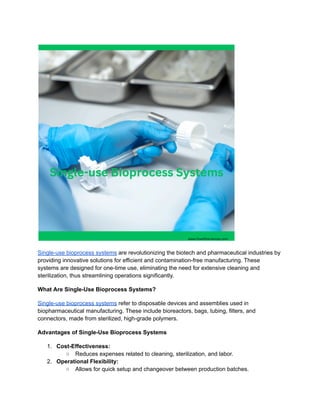
Single-use bioprocess systems are revolutionizing the biotech and pharmaceutical industries by
providing innovative solutions for efficient and contamination-free manufacturing. These
systems are designed for one-time use, eliminating the need for extensive cleaning and
sterilization, thus streamlining operations significantly.
What Are Single-Use Bioprocess Systems?
Single-use bioprocess systems refer to disposable devices and assemblies used in
biopharmaceutical manufacturing. These include bioreactors, bags, tubing, filters, and
connectors, made from sterilized, high-grade polymers.
Advantages of Single-Use Bioprocess Systems
1.​ Cost-Effectiveness:
○​ Reduces expenses related to cleaning, sterilization, and labor.
2.​ Operational Flexibility:
○​ Allows for quick setup and changeover between production batches.
3.​ Minimized Contamination Risk:
○​ Being disposable, these systems significantly lower the chance of
cross-contamination.
Applications in Bioprocessing
1.​ Pharmaceutical Manufacturing:
○​ Essential for producing monoclonal antibodies and biologics.
2.​ Vaccine Production:
○​ Critical during pandemic responses for rapid deployment.
3.​ Research and Development:
○​ Provides flexibility for small-scale and pilot studies.
Single-Use Systems vs. Traditional Stainless-Steel Systems
●​ Cleaning: Single-use systems eliminate cleaning requirements, unlike stainless steel
systems.
●​ Setup Time: They are quicker to deploy, enhancing production timelines.
●​ Flexibility: Ideal for multi-product facilities, unlike fixed stainless-steel setups.
Types of Single-Use Bioprocess Systems
1.​ Single-Use Bioreactors:
○​ For cultivating cells and microorganisms.
2.​ Mixing Systems:
○​ Used to blend media and buffers.
3.​ Storage Bags:
○​ Secure storage for intermediates and final products.
Key Materials Used in Single-Use Systems
●​ High-quality polymers such as polyethylene and polypropylene are common.
●​ These materials meet stringent regulatory standards to ensure biocompatibility and
sterility.
Challenges in Adopting Single-Use Systems
1.​ Environmental Impact:
○​ Disposal of plastics raises sustainability concerns.
2.​ Scalability:
○​ While ideal for small to mid-scale, large-scale adoption can pose challenges.
Ensuring Quality in Single-Use Systems
●​ Regulatory Standards: Compliance with FDA, EMA, and ISO guidelines is essential.
●​ Validation Testing: Rigorous testing ensures product integrity and sterility.
Sustainability and Environmental Considerations
●​ Companies are exploring recycling and biodegradable materials to mitigate
environmental concerns.
●​ Initiatives for a circular economy in bioprocessing are gaining momentum.
Trends in Single-Use Bioprocess Systems
1.​ Automation:
○​ Integration with IoT and AI for monitoring and control.
2.​ Material Advancements:
○​ Development of stronger, more sustainable polymers.
Factors to Consider When Choosing a Single-Use System
●​ Compatibility: Ensure the system suits the specific bioprocess.
●​ Vendor Support: Opt for reliable suppliers with proven track records.
Cost Analysis: Single-Use Systems vs. Reusable Systems
While the initial costs for single-use systems may seem higher, the savings on cleaning, labor,
and downtime make them a cost-effective option over time.
Case Studies of Single-Use Systems in Action
●​ COVID-19 Vaccine Production: Enabled rapid manufacturing and scalability.
●​ Monoclonal Antibody Manufacturing: Improved efficiency and reduced contamination
risks.
Future of Single-Use Bioprocess Systems
●​ Expect more advanced materials and fully automated solutions.
●​ Broader adoption across industries beyond biopharma, such as food and beverage
processing.
FAQs
1.​ What industries benefit most from single-use systems?​
Industries like pharmaceuticals, biotechnology, and food processing find the most utility.
2.​ How are single-use systems disposed of?​
They are often incinerated or processed through specialized recycling programs.
3.​ Are single-use systems cost-efficient for small-scale processes?​
Yes, they are particularly beneficial for small and pilot-scale manufacturing due to
reduced setup and cleaning costs.
4.​ What are the most common components of single-use bioprocess systems?​
Bioreactors, tubing, connectors, and storage bags are widely used components.
5.​ Can single-use systems support large-scale manufacturing?​
While more challenging, advancements in scalability are making it increasingly feasible.
Conclusion
Single-use bioprocess systems are a game-changer in modern manufacturing, offering
unmatched flexibility, cost-efficiency, and contamination control. As the technology evolves, it
will continue to redefine industry standards.
Contact Us : sales@foxxlifesciences.com
https://twitter.com/foxxlifescience
https://www.facebook.com/foxxlifesciences
https://www.pinterest.com/foxxlifesciences/
https://www.linkedin.com/company/foxxlifesciences
https://www.youtube.com/user/foxxlifesciences

Single-use Bioprocess Systems (2222).pdf

  • 1.
    Single-use bioprocess systemsare revolutionizing the biotech and pharmaceutical industries by providing innovative solutions for efficient and contamination-free manufacturing. These systems are designed for one-time use, eliminating the need for extensive cleaning and sterilization, thus streamlining operations significantly. What Are Single-Use Bioprocess Systems? Single-use bioprocess systems refer to disposable devices and assemblies used in biopharmaceutical manufacturing. These include bioreactors, bags, tubing, filters, and connectors, made from sterilized, high-grade polymers. Advantages of Single-Use Bioprocess Systems 1.​ Cost-Effectiveness: ○​ Reduces expenses related to cleaning, sterilization, and labor. 2.​ Operational Flexibility: ○​ Allows for quick setup and changeover between production batches.
  • 2.
    3.​ Minimized ContaminationRisk: ○​ Being disposable, these systems significantly lower the chance of cross-contamination. Applications in Bioprocessing 1.​ Pharmaceutical Manufacturing: ○​ Essential for producing monoclonal antibodies and biologics. 2.​ Vaccine Production: ○​ Critical during pandemic responses for rapid deployment. 3.​ Research and Development: ○​ Provides flexibility for small-scale and pilot studies. Single-Use Systems vs. Traditional Stainless-Steel Systems ●​ Cleaning: Single-use systems eliminate cleaning requirements, unlike stainless steel systems. ●​ Setup Time: They are quicker to deploy, enhancing production timelines. ●​ Flexibility: Ideal for multi-product facilities, unlike fixed stainless-steel setups. Types of Single-Use Bioprocess Systems 1.​ Single-Use Bioreactors: ○​ For cultivating cells and microorganisms. 2.​ Mixing Systems: ○​ Used to blend media and buffers. 3.​ Storage Bags: ○​ Secure storage for intermediates and final products. Key Materials Used in Single-Use Systems ●​ High-quality polymers such as polyethylene and polypropylene are common. ●​ These materials meet stringent regulatory standards to ensure biocompatibility and sterility. Challenges in Adopting Single-Use Systems 1.​ Environmental Impact: ○​ Disposal of plastics raises sustainability concerns. 2.​ Scalability: ○​ While ideal for small to mid-scale, large-scale adoption can pose challenges. Ensuring Quality in Single-Use Systems ●​ Regulatory Standards: Compliance with FDA, EMA, and ISO guidelines is essential. ●​ Validation Testing: Rigorous testing ensures product integrity and sterility.
  • 3.
    Sustainability and EnvironmentalConsiderations ●​ Companies are exploring recycling and biodegradable materials to mitigate environmental concerns. ●​ Initiatives for a circular economy in bioprocessing are gaining momentum. Trends in Single-Use Bioprocess Systems 1.​ Automation: ○​ Integration with IoT and AI for monitoring and control. 2.​ Material Advancements: ○​ Development of stronger, more sustainable polymers. Factors to Consider When Choosing a Single-Use System ●​ Compatibility: Ensure the system suits the specific bioprocess. ●​ Vendor Support: Opt for reliable suppliers with proven track records. Cost Analysis: Single-Use Systems vs. Reusable Systems While the initial costs for single-use systems may seem higher, the savings on cleaning, labor, and downtime make them a cost-effective option over time. Case Studies of Single-Use Systems in Action ●​ COVID-19 Vaccine Production: Enabled rapid manufacturing and scalability. ●​ Monoclonal Antibody Manufacturing: Improved efficiency and reduced contamination risks. Future of Single-Use Bioprocess Systems ●​ Expect more advanced materials and fully automated solutions. ●​ Broader adoption across industries beyond biopharma, such as food and beverage processing. FAQs 1.​ What industries benefit most from single-use systems?​ Industries like pharmaceuticals, biotechnology, and food processing find the most utility. 2.​ How are single-use systems disposed of?​ They are often incinerated or processed through specialized recycling programs. 3.​ Are single-use systems cost-efficient for small-scale processes?​ Yes, they are particularly beneficial for small and pilot-scale manufacturing due to reduced setup and cleaning costs. 4.​ What are the most common components of single-use bioprocess systems?​ Bioreactors, tubing, connectors, and storage bags are widely used components.
  • 4.
    5.​ Can single-usesystems support large-scale manufacturing?​ While more challenging, advancements in scalability are making it increasingly feasible. Conclusion Single-use bioprocess systems are a game-changer in modern manufacturing, offering unmatched flexibility, cost-efficiency, and contamination control. As the technology evolves, it will continue to redefine industry standards. Contact Us : sales@foxxlifesciences.com https://twitter.com/foxxlifescience https://www.facebook.com/foxxlifesciences https://www.pinterest.com/foxxlifesciences/ https://www.linkedin.com/company/foxxlifesciences https://www.youtube.com/user/foxxlifesciences