Download as PDF, PPTX
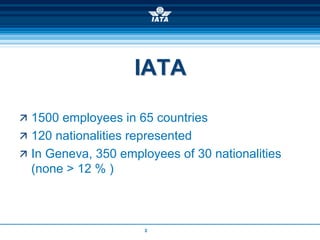
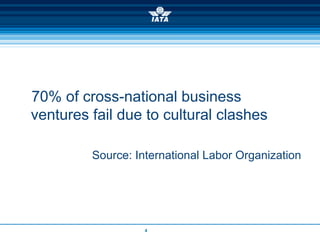
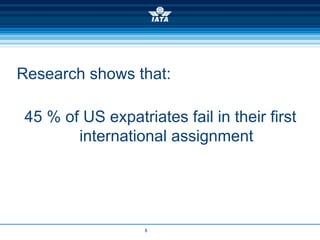
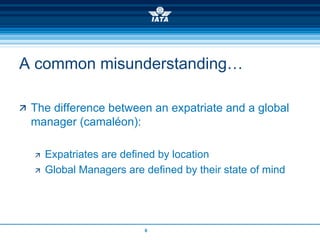
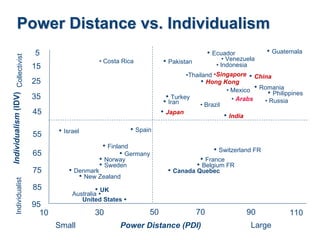
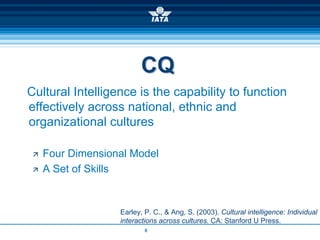
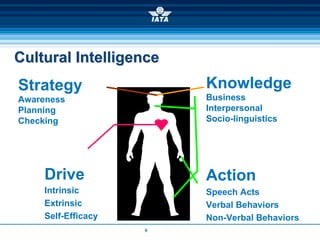

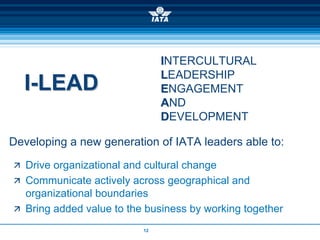
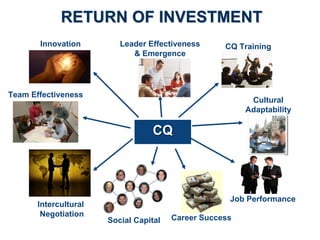
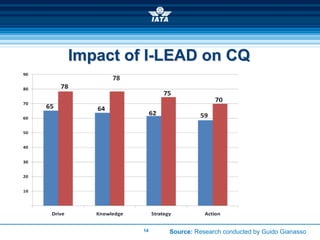

The document discusses the importance of developing culturally intelligent leaders within IATA, which employs 1,500 people across 65 countries. It highlights the high failure rate of cross-national business ventures due to cultural clashes and stresses the need for a new generation of leaders capable of driving organizational change and effective communication across cultures. Key factors in cultural intelligence include strategy, knowledge, awareness, and interpersonal skills, which are essential for organizational effectiveness and career success.


![Global competition landscape reviewv victor camlek [2.28.2012]](https://cdn.slidesharecdn.com/ss_thumbnails/globalcompetitionlandscapereviewvvictorcamlek2-28-2012-130406083303-phpapp02-thumbnail.jpg?width=640&height=640&fit=bounds)


