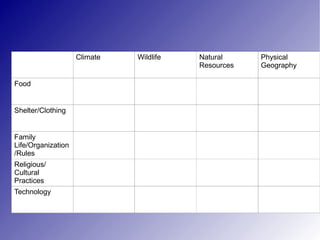
Climate Wildlife Natural Resources Physical Geography Food Shelter/Clothing Family Life/Organization/Rules Religious/ Cultural Practices Technology
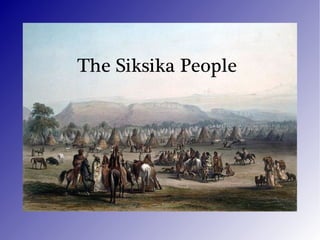
The Siksika People
 
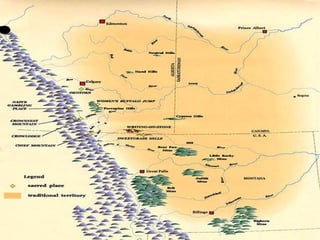
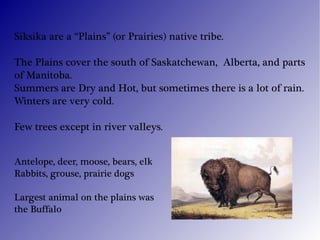
Siksika are a “Plains” (or Prairies) native tribe. The Plains cover the south of Saskatchewan,  Alberta, and parts of Manitoba. Summers are Dry and Hot, but sometimes there is a lot of rain. Winters are very cold. Few trees except in river valleys. Antelope, deer, moose, bears, elk Rabbits, grouse, prairie dogs Largest animal on the plains was the Buffalo
 
The Siksika were a member of the Blackfoot people.  Members of the Blackfoot often had relatives in the other tribes.  They were military allies. Before European contact there were 35,000 people in the Siksika tribe. The life of the Siksika  changed over the seasons.
Fall: Lots of trade, small amount of hunting, choosing camps for small groups. Winter: Camping in river valleys.  Important season for storytelling. Spring: Food is usually low.  Families gather to organize buffalo hunts. Summer: Large groups.  Lots of hunting.  Many religious ceremonies.
Spears, bows and arrows and buffalo knives. Used to harvest buffalo to feed and clothe and shelter their people. They also used the spear and the bow and arrow to fight their enemies. There are very few trees on the plains. So the Siksika had to use one animal the most to make their tools and weapons: the buffalo.
 
 
Largest gatherings were in the spring
 
 
Pemmican was an important food source Saskatoon Berries
Buffalo Hide, Feathers, Fur, Quills
Coloured bones and Shells
If a man wanted to marry a woman he needed her father’s permission. He paid the girl’s father horses and other things. Once they married the woman moved in with her husband’s family. When a husband and wife had children it was very special. Mothers named their daughters Boys received their name differently.
Boys and Girls would play together until they were 5 years old.
Old Man Napi, Stars,  Medicine Bundles,  Dances, Vision Quests
Chiefs, Warrior Societies, Bands, and Consensus.
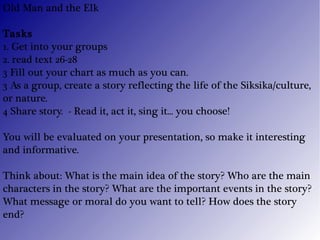
Old Man and the Elk Tasks 1. Get into your groups 2. read text 26-28 3 Fill out your chart as much as you can. 3 As a group, create a story reflecting the life of the Siksika/culture, or nature. 4 Share story.  - Read it, act it, sing it... you choose! You will be evaluated on your presentation, so make it interesting and informative. Think about: What is the main idea of the story? Who are the main characters in the story? What are the important events in the story? What message or moral do you want to tell? How does the story end?

Siksika

  • 1.
    Climate Wildlife NaturalResources Physical Geography Food Shelter/Clothing Family Life/Organization/Rules Religious/ Cultural Practices Technology
  • 2.
  • 3.
  • 4.
    Siksika are a“Plains” (or Prairies) native tribe. The Plains cover the south of Saskatchewan, Alberta, and parts of Manitoba. Summers are Dry and Hot, but sometimes there is a lot of rain. Winters are very cold. Few trees except in river valleys. Antelope, deer, moose, bears, elk Rabbits, grouse, prairie dogs Largest animal on the plains was the Buffalo
  • 5.
  • 6.
    The Siksika werea member of the Blackfoot people. Members of the Blackfoot often had relatives in the other tribes. They were military allies. Before European contact there were 35,000 people in the Siksika tribe. The life of the Siksika changed over the seasons.
  • 7.
    Fall: Lots oftrade, small amount of hunting, choosing camps for small groups. Winter: Camping in river valleys. Important season for storytelling. Spring: Food is usually low. Families gather to organize buffalo hunts. Summer: Large groups. Lots of hunting. Many religious ceremonies.
  • 8.
    Spears, bows andarrows and buffalo knives. Used to harvest buffalo to feed and clothe and shelter their people. They also used the spear and the bow and arrow to fight their enemies. There are very few trees on the plains. So the Siksika had to use one animal the most to make their tools and weapons: the buffalo.
  • 9.
  • 10.
  • 11.
  • 12.
  • 13.
  • 14.
    Pemmican was animportant food source Saskatoon Berries
  • 15.
  • 16.
  • 17.
    If a manwanted to marry a woman he needed her father’s permission. He paid the girl’s father horses and other things. Once they married the woman moved in with her husband’s family. When a husband and wife had children it was very special. Mothers named their daughters Boys received their name differently.
  • 18.
    Boys and Girlswould play together until they were 5 years old.
  • 19.
    Old Man Napi,Stars, Medicine Bundles, Dances, Vision Quests
  • 20.
    Chiefs, Warrior Societies,Bands, and Consensus.
  • 21.
    Old Man andthe Elk Tasks 1. Get into your groups 2. read text 26-28 3 Fill out your chart as much as you can. 3 As a group, create a story reflecting the life of the Siksika/culture, or nature. 4 Share story. - Read it, act it, sing it... you choose! You will be evaluated on your presentation, so make it interesting and informative. Think about: What is the main idea of the story? Who are the main characters in the story? What are the important events in the story? What message or moral do you want to tell? How does the story end?