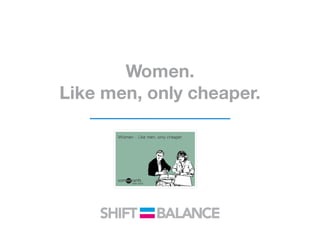
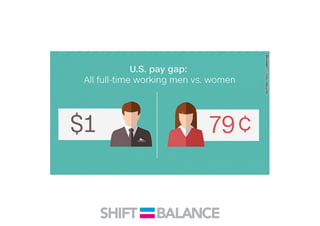
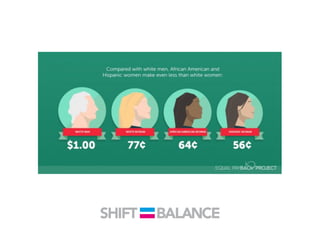
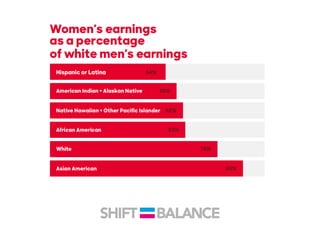
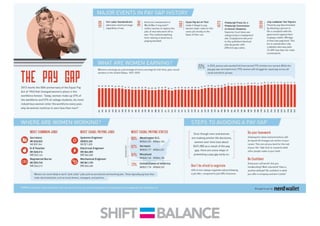
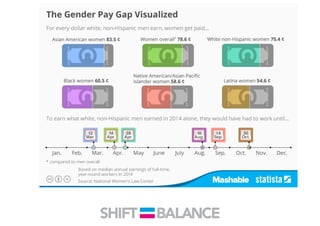
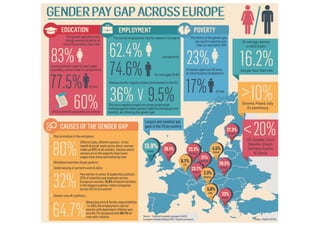
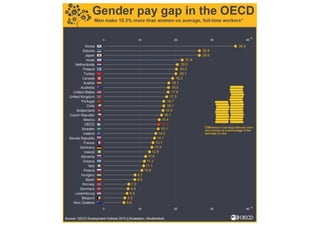
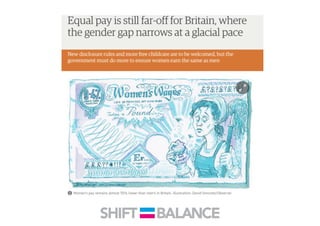
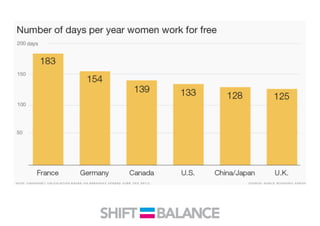
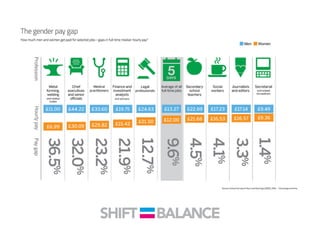
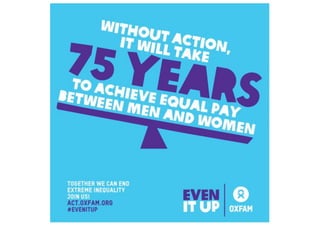
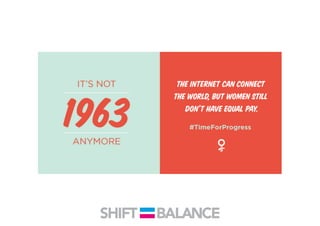
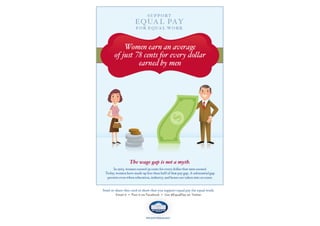
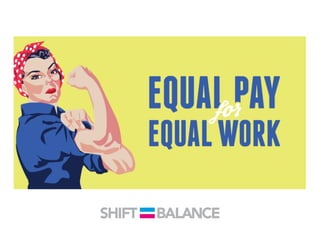
Women.
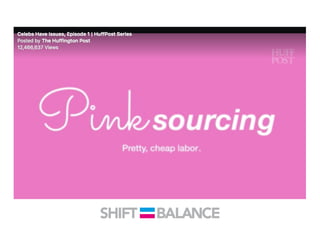
Like men, only cheaper.
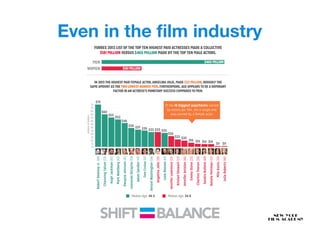
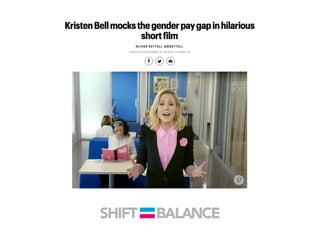
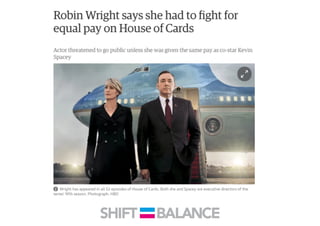
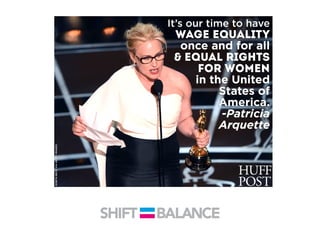
Even in the film industry
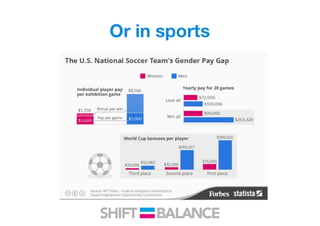
Or in sports
Which strategies exist to
balance the paycheck?
Leveraging humour
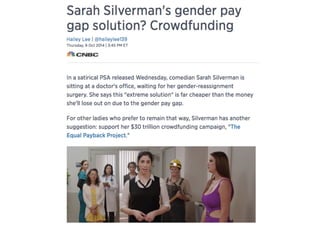
Her response to discovering that she only earns 78 percent of what her male
colleagues earn is simple: she’ll only do 78 percent of her work. Easy!
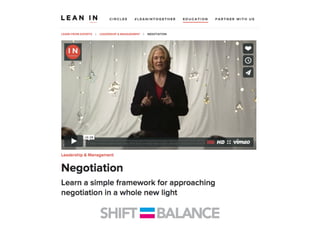
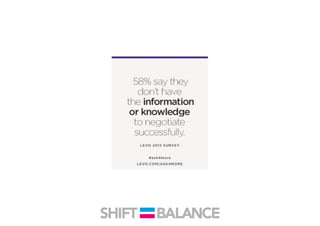
Learning to negotiate better
7
MAKE NEGOTIATING A NORM
SITUATION
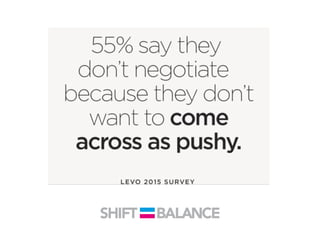
Women are less likely to negotiate for themselves than men, often because they
are concerned they’ll be viewed unfavorably.25
They are right to worry. We expect
men to advocate on their own behalf and be rewarded for their accomplishments,
so there’s little downside when they negotiate. In contrast, we expect women to be
communal and collaborative, so when they negotiate or advocate for themselves,
we often react unfavorably.
SOLUTION
Review compensation to ensure that you are paying women and men fairly and
communicate to all members in your organization—especially women—that it’s
important for them to negotiate for themselves. Research shows that women will
negotiate at comparable rates to men when given explicit permission to do so.
DID YOU KNOW?
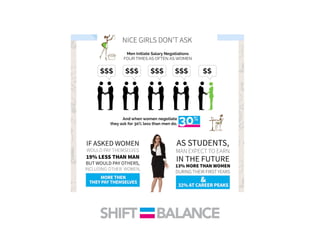
Women are four times less likely to
negotiate than men. When they do
negotiate, women typically ask for
30 percent less money.26
As a manager
SITUATION
Male performance is often overestimated compared to female performance,
starting with mothers overestimating boys’ crawling ability and underestimating
girls’.2
This bias is even more pronounced when review criteria are unclear,
making individuals more likely to rely on gut feelings and personal inferences.3
Over time, even small deviations in performance evaluation have a significant
impact on women’s careers.4
This difference in the perceived performance of
men and women also helps explains why women are hired and promoted based
on what they have already accomplished, while men are hired and promoted
based on their potential.5
SOLUTION
Awareness begets fairness. Make sure everyone on your team is aware of the
gender bias in evaluating performance. Be specific about what constitutes
excellent performance, and make sure goals are set in advance, understood,
and measurable. The clearer your criteria are, the better. Be prepared to
explain your evaluations—and expect the same of others. When people are
accountable for their decisions, they are more motivated to think through
them carefully.8
2
EVALUATE
PERFORMANCE FAIRLY
DID YOU KNOW?
Gender-blind studies consistently
show that removing gender from
decisions improves women’s
chances of success. One study
found that replacing a woman’s
name with a man’s name on a
résumé improved the odds of
getting hired by 61 percent.6
In another example, when a
major U.S. orchestra instituted
blind auditions, the odds of
women making it past the first
round improved by 50 percent.7
Transparency
Speak up!
Symbolic acts
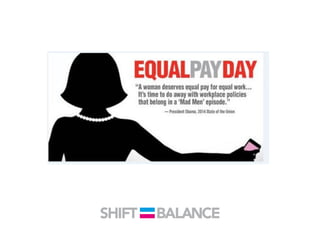
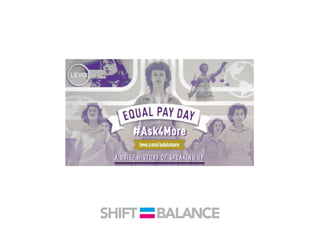
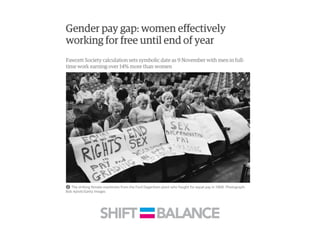
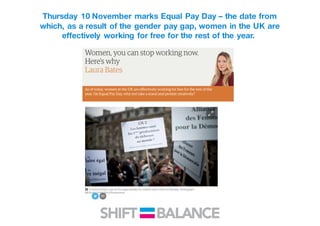
Thursday 10 November marks Equal Pay Day – the date from
which, as a result of the gender pay gap, women in the UK are
effectively working for free for the rest of the year.
Leverage the community
Urge your elected officials to act
on Equal Pay Day
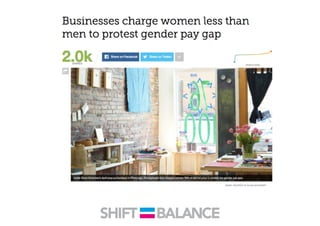
• Host an “unequal” bake sale or (un)happy
hour where men will pay full price for the
goods while women get a 21 percent
discount (one percent for each cent of the
gender pay gap).
• Launch an equal pay media blitz. Write and
submit letters to the editor and op-eds to a
variety of publications in your state to gain
broad coverage on Equal Pay Day.
• Bring salary negotiations workshops to your
community/campus.
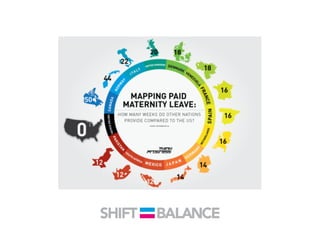
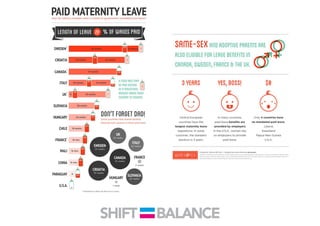
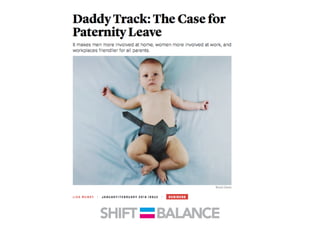
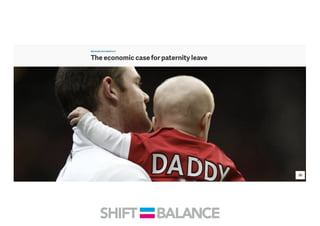
Facilitate maternity AND
paternity leave
How did Sweden paved the way
• Things didn’t change after Sweden scrapped
maternity leave in 1974 replaced it with an
overall allotment of paid parental leave that
could be shared however the mother and
father chose.
• Fathers who took time off were derisively
nicknamed velourman or velourpappa and
disdained for being unmanly.
• In 1974, only 562 dads claimed parental
leave—about 0.5%.
Good for children, good for
parents, good for the economy
• Since women’s pay was at that time typically much lower than their
husbands’, couples typically opted for the mother to stay at home with the
child. But that perpetuated the pay gap, as women continued to be
“mommy-tracked,” penalized for the possibility that they’d bear a child.
Companies entrenched this divide by looking down on fathers who did take
parental leave.
• So in 1995, the government rolled out “daddy leave.” It didn’t make
paternity leave mandatory, but couples lost a month of subsidized leave if
the father took less than a month off. That meant he could no longer
transfer all of his leave to his wife. The new policy also compensated
fathers and mothers at 90% of their wages, making it harder for fathers to
turn down.
• And it worked. Within a few years, more than four out of every five fathers
stayed at home. And when the government added another month to
“daddy leave” in 2002, the amount of time they took off more than doubled.
The government also upped the reimbursement ceiling to make the
package more attractive to high-earning men.
• One reason this works is that Sweden pays generous benefits for a
relatively short period of leave.
Losing workers to motherhood
isn’t so great for the bottom line.
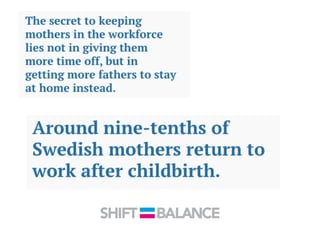
• The longer the leave for fathers, the less
time women take out from the job
market.
• Strong leave policies reduce turnover and
foster morale for employers and support
workforce retention for employees.
What do YOU do to shift the
paycheck balance?

Shifting the paygap

  • 1.
  • 15.
    Even in thefilm industry
  • 16.
  • 22.
    Which strategies existto balance the paycheck?
  • 23.
  • 28.
    Her response todiscovering that she only earns 78 percent of what her male colleagues earn is simple: she’ll only do 78 percent of her work. Easy!
  • 29.
  • 39.
    7 MAKE NEGOTIATING ANORM SITUATION Women are less likely to negotiate for themselves than men, often because they are concerned they’ll be viewed unfavorably.25 They are right to worry. We expect men to advocate on their own behalf and be rewarded for their accomplishments, so there’s little downside when they negotiate. In contrast, we expect women to be communal and collaborative, so when they negotiate or advocate for themselves, we often react unfavorably. SOLUTION Review compensation to ensure that you are paying women and men fairly and communicate to all members in your organization—especially women—that it’s important for them to negotiate for themselves. Research shows that women will negotiate at comparable rates to men when given explicit permission to do so. DID YOU KNOW? Women are four times less likely to negotiate than men. When they do negotiate, women typically ask for 30 percent less money.26 As a manager
  • 40.
    SITUATION Male performance isoften overestimated compared to female performance, starting with mothers overestimating boys’ crawling ability and underestimating girls’.2 This bias is even more pronounced when review criteria are unclear, making individuals more likely to rely on gut feelings and personal inferences.3 Over time, even small deviations in performance evaluation have a significant impact on women’s careers.4 This difference in the perceived performance of men and women also helps explains why women are hired and promoted based on what they have already accomplished, while men are hired and promoted based on their potential.5 SOLUTION Awareness begets fairness. Make sure everyone on your team is aware of the gender bias in evaluating performance. Be specific about what constitutes excellent performance, and make sure goals are set in advance, understood, and measurable. The clearer your criteria are, the better. Be prepared to explain your evaluations—and expect the same of others. When people are accountable for their decisions, they are more motivated to think through them carefully.8 2 EVALUATE PERFORMANCE FAIRLY DID YOU KNOW? Gender-blind studies consistently show that removing gender from decisions improves women’s chances of success. One study found that replacing a woman’s name with a man’s name on a résumé improved the odds of getting hired by 61 percent.6 In another example, when a major U.S. orchestra instituted blind auditions, the odds of women making it past the first round improved by 50 percent.7
  • 42.
  • 49.
  • 54.
  • 57.
    Thursday 10 Novembermarks Equal Pay Day – the date from which, as a result of the gender pay gap, women in the UK are effectively working for free for the rest of the year.
  • 58.
  • 59.
    Urge your electedofficials to act on Equal Pay Day • Host an “unequal” bake sale or (un)happy hour where men will pay full price for the goods while women get a 21 percent discount (one percent for each cent of the gender pay gap). • Launch an equal pay media blitz. Write and submit letters to the editor and op-eds to a variety of publications in your state to gain broad coverage on Equal Pay Day. • Bring salary negotiations workshops to your community/campus.
  • 60.
  • 68.
    How did Swedenpaved the way • Things didn’t change after Sweden scrapped maternity leave in 1974 replaced it with an overall allotment of paid parental leave that could be shared however the mother and father chose. • Fathers who took time off were derisively nicknamed velourman or velourpappa and disdained for being unmanly. • In 1974, only 562 dads claimed parental leave—about 0.5%.
  • 69.
    Good for children,good for parents, good for the economy • Since women’s pay was at that time typically much lower than their husbands’, couples typically opted for the mother to stay at home with the child. But that perpetuated the pay gap, as women continued to be “mommy-tracked,” penalized for the possibility that they’d bear a child. Companies entrenched this divide by looking down on fathers who did take parental leave. • So in 1995, the government rolled out “daddy leave.” It didn’t make paternity leave mandatory, but couples lost a month of subsidized leave if the father took less than a month off. That meant he could no longer transfer all of his leave to his wife. The new policy also compensated fathers and mothers at 90% of their wages, making it harder for fathers to turn down. • And it worked. Within a few years, more than four out of every five fathers stayed at home. And when the government added another month to “daddy leave” in 2002, the amount of time they took off more than doubled. The government also upped the reimbursement ceiling to make the package more attractive to high-earning men. • One reason this works is that Sweden pays generous benefits for a relatively short period of leave.
  • 70.
    Losing workers tomotherhood isn’t so great for the bottom line. • The longer the leave for fathers, the less time women take out from the job market. • Strong leave policies reduce turnover and foster morale for employers and support workforce retention for employees.
  • 72.
    What do YOUdo to shift the paycheck balance?