How open is open enough?
A philosophy of cultural commons
for the cultural heritage sector
Eva Van Passel
iMinds-SMIT, Vrije Universiteit Brussel
#sharecare15
#righttoremix
Times of change
Image CC BY-NC-SA 2.0
by William Cho on Flickr
Users, makers, online experience seekers
Digital access: how to get involved?!
Often great challenges for cultural institutions
My background: research
Local digitisation and digital access projects
Research in the Europeana context
A small-scale research project with an artist
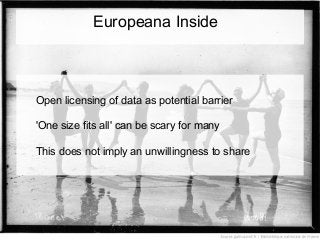
Europeana Inside
Open licensing of data as potential barrier
'One size fits all' can be scary for many
This does not imply an unwillingness to share
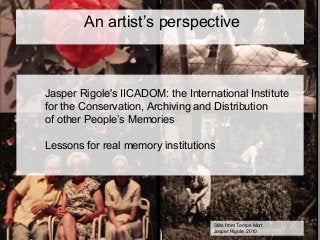
An artist’s perspective
Jasper Rigole's IICADOM: the International Institute
for the Conservation, Archiving and Distribution
of other People’s Memories
Lessons for real memory institutions
Stills from Temps Mort
Jasper Rigole, 2010
Creative approaches to openness
Attitudes to risk
Interacting with external platforms
Fostering creative reuse
(Van Passel & Rigole, 2014)
Arts and heritage: ad hoc challenges
“There has to be a better way.”
Towards a framework for practice and policy
Why a philosophy of commons?
“Towards a Cultural Commons Approach as a
Framework for Cultural Policy and Practice
in a Network Society”.
Paper with the Agency for Arts & Heritage,
presented at a conference on Knowledge Commons
(van der Linden, Van Passel & Driesen, 2014)
Working with policy makers
The intrinsic value of culture
Users' right to sustainable access
A varied and inclusive offer
Underlying principles
Constructed cultural commons?
Resources and community
Goals and objectives
Degrees of openness
Governance
(Madison, Frischmann & Strandburg, 2010)
… and in practice?
Beware of the black hole of the 20th
century
Michael P. Edson: “Think big, start small, move fast!”
Open up what you can, as soon as you can
Towards a cultural commons for Europe
Thank you!
eva.van.passel@vub.ac.be
(References)
Madison, M. J., Frischmann, B. M., Strandburg, K. J. (2010). Constructing Commons in the Cultural
Environment. Cornell Law Review, 95 (4), 657-709.
van der Linden, H., Van Passel, E., & Driesen, L. (2014). Towards a Cultural Commons Approach as a
Framework for Cultural Policy and Practice in a Network Society. Paper presented at the 2nd Thematic
Conference on Knowledge Commons, 5-6 September 2014, New York, USA.
Van Passel, E., & Rigole, J. (2014). Fictional Institutions and Institutional Frictions: Creative Approaches to
Open GLAMs. Digital Creativity, Volume 25, Issue 3, 203-211.
DOI: 10.1080/14626268.2014.904363
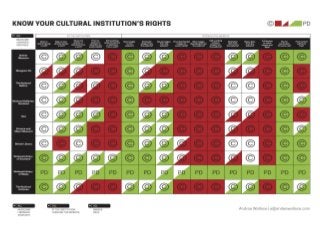
Slide “Know your cultural institutions' rights” by Andrea Wallace, a@andeewallace.com
(Photographs by Eva Van Passel, unless otherwise noted)

Sharing is Caring 2015 - Eva Van Passel

  • 1.
    How open isopen enough? A philosophy of cultural commons for the cultural heritage sector Eva Van Passel iMinds-SMIT, Vrije Universiteit Brussel #sharecare15 #righttoremix
  • 2.
    Times of change ImageCC BY-NC-SA 2.0 by William Cho on Flickr Users, makers, online experience seekers Digital access: how to get involved?! Often great challenges for cultural institutions
  • 3.
    My background: research Localdigitisation and digital access projects Research in the Europeana context A small-scale research project with an artist
  • 4.
    Europeana Inside Open licensingof data as potential barrier 'One size fits all' can be scary for many This does not imply an unwillingness to share
  • 5.
    An artist’s perspective JasperRigole's IICADOM: the International Institute for the Conservation, Archiving and Distribution of other People’s Memories Lessons for real memory institutions Stills from Temps Mort Jasper Rigole, 2010
  • 6.
    Creative approaches toopenness Attitudes to risk Interacting with external platforms Fostering creative reuse (Van Passel & Rigole, 2014)
  • 7.
    Arts and heritage:ad hoc challenges “There has to be a better way.” Towards a framework for practice and policy Why a philosophy of commons?
  • 9.
    “Towards a CulturalCommons Approach as a Framework for Cultural Policy and Practice in a Network Society”. Paper with the Agency for Arts & Heritage, presented at a conference on Knowledge Commons (van der Linden, Van Passel & Driesen, 2014) Working with policy makers
  • 10.
    The intrinsic valueof culture Users' right to sustainable access A varied and inclusive offer Underlying principles
  • 11.
    Constructed cultural commons? Resourcesand community Goals and objectives Degrees of openness Governance (Madison, Frischmann & Strandburg, 2010)
  • 12.
    … and inpractice? Beware of the black hole of the 20th century Michael P. Edson: “Think big, start small, move fast!” Open up what you can, as soon as you can Towards a cultural commons for Europe
  • 13.
  • 14.
    (References) Madison, M. J.,Frischmann, B. M., Strandburg, K. J. (2010). Constructing Commons in the Cultural Environment. Cornell Law Review, 95 (4), 657-709. van der Linden, H., Van Passel, E., & Driesen, L. (2014). Towards a Cultural Commons Approach as a Framework for Cultural Policy and Practice in a Network Society. Paper presented at the 2nd Thematic Conference on Knowledge Commons, 5-6 September 2014, New York, USA. Van Passel, E., & Rigole, J. (2014). Fictional Institutions and Institutional Frictions: Creative Approaches to Open GLAMs. Digital Creativity, Volume 25, Issue 3, 203-211. DOI: 10.1080/14626268.2014.904363 Slide “Know your cultural institutions' rights” by Andrea Wallace, a@andeewallace.com (Photographs by Eva Van Passel, unless otherwise noted)