Directed by Heather Tom
Written by Zach Bandler
Produced by Victor Mazzone
Cinematography by Jon Keng
Edited by Jennifer Tiexiera
Starring Vince Nappo
SUMMARY:
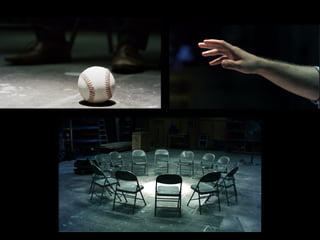
In a story that confronts the opiate epidemic head-on, one
man recounts his tale of addiction, recovery, family and
regret during a Narcotics Anonymous meeting that is
anything but ordinary.
ABOUT THE FILM:
The film directorial debut of five-time Emmy Award-
winning actress Heather Tom (The Bold and the Beautiful),
Serenity is a story of magical realism laying bare the
human cost of the present opiate epidemic in America. In
a moving performance from Vince Nappo (Amazon’s
upcoming The Last Tycoon, Showtime’s upcoming I’m
Dying Up Here, and CW’s Reign), one man recounts his
tale of addiction, recovery and family at a Narcotics
Anonymous meeting that is anything but ordinary. As he
shares with the group, the consequences of his using are
relived before his eyes, forcing him to face his past
relentlessly, on the long road toward forgiving himself and
staying clean.
TITLE: Serenity
PRODUCTION COMPANY: Wind Chimes Productions
YEAR OF PRODUCTION: 2016
COUNTRY OF PRODUCTION: United States
GENRE: Drama
LANGUAGE: English
RUNNING TIME: 16 minutes 34 seconds
PICTURE: Color
ASPECT RATIO: 2.40:1
SHOOTING FORMAT: RED
EXHIBITION FORMAT: DCP, MOV, Blu-ray
SOUND: Stereo
PUBLICITY CONTACT: Lori Jonas
Jonas Public Relations
1327 Ocean Avenue, Suite F
Santa Monica, CA 90401
310-656-3355
lori@jonaspr.com
FILM INFORMATION
D I R E C T O R S TA T E M E N T
When I first started working on Serenity, I knew this was
more than just a story about one individual’s struggle with
addiction. Families and communities across this country
are being rocked by opioid abuse. It can start in just one
medicine cabinet and ripple outward, destroying
insidiously, progressively and indiscriminately. It is urban
and suburban, it is without race, without age, without
sexual or gender orientation, without economic prejudice.
And it can happen to anyone we love — or to any one of
us.
On a personal level, I have a three-year-old son and, while
I would not always use this word to describe him, in many
ways he is perfect. Not perfect in that he’ll never make a
mistake in his life, but perfect in his newness on this earth.
The way he experiences the world, it’s all a series of
“firsts.” And each one affects that perfection. Changes it.
Molds him into who he will become. And as a mother who
loves him more than life itself, it terrifies me to think that
one pill, one hit — one imperfect choice — could shatter
him forever.
Ultimately though, this film is a story of forgiveness.
Through it we can find redemption, closure and peace. But
complete absolution doesn't come from the forgiveness of
others. Until we are able to forgive ourselves, serenity will
always remain out of reach.
— Heather Tom
F I L M S T I L L S &
P R O D U C T I O N S H O T S
Vince Nappo in Serenity.
Sailor Schmidt in Serenity.
Zane Achor in Serenity.
Tanner Borowitz in Serenity.
Blake Clendenin in Serenity.
Left to right: Vince Nappo, Heather Tom (director), Jon Keng (director of photography)
and Blake Clendenin.
Zach Bandler (writer) and Heather Tom (director).
Victor Mazzone (producer) and Heather Tom (director).
Director Heather Tom with actor (and son) Zane Achor.
Left to right: Heather Tom, Megan Rose Greene (first assistant director) and Jean Ansolabehere (script supervisor).
Heather Tom and Jon Keng (director of photography).
I N T E R V I E W S
H E AT H E R T O M
D I R E C T O R
This is your first film as a director. How did you become passionate about working behind the camera?
It was something I felt was the next step in my career, and I just wanted to learn everything I could about it. So, about a year and a half ago, I started shadowing
on my show, “The Bold and the Beautiful.” Part of what I love about directing, and I think one of my strengths, is communicating with actors. It’s really a joy for
me, since I come from acting myself.
So, how did Serenity come to be?
I knew I wanted to branch out from television and really test myself with a film. A short film seemed like it would be the best place to start.
What drew you to the subject matter?
Several reasons, really. Opioid abuse, and consequently heroin abuse, is an epidemic in our country. The story felt very timely and important — socially,
personally and even politically. I have a three-year-old son and, with everything going on and how easy-access opiates are, I can’t help but look at him often
and think, “What if he makes that one bad choice?” This kind of tragedy is a mother’s greatest fear for her child, in my opinion. A wasted life. And it’s the kind of
tragedy that happens every day to people. To families. I think it’s an important story to tell because of that.
Who is your lead actor?
Vince Nappo. He’s a friend of mine, but that’s not why I cast him. I cast him because he’s brilliant. He’s really breaking out in TV right now, but his background is
in the theater, which was a necessity for a part like this. Only someone from the theater can deliver a ten-page monologue with that kind of depth. And he did a
ton of work on the character in the months leading up to production. He was so prepared when he came to set that we could shoot two to three takes and never
worry about falling behind with our crazy schedule. I seriously couldn’t have done this film without him in the role.
And who is the writer?
I’ve known Zach Bandler, the writer, for a very long time. He’s a young writer, but he has an amazing perspective that he brings to his work. When I approached
him to make a film, I knew that whatever he came up with and brought me to shoot would have a lot of interesting angles; would be something powerful and
different. His writing always has a humanity to it that I love and, considering the subject matter, that is very important.
What were some of the challenges making this film? How did it feel as a first-time director?
A bit nerve-wracking! [laughs] Thankfully, I had an amazing crew and Jon Keng, my director of photography, is seriously kind of a genius. This was a young
crew for the most part, a lot of them out there hustling and starting their careers, so I feel like I was lucky to have this immense amount of talent in such a small
space. Also, it was 110 degrees on the set, no joke. We were shooting in a warehouse, downtown in LA during a heat wave with no air conditioning in the
building, and the entire city was literally on fire. But no one complained ever, everyone moved through it and I think we came up with a really beautiful piece.
What would you like audiences to take away from the film?
I’ve shown it to a few trusted mentors and colleagues and the take-away always seems to be a little different. But one thing that is always the same is that it
sticks with you. You think about it well afterward. If I can accomplish that, if people can’t stop thinking about the film and what it has to say after it’s over, then it
might allow viewers to look at their life choices. And hopefully, it might compel them into some kind of action. This is not an “other people” problem, this is all of
our problem. And if our film contributes even some sort of small influence that changes people’s attitudes toward this epidemic, then I’ve done my job.
So what’s happening next with it, now that it’s completed?
We are doing the “festival circuit dance” right now, and hopefully we’ll get some attention on the film. But I also see this as a way to possibly partner up with
organizations that deal with opiate addiction. This isn’t just a film about something in the headlines right now. This is happening to people in our lives, and I want
to do something about it.
And what’s next for you?
More of this! I love my job, and I’m so grateful for my job, but directing film is something that speaks to me in a very different way. I’m really excited to see
where it leads me.
Z A C H B A N D L E R
W R I T E R
What was your inspiration for the story?
“Serenity" came from a combination of inspirations, as most of my work does. My family, like many, has seen its fair share of struggles and
tragedy from opiate addiction, and I come from a small town in Southern Oregon where the heroin epidemic has exploded. The original
version of the script actually started as a scene from a pilot I was developing. This supporting character told his story in an N.A. meeting, but
the series took a left turn and the character ended up being cut. All this stuff I'd written for him never made it in, but I just felt so strongly
about the scene that I decided to hold onto it for something down the line.
What made you decide to turn it into a film?
Well, I didn’t really know it was going to be a film until Heather approached me to work on something together. We’ve known each other a
long, long time — since I was a kid — and when she decided she wanted to take the flying leap into directing movies, she asked if I had
anything. I pulled this one out of the trunk for her. Heather is an activist in many ways, politically and socially, so she was very passionate
about the story in response to what’s going on with this crazy drug epidemic. She had some really interesting visual ideas about tone and
style, and wanted to use magical realism on screen with special effects — that was a real treat for me to play with as a writer.
What is your process like when you write?
I’m a research machine. It’s one of my favorite parts of creating a story. For “Serenity,” I knew that, if we were going to tackle the opiate
crisis, we’d better get it right. Which meant the whole script changed, pretty much top to bottom. I watched documentaries, read articles, dug
through news pieces, anything I could get my hands on. And all that was great, but I really wanted to get out on the front line and see it
myself. So, I actually went home to Oregon where, thankfully, I have an old family friend who is a public defender up in the town where I
grew up. He and his wife were willing to show me what things are like for people and the community. I spent a few days witnessing the drug
court system, I sat in on cases and talked to the judge in chambers. She is one tough lady, but so passionate about helping people recover
and put their lives back together. She really gave me hope. I also talked with treatment counselors and, most importantly, recovering addicts
— some of whom were so giving of their honesty about what had happened to them. They are just constantly putting one foot in front of the
other. Hopefully, all that time spent with real people made its way into the dialogue and Dane’s story on screen.
What do you want people to gain from seeing the film?
Well, that’s interesting because I feel like, when you’re dealing with social issues in narrative, you walk a very fine line. This is protest art,
obviously, but that can get so preachy if you don’t execute it right. It can be a huge turn-off for audiences, being told what to think and how to
feel about something. The best protest art hides its plea for change or action or whatever in a real, human story. We want to see people
being people, having experiences, not just acting as a bullhorn for a writer or director who has something they want to say. And I hope
people don’t see Dane as a bullhorn. He’s a person, he’s lived this life, and I want viewers to be moved enough on their own to take that life
home with them. Whether they want to do something about the larger problem is truly up to them.
What’s next for you in your career?
I’ve got a feature I’m very excited about, called “The Lightkeeper.” I’m also a director, and it will be my first full feature. Right now, I’m in the
process of putting a proof-of-concept short for it into production, with the goal being to attract investors for the large version. The story is kind
of a contemporary reimagining of Don Quixote, between a young woman veteran and an old, reclusive author suffering from vascular
dementia. The script is actually doing pretty well out there in “screenplay competition-land.” It’s nice validation to know that places like
Sundance, Austin, Slamdance and others are into your work. And you know, hopefully they’ll be as into the actual film when I make it as they
are the script. [laughs]
V I N C E N A P P O
L E A D A C T O R
How did this project find you?
I’m friends with both Zach Bandler, the writer, and Heather Tom. I’ve been involved with them before on projects — Zach,
who is a fantastic writer, on one of his TV projects — and I’ve always admired Heather’s career as an actress. So, when
they both approached me about doing this film, it just seemed like a perfect opportunity to do more work with them both.
What drew you to the main character as an actor?
The story really drew me to the character. I feel like sometimes in film and TV, we get so little of a character’s story in the
end. And Dane is sort of an every day person. An “everyman.” He’s a great representation of the fact that this epidemic
doesn’t have a bias. People that, you know, ten years ago wouldn’t have had this problem are now falling into it.
What kind of preparation was needed for a role like this?
I watched a lot of documentaries dealing with opiate and heroin addiction, and I did a fair amount of reading on the
subject as well. Dane’s story is already so rich in the script that it actually made things sort of easy to just delve in and
start creating.
What were the challenges for you as an actor with this part?
I mean, the entire film is a monologue. A very long monologue, and a pretty massive journey along the way. So, just with
the nature of filming and how broken up it can be — the time it can take between camera shots and set-ups, shooting out
of sequence — you just have to be able to pick back up with the journey. And as this story gets deeper into the woods,
that just becomes a little trickier. It was a challenge for me to not get into my head too much about the whole process,
because there was no time for that. Especially once we got onto the set. It was fast and furious and I was in front of
camera for almost all of it.
What do you hope audiences will gain from seeing the film?
I hope that they’ll be able to relate to my character. To empathize with him and others like him, whether they’ve struggled
with addiction themselves or not. Like I said, I feel like ten, fifteen, twenty years ago, someone addicted to heroin was
looked upon as a “bad person.” By that, I mean it was considered an extremely taboo issue. It wasn’t something that
penetrated everyone’s circle of life. Not the case any more. It seems like we all have someone, or several people in our
life, who are waging war with this addiction. It isn’t just random. This is happening.
So, what’s next for you in your career?
I’m doing the Amazon original series “The Last Tycoon,” which takes place in 1930s Hollywood at one of the major film
studios. I play Landon Aimes, one of the staff writers at the studio. I start filming in January, which I’m really looking
forward to.
V I C T O R M A Z Z O N E
P R O D U C E R
What drew you to this film?
First and foremost, because of the writer Zach Bandler. Having worked with him previously, I knew the high quality of his scripts. He
subsequently introduced me to Heather, and it was an exciting opportunity to take another one of his pieces and create something
evocative.
What kind of stories do you like to find as a producer?
I’m drawn to stories that showcase characters not typically seen in mainstream TV or film. Characters that are, in some way,
unconventional or extraordinary. I like to work on stories that inspire the viewer to reflect and discuss long after they’re over.
How did you put the team together?
Assembly of the crew was seamless. Everyone we wanted to work with, our first picks in terms of department heads, we were able to
get. Many I’d worked with before and those I hadn’t were highly recommend from colleagues. And the relationship between the
creatives, from my perspective as an overseer, was a dream. We certainly had some obstacles during production, but everything leading
up to that was pretty smooth sailing. I know Zach and Heather have a great relationship and were able to make changes and choices
together, the same with Heather and our DP, Jon Keng. They had a similar vision and a fluid, conversational style together.
What were the obstacles during production?
Well, there are always those unforeseen obstacles you can only do your best to prepare for —and we certainly had all of them! [laughs]
Equipment failures, over 100-degree heat in this downtown warehouse we were shooting in. Also, the city was quite literally burning
down around us. Huge forest fires up north raining ash on the city and a structure fire less than a mile away in MacArthur Park. Oh, and
we had a baby that we couldn’t for the life of us shoot out in one day. Thankfully, the parents were gracious enough to do another one,
on the mother’s birthday of all days. Despite it all, I think it goes back to assembling a crew that was as committed as this one. Because
they were so dedicated, we were able to problem solve creatively and successfully, and I think that shows in the film.
What was it like working with this director?
Working with Heather was great. I think part of her passionate energy coming into it was that this was the first project she was doing on
her own. She really wanted to expand to this facet of her career, and was ready to hit the ground running. It made my job easier because
she just didn’t want to cut any corners that would affect quality. I think we invested in the right places to get the highest production value
for the budget we agreed on. She had a very clear vision of what she wanted to do and knew what kind of film she was setting out to
make.
What do you hope audiences will gain from seeing this film?
I think a film like this — shot, written and acted so beautifully — tells a personal, compelling story that hopefully will bring more empathy
to the many faces of opioid addiction. There’s a lot of room for more conversation on the issue.
What's next for you in your own career?
Oddly, or not-so-oddly enough I guess [laughs], I’m signed on for another Zach Bandler project coming up. It’s a short-to-feature called
“The Lightkeeper,” and the script is getting a lot attention in screenplay competitions right now. So, that short will go into production early
next year. I’m also navigating the final stages of post production on a feature that I produced last year. It’s a 1950s, stylized Hollywood
noir that should be coming out in the festival circuit during the middle of 2017.
B I O G R A P H I E S
HEATHER TOM — Director
Five-time Emmy® Award winning actress Heather Tom currently stars as Katie Logan on CBS’s The Bold and the Beautiful.
Prior to joining The Bold and the Beautiful, Heather spent three years starring on ABC’s One Life to Live, and 13 years as
the tempestuous Victoria Newman on CBS’ The Young and the Restless.
Additional television credits include recurring roles on Ugly Betty, The Wedding Bells, and guest appearances on Criminal
Minds, Rizzoli & Isles, The Mentalist, Monk, Law & Order: SVU, and Who’s the Boss. She has appeared on numerous award
shows, talk shows and game shows, including The Talk, Hollywood Squares, co-hosting twice on Barbara Walters’ The View,
and five appearances on Politically Incorrect with Bill Maher.
In 2012, Heather Tom set a record as the only actor in television history to win an Emmy® in all three Performer categories:
Younger, Supporting and Lead Actress, according to the National Academy of Television Arts and Sciences. Heather also
holds the record for being the most Emmy® Award Nominated Actress under the age of 40. In 2013, Heather reached
another career milestone with Variety's announcement of the “Daytime TV Impact Honorees” listing the innovators from
daytime TV. Heather was the only actor listed.
In 2004, she made her Broadway debut in the Mark Medoff (Children of a Lesser God) play, Prymate, a role for which she
became fluent in sign language. In the Los Angeles production, she received a Robbie Theatre LA Award Nomination for
Best Actress. Other New York theatre credits include Happy Hour, Electra with Marissa Tomei, Kathleen Chalfont, David
Strathairn and Laila Robins, Moonchild and Hecuba.
Heather has a passion for politics and is very politically active. In 2008, she worked on both Hillary Clinton’s and Obama’s
campaigns. In 2004, Heather was a featured speaker at the Democratic National Convention kick-off event, sponsored by
Planned Parenthood and the Feminist Majority. Heather has also worked with "She Votes" and “Rock the Vote” to get
younger voters out to the polls on Election Day.
Her interests now having turned strongly toward directing film and television, she directed two episode’s of The Bold and
the Beautiful earlier this year. Her short-subject passion project, Serenity, will mark her directorial debut in film.
ZACH BANDLER — Writer
Zach Bandler is a Los Angeles-based filmmaker originally from Medford, Oregon. He began his career in the
theatre, where met his television writing partner, Max Spitulnik performing together Off-Broadway. They penned
their initial work in the dressing room between shows. Their first pilot Hollywood and Vine, a one-hour drama about
the staff of a 1950s sitcom hit by the Hollywood Blacklist, achieved a number of accolades and awards from
screenwriting competitions, including Austin Film Festival and the PAGE Awards. The script was also given an
industry presentation at the American Film Institute, starring Jason Alexander and Michael Urie among the lead
roles, directed by Mark Polish (Twin Falls Idaho, Northfork, Independent Spirit Award for Jackpot).
Parallel to developing television, Zach recently made his directorial debut with The Stairs, a short film exploring the
basic human need for connection between an older man and the male escort he hires on Christmas Eve. The film
stars two-time Tony Award nominee Anthony Heald (Silence of the Lambs, Red Dragon, Boston Public) and is
currently on the festival circuit, having already won the Audience Award for Best Short Film at the Ashland
Independent Film Festival, Special Jury Prize for Best Film at the River’s Edge International Film Festival and
nominated for the Jury Prize at the Palm Beach International Film Festival.
Upcoming projects include his first full-length feature film, The Lightkeeper, a contemporary reimagining of Don
Quixote between a young woman veteran and an old author suffering from dementia. The script was a Semifinalist
in both the Slamdance Film Festival and ScreenCraft Screenwriting Competitions and was a Quarterfinalist at Austin
Film Festival. Zach is also directing music videos, as well as developing a story about Oaxacan migrant farmworkers
in Washington State, and their struggles in the American farm industry.
He is represented as a writer and director by Rise Management in LA, and is a graduate from Northwestern
University.
VINCE NAPPO — Dane
Originally from Michigan, Vince Nappo is a graduate of Western Washington University in
Bellingham, Washington, the Royal Welsh College of Music & Drama in Cardiff, Wales, and the
National Theatre Conservatory in Denver, Colorado. Soon after moving to New York, he booked the
role of “Lorenzo” opposite Academy Award-winner F. Murray Abraham in Theatre for a New
Audience’s production of The Merchant Of Venice, which then transferred to the Royal Shakespeare
Company in London. He has had a lengthy stage career, both in New York and regionally, including a
star turn in the Broadway National Tour of Million Dollar Quartet.
Vince can soon be seen recurring on Showtime’s upcoming series I’m Dying Up Here, as well as on
Amazon’s upcoming The Last Tycoon, created by Academy Award-nominated writer/director Billy
Ray (Captain Phillips). He has recurred on CBS’ NCIS, the CW’s Reign, ABC’s Red Widow, and has
made guest appearances on Unforgettable and Castle. Vince’s film credits include Friends with Kids,
alongside Jennifer Westfieldt, Kristen Wiig and Maya Rudolph. He is featured in Tony Scott's Killing
Lincoln and plays a lead in the upcoming feature film Sound Wave.
VICTOR MAZZONE — Producer
Victor Mazzone is a Los Angeles-based producer and performing artist originally from Paducah,
Kentucky. He is a graduate of Northwestern University and performs both on screen and in live
theatre.
Upon completion of UCLA’s Program in Producing in 2015, Victor produced The Stairs, a short film
starring Anthony Heald (Silence of the Lambs) and Kelly Blatz (4 Minute Mile), which won the
Audience Award for Best Short Film at the Ashland Independent Film Festival and was nominated
for the Jury Prize at the Palm Beach International Film Festival. He recently teamed up again with
The Stairs writer/director Zach Bandler to produce Serenity (dir. Heather Tom), a short film about
the prescription opiate-to-heroin epidemic, which will be released in early 2017. Coming up next
year, sleepwalk, a 1950s Hollywood noir that Victor acted in and co-produced is set to be released,
and his third collaboration with Bandler, The Lightkeeper, a contemporary reimagining of Don
Quixote, will go into production. Victor is currently performing as an original cast member in
Disney’s world premiere theatrical production of Frozen.
Directed by Heather Tom
Written by Zach Bandler
Produced by Victor Mazzone
Edited by Jennifer Tiexiera
Executive Producer — Heather Tom
Director of Photography — Jon Keng
Visual Effects by EuxMedia
Sound Supervisor and Mixer — Lon Bender
Vince Nappo — Dane
Blake Clendenin — AJ
FULL FILM CREDITS
Brittany Schmidt & Sailor Schmidt — Baby AJ
Zane Achor — Toddler AJ
Tanner Borowitz — Boy AJ
Adrian Arrieta — The Friend
Greg Butler — The Sponsor
John Kelly — The Dad
Marie Tom — The Mom
Bri Oglu — The Girlfriend
Linda Achor — The Grandmother
Richard Shoop — The Grandfather
Dialogue Editor — Paul Hackner
Design & FX Editor — Carson French
Foley Artist — Geordy Sincavage
Production Designer — Ryan Grossheim
Costume Designer — Gina Chapa
Makeup Designer — Ian Von Cromer
Art Director — Meg Grgurich
First Assistant Director — Megan Rose Greene
Script Supervisor — Jean Ansolabehere
First Assistant Camera — Minami Moriyama
Second Assistant Camera — Dew Napattaloong
Gaffer — Sebastian Johnson
Key Grip — Brien Chatfield
Dolly Grip — Robert Garza
Best Boy — Ryo Araki
Assistant Sound Editor — Pernell Salinas
Sound Recordists — Max Nikoff and T.J. Yoshizaki
Post Production & Finishing by EuxMedia
Associate Producer — Brandon Graham
Post Producer — Matt Zell
VFX Supervisor — J. David Everhart
Final Color by The Loft
Final Colorist — Dan Judy
Credit Music by James Achor
Assistant to the Producer — Marc Underhill
Assistant to the Director — Emily Nietzel
A Wind Chimes Production

Serenity epk

  • 2.
    Directed by HeatherTom Written by Zach Bandler Produced by Victor Mazzone Cinematography by Jon Keng Edited by Jennifer Tiexiera Starring Vince Nappo SUMMARY: In a story that confronts the opiate epidemic head-on, one man recounts his tale of addiction, recovery, family and regret during a Narcotics Anonymous meeting that is anything but ordinary. ABOUT THE FILM: The film directorial debut of five-time Emmy Award- winning actress Heather Tom (The Bold and the Beautiful), Serenity is a story of magical realism laying bare the human cost of the present opiate epidemic in America. In a moving performance from Vince Nappo (Amazon’s upcoming The Last Tycoon, Showtime’s upcoming I’m Dying Up Here, and CW’s Reign), one man recounts his tale of addiction, recovery and family at a Narcotics Anonymous meeting that is anything but ordinary. As he shares with the group, the consequences of his using are relived before his eyes, forcing him to face his past relentlessly, on the long road toward forgiving himself and staying clean.
  • 3.
    TITLE: Serenity PRODUCTION COMPANY:Wind Chimes Productions YEAR OF PRODUCTION: 2016 COUNTRY OF PRODUCTION: United States GENRE: Drama LANGUAGE: English RUNNING TIME: 16 minutes 34 seconds PICTURE: Color ASPECT RATIO: 2.40:1 SHOOTING FORMAT: RED EXHIBITION FORMAT: DCP, MOV, Blu-ray SOUND: Stereo PUBLICITY CONTACT: Lori Jonas Jonas Public Relations 1327 Ocean Avenue, Suite F Santa Monica, CA 90401 310-656-3355 lori@jonaspr.com FILM INFORMATION
  • 4.
    D I RE C T O R S TA T E M E N T When I first started working on Serenity, I knew this was more than just a story about one individual’s struggle with addiction. Families and communities across this country are being rocked by opioid abuse. It can start in just one medicine cabinet and ripple outward, destroying insidiously, progressively and indiscriminately. It is urban and suburban, it is without race, without age, without sexual or gender orientation, without economic prejudice. And it can happen to anyone we love — or to any one of us. On a personal level, I have a three-year-old son and, while I would not always use this word to describe him, in many ways he is perfect. Not perfect in that he’ll never make a mistake in his life, but perfect in his newness on this earth. The way he experiences the world, it’s all a series of “firsts.” And each one affects that perfection. Changes it. Molds him into who he will become. And as a mother who loves him more than life itself, it terrifies me to think that one pill, one hit — one imperfect choice — could shatter him forever. Ultimately though, this film is a story of forgiveness. Through it we can find redemption, closure and peace. But complete absolution doesn't come from the forgiveness of others. Until we are able to forgive ourselves, serenity will always remain out of reach. — Heather Tom
  • 5.
    F I LM S T I L L S & P R O D U C T I O N S H O T S
  • 6.
    Vince Nappo inSerenity.
  • 7.
    Sailor Schmidt inSerenity. Zane Achor in Serenity. Tanner Borowitz in Serenity.
  • 8.
  • 10.
    Left to right:Vince Nappo, Heather Tom (director), Jon Keng (director of photography) and Blake Clendenin.
  • 11.
    Zach Bandler (writer)and Heather Tom (director).
  • 12.
    Victor Mazzone (producer)and Heather Tom (director).
  • 13.
    Director Heather Tomwith actor (and son) Zane Achor.
  • 14.
    Left to right:Heather Tom, Megan Rose Greene (first assistant director) and Jean Ansolabehere (script supervisor).
  • 15.
    Heather Tom andJon Keng (director of photography).
  • 17.
    I N TE R V I E W S
  • 18.
    H E ATH E R T O M D I R E C T O R
  • 19.
    This is yourfirst film as a director. How did you become passionate about working behind the camera? It was something I felt was the next step in my career, and I just wanted to learn everything I could about it. So, about a year and a half ago, I started shadowing on my show, “The Bold and the Beautiful.” Part of what I love about directing, and I think one of my strengths, is communicating with actors. It’s really a joy for me, since I come from acting myself. So, how did Serenity come to be? I knew I wanted to branch out from television and really test myself with a film. A short film seemed like it would be the best place to start. What drew you to the subject matter? Several reasons, really. Opioid abuse, and consequently heroin abuse, is an epidemic in our country. The story felt very timely and important — socially, personally and even politically. I have a three-year-old son and, with everything going on and how easy-access opiates are, I can’t help but look at him often and think, “What if he makes that one bad choice?” This kind of tragedy is a mother’s greatest fear for her child, in my opinion. A wasted life. And it’s the kind of tragedy that happens every day to people. To families. I think it’s an important story to tell because of that. Who is your lead actor? Vince Nappo. He’s a friend of mine, but that’s not why I cast him. I cast him because he’s brilliant. He’s really breaking out in TV right now, but his background is in the theater, which was a necessity for a part like this. Only someone from the theater can deliver a ten-page monologue with that kind of depth. And he did a ton of work on the character in the months leading up to production. He was so prepared when he came to set that we could shoot two to three takes and never worry about falling behind with our crazy schedule. I seriously couldn’t have done this film without him in the role. And who is the writer? I’ve known Zach Bandler, the writer, for a very long time. He’s a young writer, but he has an amazing perspective that he brings to his work. When I approached him to make a film, I knew that whatever he came up with and brought me to shoot would have a lot of interesting angles; would be something powerful and different. His writing always has a humanity to it that I love and, considering the subject matter, that is very important. What were some of the challenges making this film? How did it feel as a first-time director? A bit nerve-wracking! [laughs] Thankfully, I had an amazing crew and Jon Keng, my director of photography, is seriously kind of a genius. This was a young crew for the most part, a lot of them out there hustling and starting their careers, so I feel like I was lucky to have this immense amount of talent in such a small space. Also, it was 110 degrees on the set, no joke. We were shooting in a warehouse, downtown in LA during a heat wave with no air conditioning in the building, and the entire city was literally on fire. But no one complained ever, everyone moved through it and I think we came up with a really beautiful piece. What would you like audiences to take away from the film? I’ve shown it to a few trusted mentors and colleagues and the take-away always seems to be a little different. But one thing that is always the same is that it sticks with you. You think about it well afterward. If I can accomplish that, if people can’t stop thinking about the film and what it has to say after it’s over, then it might allow viewers to look at their life choices. And hopefully, it might compel them into some kind of action. This is not an “other people” problem, this is all of our problem. And if our film contributes even some sort of small influence that changes people’s attitudes toward this epidemic, then I’ve done my job. So what’s happening next with it, now that it’s completed? We are doing the “festival circuit dance” right now, and hopefully we’ll get some attention on the film. But I also see this as a way to possibly partner up with organizations that deal with opiate addiction. This isn’t just a film about something in the headlines right now. This is happening to people in our lives, and I want to do something about it. And what’s next for you? More of this! I love my job, and I’m so grateful for my job, but directing film is something that speaks to me in a very different way. I’m really excited to see where it leads me.
  • 20.
    Z A CH B A N D L E R W R I T E R
  • 21.
    What was yourinspiration for the story? “Serenity" came from a combination of inspirations, as most of my work does. My family, like many, has seen its fair share of struggles and tragedy from opiate addiction, and I come from a small town in Southern Oregon where the heroin epidemic has exploded. The original version of the script actually started as a scene from a pilot I was developing. This supporting character told his story in an N.A. meeting, but the series took a left turn and the character ended up being cut. All this stuff I'd written for him never made it in, but I just felt so strongly about the scene that I decided to hold onto it for something down the line. What made you decide to turn it into a film? Well, I didn’t really know it was going to be a film until Heather approached me to work on something together. We’ve known each other a long, long time — since I was a kid — and when she decided she wanted to take the flying leap into directing movies, she asked if I had anything. I pulled this one out of the trunk for her. Heather is an activist in many ways, politically and socially, so she was very passionate about the story in response to what’s going on with this crazy drug epidemic. She had some really interesting visual ideas about tone and style, and wanted to use magical realism on screen with special effects — that was a real treat for me to play with as a writer. What is your process like when you write? I’m a research machine. It’s one of my favorite parts of creating a story. For “Serenity,” I knew that, if we were going to tackle the opiate crisis, we’d better get it right. Which meant the whole script changed, pretty much top to bottom. I watched documentaries, read articles, dug through news pieces, anything I could get my hands on. And all that was great, but I really wanted to get out on the front line and see it myself. So, I actually went home to Oregon where, thankfully, I have an old family friend who is a public defender up in the town where I grew up. He and his wife were willing to show me what things are like for people and the community. I spent a few days witnessing the drug court system, I sat in on cases and talked to the judge in chambers. She is one tough lady, but so passionate about helping people recover and put their lives back together. She really gave me hope. I also talked with treatment counselors and, most importantly, recovering addicts — some of whom were so giving of their honesty about what had happened to them. They are just constantly putting one foot in front of the other. Hopefully, all that time spent with real people made its way into the dialogue and Dane’s story on screen. What do you want people to gain from seeing the film? Well, that’s interesting because I feel like, when you’re dealing with social issues in narrative, you walk a very fine line. This is protest art, obviously, but that can get so preachy if you don’t execute it right. It can be a huge turn-off for audiences, being told what to think and how to feel about something. The best protest art hides its plea for change or action or whatever in a real, human story. We want to see people being people, having experiences, not just acting as a bullhorn for a writer or director who has something they want to say. And I hope people don’t see Dane as a bullhorn. He’s a person, he’s lived this life, and I want viewers to be moved enough on their own to take that life home with them. Whether they want to do something about the larger problem is truly up to them. What’s next for you in your career? I’ve got a feature I’m very excited about, called “The Lightkeeper.” I’m also a director, and it will be my first full feature. Right now, I’m in the process of putting a proof-of-concept short for it into production, with the goal being to attract investors for the large version. The story is kind of a contemporary reimagining of Don Quixote, between a young woman veteran and an old, reclusive author suffering from vascular dementia. The script is actually doing pretty well out there in “screenplay competition-land.” It’s nice validation to know that places like Sundance, Austin, Slamdance and others are into your work. And you know, hopefully they’ll be as into the actual film when I make it as they are the script. [laughs]
  • 22.
    V I NC E N A P P O L E A D A C T O R
  • 23.
    How did thisproject find you? I’m friends with both Zach Bandler, the writer, and Heather Tom. I’ve been involved with them before on projects — Zach, who is a fantastic writer, on one of his TV projects — and I’ve always admired Heather’s career as an actress. So, when they both approached me about doing this film, it just seemed like a perfect opportunity to do more work with them both. What drew you to the main character as an actor? The story really drew me to the character. I feel like sometimes in film and TV, we get so little of a character’s story in the end. And Dane is sort of an every day person. An “everyman.” He’s a great representation of the fact that this epidemic doesn’t have a bias. People that, you know, ten years ago wouldn’t have had this problem are now falling into it. What kind of preparation was needed for a role like this? I watched a lot of documentaries dealing with opiate and heroin addiction, and I did a fair amount of reading on the subject as well. Dane’s story is already so rich in the script that it actually made things sort of easy to just delve in and start creating. What were the challenges for you as an actor with this part? I mean, the entire film is a monologue. A very long monologue, and a pretty massive journey along the way. So, just with the nature of filming and how broken up it can be — the time it can take between camera shots and set-ups, shooting out of sequence — you just have to be able to pick back up with the journey. And as this story gets deeper into the woods, that just becomes a little trickier. It was a challenge for me to not get into my head too much about the whole process, because there was no time for that. Especially once we got onto the set. It was fast and furious and I was in front of camera for almost all of it. What do you hope audiences will gain from seeing the film? I hope that they’ll be able to relate to my character. To empathize with him and others like him, whether they’ve struggled with addiction themselves or not. Like I said, I feel like ten, fifteen, twenty years ago, someone addicted to heroin was looked upon as a “bad person.” By that, I mean it was considered an extremely taboo issue. It wasn’t something that penetrated everyone’s circle of life. Not the case any more. It seems like we all have someone, or several people in our life, who are waging war with this addiction. It isn’t just random. This is happening. So, what’s next for you in your career? I’m doing the Amazon original series “The Last Tycoon,” which takes place in 1930s Hollywood at one of the major film studios. I play Landon Aimes, one of the staff writers at the studio. I start filming in January, which I’m really looking forward to.
  • 24.
    V I CT O R M A Z Z O N E P R O D U C E R
  • 25.
    What drew youto this film? First and foremost, because of the writer Zach Bandler. Having worked with him previously, I knew the high quality of his scripts. He subsequently introduced me to Heather, and it was an exciting opportunity to take another one of his pieces and create something evocative. What kind of stories do you like to find as a producer? I’m drawn to stories that showcase characters not typically seen in mainstream TV or film. Characters that are, in some way, unconventional or extraordinary. I like to work on stories that inspire the viewer to reflect and discuss long after they’re over. How did you put the team together? Assembly of the crew was seamless. Everyone we wanted to work with, our first picks in terms of department heads, we were able to get. Many I’d worked with before and those I hadn’t were highly recommend from colleagues. And the relationship between the creatives, from my perspective as an overseer, was a dream. We certainly had some obstacles during production, but everything leading up to that was pretty smooth sailing. I know Zach and Heather have a great relationship and were able to make changes and choices together, the same with Heather and our DP, Jon Keng. They had a similar vision and a fluid, conversational style together. What were the obstacles during production? Well, there are always those unforeseen obstacles you can only do your best to prepare for —and we certainly had all of them! [laughs] Equipment failures, over 100-degree heat in this downtown warehouse we were shooting in. Also, the city was quite literally burning down around us. Huge forest fires up north raining ash on the city and a structure fire less than a mile away in MacArthur Park. Oh, and we had a baby that we couldn’t for the life of us shoot out in one day. Thankfully, the parents were gracious enough to do another one, on the mother’s birthday of all days. Despite it all, I think it goes back to assembling a crew that was as committed as this one. Because they were so dedicated, we were able to problem solve creatively and successfully, and I think that shows in the film. What was it like working with this director? Working with Heather was great. I think part of her passionate energy coming into it was that this was the first project she was doing on her own. She really wanted to expand to this facet of her career, and was ready to hit the ground running. It made my job easier because she just didn’t want to cut any corners that would affect quality. I think we invested in the right places to get the highest production value for the budget we agreed on. She had a very clear vision of what she wanted to do and knew what kind of film she was setting out to make. What do you hope audiences will gain from seeing this film? I think a film like this — shot, written and acted so beautifully — tells a personal, compelling story that hopefully will bring more empathy to the many faces of opioid addiction. There’s a lot of room for more conversation on the issue. What's next for you in your own career? Oddly, or not-so-oddly enough I guess [laughs], I’m signed on for another Zach Bandler project coming up. It’s a short-to-feature called “The Lightkeeper,” and the script is getting a lot attention in screenplay competitions right now. So, that short will go into production early next year. I’m also navigating the final stages of post production on a feature that I produced last year. It’s a 1950s, stylized Hollywood noir that should be coming out in the festival circuit during the middle of 2017.
  • 26.
    B I OG R A P H I E S
  • 27.
    HEATHER TOM —Director Five-time Emmy® Award winning actress Heather Tom currently stars as Katie Logan on CBS’s The Bold and the Beautiful. Prior to joining The Bold and the Beautiful, Heather spent three years starring on ABC’s One Life to Live, and 13 years as the tempestuous Victoria Newman on CBS’ The Young and the Restless. Additional television credits include recurring roles on Ugly Betty, The Wedding Bells, and guest appearances on Criminal Minds, Rizzoli & Isles, The Mentalist, Monk, Law & Order: SVU, and Who’s the Boss. She has appeared on numerous award shows, talk shows and game shows, including The Talk, Hollywood Squares, co-hosting twice on Barbara Walters’ The View, and five appearances on Politically Incorrect with Bill Maher. In 2012, Heather Tom set a record as the only actor in television history to win an Emmy® in all three Performer categories: Younger, Supporting and Lead Actress, according to the National Academy of Television Arts and Sciences. Heather also holds the record for being the most Emmy® Award Nominated Actress under the age of 40. In 2013, Heather reached another career milestone with Variety's announcement of the “Daytime TV Impact Honorees” listing the innovators from daytime TV. Heather was the only actor listed. In 2004, she made her Broadway debut in the Mark Medoff (Children of a Lesser God) play, Prymate, a role for which she became fluent in sign language. In the Los Angeles production, she received a Robbie Theatre LA Award Nomination for Best Actress. Other New York theatre credits include Happy Hour, Electra with Marissa Tomei, Kathleen Chalfont, David Strathairn and Laila Robins, Moonchild and Hecuba. Heather has a passion for politics and is very politically active. In 2008, she worked on both Hillary Clinton’s and Obama’s campaigns. In 2004, Heather was a featured speaker at the Democratic National Convention kick-off event, sponsored by Planned Parenthood and the Feminist Majority. Heather has also worked with "She Votes" and “Rock the Vote” to get younger voters out to the polls on Election Day. Her interests now having turned strongly toward directing film and television, she directed two episode’s of The Bold and the Beautiful earlier this year. Her short-subject passion project, Serenity, will mark her directorial debut in film.
  • 28.
    ZACH BANDLER —Writer Zach Bandler is a Los Angeles-based filmmaker originally from Medford, Oregon. He began his career in the theatre, where met his television writing partner, Max Spitulnik performing together Off-Broadway. They penned their initial work in the dressing room between shows. Their first pilot Hollywood and Vine, a one-hour drama about the staff of a 1950s sitcom hit by the Hollywood Blacklist, achieved a number of accolades and awards from screenwriting competitions, including Austin Film Festival and the PAGE Awards. The script was also given an industry presentation at the American Film Institute, starring Jason Alexander and Michael Urie among the lead roles, directed by Mark Polish (Twin Falls Idaho, Northfork, Independent Spirit Award for Jackpot). Parallel to developing television, Zach recently made his directorial debut with The Stairs, a short film exploring the basic human need for connection between an older man and the male escort he hires on Christmas Eve. The film stars two-time Tony Award nominee Anthony Heald (Silence of the Lambs, Red Dragon, Boston Public) and is currently on the festival circuit, having already won the Audience Award for Best Short Film at the Ashland Independent Film Festival, Special Jury Prize for Best Film at the River’s Edge International Film Festival and nominated for the Jury Prize at the Palm Beach International Film Festival. Upcoming projects include his first full-length feature film, The Lightkeeper, a contemporary reimagining of Don Quixote between a young woman veteran and an old author suffering from dementia. The script was a Semifinalist in both the Slamdance Film Festival and ScreenCraft Screenwriting Competitions and was a Quarterfinalist at Austin Film Festival. Zach is also directing music videos, as well as developing a story about Oaxacan migrant farmworkers in Washington State, and their struggles in the American farm industry. He is represented as a writer and director by Rise Management in LA, and is a graduate from Northwestern University.
  • 29.
    VINCE NAPPO —Dane Originally from Michigan, Vince Nappo is a graduate of Western Washington University in Bellingham, Washington, the Royal Welsh College of Music & Drama in Cardiff, Wales, and the National Theatre Conservatory in Denver, Colorado. Soon after moving to New York, he booked the role of “Lorenzo” opposite Academy Award-winner F. Murray Abraham in Theatre for a New Audience’s production of The Merchant Of Venice, which then transferred to the Royal Shakespeare Company in London. He has had a lengthy stage career, both in New York and regionally, including a star turn in the Broadway National Tour of Million Dollar Quartet. Vince can soon be seen recurring on Showtime’s upcoming series I’m Dying Up Here, as well as on Amazon’s upcoming The Last Tycoon, created by Academy Award-nominated writer/director Billy Ray (Captain Phillips). He has recurred on CBS’ NCIS, the CW’s Reign, ABC’s Red Widow, and has made guest appearances on Unforgettable and Castle. Vince’s film credits include Friends with Kids, alongside Jennifer Westfieldt, Kristen Wiig and Maya Rudolph. He is featured in Tony Scott's Killing Lincoln and plays a lead in the upcoming feature film Sound Wave.
  • 30.
    VICTOR MAZZONE —Producer Victor Mazzone is a Los Angeles-based producer and performing artist originally from Paducah, Kentucky. He is a graduate of Northwestern University and performs both on screen and in live theatre. Upon completion of UCLA’s Program in Producing in 2015, Victor produced The Stairs, a short film starring Anthony Heald (Silence of the Lambs) and Kelly Blatz (4 Minute Mile), which won the Audience Award for Best Short Film at the Ashland Independent Film Festival and was nominated for the Jury Prize at the Palm Beach International Film Festival. He recently teamed up again with The Stairs writer/director Zach Bandler to produce Serenity (dir. Heather Tom), a short film about the prescription opiate-to-heroin epidemic, which will be released in early 2017. Coming up next year, sleepwalk, a 1950s Hollywood noir that Victor acted in and co-produced is set to be released, and his third collaboration with Bandler, The Lightkeeper, a contemporary reimagining of Don Quixote, will go into production. Victor is currently performing as an original cast member in Disney’s world premiere theatrical production of Frozen.
  • 31.
    Directed by HeatherTom Written by Zach Bandler Produced by Victor Mazzone Edited by Jennifer Tiexiera Executive Producer — Heather Tom Director of Photography — Jon Keng Visual Effects by EuxMedia Sound Supervisor and Mixer — Lon Bender Vince Nappo — Dane Blake Clendenin — AJ FULL FILM CREDITS
  • 32.
    Brittany Schmidt &Sailor Schmidt — Baby AJ Zane Achor — Toddler AJ Tanner Borowitz — Boy AJ Adrian Arrieta — The Friend Greg Butler — The Sponsor John Kelly — The Dad Marie Tom — The Mom Bri Oglu — The Girlfriend Linda Achor — The Grandmother Richard Shoop — The Grandfather
  • 33.
    Dialogue Editor —Paul Hackner Design & FX Editor — Carson French Foley Artist — Geordy Sincavage Production Designer — Ryan Grossheim Costume Designer — Gina Chapa Makeup Designer — Ian Von Cromer Art Director — Meg Grgurich First Assistant Director — Megan Rose Greene Script Supervisor — Jean Ansolabehere First Assistant Camera — Minami Moriyama Second Assistant Camera — Dew Napattaloong Gaffer — Sebastian Johnson Key Grip — Brien Chatfield Dolly Grip — Robert Garza Best Boy — Ryo Araki
  • 34.
    Assistant Sound Editor— Pernell Salinas Sound Recordists — Max Nikoff and T.J. Yoshizaki Post Production & Finishing by EuxMedia Associate Producer — Brandon Graham Post Producer — Matt Zell VFX Supervisor — J. David Everhart Final Color by The Loft Final Colorist — Dan Judy Credit Music by James Achor Assistant to the Producer — Marc Underhill Assistant to the Director — Emily Nietzel A Wind Chimes Production