

Imagery
Imagery
 As applied to poetry, imagery
 is the use of words to convey
 vivid, concrete sensory
 experiences. The word
 "image" suggests most
 obviously a visual image, a
 picture, but imagery also
 includes vivid sensory
 Imagery  goes beyond mere
 description to communicate
 an experience or feeling so
 vividly that it encourages
 the creation of images in
 the mind of the reader and
 readers experiences for
 themselves the specific
 sensations that the poet
Visual imagery:
visual   descriptions so
 vivid they seem to come
 to life in the reader's
 mind's when they are
 read, as in the
 description of a very old
 fish in Elizabeth Bishop's
"The Fish":
 Here  and there
 his brown skin hung in
 strips
 like ancient wall-paper,
 and its pattern of darker
 brown
 was like wall-paper:
 shapes like full-blown roses
He was speckled with
barnacles,
fine rosettes of lime,
and infested
with tiny white sea-lice,
and underneath two or three
rags of green weed hung
down.
Auditory imagery:
 descriptionsof sound so vivid
 the reader seems almost to
 hear them while reading the
 poem. For example, Alexander
 Pope contrasts the gentle
 sounds of a whispering wind
 and a soft-running stream with
 the harsher sound of waves
 crashing on the shore in
"Sound and Sense":
   The sound must seem an echo to the
    sense:
    Soft is the strain when Zephyr gently
    bows,
    And the smooth stream in smoother
    numbers flow;
    But when the loud surges lash the
    sounding shore,
    The hoarse, rough verse should like
    the torrent roar.
What the Motorcycle Said,"

"Br-r-r-am-m-
 m, rackety-am-
 m, OM, Am:
 All-r-r-room, r-r-
 ram, ala-bas-ter"
Images of smell
 (olfactory imagery):
descriptions of smells so
 vivid they seem almost to
 stimulate the reader's own
 sense of smell while
 reading, as in the
 poem, "Root Cellar," by
 Theodore Roethke:
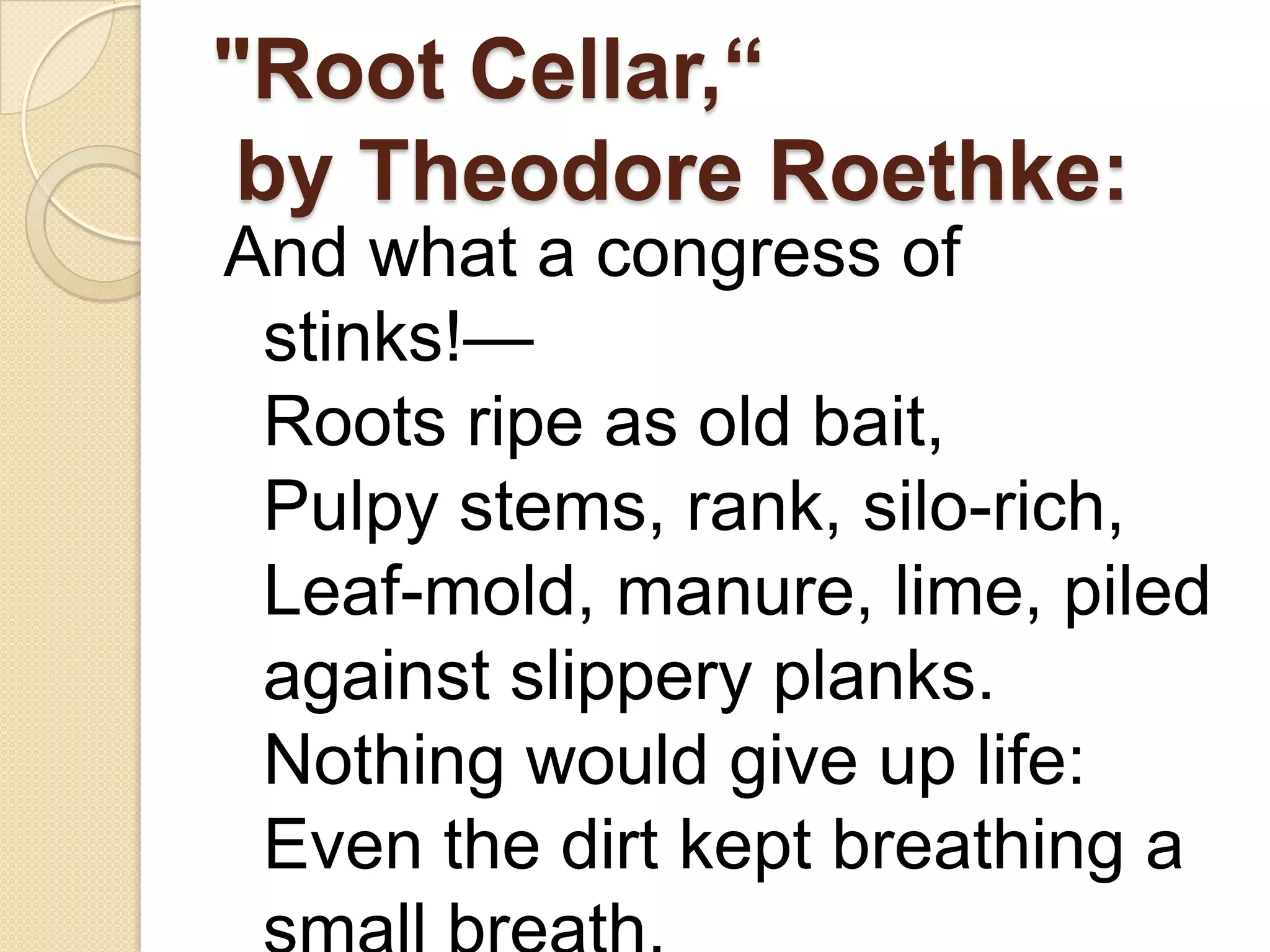
"Root Cellar,“
 by Theodore Roethke:
And what a congress of
 stinks!—
 Roots ripe as old bait,
 Pulpy stems, rank, silo-rich,
 Leaf-mold, manure, lime, piled
 against slippery planks.
 Nothing would give up life:
 Even the dirt kept breathing a
Tactile or "physical" imagery:
   descriptions conveying a strong, vivid
    sense of touch or physical sensation
    that the reader can almost feel himself
    or herself while reading, as in Robert
    Frost's description of standing on a
    ladder in "After Apple Picking Or in the
    sensation of touch (and possibly taste)
    in the fourth stanza of Helen Chasin's
    poem, "The Word Plum":
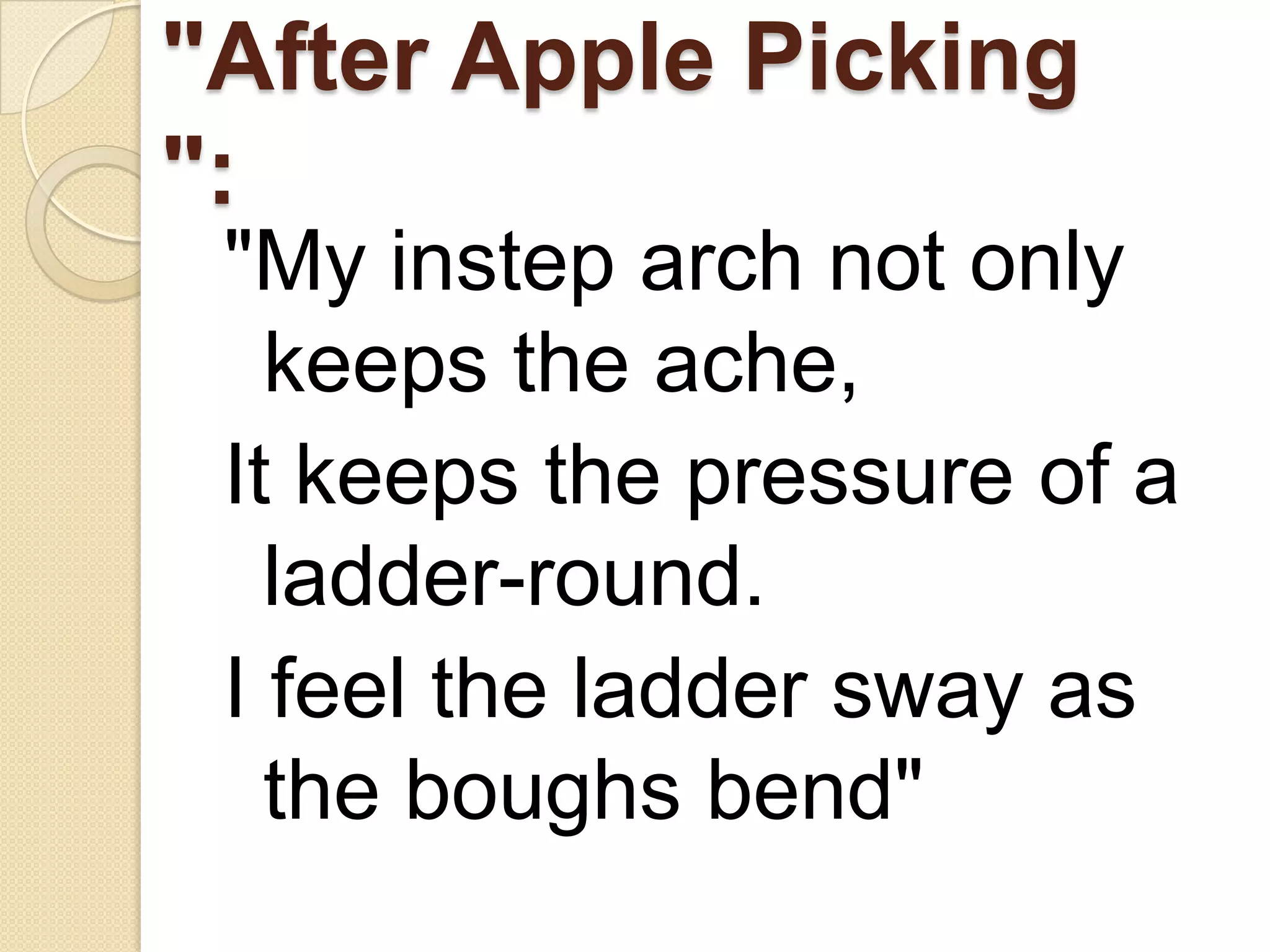
"After Apple Picking
":
 "My instep arch not only
   keeps the ache,
 It keeps the pressure of a
   ladder-round.
 I feel the ladder sway as
   the boughs bend"
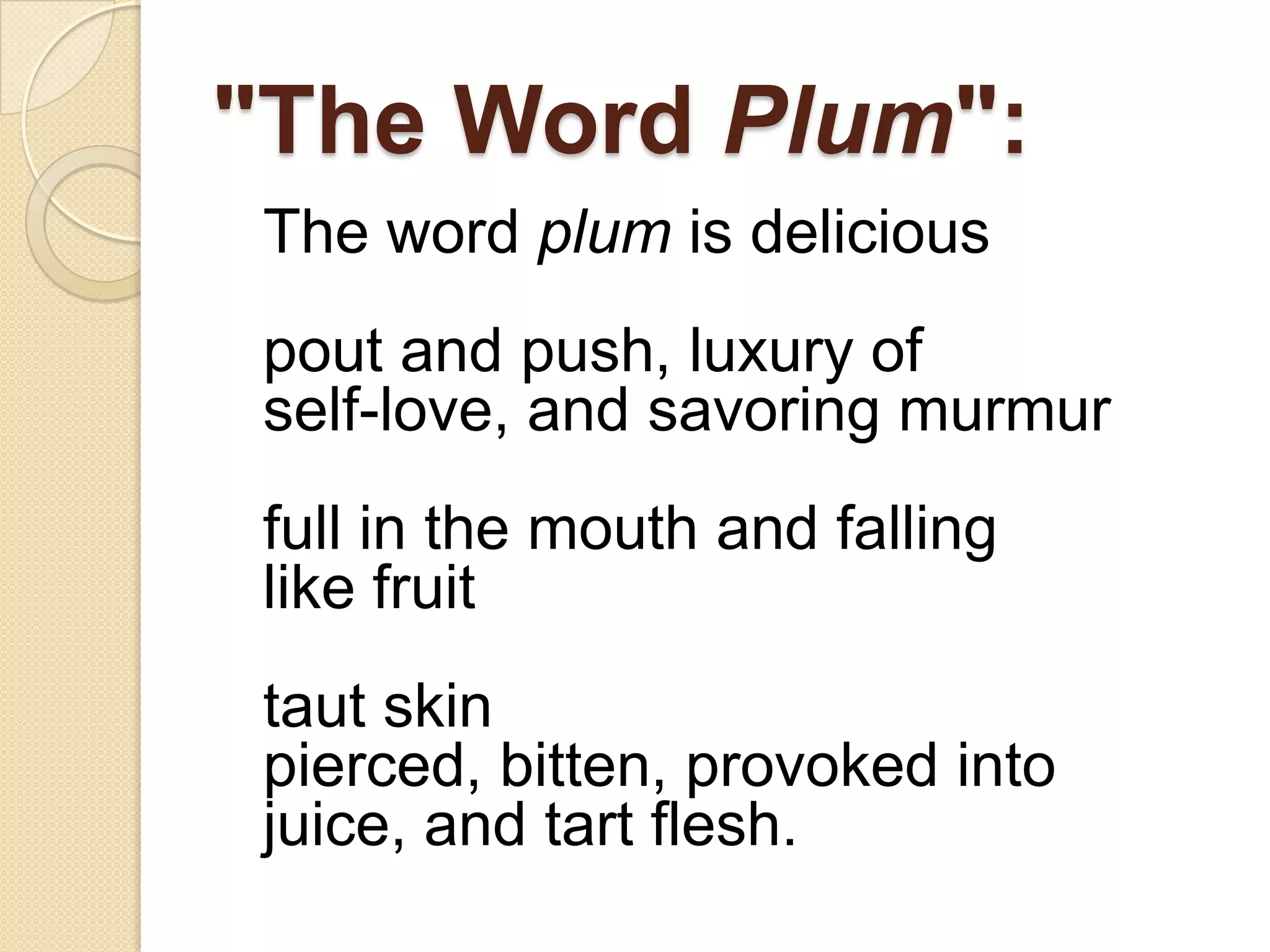
"The Word Plum":
The word plum is delicious
pout and push, luxury of
self-love, and savoring murmur
full in the mouth and falling
like fruit
taut skin
pierced, bitten, provoked into
juice, and tart flesh.

Sense detectors

  • 1.
  • 2.
    Imagery  As appliedto poetry, imagery is the use of words to convey vivid, concrete sensory experiences. The word "image" suggests most obviously a visual image, a picture, but imagery also includes vivid sensory
  • 3.
     Imagery goes beyond mere description to communicate an experience or feeling so vividly that it encourages the creation of images in the mind of the reader and readers experiences for themselves the specific sensations that the poet
  • 4.
    Visual imagery: visual descriptions so vivid they seem to come to life in the reader's mind's when they are read, as in the description of a very old fish in Elizabeth Bishop's
  • 5.
    "The Fish":  Here and there his brown skin hung in strips like ancient wall-paper, and its pattern of darker brown was like wall-paper: shapes like full-blown roses
  • 6.
    He was speckledwith barnacles, fine rosettes of lime, and infested with tiny white sea-lice, and underneath two or three rags of green weed hung down.
  • 7.
    Auditory imagery:  descriptionsofsound so vivid the reader seems almost to hear them while reading the poem. For example, Alexander Pope contrasts the gentle sounds of a whispering wind and a soft-running stream with the harsher sound of waves crashing on the shore in
  • 8.
    "Sound and Sense":  The sound must seem an echo to the sense: Soft is the strain when Zephyr gently bows, And the smooth stream in smoother numbers flow; But when the loud surges lash the sounding shore, The hoarse, rough verse should like the torrent roar.
  • 9.
    What the MotorcycleSaid," "Br-r-r-am-m- m, rackety-am- m, OM, Am: All-r-r-room, r-r- ram, ala-bas-ter"
  • 10.
    Images of smell (olfactory imagery): descriptions of smells so vivid they seem almost to stimulate the reader's own sense of smell while reading, as in the poem, "Root Cellar," by Theodore Roethke:
  • 11.
    "Root Cellar,“ byTheodore Roethke: And what a congress of stinks!— Roots ripe as old bait, Pulpy stems, rank, silo-rich, Leaf-mold, manure, lime, piled against slippery planks. Nothing would give up life: Even the dirt kept breathing a
  • 12.
    Tactile or "physical"imagery:  descriptions conveying a strong, vivid sense of touch or physical sensation that the reader can almost feel himself or herself while reading, as in Robert Frost's description of standing on a ladder in "After Apple Picking Or in the sensation of touch (and possibly taste) in the fourth stanza of Helen Chasin's poem, "The Word Plum":
  • 13.
    "After Apple Picking ": "My instep arch not only keeps the ache, It keeps the pressure of a ladder-round. I feel the ladder sway as the boughs bend"
  • 14.
    "The Word Plum": Theword plum is delicious pout and push, luxury of self-love, and savoring murmur full in the mouth and falling like fruit taut skin pierced, bitten, provoked into juice, and tart flesh.