 Imagery is the use of vivid description, usually rich in sensory words, to create
pictures, or images, in the reader’s mind.

 Imagery, in a literary text occurs when an author uses an object that is not really
there, in order to create a comparison between one that is, usually evoking a more
meaningful visual experience for the reader.

 Imagery may also be defined as the representation through language of sense
experience.
1. To identify imagery in poetry
2. To write poetry using quality imagery
3. To provide an opportunity for students to
write creatively
4. To work on prediction and guessing skills
 Poetry indirectly appeals to our senses through imagery. Creating poetry requires
the use of imagery, think of some imagery words to describe some part of nature: a
sea, a brook, clouds, a tree, a river, an animal, a mountain, etc.

 We speak of the pictures evoked in a poem as “imagery”. Imagery refers to the
“pictures” which we perceive with our mind’s eyes, ears, nose, tongue, skin, and
through which we experience the “duplicate world” created by poetic language.

Although most of the image-making words in any language appeal to sight (visual
images), there are also images of touch (tactile), sound (auditory), taste
(gustatory), and smell (olfactory).

A good poet does not use imagery merely to decorate a poem. He asks
himself, “How can I make my subject appear to the reader exactly as it appears to
me?”. Imagery helps him solve this problem, for it enables him to present his subject
as it is: as it looks, smells, tastes, feels and sounds. To the reader, imagery is equally
important: it provides his imagination with something palpable to seize upon.
Different types of imagery correspond to different senses. Essentially,
there are five types of imagery, each corresponding to one of our
senses: visual, auditory, kinesthetic, olfactory and gustatory.

These are the main five types of imagery. Engage as many senses as
you can when you are doing visualization or guided imagery.


 Olfactory imagery stimulates the sense of smell.
 Tactile imagery stimulates the sense of touch.
 Visual imagery stimulates the sense of sight.
 Auditory imagery stimulates the sense of hearing.
 Gustatory imagery stimulates the sense of taste.
 Kinesthetic is imagery that recreates a feeling of physical action or
natural bodily function (like a pulse, a heartbeat, or breathing).
 Organic imagery – internal sensation: hunger, thirst, fatigue, fear.
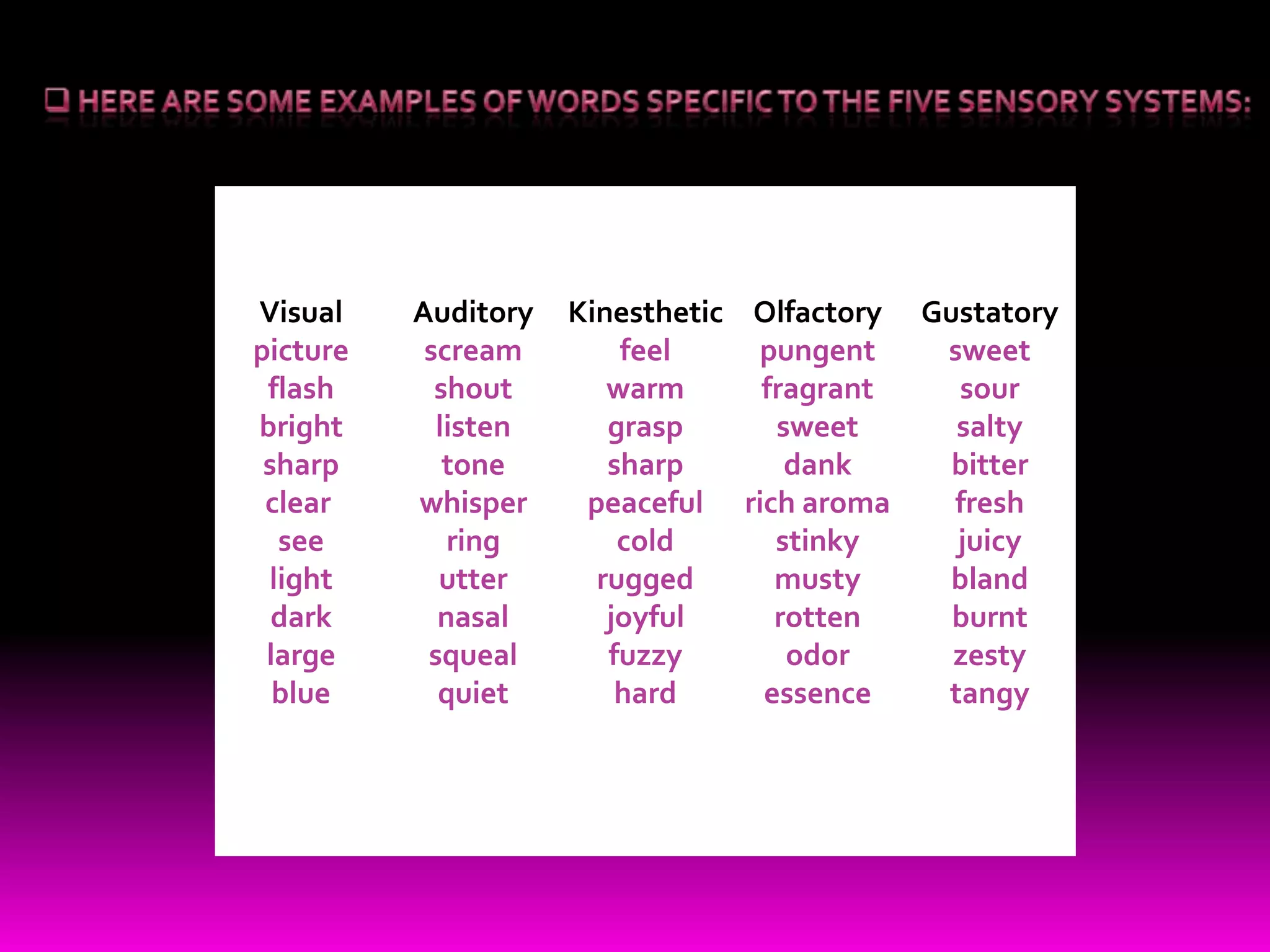
Visual    Auditory   Kinesthetic Olfactory Gustatory
picture    scream        feel    pungent    sweet
 flash      shout       warm     fragrant     sour
bright      listen      grasp     sweet      salty
 sharp       tone       sharp      dank      bitter
 clear    whisper     peaceful rich aroma    fresh
  see        ring        cold     stinky     juicy
 light      utter      rugged     musty      bland
  dark      nasal       joyful    rotten     burnt
 large     squeal       fuzzy      odor      zesty
  blue      quiet        hard    essence    tangy
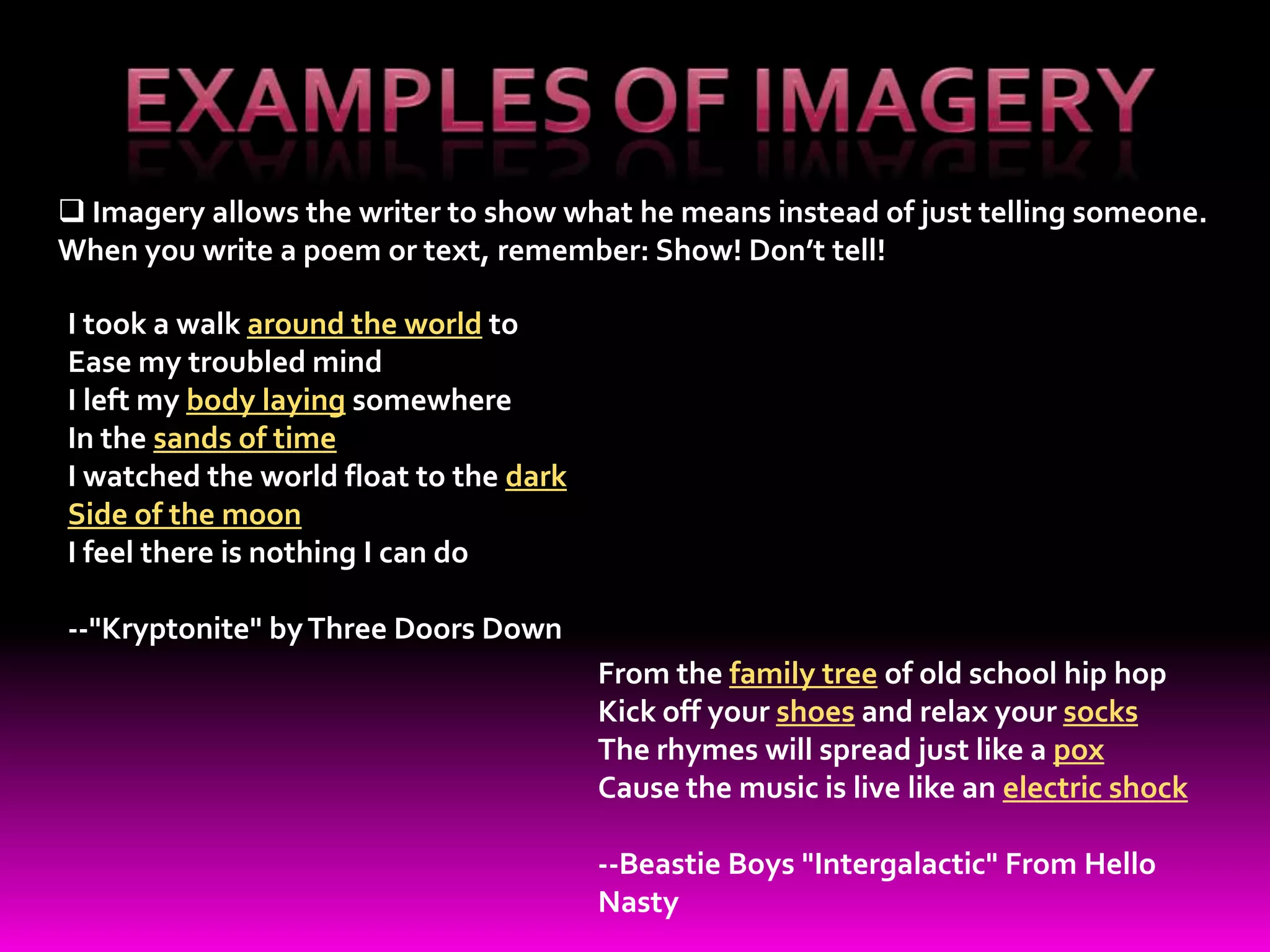
 Imagery allows the writer to show what he means instead of just telling someone.
When you write a poem or text, remember: Show! Don’t tell!

I took a walk around the world to
Ease my troubled mind
I left my body laying somewhere
In the sands of time
I watched the world float to the dark
Side of the moon
I feel there is nothing I can do

--"Kryptonite" by Three Doors Down
                                        From the family tree of old school hip hop
                                        Kick off your shoes and relax your socks
                                        The rhymes will spread just like a pox
                                        Cause the music is live like an electric shock

                                        --Beastie Boys "Intergalactic" From Hello
                                        Nasty

PPT - Imagery - IIB1

  • 2.
     Imagery isthe use of vivid description, usually rich in sensory words, to create pictures, or images, in the reader’s mind.  Imagery, in a literary text occurs when an author uses an object that is not really there, in order to create a comparison between one that is, usually evoking a more meaningful visual experience for the reader.  Imagery may also be defined as the representation through language of sense experience.
  • 3.
    1. To identifyimagery in poetry 2. To write poetry using quality imagery 3. To provide an opportunity for students to write creatively 4. To work on prediction and guessing skills
  • 4.
     Poetry indirectlyappeals to our senses through imagery. Creating poetry requires the use of imagery, think of some imagery words to describe some part of nature: a sea, a brook, clouds, a tree, a river, an animal, a mountain, etc.  We speak of the pictures evoked in a poem as “imagery”. Imagery refers to the “pictures” which we perceive with our mind’s eyes, ears, nose, tongue, skin, and through which we experience the “duplicate world” created by poetic language. Although most of the image-making words in any language appeal to sight (visual images), there are also images of touch (tactile), sound (auditory), taste (gustatory), and smell (olfactory). A good poet does not use imagery merely to decorate a poem. He asks himself, “How can I make my subject appear to the reader exactly as it appears to me?”. Imagery helps him solve this problem, for it enables him to present his subject as it is: as it looks, smells, tastes, feels and sounds. To the reader, imagery is equally important: it provides his imagination with something palpable to seize upon.
  • 5.
    Different types ofimagery correspond to different senses. Essentially, there are five types of imagery, each corresponding to one of our senses: visual, auditory, kinesthetic, olfactory and gustatory. These are the main five types of imagery. Engage as many senses as you can when you are doing visualization or guided imagery.  Olfactory imagery stimulates the sense of smell.  Tactile imagery stimulates the sense of touch.  Visual imagery stimulates the sense of sight.  Auditory imagery stimulates the sense of hearing.  Gustatory imagery stimulates the sense of taste.  Kinesthetic is imagery that recreates a feeling of physical action or natural bodily function (like a pulse, a heartbeat, or breathing).  Organic imagery – internal sensation: hunger, thirst, fatigue, fear.
  • 6.
    Visual Auditory Kinesthetic Olfactory Gustatory picture scream feel pungent sweet flash shout warm fragrant sour bright listen grasp sweet salty sharp tone sharp dank bitter clear whisper peaceful rich aroma fresh see ring cold stinky juicy light utter rugged musty bland dark nasal joyful rotten burnt large squeal fuzzy odor zesty blue quiet hard essence tangy
  • 7.
     Imagery allowsthe writer to show what he means instead of just telling someone. When you write a poem or text, remember: Show! Don’t tell! I took a walk around the world to Ease my troubled mind I left my body laying somewhere In the sands of time I watched the world float to the dark Side of the moon I feel there is nothing I can do --"Kryptonite" by Three Doors Down From the family tree of old school hip hop Kick off your shoes and relax your socks The rhymes will spread just like a pox Cause the music is live like an electric shock --Beastie Boys "Intergalactic" From Hello Nasty