Self Assessment
Guide for Self-
Employed Individuals
Filing taxes as a self-employed
individual involves more complexity
than when you're an employee.
Understanding the nuances of self-
assessment is crucial to ensure
compliance with tax laws and
maximise deductions. Here’s a
comprehensive guide to help you
navigate the self-assessment process
effectively:
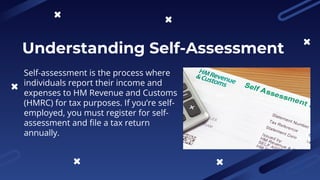
Understanding Self-Assessment
Self-assessment is the process where
individuals report their income and
expenses to HM Revenue and Customs
(HMRC) for tax purposes. If you’re self-
employed, you must register for self-
assessment and file a tax return
annually.
Firstly, you need to register for self-
assessment with HMRC if you haven't
already done so. This involves
obtaining a Unique Taxpayer
Reference (UTR) and setting up an
online account on the HMRC website.
Registering for Self-Assessment
Income Reporting
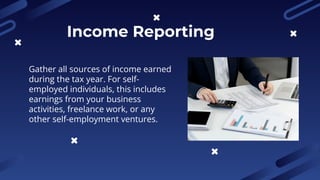
Gather all sources of income earned
during the tax year. For self-
employed individuals, this includes
earnings from your business
activities, freelance work, or any
other self-employment ventures.
Expense Deductions
You can deduct allowable business
expenses from your income to
calculate your taxable profit. Typical
expenses include office rent,
equipment costs, travel expenses
related to business activities, and
professional fees.
Keeping Records
Maintain accurate records of your
income and expenses throughout the
tax year. This documentation is
essential for completing your tax
return accurately and efficiently. Use
accounting software or spreadsheets
to track transactions and receipts.
Tax Return Submission
The deadline for submitting your tax
return and paying any tax owed is
January 31st following the end of the
tax year (April 5th). HMRC imposes
penalties for late filing, so ensure you
submit your return on time to avoid
fines.
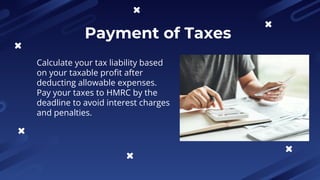
Payment of Taxes
Calculate your tax liability based
on your taxable profit after
deducting allowable expenses.
Pay your taxes to HMRC by the
deadline to avoid interest charges
and penalties.
National Insurance
Contributions (NICs)
As a self-employed individual, you’re
also liable for Class 2 and Class 4
NICs. These contributions fund your
entitlement to state benefits and
pensions. Ensure you understand
your NIC obligations and include
them in your tax calculations.
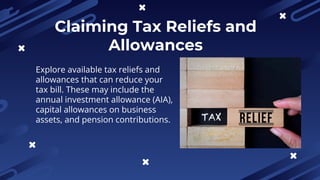
Claiming Tax Reliefs and
Allowances
Explore available tax reliefs and
allowances that can reduce your
tax bill. These may include the
annual investment allowance (AIA),
capital allowances on business
assets, and pension contributions.
Seek Professional Advice
If you’re unsure about any aspect of
self-assessment or need assistance
with complex tax issues, consider
consulting a tax advisor or accountant
specializing in self-employment. They
can provide tailored advice, ensure
compliance with tax regulations, and
help you optimize your tax position.
Conclusion
Navigating self-assessment as a self-
employed individual requires diligence
and understanding of tax laws. By
following this guide and staying
organized with your finances, you can
streamline the tax filing process,
minimize tax liabilities, and focus on
growing your business effectively.
Remember, staying informed and
proactive with your tax obligations is key
to financial success as a self-employed
professional.
THANKS!
Do you have any questions?
020-8239-4999
https://doshiaccountants.co.uk/services/self-
assessment-tax-returns

Self-assessment for self-employed individuals

  • 1.
    Self Assessment Guide forSelf- Employed Individuals
  • 2.
    Filing taxes asa self-employed individual involves more complexity than when you're an employee. Understanding the nuances of self- assessment is crucial to ensure compliance with tax laws and maximise deductions. Here’s a comprehensive guide to help you navigate the self-assessment process effectively:
  • 3.
    Understanding Self-Assessment Self-assessment isthe process where individuals report their income and expenses to HM Revenue and Customs (HMRC) for tax purposes. If you’re self- employed, you must register for self- assessment and file a tax return annually.
  • 4.
    Firstly, you needto register for self- assessment with HMRC if you haven't already done so. This involves obtaining a Unique Taxpayer Reference (UTR) and setting up an online account on the HMRC website. Registering for Self-Assessment
  • 5.
    Income Reporting Gather allsources of income earned during the tax year. For self- employed individuals, this includes earnings from your business activities, freelance work, or any other self-employment ventures.
  • 6.
    Expense Deductions You candeduct allowable business expenses from your income to calculate your taxable profit. Typical expenses include office rent, equipment costs, travel expenses related to business activities, and professional fees.
  • 7.
    Keeping Records Maintain accuraterecords of your income and expenses throughout the tax year. This documentation is essential for completing your tax return accurately and efficiently. Use accounting software or spreadsheets to track transactions and receipts.
  • 8.
    Tax Return Submission Thedeadline for submitting your tax return and paying any tax owed is January 31st following the end of the tax year (April 5th). HMRC imposes penalties for late filing, so ensure you submit your return on time to avoid fines.
  • 9.
    Payment of Taxes Calculateyour tax liability based on your taxable profit after deducting allowable expenses. Pay your taxes to HMRC by the deadline to avoid interest charges and penalties.
  • 10.
    National Insurance Contributions (NICs) Asa self-employed individual, you’re also liable for Class 2 and Class 4 NICs. These contributions fund your entitlement to state benefits and pensions. Ensure you understand your NIC obligations and include them in your tax calculations.
  • 11.
    Claiming Tax Reliefsand Allowances Explore available tax reliefs and allowances that can reduce your tax bill. These may include the annual investment allowance (AIA), capital allowances on business assets, and pension contributions.
  • 12.
    Seek Professional Advice Ifyou’re unsure about any aspect of self-assessment or need assistance with complex tax issues, consider consulting a tax advisor or accountant specializing in self-employment. They can provide tailored advice, ensure compliance with tax regulations, and help you optimize your tax position.
  • 13.
    Conclusion Navigating self-assessment asa self- employed individual requires diligence and understanding of tax laws. By following this guide and staying organized with your finances, you can streamline the tax filing process, minimize tax liabilities, and focus on growing your business effectively. Remember, staying informed and proactive with your tax obligations is key to financial success as a self-employed professional.
  • 14.
    THANKS! Do you haveany questions? 020-8239-4999 https://doshiaccountants.co.uk/services/self- assessment-tax-returns