Securing IT and ICS/OT Environments: The
Separation Imperative
Importance of robust
cybersecurity measures
Integration of IT
environments with ICS/OT
environments
Caution and separation
between the two domains
The Need for
Separation:
• Distinct purposes and
requirements of IT and OT
environments
• Risks associated with
combining the environments
• Unauthorized access,
increased attack surface,
and disruptions to critical
infrastructure
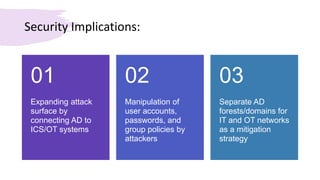
Security Implications:
Expanding attack
surface by
connecting AD to
ICS/OT systems
01
Manipulation of
user accounts,
passwords, and
group policies by
attackers
02
Separate AD
forests/domains for
IT and OT networks
as a mitigation
strategy
03
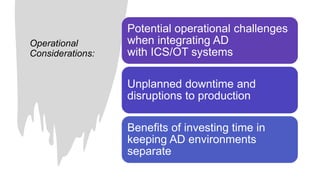
Operational
Considerations:
Potential operational challenges
when integrating AD
with ICS/OT systems
Unplanned downtime and
disruptions to production
Benefits of investing time in
keeping AD environments
separate
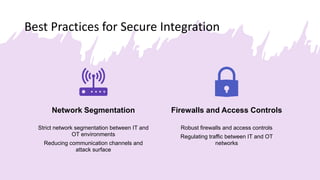
Best Practices for Secure Integration
Network Segmentation
Strict network segmentation between IT and
OT environments
Reducing communication channels and
attack surface
Firewalls and Access Controls
Robust firewalls and access controls
Regulating traffic between IT and OT
networks
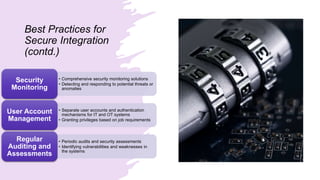
Best Practices for
Secure Integration
(contd.)
• Comprehensive security monitoring solutions
• Detecting and responding to potential threats or
anomalies
Security
Monitoring
• Separate user accounts and authentication
mechanisms for IT and OT systems
• Granting privileges based on job requirements
User Account
Management
• Periodic audits and security assessments
• Identifying vulnerabilities and weaknesses in
the systems
Regular
Auditing and
Assessments
Conclusion
Maintaining a clear separation between AD and
ICS/OT environments is crucial
Ensuring security, stability, and operational
integrity of critical infrastructure
Implementing best practices for secure
integration
Prioritizing the segregation of IT and OT
systems, including separate AD forests/domains
Any questions or comments?

Securing IT and ICS OT Environments.pptx

  • 1.
    Securing IT andICS/OT Environments: The Separation Imperative
  • 2.
    Importance of robust cybersecuritymeasures Integration of IT environments with ICS/OT environments Caution and separation between the two domains
  • 3.
    The Need for Separation: •Distinct purposes and requirements of IT and OT environments • Risks associated with combining the environments • Unauthorized access, increased attack surface, and disruptions to critical infrastructure
  • 4.
    Security Implications: Expanding attack surfaceby connecting AD to ICS/OT systems 01 Manipulation of user accounts, passwords, and group policies by attackers 02 Separate AD forests/domains for IT and OT networks as a mitigation strategy 03
  • 5.
    Operational Considerations: Potential operational challenges whenintegrating AD with ICS/OT systems Unplanned downtime and disruptions to production Benefits of investing time in keeping AD environments separate
  • 6.
    Best Practices forSecure Integration Network Segmentation Strict network segmentation between IT and OT environments Reducing communication channels and attack surface Firewalls and Access Controls Robust firewalls and access controls Regulating traffic between IT and OT networks
  • 7.
    Best Practices for SecureIntegration (contd.) • Comprehensive security monitoring solutions • Detecting and responding to potential threats or anomalies Security Monitoring • Separate user accounts and authentication mechanisms for IT and OT systems • Granting privileges based on job requirements User Account Management • Periodic audits and security assessments • Identifying vulnerabilities and weaknesses in the systems Regular Auditing and Assessments
  • 8.
    Conclusion Maintaining a clearseparation between AD and ICS/OT environments is crucial Ensuring security, stability, and operational integrity of critical infrastructure Implementing best practices for secure integration Prioritizing the segregation of IT and OT systems, including separate AD forests/domains Any questions or comments?