Download to read offline

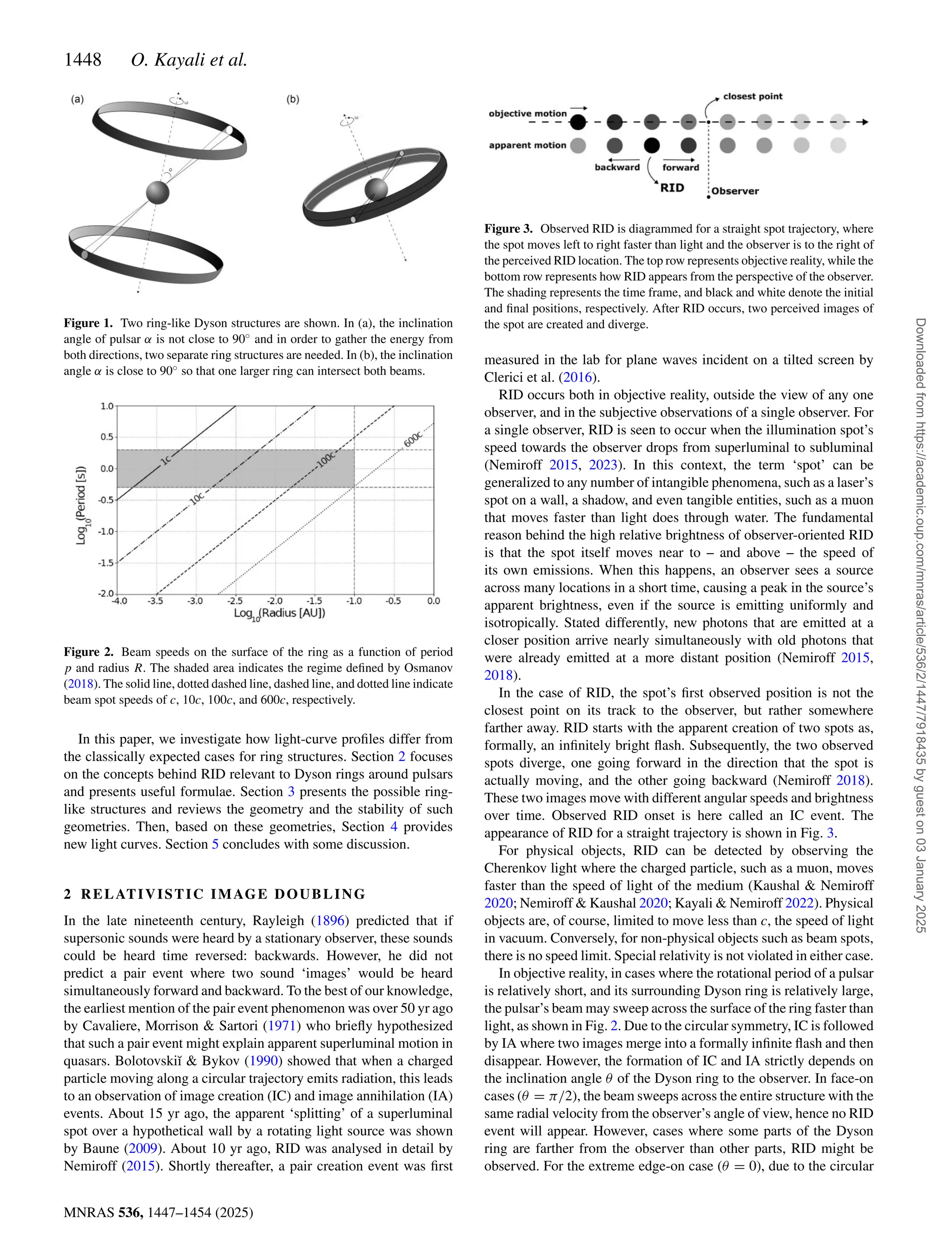


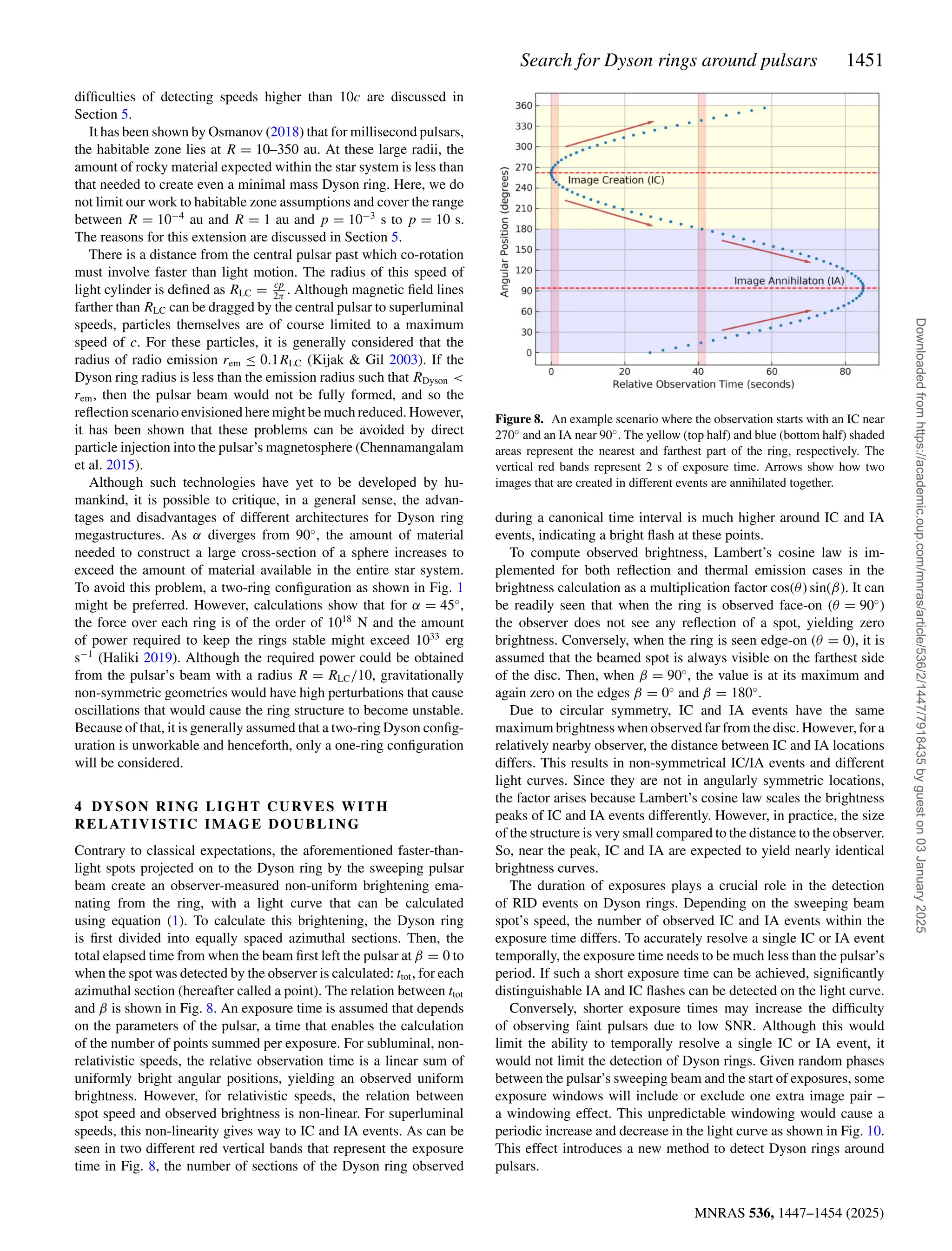

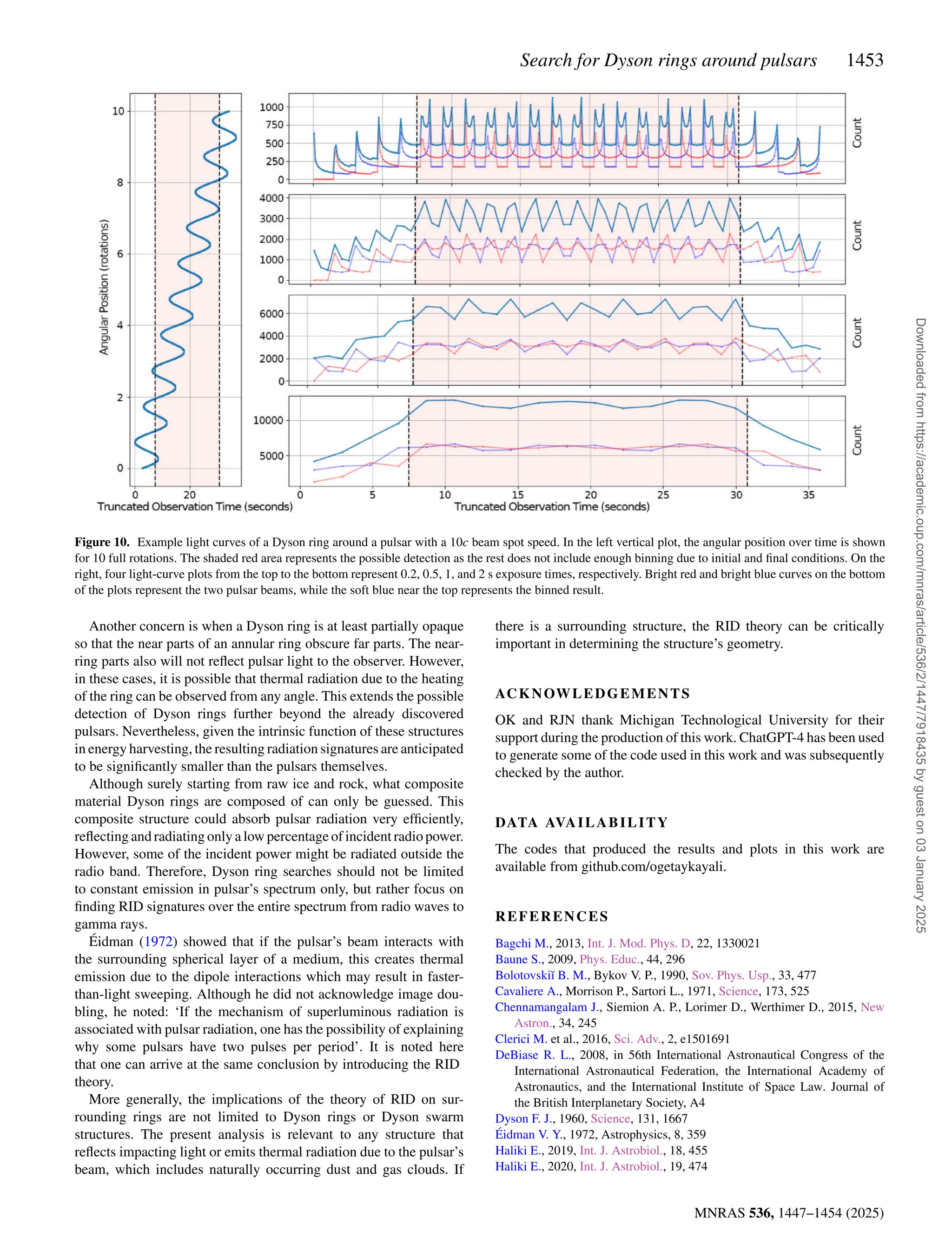


The document discusses the search for Dyson rings around pulsars, focusing on complex light curves caused by the fast-moving beam of pulsars that could lead to multiple observable images. It highlights the relevance of relativistic image doubling (RID) phenomena in interpreting these light curves, emphasizing that such effects may have been overlooked in previous studies. The research suggests that observable features in pulsar light curves can provide insights into both engineered Dyson rings and naturally occurring dust rings around pulsars.


