Download to read offline


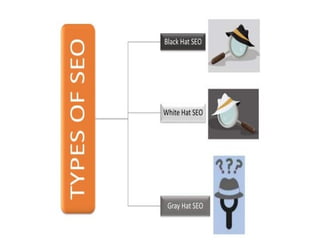


SEO (Search Engine Optimization) is the practice of improving the visibility and ranking of a website or web page on search engines like Google, Bing, or Yahoo. The primary goal of SEO is to attract organic (non-paid) traffic by optimizing various aspects of a website, making it more likely to appear in search engine results when users search for relevant keywords. Key Aspects of SEO: Keyword Research: Identifying the terms and phrases that potential visitors are searching for, and incorporating them strategically into website content, titles, meta tags, and headings. On-Page SEO: Optimizing individual web pages to improve their ranking. This includes optimizing content for relevant keywords, ensuring proper use of HTML tags (title, headings, meta descriptions), improving user experience, and making the website mobile-friendly. Off-Page SEO: Activities outside the website that influence rankings, such as building high-quality backlinks from reputable sites, social media engagement, and influencer collaborations. Technical SEO: Ensuring the website is technically sound for search engines. This includes optimizing website speed, mobile responsiveness, site architecture, and ensuring proper indexing by search engines. Content Quality: Search engines prioritize high-quality, informative, and relevant content. Creating content that answers users' questions or provides valuable information is a key component of successful SEO. User Experience (UX): Improving the design, navigation, and overall user experience to ensure visitors stay on the website longer, reducing bounce rates, and increasing conversions. Why SEO is Important: Increased Visibility: A higher ranking on search engines leads to more visibility, driving organic traffic to the website without the need for paid ads. Cost-Effective: Unlike paid advertising, SEO focuses on organic methods, reducing the need for paid campaigns while still attracting relevant traffic. Trust and Credibility: Websites that rank high on search engines are perceived as more credible by users. Good SEO practices improve website trustworthiness and user engagement. Long-Term Strategy: SEO, when done correctly, provides long-lasting results, driving sustained traffic to your site even after initial efforts. SEO is an essential strategy for businesses and individuals looking to build an online presence, drive traffic, and achieve digital marketing goals effectively.


