Search Engine
Marketing (SEM):
A Comprehensive
Guide
Search engine marketing (SEM) is an umbrella term for the strategies
used to improve visibility in search engine results pages (SERPs). It
encompasses both paid and organic methods.
SI
by Saiba Idrisi
Understanding Search Engine
Algorithms
1 Google's Algorithm
Google uses complex algorithms to
determine the relevance and ranking
of websites in search results. They
consider hundreds of factors,
including content quality, user
experience, and website authority.
2 Keyword Matching
Algorithms analyze user searches and
match them to relevant websites.
They consider variations in keywords,
synonyms, and related phrases.
3 Link Analysis
Links from other websites are crucial.
They signal to search engines that a
website is valuable and trustworthy.
4 User Behavior
Algorithms analyze user behavior on
websites, including click-through
rates (CTR), bounce rates, and dwell
time, to assess the quality of content
and user experience.
Keyword Research and Selection
Keyword Research Tools
Use tools like Google Keyword
Planner, Ahrefs, and SEMrush to
gather data on search volume,
competition, and keyword
difficulty.
Long-Tail Keywords
Target longer, more specific
phrases that attract users with
specific intent. For example,
instead of "running shoes," use
"best running shoes for marathon
training."
Keyword Mapping
Organize keywords into categories
and prioritize them based on their
relevance to your website and
business goals.
On-Page Optimization Strategies
1 Content Optimization
Create high-quality, relevant, and engaging content that satisfies user search intent and
includes targeted keywords naturally.
2 Title Tag and Meta Description
Optimize these elements to make your website stand out in search results and encourage
clicks. Use relevant keywords and a compelling description.
3 Image Optimization
Use alt tags with relevant keywords to make images searchable. Optimize image file sizes
for faster page load times.
4 Internal Linking
Link relevant pages on your website to create a seamless user experience and help search
engines understand the structure of your site.
Off-Page Optimization
Techniques
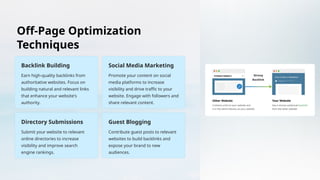
Backlink Building
Earn high-quality backlinks from
authoritative websites. Focus on
building natural and relevant links
that enhance your website's
authority.
Social Media Marketing
Promote your content on social
media platforms to increase
visibility and drive traffic to your
website. Engage with followers and
share relevant content.
Directory Submissions
Submit your website to relevant
online directories to increase
visibility and improve search
engine rankings.
Guest Blogging
Contribute guest posts to relevant
websites to build backlinks and
expose your brand to new
audiences.
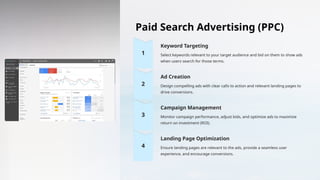
Paid Search Advertising (PPC)
Keyword Targeting
Select keywords relevant to your target audience and bid on them to show ads
when users search for those terms.
Ad Creation
Design compelling ads with clear calls to action and relevant landing pages to
drive conversions.
Campaign Management
Monitor campaign performance, adjust bids, and optimize ads to maximize
return on investment (ROI).
Landing Page Optimization
Ensure landing pages are relevant to the ads, provide a seamless user
experience, and encourage conversions.
Measuring and
Analyzing Campaign
Performance
Key Performance Indicators
(KPIs)
Metrics
Website Traffic Sessions, pageviews, bounce
rate, average session
duration
Conversions Leads generated, sales
made, newsletter
subscriptions
Return on Investment (ROI) Advertising spend, revenue
generated, profit margin
Optimizing and Scaling Your SEM Efforts
Set Clear Goals
Define specific and
measurable goals to guide
your optimization efforts.
Focus on key metrics like
conversion rates and ROI.
Data-Driven Decisions
Continuously analyze
campaign data to identify
areas for improvement. Use
insights to optimize
keywords, ads, and landing
pages.
Experiment and Iterate
Test different strategies and
creative variations to find
what works best for your
target audience.
Scale Your Campaigns
Once you've achieved
success, consider expanding
your reach to new markets
and audiences. Explore new
channels and strategies.

Search-Engine-Marketing-SEM-A-Comprehensive-Guide.- farfetchdigital

  • 1.
    Search Engine Marketing (SEM): AComprehensive Guide Search engine marketing (SEM) is an umbrella term for the strategies used to improve visibility in search engine results pages (SERPs). It encompasses both paid and organic methods. SI by Saiba Idrisi
  • 2.
    Understanding Search Engine Algorithms 1Google's Algorithm Google uses complex algorithms to determine the relevance and ranking of websites in search results. They consider hundreds of factors, including content quality, user experience, and website authority. 2 Keyword Matching Algorithms analyze user searches and match them to relevant websites. They consider variations in keywords, synonyms, and related phrases. 3 Link Analysis Links from other websites are crucial. They signal to search engines that a website is valuable and trustworthy. 4 User Behavior Algorithms analyze user behavior on websites, including click-through rates (CTR), bounce rates, and dwell time, to assess the quality of content and user experience.
  • 3.
    Keyword Research andSelection Keyword Research Tools Use tools like Google Keyword Planner, Ahrefs, and SEMrush to gather data on search volume, competition, and keyword difficulty. Long-Tail Keywords Target longer, more specific phrases that attract users with specific intent. For example, instead of "running shoes," use "best running shoes for marathon training." Keyword Mapping Organize keywords into categories and prioritize them based on their relevance to your website and business goals.
  • 4.
    On-Page Optimization Strategies 1Content Optimization Create high-quality, relevant, and engaging content that satisfies user search intent and includes targeted keywords naturally. 2 Title Tag and Meta Description Optimize these elements to make your website stand out in search results and encourage clicks. Use relevant keywords and a compelling description. 3 Image Optimization Use alt tags with relevant keywords to make images searchable. Optimize image file sizes for faster page load times. 4 Internal Linking Link relevant pages on your website to create a seamless user experience and help search engines understand the structure of your site.
  • 5.
    Off-Page Optimization Techniques Backlink Building Earnhigh-quality backlinks from authoritative websites. Focus on building natural and relevant links that enhance your website's authority. Social Media Marketing Promote your content on social media platforms to increase visibility and drive traffic to your website. Engage with followers and share relevant content. Directory Submissions Submit your website to relevant online directories to increase visibility and improve search engine rankings. Guest Blogging Contribute guest posts to relevant websites to build backlinks and expose your brand to new audiences.
  • 6.
    Paid Search Advertising(PPC) Keyword Targeting Select keywords relevant to your target audience and bid on them to show ads when users search for those terms. Ad Creation Design compelling ads with clear calls to action and relevant landing pages to drive conversions. Campaign Management Monitor campaign performance, adjust bids, and optimize ads to maximize return on investment (ROI). Landing Page Optimization Ensure landing pages are relevant to the ads, provide a seamless user experience, and encourage conversions.
  • 7.
    Measuring and Analyzing Campaign Performance KeyPerformance Indicators (KPIs) Metrics Website Traffic Sessions, pageviews, bounce rate, average session duration Conversions Leads generated, sales made, newsletter subscriptions Return on Investment (ROI) Advertising spend, revenue generated, profit margin
  • 8.
    Optimizing and ScalingYour SEM Efforts Set Clear Goals Define specific and measurable goals to guide your optimization efforts. Focus on key metrics like conversion rates and ROI. Data-Driven Decisions Continuously analyze campaign data to identify areas for improvement. Use insights to optimize keywords, ads, and landing pages. Experiment and Iterate Test different strategies and creative variations to find what works best for your target audience. Scale Your Campaigns Once you've achieved success, consider expanding your reach to new markets and audiences. Explore new channels and strategies.