How Search Engines Work
InkredibleMe
How Search Engines Work
- - - - X
Having an online presence is crucial for businesses of all sizes. One of the
most effective ways to reach potential customers is through search engine
optimization (SEO). SEO is the process of improving a website’s visibility in
search engine results pages (SERPs) like Google, Bing, and Yahoo. By
understanding how search engines work, you can optimize your website to
attract more organic traffic and achieve your marketing goals.
How Search Engines Work
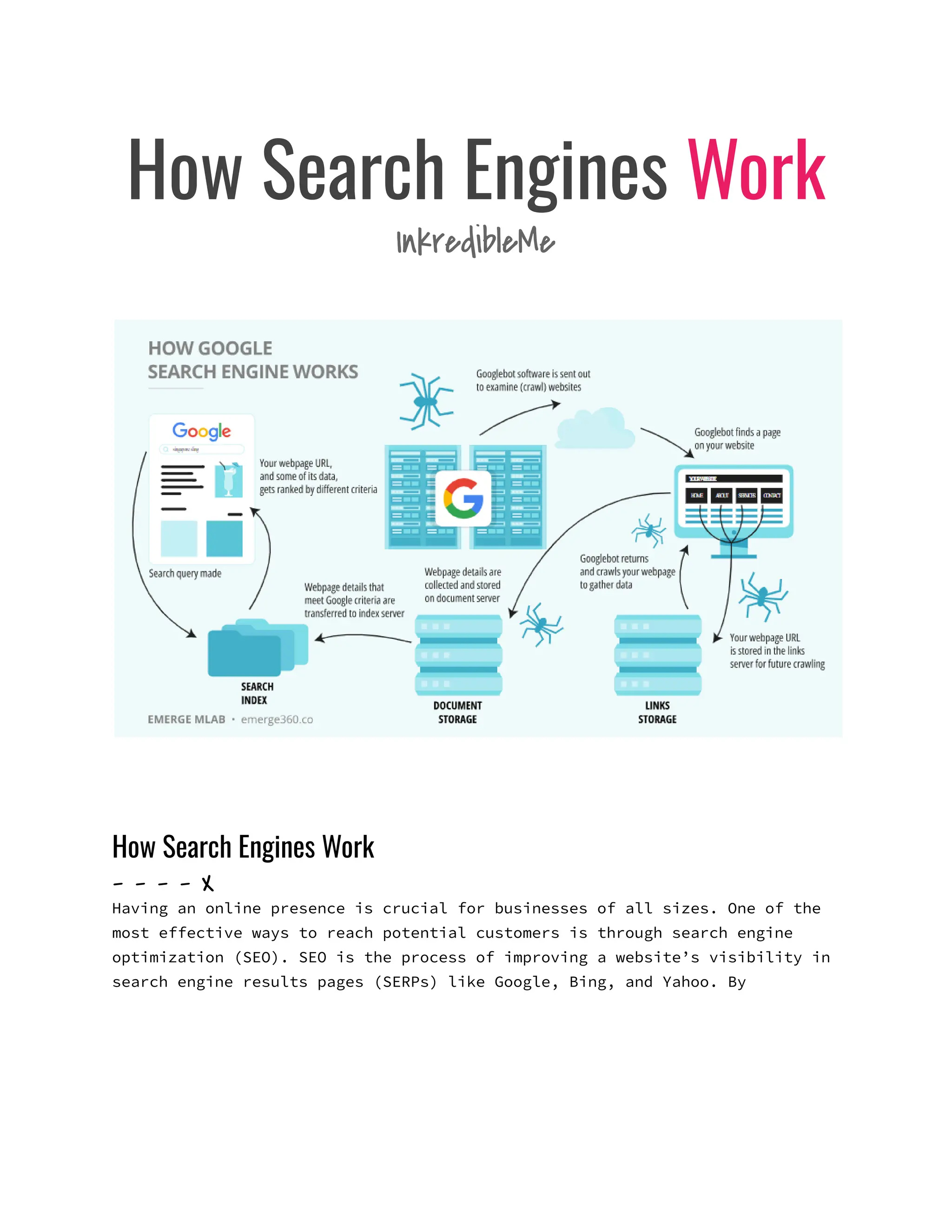
Search engines use complex algorithms to crawl, index, and rank websites. Here’s a detailed
breakdown of the process:
Crawling: Search engine spiders or bots crawl the web, following links from one website to another.
They discover new pages, update existing information, and create a vast network of interconnected
web pages.
Crawling Rate: Search engines have their own crawling rates, which determine how frequently they
visit different websites. Factors influencing crawling rate include website popularity, freshness of
content, and technical health.
Robots.txt File: Website owners can use a robots.txt file to instruct search engine bots which pages
to crawl and which to avoid. This helps prevent unnecessary resource consumption.
Indexing: The crawled pages are indexed, meaning they are stored in a massive database for future
reference.
Indexing Frequency: How often pages are re-indexed depends on factors like content updates,
website changes, and search engine algorithms.
Index Coverage: Search engines aim to index as much of the web as possible, but some pages may
be missed due to technical issues or lack of discoverability.
Ranking: When a user enters a search query, the search engine’s algorithm evaluates the relevance
and quality of each indexed page to determine its ranking in the SERPs.
Ranking Factors: Search engines consider hundreds of factors when ranking websites, including:
On-Page SEO: Optimizing elements on your website, such as keywords, meta tags, and content, to
improve relevance.
Off-Page SEO: Building backlinks from other reputable websites to your site, indicating authority and
trust.
Technical SEO: Ensuring your website is technically sound and easy for search engines to crawl and
index.
User Experience: Providing a positive user experience, including fast load times, mobile-friendliness,
and easy navigation.
Content Quality: Creating high-quality, informative, and engaging content that meets the needs of
your target audience.
Local SEO: Optimizing your website for local search if you serve a specific geographic area.
Social Signals: Engagement on social media platforms can indirectly influence search engine
rankings.
Search Intent: Understanding the user’s intent behind their search query is crucial for ranking
relevant results.
SEO Marketing Strategies
Keyword Research: Identify relevant keywords that your target audience is searching for using
keyword research tools. Consider factors like search volume, competition, and relevance.
On-Page Optimization: Optimize your website’s content, titles, meta descriptions, and headings with
your target keywords. Use header tags (H1, H2, etc.) to structure your content and improve
readability.
Content Creation: Create high-quality, informative, and engaging content that attracts and engages
your audience. Regularly update your content to keep it fresh and relevant.
Link Building: Build high-quality backlinks from reputable websites to improve your site’s authority.
Focus on building natural and relevant links.
Local SEO: Optimize your website for local search if you serve a specific geographic area. Include
your business name, address, and phone number (NAP) on your website and in online directories.
Technical SEO Optimization: Ensure your website is technically sound and mobile-friendly. This
includes factors like fast page load times, clean code, and proper use of structured data.
Social Media Marketing: Promote your content on social media platforms to increase visibility and
drive traffic to your website.
Analytics: Track your website’s performance using tools like Google Analytics to measure traffic,
user behavior, and conversion rates. Use this data to make data-driven decisions and improve your
SEO efforts.
SEO Services
If you’re overwhelmed by the complexities of SEO, you can consider hiring an SEO company or
consultant. They can help you with tasks such as:
Keyword Research: Identifying the most relevant keywords for your business.
On-Page Optimization: Optimizing your website’s content and structure.
Link Building: Acquiring high-quality backlinks.
Technical SEO: Addressing technical issues that may be affecting your website’s ranking.
Analytics: Tracking your website’s performance and making recommendations.
SEO Tools
There are numerous SEO tools available to help you with your optimization efforts. Some popular
options include:
Google Search Console: A free tool from Google that provides insights into your website’s
performance in search results.
Google Analytics: A free tool that tracks website traffic and user behavior.
SEMrush: A paid tool that offers a wide range of SEO features, including keyword research,
competitor analysis, and backlink checking.
Ahrefs: Another paid tool with similar features to SEMrush.
“
SEO is a complex but essential aspect of digital marketing. By understanding
how search engines work and implementing effective SEO strategies, you can
improve your website’s visibility, attract more organic traffic, and achieve your
business goals. Remember, SEO is an ongoing process, so it’s important to
continuously monitor and adjust your strategies to stay ahead of the
competition.
-Jyoti Pundir
”

How Search Engines Work InkredibleMe.pdf

  • 1.
    How Search EnginesWork InkredibleMe How Search Engines Work - - - - X Having an online presence is crucial for businesses of all sizes. One of the most effective ways to reach potential customers is through search engine optimization (SEO). SEO is the process of improving a website’s visibility in search engine results pages (SERPs) like Google, Bing, and Yahoo. By
  • 2.
    understanding how searchengines work, you can optimize your website to attract more organic traffic and achieve your marketing goals. How Search Engines Work Search engines use complex algorithms to crawl, index, and rank websites. Here’s a detailed breakdown of the process: Crawling: Search engine spiders or bots crawl the web, following links from one website to another. They discover new pages, update existing information, and create a vast network of interconnected web pages. Crawling Rate: Search engines have their own crawling rates, which determine how frequently they visit different websites. Factors influencing crawling rate include website popularity, freshness of content, and technical health. Robots.txt File: Website owners can use a robots.txt file to instruct search engine bots which pages to crawl and which to avoid. This helps prevent unnecessary resource consumption. Indexing: The crawled pages are indexed, meaning they are stored in a massive database for future reference. Indexing Frequency: How often pages are re-indexed depends on factors like content updates, website changes, and search engine algorithms. Index Coverage: Search engines aim to index as much of the web as possible, but some pages may be missed due to technical issues or lack of discoverability. Ranking: When a user enters a search query, the search engine’s algorithm evaluates the relevance and quality of each indexed page to determine its ranking in the SERPs. Ranking Factors: Search engines consider hundreds of factors when ranking websites, including: On-Page SEO: Optimizing elements on your website, such as keywords, meta tags, and content, to improve relevance. Off-Page SEO: Building backlinks from other reputable websites to your site, indicating authority and trust. Technical SEO: Ensuring your website is technically sound and easy for search engines to crawl and index.
  • 3.
    User Experience: Providinga positive user experience, including fast load times, mobile-friendliness, and easy navigation. Content Quality: Creating high-quality, informative, and engaging content that meets the needs of your target audience. Local SEO: Optimizing your website for local search if you serve a specific geographic area. Social Signals: Engagement on social media platforms can indirectly influence search engine rankings. Search Intent: Understanding the user’s intent behind their search query is crucial for ranking relevant results. SEO Marketing Strategies Keyword Research: Identify relevant keywords that your target audience is searching for using keyword research tools. Consider factors like search volume, competition, and relevance. On-Page Optimization: Optimize your website’s content, titles, meta descriptions, and headings with your target keywords. Use header tags (H1, H2, etc.) to structure your content and improve readability. Content Creation: Create high-quality, informative, and engaging content that attracts and engages your audience. Regularly update your content to keep it fresh and relevant. Link Building: Build high-quality backlinks from reputable websites to improve your site’s authority. Focus on building natural and relevant links. Local SEO: Optimize your website for local search if you serve a specific geographic area. Include your business name, address, and phone number (NAP) on your website and in online directories. Technical SEO Optimization: Ensure your website is technically sound and mobile-friendly. This includes factors like fast page load times, clean code, and proper use of structured data. Social Media Marketing: Promote your content on social media platforms to increase visibility and drive traffic to your website. Analytics: Track your website’s performance using tools like Google Analytics to measure traffic, user behavior, and conversion rates. Use this data to make data-driven decisions and improve your SEO efforts.
  • 4.
    SEO Services If you’reoverwhelmed by the complexities of SEO, you can consider hiring an SEO company or consultant. They can help you with tasks such as: Keyword Research: Identifying the most relevant keywords for your business. On-Page Optimization: Optimizing your website’s content and structure. Link Building: Acquiring high-quality backlinks. Technical SEO: Addressing technical issues that may be affecting your website’s ranking. Analytics: Tracking your website’s performance and making recommendations. SEO Tools There are numerous SEO tools available to help you with your optimization efforts. Some popular options include: Google Search Console: A free tool from Google that provides insights into your website’s performance in search results. Google Analytics: A free tool that tracks website traffic and user behavior. SEMrush: A paid tool that offers a wide range of SEO features, including keyword research, competitor analysis, and backlink checking. Ahrefs: Another paid tool with similar features to SEMrush. “ SEO is a complex but essential aspect of digital marketing. By understanding how search engines work and implementing effective SEO strategies, you can improve your website’s visibility, attract more organic traffic, and achieve your
  • 5.
    business goals. Remember,SEO is an ongoing process, so it’s important to continuously monitor and adjust your strategies to stay ahead of the competition. -Jyoti Pundir ”