SDG 1 –No Poverty
End Poverty in All Its Forms
Everywhere
2.
What is SDG1?
• SDG 1 aims to eradicate extreme poverty
globally
• Ensures social protection systems for all
• Focuses on vulnerable populations
• Foundation for achieving all other SDGs
3.
Why Poverty EradicationMatters
• Poverty affects health, education, and dignity
• Limits access to basic services
• Increases inequality and social instability
• Directly impacts sustainable development
4.
Key Targets ofSDG 1
• Eradicate extreme poverty by 2030
• Reduce at least by half the proportion of
people in poverty
• Implement social protection systems
• Ensure equal rights to economic resources
5.
Dimensions of Poverty
•Income poverty
• Lack of access to education
• Poor health and nutrition
• Inadequate housing and sanitation
6.
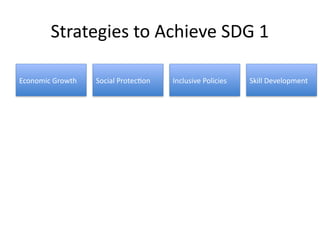
Strategies to AchieveSDG 1
Economic Growth Social Protection Inclusive Policies Skill Development
7.
Global Scenario
• Millionsstill live below the international
poverty line
• Pandemics and conflicts increase poverty risks
• Climate change affects livelihoods
• Global cooperation is essential
8.
SDG 1 inIndia
• Poverty alleviation programs and schemes
• Focus on rural development
• Employment generation initiatives
• Targeted support for marginalized groups
9.
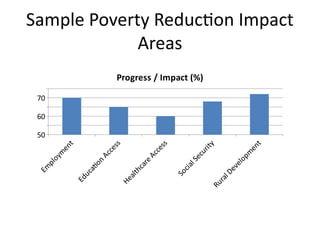
Sample Poverty ReductionImpact
Areas
Em
ploym
ent
Education
Access
Healthcare
Access
Social Security
Rural Developm
ent
50
60
70
Progress / Impact (%)
10.
Role of EducationInstitutions in
SDG 1
• Providing inclusive and affordable education
• Skill development and employability
• Community outreach programs
• Research on poverty alleviation
11.
Role of Engineering& Technology
• Affordable technologies
• Rural infrastructure development
• Digital inclusion
• Sustainable livelihood solutions
12.
SDG 1 andHigher Education
Activities
• Extension activities in adopted villages
• Entrepreneurship development programs
• Financial literacy initiatives
• Women empowerment projects
13.
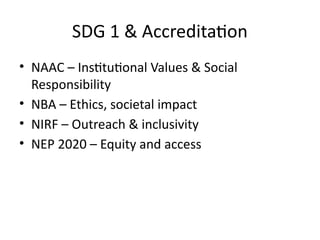
SDG 1 &Accreditation
• NAAC – Institutional Values & Social
Responsibility
• NBA – Ethics, societal impact
• NIRF – Outreach & inclusivity
• NEP 2020 – Equity and access
14.
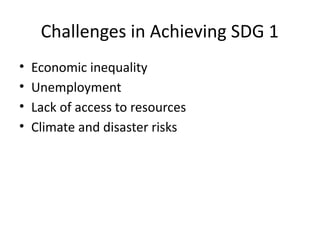
Challenges in AchievingSDG 1
• Economic inequality
• Unemployment
• Lack of access to resources
• Climate and disaster risks
15.
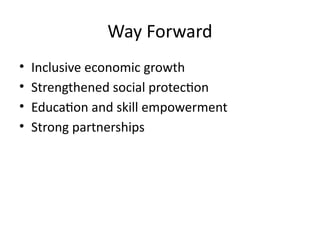
Way Forward
• Inclusiveeconomic growth
• Strengthened social protection
• Education and skill empowerment
• Strong partnerships
16.
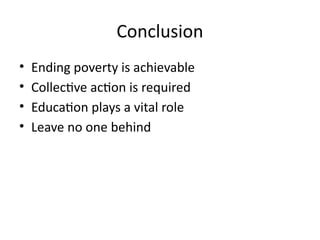
Conclusion
• Ending povertyis achievable
• Collective action is required
• Education plays a vital role
• Leave no one behind