The Politics, Perception, and
Philosophy of Physics (F34PPP)
Philip Moriarty
School of Physics & Astronomy
University of Nottingham
Room C103
philip.moriarty@nottingham.ac.uk
www.muircheartblog.wordpress.com
Lecture 1: Science Proves Nothing
 What we’ll cover in F34PPP (and some disclaimers)
 Timetable and assessment
 Observations and facts (or “facts”?)
 Deduction, induction, and Bacon
 Is science irrational?
 Are we unbiased?
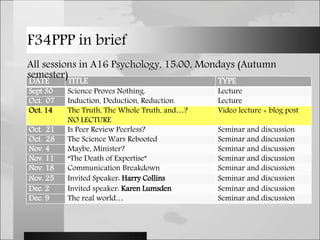
DATE TITLE TYPE
Sept 30 Science Proves Nothing. Lecture
Oct. 07 Induction, Deduction, Reduction. Lecture
Oct. 14 The Truth, The Whole Truth, and…?
NO LECTURE
Video lecture + blog post
Oct. 21 Is Peer Review Peerless? Seminar and discussion
Oct. 28 The Science Wars Rebooted Seminar and discussion
Nov. 4 Maybe, Minister? Seminar and discussion
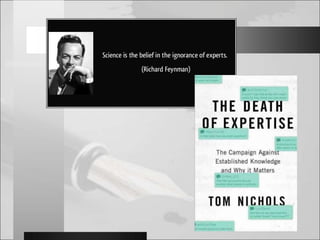
Nov. 11 “The Death of Expertise” Seminar and discussion
Nov. 18 Communication Breakdown Seminar and discussion
Nov. 25 Invited Speaker: Harry Collins Seminar and discussion
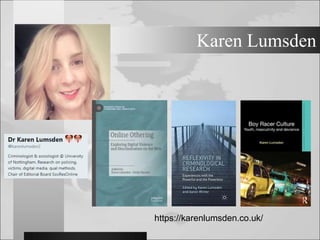
Dec. 2 Invited speaker: Karen Lumsden Seminar and discussion
Dec. 9 The real world… Seminar and discussion
F34PPP in brief
All sessions in A16 Psychology, 15:00, Mondays (Autumn
semester)
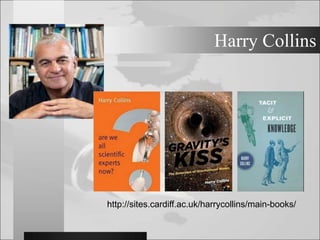
Harry Collins
http://sites.cardiff.ac.uk/harrycollins/main-books/
Karen Lumsden
https://karenlumsden.co.uk/
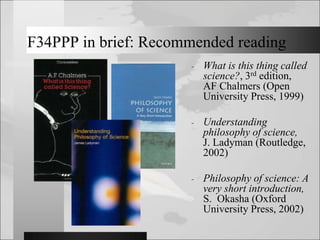
F34PPP in brief: Recommended reading
- What is this thing called
science?, 3rd edition,
AF Chalmers (Open
University Press, 1999)
- Understanding
philosophy of science,
J. Ladyman (Routledge,
2002)
- Philosophy of science: A
very short introduction,
S. Okasha (Oxford
University Press, 2002)
F34PPP in brief -- assessment
 An opinion piece (along the lines of a one-page Physics World
article, 1000-1500 words) [Deadline: Nov. 15] 30%
 A "feature article" (2000-2500 words, in the style of a
broadsheet article) [Deadline: Dec. 20] 70%
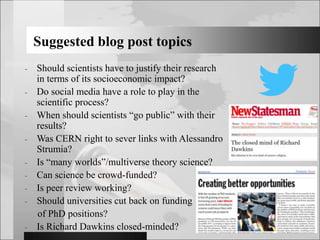
Suggested blog post topics
- Should scientists have to justify their research
in terms of its socioeconomic impact?
- Do social media have a role to play in the
scientific process?
- When should scientists “go public” with their
results?
- Was CERN right to sever links with Alessandro
Strumia?
- Is “many worlds”/multiverse theory science?
- Can science be crowd-funded?
- Is peer review working?
- Should universities cut back on funding
of PhD positions?
- Is Richard Dawkins closed-minded?
Please send me your suggestions for
blog post themes:
philip.moriarty@nottingham.ac.uk
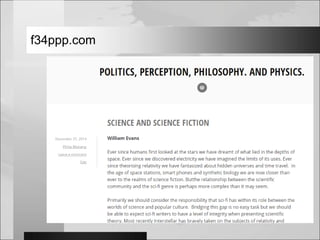
f34ppp.com
Science – more than just a technology driver
http://www.4004.com/assets/PB120046.JPG
- How is scientific knowledge
different from other forms of
knowledge? [Epistemology]
- Can we define the scientific
method?
www.spreadshirt.co.uk/logic+t-shirts
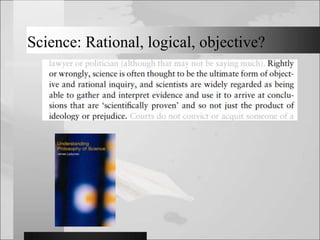
Science: Rational, logical, objective?
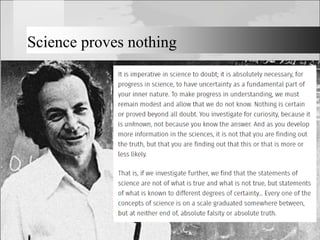
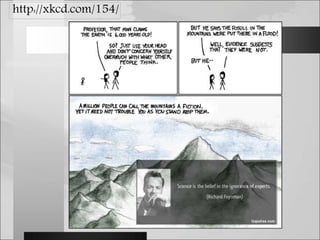
Science proves nothing
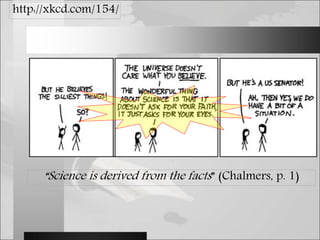
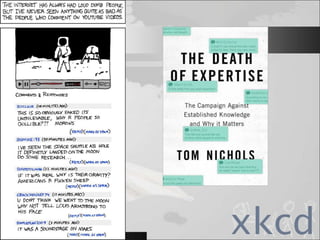
http://xkcd.com/154/
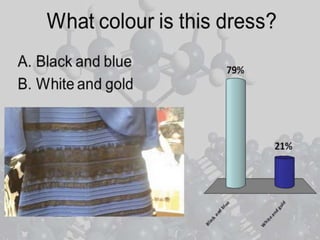
“Science is derived from the facts” (Chalmers, p. 1)
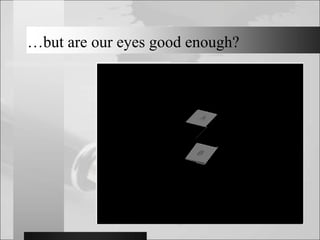
…but are our eyes good enough?
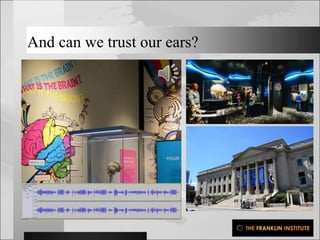
And can we trust our ears?
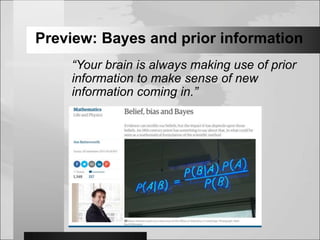
“Your brain is always making use of prior
information to make sense of new
information coming in.”
Preview: Bayes and prior information
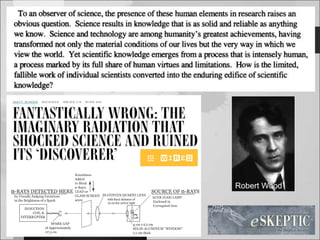
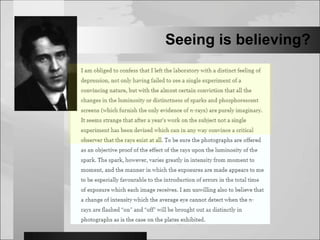
Robert Wood
Seeing is believing?
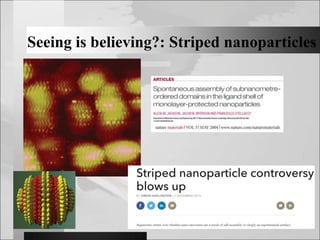
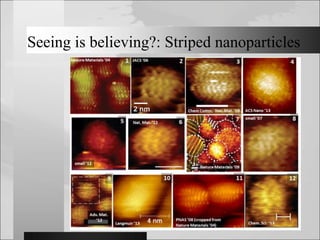
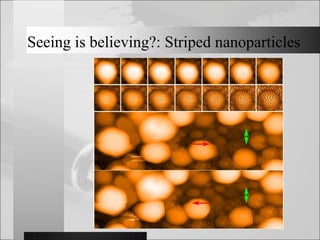
Seeing is believing?: Striped nanoparticles
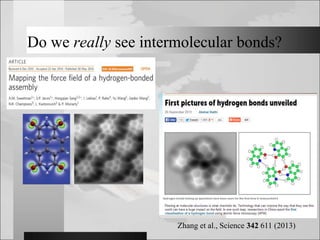
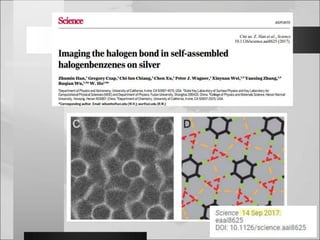
Do we really see intermolecular bonds?
Zhang et al., Science 342 611 (2013)
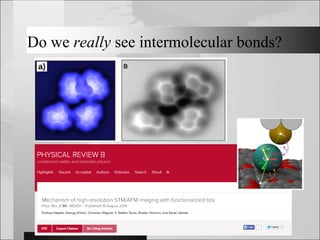
Do we really see intermolecular bonds?
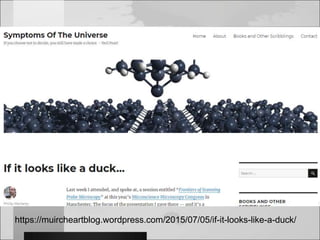
https://muircheartblog.wordpress.com/2015/07/05/if-it-looks-like-a-duck/
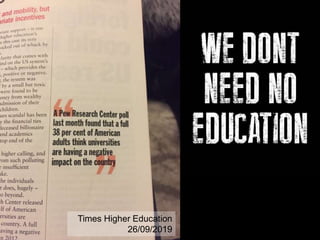
Times Higher Education
26/09/2019
Science Proves Nothing

Science Proves Nothing

  • 1.
    The Politics, Perception,and Philosophy of Physics (F34PPP) Philip Moriarty School of Physics & Astronomy University of Nottingham Room C103 philip.moriarty@nottingham.ac.uk www.muircheartblog.wordpress.com
  • 2.
    Lecture 1: ScienceProves Nothing  What we’ll cover in F34PPP (and some disclaimers)  Timetable and assessment  Observations and facts (or “facts”?)  Deduction, induction, and Bacon  Is science irrational?  Are we unbiased?
  • 3.
    DATE TITLE TYPE Sept30 Science Proves Nothing. Lecture Oct. 07 Induction, Deduction, Reduction. Lecture Oct. 14 The Truth, The Whole Truth, and…? NO LECTURE Video lecture + blog post Oct. 21 Is Peer Review Peerless? Seminar and discussion Oct. 28 The Science Wars Rebooted Seminar and discussion Nov. 4 Maybe, Minister? Seminar and discussion Nov. 11 “The Death of Expertise” Seminar and discussion Nov. 18 Communication Breakdown Seminar and discussion Nov. 25 Invited Speaker: Harry Collins Seminar and discussion Dec. 2 Invited speaker: Karen Lumsden Seminar and discussion Dec. 9 The real world… Seminar and discussion F34PPP in brief All sessions in A16 Psychology, 15:00, Mondays (Autumn semester)
  • 4.
  • 5.
  • 6.
    F34PPP in brief:Recommended reading - What is this thing called science?, 3rd edition, AF Chalmers (Open University Press, 1999) - Understanding philosophy of science, J. Ladyman (Routledge, 2002) - Philosophy of science: A very short introduction, S. Okasha (Oxford University Press, 2002)
  • 8.
    F34PPP in brief-- assessment  An opinion piece (along the lines of a one-page Physics World article, 1000-1500 words) [Deadline: Nov. 15] 30%  A "feature article" (2000-2500 words, in the style of a broadsheet article) [Deadline: Dec. 20] 70%
  • 9.
    Suggested blog posttopics - Should scientists have to justify their research in terms of its socioeconomic impact? - Do social media have a role to play in the scientific process? - When should scientists “go public” with their results? - Was CERN right to sever links with Alessandro Strumia? - Is “many worlds”/multiverse theory science? - Can science be crowd-funded? - Is peer review working? - Should universities cut back on funding of PhD positions? - Is Richard Dawkins closed-minded?
  • 10.
    Please send meyour suggestions for blog post themes: philip.moriarty@nottingham.ac.uk
  • 11.
  • 12.
    Science – morethan just a technology driver http://www.4004.com/assets/PB120046.JPG - How is scientific knowledge different from other forms of knowledge? [Epistemology] - Can we define the scientific method? www.spreadshirt.co.uk/logic+t-shirts
  • 13.
  • 14.
  • 16.
  • 17.
    http://xkcd.com/154/ “Science is derivedfrom the facts” (Chalmers, p. 1)
  • 18.
    …but are oureyes good enough?
  • 20.
    And can wetrust our ears?
  • 21.
    “Your brain isalways making use of prior information to make sense of new information coming in.” Preview: Bayes and prior information
  • 24.
  • 25.
  • 26.
    Seeing is believing?:Striped nanoparticles
  • 27.
    Seeing is believing?:Striped nanoparticles
  • 28.
    Seeing is believing?:Striped nanoparticles
  • 29.
    Do we reallysee intermolecular bonds? Zhang et al., Science 342 611 (2013)
  • 30.
    Do we reallysee intermolecular bonds?
  • 32.
  • 34.