SUMMATIVE TEST #2
Direction: Prepare ½
crosswise.Write only
the letter of the
correct answer.
1. When magma in the earth’s mantle
develops a great pressure, the ground above
it is pushed upward. If this happens in the
middle of an ocean, what landform is
produced?
A. mountain range B. volcanic island
C. oceanic ridge D. rift valley
2. The tall landform created when
two continental plates converge.
A. mountain range
B. B. volcanic arc
C. rift valley
D. Oceanic ridge
3. It is a plate that dives down
under a less dense plate during
subduction.
A. subducting plate
B. continental plate
C. mantle
4. Materials in the mantle flow up
and down. Which of the following
best describes the mantle?
A. a solid layer
B. partially liquid
C. a metallic layer
D. very hot layer
5. Which of the following happens when
plates diverge or move away from each
other?
A. The crust is destroyed.
B. New crust is produced because magma
rises, then cools off and turns into solid.
C. Earth’s size changes because mountains
are added on the earth’s surface.
D. The mantle rises.
6. A rift valley is formed simultaneously
with which of the following type of
plate boundary?
A. Convergent plate boundary
B. Divergent plate boundary
C. Transform fault plate boundary
D. Both convergent and divergent plate
boundary
7. How do the plates move when we
feel that the ground is shaking?
A. toward each other
B. away from each other
C. slide past each other
D. all of the above
8. The force that causes the plates to
move is____________________.
A. tectonic force
B. gravitational force
C. radiation
D. convection current
8. It is a landform produced when two
continental plates converge.
A. Volcano
B. Fault
C. mountain
D. volcanic island
9. Most transform fault boundaries are
found in the oceans; a few are on the
continents. An example of this type is
the San Andreas Fault located in
A. Marikina, Philippines
B. California, USA
C. Japan
D. Saudi Arabia
10. It is otherwise known as an
underwater mountain.
A. oceanic ridge
B. trench
C. hill
D. volcanic island
11. It is a chain of volcanoes developed
parallel to a trench or a crack under the
ocean.
A. mountain range
B. volcanoes
C. volcanic island arc
D. mountainous
12. It is formed when ocean water flips
upward, sometimes up to certain
meters high,
due to the great push caused by
convergence of plates.
A. wave C. tides
B. tsunami D. storm
13. The place where a subducting plate
reaches the mantle during
convergence.
A. collision zone
B. subduction zone
C. mantle plume
D. magma
13. It is the point where two plates
meet or collide while converging.
A. collision zone
B. sinking point
C. subduction zone
D. meeting point
14. Plates slide past each other at
________________.
A. subduction zone
B. divergent boundary
C. convection current
D. transform fault boundary
14. The place where a subducting plate
reaches the mantle during
convergence.
A. collision zone
B. subduction zone
C. mantle plume
D. magma
15. The word used to refer to the
shaking of the ground due to any
activity in the
lithosphere.
A. intensity
B. earthquake
C. Volcanism
D. wave
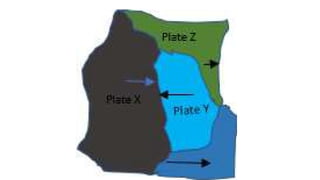
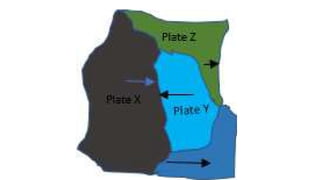
Based on the map, answer the following:
16. Plate Y is an oceanic plate. When it
converges with the continental Plate X, which
of the following will most likely to happen?
A. Part of the Plate Y will turn into magma.
B. Part of the Plate X will turn into magma.
C. Plate Y will vanish and become magma.
D. Plate X will become crust above the
Nazca Plate.
17. Between Plates Y and X, which one will
undergo subduction?
A. Plate Y C. none of the two
B. both of them D. Plate X
18. What landform is produced
during a convergence between
two oceanic crusts?
A. Mountain
B. valley
C. volcanic island arc
19. The Himalayan mountain
range of India was formed at the
__________.
A. divergent boundary
B. convergent boundary
C. hot spot
19. Due to the movement of the
plates, what event may be felt by
humans in nearby
places?
A. typhoon C. lightning
B. earthquake D. storm
20. If the subducting plate kicks
up, it will be displacing some
water to a certain height, what
other event or process may take
place on the water surface?
A. tide C. eclipse
B. tsunami D. full moon
21. There is no formation of
volcanoes in the convergence
between.
A. two oceanic plates
B. two continental plates
C. oceanic and continental plates
D. none of these
22. In the convergence between a continental
and an oceanic plate, there is subduction.
Which of the following statements does not
support this fact?
A. One plate carries water along with it.
B. One plate is denser.
C. The temperature in the mantle is higher than
in the crust.
D. One plate overrides the other.
23. The East African Rift is an
example of a _____________.
A. mid-ocean ridge
B. convergent boundary
C. rift valley
D. transform boundary
24. Why are volcanoes mostly found at
places where continents meet the seas?
A. It is where water meets land.
B. It is where the oceanic plates subduct
under the continental plate.
C. Underneath it is a subduction zone.
D. More magma is produced under the
ground because of the muddy seafloor.
25. Most of the Philippine Islands were
once part of island arcs. This means
that along with this boundary, there
once existed two ___________.
A. converging continental
B. diverging plates plates
C. converging oceanic plates
D. plates sliding past each other
ENUMERATION:
1-3 Types of plate boundaries
4-6 Types of Convergent boundaries
7-8 Types of divergent boundaries
9-10 Types of trandform fault
boundaries
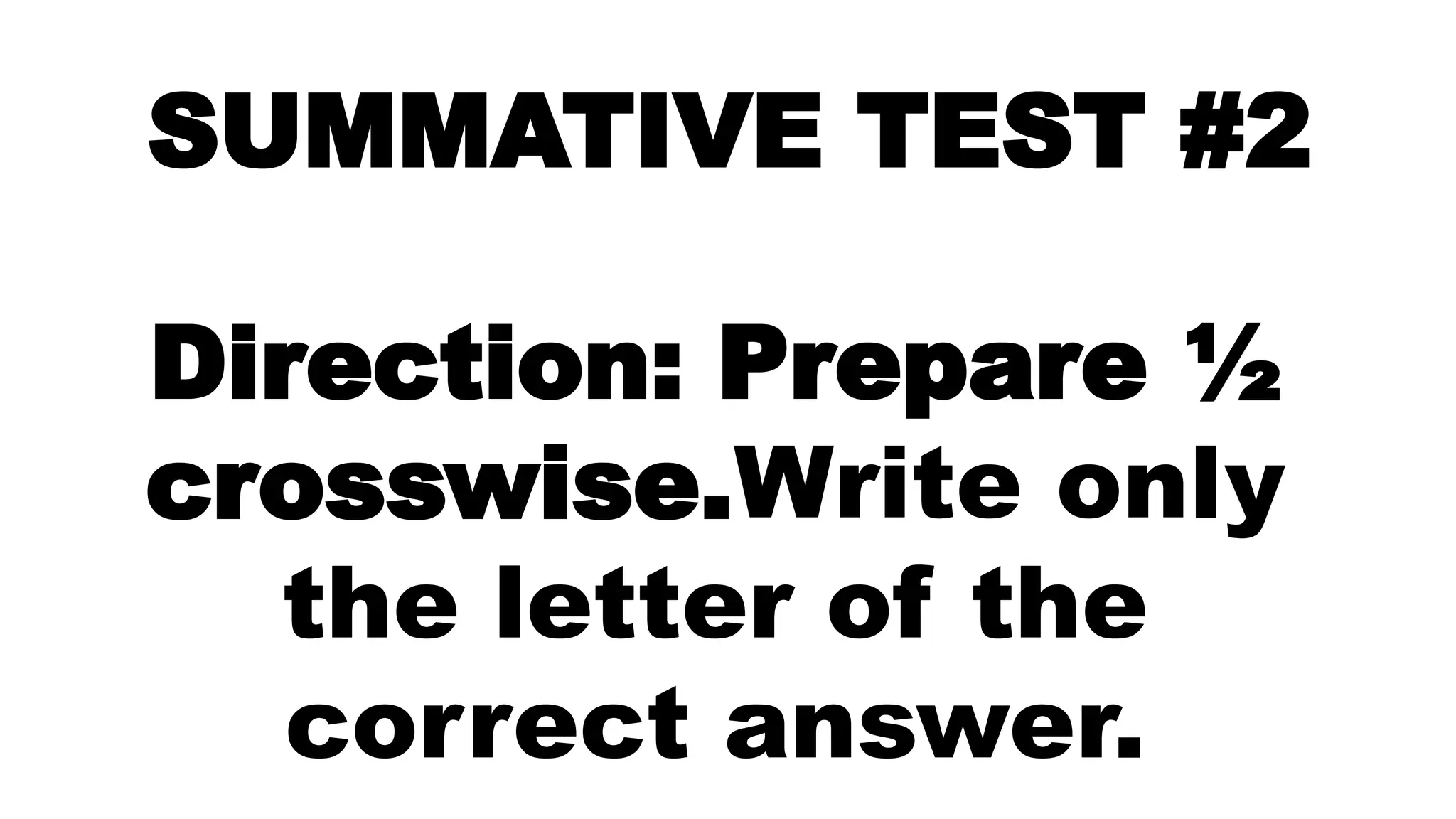
VOLCANO RIFT
VALLEY
MOUNTAIN
RANGE
FAULT TSUNAMI
CONVERGENT BOUNDARY
DIVERGENT BOUNDAY
TRANSFORM FAULT BOUNDARY

Science 10 Quarter 1 Summative Test 2.ppt

  • 1.
    SUMMATIVE TEST #2 Direction:Prepare ½ crosswise.Write only the letter of the correct answer.
  • 2.
    1. When magmain the earth’s mantle develops a great pressure, the ground above it is pushed upward. If this happens in the middle of an ocean, what landform is produced? A. mountain range B. volcanic island C. oceanic ridge D. rift valley
  • 3.
    2. The talllandform created when two continental plates converge. A. mountain range B. B. volcanic arc C. rift valley D. Oceanic ridge
  • 4.
    3. It isa plate that dives down under a less dense plate during subduction. A. subducting plate B. continental plate C. mantle
  • 5.
    4. Materials inthe mantle flow up and down. Which of the following best describes the mantle? A. a solid layer B. partially liquid C. a metallic layer D. very hot layer
  • 6.
    5. Which ofthe following happens when plates diverge or move away from each other? A. The crust is destroyed. B. New crust is produced because magma rises, then cools off and turns into solid. C. Earth’s size changes because mountains are added on the earth’s surface. D. The mantle rises.
  • 7.
    6. A riftvalley is formed simultaneously with which of the following type of plate boundary? A. Convergent plate boundary B. Divergent plate boundary C. Transform fault plate boundary D. Both convergent and divergent plate boundary
  • 8.
    7. How dothe plates move when we feel that the ground is shaking? A. toward each other B. away from each other C. slide past each other D. all of the above
  • 9.
    8. The forcethat causes the plates to move is____________________. A. tectonic force B. gravitational force C. radiation D. convection current
  • 10.
    8. It isa landform produced when two continental plates converge. A. Volcano B. Fault C. mountain D. volcanic island
  • 11.
    9. Most transformfault boundaries are found in the oceans; a few are on the continents. An example of this type is the San Andreas Fault located in A. Marikina, Philippines B. California, USA C. Japan D. Saudi Arabia
  • 12.
    10. It isotherwise known as an underwater mountain. A. oceanic ridge B. trench C. hill D. volcanic island
  • 13.
    11. It isa chain of volcanoes developed parallel to a trench or a crack under the ocean. A. mountain range B. volcanoes C. volcanic island arc D. mountainous
  • 14.
    12. It isformed when ocean water flips upward, sometimes up to certain meters high, due to the great push caused by convergence of plates. A. wave C. tides B. tsunami D. storm
  • 15.
    13. The placewhere a subducting plate reaches the mantle during convergence. A. collision zone B. subduction zone C. mantle plume D. magma
  • 16.
    13. It isthe point where two plates meet or collide while converging. A. collision zone B. sinking point C. subduction zone D. meeting point
  • 17.
    14. Plates slidepast each other at ________________. A. subduction zone B. divergent boundary C. convection current D. transform fault boundary
  • 18.
    14. The placewhere a subducting plate reaches the mantle during convergence. A. collision zone B. subduction zone C. mantle plume D. magma
  • 19.
    15. The wordused to refer to the shaking of the ground due to any activity in the lithosphere. A. intensity B. earthquake C. Volcanism D. wave
  • 21.
    Based on themap, answer the following: 16. Plate Y is an oceanic plate. When it converges with the continental Plate X, which of the following will most likely to happen? A. Part of the Plate Y will turn into magma. B. Part of the Plate X will turn into magma. C. Plate Y will vanish and become magma. D. Plate X will become crust above the Nazca Plate.
  • 23.
    17. Between PlatesY and X, which one will undergo subduction? A. Plate Y C. none of the two B. both of them D. Plate X
  • 24.
    18. What landformis produced during a convergence between two oceanic crusts? A. Mountain B. valley C. volcanic island arc
  • 25.
    19. The Himalayanmountain range of India was formed at the __________. A. divergent boundary B. convergent boundary C. hot spot
  • 26.
    19. Due tothe movement of the plates, what event may be felt by humans in nearby places? A. typhoon C. lightning B. earthquake D. storm
  • 27.
    20. If thesubducting plate kicks up, it will be displacing some water to a certain height, what other event or process may take place on the water surface? A. tide C. eclipse B. tsunami D. full moon
  • 28.
    21. There isno formation of volcanoes in the convergence between. A. two oceanic plates B. two continental plates C. oceanic and continental plates D. none of these
  • 29.
    22. In theconvergence between a continental and an oceanic plate, there is subduction. Which of the following statements does not support this fact? A. One plate carries water along with it. B. One plate is denser. C. The temperature in the mantle is higher than in the crust. D. One plate overrides the other.
  • 30.
    23. The EastAfrican Rift is an example of a _____________. A. mid-ocean ridge B. convergent boundary C. rift valley D. transform boundary
  • 31.
    24. Why arevolcanoes mostly found at places where continents meet the seas? A. It is where water meets land. B. It is where the oceanic plates subduct under the continental plate. C. Underneath it is a subduction zone. D. More magma is produced under the ground because of the muddy seafloor.
  • 32.
    25. Most ofthe Philippine Islands were once part of island arcs. This means that along with this boundary, there once existed two ___________. A. converging continental B. diverging plates plates C. converging oceanic plates D. plates sliding past each other
  • 33.
    ENUMERATION: 1-3 Types ofplate boundaries 4-6 Types of Convergent boundaries 7-8 Types of divergent boundaries 9-10 Types of trandform fault boundaries
  • 34.
    VOLCANO RIFT VALLEY MOUNTAIN RANGE FAULT TSUNAMI CONVERGENTBOUNDARY DIVERGENT BOUNDAY TRANSFORM FAULT BOUNDARY